Unknown's avatar

About Jack & Barbra Donachy

Writers, photographers, food lovers, anglers, travelers and students of poetry

Chocolate Orange Meringue Pie

A mountain of perfectly peaked meringue sits atop a decadent chocolate-orange pudding pie.

The flipped meringue cookies gave me new confidence with meringue. I felt ready to attempt a meringue pie. Luckily, there is still plenty of chocolate in our ever diminishing pantry. Since friends were coming to dinner, it was the perfect day to attempt this culinary feat.

I read many recipes on many sites. I was warned about weeping meringue and problems with humidity. Winter air in the Arctic is like air in the driest desert and I wasn’t scared off by a few tears from frothy egg whites. I was ready for the challenge. The process of making the pie was long and satisfying. Each step looked and tasted delicious. The filling thickened up beautifully. The meringue browned in just the right way. At the end of an Arctic-Mexican meal featuring enchiladas and Spanish-style rice, everyone agreed that the chocolate orange meringue pie was impressive to look at… and then it disappeared!

Chocolate Orange Meringue Pie

Ingredients

  • 1 9-inch pie crust, baked
  • 1 3/4 cups granulated sugar, separated into 1 1/2 cups and 1/4 cup
  • 5 tbsp unsweetened cocoa powder
  • 4 tbsp all purpose flour
  • 1 pinch salt
  • 5 eggs, yolks and whites separated
  • 2 cups milk
  • 1 tsp orange zest
  • 1 tbsp unsalted butter
  • 2 tsp vanilla extract
  • 1/4 tsp cream of tartar

Directions

  1. For chocolate filling: In a medium pot, mix together 1 1/2 cups of granulated sugar, cocoa powder, flour and salt. Stir in egg yolks and milk. Stir in orange zest. Whisk until well blended. Cook over medium heat, stirring constantly. Cook until filling has the consistency of pudding, about 10 minutes. Turn heat off.
  2. Stir in vanilla and butter. Stir until both are incorporated.
  3. Pour filling into baked pie shell. Refrigerate to set for 4 hours or overnight.
  4. When you are ready to make the meringue, take the pie out of the refrigerator.
  5. Preheat oven to 375 degrees F.
  6. For meringue: In a non-reactive bowl beat egg whites until foamy. Add cream of tartar. Continue beating eggs until soft peak stage (peaks will sag when you remove beaters). Add 1/4 cup sugar a tablespoon at a time, allowing sugar to dissolve between additions. Continue beating until stiff peaks form and egg whites are stiff and glossy.
  7. Spread the meringue over the pie completely. You can make decorative peaks by using a dull knife to shape the meringue.
  8. Place pie in oven on a low rack. Bake for 10 minutes until meringue is golden brown.
  9. Chill for two hours before serving.

Can You Really Make These From Scratch? Honey-Cinnamon Graham Crackers

I’ll bet even your grandmother didn’t bake like this…

I found a cheesecake recipe I wanted to experiment with, and, off course, I needed a graham cracker crust. Since we hadn’t sent up any graham crackers, my choices were to buy some at our local store, order them through Amazon.com, or forget the whole idea. Prices at the Native Store are too high, so I ruled that out, and with only five weeks remaining till we head south, it seemed late to be ordering food. The next obvious step was to give up. Ha! That’s not me! I searched around and found a couple of recipes for graham crackers from scratch. Fantastic! My crackers came out looking a little rough around the edges, but they tasted perfect. Actually, in our opinion, they taste better than store-bought. These homemade beauties have a crisp cracker crunch and a sweet honey-cinnamon taste. Now, I’ll tackle the cheesecake recipe.

Honey Graham Crackers

Ingredients:

  • 1 cup whole wheat flour
  • 1/2 cup unbleached all purpose flour
  • 1/2 tsp baking powder
  • 1/4 tsp. baking soda
  • 1/4 cup softened unsalted butter
  • 1/4 cup granulated sugar
  • 2 tbsp and 2 tsp honey
  • 2 tbsp corn syrup
  • 1 tsp vanilla extract
  • 1/2 cup milk
  • Optional cinnamon sugar topping – 3 tsp granulated sugar and 1 tsp cinnamon

Directions:

  1. Mix together whole wheat flour, all purpose flour, baking powder and baking soda. Set aside.
  2. Blend butter, sugar, honey and corn syrup until well mixed and fluffy. Add vanilla and mix.
  3. Stir dry ingredients into wet ingredients. Stir in milk. You should have a nice ball of dough at the end of this step.
  4. Cover dough and refrigerate overnight.
  5. Preheat oven to 350 degrees F.
  6. Roll the dough out on a well-floured surface. It is easiest to do this working with only a quarter section of the dough at a time. Roll until the dough is about 1/8″ thick. Cut the dough into rectangles using a knife. Place rectangles on ungreased cookie sheets. Prick decorative holes with toothpick. If desired, sprinkle cinnamon and sugar topping on crackers.
  7. Bake for 13 minutes. Finished crackers will be browned and will become more crisp as they cool. Cool on wire racks.

Chiming Bells, Paintbrush & Bog Candles: Flowers of the AlCan Highway

Fireweed is as common as it is beautiful along the highways of western Canada and Alaska. It’s just one of dozens of wildflowers travelers can expect to encounter. Young fireweed leaves are a tasty addition to salads, and their petals can be used to make a beautifully colored ice cream.

Left: Prickly rose looks a lot like its domestic counterparts. This bud is within a day or two of bursting open. Right: I don’t know if one can properly talk about wildflowers growing in beds, but where we found a few chiming bells, there always seemed to be others peeking out from the shade where the soil was damp and the sunlight sparse.

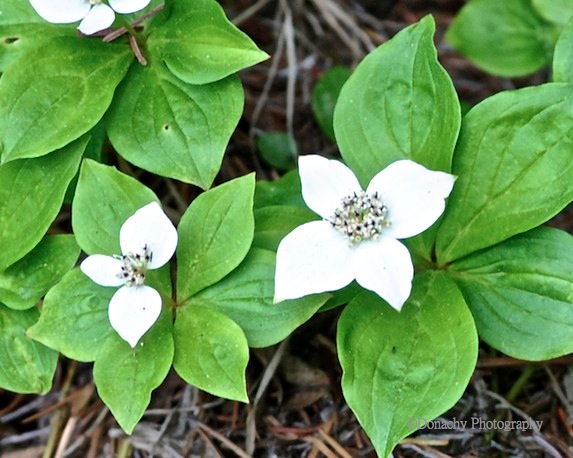
Appropriately named bog candle lights up the shaded places where it grows..Northern Yarrow is common throughout the region. Dwarf dogwood hugs the forest floor.

Fireweed leans toward the sun above a yellow sea of monkey flower.

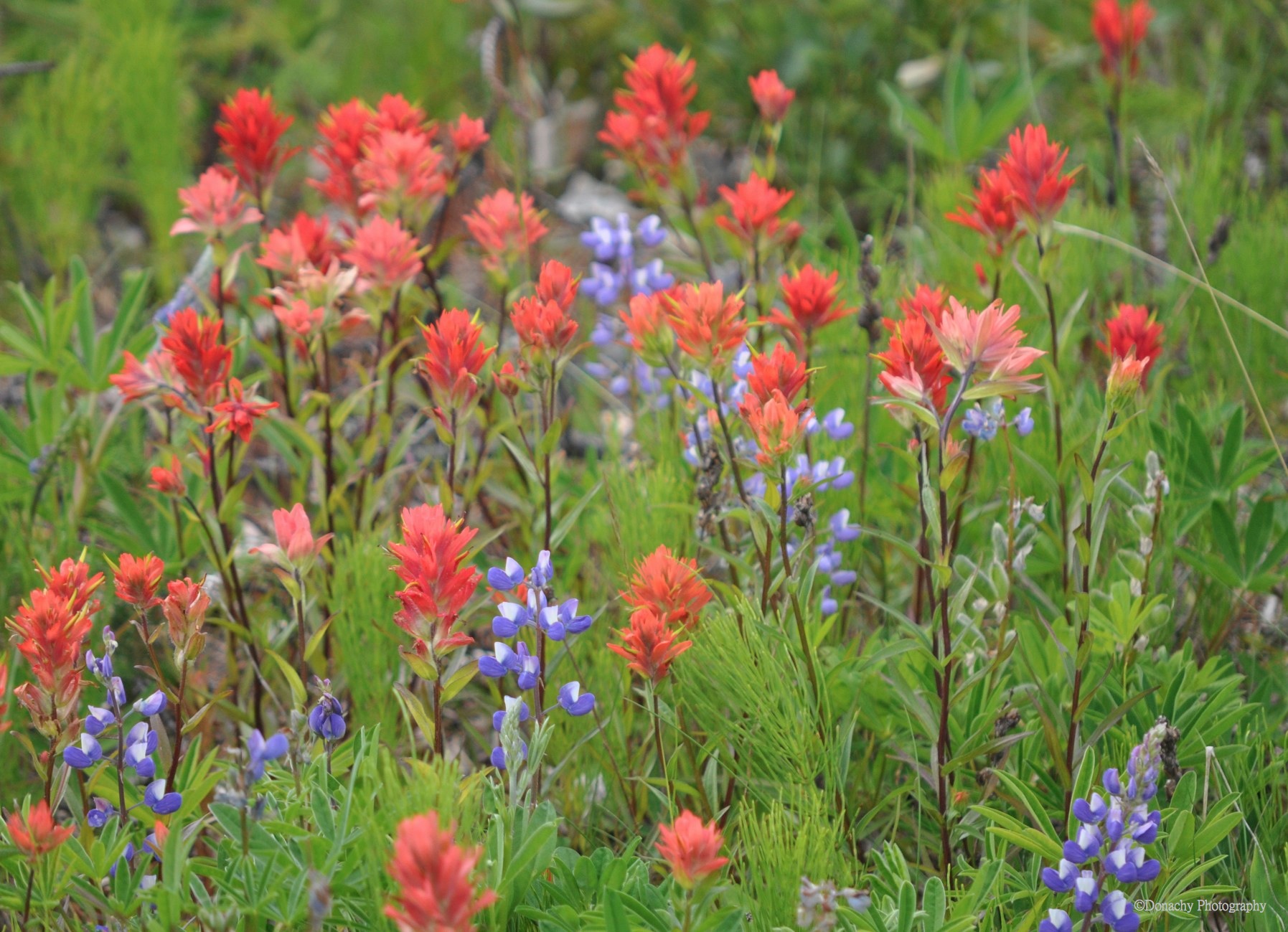
Indian paintbrush (red) and lupine (blue) are common throughout the Pacific Northwest.

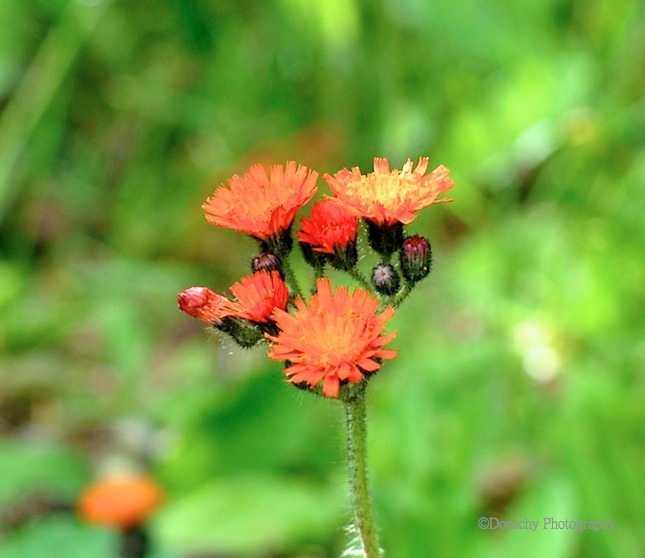
Orange hawkweed is sometimes mistaken for Indian paintbrush, but it’s an invasive species – albeit a pretty one. Wildflowers seem to be everywhere in western Canada. This black bear is framed in fireweed stalks as he takes a break from browsing a patch of sweet clover. A road trip up the West Coast through British Columbia, into Yukon Territory and on to Alaska had long been on our lifetime things-to-do list. This is one of the world’s great drives.

Totem Poles at Gitanyow

Above: Hole in the Ice totem pole at Gitanyow, British Columbia. The totem poles at this National Historical Site represent one of the largest collections in North America. Although many of the sculptures at Gitanyow are replicas (the originals were moved to museums), Hole in the Ice is an original.

Carved from cedar and imbued with symbolism, history and tradition, totem poles are an art from that fire the imagination. When we read that there was an authentic collection a short detour off the Stewart Cassiar Highway we were taking north through British Columbia, we had to make the trip. There are other places in the Northwest where you can see totem poles, but Gitanyow is compelling for sheer numbers (about 50) as well as for the detailed artistry in many of the poles.

Figures such as this wolf may represent a clan, a specific person, or be part of a story.

Right: This friendly mixed breed  we nicknamed Bear adopted me and stayed by my side throughout our visit. The poles in this photo are smaller than the others pictured in this post.

There is a museum at this site, but it was closed on the day we visited. In fact, we didn’t see a single other person as we walked the grounds, and although explanations of what we were looking at would have been welcome, the solitude to contemplate these carvings through our own lenses was even more welcome.

The totem poles at Gitanyow are in various states of weathering, with some so worn their features are hard to make out.

As we walked the grounds on this grey, misty, sometimes rainy summer day, one word kept passing over our lips. “Cool.” Thinking back on that day and looking at these photos again, the same word comes to mind, pushing others aside. These sculptures are cool. Way cool.

Above: a beaver seems to be gnawing on a headband above this face. 

Flipped Lemon Meringue Cookies

Imagine the tart creaminess of lemon meringue infused with orange zest sitting on a crisp, airy cookie ready to be devoured in one scrumptious bite. You’ll flip when you taste these cookies!

You know those beautiful Parisian macarons? Smooth and glossy, perfectly round and filled with creamy flavors? This cookie recipe allowed me to practice with the elements of the macaron – especially the meringue. And I got to play with a Kitchen Aid mixer for the first time.

Jack and I do our best to keep our kitchen to a minimum and have been debating about whether this appliance is worth its weight in counter space. Recently, we borrowed a Kitchen Aid mixer to take for a test drive. Our thoughts? This machine is pretty incredible. It beat the egg whites and confectioners’ sugar into a consistency we doubt we could have achieved by hand or even with a hand-held mixer — and after 20 minutes of steady mixing, no one was tired! The meringue was stiff and glossy and fluffy, just like it’s supposed to be. Even after scooping the meringue into a Ziploc and piping it out, it didn’t loose any volume. I think that was due to the mixer. The meringue baked perfectly, despite my inexperience in piping. We’ll see how often we use this mixer, but we’re sold on it for heavy mixing jobs.

The cookies took time in that leisurely Sunday kind of way. First I made the lemon curd and put it in the refrigerator to chill. After a while, I made the cookie shell. Then, when the shell and the curd were both cooled, I assembled the cookies. I found it easy to eliminate the evidence of my first attempts at piping, which were not pretty, but were tasty!  The technique which I settled on was to pipe the meringue in a spiral, starting in the center, with the last two spirals going vertical. This made a nice little cup for the lemon curd.

Flipped Lemon Meringue Cookies

Ingredients:

For Lemon Curd –

  • 1/2 cup granulated sugar
  • 1 large egg and 1 egg yolk
  • 1/2 cup lemon juice
  • 2 tsp orange zest
  • 3 tbsp melted unsalted butter

For Meringue –

  • 4 egg whites
  • 2 cups confectioners’ sugar

Directions

  1. In a medium pot, mix together curd ingredients, except butter (granulated sugar, egg and egg yolk, lemon juice and orange zest).
  2. Whisk continually over medium heat until mixture thickens and coats a spoon (about 10 minutes). Stir  in melted butter.
  3. Pour into a sealed container and refrigerate until cold.
  4. While the curd is chilling, make the meringue cookies.
  5. Preheat oven to 250 degrees F.
  6. Take the 4 egg whites and beat on medium speed until they develop soft peaks (peaks will bend when you remove beaters)
  7. Beat eggs whites at high speed while adding confectioners’ sugar by the tablespoon, making sure the sugar is mixed in before adding next tablespoon. The final product should have stiff peaks and be somewhat glossy and thick.
  8. Pour into a piping bag with a small tip. (I used a Ziploc bag with the corner cut off).
  9. Pipe a tight spiral from the center out, layering the outside spiral twice so you have about an inch-diameter cookie with a cup to hold the curd.
  10. Bake for 60 minutes on a parchment lined baking sheet. Slight cracking is OK. The cookies should easily come off the parchment paper when finished. Let cool.
  11. Fill meringue cookie with lemon curd.
  12. Store in covered container in refrigerator.

Bison and Bears (and a C-Dory) on the Al-Can Highway

Ferdinand the Wood Bison kickin’ it in a dust wallow in Northern British Columbia. In addition to breathtaking views of the Canadian Rockies, vast forests, free-flowing rivers and an amazing array of wildflowers, a summer drive through western British Columbia and Yukon Territory on the way to Alaska provides one of the premier animal viewing opportunities in North America. (This is the first of several posts planned about the drive to Alaska and sights both along the way and in Alaska.)

In the fall of 2008 when Barbra and I purchased our C-Dory 22 Angler fishing boat, Gillie, we had no idea that 21 months later we’d be towing it 3,200 miles from Sacramento, California to Valdez, Alaska on a 43-day camping, exploring and fishing odyssey. With the exception of one night in an Anchorage hotel, we camped on Gillie – both at sea and on land – the entire trip. As Barbra and I fell into the daily rhythms of preparing meals and crawling into bed each night, our boat actually seemed to grow larger.

The trip north proved to be an ongoing revelation – one filled with far more grandeur than we’d anticipated.

I’d seen plains bison on trips to Yellowstone National Park, but we had no idea there was another subspecies of American bison, wood bison, roaming free in northern Canada and eastern Alaska. We encountered herds engaged in typical bison behavior including grunting males butting heads, females nursing spindly-legged young, and

individuals dust wallowing.

Our Tacoma had a feature we loved: a sun roof. By shooting photos from the open roof, we could safely get close to roadside animals, neither spooking them nor putting ourselves in danger. It was like having a photography blind.

At the beginning of the journey, we kept a list of the animals we encountered, dutifully tallying deer, elk, bison, stone sheep, moose, caribou, coyotes, hawk owls, and eagles. Eventually the numbers overwhelmed us. But there is one figure we still recall: thirty-two black bears. We also saw grizzlies, near Hyder, not to mention the sea mammals we encountered once we launched our boat in Alaska. And, of course, there were beavers and innumerable smaller animals and birds. But the group of animals we still most frequently talk about were the ones we didn’t see.

One evening, at the kind of typical roadside rest stop that served as our (free) campground most nights, we were walking after dinner and taking in an endless vista of taiga coniferous forest interspersed with aspen fringed lakes and swatches of magenta fireweed. It was around eleven o’clock at night, still light. With not a vehicle or building in sight, it felt like we had the whole world to ourselves.

And then we heard it. From a distant hill, a lone, high-pitched howl. Soon it was joined by other howls. Wolves! We listened in awe, our hearts singing.

Cow moose and their calves, such as this one, often hang out close to the highway in bear and wolf country. This helps them avoid predators, but vehicle fatalities run high.

Travelers are bound to see bears – boars, sows and cubs – as they travel along the Al-Can.

Stone Sheep ewes take in salt or other minerals near Muncho Lake, British Columbia. Notice the lamb with the third ewe. Meanwhile, other lambs watch their mothers from the safety of a nearby slope.

For us, the drive to Alaska was the fulfillment of lifelong dreams. I used to pore over my grandfather’s back issues of Field and Stream and Outdoor Life, devouring anything and everything written about the Canadian and Alaskan wilderness. For both of us, the experiences we had on this trip exceeded our imaginations.

Less than a year later, we would be saying goodbye to friends in Sacramento and leaving behind our beloved E Street craftsman bungalow, a yard full of orange, lemon, grapefruit, lime, apple, cherry, peach and pear trees, and our long runs along the beautiful American River. We’d be trading our patch of raspberries for wild cloudberries, our fresh tomatoes for canned.

When we first got our C-Dory, we envisioned weekends to Bodega Bay and other ports along the California and Oregon Coast. We never imagined it would take us all the way to Alaska and a new life.

The C-Dory has a cuddy cabin that comfortably sleeps two, a small dinette in the cabin, and an amazing amount of storage. A dependable Coleman stove served as our gas range.

Versatile Blogging

Thanks to acorninthekitchen for nominating us for the Versatile Blogger Award! Previously from Spain but now living in Ireland, you can check out recipes on his site by clicking here acorninthekitchen. We are intrigued by “home” food that gets transported to new places – the idea of food as portable culture. Not to mention that Ireland and Spain are both high on our list of countries we hope to visit!

.

Sites we visit:

Seven things about us:

  • We love to research and plan the things we do, but then we end up doing most of them by the seat of our pants.
  • We’ve learned that, apparently, “Never” actually means “Someday” (at least sometimes).
  • We don’t own a TV.
  • Our favorite movies are romantic comedies and real-life adventure documentaries.
  • Half the time, neither one of us has any idea what we’re doing until we actually do it. This has led to some comical outcomes.
  • On one of our early dates, we went on a tent-camping road trip from Sacramento, California to Astoria, Oregon. The first time we set up a tent, it was as though we’d been doing it all our lives together.
  • If we weren’t planning to go sailing, we’d buy a piece of land somewhere and homestead.

Happy Blogging,

Jack & Barbra Donachy

Bread Machine Oatmeal Walnut Wheat Bread

This hearty but soft wheat bread has crunchy walnuts and a hint of honey. The aromas while baking are magnificent! Jack says each bread I make is his new favorite. I think he really means it, too.

Oatmeal Walnut Wheat Bread

Ingredients

  • 1 1/4 cups water
  • 1/4 cup nonfat dry milk
  • 1 1/4 tsp salt
  • 2 tbsp olive oil
  • 1 tbsp honey
  • 1 tbsp molasses
  • 1 cup wheat flour
  • 2 cups all purpose flour
  • 1/2 cup quick-cooking oats
  • 1/3 cup chopped walnuts
  • 1 tsp instant yeast

Directions

  1. Place ingredients in bread machine according to manufacturer’s instructions.
  2. Start machine
  3. Wait impatiently for cycle to finish armed with butter and honey and a knife.

Recipe adapted from 300 Best Bread Machine Recipes by Donna Washburn and Heather Butt.

Alaskan Salmon Stuffed Eggs

Wild salmon is the key to these super-tasty deviled eggs. This is recipe #6 in the Salmon Challenge.

Deviled eggs are always a favorite appetizer, and this recipe works well with canned sockeye, smoked salmon, or fresh salmon that’s been grilled or broiled. Variations on the basic recipe are endless.

A note on boiling eggs: It’s surprising how many different ways various cookbooks and Internet sites suggesting boiling eggs. What this seems to suggest is that it’s not as simple a task and one might think. Here’s my two-cents, for what it’s worth.

Don’t start with the freshest eggs. Eggs that are a a few days old, or older, work better. Place cold eggs in cold, unsalted water. Bring to a boil. Cook eggs on a low boil – just above a simmer – for 13 minutesDrain off the hot water and immediately cover eggs with cold tap water. Roll eggs to crack the shells (this can be done while they’re still in the pan of there aren’t too many eggs) and keep them in cold water with shells, refreshing the water if it becomes warm. Let the eggs cool in the water, then roll them on a flat surface and peel off the shells. Wait until eggs are thoroughly cool before cutting them.

I’ve tried several methods of boiling eggs. This one works well again and again, with very few problems such as green egg yolks, shells sticking to eggs or overly done or underdone eggs.

Ingredients:

  • 6 large eggs
  • 3 to 4 ounces salmon, broken apart or cut until small pieces (canned sockeye, freshly grilled Chinook, or smoked salmon, for example)
  • 4 anchovy fillets, chopped fine
  • 3 spinach leaves, chopped fine (optional)
  • 2 tsp capers, chopped fine
  • 2 tablespoons mayonnaise (or 1 1/2 tablespoons mayonnaise & 1/2 tablespoon Dijon mustard)
  • freshly ground pepper to taste
  • 1 tsp dried tarragon (or, of course, use fresh)
  • garnish with a sprinkle of paprika and a fresh grind of black pepper and, perhaps, a tarragon leaf or piece of fresh spinach

Directions:

  1. Hard boil the eggs. Slice peeled eggs in half. Remove the yolks and place into a mixing bowl. Mash the yolks with a fork until evenly broken up and set aside.
  2. In a separate bowl, thoroughly mix together all the other ingredients except the garnish. Then add this mixture to the yolks and mix together with a fork. Do not make this too pasty. You should be able to see pieces of caper, tarragon and salmon.
  3. Use a spoon or cookie scoop to stuff the mixture into the eggs.
  4. Garnish with paprika, pepper, etc.
  5. Keep chilled until ready to serve.

These could be served on shiso leaves for added visual and gustatory attractiveness.

Vanilla-Orange-Chocolate-Nut-Filling Sandwich Cookie

Sugary, light vanilla cookies pizzazzed up with orange zest sandwich creamy almond-chocolate filling.

Still have to come up with a better name for these . Maybe you could help. The idea for this creation started with the chocolate-almond spread I made a couple of days ago. I thought it would make a delicious filling in a sandwich cookie, and since the spread is chocolate, I wanted the cookie to be vanilla. I found a basic sugar cookie recipe, omitted the chocolate the recipe called for and added vanilla and orange zest. “Perfect!” I thought. A vanilla cookie with orange zest sandwiching chocolate almond spread. How about the name VOCNFS Cookie to borrow from the texting world? Uh… no. I’m open to suggestions!

Vanilla Orange Sandwich Cookie

Ingredients:

  • 1 1/4 cups all-purpose flour
  • 1 tsp baking soda
  • 1/4 tsp baking powder
  • 1/4 tsp salt
  • 1 1/4 cups sugar
  • 1/2 cup plus 2 tbsp (1 1/4 sticks) room-temperature, unsalted butter
  • 1 large egg
  • 1 tsp vanilla
  • almond-chocolate spread

Directions:

  1. Preheat oven to 375°F.
  2. In a medium bowl, mix the flour, baking soda, baking powder, salt, and sugar. Add zest. Mix. Add butter. Mix. Then add egg and vanilla. Continue mixing until dough comes together.
  3. Take rounded teaspoons of batter. Roll into a ball and flatten for uniform cookies. Place approximately two inches apart on a parchment-paper-lined baking sheet. Bake for 9 minutes, until cookies are slightly cracked on the top.
  4. Remove from oven and set baking sheets on a rack to cool.
  5. To assemble the sandwiches: take one cookie and smear chocolate-nut spread evenly on the bottom of the cookie (because the bottom side will be flat. You want the cracked tops of the cookie to be on the outside.) Take a matching cookie and gently press flat side into the chocolate spread. Voila! You have a sandwich cookie. Continue with remainder of cookies.

We took these cookies to our friends’ house. They gave these cookies high marks on the would-you-buy-these-in-a fancy-cookie-shoppe test!