Flavors of Fall: Highbush Cranberries

We are nearing the end of our foraging for this calendar year, a year of slim pickins. Our normal berry goal is 20 – 25 gallons of berries. We usually start our year with salmonberries, then move on to strawberries, wineberries and blueberries in that order. We finish up the season with highbush cranberries and lingonberries. This year, there were very few berries. Here and there we picked a handfuls of one berry or another to eat fresh on waffles and cereal, but for the most part even what little there was weren’t of the high quality we’ve come to expect of Alaska’s wild fruit. We’ve been eyeing the highbush cranberry bushes because those have seemed the only plants that were producing good amounts of plump berries.

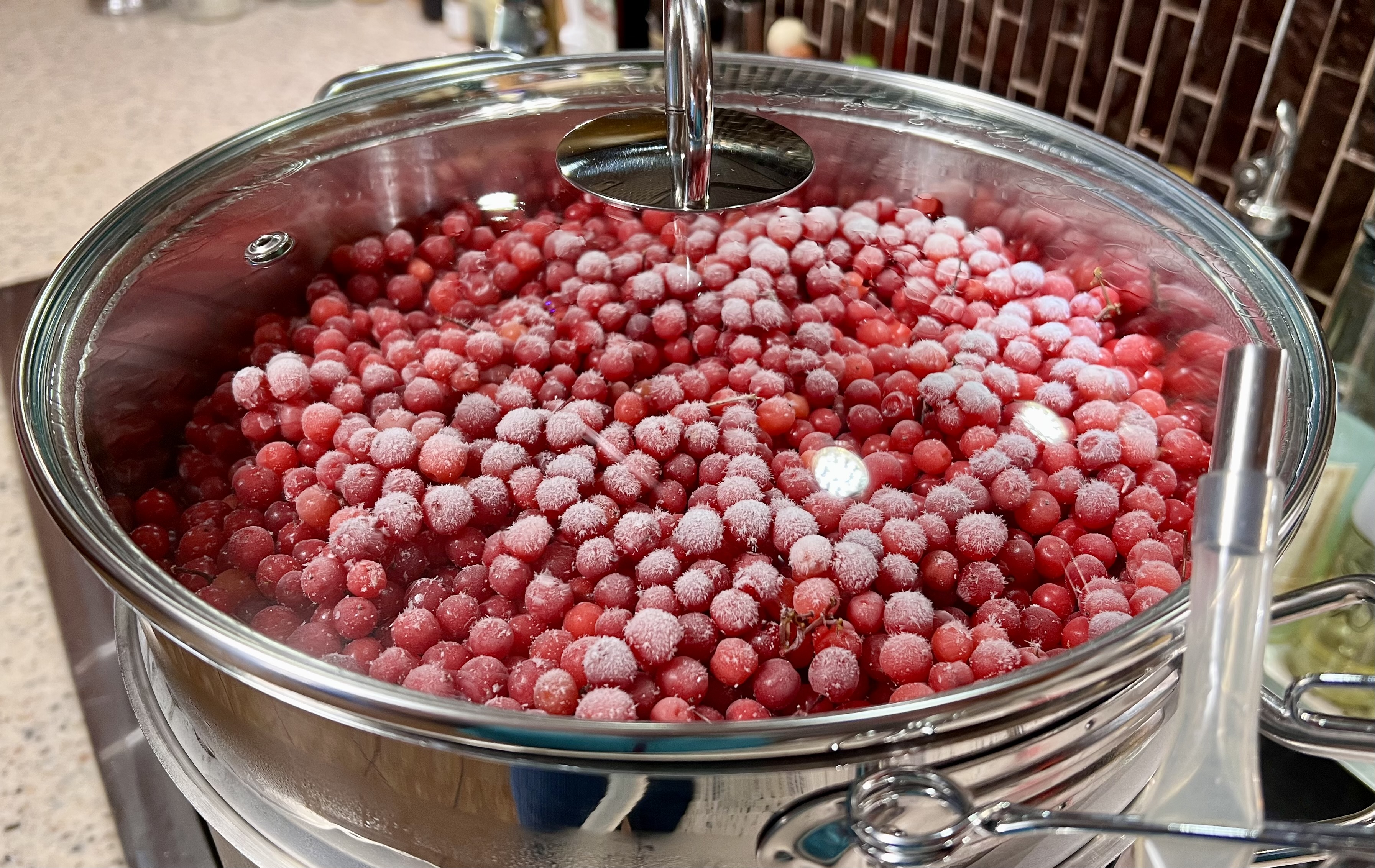
We’ve got our places, however picking highbush cranberries is not necessarily an easy activity. As has been the case the past few years, the bushes at our spot are loaded with bright red berries. From a little distance, one could be fooled into thinking that the picking might be as easy as simply sidling up to a bush, clawing fistfuls of berries into buckets and heading home. But… It’s a tough hike through dense growth of up-to-your-shoulders grasses, sedges and other plants to get to those berries – vegetation so thick you often don’t see the numerous tree trunks and thick branches remaining from a long-ago logging operation. You do your best to step up, over and around these old boles, but some of them are rotten enough to give way under your weight. That can result in a jarring spill. Other times you might step up a couple of feet onto a log… only to find that when you step off on the other side the drop is an additional foot or two – the added depth buried from view in the thick vegetation. Suddenly you’re reminded why you make sure to commit to your daily routine of stretching and yoga, holding that precious bucket of fruit you’ve already invested picking time into as though its a pot of gold. Still, occasionally a dump occurs… little more heartbreaking to a serious berryman. Meanwhile, as hard as you might be concentrating on the berrying – and staying in contact with your partner – you’ve always got at least one of your two ears keen for the crack of a branch, a a swish through the grass, or even a suddenly curious grunt and huff from a fellow berrier of the four-legged variety. These occasional bear encounters can send your heart straight up into your throat. You tap the canister of bear spray looped onto your belt, gently call out to let your presence be known, and hope the next thing you hear is the sound of something big heading in the opposite direction.

Sixteen seasons. So far, so good.

In spite of the work and the manageable risks, we love this fall tradition. Carefully weaving our way from bush to bush under and over the aforementioned trees, the plunking sound of berries filling the bucket, hollow and high-pitched at first, gradually becoming fuller and more resonate, the serenade of sandhill cranes trumpeting overhead as they make their way south for the winter, chevrons of honking geese, glorious fall gold, wine, crimson and amber, the tang of cooler weather… all of it a feast for the senses.

Back home, I set the gallons of berries collected in the steam juicer. The scent of the juice and pulp extracting from the berries stirs my culinary imagination. Jars of juice are prepared for the pantry. The pulp is made into a simple sweet and sour sauce, canned for the winter pantry, to reappear later as a glaze on something Jack has grilled. I’m already looking forward to hot cinnamon cranberry drinks and stir fries featuring the tangy sweet sauce.

Only a couple more foraging possibilities remain this year. Then it will be time to mulch the garden and dream about the next season of foraging.

Leave a like and know that we appreciate comments! Join over 6,000 subscribers and thousands of regular readers from throughout the world as we continue to explore good food, adventures and Life Off The Beaten Path.
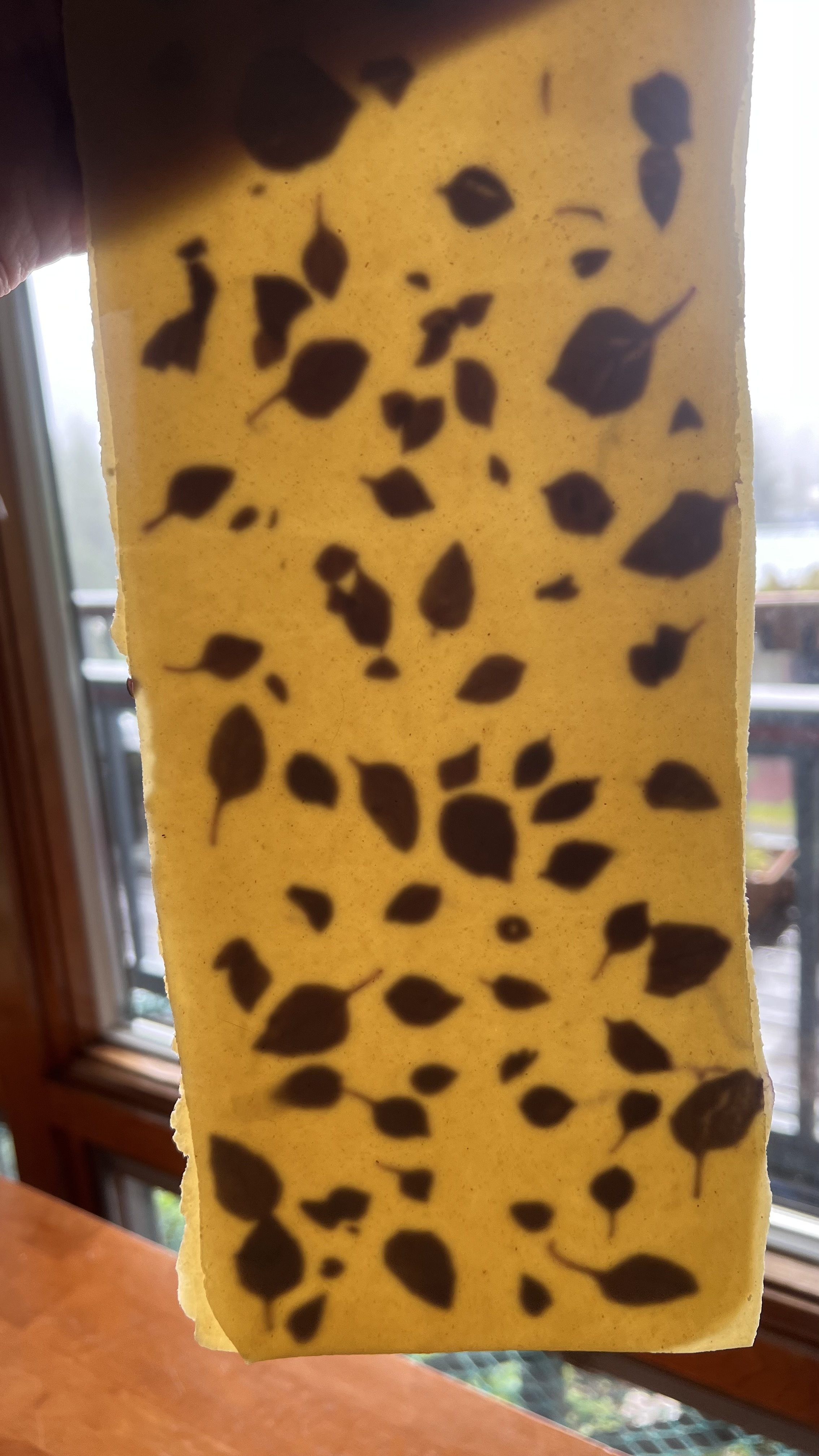
Hydroponic Experiment: Purple Ball Basil Laminated Ravioli

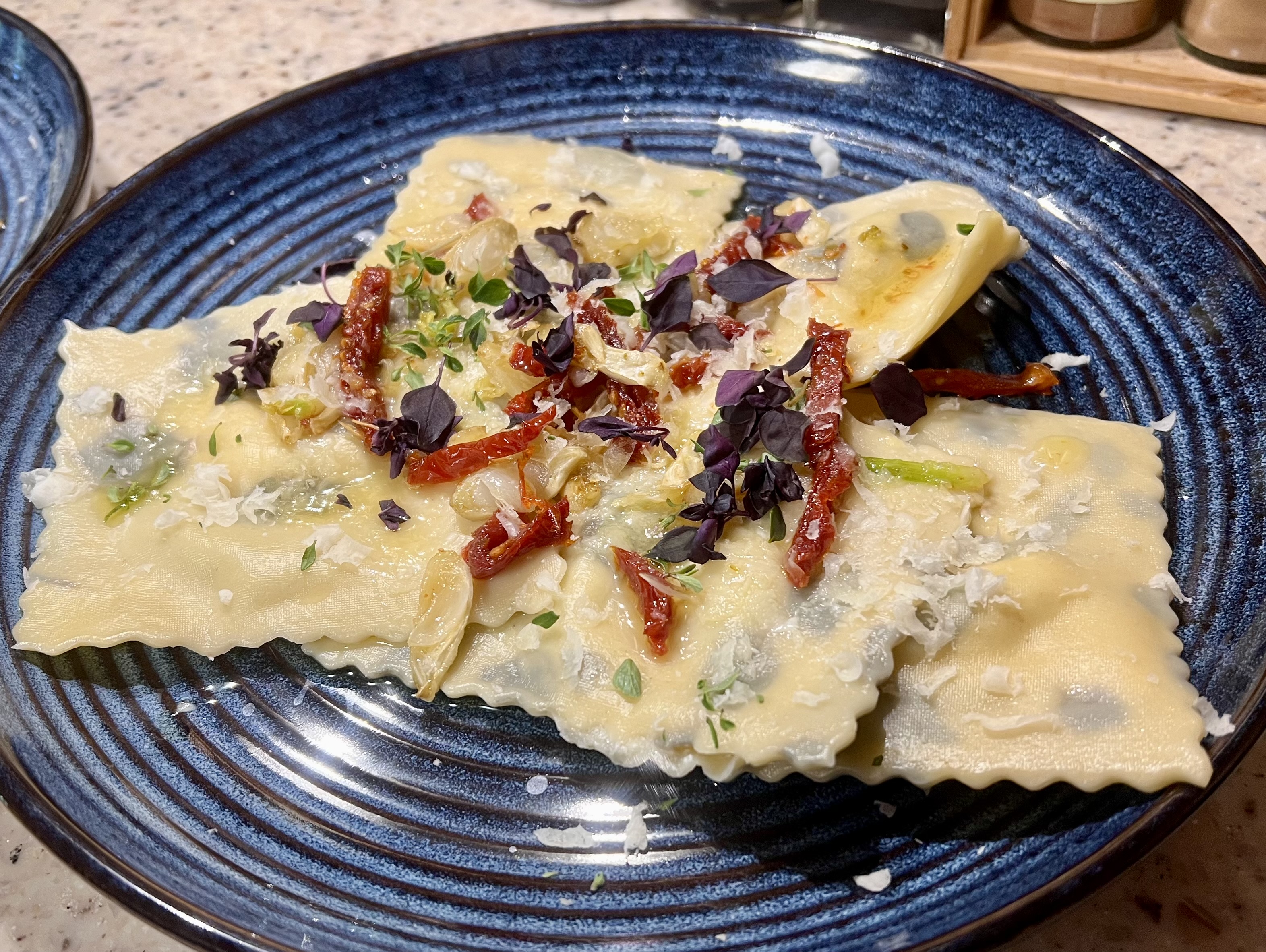
Purple Ball Basil is a strikingly beautiful, diminutive plant that is flourishing in my hydroponic garden. The leaves are not just lovely to look at, they pack more basil flavor than you might expect from such a small package.

These festive little leaves have been a happy addition to our salads and pizzas. It got me wondering how they would hold up when cooked. Unfortunately, my first ideas resulted in flavorful but blackened leaves. But then I came across a video showing how to incorporate edible flower petals into laminated pasta. Ding! That should work, right? The tiny purple leaves are much like flower petals.

This pasta was a labor of inspired love. First I made and rolled two flat sheets of pasta. Then I spread purple basil leaves on the bottom layer and gently placed a second layer of pasta on top. I learned that a rolling pin was the best way to laminate the two layers. After the laminated sheets were complete, I proceeded to make ravioli as per usual. I laid down a sheet of pasta dough and added generous spoonfuls of a cheese mixture Jack had created. After covering this first sheet with a second sheet of laminated dough, I used a fluted pastry wheel to cut out individual ravioli. Because the finished ravioli has a total of four thin layers of pasta, it does take a little longer to cook – five minutes instead of three. Since this ravioli is so pleasing to look at and has a unique flavor I wanted to keep the finish simple. We served it with a light dressing of sautéed garlic, olive oil, sun-dried tomatoes and sea salt. I finished the dish with fresh purple ball basil and a bit of fresh thyme. We felt like we were eating art!

What would you do with these beautiful, tasty leaves?

Leave a like and know that we appreciate comments! Join over 6,000 subscribers and thousands of regular readers from throughout the world as we continue to explore good food, adventures and Life Off The Beaten Path.
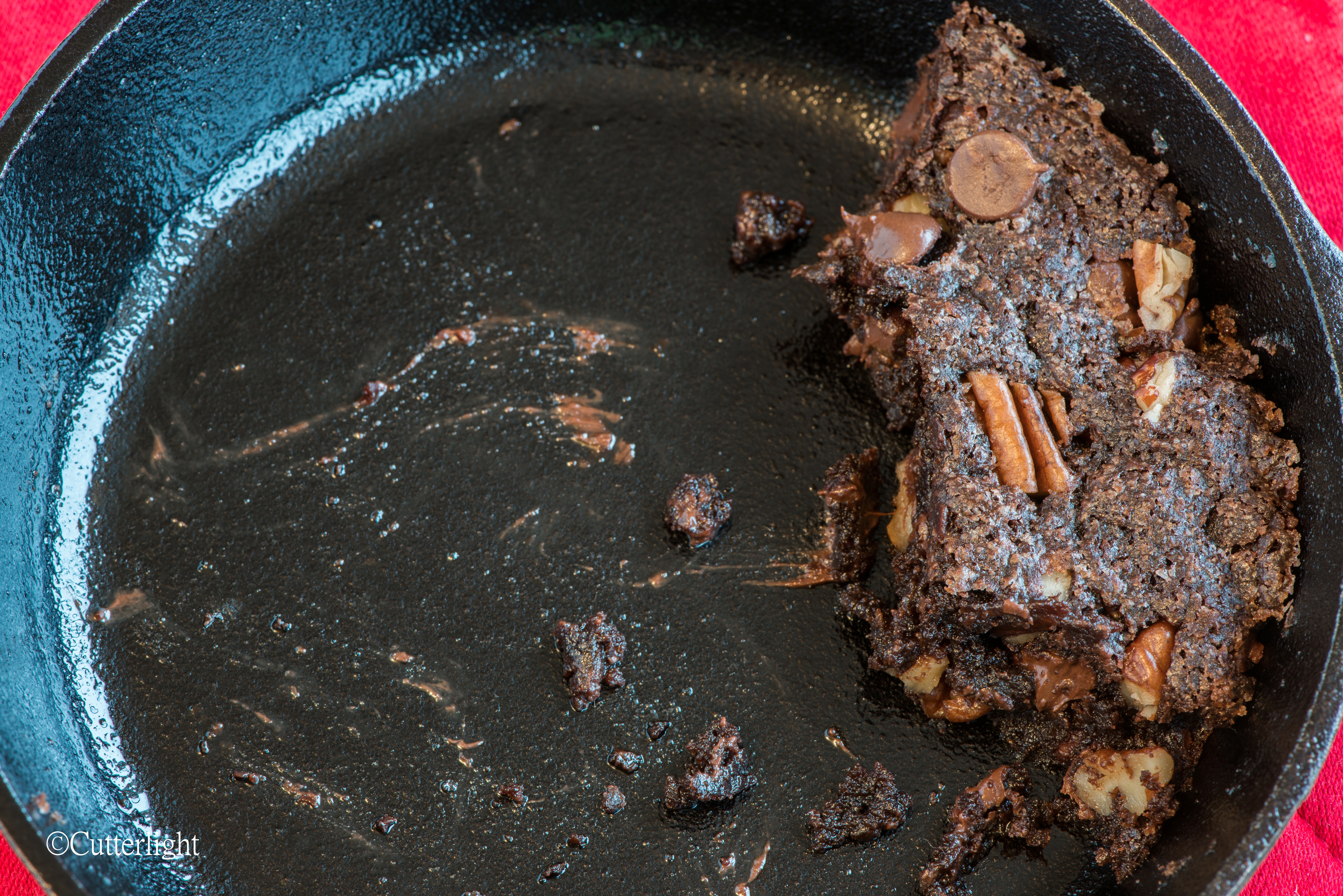
Where did it go? Bourbon Pecan Mini Skillet Brownie

This delicious little dessert was supposed to be for two. Fudgy, chocolatey, with a nutty crunch and a hint of caramely bourbon. Maybe it wasn’t enough!

We had just finished dinner – bowls brimming with homemade clam chowder served with a hunk of toasted garlic sourdough on the side. The forecast was for snow, but instead Chignik’s famously howling winds were slamming our house with torrents of icy rain blown sideways. Soup alone was not enough in the face of such weather.

We had a stash of chocolate squares to nibble for dessert, but even those didn’t sound satisfying. Something quick and freshly baked might do the trick, I thought. Armed with a six-inch cast iron skillet, a few tablespoons of this and a dollop that, 25 minutes later all that was left was the two bites you see above. Well, that’s not true. We paused for a photographic intermission and then devoured the last two bites. Now that was satisfying!

Bourbon Pecan Mini Skillet Brownie for Two

Ingredients

  • 5 tbsp all purpose flour
  • 6 ½ tbsp granulated sugar
  • 2 ½ tbsp Dutch processed cocoa powder
  • pinch salt
  • 3 tbsp vegetable oil, we use canola
  • 1 egg
  • 1 tbsp bourbon
  • 1/3 cup semi-sweet chocolate chips
  • 1/3 cup pecans, chopped coarse

Directions

  1. Heat oven to 350° F. Lightly grease 6” cast iron skillet.
  2. In a medium bowl, whisk together flour, sugar, cocoa powder and salt.
  3. Add in oil, egg, and bourbon.
  4. Stir until well mixed.
  5. Fold in chocolate chips.
  6. Fold in pecans.
  7. Spoon batter into prepared pan.
  8. Bake for 20 minutes. Center should look done. Cook a little longer for a more well-done brownie. We like ours nice and fudgy, so 20 minutes was perfect.
  9. Let cool for 10 minutes and then dig in!


Chocolate Pistachio Biscotti

chocolate pistachio biscotti n

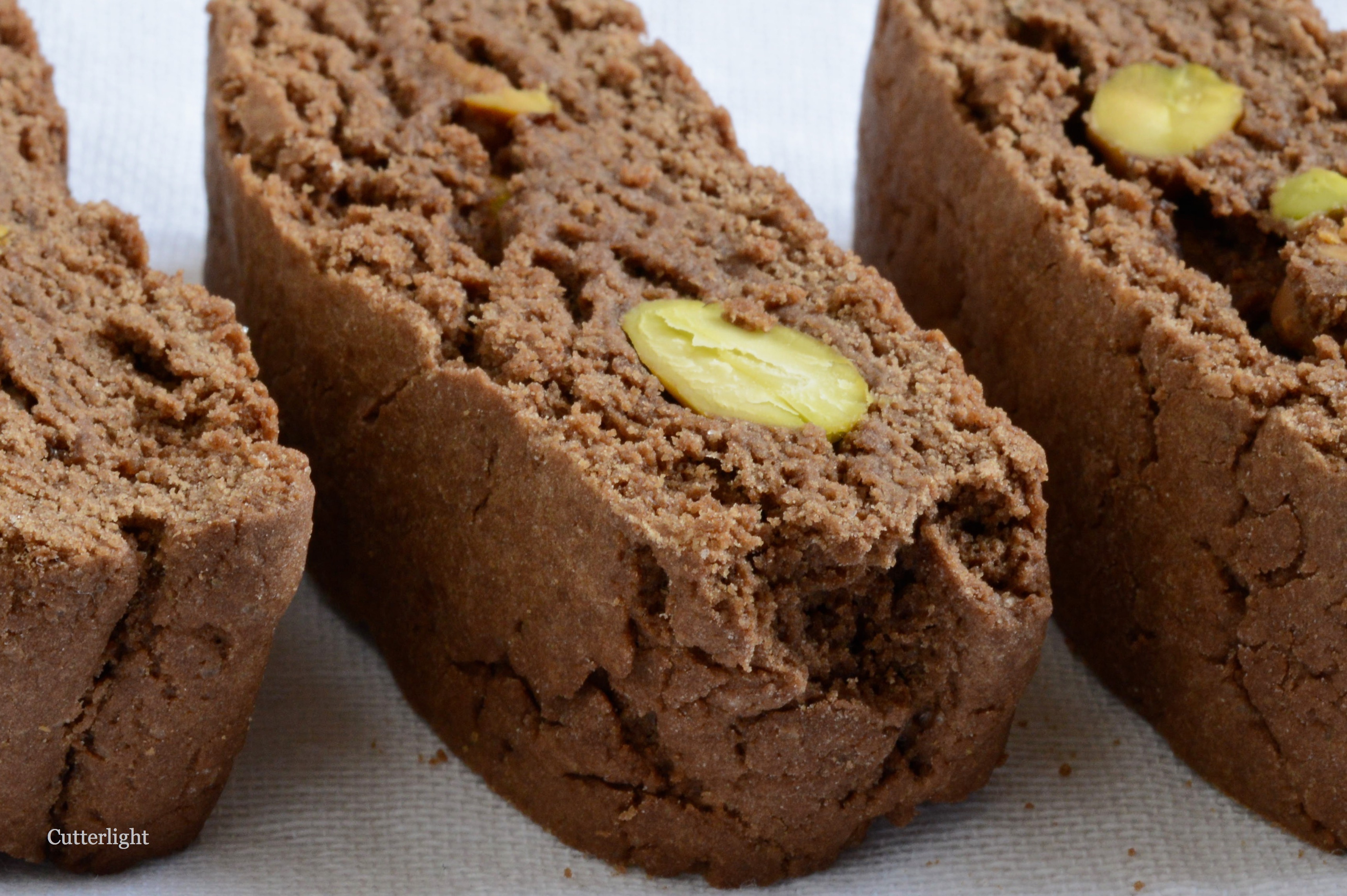
Crunchy chocolate biscotti speckled with delightfully tasty green pistachios. Where’s my latte?

I am a huge fan of the soft cookie with the slightly crunchy exterior. You know, that perfect chocolate chip cookie with an almost melty interior and an exterior that holds it perfectly together? This biscotti recipe is worth momentarily turning away from my favorite cookie texture. One thing I like about this biscotti recipe is the expected crispy biscotti-like texture without the hard crunch. You can have this biscotti with tea and still hear your conversation. Then there’s the flavor. There is the bang of chocolately cocoa followed by zips of salty toasted pistachios. Yum! The intent with the smaller batch is that we would have a few cookies around to enjoy at the end of the day with tea. The reality is… I’ve already made a second batch.

Chocolate Pistachio Biscotti

Ingredients

  • 1 cup all purpose flour
  • 1/4 cup dutch processed cocoa
  • 1/2 tsp baking soda
  • pinch salt
  • 1/2 cup granulated sugar
  • 1 large egg
  • 3 tbsp unsalted butter, melted
  • 1/2 cup shelled, roasted and salted pistachios

Directions

  1. Preheat oven to 350 degrees F (175 degrees C). Line a baking sheet with parchment paper. Set aside.
  2. In a medium bowl, sift together flour, cocoa, baking soda and salt.
  3. In a small bowl whisk together the sugar and the egg until light and creamy.
  4. Add melted butter to egg mixture. Whisk.
  5. Add flour mixture to egg mixture. Stir until until stiff dough forms.
  6. Shape into a flattened log, about 2 inches wide.
  7. Cut the log in half so you can sprinkle the pistachios in the middle, like a sandwich. Put the log back together and smooth out the cut with your hands. This will ensure each biscotti has an even amount of nuts.
  8. Place on prepared baking sheet and bake for about 25 minutes. Cookie should be slightly firm. Allow to cool for about 5 minutes.
  9. Using a serrated knife, cut log into pieces about 1 inch thick. Place each cookie on the cut side. Reduce oven temperature to 300 degrees F (145 degrees C). Bake cut cookies for an additional 8 minutes.
  10. Flip cookies over and continue to bake for an additional 5 minutes.

Can You Really Make These From Scratch? Honey-Cinnamon Graham Crackers

I’ll bet even your grandmother didn’t bake like this…

I found a cheesecake recipe I wanted to experiment with, and, off course, I needed a graham cracker crust. Since we hadn’t sent up any graham crackers, my choices were to buy some at our local store, order them through Amazon.com, or forget the whole idea. Prices at the Native Store are too high, so I ruled that out, and with only five weeks remaining till we head south, it seemed late to be ordering food. The next obvious step was to give up. Ha! That’s not me! I searched around and found a couple of recipes for graham crackers from scratch. Fantastic! My crackers came out looking a little rough around the edges, but they tasted perfect. Actually, in our opinion, they taste better than store-bought. These homemade beauties have a crisp cracker crunch and a sweet honey-cinnamon taste. Now, I’ll tackle the cheesecake recipe.

Honey Graham Crackers

Ingredients:

  • 1 cup whole wheat flour
  • 1/2 cup unbleached all purpose flour
  • 1/2 tsp baking powder
  • 1/4 tsp. baking soda
  • 1/4 cup softened unsalted butter
  • 1/4 cup granulated sugar
  • 2 tbsp and 2 tsp honey
  • 2 tbsp corn syrup
  • 1 tsp vanilla extract
  • 1/2 cup milk
  • Optional cinnamon sugar topping – 3 tsp granulated sugar and 1 tsp cinnamon

Directions:

  1. Mix together whole wheat flour, all purpose flour, baking powder and baking soda. Set aside.
  2. Blend butter, sugar, honey and corn syrup until well mixed and fluffy. Add vanilla and mix.
  3. Stir dry ingredients into wet ingredients. Stir in milk. You should have a nice ball of dough at the end of this step.
  4. Cover dough and refrigerate overnight.
  5. Preheat oven to 350 degrees F.
  6. Roll the dough out on a well-floured surface. It is easiest to do this working with only a quarter section of the dough at a time. Roll until the dough is about 1/8″ thick. Cut the dough into rectangles using a knife. Place rectangles on ungreased cookie sheets. Prick decorative holes with toothpick. If desired, sprinkle cinnamon and sugar topping on crackers.
  7. Bake for 13 minutes. Finished crackers will be browned and will become more crisp as they cool. Cool on wire racks.

One Cup of Mayo, and Hold the Preservatives!

Whip up this tasty, fast, easy mayonnaise recipe once, and you may never go back to store-bought.

The first time I realized that mayonnaise could be made at home I was reading Chapter I, De Gustibus (regarding taste) in Craig Claiborne’s New York Times Cookbook. His recipe called for an egg yolk, salt, freshly ground pepper, Dijon mustard, vinegar or lemon juice, one cup of peanut oil and a whisk. I tried it and to my amazement, it worked! The chemistry in forming this emulsion is visually fascinating. But what a lot of effort. I was happy enough with my jar of Hellmann’s. It would be 27 years before I’d have another go at the homemade version.

In fact it was Barbra who encouraged me to revisit mayonnaise. Taking up her challenge, I made a cup of it, this time in a blender. Better than getting mayonnaise elbow with a whisk, but still… the old-school blender I used was a bother to clean. So the next time we needed mayonnaise, we went to Point Hope’s Native Store. $$$ for a six-ounce jar.

That was when we decided, finally, to invest in a good immersion blender – aka a stick blender. And now, I doubt we’ll ever buy a jar of mayonnaise again. The recipe below is quick, easy to clean up after, and results in a tasty, preservative-free, all-natural mayonnaise ready to be spread on a turkey sandwich, to serve as a base for anchovy-mayonnaise salad dressing, or to blend into deviled eggs.

1 cup Homemade Mayonnaise

Ingredients:

  • 1 large egg, as fresh as possible
  • 1 tbsp lemon juice
  • 1 tsp white vinegar (we like rice vinegar)
  • 1 tbsp Dijon mustard
  • healthy pinch or two (1/8 teaspoon) salt
  • dash of white pepper or freshly ground black pepper, or both
  • 1 cup extra virgin olive oil (or other vegetable oil)

Directions:

You will need a stick blender and a fairly narrow container such as a small canning jar, one just wide enough so that the stick blender fits.

  1. Place egg in a narrow jar or other container.
  2. Add lemon juice, vinegar, mustard, salt and pepper.
  3. Add olive oil.
  4. Push stick blender to the bottom of the container. Blend on high speed. (This depends on the blender. Ours gets the job done at a lower setting.) Within seconds, mayonnaise will start to form. As soon as you see this, gradually raise the blender to create more mayonnaise. Mix through top to bottom one more time thoroughly. The entire mixing process will take about 10 seconds.

This mayonnaise will keep in your refrigerator for about two weeks. The extra virgin olive oil and the Dijon give it a distinctive taste. For mayonnaise more like commercial brands, use canola or peanut oil and half the Dijon or a milder mustard.

Chocolate Almond Spread (or Homemade Bush-Alaska Nutella)

Creamy-smooth chocolate almond spread ready for toast, dolloping inside crêpes, or drizzling on pancakes or waffles. 

Being hundreds of miles from roads or specialty stores and becoming more curious about how foods we take for granted are actually created drives me to experiment. Today’s challenge? Nutella.

In high school, a German friend introduced me to this chocolate-hazelnut spread that looks a little like peanut butter. But sister, it’s not peanut butter! Nutella is sweet, creamy, and chocolately and is great spread on fruits and breads and a whole lot of other things, or scooped out of the jar and eaten off the spoon!

I found a recipe, but of course I modified it to fit the items in my pantry. Substituting almonds for hazelnuts, and armed with my new stick blender (with nut chopping attachment), I set to work. As I processed the nuts from a grain to coarse  flour and finally into a butter, I was amazed. It really worked! Mixed with chocolate, the result tasted like an almond version of Nutella. Fabulous! (Incidentally, the earliest versions of Nutella, created in Italy, used either almonds or hazelnuts.)

Now I’m ready to make those macarons I keep seeing. Or maybe I can convince Jack to make chocolate-almond crêpes for breakfast!

Chocolate Almond Spread 

Yield: about 8 ounces (1 cup)

Ingredients

  • 1 cup whole raw almonds
  • 1 cup powdered sugar
  • 1/8 cup unsweetened cocoa powder
  • up to 1/4 cup vegetable or nut oil
  • 1/2 tsp vanilla extract
Directions
  1. Skin almonds by pouring boiling water over them in a bowl and letting them sit for 2 minutes. Drain off hot water and replace with cold water. Almond skins should pop off when you squeeze the individual almonds. I’ve read rubbing the almonds in a clean towel at this point will also remove skins, but that didn’t work for me.
  2. Preheat oven to 350° F. Place almonds in a single layer on a shallow baking pan. Toast for 10 minutes. Stir the nuts halfway through baking to ensure an even color.
  3. Process nuts in a food processor, or use a stick blender. Scrape down the sides of the bowl as necessary until the nuts have liquefied, about 5 minutes. First, you will get coarsely chopped nuts, then a fine meal. After a little while, the nuts will form a ball around the blade, and it will seem like you have a solid mass. Keep processing. The heat and friction will extract the natural oils from the nuts, and you will get almond butter!
  4. When the nuts have liquified, add the sugar, cocoa and vanilla. Slowly drizzle in enough oil to make a spreadable consistency. Since the mixture is warm, it will be more fluid now than at room temperature.
  5. Transfer the spread to an airtight container, and store in the refrigerator for up to  1 to 2 months. For best results, stir the chocolate-almond spread before using.

Adapted from http://www.sugoodsweets.com/blog/2005/12/nutella/

Apple Cinnamon Walnut Bread

Walnut, cinnamon, and freshly grated Fuji apples make peanut butter sandwiches something to look forward to.

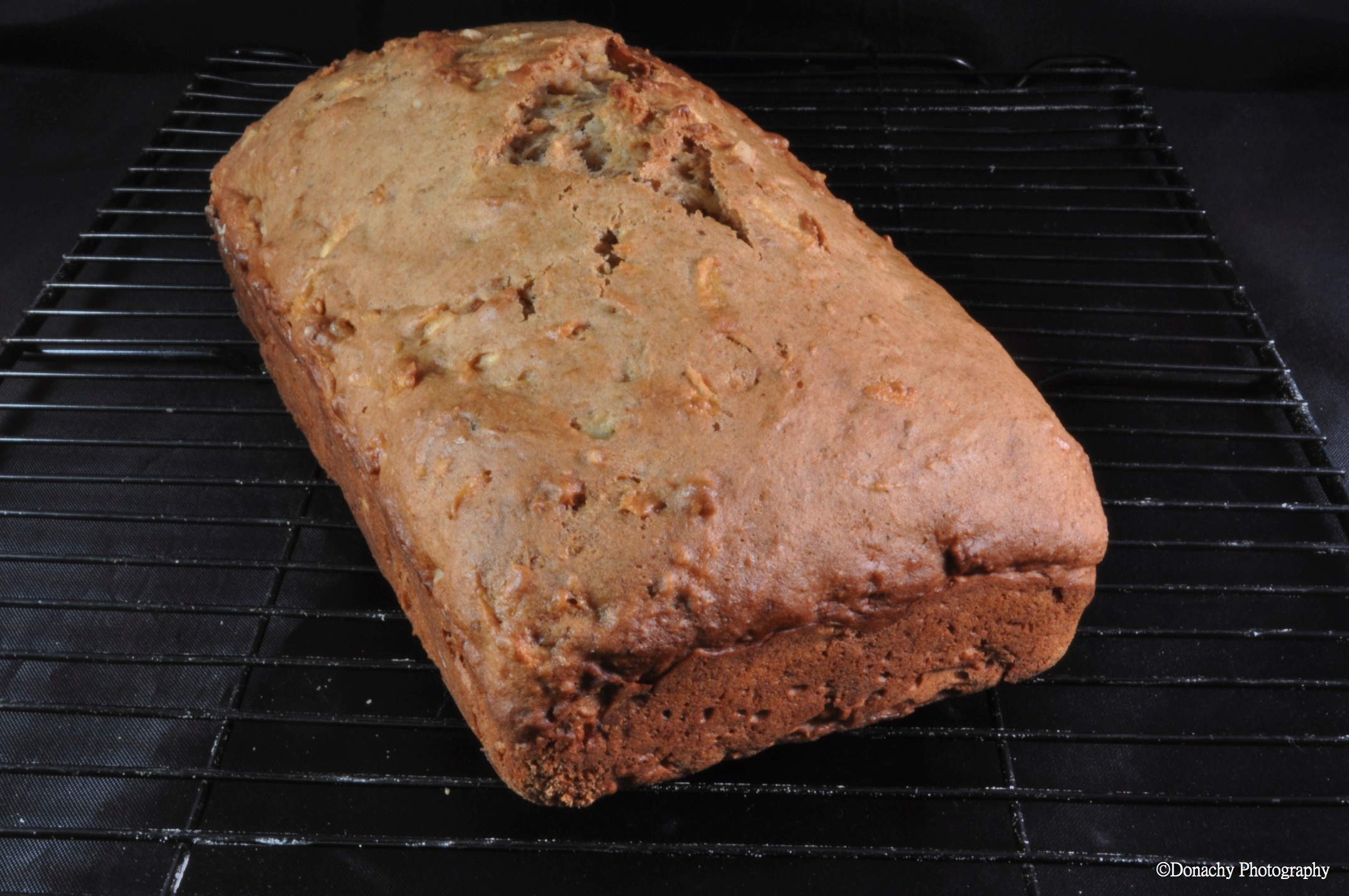
I love variety in my meals. I love sampling new foods and new food combinations. So it might seem paradoxical that I could happily eat a peanut butter sandwich every day for lunch. Jack… not so much. After a few consecutive days of peanut butter sandwiches, he diplomatically asks if we could change up the lunch menu. This year, I vowed to make lunches more interesting. Chili on rice, calzones, stew on baked potatoes, and salmon sandwiches have satisfied Jack’s need for variety. And so, with time ticking away toward the end of another year in the bush, I looked in the cupboard at the last third of our 80-ounce jar of Adam’s peanut butter. An idea! What if I made peanut butter sandwiches on fruit bread? Let me tell you how well this went over… When I asked Jack if he wanted salmon pizza or a peanut butter sandwich for lunch tomorrow, he chose a peanut butter sandwich! I’m not planning on going back to peanut butter every day, but we are both happy it is still in the rotation.

Apple Cinnamon Walnut Bread

Ingredients

  • 1 3/4 cups all purpose flour
  • 1/2 tsp baking powder
  • 1 tbsp ground cinnamon (we love cinnamon)
  • 1/4 tsp baking soda
  • 3/4 cup granulated sugar
  • 1/2 cup unsweetened applesauce
  • 2 eggs
  • 1 tsp vanilla extract
  • 1 grated Fuji apple (a little more than a cup)
  • 1/2 cup walnuts, chopped coarse

Directions

  1. In a large mixing bowl, combine flour, baking powder, cinnamon, and baking soda. Set aside.
  2. In another mixing bowl, combine sugar and applesauce. Mix well. Add eggs, one at a time, beating well after each addition. Stir in vanilla.
  3. Stir wet ingredients into dry ingredients until just moistened.
  4. Stir in grated apple.
  5. Stir in walnuts.
  6. Pour into a greased bread pan (8 in. x 4 in. x 2 in.)
  7. Bake at 350 degrees F for 55 – 65 minutes, or until a toothpick comes out clean.
  8. Cool for 10 minutes before removing from pan to a wire rack.

We enjoy fruit breads and use the above recipe as a base. It’s easy to substitute different types of fruit and spices. Pear bread with ginger and banana bread with cinnamon and nutmeg are two other favorite fruit breads that make excellent peanut butter sandwiches or breakfast toast.

Marvelous Marbled Chocolate Cheesecake Brownies

Fudge-like brownie batter swirled with chocolate chip cheesecake make this decadent dessert irresistible. 
As we go through our annual shopping list, I have to wonder why I thought I needed twenty pounds of chocolate chips! It is a challenge to shop for a whole year in one fell swoop. In most regards, we were really accurate, but I must have been suffering from a chocolate craving while we were in Costco! I did make it through about five pounds so far. With 15 pounds remaining and big chocolate lovers around, I am inspired to keep baking wickedly chocolate confections.
Marvelous Marbled Chocolate Cheesecake Brownies
Ingredients
  • 1 (8 ounce) package cream cheese, softened
  • 3/4 cup white sugar
  • 1 tsp vanilla
  • 3 eggs
  • 2 cups semisweet chocolate chips, separated
  • 1/4 cup unsalted butter
  • 2/3 cup all-purpose flour
  • 1/2 teaspoon baking powder
  • 1/4 teaspoon salt
Directions
  1. Preheat oven to 350 degrees F (175 degrees C). Grease a 8-inch square baking pan or baking dish.
  2. Combine cream cheese with 1/4 cup sugar, 1 egg, and vanilla in a mixing bowl; beat until smooth. Stir 1 cup chocolate chips into the cream cheese mixture. Set aside.
  3. Fill a saucepan with water and bring to a simmer. Set a heatproof mixing bowl over the water. In the mixing bowl, combine butter with the remaining 1 cup of chocolate chips; stir until just melted and blended together.
  4. Mix in the remaining 1/2 cup sugar and 2 eggs in a bowl. Sift together flour, baking powder, and salt. Stir flour mixture into sugar and egg mixture. Mix in chocolate-butter mixture into flour mixture so that it is evenly blended.
  5. Pour half of the batter into the prepared baking pan. Spread the cream cheese mixture over the chocolate layer. Top with remaining chocolate mixture (this doesn’t need to completely cover the cream cheese layer). Using a knife, swirl the top chocolate layer into the cream cheese to make a marble pattern by cutting the blade through the mixtures in a swirling pattern.
  6. Bake in preheated oven at 350 degrees F (175 degrees C) for 25 to 30 minutes, or until top is cracked and edges pull away from sides of the pan. Cool thoroughly. Cut into 12 to 16 squares. Store in refrigerator or freeze.
We tried the brownies cooled on the counter and chilled in the refrigerator. We preferred them chilled in the refrigerator.

Recipe adapted from http://allrecipes.com/recipe/chunky-cheesecake-brownies/Detail.aspx.

Rustic Moose Pot Pie

Lean wild game, roasted to perfection, sliced into bite-sized cubes and baked in a pie topped with a hearty whole wheat crust is the kind of meal that can fend off consecutive days of negative 20 degree cold.

When a friend recently presented us with a two-pound moose roast, we were thrilled. But we were also a bit perplexed. Looking over the meat, I couldn’t find even a trace of fat. Add that to the fact that neither one of us cooks roasts, and I was at something of a loss as to what to do. “Stew,” was the suggestion I most frequently came across. “Stew or stir fry,” was a friend’s suggestion.

We love good stew. In fact, we have enough caribou stew in the freezer to see us through the end of the school year. So that was out. Stir fry, too, is a regular dinner item. I wanted to do something traditional but new for us.

In the end, I did roast the moose. Inspired by a recipe for lamb from the cookbook Nobu West by Nobu Matsuhisa, I marinated the roast in miso seasoned with garlic and ginger before putting it in the oven. Despite my best efforts it came out a bit drier than I had hoped, although the miso marinade helped to caramelize the roast when I pan-seared it prior to roasting. I served the finished roast sliced thin with a tosa-zu dipping sauce along with carrots and parsnips cut into long, thin strips and sautéed in a combination of olive oil, butter, garlic and soy sauce.

Dinner that night started with scallop, shrimp and smoked quail egg chawan mushi, segued to roasted beats with pan-crisped pine nuts, was followed by cedar planked shrimp on mushrooms and culminated with the moose roast. For dessert, Barbra brought out individual baked apples capped with pastry. Inside each apple was apple pie filling. The dessert was delicious – and fun, and the whole-wheat pie crust topping the apple gave us the idea of making a large pot pie stuffed with leftover moose, vegetables and gravy.

Regarding the recipe below, a note about bouillon: We’ve become fans of Better Than Bouillon products. In our opinion, the flavor is superior to other soup bases we’ve tried.

Rustic Moose Pot Pie

Ingredients:

  • 1 3/4 cups water
  • 1 1/2 tablespoons “Better Than Bouillon Beef Base” (or other bouillon, or use beef broth)
  • 1 bay leaf
  • 1 teaspoon dried rosemary
  • 1 2/3 cups potatoes, cut into 1/2″ cubes, skin on
  • 4 tablespoons olive oil
  • 1/3 cup flour
  • 1/2 pound roasted moose meat, cut into 1/2″ cubes
  • 1/2 cup sweet corn
  • 1/3 cup celery, diced coarse
  • 1/2 cup carrots, sliced into discs or chopped coarse
  • 1/3 cup broccoli florets, cut coarse
  • (Optional) 1/3 cup mushrooms, chopped coarse
  • 1/2 rounded teaspoon cumin
  • 1 teaspoon dried sage
  • several generous grinds freshly cracked black pepper
  • salt, to taste

Directions:

  1. Preheat oven to 375 °F. **Baking time and temperature may vary depending on type of crust used.**
  2. Place the water in a pot and heat over medium-high heat. Stir in enough beef bouillon for a strongly flavored base. Add bay leaf and rosemary. Bring to a simmer.
  3. Add potatoes. You will simmer potatoes till just tender, but do not overcook. When potatoes still have about 5 minutes of cooking to go, add the carrots. When there is about 1 minute, add all the remaining vegetables. Continue simmering until potatoes are just tender and remove from heat. (They will continue cooking in the pie.)
  4. Use a strainer to separate potatoes and vegetables from the beef stock. Remove bay leaf and place potatoes and vegetables in a large bowl. Return beef stock to original pot.
  5. Place approximately 4 tablespoons olive oil in small frying pan and heat over low to medium-low heat. When oil is heated, slowly stir in flour. Continue stirring until mixture thickens. Remove from heat.
  6. Heating beef broth over medium heat, stir in oil and flour mixture. Combine thoroughly. This will result in a thick gravy.
  7. To the bowl that already has the potatoes and vegetables, add the meat, gravy and the remaining seasonings and mix together.
  8. Pour meat and vegetable mixture directly into a deep pie dish. Cover with a crust. Be sure to make holes in the crust to allow steam to escape. Brushing on a beaten egg will help create a golden brown crust.
  9. Place on baking sheet and bake at 375 °F for 25 – 30 minutes or until crust is golden brown.

Serve piping hot with big glasses of Old Vine Zinfandel.