Unknown's avatar

About Jack & Barbra Donachy

Writers, photographers, food lovers, anglers, travelers and students of poetry

One Cup of Mayo, and Hold the Preservatives!

Whip up this tasty, fast, easy mayonnaise recipe once, and you may never go back to store-bought.

The first time I realized that mayonnaise could be made at home I was reading Chapter I, De Gustibus (regarding taste) in Craig Claiborne’s New York Times Cookbook. His recipe called for an egg yolk, salt, freshly ground pepper, Dijon mustard, vinegar or lemon juice, one cup of peanut oil and a whisk. I tried it and to my amazement, it worked! The chemistry in forming this emulsion is visually fascinating. But what a lot of effort. I was happy enough with my jar of Hellmann’s. It would be 27 years before I’d have another go at the homemade version.

In fact it was Barbra who encouraged me to revisit mayonnaise. Taking up her challenge, I made a cup of it, this time in a blender. Better than getting mayonnaise elbow with a whisk, but still… the old-school blender I used was a bother to clean. So the next time we needed mayonnaise, we went to Point Hope’s Native Store. $$$ for a six-ounce jar.

That was when we decided, finally, to invest in a good immersion blender – aka a stick blender. And now, I doubt we’ll ever buy a jar of mayonnaise again. The recipe below is quick, easy to clean up after, and results in a tasty, preservative-free, all-natural mayonnaise ready to be spread on a turkey sandwich, to serve as a base for anchovy-mayonnaise salad dressing, or to blend into deviled eggs.

1 cup Homemade Mayonnaise

Ingredients:

  • 1 large egg, as fresh as possible
  • 1 tbsp lemon juice
  • 1 tsp white vinegar (we like rice vinegar)
  • 1 tbsp Dijon mustard
  • healthy pinch or two (1/8 teaspoon) salt
  • dash of white pepper or freshly ground black pepper, or both
  • 1 cup extra virgin olive oil (or other vegetable oil)

Directions:

You will need a stick blender and a fairly narrow container such as a small canning jar, one just wide enough so that the stick blender fits.

  1. Place egg in a narrow jar or other container.
  2. Add lemon juice, vinegar, mustard, salt and pepper.
  3. Add olive oil.
  4. Push stick blender to the bottom of the container. Blend on high speed. (This depends on the blender. Ours gets the job done at a lower setting.) Within seconds, mayonnaise will start to form. As soon as you see this, gradually raise the blender to create more mayonnaise. Mix through top to bottom one more time thoroughly. The entire mixing process will take about 10 seconds.

This mayonnaise will keep in your refrigerator for about two weeks. The extra virgin olive oil and the Dijon give it a distinctive taste. For mayonnaise more like commercial brands, use canola or peanut oil and half the Dijon or a milder mustard.

Chocolate Almond Spread (or Homemade Bush-Alaska Nutella)

Creamy-smooth chocolate almond spread ready for toast, dolloping inside crêpes, or drizzling on pancakes or waffles. 

Being hundreds of miles from roads or specialty stores and becoming more curious about how foods we take for granted are actually created drives me to experiment. Today’s challenge? Nutella.

In high school, a German friend introduced me to this chocolate-hazelnut spread that looks a little like peanut butter. But sister, it’s not peanut butter! Nutella is sweet, creamy, and chocolately and is great spread on fruits and breads and a whole lot of other things, or scooped out of the jar and eaten off the spoon!

I found a recipe, but of course I modified it to fit the items in my pantry. Substituting almonds for hazelnuts, and armed with my new stick blender (with nut chopping attachment), I set to work. As I processed the nuts from a grain to coarse  flour and finally into a butter, I was amazed. It really worked! Mixed with chocolate, the result tasted like an almond version of Nutella. Fabulous! (Incidentally, the earliest versions of Nutella, created in Italy, used either almonds or hazelnuts.)

Now I’m ready to make those macarons I keep seeing. Or maybe I can convince Jack to make chocolate-almond crêpes for breakfast!

Chocolate Almond Spread 

Yield: about 8 ounces (1 cup)

Ingredients

  • 1 cup whole raw almonds
  • 1 cup powdered sugar
  • 1/8 cup unsweetened cocoa powder
  • up to 1/4 cup vegetable or nut oil
  • 1/2 tsp vanilla extract
Directions
  1. Skin almonds by pouring boiling water over them in a bowl and letting them sit for 2 minutes. Drain off hot water and replace with cold water. Almond skins should pop off when you squeeze the individual almonds. I’ve read rubbing the almonds in a clean towel at this point will also remove skins, but that didn’t work for me.
  2. Preheat oven to 350° F. Place almonds in a single layer on a shallow baking pan. Toast for 10 minutes. Stir the nuts halfway through baking to ensure an even color.
  3. Process nuts in a food processor, or use a stick blender. Scrape down the sides of the bowl as necessary until the nuts have liquefied, about 5 minutes. First, you will get coarsely chopped nuts, then a fine meal. After a little while, the nuts will form a ball around the blade, and it will seem like you have a solid mass. Keep processing. The heat and friction will extract the natural oils from the nuts, and you will get almond butter!
  4. When the nuts have liquified, add the sugar, cocoa and vanilla. Slowly drizzle in enough oil to make a spreadable consistency. Since the mixture is warm, it will be more fluid now than at room temperature.
  5. Transfer the spread to an airtight container, and store in the refrigerator for up to  1 to 2 months. For best results, stir the chocolate-almond spread before using.

Adapted from http://www.sugoodsweets.com/blog/2005/12/nutella/

Arctic Spring

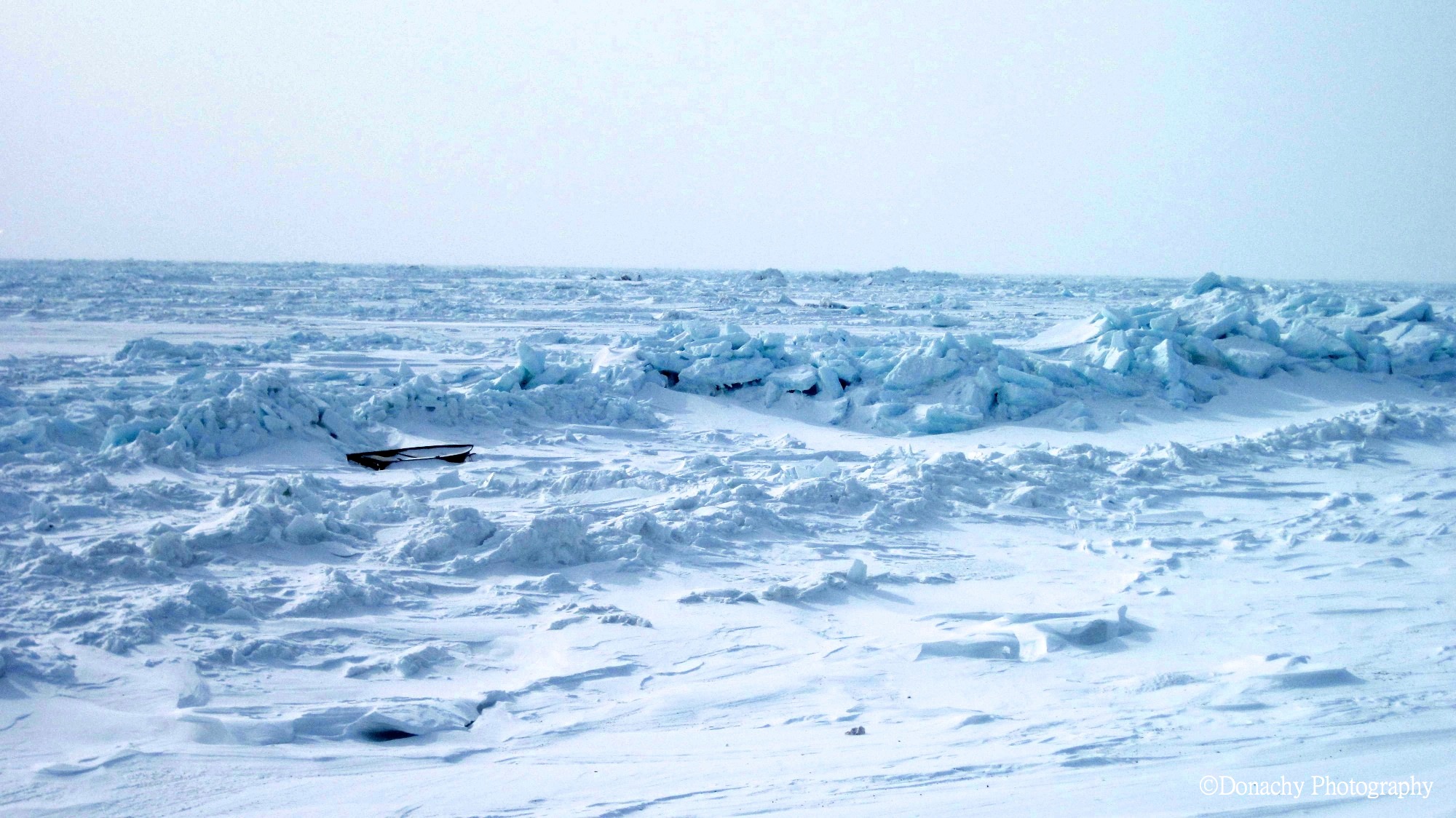
Hand stitched ugruk (bearded seal) skins cover the wooden ribs of this traditionally-crafted boat as it sits atop a rack in Point Hope, Alaska. With spring officially here (the Vernal Equinox was March 20), whaling season has begun. Whaling crews have been going out to break trail these past few days. This is rough going across the frozen, buckled landscape of the Arctic Ocean. 

Each Arctic day is lengthening by eight minutes, and the sun is shining with perceptible warmth as months of negative double digit cold gradually give way to highs approaching an even zero degrees Fahrenheit. Although the seas continue to be locked up tight, that is how it should be this time of year. Once the trail is broken, the village’s two whaling crews will set up their camps far out on the ice near open water, where, with boats stitched together from the skins of bearded seals at the ready, men dressed in warm, white parkas will wait and watch.

A small skiff seems to await the Chukchi Sea’s thaw.

Last year, three whales gave themselves to the village. That is the way people here say it. Animals are not “killed.” They give themselves, and for a whale to give itself, the hunters’ skill, preparation and worthiness must all come together. Point Hope is one of the oldest continuously inhabited settlements in the Americas. Perhaps the oldest. Here, the unique interplay of sea and river, hills and tundra bring salmon, char, seabirds, caribou, whales and even berries to the inhabitants. Compared to many other villages, the people of Tikigaq (Crooked Finger – so named for a narrow thrust of land at the tip of the peninsula that long since eroded away) have seldom had to go far for food.

The whales are bowheads, a right whale. These baleen whales may weigh 30 tons or more. Occasionally ivory, slate and jade harpoon heads of old are discovered buried deep in a whale’s blubber, indicating that they have a lifespan of at least 150 years. Although commercial whaling in the 1800’s pushed populations to near extinction, they have gradually recovered and numbers in the Chukchi Sea continue to grow by about 3% each year to over 10,000 currently.

Inuit artist Kenojuak Ashevak’s painting (above) depicts the circle of Arctic seasons. Her painting shows open water for less than half of the year.

When we leave the village in mid-May to spend our summer further south in Alaska, much of the tundra and the Chukchi Sea will still be locked in ice. When we return in mid-August, the tundra will be carpeted in shades of green, some of it already giving way to Autumn’s gold. In high summer, flowers bloom in profusion, but by August, most will be done. Berries – cloudberries, cranberries and crowberries near the village, joined by blueberries further out – will follow. Waves will tumble on the shore as though the ice never existed, and salmon and char will be swimming in the clear-green water.

Apple Cinnamon Walnut Bread

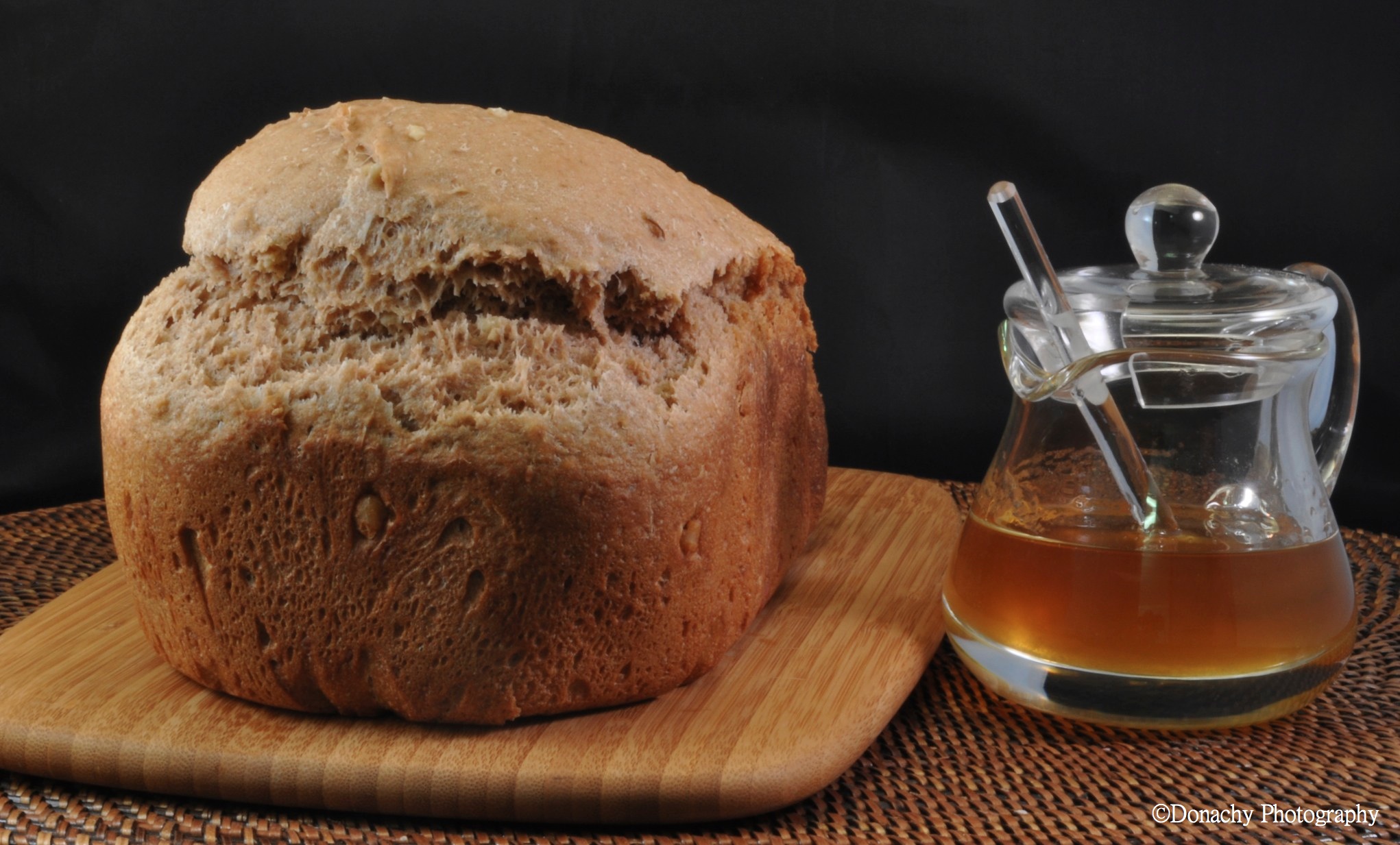
Walnut, cinnamon, and freshly grated Fuji apples make peanut butter sandwiches something to look forward to.

I love variety in my meals. I love sampling new foods and new food combinations. So it might seem paradoxical that I could happily eat a peanut butter sandwich every day for lunch. Jack… not so much. After a few consecutive days of peanut butter sandwiches, he diplomatically asks if we could change up the lunch menu. This year, I vowed to make lunches more interesting. Chili on rice, calzones, stew on baked potatoes, and salmon sandwiches have satisfied Jack’s need for variety. And so, with time ticking away toward the end of another year in the bush, I looked in the cupboard at the last third of our 80-ounce jar of Adam’s peanut butter. An idea! What if I made peanut butter sandwiches on fruit bread? Let me tell you how well this went over… When I asked Jack if he wanted salmon pizza or a peanut butter sandwich for lunch tomorrow, he chose a peanut butter sandwich! I’m not planning on going back to peanut butter every day, but we are both happy it is still in the rotation.

Apple Cinnamon Walnut Bread

Ingredients

  • 1 3/4 cups all purpose flour
  • 1/2 tsp baking powder
  • 1 tbsp ground cinnamon (we love cinnamon)
  • 1/4 tsp baking soda
  • 3/4 cup granulated sugar
  • 1/2 cup unsweetened applesauce
  • 2 eggs
  • 1 tsp vanilla extract
  • 1 grated Fuji apple (a little more than a cup)
  • 1/2 cup walnuts, chopped coarse

Directions

  1. In a large mixing bowl, combine flour, baking powder, cinnamon, and baking soda. Set aside.
  2. In another mixing bowl, combine sugar and applesauce. Mix well. Add eggs, one at a time, beating well after each addition. Stir in vanilla.
  3. Stir wet ingredients into dry ingredients until just moistened.
  4. Stir in grated apple.
  5. Stir in walnuts.
  6. Pour into a greased bread pan (8 in. x 4 in. x 2 in.)
  7. Bake at 350 degrees F for 55 – 65 minutes, or until a toothpick comes out clean.
  8. Cool for 10 minutes before removing from pan to a wire rack.

We enjoy fruit breads and use the above recipe as a base. It’s easy to substitute different types of fruit and spices. Pear bread with ginger and banana bread with cinnamon and nutmeg are two other favorite fruit breads that make excellent peanut butter sandwiches or breakfast toast.

Marvelous Marbled Chocolate Cheesecake Brownies

Fudge-like brownie batter swirled with chocolate chip cheesecake make this decadent dessert irresistible. 
As we go through our annual shopping list, I have to wonder why I thought I needed twenty pounds of chocolate chips! It is a challenge to shop for a whole year in one fell swoop. In most regards, we were really accurate, but I must have been suffering from a chocolate craving while we were in Costco! I did make it through about five pounds so far. With 15 pounds remaining and big chocolate lovers around, I am inspired to keep baking wickedly chocolate confections.
Marvelous Marbled Chocolate Cheesecake Brownies
Ingredients
  • 1 (8 ounce) package cream cheese, softened
  • 3/4 cup white sugar
  • 1 tsp vanilla
  • 3 eggs
  • 2 cups semisweet chocolate chips, separated
  • 1/4 cup unsalted butter
  • 2/3 cup all-purpose flour
  • 1/2 teaspoon baking powder
  • 1/4 teaspoon salt
Directions
  1. Preheat oven to 350 degrees F (175 degrees C). Grease a 8-inch square baking pan or baking dish.
  2. Combine cream cheese with 1/4 cup sugar, 1 egg, and vanilla in a mixing bowl; beat until smooth. Stir 1 cup chocolate chips into the cream cheese mixture. Set aside.
  3. Fill a saucepan with water and bring to a simmer. Set a heatproof mixing bowl over the water. In the mixing bowl, combine butter with the remaining 1 cup of chocolate chips; stir until just melted and blended together.
  4. Mix in the remaining 1/2 cup sugar and 2 eggs in a bowl. Sift together flour, baking powder, and salt. Stir flour mixture into sugar and egg mixture. Mix in chocolate-butter mixture into flour mixture so that it is evenly blended.
  5. Pour half of the batter into the prepared baking pan. Spread the cream cheese mixture over the chocolate layer. Top with remaining chocolate mixture (this doesn’t need to completely cover the cream cheese layer). Using a knife, swirl the top chocolate layer into the cream cheese to make a marble pattern by cutting the blade through the mixtures in a swirling pattern.
  6. Bake in preheated oven at 350 degrees F (175 degrees C) for 25 to 30 minutes, or until top is cracked and edges pull away from sides of the pan. Cool thoroughly. Cut into 12 to 16 squares. Store in refrigerator or freeze.
We tried the brownies cooled on the counter and chilled in the refrigerator. We preferred them chilled in the refrigerator.

Recipe adapted from http://allrecipes.com/recipe/chunky-cheesecake-brownies/Detail.aspx.

(Almost) Drowning Barbra: Six Years of Bliss On and Off (and in) the Water

Astoria Brunch: Freshly caught greenling fillets wrapped around local bay shrimp and Dungeness crab in a mixture of lemon, olive oil, butter, garlic and tarragon, topped with a thick slice of applewood-smoked bacon and broiled. The corn, donut peaches and blueberries were purchased that morning at the Sunday Market. Pan-fried potatoes, avocado, toasted French bread, and mimosas garnished with blueberries and slices of perfectly ripe donut peach rounded out the meal. Greenling is a wonderful fish, comparable to sole. There’s a story behind the greenling.

Tomorrow marks the sixth anniversary of my first date with Barbra. We met on Match.com at a time in our life when we were each comfortable with who we were and knew what we wanted and did not want in a relationship. In our experience, those three prerequisites allow one to be perfectly honest when using Match.com, which is the key to making it work.

After several weeks of voluminous email correspondence and nearly daily phone conversations, all of which had gone swimmingly well, we decided to meet. At the time, I was living in Astoria, Oregon. Barbra was living in Sacramento, California. Spring break was coming up and I was planning a trip to San Francisco to hang out with a couple of buddies from my navy days. I’d be passing through Sacramento. It was perfect.

Our plan was to meet at Barbra’s house and from there to go downtown for lunch. After lunch, Barbra would give me a quick tour of Sacramento. The whole date was supposed to last about two hours.

So much for plans…

Nine hours, two delicious meals, and the long version of a walking tour of the city later, we reluctantly said our goodbyes. We were already making plans for a second date a few days later when I’d be on my way back to Astoria.

To say that our first date went well is an understatement. At every turn of conversation, we uncovered yet another point of compatibility. Barbra reminds me that I was too shy to hold her hand at first. I remind her that I could tell right away we were going to have lots and lots of time together, and there didn’t seem to be a need to rush anything.

—————————-

We didn’t go fishing the very first time Barbra visited Astoria. I think it was the second time. She’d never been fishing before, but as an avid outdoorswoman, she was eager to give it a try. So early (early early) one summer morning, I put gear for two in my Toyota Tacoma and we drove in the pre-dawn to Ecola State Park, just north of Cannon Beach. The fishing involved a descent down a steep trail to the beach, and from there a hike out to some rocks exposed at low tide where I could always count on picking up some nice surfperch and greenling.

It was an absolutely gorgeous morning. Barbra was thrilled to see all the life in the tide pools on the hike out – purple and orange ocher sea stars, bright green flower-like anemones, small fish, dark purple sea urchins, and even a large, red, many-armed sun star. Getting to the fishing spot involved a scramble over seaweed covered, mussel encrusted rocks, which Barbra handled with no problem.

True to form, the fish were there. Barbra’s first fish ever was a beautifully colored 15” striped surfperch. In the next couple of hours, we caught enough striped surfperch, red tail surfperch and greenling for several meals. Seagulls, oyster catchers and other seabirds along with seals and sea lions added to the atmosphere. Barbra had a blast, and I couldn’t have been happier. It was time to go.

It was then that I realized I’d committed the cardinal error of rock fishing. We’d stayed too long. The cold tide was rushing in, pouring in like a river through the very channels that made fishing in this locale so productive. We were cut off from the beach, and our rock was disappearing fast.

Still, I thought that if we moved quickly, we could wade to the beach before the water rose any higher. With our gear packed up tightly, we made our way waist-high into the rising water. Suddenly we were trapped. The water ahead of us was too deep to go forward. Behind us, too, the water had deepened. I knew that the moment I lifted my foot, I’d be swept off my feet.

I turned to Barbra. “We’re going to lose our footing. When the water knocks you over, let it put you on your back and just float with it. Don’t fight it. We’ll be OK.”

A second later, we were looking up at blue sky, backs down in the cold Pacific, rapidly being swept out toward open sea. I knew from experience fishing river mouths that at some point the current would slacken and that as it did, with any luck there would be a sandbar shallow enough for us to regain our footing.

I reached toward Barbra. “Give me your hand.” Barbra’s eyes were as big as half-dollars. She said nothing. She held out her hand, I grabbed it, and we floated on our backs, heads pointed toward the sea. As we floated, I let my left leg hang down, probing for bottom. If this plan failed, there were a couple of exposed rocks further out we might be washed into. Beyond that, we’d hit the longshore current, too far from land. Hypothermia would set in…

Suddenly my left sneaker made a familiar scrape against sand. The bar sloped upwards rapidly, just as it should have.

“I’m on sand! Put your feet down.” I raised myself, and helped Barbra to her feet.

We’d been carried out about 50 yards. With the tide still flooding there were no guarantees. Holding Barbra’s hand, I began gingerly following the curving lip of the sandbar back toward shore.

When we finally made it to the beach, we turned around and looked out across the swirling water. The rocks we’d been fishing from were completely gone. The current was still running, but not nearly as hard as it had been. We looked at each other and smiled. “Thought we might end up in Japan for a while there,” I said sheepishly. “Geez, I’m sorry about that.”

“I knew you’d get us out of it,” Barbra replied.

Climbing up the steep trail was a slog in our wet clothing. At the truck we took inventory. Other than a thoroughly cold soaking, we were fine. Even Barbra’s camera equipment came out of the ordeal unscathed. We climbed in, I turned on the engine, blasted the heat, and we headed home.

The day was still young. Back at my apartment, I took a hot shower. While Barbra got cleaned up, I walked the three blocks down to the Sunday Market and got us a couple of coffees from The Rusty Mug and blueberries, donut peaches and some salt-and-pepper corn from market vendors. Coming up the stairs to my apartment, I could hear a CD Barbra had chosen from my collection.

It was a Johnny Cash album…

What a woman!

That’s not a map… THIS is a map!

We’d been looking for a wall map and hadn’t found the right one. Till now. Advertised as a “wall mural,” this National Geographic map is 9′ 2″ wide by 6′ 4″ high and occupies a commanding place on our living room wall. The map is made of vinyl coated wallpaper material, so it looks great and should be durable.

We’ve begun using it to mark places we’ve been to and, more importantly, places we hope to visit. Flag pins with numbers correlate with brief descriptions of the various locales posted on a wall near the map. It makes us smile, and it’s a great conversation piece!

Beaver Fur Hats: Real Warm

Inupiat craftsman Isaac Atungana of Point Hope specializes in these luxuriously warm and comfortable beaver fur hats.

After months of admiring the ruffs on the parkas of our students and friends in Shishmaref, I got a beautiful wolf ruff for Barbra.  Our friend Nancy sewed on it. Aside from its beauty, the ruff around her hood serves a very practical purpose: protection from the elements. Whether made of polar bear fur, wolf fur, or, perhaps best of all, wolverine fur, a good ruff traps a pocket of warm air around the wearer’s face, keeps the wind off bare skin, and cuts down on the sun’s glare. Barbra loves hers. “You should get one,” she’s been urging this past winter.

Partly out of tightfistedness, partly out of skepticism, I’ve been resisting. First, good ruffs are fairly expensive. Second, I just couldn’t see how a little fur, fur that isn’t even lying next to one’s skin, could make that much difference. So I’ve soldiered on with my performance fleece face mask and my Mountain Hardware Polartec watch cap. Quality gear, and with my head and face thus ensconced and tucked beneath the down hood of my Mountain Hardware parka, I reasoned that I should be plenty warm.

And down to about zero degrees Fahrenheit, I am. Below that, if I have to be out long, especially if there’s wind, I get cold pretty fast.

“Face hurts,” I say to Barbra.

“You should let me get you a ruff,” she replies. “A real good one. Wolverine.”

“Maybe,” I answer back like a record with a needle stuck.

The other day, Isaac Atungana, who makes superbly warm beaver fur hats, showed me his latest creation. Unlike his other hats, this one was completely lined with thick, soft, warm beaver fur.

I try it on. It’s a little big. “I can take it in right along this seam,” he says pointing.

The first time I wore the hat, it was negative 17 outside with a windchill pushing the temperature down to negative 50. It was a revelation. My face didn’t hurt at all. In fact, I felt downright… cozy! And that was with the hat on backwards! (I’ve since been instructed as to the proper positioning of the hat on one’s head.)

The beaver fur extends past my face and traps a pocket of air the same way a ruff does. And the hat, which weighs nearly a pound, is thick and well-insulated, comfortable and warm. Man, if I had had this hat when deer hunting and ice fishing back in Pennsylvania…

Rustic Moose Pot Pie

Lean wild game, roasted to perfection, sliced into bite-sized cubes and baked in a pie topped with a hearty whole wheat crust is the kind of meal that can fend off consecutive days of negative 20 degree cold.

When a friend recently presented us with a two-pound moose roast, we were thrilled. But we were also a bit perplexed. Looking over the meat, I couldn’t find even a trace of fat. Add that to the fact that neither one of us cooks roasts, and I was at something of a loss as to what to do. “Stew,” was the suggestion I most frequently came across. “Stew or stir fry,” was a friend’s suggestion.

We love good stew. In fact, we have enough caribou stew in the freezer to see us through the end of the school year. So that was out. Stir fry, too, is a regular dinner item. I wanted to do something traditional but new for us.

In the end, I did roast the moose. Inspired by a recipe for lamb from the cookbook Nobu West by Nobu Matsuhisa, I marinated the roast in miso seasoned with garlic and ginger before putting it in the oven. Despite my best efforts it came out a bit drier than I had hoped, although the miso marinade helped to caramelize the roast when I pan-seared it prior to roasting. I served the finished roast sliced thin with a tosa-zu dipping sauce along with carrots and parsnips cut into long, thin strips and sautéed in a combination of olive oil, butter, garlic and soy sauce.

Dinner that night started with scallop, shrimp and smoked quail egg chawan mushi, segued to roasted beats with pan-crisped pine nuts, was followed by cedar planked shrimp on mushrooms and culminated with the moose roast. For dessert, Barbra brought out individual baked apples capped with pastry. Inside each apple was apple pie filling. The dessert was delicious – and fun, and the whole-wheat pie crust topping the apple gave us the idea of making a large pot pie stuffed with leftover moose, vegetables and gravy.

Regarding the recipe below, a note about bouillon: We’ve become fans of Better Than Bouillon products. In our opinion, the flavor is superior to other soup bases we’ve tried.

Rustic Moose Pot Pie

Ingredients:

  • 1 3/4 cups water
  • 1 1/2 tablespoons “Better Than Bouillon Beef Base” (or other bouillon, or use beef broth)
  • 1 bay leaf
  • 1 teaspoon dried rosemary
  • 1 2/3 cups potatoes, cut into 1/2″ cubes, skin on
  • 4 tablespoons olive oil
  • 1/3 cup flour
  • 1/2 pound roasted moose meat, cut into 1/2″ cubes
  • 1/2 cup sweet corn
  • 1/3 cup celery, diced coarse
  • 1/2 cup carrots, sliced into discs or chopped coarse
  • 1/3 cup broccoli florets, cut coarse
  • (Optional) 1/3 cup mushrooms, chopped coarse
  • 1/2 rounded teaspoon cumin
  • 1 teaspoon dried sage
  • several generous grinds freshly cracked black pepper
  • salt, to taste

Directions:

  1. Preheat oven to 375 °F. **Baking time and temperature may vary depending on type of crust used.**
  2. Place the water in a pot and heat over medium-high heat. Stir in enough beef bouillon for a strongly flavored base. Add bay leaf and rosemary. Bring to a simmer.
  3. Add potatoes. You will simmer potatoes till just tender, but do not overcook. When potatoes still have about 5 minutes of cooking to go, add the carrots. When there is about 1 minute, add all the remaining vegetables. Continue simmering until potatoes are just tender and remove from heat. (They will continue cooking in the pie.)
  4. Use a strainer to separate potatoes and vegetables from the beef stock. Remove bay leaf and place potatoes and vegetables in a large bowl. Return beef stock to original pot.
  5. Place approximately 4 tablespoons olive oil in small frying pan and heat over low to medium-low heat. When oil is heated, slowly stir in flour. Continue stirring until mixture thickens. Remove from heat.
  6. Heating beef broth over medium heat, stir in oil and flour mixture. Combine thoroughly. This will result in a thick gravy.
  7. To the bowl that already has the potatoes and vegetables, add the meat, gravy and the remaining seasonings and mix together.
  8. Pour meat and vegetable mixture directly into a deep pie dish. Cover with a crust. Be sure to make holes in the crust to allow steam to escape. Brushing on a beaten egg will help create a golden brown crust.
  9. Place on baking sheet and bake at 375 °F for 25 – 30 minutes or until crust is golden brown.

Serve piping hot with big glasses of Old Vine Zinfandel.

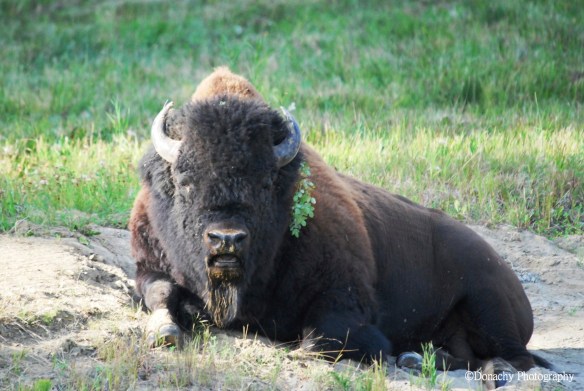
Bison Joes with Roasted Bell Peppers

Roasted bell peppers and ground bison combined with freshly baked buns for a memorable version of an America Classic.

One of the challenges of living hundreds of miles beyond the road system is that we frequently can’t get the ingredients we want for cooking. With the school year rapidly drawing to a close (fewer than eight weeks remain now) and an abundance of ground bison in our freezer, Barbra had been requesting Sloppy Joes. “I’ll make the buns!” she promised. Problem is, the village store hasn’t had onions since early January. The last shipment was frozen solid and had to be tossed out. We’re out as well, and I couldn’t quite imagine Sloppy Joes without diced sweet onions mixed in with the meat and sauce.

And then, out of the blue, a friend gave us two green bell peppers. Roasted and skin peeled, these would provide the tangy sweetness I was looking for. I had a large carrot in the fridge that needed to be used, so I diced and sautéed it and added it to the ingredients as well.

Mixed together with an off-the-cuff sauce, our Bison Joe’s came out great – more savory than sloppy, and sweet enough to please the kid in us.

Bison Joes with Roasted Bell Peppers

Ingredients

  • 1 pound ground bison
  • 5 cloves garlic, chopped fine
  • 2 bell peppers, cut in half, stems and seeds removed
  • 2/3 cup finely chopped carrots
  • olive oil, as needed
  • 1/2 cup Sloppy Joe sauce (below)
Directions for roasting bell peppers:
  1. Place a baking sheet (a good, thick one is best) into oven and preheat to 500 °F.
  2. Using a brush, spray bottle or fingers, thoroughly cover bell pepper halves with light olive oil, canola oil or other oil that will withstand high temperatures.
  3. When oven is preheated, place bell peppers open side down on baking sheet. Roast until peppers soften, skin begins to loosen, and outside begins to brown. Turn the peppers over and continue to roast until desired color is achieved. (You will see at least some spots burned black. How much of this you want is up to you. I go for just a little black.)
  4. Remove peppers from baking sheet, place in paper bag and close. This will help steam the skins loose.
  5. When cool enough to handle, peel off the skin.
  6. Dice the peppers (about 1/4″ pieces) and set aside.
Directions for bison, carrots and garlic:
  1. Add about 2 tablespoons olive oil to a large frying pan and heat over medium heat. Add ground bison. Breaking up the meat and stirring, cook until evenly browned. Pour out on paper towels to drain off oil and fat and set aside.
  2. Add about 1 tablespoon olive oil to a medium frying pan and heat over medium to medium-low heat. Add carrots, stirring frequently. Just before done, add the garlic and cook an additional 1 to 2 minutes. Place in a small bowl and set aside to cool.
Sloppy Joe Sauce
Ingredients
  • 1/3 cup ketchup
  • 1/4 cup Dijon mustard
  • 1/2 tablespoon Worcestershire sauce
  • 1 tablespoon Cholula sauce
  • 1 tablespoon soy sauce
  • 1 teaspoon cumin
  • 1 teaspoon dried oregano
  • 1/2 teaspoon basil
  • couple dashes powdered cinnamon
  • 1/2 teaspoon chili powder
  • several grinds freshly cracked pepper
  • 2 tablespoons olive oil

Directions:

  1. Add all ingredients to a non-reactive bowl and mix thoroughly. Add the garlic and carrots (above). Add the bell peppers. Add additional chili powder, cumin or Cholula for more of a kick.
  2. Place the browned bison in a large skillet. Heat on medium heat and add enough sauce to coat the meat. Beyond that, how much sauce to add is a matter of cook’s choice. Mix thoroughly, cooking and stirring till everything is hot.

Serve on toasted buns or toasted bread with a frosty mug of root beer.