The Kindness of Strangers

OLYMPUS DIGITAL CAMERA

The America you miss is still there… if you look for it.

One of the best things about traveling is the great people we meet and the conversations we get into with them. At the end of a long day of driving, we eased our rig curbside in front of a beautifully landscaped cottage-style home on a quiet, tree-shaded street in Sultan, Washington. We were looking for a place to spend the night, and to our delight, the town was having a street fair complete with food booths, amusement rides, an auto show and live music. The challenge was finding a place to park our 50 foot combination of camper and C-Dory where we wouldn’t be in anyone’s way.

The owner of the house we were in front of was outside working in her garden. Jack and I understand that people can be irritated or suspicious to find a camper parked in front of their place. Whenever possible, we like to talk to homeowners so that they know our intent is to park overnight and not to move in. As is often the case, this homeowner, Toni, was happy to have us as temporary neighbors. After talking with her for a while and getting some tips on cool things to do in Sultan, we left her with a jar of our cloudberry jam. Then we got cleaned up and walked downtown to the fair which was reminiscent of the Autumn Leaf Festivals back in Jack’s hometown of Clarion, Pennsylvania and of thousands of similar fairs all across North America.

The next morning as we were preparing to depart Sultan, Toni presented us with a small cupful of deliciousness – beautifully ripe wild strawberries harvested from her garden. Time and again, these small, meaningful encounters with people add flavor and warmth to our travel. Whether it’s great service from a boatyard, restaurant or hardware store, conversations with business owners and chefs, or joys of the day and travel tips shared with the people we happen to have as temporary neighbors in a campground or at a local eatery, we continue to consistently discover that by turning off the endless cycle of negativity on news programs and going out and talking with people, the America we remember is still out there, waiting to be discovered.

OLYMPUS DIGITAL CAMERA

Summer street fair & auto show, Sultan, Washington, 2014.

Sometimes Things Freeze in the Arctic (Mochi Cake With Black Bananas)

Mochi Banana Bread_n

A delicious way to use the unusable, banana mochi bread has the moistness and flavor of banana and the dense, rich texture of mochi cake. Slathered with cream cheese this is a delicious afternoon snack.

Guided by a philosophy of not wanting to waste anything, we are sometimes the recipients of fruit past its prime. This week boxes of bananas arrived for snacks for our students at Tikigaq School in Point Hope, Alaska. Unfortunately, many had frozen on the plane on the way up. Most people will not eat thawed-out, blackened bananas. And then there are people like us.

The obvious response to these bananas was banana bread. I have a tried and true fruit bread recipe which I’ve used for bananas, blueberries, cloudberries, and pears. But this is the time of year to be a bit more creative in order to use up pantry items. With this in mind, I give you mochi banana bread. Mochi is a Japanese creation which uses sweet rice flour to make a dense, rich, but not-too-sweet dessert. With previous success baking a chocolate mochi cake, I wanted to give bananas a try.

The results of this experiment were a sugary-crisp crust enclosing the nicely dense banana bread I was going for. Blog worth! (Of course, we only publish the good stuff!)

Banana Mochi Bread

Ingredients

  • 1 1/4 cup all-purpose flour
  • 1 1/4 cup mochiko (sweet rice flour)
  • 1 1/2 tsp baking soda
  • 1 1/2 tsp ground cinnamon
  • pinch salt
  • 1 1/2 cups smashed overripe bananas (about 6)
  • 3 eggs
  • 1/2 cup brown sugar
  • 1/2 cup vegetable oil (substituting applesauce will lighten the bread)
  • 1 tsp Penzeys double strength vanilla extract (or 2 tsp regular vanilla extract)

Directions

  1. Preheat oven to 350 degrees F. Grease 9″ x 5″ loaf pan. Set aside.
  2. In a medium bowl, thoroughly mix dry ingredients.
  3. In bowl of stand mixer, mix together all wet ingredients until thoroughly mixed.
  4. Stir dry ingredients into wet. Mix until just incorporated.
  5. Pour batter into loaf pan.
  6. Bake for 55 – 60 minutes, until toothpick inserted in center of cake comes out clean.
  7. Cool loaf pan on wire rack until it can be handled. Then remove loaf from pan and continue cooling on wire rack.

Changes: With Feet in Two Worlds Now

Point Hope from plane n

From the air on the south side of the peninsula, our village of Point Hope is a small interruption in a vast, roadless, icy land. This photo was taken in late January from a little six-seat plane as we flew in from a trip to Anchorage. What’s missing in this picture? Sea ice. There should be a thick sheet of it in the foreground where this year there is only open water.

Back in early November, we made the decision that this would be our final year in Point Hope. We’ve loved living here, and the decision was not easy. The people of this village – our adopted hometown these past three years – have been kind and generous and fierce and proud, attributes we greatly admire. Our students have been wonderful, and when you teach in a building where from kindergarten through senior high there are fewer than 200 students, they all become your students. In our combined 30+ years of teaching, neither of us had ever bonded with students the way we bonded with the students of Tikigaq School.

freezing rain point hope n

Freezing rain turned this stalk of grass into a silvery jewel. Rain in January in Point Hope is not completely unheard of, but days in a row of such weather during what is usually the coldest month of the year is highly unusual.

In mid-December we turned in our resignations, not sure where we would go next, urged only be the sense that it was time for us to go. The pull is a feeling that is difficult to describe or explain. The letters of resignation were short, polite, appreciative, but with them we cut the cord. No safety net. No turning back. We began to focus on our next move.

Aurora feb 2014 a n

A few nights ago, the aurora borealis put on a show. This was not one of the dancing, colorful displays we’ve seen in the past, but a steady, emerald swath glowing just above the northern horizon. 

At first, we were limiting our consideration to Alaska, dreaming of a situation in the Southeast where we might live within an easy walk of our boats and our new school. Our free time was consumed wtih the routine but critical tasks associated with a job search: revising our resumés, shoring up our references, researching schools and communities, distilling our careers and lives into tightly written letters of introduction. As two souls with nomadic DNA and Gypsy blood caught in this modern “career path” world, it’s a process we’ve been through many times.

But this time around, there was a twist to the job hunting. We both constructed online career histories on Linkedin, a networking website for professionals. Out of the blue, Barbra received a query from a headhunter with an agency that places teachers, administrators and technology experts with overseas schools. Although the particular company the inquiring person represented didn’t interest us, it got us thinking.

What if…?

Could we…?

What would we do with our boats?!?

tikigaq old bones_new

Early morning light bathes whale bones in the ghost town of Old Tikigaq pink and gold after a night of fresh snow.

After careful research, we signed aboard with Search Associates, an agency that works with over 600 internationally-minded schools in 160 countries. While we lacked the experience with International Baccalaureate programs these schools desired, our backgrounds are rich in quality experience and our references are strong. We allowed ourselves to dream, and although we thought that in order to get our foot in the door we’d accept the right position in virtually any country, there were a few countries that were very much on our short list. Our dream list.

One of those countries was Mongolia. Several years ago, when we were living in Sacramento, our local Trout Unlimited chapter invited a guest who had recently made a film about fly fishing in Mongolia for lenok (an ancient form of trout) and taimen (the world’s largest trout/salmon). The vast, sparsely populated countryside was sublime. The rivers were pristine. The idea of a remote camp out on the steppes, the guides speaking Mongolian, the huge night sky filled with stars after a day spent pursuing species of fish few anglers will ever encounter, our stomachs filled with rock roasted meat, our minds pleasantly humming with yak-milk vodka, and beyond the camp neither a light nor a human sound for as far as one could see or hear, is an idea that has been growing in us ever since.

We are due in country on July 31. It appears that we’ve already found a nice apartment just a few minute’s walk from the International School of Ulaanbaatar in Mongolia’s capital of Ulaanbaatar. We’re thrilled. This is just the dose of “New” we’ve been craving.

A couple of weeks ago, we were in the Anchorage airport, flying back to Point Hope when we suddenly encountered a scent that, for us, will always be pleasantly, irresistibly memorable. Muktuk. Whale fat. We looked around and soon found a small group of people who appeared to be Eskimo pushing a cart loaded with coolers, no doubt the source of the mildly sweet, rich smell. “We’re two among 0.00000-something percent of people in the world who can instantly identify that smell,” I said to Barbra as we laughed about our arcane expertise.

This morning one of Barbra’s students, Dmitri, came to school wearing the same scent. “Wow,” Barbra said with a smile. “You smell like muktuk!”

“Yeah,” Dmitri smiled back. “It’s good, isn’t it.”

Little stories like that keep us wanting to explore and experience.

pt hope from plane dawn n

Sunrise over Point Hope, a village by the Chuckchi sea.
Pretzel Rolls for Sandwiches to Look Forward To

Pretzel Rolls_n

Chewy and deliciously salty, these pretzel rolls are ready for turkey sandwiches, complete with deli mustard and homemade ginger-pear cranberry sauce.

While most people roast a turkey for Thanksgiving or Christmas, Jack and I decided to make a turkey for going back to work after our winter break. We have plenty of recipes stockpiled for tasty meals featuring leftover roasted turkey. These pretzel rolls make lunchtime sandwiches something to look forward to.

Bread Machine Pretzel Rolls

Ingredients

  • 4 cups all purpose flour
  • 1 1/2 tsp salt
  • 2 tsp instant yeast
  • 1 3/4 cups milk
  • 2 tbsp olive oil
  • coarse sea salt
  • 2 tbsp salt
  • 1/2 cup baking soda
  • 16 cups water

Directions

  1. Place first 5 ingredients into baking pan in the order recommended by the manufacturer. Insert pan into the oven chamber. Select dough cycle.
  2. Turn out dough onto lightly floured surface.
  3. Divide dough into 8 pieces.
  4. Roll dough in to balls. Flatten slightly and let rest while you prepare pretzel bath.
  5. Preheat oven to 400 degrees F. Cover baking sheet with parchment paper.
  6. In a large pot, boil 16 cups water and salt.
  7. When water is boiling, stir in baking soda.
  8. Place 4 dough balls in boiling water for 30 seconds. Flip dough balls and continue to boil for 30 more seconds. Remove from water with slotted spoon and place on parchment-lined baking sheet.
  9. Repeat with remaining 4 dough balls.
  10. Sprinkle each roll with coarse salt.
  11. Slice two slashes into each roll with a very sharp knife.
  12. Bake rolls for 20 minutes. Pretzels are finished when they are a rich dark brown.
  13. Let cool for a couple of minutes on baking sheet. Finish cooling on wire rack.

Whaler’s Stew with Beef or Wild Game: A Hot, Filling Meal on a Cold Winter Day

whalers bowhead stew n

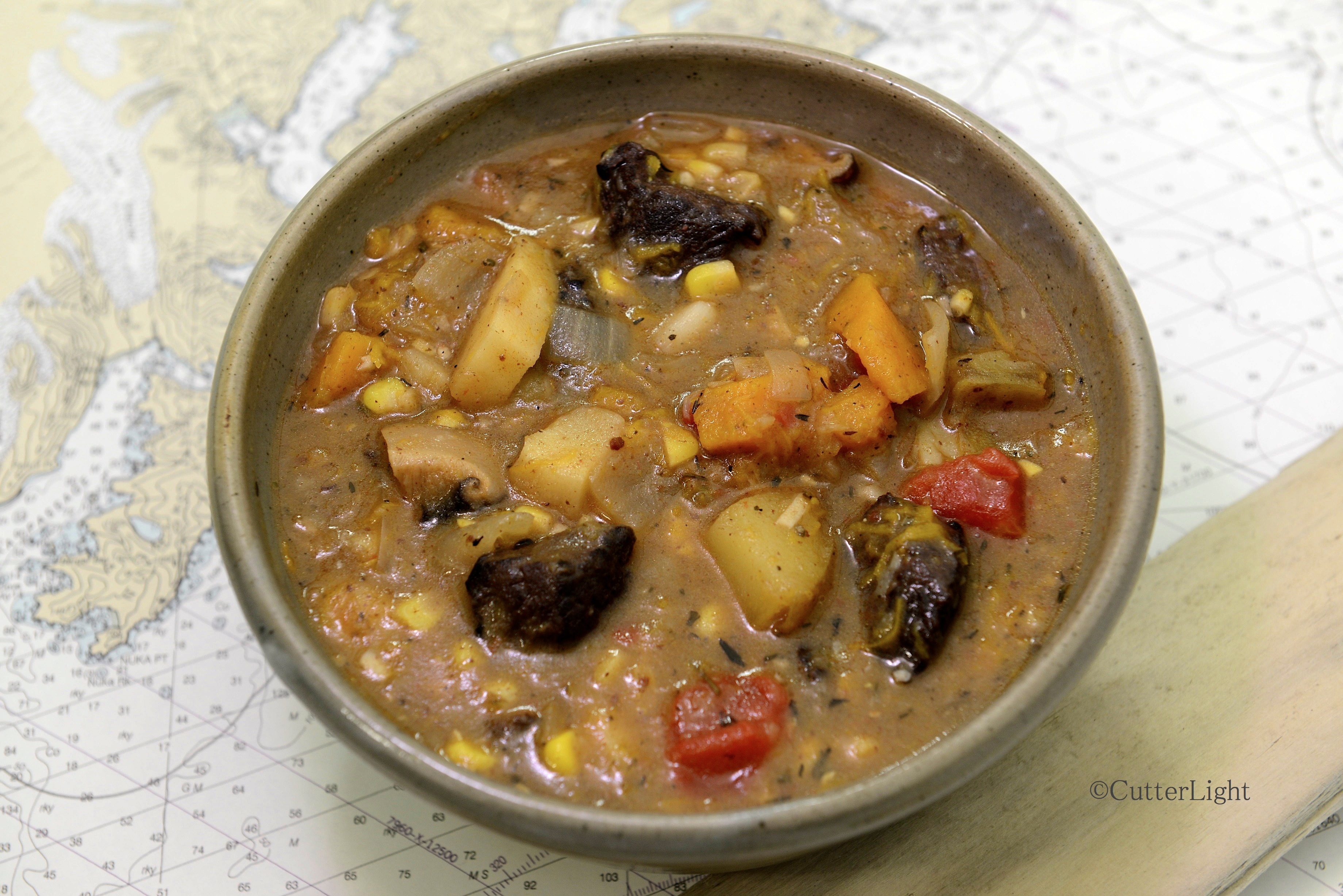
Ladle out a bowl, mug or thermos of hot, hearty stew to fuel up for wintertime activities or for just enjoying a movie by a cozy fire.

If you’ve never made a stew, or if you haven’t cooked one up in a while, the heart of winter is the perfect time. We’ve been using this basic recipe for years, varying the ingredients with what we have on hand. Different iterations have featured beef tri-tip, moose, elk, caribou, and even bowhead whale. Sweet potatoes, other potatoes, brussels sprouts, corn, tomatoes and other vegetables feature nicely. A favorite of ours is parsnips, which add a distinctive flavor that goes well with beef and wild game. While corn starch or all purpose flour are traditional thickeners in stews – and perfectly fine – we use rice flour. It dissolves easily, is virtually without flavor and thickens without becoming pasty.

Rather than provide specific amounts of ingredients for this delicious meal, we recommend taking a loose approach. A volume ratio of about three to one vegetables (combined) to meat works well, but there’s no need to measure or to be overly exact.

Whaler’s Stew

Ingredients (Each vegetable is optional and could be omitted while increasing the amount of other vegetables or substituted for something else.)

  • lean, boneless meat such as chuck steak, tri-tip, or a similar cut from wild game. Cut into cubes or chunks.
  • olive oil
  • onions, chopped coarse
  • garlic, minced or chopped fine
  • red wine or sherry (optional)
  • beef bouillon (or vegetable bouillon, or water) – enough to just cover all ingredients when combined. We use Better than Bouillon.
  • carrots, sliced into discs
  • russet or Yukon gold potatoes, cubed
  • pumpkin, squash, sweet potatoes or yams, cubed
  • parsnips, chopped coarse or sliced into discs
  • mushrooms, chunked
  • brussels sprouts, cut in halves or fourths, depending on size
  • tomatoes, diced
  • sweet corn
  • seasonings: sea salt or smoked salt, pepper, thyme, bay leaf, sage, cloves

Directions

  1. In a large bowl, add meat, olive oil, salt and pepper. Mix thoroughly.
  2. In a heavy skillet, heat oil over medium-high heat. When skillet is hot enough to make the meat sizzle, add it, stirring and turning to sear meat. Reduce temperature and continue cooking meat through, about 6 minutes.
  3. Add onion and additional oil, if necessary. Add a splash or two of sherry or red wine (optional). Stir until onions become barely translucent but are still crunchy.
  4. Stir in garlic and cook for about 30 seconds.
  5. Stir in seasonings and add bouillon mixture or water.
  6. Add potatoes and any other slow-cooking vegetables such as sweet potatoes, pumpkin, etc. Simmer for 20 minutes.
  7. Stir in rice flour – a little at a time to prevent clumping – to achieve desired thickness. Start by adding a total of 1 tbsp, wait a few minutes as broth thickens, and continue adding to desired thickness.
  8. Add additional vegetables, adding corn last as it doesn’t need much cooking time. Simmer till vegetables are tender, tasting and adjusting seasonings as necessary.

Alternatively: Place vegetables, (except corn) in individual bowls – each to its own bowl. Mix thoroughly with olive oil, salt and pepper. Keeping vegetables separate according to their kind, place them all on a heavy, oiled baking sheet and roast them at 400 degrees F, checking and removing each type of vegetable as it is done and setting them all aside in a large bowl. This ensures that all vegetables are cooked to the right consistency, and the roasting brings out sweetness. Cook meat as above, set aside with the oil it cooked in, and then add all ingredients to a large pot to finish cooking. Add the corn last. Vegetables can be grilled in this fashion too. It’s a little more effort, but it makes a difference.

Sweet Nosh – Homemade Lemon Curd and Almond Scones

scone lemon curd and almond n

Creamy, sweet lemon curd is the perfect partner to a freshly baked almond scone for a light breakfast or an afternoon nosh. See lemon curd and scone recipes below.

Any excuse to make lemon curd is a good excuse. I’ve been playing around with a lemon lava cake recipe and decided the ingredient it needed is lemon curd. With the lava cake in mind, I whipped up four cups of this zesty conserve, which happened to be more than my recipe required. What to do? Enjoy the tangy, sweet, creamy curd with a freshly baked batch of almond scones.

I’ve made many iterations of scones in my kitchen, but lemon curd seemed to fit with savory almond flavor as opposed to blends of fruits or other sweet ingredients.

The curd is a cinch to make. The Meyer lemons that grow in our backyard in Sacramento would have been the choice ingredient, but even without our favorite Meyers on hand in our Arctic kitchen, we can make a darn good curd with Nellie & Joe’s brand lemon juice and Penzeys dried lemon peel. The small scones, too, are a snap to make. The time it took from gathering pantry ingredients to pulling freshly baked scones from the oven was only about half an hour – about as long as it takes to have a first cup of Joe and get fully awake on a leisurely weekend or holiday morning.

Pantry Lemon Curd

Ingredients

  • 1 1/2 tbsp Penzeys dried lemon peel
  • 1 1/2 cups granulated sugar
  • 5 eggs
  • 1/2 cup lemon juice
  • pinch salt
  • 1/4 lb unsalted butter, room temperature

Directions

  1. In a medium bowl, mix together lemon peel and sugar.
  2. Whisk eggs into sugar mixture, one at a time.
  3. Whisk in lemon juice and salt.
  4. Pour mixture into a medium pot. Add butter in pieces.
  5. Cook over low heat until thickened, about 10 minutes.
  6. Remove from heat and let cool before serving with fresh-baked almond scones hot from the oven.
  7. Store any leftovers in a covered container in the refrigerator.

Snack-Sized Almond Scones

Ingredients

  • 2 cups all-purpose flour
  • 2 tsp baking powder
  • 1/2 tsp baking soda
  • healthy pinch salt
  • 1/3 cup granulated sugar
  • 2 tbsp frozen butter
  • 1/3 cup whole milk
  • 1/3 cup buttermilk
  • 1 egg
  • 1 tsp almond extract
  • 1/2 cup sliced almonds

Directions

  1. Preheat oven to 350 degrees F. Line a baking sheet with parchment paper.
  2. In a medium mixing bowl, mix flour, baking powder, baking soda, salt, and sugar.
  3. Using a cheese grater, grate butter into flour mixture. Stir until butter is well dispersed in flour.
  4. In a second bowl, whisk together whole milk, buttermilk, egg, and extract.
  5. Pour wet ingredients into dry. Stir together.
  6. Stir in almonds. Dough will be sticky.
  7. Coat your hands with flour and divide dough into thirds.
  8. Flatten each third into a disc about 1-inch tall. Place 3 discs apart on parchment-covered baking sheet. Cut each disc into fourths, but do not separate. This will allow the scones to be broken easily when they are finished baking.
  9. Bake for about 15 minutes. Scones will be very lightly browned when done.
  10. Serve with hot tea and homemade lemon curd.

Swiss Spitzbueben Cookies Featuring Alaskan Wild Blueberry Jam

spitzbueben cookies_n

Two thin, crispy cookies sandwich delicious homemade Alaska blueberry jam. This “anytime” cookie is too good to reserve for holiday cookie trays!

When we received a Christmas package from our friends at Alaskagraphy, we knew that these crispy vanilla cookies would be the perfect canvas for the flavor-packed wild blueberry jam they included. Experiment with your own jam creations!

Swiss Spitzbueben Cookies

Ingredients

  • 5 tbsp unsalted butter, softened
  • 1/2 cup confectioners sugar
  • 1 tsp vanilla extract
  • pinch salt
  • 1 egg white
  • 1 1/2 cups all-purpose flour
  • 1/2 cup Alaskan blueberry jam, or jam of your choosing
  • 2 tbsp confectioners sugar, for dusting

Directions

  1. In bowl of stand mixer, beat butter until soft and fluffy.
  2. Add sugar,  vanilla, and salt. Beat until completely mixed.
  3. Add egg white. Beat until completely mixed.
  4. Add flour. Mix until flour is incorporated completely.
  5. Turn dough out onto plastic wrap. Cover tightly and refrigerate for 30 – 60 minutes.
  6. Preheat oven to 400 degrees F. Cover baking sheets with parchment paper.
  7. Roll dough out on parchment-covered surface to about 1/4 inch thickness.
  8. Cut shapes with cookie cutters. Keep in mind that you need two cookies for each sandwich and the top cookie needs to have a smaller shape cut out in order for jam to show through.
  9. Bake cookies for 6-8 minutes. Cookies should just brown at bottom edges.
  10. Jam needs to be thick. If it is runny, cook down jam over medium heat for a few minutes. Spread jam on bottom cookie and place second cookie with cut-out atop first.
  11. Dust cookies with powdered sugar when cool.

Recipe makes approximately 1 dozen spitzbueben.

Rustic Pear Gallette with Whole Wheat Blend Crust

gallette pear n

The sweet secret to this gallette is a generous layer of homemade cloudberry jam beneath the pears No cloudberries? Try raspberry, blackberry or apricot jam.

A gallette is a beautiful dessert that can whipped up on short notice – a perfect answer to a seasonal abundance of fresh fruit. During the summer, we made a delicious strawberry-port gallette with sliced almonds in the galley of our sailboat. Since it is wintertime, we decided to make the gallette a bit more full-bodied by adding wheat flour and some cornmeal to the crust. We happened to have pears on hand, but many other fruits readily lend themselves to this recipe. Enjoy a slice of pear gallette with a side salad, a favorite cheese and a freshly brewed cup of tea for a satisfying lunch in any season.

Rustic Pear Gallette

Ingredients

  • 1  cup all-purpose flour
  • 3/4 cup whole wheat flour
  • 1/3 cup granulated sugar
  • 1/4 cup coarse cornmeal
  • 1/4 tsp salt
  • 1/2 cup cold butter, cut into small pieces
  • 1/3 cup buttermilk (we made this from powdered)
  • 2 tablespoons cloudberry jam, or jam of your choice
  • 2 D’Anjou pears, thinly sliced
  • 1 egg, beaten
  • 2 tbsp granulated sugar mixed with a pinch of ground cinnamon

Directions

  1. Mix together flours, sugar, cornmeal and salt in a medium bowl.
  2. Using a pastry blender, mix in cold butter. Continue mixing until cold butter is the size of peas.
  3. Slowly mix in buttermilk. Stir with rubber spatula until dough forms into a ball.
  4. Wrap dough in plastic and chill for about 30-45 minutes in refrigerator.
  5. Preheat oven to 350 degrees F.
  6. Cut a piece of parchment paper to fit the size of a baking sheet.
  7. Place chilled dough on center of parchment paper.
  8. Roll dough to about a 15-inch circle. This is a rustic dessert, so no need to be a perfectionist here.
  9. Brush the entire rolled dough with jam.
  10. Arrange pear slices atop dough, leaving a 2-inch border.
  11. Fold border over pears, pressing down any folds of dough.
  12. Brush dough with egg.
  13. Sprinkle dough and pears with sugar and cinnamon mixture.
  14. Bake gallette 40 – 45 minutes, until dough is golden brown and pears are soft.
  15. Serve warm or at room temperature.

Homemade Chocolate Brownie Ice Cream in Chocolate Orange Wafer

brownie chocolate ice cream n

To create this ice cream, we use the same brownie as in our ice cream sandwiches. These brownies work well because they retain their chewy, firm, moist texture when frozen. The edible serving cups are created from a modified fortune cookie recipe infused with orange flavor. See recipes below.

Dig in!

Chocolate Brownie Ice Cream

Ingredients

  • 2 oz. semi-sweet chocolate chips
  • 1/3 cup unsweetened cocoa powder
  • 1 1/2 cups whole milk
  • 2 eggs
  • 1 cup granulated sugar
  • 1 cup heavy whipping cream
  • 1 tsp vanilla extract
  • 1 cup chopped brownies, cut into 1/2 inch cubes (see recipe below)

Directions

  1. Melt chocolate chips in top of double boiler.
  2. Whisk cocoa powder into melted chips until smooth.
  3. Whisk in milk a little at a time until completely blended.
  4. Remove from heat and let cool.
  5. Beat eggs in bowl of a stand mixer until light and fluffy.
  6. Mix in sugar a little at a time until completely blended.
  7. Mix in cream and vanilla. Thoroughly combine.
  8. Pour chocolate mixture into cream mixture and whisk to blend.
  9. Cool completely. I put the mixture in the refrigerator overnight before I use it.
  10. Pour into freezer bowl of ice cream machine. Turn machine on and mix until mixture thickens, about 20 minutes. 5 minutes before ice cream is complete, add chopped brownies to freezer bowl.
  11. Transfer to airtight container and place in freezer until firm, about 2 hours.

Brownies for Ice Cream

Ingredients

  • 2 oz. semi-sweet chocolate chips
  • 1/2 stick unsalted butter
  • 3 eggs
  • pinch salt
  • 1 3/4 cups granulated sugar
  • 1/2 tsp vanilla extract
  • 1/2 cup all-purpose flour

Directions

  1. Preheat oven to 350 degrees F. Grease a 9″ x 9″ baking dish. Set aside.
  2. Melt chocolate and butter in a double boiler over simmering water. Mix completely. Let mixture cool slightly.
  3. Beat eggs and salt in a mixing bowl.
  4. Gradually beat in sugar and vanilla.
  5. Mix in cooled chocolate.
  6. Mix in flour.
  7. Pour batter in baking dish.
  8. Bake for 30 minutes. Brownies are done when a toothpick inserted in the center comes out clean. Let cool completely before using for ice cream recipe.

Edible Chocolate Orange Ice Cream Bowls (makes 4 wafers)

Ingredients

  • 1 egg white
  • pinch salt
  • 1/2 tsp orange zest
  • 1/2 tsp orange extract
  • 1/4 cup granulated sugar
  • 1/4 cup all-purpose flour
  • 1 tbsp orange juice

Directions

  1. Preheat oven to 400 degrees F. Line two baking sheets with parchment paper. Set aside. Have two small teacups or ramekins ready.
  2. Whisk egg white in a medium bowl until foamy, not stiff.
  3. Add salt and whisk to incorporate.
  4. Whisk in orange zest and orange extract.
  5. Whisk in sugar.
  6. Whisk in flour.
  7. Whisk in orange juice.
  8. Drop a teaspoon of batter onto parchment-lined baking sheet.
  9. Spread the batter around in a circular motion with the back of teaspoon until you have about a 4 inch circle. Repeat to make second wafer.
  10. Bake for 6 minutes.
  11. Immediately remove wafers with an offset spatula and place on an upside-down teacup to cool and dry in the shape of a cup.
  12. Repeat with batter for second 2 wafers.
  13. If desired, dip edges of wafers in chocolate.
  14. Let cool completely before using.

Silver Salmon For Lovers

salmon for lovers n

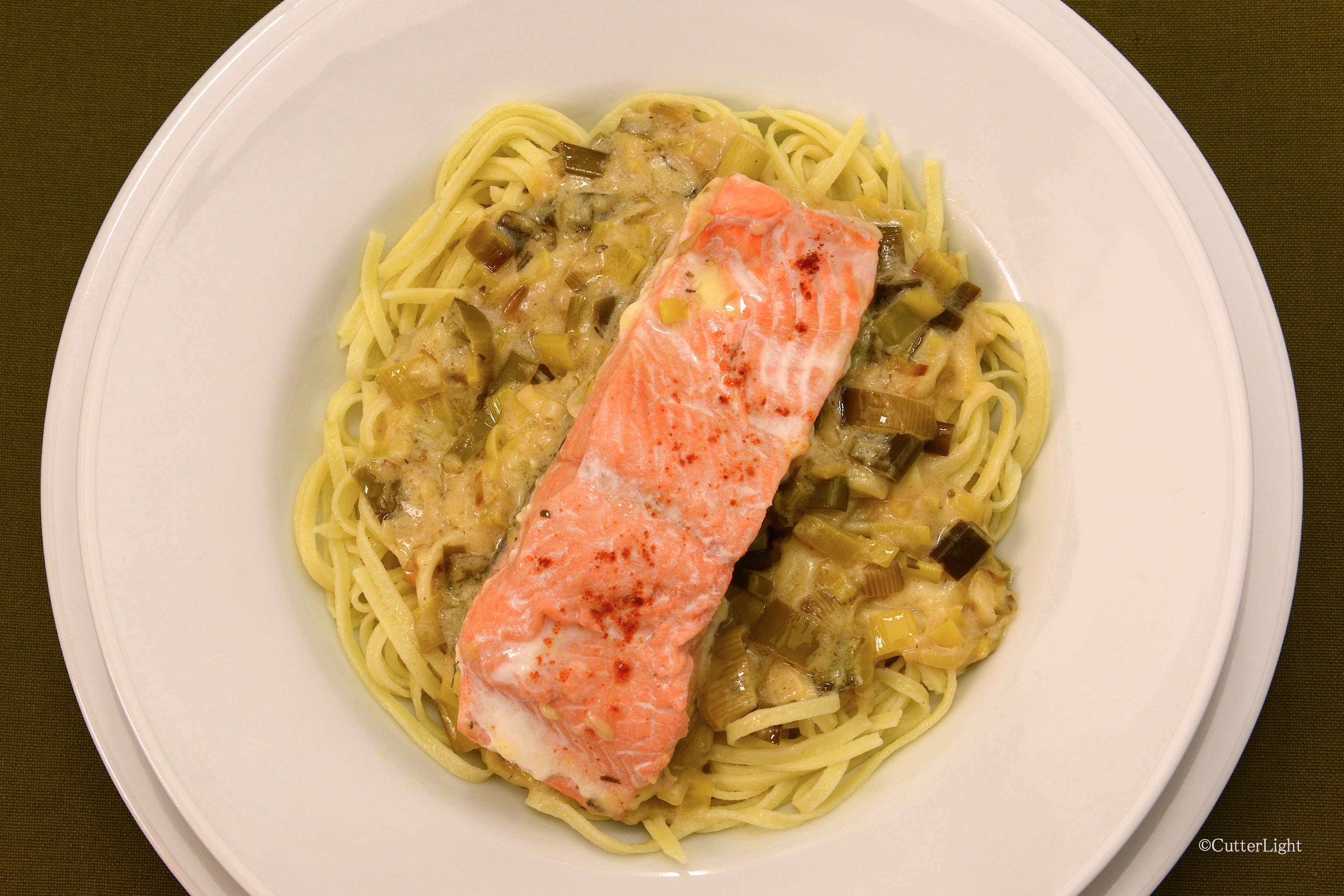
The pleasant tanginess of homemade crème fraîche, lemon and leeks harmonize with the buttery richness of wild caught Alaskan Coho salmon presented on a bed of homemade egg noodles. Light candles, play soft music, pop a cork and serve.

Crème fraîche is not available at our local Native store. No problem. We simply mixed two cups of heavy cream, two tablespoons of our homemade plain yogurt and let the mixture sit for 24 hours at room temperature and, voilà, we had crème fraîche.

The leeks in this dish seem to suggest springtime. Endless variations are possible. The lobster base in the sauce lends itself to pairing the salmon fillet with a lobster tail or claw, shrimp or even scallops; freshly picked, lightly sautéed fiddlehead ferns would make a nice addition, as would fresh mushrooms, a sprig of fennel, and so on. Because farmed salmon is environmentally harmful (regardless of what those who profit from that industry might say), if wild salmon is not available we suggest Arctic char (farmed or wild), trout or halibut. Remember, if the salmon in the market does not specifically say “wild” or “wild-caught,” it is farmed, and we urge that it be avoided.

Silver Salmon For Lovers

Ingredients

  • 2 portions pasta of your choice
  • 1 tbsp butter
  • 1 tbsp olive oil
  • 1 leek, cleaned and chopped moderately coarse
  • salt to taste
  • 1/2 cup broth made from Better than Bouillon lobster bouillon or similar lobster base
  • 2 tbsp lemon juice
  • 1 cup crème fraîche
  • 1 tsp dried tarragon, crushed
  • 2 tsp Dijon mustard
  • 2 pinches cayenne pepper
  • 3/4 lb salmon fillet, cut into 2 pieces

Directions

  1. Cook pasta according to directions. While pasta is cooking prepare sauce and salmon.
  2. Melt butter in large pan over medium heat. Add olive oil.
  3. Sauté chopped leek until softened, about 6 minutes.
  4. Season with salt.
  5. Pour lobster stock and lemon juice on leeks. Bring to a boil while stirring in order to deglaze pan. Let sauce reduce until it is nearly all evaporated.
  6. Stir in crème fraîche, tarragon, mustard and a pinch of cayenne pepper. Reduce heat to low and bring sauce to a simmer.
  7. Add salmon fillets to pan.
  8. Cover pan and allow salmon to cook in sauce for approximately 5 – 8 minutes. White-colored fat on top of salmon indicates it’s cooked.
  9. Divide pasta on 2 plates. Spoon sauce onto pasta. Place salmon atop sauce. Garnish fillets with a pinch of cayenne.
  10. Light a couple of taper candles, pour two glasses of buttery chardonnay and enjoy the meal with someone special.