Cloudberry Cake: An Arctic Treat

Cloudberry jam is baked right into the top of this moist vanilla cake. Try it with a hot cup of tea and a scoop of vanilla bean ice cream.

 Continuing with the clean-out-the-pantry theme, I had a couple jars of cloudberry freezer jam left from our fall berry picking. These delicious orange berries of the far north are only available for a few short weeks at the end of the Alaska summer. Growing in patches on small mounds across the boggy tundra, Akpik (the Inupiaq word for the berries) are at first a brilliant red before turning orange during their peak ripeness. We picked two gallons and turned them into some of the best jam, sorbet and ice cream we’ve ever eaten. Prized wherever they grow, (they’re protected by law in some European locales) cloudberries have a distinctive sweet flavor with a hint of agreeable tartness. They have become our favorite berry.

Cloudberry Cake

Ingredients

  • 1 cup granulated sugar
  • 5 eggs
  • 1 cup unsweetened applesauce
  • 1 tsp vanilla extract
  • 2 tbsp sour cream
  • 2 cups all-purpose flour
  • 2 tsp baking powder
  • 2 cups cloudberry jam (or other jam)

Directions

  1. Preheat oven to 350 degrees F.
  2. Beat sugar and eggs until pale yellow (about 5 minutes). Beat in applesauce. Add vanilla and sour cream. Mix again.
  3. Sift flour and baking powder together. Stir into egg mixture.
  4. Grease a 9-inch springform pan.
  5. Pour batter into springform pan.
  6. Dot the jam on top of the cake batter. Poke some of the jam down into the batter.  Bake 45 minutes or until a toothpick or cake tester comes out clean.

A Year’s Worth of Food: Provisioning for the Alaska Bush, Part I

Salmon, halibut and rockfish fillets from fish caught in Resurrection Bay, vacuum sealed and flash frozen for fresh-from-the sea taste, ready to make the trip north to Point Hope. And a plug for Alaskan seafood: it’s wild, sustainable, healthy, and some of the best-tasting on the planet!

One of the biggest challenges living in the bush presents is provisioning for a year’s worth of meals. When we  moved to Alaska, Barbra and I brought with us some of the skills we’d acquired in our lives in Oregon and California.

For starters, we’ve always had Costco memberships and we use those memberships to stock up on bulk purchases from rice to olive oil to meat, fish and poultry. To make this work, we use a FoodSaver vacuum-pack system to repackage meat in smaller portions, which we then freeze. In addition to having some of the very best meat, poultry and fish available – and at prices well below specialty stores carrying products of comparable quality – Costco also carries the best frozen fruits and vegetables we have found. Their Executive Membership, which costs more than a regular membership, offers a 2% rebate on purchases, and thus more than pays for itself, meaning that we don’t incur a membership cost. But even if we had to pay a nominal fee, we’d still be Costco members. They treat their employees well, and they offer quality products and service. And buying in bulk is green: less packaging (much of our repackaging material is reusable), and fewer trips to the store means less fuel consumption.

In our life before Alaska, we were already harvesting most of our seafood and freezing (and smoking) it. Annual berry-picking pilgrimages provided us with a year’s worth of blueberries – a fruit that not only is delicious and versatile, but which freezes well, too.

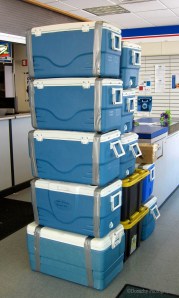
The challenge we faced upon moving to the bush was getting all this food, and other supplies, out to the village. Here’s the short explanation of the solution: Rubbermaid Roughneck Totes and Coleman Xtreme 52-quart coolers.

.      .

Left: Drilling holes in lids and totes to be zip-tied shut for parcel post. Right: Empty coolers at the post office, ready to be mailed south where they’ll be filled with frozen and cold food at the end of the summer and checked on our planes north to the village.

We drill the Rubbermaid totes so that the lids can be zip-tied (cable-tied) to the tub. Rubbermaid totes are tough and unaffected by cold temperatures. Cheaper totes don’t hold up, and in the long-run are expensive because they have to be replaced as they break down. All of our dry good are mailed up parcel post in these tubs. We’ve mailed hardy vegetables (squashes, potatoes and onions) and hard cheeses in these tubs as well. In Alaska’s cool temperatures, they’ve been fine.

The coolers travel on the plane when we fly up. There are better coolers than Coleman Xtremes, but so far these have been fine. The price is right, they’re tougher than really cheap coolers, and they weigh in at a reasonably light weight – an important consideration. The 52-quart size is manageable even when fully loaded with frozen food.

We stuff at least eight of these coolers with as much fish, meat, chicken and frozen vegetables and berries as we can and pay the extra luggage fee. We’ve been sealing these coolers with duck tape, but this summer we’re planning to experiment with a solution that won’t require having to use and throw away a roll or two of tape each time we ship.

New York Strip steaks (left) and filet mignon (right), purchased in bulk from Costco are packaged with one of each per vacuum-sealed pack for a Porterhouse without the bone. Meat, poultry and fish packaged and frozen this way will keep for over a year; the result is that we waste virtually nothing.
Whaling Camp: Frozen Seas and Icescapes

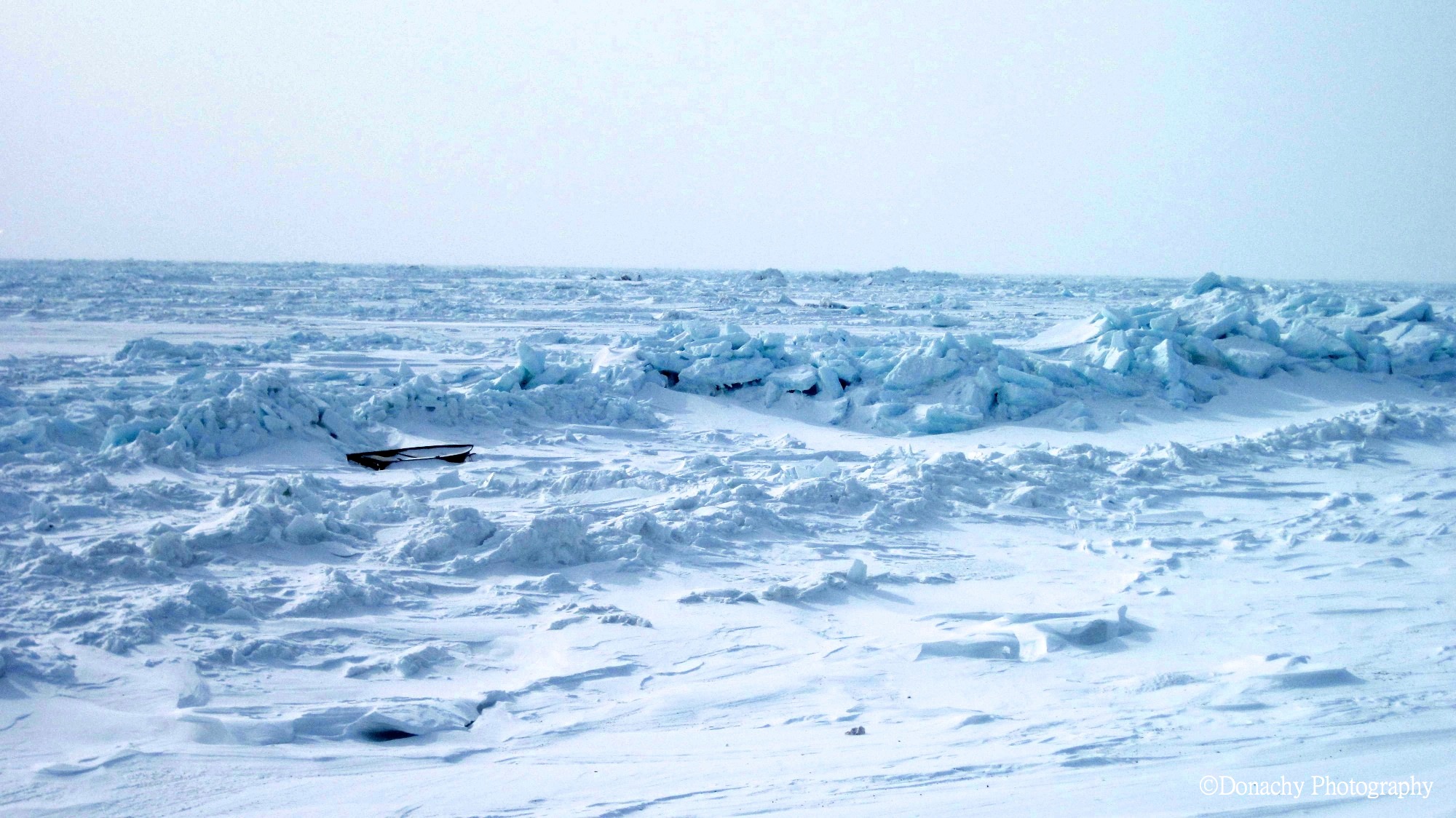
Ball and Pyramid, Chukchi Sea, Alaska: This icescape, photographed with a Nikon D90 and a Sigma Bigma 50 – 500 mm lens, has been slightly processed to increase contrasts. The operative word here is “slightly.” Even to the naked eye, these frozen-sea icescapes are other-worldly.

Evocative, perhaps, of a scene from Star Trek, winter hikers venture across the frozen ocean out to a whaling camp. The gun the lead person is carrying is for protection. Although we saw no sign of polar bears on this day, friends of ours who took a slightly different path encountered fresh tracks.

Seal-skin boat at the ready, these men stand vigile for bowhead and beluga whales. Note the light blue block of ice they’ve cut out and positioned near their gear as a shield. These men are standing on sea ice just a few feet from the open sea. Last year was a good year for whaling in Point Hope, with three bowhead whales harvested. The hunt is dependent on the right ice conditions, which can be elusive. So far this year, no whales have been taken.

A well-equipped wall tent, complete with a supply of propane, serves as one of several whaling camps near the village. These camps are set up on sea ice, and may be anywhere from a few hundred yards to several miles offshore. The hunters travel out to leads – areas where the ice is open. Winds and currents can open and close leads quickly, underscoring the need for whaling crews to be constantly alert.

Sea ice seem to be lit from within by blue light. Heaved up in pressure ridges and broken into fragments weighing several tons, it is easy to appreciate the arduous work “breaking trail” entails as hunters go out onto the ice to set up camps. 

A black and white composition heightens the contrasts in these massive blocks of broken ice.

There’s a sense of being somewhere other than Earth…

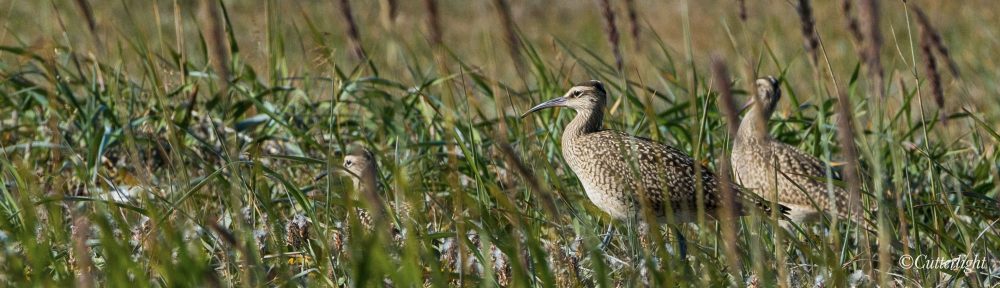
And then a flock of common murres skims across a lead…

Alaskan Seafood Fettuccini with Shrimp, Sea Scallops and Salmon

Freshly made fettuccine tossed in olive oil and Italian seasonings and topped with a medley of Alaskan seafood sautéed in olive oil, garlic and tarragon.

Tarragon has long been among our favorite all-around herbs for many seafood dishes, and it really shines in this simple-to-prepare entrée. Sometimes referred to as dragon’s herb or dragon’s-wort, tarragon adds a gentle sweetness that hints at anise or fennel, but is more subtle.

The basic dish evolved from a piece of advice an older gentleman – an immigrant from Italy – shared with me some years ago when he observed that in his opinion the best tasting and easiest pasta dish is made by sautéing chopped garlic in olive oil and tossing the pasta in that and nothing more. Perhaps a little basil, marjoram or oregano might be added, he allowed.

In this dish, I’ve added chopped sweet onion, tomatoes and three kinds of seafood to the olive oil and garlic. Tarragon, sea salt and freshly cracked pepper flavor the seafood. When I lived in South Carolina, I used to make this dish with white shrimp which I was able to cast a net for, and instead of salmon, I used freshly caught striped bass or pompano.

For two servings:

Pasta Ingredients

  • pasta for two people (fettuccini, angel hair or spaghetti)
  • 1 tsp dried oregano or 1 tbsp fresh
  • 1 tsp dried basil or 1 tbsp fresh
  • 3 tbsp extra virgin olive oil
Directions:
  1. Cook pasta according to directions.
  2. Drain pasta. Place in large bowl. Add olive oil and herbs and toss.
Seafood Ingredients
  • equal portions of wild salmon fillet (skin removed, or not), sea scallops and shrimp. Use about 1/4 pound seafood per person or slightly more.
  • 1/4 cup chopped sweet onion
  • 3/4 cup diced tomatoes, canned or fresh, seeds removed
  • 1 1/2 tbsp chopped garlic
  • 3 tablespoons olive oil
  • 1 tbsp dried tarragon or 3 tbsp fresh
  • sea salt to taste
  • freshly ground pepper to taste

Directions:

  1. Cut salmon into 1/2-inch to 3/4-inch cubes. Slice sea scallops into 3 or 4 slices. Peel and devein shrimp.
  2. In a bowl, mix together seafood, garlic, tarragon, sea salt and pepper. Set aside.
  3. Add olive oil to a frying pan and heat over medium-high heat.
  4. Add onions and cook for two minutes, stirring occasionally.
  5. Add remaining ingredients. Stir frequently for about 1 1/2 to 3 minutes. Avoid overcooking. (Remember: seafood will continue cooking after being removed from heat.)
  6. Serve pasta. Top with seafood medley.
  7. Add additional ground pepper, grated Parmesan, pine nuts or a sprig of fresh tarragon.

Enjoy this with a crisp, well-chilled sauvignon blanc.

Rivers of Ice: Glaciers, Icefields and Floating Sculptures of Blue

Icebergs such as this ethereal blue sculpture are the culmination of a dynamic process eons in the making.

It’s easy to imagine glaciers as static – water interrupted, subject to thaw and melt, but otherwise frozen in space and time. In reality, they’re more like slow moving rivers, pulled down by gravity, pushed forward by the unimaginable tonnage of ice and snow in the icefields where the originate. A fast-moving glacier can travel at a rate of 20 meters a day or more.

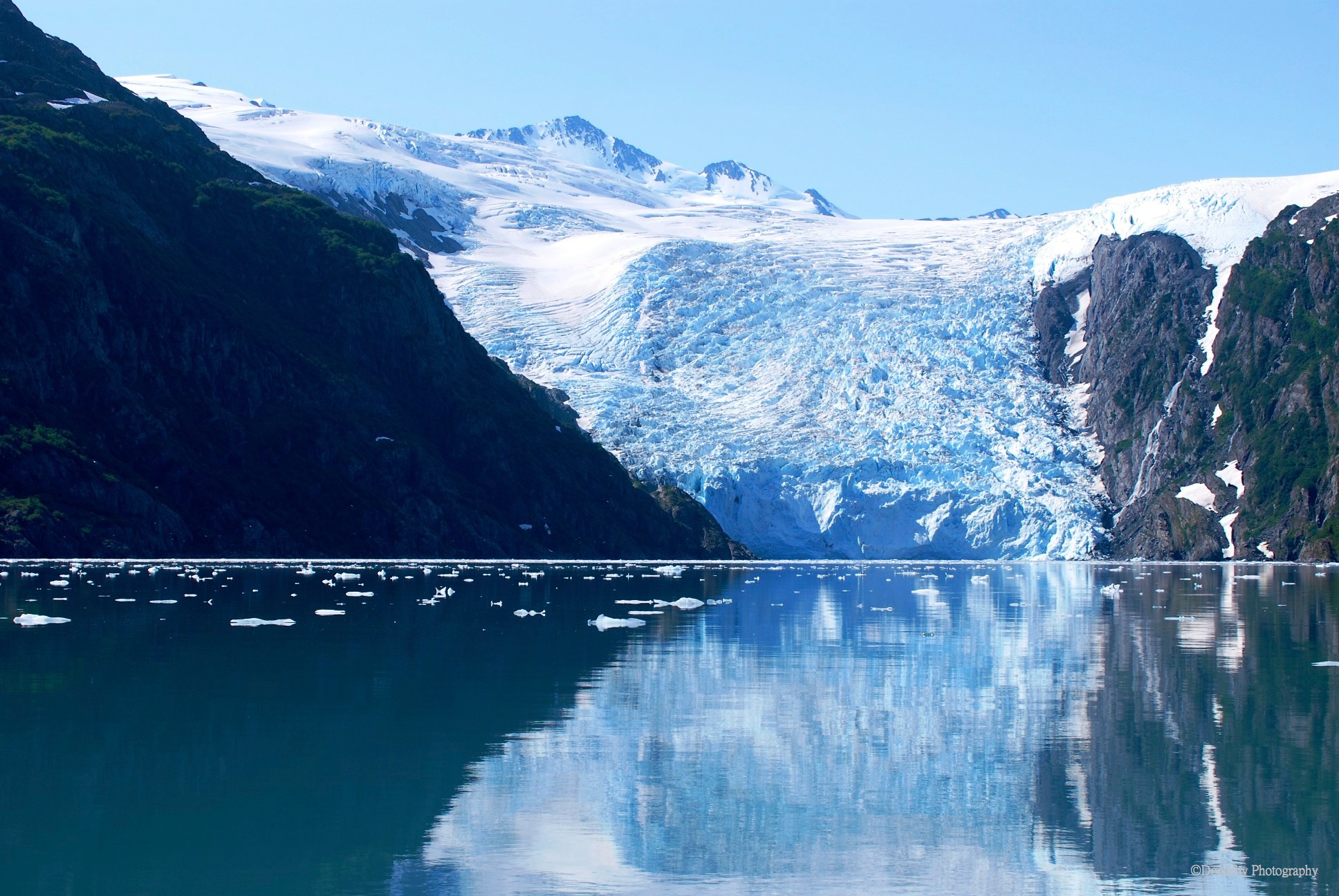
Tidewater glaciers are among the most dynamic forms of ice in nature. Like the Blackstone Glacier (pictured below), they flow from icefields, much as a mountain stream might originate as the outflow from an alpine lake. What makes tidewater glaciers so fascinating is that they don’t gradually turn to water as they descend down a mountain valley, warming and thawing with the descent.

Instead, tidewater glaciers terminate when they reach the sea. The ice continues to flow, pushing the face of the glacier forward. If the face of the glacier is large enough, the combination of forward movement and warmer air and water temperatures can result in spectacular calving events, with massive pieces of ice sloughing off into the sea.

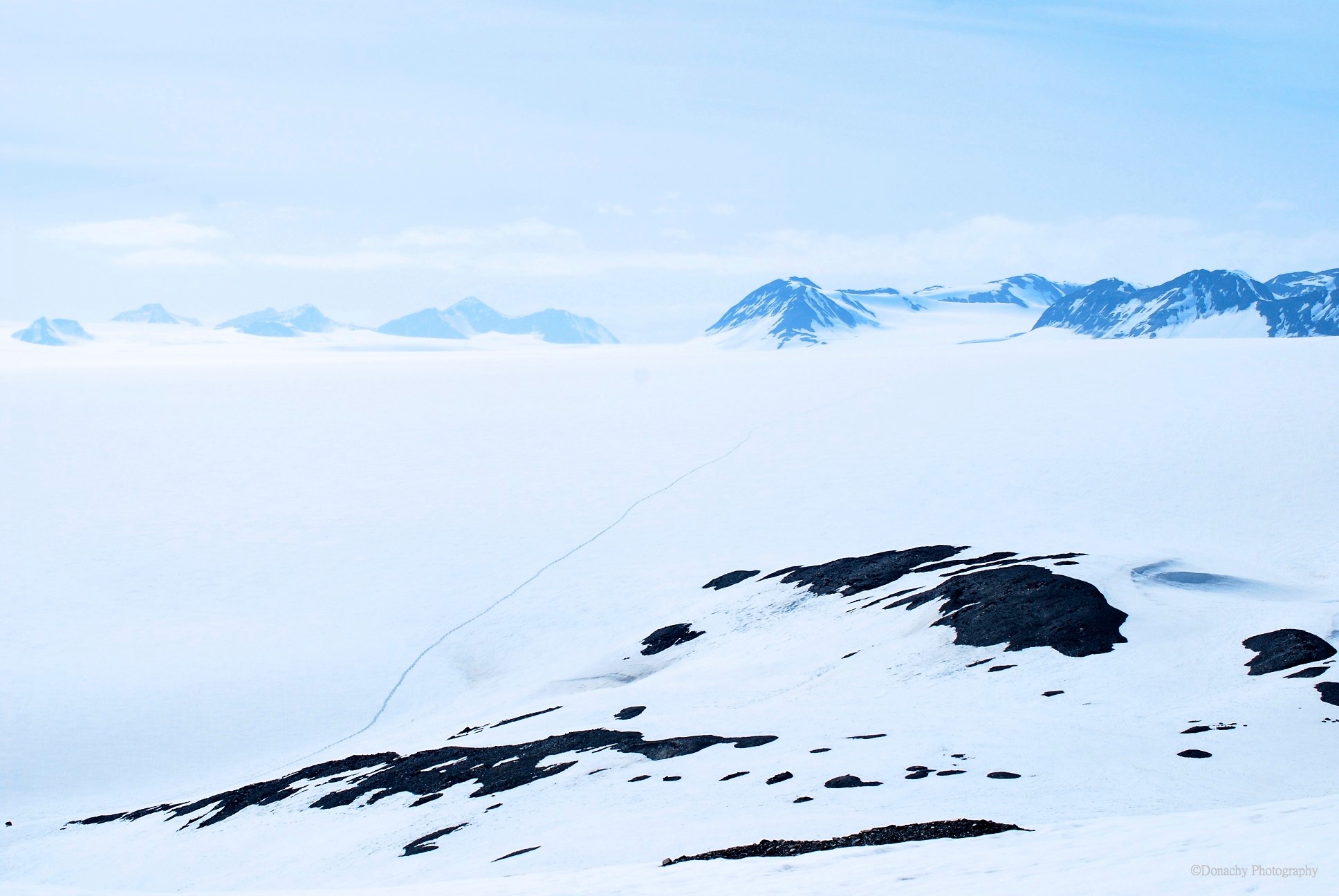
The Harding Ice Field, which gives birth to three dozen or more glaciers, stretches out like a vast, island-studed lake. 

As soon as the freshly calved ice hits the water, it become part of sea’s ecosystem. Harbor seals (above) and black-legged kittiwakes (members of the gull family, below) use the frozen islands to rest, feed and stage hunts. The seals also use the ice as nurseries.


Summer Blueberry Picking on the Arctic Tundra

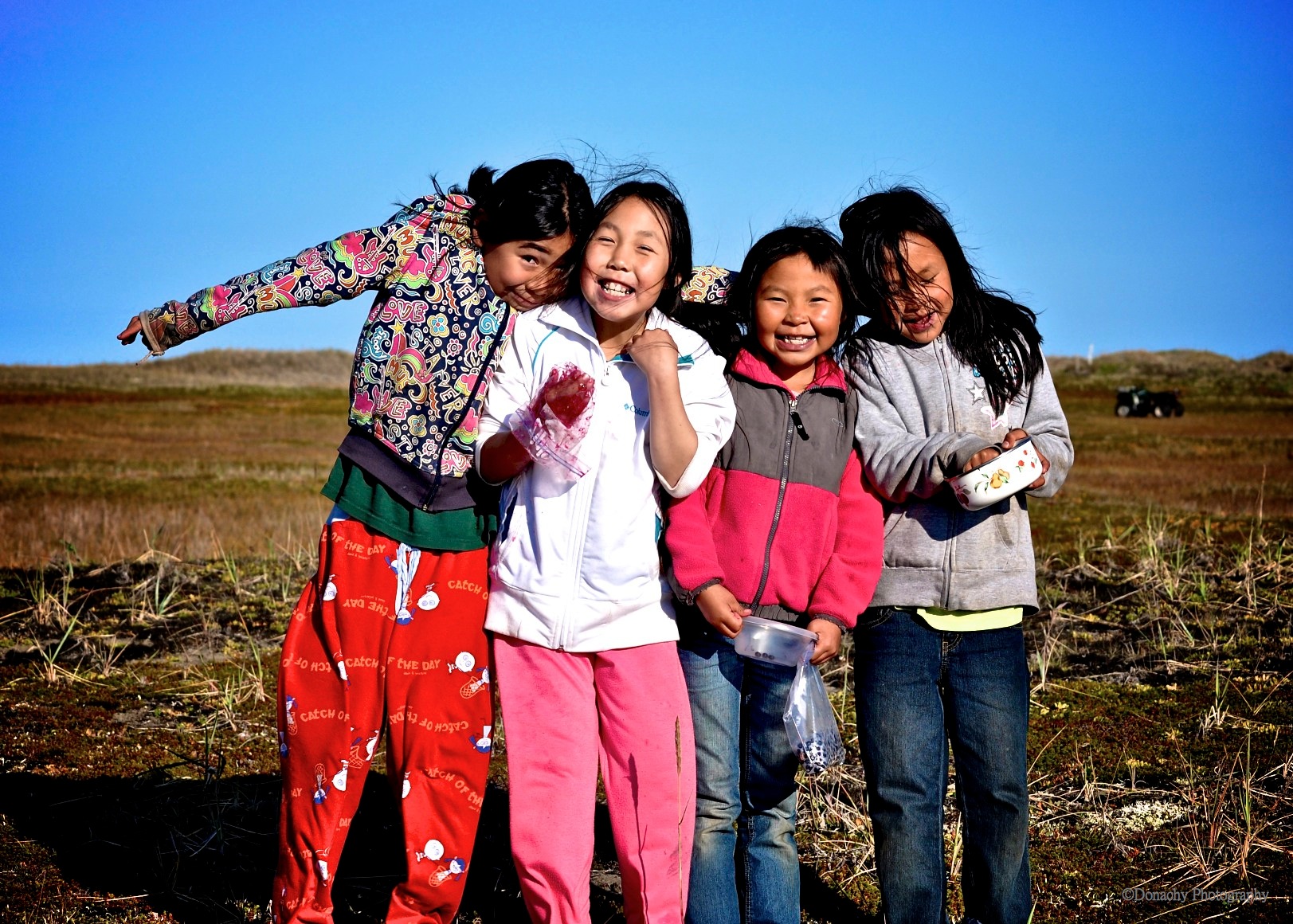
Friends from Shishmaref after an afternoon of blueberry picking. Gathering a cupful or two of these small, tart berries growing in scattered clumps across the tundra was work… the fun kind. The following morning, we celebrated with a stack of blueberry waffles.

Accustomed to the six and seven-foot tall blueberry bushes of Oregon where Barbra and I had picked berries by the bucketful when I lived in Astoria, we were surprised to learn that blueberries were growing right under our feet on our walks through the tundra near Shishmaref. “There’s lots,” one of my students told us. “We’re going to go tomorrow. You guys can follow.”

“Follow” is the village English way of saying “come along.” And sure enough, once we learned to key in on the unmistakable Autumn-red of the bushes (if ground-hugging plants that top out at six-inches can properly be called bushes), we began finding an abundance of small, perfectly ripe, deliciously tart berries. The comparatively thick, woody stems of some of these bushes suggested that they had weathered quite a few seasons near the Arctic Circle. Growing among the blueberries were crowberries (locally called blackberries) and low bush cranberries. Elsewhere in the far north, including in Europe, there are cloudberries, perhaps the most delicious berry on earth.

We walked along in the late summer sun, finding patches of berries here and there, crouching and kneeling to pick, and then moving on to find another patch of tell-tale red. Birds were out sharing the bounty – or maybe the insects associated wtih the fruit: lapland longspurs, white-crowned sparrows, savanah sparrows, and other small birds.

The pause that refreshes. A berry-picker gazes across the open tundra on Sarichef Island where Shishmaref is located, snacking on a bag of berries that probably aren’t going to make it all the way home. The red leaves near her feet? Yep. Blueberries!

Alaskan Salmon Stuffed Eggs

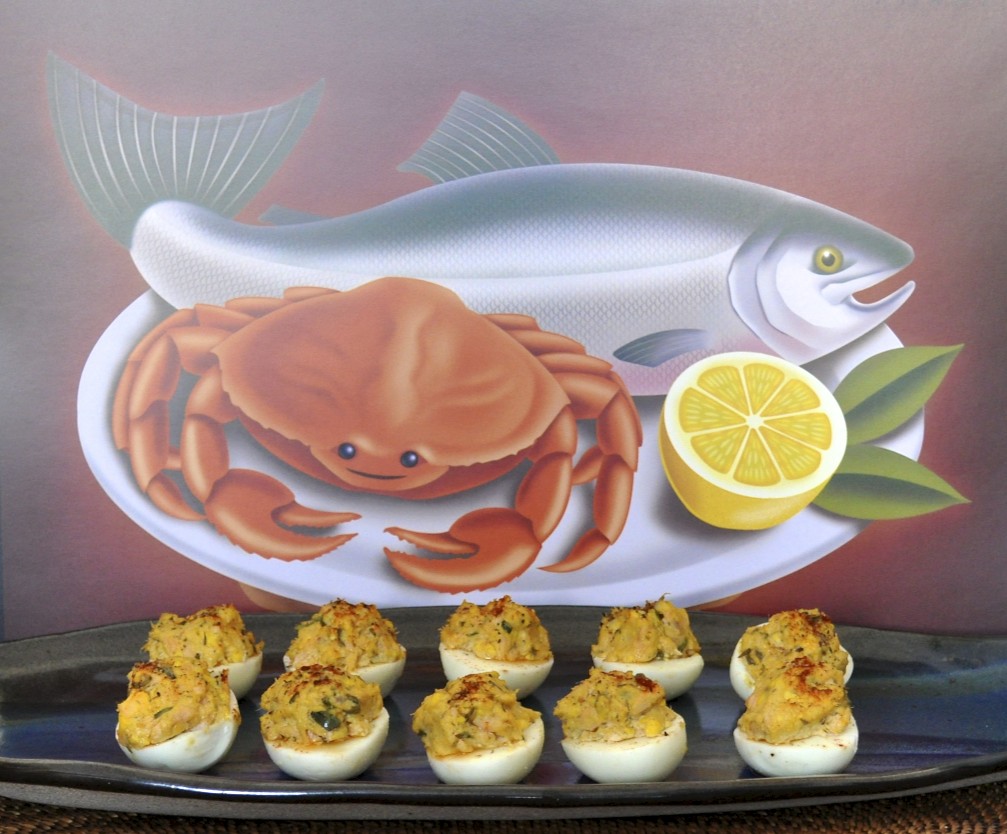
Wild salmon is the key to these super-tasty deviled eggs. This is recipe #6 in the Salmon Challenge.

Deviled eggs are always a favorite appetizer, and this recipe works well with canned sockeye, smoked salmon, or fresh salmon that’s been grilled or broiled. Variations on the basic recipe are endless.

A note on boiling eggs: It’s surprising how many different ways various cookbooks and Internet sites suggesting boiling eggs. What this seems to suggest is that it’s not as simple a task and one might think. Here’s my two-cents, for what it’s worth.

Don’t start with the freshest eggs. Eggs that are a a few days old, or older, work better. Place cold eggs in cold, unsalted water. Bring to a boil. Cook eggs on a low boil – just above a simmer – for 13 minutesDrain off the hot water and immediately cover eggs with cold tap water. Roll eggs to crack the shells (this can be done while they’re still in the pan of there aren’t too many eggs) and keep them in cold water with shells, refreshing the water if it becomes warm. Let the eggs cool in the water, then roll them on a flat surface and peel off the shells. Wait until eggs are thoroughly cool before cutting them.

I’ve tried several methods of boiling eggs. This one works well again and again, with very few problems such as green egg yolks, shells sticking to eggs or overly done or underdone eggs.

Ingredients:

  • 6 large eggs
  • 3 to 4 ounces salmon, broken apart or cut until small pieces (canned sockeye, freshly grilled Chinook, or smoked salmon, for example)
  • 4 anchovy fillets, chopped fine
  • 3 spinach leaves, chopped fine (optional)
  • 2 tsp capers, chopped fine
  • 2 tablespoons mayonnaise (or 1 1/2 tablespoons mayonnaise & 1/2 tablespoon Dijon mustard)
  • freshly ground pepper to taste
  • 1 tsp dried tarragon (or, of course, use fresh)
  • garnish with a sprinkle of paprika and a fresh grind of black pepper and, perhaps, a tarragon leaf or piece of fresh spinach

Directions:

  1. Hard boil the eggs. Slice peeled eggs in half. Remove the yolks and place into a mixing bowl. Mash the yolks with a fork until evenly broken up and set aside.
  2. In a separate bowl, thoroughly mix together all the other ingredients except the garnish. Then add this mixture to the yolks and mix together with a fork. Do not make this too pasty. You should be able to see pieces of caper, tarragon and salmon.
  3. Use a spoon or cookie scoop to stuff the mixture into the eggs.
  4. Garnish with paprika, pepper, etc.
  5. Keep chilled until ready to serve.

These could be served on shiso leaves for added visual and gustatory attractiveness.

Arctic Spring

Hand stitched ugruk (bearded seal) skins cover the wooden ribs of this traditionally-crafted boat as it sits atop a rack in Point Hope, Alaska. With spring officially here (the Vernal Equinox was March 20), whaling season has begun. Whaling crews have been going out to break trail these past few days. This is rough going across the frozen, buckled landscape of the Arctic Ocean. 

Each Arctic day is lengthening by eight minutes, and the sun is shining with perceptible warmth as months of negative double digit cold gradually give way to highs approaching an even zero degrees Fahrenheit. Although the seas continue to be locked up tight, that is how it should be this time of year. Once the trail is broken, the village’s two whaling crews will set up their camps far out on the ice near open water, where, with boats stitched together from the skins of bearded seals at the ready, men dressed in warm, white parkas will wait and watch.

A small skiff seems to await the Chukchi Sea’s thaw.

Last year, three whales gave themselves to the village. That is the way people here say it. Animals are not “killed.” They give themselves, and for a whale to give itself, the hunters’ skill, preparation and worthiness must all come together. Point Hope is one of the oldest continuously inhabited settlements in the Americas. Perhaps the oldest. Here, the unique interplay of sea and river, hills and tundra bring salmon, char, seabirds, caribou, whales and even berries to the inhabitants. Compared to many other villages, the people of Tikigaq (Crooked Finger – so named for a narrow thrust of land at the tip of the peninsula that long since eroded away) have seldom had to go far for food.

The whales are bowheads, a right whale. These baleen whales may weigh 30 tons or more. Occasionally ivory, slate and jade harpoon heads of old are discovered buried deep in a whale’s blubber, indicating that they have a lifespan of at least 150 years. Although commercial whaling in the 1800’s pushed populations to near extinction, they have gradually recovered and numbers in the Chukchi Sea continue to grow by about 3% each year to over 10,000 currently.

Inuit artist Kenojuak Ashevak’s painting (above) depicts the circle of Arctic seasons. Her painting shows open water for less than half of the year.

When we leave the village in mid-May to spend our summer further south in Alaska, much of the tundra and the Chukchi Sea will still be locked in ice. When we return in mid-August, the tundra will be carpeted in shades of green, some of it already giving way to Autumn’s gold. In high summer, flowers bloom in profusion, but by August, most will be done. Berries – cloudberries, cranberries and crowberries near the village, joined by blueberries further out – will follow. Waves will tumble on the shore as though the ice never existed, and salmon and char will be swimming in the clear-green water.

Beaver Fur Hats: Real Warm

Inupiat craftsman Isaac Atungana of Point Hope specializes in these luxuriously warm and comfortable beaver fur hats.

After months of admiring the ruffs on the parkas of our students and friends in Shishmaref, I got a beautiful wolf ruff for Barbra.  Our friend Nancy sewed on it. Aside from its beauty, the ruff around her hood serves a very practical purpose: protection from the elements. Whether made of polar bear fur, wolf fur, or, perhaps best of all, wolverine fur, a good ruff traps a pocket of warm air around the wearer’s face, keeps the wind off bare skin, and cuts down on the sun’s glare. Barbra loves hers. “You should get one,” she’s been urging this past winter.

Partly out of tightfistedness, partly out of skepticism, I’ve been resisting. First, good ruffs are fairly expensive. Second, I just couldn’t see how a little fur, fur that isn’t even lying next to one’s skin, could make that much difference. So I’ve soldiered on with my performance fleece face mask and my Mountain Hardware Polartec watch cap. Quality gear, and with my head and face thus ensconced and tucked beneath the down hood of my Mountain Hardware parka, I reasoned that I should be plenty warm.

And down to about zero degrees Fahrenheit, I am. Below that, if I have to be out long, especially if there’s wind, I get cold pretty fast.

“Face hurts,” I say to Barbra.

“You should let me get you a ruff,” she replies. “A real good one. Wolverine.”

“Maybe,” I answer back like a record with a needle stuck.

The other day, Isaac Atungana, who makes superbly warm beaver fur hats, showed me his latest creation. Unlike his other hats, this one was completely lined with thick, soft, warm beaver fur.

I try it on. It’s a little big. “I can take it in right along this seam,” he says pointing.

The first time I wore the hat, it was negative 17 outside with a windchill pushing the temperature down to negative 50. It was a revelation. My face didn’t hurt at all. In fact, I felt downright… cozy! And that was with the hat on backwards! (I’ve since been instructed as to the proper positioning of the hat on one’s head.)

The beaver fur extends past my face and traps a pocket of air the same way a ruff does. And the hat, which weighs nearly a pound, is thick and well-insulated, comfortable and warm. Man, if I had had this hat when deer hunting and ice fishing back in Pennsylvania…

Bison Joes with Roasted Bell Peppers

Roasted bell peppers and ground bison combined with freshly baked buns for a memorable version of an America Classic.

One of the challenges of living hundreds of miles beyond the road system is that we frequently can’t get the ingredients we want for cooking. With the school year rapidly drawing to a close (fewer than eight weeks remain now) and an abundance of ground bison in our freezer, Barbra had been requesting Sloppy Joes. “I’ll make the buns!” she promised. Problem is, the village store hasn’t had onions since early January. The last shipment was frozen solid and had to be tossed out. We’re out as well, and I couldn’t quite imagine Sloppy Joes without diced sweet onions mixed in with the meat and sauce.

And then, out of the blue, a friend gave us two green bell peppers. Roasted and skin peeled, these would provide the tangy sweetness I was looking for. I had a large carrot in the fridge that needed to be used, so I diced and sautéed it and added it to the ingredients as well.

Mixed together with an off-the-cuff sauce, our Bison Joe’s came out great – more savory than sloppy, and sweet enough to please the kid in us.

Bison Joes with Roasted Bell Peppers

Ingredients

  • 1 pound ground bison
  • 5 cloves garlic, chopped fine
  • 2 bell peppers, cut in half, stems and seeds removed
  • 2/3 cup finely chopped carrots
  • olive oil, as needed
  • 1/2 cup Sloppy Joe sauce (below)
Directions for roasting bell peppers:
  1. Place a baking sheet (a good, thick one is best) into oven and preheat to 500 °F.
  2. Using a brush, spray bottle or fingers, thoroughly cover bell pepper halves with light olive oil, canola oil or other oil that will withstand high temperatures.
  3. When oven is preheated, place bell peppers open side down on baking sheet. Roast until peppers soften, skin begins to loosen, and outside begins to brown. Turn the peppers over and continue to roast until desired color is achieved. (You will see at least some spots burned black. How much of this you want is up to you. I go for just a little black.)
  4. Remove peppers from baking sheet, place in paper bag and close. This will help steam the skins loose.
  5. When cool enough to handle, peel off the skin.
  6. Dice the peppers (about 1/4″ pieces) and set aside.
Directions for bison, carrots and garlic:
  1. Add about 2 tablespoons olive oil to a large frying pan and heat over medium heat. Add ground bison. Breaking up the meat and stirring, cook until evenly browned. Pour out on paper towels to drain off oil and fat and set aside.
  2. Add about 1 tablespoon olive oil to a medium frying pan and heat over medium to medium-low heat. Add carrots, stirring frequently. Just before done, add the garlic and cook an additional 1 to 2 minutes. Place in a small bowl and set aside to cool.
Sloppy Joe Sauce
Ingredients
  • 1/3 cup ketchup
  • 1/4 cup Dijon mustard
  • 1/2 tablespoon Worcestershire sauce
  • 1 tablespoon Cholula sauce
  • 1 tablespoon soy sauce
  • 1 teaspoon cumin
  • 1 teaspoon dried oregano
  • 1/2 teaspoon basil
  • couple dashes powdered cinnamon
  • 1/2 teaspoon chili powder
  • several grinds freshly cracked pepper
  • 2 tablespoons olive oil

Directions:

  1. Add all ingredients to a non-reactive bowl and mix thoroughly. Add the garlic and carrots (above). Add the bell peppers. Add additional chili powder, cumin or Cholula for more of a kick.
  2. Place the browned bison in a large skillet. Heat on medium heat and add enough sauce to coat the meat. Beyond that, how much sauce to add is a matter of cook’s choice. Mix thoroughly, cooking and stirring till everything is hot.

Serve on toasted buns or toasted bread with a frosty mug of root beer.