The Sailing Vessel Bandon

The t’s have been crossed and the final i dotted. All 37 feet and 12 tons of the sailing vessel Tarsus is ours.

What have we gotten into?

There’s a line from the film The Shipping News that seems to fit. “Course, you don’t know nothin’ about boats, but that’s entertaining, too.” 

Four years ago when we bought our C-Dory, Gillie, I’d never piloted a power boat longer than 12 feet – my dad’s aluminum car-topper with its 5 hp engine. Barbra had even less experience with boats. All we really knew was that we wanted a fishing boat. So we did our due diligence – read books, researched on the Internet, visited dealerships, checked out boats in marinas, talked to people and attended boat shows. In the end, we came to a familiar set of conclusions, the short of which go like this: There are a lot of boats for sale, and most of ‘em float. Out of all those boats, a few makes stand out. After that, everything is a compromise. The boat we really wanted was too big to readily trailer; thus it was not the boat we really wanted. We took the plunge, bought Gillie and a year later towed her all the way to Alaska, to the Port of Valdez, which is over 3,000 miles from Sacramento. We then launched her, ran 90 miles to the Port of Cordova, and spent the next eight days and nights fishing and camping aboard our boat in Prince William Sound.

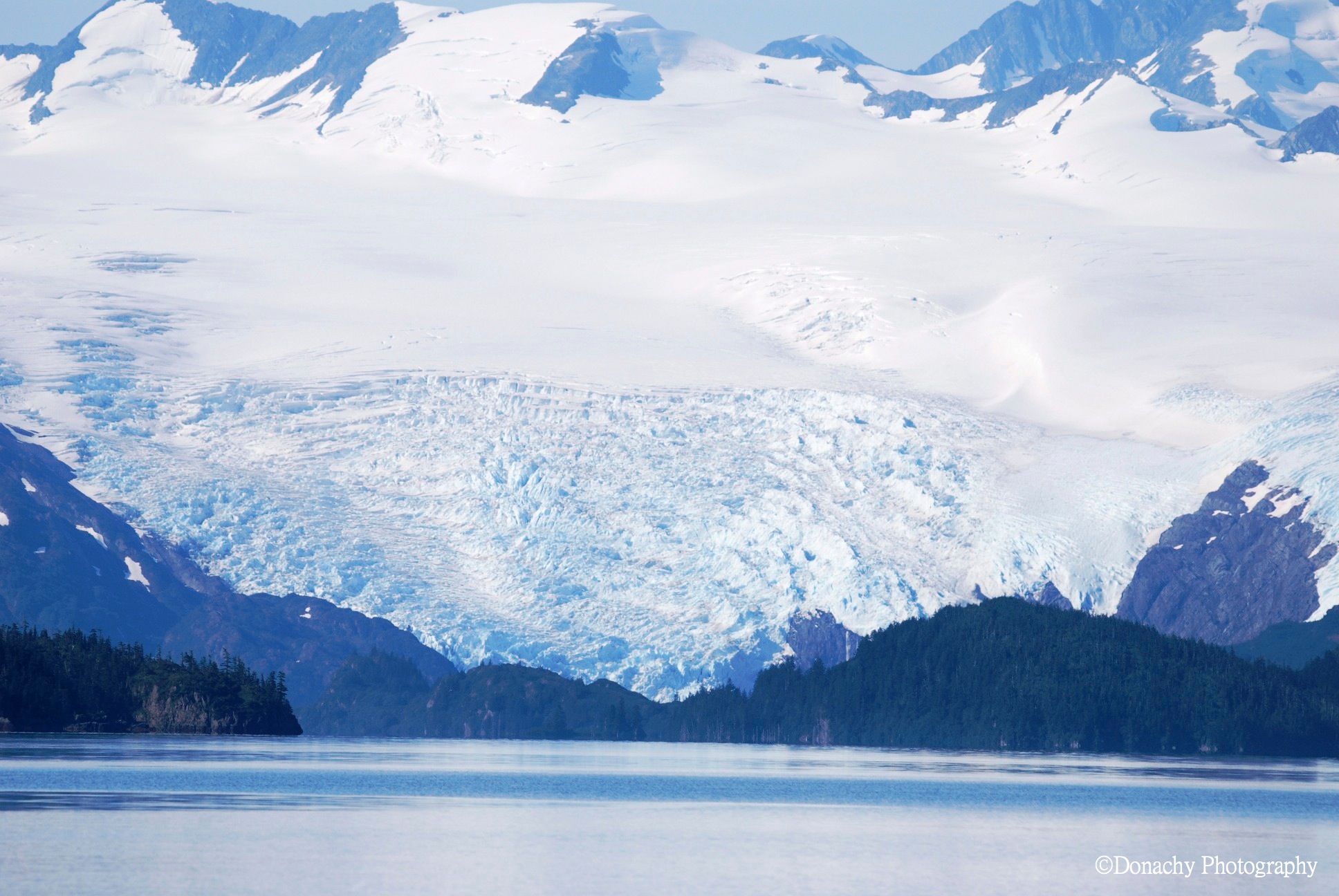
Above: Jagged rocks and islands create a maze leading from Resurrection Bay out into the Gulf of Alaska. Top photo: Massive Blackstone Glacier towers above its namesake bay near Whittier, Alaska.

Time and tide kept me from sailing, but I honestly can’t remember a time in my life when I didn’t want to sail. It’s always been there. Landlocked in western Pennsylvania, my family would take summer vacations to the coast – up to Cape Cod, down to North Carolina’s Outer Banks, west to Oregon – where we’d spend a week frenetically touring museums and historical sites, dining out in restaurants, perusing art galleries and shopping. For my part, I could have spent all day every day on those vacations doing nothing more elaborate than fishing the first tide of the day, combing the beaches, and walking the marina docks. The boats, particularly the sailboats, were magical. Mesmerizing. I’d see their owners emerging from below deck, or topside working on this or that, or just relaxing and looking off in the distance and I wanted to be those people. I had so many questions for them, but I never worked up the courage to break free from my family, approach one of them and ask. Questions like, How does it work? How do you steer it? Do you live on it? What does its name mean? Where have you been on it? Where will you go next?

Tarsus’ former owners were podiatrists. Although we haven’t completed a formal name change yet, on each piece of paper associated with the sale (for a boat this size, there’s nearly as much paperwork as in a home sale) we have penned in Bandon where the vessel’s name appears.

Sea otters are a common, always welcome sight along Alaska’s southeast and central coasts. 

There’s a small town on the southern Oregon coast where a river with runs of salmon, steelhead and striped bass joins the Pacific. Bandon. For a long time, Barbra and I looked at land on the Coquille River upstream from Bandon. In addition to the fish, the area has deer, turkeys, game birds and elk as well as good mushrooming and abundant wild berries. It’s a quiet part of the world, not overly far from wine country. We talked about a piece of land with trees, a spot for a garden, raising chickens there and cutting our own firewood for a wood burning stove in a cozy house where we would homestead.

Bandon is that. But it’s more. This time, it’s not the boat that represents the compromise. It’s the lifestyle. Choosing to become sailors means, at least for now, not becoming homesteaders. It means not driving our camper all over North America, or having a cabin on the shores of a lake full of walleyes, or collecting wine, or, in Barbra’s case, getting a pilot’s license.

Bandon will be docked in the Marina at Seward, pictured here in early July.

To borrow from Robert Frost, Bandon is the road we’ve taken. She’s got a sound hull, every amenity and comfort we need and then some, and sails to take us over any sea. It is dreams come true for us, and in some of those dreams there is a placid lake full of walleyes, and endless summer days touring North America in our camper, a herd of elk feeding on windfalls beneath our apple trees, a salmon fresh from our river for Thanksgiving dinner, a wood burning stove and a freshly made blackberry pie.

Resurrection Bay, where Seward is located, has one of the largest summertime concentrations of Coho salmon in North America. There is an abundant, varied and rich ecosystem in the bay, making it a premier locale for everything from watching sea birds and otters to seeing whales, dolphins and porpoises. The surrounding mountains are spectacular and help ensure for predictable winds, making Resurrection Bay a great place to sail. For more information about the sailing vessel Bandon, click on the word Tarsus.

Scallop and Shrimp Chawan Mushi with Smoked Quail Eggs

Chawan mushi combines two of my favorite things: custard and an element of pleasant surprise. Although the custards served to me (mostly by my grandmother) in my youth were invariably sweet, it was love at first spoonful when I had my first taste of chawan mushi in a Tokyo restaurant. On that occasion, I would have been happy just to enjoy the small ramekin of savory soupy custard that came with my meal. But when one of those spoonfuls revealed a sweet shrimp, and another a tender boiled quail egg, I was full-blown, head-over-heals gone.

Japanese diners seem to think of chawan mushi more as a soup than a custard, and I have to admit that over time, I have come to prefer this dish fairly loosely set. In addition to fresh, grilled or smoked seafood (a bit of smoked salmon makes a nice finishing piece), fresh vegetables such as peas, butter beans, lotus root or mushrooms, or a tender piece of salty grilled chicken, beef or wild game all work well. Creative cooks may want to experiment with the basic dashi recipe or substitute chicken or beef broth. A pinch of smoked sea salt adds another dimension to this versatile dish which can be served hot to take the chill of a winter evening or refreshingly cold on a warm summer day.

Below are the directions for Scallop and Shrimp Chawan Mushi with Smoked Quail Eggs – with much appreciation to a Japanese friend who mailed us a package of smoked quail eggs, thus inspiring this dish. By the way, chawan means tea cup; mushi means steaming.

The Watercourse, a signed and numbered giclée by Whitehorse, Yukon Territory artist Nathalie Parenteau serves as the backdrop for this All-Clad poacher. With its raised tray, it’s perfect for steaming chawan mushi either in an oven or on a stove top. In the past, I’ve improvised with a large round kettle fitted with an inverted shallow wicker basket. The same kettle also works with an inverted metal strainer that happens to fit.

Jack’s Dashi

Ingredients

  • 2 cups water
  • sheet of dried kombu (Japanese kelp) about 4″ x 4″ (about 5 grams)
  • 1 teaspoon “Better than Bouillon Lobster Base” (or make traditional dashi with 1/4 cup dried bonito flakes)

Directions

  1. Add two cups of water and the kombu to a pan. Heat over medium heat.
  2. Just before the water boils, remove the kombu. Turn off heat and stir in the lobster base bouillon.
  3. Strain through cheese cloth or fine-mesh strainer to remove stray pieces of kombu (or bonito flakes, if those are used). The lobster bouillon base will create a slightly darker dashi than bonito flakes. In the finished chawan mushi, this will create an attractive cream color.
  4. Set aside to cool.

Scallop and Shrimp Chawan Mushi with Smoked Quail Eggs

Ingredients

  • 6 small ramekins, preferably with loosely fitted lids. Plastic wrap with a small puncture (to allow steam to escape) can be used to cover the ramekins if lids are not available.
  • 2 cups dashi (see recipe above)
  • 3 large eggs
  • 1 tablespoon soy sauce
  • 6 sea scallops
  • 6 sweet shrimp, peeled, deveined, tails removed (Alaskan shrimp are similar to the ama-ebi of Japan and are perfect for this dish)
  • 6 smoked quail eggs
  • (optional) sea salt to taste
  • (optional) 2 tablespoons good sake

Directions

  1. In a bowl, whisk eggs until smooth. Make sure dashi is cool (so it won’t cook the eggs) and stir into egg mixture. Add soy sauce (and sake, optional) and mix together, but avoid mixing so vigorously that foam is created. Taste for appropriate saltiness. If more salt is desired, use sea salt. Set mixture aside.
  2. Slice scallops depth-wise into three or four parts. Place scallops and 1 shrimp each into the ramekins.
  3. If there are bubbles or foam on the egg and dashi mixture, use a spoon to remove. The finished chawan mushi should be smooth. Cover the scallops and shrimp with the egg and dashi mixture so that ramekins are about 2/3 full. Cover each ramekin with a loosely fitting lid or punctured piece of plastic wrap.
  4. Arrange the covered ramekins in a steamer and gently steam for 12 minutes, until mixture is loosely set.
  5. Turn off heat. Place a smoked quail egg atop each chawan mushi, cover with lids again, and keep them in the steaming pan so that the custard continues to set and the egg warms through – approximately 3 – 5 additional minutes.

This dish makes a delicious appetizer, can be served as one would serve a soup, or as part of the main meal. It will keep nicely in the refrigerator for a day or two. Our village in bush Alaska is dry, so sake is not an option. But I highly recommend you include it, as it really compliments the flavors of this dish – and pairs well as a drink served with the finished chawan mushi.

Rosemary Kalamata Olive Loaf

Aromatic and flavorful, tonight this rosemary kalamata olive loaf will accompany a moose roast. Roasted lamb, too, would be a good choice, and we anticipate it pairing well with Italian or Greek dishes, as well. This morning we served toasted slices with olive oil with halibut omelets. During the baking process, our kitchen was filled with the irresistible scent of rosemary. We agreed it was one of the best savory breads we’ve ever had.

This is another recipe from 300 Best Bread Machine Recipes by Donna Washburn and Heather Butt. Monitor the dough during the kneading process to make sure the amount of flour/moisture is right. Because the kalamata olives added moisture, I found I needed to add a little more flour than is indicated below.

Olive Rosemary Loaf

Ingredients

  • 1 cup water
  • 3/4 cup kalamata olives, pitted and chopped coarse, extra moisture gently squeezed out in paper towels
  • 1 tsp salt
  • 1 tbsp granulated sugar
  • 2 tbsp extra virgin olive oil
  • 3 1/4 cups all purpose flour
  • 1/4 cup fresh rosemary (or 2 tsp dried)
  • 1 1/4 tsp yeast

Directions

  1. Measure ingredients into baking pan in the order recommended by the bread machine manufacturer. Insert pan into the oven chamber. Start your machine. During the kneading phase, check to make sure the dough is of proper consistency. Add flour or water as needed.

Chocolate Truffle Cookies with Pecans

Dedicated to fully addicted chocoholics, this chocolatey chocolate with chocolate-chip cookie is not for people who just “like” chocolate. Are you getting how chocolatey these are? 

This low-flour cookie is dense and fudge-like. Because the dough is quite sticky, I recommend using a cookie scoop and then rolling the chilled dough in a coating such as chopped nuts, confectioner’s sugar or coconut in order to make handling the dough easier. This extra touch also enhances the taste, texture and the presentation.

Chocolate Truffle Cookies

makes 3 dozen cookies

Ingredients

  • 2 cups semisweet chocolate chips, divided equally
  • 6 tablespoons butter
  • 3 eggs
  • 1 cup white sugar
  • 1 1/2 teaspoons vanilla extract
  • 1/2 cup all-purpose flour
  • 2 tablespoons unsweetened cocoa powder
  • 1/4 teaspoon baking powder
  • 1/4 teaspoon salt
  • 1 cup finely chopped pecans

Directions

  1. In a microwave or in a bowl warmed over a pan of simmering water, place the butter and 1 cup of chocolate chips and melt together, stirring occasionally until smooth. Remove from heat and set aside to slightly cool.
  2. In a large bowl, beat eggs and sugar until thick and pale, about 2 minutes. Stir in the vanilla and the chocolate mixture until well mixed.
  3. In a separate bowl, combine the flour, cocoa powder, baking powder and salt. Gradually stir into the chocolate mixture. Fold in remaining 1 cup chocolate chips. Cover dough and chill for at least an hour or overnight.
  4. Preheat oven to 350 degrees F (175 degrees C). Roll chilled dough into 1 inch balls. Roll dough balls to coat with chopped pecans. Place on ungreased cookie sheets so they are 2 inches apart.
  5. Baking time will vary depending on how chilled the dough is when it goes into the oven. Place cookies into preheated oven. Check at 9 minutes. Finished cookies should be puffed up and slightly cracked on top. This may take up to 15 minutes. Allow cookies to cool on baking sheet for 5 minutes before removing to a wire rack to cool completely.

This recipe was adapted from http://allrecipes.com/recipe/chocolate-truffle-cookies/detail.aspx.

Overnight French Toast with Blueberries

Blueberry French toast made from leftover challah bread makes for a gourmet breakfast. Thick slices of apple-smoked bacon and freshly brewed cups of espresso roast coffee rounded out this Spring Break breakfast.

Overnight French Toast with Blueberries

Ingredients

  • 6 slices day-old (or older) challah, cut into 1 inch cubes (other brioche-style breads can be substituted)
  • 1/2 (8 ounce) package cream cheese
  • 1/2 cup fresh blueberries (or dried blueberries soaked in hot water for five minutes)
  • 4 eggs, beaten
  • 1/2 cup milk (I used soy milk)
  • 1/2 cup heavy cream
  • 1 teaspoon vanilla extract
  • 1/3 cup maple syrup
Directions
  1. Lightly grease a baking dish approximately 8 x 8 inches. (My dish was 7 x 10.)
  2. Spread cream cheese on top of bread slices. Cut slices into 1-inch cubes. Arrange the bread cubes in the dish. Sprinkle with 1 cup blueberries.
  3. In a large bowl, mix the eggs, milk, cream, vanilla extract, and syrup. Pour over the bread cubes. Cover, and refrigerate overnight.
  4. Remove the bread cube mixture from the refrigerator about 30 minutes before baking. Preheat the oven to 350 degrees F (175 degrees C).
  5. Cover, and bake 30 minutes. Uncover, and continue baking 25 to 30 minutes, until center is firm and surface is lightly browned.

I opted to sprinkle chopped pecans onto the French toast during the last 10 minutes of baking. The French toast is not overly sweet, which is what I was going for. You could mix in confectioner’s sugar with the cream cheese for a sweeter version. Cinnamon would also be a nice addition.

Crustless Cranberry Cake

Tart cranberries and almonds make for an irresistible combination. This cake is delicious served with vanilla bean ice cream or covered with hot vanilla custard.

With eight weeks to go in our school year, it’s time to get creative with items remaining in our pantry and freezers. Our pecan upside-down pumpkin cake was a delicious way to use up a cup of frozen pumpkin puree that survived the holiday season. Our next challenge was two cups of cranberries from the freezer door. I found a promising recipe for a crustless cranberry “pie.” We are fans of tart and sweet flavor combinations, and this recipe was a terrific way to use those residual cranberries. I decided to pulverize the almonds so they would provide more flavor than texture.
.
Crustless Cranberry Cake
.
Ingredients
  • 1 cup all-purpose flour
  • 1 cup white sugar
  • 1/4 teaspoon salt
  • 2 cups cranberries
  • 1/2 cup whole almonds pulverized to the consistency of coarse flour
  • 1/2 cup applesauce (used instead of butter)
  • 3 eggs, well beaten
  • 2 tablespoons almond syrup (the kind used to flavor drinks in coffee shops)
  • (optional) zest from 1 orange or 1 tablespoon Grand Marnier
.
Directions
  1. Preheat oven to 350 degrees F. Grease one deep 9-inch pie pan.
  2. Combine the flour, sugar, and salt. Stir in the cranberries and the almonds, and toss to coat. Stir in the applesauce, beaten eggs, and almond extract. The mixture will be very thick. Spread the batter into the greased pan.
  3. Bake at 350 degrees F for 40 minutes, or until a wooden pick inserted near the center comes out clean.
  4. Serve warm with whipped cream, ice cream, or warm vanilla custard.

.

Recipe adapted from http://allrecipes.com/recipe/crustless-cranberry-pie/Detail.aspx

Upside-Down Pecan Pumpkin Cake

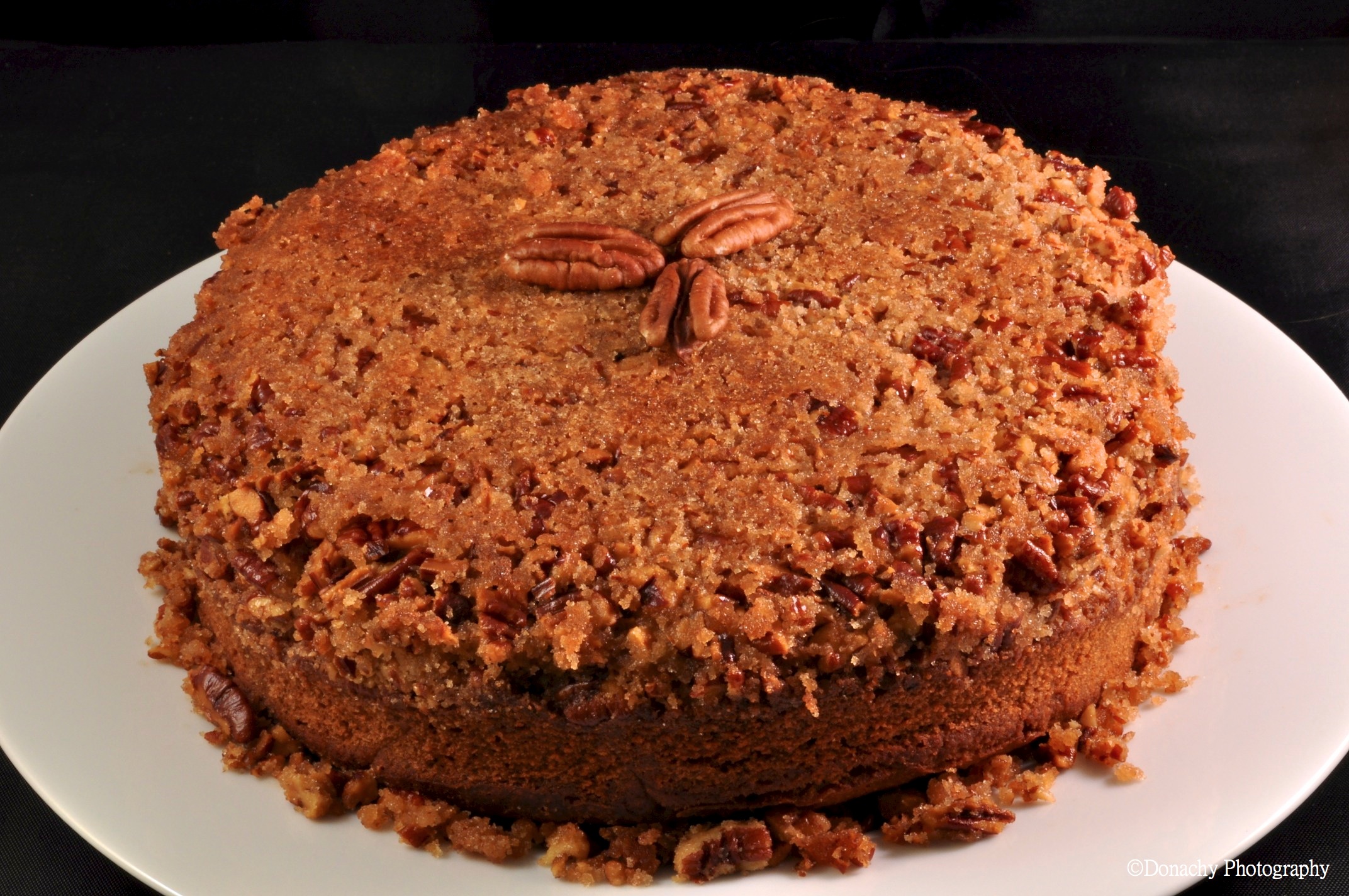
Moist, packed with flavor and topped with crunchy nutty deliciousness, this upside-down will have your guests glad they saved room for dessert. 

I baked this cake in a 9-inch springform pan because that was the best pan for the job in my cupboard. Set on a baking sheet it worked well, and unmolding the cake was a cinch.

Upside Down Pecan Pumpkin Cake

Ingredients

  • 1 cup (2 sticks) unsalted butter, evenly divided and melted
  • 3/4 cup of brown sugar
  • 3/4 cup pecan halves
  • 1 2/3 cups all-purpose flour
  • 1 teaspoon ground cinnamon
  • 1/2 teaspoon mace
  • 1/2 teaspoon salt
  • 1/2 teaspoon baking powder
  • 1/2 teaspoon baking soda
  • 1 cup granulated sugar
  • 1 teaspoon vanilla extract
  • 2 large eggs
  • 1 cup pumpkin puree, canned or fresh
  • 1/2 cup warm (110 degrees) milk

Directions

  1. Heat the oven to 350 degrees F. Spread pecan halves on a baking sheet and toast for 5 minutes or until aromatic.  Remove from the oven and let cool. Coarsely chop the pecans and set aside. Leave the oven set to 350 degrees F.
  2. Melt one stick of butter in a small sauce pan. Add pecans and brown sugar, mix thoroughly. Spread this mixture evenly at the bottom of a 9 inch cake pan.
  3. In a large bowl, sift together flour, sugar, cinnamon, mace, salt, baking powder, and baking soda. Set aside.
  4. Melt second stick of butter.
  5. Add melted butter, eggs, milk, vanilla extract and pumpkin puree into a mixing bowl. Beat together with mixer until well combined, about 2 minutes.  Add flour mixture and stir with spoon until just combined.
  6. Pour batter on top of pecan mixture in the baking pan. Bake until a cake tester inserted into the middle comes out clean, about 50 minutes. Transfer the cake to a wire rack to cool, approximately 5 minutes.
  7. Place a plate over the cake and invert to unmold cake and let cool completely.

We served the cake with homemade vanilla bean ice cream and cups of freshly steeped almond roobios tea.

This recipe was adapted from http://thenoshery.com/2011/03/28/praline-upside-down-pumpkin-cake/.

If you liked this post, you might also like:

Molten Chocolate Lava Cake

Chocolate Waffle Cookies in Two Minutes Flat!

This week, I based my search for a new cookie recipe solely on looks. I found a photo of “boot print cookies,” not a terribly appetizing name for a cookie, but the waffled pockets make it easy to imagine serving these with ice cream or chocolate sauce, and the powdered sugar on a chocolate-colored background is classic. The unique look, rich brownie flavor, and the crispy Belgian waffle texture are a winning combination. The best part? After the batter is made, you only have to wait two minutes before you can enjoy fresh, hot, chocolate waffle cookies! Just dollop a rounded tablespoon of batter onto the hot waffle iron, press, and there they are – Boot Print Cookies! Or, if you like, in deference to the waffle-soled running shoes Bill Bowerman created in his kitchen while a coach at Oregon University back in the 1970’s, “Cross Country Cookies!”

Chocolate Waffle Cookies

makes 32 cookies

Ingredients

  • 3/4 cup white sugar
  • 1/2 cup butter, melted
  • 2 eggs
  • 1 teaspoon vanilla extract
  • 1 cup all-purpose flour
  • 1/4 cup unsweetened cocoa powder
  • 1/2 cup chopped walnuts

.

Directions

  1. Preheat the waffle iron. In a medium bowl, mix the sugar and butter together. Stir in the eggs and vanilla. Then mix in the flour, cocoa, and walnuts.
  2. Drop dough by rounded tablespoons onto the waffle iron. My waffle iron is large enough to do 16 cookies per batch. Close the lid and cook for 2 minutes. It may take more or less time depending on the individual waffle iron. Separate any cookies that have run together while still warm. Dust with confectioner’s sugar if desired.
.

adapted from http://allrecipes.com/recipe/waffle-cookies-ii/detail.aspx

If you liked this post, you might also like:

Florentines

Linzer Cookies

Cranberry and Pecan Rugelach

Mailanderli

Stuffed Cookies

Fire in the Sky: Aurora Borealis Point Hope, Alaska

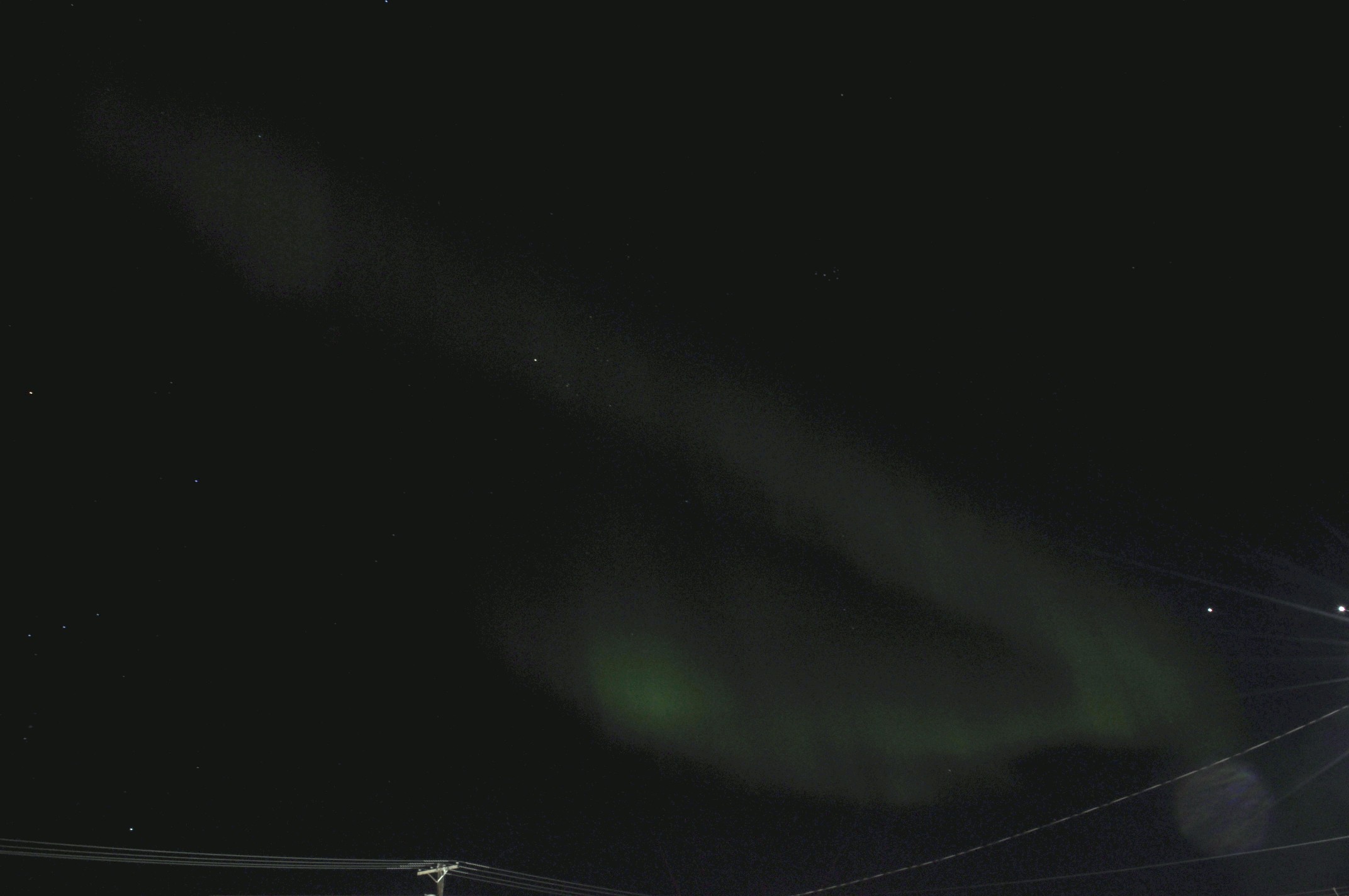
Mars hangs above a water silo aglow with lights from the school, a band of auroral light seeming to shoot from the silo like flames. (Click on photos for larger images.)

No photo – and certainly not our first attempts – can do justice to a northern sky on fire and dancing with the eerie green and purple glow of an Aurora Borealis. On this night 200 miles above the Arctic Circle, temperatures were an icy negative 10, pushed even lower by a steady breeze. As the sun sank below the frozen sea to the west, the full moon emerged in the east, close to Earth and huge, the color of a blood orange, hanging on the horizon. Jupiter and Venus were aligned, Mars glowed red as an ember against the black sky and Orion’s belt burned bright. Washing over it all was a breathtaking display of slowly moving green bands, some of them edged in purple, some of them jagged and electric, the band on the northern horizon streaked with pink mixed in with the green.

It’s not uncommon to see a bit of faint green or greenish yellow in the night sky up here. But what we were seeing on this night was of a different magnitude – a rare event tracing back to a spike in activity on the Sun a a few days ago. We made a few quick phone calls to friends. “Go outside and look up!” Meanwhile we got our camera and gear together, realizing, suddenly, that we weren’t  sure how to capture any of this. We met one of our friends in front of the school and walked with her toward the lagoon on the north side of town, away from the lights. In every direction, from horizon to horizon and straight overhead, what we saw stunned us. “This is amazing,” we kept repeating.

Note the three aligned stars of Orion’s belt to the left.

By the time we got our camera figured out, our fingers hurt with cold and the peak of the lights was past. But we still got some photos. A large part of photography is capturing light, and this was a quest for capturing light on a sublime scale.

Fireworks over the Columbia River while sharing a bottle of wine from a balcony at my apartment in Astoria, Oregon, tumblers of Scotch and a sky so impossibly filled with stars we felt like the deck of our mountain cabin in Yosemite was sailing through the Milky Way, a full moon hanging over a becalmed ocean on Prince William Sound with not another boat on the water, a campfire, mesmerizing, at our tent site at Oregon’s Sunset Bay State Park… night skies to come in remote anchorages on the Pacific… Our lives are filled with light.

Fishing and Camping along Oregon’s Deschutes River

Edged by a thin strip of green, the Deschutes River is born in mountains southwest of Bend. Brookies – aggressive and abundant – dominate the headwaters where it flows out of Little Lava Lake. When the river hits Crane Prairie Reservoir, rainbows (and largemouth bass) dominate. Once the river drops into canyon country north of Bend, redbands come into their own. Although canyon trout typically don’t run large, there’s a good chance you’ll have the water to yourselves, as we did. Further downstream, steelhead attract attention from fly fishermen who spend hours swinging flies in hopes of that one, elusive, electrifying grab. (Click on any of the photos for a larger view.)

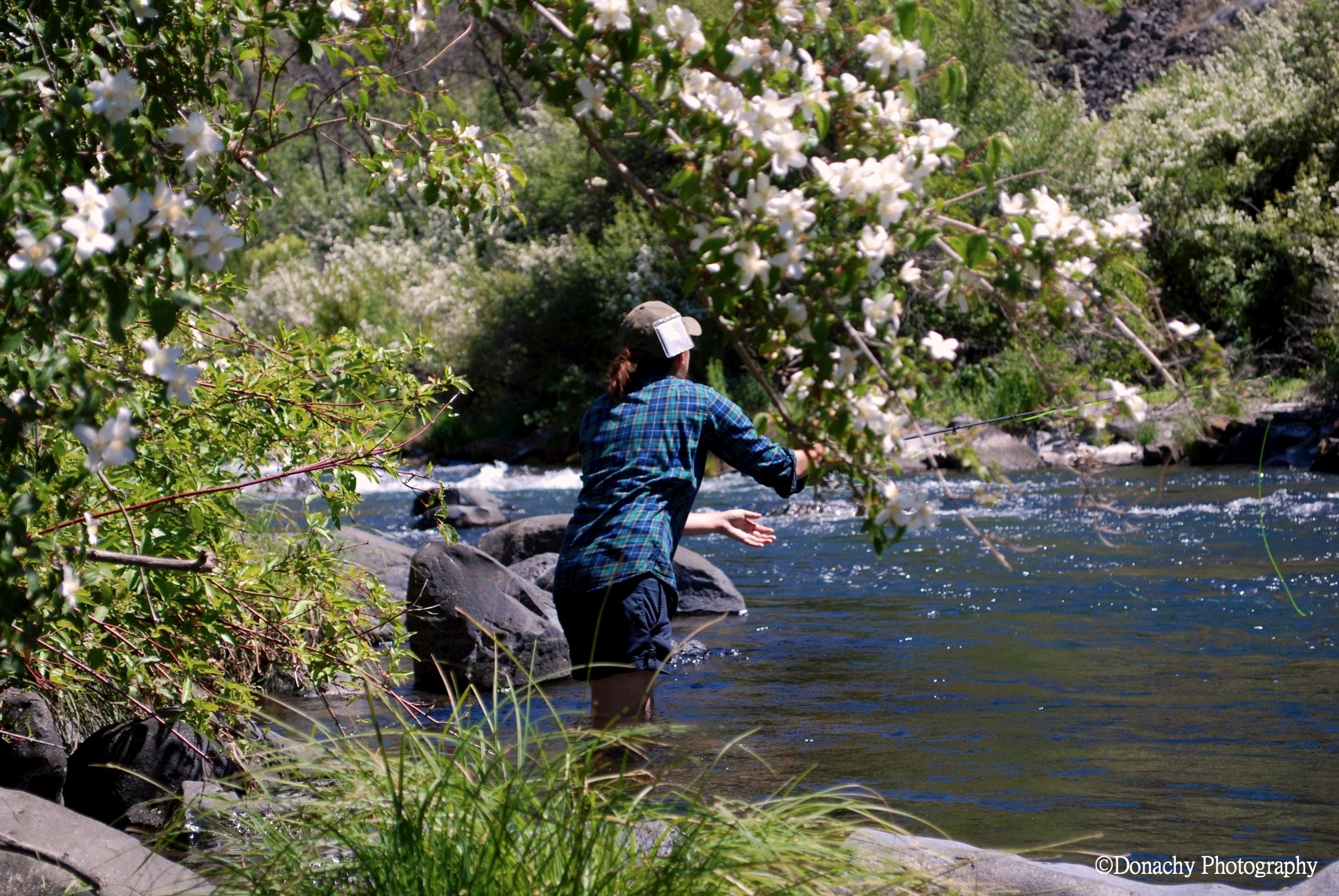
In June of 2009, Maia and I spent a week camped along the Deschutes River near Bend, Oregon where we were enrolled in an Orvis Fly Fishing School – an experience we highly recommend to any parent-son/daughter, husband-wife or fishing partner team looking to boost their skills and knowledge. (We’d love to take one of their saltwater fly fishing or wing shooting schools in the future.)

Tumalo State Park proved to be an excellent location for our headquarters. Tent friendly, it was both quiet and conveniently close to Bend and the region’s excellent fly fishing. In addition to the Deschutes Canyon, we also explored the nearby Metolius River, Lava Lake, Little Lava Lake and the Upper Deschutes.

Fishing an elk hair caddis, Maia coaxed a pair of the Deschute’s redband trout from this canyon pool.

The redbands of the canyon are not large, but numbers are good, the water is beautiful and the setting is dramatic.

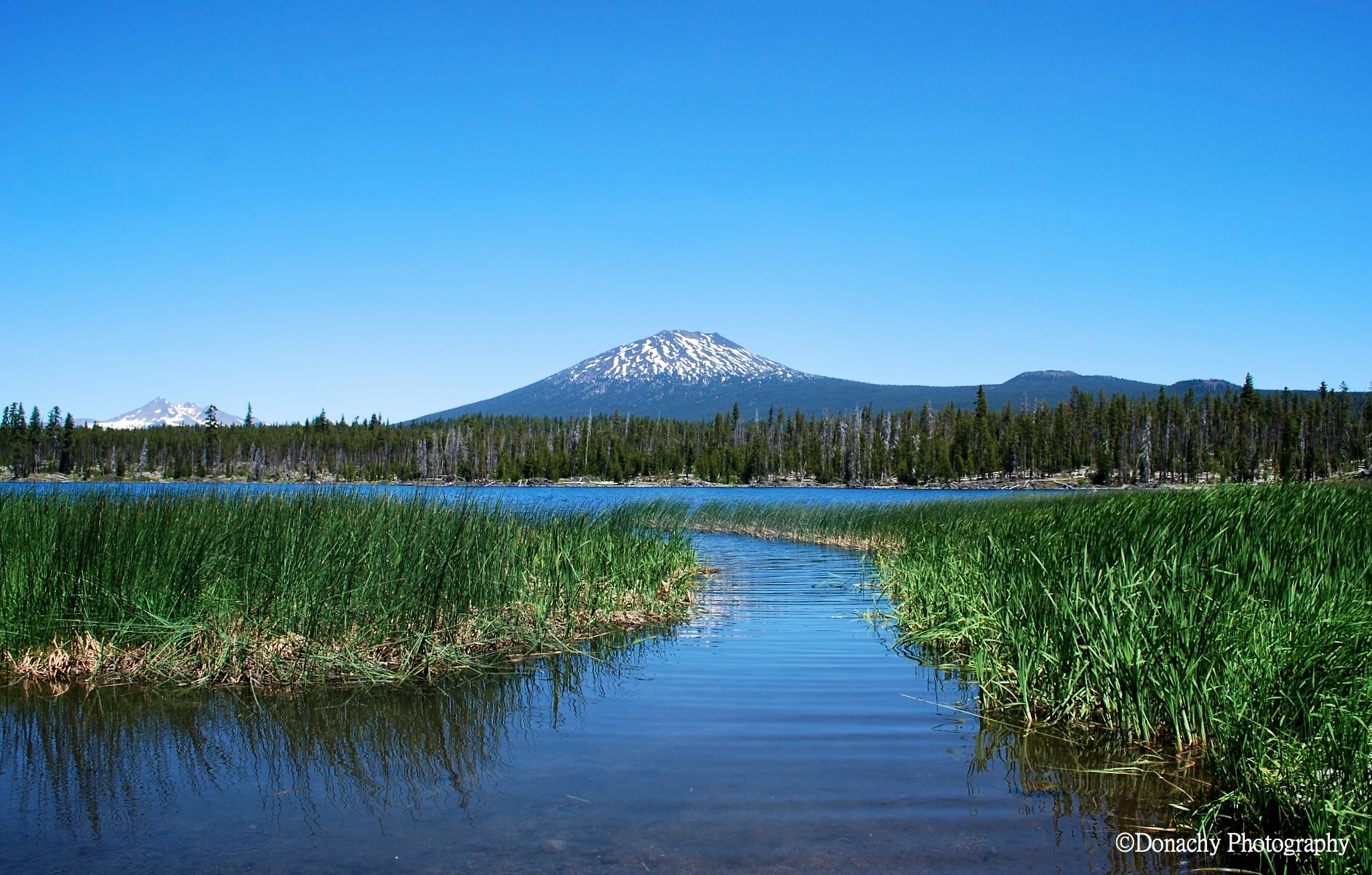
The float tube launch on Lava Lake seems to lay out a path to Mount Bachelor, one of Oregon’s premier ski destinations.

As Maia and I were preparing to launch our float tubes on Lava Lake, a fly fisherman who appeared to be in his 70’s was just coming in. “Wanna see what I’ll be having for breakfast?” he asked with a playful grin. He then pulled from a wet canvas creel a fat, 18 inch rainbow. The silvery fish had undoubtedly been stocked as a fingerling and grown heavy on a diet rich with scuds and aquatic insects. “Been coming here for decades,” he said. “Fishing’s still good, and you can’t beat the setting.” Since we were after a trout or two for dinner that night, we were heartened by his success. And sure enough, in addition to a couple of smaller trout, a rainbow just shy of two pounds fell to an bead head olive wooly bugger in the short time we spent on the lake.

After a dinner of salad, pan-friend New York strip steak, freshly caught trout and multi-colored Peruvian potatoes, we relaxed in front of our campfire enjoying a finger or two of Scotch, reminiscing about the day’s fishing, about the fishing we’d had other days going all the way back to afternoons spent float fishing for bluegills and bass on our home river in Japan when Maia was only three, and dreaming about trips we’d take in the future…

Until I lived in Oregon, I’d never seen garter snakes hunt fish. This one was working the margins of Lava Lake.

We had read about Hosmer Lake’s unique (and quite challenging) Atlantic Salmon and Brook Trout fishing. Kicking around in our float tubes in water only slightly less clear than air, we could see fish – big ones – nearly 20 feet deep. The white edges on their fins gave the brookies away; the others, we surmised, must be the salmon. The fish were beyond us on this particular day, but what a lovely piece of water. Excellent nature watching, too – birds, otters, wild flowers along the shore, and, of course, the fish in aquarium-like conditions.

In the week we spent sampling the fishing near Bend, we barely scratched the surface. In addition to miles of river, there are several lakes accessible by vehicle and numerous  hike-in fisheries. Area campground fees range from reasonable to downright cheap, and Bend itself is a cool city of about 80,000 that merits time set aside for exploration.