
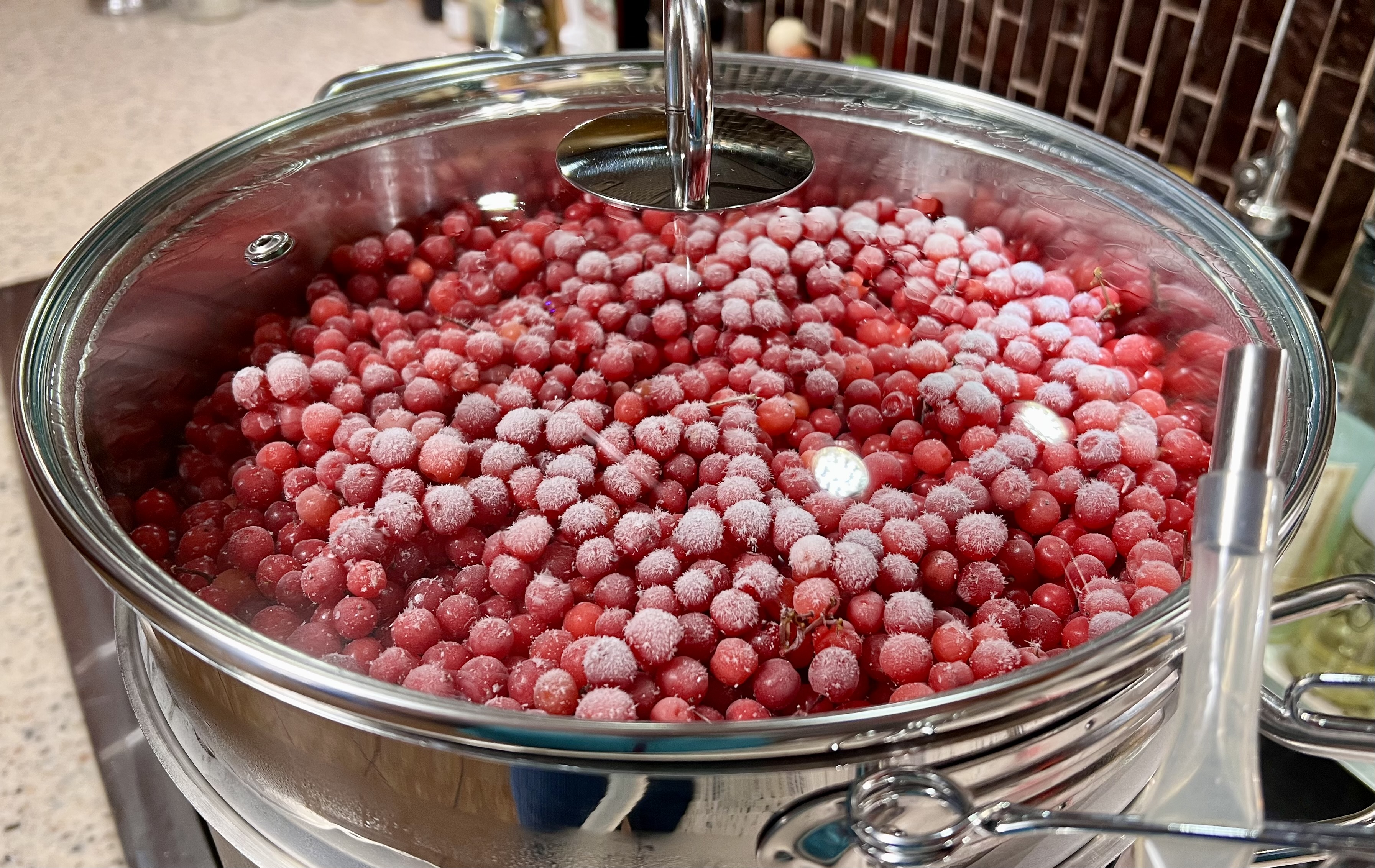
We are nearing the end of our foraging for this calendar year, a year of slim pickins. Our normal berry goal is 20 – 25 gallons of berries. We usually start our year with salmonberries, then move on to strawberries, wineberries and blueberries in that order. We finish up the season with highbush cranberries and lingonberries. This year, there were very few berries. Here and there we picked a handfuls of one berry or another to eat fresh on waffles and cereal, but for the most part even what little there was weren’t of the high quality we’ve come to expect of Alaska’s wild fruit. We’ve been eyeing the highbush cranberry bushes because those have seemed the only plants that were producing good amounts of plump berries.
We’ve got our places, however picking highbush cranberries is not necessarily an easy activity. As has been the case the past few years, the bushes at our spot are loaded with bright red berries. From a little distance, one could be fooled into thinking that the picking might be as easy as simply sidling up to a bush, clawing fistfuls of berries into buckets and heading home. But… It’s a tough hike through dense growth of up-to-your-shoulders grasses, sedges and other plants to get to those berries – vegetation so thick you often don’t see the numerous tree trunks and thick branches remaining from a long-ago logging operation. You do your best to step up, over and around these old boles, but some of them are rotten enough to give way under your weight. That can result in a jarring spill. Other times you might step up a couple of feet onto a log… only to find that when you step off on the other side the drop is an additional foot or two – the added depth buried from view in the thick vegetation. Suddenly you’re reminded why you make sure to commit to your daily routine of stretching and yoga, holding that precious bucket of fruit you’ve already invested picking time into as though its a pot of gold. Still, occasionally a dump occurs… little more heartbreaking to a serious berryman. Meanwhile, as hard as you might be concentrating on the berrying – and staying in contact with your partner – you’ve always got at least one of your two ears keen for the crack of a branch, a a swish through the grass, or even a suddenly curious grunt and huff from a fellow berrier of the four-legged variety. These occasional bear encounters can send your heart straight up into your throat. You tap the canister of bear spray looped onto your belt, gently call out to let your presence be known, and hope the next thing you hear is the sound of something big heading in the opposite direction.
Sixteen seasons. So far, so good.
In spite of the work and the manageable risks, we love this fall tradition. Carefully weaving our way from bush to bush under and over the aforementioned trees, the plunking sound of berries filling the bucket, hollow and high-pitched at first, gradually becoming fuller and more resonate, the serenade of sandhill cranes trumpeting overhead as they make their way south for the winter, chevrons of honking geese, glorious fall gold, wine, crimson and amber, the tang of cooler weather… all of it a feast for the senses.
Back home, I set the gallons of berries collected in the steam juicer. The scent of the juice and pulp extracting from the berries stirs my culinary imagination. Jars of juice are prepared for the pantry. The pulp is made into a simple sweet and sour sauce, canned for the winter pantry, to reappear later as a glaze on something Jack has grilled. I’m already looking forward to hot cinnamon cranberry drinks and stir fries featuring the tangy sweet sauce.
Only a couple more foraging possibilities remain this year. Then it will be time to mulch the garden and dream about the next season of foraging.
Leave a like and know that we appreciate comments! Join over 6,000 subscribers and thousands of regular readers from throughout the world as we continue to explore good food, adventures and Life Off The Beaten Path.


I so enjoy these reflections, rich in sensory detail. The effort of your berry-gathering seems appropriate, the harvest a reward for a small amount of hardship and a large amount of appreciation. Thank you for sharing!
Thank you for the kind comments.
You’re so lucky in the berry department! They’re all so pretty.
Thanks Chef! We’re hopeful about finding the last berries of the season – the all-time favorite lingonberry.