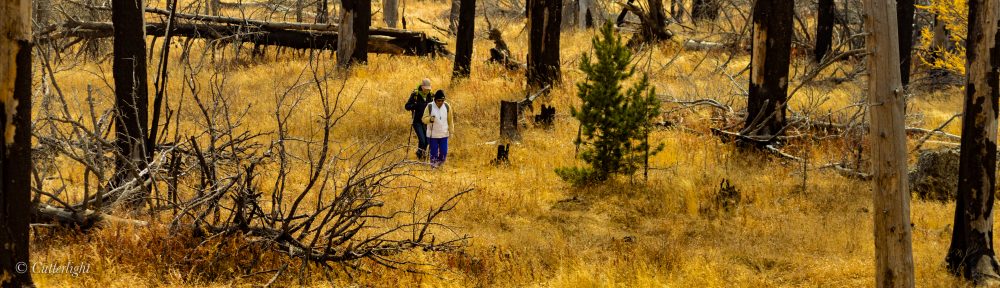
A Chignik River Springtime Float

We began the float by paddling our Alpacka Gnu to the north shore of Chignik Lake opposite of Chignik Lake village, which looks as tiny as it actually is tucked up against the Chignik Mountains. Chignik means “big winds.” Not on the morning of April 14. (For a look at this same float in December, 2017, see: Early December in Paradise – a Float down the Chignik River.)

It was one of those days when we woke with no plans, and now the day was making a plan for us. The sun slid through a few thin clouds hovering above snowcapped mountains downriver to the east, casting a silvery light across the glassy lake. From our dining room window we could see fish rising, leaving little rings on the lake’s surface.

“We should do a float,” Barbra said. “It’s beautiful.”

“I’ll get breakfast going if you’ll start putting our gear together,” I replied.

Within an hour we were on the water, our inflatable canoe gliding down the lake to the narrows where the water quickens to become Chignik River. Magpies and chickadees called from the banks and as we slipped past the White Spruce Grove we could hear a cacophony rising from the 30 or so Pine Siskins that have spent the winter here. Salmon fry, fingerlings and parr dimpled the river surface all round us, occasionally leaping clear to add a shimmer of silver to the morning light. A kingfisher rattled as it flew overhead. With the shoreline suddenly teaming with small salmon and sticklebacks, our kingfishers will soon be back in numbers. Maybe this will be the year I find a nest.

Behind polarized sunglasses we let our eyes to adjust to the water’s clear-green depths, searching the cobblestone riverbed for the year’s first Sockeyes, a big Dolly Varden or a rare steelhead. No luck, but a neighbor has already found two ocean-bright salmon in his net, the year’s first. A million more are on their way, and with them eagles, harbor seals and bears.

With the wind down and as much time as we cared to take to float the two miles to the barge landing, we let the easy current do most of the work, dipping in our paddles mainly to keep a true course. Being the first boat on the water, we had a good chance to encounter any ducks or swans that might be around. And you never know: bears are just beginning to wake up, and the shores are frequently patrolled by foxes, otters and mink and less frequently by wolves, lynxes and wolverines. We spoke softly, scanned the banks, and listened.

Long before we came around a bend and saw them, we could hear Tundra Swans and mallards honking and quacking in one of their favorite stretches of water. There were just two swans, stately, regal, gracefully gliding along the shoreline to our left. The mallards were a bit of a surprise. There must’ve been 20 or more drakes and hens paired up, feeding on vegetation in the shallows, warily bursting into fight as our raft drifted close.

Further down the river, we came upon a pair of Barrow’s Goldeneyes, a rare species in the Chigniks. We sometimes get Common Goldeneyes in the dozens, but years go by between reports of Barrow’s. It’s possible that they might nest here if they can find the right sort of rocky crevice or opening in an abandoned structure of some sort.

On the North side of the river there’s a feeder stream we’d been talking about exploring. So when we came to it, we beached the raft, tied it down and began hiking. The stream is just eight to 15 feet wide on average and shallow enough in places to cross in Muck boots. But the water runs cold and fast and clear over clean rocks and gravel, pooling and eddying in ways that are attractive to salmon. Peering into a riffle, I noticed what appeared to be one long, continuous set of redds – salmon nests – before I thought to give the banks a closer look.
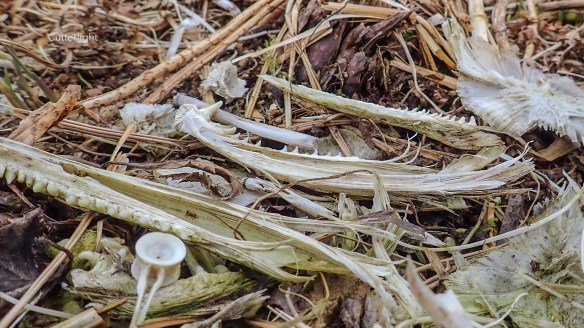
Above are the remains of a couple of salmon that became a brown bear banquet. Last fall, the Chignik system filled with the highest number of Pink and Silver Salmon anyone had seen in a long time. Fat autumn bears make for fat spring cubs. 

On both sides of the creek, the vegetation had been trampled down in broad swaths, a sure sign that bears heavily use this stream. Sure enough, when we looked down we found the area littered with the winter-bleached spines, gill plates, and tooth-filled jaws of Pink Salmon. We agreed that we’d have to make sure to fish the stream this fall when sea-run char marked in spectacular greens, reds and oranges would follow Pinks into the stream to pick off eggs that aren’t successfully buried in the redds. In places where stands of alder choked down foot traffic, the narrow trails had been worn inches deep into the soil, the work of centuries or perhaps millennia of brown bear comings and goings. Along the shoreline, every patch of sand held a carpet of fox tracks, some old, some fresh.

By the time we returned to our raft, the morning sun was high and temperatures had climbed into the 40s. Millions of tiny black midges were hatching, skittering across the water as they struggled to free themselves from the husks of their pupal stage – activity that was eliciting slashing rises from pinky-sized salmon as well as a few larger char. Mixed in with the midge hatch were a few dark stoneflies as well as big, creamy-brown caddisflies. With days warming and insects hatching, our swallows should be on their way.
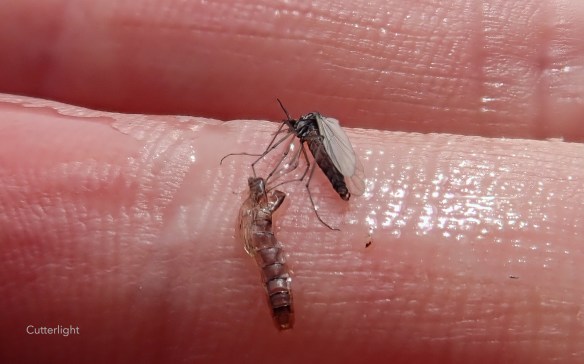
They’re small, but to some of our favorite fish and bird species (trout, char, salmon and swallows) they are indispensable food items. They’re midges, order Diptera from the Greek indicating that they use two wings to fly. During a hatch such as the one we found ourself in the midst of, midge pupae trap gas in their thorax, ascend to the water’s surface, shake off their pupal exoskeleton and emerge as winged adults – as this one on my ring finger has just done.

Drifting along the rocky bluff across from the salmon-counting weir that the Department of Fish & Game operates from June through September, we came across two large piles of sticks in the still leafless alders – active magpie nests, egg-shaped and roughly the size of a couple of basketballs. Our chickadees, too, seem to be establishing territory and selecting mates, and everywhere new green shoots are pushing up through winter-browned grass.
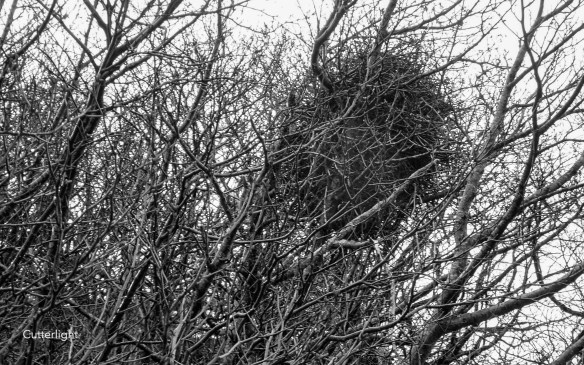
Chignik’s magpies began nesting about two weeks ago, giving away locations as they ferry large sticks into thick, brush growth along banks or into spruce trees. Somewhere in that jumble there very likely are half-a-dozen or so lightly speckled gray-green eggs. 

We beached the boat at the barge landing, deflated it, rolled it up, stuffed it in a backpack and began the three-mile hike home. Along the way we took note of bright green salmonberry shoots, the beginnings of wild irises, an unfamiliar warmth in the air. Earlier in the week it had snowed. But winter’s fighting a losing battle at this point. And every living thing knows it.
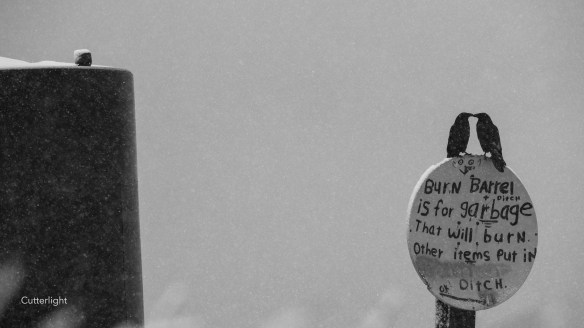
Burn Barrel Love (Valentine’s Day)

Burn Barrel Love, Chignik Lake, Alaska

Waking to heavy snowfall a few weeks ago, we went out looking for wildlife. At the White Spruce Grove, Pine Siskins, Chickadees, Golden-crowned Sparrows and Dark-eyed Juncos were happily filling up on cone seeds and the food in our feeders. We’d heard there was a lynx in the area, and there are always foxes and wolves just beyond the village. We didn’t see much – just this pair of Ravens hanging out and enjoying a snowy moment at one of their favorite meeting places.


Assignment #6: A Sense of Place – Suutei Tsai in a Mongolian Ger

mongolia-woman-pouring-milk-n

Outdoor Photographer’s challenge two weeks ago: an environmental, visual or cultural photo depicting a strong connection with a specific place. Here, our hostess at her ger in the Mongolian countryside prepares a pot of suutei tsai to take the chill off an October night – piping hot milk with a little tea and a dash of salt. 


“Dry and Sunny, a Break from Winter Weather” – OP Assignment #4

dunes big with human n

It doesn’t get much drier and sunnier than Mongolia’s Gobi Desert. Above, Khongoryn Els, the famed “Singing Dunes,” stretch across the landscape. See nine additional photos from our October 2014 trip below.

OLYMPUS DIGITAL CAMERA

As in any desert, no resource is more precious than water.

gazelle galloping kicking up dirt n

Well adapted for this parched climate, over a million Mongolian Gazelle flourish in arid steppe grasslands which include portions of the Gobi. Mongolia’s grasslands are considered to be one of the world’s last, great wilderness areas.

red-billed choughs sunset n

Red-billed Choughs, a striking member of the crow family, close out the day at Yolyn Am Canyon…

ibex bull 2nd look n

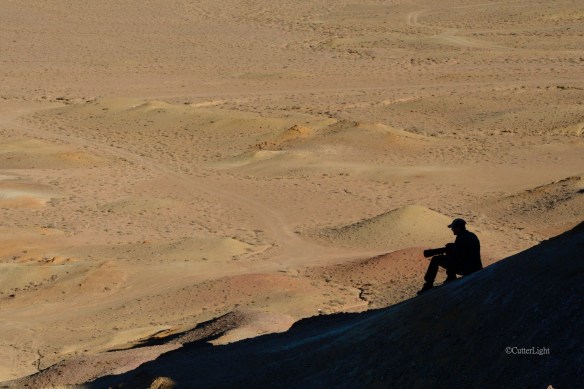
Earlier in the day a magnificent Siberian Ibex, protective of his harem, kept a wary eye on an approaching photographer.

OLYMPUS DIGITAL CAMERA

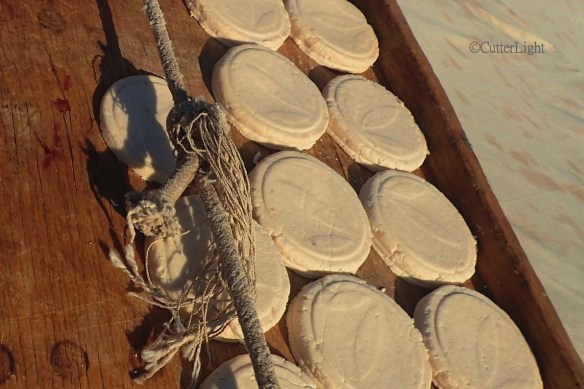
As we journeyed, we stayed with families in their gers (yurt homes). Here, aruul, a type of cheese, bakes into a hard cake on a tray atop a ger.

camel skull & white cliffs n

Not only dry but extremely cold and windswept, winters in the Gobi can be unforgiving. The worst of them are know as zud and can wipe out millions of livestock.

gobi-night-sky-10-17-2014-n

The nighttime skies were spectacular.  The Big Dipper hangs over our lighted ger. 

Not all deserts have camels, of course, but they certainly add an exotic element. In Mongolia, two-humped Bactrians are utilized for transportation, meat, milk and the most excellent cream cheese we’ve ever tasted. Here, Barbra’s mount and I exchange inquisitive looks.

photographer jack @ white cliffs n

Our eight-day trek through part of the Gobi Desert was one of the highlights of our two-year stay in Mongolia. Not only did we get to briefly experience the lifestyle of one of the world’s few remaining semi-nomadic people, we also got to sample new foods, see exotic animals we’d read about in books as children, feel the Singing Dunes hum mystically through our bodies…  and, yes, riding a camel to seldom-visited sand dunes was a first and it was fun. At Bayanzag (pictured above), the legendary Flaming Cliffs where the first fossilized dinosaur eggs were discovered, we even found a large, fragile skull with teeth intact and a spine radiating out several feet, the fossilized remains of some species that no longer walks the earth. It’s 20° F (-7° C), a north wind swirling falling snow as I write this. A trip back to the Gobi through photographs was indeed a nice break from winter.

Next Thursday: Assignment #5 – Motivational Moments: the things that get us out of bed at 4:00 AM to go out and shoot; or that inspire us to sit for hours waiting for a capture. I already have a few ideas in mind. Stay tuned!

Winter Landscape in Black and White: Spruce Tree with Mountain

spruce-tree-w-mountain-bw-copy-n

I made this photo just a few feet from my home in Chignik Lake. The challenge was to somehow clean up the assortment of utility poles, wires, satellite dishes and the dissonant array of scrub alder closer to eye level. I actually knew as soon as this assignment (Winter Landscape in Black and White – the second weekly assignment from Outdoor Photographer magazine) was posted the scene I wanted to shoot. I put on a long lens, waited for the right light, and got this frame.

Next Thursday: Patterns of Winter


Ink and Light: Framed in Light and “Something like a Raven”

x-framed-in-light-copy-n

Framed in Light: Umiaks and Northern Lights, Point Hope, Alaska

                   …in silence                  where all things
      and all beings reach                 back into time before iron and oil.
        dg nanouk okpik – Tulunigraq: Something like a Raven, 2012

Whaling crews of the Inupiat Eskimo village of Point Hope still hunt on the Chukchi Sea from traditional umiaks – small whaling skiffs with wooden frames and bearded seal skin hulls.

dg nanouk okpik is an Inupiaq-Inuit poet from Alaska’s North Slope. Nanouk is Polar Bear and Okpik is Cloudberry in the Inupiaq language. Her book Corpse Whale was published by the University of Arizona Press in 2012.

Winter Macro Photography: Other Worlds

abstract-3-stacked-planets-n

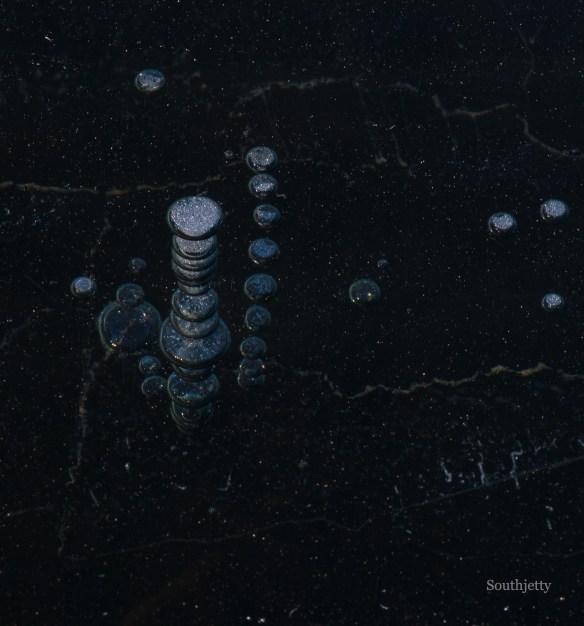
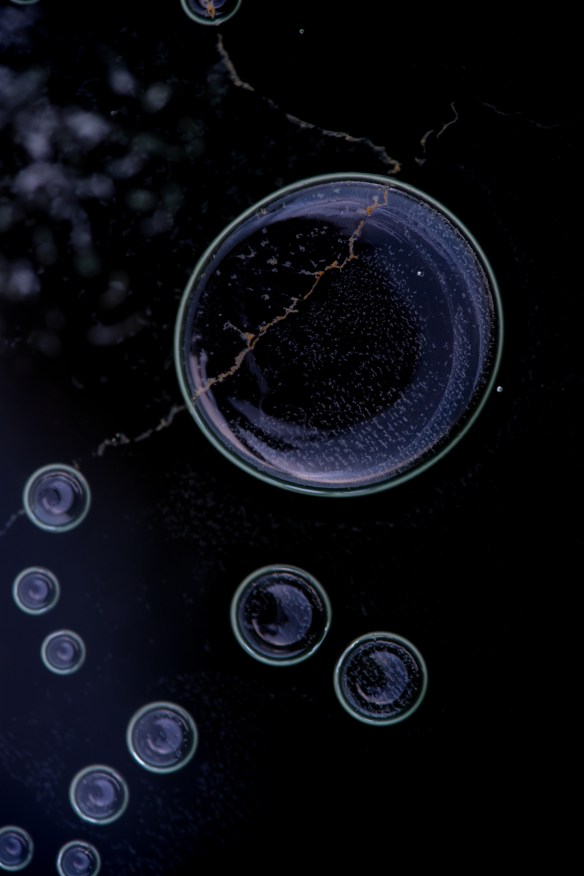
Abstract #4: Parallel Worlds – Among new projects in 2017 is a commitment to taking on the “Weekly Photo Assignment” challenge at Outdoor Photographer magazine. The first new assignment for 2017 was Winter Macro. 

abstract-4-fracture

Abstract #4: Fracture – For the first time in perhaps five years, our lake, Chignik Lake, has frozen solid. The first day it was reasonably safe to walk on the ice, it was incredibly clear.

abstract-9-n

Abstract #9: Galaxy – As I walked around scanning the bottom for fish and aquatic insects, here and there I noticed bubbles trapped in the clear ice.

Next Thursday: Winter Landscape in Black and White

Ink and Light: “For John Clare” and a Redpoll in Mongolia

x-thin-air-n

Thin Air: Common Redpoll, Ulaanbaatar, Mongolia

Redpolls breed in Arctic regions around the world, descending into lower latitudes in winter. A bird of the North, they generally are uncommon south of Canada.

For John Clare
The whole scene is fixed your mind,
the music all present,
as though you could see
each note as well as hear it.
John Ashbery, lines from For John Clare, published in 1969

John Ashbery’s (1927-) poetry has earned nearly every major award including the Pulitzer. The subject of this poem, John Clare (1793-1864), emerged from difficult early years to write beautiful poetry about the natural world before later being institutionalized for insanity.

First Snow, Chignik Lake

September 18: First snow in the mountains.

September 21: First frost along the lake.

Cranberry Days

cranberry-miniature-xtra-close-n

Framed in a boggy, wet miniature world between yellowing willow leaves and a lime-green horsetail stalk, clusters of ripe low-bush cranberries (lingonberries) push up through densely growing crowberry plants. Chignik Lake, Alaska.

The savannah sparrows that have been passing through in small flocks are absent today. The last of their kind, they’ve joined the white-crowned, golden-crowned and fox sparrows along with the wrens and warblers that flew south back at the beginning of the month. With most of the passerines gone, the shrikes, too, will soon go, following their prey. It’s been two weeks since we’ve seen sandhill cranes and at least that long since loons were gliding across the lake. This morning following a spectacular, fiery red sunrise, the light broke almost white. Winter light.

Making my way through the village toward the trail to the berry meadow, I spot a kingfisher perched stalk-still on a dead alder along the lake. A few glaucous-winged gulls wheel and soar low over the lake, calling listlessly as others sit placidly rocking on the windblown water. In the sky overhead, a pair of ravens show off their vocals with deep, resonating qua-orks and are gone. As the trail enters the dense growth of willow, salmonberry, alder and fireweed stalks gone to cottony seed, I can’t help but notice the absence of birdsong. Not even the chickadees are out. A mile later, up in the bog, there is only wind blowing through the raggedy last of the cotton grass and bowing the sedges in undulating, yellow-green waves.

 crane-track-2016-n

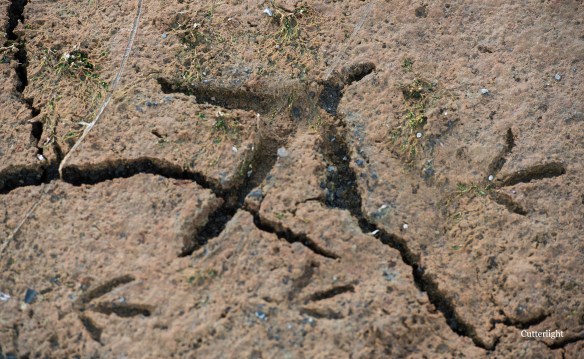
Remains of summer: Sandhill crane footprint and raven tracks on the edge of an ephemeral pond near the berry bog.

I enter the berry meadow quietly from downwind and scan for moose and bears. There are tracks and other sign in the soft mud, but no animals. A sudden gust sprinkles my face with cold, misting drizzle.

I pull a five-cup container from my backpack and begin walking the edges of the watery meadow looking for mounds of crowberry plants. Cranberries seem to like growing among these mosslike plants. It’s not long before I find the perfect mound. Looking carefully among the needle-shaped crowberry leaves, I see the tell-tale maroon that gives away the berries I’m after. As my eyes hone in on this specific shade of red, I see more. And then lots.

moose-track-1st-meadow-n

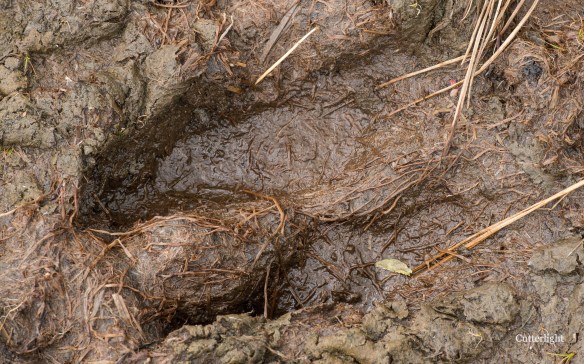
We sometimes find moose tracks at the berry bog as they come to feed on nutrient-rich sedges.

bear-track-1st-meadow-9-19-n

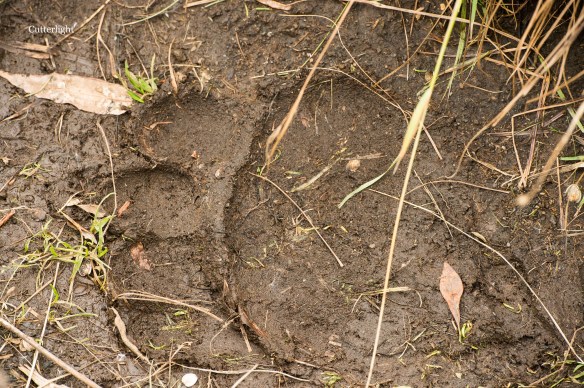
Brown bears (grizzlies) come to the meadow looking for the same thing that draws me – an abundance of bog-loving blueberries, crowberries and cranberries. Even with the nearby river and feeder streams brimming with salmon and charr, it’s common to find piles of bear scat loaded with little but berries and berry seeds.

fox-track-1st-meadow-n

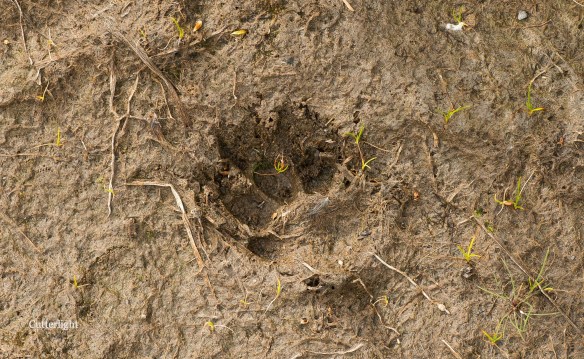
Red foxes love berries too, and are frequent visitors.

Picking goes fairly quickly and by lunchtime I’ve filled two containers with perfectly ripe, agreeably tart, firm berries. These I’ll clean and add to the two-and-a-half quarts Barbra and I picked yesterday, making well over a gallon. Freezing these lingonberries will sweeten them up a bit. After that, we’ll turn them into syrup to add to our Soda Stream fizzed water and into sauces for grilled pork cutlets, roasted chicken and Thanksgiving turkey. 

cranberries-in-moss-berries-n

Wild geranium leaves turned orange-red add a splash of color to one quart and one cup of low-bush cranberries… No one with a stash of gold ever felt wealthier.

While picking, my mind follows its own path in and out of dialogs and dreams but I try to remain vigilant to the possibility of animals. In addition to bears, moose, foxes and an array of birds, wolves, too, occasionally travel through the meadow. Just as I top off the second container, I hear a succession of three distinctive snorts directly downwind. Something has picked up my scent. A bear? A moose? I slowly stand and look. Whatever made the noise is buried deep in alders some distance away. I probably won’t get a look, but just in case I check the settings on my camera, make sure my canister of bear spray is handy, and pack up for the mile-long walk home.

Along the trail back to Chignik Lake, crimson fireweed stalks accent the gold of autumn willows. Up on the mountains, the season’s first snow.

As I come around a bend in the trail a snipe explodes into the air, it’s back marbled in browns and streaked with white. Sunshine breaks through the September clouds and the meadow and hills and distant mountains light up. I recall a story about a boy who fell asleep, and when he woke couldn’t determine if he was still asleep and dreaming, or wide awake in a new land.