Homemade Flour Tortillas (Sans Lard)

These homemade tortillas are a little thicker and more airy than store-bought. They are definitely tastier and healthier!

For the past few years, we’ve used frozen, uncooked tortillas from Costco. One thing that separates the tortillas from Costco from run-of-the-mill grocery store fare is that they have to be lightly fried right before serving. The downside is that, like most tortillas, they are made with lard. The quest began for a tortilla recipe which could be made at home that had healthier ingredients.

Right from the beginning, I could see that my main challenge would be rolling the dough thin enough (without having overly thin spots or holes). Of course, there are purpose-deisgned tortilla presses, but acquiring another gadget flies in the face of streamlining our galley.

After searching through virtual stacks of recipes on the Internet, I found a blog offering a recipe for a “Texas tortilla.” The author promised a healthy, puffy, tasty Tex-Mex style tortilla. Armed with a recipe, a rolling pin, and sheets of parchment paper, I finally achieved my goal of homemade flour tortillas. I’ve tried substituting one cup of wheat flour for one cup of white flour, resulting in a heartier tortilla. Each time I’ve made them, they’ve come out tasty, and I’m getting faster at it. And they come out a little rounder each time, too!

Homemade Flour Tortillas

Ingredients

  • 2 cups all-purpose flour
  • 1 1/2 tsp baking powder
  • 1 tsp salt
  • 2 tsp vegetable oil
  • 3/4 cup room temperature milk

Directions

  1. Sift together flour, baking powder, and salt.
  2. Mix in oil.
  3. Slowly add in milk. Stir until a loose, sticky ball is formed.
  4. Turn out onto a lightly floured surface and knead for 2 minutes.
  5. Place ball of dough in bowl. Cover with damp cloth and let rest for 20 minutes.
  6. Break dough into 8 even pieces. Roll each piece into a ball. Cover with damp cloth and let rest for 10 minutes.
  7. Take one dough ball and flatten by hand into a circle. Place flattened dough on lightly floured surface. Cover with parchment paper. Roll out with rolling pin, just as you would a pie crust. The result should be a flat, circular tortilla about 8″ in diameter and 1/8″ or less thick. Continue with remaining dough balls. Stack finished tortillas, using parchment paper to keep them separate.
  8. In a hot, dry skillet, cook tortillas about 30 seconds on each side. I use wooden chopsticks for flipping. Keep cooked tortillas wrapped under a clean cloth towel until ready for serving.

Tortillas can be prepared a day in advance and kept them in the refrigerator to save preparation time.

This recipe was adapted from http://homesicktexan.blogspot.com/2007/03/and-end-to-my-quest-flour-tortillas.html.

Enchiladas Suizas with Spanish Rice

Cheesy and subtly spiced, enchiladas suizas satisfied hearty appetites after a day of cross-country skiing.

With just four weeks remaining in the school year, we’re increasingly looking at our pantry to figure out what needs to be used up or given away before we leave for the summer. This enchilada recipe was inspired by two cans of roasted green chile peppers we received from a friend who is leaving our village and not returning. I made my own tortillas, which I will blog about separately. We served these savory enchiladas with Spanish rice prepared in our rice cooker.

Enchiladas Suizas

Ingredients

Seasoned broiled chicken:

  • 4 boneless, skinless chicken thighs (enough for 3 cups cooked cubed chicken)
  • Penzeys Southwest rub, or any other mildly fiery cumin and chili pepper based rub
Green chili sauce:
  • 2 tbsp butter
  • 2/3 cup chopped onion
  • 2 tbsp all-purpose flour
  • 1 1/2 cups chicken broth
  • 8 oz. chopped green chile peppers
  • 4 cloves garlic, chopped coarse
  • 3/4 tsp salt
  • 1 tsp cumin
Additional ingredients:
  • 6 8-inch flour or corn tortillas
  • oil for frying tortillas
  • 1 1/2 cups shredded mild white cheese such as Monterey Jack (I used mozzarella because that was on hand.)
  • 1 1/2 cups shredded medium-aged cheddar cheese (We love Tillamook!)
  • 1 cup sour cream (thinned with a few tbsp of water to a consistency slightly thicker than heavy cream)
  • jalapeño slices for a finishing touch

Directions:

Seasoned broiled chicken:

  1. Coat broiling pan with oil. Position oven rack near top of oven. Place broiling pan in oven and preheat on broil.
  2. Rub chicken thighs with Southwest rub.
  3. Broil chicken for approximately 15 minutes or until cooked through. Set aside to cool. When cool, cut into 1/4 inch thick by 1/2 inch long pieces. Set aside.
Green chili sauce:
  1. Melt butter in pan over medium heat. Sauté onion in butter until soft. Stir in garlic. Add flour and stir until flour, onions, and garlic are incorporated. Add broth. Add chiles, salt and cumin. Stir until well mixed. Simmer mixture for 15 minutes. Set aside.
Assembling the enchiladas
  1.  Preheat oven to 350 degrees F.
  2. Combine cheeses, reserving about half for the topping.
  3. Quickly fry tortillas in oil. Do not crisp them.
  4. Dip both sides of tortilla in chili sauce mixture. Place about 3 tbsp of chicken down center of tortilla. Top with about 2 tbsp cheese mixture. Roll the tortilla and place into 9 x 13 glass baking dish, seam side down. Follow same procedure with the remaining tortillas.
  5. Spoon remaining chili sauce mixture on top of enchiladas. Spread evenly. Spoon thinned sour cream on top of chili sauce. Spread evenly. Sprinkle reserved cheese on top of sour cream. Garnish with jalapeño slices.
  6. Bake uncovered in preheated oven for 20 minutes.
  7. Serve with salsa and Spanish rice.

Spanish Rice Recipe for Rice Cooker

Ingredients

  • 2 tbsp olive oil
  • 2/3 cup  finely chopped onion
  • 3 cloves garlic, chopped coarse
  • 2 1/2 cups white rice
  • 3 cups chicken broth
  • 1 heaping tbsp tomato paste
  • 1 tsp oregano

Directions

  1. Sauté onion and garlic in olive oil until softened. Set aside.
  2. Mix chicken broth and tomato paste until combined. Add oregano. Stir.
  3. Place rice in rice cooker.
  4. Pour in chicken broth mixture. Add in onion mixture. Stir.
  5. Cook rice on white rice setting.
  6. Stir before serving.

Chocolate Orange Meringue Pie

A mountain of perfectly peaked meringue sits atop a decadent chocolate-orange pudding pie.

The flipped meringue cookies gave me new confidence with meringue. I felt ready to attempt a meringue pie. Luckily, there is still plenty of chocolate in our ever diminishing pantry. Since friends were coming to dinner, it was the perfect day to attempt this culinary feat.

I read many recipes on many sites. I was warned about weeping meringue and problems with humidity. Winter air in the Arctic is like air in the driest desert and I wasn’t scared off by a few tears from frothy egg whites. I was ready for the challenge. The process of making the pie was long and satisfying. Each step looked and tasted delicious. The filling thickened up beautifully. The meringue browned in just the right way. At the end of an Arctic-Mexican meal featuring enchiladas and Spanish-style rice, everyone agreed that the chocolate orange meringue pie was impressive to look at… and then it disappeared!

Chocolate Orange Meringue Pie

Ingredients

  • 1 9-inch pie crust, baked
  • 1 3/4 cups granulated sugar, separated into 1 1/2 cups and 1/4 cup
  • 5 tbsp unsweetened cocoa powder
  • 4 tbsp all purpose flour
  • 1 pinch salt
  • 5 eggs, yolks and whites separated
  • 2 cups milk
  • 1 tsp orange zest
  • 1 tbsp unsalted butter
  • 2 tsp vanilla extract
  • 1/4 tsp cream of tartar

Directions

  1. For chocolate filling: In a medium pot, mix together 1 1/2 cups of granulated sugar, cocoa powder, flour and salt. Stir in egg yolks and milk. Stir in orange zest. Whisk until well blended. Cook over medium heat, stirring constantly. Cook until filling has the consistency of pudding, about 10 minutes. Turn heat off.
  2. Stir in vanilla and butter. Stir until both are incorporated.
  3. Pour filling into baked pie shell. Refrigerate to set for 4 hours or overnight.
  4. When you are ready to make the meringue, take the pie out of the refrigerator.
  5. Preheat oven to 375 degrees F.
  6. For meringue: In a non-reactive bowl beat egg whites until foamy. Add cream of tartar. Continue beating eggs until soft peak stage (peaks will sag when you remove beaters). Add 1/4 cup sugar a tablespoon at a time, allowing sugar to dissolve between additions. Continue beating until stiff peaks form and egg whites are stiff and glossy.
  7. Spread the meringue over the pie completely. You can make decorative peaks by using a dull knife to shape the meringue.
  8. Place pie in oven on a low rack. Bake for 10 minutes until meringue is golden brown.
  9. Chill for two hours before serving.

Can You Really Make These From Scratch? Honey-Cinnamon Graham Crackers

I’ll bet even your grandmother didn’t bake like this…

I found a cheesecake recipe I wanted to experiment with, and, off course, I needed a graham cracker crust. Since we hadn’t sent up any graham crackers, my choices were to buy some at our local store, order them through Amazon.com, or forget the whole idea. Prices at the Native Store are too high, so I ruled that out, and with only five weeks remaining till we head south, it seemed late to be ordering food. The next obvious step was to give up. Ha! That’s not me! I searched around and found a couple of recipes for graham crackers from scratch. Fantastic! My crackers came out looking a little rough around the edges, but they tasted perfect. Actually, in our opinion, they taste better than store-bought. These homemade beauties have a crisp cracker crunch and a sweet honey-cinnamon taste. Now, I’ll tackle the cheesecake recipe.

Honey Graham Crackers

Ingredients:

  • 1 cup whole wheat flour
  • 1/2 cup unbleached all purpose flour
  • 1/2 tsp baking powder
  • 1/4 tsp. baking soda
  • 1/4 cup softened unsalted butter
  • 1/4 cup granulated sugar
  • 2 tbsp and 2 tsp honey
  • 2 tbsp corn syrup
  • 1 tsp vanilla extract
  • 1/2 cup milk
  • Optional cinnamon sugar topping – 3 tsp granulated sugar and 1 tsp cinnamon

Directions:

  1. Mix together whole wheat flour, all purpose flour, baking powder and baking soda. Set aside.
  2. Blend butter, sugar, honey and corn syrup until well mixed and fluffy. Add vanilla and mix.
  3. Stir dry ingredients into wet ingredients. Stir in milk. You should have a nice ball of dough at the end of this step.
  4. Cover dough and refrigerate overnight.
  5. Preheat oven to 350 degrees F.
  6. Roll the dough out on a well-floured surface. It is easiest to do this working with only a quarter section of the dough at a time. Roll until the dough is about 1/8″ thick. Cut the dough into rectangles using a knife. Place rectangles on ungreased cookie sheets. Prick decorative holes with toothpick. If desired, sprinkle cinnamon and sugar topping on crackers.
  7. Bake for 13 minutes. Finished crackers will be browned and will become more crisp as they cool. Cool on wire racks.

Flipped Lemon Meringue Cookies

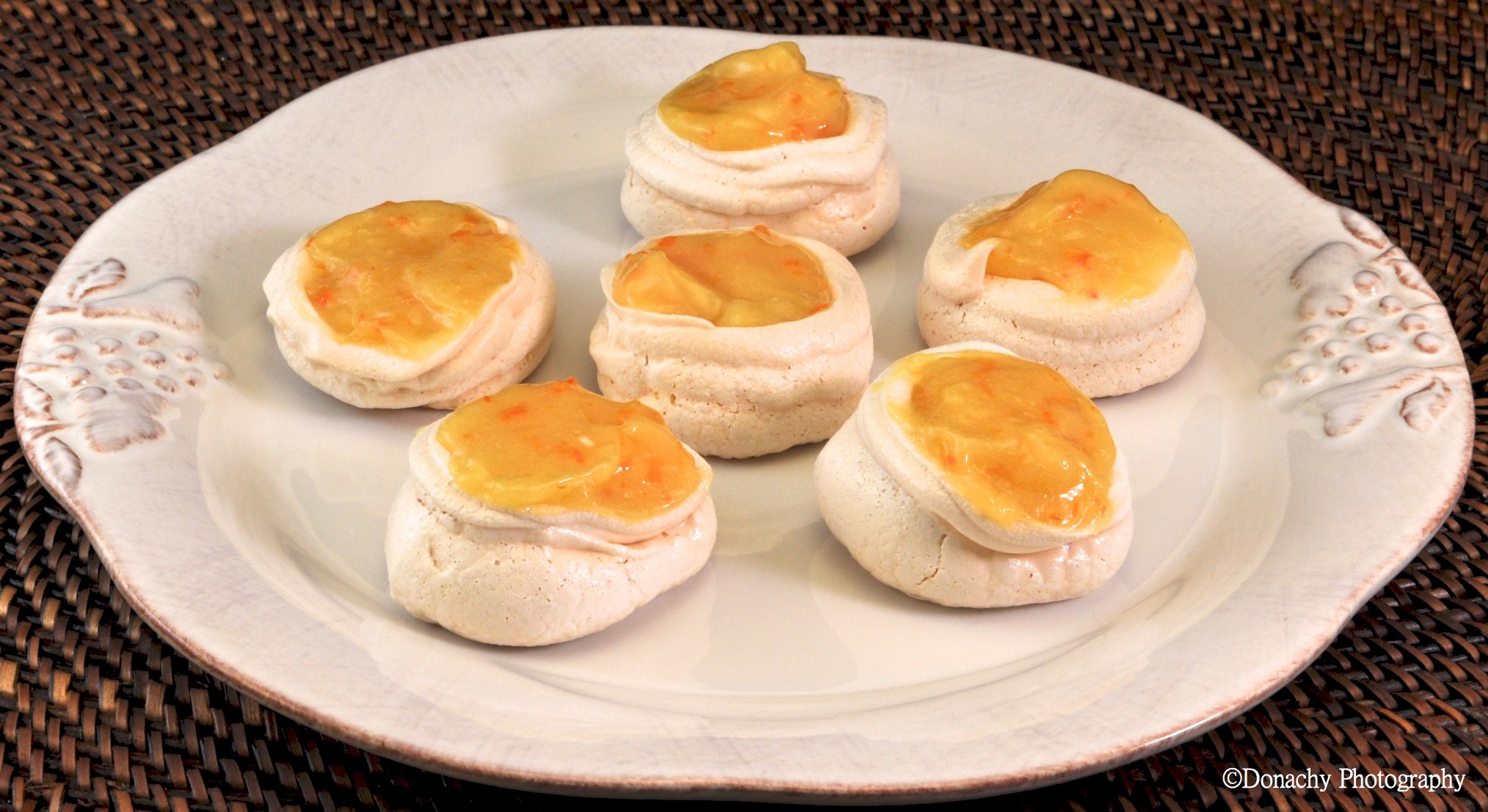
Imagine the tart creaminess of lemon meringue infused with orange zest sitting on a crisp, airy cookie ready to be devoured in one scrumptious bite. You’ll flip when you taste these cookies!

You know those beautiful Parisian macarons? Smooth and glossy, perfectly round and filled with creamy flavors? This cookie recipe allowed me to practice with the elements of the macaron – especially the meringue. And I got to play with a Kitchen Aid mixer for the first time.

Jack and I do our best to keep our kitchen to a minimum and have been debating about whether this appliance is worth its weight in counter space. Recently, we borrowed a Kitchen Aid mixer to take for a test drive. Our thoughts? This machine is pretty incredible. It beat the egg whites and confectioners’ sugar into a consistency we doubt we could have achieved by hand or even with a hand-held mixer — and after 20 minutes of steady mixing, no one was tired! The meringue was stiff and glossy and fluffy, just like it’s supposed to be. Even after scooping the meringue into a Ziploc and piping it out, it didn’t loose any volume. I think that was due to the mixer. The meringue baked perfectly, despite my inexperience in piping. We’ll see how often we use this mixer, but we’re sold on it for heavy mixing jobs.

The cookies took time in that leisurely Sunday kind of way. First I made the lemon curd and put it in the refrigerator to chill. After a while, I made the cookie shell. Then, when the shell and the curd were both cooled, I assembled the cookies. I found it easy to eliminate the evidence of my first attempts at piping, which were not pretty, but were tasty!  The technique which I settled on was to pipe the meringue in a spiral, starting in the center, with the last two spirals going vertical. This made a nice little cup for the lemon curd.

Flipped Lemon Meringue Cookies

Ingredients:

For Lemon Curd –

  • 1/2 cup granulated sugar
  • 1 large egg and 1 egg yolk
  • 1/2 cup lemon juice
  • 2 tsp orange zest
  • 3 tbsp melted unsalted butter

For Meringue –

  • 4 egg whites
  • 2 cups confectioners’ sugar

Directions

  1. In a medium pot, mix together curd ingredients, except butter (granulated sugar, egg and egg yolk, lemon juice and orange zest).
  2. Whisk continually over medium heat until mixture thickens and coats a spoon (about 10 minutes). Stir  in melted butter.
  3. Pour into a sealed container and refrigerate until cold.
  4. While the curd is chilling, make the meringue cookies.
  5. Preheat oven to 250 degrees F.
  6. Take the 4 egg whites and beat on medium speed until they develop soft peaks (peaks will bend when you remove beaters)
  7. Beat eggs whites at high speed while adding confectioners’ sugar by the tablespoon, making sure the sugar is mixed in before adding next tablespoon. The final product should have stiff peaks and be somewhat glossy and thick.
  8. Pour into a piping bag with a small tip. (I used a Ziploc bag with the corner cut off).
  9. Pipe a tight spiral from the center out, layering the outside spiral twice so you have about an inch-diameter cookie with a cup to hold the curd.
  10. Bake for 60 minutes on a parchment lined baking sheet. Slight cracking is OK. The cookies should easily come off the parchment paper when finished. Let cool.
  11. Fill meringue cookie with lemon curd.
  12. Store in covered container in refrigerator.

Bread Machine Oatmeal Walnut Wheat Bread

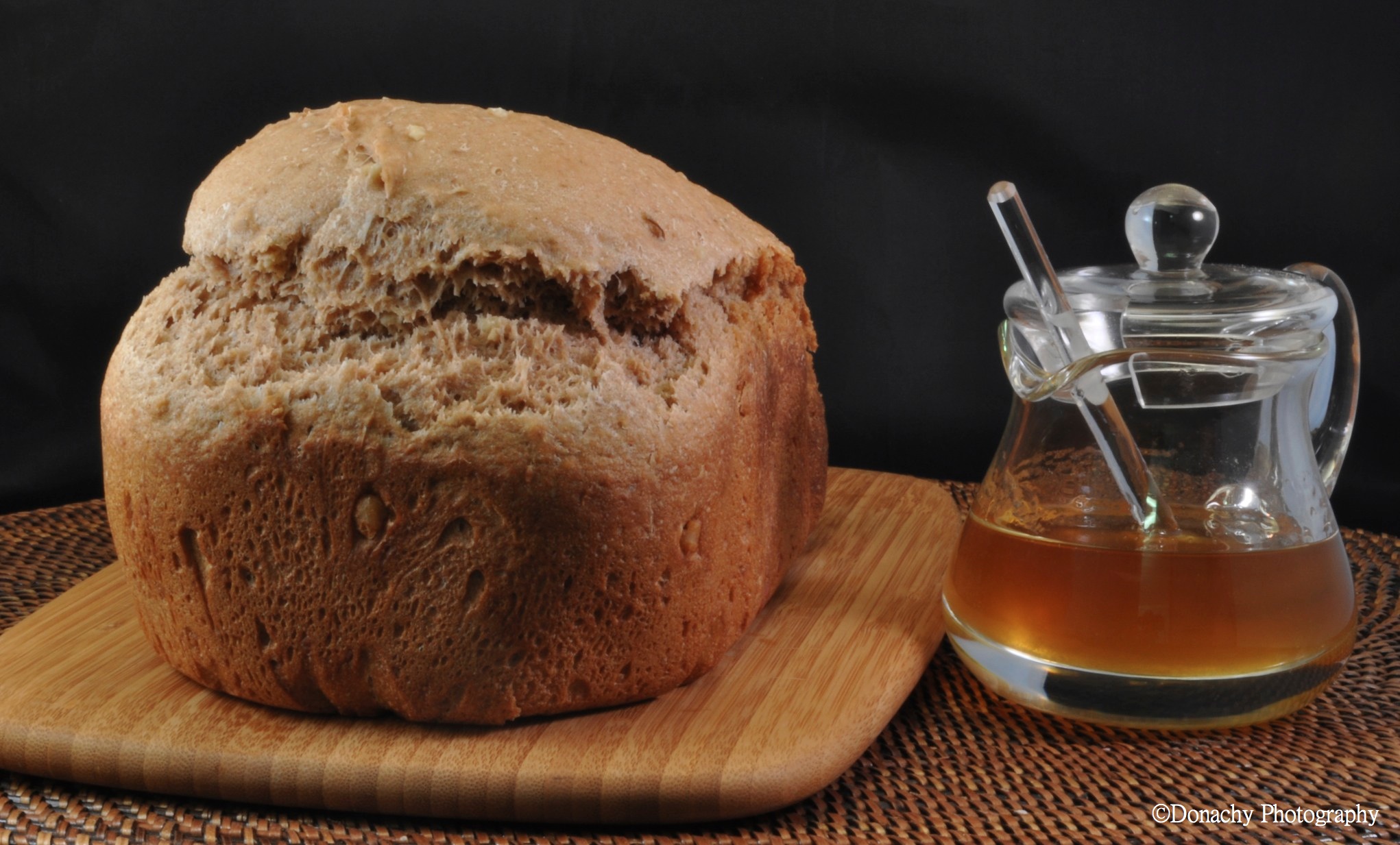
This hearty but soft wheat bread has crunchy walnuts and a hint of honey. The aromas while baking are magnificent! Jack says each bread I make is his new favorite. I think he really means it, too.

Oatmeal Walnut Wheat Bread

Ingredients

  • 1 1/4 cups water
  • 1/4 cup nonfat dry milk
  • 1 1/4 tsp salt
  • 2 tbsp olive oil
  • 1 tbsp honey
  • 1 tbsp molasses
  • 1 cup wheat flour
  • 2 cups all purpose flour
  • 1/2 cup quick-cooking oats
  • 1/3 cup chopped walnuts
  • 1 tsp instant yeast

Directions

  1. Place ingredients in bread machine according to manufacturer’s instructions.
  2. Start machine
  3. Wait impatiently for cycle to finish armed with butter and honey and a knife.

Recipe adapted from 300 Best Bread Machine Recipes by Donna Washburn and Heather Butt.

Alaskan Salmon Stuffed Eggs

Wild salmon is the key to these super-tasty deviled eggs. This is recipe #6 in the Salmon Challenge.

Deviled eggs are always a favorite appetizer, and this recipe works well with canned sockeye, smoked salmon, or fresh salmon that’s been grilled or broiled. Variations on the basic recipe are endless.

A note on boiling eggs: It’s surprising how many different ways various cookbooks and Internet sites suggesting boiling eggs. What this seems to suggest is that it’s not as simple a task and one might think. Here’s my two-cents, for what it’s worth.

Don’t start with the freshest eggs. Eggs that are a a few days old, or older, work better. Place cold eggs in cold, unsalted water. Bring to a boil. Cook eggs on a low boil – just above a simmer – for 13 minutesDrain off the hot water and immediately cover eggs with cold tap water. Roll eggs to crack the shells (this can be done while they’re still in the pan of there aren’t too many eggs) and keep them in cold water with shells, refreshing the water if it becomes warm. Let the eggs cool in the water, then roll them on a flat surface and peel off the shells. Wait until eggs are thoroughly cool before cutting them.

I’ve tried several methods of boiling eggs. This one works well again and again, with very few problems such as green egg yolks, shells sticking to eggs or overly done or underdone eggs.

Ingredients:

  • 6 large eggs
  • 3 to 4 ounces salmon, broken apart or cut until small pieces (canned sockeye, freshly grilled Chinook, or smoked salmon, for example)
  • 4 anchovy fillets, chopped fine
  • 3 spinach leaves, chopped fine (optional)
  • 2 tsp capers, chopped fine
  • 2 tablespoons mayonnaise (or 1 1/2 tablespoons mayonnaise & 1/2 tablespoon Dijon mustard)
  • freshly ground pepper to taste
  • 1 tsp dried tarragon (or, of course, use fresh)
  • garnish with a sprinkle of paprika and a fresh grind of black pepper and, perhaps, a tarragon leaf or piece of fresh spinach

Directions:

  1. Hard boil the eggs. Slice peeled eggs in half. Remove the yolks and place into a mixing bowl. Mash the yolks with a fork until evenly broken up and set aside.
  2. In a separate bowl, thoroughly mix together all the other ingredients except the garnish. Then add this mixture to the yolks and mix together with a fork. Do not make this too pasty. You should be able to see pieces of caper, tarragon and salmon.
  3. Use a spoon or cookie scoop to stuff the mixture into the eggs.
  4. Garnish with paprika, pepper, etc.
  5. Keep chilled until ready to serve.

These could be served on shiso leaves for added visual and gustatory attractiveness.

Vanilla-Orange-Chocolate-Nut-Filling Sandwich Cookie

Sugary, light vanilla cookies pizzazzed up with orange zest sandwich creamy almond-chocolate filling.

Still have to come up with a better name for these . Maybe you could help. The idea for this creation started with the chocolate-almond spread I made a couple of days ago. I thought it would make a delicious filling in a sandwich cookie, and since the spread is chocolate, I wanted the cookie to be vanilla. I found a basic sugar cookie recipe, omitted the chocolate the recipe called for and added vanilla and orange zest. “Perfect!” I thought. A vanilla cookie with orange zest sandwiching chocolate almond spread. How about the name VOCNFS Cookie to borrow from the texting world? Uh… no. I’m open to suggestions!

Vanilla Orange Sandwich Cookie

Ingredients:

  • 1 1/4 cups all-purpose flour
  • 1 tsp baking soda
  • 1/4 tsp baking powder
  • 1/4 tsp salt
  • 1 1/4 cups sugar
  • 1/2 cup plus 2 tbsp (1 1/4 sticks) room-temperature, unsalted butter
  • 1 large egg
  • 1 tsp vanilla
  • almond-chocolate spread

Directions:

  1. Preheat oven to 375°F.
  2. In a medium bowl, mix the flour, baking soda, baking powder, salt, and sugar. Add zest. Mix. Add butter. Mix. Then add egg and vanilla. Continue mixing until dough comes together.
  3. Take rounded teaspoons of batter. Roll into a ball and flatten for uniform cookies. Place approximately two inches apart on a parchment-paper-lined baking sheet. Bake for 9 minutes, until cookies are slightly cracked on the top.
  4. Remove from oven and set baking sheets on a rack to cool.
  5. To assemble the sandwiches: take one cookie and smear chocolate-nut spread evenly on the bottom of the cookie (because the bottom side will be flat. You want the cracked tops of the cookie to be on the outside.) Take a matching cookie and gently press flat side into the chocolate spread. Voila! You have a sandwich cookie. Continue with remainder of cookies.

We took these cookies to our friends’ house. They gave these cookies high marks on the would-you-buy-these-in-a fancy-cookie-shoppe test!

One Cup of Mayo, and Hold the Preservatives!

Whip up this tasty, fast, easy mayonnaise recipe once, and you may never go back to store-bought.

The first time I realized that mayonnaise could be made at home I was reading Chapter I, De Gustibus (regarding taste) in Craig Claiborne’s New York Times Cookbook. His recipe called for an egg yolk, salt, freshly ground pepper, Dijon mustard, vinegar or lemon juice, one cup of peanut oil and a whisk. I tried it and to my amazement, it worked! The chemistry in forming this emulsion is visually fascinating. But what a lot of effort. I was happy enough with my jar of Hellmann’s. It would be 27 years before I’d have another go at the homemade version.

In fact it was Barbra who encouraged me to revisit mayonnaise. Taking up her challenge, I made a cup of it, this time in a blender. Better than getting mayonnaise elbow with a whisk, but still… the old-school blender I used was a bother to clean. So the next time we needed mayonnaise, we went to Point Hope’s Native Store. $$$ for a six-ounce jar.

That was when we decided, finally, to invest in a good immersion blender – aka a stick blender. And now, I doubt we’ll ever buy a jar of mayonnaise again. The recipe below is quick, easy to clean up after, and results in a tasty, preservative-free, all-natural mayonnaise ready to be spread on a turkey sandwich, to serve as a base for anchovy-mayonnaise salad dressing, or to blend into deviled eggs.

1 cup Homemade Mayonnaise

Ingredients:

  • 1 large egg, as fresh as possible
  • 1 tbsp lemon juice
  • 1 tsp white vinegar (we like rice vinegar)
  • 1 tbsp Dijon mustard
  • healthy pinch or two (1/8 teaspoon) salt
  • dash of white pepper or freshly ground black pepper, or both
  • 1 cup extra virgin olive oil (or other vegetable oil)

Directions:

You will need a stick blender and a fairly narrow container such as a small canning jar, one just wide enough so that the stick blender fits.

  1. Place egg in a narrow jar or other container.
  2. Add lemon juice, vinegar, mustard, salt and pepper.
  3. Add olive oil.
  4. Push stick blender to the bottom of the container. Blend on high speed. (This depends on the blender. Ours gets the job done at a lower setting.) Within seconds, mayonnaise will start to form. As soon as you see this, gradually raise the blender to create more mayonnaise. Mix through top to bottom one more time thoroughly. The entire mixing process will take about 10 seconds.

This mayonnaise will keep in your refrigerator for about two weeks. The extra virgin olive oil and the Dijon give it a distinctive taste. For mayonnaise more like commercial brands, use canola or peanut oil and half the Dijon or a milder mustard.

Chocolate Almond Spread (or Homemade Bush-Alaska Nutella)

Creamy-smooth chocolate almond spread ready for toast, dolloping inside crêpes, or drizzling on pancakes or waffles. 

Being hundreds of miles from roads or specialty stores and becoming more curious about how foods we take for granted are actually created drives me to experiment. Today’s challenge? Nutella.

In high school, a German friend introduced me to this chocolate-hazelnut spread that looks a little like peanut butter. But sister, it’s not peanut butter! Nutella is sweet, creamy, and chocolately and is great spread on fruits and breads and a whole lot of other things, or scooped out of the jar and eaten off the spoon!

I found a recipe, but of course I modified it to fit the items in my pantry. Substituting almonds for hazelnuts, and armed with my new stick blender (with nut chopping attachment), I set to work. As I processed the nuts from a grain to coarse  flour and finally into a butter, I was amazed. It really worked! Mixed with chocolate, the result tasted like an almond version of Nutella. Fabulous! (Incidentally, the earliest versions of Nutella, created in Italy, used either almonds or hazelnuts.)

Now I’m ready to make those macarons I keep seeing. Or maybe I can convince Jack to make chocolate-almond crêpes for breakfast!

Chocolate Almond Spread 

Yield: about 8 ounces (1 cup)

Ingredients

  • 1 cup whole raw almonds
  • 1 cup powdered sugar
  • 1/8 cup unsweetened cocoa powder
  • up to 1/4 cup vegetable or nut oil
  • 1/2 tsp vanilla extract
Directions
  1. Skin almonds by pouring boiling water over them in a bowl and letting them sit for 2 minutes. Drain off hot water and replace with cold water. Almond skins should pop off when you squeeze the individual almonds. I’ve read rubbing the almonds in a clean towel at this point will also remove skins, but that didn’t work for me.
  2. Preheat oven to 350° F. Place almonds in a single layer on a shallow baking pan. Toast for 10 minutes. Stir the nuts halfway through baking to ensure an even color.
  3. Process nuts in a food processor, or use a stick blender. Scrape down the sides of the bowl as necessary until the nuts have liquefied, about 5 minutes. First, you will get coarsely chopped nuts, then a fine meal. After a little while, the nuts will form a ball around the blade, and it will seem like you have a solid mass. Keep processing. The heat and friction will extract the natural oils from the nuts, and you will get almond butter!
  4. When the nuts have liquified, add the sugar, cocoa and vanilla. Slowly drizzle in enough oil to make a spreadable consistency. Since the mixture is warm, it will be more fluid now than at room temperature.
  5. Transfer the spread to an airtight container, and store in the refrigerator for up to  1 to 2 months. For best results, stir the chocolate-almond spread before using.

Adapted from http://www.sugoodsweets.com/blog/2005/12/nutella/