Almond Bread Pudding with Cognac Caramel

bread pudding n

You don’t need to share an individual serving of sweet nutty bread pudding drizzled with cognac caramel sauce!

Heavy whipping cream is not readily available in Ulaanbaatar. This surprised me. Since the Mongolian culture is heavily tied to herding and to dairy, I assumed that whipping cream would be much easier to get than in remote Point Hope, Alaska, where we had to fly in this precious commodity. The plight of whipping cream difficulties has followed me across the globe. Well, that’s a bit overdramatic. I did come across heavy whipping cream in the one store that carries many western groceries here in UB. But at about $28 a liter, I decided it wasn’t worth it. Plus it was UHT (ultra heat temperature processed) in order to keep it shelf stable. My experience with UHT whipping cream is that it turns to butter with the slightest amount of whipping.

The other day, I noticed a box of a new product in the dairy section of a grocery store we frequently shop. Everything was in Korean, except for the words “whipping cream.” Since the price was reasonable and since I could not find anything that looked like “UHT” written anywhere, I took a chance. Boy, am I glad I did! Not only does this cream whip up beautifully, it is the best tasting whipping cream I have ever had.

As is often the case in Ulaanbaatar, a product is here one day and gone the next. Alas, I can no longer find this whipping cream, so I am using it sparingly. I hope it will show up again.

One of our favorites is bread pudding. Using pantry staples such as homemade French bread, toasted almonds, and good cognac, I baked a small batch of individual bread puddings. It was the perfect amount for us to enjoy and share with guests. And it was a delicious way to use some of the precious heavy whipping cream.

Almond Bread Pudding with Cognac Caramel

Ingredients

  • 1/4 cup almonds, chopped and toasted
  • 2 tbsp unsalted butter, melted
  • 1/2 cup milk
  • 1/2 cup heavy cream
  • 1/4 cup granulated sugar
  • 1/2 tsp cinnamon
  • 1/4 tsp freshly grated nutmeg
  • 1 tsp almond extract
  • 2 eggs, beaten
  • 2 1/2 cups French bread, cubed small

Ingredients for cognac caramel

  • 1/4 cup brown sugar
  • 3 tbsp heavy cream
  • 2 tbsp good quality cognac

Directions

  1. Preheat oven to 325 degrees F (160 degrees C). Grease 6 cups in a muffin tin. Set aside.
  2. Whisk together melted butter, milk, cream, sugar, cinnamon, nutmeg, almond extract and eggs in a medium bowl.
  3. Stir in bread cubes. Let sit for a few minutes to allow the bread to soak up egg mixture.
  4. Divide mixture equally into prepared muffin tin.
  5. Bake for 20 minutes.
  6. Add almonds to the tops of bread puddings and bake for 10 more minutes.
  7. Let the bread puddings cool in the tin for 10 minutes. While they are cooling, make the cognac caramel.
  8. Bring brown sugar and cream to a boil in a small pan and continue to cook for 2 more minutes. Sauce should thicken.
  9. Remove from hit and stir in cognac.
  10. Loosen the bread puddings from tin by cutting around the edges with a knife. Transfer puddings to individual plates.
  11. Drizzle cognac caramel sauce on each bread pudding and serve warm.

Two Monster-Sized Monster Cookies

Monster Size Monster Cookies n

Sometimes you need a big, soft, peanut buttery cookie stuffed with M&Ms and white chocolate chips.

OK, sometimes you need two. I love recipes measured in tablespoons and minutes, especially when they produce a soft cookie with an instant connection to childhood – and when there is enough to share with a friend.

Two Monster-Sized Monster Cookies

Ingredients

  • 2 tbsp unsalted butter, melted
  • 2 tbsp granulated sugar
  • 2 tbsp brown sugar
  • 1 large egg, beaten
  • 1/2 tsp vanilla extract
  • 2 tbsp peanut butter
  • 8 tbsp all-purpose flour
  • 4 tbsp quick oats
  • 1/4 tsp baking soda
  • pinch salt
  • 1/3 cup M&Ms
  • 2 tbsp white chocolate chips

Directions

  1. Preheat oven to 325 degrees F (160 C).
  2. Line baking sheet with parchment paper.
  3. In a large bowl, mix together first 6 ingredients.
  4. Stir in flour, oats, baking soda, and salt.
  5. Fold in M&Ms.
  6. Fold in chocolate chips.
  7. Divide dough in half. Scoop each half onto parchment-lined baking sheet. Flatten slightly.
  8. Bake for 20 – 22 minutes, until edges are slightly browned.
  9. Let cookies cool on baking sheet for about 10 minutes.

Recipe adapted from Sally’s Baking Addiction.


Double Flamed Coq au Vin on Homemade Pappardelle Pasta

Coq au vin n

With culinary roots tracing all the way back to the days of Julius Caesar, coq au vin remains one of the most savory dishes you can serve.

Popularized in America by Julia Child, coq au vin had been on our “to cook” list for quite some time. Fortunately, the ingredients for this dish are widely available. Even in Mongolia, we had no difficulty putting everything together.

Although not strictly necessary, flaming the chicken leg and thigh with a shot of cognac gives this dish an especially savory, umami flavor. Doing likewise with the vegetables makes it all the better. Thus, Double Flamed Coq a Vin.

Double Flamed Coq a Vin

Ingredients

  •  2/3 cup lardons or cubed, thick bacon
  • olive oil
  • 2 to 3 pounds chicken legs and thighs on the bone, patted dry. Preferably thigh and leg together.
  • 1/2 cup cognac, separated in half
  • smoked sea salt
  • cracked black pepper
  • 1 bay leaf
  • 1/2 tsp dried thyme, separated
  • 3 tbsp all purpose flour
  • 2 cups dry red wine such as Burgundy, Syrah, etc.
  • 2 cups chicken stock, canned or see recipe below
  • 4 garlic cloves, minced
  • 2 tbsp tomato paste
  • 1 lb fresh mushrooms such as crimini, chopped large
  • 2 tbsp unsalted butter
  • 2 medium carrots, chopped coarse
  • 2 medium onions, chopped coarse
  • 2 cups leaks chopped into generously thick (1 cm) cylinders

Directions

  1. Salt and pepper chicken. Let rest.
  2. Add olive oil and bacon to a sauté pan with high sides and heat over medium-high burner. When bacon is rendered, remove and set aside.
  3. Add the chicken to sizzling hot oil and bacon fat and sear on all sides, using tongs to move the chicken.
  4. When the chicken is seared brown, add 1/4 cup cognac. Make sure the area is cleared, your hair is tied back, and a lid is handy to smother the flames, if necessary. Light the cognac and let it burn itself out.
  5. Return bacon to pan and add red wine, chicken broth, bay leaf, 1/4 tsp of thyme and garlic. Simmer to allow liquids to cook down somewhat – about 1/2 hour.
  6. In a stock pot, add butter and olive oil and heat on medium-high burner. Add onions, carrots, salt, pepper, and 1/4 tsp thyme. Stir occasionally. When onions and carrots just begin to soften, add leaks and mushrooms and continue cooking till just tender.
  7. Add 1/4 cup cognac and flame.
  8. Vigorously stir in flour, adding more butter or olive oil, if necessary.
  9. Add liquid from chicken to the vegetables in the stockpot and stir together so that the flour mixes to thicken the liquid. Add chicken and additional seasonings to taste.
  10. Serve on a bed of wide pasta such as pappardelle.

Chicken Stock from Scratch

Ingredients

  • 2 lbs chicken bones and trimmings, chopped to expose marrow
  • smoked sea salt
  • 12 whole peppercorns
  • 1 bay leaf
  • 1 tbsp sage
  • 1 medium onion, chopped coarse
  • 1 medium carrot, chopped coarse
  • 2 large cloves garlic, chopped coarse
  • 1/2 cup dry white wine (optional)
  • water to cover all

Directions

  1. Use a meat tenderizer or heavy chopping knife to crack and break chicken bones so that marrow is exposed.
  2. Add ingredients to a stock pot. Bring to boil. Reduce to simmer. Cook for 20 minutes.
  3. Strain broth through a fine wire strainer. Use fresh or freeze.

Semolina Grissini – Italian Style Crunchy Breadsticks

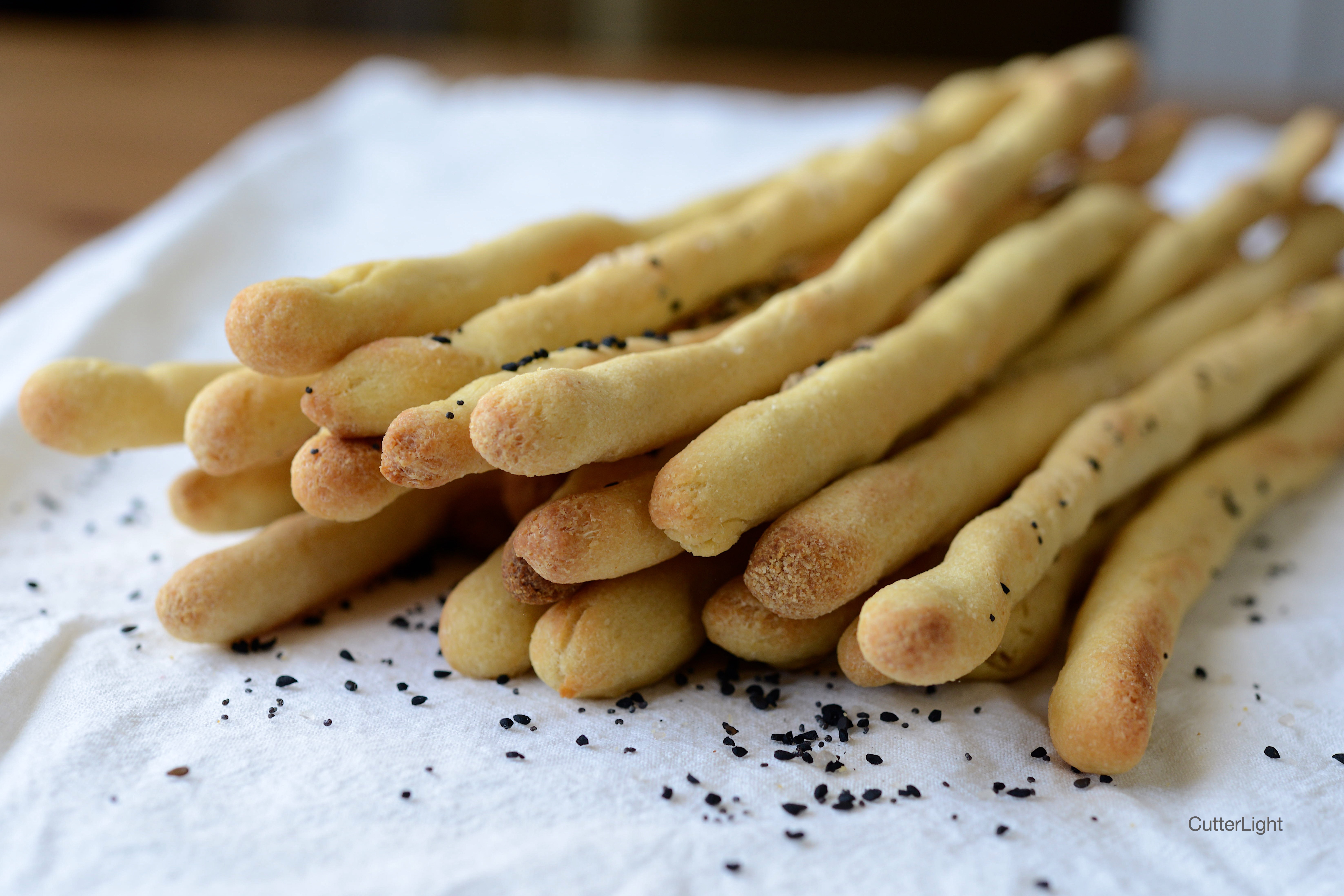
semolina grissini n

Crunchy, savory sticks ready to be eaten plain, wrapped in prosciutto, or dipped in any savory sauce imagined. In addition to the rich flavor extra virgin olive oil provides, our grissini were peppered with black sesame seeds, poppy seeds, smoked rock salt, and charnushka.

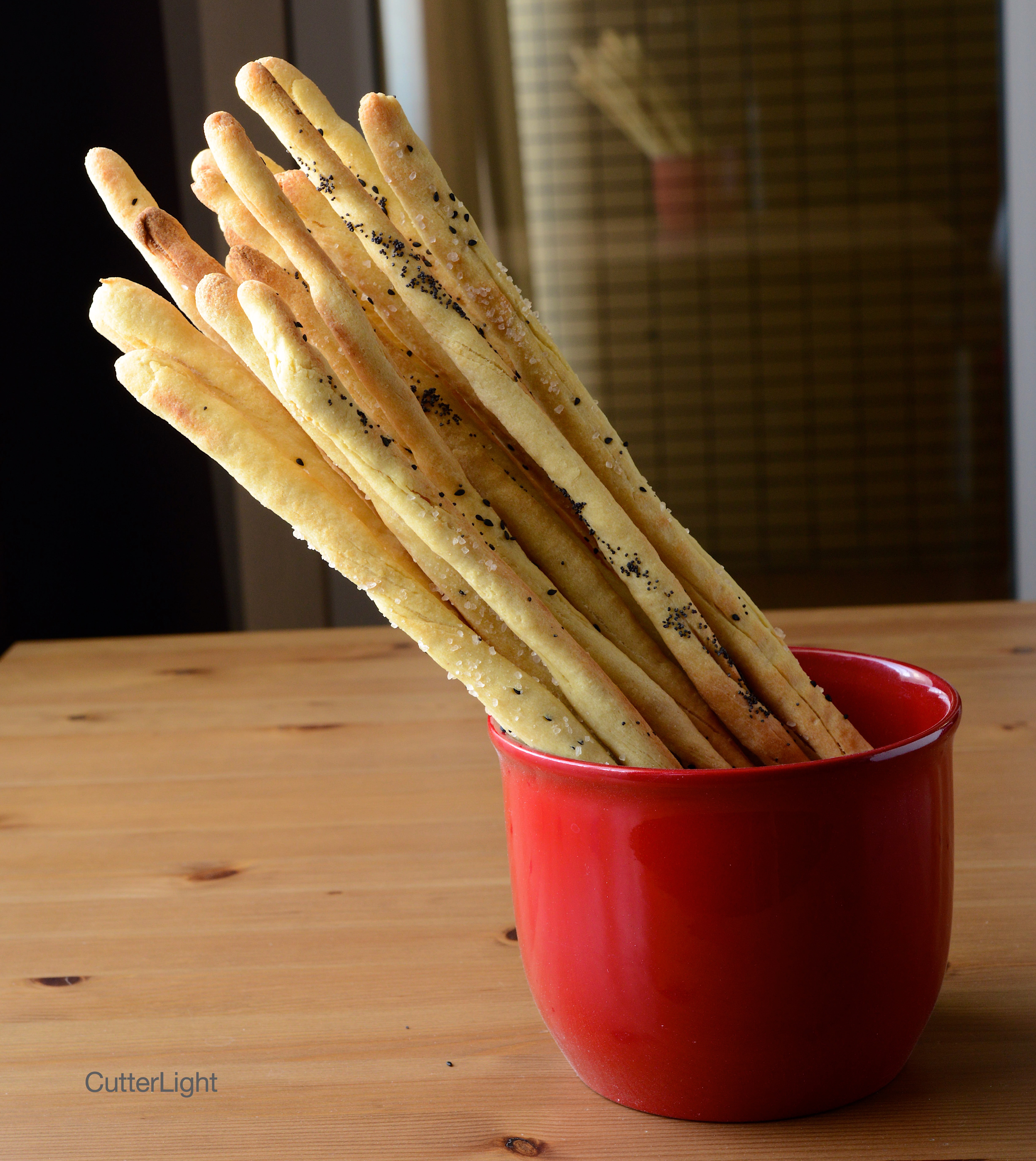
semolina grissini in red bowl n

Grissini make a fabulous edible table centerpiece, and they are a cool prop to animate your dinner conversations!

Grissini, Italian-style crisp breadsticks, have long been on my list to make. They are a tasty and fun addition to so many meals. Imagine a romantic Italian meal where grissini are centered on the table alongside tapered lit candlesticks. How about enjoying grissini with a meal of crispy salad and hearty minestrone? The list could go on.

Any type of herbs or spices could be kneaded or pressed into the dough before baking. I experimented with poppy seeds, black sesame seeds, rock salt and charnushka. The smoked rock salt was the clear winner in the flavor category, but charnushka was a close second. If you haven’t experimented with this seed yet, now is the time. Charnushka has a moderately nutty, smoky, peppery flavor that I first enjoyed on one version of everything bagels. They worked perfectly on the grissini.

Semolina Grissini

Ingredients

  • 1 1/4 cups warm water (110 degrees F/43 degrees C)
  • 2 tsp granulated sugar
  • 1 tbsp active dry yeast
  • 2 tbsp extra virgin olive oil
  • 1 tsp salt
  • 1 3/4 cups all-purpose flour
  • 1 3/4 cups semolina flour
  • 2 tsp toppings of your choice (smoked rock salt, poppy seeds, charnushka, etc.)
  • additional extra virgin olive oil for brushing on sticks before they bake

Directions

  1. Stir water, sugar and yeast together in a large bowl. Let sit for about 5 minutes to ensure your yeast is bubbling and active.
  2. Stir in olive oil.
  3. Add 1/2 of both flours and the salt. Mix well.
  4. Stir in 1/2 of remaining flour.
  5. Turn dough out onto a lightly floured surface.
  6. Knead in the rest of the flour. Continue kneading until dough is smooth and flour is well-incorporated, about 5 minutes. Dough will have a slightly coarse texture due to the semolina flour.
  7. Lightly oil a large bowl. Place dough in bowl. Turn to coat.
  8. Cover bowl with plastic wrap. Let dough rise in a warm, draft-free location until doubled in size, about 1 1/2 hours.
  9. Cut the dough into 24 equal pieces.
  10. Roll each piece into dough sticks, about 12 inches long, or the length of your baking sheet.
  11. Brush both sides of dough sticks generously with olive oil.
  12. Press in toppings, if desired.
  13. Preheat oven to 375 degrees F (190 degrees C).
  14. Place 6 dough sticks on parchment-lined baking sheet.
  15. Bake for 10 minutes. Flip sticks over and bake for 5 more minutes. Sticks should be lightly browned and crispy.
  16. Repeat with remaining dough, baking batches of 6.

Scratch Pancakes for Two

pancakes from scratch n

Fluffy homemade pancakes served with perfectly ripe bananas, toasted almonds, pure maple syrup and rich, whipped cream. Serves two. Fantastique!

I don’t know how many times we’ve heard that scratch pancakes won’t come out as good as pancakes from a mix. In fact, we’d heard it so many times that for years we fell into blindly relying on Krusteaz pancake mix. Good stuff, but not as good as this…

Everything from scratch tastes better. So we thought it was time to put the pancake myth to the test. Armed with seven pantry staples – things you probably already have in your kitchen, on your camper or in your galley – I went to work. The verdict? Everything from scratch tastes better!

Scratch Pancakes for Two

Ingredients

  • 3/4 cup all-purpose flour
  • 1 3/4 tsp baking powder
  • 1/2 tsp salt
  • 1 1/2 tsp granulated sugar
  • 1/2 tsp vanilla extract
  • 1/2 cup milk
  • 1 large egg
  • 2 tbsp unsalted butter, melted

Directions

  1. In a large bowl, whisk together flour, baking powder, salt and sugar.
  2. In a small bowl, whisk together vanilla, milk, egg, and butter.
  3. In the large bowl, make a well in the center of the flour.
  4. Pour milk mixture into the well.
  5. Whisk milk mixture into flour mixture until smooth, do not overmix.
  6. Heat a lightly oiled medium frying pan over medium-high heat.
  7. Scoop about 1/4 cup of mixture onto frying pan. Brown both sides of pancakes.
  8. Serve hot pancakes with toasted nuts, syrup, fruit and whipped cream.

Connected by Waxwings

Bohemian Waxwing feathers close n

Like drops of bright red sealing wax, pigment is enclosed in the translucent sheathing of extended secondary feather shafts, giving waxwings their name.

In the midst of the 11-minute walk from our apartment to our school in Ulaanbaatar earlier this week we heard a familiar “wheezing” sound from nearby treetops. The friend we were walking with must’ve thought we were crazy as I abruptly spun around and began crossing the road toward the origin of the sound. But Barbra knew what it was about. “Waxwings!” I exclaimed as I approached the tree where they were perched. Barbra confirmed the sighting. “Yep! Look at their crowns.”

Bohemian waxwing april 2015 n

For the past few days, small flocks of Bohemian waxwings have been putting smiles on our faces. On their way to nesting grounds in the conifer forests of Siberia, these flocks don’t hang around long. Until recently the southern edge of Ulaanbaatar near the Tuul River was covered in berry bushes, poplars and willows. Each year, less and less of this habitat remains as Ulaanbaatar’s human population grows…

bohemian waxwings in habitat n

…but here and there a small patch of what it used to be remains. Every little bit of this habitat is increasingly critical. Even a few berry bushes edging apartment buildings helps.

If you’ve never seen waxwings in good light, I’m not sure I can adequately describe them. Their primary wing feathers are streaked with pure white and edged in yellow the color of daffodils in sunlight. The just-dipped-in-paint sheen on these feathers is reminiscent of crayon gone over with watercolor paint. But it’s the candy apple tips of their secondary wing feathers that give waxwings their name. The red is not on feathers. Rather, it’s opalescent pigment encased in modified, translucent feather shafts.

bohemian waxwing eating red berries n

During their nesting season, waxwings often eat insects. The rest of the year, it’s berries, berries, apples, and more berries – sometimes hundreds of berries in a single day. We walk past these bushes every day and never noticed the winter-preserved berries still clinging to them. But the waxwings noticed. They need this fuel as they fly on to Siberia.

You could be almost anywhere in the Northern Hemisphere and never see a single waxwing. Ottawa, Canada; Sacramento, California; Clarion, Pennsylvania; Sapporo, Japan; – to name a few places where waxwings may or may not be. And, in the wrong light, you might pass right by them and dismiss them as robins or sparrows.

Wheezing. That’s what gives them away. If you hear birds wheezing, look closely. Get them in the right light. You won’t believe what you see.

Bohemian waxwing on wire n

The only bird with a brown crest – as though the black eye paint and warrior feathers weren’t distinctive enough.

My first sighting of waxwings occurred many years ago on western Pennsylvania’s North Fork of Redbank Creek. I was fly-fishing in early spring, and as I worked my way around a bend in the stream I came upon a leafless poplar that was as lit up as a Christmas tree with waxwings. I thought I’d never seen anything as beautiful in my life. The paint-dipped tips of their feather seemed to glow in the evening light and I stood motionless in the water, mesmerized till they suddenly filled the sky.

bohemian waxwing flight n

This photo shows that the waxwing’s red wing tips are featherless extensions of wing shafts.

In mid-winter, they light up the holly bushes on the campus of the College of Charleston where I earned my master’s degree.

In Sacramento, they filled the camphor tree in our front yard – gorging on berries, wheezing their calls to each other, brightening our day.

The birds we encountered in the lower 48 were cedar waxwings, smaller relatives of bohemians. But here we are, many thousands of miles removed from Pennsylvania trout steams, holly bushes in the Deep South and a lovely, mid-town bungalow in California.

Connected by waxwings.

Bohemian waxwing pair looking north n

A pair of waxwings look north against the pale dusk in Ulaanbaatar. They still have hundreds of miles to go before reaching the conifer forests of Siberia where they’ll build their nests and bring the next generation of waxwings into the world. Not many berry bushes here anymore, and a hunk of metal overlooking a construction site makes for a cold roost.

Spring! April in the World’s Coldest Capital

Bohemian waxwing april 2015 n

Warmer temperatures are bringing flocks of new birds to Ulaanbaatar. These Bohemian Waxwings won’t stick around long; they’re on their way to nesting grounds in Siberia.

One day temperatures are in the 50’s or 60’s (in the teens, Celsius). The next day it’s below freezing with snowfall. And so it has been for the past few weeks from late March through mid-April. Welcome to Ulaanbaatar, Mongolia – officially recognized as the world’s coldest capital city. As transplants from Alaska, it feels like home – albeit a little warmer than our former north-of-the-Arctic-Circle village of Point Hope.

pussy willows catkins n

Pussy Willows – flowers of willow trees – have begun pushing out of their buds along the banks of Ulaanbaatar’s Tuul River.

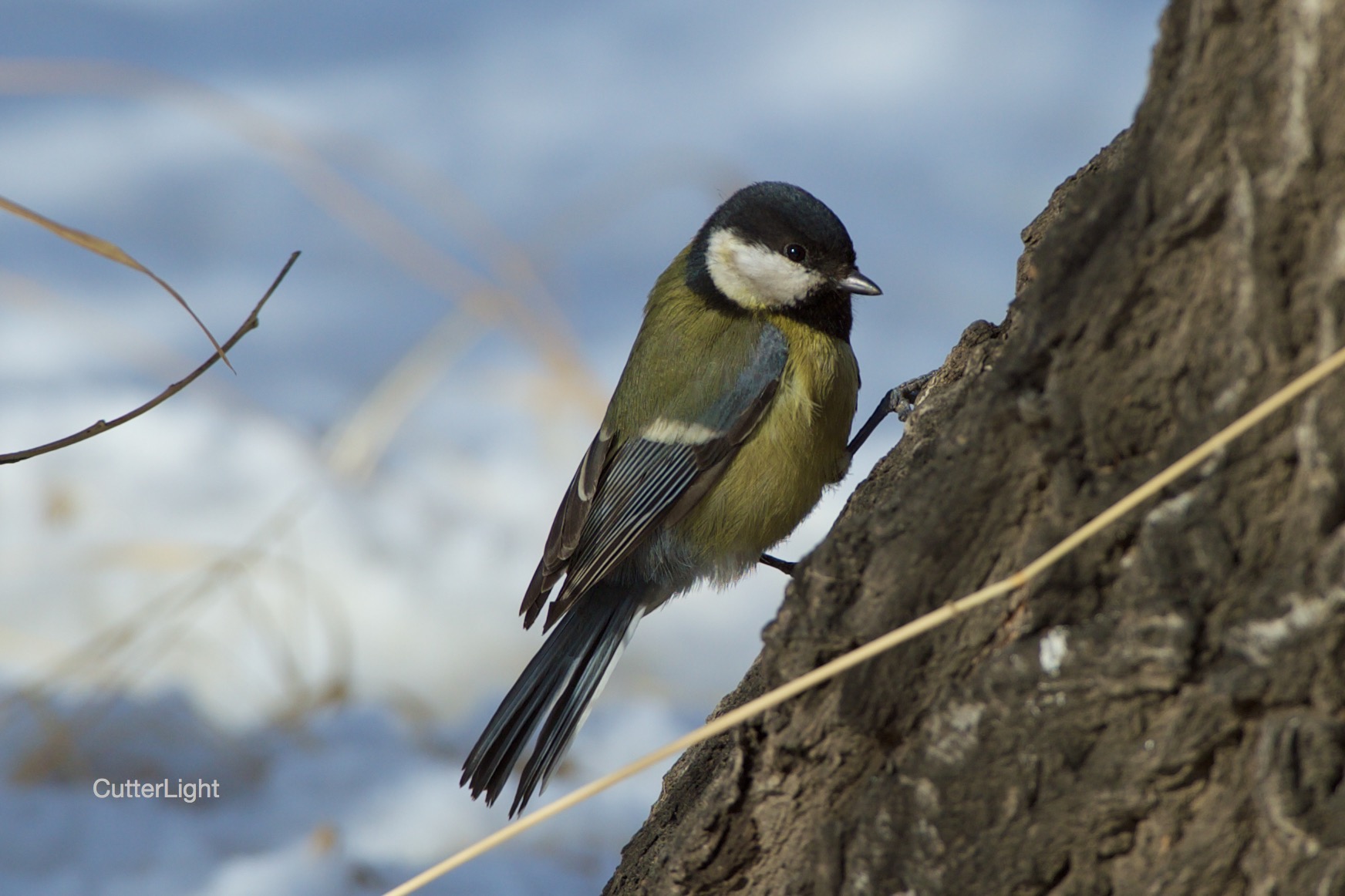
great tit profile tree n

Great tits, above and below, are common residents along the Tuul River as well as in the nearby mountain forests.

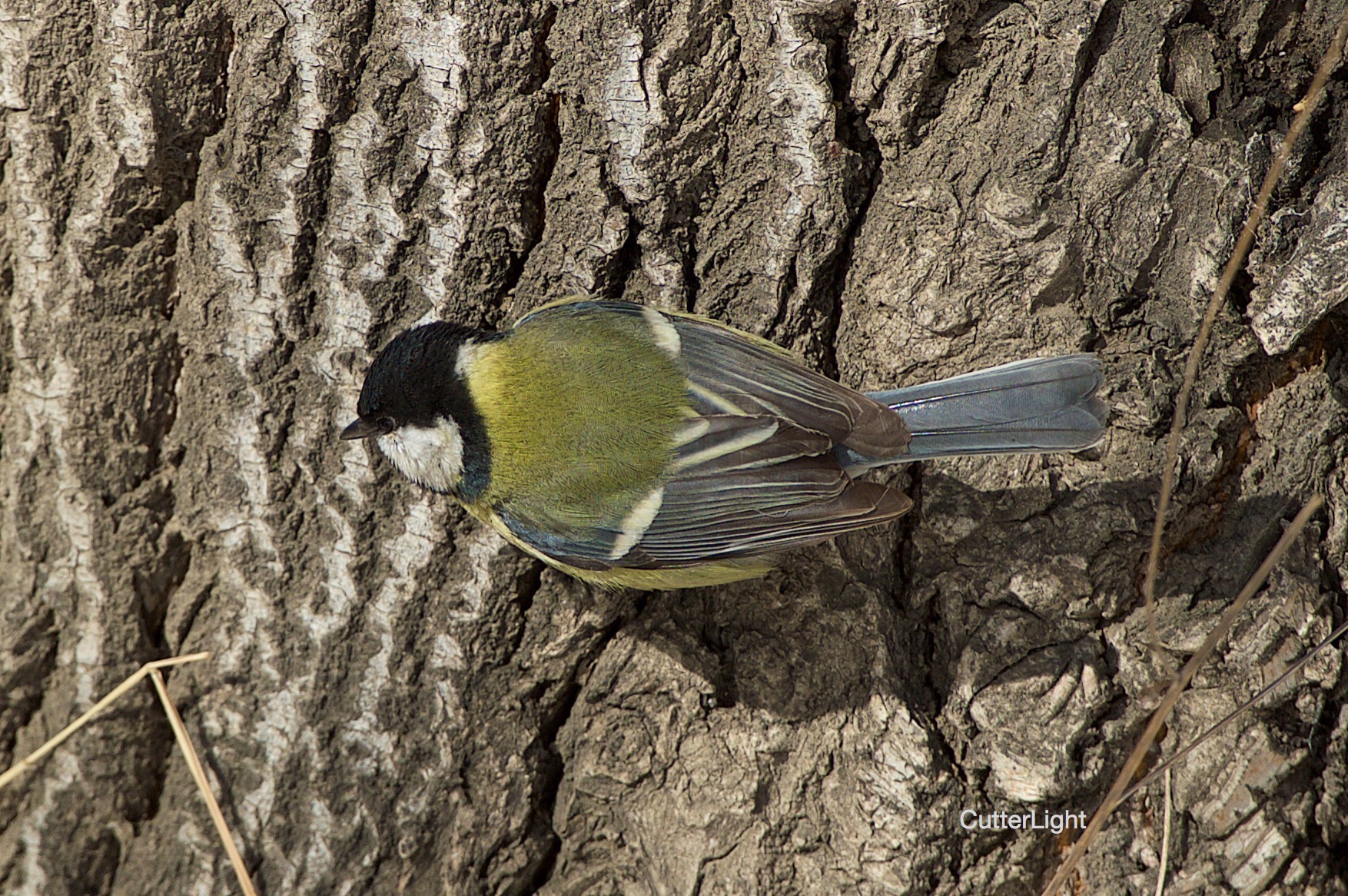
great tit back tree n

Such interesting little birds, all camouflage and color from the head to the mid-back, an abrupt line, and then symmetry from the mid-back through the tail, which, in nature, is its own form of camouflage.

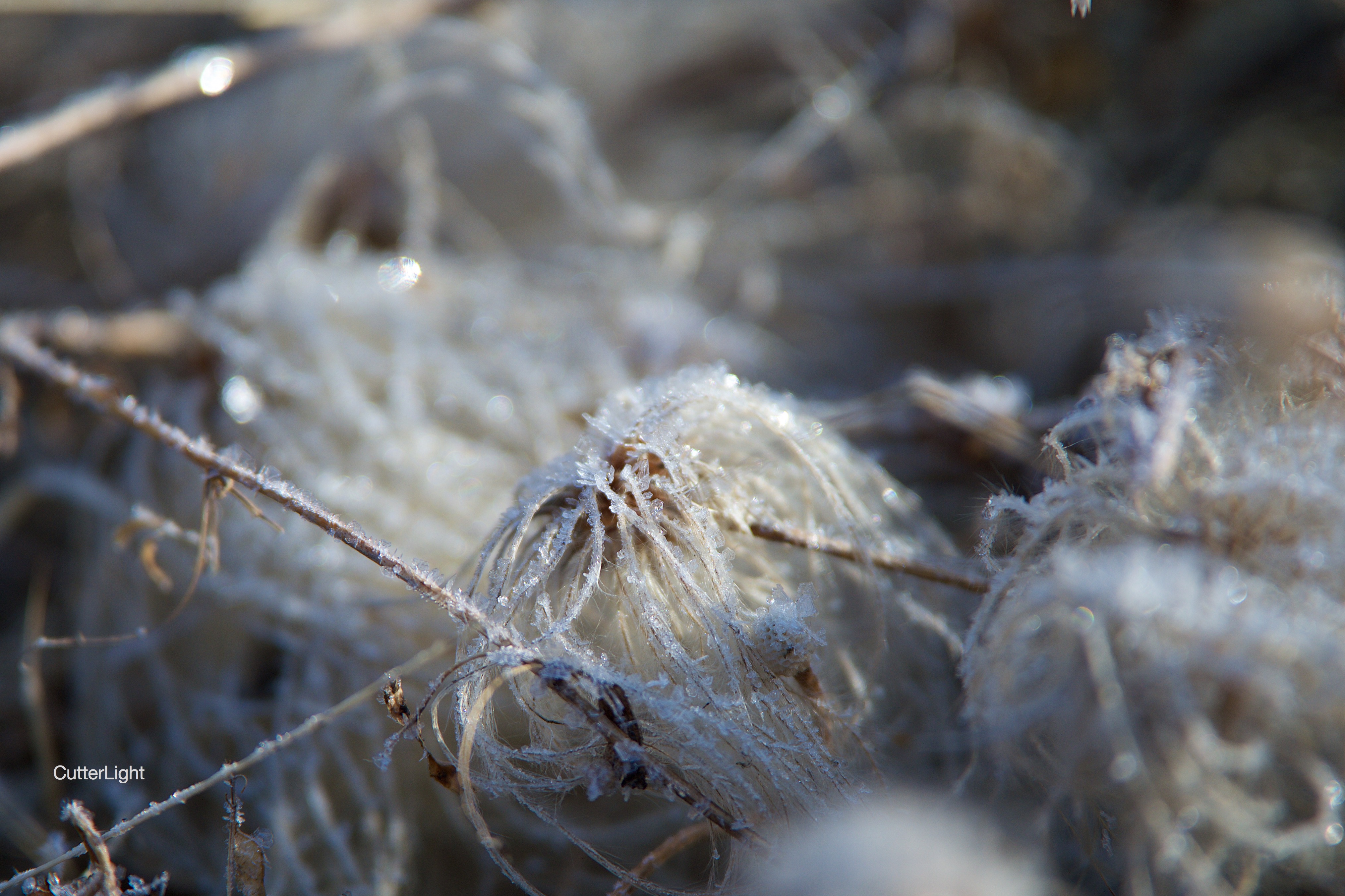
frost jellyfish weed april 2015 n

Early morning frost turned the withered remnant of last fall’s flowers into frozen jellyfish.

jellyfish weed april 2015 n

By late morning, the sun had melted most of the frost…

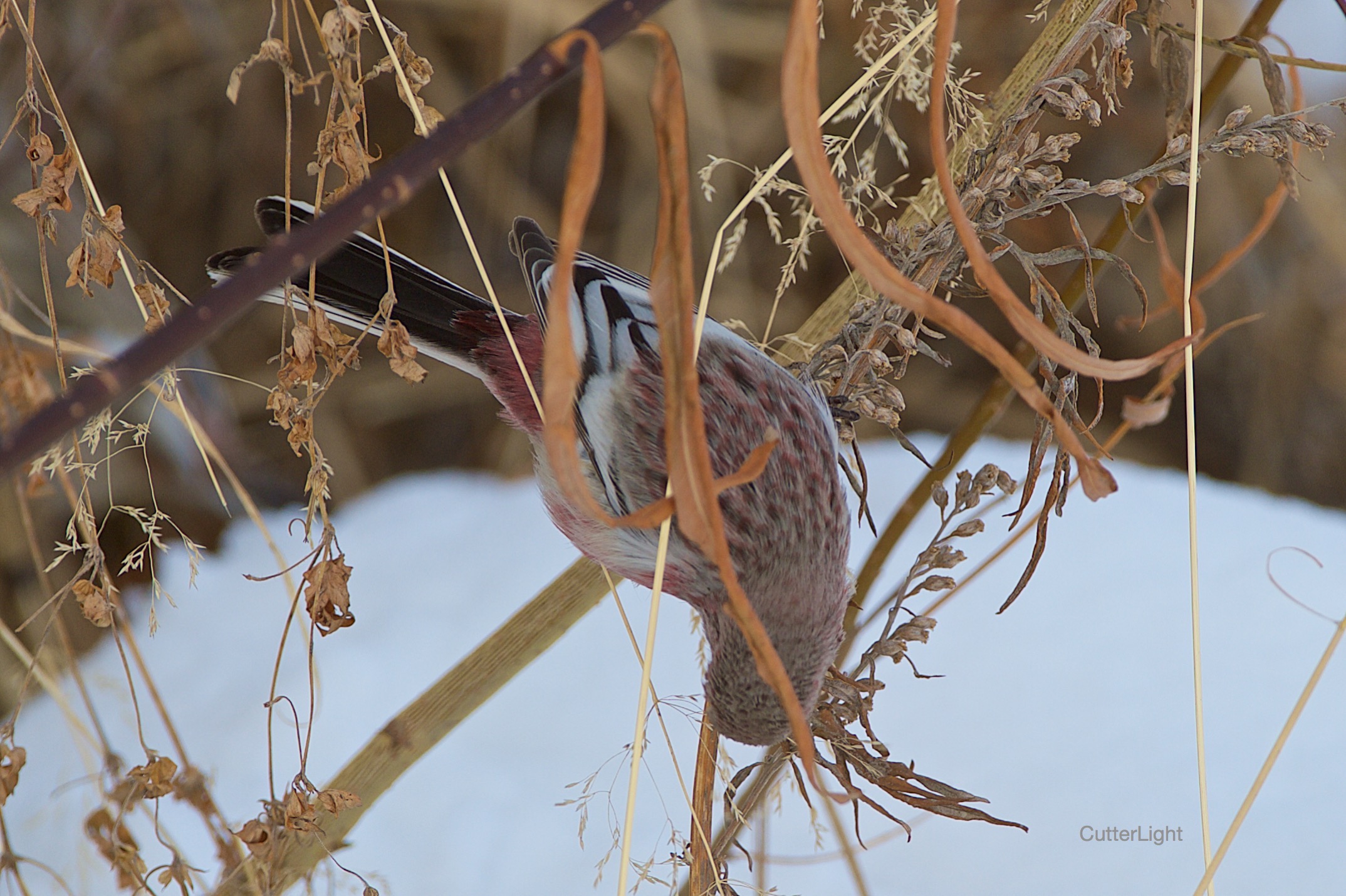
long-tailed rosefinch n

…while in shaded pockets where snow still lingered, newly arrived long-tailed rosefinches filled up on last year’s store of seeds. The willows and grasses along the Tuul provide the perfect habitat for many species of birds. And, judging by tracks in the snow, rabbits as well.

long-tailed rose finch upside down n

Finches become acrobats in pursuit of a good meal.

female long-tailed rose finch n

As is typically the case among passerines, the colors of the female long-tails are subdued compared to their male counterparts.

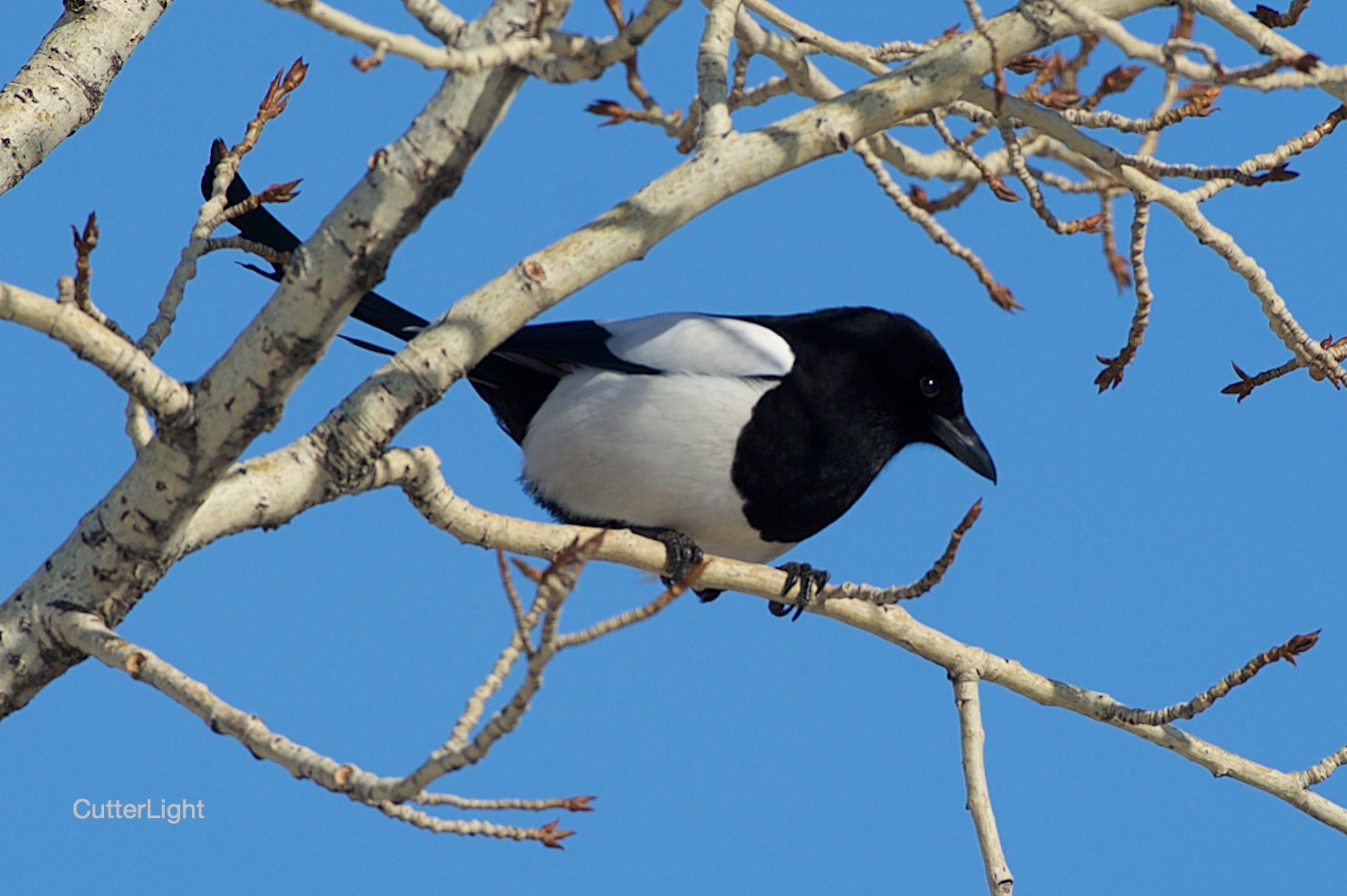
Magpie March 2015 n

Magpies were out in force, searching for nesting material to add to the massive jumbles of sticks they build in trees. It must work. They return to the same nests year after year, building them ever higher. Note the hooked beak; passerines beware. Magpies are predators, and no mistake.

big tree w sun april Tuul n

The Tuul River green belt is our favorite place in Ulaanbaatar. In addition to providing habitat for year-round resident birds and summer nesters, the abundant seeds provide critical fuel for passerines migrating further north.  The belt is also important hunting grounds for kestrels and other birds of prey as they make their way to their own nesting grounds. The banks of the Tuul are what’s left of an increasingly fragmented ecosystem. We’ve even caught fleeting glimpses of some type of quail or partridge in the thick willow undergrowth!

Twisted Sweet Adzuki Bean Roll

sweet buns w adzuki bean filling n

Stuffed sweet dough is fairly easy to make and yields delicious results. Sweet, nutritious adzuki beans burst from this roll sprinkled with black sesame seeds. 

I have happy memories of making both steamed and baked versions of sweet buns for New Year’s Eve in Alaska a few years ago. These Arctic anpan were enjoyed by everyone. Back in those days, I relied on my Zojirushi bread maker to mix and rise all the dough for me. Now that we are in Mongolia, I am determined to make all my dough from scratch without the aid of any kind of machine. I’ve found that my bread machine recipes need just a little tweaking in order to convert them to fully handmade.

This from-scratch sweet dough recipe is simple enough. In order to amp up the looks of this confection, I jelly-rolled sweet adzuki paste into the sweet dough, slashed the dough as you would miniature French bread loaves, brushed them with egg to give the finished product a golden brown sheen, and sprinkled black sesame seeds for added flavor and a dash of “wow.” A friend at work told me these confections reminded her of bakery goods she used to buy in fancy Vietnamese boulangeries.

Sweet Adzuki Bean Roll

Ingredients

  • 1/2 cup granulated sugar
  • 1 cup warm milk
  • 1 tbsp yeast
  • 4 cups all-purpose flour
  • 2 eggs, beaten (reserve 1 tbsp egg)
  • 6 tbsp oil
  • 1 tsp salt
  • 1 cup sweet adzuki paste*
  • 1 tsp black sesame seeds

Directions

  1. Whisk sugar, milk and yeast together in a large bowl. Let stand for a few minutes until yeast starts to foam.
  2. Stir in egg, oil, and salt.
  3. Stir in flour and mix until well combined.
  4. Turn dough out onto floured surface.
  5. Knead until smooth and elastic, about 10 minutes.
  6. Place dough in an oiled bowl, covered with plastic wrap. Let rise until doubled, about 2 hours.
  7. Line a baking sheet with parchment paper.
  8. Roll dough into a thick rope.
  9. Cut dough into 12 equal pieces.
  10. Roll each piece into a rectangle, about 5 inches by 6 inches.
  11. Spread adzuki bean paste (about 2 tbsp) onto rectangle, avoiding the edges.
  12. Roll the dough, jellyroll-style. Pinch to seal the seam.
  13. Place rolls, seam side down on baking sheet.
  14. Repeat with remaining rolls.
  15. Cover rolls and let rise for 30 minutes.
  16. Slash the rolls a few times with sharp knife.
  17. Brush all rolls with reserved egg. Sprinkle rolls with black sesame seeds.
  18. Preheat oven to 350 degrees F (175 degrees C).
  19. Bake for 20 minutes. Finished buns should be browned and shiny.

*I made adzuki bean paste using just dried adzuki beans, water and sugar following the excellent directions from Japanese Cooking 101.

Dough recipe adapted from allrecipes.com.

Snow and a Memory of Snow: 10 Photographs during a Spring Snowfall in Ulaanbaatar

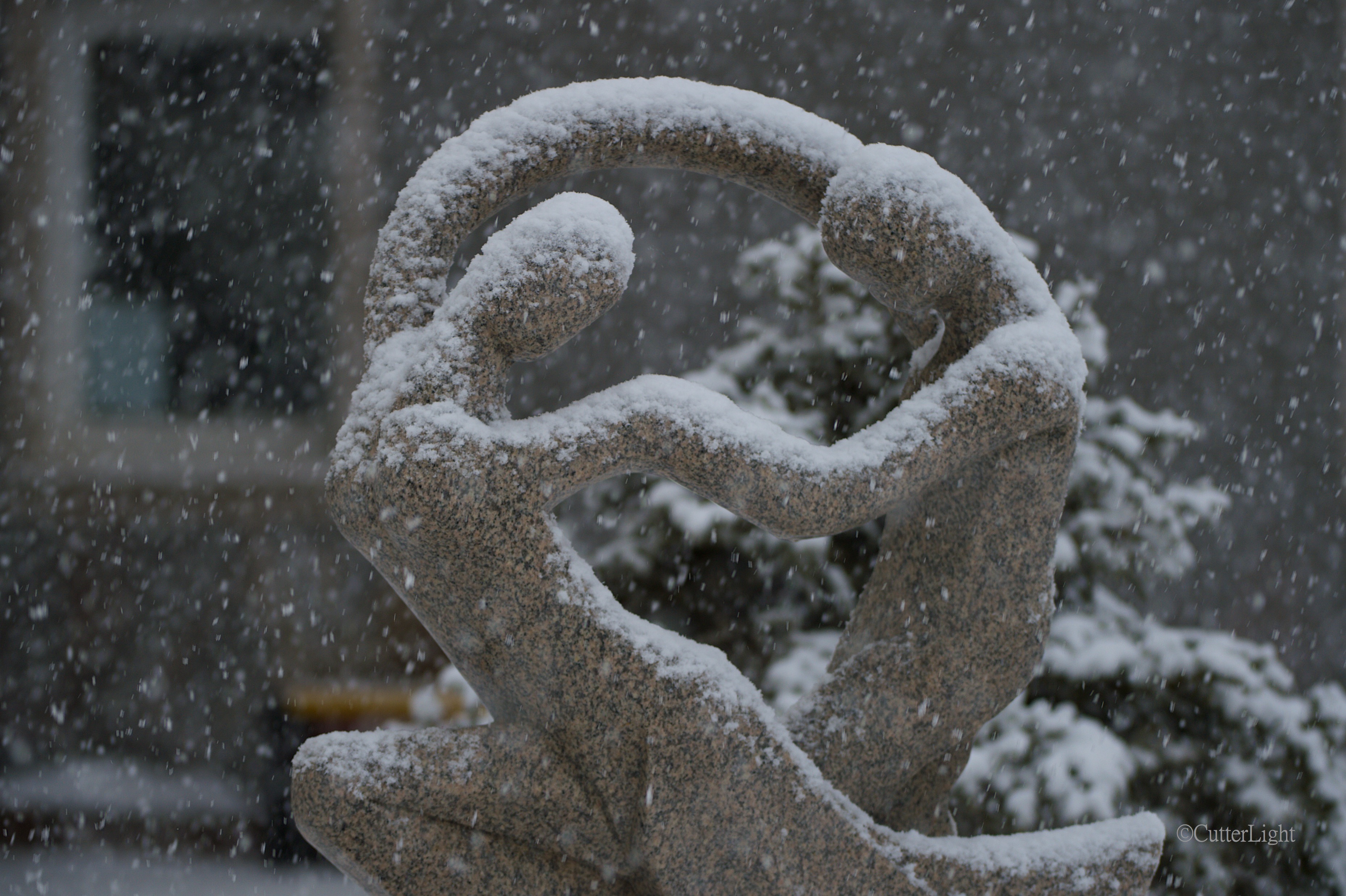
granite dancers in snow soft n

Granite Dancers in Spring Snow  I walk passed this sculpture at least two times a day, every day, but this was the first time I photographed it. On this day, I knew before I left the apartment that I wanted to record it in the particular light that was falling. The snow was a bonus, adding depth and additional movement. Nikon D4, Nikkor 200-400mm f/4G IF-ED II, 200mm, ISO 100, f/4, 1/200

Watching the snow fall from inside our apartment building, I was reminded of a favorite haiku by Basho. Come! Let’s go snow-viewing/till we’re buried!

granite dancers in snow sharp n

Granite Dancers in Spring Snow, high contrast This is the same exposure as above. I brought up the contrast and saturation and sharpened the edges. This image might be more marketable as a postcard, but I prefer the softer, previous image, which, to me, feels more intimate.

Which do you like?
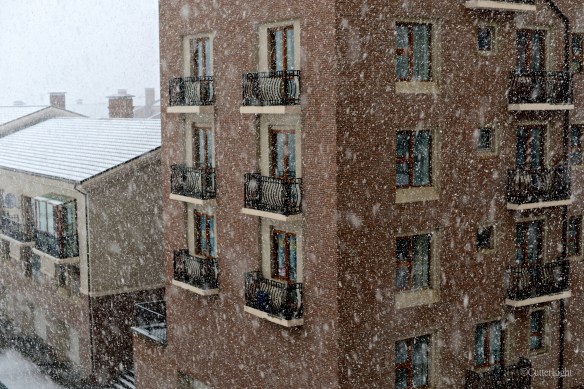
UB apt building snowy day enhanced a n

Brick Apartment Building in Snowfall, Ulaanbaatar  This is the view out the window of my apartment in Ulaanbaatar, Mongolia. On most days, it is uninteresting to me, the occasional pigeon roosting on our windowsill notwithstanding. But on this day, the scene was transformed into something magical. I set the ISO low to preserve as much contrast as possible. Then, in processing, I brought up the contrast even more, exaggerating the blue in the window panes and the black of the railings. Nikon D800, Nikkor 50mm f1.4G, ISO 100, f/3.5, 1/125
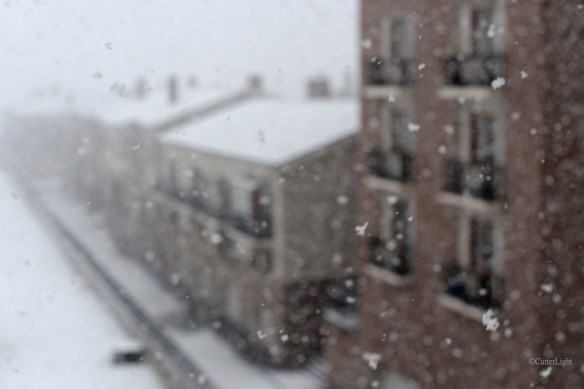
UB apt row snowy day b n

It’s Snowing in UB  I’m not entirely sure why, but this photo and the next one tug at my gut in the way really good writing does. For me, there’s something lonesome… longing… in these shots where the focus is almost on the nearest snowflakes but not quite on anything. I imagine someone far from home, perhaps recently moved from the Mongolian steppe, or any place in the world, looking out on a city… no people, no traffic, nothing… focusing on nothing, longing for home. Nikon D800, Nikkor 50mm f/1.4G, ISO 1250, f/5, 1/1000

Snow and a Memory of Snow n

Snow and a Memory of Snow  As in the above photo, the focus is close to the viewer, yet indistinct. For me, these shots evoke a sense of thoughts being elsewhere. A person from snow country could look out the window on snowfall in any city in the world and in a moment be taken back to a memory in a small town or city, a ger out on the steppe, a woodland cabin, or anywhere. Anyway, that’s what I was going for in this image. This is probably the most purposeful, intended image I’ve taken so far. I applied a small technique to get the focal point where I wanted it to be. The image was inspired by the song It’s Snowin in Brooklyn by Ferron, a song I heard just one time on a snowy night in Boulder, Colorado back in 1985 and which has been stuck in my head all these many years till I recently rediscovered it thanks to an Internet search based on a single line from the song. Nikon D800, Nikkor 50mm f/1.4G, ISO 100, f/1.4, 1/800

UB apt snowy day streak d n

Snow Streaks on Brick  For a brief few moments, a breeze kicked up, gently driving the snow diagonally. I used settings one might employ to capture rushing streams and waterfalls to capture the faint, oblique lines the driven snow was painting on the brick. In processing, by bringing up the contrast and increasing color saturation, I was able to accentuate the blackness of the railings and the blueness in the windowpanes. The splash of light and the yellow pot in the window on the right add a place for the eye to wander to in this photo. Nikon D800, Nikkor 24-70 f.2.8G ED, ISO 640, Focal Length 70mm, f/22, 1/5

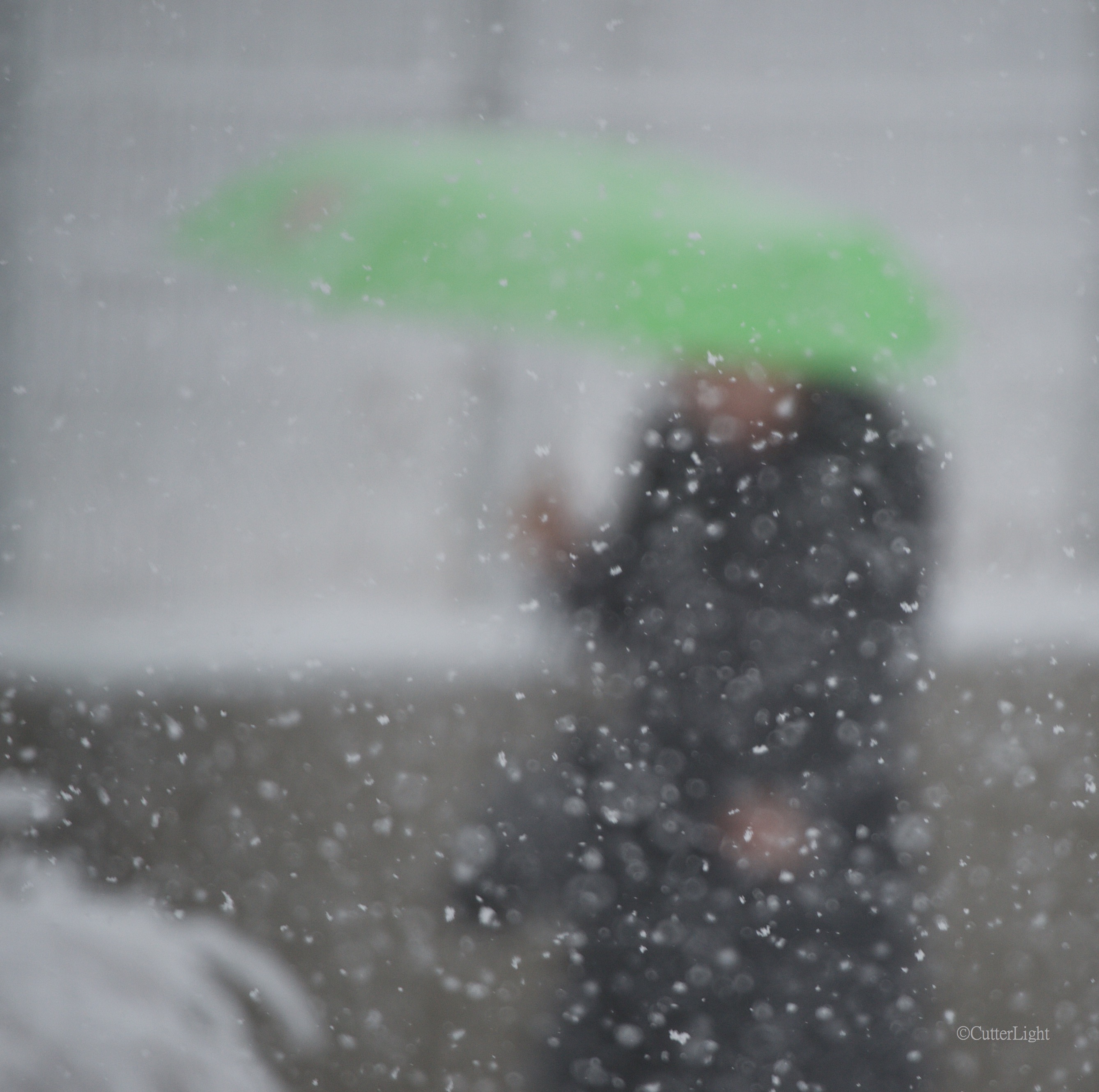
woman w green umbrella snowy day n

Woman with Green Umbrella, Snowy Day, Ulaanbaatar  I saw her walking down the street toward our apartment when she was in the distance and began thinking about how I would compose the shot. I wanted to create a watery blur, reminiscent of an impressionist painting – evocative perhaps, of Andre Kohl’s studies of women carrying umbrellas. I’m not sure how well the green works, and even as I was framing this shot I was imagining processing it in black and white. Were I to shoot this again, I think I would decrease the shutter speed. (See next picture.) Nikon D4, Nikkor 200-400mm f/4g IF-ED II, ISO400, Focal Length 200mm, f/4, 1/640

woman w umbrella b n w snowy day n

Impression of a Woman with Umbrella This is the above photo processed as a black and white shot. What do you think? I prefer this one, partly for the way the umbrella and the woman’s features are only suggested. Again, a slower shutter speed might have further enhanced the image I was striving for.

house sparrows snowy day n

House Sparrows Framed in Spring Snow, Ulaanbaatar We pass by flocks of these friendly little guys each day on our walk to and from school. These are birds of the city – ubiquitous in northern temperate climates the world over. In fact, even in the trees along the river that runs through Ulaanbaatar, this species becomes less common, and by the time one has hiked up the forested mountain on the edge of town, they disappear altogether, so specifically adapted to co-habitation with humans have they become. But on this day, they presented themselves in fresh light, framed in falling snow. I wanted a shallow depth of field because the background could have been a distraction, and so I focused on the female and let the three males blur out a little.  Nikon D4, Nikkor 200-400mm f/4g IF-ED II, ISO400, Focal Length 400mm, f/4, 1/640

kestrel snowy day n

First Kestrel of Spring, Snowy Morning, Ulaanbaatar, March 26, 2015  Mongolia is home to many birds of prey, most of which fly south in late fall. I first spotted this kestrel – a type of small falcon – earlier in the week when it and a harrier were circling above our apartment building. The harrier has since moved on, but I continue to see this or other kestrels in the city. An abundance of sparrows (above photo) and plenty of buildings to use as perches make this a good place for small birds of prey to get something to eat as they migrate to their nesting sites in the mountains.

            The snow was falling heavily when I heard the kestrel’s chirp from high above. I swung my lens skyward knowing I’d only get a shot or two before the glass was covered with snow. Autofocus was useless, so I did my best to manually focus while panning with the bird with a two-pound camera attached to a seven-pound lens. This image is significantly cropped and not very clear. I value it for the documentation of the year’s first kestrel, one of our favorite birds. Nikon D4, Nikkor 200-400mm f/4g IF-ED II, ISO400, Focal Length 400mm, f/4, 1/640

So what do you think?

When it was time to come back in, we were, in fact, buried in heavy, wet snow and a little worried about our cameras. But they held up fine. The next day we hiked down to the river to check the willows, poplars and pines for newly arriving songbirds. I still have to go through those photos. Next time!

Matcha Adzuki Bean Glazed Rolls

adzuki bean glazed role n

Sweet adzuki bean paste rolled into matcha-flavored dough with a dollop of buttery frosting… a confection you might expect to find in a trendy coffee shop in San Francisco’s Mission District.

My culinary love affair with matcha green tea is deepening. Cookie dough was an easy place to start with the distinctive flavor of this Japanese tea. In the midst of sampling my matcha butter cookies, my mind was already racing to the next possible recipes that could feature matcha… and then I remembered the bag of dried adzuki beans sitting on the shelf. What about sweet adzuki bean paste rolled into a matcha green tea dough – an Asian fusion cinnamon roll? Brilliant! All the fun of unrolling breakfast and enough tasty sweetness to satisfy without the gooey sugar overload of a traditional cinnamon roll.

Thinking ahead to life in a tiny home, I created a small batch version of these rolls that are made in a 6-muffin tin. I made the rolls the night before and placed them in a buttered muffin tin in the fridge overnight. They rose in the fridge and were ready for breakfast with minimal time and minimal oven energy. All good aspects for a tiny home recipe.

Matcha Adzuki Bean Glazed Rolls

Ingredients

  • 1/3 cup milk
  • 2 tbsp unsalted butter, softened
  • 2 tsp yeast
  • 2 tbsp granulated sugar
  • 1 egg, beaten
  • 1 1/2 cups all-purpose flour
  • 1 tsp green matcha tea powder
  • pinch salt
  • 1 cup adzuki bean paste*

Glaze

  • 1/4 cup confectioner’s sugar
  • 1 tbsp unsalted butter, softened
  • 1 tsp milk

Directions

  1.  Warm milk and butter in a small saucepan until it reaches about 110 degrees F (43 degrees C).
  2. Place yeast and granulated sugar into a large bowl. Pour warmed milk mixture into bowl. Whisk together.
  3. Whisk in egg and salt.
  4. Mix in matcha powder.
  5. Stir in flour, 1/2 cup at a time.
  6. When dough has pulled together, turn it out onto a lightly floured surface and knead until smooth, about 5 minutes.
  7. Let dough rest for about 10 minutes.
  8. Roll out dough to about a 6 x 9 inch rectangle.
  9. Spread adzuki bean paste evenly onto dough.
  10. Take the 6-inch side and roll dough, jelly roll style. Pinch seam to seal.
  11. Cut into 6 equal pieces.
  12. Place pieces into buttered 6-muffin tin. Cover with plastic wrap and refrigerate overnight.
  13. Bring rolls out 30 minutes before baking. Preheat oven to 375 degrees F (190C).
  14. Bake rolls for 15 minutes. Top will be golden brown. Remove rolls from muffin tin to cool slightly.
  15. While rolls are baking, whisk together glaze ingredients until smooth.
  16. Dollop glaze onto slightly cooled rolls and enjoy. Leftovers are a good snack served at room temperature.

*I made adzuki bean paste using just dried adzuki beans, water and sugar following the excellent directions from Japanese Cooking 101.