The Wonderful Purpleness of Low Bush Blueberry Fruit Bread

Arctic Lowbush Blueberry Bread batter_n

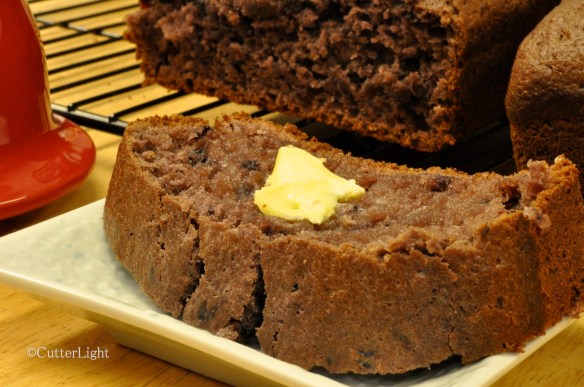
This unusual bread became an instant favorite. What we didn’t slather with butter and devour straight out of the oven soon disappeared in our lunchtime peanut butter and jelly sandwiches and as breakfast toast. 

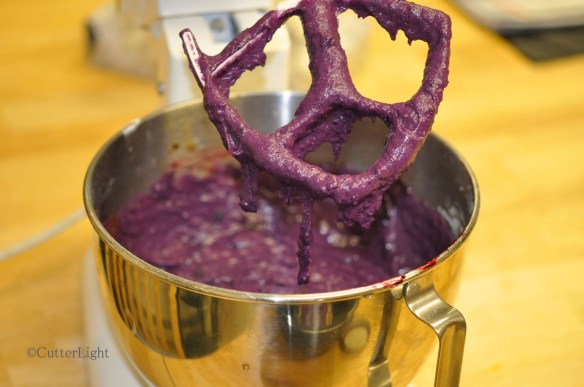
I was tickled purple with the color of this bread batter.
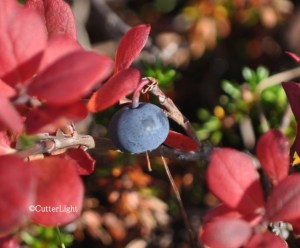
Blueberry on tundra at Shishmaref_n

Unlike the fat, juicy blueberries we used to pick at farms in Oregon, in the Arctic diminutive plants that grow mere inches off the ground produce tiny, tart berries. These berries ripen in August and, like cloudberries, are around only for a few weeks. But a lot of flavor comes in these small packages, and the dark purple color produces beautiful freezer jam. In Shishmaref, the berries grew only a short walk from our home on Sarichef Island. Here in Point Hope we rely on friends who drive Hondas (ATVs) out to the hills 20 or more miles away where the berries grow. Scanning the tundra for bright red leaves slightly smaller than shelled almonds leads to ripe fruit. The bush in this photo, growing among crowberries (the green foliage), barely rose above our shoe tops. (See Summer Blueberry Picking on the Arctic Tundra.)
Arctic Lowbush Blueberry Bread w butter_n

Low Bush Blueberry Fruit Bread

Ingredients

  • 3 1/2 cups all purpose flour
  • 1 tsp baking powder
  • 1 tsp salt
  • 1/2 tsp baking soda
  • 1 cup granulated sugar
  • 1/2 cup unsweetened applesauce
  • 1/2 cup unsalted butter, melted
  • 4 eggs
  • 1 tsp vanilla extract
  • 2 tsp almond extract
  • 2 cups whole fruit blueberry jam

Directions

  1. In a large mixing bowl, combine flour, salt, baking powder, and baking soda. Set aside.
  2. In another mixing bowl, combine sugar, butter and applesauce. Mix well. Add eggs, one at a time, beating well after each addition. Stir in vanilla and almond extracts.
  3. Stir wet ingredients into dry ingredients until just moistened.
  4. Stir in fruit jam.
  5. Pour into 2 greased bread pans (8 in. x 4 in. x 2 in.)
  6. Bake at 350 degrees F for 55 – 65 minutes, or until a toothpick comes out clean.
  7. Cool for 10 minutes before removing from pan to a wire rack.

We make two loaves at a time using the above recipe. Keep one in the freezer for a quick, delicious bread.
Last Light: Arctic Foxes, the Coming Dark

Arctic Fox on Point Hope Beach_n

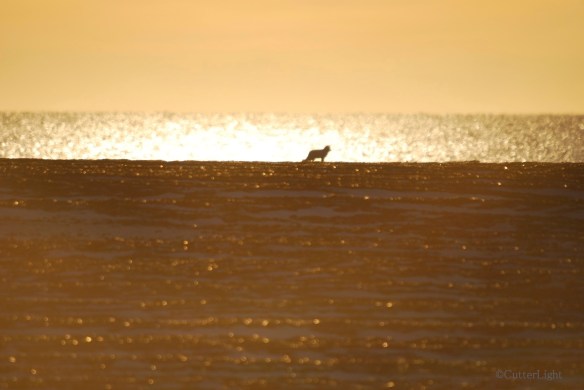
Point Hope, Alaska, along the south beach: An Arctic fox is silhouetted in the gold of a late fall sunset.

On Wednesday, December 5, the sun will rise at 1:37 pm. It will climb for just 19 minutes and 30 seconds before it begins to descend. At 2:16, it will sink beneath the ice-sheeted sea. It will not rise above the horizon again for 28 days. During this time, afternoon twilight will be the extent of our natural light. Cold and darkness will clamp down hard on our village. The Arctic winds this time of year can make a well-built house shudder.

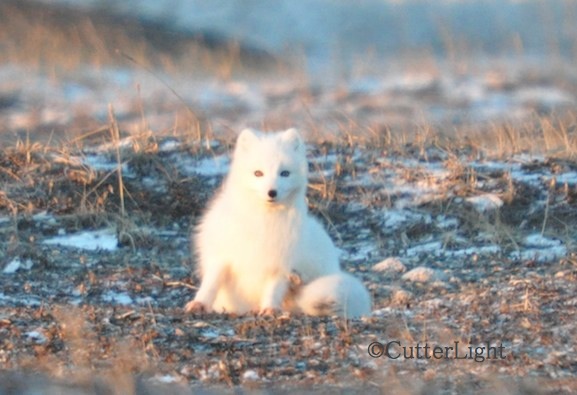
Arctic Fox near old Tikigaq, Alaska. Nikon D90

The photo above and the next two are of an Arctic fox we found hanging around the deserted Old Town site of Tikigaq a mile or so west of Point Hope three weeks ago. They’re intelligent, inquisitive animals and will sometimes approach quite close.

In mid fall, foxes and snowy owls show up in numbers near the village. They patrol the beach for fish and whatever else may have washed up and they hunt the tundra for voles and squirrels. As the days grow short and the real cold sets in, they scatter.

Arctic Fox 2_n

This one is very likely out on the sea ice now, scavenging the remains of seals killed by polar bears. These foxes often travel vast distances during the course of a winter in search of food.

Arctic Fox 3_n

Caribou have moved down from the hills, and sometimes we see them now out on the tundra a few miles east of town. Wolves follow the caribou, and a few hardy ravens manage to scratch out a living throughout the winter. Every so often, we see a flock of murres – seabirds – heading out in search of open water.

Cranberry Orange Walnut Scones

Cranberry, Orange, Walnut Scones_new

Temptingly drizzled with orange icing, freshly baked scones are a great way to begin the day. 

This recipe produces a light, flaky, sweet-but-not-too scone that goes well with a fried egg or by itself with a cup of freshly brewed coffee or tea. I deviated from this recipe a bit because I wanted to have this ready in the morning before our friend’s early flight out. I mixed all the dry ingredients and placed them in a covered bowl in the refrigerator at night. The next morning, I preheated the oven, mixed and shaped the dough, and baked it. While the scone was baking, I mixed the orange drizzle. I let the baked scone cool slightly and then drizzled the frosting. In a manner of about thirty minutes, we had warm delicious scones with enough left over to send with our friend for a snack on the plane.

Cranberry Orange Scones

Ingredients

  • 2 1/4 cups all purpose flour
  • 1/4 cup packed brown sugar
  • 1 tbsp baking powder
  • 1/4 tsp mace
  • 1 tsp ground cinnamon
  • 1/4 cup unsalted butter, frozen
  • 1 cup sweetened dried cranberries
  • grated zest of 1 orange
  • 1/2 cup chopped walnuts
  • 1 cup whipping cream
  • 1 egg

Drizzle:

  • 1/2 cup powdered sugar
  • 2 tsp orange juice

Directions

  1. Preheat oven to 375 degrees F.
  2. In a large bowl, stir together flour, brown sugar, baking powder, mace and cinnamon.
  3. Grate frozen butter with a cheese grater. Stir grated butter into flour mixture.
  4. Stir cranberries, orange zest, and walnuts into flour mixture.
  5. In a separate bowl, beat whipping cream and egg together.
  6. Slowly pour egg mixture into flour mixture. Stir with rubber spatula until dough forms. Turn out onto lightly floured board and knead a few times. Shape dough into circle, about 1 inch thick.
  7. Place parchment paper on baking sheet. Transfer dough circle to baking sheet.
  8. Bake for 20 minutes, or until scone is lightly browned.
  9. Mix together drizzle ingredients until the texture is like honey. Place drizzle in a small plastic bag.
  10. Cool baked scone. When cooled, snip corner of drizzle bag and drizzle topping across the scone in a zig zag formation.
  11. Let scone cool further. Cut scone into 6 wedges.

Enjoy with a cup of fruit and some fresh roasted coffee on a chilly morning with friends.

Tis the Season for Cranberry Bliss Bars

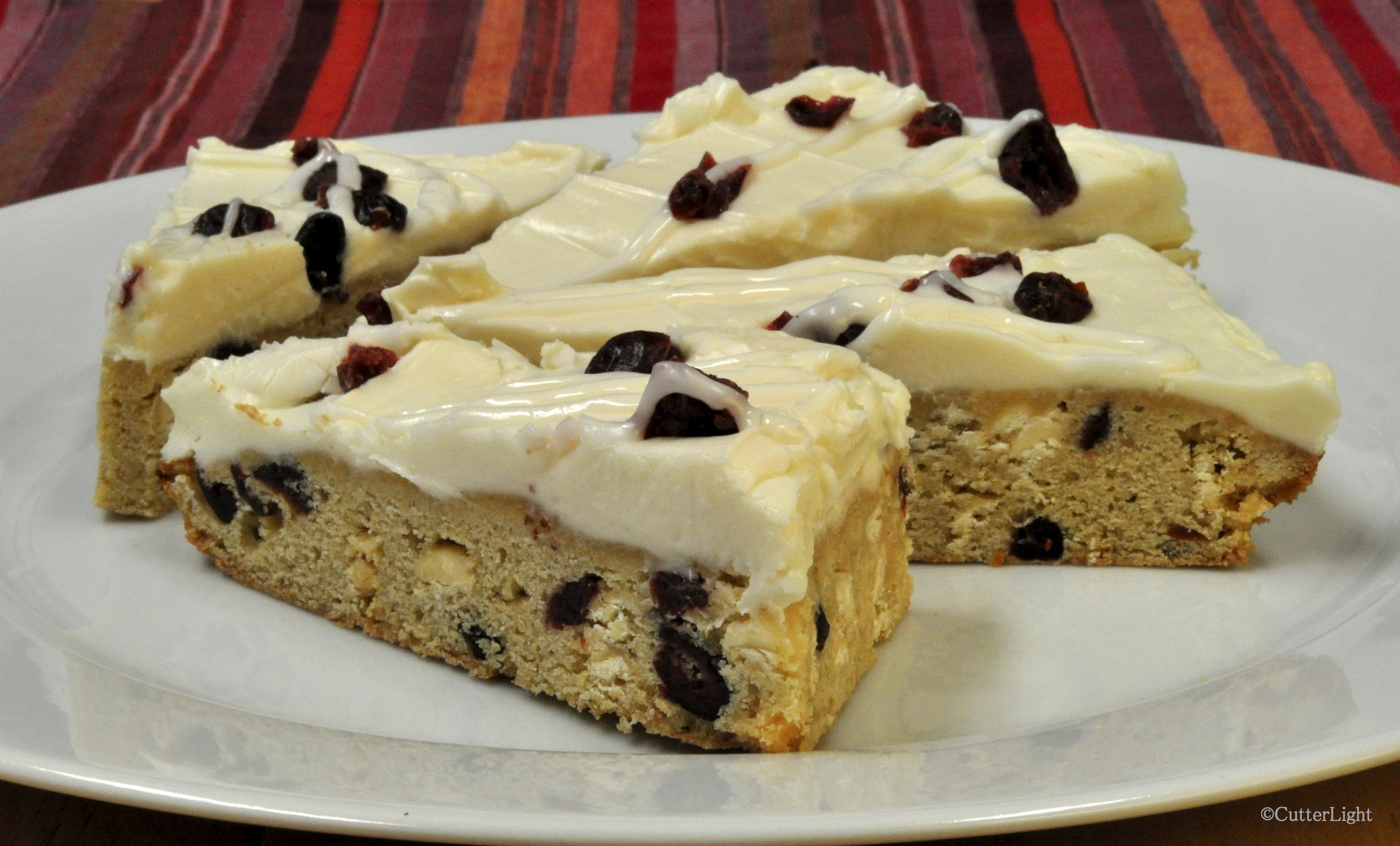
Sweetened dried cranberries and white chocolate chips pair up in a dessert especially appropriate to the winter holidays.

People in our generation sometimes still flinch a little when cranberries are mentioned – as they invariably are here in America – around holiday time. Gloppy canned cranberry sauce heated (or not) and served alongside such tasty items as turkey dressing, rutabaga with raisons and mashed potatoes with giblet gravy were, for many of us, the original “I don’t want any of that touching the rest of my food” item. It was always something of a puzzle to me. The packages of whole, fresh cranberries at the grocery store looked so pretty. Why didn’t the grownups use those? It seemed that the advent of mass-produced, mass-marketed food had caused generations of Americans to forget what real cranberries taste and look like, and a debased form of the fruit was kept on menus as a nod to tradition rather than gustatory pleasure.

Years later, we discovered the pleasure of cooking with whole, fresh cranberries in our own kitchens, and dishes such as cranberry sauce with tangerines became a much anticipated Thanksgiving and Christmas-time tradition. The tart, bright-red berries sweetened with sugar and cooked on the stovetop are the perfect accompaniment to a holiday bird that has been brined overnight and roasted to perfection.

While the following dessert uses dried cranberries rather than fresh, it keeps our cranberry tradition going strong here in the Alaskan Arctic where the local grocer doesn’t carry fresh berries. If you’ve never had a really great cranberry dish, forget everything you thought you knew about these festive berries. You’ll want to save room for this scrumptious cranberry dessert!

Cranberry Bliss Bars

Ingredients

Cake:

  • 3/4 cup unsalted butter, softened
  • 1  1/4 cups packed brown sugar
  • 3 eggs
  • 1 tbsp ground ginger
  • 1  1/2 tsp vanilla extract
  • 1  1/2 cups all purpose flour
  • 1/2 tsp baking powder
  • 3/4 cup dried cranberries (we used Craisins, which are made from cranberries and sugar)
  • 4 oz. white chocolate chips

Frosting:

  • 5 oz. cream cheese, softened
  • 3 cups powdered sugar
  • 5 tsp lemon juice
  • 1 tsp vanilla extract
  • 1/4 cup dried cranberries (Craisins)

Drizzle:

  • 1/2 cup powdered sugar
  • 1 tbsp milk

Directions

  1. Preheat oven to 350 degrees F.
  2. Butter 9 x 13 inch glass baking dish.
  3. Beat butter and brown sugar until smooth.
  4. Incorporate eggs, one at a time, into butter mixture.
  5. Mix in ginger and vanilla.
  6. Gradually mix in flour and baking powder.
  7. Fold in craisins and white chocolate chips.
  8. Pour batter into baking pan. Even out batter so that it is uniformly on bottom of pan.
  9. Bake for 25 – 30 minutes, or until lightly browned on top.
  10. Let cake cool in pan on wire rack.
  11. Make frosting by mixing cream cheese, powdered sugar, lemon juice and vanilla extract with an electric mixer until smooth.
  12. When cake has cooled, spread frosting evenly over the top of the cake.
  13. Sprinkle  1/4 cup craisins on frosting.
  14. Make drizzle icing by whisking powdered sugar and milk.
  15. Fill small Ziploc bag with drizzle icing. Cut off a small piece of the bottom corner of bag. Squeeze out drizzle icing over the frosted cake in zig-zags.
  16. Cover cake and refrigerate for a couple of hours.
  17. Slice the cake down the middle, lengthwise. Then slice the cake across the width, three time. You will have 8 rectangular pieces. Cut each of these pieces in half, diagonally, to make 16 decorative pieces.

Recipe adapted from topsecretrecipes.com.

Sunrise, Point Hope, Alaska

A mid-morning sunrise backlights the village of Point Hope, Alaska.

Two days after this serene morning dawned on Point Hope, the weather turned more extreme. As I write this, our home is shaking as winds out of the South East gust to 60 miles an hour – the “violent storm” category on the Beaufort scale, just below hurricane force winds.

But our home is snug. Steel cut oats for breakfast, perhaps moose stroganoff for dinner. A good day to get some reading and writing accomplished.

October 21st, 2012: Sunrise: 10:35 AM          Sunset 7:08 PM

We’re losing about nine minutes of daylight each day.

Alaska’s Permanent Fund and Trout Unlimited

Daughter Maia works a pool in the canyon country of Oregon’s Deschutes River.

This past summer, we fell in love with the film Away We Go in which Verona De Tessant (Maya Rudolph) and Burt Farlander (John Krasinski) find themselves in the enviable, daunting and sometimes scary position of realizing that, although they are not wealthy, they can live virtually anywhere they choose to. Their story unfolds as a touching, insightful comedy as they criss-cross North America searching for just the right place.

Verona: I can do my job from anywhere. And all you need’s a phone, right?

Burt: Well, we don’t want to go back to Chicago, do we?

Verona: No, we did Chicago.

Burt: I used to picture myself in Alaska. God, I love that landscape.

Verona: Alaska?

Burt: Yeah.

Verona: You’ve never mentioned Alaska.

Burt: Wow, they pay people to live in Alaska.

Burt’s line about people being paid to live in this great state gets laughs from audiences, although for different reasons depending on who the audience is. While it’s not true that people are paid to live here, there is something called the Permanent Fund. Without getting into the complexities, Alaska’s Permanent Fund is a constitutional provision established in 1976 that, essentially, taps oil revenues allowing the state government to pay an annual check to every Alaskan resident once they’ve lived here one fiscal year. The amount of the check varies from year to year. The current five-year average is $1,341. This year’s payout was lower, but still appreciable at $878.

That’s where Trout Unlimited comes in.

Barbra and I feel a deep commitment to helping to conserve, protect and restore America’s cold water resources. This commitment flows naturally from our love of salmon and trout and the beautiful and often pristine environs they inhabit and depend upon. Protecting our cold water resources, though, is about more than protecting fish. Trout Unlimited has worked in concert with others to bring down dams that are no longer useful – thus restoring countless miles of free flowing rivers and streams. They work with vineyard owners and other farmers to help ensure water-wise land use. And all across the landscape, TU has, for decades, been instrumental in ensuring that mining, timbering and other resource extraction be carried out with sensible respect for its impact on rivers, streams and estuaries when sensible respect is possible, and that extractive industries be turned away when they can’t conduct their business without destroying watersheds.

At present, TU is in the midst of several critical battles. One of them involves a multi-national mining proposal that threatens the world’s greatest salmon estuary, Bristol Bay. The proposed Pebble Mine could wipe out runs that number into the millions of salmon, as well as fishing jobs and subsistence fishing that generations upon generations of Alaskans (and salmon consumers throughout the world) have depended on. TU is also on the vanguard in fighting against irresponsible extraction of natural gas locked underground in Marcellus Shale. The extraction requires fracking, and it is posing a major risk to the streams and rivers I cut my teeth on as a young angler in Western Pennsylvania.

Again, this isn’t just about trout and salmon. We humans, too, drink the water, grow our farms and forests with it, admire its beauty, and are responsible for passing down a legacy of clean water to future generations.

And so, presented with money that is essentially a gift from our adopted state, the choice on how to spend it was easy. This year, Barbra and I will become lifetime members of Trout Unlimited.

After vetting dozens of organizations, we came to feel that in TU, our contributions will support the causes closest to our hearts. Not just for us, but for generations to come.

To read more about TU’s efforts, click on the following links:

Trout Unlimited’s Home Page

Marcellus Shale Project

Bristol Bay

Maia on a seldom-fished hike-in lake raptly watching her fly line for a twitch. 

Grilled S’mores? Who Knew? A Better (messier) Campfire Snack

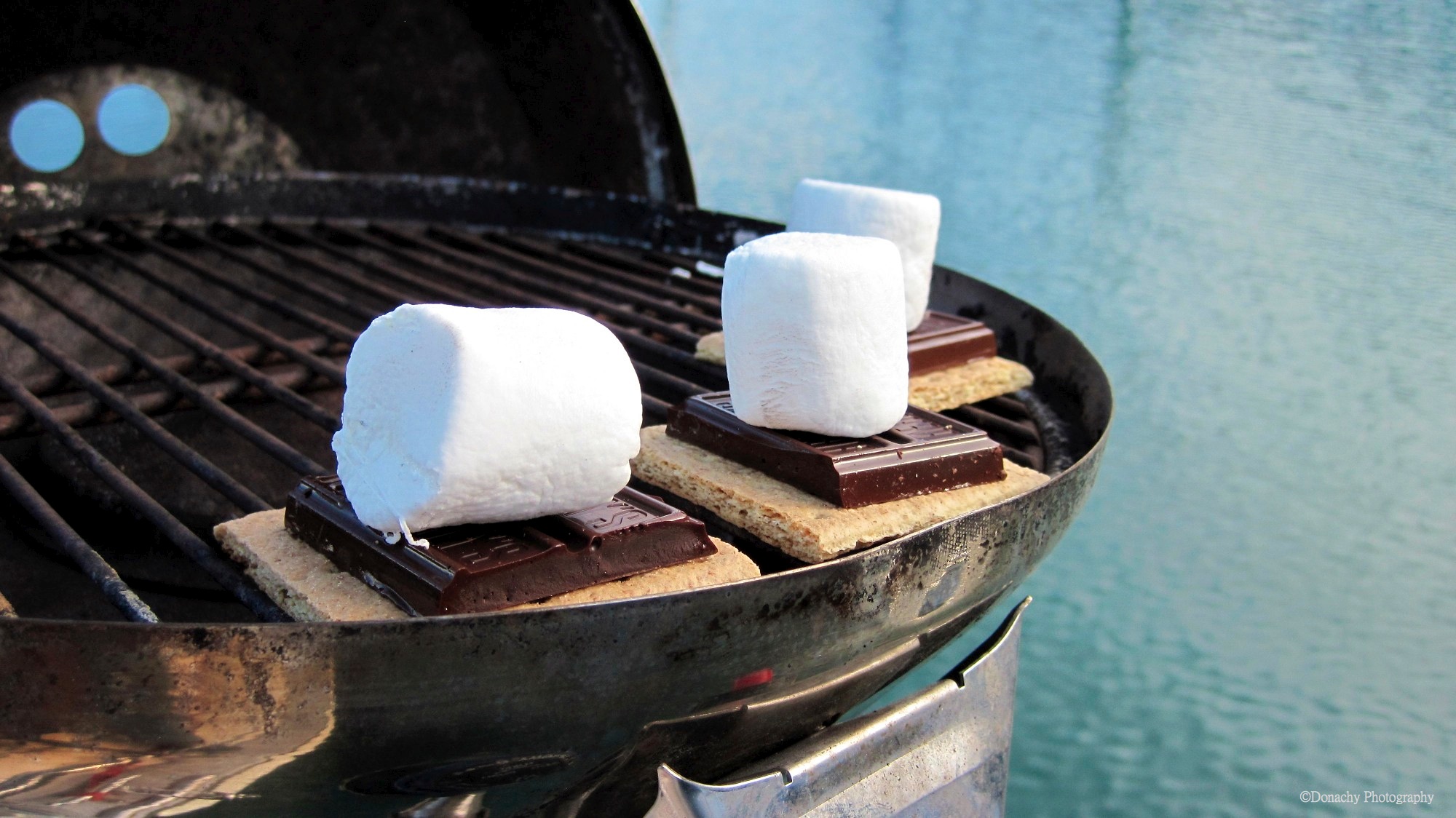
This twist on a summertime favorite kicks the s’mores experience up a couple of notches. Graham crackers, thick chunks of dark chocolate, and marshmallows are as good as you remember them when you were a kid. Maybe better.

Guilty as charged: hardly a summer goes by when we don’t have s’mores at least once. They’re a great campfire dessert. But when a friend recently suggested we try grilling our s’mores instead of only toasting the marshmallows, we figured that maybe tried-and-true had been improved.

Hot off the grill, these s’mores don’t look dangerous. But looks, as everyone knows, can be deceiving. What you’re seeing here is molten goo ready to start pouring all over your hands, mouth, face, shirt and jeans at the slightest touch.

The chocolate looks like it’s set. It isn’t. As soon as it’s even slightly disturbed, it turns to liquid. The molecular science behind this is beyond our ken, but one thought came to mind: there’s a market for the s’mores equivalent of lobster bibs! The cracker is toasted crispy and warm, and the marshmallows are perfectly heated through – gooey and never burned.

Morning Song

This little guy, a fox sparrow (Passerella iliaca) has been bringing in our days every morning here in Seward with the loveliest song. Day by day, he’s grown a bit tamer. Today he was gracious enough to allow us to get these photos. 

“LBB’s,” my undergraduate ornithology teacher called them. Little brown birds. You see one, and even if you get a really good look at it, when you go to Peterson’s or some other bird guide, what you see quickly becomes a blur of what you think you saw mixed in with a handful of similar-looking birds. But the songs are compelling and unique, and so you keep going back and forth from binoculars to field guides, and if you do this often enough over enough years, distinct species begin to take form.

Here he is, singing his heart out. No doubt some avian version of something clear and strong about being in the right time and place, eager and ready. We humans hear that in birdsong, and it lifts us. 

There are four subspecies of fox sparrows, each geographically unique, except when they overlap. Which they do. And when they do, the birds interbreed. More LBB’s. More scrutiny through binoculars. More head scratching over pictures in bird books.

When I approached too close, he went for a familiar place: the ground. Fox sparrows love underbrush and are often heard rustling through leaves or glimpsed flitting from one low willow to another. 

We’re lucky. We who live in North America. These migratory passerines breed up here. Which means they sing. In the places they head to during the winter, they don’t breed, and they typically don’t sing.

Before he flew off, he perched atop a wooden sign and gave a backward glance. The early morning sky was gray. I returned to the camper to make a blueberry pancake and fry some bacon while Barbra cut a grapefruit in half and made us big mugs of coffee.

Butter Toffee Almonds

Plain, cayenne pepper, or rock salt. We liked all three. Which will you make?

We don’t like to visit friends empty-handed, especially when we invite ourselves over to watch a sporting event on TV. In bush Alaska, there aren’t six-packs of beer or bottles of wine to grab at the store. Our ready gift is usually something we’ve created in the kitchen. Recently we were running late for one of the March Madness basketball games and had nothing already prepared, so a few whirls in the kitchen and we had buttered toffee almonds – three ways. The original plain version is quite tasty. Two other versions were made by sprinkling cayenne pepper on some for that back-of-your-throat-bite and by sprinkling large grains of sea salt for another pleasant surprise. All three versions were tied for first place. This recipe was finished in 15 minutes. Lucky for us, the walk over in sub-freezing temperatures cooled the almonds enough to eat as soon as we entered our friends’ home.

Butter Toffee Nuts Recipe

Ingredients

  • 1 cup sugar
  • 1 cup butter (2 sticks)
  • 3 tablespoons water
  • 3 cups whole almonds (or use 3 cups peanuts)
Directions
  1. Use a deep, heavy-bottomed saucepan to heat all of the ingredients, except the nuts. Stir the mixture constantly to prevent scorching. Using a candy thermometer and medium heat, bring the mixture to 300 degrees. The temperature will rise as the water is boiled off, and this can happen quickly, so be prepared to lower the heat or remove the candy from the heat as needed.
  2. As soon as the mixture reaches the desired temperature, remove it from the stove and add the nuts. Mix until all nuts are coated. Pour the nut mixture onto a greased cookie sheet spread into an even layer. Let fully cool. This step works well on parchment paper.

Recipe adapted from http://www.life123.com/food/candies-fudge/toffee/making-butter-toffee-almonds.shtml.

Rosemary Kalamata Olive Loaf

Aromatic and flavorful, tonight this rosemary kalamata olive loaf will accompany a moose roast. Roasted lamb, too, would be a good choice, and we anticipate it pairing well with Italian or Greek dishes, as well. This morning we served toasted slices with olive oil with halibut omelets. During the baking process, our kitchen was filled with the irresistible scent of rosemary. We agreed it was one of the best savory breads we’ve ever had.

This is another recipe from 300 Best Bread Machine Recipes by Donna Washburn and Heather Butt. Monitor the dough during the kneading process to make sure the amount of flour/moisture is right. Because the kalamata olives added moisture, I found I needed to add a little more flour than is indicated below.

Olive Rosemary Loaf

Ingredients

  • 1 cup water
  • 3/4 cup kalamata olives, pitted and chopped coarse, extra moisture gently squeezed out in paper towels
  • 1 tsp salt
  • 1 tbsp granulated sugar
  • 2 tbsp extra virgin olive oil
  • 3 1/4 cups all purpose flour
  • 1/4 cup fresh rosemary (or 2 tsp dried)
  • 1 1/4 tsp yeast

Directions

  1. Measure ingredients into baking pan in the order recommended by the bread machine manufacturer. Insert pan into the oven chamber. Start your machine. During the kneading phase, check to make sure the dough is of proper consistency. Add flour or water as needed.