Plastic Seas: From Water Bottles to Cigarette Butts, It All Becomes Tiny Particles, and It’s the Tiny Particles that are Most Deadly

jellyfish micro purple n

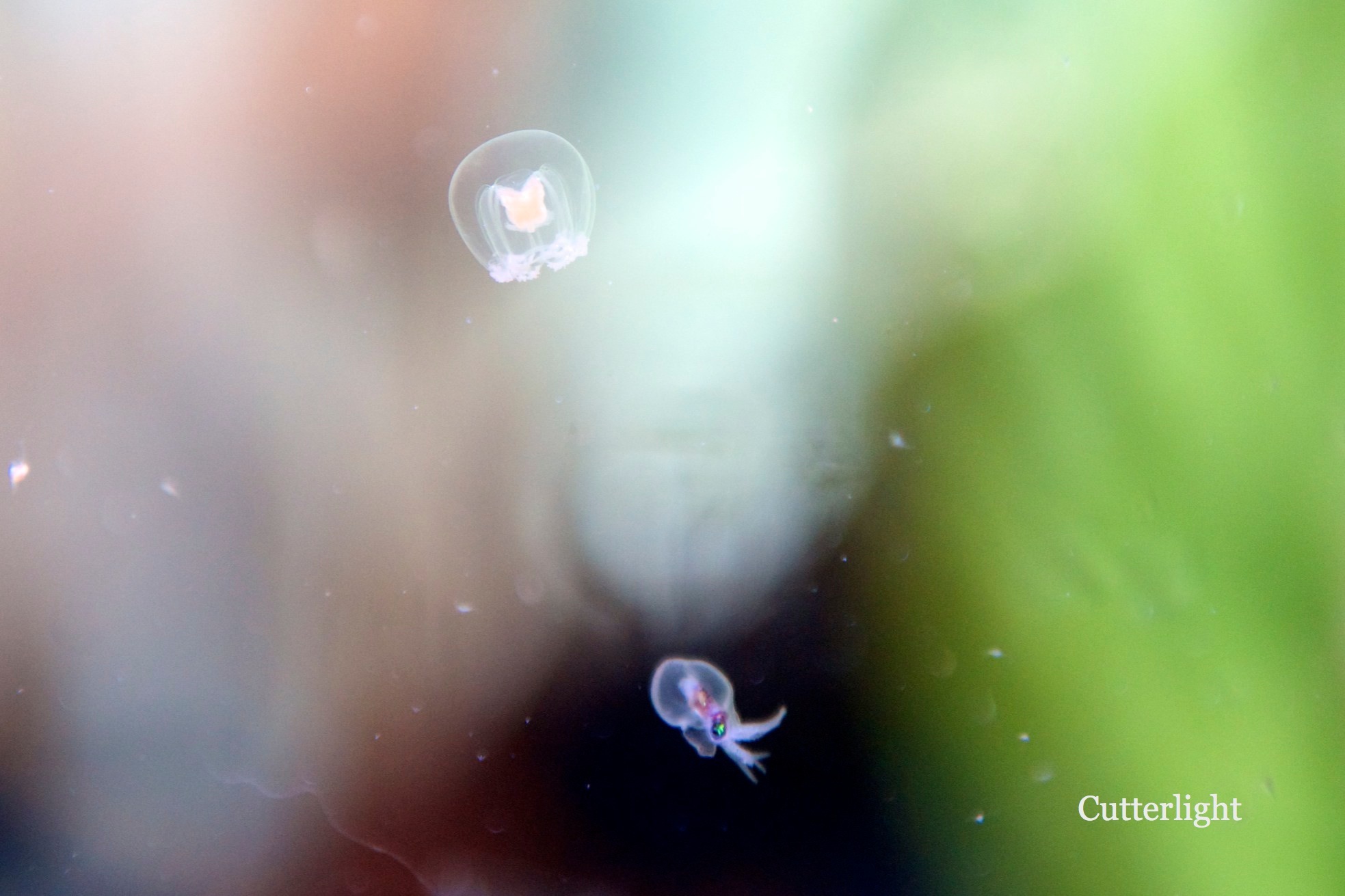
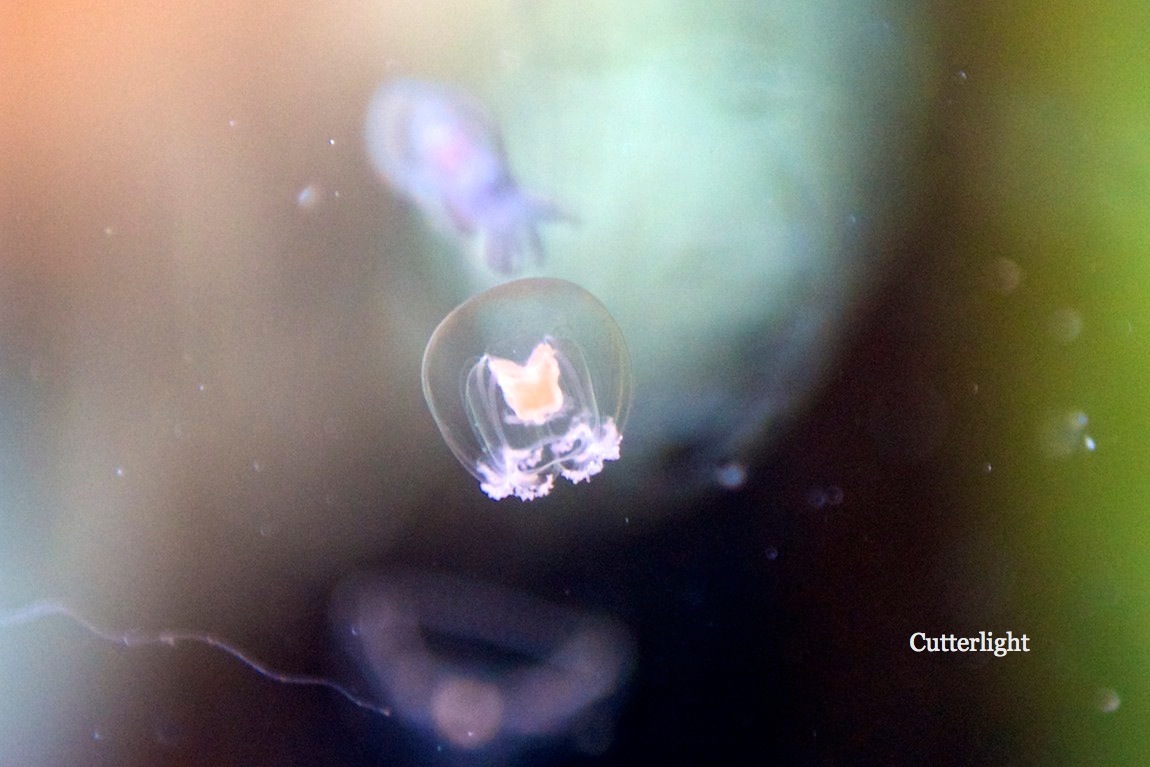
This tiny jellyfish and the octopus behind it are about the size of a pencil led, translucent, and barely visible to the naked eye. Key species near the base of the food web such as herring, sardines, menhaden and mullet routinely ingest plastic fragments as they filter the water for the nutritious plankton they feed on. 

herring pacific sealife center n

Pacific herring feed by facing into the current, hanging their jaws open, and sifting out tiny plants and animals. As plastics break down into fragments – as all plastics from discarded shopping bags to cigarette butts eventually do – the fragments mix in with the rest of the planktonic drift and are consumed by small fish… which are in turn consumed by larger fish, whales, sea lions and us.

squid micro eye n

The tethered balloon that slipped from a child’s hand

The monofilament net the fisherman left hanging on a reef

The cigarette butt that doesn’t matter

jellyfish micro blue orange n

and shopping bags,

and Christmas ribbons,

and cups used only once

and the plastic packaging

inside the shopping bags,

the throw-away toys

inside the Christmas package

the straws and the lids on the used-once cups

are smothering our oceans

and everything in our oceans

and us.

These photos were taken at the Seward Sea Life Center in Seward, Alaska. Visit an aquarium today to learn more about what you can do to help keep our oceans clean and healthy.

jelly fish n squid micro a n

Wild Trout and Salmon Make a Landscape More Beautiful: 10 Reasons We Use Our Alaska Permanent Fund Dividend to Support Trout Unlimited

orca baby and mother n

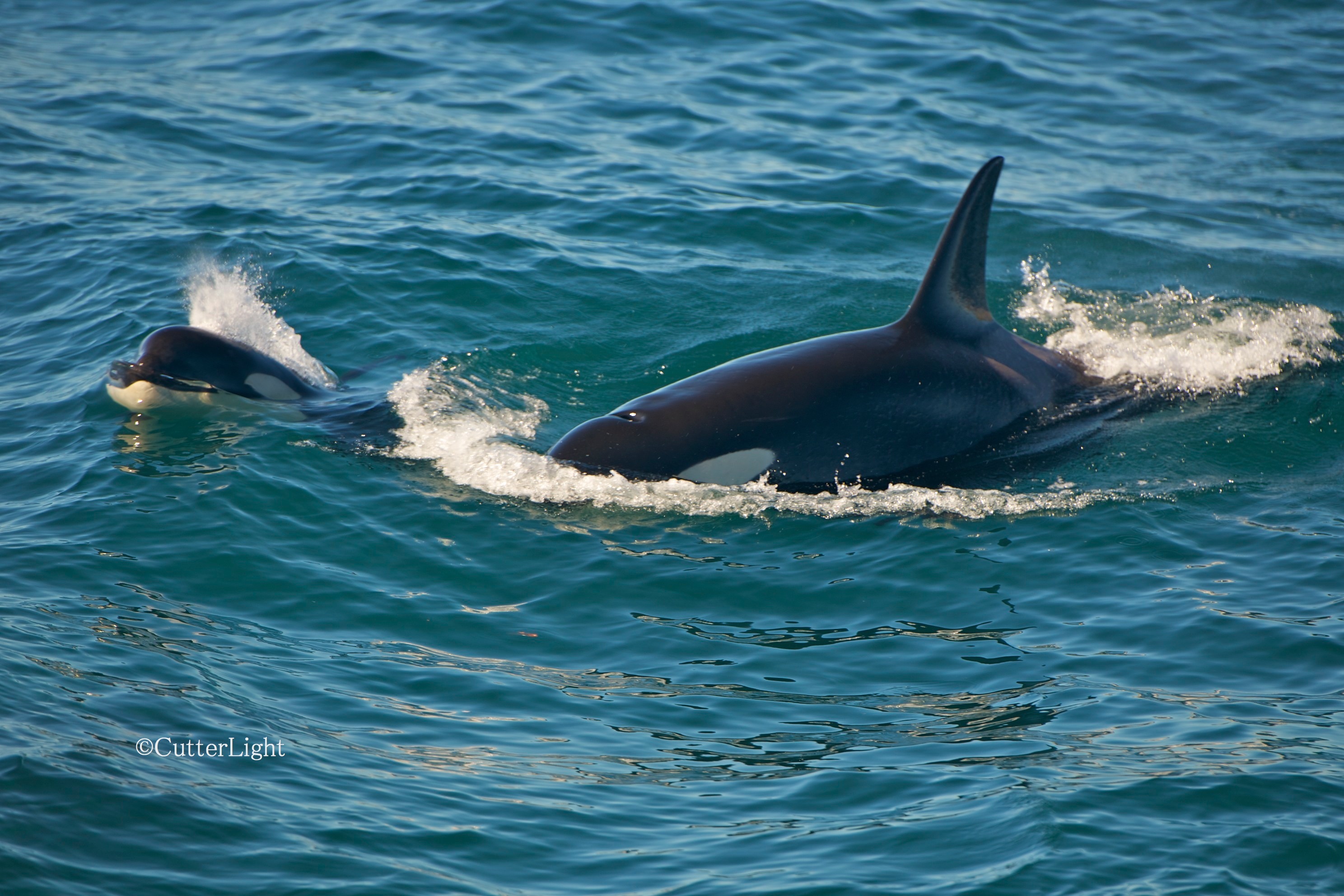
Reason #1: Because baby orcas need milk, and this mother needs a healthy diet of wild salmon to produce that milk. (Orca mother and offspring, Gulf of Alaska)

monica at samon creek n

Reason #2: Because Monica’s pregnant and eating for three. (Brown bear affectionately named Monica by local park rangers, Salmon Creek, Hyder, Alaska)
currants wild n

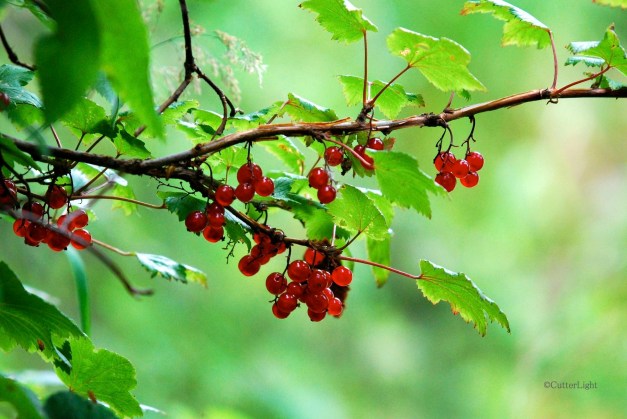
Reason #3: Because the ocean is full of nutrients which salmon embody as they return to their natal rivers and streams, and salmon forests thrive on salmon fertilizer courtesy of all the bears, eagles, mink, crows, ravens, otters, foxes and other animals that eat salmon. (Wild currants, Ptarmigan Creek, Kenai Peninsula, Alaska)
merganser common

.merganser chicks swimming clear water n

.

.

.

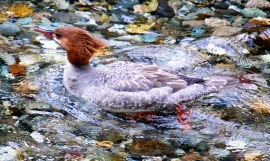
Reason #4: Because this merganser needs to find fresh salmon eggs to keep her brood well fed and growing. (Common mergansers, Salmon Creek, Hyder, Alaska)

camp meal on Deschutes n

Reason # 5: Because a meal cooked under starlight after a day of fishing with your best friend tastes better than that same meal would anywhere else. (Tumalo State Park, Deschutes River, central Oregon)
Turkeys along the American River - Copy (3) - Version 2 n

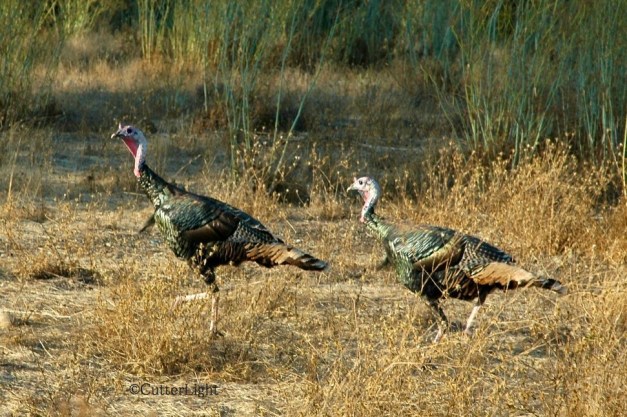
Reason #6: Because what’s good for salmon and trout rivers is also good for so many of the other things in life we love. (Wild turkeys, American River, Sacramento, California)

first king barbra n

Reason #7: Because farmed salmon can’t put a smile like that on a friend’s face. (Barbra Donachy, first king salmon, Resurrection Bay, Seward, Alaska)

Sea Lions at Bodega Bay n

Reason #8: Because we don’t want to live in a world where biodiversity is limited to what can be grown on a farm, raised in a pen, or crammed onto a feedlot. (Sea lions, California North Coast, Bodega Bay, California)
maia on deschutes n

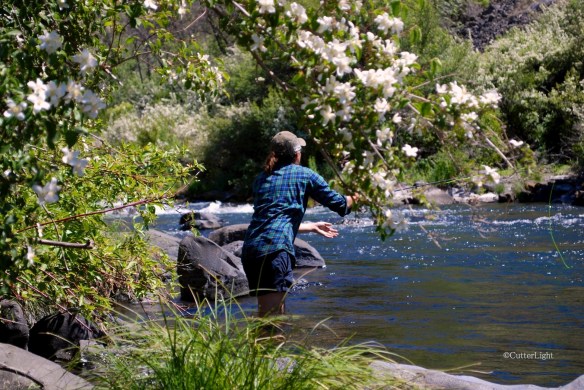
Reason #9: Because girls who grow up fishing with their dads…

Maia with nice silver n

…become women who fish with their dads. (Above: Maia Donachy drifting an elk hair caddis in the Deschutes Canyon, central Oregon. Below: Maia with a hoochie-caught silver salmon gorged with herring, Cape Resurrection, Alaska)

And reason #10: Because salmon make a landscape more beautiful.
red salmon spawning w tail up n

red salmon spawning under water n

.

.

.

.

.

chum salmon on colorful streambed n

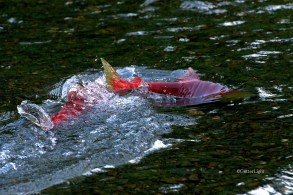
Top photos: spawning sockeye salmon. Bottom photo: spawning chum salmon.

About Trout Unlimited: For 54 years, TU has been a leader in ensuring that we have cold, clean rivers and streams for generations to come. From Northern California to Alaska’s Tongass Forest, from Bristol Bay to the Appalachian Mountains, TU has been instrumental in getting  dams removed from rivers where they do more harm than good, keeping mining and drilling out of our most fragile ecosystems, and protecting trout and salmon forests. At the same time, TU has been dedicated to educating and involving the next generation of environmental stewards – our children and grandchildren. As illustrated above, TU’s efforts benefit much more than trout and salmon. Click here to find out how you can become a member: Trout Unlimited.
Chai Crème Brûlée for Two

chai creme brulee_n

Easy to create, this crème brûlée features a rich custard flavored with vanilla and chai tea and is sealed with a crunchy caramelized top.

We give careful thought before adding any new item to our kitchen. Does the tool merit the space it will take up in Bandon’s galley or in the kitchen of our Arctic home? Will it be durable? Is it practical?

For the past few years, both of us have been eyeing a butane torch – the perfect niche tool for toasting a couple of  homemade marshmallows, singeing  meringue pie tips, and of course, for creating the perfect crème brûlée.

For most people, the addition of an item such as a kitchen torch means driving to a local store and picking one out along with the necessary fuel. For us, getting a canister of butane out to bush Alaska means purchasing a haz-mat certificate and having the item sent by cargo flight out here because the post office doesn’t ship hazardous materials via airplane.

Last night, the torch came out of the box, was fueled up, and put into service to finish a dessert that we and our guests couldn’t get enough of – chai crème brûlée. For this recipe, we began with a traditional crème brûlée custard recipe and infused it with the mildly spicy, sweet flavors of loose leaf chai tea and vanilla paste.  The resulting dessert was more complex and flavorful than typical crème brûlées. Using our new torch so that our guests and we could caramelize the tops of the custard just before serving, this turned out to be the best crème brûlée we and our guests had ever had.

Chai Creme Brulee for Two

Ingredients

  • 1/4 cup whole milk
  • 3/4 cup heavy whipping cream
  • 1/3 cup granulated sugar
  • tiny pinch salt
  • 1/2 tsp vanilla paste
  • 1 tbsp loose chai tea
  • 3 large egg yolks
  • 2 tsp granulated sugar for topping

Directions

  1. Preheat oven to 325 degrees F. Place an oven rack in the slightly lower than center position.
  2. Whisk milk, heavy whipping cream, sugar, salt, vanilla paste and chai tea in a medium pot over medium heat. Whisk until mixture steams and almost boils. Set aside to cool for 10 minutes.
  3. Strain cream mixture to remove tea leaves.
  4. Whisk eggs in a medium bowl. Stir in cream mixture to eggs one tablespoon at a time until the egg mixture is warmed. Once mixture is warmed, increase addition of cream mixture to 1/4 cup at a time. This will prevent eggs from cooking and scrambling.

  5. Pour mixture into two 4-ounce ramekins.
  6. Set ramekins in a baking dish. Pour enough hot water to reach halfway up the ramekins.
  7. Bake uncovered in preheated oven until desserts are softly set, about 45 minutes. The centers will jiggle.
  8. Remove baking dish with ramekins from oven and let desserts come to room temperature while in water bath on counter.
  9. Chill ramekins in refrigerator for at least 2 hours before serving.
  10. Right before serving, sprinkle 1 teaspoon granulated sugar evenly on each dessert.
  11. Use a kitchen torch to slightly brown and caramelize the granulated sugar. Let cool for ten minutes and serve.

Coconut Chocolate Chip Scones – Yes, Please!

coconut chocolate chip scones_nFry an egg, brew a cup of coffee and serve with these icing-laced coconut scones chock-full of mini chocolate chips. Fuel for a hike on the tundra, a morning downtown or whatever the weekend brings.

Shelf stable items are a staple in our Arctic pantry. Recently we have been experimenting with powdered coconut milk and are finding it to be easily reconstituted and packed with flavor. Friends recommended we add extra virgin coconut oil to our pantry, which ups the coconut flavor.

Armed with the coconut flavors I needed and an intriguing recipe I came across on MyBakingAddiction.com, I was ready to bake.

These scones have the essence of a chocolate dipped macaroon without being overly sweet. Using whole wheat for half the flour makes them more hearty than a traditional scone, while the baking powder helps them rise to epic scone proportions. The recipe is a perfect candidate for making dough the night before and popping in the oven the next morning for an impress-your-friends brunch.

Coconut Chocolate Chip Scones

Ingredients

  • 3/4 cup coconut milk
  • 1 egg
  • 1/4 cup granulated sugar
  • 2 tsp vanilla extract
  • 1 cup all-purpose flour
  • 1 cup whole wheat flour
  • 1 tbsp baking powder
  • 1/2 tsp salt
  • 3 tbsp unsalted butter, cold, cut into small pieces
  • 1 tbsp extra virgin coconut oil
  • 3/4 cup semi-sweet mini chocolate chips
  • 1/2 cup unsweetened coconut flakes
  • 2 tbsp coconut milk (to brush on top)

For the drizzle

  • 1 cup powdered sugar
  • 2 tbsp coconut milk

Directions

  1. Preheat oven to 375 degrees F. Line a baking sheet with parchment paper. Set aside.
  2. In a medium bowl, mix coconut milk, egg, sugar and vanilla. Set aside.
  3. In a large bowl, mix together flours, baking powder and salt.
  4. Mix butter and coconut oil into flour mixture using a pastry blender or your hands. Do this quickly to avoid melting the butter. Mixture should have pea-sized butter lumps that are evenly distributed in the flour.
  5. Mix wet ingredients into dry ingredients.
  6. Fold in chocolate chips and coconut flakes.
  7. Turn out dough onto lightly floured surface and knead 4 or 5 times.
  8. Shape dough into a 9-inch disk. Disk should be about 3/4 inch thick.
  9. Place disk on parchment-lined baking sheet.
  10. Slice disk into 12 wedges, pizza-style, leaving the dough in place.
  11. Brush disk with 2 tbsp of coconut milk.
  12. Bake for 18 – 20  minutes, till scones are slightly golden brown on edges.
  13. Cool scones in pan.
  14. While scones are cooling, create drizzle by mixing powdered sugar and coconut milk. Drizzle should be consistency of molasses.
  15. Place drizzle in a Ziploc bag. Snip a tiny bit off of one corner.
  16. With a sweeping motion, squeeze out drizzle over scones until you are satisfied with the amount of coverage.

Fall Harvest Cakes

fall harvest cakes_n

These delectable individual-sized cakes are packed with the flavors of autumn – honeycrisp apples, crunchy pecans, and caramel.

Taking advantage of fruit, vegetables, fish and wild game during times of seasonal abundance is a celebrated part of our kitchen, but it hasn’t always been easy to do so living in the Arctic bush. Back in California, between farmers’ markets and our own modest garden, our kitchen was stocked with ripe, heirloom tomatoes, freshly picked raspberries and peaches so ripe they had to be eaten over the sink (or outside under our peach trees).

Since moving to bush Alaska, we’ve been shipping up frozen fruits and vegetables during our annual summertime shopping. These have been supplemented with “keeper” produce such as  squashes, potatoes, onions and apples. We’ve managed to keep many of our traditions intact by pulling seasonal items from our pantry and freezers at the appropriate times, but we’ve missed enjoying fruits and vegetables freshly harvested from local farms.

This year, we decided to sign up with a CSA (community supported agriculture). Our “local” CSA, Full Circle Farms, is based in Carnation, Washington, nearly 2,100 miles away. Offering freshly harvested organic choices, Full Circle delivers to the San Francisco Bay Area, Idaho, Washington, and to Arctic Alaska! It has been a long time since we’ve had peaches and nectarines as perfectly ripe as the ones Full Circle has been sending, In fact, all their produce so far, from leafy greens to tomatoes to avocados have been spot on.

As part of our order last week, we received honeycrisp apples. This variety is sweet and crunchy with a pleasant tanginess – a balance that seemed begging to be paired with caramel. The pecan topping gives these cakes a savory crunch.

Fall Harvest Cakes

Ingredients

  • 1/4 cup unsalted butter, softened
  • 2 tbsp plain yogurt
  • 1 cup granulated sugar
  • 3 eggs
  • 1 cup all-purpose flour
  • 1 tsp baking powder
  • 1/2 tsp salt
  • 1 1/2 tsp ground cinnamon
  • 1/2 tsp mace
  • 2 cups shredded apple
  • 1/2 cup coarsely chopped pecans
  • 4-5 caramel candies, or 1/4 cup caramel sauce

Directions

  1. Preheat oven to 350 degrees F. Grease muffin tin.
  2. Cream butter and yogurt.
  3. Gradually add sugar to butter mixture. Beat well.
  4. Thoroughly mix in eggs, one at a time.
  5. In a separate bowl, sift together flour, baking powder, salt, cinnamon and mace.
  6. Gradually incorporate flour mixture to sugar mixture.
  7. Stir in apples.
  8. Spoon mixture into prepared muffin pan.
  9. Bake for 20 minutes.
  10. Sprinkle on pecans and caramel (sprinkle chopped candies or pour on sauce).
  11. Bake for 10 more minutes. Cakes are done when wooden pick inserted in center comes out clean.
  12. Cool on wire racks.

Cedar-Planked Portabella Mushrooms Stuffed with Smoked Salmon and Manchego Cheese

mushroom 1_n

Simple and elegant, cedar plank cooking has been part of the Pacific Northwest since early native Americans first discovered this method. Food such as these these stuffed Portabella caps lend themselves to leisurely evenings complimented with good wine and good friends.

The most difficult thing in cedar plank grilling is remembering to soak the planks before you’re ready to fire up the  grill. Aluminum foil is the solution. Although it’s best to soak the planks hours in advance of cooking, they also work perfectly well soaked just a short time prior to going on the grill provided they’re placed in a shallow aluminum foil “boat” with a little liquid added. Fold up the corners of the foil, pour in a little water or water and white wine, and you’re ready! Grilled on cedar, salmon and other foods come out wonderfully moist and take on smokey, woodsy flavors.

mushroom 6_n

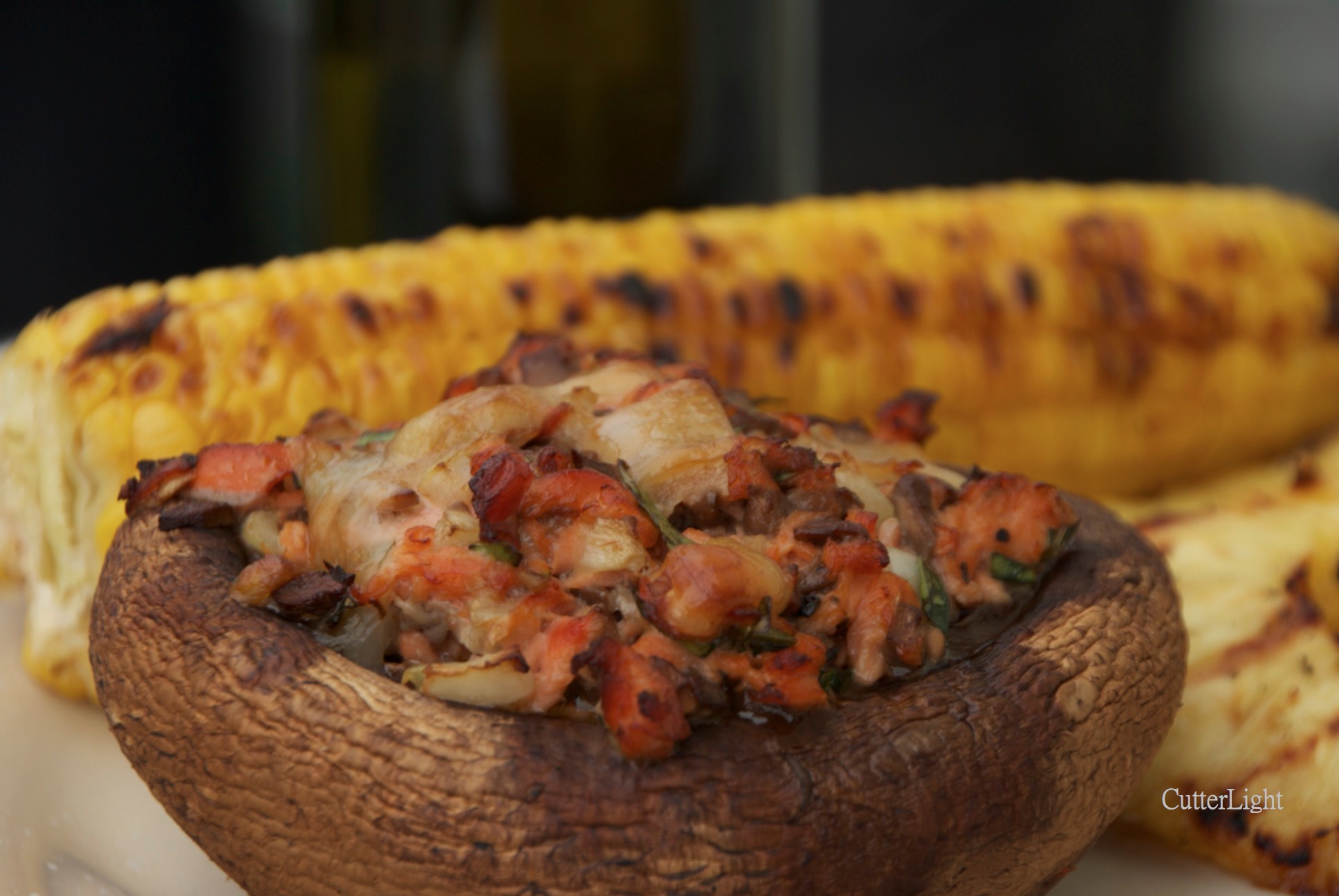
Grilled over charcoal, caramelized corn on the cob and pineapple rings go well with stuffed mushrooms.

cedar planked salmon_nRight: A split, whole king salmon self-bastes on cedar planks over hot charcoal.

Although cedar is popular, alder, hickory and boards from fruit trees work well too. Thoroughly cleaned, the boards can be used multiple times. Since plank cooking creates a barrier between the coals and the food, cooking time will be a little longer. In addition to preserving moistness and imbuing food with more complex flavors, planking typically results in more evenly cooked food than straight charcoal grilling.

Cedar-Planked Portabella Mushrooms Stuffed with Smoked Salmon and Manchego Cheese

Directions:

  1. Cut out the Portabella stems, chop course and place in a bowl. Add shredded or finely cubed Manchego cheese, finely chopped sweet onions, finely chopped garlic, tarragon, freshly cracked pepper, extra virgin olive oil, a small amount of sherry or white wine, and soy sauce or sea salt to taste. Mix thoroughly.
  2. Break up smoked salmon, cedar planked salmon, or any previously cooked salmon into small pieces and gently fold into the above mixture.
  3. Spoon mixture into mushroom caps and place on a cedar plank that has been well soaked. If desired, fashion a shallow aluminum foil boat slightly larger than the cedar plank and place 1/2 cup of water and white wine in the foil to help keep the plank moist.
  4. Grill over medium to medium-high heat for about 20 minutes, until a fork passes easily through the mushroom.

An Italian Amarone – a full-bodied red wine with lots of cherry – pairs especially well with a cedar-planked feast.

Sockeye Salmon: Earth-friendly Sashimi

sockeye sashimi removing pin bones_n

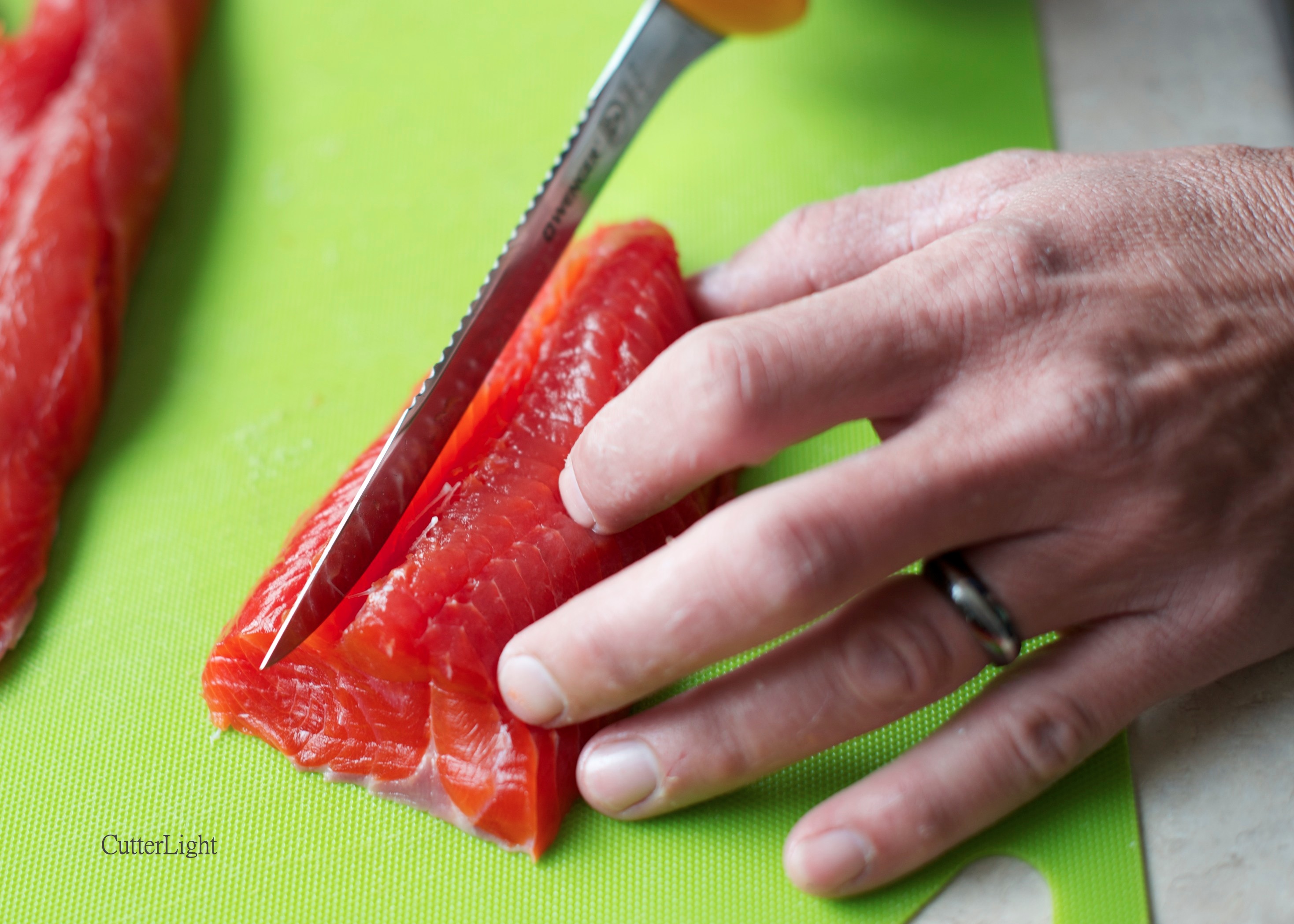
Above: Removing the pin bones from a Sockeye fillet. Of the eight species of Pacific salmon, Sockeye (red salmon) have the firmest flesh and are second only to Chinook in terms of fat content. These attributes make them a perfect choice for sashimi or seared tataki. 

Among Pacific salmon, there is a direct correlation between how far each species travels and how much fat or oil the meat contains. Chinook, which may run 100’s of miles up natal rivers, have meat so laced with fat eating a piece of an upriver bright can be akin to letting a piece of of light, fresh, creamery butter melt in your mouth. While sockeye aren’t quite that fatty, their relatively long spawning runs during which they don’t feed necessitate ample amounts of stored fat. Bluebacks (another name for Sockeye) have rich, oily meat – self-basting on the grill and ideal for sashimi.

sockeye with running tap_n

Marbled with fat, the belly meat of Sockeye is comparable to toro – the highly-esteemed belly meat of tuna.

The term “Sockeye” is derived from similar sounding native American words meaning “red” – which is both the color of sockeye meat and the color they take on during their spawning run. The fillets are beautiful, and given the relative abundance of wild Sockeye and their generally reasonable market price, it’s puzzling that they aren’t utilized more often by sushi restaurants. Unfortunately, most sushi restaurants serve farmed Atlantic salmon – a bland substitute for wild fish.

Chinook fillet on grill_n

Butterfly-filleted, seasoned with salt and pepper, and ready for the grill this ocean-caught king salmon (Chinook) shows this species’ characteristic orange color.

Since producers are permitted to dye farmed Atlantic salmon to match the color of wild fish, looks alone are not always a good way to determine whether or not you’re making a sustainable choice when you purchase a piece of salmon at the market or order salmon at a sushi-ya or other restaurant. Look and ask.  If the menu merely says “salmon,” it’s a sure bet the product came from a farm. Wild Chinook are highly prized and command a higher price than farmed fish; therefore anyone selling wild kings is going to accurately label them as such. The meat of sockeye has a distinctive red coloration and is noticeably firmer than that of other species. Sockeye, too, are highly prized and are almost certain to be accurately labeled.

sockeye sashimi_n

The upper part of Sockeye fillets, the back meat, is beautifully colored and wonderfully firm. 

Sockeye are primarily filter feeders. They have more gill rakers than other salmon, and these gill rakers help them sift out small crustaceans such as krill. These crustaceans are rich in carotene which give red salmon their red color. Krill are also loaded with oil, giving Sockeye their rich, oily flavor.

sockey sashimi with beaver wasabi_n

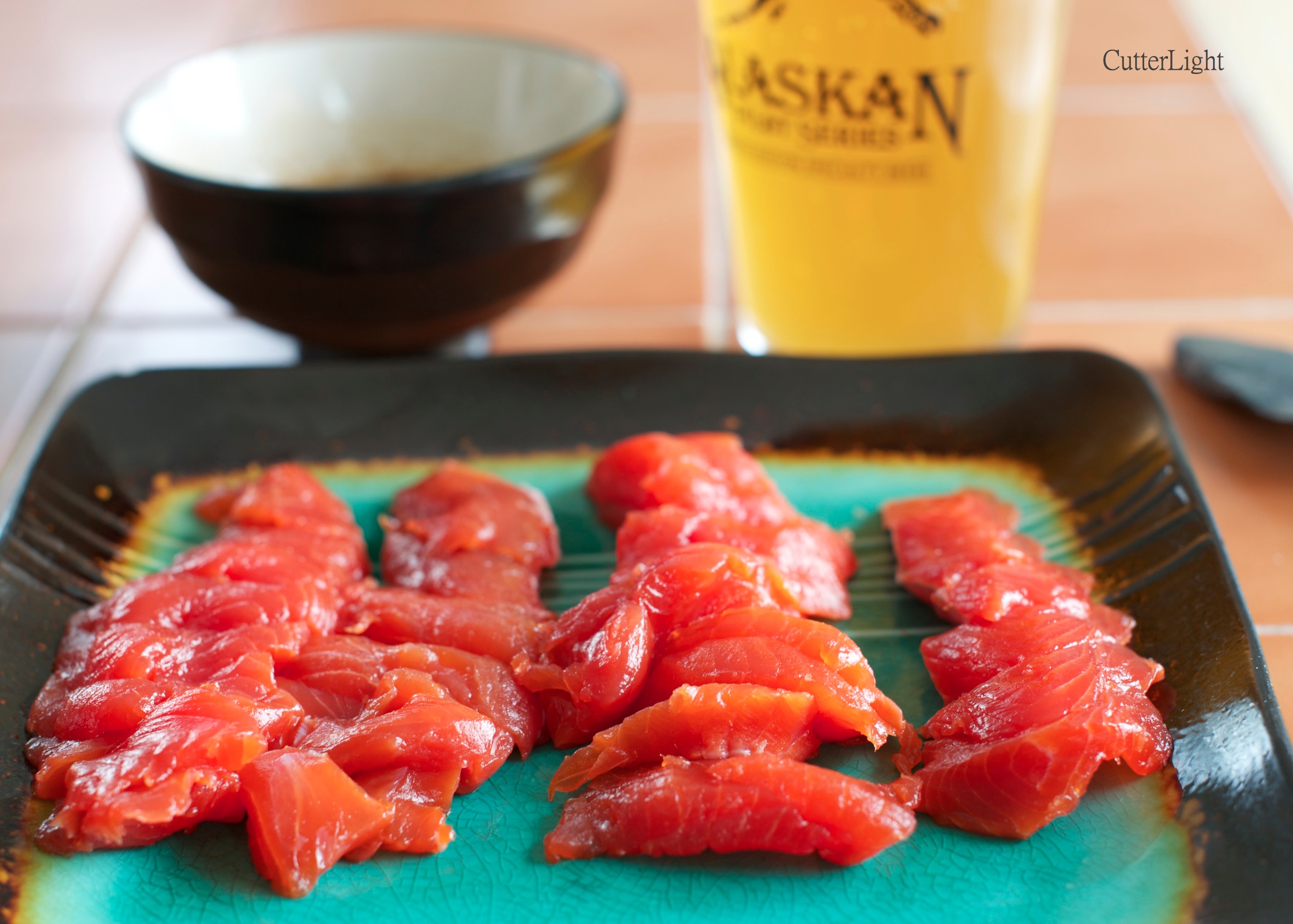
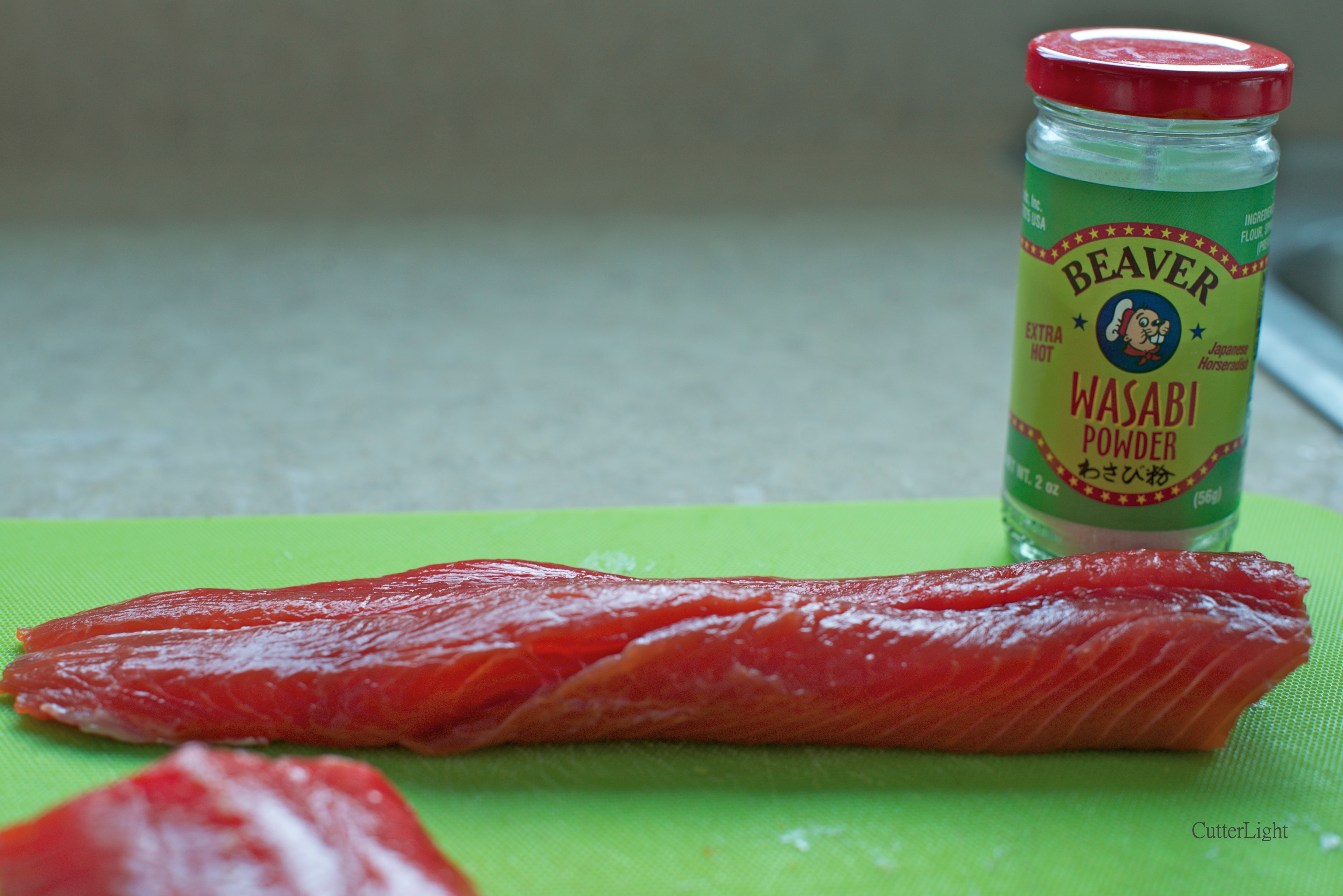
A sashimi-grade Sockeye fillet fresh from Alaska’s famed Copper River is ready to be sliced into thin, bite-sized pieces and dipped in soy sauce with just a hint of wasabi. Enjoy with a favorite craft beer, a good daiginjo sake, or a lightly-chilled Chablis. *We strongly advise readers to freeze salmon and other fish for at least 24 hours before serving raw in order to kill parasites. 

Bourbon and Vodka Vanilla Extract from Scratch: Do Not Open till Christmas!

vanilla w bourbon_n

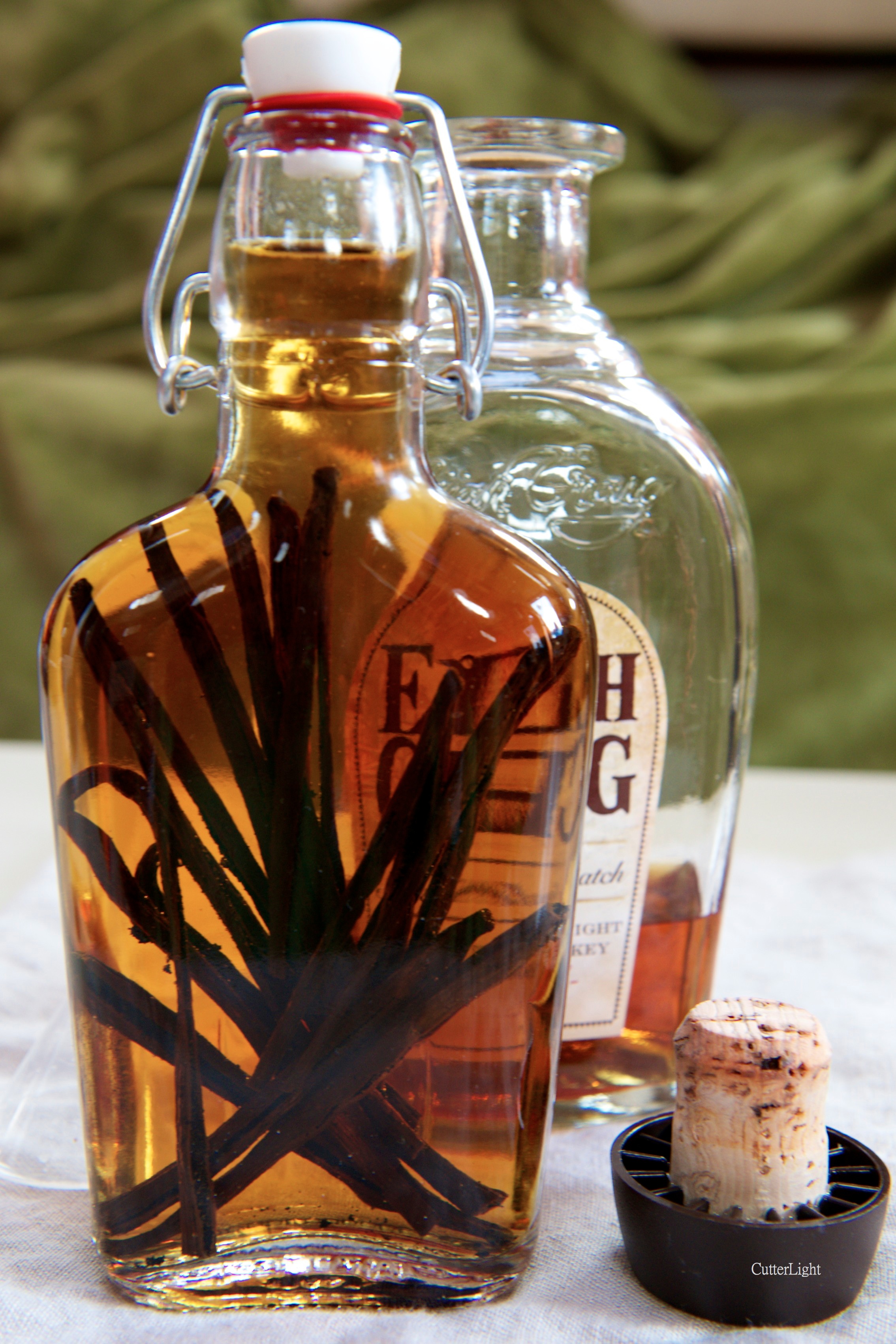
Quality Madagascar vanilla beans, bourbon in one bottle and vodka in the other, and the experiment begins. If all goes well, in six months we’ll have two excellent bottles of double-strength vanilla extract for our Christmas pies and confections.

Even when perfectly good store-bought products are available, we are fascinated by how various foods are actually made. For excellent vanilla extract, we know of no better than Penzeys Spices double strength. But we wanted to give making our own a go.

vanilla beans bourbon and vodka_n

We purchased our Madagascar vanilla beans from Penzeys. For the bourbon and vodka, we went with two well-known makers – a bourbon we enjoy sipping and a vodka that’s fine in our bloody Mary’s.

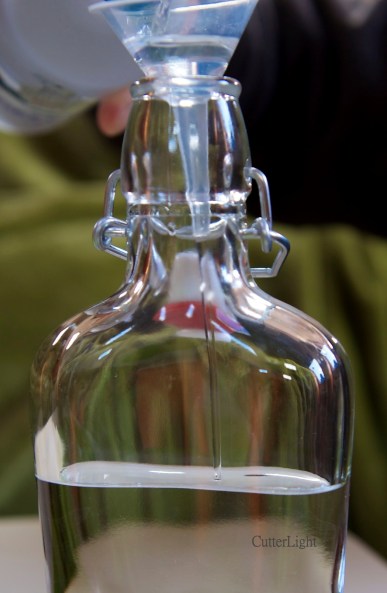
vodka pouring into bottle_n

There’s really nothing to creating your own vanilla extract. We had 15 long beans which we cut in half, split down the middle, and placed in old-fashioned bottles with tight seals.

Whether the subject is sherry for cooking or bourbon for vanilla extract, an oft-repeated axiom is “Don’t use anything you wouldn’t drink.” That’s good advice, on par with adding seasonings “to taste” in recipes. On one hand, this isn’t the place to use the finest bourbon one might drink; on the other hand, in our own experience we noticed a marked improvement in our sauces and sautés when we moved away from lower end sherries and upgraded to more drinkable varieties.

.

bourbon pouring into bottle_new

Once the vanilla beans and alcohol have been combined and sealed tight, it’s helpful to give the bottle a gentle shake from time to time to ensure mixing and full extraction. For the richest, most flavorful extract, allow six months to go by before opening.

For this batch, that means we’ll be able to break the seal for Christmastime chocolate orange meringue pie, pecan pralines and extra rich vanilla ice cream.

Grilled Halibut with Puréed Olive and Garlic Filling: s/v Bandon’s First Fish of 2013

halibut grilled w olive and tomato bell peppers_n

Finished with a roasted tomato and bell pepper sauce, freshly caught halibut charcoal-grilled atop Peruvian potatoes and lightly filled with a purée of olives and garlic provided the plat de résistance in a meal celebrating three days of terrific sailing and an evening tasting champagnes and sparkling wines.

The opportunity to grill and serve a halibut in the whole doesn’t come along every day, particularly in waters where 50-pound fish are more commonly caught than five-pounders. But I could feel the characteristic thumping of a halibut 130 feet below Bandon, and I knew the metal jig I was fishing might have found just the fish we were looking for. Barbra expertly netted the five-pound flatty and everyone aboard gave a little cheer as the first fish of the trip hit Bandon’s decks.

bandon racing 3 - Version 2_n

Earlier in the week we did a little casual (very casual) racing in Resurrection Bay. Crew from the sailing vessel Carpe Ventos shared this photo of our Island Packet 350 under sail.

We were on our way back to Resurrection Bay after a three-day sojourn around the cape with our friends Krystin and Bixler from Carpe Ventos. The weather had been beautiful and the sightseeing excellent as usual as we encountered seals, sea lions, otters, Dahl porpoises, whales, eagles, oyster catchers, puffins and a dozen other sea birds near Alaska’s mountainous, glacier-scarred shoreline.

halibut in foil on grill_n

Right: We grilled our halibut on a deck overlooking Resurrection Bay, but this dish could easily be prepared at anchor on a propane grill. 

Although we continued fishing (and came back with limits of rockfish as well as a second halibut), we knew we’d already scored the fish we wanted for the centerpiece of an evening in which we planned to sample six different champagnes and sparkling wines – Lesson 7 in the Everyday Guide to Wines course we are taking this summer.

halibut whole in foil_n

A bed of sliced heirloom Peruvian potatoes, herbs de provence, a little Chardonnay, butter, lemon juice and olive oil provided the liquid for steaming this fish. Kept whole, the halibut was essentially filleted without entirely removing the meat from the bones. A thin layer of paste made from puréed olives, olive oil and garlic was spread inside the openings created by the semi-fillet technique as well as in the stomach cavity. 

After about 40 minutes over fairly low heat on the grill, the halibut was came out flakey, moist and enhanced with a smokey, charcoal flavor. A nice-sized summer flounder from the East Coast or a Japanese hirame would serve equally well, and this dish could easily be prepared in the oven.

As to the champagne… After years of drinking what we all regarded as fairly good California sparkling wines, all four of us became instant méthode de champenoise fans. With finer bubbles creating an elegant mousse, lots of well-balanced fruit and a toasty, creamy finish, the bottle of Marie Weiss Brut was the perfect wine for this meal.

champagne toast a_n

Smelt Smoked or Fried (Eulachon, Hooligan or Candlefish)

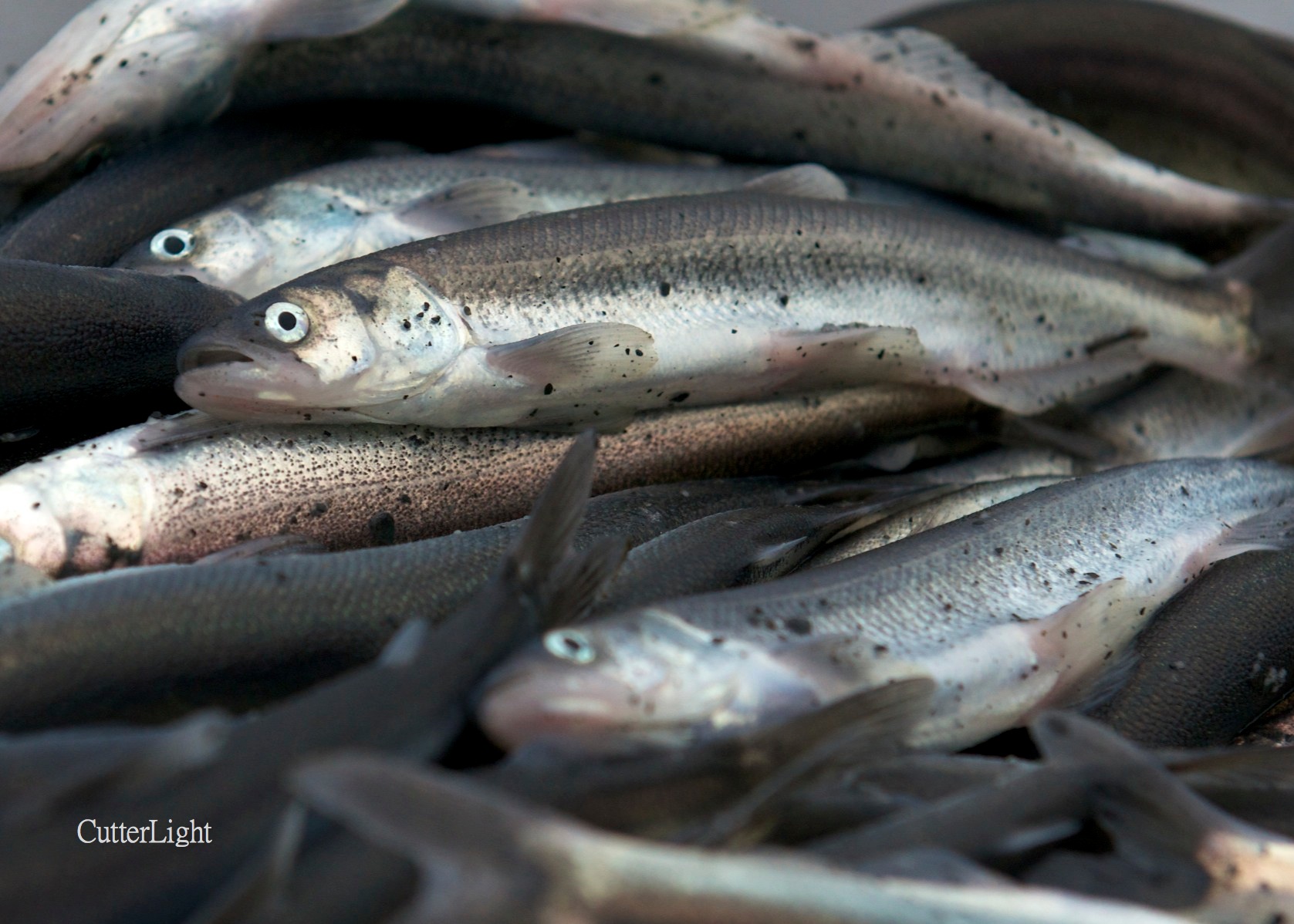
hooligans in cooler_n

Eulachon are packed with oil when they begin their spawning run – roughly 15% of their body weight. Dried, they can be lit and will burn like a candle, which is why early explorers in North American called them candlefish. The term eulachon is derived from the Chinook language. 

When the hooligan are making their spring-time run in the Pacific Northwest, dip-netters from Oregon to Alaska gather along the banks of their natal streams and rivers to scoop up a few pounds for the pan and the smoker. An anadromous species, these members of Osmeridae (the smelt family) spend most of their lives in the ocean and ascend the rivers of their birth to spawn and die. At this time, they don’t feed, so dip-netting is the best way to harvest them.

hooligan krystin b_n

Our friend Krystin scoops up a netful of hooligan from a small stream near Seward. 

Fiddlehead ferns, fireweed shoots or asparagus lightly sautéed in olive oil and finished with a squirt of lemon make a fitting accompaniment for a meal of freshly caught smelt. One of our favorite cooking methods for the fish themselves is to roll them in cornmeal, wrap them in bacon, fry them whole and serve them wrapped in a crisp leaf of Romain lettuce – a lettuce-smelt taco. (See Bacon-Wrapped Smelts for more on this recipe.)

hooligan by hand_n

Right: When the fish are in, it can be possible to catch them by hand. It took Krystin a few minutes to grab these fish one at a time.

Another great way to enjoy hooligans is to smoke them, and that’s the way our friends Bixler and Krystin recently prepared them. They use a commercially prepared dry rub, but making your own is easy enough. Typical dry rubs feature about one cup of non-iodized salt to four cups of brown sugar. Garlic, ginger, cloves, nutmeg and allspice are among seasonings commonly added to give brines more flavor. Simply pack the fish in the brine in a glass baking dish, place in the fridge for a day or so, rinse the fish, pat the fish dry with paper towels and smoke for about eight hours. (See Alaska Fast Food: Smoked Hooligans at Alaskagraphy.)

The bones of cooked or smoked smelt are soft, and many people (including us) eat them whole from head to tail. Gravid females (those with ripe roe) are our favorites.

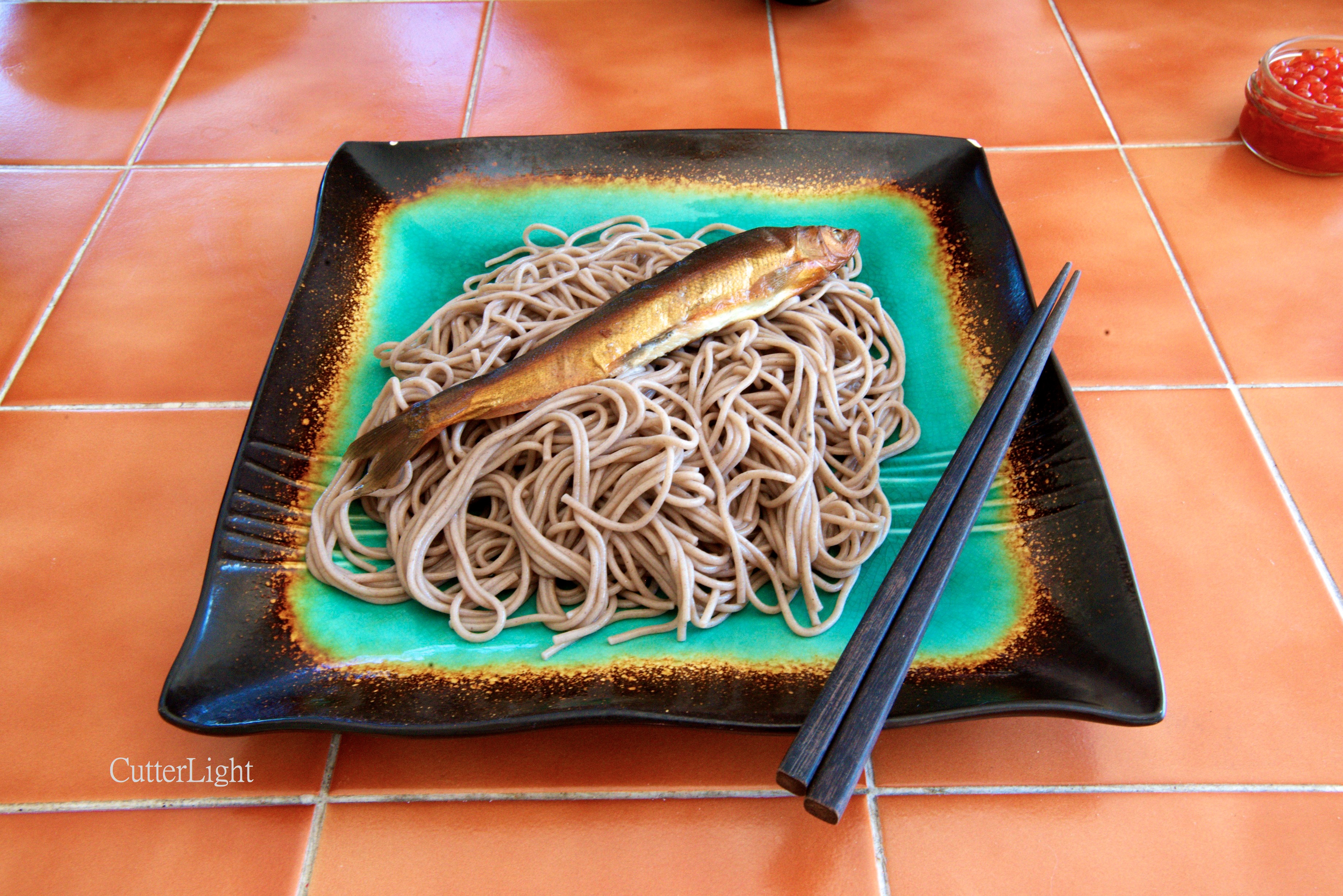
hooligan zaru soba_n

Zaru soba – cold buckwheat noodles – is a perfect dish for the hot weather we’ve been having lately. Topped with a smoked smelt from the refrigerator, this dish can be garnished with salmon roe, nori or served as is. You can used a store-bought noodle dipping sauce or make your own with a little rice vinegar, a little soy sauce, a little brown sugar, ice-cold water and a sprinkling of sesame seeds.