Four Days of Quiet Solitude (Except for the Hurricane-force Winds): The Cabin on Black Lake

Fire Mountain: Barbra got this beautiful photo of sunset rimming a mountain – possibly 8,200 foot Veniaminof Volcano, its top missing. That’s me left of center, shooting a closer perspective. During our stay at a nearby cabin, the forecast had been for temperatures in the mid 30’s (low single digits Celsius) and the usual 10 to 20 knot breezes. The subfreezing temperatures, heavy sleet and snowfall, and hurricane-force winds we experienced seemed to come out of nowhere.

Every night before we go to bed and every morning upon waking, I slide the dining room/living room window open and scan the lakeshore with a small, powerful spotlight. You never know what you’ll see. Though not necessarily at night, from these very windows we’ve seen brown bears, moose, foxes, owls, weasels, otters, eagles, falcons, beavers, a wolverine and a wolf, not to mention an array of waterfowl including cranes, swans, loons and ducks.

“You oughta take that spotlight and stay in my cabin up on Black,” Fred texted one morning. “You’d like it up there.” Fred’s Chignik Lake home sits atop a high bluff, big picture windows overlooking a good bit of Chignik Lake and the beginning of Chignik River. He spends a fair amount of time doing the same thing we do – scanning for wildlife.

Snow Bunting, Black Lake, Alaska. We’re told that in years past, Snow Buntings were common winter visitors to Chignik Lake. Recently, they’ve been scarce. Although the flock of three birds we came upon only gave me a chance for a couple of quick shots, I was happy to get this record for a project I’m working on to document area birds. (Stay tuned for more on this.) In addition to waterfowl, Black-capped Chickadees, Common Redpolls, magpies, eagles and a Northern Shrike rounded out the avian life we encountered. 

Fred’s text came on the last day of December, a few days before Barbra’s winter break was over. The two of us were antsy from days-on-end rain we’d been enduring through most of autumn and early winter. Fred’s offer wouldn’t change the weather, but it would change the scenery. We were in.

That evening we packed up our gear: down sleeping bags, rain gear, extra rain gear for when the first rain gear was soaked, cameras and binoculars, pens and journals, cookware, four days worth of dehydrated backpacking food, four sweet onions and four Fuji apples…

…and awoke the next morning to find that the weather had taken a nasty turn. Rain we can work with, but when winds started blowing spray off the whitecaps on the lake, there was no way Fred would be launching his skiff. “We’ll try again tomorrow,” we agreed. In retrospect, this squall which hadn’t been forecast should have tipped us off that our local weather patterns were unstable.

The following morning we rose early, hoping for the best. During winter, the sun doesn’t break over the mountains rimming our valley till sometime after 10:00 AM, but a flashlight cutting into the pitch black indicated that Fred and his friend Nick were already down at the beach getting the skiff ready. The wind had settled and a mist was falling under a lightless sky that swallowed the lake in inky darkness.

By nine o’clock the first crepuscular twilight silhouetted the mountains to the south. With breakfast behind us and a hint of light on the water, we loaded up the skiff and began the 18-mile run north up the valley. Pockets of near-freezing drizzle appeared and disappeared, prompting us to pull our hoods tight. The forecast – which up here is usually spot on – was for similar weather over the coming days with a few sun breaks mixed in. Ahh, sun breaks. This year, we’ve been living for sun breaks.

As we cut across the lake and proceeded up Black River, a loon and a few mallards and pintails lifted from resting places in coves and a pair of eagles were startled from their riverside perches. Most of the bears are denned up by this time of year, though here and there a few late-run salmon still cling to life in feeder streams. There’s always a chance of seeing a wolf.

Fins, January 2, 2018: The Chignik System is known to receive the latest salmon runs in North America. Still, we were amazed to find a few Coho in a nearby feeder stream near the cabin. More remarkable still, some of these fish appeared to spawning.

 A rim of shore ice at the mouth of the stream provided a dining table for otters, who left plenty of salmon scraps for ravens. Although we didn’t see the otters, evidence of their presence was everywhere. We also found signs of moose, foxes, weasels, hares and wolves. In fact, we have reason to suspect that at one point a wolf was just around the bend from us.
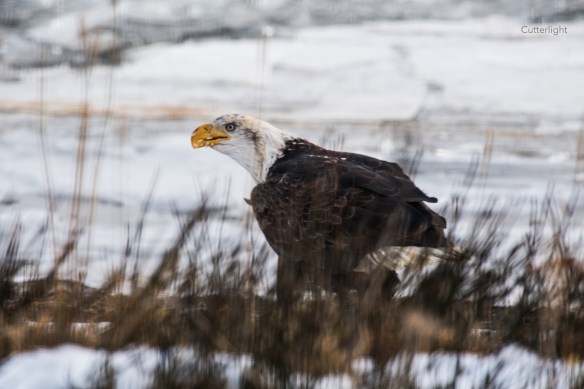
After the storm, a fully intact salmon carcass managed to find its way to the shore in front of our cabin – quite possibly plucked from a patch of open water and dropped by this very eagle. I grabbed this shot through a double-paned window – not ideal for a photograph, but what a handsome bird. The moment I opened the cabin door, she took off.

If you come across a single antler from a member of the deer family, it’s been shed, part of an annual process in which male deer, elk and moose grow antlers for the mating season and then lose them. If you come across an entire rack joined by skull bone, it’s the result of a kill. Some years ago, when Fred was scouting out the location for a cabin from his skiff, he came upon five wolves on a downed bull moose right on the beach where he hoped to one day build. Years later, someone found this rack in a nearby alder thicket – undoubtedly that same moose having been dragged there by the predators. 

Fred described the cabin he and a couple of friends had built as “sturdy, snug and cozy,” a spot-on description. Insulated from floor to roof and appointed with double-paned windows, the cabin’s 10 x 15 interior is just big enough to comfortably house a diesel heater, three-burner propane stove, hand-made wooden bed frames, small pantry, a table and three hand-made wooden stools. Snug and cozy. The lines looked square and sturdy, points that would soon be tested.

Once Nick got the heater going, the cabin was toasty warm in no time. Fred introduced us to the vagaries of the propane stove, pointed out the water catchment system (a bucket hanging near a roof gutter), and assured us once again that we were welcome to dip into any of the food in the pantry.
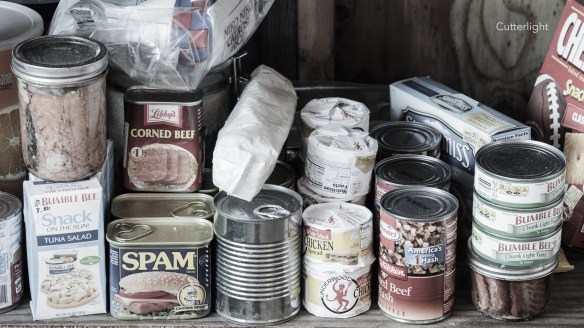
I muted the color in this pantry photo. The cabin’s door is never locked and the assortment of canned fish, deviled meat, rice and crackers could be a lifesaver for anyone caught in a sudden storm or out of luck with a dead engine. Although we brought plenty of our own food, I have to confess that the temptation of a skillet of fried Spam was more than I could resist, not having had this treat since childhood. It was, to my mild surprise, every bit as good as I remembered.

With winds pushing 100 miles per hour and sub-freezing temperatures, our water catchment system failed. Fortunately, the wind blew beautifully clear sheets of ice onto our shore.

Following two days of snow and sleet pushed by fierce, cabin-rattling winds, the sun rose serenely over a frozen lake Black Lake. Black River, which leads to Chignik Lake, begins in the gap between the mountains where the light is breaking through. If things didn’t warm up and melt the ice, there was doubt that Fred would be able to make across the lake in his skiff. Fortunately, by the next day the ice had thinned and lay in broken patches. We learned later that two of our neighbors in the village out on a different adventure had to be emergency rescued when the storm came up.

The view from the cabin shoreline after the storm passed: Although we didn’t get the waterfowl and wildlife encounters we’d hope for – and the weather certainly had our full attention for awhile – our four days on Black Lake were wonderfully memorable. And left us with this thought: Why aren’t we doing more landscape photography? New adventures lead to new thoughts, new studies, new goals. 

“Hope you guys get lucky and see some wildlife,” Fred said as he and Nick headed to the skiff. Motioning across the bay toward the far shore from where a racket of honking and quacking was issuing, he added, “Of course, those swans and ducks never stop chattering. They’ll keep it up all night.” I helped shove off the skiff, and as the last echoing hum of the boat was enveloped in the valley we’d just come up, we found ourselves wonderfully and utterly alone. Over the next four days, the only human-generated sound we would hear was the drone of a couple of bush planes flying into the village 18 miles to the south.
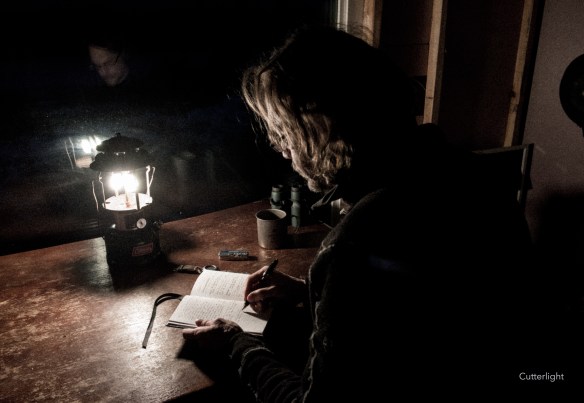
Sketching a novel outline at the cabin on Black Lake: Thirty-some years ago, aboard USS Blue Ridge, a friend and I made elaborate post-enlistment plans to go up into the Colorado Rockies, find a cabin, and live there for a year. We talked about the staples we’d need to lay in: flour, rice, coffee and so forth, the rifles and shotguns we’d take to hunt with, canning equipment, and the desirability of locating ourselves not overly far from a small town where we could reprovision as necessary. We would write. Fundamental to that objective would be pens and journals and a small, carefully selected library of literature. My friend got out a few months before I did… and disappeared. When I called the number he’d given me, his mother picked up the phone. She sounded distraught, with no idea where her son was. No one knew. I’m still not sure if we were kidding ourselves or if we’d really intended to go through with the plan, but either way I couldn’t see going it alone. When an acceptance packet came from the University of Colorado at Boulder, I took the door that was open. But I never completely let go of that idea… someplace quiet, off the grid, armed with books to read and journals to fill.

January 26, Chignik Lake, Alaska
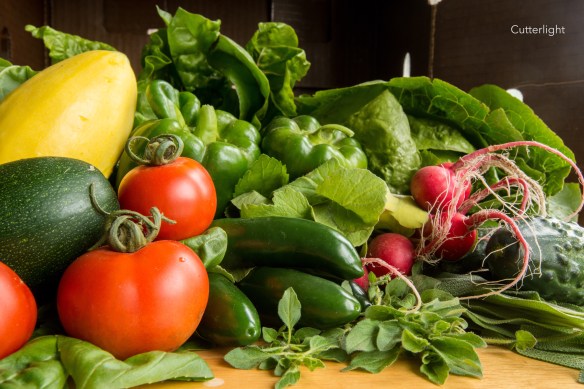
 

Sometimes it’s the Little Things: Farm Fresh Vegetables in Bush Alaska

Courtesy of The Farm in Port Alsworth, a newly-arrived box of fresh vegetables fit to inspire any food-lover.

Once a week flown in a little bush airplane, a box shows up packed with freshly picked vegetables. It’s like having a birthday each week!

We’ve written a number articles about how we get food out to the tiny, remote Alaskan bush villages where we live. There’s a story about carefully packing a year’s worth of food from Costco into durable Rubbermaid tubs. More recently, we’ve been ordering much of our food from the Fred Meyer grocery store on Debarr Road in Anchorage. The people there take great care getting our groceries out to us, sending us impeccably wrapped and packed goods usually within about four days of the request. Amazon’s grocery store is another great way to get groceries, although sometimes that involves a wait of several weeks. When we lived in Point Hope we discovered a company in Washington called Full Circle, which mails farm fresh gourmet vegetables to select communities in Alaska. We would get multi-colored carrots and Swiss chard, yellow beets, and pink haricots verts. These premium veggies came at a premium price, but I will admit that after eating frozen vegetables our first year in the bush, we threw our budget to the wind in the name of fresher, tastier fare. Besides, it was fun to experiment in our cooking with colorful and interesting ingredients.

When we moved to Chignik Lake, we heard about “The Farm” in Port Alsworth. It was almost spoken as a whisper – a secret to be kept tight within an inner circle. The scoop was that they would sync orders with local flights and ship boxes filled with vegetables picked that very morning. Freshly picked veggies? Right to our door? The same day they’re picked? Our response – “What’s the phone number?” In the same secretive way we’d first heard about this magical place, we were handed a phone number. Imagine a folded slip of paper passed from one to another during a knowing handshake. When I looked up The Farm in Port Alsworth on the internet, I was surprised to discover that there was no evidence of such a place. I took out the note with the scrawled number and called.

“Hello?” an informal voice came through the receiver. Oh, dear. I must have a wrong number, I remember thinking. They should have answered the phone with a jaunty, “The Farm!” Right?

Tentatively I asked, “Is this The Farm?”

“Yes!” came the cheerful reply. Sometimes things in Alaska don’t come about the way one might imagine.

“The Farm” is actually “The Farm Lodge.” Located in Port Alsworth on beautiful Lake Clark, the lodge is operated by the same company that runs Lake Clark Air, which we regularly fly with. The lodge features a picturesque greenhouse, inviting grounds and accommodations for guests who travel to Port Alsworth for nature viewing, hunting and fishing expeditions. In addition to world class salmon fishing and wildlife photo opportunities, the lodge boasts excellent home cooked meals featuring, of course, their garden fresh vegetables. Since Chignik Lake is a regular stop for Lake Clark Air, we benefit from the surfeit of fresh produce grown in their greenhouse.

They may not have multi-colored beets or artisan green beans, but they nonetheless offer wonderful produce. We’ve received many of the crisp favorites one might find in a typical garden – cucumbers, green-leaf lettuce, tomatoes, chard, beets, radishes, bell peppers and sugar snap peas. With long hours of summertime daylight, Alaska is famous for the truly humongous size certain vegetables attain up here. The cabbage that came in our box last week was as big as a large mixing bowl – and yet it turned out to be only half the original head!

The only downside to The Farm’s service is that the growing season ends in October. But until then, we have all the fresh vegetables we can eat to go with meals of the equally fresh salmon we catch in the river in front of our house!

If you are in our area and would like to participate in The Farm Lodge’s special deliveries, here is the secret phone number (907) 310-7630.

May 1 Plane Crash near Chignik Lake: A Tribute to our Bush Pilots

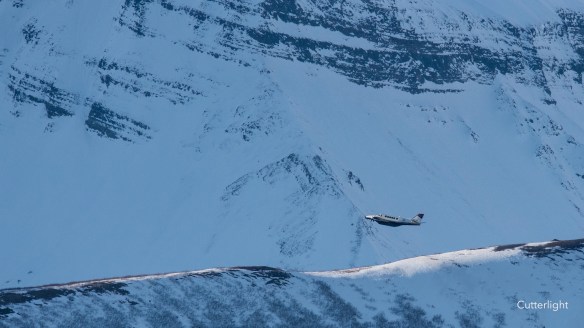
A nine-seater from Grant Aviation cuts through the mountains just after leaving Chignik Lake this past March.

They’ve been called Alaska’s cowboys, and life without them would range from difficult to impossible for those of us in the remote parts of Alaska that make up most of the state. They’re our bush pilots – the men and women who navigate the trackless wilderness between population hubs and the isolated communities we and thousands of other Alaskans call home. They bring us everything from mail to grocery staples to visitors (when we’re lucky enough to have them). With skill and confidence, these men and women navigate through weather that can change in a blink (it alternately was sunny, rained, snowed, hailed and rained again as I wrote this morning) and through winds most of us wouldn’t even want to take a walk in. We complain a little among ourselves when the planes don’t fly (earlier this year we went for over a week with no mail as our Brussels sprouts and other groceries languished in King Salmon) and we grumble when grounded flights mean truncated vacation time or a delay in friends reaching us. But we understand – safety first. And we know that if it’s possible to fly, the pilots serving Southwest Alaska – our pilots – will be in the air.

Yesterday we lost one.

By mid-afternoon word had swept through the village that a Grant Aviation plane – a Cessna Grand Caravan, the nine-seaters that are fairly standard in the bush – had gone missing. It was en route from Port Heiden to Perryville (see map at end of article), scheduled to arrive at 2:15 PM. At 2:00, just 15 minutes out of Perryville, the plane’s Emergency Locator sounded. The pilot, making a cargo and mail run, was the vessel’s only passenger.

This photo was taken near Perryville, a coastal community about 28 miles southwest of Chignik Lake. The Aleutian Mountain Range sprawls across the Alaska Peninsula. It’s breathtakingly rugged country where high winds can spring up out of nowhere. The name Chignik means “Big Winds.”
Soon afterwards, a Coast Guard C-130 and an MH-60 Jayhawk helicopter began combing the mountainsides, tundra and lakes around Chignik Lake. In fact, the chopper landed here to take aboard volunteers to serve as additional pairs of eyes out the helicopter’s windows. At 5:49 PM, 3,000 feet up on a steep mountainside at a place known as Windy Pass, the wreckage was spotted. A rescue swimmer was subsequently lowered to the crash site where he confirmed that the pilot had died. Given the difficult terrain and cloud cover, recovery of the pilot’s body and the cargo he was carrying will be challenging.

Gabriele Cianetti, 54, the pilot of the downed Cessna 208B, touched many lives, including ours. Our thoughts and condolences go out to his family and friends as well as to his extended family at Grant Aviation. Additionally, our deep appreciation is extended to the men and women of the United States Coast Guard: Semper Paratus – Always Ready.

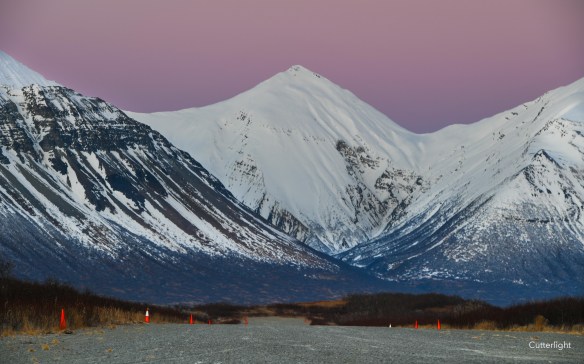
The Chignik Lake airstrip at dawn. The pilots who serve our community and Alaska’s other bush communities are true heroes in a land where air travel is not a luxury, but a necessity.

The above map includes Port Heiden, where the plane departed from and Perryville, where the plane was heading. Chignik Lake is marked in red.

Additional details for this article were pulled from KTVA news and Alaska Dispatch News.
November Light: Old Tikigaq and Project Chariot – 160 Hiroshimas in the Arctic

umiak sunrise n

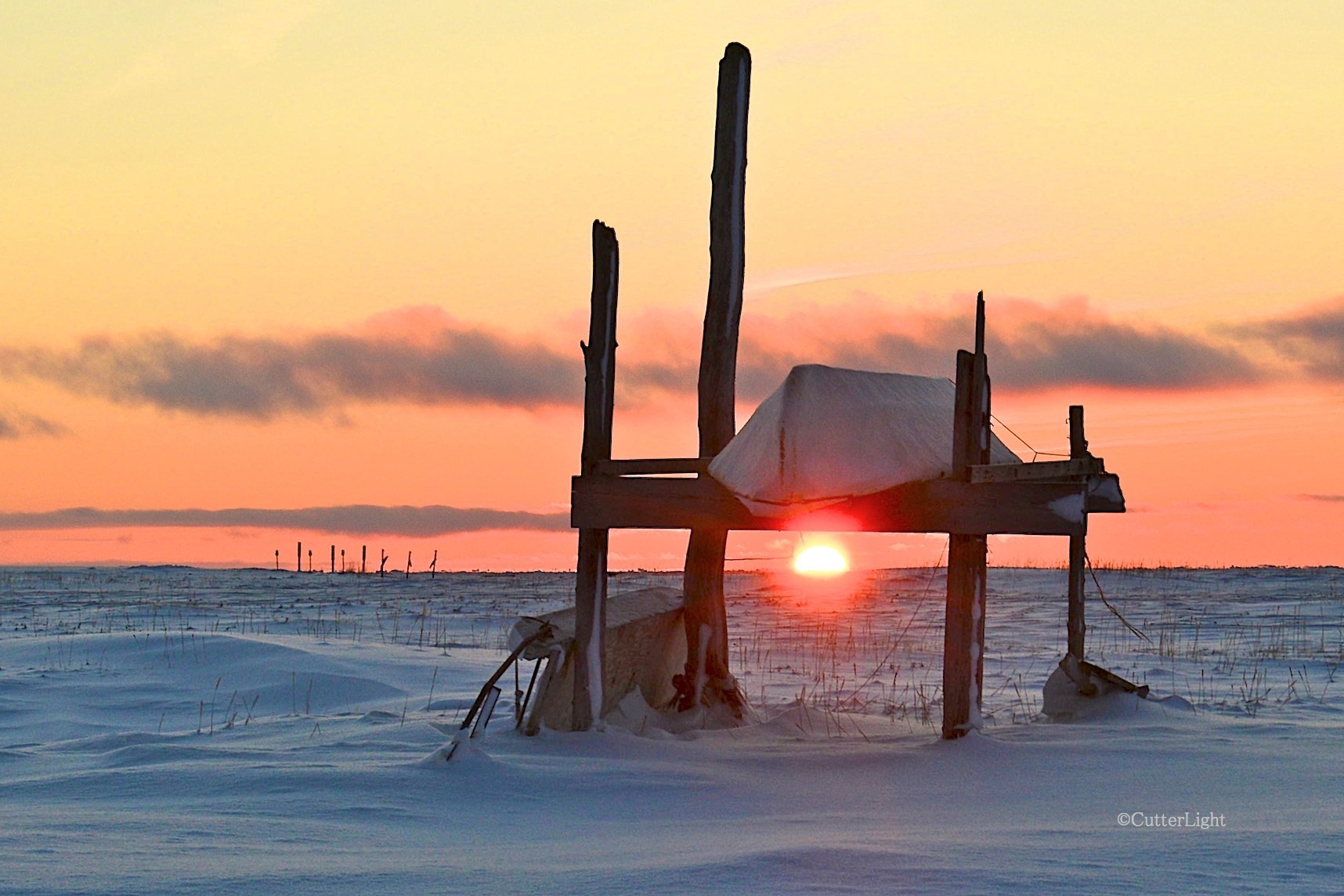
November 29, 12:46 p.m.: Framed below a seal skin umiak whaling boat, the sun edged itself above the southern horizon and lingered for just two hours and 24 minutes. On December 7, the sun will stay below the horizon and remain there for 28 days.

In 1958, under the direction of Edward Teller, the U.S. Atomic Energy Commission (AEC) devised a plan to detonate a series of nuclear devices 160 times the force of the bomb dropped on Hiroshima. These bombs were to be exploded just 30 miles southwest of the Inupiat village of Point Hope, Alaska. Teller’s plan – if an action so dangerous and misguided can even be called such – was to blast out a harbor in this far north coastline. The United States government didn’t bother to tell the local residents of this scheme. Nor did they take into consideration that the land in question dId not belong to the United States government; it was and still is sovereign Inupiat territory.

old tikigaq bones nov light n

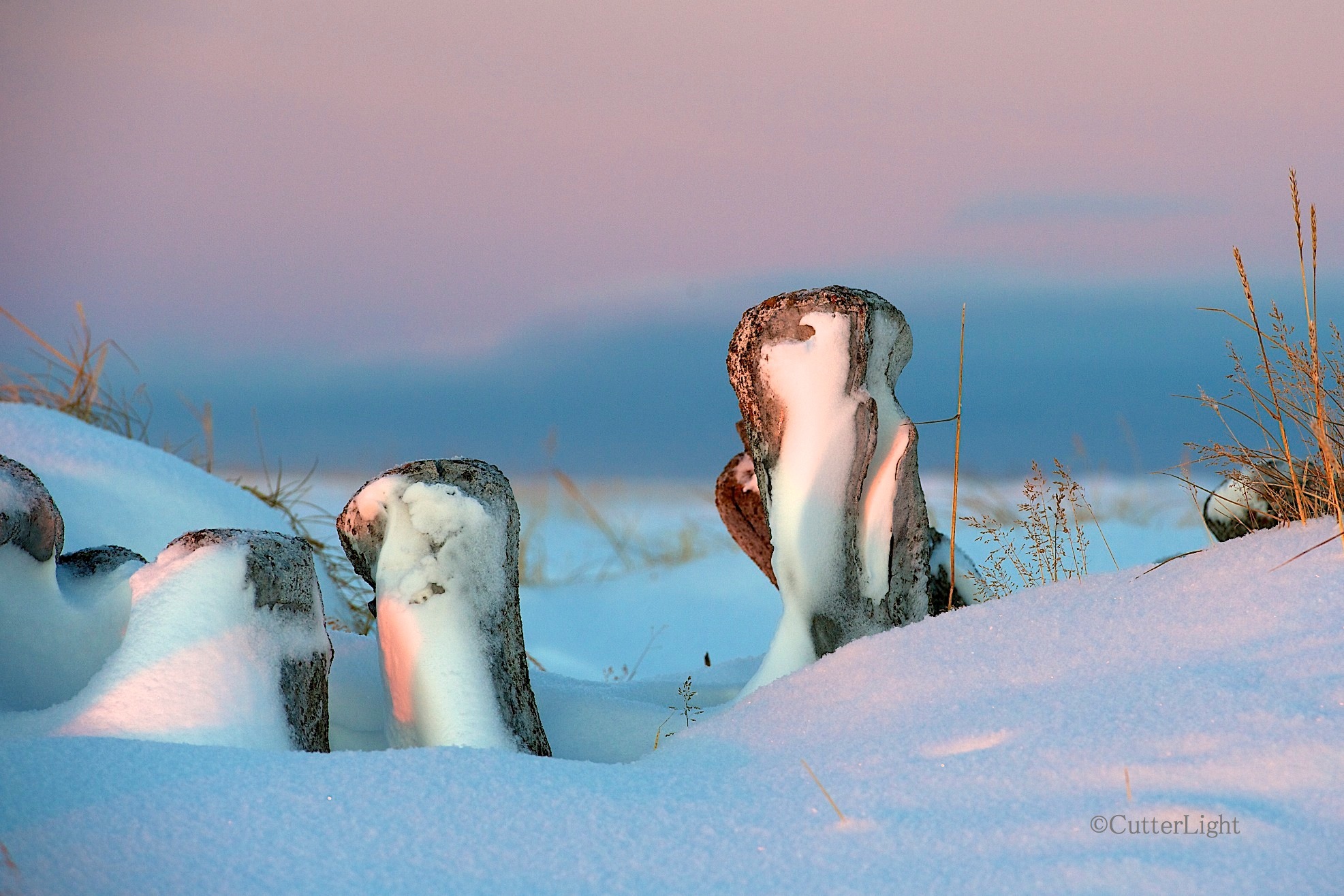
Whale bones mark a sod igloo buried in snow in the ghost town of Old Tikigaq, which was abandoned in the mid 1970’s. Although the sun is only in the sky briefly in November, it is a glorious time of year. This is the November light we have been waiting for.

A caribou hunting party stumbled across AEC engineers and para-military personnel encamped at the mouth of Ogoturuk Creek, near Cape Thompson. That’s when the questions and the lies began.

grass snow dawn n

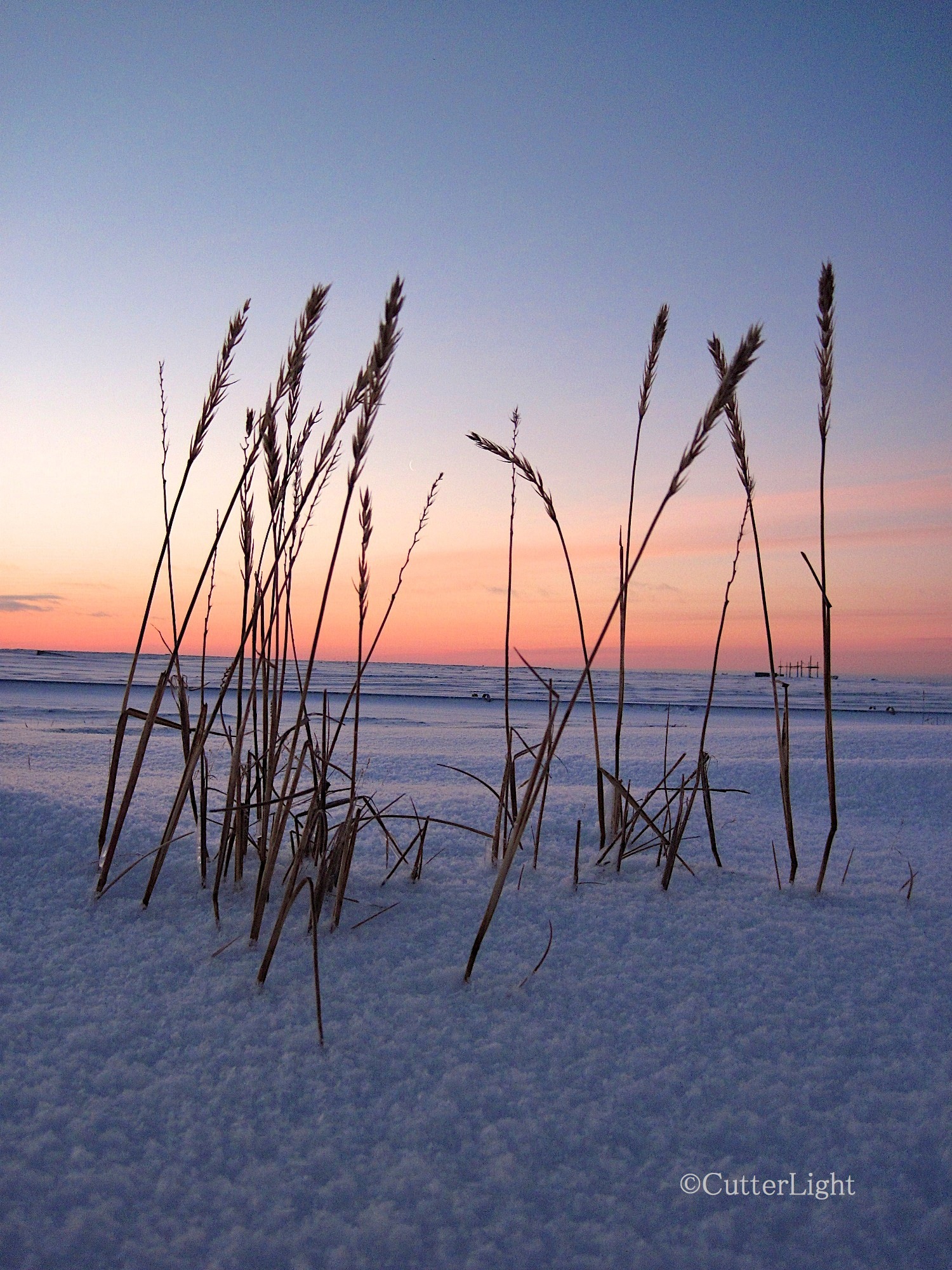
Grass silhouetted against the southern sky just before dawn, the frozen sea stretching to the horizon near Point Hope, Alaska.

In the end, Teller’s heartless plan was stopped. The bombs were never detonated. The experiment to determine how much radiation local flora, fauna and humans could survive was never carried out.

This is a story of heroes. There was Howard Rock, the co-founder of the Tundra Times, a highly educated, literate Inupiat leader who wrote the first, insistent letters to the United States government demanding that this plan be immediately halted. There were the white scientists from the University of Fairbanks, Pruitt and Viereck, who raised their voices against the project, and in standing up for the Inupiat people and standing against the government were fired by University President, William Wood, who played a less noble role in this story. There were the millions of citizens in the United States and all over the world who were in the streets, protesting nuclear tests of this kind. And there are the people of Point Hope who stood up to the government then and who are still fighting to force the United States government to tell the whole story of Project Chariot.

Because this story is not over.

old tikigaq house winter n

Over time, as erosion steadily ate away the finger of land jutting into the Chukchi Sea, the old town had to be abandoned. This fall, the entire area was inundated with water when high winds and hurricane force gusts pushed sea water over the rock sea wall protecting the north side of the point.

Although Teller lost his bid to detonate the world’s most destructive arms, in what feels like a tit-for-tat payback, under his direction, in secret, another group of engineers and military personnel were dispatched to the Project Chariot site. This time, they spread radioactive waste on the ground and in the stream. And they buried something there. Something in large, sealed drums.

To this day, the United States government has refused to divulge what was buried.

Since that time, the incidence of cancer has been higher than the national norm among the people of Point Hope. Higher than it should be, even taking into consideration other factors. These are some of the best people we’ve ever had the honor to be associated with. Kind, generous, resourceful, resilient, tough. Their government owes them answers.

whale jaw arches dawn n

Tell-tale tracks leave evidence that an Arctic fox was patrolling Old Tikigaq just before we hiked out. These whale bone jaws located near the airstrip a mile and a half from town welcome visitors to Point Hope. The area around Point Hope is one of the oldest continuously inhabited places in the Americas – maybe the oldest. While many Inupiat (Eskimo) cultures were nomadic, here the animals came to the people. The point of Point Hope formerly extended far to the west out into the Chukchi sea, bringing the land in close proximity to migratory paths of seals, whales, walruses, char, salmon and other fish. Two impressive capes, Thompson to the south, Lisburne to the north, are home to tens of thousands of sea birds. To the east, Point Hope is situated near the migratory route of thousands of caribou. The sea and the land are the garden that has sustained people here for thousands of years.

For more about Project Chariot, see the book The Firecracker Boys by Dan O’Neill. And although it is difficult to obtain a copy, there is an excellent, 73-minute documentary film titled Project Chariot, copyrighted 2013 NSBSD & Naninaaq Productions: UNCIVILIZED FILMS.

First Sea Ice, Point Hope 2013

snow arc point hope beach n

Wind and cold sculpted this mixture of sea spray and snow into a delicate arch. The sea ice has been late in coming to the Chukchi Sea this year. This photo was taken at 3:00 p.m. with the winter sun already skimming low on the horizon. Our month of day-long darkness will begin December 6.

The thick, slushy sea ice hisses and softly moans as it moves with the current past ice already frozen fast to shore. The hissing is vaguely reminiscent of a soft autumn breeze filtering through the dry leaves of oaks and maples in my native Pennsylvania. The moans sound like the muted voices of whales deep below the sea. All else is still, the ice stretching out as far as one can see. There is no wind, and there is no other sound.

sea jelly caught in ice n

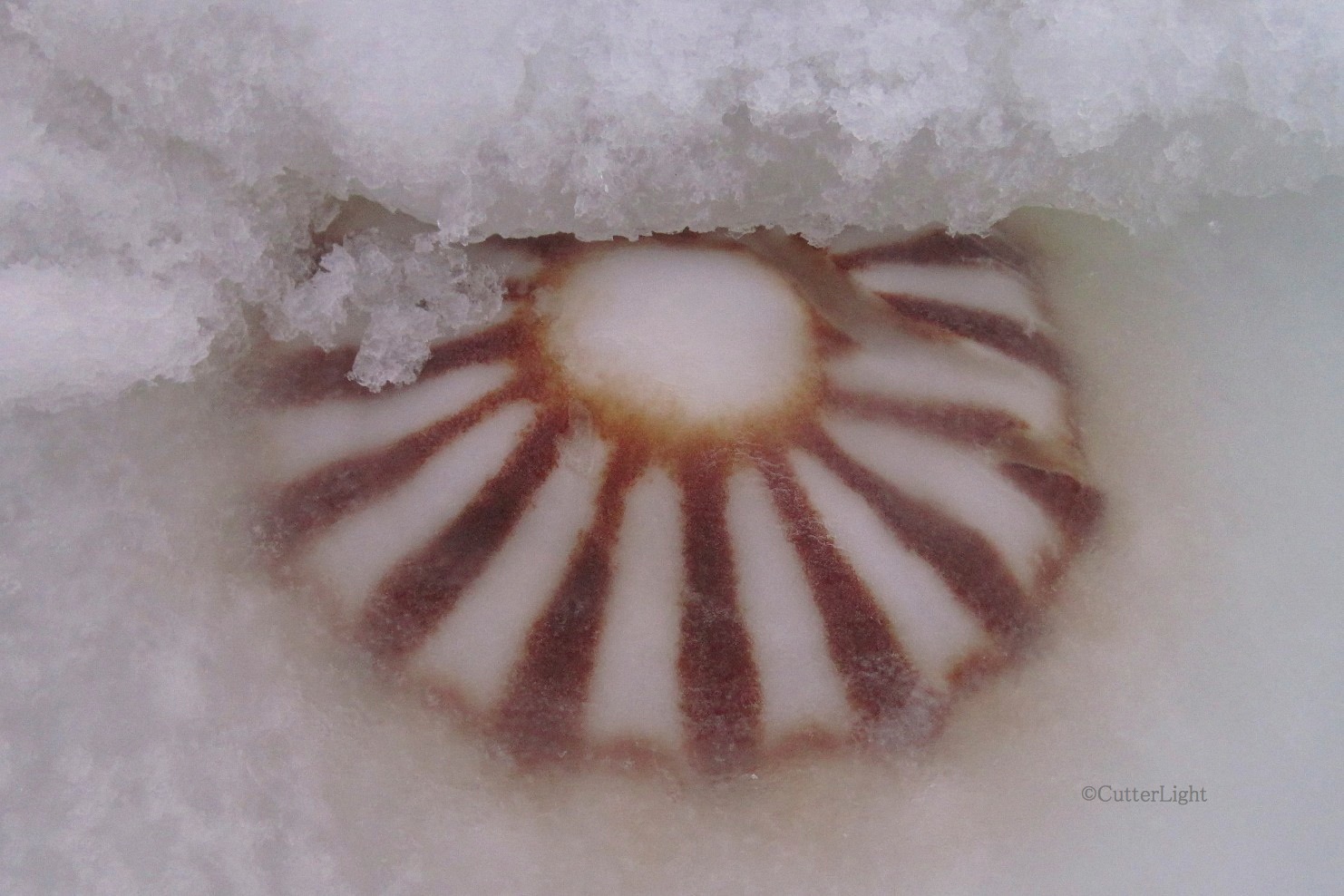
This sea jelly, entombed in shore ice, is about the size of a polar bear’s paw.

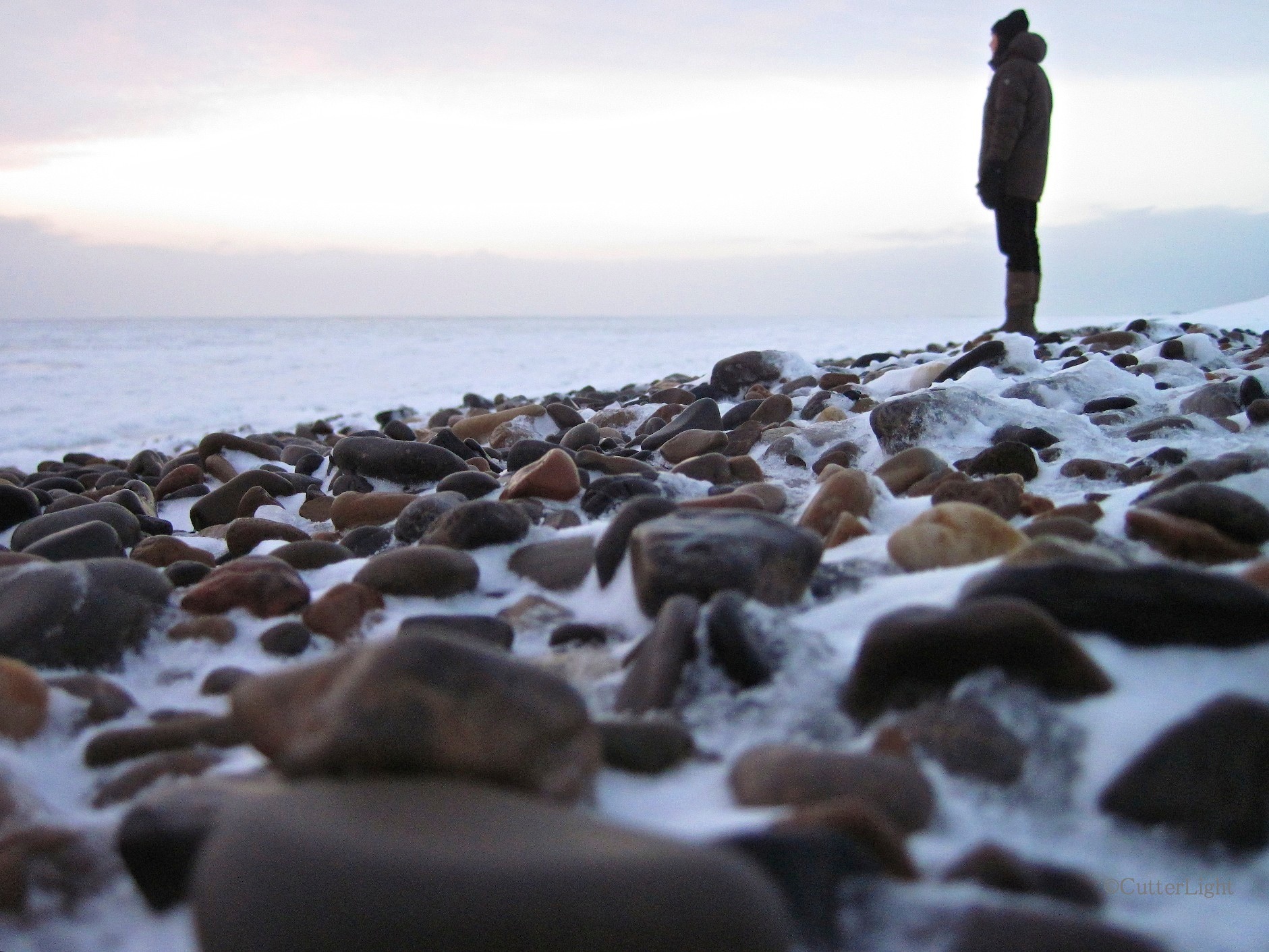
We searched for signs of life, perhaps a seal out on the ice or a snowy owl coursing the shoreline, or even the tracks of an Arctic fox. There is nothing, just the steady hiss of the ice as it flows before us. We walk along the pebbled beach for maybe a mile and finally spot a small group of ravens. Tough birds, making a living up here during the winter.

point hope frozen beach n

If you look closely among the rocks along the Point Hope Beach, it’s common to find jade. Less common are fragments of mastodon tusks.

first sea ice 2013 n

Thick ice prevents the shore from eroding during winter storms. Polar bears depend on the ice to hunt seals. Things are changing up here. The ice seems to be coming later, and there is less of it. Red foxes are becoming more common, pushing out their smaller Arctic cousins. Once winter truly locks up the sea and the sun sinks below the horizon, there is no place on earth that is quieter. It is cold and stark but beautiful. 

sea jelly caught in ice b n

We don’t always take our big cameras along on walks. Today we relied on “Little Blue,” our Cannon PowerShot D10, our trusty point and shoot.

Ptarmigan and Cloudberries: A Walk on Alaska’s Arctic Tundra

willow ptarmigan pair n

Looking almost like exquisite mounts in a museum diorama, these Willow ptarmigan (Lagopus lagopus) proved to be quite approachable. While hiking on the tundra near Point Hope in September we came across two coveys totaling about 20 birds.

cloudberries early frost

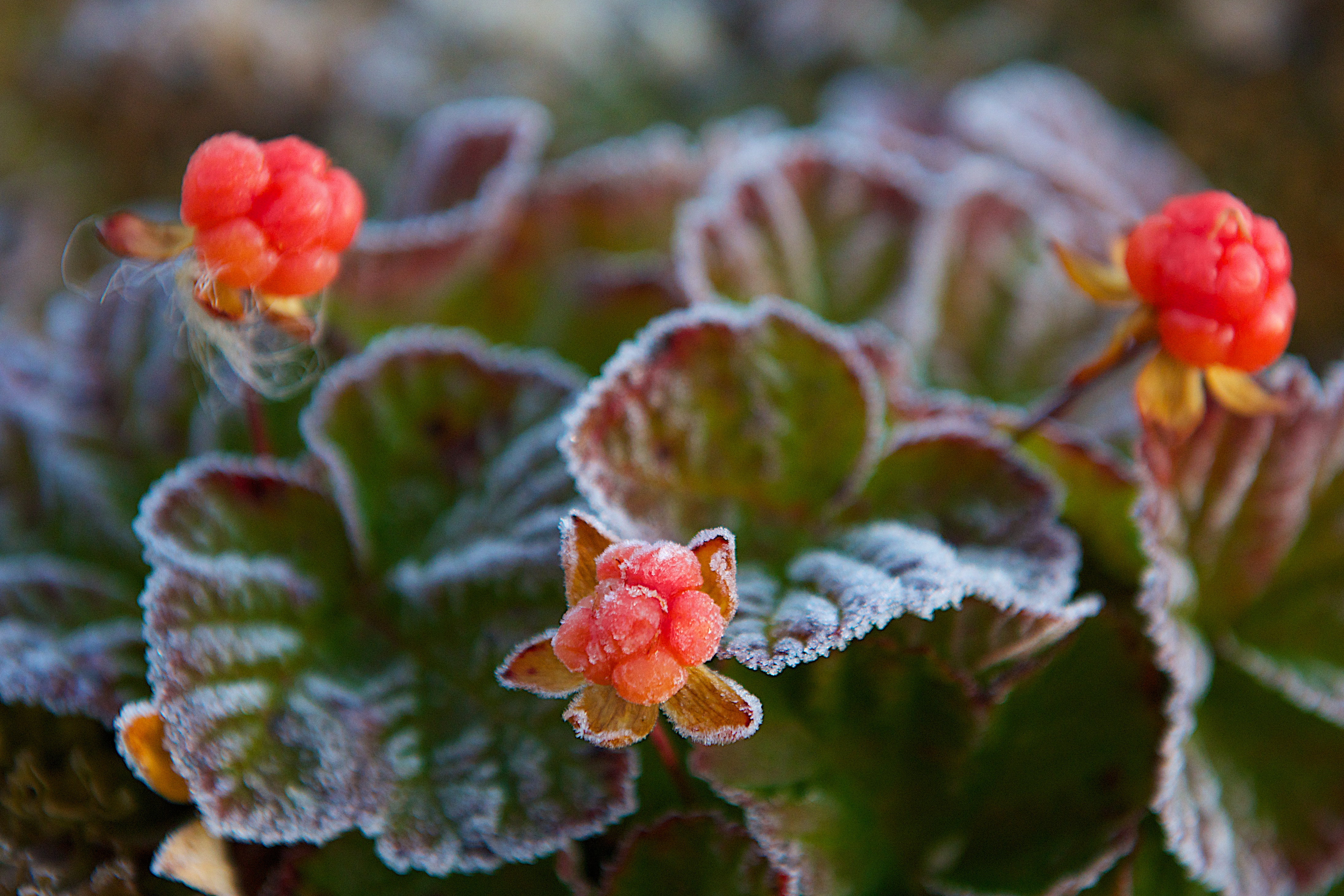
Nipped with frost, these cloudberries tasted like sorbet and were no doubt what had drawn the ptarmigan.

willow ptarmigan jack shooting n

Barbra cautiously approached the birds as I lay on my stomach, inching through the boggy terrain, shooting, hoping a few shots might come out.

willow ptarmigan solitary n

The plumage of these fall birds is in transition from the mottled browns and reds of summer to the snow white of winter. These are the same species as the red grouse of Scotland.

willow ptarmigan barbra approaching n

Barbra crouches and stalks closer to the birds. Note the densely feathered legs. The Latin lagopus translates to “hare foot” for the resemblance of ptarmigans’ feather-covered legs and feet to those of snowshoe hares. 

caribou antler fall tundra n

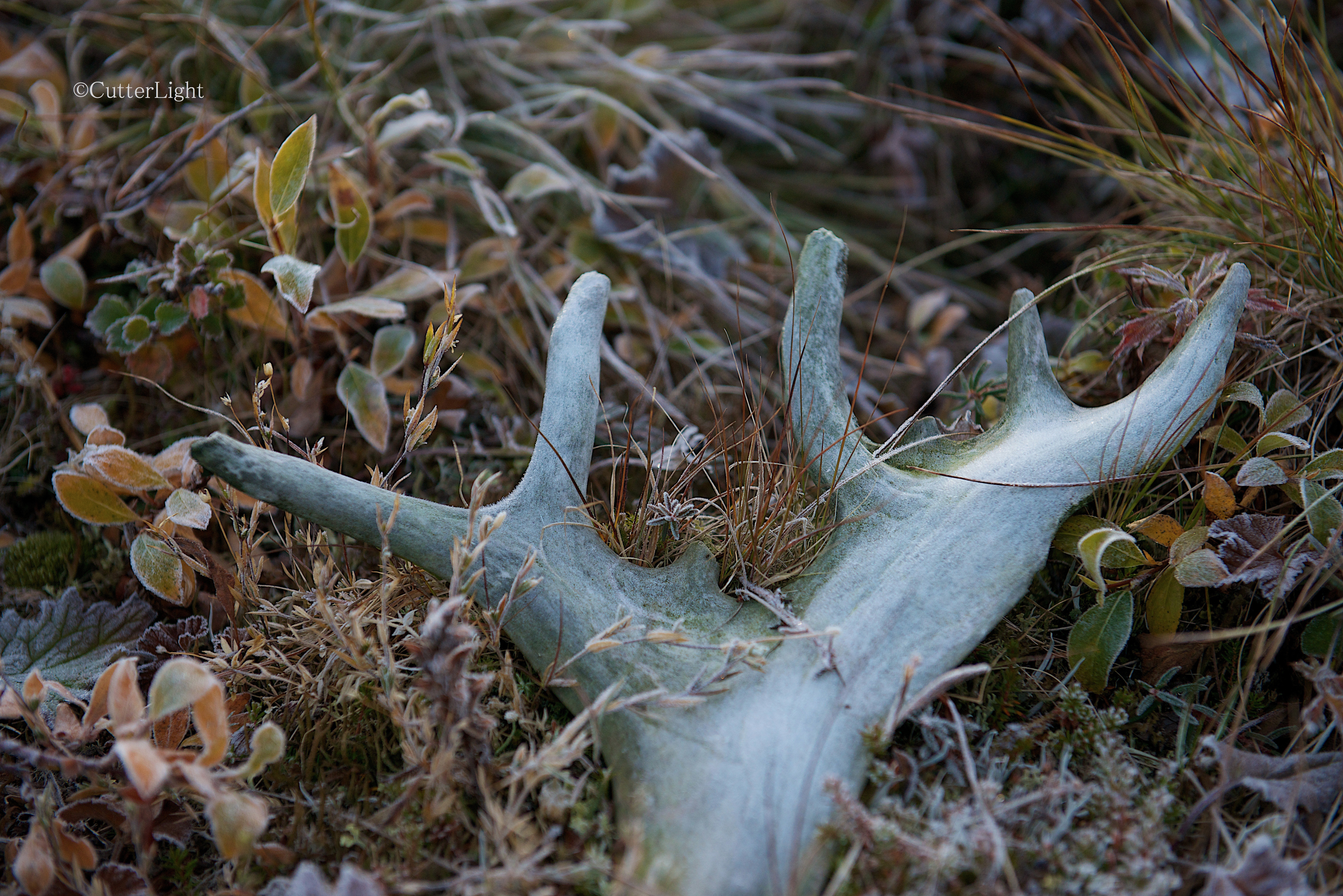
There’s always evidence of a rich ecosystem on the Arctic tundra. Caribou antlers, bird nests, animal burrows and an amazing array of plants are part of our walks.

brown bear track tundra beach n

Brown bears (grizzlies) are common visitors to the beaches and tundra near Point Hope. We found a set of fresh tracks along the shores of an inlet off the Chukchi Sea not far from where we encountered the ptarmigan. Red foxes, Arctic foxes, Arctic ground squirrels, weasels and caribou are frequently seen mammals. Wolves and musk oxen are less common, but also figure in the mix. In the foothills and mountains east of Point Hope there are wolverines and at higher elevations, Dall sheep. Rarely, moose are seen in the scrub willows along the nearby Kukpuk River, and during the winter months polar bears show up both on the sea ice and on land. 

snow geese lifting off n

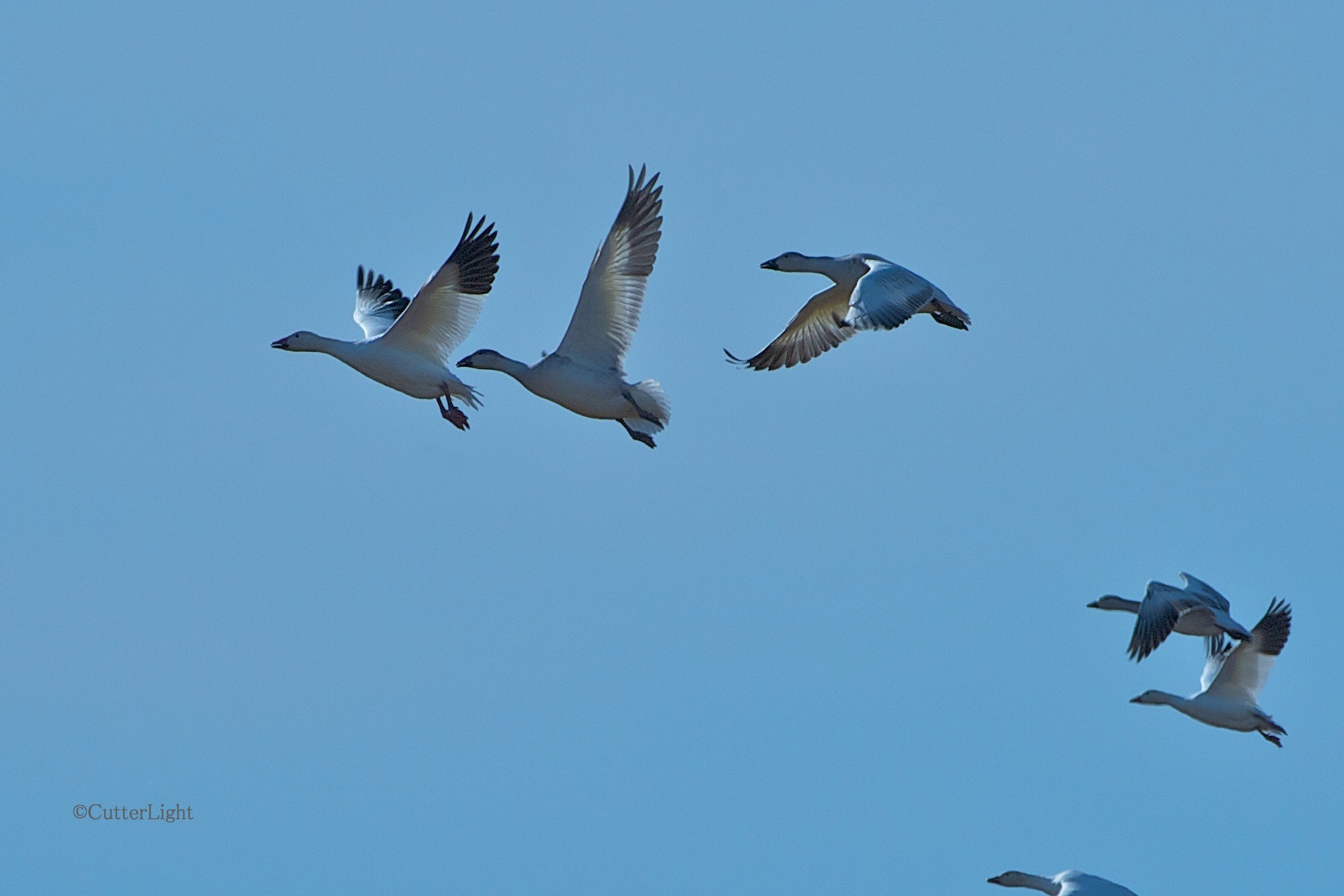
During the fall migration, snow geese are fairly common. (Above and below)

snow geese lifting off close n

Brandt, Canada geese, and a wide variety of ducks and shore birds are also common.

willow ptarmigan in flight n

When the ptarmigan finally had enough of us, they glided off a few yards, regrouped and resumed feeding. At that point we turned for home. 

cloudberries frozen in hand n

A handful of frozen sweetness for the road. 

cranes flying into the hills n

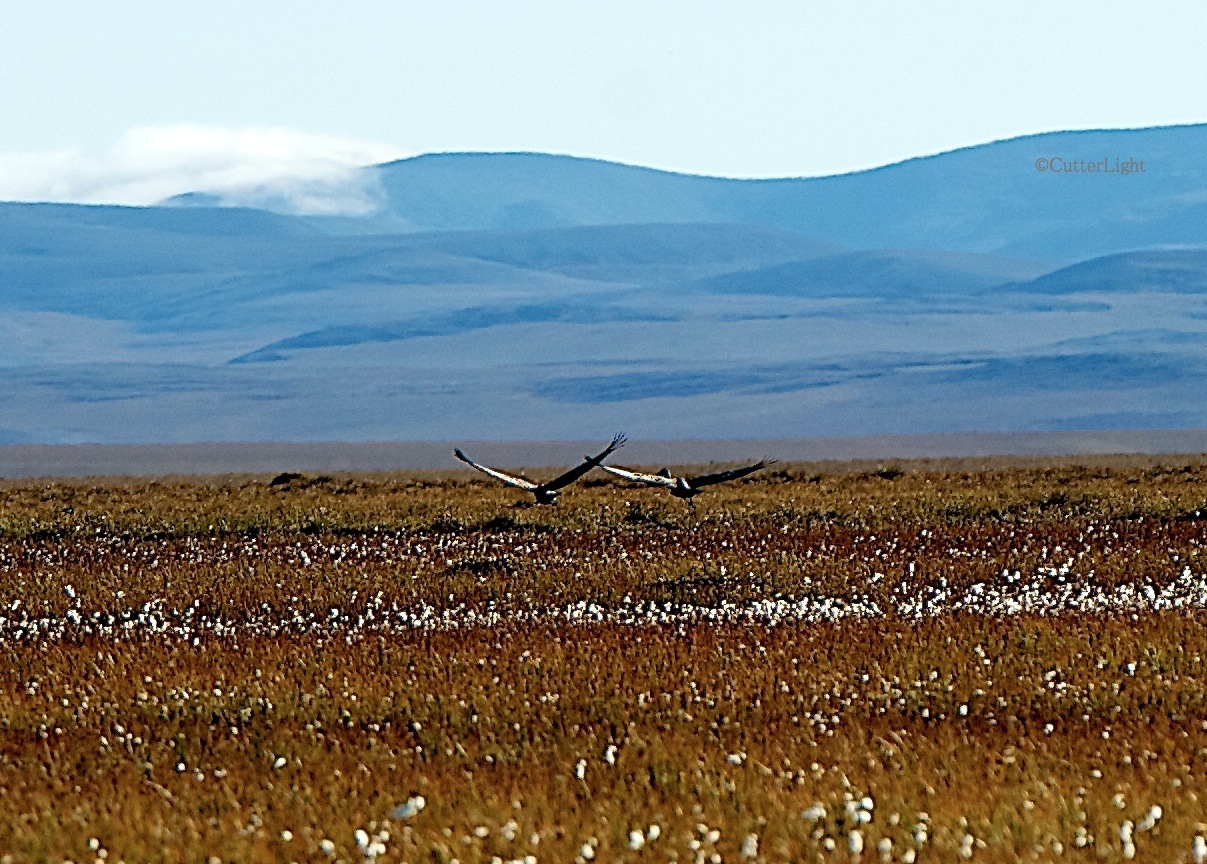
A pair of sandhill cranes lifts off above the last of the cotton grass on the tundra near Point Hope.

Bourbon and Vodka Vanilla Extract from Scratch: Do Not Open till Christmas!

vanilla w bourbon_n

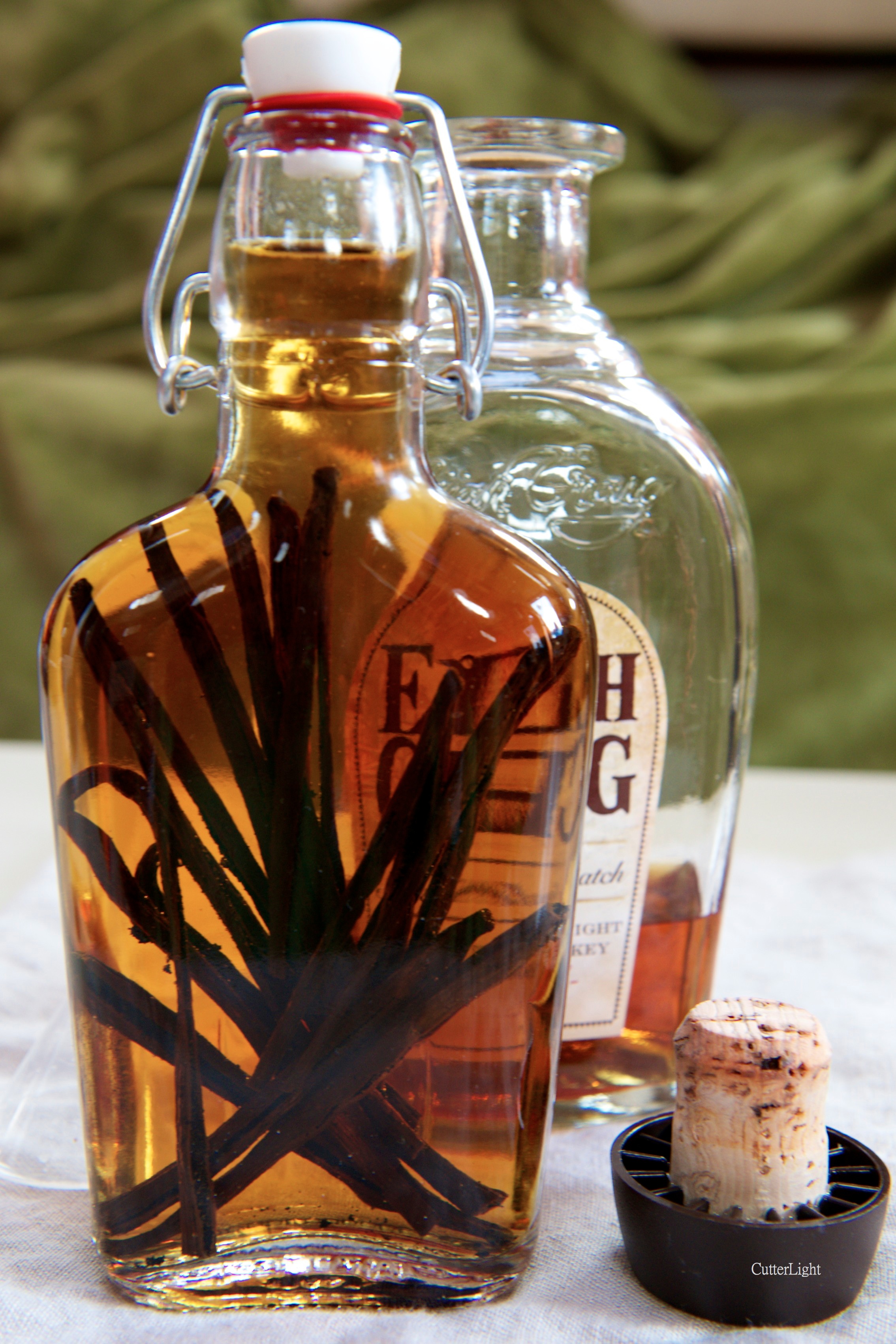
Quality Madagascar vanilla beans, bourbon in one bottle and vodka in the other, and the experiment begins. If all goes well, in six months we’ll have two excellent bottles of double-strength vanilla extract for our Christmas pies and confections.

Even when perfectly good store-bought products are available, we are fascinated by how various foods are actually made. For excellent vanilla extract, we know of no better than Penzeys Spices double strength. But we wanted to give making our own a go.

vanilla beans bourbon and vodka_n

We purchased our Madagascar vanilla beans from Penzeys. For the bourbon and vodka, we went with two well-known makers – a bourbon we enjoy sipping and a vodka that’s fine in our bloody Mary’s.

vodka pouring into bottle_n

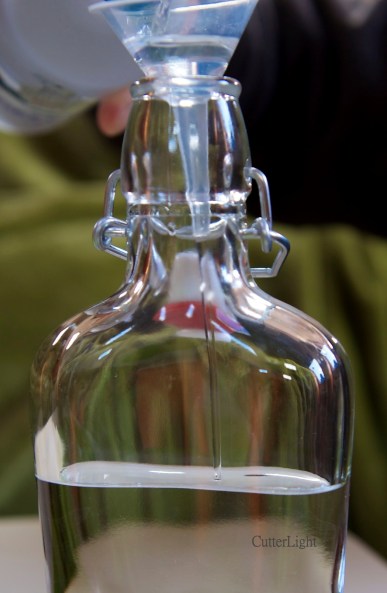
There’s really nothing to creating your own vanilla extract. We had 15 long beans which we cut in half, split down the middle, and placed in old-fashioned bottles with tight seals.

Whether the subject is sherry for cooking or bourbon for vanilla extract, an oft-repeated axiom is “Don’t use anything you wouldn’t drink.” That’s good advice, on par with adding seasonings “to taste” in recipes. On one hand, this isn’t the place to use the finest bourbon one might drink; on the other hand, in our own experience we noticed a marked improvement in our sauces and sautés when we moved away from lower end sherries and upgraded to more drinkable varieties.

.

bourbon pouring into bottle_new

Once the vanilla beans and alcohol have been combined and sealed tight, it’s helpful to give the bottle a gentle shake from time to time to ensure mixing and full extraction. For the richest, most flavorful extract, allow six months to go by before opening.

For this batch, that means we’ll be able to break the seal for Christmastime chocolate orange meringue pie, pecan pralines and extra rich vanilla ice cream.

The Year-End Pantry: Applesauce Caramel Cookies

Applesauce carmel cookies_n

Wrapping up another year in the Arctic before we go to our summer home in Seward, these caramel-topped applesauce cookies were a terrific way to work through the last of our supply of applesauce. 

A few lonely jars, bottles and boxes remain atop the cabinetry that lines the walls off our kitchen. Over five meters (sixteen-and-a-half feet) of uninterrupted shelf space that in August was packed tight to the ceiling with everything from chocolate to olives to nuts to jarred jalapenos is now mostly space. The remaining jars of salsa, soy sauce, sun dried tomatoes, Cholula and assorted other items stand like lonely sentinels overlooking our kitchen. It is the same throughout our house as freezers and pantries that had once been packed and piled with nine months worth of food are now nearly empty. And while our spice racks look full, it’s a deception. Many of the bottles are empty or nearly so. Our bulk order for next year went in to Penzeys Spices last week.

Applesauce is a healthful moistening agent in a number of baking recipes. It’s also terrific in oatmeal, as a blintz topping and in pancake batter, and makes for a light snack on its own. When we lived within driving distance of Northern California’s Apple Hill and the numerous orchards there, we made our own applesauce. Up here, we annually purchase a couple of cases of Tree Top Organic from Costco. The cookies in this recipe feature the fall flavor of applesauce in a light, soft cookie. The crunchy carmel-flavored topping adds another layer of sweetness and texture.

Applesauce Caramel Cookies

Ingredients

  • 2  1/2 cups all purpose flour
  • 1 tsp baking soda
  • 1 tsp baking powder
  • 1 tsp cinnamon
  • 1/4 tsp ground mace
  • 1 cup granulated sugar
  • 1/2 cup unsalted butter, room temperature
  • 2 eggs
  • 1 cup applesauce
  • caramel topping (see below)

Directions

  1. Preheat oven to 375 F.
  2. In a large bowl, sift together flour, baking soda, baking powder, cinnamon, and mace.  Set aside.
  3. Cream sugar and butter together.
  4. Add eggs and applesauce and mix well.
  5. Add in dry ingredients and mix until well incorporated.
  6. Drop tablespoons of batter onto parchment-lined baking sheets, 1 – 2 inches apart.
  7. Bake for 8 – 10 minutes, until edges of cookies begin to become golden brown.
  8. While cookies are cooling, prepare topping.

Caramel Topping

Ingredients

  • 3 tbsp unsalted butter
  • 1/4 cup heavy cream
  • 1/2 cup packed brown sugar
  • 3/4 cup granulated sugar
  • 1 tsp vanilla extract

Directions

  1. In a medium saucepan over medium heat, combine butter, heavy cream, brown sugar and granulated sugar.
  2. Cook, stirring occasionally until mixture just begins to boil and the sugars are melted.
  3. Remove from heat.
  4. Stir in vanilla.
  5. Scoop caramel mixture from pan with a teaspoon and drip onto cookies.
  6. Let caramel topped cookies fully cool before enjoying them.

Makes 3 dozen cookies.

Recipe adapted from Chef In Training

Waiter! There’s a Whale in my Soup! Beluga Chowder

beluga chowder spoonful_n

Not your everyday ingredient, beluga whale has a firm, slightly crunchy texture and delicious flavor making it a perfect ingredient in traditional seafood chowders. 

When a friend who is on a whaling crew recently offered us a few pounds of fresh beluga, we jumped at the opportunity to work with what for us is a new ingredient. The beluga chowders we’d sampled till this point had all started with beluga being added to canned clam chowder. We couldn’t wait to try beluga with our own recipe. The result was a rich, creamy, flavorful chowder.

We view all seafood through the lens of sustainability. Although commercial whaling and environmental factors have endangered a few of the world’s 29 separate beluga populations, in Arctic Alaska’s Chukchi Sea the species is abundant and appears to be unaffected by the relatively few numbers harvested for subsistence by Inupiat hunters. Typical belugas range in size from about 10 to 18 feet long and weigh between half a ton and two tons. Salmon and cod are among their preferred prey, but they feed opportunistically on a long list of other sea creatures. Interestingly, beluga’s closest relatives are narwhales.

Beluga soups and chowders are very popular among Eskimos. The skin and a little bit of the attached blubber is cut into slices about 1/16 – 1/4 inch thick (.25 – .5 cm) and about 1/2 – 1 inch in width and length. We cut ours thin – about 1/6 inch. Chunks this size become tender after about 10 minutes of simmering, with the skin retaining just the right amount of subtle crunch to it – a bit like conch or whelk. Using our favorite clam chowder recipe as a base, our beluga chowder had guests mopping their bowls with fresh-baked bread and asking for more. See recipe below.

beluga chowder bowl_n

Sweet corn, potatoes, bacon, butter, olive oil, sautéed onions, garlic, salt and pepper are a great base for all kinds of seafood chowder recipes. After that, whether the featured ingredient is razor clams, beluga whale or the assorted catch of the day is up to you. A little tarragon is nice, too.

Beluga and Clam Chowder

Ingredients:

  • 2 pounds beluga whale (skin with blubber), cut into slices 1/16 inch thick and abut 1 inch x 3/4 inch. Each piece should have skin plus about 1/4 inch to 1/2 inch of blubber attached.
  • 1 pound razor clams or other clams, chopped coarse (This is the weight of clams after they have been drained. But save and set aside their juice.)
  • clam juice you’ve set aside. The more, the better.
  • 4 1/2 pounds Yukon Gold or yellow potatoes. (These cook up creamier than than Russets)
  • 2 sweet onions, chopped coarse
  • 1/2 pound bacon, cut into small pieces
  • 4 cups milk
  • 2 cups heavy cream
  • 6 cloves of garlic, chopped fine
  • 1 1/2 pound sweet corn (optional)
  • 1/2 cup flour
  • 4 tablespoons olive oil
  • 4 tablespoons butter
  • 2 tablespoons sea salt
  • 1/2 tablespoon Italian seasoning (The Spice Hunter’s Italian blend is excellent)
  • 1 teaspoon freshly ground pepper (either black or rainbow)
  • 1 teaspoon dry tarragon, crushed (optional)
  • 1/2 teaspoon nutmeg (optional)
  • 6 – 8 very thin slices of lemon

Directions:

  1. Place sliced beluga in a pot. Add just enough water or clam juice to cover. Add a little salt. Over high heat, bring to a boil then reduce to simmer. Cook till beluga is tender (skin is easily pierced by a fork) but still a bit crunchy. About 10 minutes. Use a colander and a bowl to drain water, but keep water. Set beluga aside.
  2. Fry bacon pieces till tender. Do not crisp. Drain the grease and set bacon aside.
  3. Wash potatoes and remove any eyes, but do not remove the skins. Cut into ½ inch cubes and place in a large bowl. Cover with cold water, rinse and drain.
  4. Return water used for cooking beluga to pot. Add potatoes. If necessary, add additional water or clam juice to cover potatoes. Bring to a boil over high heat. Reduce heat and simmer till potatoes are tender.
  5. Meanwhile, place olive oil in a large skillet and heat over medium heat. Add onions, flour and seasoning (optional). Reduce heat and stir frequently for about five minutes until onions begin to turn translucent. Add garlic and bacon and stir again, cooking for about 1 minute.
  6. Add onion mixture, milk, cream, beluga, cream, salt and pepper to potatoes and water. Heat thoroughly, but do not boil.

Serve piping hot with sourdough bread.

See also: Alaska Razor Clam Chowder

Manhattan-Style Razor Clam Chowder

Alaska Seafood Chowder
Nose Pressed to Glass

Sea Ice1_n
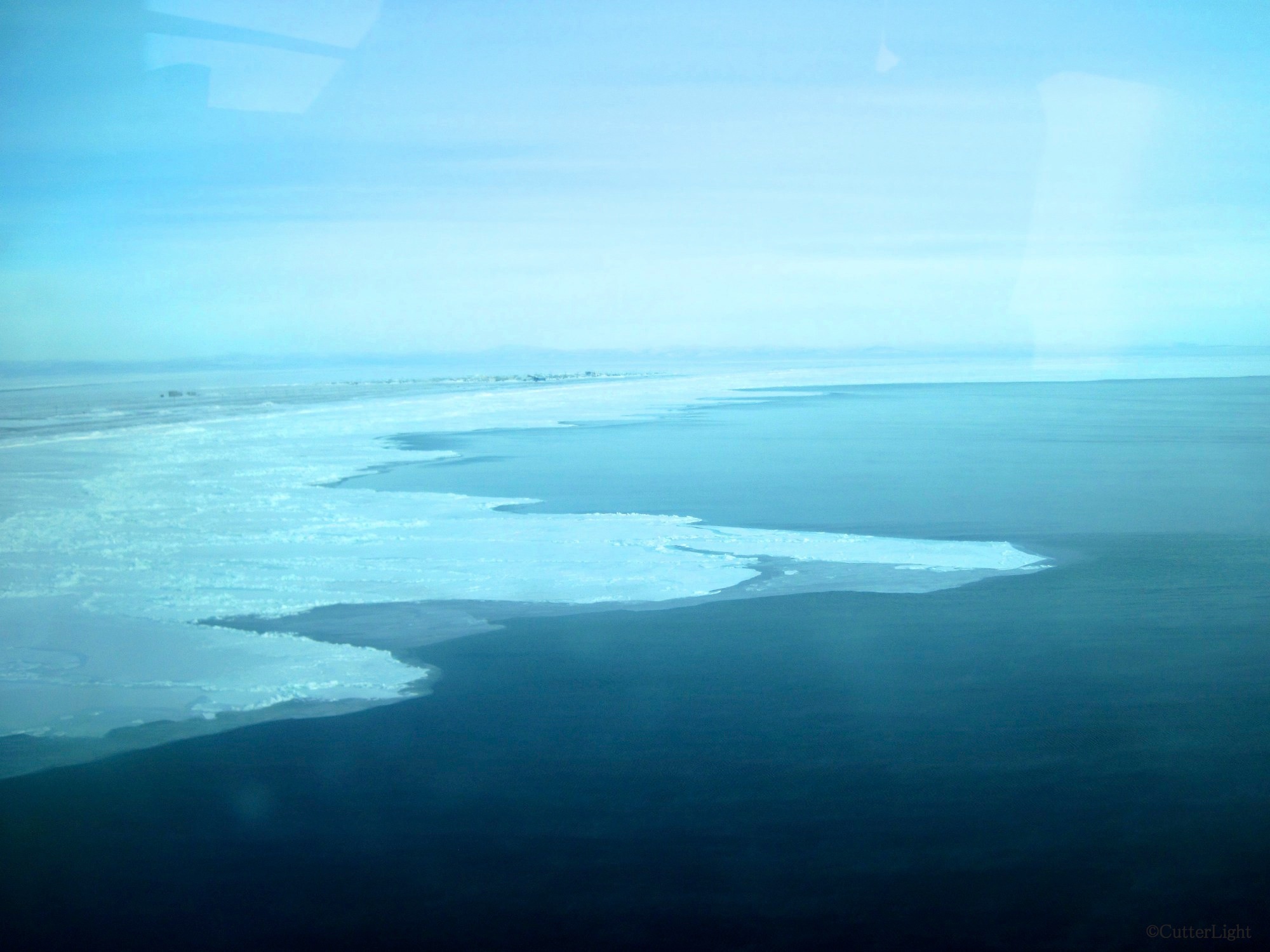
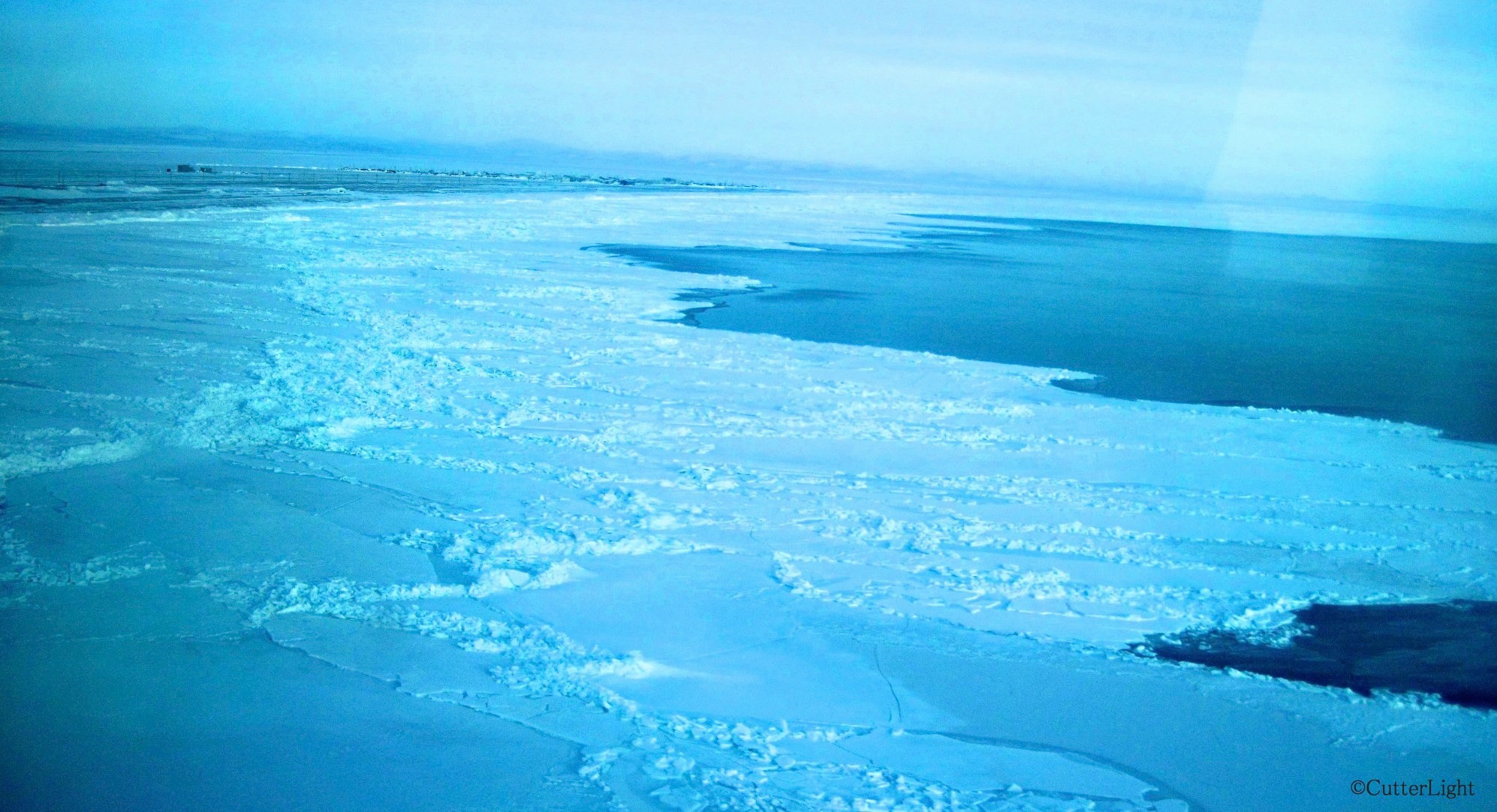
Sea ice fascinates us. Our village can be seen in the upper left of this photo. At the time of the photo, north winds had blown much of the ice away from the land. The “sticky ice,” the ice which clings to the shore, can usually be relied on to be safe to walk on. Even this sticky ice is subject to the whim of Mother Nature’s strong winds and current. 

Sea Ice2_n

Piles of ice form along pressure points of the frozen surface of the sea. There are many histories of boats navigating too late in the season and becoming stranded or crushed between these pressure points.

Sea Ice3_n

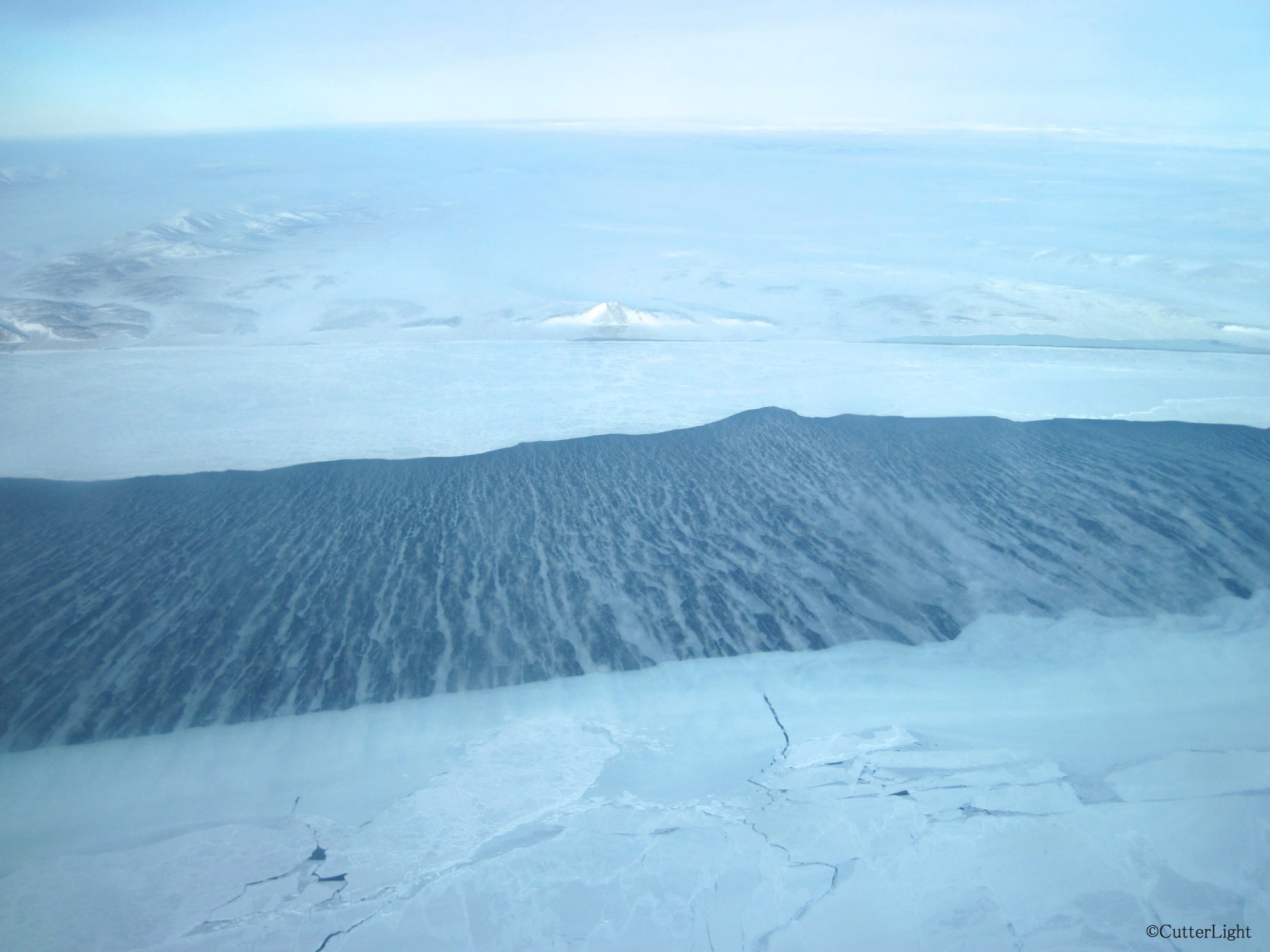
Recently, wind from the south has closed this lead – the open water to the right. The view from our village today is solid ice as far as the eye can see. The villagers are readying their seal skin boats to go whaling. Soon the bowhead migration will begin. When the north wind blows open a lead, the whaling crews of Tikigaq will patrol the open water in hopes of catching animals that are in their Spring migrations. These whales make up a critical part of the subsistence catch in this Inupiat village.

Project Chariot_n

I’ve recently been reading the book The Firecracker Boys. This true story is about a crazy post WWII idea some engineers and scientists had for using a nuclear bomb to blast a harbor between the peak in the center of this photo and the ridge on the left. This is about 25 miles east of Point Hope. The proposed  H-bomb  was to be 163 times the strength of the bomb that was dropped on Hiroshima. Scientists and engineers promised to sculpt the land based on human requirements. It was part marketing (using bombs for good) and part wild scientific experimentation. It’s a shocking and crazy true story!

PHO 1_n

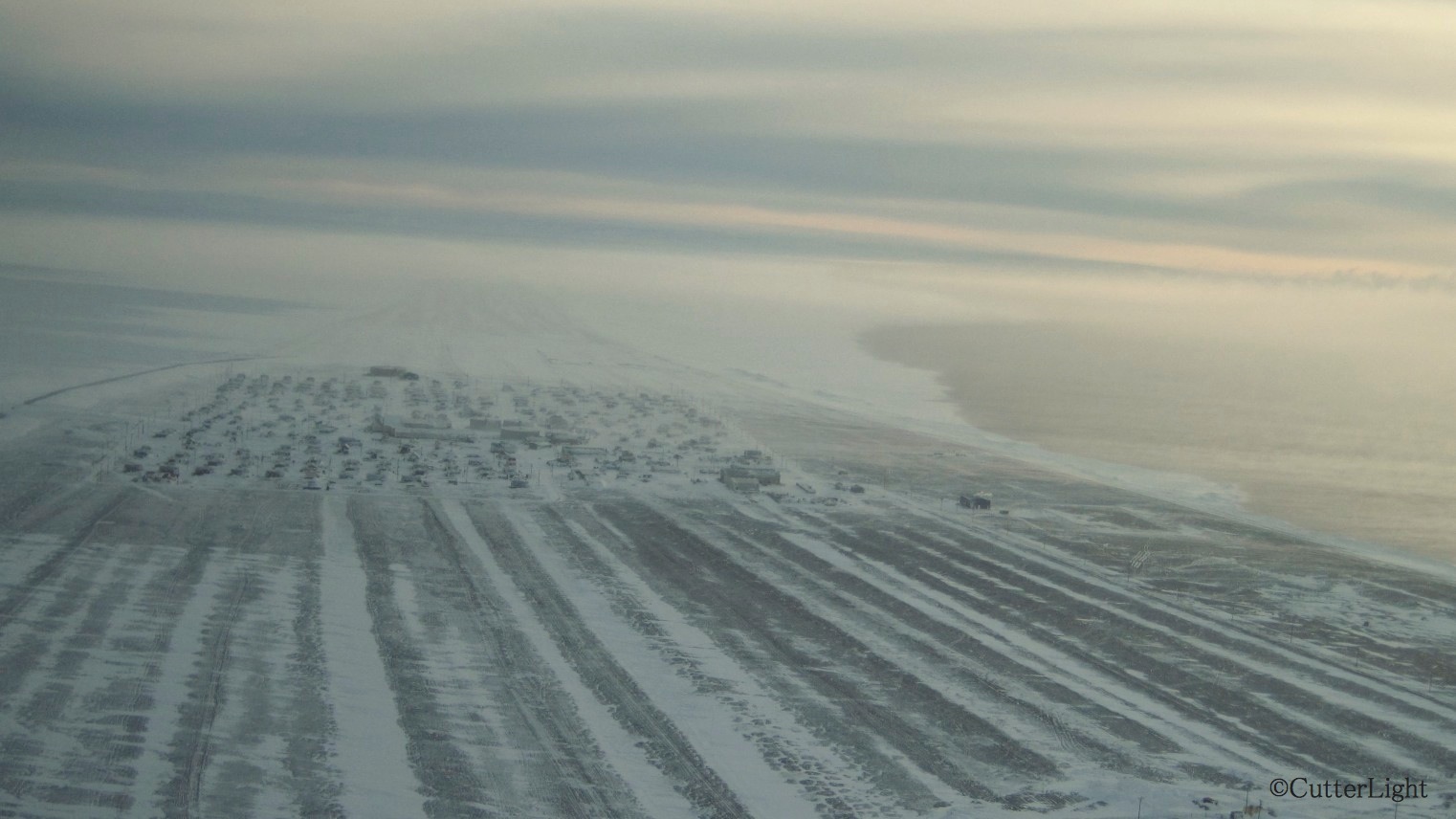
Nose pressed to glass, I peered out from the bush plane window as we lifted straight up, like a helicopter, in the 40 m.p.h. north wind. It seemed scary on the ground. With gusts well above 40 m.p.h., the plane arrived, landed on the airstrip and never turned into the usual parking area. I fought my way toward the plane, slipping along the airstrip as if being pushed down by a strong arm. Once in the plane, I felt calm and safe with skilled bush pilots at the controls.

PHO 2_n

From the air, the village looks like a patchwork quilt as rooftops peak above a blanket of snow. If the snow and ice were sand, Point Hope could be any beachfront real estate in the world!