Unknown's avatar

About Jack & Barbra Donachy

Writers, photographers, food lovers, anglers, travelers and students of poetry

Sunshine on a Snowy Day – Raspberry Lemon Curd Bars

Sunshine on a winter’s day… Lemon bars drenched in tangy-sweet raspberry jam

I love chocolate – in every form, flavor, and dish. I love dark, white, and milk chocolate. Except for a weird, avant-garde chocolate bar infused with pepper (??), I can’t think of a chocolate creation I haven’t enjoyed. Almost neck-in-neck with chocolate are desserts made with lemon. The difference with lemon is that it not only has a wonderfully tart flavor, but it also has a strong seasonal connection to summer. One bite or sip of lemon brings me back to sunshine splashed afternoons and evenings cooled by gentle breezes sitting in our little piece of paradise behind our home in California among Meyer lemon trees. When we moved to Alaska, I even made up a gallon’s worth of Meyer lemon simple syrup in order to ease the separation from those prolific trees.

As we hit the middle of March, our minds drift toward Spring! In our former life, I would be itching to get the planting pots and garden beds ready. In Chignik Lake, I’m ready to pull the Pack Rafts out and head down nearby rivers. Mother Nature has had three little words in response to these inclinations…”Not. So. Fast.” All the snow we didn’t see this past winter has been just now swirling around our windows and creating lovely white drifts. Our lake iced over, started to thaw, and is now covered in ice again.

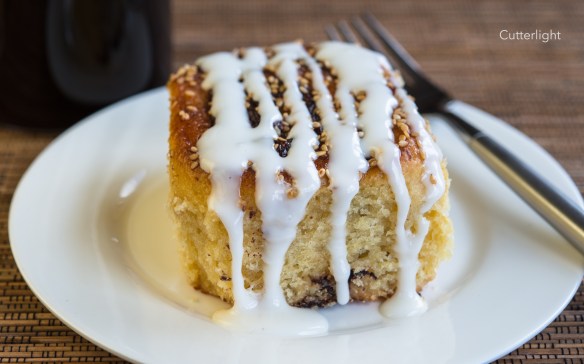
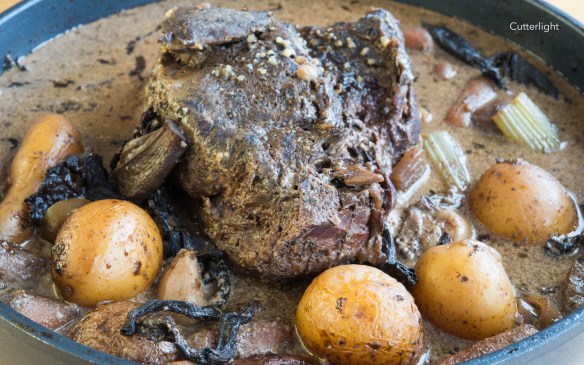
As Jack tends to his culinary diversion, a slow-cooked moose roast, I decide on my own diversion…one that will bring a little sunshine into our home. I took a tried and true lemon curd bar recipe from my Williams and Sonoma Baking Book and adapted it with items from my bush pantry. All I can say is Wowee! After the initial mix of sweet and tart lemon, you are rewarded with a blanket of pure raspberry bliss. A definite blast of summer, in the best way possible.

Raspberry Lemon Curd Bars

Ingredients

Crust

  • 1 cup all-purpose flour
  • 1/3 cup granulated sugar
  • pinch salt
  • pinch cinnamon
  • ½ cup unsalted butter, melted

Filling

  • ¾ cup granulated sugar
  • 2 tbsp all-purpose flour
  • pinch salt
  • 3 large eggs (I used powdered eggs)
  • ½ cup lemon juice (I used good quality bottled lemon juice)
  • 3 tbsp heavy whipping cream

Topping

  • Raspberry jam (I used freezer jam which has a much brighter color and flavor)
  • Confectioners’ sugar

Directions

  1. Make crust.
  2. Preheat oven to 350° F (180° C).
  3. Grease an 8-inch square glass baking dish.
  4. Mix crust ingredients together.
  5. Press dough into bottom of baking dish.
  6. Bake for 20 minutes. Crust should be a pale golden color.
  7. Let the crust cool in the baking dish on a wire rack while you prepare filling.
  8. Reduce oven temperature to 325° F (165° C).
  9. Whisk together filling ingredients.
  10. Pour the mixture over the baked crust.
  11. Bake until filling is set, about 20 minutes. It may slightly jiggle when dish is shaken.
  12. Let lemon bars cool in the dish on a wire rack for at least 30 minutes.
  13. When ready to serve, run a knife around the edge of the pan. Cut into 12 or 16 rectangles.
  14. Remove from dish with a spatula and place pieces to be served on a serving dish.
  15. Spoon desired amount of jam on each piece.
  16. Dust each piece with confectioners’ sugar right before serving.

Not yet done with Winter: White Bean & Butternut Salmon Sausage Soup

A great read,* a hot bowl of soup, memories of last fall and dreams of summer…

A cold snap has fallen on Chignik Lake. Middle March, and once again our our world in this remote corner of Alaska is blanketed in snow. This morning we woke to find our lake glassed off with ice, the flocks of Goldeneyes and Scaup that had gathered in the view out our window gone to find open water. Now and then our resident family of otters appears on the ice to take advantage of new fishing opportunities in mid-lake openings, happy to bask in the late morning sunshine. The silver bright salmon of last autumn have long since spawned and died.

As recently as January there were still a few late-run salmon clinging to life in feeder streams. Even those fish are gone by now, returned to gravel stream beds, becoming nutrients in the web of life their offspring will soon depend upon. Even the char have disappeared, huddled together somewhere in deep water, waiting for spring.

March is a month for tying flies and sorting through gear, a month for evening games of Scrabble and tucking into a good book. March is a month when the next generation of salmon are stirring in their redds and you imagine those tiny fish and even though the water is covered with fresh ice,  you think to yourself, “Spring is coming.”

March is a good time to make big pots of soups and big plans for summer. This soup is one of our favorites. I prepared the salmon sausage without using eggs and I added chorizo to give it some zip. I seasoned the sausage with an Italian herb blend and added additional ground fennel, which came through nicely. It’s soup, so experiment with ingredients to make it your own.

White Bean & Butternut Salmon Sausage Soup

Ingredients

  • 6 cups white beans (3 16oz cans)
  • 1 butternut squash, roasted or steamed until tender, rind removed, cut into cubes (or used canned pumpkin or squash)
  • 6 cloves of garlic, sliced thin
  • 1 shallot, sliced thin (or substitute a small sweet onion)
  • 3 cups chicken broth (enough broth to thin the bean & squash mixture)
  • 1 or 2 lbs salmon sausage (see recipe here). Or substitute any sausage.
  • sea salt
  • 1 tablespoon of a favorite spicy mix featuring powdered chipotle (See “Jack’s”)
  • olive oil

Directions

  1. Add a tablespoon or 2 of olive oil to a frying pan and heat over medium heat. Add the shallots and garlic and sauté until soft. Remove from heat and set aside.
  2. Using a stick blender, food processor or conventional blender, purée the beans, squash, garlic and shallots, adding chicken broth as you do this to create a thick soup.
  3. Add the purée to a large pot. Add additional chicken broth to achieve desired consistency. Stir in seasonings, bring to a simmer and cook for a few minutes. Taste to determine how much salt is needed and if additional seasoning is required.
  4. Add the salmon sausage and gently stir in. Allow to simmer for a few more minutes.
  5. Ladle into serving bowls, drizzle with a favorite olive oil, and serve piping hot.

*A River Never Sleeps, Roderick Haig-Brown, 1946

The Connections between Bears and Us: BEARTREK

“When we try to pick out anything by itself, we find it hitched to everything else in the Universe.” John Muir

Follow bear biologist extraordinaire Chris Morgan from the wild’s of the far north to the mountain deserts of Peru to the jungles of Borneo in this superbly filmed and narrated full-length wildlife documentary. Deeply passionate in his vision to positively affect the world, Chris’s premise is that if people understand and appreciate bears in all their amazing diversity, they will take action to help these fascinating animals, which will in turn help to safeguard our shared environment.We watched the film for free on Amazon Prime.

I (Barbra) have had the opportunity to interview Chris Morgan with students on two different occasions, a testament to how generous Chris is with his time and how dedicated he is to bringing his message to young people.

Have a wildlife documentary you’d like to let others know about? Leave a comment below!

Intrepid Trepidations

Staring at my readied bike loaded with gear for this summer’s epic adventure, I am filled with… fear, excitement, anxiety, worry, nerves…

I’ve read so many articles and blogs and books about traveling. The common theme in these stories is excitement. The stories often have a dramatic edge. In the spirit of excitement, there is often reckless abandonment of caution and unplanned success. The stories are invigorating and inspiring – always with a happy ending. As my bike stares back at me, daring me … I find myself thinking that I’ve never read the version of the story that started with a daunting case of nerves. This seems to be my story.

The inspiration for this summer’s adventure began a few lifetimes ago. When I was young, my family used to camp. I remember watching bicyclists loaded with camping gear trekking along California blue roads from the window of our VW Camper. I loved to ride my bike. And I was instantly in love with the idea of being self-sufficient on two-wheels trekking anywhere I wanted to go.

Anyone who has known me over the past few decades could testify that I am an adventurous person. I have been known to get up and go do something based on very little information, sometimes on just an idea that something would be fun. I have had many happy endings to those stories, just like those I have read. So why worry now?

I stare at my bike. Its panniers and fork bags puffy with camping gear. As if in answer to my question, the front fork bag of my bike falls off and spills.

It’s the logistics of this trip that make it like no other. I’ve always been able to fill a backpack or a suitcase and go. But this summer, the adventure includes more than what can be packed in a backpack. We’ve planned a trip that involves bicycling around a foreign country for three months. The activities on the trip are to include sightseeing, culinary adventures, fishing, photography, backpacking and maybe even pack rafting. Aside from test packing and other activities we can do to get ready while in Alaska, the additional logistics are mind boggling. In order to get this trip started, there is the first leg – which seems to be the most daunting of the logistics – we need to maneuver all of our gear from our tiny village of Chignik Lake, through the city of Anchorage and all the way to the north island of Hokkaido, Japan. The other part of the logistics is planning for daily mileage and making sure we are in good enough shape to pull off this physical adventure.

All this planning is, of course, in theory. I have so many questions… How many miles can we realistically bike? Can we carry all the gear we want to carry? Are we over packing? Are we forgetting something critical? Will our gear be safe from thieves? Will we be able to find campgrounds as easily as we hope? Will the roads be safe to ride on? Are we going to have trouble transporting our gear with the airlines? Is this too big an undertaking?

So, Jack and I sat down to tackle, not the questions, but the psychology behind the questions. Our discussion centered around the question, “Do we really want to take on a trip so far outside of our comfort zone?” The answer, it turned out, was a resounding Yes!

So, plane tickets have been purchased. The first test packing has been completed. Our trip itinerary is coming together. The bike and treadmill workouts are underway. And the faith that we are resourceful people is the response to those questions that really can’t be answered until we begin the journey.

And now I propose a toast: Here’s to another summer of epic proportions living well off the beaten path. Cheers!

Progressivism Always Prevails. Reasons for Optimism in the Aftermath of 17 Preventable Deaths

Above: The future. Below: I wrote the following letter to my daughter, Maia, and share it here. Have faith. Our side always wins in the long-run. Always.

Dear Maia,

I spent a good bit of the latter part of this past week looking at the images and listening to the voices out of Douglas High School in Parkland, Florida. It is incomprehensible to me that a teenager who can’t legally purchase a beer, or drive a car without a license, is able to legally purchase an assault weapon with the capacity to fire dozens of deadly rounds in a single minute. In fact, it’s incomprehensible that any civilian is able to legally own such a weapon.

Incomprehensible, that is, until one considers that the single most powerful political lobby in Washington is the NRA and that they own nearly every single Republican politician – politicians who, apparently, value NRA campaign contributions (and promises of post-retirement speaking fees) more than they value the safety of American citizens including our children and young people. The top 10 recipients of NRA money in both the U. S. Senate and the U. S. Congress are all Republicans. (Rather than provide a link to verify this, I encourage readers to do their own research in order to get a real sense of just how deeply the NRA has its claws into our Republican politicians. )

And so it should be no surprise that in his role as House Speaker, Congressman Paul Ryan, (Republican, Wisconsin) will permit neither meaningful floor debate nor a meaningful vote on anything that would curb the lucrative sale of guns in this country. Or that in the aftermath of one mass shooting after another, the only pleas he makes are pleas for non-action.

In the past election, Donald Trump received over $30 million in direct and indirect campaign money from the NRA. And so, again, it should come as no surprise that Trump has promised the NRA he will never sign legislation undermining gun sales. “You have a true friend in the White House,” Trump told the NRA.

Who, in Parkland, Florida, among the 14 dead young people and the three teachers and coaches who loved these kids and laid down their lives to protect them, and their families, and their friends , have a “true friend” anywhere in the Republican Party? Or the next 17 dead? Or the next 17? Or the 17 after that?

Even the majority of gun owners do not want these current lax laws to exist. (Anything you suspect I’m making, up, you should research.) It’s an NRA thing. It’s a Republican thing. It’s a $32 billion dollar a year gun industry thing.

Money over lives in the GOP party of coal, tax breaks for the rich, opposition to national health care, hostility toward education, unending wars on our environment and indifference toward the DACA young people who came to the United States with their parents. Build a wall, like they did 2,000 years ago in China. Have a military parade, like they do in North Korea. And keep taking NRA money.

With fellow Americans voting for Republican majorities in the House, the Senate and (by a minority vote only possible in America) giving the presidency to Trump, how can I be optimistic?

Maia, remember what I told you about ISIL? That this terror-war waged by a minority of Muslims was the predictable outcome of a variety of international policies and that over time it would subside? You can Google maps of ISIL’s gains and losses; they began steadily losing ground a few years ago. This is one of the few areas where Trump has kept Obama-era policies in place, and ISIL’s demise is continuing.

At the same time, countries inviting people from war-torn nations to enter their borders and to experience life in free, Democratic societies – to benefit from higher education, to make friends, to see the world through a more progressive lens, to reduce fears and misunderstandings on all sides – are doing more to defeat terror than all the bullets and bombs combined. The people of Sweden, Germany, France and other countries accepting émigrés have taken risks in opening their borders. They are heroic for doing so.

And they are on the right side of history.

Over the long haul of history, progressivism always win. Always. As a species, we periodically subject ourselves to bloody crusades, anti-science/anti-legal-system dark ages, tribal holocausts, authoritarian reigns of terror and the predictable aftermath of colonialism/neocolonialism and slavery. But along the longer arc, we slough off these primitive instincts, allow our better angels to guide us…

…and we keep moving forward.

And now we are here – at a day and age when, despite pockets of evil, on a scale never before even imagined in human history more people than ever are enjoying freedom, prosperity, access to education, health care, self-expression and art. If we can begin to address population growth, it will only get better.

Out of every darkness, there has come a time when a new generation has wrested leadership from their elders and demanded a new course. The overwhelming majority among the current generation now coming of age are rejecting the Republican Party’s backward push to coal, bigotry, misogyny, unsustainable growth, and Feudal era solutions to 21st century challenges (the wall).

And senseless access to guns that serve no purpose other than to kill fellow human beings.

I’ve been listening to the voices out of Douglas High… Emma Gonzalez’s being one of the strongest (do Google her)… And my heart is full. I’m optimistic that change is coming. Maybe not tomorrow… but it’s coming.

Because over the long haul, we always move forward. Progressivism prevails. And in the pursuit of optimism, patience is a virtue.

Love, Dad

JD, Chignik Lake, Alaska

Burn Barrel Love (Valentine’s Day)

Burn Barrel Love, Chignik Lake, Alaska

Waking to heavy snowfall a few weeks ago, we went out looking for wildlife. At the White Spruce Grove, Pine Siskins, Chickadees, Golden-crowned Sparrows and Dark-eyed Juncos were happily filling up on cone seeds and the food in our feeders. We’d heard there was a lynx in the area, and there are always foxes and wolves just beyond the village. We didn’t see much – just this pair of Ravens hanging out and enjoying a snowy moment at one of their favorite meeting places.


Four Days of Quiet Solitude (Except for the Hurricane-force Winds): The Cabin on Black Lake

Fire Mountain: Barbra got this beautiful photo of sunset rimming a mountain – possibly 8,200 foot Veniaminof Volcano, its top missing. That’s me left of center, shooting a closer perspective. During our stay at a nearby cabin, the forecast had been for temperatures in the mid 30’s (low single digits Celsius) and the usual 10 to 20 knot breezes. The subfreezing temperatures, heavy sleet and snowfall, and hurricane-force winds we experienced seemed to come out of nowhere.

Every night before we go to bed and every morning upon waking, I slide the dining room/living room window open and scan the lakeshore with a small, powerful spotlight. You never know what you’ll see. Though not necessarily at night, from these very windows we’ve seen brown bears, moose, foxes, owls, weasels, otters, eagles, falcons, beavers, a wolverine and a wolf, not to mention an array of waterfowl including cranes, swans, loons and ducks.

“You oughta take that spotlight and stay in my cabin up on Black,” Fred texted one morning. “You’d like it up there.” Fred’s Chignik Lake home sits atop a high bluff, big picture windows overlooking a good bit of Chignik Lake and the beginning of Chignik River. He spends a fair amount of time doing the same thing we do – scanning for wildlife.

Snow Bunting, Black Lake, Alaska. We’re told that in years past, Snow Buntings were common winter visitors to Chignik Lake. Recently, they’ve been scarce. Although the flock of three birds we came upon only gave me a chance for a couple of quick shots, I was happy to get this record for a project I’m working on to document area birds. (Stay tuned for more on this.) In addition to waterfowl, Black-capped Chickadees, Common Redpolls, magpies, eagles and a Northern Shrike rounded out the avian life we encountered. 

Fred’s text came on the last day of December, a few days before Barbra’s winter break was over. The two of us were antsy from days-on-end rain we’d been enduring through most of autumn and early winter. Fred’s offer wouldn’t change the weather, but it would change the scenery. We were in.

That evening we packed up our gear: down sleeping bags, rain gear, extra rain gear for when the first rain gear was soaked, cameras and binoculars, pens and journals, cookware, four days worth of dehydrated backpacking food, four sweet onions and four Fuji apples…

…and awoke the next morning to find that the weather had taken a nasty turn. Rain we can work with, but when winds started blowing spray off the whitecaps on the lake, there was no way Fred would be launching his skiff. “We’ll try again tomorrow,” we agreed. In retrospect, this squall which hadn’t been forecast should have tipped us off that our local weather patterns were unstable.

The following morning we rose early, hoping for the best. During winter, the sun doesn’t break over the mountains rimming our valley till sometime after 10:00 AM, but a flashlight cutting into the pitch black indicated that Fred and his friend Nick were already down at the beach getting the skiff ready. The wind had settled and a mist was falling under a lightless sky that swallowed the lake in inky darkness.

By nine o’clock the first crepuscular twilight silhouetted the mountains to the south. With breakfast behind us and a hint of light on the water, we loaded up the skiff and began the 18-mile run north up the valley. Pockets of near-freezing drizzle appeared and disappeared, prompting us to pull our hoods tight. The forecast – which up here is usually spot on – was for similar weather over the coming days with a few sun breaks mixed in. Ahh, sun breaks. This year, we’ve been living for sun breaks.

As we cut across the lake and proceeded up Black River, a loon and a few mallards and pintails lifted from resting places in coves and a pair of eagles were startled from their riverside perches. Most of the bears are denned up by this time of year, though here and there a few late-run salmon still cling to life in feeder streams. There’s always a chance of seeing a wolf.

Fins, January 2, 2018: The Chignik System is known to receive the latest salmon runs in North America. Still, we were amazed to find a few Coho in a nearby feeder stream near the cabin. More remarkable still, some of these fish appeared to spawning.

 A rim of shore ice at the mouth of the stream provided a dining table for otters, who left plenty of salmon scraps for ravens. Although we didn’t see the otters, evidence of their presence was everywhere. We also found signs of moose, foxes, weasels, hares and wolves. In fact, we have reason to suspect that at one point a wolf was just around the bend from us.

After the storm, a fully intact salmon carcass managed to find its way to the shore in front of our cabin – quite possibly plucked from a patch of open water and dropped by this very eagle. I grabbed this shot through a double-paned window – not ideal for a photograph, but what a handsome bird. The moment I opened the cabin door, she took off.

If you come across a single antler from a member of the deer family, it’s been shed, part of an annual process in which male deer, elk and moose grow antlers for the mating season and then lose them. If you come across an entire rack joined by skull bone, it’s the result of a kill. Some years ago, when Fred was scouting out the location for a cabin from his skiff, he came upon five wolves on a downed bull moose right on the beach where he hoped to one day build. Years later, someone found this rack in a nearby alder thicket – undoubtedly that same moose having been dragged there by the predators. 

Fred described the cabin he and a couple of friends had built as “sturdy, snug and cozy,” a spot-on description. Insulated from floor to roof and appointed with double-paned windows, the cabin’s 10 x 15 interior is just big enough to comfortably house a diesel heater, three-burner propane stove, hand-made wooden bed frames, small pantry, a table and three hand-made wooden stools. Snug and cozy. The lines looked square and sturdy, points that would soon be tested.

Once Nick got the heater going, the cabin was toasty warm in no time. Fred introduced us to the vagaries of the propane stove, pointed out the water catchment system (a bucket hanging near a roof gutter), and assured us once again that we were welcome to dip into any of the food in the pantry.

I muted the color in this pantry photo. The cabin’s door is never locked and the assortment of canned fish, deviled meat, rice and crackers could be a lifesaver for anyone caught in a sudden storm or out of luck with a dead engine. Although we brought plenty of our own food, I have to confess that the temptation of a skillet of fried Spam was more than I could resist, not having had this treat since childhood. It was, to my mild surprise, every bit as good as I remembered.

With winds pushing 100 miles per hour and sub-freezing temperatures, our water catchment system failed. Fortunately, the wind blew beautifully clear sheets of ice onto our shore.

Following two days of snow and sleet pushed by fierce, cabin-rattling winds, the sun rose serenely over a frozen lake Black Lake. Black River, which leads to Chignik Lake, begins in the gap between the mountains where the light is breaking through. If things didn’t warm up and melt the ice, there was doubt that Fred would be able to make across the lake in his skiff. Fortunately, by the next day the ice had thinned and lay in broken patches. We learned later that two of our neighbors in the village out on a different adventure had to be emergency rescued when the storm came up.

The view from the cabin shoreline after the storm passed: Although we didn’t get the waterfowl and wildlife encounters we’d hope for – and the weather certainly had our full attention for awhile – our four days on Black Lake were wonderfully memorable. And left us with this thought: Why aren’t we doing more landscape photography? New adventures lead to new thoughts, new studies, new goals. 

“Hope you guys get lucky and see some wildlife,” Fred said as he and Nick headed to the skiff. Motioning across the bay toward the far shore from where a racket of honking and quacking was issuing, he added, “Of course, those swans and ducks never stop chattering. They’ll keep it up all night.” I helped shove off the skiff, and as the last echoing hum of the boat was enveloped in the valley we’d just come up, we found ourselves wonderfully and utterly alone. Over the next four days, the only human-generated sound we would hear was the drone of a couple of bush planes flying into the village 18 miles to the south.

Sketching a novel outline at the cabin on Black Lake: Thirty-some years ago, aboard USS Blue Ridge, a friend and I made elaborate post-enlistment plans to go up into the Colorado Rockies, find a cabin, and live there for a year. We talked about the staples we’d need to lay in: flour, rice, coffee and so forth, the rifles and shotguns we’d take to hunt with, canning equipment, and the desirability of locating ourselves not overly far from a small town where we could reprovision as necessary. We would write. Fundamental to that objective would be pens and journals and a small, carefully selected library of literature. My friend got out a few months before I did… and disappeared. When I called the number he’d given me, his mother picked up the phone. She sounded distraught, with no idea where her son was. No one knew. I’m still not sure if we were kidding ourselves or if we’d really intended to go through with the plan, but either way I couldn’t see going it alone. When an acceptance packet came from the University of Colorado at Boulder, I took the door that was open. But I never completely let go of that idea… someplace quiet, off the grid, armed with books to read and journals to fill.

January 26, Chignik Lake, Alaska


Alaska White Bean Soup With Salmon Sausage and Reindeer Sausage

bean-salmon-reindeer-sausage-soup-022017-n

This zesty, robust soup will take the chill off even the coldest weather. 

We’d been thinking about creating our own salmon sausage for quite some time, but it took the beautiful recipes in our recently acquired copy of The Tutka Bay Lodge Cookbook to get off the stick. Turns out, there’s nothing to it. Use a food processor (or a stick blender with a nut chopper) to grind up salmon (or just chop it up fine with a sharp knife), mix in your favorite seasonings, and bind with egg whites. Tightly roll up this mixture to the thickness desired in plastic wrap, put a twist in the middle to separate the sausages, twist and tie off the ends, boil for 10 minutes, and voila! Salmon Sausage. Although we used Coho Salmon fillets from one of our summer catches, this same method would work beautifully with canned salmon. And there’s no reason to confine yourself to salmon. Chopped clams, halibut, rockfish, crab, scallops or some of Alaska’s spectacular deep water prawns could go into this sausage as well. We can’t wait to try this recipe again with some of our smoked salmon.

As to the soup… We created a minestrone-type broth using canned tomatoes. To that we added white beans, oven-roasted carrots, salmon sausage, reindeer sausage and Swiss chard. We also added sweet onions, colorful Swiss chard stems and garlic that had been sautéed in olive oil. Seasonings included oregano, marjoram, a little thyme and a splash of white wine. We finished the soup with smoked sea salt. Served with toasted sourdough bread and a homemade hefeweizen, this is a bowl that takes the chill off!

Where did it go? Bourbon Pecan Mini Skillet Brownie

This delicious little dessert was supposed to be for two. Fudgy, chocolatey, with a nutty crunch and a hint of caramely bourbon. Maybe it wasn’t enough!

We had just finished dinner – bowls brimming with homemade clam chowder served with a hunk of toasted garlic sourdough on the side. The forecast was for snow, but instead Chignik’s famously howling winds were slamming our house with torrents of icy rain blown sideways. Soup alone was not enough in the face of such weather.

We had a stash of chocolate squares to nibble for dessert, but even those didn’t sound satisfying. Something quick and freshly baked might do the trick, I thought. Armed with a six-inch cast iron skillet, a few tablespoons of this and a dollop that, 25 minutes later all that was left was the two bites you see above. Well, that’s not true. We paused for a photographic intermission and then devoured the last two bites. Now that was satisfying!

Bourbon Pecan Mini Skillet Brownie for Two

Ingredients

  • 5 tbsp all purpose flour
  • 6 ½ tbsp granulated sugar
  • 2 ½ tbsp Dutch processed cocoa powder
  • pinch salt
  • 3 tbsp vegetable oil, we use canola
  • 1 egg
  • 1 tbsp bourbon
  • 1/3 cup semi-sweet chocolate chips
  • 1/3 cup pecans, chopped coarse

Directions

  1. Heat oven to 350° F. Lightly grease 6” cast iron skillet.
  2. In a medium bowl, whisk together flour, sugar, cocoa powder and salt.
  3. Add in oil, egg, and bourbon.
  4. Stir until well mixed.
  5. Fold in chocolate chips.
  6. Fold in pecans.
  7. Spoon batter into prepared pan.
  8. Bake for 20 minutes. Center should look done. Cook a little longer for a more well-done brownie. We like ours nice and fudgy, so 20 minutes was perfect.
  9. Let cool for 10 minutes and then dig in!


Wild Salmon Sausages

Rain, rain and more rain here at The Lake – but any day that begins with a hot mug of joe, pumpkin waffles and tasty wild salmon sausages has gotta be great!

I first made these sausages when a wintery-cold weekend had us craving bean and sausage soup. With ample quantities of three types of beans in our larder, the bean part of the soup was no problem. But alas, the last of our store-bought meat sausages had long ago disappeared. Although I’d heard about salmon sausage, I wasn’t sure how to go about making them. Barbra came to the rescue. She recalled having come across a recipe while leafing through our copy of Kirsten and Mandy Dixon’s The Tutka Bay Lodge Cookbook.

The Dixons’ recipe is simple and lends itself to countless modifications. Any reasonably fatty fish works well, and scallops, shrimp, crab or other ingredients (think wild blueberries or lingonberries) can be feathered in to create unique and tasty variations. As for seasonings, we enjoy combinations of fennel or tarragon coupled with smokey chipotle pepper. Sautéing these sausages in soy sauce just prior to serving them or using them in other dishes adds a smack of umami.

Wild Salmon Sausages

Ingredients

  • 2 tbsp shallots, chopped fine
  • olive oil
  • 1 pound wild-caught salmon fillet, skin removed, or use canned salmon
  • 1 egg, beaten
  • 1 tsp ground fennel
  • 1 tsp oregano
  • 1 tbsp powdered chili mix – a mix that features chipotle, smoked paprika and mesquite works well. See here for a terrific DIY mix.
  • a pot of simmering water
  • soy sauce

Directions

  1. Heat a little olive oil in a skillet. Add shallots. Sauté briefly, just till shallots are cooked through. Place shallots in a large mixing bowl.
  2. Use a sharp knife to finely chop salmon fillet. Add to mixing bowl.
  3. Add egg, seasonings and spices to mixing bowl. Stir all ingredients together thoroughly.
  4. Arrange some of the salmon mixture lengthwise a couple of inches from the edge along a sheet of plastic wrap about 14 inches long. Leave a couple of inches of space at both ends of the plastic sheet. Roll/wrap the salmon mixture in the plastic, creating a sausage shape. At one third of the length of the sausage roll, gently twist the plastic wrap to separate the salmon into separate sausages. Repeat to create a total of three separate sausages.
  5. Twist the ends of the plastic to close. Rubber bands can be used to ensure the plastic stays closed.
  6. Repeat with additional plastic wrap sheets until all the salmon mixture has been formed into sausages.
  7. Place enough water in a large pot to cover the plastic-wrapped sausages and bring to a light boil. (A sauterne works perfectly for this.) Gently place the wrapped salmon sausages into the water and simmer for 10 minutes. Occasionally move the sausages to ensure that they don’t stick to the bottom of the pan.
  8. Remove sausages from water. Let cool and then unwrap them. (Left wrapped, they can be placed in a zipped plastic bag and stored in the freezer.)
  9. To serve: In a frying pan, heat olive oil over medium heat. Arrange sausages in the pan – they should sizzle. Drizzle each sausage with soy sauce. This will add an agreeable amount of salt and brown them up. Since they are already cooked, simply heat the sausages through.