Deep Dish Garlic Margherita Pizza

Uptown Chicago on the Chukchi Sea: Pan-fried garlic chips and lots of parmesan create a tasty topping for this Margherita-stye deep dish pizza. 

Barbra’s formative food experiences were considerably more worldly than mine. For her, deep dish pizzas were part of growing up. But I still vividly remember my first encounter with deep dish pizza. It occurred during my senior year of high school when one of my track teammates qualified for nationals in the javelin. The meet was in Chicago. When he got back, he raved about a strange and wondrous food called “Chicago Deep Dish Pizza.” The way he told it, a single lare slice of this thick, crusty, meat-and-cheese-stuffed pie would constitute a meal for a regular person.

After that, I kept my eyes open, hoping to find such a pizza on a local menu or in our supermarket’s frozen food section. But back then, in my small town in western Pennsylvania, there were no Chicago Style Deep Dish Pizzas. (I felt like an epicurean adding a little extra cheese and a sprinkle of Italian Seasoning on my frozen Red Barrons.) Many years later, when I finally did get the opportunity to try a deep dish pizza, it was at a well-known pizza chain where, not surprisingly, the experience was entirely anticlimactic.

I’m happy to say that I have finally experienced the gustatory joy of digging into an authentic, perfectly baked, zesty, cheesy satisfying deep dish pizza. Barbra kept the ingredients fairly simple, starting with a Margherita-style filling featuring diced tomatoes, slices of mozzarella, olive oil and a blend of Italian herbs. She topped this with shredded parmesan and pan-fried garlic slices. In our view, pizzas ultimately stand or fall on their crusts. This one was perfect.

Deep Dish Garlic Margherita Pizza

Ingredients

Crust

  • 4 cups all-purpose flour
  • 3 tbsp yellow cornmeal
  • 2 3/4 tsp yeast
  • 1 3/4 tsp salt
  • 4 tbsp olive oil
  • 4 tbsp butter, melted
  • 1 1/4 cup water

Filling and Toppings

  • 3/4 lb. mozzarella cheese, sliced
  • 28 ounces (two 14 ounce cans) of diced tomatoes, drained thoroughly
  • 3 tsp dried Italian seasonings
  • 1 tsp dried garlic powder
  • 1 cup freshly grated Parmesan cheese
  • salt and pepper to taste
  • garlic chips (see recipe below)

Directions for Crust

  1. Preheat oven to 400 degrees F.
  2. Place the crust ingredients in the bread machine pan in the order recommended by the manufacturer.
  3. Turn on dough setting.
  4. Place the dough in a lightly oiled bowl.
  5. Oil a pizza pan or two 9-inch pie pans by pouring a couple of tablespoons of olive oil in pan and tilting it to cover bottom(s).
  6. Stretch the dough to make a large circle. Do this with your hands or with a rolling pin on a lightly oiled surface.
  7. Lay the dough in the pan and stretch the dough up the sides of the pan. Cover and let rest for 15 minutes.
  8. Bake crust for 10 minutes until set and very lightly browned

Directions for Filling and Toppings

  1. Combine tomatoes with herbs, garlic, salt and pepper.
  2. Cover the bottom of baked crust with mozzarella slices.
  3. Add tomato mixture.
  4. Sprinkle parmesan cheese on the top.
  5. Top with garlic chips (See below).
  6. Bake pizza for about 25 minutes. If edges begin to brown too much, cover edges with foil during baking. When finished, pizza filling should be bubbly and top should be golden brown.
  7. Allow pizza to cool for about 10 – 15 minutes before serving.

Garlic Chips

  1. Slice 6 large cloves of garlic into thin slivers.
  2. Heat olive oil over medium-low heat in a medium frying pan. Add garlic slivers and sauté until just browned and edges are crisp.
  3. Remove chips from heat and drain on paper towel.
Burebrot or Swiss Farmer’s Bread

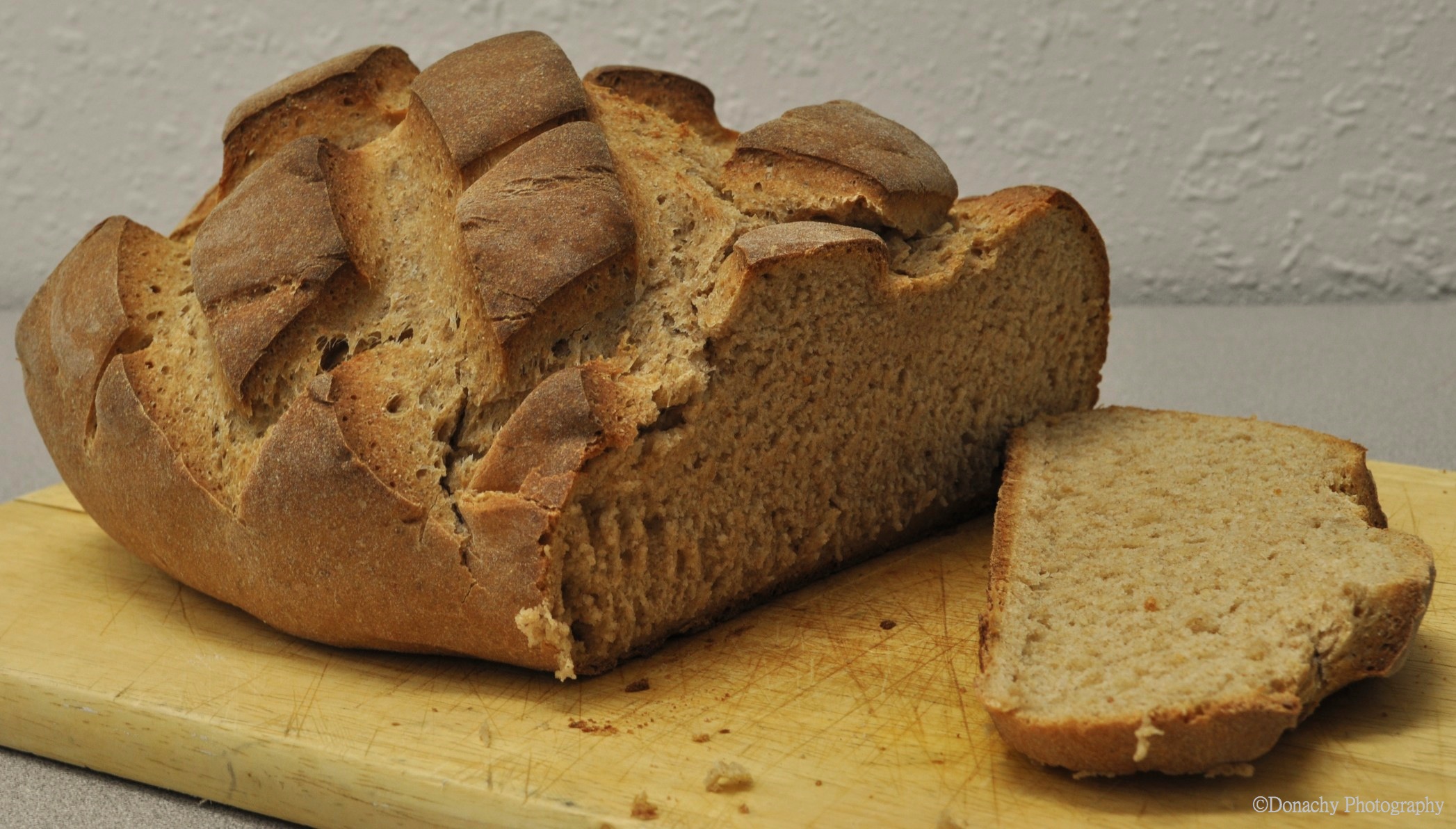
Just waiting to be slathered with fresh butter and a favorite jam, you can almost hear the crust crunching on a slice of this rustic Swiss Farmer’s Bread.

One of my fondest childhood memories is of visiting my favorite auntie in Switzerland and talking with her in broken English and Swiss over my favorite breakfast: cafe mit schlag with a schniteli: milk coffee and farmer’s bread slathered with freshly made creamery butter and jam.

As I began baking different kinds of bread last year, I wanted to see if I could create Burebrot in my own kitchen. It turned out that every recipe I could find included rye flour. So, I had to wait until this fall, after we did our annual summer shopping.

After the bread finished baking, Jacked whipped up a small pot of tasty broccoli soup. I cut two generous pieces of Burebrot and topped them with butter. The bread was just the way I remembered it: hearty and wonderfully crusty. This is the perfect bread to pair with a slice of savory swiss cheese. We have a few pounds of rye flour for the year, so this bread will be making several encores.

The following recipe is a result of adaptions of several recipes to match the ingredients that are in my pantry. I processed the dough in my Zojirushi bread machine so it would rise properly in my Arctic home.

Burebrot

Ingredients

  • 8 oz buttermilk
  • 7 oz water
  • 2 2/3 cups all-purpose flour
  • 1 1/4 cups whole wheat flour
  • 1 1/2 cups rye flour
  • 3/4 tsp salt
  • 2 1/2 tsp dry yeast

Directions

  1. Place the above ingredients in the bread machine pan according to the manufacturer’s recommendations.
  2. Turn on dough cycle.
  3. Preheat oven to 400 degrees F.
  4. Shape the dough into an oval on a baking sheet lined with parchment paper. Cover and let rise for 30 minutes.
  5. Cut a lattice pattern into dough with a sharp knife.
  6. Bake for 40 – 45 minutes. Bread will be crusty when finished.

Coffee Ice Cream

Patiently steeping coffee beans in a cream mixture base creates an ice cream infused with coffee flavor.

When I suggested coffee as an ice cream flavor to Jack, he shrugged his shoulders, obviously not impressed. But it’s one of my favorites, and since it seemed like I’d come up with the right egg ratio for the ice cream base, I ignored his indifference and went for it. I could already imagine my creamy cold dessert topped with homemade fudge. The process of steeping coffee beans in a custard base brought the coffee flavor to life. Jack’s response after a sample of the final product? “Wow!” That’s what a cook wants to hear.

Coffee Ice Cream

Ingredients

  • 1 cup whole milk
  • 3/4 cup granulated sugar
  • 1 1/2 cups whole coffee beans
  • 2 cups heavy cream
  • 5 egg yolks
  • 1 tsp vanilla extract

Directions

  1. Heat cream and milk in a medium saucepan over medium heat.
  2. Add coffee beans and sugar and heat until mixture almost boils, about 5 – 8 minutes.
  3. Remove from heat, cover and let steep for one hour.
  4. Beat yolks and vanilla until the mixture is light yellow and smooth.
  5. Strain coffee beans out of coffee mixture. Leave any remaining specks of coffee.
  6. Reheat coffee-cream mixture until it almost boils.
  7. Add 4 tbsp on hot cream mixture to egg mixture and stir until combined. This will temper the eggs.
  8. Slowly add warmed yolk mixture to warm cream back into saucepan. Stir continuously in order to not cook/curdle eggs.
  9. Cook entire mixture over low heat until slightly thickened and mixture coats the back of a spoon.
  10. Cool completely. I put the mixture in the refrigerator overnight before I use it.
  11. Pour into freezer bowl of ice cream machine. Turn machine on and mix until mixture thickens, about 20 minutes.
  12. Transfer to airtight container and place in freezer until firm, about 2 hours.

Cinnamony Sugary Buttery Cookies

These cinnamon vanilla snaps are addicting! They key is in the ingredients…

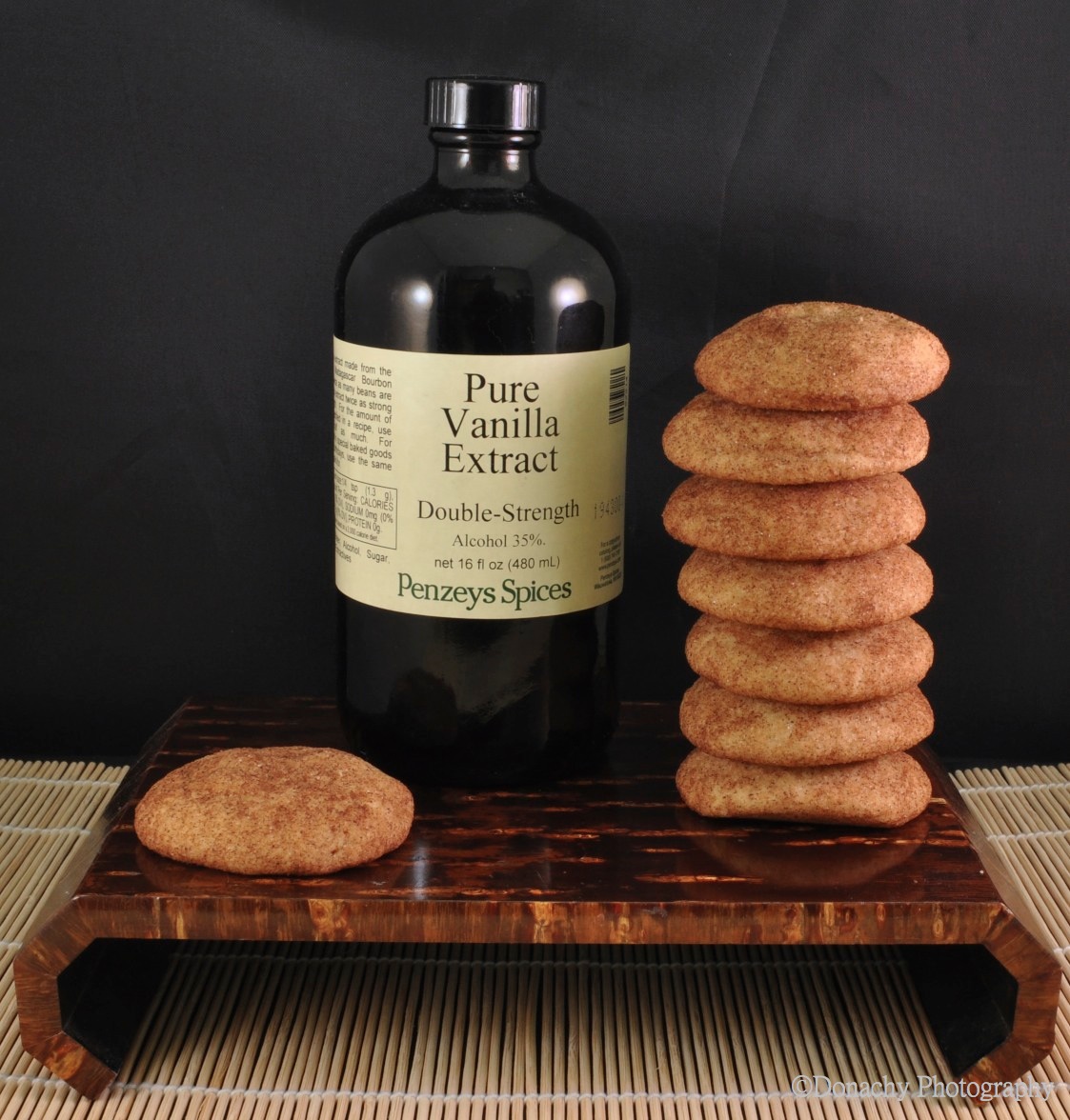
A secret behind the best pies, cookies and breads is that they start with excellent ingredients. Organic butter from grass-fed cows and Bob’s Red Mill all-purpouse flour give these cinnamon sugar cookies a head start, and Penzeys double-strength vanilla extract put them at 11 on a 1 – 10 scale! The “double-strength” description is spot on; you truly only need half the required quantity of vanilla recipes call for and the flavor is divine. High-quality Saigon cinnamon added the final touch. These cookies come out of the oven ready to melt in your mouth!

Cinnamon Sugar Cookies

Ingredients

  • 1 1/4 cups all-purpose flour
  • 1/2 tsp baking soda
  • pinch salt
  • 1/2 cup packed brown sugar
  • 1/4 cup granulated sugar
  • 1/2 cup unsalted butter, softened
  • 1 egg
  • 1 tsp vanilla extract (or 1/2 tsp Penzeys double-strength)

For topping –

  • 1 1/2 tbsp granulated sugar
  • 1/2 tbsp ground cinnamon

Directions

  1. Preheat oven to 300 degrees F.
  2. In a large bowl, mix together sugars at medium speed.
  3. Add butter and mix until incorporated.
  4. Add egg and vanilla and mix until light and fluffy.
  5. Add flour, baking soda and salt. Mix on low speed just until incorporated. Do not overmix.
  6. Mix topping ingredients in a small bowl.
  7. Shape dough into 1-inch balls. Roll in cinnamon mixture.
  8. Place onto ungreased cookie sheets, about 2 inches apart.
  9. Bake for 18 minutes.
  10. Cool immediately on wire racks

Yields 2 dozen cookies.

Recipe adapted from At Home in Alaska.

Matcha Green Tea Ice Cream

A Japanese ramekin heaped with a couple of scoops of matcha ice cream is the perfect dessert after a sushi dinner.

A few years ago after a lovely meal at a Japanese restaurant in San Francisco, I enjoyed a scoop of creamy green tea ice cream. Inspired by that memory and an abundance of matcha tea powder in our pantry, I attempted to recreate that delicious dessert. The intense flavor of the matcha powder gave this ice cream a rich, complex flavor. Keeping with Japanese preferences, this recipe calls for only about half the sugar American palettes might prefer, but is still satisfyingly sweet.

Matcha Green Tea Ice Cream

Ingredients

  • 3 cups heavy cream
  • 1 cup whole milk
  • 3 egg yolks
  • 1/4 cup sugar
  • 2 tbsp matcha green tea powder
  • 1 tsp vanilla bean paste

Directions

  1. Heat cream and milk in a medium saucepan over medium heat.
  2. Add vanilla paste and green tea powder and heat until mixture almost boils, about 5 – 8 minutes.
  3. Reduce heat to low.
  4. Meanwhile, beat yolks and sugar until the mixture is light yellow and smooth.
  5. Add 4 tbsp on hot cream mixture to egg mixture and stir until combined. This will temper the eggs.
  6. Slowly add warmed yolk mixture to warm cream. Stir continuously in order to not cook/curdle eggs.
  7. Cook entire mixture over low heat until slightly thickened and mixture coats the back of a spoon.
  8.  Cool completely. I put the mixture in the refrigerator overnight before I use it.
  9. Pour into freezer bowl of ice cream machine. Turn machine on and mix until mixture thickens, about 20 minutes.
  10. Transfer to airtight container and place in freezer until firm, about 2 hours.

If you liked this post, you might like to read about matcha green tea cookies.

Way Better Than Pop Tarts

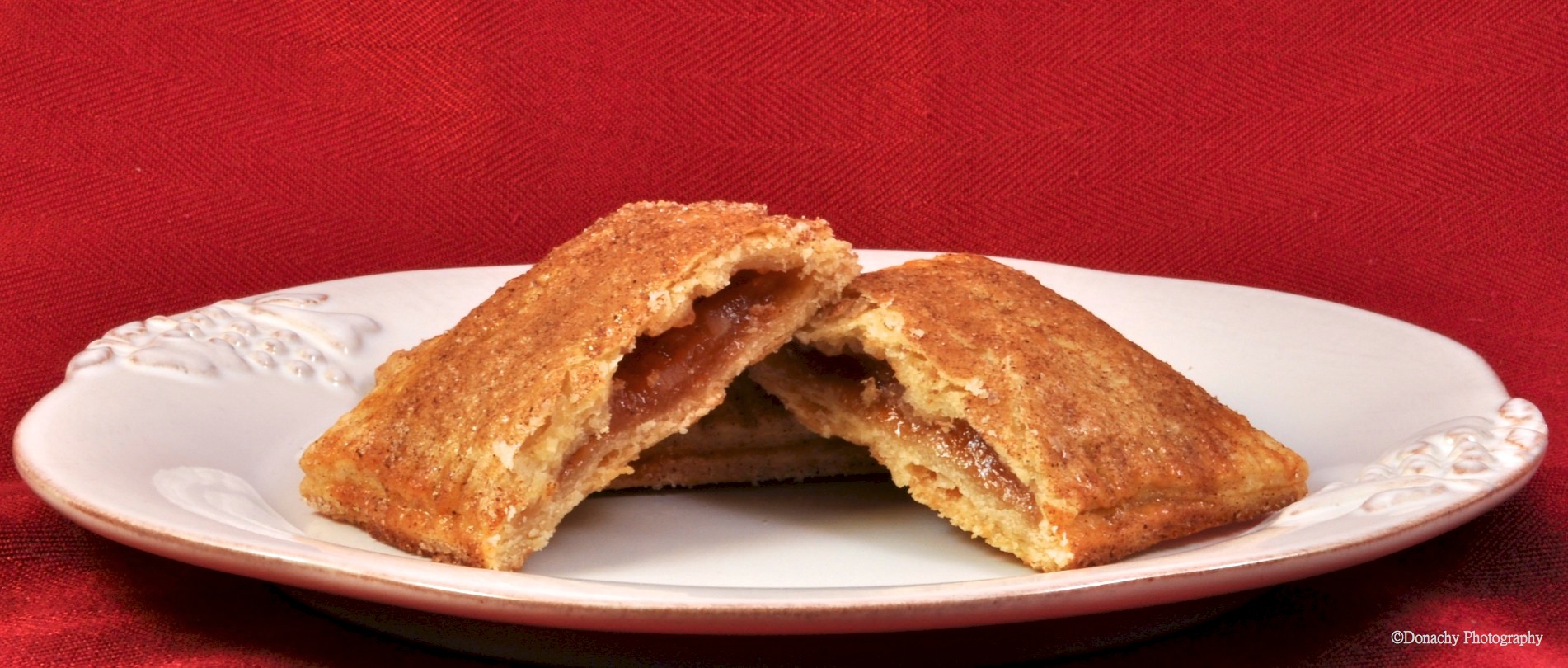
Flaky stuffed pillows of pie crust sprinkled with cinnamon sugar. One bite of these, and you’ll never look a Pop-Tart straight in the face again.

Back in the day, my childhood home was known as the “health food” house. (It was also known as the “twigs and berries” house.) My mom primarily shopped at the health food coop. She didn’t allow processed sugar, and so when I saw my friends eat those tantalizingly sugar-laced Pop-Tarts (as advertised on TV), I could only imagine how wonderful they must taste. Mmm… Flaky golden crust, sweet and smooth icing, bursting with delicious chocolate or thick, sugary berry jam.

Well, one day, I worked up the courage to sneak one! Oh yes, my sister and I became masterful at sneaking sugar. At our secret hiding spot, my friend handed me one of these foil-wrapped treasures. I held it in my hands, heart beating with anticipation. Then I ripped into the wrapping, took a giant bite and…

Blech! The flavorless, cardboard-like confection I held in my hands bore no semblance to the treats that came popping out of toasters in TV land.  Later in life, I tried a health food version of a Pop-Tart and, again, ended up wishing I hadn’t.

Because of those experiences, I’m not a person who walks through life thinking about Pop-Tarts. So, coming up with the idea to make today’s creation caught me by surprise. A couple of months ago, I’d made some fantastic pear butter. It has the best texture, aroma, and flavor. It seemed a waste to leave it in the freezer over the summer. I thawed it and started my search for recipes. I thought the pear butter would be delicious layered between some kind of pastry. I envisioned a layer of mellow cheese (think mascarpone) topped with the pear butter.  I started my Internet search with the sole word “tart” just to see what would result. (Fortunately, I had the “safe” filter on my browser, otherwise who knows what images “tart” might have conjured forth.) As luck would have it, the third result was homemade pop tarts from Smitten Kitchen.

Way Better Than Pop-Tarts

Makes 9 Pastries

Ingredients

  • 2 cups all-purpose flour
  • 1 tbsp granulated sugar
  • 1/2 tsp salt
  • 2 sticks (1 cup) of unsalted butter
  • 2 large eggs
  • 2 tbsp milk
  • 3/4 cup pear butter or jam
  • 1 tbsp cornstarch mixed with 1 tbsp cold water
  • 1 tsp cinnamon mixed with 3 tsp granulated sugar for the topping
Directions
  1. Preheat oven to 350 degrees F.
  2. Mix flour, sugar and salt. Slice butter into pats. Mix in butter with a pastry blender or your fingers. Do this until butter is pea-sized. It is ready when dough holds together when you squeeze it.
  3. Whisk together one egg and milk.
  4. Stir egg mixture into dough. Dough should form into a ball.
  5. Divide dough in half and shape each half into a rectangle (about 3 x 5 inches).
  6. Roll out one half of the dough on a lightly floured surface. Try to keep the shape rectangular. Roll out until dough is about 1/8 inch thick and is about 9″ x 12.” Cut the dough into nine 3″ x 4″ rectangles. Repeat with second half of dough.
  7. Mix together pear butter (or jam) and cornstarch mixture.
  8. Beat the second egg and brush it on one 3″ x 4″ piece.
  9. Place a heaping tablespoon of pear butter mixture in center of egg-covered dough. Spread out the pear mixture leaving a 1/2″ border.
  10. Place a second 3″ x 4″ dough rectangle on first dough rectangle. Press down on edges to seal the two pieces together.
  11. Use tines of a fork on the perimeter of rectangle to complete the seal and to add a decorative touch.
  12. Repeat with remaining tarts.
  13. Place tarts on parchment-lined baking sheets. Wash the tops with remaining egg mixture. Sprinkle tops with cinnamon-sugar mixture. Prick each tart a few times to allow steam to escape.
  14. Place in oven for 20 minutes. The tarts should be a golden brown. Cool in pan on wire rack.
Adapted from http://smittenkitchen.com/2010/04/homemade-pop-tarts/


A Year’s Worth of Food: Provisioning for the Alaska Bush, Part I

Salmon, halibut and rockfish fillets from fish caught in Resurrection Bay, vacuum sealed and flash frozen for fresh-from-the sea taste, ready to make the trip north to Point Hope. And a plug for Alaskan seafood: it’s wild, sustainable, healthy, and some of the best-tasting on the planet!

One of the biggest challenges living in the bush presents is provisioning for a year’s worth of meals. When we  moved to Alaska, Barbra and I brought with us some of the skills we’d acquired in our lives in Oregon and California.

For starters, we’ve always had Costco memberships and we use those memberships to stock up on bulk purchases from rice to olive oil to meat, fish and poultry. To make this work, we use a FoodSaver vacuum-pack system to repackage meat in smaller portions, which we then freeze. In addition to having some of the very best meat, poultry and fish available – and at prices well below specialty stores carrying products of comparable quality – Costco also carries the best frozen fruits and vegetables we have found. Their Executive Membership, which costs more than a regular membership, offers a 2% rebate on purchases, and thus more than pays for itself, meaning that we don’t incur a membership cost. But even if we had to pay a nominal fee, we’d still be Costco members. They treat their employees well, and they offer quality products and service. And buying in bulk is green: less packaging (much of our repackaging material is reusable), and fewer trips to the store means less fuel consumption.

In our life before Alaska, we were already harvesting most of our seafood and freezing (and smoking) it. Annual berry-picking pilgrimages provided us with a year’s worth of blueberries – a fruit that not only is delicious and versatile, but which freezes well, too.

The challenge we faced upon moving to the bush was getting all this food, and other supplies, out to the village. Here’s the short explanation of the solution: Rubbermaid Roughneck Totes and Coleman Xtreme 52-quart coolers.

.      .

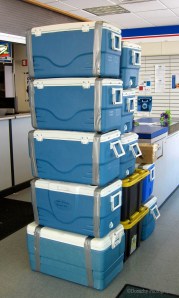
Left: Drilling holes in lids and totes to be zip-tied shut for parcel post. Right: Empty coolers at the post office, ready to be mailed south where they’ll be filled with frozen and cold food at the end of the summer and checked on our planes north to the village.

We drill the Rubbermaid totes so that the lids can be zip-tied (cable-tied) to the tub. Rubbermaid totes are tough and unaffected by cold temperatures. Cheaper totes don’t hold up, and in the long-run are expensive because they have to be replaced as they break down. All of our dry good are mailed up parcel post in these tubs. We’ve mailed hardy vegetables (squashes, potatoes and onions) and hard cheeses in these tubs as well. In Alaska’s cool temperatures, they’ve been fine.

The coolers travel on the plane when we fly up. There are better coolers than Coleman Xtremes, but so far these have been fine. The price is right, they’re tougher than really cheap coolers, and they weigh in at a reasonably light weight – an important consideration. The 52-quart size is manageable even when fully loaded with frozen food.

We stuff at least eight of these coolers with as much fish, meat, chicken and frozen vegetables and berries as we can and pay the extra luggage fee. We’ve been sealing these coolers with duck tape, but this summer we’re planning to experiment with a solution that won’t require having to use and throw away a roll or two of tape each time we ship.

New York Strip steaks (left) and filet mignon (right), purchased in bulk from Costco are packaged with one of each per vacuum-sealed pack for a Porterhouse without the bone. Meat, poultry and fish packaged and frozen this way will keep for over a year; the result is that we waste virtually nothing.