Oyster Po’ Boy with Zesty Rémoulade and a Side of The World’s Best Bar Snack


oster-po-boy-w-fried-parsnips-n

The Carolinas meet California in a Po’ Boy that combines a favorite from each coast. Served up with our home-brewed hefeweizen. 

True, po’ boys originated in Louisiana, but the fried oyster sandwiches of my youth were served up in family-run seafood shacks on North Carolina’s Outer Banks. You had to remember to ask for unsweetened iced tea in those Southern establishments, shoes were optional – even the waitresses often went barefooted -, and a proudly displayed Department of Health rating of “C” was a guarantee that the seafood would be fresh, authentic and delicious.

A warm, soft bun slathered with tartar sauce or rémoulade, a wedge of lemon, and sides of fries and ‘slaw are traditional and tough to improve on. Some folks add lettuce, tomatoes, or pickles (or even the ‘slaw) for a little crunch, but when we chomp down on an oyster po’ boy, all we want is soft bun and even softer, deep-fried, juicy oysters. The crispy coating on the oysters is crunch enough. But how about a few slices of creamy avocado?

Oh, The World’s Best Bar Snack? That’s what Bill Briwa, Chef-Instructor at the Culinary Institute of America, calls deep-friend parsnips. These are a cinch to make, and, yeah, they just might be the World’s Best Bar Snack. Get the recipe here.

Rémoulade

Ingredients

Directions

  1. Mix the above ingredients together.
  2. Allow to sit for a few minutes so flavors come together.

Deep Fried Oysters

Ingredients

  • a dedicated deep-frying pot or a good stainless steel pot. For safety, the pot should be large enough so that the oil (see below) does not fill it more than half full.
  • cooking thermometer that attaches to the pot so you can monitor oil temperature
  • a slotted steel spoon or wire mesh (spider) for removing the oysters from the oil
  • cutting board or platter on which to rest oysters after they’ve been rolled in crackers
  • tongs
  • platter with paper towel to rest and drain fried oysters
  • a gallon-sized sealable plastic bag
  • 1 pint fresh oysters (The only way we can have fresh oysters in Bush Alaska is to freeze them. Happily, they freeze well.)
  • approximately 50 ounces cooking oil that withstands high heat Canola or peanut oil are good choices.
  • 3 eggs, well beaten in a bowl with fairly steep sides
  • 1/2 tbsp soy sauce
  • 1/2 tbsp Cholula or similar hot sauce
  • 1/2 cup all-purpose flour
  • 1/2 tbsp chili powder mixture, preferably one with chipotle, divided into two equal portions
  • 1/4 tsp salt
  • cracked pepper
  • 2 cups crushed saltine crackers (we use salted saltines)

Directions

  1. Drain oysters and set aside. You might want to gently roll them in paper towels to remove excess moisture.
  2. Add canola oil to a large pot and heat over high heat to 360° F (180° C). Keep an eye on the temperature, lowering burner heat as necessary. You can test the oil’s readiness for cooking by dropping in a pinch of crushed saltines. They should immediately sizzle.
  3. Meanwhile, add soy sauce, Cholula, and half of the powdered chili mix to the beaten eggs and whisk together.
  4. Add the flour, half the powdered chili mix, salt and pepper to the gallon-sized plastic bag, seal and shake well to mix. Pour the mixture into a shallow bowl or onto a plate.
  5. Place the crushed saltines in a shallow bowl or on a plate. A good way to crush them is to put them in a gallon-sized sealable plastic bag. Seal the bag, but leave a small opening so air can escape. Use a rolling pin to crush the crackers in the bag.
  6. Arrange items on your counter in the following order, leading toward the frying pot: oysters, flour mixture, egg mixture, crushed crackers, board/platter for resting oysters.
  7. Using tongs: Place an oyster into the flour mixture and thoroughly coat but give it a shake to let excess flour fall off. Then place the oyster in the egg mixture, thoroughly coat it, but hold it above the bowl for a moment to let excess egg drip off. Next, roll it in the crushed crackers, making sure it’s completely covered. Finally, set it on the board/platter to rest. Repeat till all oysters are ready to be fried.
  8. Hopefully you or your sous chef have been keeping an eye on the temperature of the cooking oil. 360° F is about right. Use tongs to carefully add oysters one at a time – no splattering. Keep adding oysters, but don’t overcrowd the pot. Try to keep them from touching each other – better too few oysters at a time than too many. Using tongs, gently turn the oysters to ensure that all side are evenly cooked to a golden brown. This will take 1 to 3 minutes. Don’t overcook them.
  9. Use a steel slotted spoon or a spider to remove fried oysters. Place on platter with paper towel to drain. You can keep them warm and crisp on the center rack of a warm oven, or loosely cover them with a towel.

The Po’ Boy

  1. It can be nice to toast the sandwich roll.
  2. Spread both sides with rémoulade. Arrange the fried oysters and give them a squirt of lemon juice from a lemon wedge. Top with slices of avocado. Drop the lemon wedge into your hefeweizen and dig in.

“Dry and Sunny, a Break from Winter Weather” – OP Assignment #4

dunes big with human n

It doesn’t get much drier and sunnier than Mongolia’s Gobi Desert. Above, Khongoryn Els, the famed “Singing Dunes,” stretch across the landscape. See nine additional photos from our October 2014 trip below.

OLYMPUS DIGITAL CAMERA

As in any desert, no resource is more precious than water.

gazelle galloping kicking up dirt n

Well adapted for this parched climate, over a million Mongolian Gazelle flourish in arid steppe grasslands which include portions of the Gobi. Mongolia’s grasslands are considered to be one of the world’s last, great wilderness areas.

red-billed choughs sunset n

Red-billed Choughs, a striking member of the crow family, close out the day at Yolyn Am Canyon…

ibex bull 2nd look n

Earlier in the day a magnificent Siberian Ibex, protective of his harem, kept a wary eye on an approaching photographer.

OLYMPUS DIGITAL CAMERA

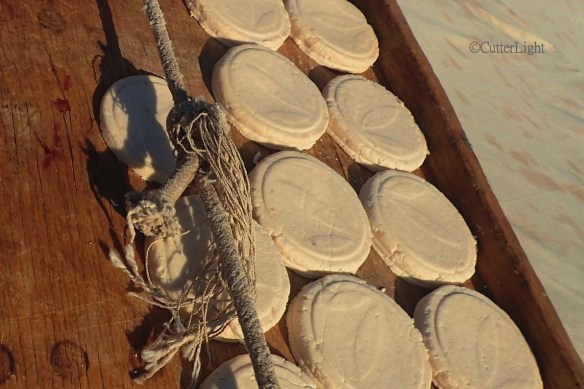
As we journeyed, we stayed with families in their gers (yurt homes). Here, aruul, a type of cheese, bakes into a hard cake on a tray atop a ger.

camel skull & white cliffs n

Not only dry but extremely cold and windswept, winters in the Gobi can be unforgiving. The worst of them are know as zud and can wipe out millions of livestock.

gobi-night-sky-10-17-2014-n

The nighttime skies were spectacular.  The Big Dipper hangs over our lighted ger. 

Not all deserts have camels, of course, but they certainly add an exotic element. In Mongolia, two-humped Bactrians are utilized for transportation, meat, milk and the most excellent cream cheese we’ve ever tasted. Here, Barbra’s mount and I exchange inquisitive looks.

photographer jack @ white cliffs n

Our eight-day trek through part of the Gobi Desert was one of the highlights of our two-year stay in Mongolia. Not only did we get to briefly experience the lifestyle of one of the world’s few remaining semi-nomadic people, we also got to sample new foods, see exotic animals we’d read about in books as children, feel the Singing Dunes hum mystically through our bodies…  and, yes, riding a camel to seldom-visited sand dunes was a first and it was fun. At Bayanzag (pictured above), the legendary Flaming Cliffs where the first fossilized dinosaur eggs were discovered, we even found a large, fragile skull with teeth intact and a spine radiating out several feet, the fossilized remains of some species that no longer walks the earth. It’s 20° F (-7° C), a north wind swirling falling snow as I write this. A trip back to the Gobi through photographs was indeed a nice break from winter.

Next Thursday: Assignment #5 – Motivational Moments: the things that get us out of bed at 4:00 AM to go out and shoot; or that inspire us to sit for hours waiting for a capture. I already have a few ideas in mind. Stay tuned!

Broiled Salmon Udon – It’s all about the Noodle Bowls

broiled-salmon-udon-02-08-2017-n

For lunch or dinner, on a cold winter’s day nothing beats a bowl of agreeably slippery udon noodles served in piping hot miso soup. The trick is finding the right bowl.

Ramen, soba, udon – we are big fans of Asian noodles. In Mongolia our apartment came ready with two perfectly-sized bowls for serving up this kind of fare. Back in America, finding the right bowls proved to be much more of a challenge than we anticipated. The average soup/cereal/pasta bowl isn’t big enough, and the average serving bowl is too big.

With a bit of persistence we found just what we were looking for. Mrs. Lin’s Kitchen carries beautiful karakusa swirl noodle bowls in classic white and classic black. These bowls are made in Japan and reminiscent of higher-end noodle shops there. Karakusa is a traditional arabesque design of repeating swirls popular in Japanese ceramics. The bowls are simultaneously elegant and sturdy. Best of all they’re large enough to fill up with a true noodle soup meal.

And the people at Mrs. Lin’s know how to pack fragile items. Here in Chignik Lake, our post office is just a two-minute walk from our house – but it can be a treacherous walk, especially on days such as yesterday when the road and footpaths were covered in hard ice. On the return trip, my feet went up and I came down – hard – as did the box containing our brand new noodle bowls. I was fine, but I dreaded what I might find when I opened the box. We needn’t have worried. In fact, we don’t think we’ve ever seen anything packed quite so well.

Wildlife Wednesday: The Short, Happy Life of Chippy the Long-Tailed Weasel*

weasel-skull-02-2017-n

Alas, poor Chippy. I knew him, Barbra; a fellow of infinite jest; of most excellent fancy…

I was probably about 12 when I read Jean Craighead George’s My Side of the Mountain. In this book, which surely ranks as among the greatest adventure stories for young people ever written, the 15-year-old protagonist, Sam, leaves his parents’ confining New York City apartment and strikes out for his great grandfather’s abandoned farm in the Catskills. There, he takes up residence in a hollow Hemlock Tree, catches trout, raises a Peregrin Falcon and…

Finds a weasel in a box trap he’d set in hopes of catching animals for sustenance. Sam allows the weasel to come and go as it pleases. The weasel hangs around and Sam bestows on it the name Barron for its bold, confident demeanor. How cool. wanted a weasel like that.

Imagine my thrill when, shortly after moving into our place here in Chignik Lake, one of these spry little fellows practically ran across my foot as he darted past me and dashed under the steps of our Arctic entrance as I opened our front door. The steps, while inside the foyer, are open and the foyer itself sits atop earth. It is a haven for voles, shrews and, of course, weasels. Chippy (I named him or her almost immediately) spun around, sat up and looked at me through the steps. What a handsome, self-assured creature with those large eyes, round ears, pink nose and whiskered face, dapper in a brown coat and white underbelly. In truth, I only saw Chippy a couple of times after that, and only for the briefest of moments each time. Nonetheless…

We had a weasel living with us.

But winter came, and neither of us had seen Chippy for quite some time. Occasionally in the early morning after a fresh snowfall, we’d see weasel tracks and although they could have belonged to any number of weasels (there is no shortage of them here in the village), we liked to imagine they were Chippy’s, evidence of happy nights spent chasing voles and other small creatures.

Meanwhile, the area beneath the owl trees has become a veritable boneyard. Magpie feathers, skulls and wishbones litter the ground along with smaller avian skulls, vole-sized pellets of mashed together bone, teeth and fur, jawbones of small mammals and…

The skull of a weasel. We’re very happy that our resident Great Horned Owls are making it through this unusually cold winter, but… Chippy, we hardly knew ye.

Short-tailed Weasel, Mustela erminea (Photo Credit: Steve Hillebrand, USFWS on Wikipedia)
Also known as Stoats and Ermine, Long-tailed Weasels are related to otters, mink, martens and wolverines. Although they’re only about 10 inches long (25 cm) from nose to tail tip, like their biological cousins, they are fierce predators, sometimes preying on much larger animals. In winter, their fur becomes snow white except for the tip of their tail which remains black. Six years is a long life for a Short-tailed Weasel.

*It is unlikely that the skull we found beneath the White Spruce Grove is actually Chippy’s – or that this is the only weasel Chignik Lake’s Great Horned Owls have dined on.

Fans of Shakespeare will recognize this passage from Hamlet’s musing on mortality as he holds in his hand the exhumed skull of a favorite court jester, Yorick.

This is the first article for Wildlife Wednesday, a new column on Cutterlight. Stay tuned (or sign up) for weekly articles on birds, mammals, insects, wildflowers and more.

Ink and Light: “Amber Eyes” with a quote by Sir David Attenborough

amber-eyes-11-16-2012-n

Amber Eyes: Arctic Fox, Point Hope, Alaska

The thick, soft fur of the Arctic Fox is the most efficiently warm of any land mammal.

It seems to me that the natural world is the greatest source of excitement; the greatest source of visual beauty; the greatest source of intellectual interest. It is the greatest source of so much in life that makes life worth living.
David Attenborough – BBC Life documentary series, 2009

Knighted in 1985, Sir David Attenborough turned 90 in 2016. The world’s most recognized narrator of natural history films, he remains in possession of amazing vitality.

Roasted Moose? Put it in a Pie and serve it with a Nut Brown Ale

moose-pie-2-01-17-n

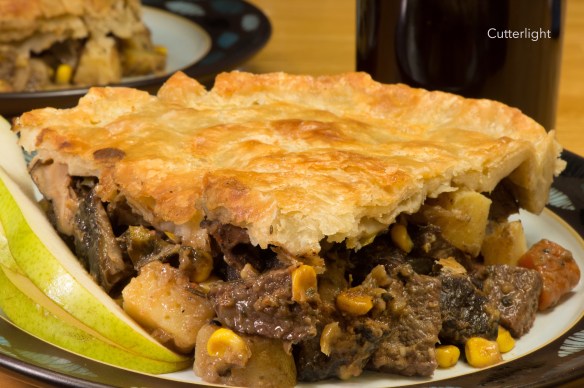
Tender roasted moose, caramelized onions, potatoes, parsnips and mushrooms pulled together with moose gravy, topped with a flaky, golden-brown crust and served with our home-brewed Nut-Brown Ale. That’s how we do it in Alaska.

This has been a good year for moose hunting in Chignik Lake, and while I’m not sure we’d know what to do with a twelve-hundred pound bull, anytime a friend offers up a few pounds, we’re in. This moose pie is a long-standing favorite recipe, easily adapted for other wild game or beef. Start with a pound of tender roast, toss in your favorite vegetables, add time-tested seasonings and a little gravy, top with a savory pie crust and bake at 375° F for about 25 minutes. Serves four Alaska-sized appetites.

Rustic Moose Pot Pie

Ingredients

  • 1 3/4 cups beef broth or moose broth
  • 1 bay leaf
  • 1 teaspoon dried rosemary
  • 1 2/3 cups potatoes, cut into 1/2″ cubes, skin on
  • olive oil
  • 1/3 cup flour
  • 1 pound roasted moose meat, cut into 1/2″ cubes
  • 1/2 cup sweet corn
  • 1/2 Brussels sprouts, quartered
  • 1/2 cup carrots, sliced into discs or chopped coarse
  • 1/2 cup parsnips, sliced 1/4 inch think x 1/2 inch
  • 1/2 onion, cut into slices and caramelized
  • 1/2 cup mushrooms, chopped coarse
  • 1/2 rounded teaspoon cumin
  • 1 teaspoon dried sage
  • 1/2 teaspoon thyme
  • several generous grinds freshly cracked black pepper
  • salt, to taste

Directions

  1. Place a baking sheet on the center rack of oven and preheat to 375 °F (190° C).
  2. Place broth in a pot, add bay leaf. Taste to determine if salt needed.
  3. Add potatoes. Simmer potatoes till just tender, but do not overcook. Save broth and remove potatoes to a large bowl.
  4. Meanwhile, in a large frying pan, add olive oil to cover bottom and bring to sizzling hot over medium/medium-high heat. Brown the mushrooms, remove and set aside. Add onions. Season with salt and pepper and cook till caramelized. Remove onions and set aside.
  5. Add additional olive oil to frying pan as necessary and continue heating over medium heat. Add Brussels sprouts, parsnips and carrots. Season with salt and pepper. Cook till Brussels sprouts are browned and all vegetables are just tender, stirring occasionally. Remove vegetables from pan and add to bowl with potatoes.
  6. Over medium-low heat, place approximately 4 tablespoons olive oil into a small frying pan. When oil is heated but not sizzling hot, briskly stir in flour a little at a time. Continue stirring until mixture thickens. Remove from heat.
  7. Heating beef broth over medium heat, stir in oil and flour mixture. Combine thoroughly. Simmer till reduced to a thick gravy.
  8. To the bowl that already has the potatoes and vegetables, add the moose meat, mushrooms, gravy and the remaining seasonings and mix together. (There are a number of ways to make a thick gravy. Try using a dark ale to deglaze the pan you used for roasting the moose.)
  9. Pour meat and vegetable mixture directly into a deep pie dish. Cover with a crust. Be sure to make holes in the crust to allow steam to escape. Brushing on a beaten egg will help create a golden brown crust.
  10. Place on baking sheet and bake at 375 °F for 25 – 30 minutes or until crust is golden brown.

Although a full-bodied red wine such as an old vine Zinfandel, Malbec or Cabernet is a classic choice with this dish, a full-bodied ale pairs equally well.

Ink and Light: “Winter Hunt” and Shakespeare’s Poem for Runners

saker-khustai-n

Winter Hunt: Saker Falcon, Kustai National Park, Mongolia

Prized by falconers for their beauty and power, Saker Falcons are endangered due to black market trading and habitat loss. They are the national bird of Mongolia.

           (From) The Winter’s Tale 
      Jog on, jog on, the foot-path way,
        And merrily hent the stile-a:
      A merry heart goes all day,
        Your sad tires in a mile-a.
William Shakespeare – lines from The Winter’s Tale, 1623

In otherwise good health, Shakespeare (1564-1616) died 3 days shy of 52. Many of his plays were published posthumously. According to one source, Shakespeare’s death followed a night of heavy drinking with Ben Johnson and Michael Drayton. An apocryphal tale or not, all of his plays contain references to drink.

Fine Dining for Two: Broiled Char or Trout

broiled-char-n

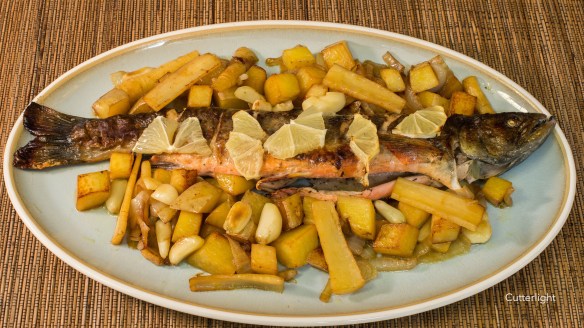
A hint of thyme compliments the delicate flavor of wild char, one or our favorite fish. No wild fish available? Look for Arctic Char at the fish market. They get high marks for being responsibly farmed and are delicious.

There’s something about wild char and trout that calls to simplicity. Among all species of fish, they are among the most demanding of unspoiled environments. Where streams, rivers and lakes are clean and lightly trammeled, these species often thrive, both their numbers and the setting they inhabit evoking bygone times. It is in such settings that light harvest of a few fish is sustainable.

When presented with such fish in the kitchen, the most basic ingredients are all that is wanted. Salt and butter, perhaps a little pepper or a pinch or two of an aromatic herb. A little lemon can be nice, too. Root vegetables such as potatoes, parsnips or rutabaga roasted or pan fried in olive oil and soy sauce make the perfect accompaniment on the serving platter.

Broiled Char or Trout for Two

Ingredients

    • 1 char or trout of about 16 to 18 inches (40 – 45 cm) (between 1 and two pounds, dressed)
    • fine sea salt (we use Grey Sea Salt in all of our salmon and trout recipes)
    • two light pinches of dry thyme (or about double that if you have fresh)
    • 1 lemon cut into thin slices, peel cut away
    • butter, sliced into thin pats
    • olive oil or canola oil
    • broiling pan. We use a Swiss Diamond cast iron griddle for this kind of broiling.

Directions

    1. Place a broiling pan near the top shelf in the oven and preheat on broil. You want the pan to be very hot when the fish is placed on it. This prevents the fish from sticking. Do not oil the pan yet.
    2. Rinse the fish in cold water and dry with paper towels. Make sure the gills and viscera have been removed.
    3. On a cutting board or platter, position the fish with its it’s open belly toward you.
    4. Using a very sharp knife, cut shallow, oblique slashes spaced about an inch apart (2.5 cm) down both sides of the fish. You want to break the skin without cutting all the way through to the body cavity.
    5. Rub fish inside and out with fresh lemon juice.
    6. Salt the fish inside and out. Sprinkle a little thyme inside the cavity on the sides.
    7. Place a few thin slices of butter inside the cavity and on top of the fish’s side.
    8. Place pieces of lemon on top of the fish’s side.
    9. Spread olive oil on broiling pan. A basting brush works well for this. Return pan to oven for about a minute to ensure that oil is very hot.
    10. Place fish on broiling pan or griddle. The fish should really sizzle when it hits the pan. Once the fish is on the pan, do not move it. (Moving a fish just after it hits a pan can cause it to stick to the pan.) Return to the oven and broil for 5 minutes.
    11. Remove pan from oven and gently flip the fish. Do this by rolling the fish on its back using spatulas. This will prevent the cavity from draining. Place additional pieces of butter and fresh slices of lemon on the up side of the fish and return to the oven. Broil for 3 or 4 more minutes.
    12. The fish is done when the slashes have opened, the skin is golden brown, the tail is crisp and the eyes are opaque.
    13. Serve with roasted root vegetables on warmed plates. Compliment with a light Chardonnay or a crisp ale.

Winter Landscape in Black and White: Spruce Tree with Mountain

spruce-tree-w-mountain-bw-copy-n

I made this photo just a few feet from my home in Chignik Lake. The challenge was to somehow clean up the assortment of utility poles, wires, satellite dishes and the dissonant array of scrub alder closer to eye level. I actually knew as soon as this assignment (Winter Landscape in Black and White – the second weekly assignment from Outdoor Photographer magazine) was posted the scene I wanted to shoot. I put on a long lens, waited for the right light, and got this frame.

Next Thursday: Patterns of Winter


Roasted Pumpkin Soup with Mahlab and Moose Meat

spiced-pumpkin-soup-n

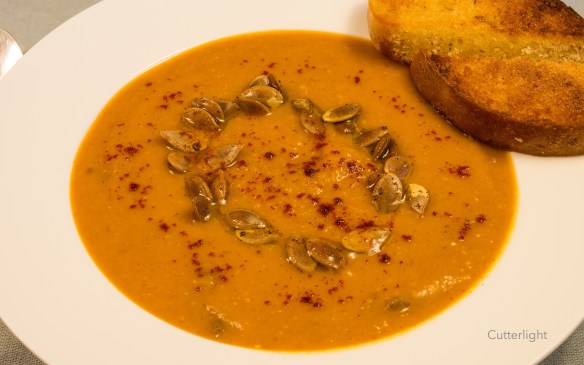
With or without meat, a zesty bowl of pumpkin or squash soup garnished with roasted pumpkin seeds is an Autumn through Wintertime favorite.

Once you’ve got the basic concept of a spiced pumpkin soup down, it’s likely to become a favorite. There’s almost no end to possible flavor combinations – from simply shaking in your favorite Thai-style or Indian-style blend to trying a little of this and a little of that based on what’s on hand in your spice rack.

A new twist for us this time around was the addition of mahlab, an aromatic Middle East spice made from grinding the seeds of the St. Lucie, or Mahaleb, Cherry. Think almonds with a hint of cherries. This was, for us, a new spice recently ordered from Penzeys Spices. Although it’s usually used as an addition to pastries, breads, and custards (this spice will definitely go into our next crème brûlée) one whiff and we knew it would be a perfect compliment to pumpkin soup. If you’d like to do some of your own experimenting with this unique spice, we recommend that you purchase the seeds whole and grind them yourself as, reportedly, the flavor of powdered mahlab goes off fairly quickly.

Having just come into some really wonderful moose meat courtesy of a friend, we pan fried some in olive oil and cumin to add to the soup. Other wild game, beef or chicken would work well, too. Alternatively, this soup makes for an excellent vegetarian dish by going sans mean and substituting vegetable broth for chicken broth. Although not necessary, a little maple syrup is very good in this soup.

Ingredients

  • 2 pounds roasted pumpkin (preferably a pie pumpkin) or squash such as Butternut Squash
  • 2 cups chicken broth
  • 2 tsp powdered Mahlab
  • 1/2 tsp lemon grass
  • 1/2 tsp ancho chili powder
  • 1/2 tsp chipotle powder
  • 1/2 tsp cumin
  • 1 tbsp Thai red curry paste
  • 1/2 tsp powdered garlic
  • 1/2 tsp mace
  • 1/4 tsp cinnamon
  • 2 tbsp almond butter (or substitute a quality peanut butter)
  • 1 cup coconut cream
  • 4 tbsp maple syrup (or 2 tbsp brown sugar)
  • sea salt
  • 2 tbsp dried red bell peppers (or use fresh, diced fine)
  • 1 pound moose meat, other wild game, beef or chicken cut small, seasoned with cumin powder and cracked pepper, and pan fried in olive oil
  • smoked paprika (to garnish)
  • roasted pumpkin seeds (to garnish)
  • drizzles of extra virgin olive oil (to garnish)

Directions

  1. Place a baking sheet on lower center rack of oven and preheat oven to 400° F (200° C).
  2. Cut pumpkin in half and remove stem and seeds. Slice into wedges and use a very sharp knife to cut away stringy matter. Leave skin on and brush pumpkin flesh with olive oil. Place skin side down on a preheated backing sheet and roast for about 20 minutes. Test with a fork. It should be very soft.
  3. Remove pumpkin wedges from oven and place on a cutting board to cool an lower oven to 300° F (150° C).
  4. Meanwhile, clean seeds and place in a bowl. Mix with a little olive oil and sea salt. Spread evenly in a single layer over baking sheet. Bake for 45 minutes or until golden brown, stirring occasionally. Place seeds on paper towels to cool.
  5. Meanwhile cut the pumpkin away from the rind. In a large pot over low heat, combine pumpkin chunks and chicken broth and use a stick blender to purée until smooth. It is a good idea to hold some chicken broth in reserve to ensure that soup is sufficiently thick.
  6. Add Thai chili paste, seasonings and almond butter, mix well. Bring mixture to a very low simmer, stirring occasionally. Add salt and additional seasonings as desired.
  7. Add coconut cream and maple syrup. Use a stick blender to thoroughly combine.
  8. Add cooked meat and red bell peppers and let simmer a few more minutes.
  9. Serve hot with roasted pumpkin seed, a sprinkle of smoke paprika, and a drizzle of olive oil.