Unknown's avatar

About Jack & Barbra Donachy

Writers, photographers, food lovers, anglers, travelers and students of poetry

Pumpkin Pasta with Pumpkin Chanterelle Sauce

pumpkin pasta_n

Do not adjust the color! This penne pasta gets its deep orange-yellow color from fresh pumpkin purée and was the perfect base for a tasty alfredo-style pumpkin and chanterelle mushroom sauce.

With a pumpkin arriving in our most recent box of produce from Full Circle Farms, I eagerly anticipated creating a dish of pumpkin and chanterelle lasagne. The idea was to layer slices of pumpkin and mushrooms between wheat lasagne noodles along with cheese and a cream-based sauce. When I pitched this menu to Jack, he wrinkled his nose and said something about taking the fall pumpkin spirit too far. So there I was with a beautifully ripe pumpkin, a couple of cups worth of aromatic chanterelles, and an unsatisfied craving for a pasta experiment.

So I decided to make a twist on my original idea by creating a pumpkin pasta and a sauce to accompany which would bring together the flavor of pumpkin and chanterelles. To avoid being vetoed again, I offered to give Jack a night off from cooking and create the dish as head chef. This way he could relax and I could satisfy my craving. He remained skeptical, but was willing to go along. Win-win, right?

pumpkin pasta w sauce_nA savory, satisfying meal of pumpkin penne served with a creamy pumpkin chanterelle sauce and slices of chicken apple sausage warmed up a truly blustery Arctic night. No flights in or out of Point Hope the past couple of days, and hurricane force gusts punctuated gale and storm force winds. Freshly grated parmesan cheese and a dash or two of Cholula sauce finish the dish. 

Throughout the whole meal, Jack kept mmmm-ing in approval and muttering about how different the combinations of flavors were and how beautifully they worked together. Although I added mildly spicy chicken sausage, this recipe would work equally well sans meat. When thickening a sauce such as this, we have found that rice flour is superior to other thickening agents.

Pumpkin Penne with Pumpkin Chanterelle Sauce

Ingredients

  • 1 lb pumpkin penne pasta (see below)
  • 2 tbsp olive oil
  • 3 shallots, finely sliced
  • 3 cloves garlic, finely chopped
  • 2 cups chanterelle mushrooms, chunked
  • 1 1/2 cups chicken stock (we use Better than Bouillon)
  • 1 2/3 cups pumpkin purée (fresh or canned)
  • 1/2 cup heavy whipping cream
  • 1 tsp Cholula sauce
  • freshly grated nutmeg, to taste
  • pinch cinnamon
  • salt and pepper
  • chicken apple sausage, sliced
  • 1 tsp sage
  • parmesan cheese
  • (optional) thickener, such as rice flour or wheat flour, as needed

Directions

  1. Heat water for pasta.
  2. Heat oil and sauté shallots, garlic and chanterelles for about 3 minutes.
  3. Stir in chicken stock, pumpkin purée, whipping cream, Cholula sauce, nutmeg, cinnamon, salt and pepper to taste.
  4. Add sliced sausage.
  5. Let sauce simmer and thicken. If it needs to be thickened, add a rice flour 1 tbsp at a time till desired consistency is achieved.
  6. Cook pasta al dente.
  7. Stir sage into drained pasta and toss with some olive oil.
  8. Place pasta on individual plates, add sauce, and finish it with grated parmesan cheese and a splashes of Cholula sauce.

Pumpkin Pasta Dough

Ingredients

  • 2 cups semolina flour
  • 2 eggs
  • 1/3 cup pumpkin purée
  • 2 tbsp olive oil
  • water as needed

Directions

  1. Whisk together eggs and pumpkin.
  2. Place semolina flour in a large bowl.
  3. Make a well in the middle of the semolina flour.
  4. Pour egg mixture and olive oil in well.
  5. Use a fork and scramble eggs into flour.
  6. Keeps scrambling until dough resembles large curds. Add small amounts of water if needed.
  7. When all the dough looks like large curds, knead dough several times in order to form a dough ball.
  8. Cover dough tightly with plastic wrap and let rest for 20 minutes.
  9. Follow pasta machine manufacturer’s directions to form noodle shape of choice.
Rustic Reuben with Righteous Rye and Robust Russian Dressing

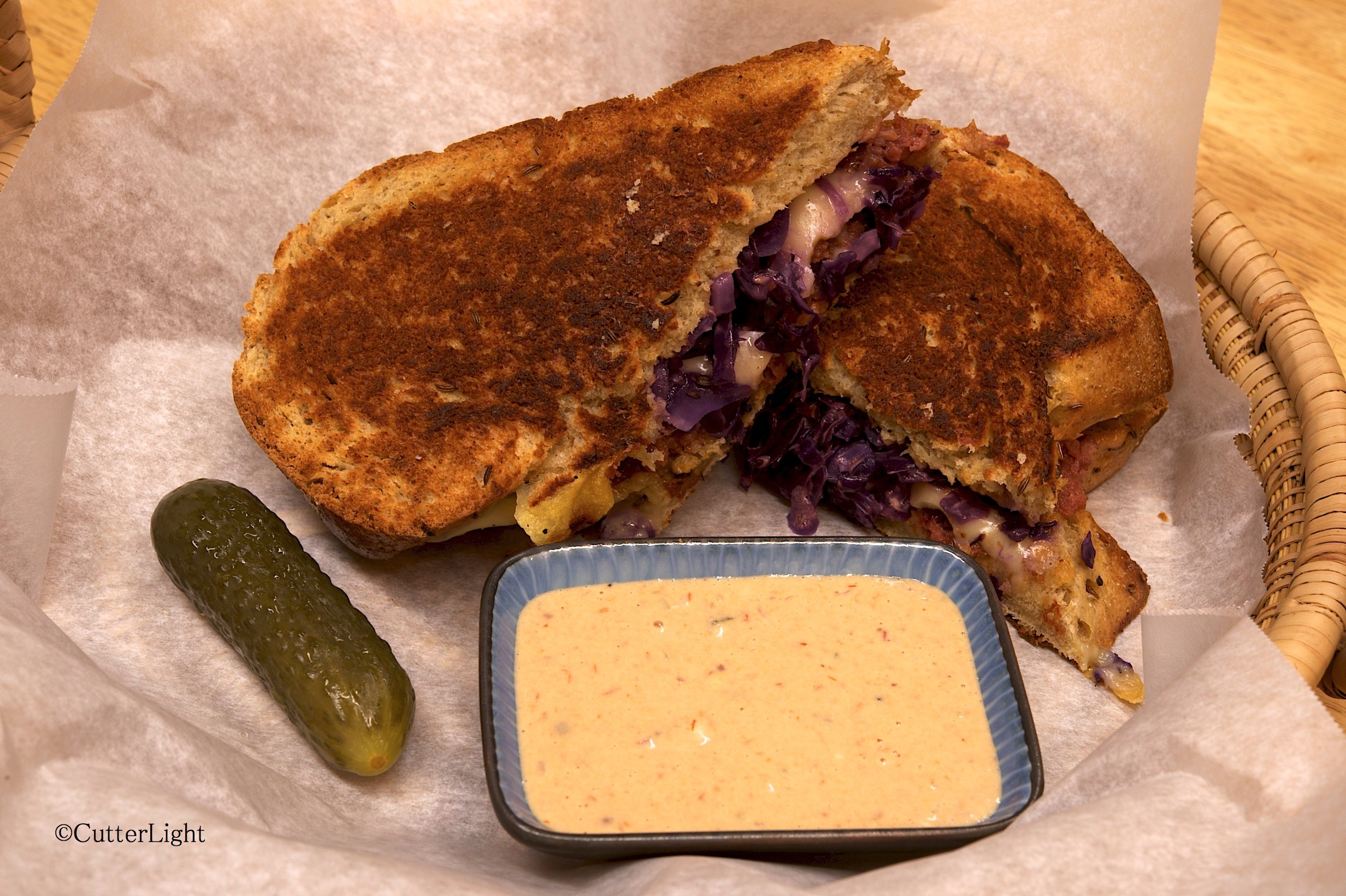
reuban from scratch b nBursting with flavor, this satisfying from-scratch version of an East Coast classic was delicious to the last caraway seed!

Jack suggested we make reuben sandwiches with the gorgeous purple kraut I’d just created. For this menu request, I would need my freshly baked righteous rye bread, corned beef, Russian dressing (see below), Swiss cheese, and butter. I already had all these items on hand except for the corned beef, and since this year the majority of the protein in our freezers is fish, that was going to be a challenge.

I wrinkled up my nose at Jack’s suggestion that we walk to the Native Store to see if they had any canned corned beef. Lo and behold, they did. “Premium” canned corned beef – it even had a little key on the side with which to open the can. This was new to me. I have had canned tuna and chicken, but neither of those items came with a key. I stared at this can turning it over and over to try and figure out how to open the darn thing. Thanks to YouTube, I now know how to open a can of corned beef!

Fortunately the homemade elements of this reuben added enough to the premium canned corned beef to make it a terrific, bush-style sandwich. Had this sandwich been made with homemade corned beef, or corned caribou, it would have been fit for Food and Wine magazine! Sounds like I have a new goal as soon as I can trade for caribou (or wild mountain goat, Bixlers, if you’re reading this)!

For this phenomenal reuben sandwich you need:

  • 2 thick slices of rye bread
  • Russian dressing
  • corned beef
  • sauerkraut
  • swiss cheese
  • butter or olive oil

Instructions

  1. Generously spread butter on one side of each slice of bread.
  2. On the opposite side of bread, generously spread Russian dressing.
  3. Place enough corned beef to cover one piece of bread.
  4. Add a layer of Swiss cheese.
  5. Add a layer of sauerkraut.
  6. Cover sandwich with second piece of bread.
  7. Place sandwich in heavy skillet on stovetop over medium heat.
  8. Press sandwich down while cooking, about 5 minutes on one side.
  9. Flip sandwich.
  10. Press sandwich down on second side, and cook for another 5 minutes. Cheese should be melting out of the sandwich.
  11. Slice sandwich diagonally and serve with a dill pickle.

The Russian dressing is taken directly from Zingerman’s deli recipe which was posted on Food Network’s website. The only adaptations I made were to use my own homemade mayonnaise and to omit parsley.

Russian Dressing

Ingredients

  • 3/4 cup mayonnaise
  • generous 1/4 cup chili sauce
  • 2 tbsp sour cream
  • 1 1/2 tbsp minced shallots
  • 1 1/2 tbsp minced dill pickle
  • 1/2 tsp lemon juice
  • 1/2 tsp grated horseradish
  • 1/4 tsp Worcestershire sauce

Directions

  1. Combine all ingredients in a bowl and mix well.

DIY Small Batch Purple Sauerkraut

sauerkraut diy_n

To make this beautiful purple kraut, you need only a few days of fermenting time and items you already have in your kitchen.

Every year I pick one thing I want to learn to make and force the issue by removing it from our annual shopping list. Last summer, a friend had us taste her homemade kraut infused with locally picked highbush cranberries, which grow in Alaska. It was delicious. Her quick directions gave me confidence that I could easily make sauerkraut, too.

The purpose of lacto-fermenting vegetables is to store the summer harvest so that vegetables can be enjoyed throughout the year. Since I had only one head of cabbage which weighed a pound-and-a-half,  I turned to small batch food preservation methods. Credit for the following directions goes to a blog called The Kitchn where the author posts all sorts of information about lacto-fermentation, photos, and step-by-step directions.

Our first menu with the finished kraut was a knock-your-socks-off reuben. We’ll post that  recipe in an upcoming article.

DIY Small Batch Purple Sauerkraut

Ingredients

  • 1 small head purple cabbage (about 1.5 lbs.)
  • 1 tbsp kosher salt
  • 1 tbsp caraway seeds
  • 1 tbsp dried juniper berries

Directions

  1. Gather materials you will need to process kraut: 2 quart container, cutting board, chef’s knife, gallon Ziploc bag, large mixing bowl, and lidded quart container for final product.
  2. Slice cabbage into ribbons. Discard core.
  3. Place cabbage ribbons into large mixing bowl. Sprinkle salt all over cabbage.
  4. Knead, massage, and squeeze salt into cabbage, until cabbage begins to become shiny and loses liquid. This will take about 10 minutes.
  5. Mix in caraway seeds and juniper berries.
  6. Pack mixture into 2 quart container. Pour any liquid from mixing bowl into container, too.
  7. Fill Ziploc bag with water and set inside 2 quart container to weigh down and cover cabbage.
  8. Press down cabbage every few hours. This will cause air to come to the surface.
  9. If there is not enough liquid to cover the cabbage in 24 hours, add 1 cup water mixed with 1 tsp salt.
  10. Keep the container out of light and at a temperature of 65 – 75 degrees F.
  11. Allow to ferment from 3 – 10 days. Begin tasting at 3 days. Mine tasted just right at 3 days. The longer you leave it, the more sour it will be.
  12. Put finished sauerkraut in a 1 quart container and store in the refrigerator. It should keep for several months.

Vanilla Flan with Traditional Caramel Sauce

flan_n

Enjoy this vanilla custard, caramel-topped dish with a freshly brewed cup of coffee or tea to complete a memorable dinner with friends.

Crème caramel (flan) and crème brûlée are classic oven-baked custards. We’ve both loved flan from the first taste. The soft, custardy texture is very satisfying and the way the caramel sauce  drizzles down the side of this dessert when you invert it is just plain fun. When I was in my twenties, I made flan the instant way – squeeze the packet of caramel on the bottom of a dish and pour in the custard. Jack discovered flan in Japan, where it is commonly sold in convenience stores as a complete, packaged snack and less frequently in coffee shops.

After learning to make flan authentically – preparing stovetop caramel from scratch and baking the dessert in a water bath – there is no turning back. The vanilla flavor in this recipe is intense, thanks to the addition of vanilla paste, and the caramel was sweet with just a hint of bitterness just as my Culinary Institute of America teacher said it should. Many flavors could be substituted for the vanilla; try orange, chocolate, cinnamon, or chai for an equally excellent dessert.

Vanilla Flan with Caramel Sauce

Ingredients

  • 1 cup and 1/3 cup granulated sugar, separated
  • 1/4 cup water
  • 1 1/4 cup whole milk
  • 3/4 cup heavy whipping cream
  • 1 tbsp vanilla paste, or 1 vanilla bean, split
  • 3 eggs

Instructions

  1. Place 1 cup granulated sugar and 1/4 cup water in a pot. Gently stir to blend.
  2. Bring mixture to a boil without stirring, putting a lid on pan so that moisture from boiling syrup will wash down sides.
  3. Let mixture continue to boil until it starts to turn a light brown color.
  4. Take pan off heat and allow mixture to cool until it has a honey-like consistency.
  5. Pour caramel into 4 small ramekins. Swirl caramel around so it covers the bottoms of the ramekins. Set aside.
  6. Preheat oven to 300 degrees F.
  7. Warm milk, 1/3 cup sugar and vanilla on stovetop.
  8. Whisk eggs in a medium bowl. Pour warm milk mixture into eggs, whisking continuously. Add cream and continue to whisk until thoroughly mixed.
  9. Pour milk mixture into prepared ramekins.
  10. Place ramekins in a larger pan, for example a roasting pan, and fill the roasting pan until water reaches halfway up the ramekins.
  11. Bake custards in oven for 30 – 40 minutes.
  12. Custards will be done when there is a small wiggle in the custard. Allow ramekins to cool off and wipe them dry. Refrigerate for a couple of hours, or overnight.
  13. To present the dessert, run a small knife around the edges of the ramekins. Place a serving plate on top of the ramekin. Flip the dish and give it a quick jerk in order to remove the flan from the ramekin. The caramel should now be on top and will drizzle over sides to plate.

Really Righteous Rye for Reubens

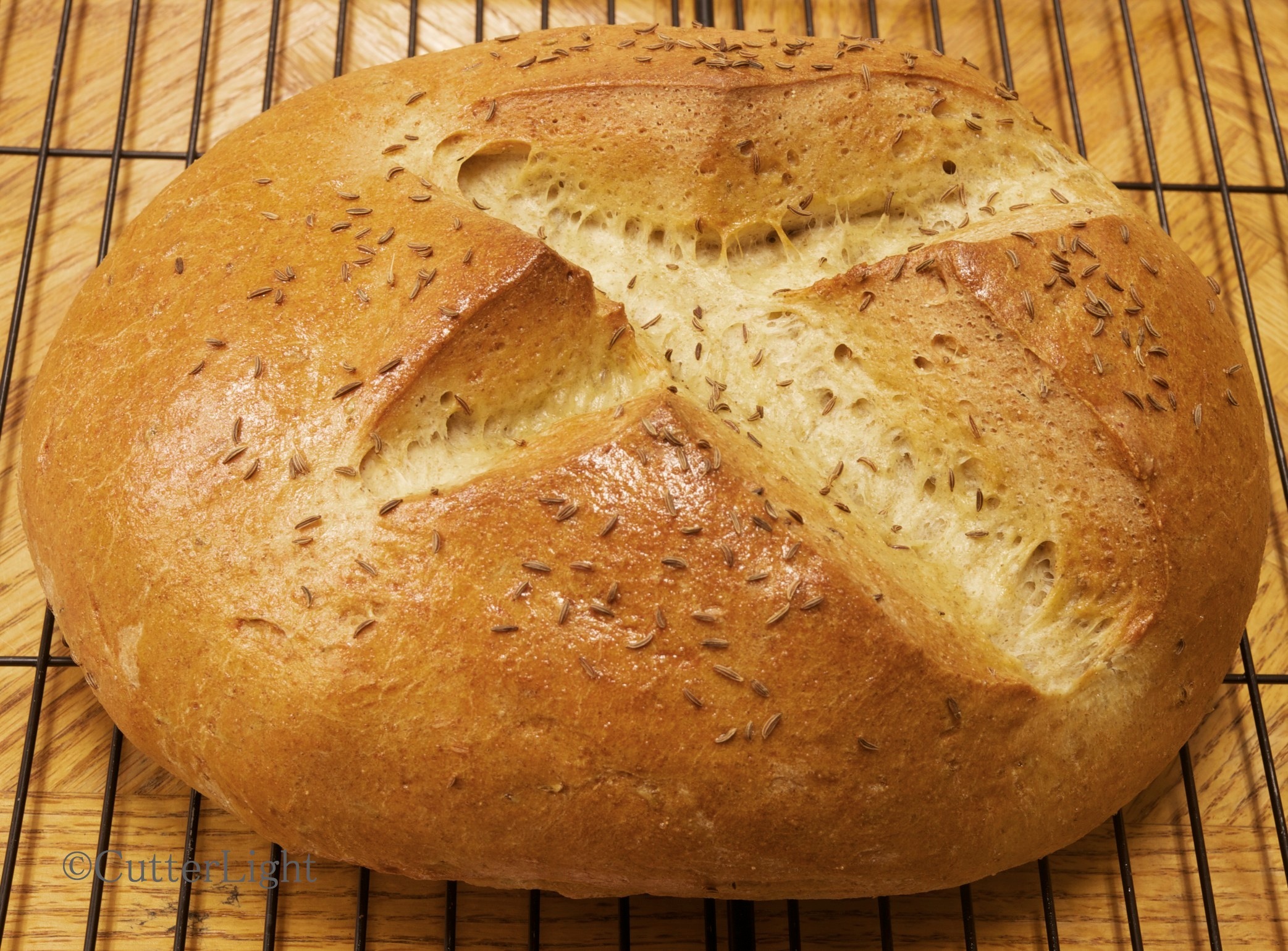
Rye bread_nWith a golden-brown crust and a soft inside, this flavorful combination of rye flour and caraway seeds is the perfect loaf to be sliced thick for home-made reuben sandwiches. 

One of our favorite sandwiches is an East Coast style reuben with the rye sliced thick and everything piled high. Up here in the Arctic, the only way to get a sandwich like that is to make it ourselves. So, based on several recipes and my own calculations, I created a rye bread recipe for my Zojirushi “dough machine.” After four years of fairly heavy use (we bake all our own breads), this built-like-a-tank bread machine is still going strong. After it had done its magic, I kneaded the dough once more by hand and shaped it into an oval for one last rise.

I gave the dough two quick slashes, brushed it with egg, popped it in the oven and 35 minutes later our kitchen was filled with the delicious aroma of freshly baked rye bread – the final ingredient for our “up-town” Arctic lunch of hot tomato soup and reubens! Our recipe for DIY sauerkraut to follow.

Bread Machine Rye Bread

Ingredients

  • 3 tbsp melted unsalted butter
  • 1 egg
  • 1 cup whole milk
  • 1 tsp extra virgin olive oil
  • 1 1/2 cups all-purpose flour
  • 1 cup rye flour
  • 1 tbsp caraway seeds (a few more for the top)
  • 1 envelope active dry yeast
  • 1 tbsp granulated sugar
  • 1  1/2 tsp salt
  • 1 egg (to brush the top of the loaf)

Directions

  1. Place all items except the last egg in the bread machine in the order recommended by the manufacturer.
  2. Set machine to dough setting.
  3. Start machine.
  4. Remove dough from machine and place onto lightly floured board. Knead dough a few times and shape into ball.
  5. Place dough ball on a parchment-lined baking sheet and cover with a damp cloth. Let rise until almost doubled in size.
  6. Preheat oven to 350 degrees F.
  7. Slash a big X on top of loaf.
  8. Brush loaf with egg and sprinkle a few more caraway seeds on top of loaf.
  9. Bake for 35 minutes. Finished loaf should should have a golden brown crust and sound hollow when tapped.

Lighter than Air: Cream Puffs and Eclairs

cream puffs_n

Friends who share a love of baking and cream-filled pastries dipped in chocolate ganache warmed up a rainy afternoon in our kitchen north of the Arctic Circle.

Perfectly turned out pastry puffs filled with delectable cream and dipped in chocolate ganache are the the stuff of home bakers’ dreams. Cream puffs and eclairs require a special dough called pâte à choux. Worked to exactly the right consistency, this dough bakes up light and flaky and leaves a hollow space in the center of the confection. Although we used traditional vanilla-flavored pastry cream, we also imagined filling these airy profiteroles with fresh whipped cream, homemade ice cream and even savories such as smoked salmon cream.

Making cream puffs and eclairs can’t be rushed. The pâte à choux dough requires time and attention in order to get it to the correct consistency as it cooks on the stove top. Next, it must be carefully piped onto a baking sheet and placed in the oven where it will finish. Creating the pastry cream is fairly easy, and making chocolate ganache is magical.

All that work, and between three bakers, three tasters and steaming mugs of of rooibos almond tea, our eclairs and puffs disappeared in short order.

Pâte à Choux

Ingredients

  • 1/2 cup water
  • 1/2 cup whole milk
  • 1/2 tsp salt
  • 1/2 tsp sugar
  • 4 oz. unsalted butter, softened
  • 1 cup all-purpose flour
  • up to 4 eggs

Directions

  1. Line two baking sheets with parchment paper. Preheat oven to 400 degrees F.
  2. Pour milk and water into medium pan.
  3. Stir in salt and sugar.
  4. Add butter.
  5. Bring mixture to a boil over medium heat.
  6. Take mixture off heat and stir in all the flour. Mixture should look like mashed potatoes.
  7. Return pan to low heat and stir continuously. This will dry out the dough a little.
  8. Dough should come together to form a ball.
  9. Starchy residue at the bottom of the pan is an indicator that the dough is dried out enough.
  10. Take dough off stove and place it in the mixing bowl of a stand mixer. Turn it to low to allow the dough to be cooled off by the mixer.
  11. Mix in eggs one at a time, watching that the dough does not become too thin. The dough should be soft, creamy, and shiny.
  12. Transfer the dough to a piping bag with a large tip.
  13. Pipe ball shapes onto parchment-lined baking sheets, leaving plenty of room for these puffs to double in size.
  14. Bake puffs for 10 minutes.
  15. Turn oven down to 325 degrees F and continue to bake for 15 minutes.
  16. Fill with chilled whipping cream or pastry cream – savory or sweet.

These will freeze nicely.

Ptarmigan and Cloudberries: A Walk on Alaska’s Arctic Tundra

willow ptarmigan pair n

Looking almost like exquisite mounts in a museum diorama, these Willow ptarmigan (Lagopus lagopus) proved to be quite approachable. While hiking on the tundra near Point Hope in September we came across two coveys totaling about 20 birds.

cloudberries early frost

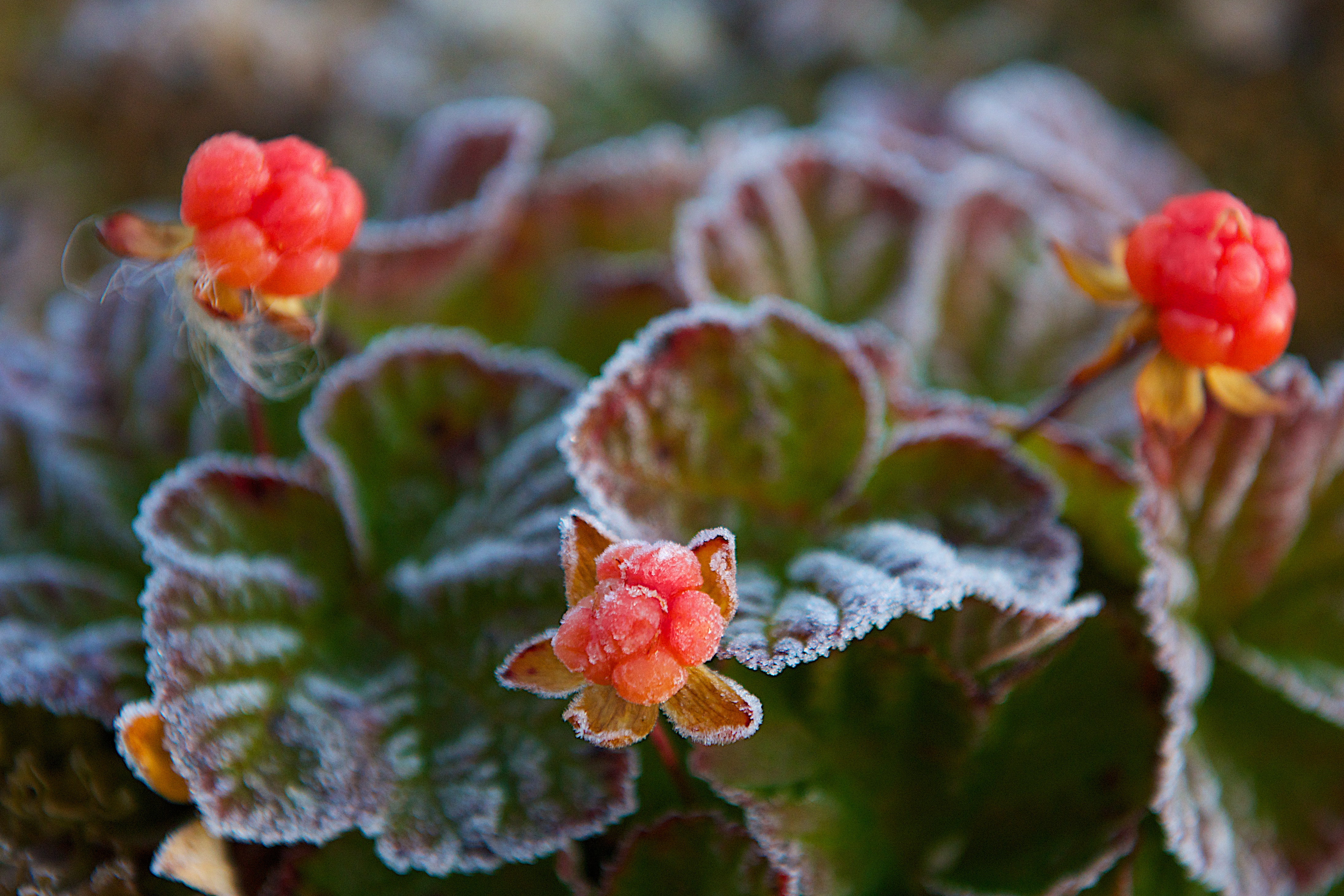
Nipped with frost, these cloudberries tasted like sorbet and were no doubt what had drawn the ptarmigan.

willow ptarmigan jack shooting n

Barbra cautiously approached the birds as I lay on my stomach, inching through the boggy terrain, shooting, hoping a few shots might come out.

willow ptarmigan solitary n

The plumage of these fall birds is in transition from the mottled browns and reds of summer to the snow white of winter. These are the same species as the red grouse of Scotland.

willow ptarmigan barbra approaching n

Barbra crouches and stalks closer to the birds. Note the densely feathered legs. The Latin lagopus translates to “hare foot” for the resemblance of ptarmigans’ feather-covered legs and feet to those of snowshoe hares. 

caribou antler fall tundra n

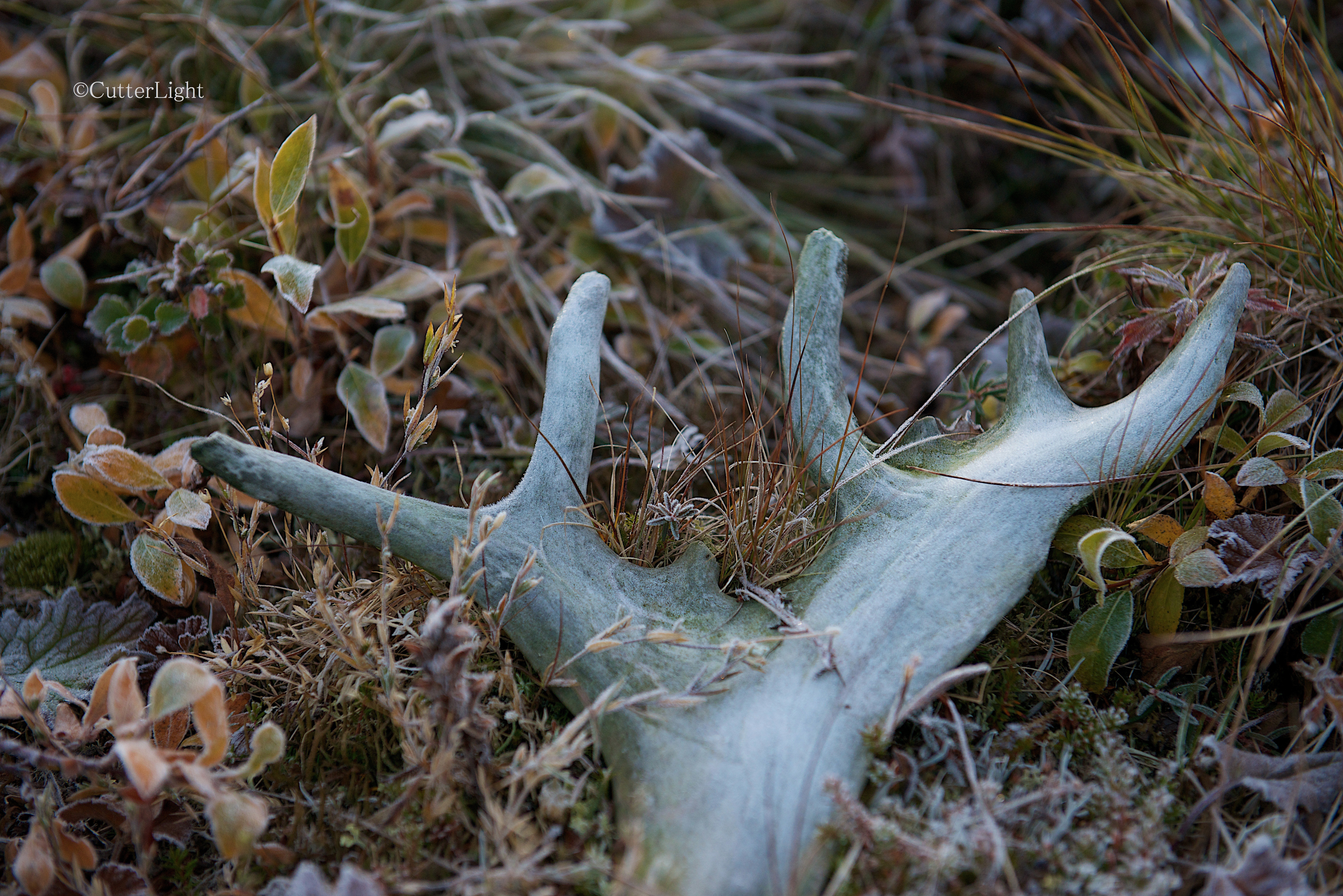
There’s always evidence of a rich ecosystem on the Arctic tundra. Caribou antlers, bird nests, animal burrows and an amazing array of plants are part of our walks.

brown bear track tundra beach n

Brown bears (grizzlies) are common visitors to the beaches and tundra near Point Hope. We found a set of fresh tracks along the shores of an inlet off the Chukchi Sea not far from where we encountered the ptarmigan. Red foxes, Arctic foxes, Arctic ground squirrels, weasels and caribou are frequently seen mammals. Wolves and musk oxen are less common, but also figure in the mix. In the foothills and mountains east of Point Hope there are wolverines and at higher elevations, Dall sheep. Rarely, moose are seen in the scrub willows along the nearby Kukpuk River, and during the winter months polar bears show up both on the sea ice and on land. 

snow geese lifting off n

During the fall migration, snow geese are fairly common. (Above and below)

snow geese lifting off close n

Brandt, Canada geese, and a wide variety of ducks and shore birds are also common.

willow ptarmigan in flight n

When the ptarmigan finally had enough of us, they glided off a few yards, regrouped and resumed feeding. At that point we turned for home. 

cloudberries frozen in hand n

A handful of frozen sweetness for the road. 

cranes flying into the hills n

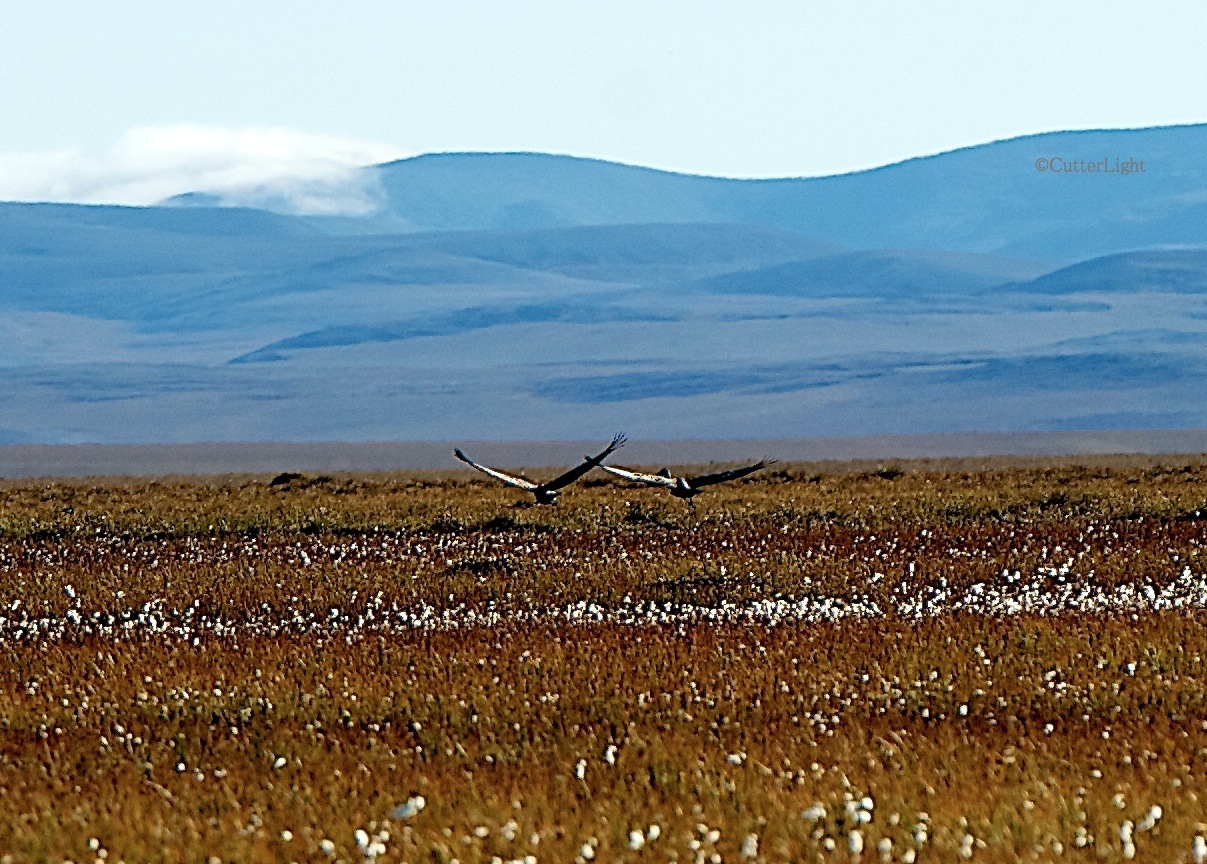
A pair of sandhill cranes lifts off above the last of the cotton grass on the tundra near Point Hope.

Inupiat (Eskimo) Yo-Yo with Polar Bear Fur

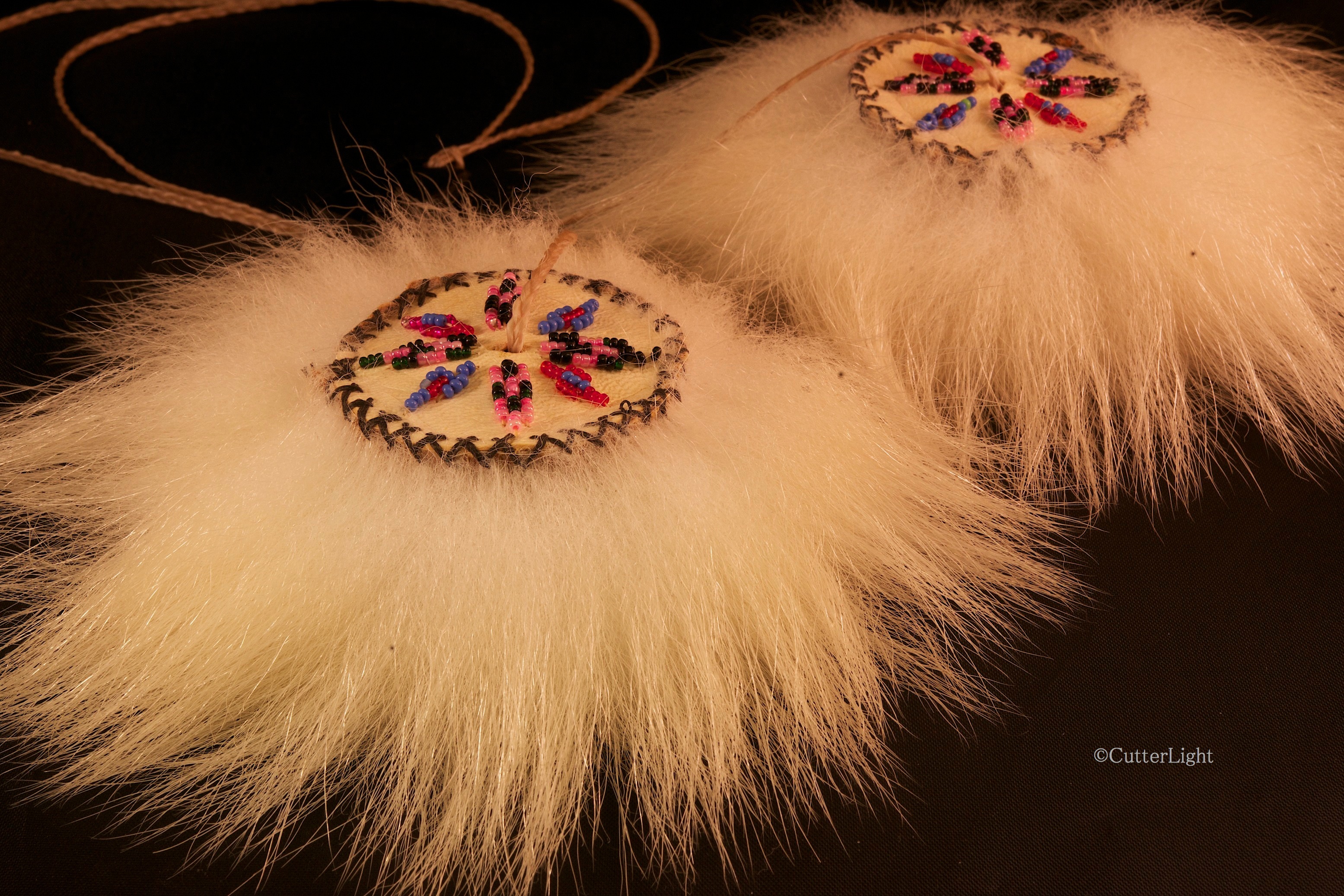
eskimo yoyo n

Fashioned from polar bear fur and finished with intricate beading, this Inupiat yo-yo has transcended it’s traditional purpose to become art. Based on a bola design, in olden times tools like this were made of rocks tethered together with sinew and were used to catch birds. 

Beautifully crafted by Molly Oktollik, one of the elders here in the village of Point Hope, Alaska, this Inupiat “yo-yo” isn’t what most of us envision when we hear the word yo-yo. In former times, they were made of rocks held fast on sinew tethers and in the right hands were a formidable tool for catching birds. Ptarmigan, for one species, are often easy to get close to, and ducks and sea birds returning to their headland roosts typically fly in on a low trajectory.

These days yo-yos are crafted as pieces of art, or, when less elaborate, as toys. It takes a certain skill, but the two ends can be made to rotate in opposite directions – that is, with one end revolving around the center handle clockwise, and the other revolving counterclockwise. It’s a pretty cool trick if you can get it to work.

Paul Klaver’s Short, Power Film, Eloquently Captures an Ecosystem

Paul Klaver’s 13-minute film, Alaska the Nutrient Cycle beautifully captures the critical role wild salmon play in sustaining a rich, diverse ecosystem. Unscripted but with beautiful background music, this breathtaking footage speaks for itself. This is why wild salmon and their environments are worth fighting for, and illustrates why we oppose farmed salmon.

Lattice Top Apple Pie with Baked-On Cinnamon Sauce

apple pie lattice top n

Cinnamon sauce baked into the lattice-top crust makes this apple pie irresistible. The only debate was whether to enjoy it with a slice of sharp cheddar cheese or a scoop of homemade vanilla bean ice cream. 

Last week’s baking lesson was all about baking with butter: buttery cranberry scones, fluffy butter biscuits, and two kinds of pie – lemon meringue and a lattice-topped apple. After learning how to create the lattice top, which was surprisingly easy, we took a basic apple filling and poured the liquid you would normally mix into the apples over the top of the pie, allowing the flavors to bake into the lattice and surround the apples inside. This apple pie was served hot out of the oven to friends with cinnamon vanilla ice cream as fortification against a chilly day north of the Arctic Circle.

Apple Pie with Baked-on Cinnamon Sauce

Ingredients

  • 5 Granny Smith apples, cored, peeled, and sliced
  • 2 tbsp lemon juice
  • 1/2 cup unsalted butter
  • 3 tbsp all-purpose flour
  • 1/4 cup water
  • 1/2 cup granulated sugar
  • 1/2 cup brown sugar
  • 1 tsp ground cinnamon
  • pastry crust for 9-inch double crust pie

Directions

  1. Preheat oven to 425 degrees F (220 degrees C).
  2. Toss apples in lemon juice. Set aside.
  3. Melt the butter in a saucepan.
  4. Stir in flour to form a paste.
  5. Add water, granulated sugar, brown sugar and cinnamon, and bring to a boil. Reduce temperature and let simmer.
  6. Place the bottom crust in your pan.
  7. Fill with apples, mounded slightly.
  8. Cover with a lattice work crust.
  9. Gently pour the sugar and butter mixture over the crust. Pour slowly so that it does not run off.
  10. Bake 15 minutes in the preheated oven. Reduce the temperature to 350 degrees F (175 degrees C). Continue baking for 35 to 45 minutes, until apples are soft.
  11. Let cool slightly. Serve warm with vanilla ice cream or a slice of sharp cheddar cheese.