Yelloweye Rockfish Benedict: Alaskan Breakfast of Champions

Freshly cracked pepper, sea salt and maybe a dash of soy sauce are all the seasoning freshly caught yelloweye want. Topped with hollandaise sauce and served on pan-toasted English muffins with sides of thick bacon, summer squash, ruby red grapefruit and ruby red mimosas, this is the kind of breakfast that makes you happy you’re a fisherman – or married to one! 

Like single malt Scotch and country drives in autumn, when it comes to table fare there are no bad rockfish. But within genus Sebastes, some cook up better than others. In Japan, small but tasty mebaru (Sebastes inermis) are among the most highly prized fish wherever they are found. Here in Alaska, yelloweye (Sebastes ruberrimus), which can grow to over 30 inches (80 centimeters) and 20 pounds (9 kilograms) are the stars. The sweet, delicately flavored meat puffs up slightly when cooked and flakes off in large, firm chunks for a taste and texture that is unparalleled among rockfish.

.

When preparing fillets this way, a good rule of thumb is nine minutes per one inch of thickness, thus a fillet one inch thick will be cooked for about nine minutes.

I pan toast English muffins (or any other toast) by using about three parts olive oil to one part butter (or no butter at all) over low to medium-low heat in a heavy frying pan. Heat the oil, add the bread, toast, flip and do the other side. This produces tasty toast, and you can do it in any kitchen, over a Coleman stove, or in a galley.

Yelloweye Rockfish Benedict

Ingredients:

  • 1 rockfish fillet about 3/4 lb to 1 lb, cut in half to serve 2 people. We generally prefer our fillets scaled, skin on. (Skin removed is fine.)
  • salt
  • pepper
  • soy sauce (optional)
  • olive oil
  • 3 egg yolks
  • 4 tbsp butter
  • 1 tbsp lemon juice
  • healthy pinch or two of cayenne pepper (or mildly fiery chili-based seasoning such as the Southwestern rubs made by Penzys or Dean & Deluca)
  • 2 English muffins, sliced in half, toasted

Directions:

For Hollandaise:

  1. Melt butter in a small pan over low heat.
  2. Set up a double boiler by putting some water in a pot and bring it to boil. In a smaller pot, place egg yolks and lemon juice. Place this smaller pan in the larger pot, but not in the water. The steam will heat the smaller pot.
  3. Vigorously whisk the egg and lemon mixture until it increases in volume.
  4. Slowly drizzle the melted butter into the whisked egg mixture, add a pinch of slat, and continue to whisk until everything is blended.
  5. Set aside. This mixture can be warmed again, if necessary. If it’s too thick, whisk in a few drops of water. Too thin, cook more, being sure to continue whisking/stirring.

To cook the rockfish:

  1. Rinse the fillets, pat dry with paper towels, and place on a cutting board, skin side down. Add freshly cracked pepper and sea salt and set aside.
  2. In a skillet large enough to hold the fillets so that they don’t touch, place enough olive oil to liberally cover the bottom of the pan and heat over medium-low heat.
  3. When the oil is hot enough to make the fish sizzle, add the fillets skin side down. Cook for 5 minutes.
  4. Turn the fillets and sprinkle with salt and freshly cracked pepper. Add about 1/2 tablespoon of soy sauce (optional) and continue cooking for 4 minutes.

To serve:

Place toasted English muffins on plates, place the fillets on the muffins, and spoon on the Hollandaise. Sprinkle on a dusting of cayenne pepper or a similarly fiery pepper-based rub. Serve with seasonal vegetables.  We enjoyed this meal with mimosas made with freshly-squeezed ruby red grapefruit.
Under Pressure: Delicious, Fast, Green Cooking

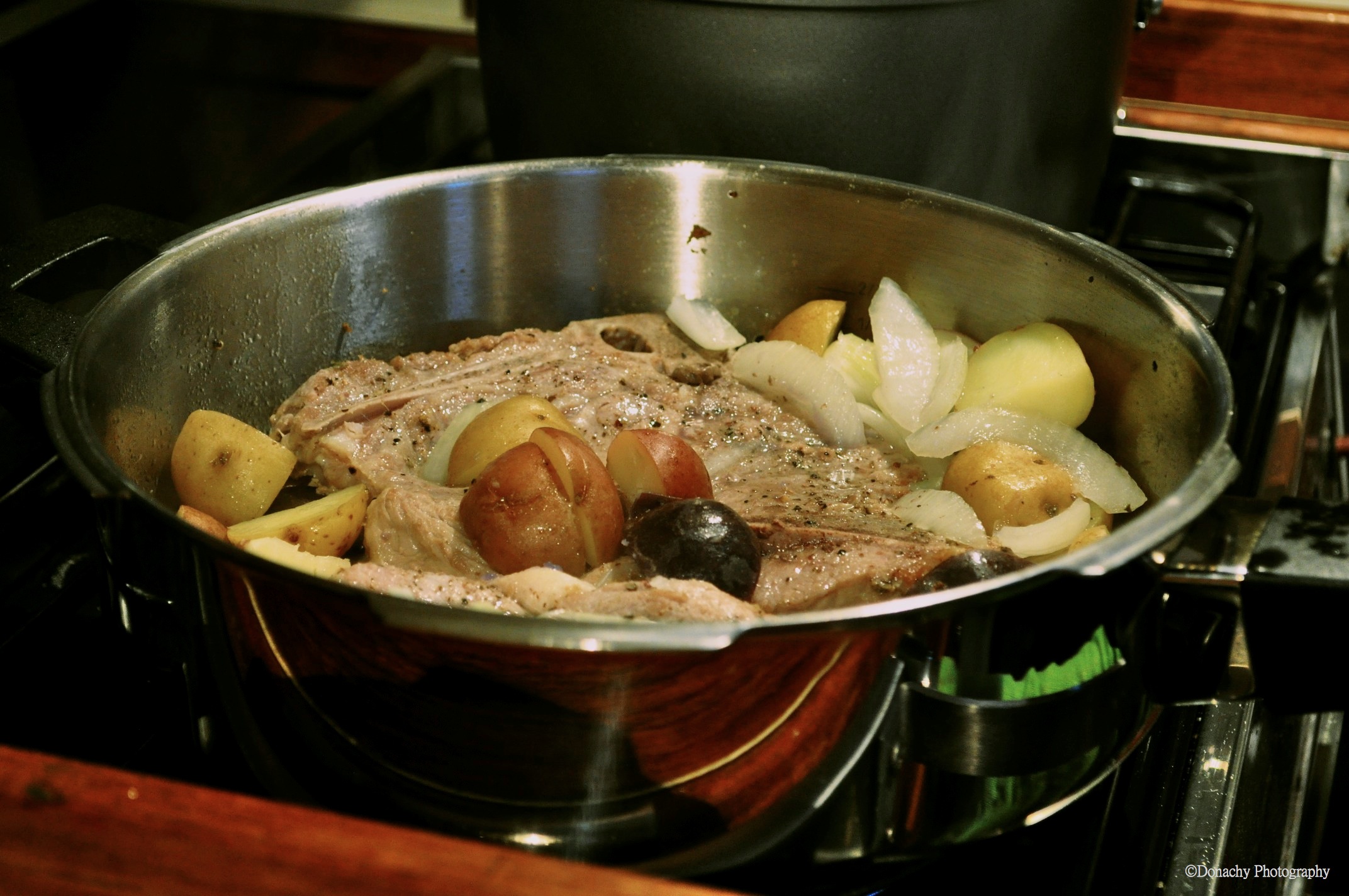
Pressure cooking is new to us, but we’re fast becoming converts. We made this one-pot-meal of two large pork chops, Peruvian potatoes and onions in about half the time the same meal would have taken in frying pan. In addition to cutting cooking time, pressure cooking requires less fuel than traditional methods.


Our first foray into pressure cooking involved one of our breakfast staples: steel cut oats. This is a new food for us, and now that we know what they are, it’s been a little tough to go back to quick rolled oats. But the time required is a deal-breaker on workdays. From start to finish, it takes about 35 minutes to cook up a couple servings of steel cut oats.

Enter the pressure cooker. These are not at all like crock pots or slow cookers – just the opposite. By sealing in steam pressure, these pans and pots speed up cooking time. As pressure rises, so does heat inside the pan. After some trial and error, I now have the preparation time for steel cut oats cut down to 17 minutes – and I think I may be able to bring the time down even further. Not only is the time cut in half, so is fuel consumption. Once the cooker is pressurized, the cooking flame can be cut back to low or even turned off altogether for up to 70% fuel savings over traditional cooking methods.

Also, since very little steam escapes during the cooking process, less water is required. This could prove to be valuable when sailing or boondocking. Less oil or cooking fat is required, too, and cooked under pressure, meats and certain vegetables that can be a little tough come out tender without being overcooked.

Years ago, I had heard that pressure cooking could be dangerous. Makes sense: hot steam, very high temperatures, pressure. I had an image of pan lids rocketing through kitchen ceilings. But whatever the risks involved with this cooking method may have been in the past, modern pressure cookers have addressed them. We purchased a two-and-a-half quart pan made by Kuhn Rikon, a Swiss company known for quality cookware. Engineered with safety in mind, the pan is made from heavy gauge stainless steel and features multiple pressure release systems to prevent over-pressurizing.

The real test came the other night when I attempted a one-pan meal for the two of us. I had two nice pork chops, some small red, white and purple Peruvian potatoes, and half a sweet onion chopped coarse. I seasoned all this with good old salt and pepper, heated a little olive oil over high heat in the pressure cooker, browned the chops for a minute on each side and then added a quarter cup of water (for steam). Then the potatoes and onions went in, I locked the lid in place, and…

Voila!

Seven minutes later we had a beautifully cooked meal. The meat was cooked through and juicy, the potatoes were just right, and we had just one pan to clean up! (And nothing was stuck to the pan.)

The meat lacked the crispy outer texture straight pan-fyring gives, but searing the meat prior to pressurizing it seemed to seal it well enough. Once pressure had built in the pan, I was able to lower the flame to low and then to turn off the heat altogether, so I’m guessing I used only two-thirds to one-half the propane I’d have used had I prepared the meal in a frying pan.

Zaru Soba with Alaskan Scallops and Shrimp

Zaru soba (chilled buckwheat noodles) dressed up with fresh seafood makes for a quick but elegant meal. 


A challenge inherent to preparing meals onboard a boat or in a camper is that the stovetops tend to be small, and while this doesn’t necessitate limiting preparation to one or two pans, it steers a cook in that direction. Meals featuring something on a bed of noodles really shine, and one of our favorite types of noodles are soba – which is the Japanese word for buckwheat. Being thin, soba cooks quickly, and since zaru soba is served chilled, it’s no problem to rinse the noodles and set them aside while other food is prepared.

In the past, I’ve made this dish with salmon, halibut and rockfish. On this more recent occasion, I had large Alaskan scallops and fresh Alaskan shrimp on hand. Instead of serving the dish on traditional bamboo (the origin of the word zaru), I opted for pasta bowls.

Zaru Soba with Alaskan Scallops and Shrimp

Ingredients:

  • soba for two people
  • 1/4 pound shrimp, peeled
  • 1/4 pound sea scallops
  • 1/2 cup tsuyu (a dipping sauce available in the Asian section of most grocery stores). Divide into equal parts.
  • 1 sheet of nori (dried seaweed), cut into thin strips
  • 1/4 cup dry sherry or sake
  • olive oil
  • salt
  • 1/2 tbsp Thai seasoning
  • 1 tbsp fresh tarragon chopped course or 1 tsp dried tarragon (optional)
  • 1 green onions, sliced thin

Directions:

  1. Place scallops and shrimp in a mixing bowl. Add Thai seasoning and tarragon and toss together. Set aside.
  2. Boil soba according to the directions on the package. I use much less water than most directions call for and the noodles come out fine, but do salt the water.
  3. When the noodles are finished, pour them into a colander to drain and then rinse with cold water.
  4. Place noodles in pasta bowls. Add tsuyu to each bowl, tossing the noodles in the sauce.
  5. Heat a little olive oil in a large frying pan over medium heat. When oil is hot, add the seasoned scallops and shrimp. Add sherry or sake. Cook for about 1 minute, using a spatula to briskly stir and turn seafood.
  6. Place seafood on noodles. Top with sliced green onions and nori strips and serve. Alternatively, the cooked seafood can be chilled prior to adding to the noodles.

This dish and its variations has become a family favorite. It pairs beautifully with a Willamette Valley Pinot Gris or a crisp Sauvignon Blanc.

Bacon-Wrapped Smelts (Hooligans, Eulachons or Candlefish)

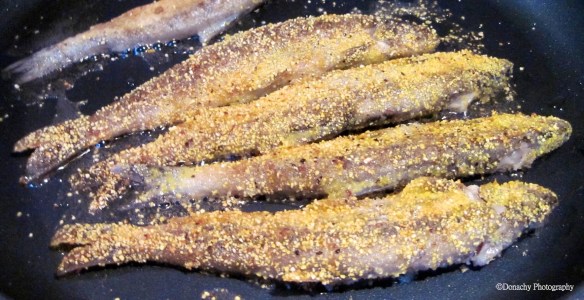
Freshly caught smelt prepared two ways: In the foreground, the fish was rolled in polenta. The smelt in back was dusted in seasoned flour. The fish were pan fried, wrapped in bacon and placed on whole leaves of Romain lettuce to be eaten from head to tail, bones and all. A sprig of asparagus and a few dollops of bright orange flying fish roe (tobiko) finishes the lettuce taco.

As I write this, one of the small rivers flowing into Resurrection Bay is jammed full of smelt. Specifically Thaleichthys pacificus, commonly referred to as hooligans. The AFS (American Fisheries Society) has settled on the name eulachon (pronounced you-luh-chawn), from the Chinook Indian name for the fish. Early west coast explorers and settlers called them candlefish because the spawning fish are so full of fat (about 15% of body weight) that when dried, they can be lit and will burn like a candle.

In the foreground: Polenta is especially coarse cornmeal. Seasoned with salt and pepper, rolling smelt in polenta gives these soft-fleshed fish a nice crunch when pan friend. In the back: another way to prepare smelt for the frying pan is by dropping them into a Ziplock bag containing seasoned flour and giving them a few shakes. Tarragon, fennel, marjoram and salt and pepper are a good start when seasoning these fish. Tongs make this a neat job. Note the asparagus in the pan on the stove.

The meat and bones of eulachons are quite soft. So soft, in fact, that when pan fried, the bones are barely noticeable. Their flavor is wonderful, but they definitely benefit from the addition of some crunch.

When the smelt are running in a river with a healthy population, getting enough for a meal or two is easy. On large rivers, a long-handled net might be necessary. But on this river, the fish were thick and close to shore. Two scoops of the net, and we had all the fish we needed.

Like their relatives, the salmon, eulachon are anadromous. They spend most of their life in the ocean, feeding on plankton, and then return to their natal streams and rivers to spawn, after which they die. Males arrive first and comprise virtually all the fish in the early part of the run. Later the females show up. Ideally, it’s the females you want, as a fresh fish laden with ripe eggs is a delicacy.

The males are quite good, too. In either case, cleaning these small fish (they average about eight inches/20 centimeters) is a simple matter of rinsing them in clean, cold water. There is no need to gill, gut or scale them.

A seemingly endless school of eulachons makes its way up an Alaskan river.

Prosciutto, Salami & Capicola with Egg and Cheddar on an Onion Bagel

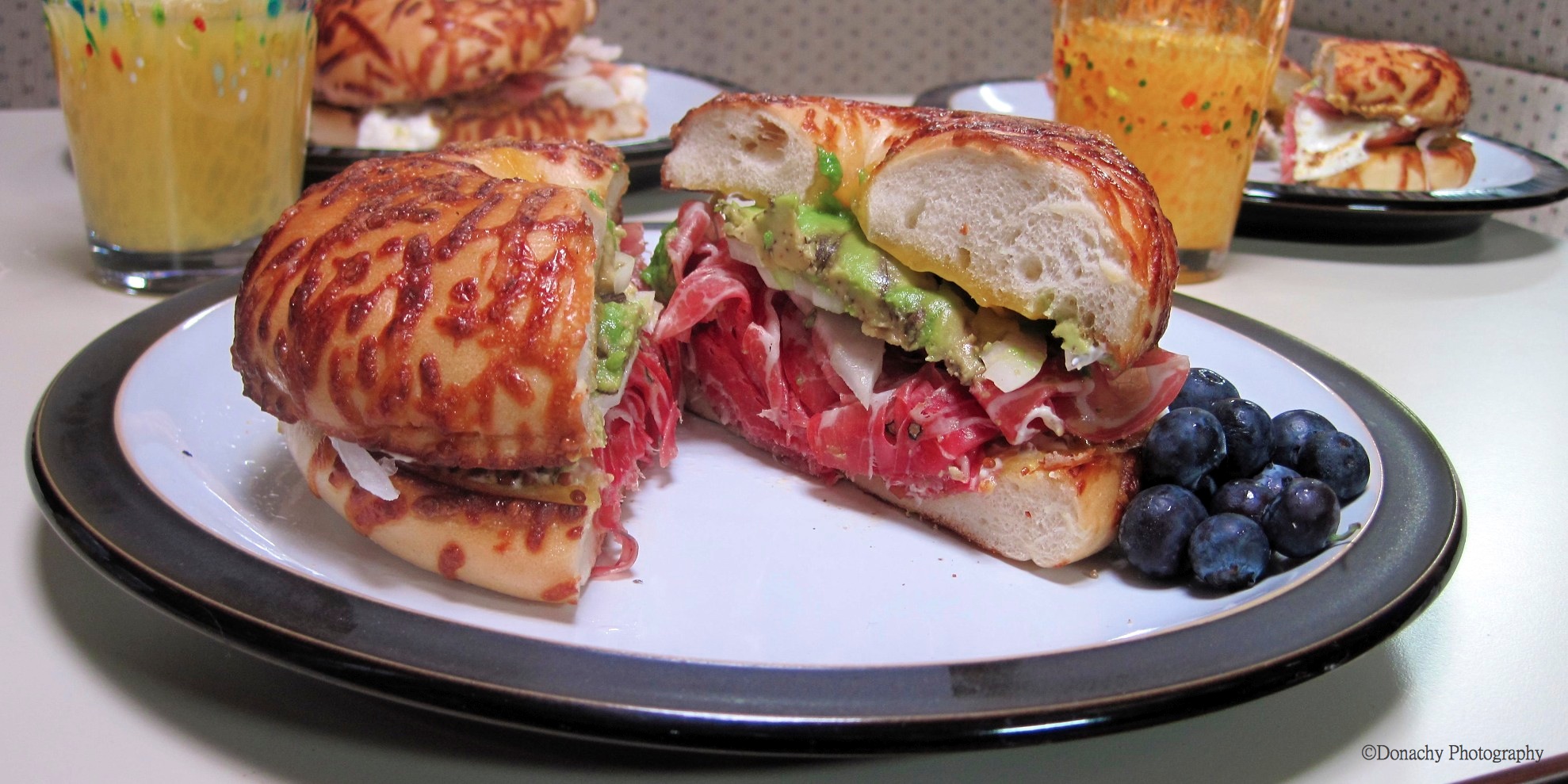
Our first breakfast is served aboard Bandon: Toasted asiago cheese bagels with melted Tillamook cheddar cheese, coarsely ground mustard, onion, cream cheese, avocado, a fried egg and three kinds of Italian-style meat – prosciutto, salami and capicola. 

Time for a good sandwich.

We spent about a week giving the sailboat a thorough cleaning as well as moving items off the boat that had been left behind by previous owners and moving aboard the things that will make this boat our home. We finished this process in time for daughter Maia’s visit, and when we returned to Seward with her from the Anchorage airport, we spent our first night aboard.

The next morning I made these bagel sandwiches for our breakfast. I began by toasting the sliced bagels in a large pan with a little olive oil, turning them once and adding thin slices of cheddar cheese to melt. Next, I removed the bagels from the pan and added coarse ground mustard, cream cheese and soft, ripe avocado. With the cheeses and spreads in place, I then added a thinly sliced onion and a generous amount of Italian-style hams: prosciutto, salami and capicola. The final touch was a fried egg.

Big, Fluffy Blueberry One-Pan Pancakes

The one pancake to a pan pancake: Half of one makes for a hearty breakfast. Perfectly crispy on the outside, light and fluffy and jammed full of fruit on the inside, served with a couple strips of thick bacon and maple syrup, who needs the other food groups? Well, coffee…

I’ve been messing around with pancakes for a long time. Here’s what I now think I know about making the perfect pancake.

First, while one can make them from scratch, there is no reason to. Krusteaz has come up with a mix that nails it. We buy Krusteaz mix in bulk at Costco and enjoy waffles or pancakes – or both – once or twice a week.

Second, put the butter in the pan, not on the pancake. Pancakes fry up crispier, turn a lovely golden brown, and taste more decadent when fried in roughly equal parts light olive oil and butter.

Third, the right pan makes a big difference. Barbra and I have become big fans of Swiss Diamond nonstick cookware. The pans are thick and heavy, so food scorch is avoided, and once they heat up, they cook with incredible evenness.

Fourth, do your best to get away with as little water and as little mixing as possible. The result is a fluffier pancake.

Fifth, forget medium heat. Low and long is the way to go. I start on medium-low, and then go a little lower than that, giving the cake time to rise without burning.

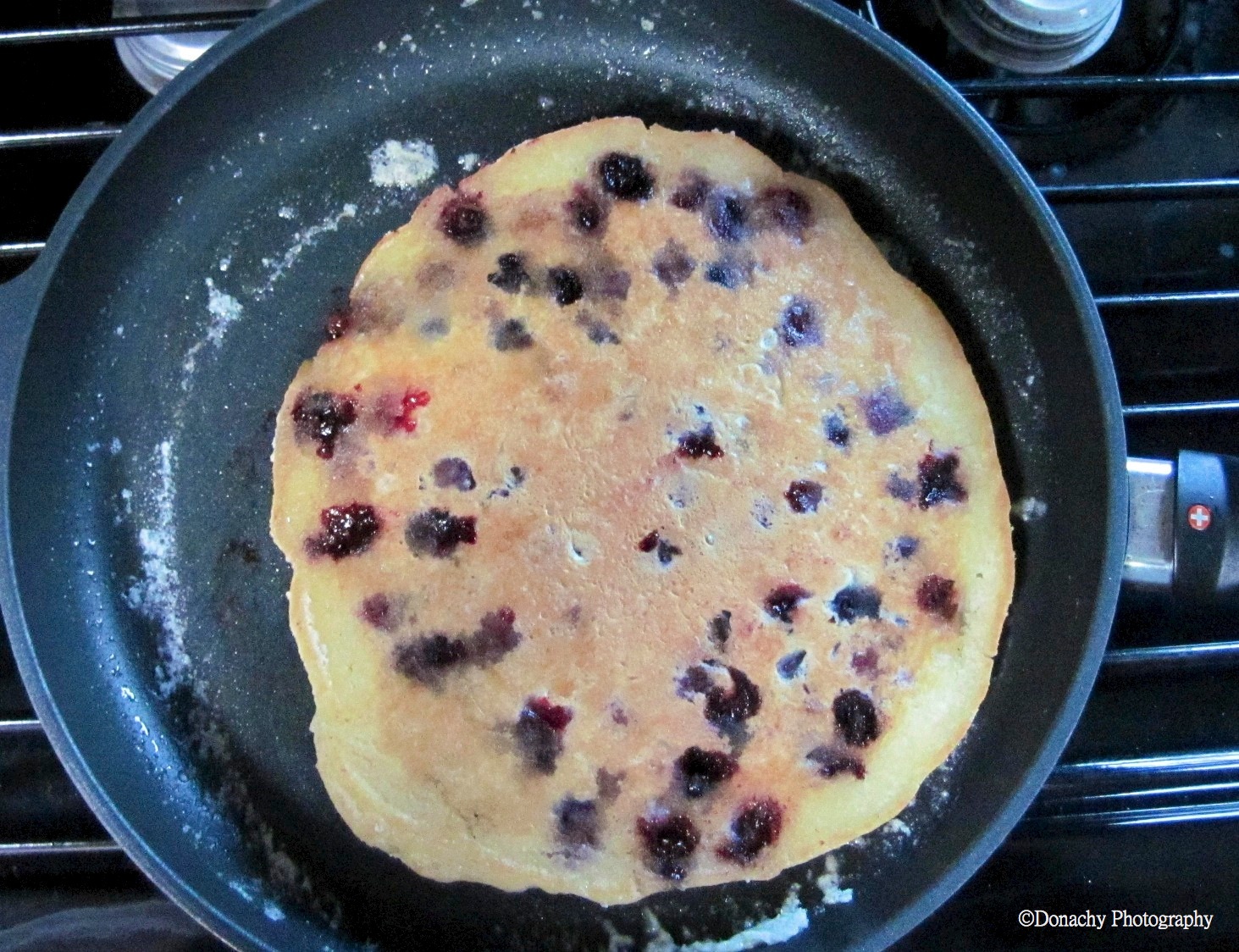
Sixth, one big pancake cooks up better – in every regard – than several small ones. Think 11 1/2″ pan and enough batter to cover most of it. Big pancakes can hold more fruit per volume and rise up higher and fluffier than smaller pancakes. (Get a big spatula, and be ready for a little splatter when you flip the cake.)

And finally… Fruit. Adding a generous amount of fruit to the batter lends more than just the added flavor and texture of the fruit itself to the cake; it also adds a creaminess that a fruitless pancake cannot match. Whole blueberries are great, and as this is Alaska, we use them frequently. Chopped bananas are superb. But our favorite? Strawberries. There is something about fresh strawberries, diced, that takes a pancake to another world.

Honey, jam, preserves or maple syrup – they all do a good pancake justice. Crispy around the edges, creamy in the middle, the maple syrup getting on the bacon, a hot cup of coffee to cut through the sweetness… It’s good morning food.

A big blueberry pancake, just about ready to be cut in half and served for breakfast. 

Dungeness Crab in Beer and Miso

Whether fresh or previously frozen, Dungeness crabs and blue crabs are a great meal to linger over.

Flip a coin. Heads its Dungeness, tails its blue. We’re in either way. Some of the most memorable meals we’ve enjoyed were centered around freshly steamed or boiled crabs, good beer or wine, and a long, leisurely meal with just the two of us or with friends cracking and picking crabs.

We prefer fresh crabs whenever we can get them. In South Carolina, there was a private dock on a saltwater cut through the marsh that could be counted on to produce blue crabs on incoming tides. And when I lived in Oregon, throwing out a couple of crab pots was a matter of course on salmon fishing trips. Because Dungeness populations are depressed in the parts of Alaska we frequent, their harvest isn’t currently permitted in those locales. So most of the crabs we’ve been getting are purchased already cooked, but we still heat them before serving.

Our favorite way to boil-steam crabs is fairly simple. We start with about a half-bottle (6 – 8 ounces) of beer and 1 tablespoon of miso per Dungeness crab. Since more liquid than this is necessary, we add a cup of water or two. The idea is to ensure that there is enough liquid so that it doesn’t all boil off in the 12 minutes or so required to heat through a previously frozen Dungeness. For two crabs, add a 12-ounce bottle of beer, a little more miso, and, if necessary, a little more water.

I usually don’t immerse the entire crab. This is because I’m frugal (cheap) and hate wasting beer. I boil-steam the crab on one side for a few minutes, then flip it and continue cooking it for a few minutes more. If I’m doing multiple crabs, I arrange them in the pot as best I can and rotate them once during the cooking – although this really may not be necessary.

Previously cooked crabs are inevitably already plenty salty. The beer and miso bath gives them a mild sweetness. If you’re starting with fresh crabs, you might want to add some salt to the broth. A good rule of thumb is to steam fresh crabs for about 7 – 8 minutes per pound – which means a two-and-one-half pound crab needs about 20 minutes in the pot. One crab this side is usually plenty for the two of us, served with, say, a salad, fresh corn on the cob, and a loaf of crusty bread.

Our favorite dipping sauce? Melted butter, olive oil, garlic, lemon and soy sauce. For two people, melt about 6 tablespoons of butter. Add a clove of minced garlic and sauté  it for a minute or so. Then add 1 tablespoon of olive oil, the juice from half a lemon, and 1 tablespoon of soy sauce. A slice or two from a really great loaf of bread can be used to sop up any remaining sauce.

Crab goes great with a wide range of beers or a buttery Chardonnay.

Scones and Lemon Curd – The Last Egg

How to use  up the last of the pear butter, lemon curd, orange marmalade and the lone remaining egg in the fridge? Whip up a batch of scones, set out the spreads, and watch it all disappear!

These scones were amazingly quick and easy and had just the right texture and flavor. When I set out a large glass baking dish filled with them in the school office, they were gone almost before I turned around.

To shape them, I used a circular cookie cutter and then cut those circles in half. For larger scones, you could roll the dough into a circle and cut it into eight wedges.

Scones

Ingredients

  • 3 cups all-purpose flour
  • 1/2 cup granulated sugar
  • 5 tsp baking powder
  • 1/2 tsp salt
  • 3/4 cup unsalted butter, softened
  • 1 egg, beaten
  • a little less than 1 cup milk
  • cinnamon/sugar mixture to dust the tops (optional)

Directions

  1. Preheat oven to 400 degrees F. Cover baking sheets with parchment paper.
  2. In a large mixing bowl, combine flour, sugar, baking powder, and salt. I used a stand mixer.
  3. Mix in butter.
  4. Put egg in a large measuring cup. Fill measuring cup to 1 cup line with milk. Mix well.
  5. Pour some of the egg mixture slowly into flour while mixing on low until mixture forms a dough ball. Set aside extra egg mixture.
  6. Turn the dough out onto lightly floured surface and knead briefly.
  7. Roll dough out to 1/2 inch thickness. Cut into the shape of your choice.
  8. Place scones on parchment-covered baking sheets. Brush with remaining egg mixture. Dust with cinnamon/sugar if desired.
  9. Bake 15 minutes in preheated oven, or until golden brown.

Coconut Butter Cookies – One Egg to Go

Chewy, sweet coconut butter cookies.

Some people count down by crossing off days. Up here in the village, the days are often counted in “sleeps.” This week, we’ve been counting in eggs. These cookies contain the second to last egg remaining in our refrigerator before we leave for the summer.

One egg, three days, two sleeps to go…

My mom cooked with fresh ingredients whenever she could, and so I have many memories of cracking coconuts and drinking the milk. Afterwards, we’d use fresh coconut shavings in various recipes.

Out here in bush Alaska, we’ve been using powdered coconut milk (obtained from our favorite Asian grocery store, New Sagaya, in Anchorage). Shredded coconut is also on our annual shopping list.

A few weeks ago, I made chocolate dipped macaroons. The coconut lovers around here gave them high marks. Others (those who couldn’t handle the coconut – you know who you are) diplomatically rated them “a-little-too-coconutty.” In an attempt to mellow out the coconut in this cookie, I mixed it into a tried and true butter cookie recipe. The coconut flavor and chewiness of these cookies goes perfectly with the butter-cookie sweetness. I was tempted to dip them in chocolate but resisted, thinking that might have made them too sweet. These cookies are already perfectly sweet!

Coconut Butter Cookies

Ingredients

  • 1 1/4 cups all-purpose flour
  • 1/2 tsp baking soda
  • dash salt
  • 1/2 cup unsalted butter
  • 3/4 cup granulated sugar
  • 1 egg
  • 1/2 tsp vanilla extract
  • 1 1/3 cups sweetened coconut

Directions

  1. Preheat oven to 350 degrees F.
  2. Mix together flour, baking soda and salt in a medium bowl. Set aside.
  3. In a separate mixing bowl, mix sugar and butter until smooth and pale colored.
  4. Mix egg into sugar mixture.
  5. Mix vanilla into sugar mixture.
  6. Blend in flour mixture to create a dough.
  7. Incorporate coconut into dough mixture.
  8. Drop dough by tablespoons onto parchment-lined baking sheets leaving 2 inches between cookies.
  9. Bake for 10 minutes or until cookies are toasted lightly on the top and golden brown on the bottom.
  10. Cool on wire racks.

Razor Clam Fritters & Wasabi Slaw: Fusion Comfort

Something tried-and-true, something new: clam fritters and wasabi slaw – fusion comfort food.

My dad gave me two pieces of advice which have stood the test of time – 1) Take the stairs whenever you can, and take them two-at-a-time, and 2) eat as much fried food as you can when you’re young, because at some point you won’t be able to.

Clam fritters are so easy, I’m not sure why I don’t make them more often. Although I made these with razor clams, in South Carolina I made them out of the whelks I’d find, and at other times I’ve made them out of canned clams. The slaw is comprised of fairly standard ingredients – mayonnaise (homemade), pickle juice, vinegar, sugar, salt, pepper, carrots and cabbage – and given a kick with two teaspoons of powdered wasabi.

The fritters are adapted from Craig Claiborne’s recipe as it appears in The New York Times Cook Book, with the only difference being my substitution of dried tarragon and basil, which I have, for fresh parsley, which I do not have.

Clam Fritters: serves 4

Ingredients

  • 1 cup chopped clams
  • 1 egg, lightly beaten
  • 1 tsp lemon juice
  • 1 tbsp chopped tarragon (or substitute dry tarragon or marjoram)
  • 1 tsp baking soda
  • 1 cup flour
  • 1/4 cup clam juice
  • 1/4 cup milk
  • 1 1/2 tbsp melted butter
  • couple dashes cayenne pepper (to taste)
  • freshly ground black pepper to taste
  • oil for frying

Directions

  1. Chop clams on a cutting board. Not too fine. Place them in a mixing bowl.
  2. Add the egg, lemon juice, tarragon, baking soda and flour and stir.
  3. Blend the clam juice and milk. Add gradually to the clam mixture, stirring continuously. Do not make the batter too runny.
  4. Stir in the butter, cayenne and black pepper.
  5. Heat about 1/8 inch of oil in a frying pan.
  6. Drop batter in the hot oil – about 2 tablespoons per fritter. (They’ll cook better if they’re fairly small.)
  7. Turn when the bottom is browned, as you would for pancakes.

We served these with salmon sauce. Tarter sauce, shrimp sauce, or a squeeze of lemon works well, too. These seemed to beg for an amber ale. (Or maybe it’s Barbra and me doing the begging after nine months of living in a dry village!) Enjoy!