Salt Encrusted Whole Fish Stuffed with Shrimp

Pesce al Sale – Whole fish baked in a salt crust.

I’d read about this simple yet dramatic presentation for many years, but only got around to trying it when a recipe appeared in the June issue of Field & Stream magazine, which I subscribe to. The basic cooking method is a breeze and could easily be prepared onboard a boat or at camp. It is a show stopper when placed on the dining table, both in terms of the beautiful presentation and in terms of the incredibly moist, flavorful fish that results.

Encased in salt and egg white paste, the fish is ready for the oven.

While I had on hand a two pound yelloweye rockfish (Sebastes ruberrimus) which was perfect for this recipe, there are many fish which would work as well. The first that comes to mind are the true porgies – fish in the genus Pagras and Acanthopagrus. In Britain, these fish are commonly known as sea bream. In Japan, they’re are known as tai, and I would love to place a whole salt-crusted madai or kurodai on the table for Japanese guests, who typically revere these fish. Snapper, walleye, striped bass, pompano, black sea bass and even a firm-fleshed Coho salmon would all work well. A halibut just small enough to fit on a large oven tray and served this way would surely draw oohs and aahs.
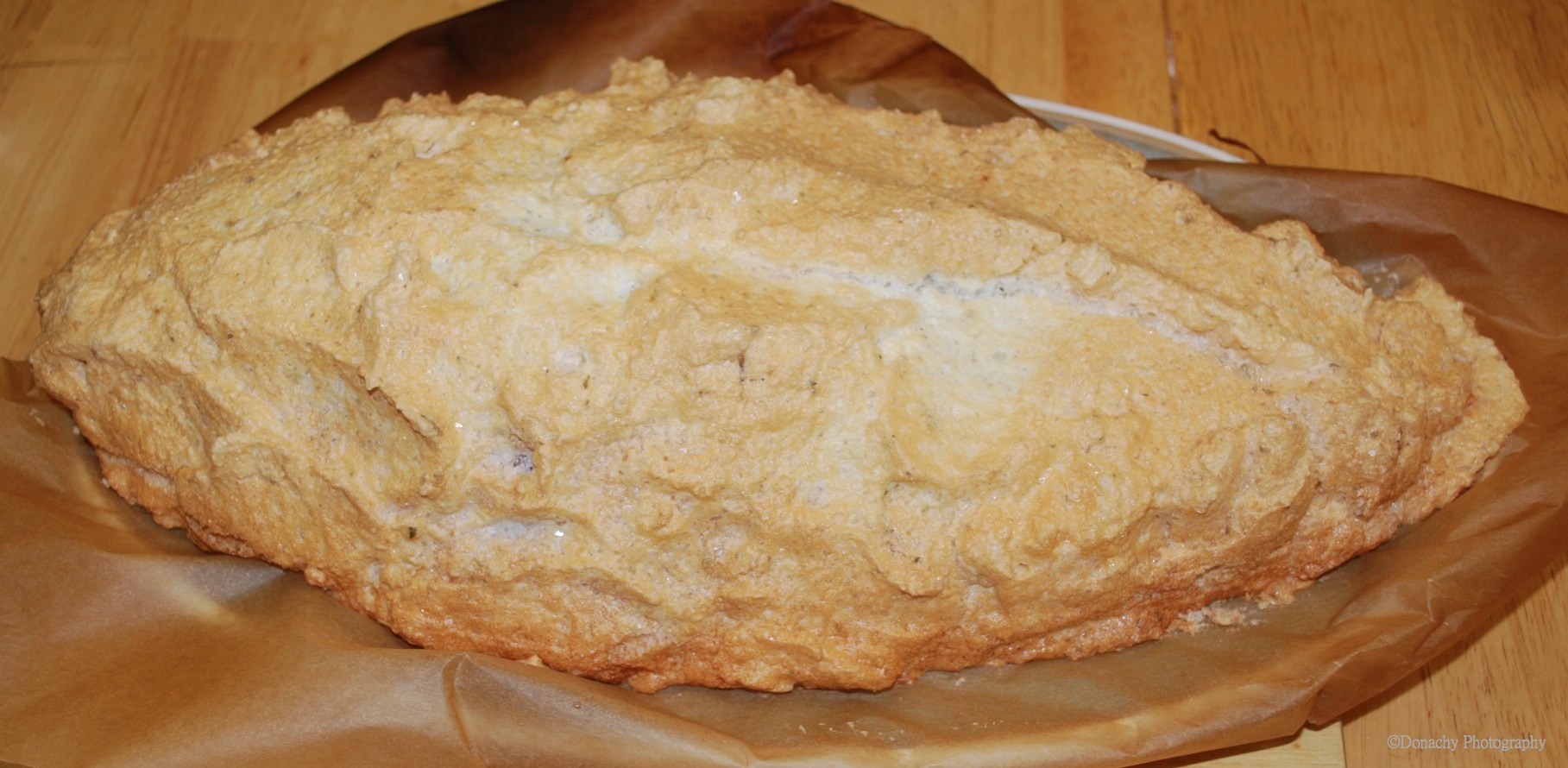
About a half an hour later, the fish is ready to serve. 

Keep in mind that the best fish dinners start with the freshest fish possible. Good fish should smell as fresh as the sea they came from. Sadly, most American grocers still haven’t figured this one out, so if you’re having trouble finding good fish, try to locate a Japanese grocery store or an Asian market that sells to Japanese customers. Whole Foods and specialty butcher shops also usually carry quality, fresh fish. Costco, too, sometimes carries whole fish and can generally be depended on for a fresh product.

Voila! The dull side of a knife is used to crack and remove the crust, revealing a succulent fish that wants only a drizzle of olive oil and a squirt of lemon.

Figure about one pound of cleaned, gutted whole fish for every two diners. Thus, a two-pound fish will serve four.

Salt-Crusted Whole Fish with Shrimp

Ingredients: Serves 4

All you really need are the first four ingredients. The others are optional and can be omitted entirely or substituted freely.

  • One 2-pound (.9 kilogram) fish, scaled, gilled and gutted but otherwise left whole
  • 4 egg whites
  • 2 cups sea salt
  • a good-tasting extra virgin olive oil
  • parchment paper and baking sheet or baking platter
  • lemon wedges (preferably from Meyer lemons)
  • 1/4 pound shrimp, peeled (optional)
  • tarragon – either 1 or 2 sprigs fresh or 1 tsp dried & crushed (optional)
  • 1 tsp dried marjoram (optional)
  • 1 or 2 bay leaves, crushed (optional)
  • freshly ground pepper (optional)
  • additional sea salt (optional)

Directions:

  1. Line a baking sheet or platter with parchment paper.
  2. Preheat oven to 450 degrees F. (232 degrees Celsius)
  3. Use paper towels to pat the fish dry. Use a brush (a clean tooth brush works well) to remove all traces of viscera from the stomach and head cavity. Rub cavity with salt, pepper and crushed tarragon, if desired, or place a sprig or two of fresh tarragon in the cavity. Stuff with the shrimp. Set fish aside.
  4. Whip the egg whites until they from stiff peaks.
  5. Gently fold the salt (and the crushed bay leaves and marjoram, if desired) into the egg whites until a paste is formed.
  6. Spread about 1/3 of the salt paste on the parchment paper in a shape large enough to hold the entire fish.
  7. Place the fish on the salt paste and completely cover with remaining salt paste.
  8. Bake for 25 minutes. Turn oven off and continue baking for five minutes. Remove fish from oven, place on dining table and allow it to rest for another 5 to 10 minutes.
  9. Remove crust by cracking it open with the dull side of a knife. The crust can be lifted off with a spatula, large spoon or wide knife blade. The top layer of the fish will easily lift away from the bones.
  10. Serve with lemon wedges and drizzles of extra virgin olive oil.

We served the fish with oven-roasted potatoes and steamed vegetables. This dish would be fun with Margaritas.
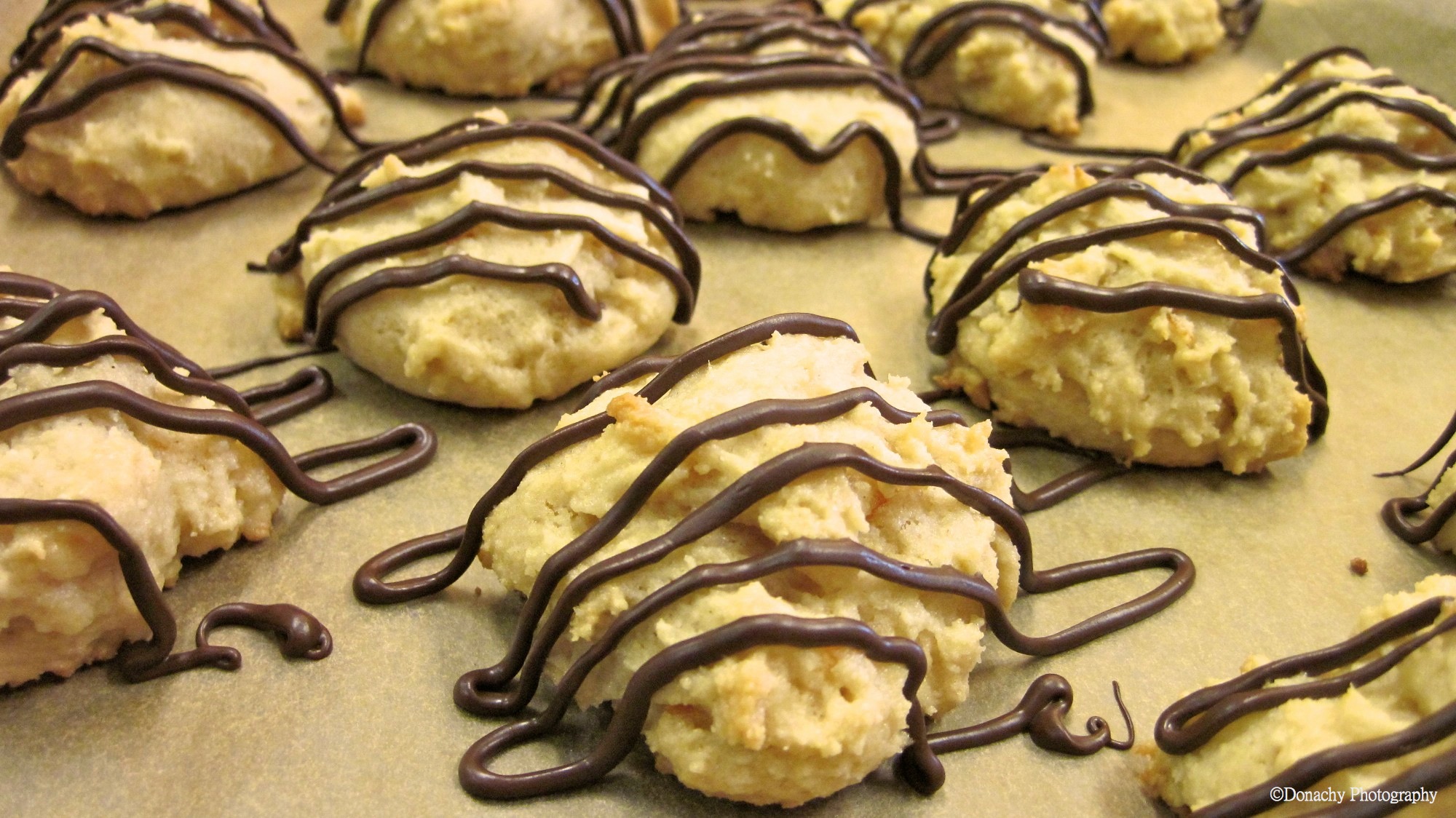
Chocolate Drizzled Orange Marmalade Cookies

Our trip back to Point Hope, Alaska, went like clockwork – Swiss clockwork at that. The taxi driver arrived at our storage unit (where we’d spent the night in our camper) ten minutes early and was driving a van which easily held our eight coolers loaded with this summer’s catch. Traveling with eight coolers always fills me with a bit of trepidation; you can imagine the “what if” scenarios that run through our heads for this trip. So we plan for the worst and hope for the best.

Up in Point Hope, our big freezer is now stocked for the year while we wait for about a thousand pounds of dry goods we carefully packed and mailed to arrive via the U.S. Postal service.

“Waiting” is not something I enjoy. “Doing” is much more fun. After finding a half of a jar of marmalade in the refrigerator, I decided conducting a cookie experiment would be much more fun than sitting around waiting for groceries to arrive. The results? Orange-flavored cookies. The chocolate added a layer of flavor that complimented the orange tang.

Orange Marmalade Cookies (makes 3 dozen)

Ingredients

  • 2/3 cup unsalted butter, softened
  • 1 cup granulated sugar
  • 1/2 cup unsweetened applesauce (can substitute with 2 eggs)
  • 12 tbsp orange marmalade
  • 3 cups all purpose flour
  • 3 tsp baking powder

Directions

  1. Preheat oven to 375 degrees F. Line cookie sheets with parchment paper.
  2. In a large mixing bowl, cream together butter and sugar.
  3. Add applesauce and marmalade and mix thoroughly.
  4. In a separate bowl, sift together flour and baking powder.
  5. Mix in flour mixture to butter mixture until just blended.
  6. Drop dough by tablespoons onto parchment-covered cookie sheets. Leave at least one inch between cookies.
  7. Bake until cookies spread slightly and are lightly browned (about 10 minutes).
  8. Cool cookies completely on wire rack.
  9. Drizzle with melted chocolate, if desired. (I used semi-sweet chocolate chips.)

Afternoon Delight – Strawberries and Zabaglione

Cold, windy, rainy days are perfect days for making something special. This bowl of Strawberries and Zabaglione created with egg yolks, sugar and port wine took only about 15 minutes to prepare – and about two minutes to make disappear.

Some days on Resurrection Bay, glorious sunshine and turquoise waters allow us to imagine we are in the Bahamas rather than Alaska. But this afternoon’s dark skies, white-capped waters and steady drum of cold rain made it a good day to keep the companionway hatch closed and remain cozily tucked into our sailboat with a warm fire in our Dickinson fireplace.

With a few simple ingredients, I whipped up a lovely afternoon snack which had just enough warmth to it to keep the chill outside at bay.

Ingredients

  • 4 egg yolks
  • 4 tsp sugar
  • 4 tbsp port wine

Directions

  1. Whisk all ingredients together over a double boiler until it is not quite as thick as pudding.
  2. Serve immediately over berries. Top with sliced almonds or a spring of fresh mint.

Five Layer Port Berry Tart – Enjoying Summer Berries and Living Larger (if you’re not careful)

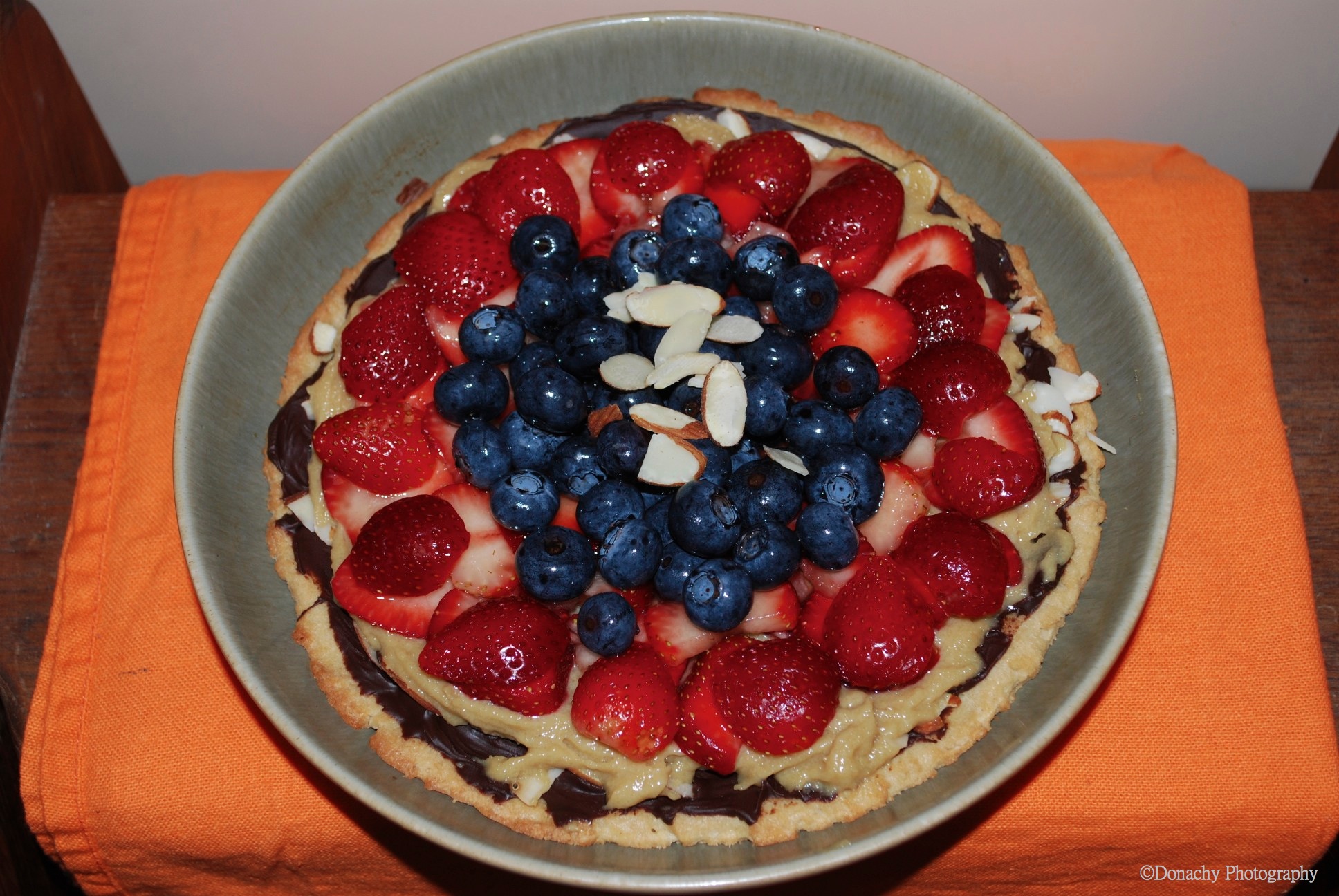
A crunchy cookie crust coated with dark chocolate is the foundation for this delicious tart. Layer on sliced almonds and pastry cream. Then finish with port wine-marinated berries. Yum!

Summer has always meant berries to me. When I was young, we would pick buckets of blackberries in thickets behind our home. I have fond memories of hot, sun-drenched, juicy strawberries at a “you-pick” farm…one for the container, one for me. All throughout my summers…berries. I can never seem to get enough of them. Maybe it is because their season is so fleeting.

In their short growing season, wild berries grow abundantly in Alaska. In the past, we’ve picked salmonberries, raspberries, blueberries and currents here on the Kenai Peninsula. This summer, our departure will beat the arrival of these ripening berries. Sigh. Fortunately, the local Seward grocery store supplied me with strawberries and blueberries to meet my berry craving.

This galley-sized tart serves four and was prepared in a Denby pasta bowl. In a traditional kitchen, you might double this recipe and bake it in a fluted tart or a springform pan. A dash of almond or vanilla extract might also be a nice flavor in the pastry cream. These are not staples in Bandon’s galley. Any berries could be used in this recipe. I would imagine ripe peaches would also be delicious.

Five Layer Port Berry Tart

Ingredients

Crust

  • 1 cup all-purpose flour
  • 2 tbsp brown sugar
  • 4 tbsp unsalted butter (separated into 2 portions of 2 tbsp each)
  • 12 rectangles of dark chocolate bar
  • 1/3 cup of sliced almonds

Pastry Cream

  • 2 egg yolks
  • 1/4 cup brown sugar
  • 1/2 cup semolina flour
  • 1/2 cup heavy cream
  • 1/4 cup low fat milk

Berry Topping

  • 1 cup of berries, I used sliced strawberries and whole blueberries
  • 2 tsp of brown sugar
  • 2 tbsp port wine
  • a few sliced almonds to garnish

Directions

  1. Preheat oven to 375 degrees F.
  2. Thoroughly mix together all-purpose flour and 2 tbsp brown sugar.
  3. Cut in unsalted butter.
  4. Mix to form dough ball (add drips of cold water if more moisture is needed to form dough).
  5. Press dough evenly into greased bakeware.
  6. Use tines of fork to prick dough all over the bottom and up the sides of the dough.
  7. Bake for 20 minutes.
  8. Let crust cool on wire rack in bakeware.
  9. On low heat, in a medium saucepan, melt chocolate and 2 tbsp of unsalted butter. Stir constantly.
  10. When chocolate mixture is thoroughly melted and mixed, spread evenly onto cooled crust, ensuring bottom and sides of crust are coated.
  11. Sprinkle 1/3 cup of sliced almonds onto melted chocolate. Press almonds into melted chocolate. Let cool and harden.
  12. In a small bowl, whisk egg yolks and 1/4 cup brown sugar until fully incorporated.
  13. Add semolina to egg mixture and whisk until fully incorporated. Set aside.
  14. Heat milk and cream in a medium saucepan on medium heat just until it boils.
  15. Whisk in heated milk mixture to egg mixture tablespoon by tablespoon, in order to avoid cooking eggs.
  16. Pour egg and milk mixture back into saucepan and stir constantly over medium heat until it thickens (should coat a wooden spoon).
  17. Continue cooking and stirring for two additional minutes. Cool pastry cream completely. Place plastic wrap over pastry cream to avoid developing a skin.
  18. Take remaining 2 tsp of brown sugar and mix with 2 tbsp of port wine.
  19. Pour port wine mixture over berries and let marinate while pastry cream is cooling.
  20. When ready to assemble, strain berries out of port wine mixture.
  21. Assemble tart by spreading cooled pastry cream evenly over chocolate coated crust and then placing strained berries atop pastry cream. Sprinkle a few sliced almonds on top of the berry layer and enjoy immediately.

The crust and pastry cream can be made ahead of time and will keep well in the fridge. Then you can easily assemble this delightful dessert right before you serve it. We did share two of the four servings with our dock neighbors to avoid living too “large!”

Rockfish Meunière on Whole Wheat Pasta

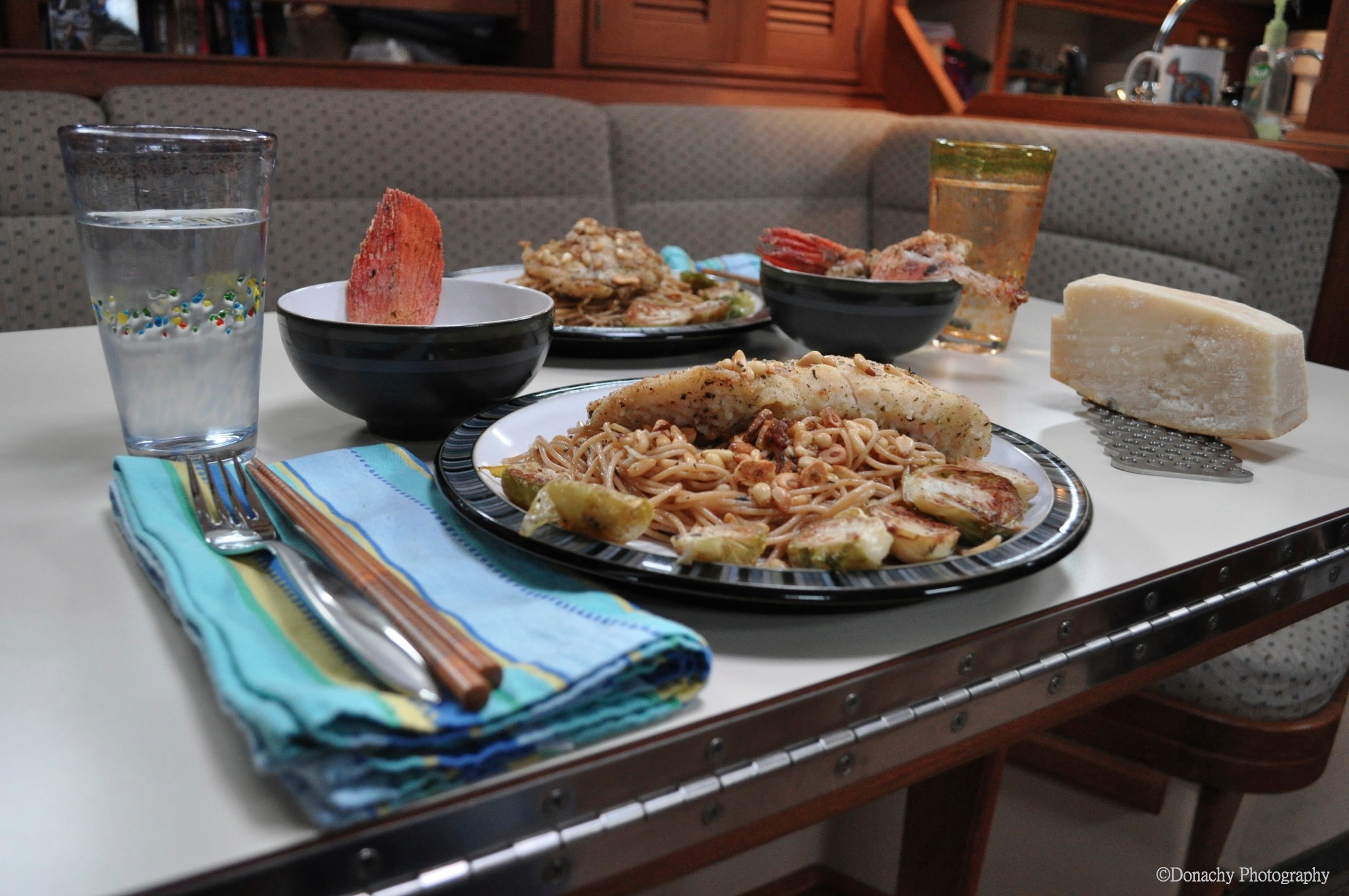
A fillet prepared à la meunière and served on pasta is one of our favorites when cooking with firm, delicately flavored white fish. We modify the traditional recipe, which means “miller’s wife” (descriptive of the flour this method employs) by using olive oil instead of butter and by skipping the lemon and butter finishing sauce.

Our three favorite methods for preparing fish, in no particular order, are as follows: sashimi – raw, thinly sliced fish dipped in a soy sauce and wasabi mixture; shioyaki – fish salted and then broiled or grilled; and à la meunière – dredged in seasoned flour and pan fried. These three preparation methods are the epitome of simplicity, emphasizing the freshness of the fish rather than sauces or seasonings, and can be accomplished in even the most bare-bones of kitchens. While they won’t adequately cover every species of fish (some species do well only when poached, and a few others shine best when deep fried), they are good methods to have in one’s repertoire.

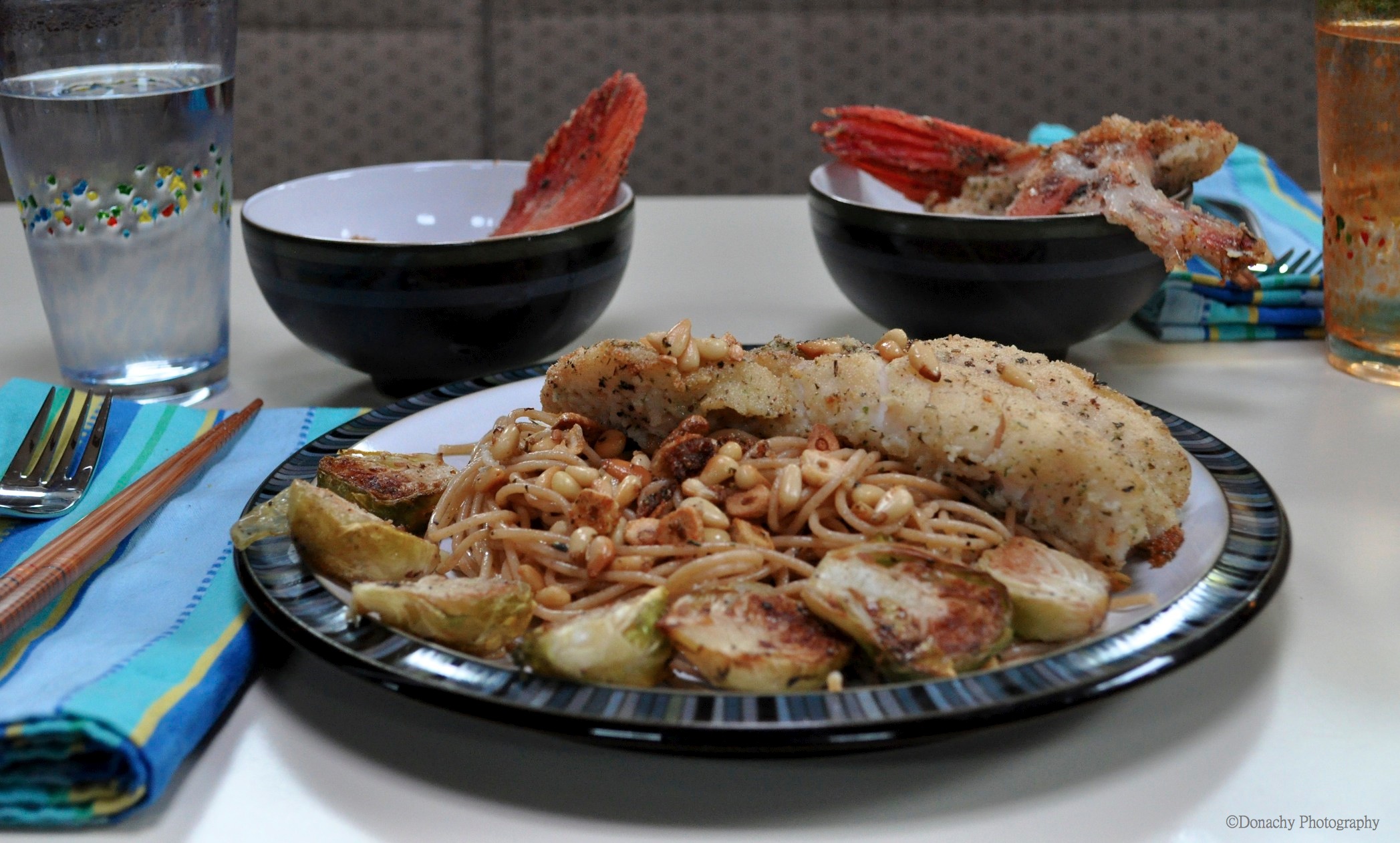
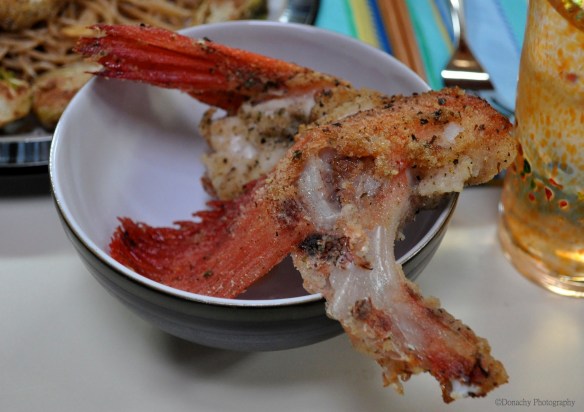
A collar – the meat just behind the fish’s head, including the pectoral and ventral fins – is a good candidate for meunière. Pictured is the collar from a two to three pound yelloweye rockfish.

Each cooking method works particularly well with certain species of fish. Chinook salmon, for example, is a superb fish for shioyaki and a much underutilized sashimi fish. Yellowtail and other tuna are excellent served as sashimi. When you think of meunière, think of fish that is white, firm but not dense, and mildly or even delicately flavored. Some of the best candidates are sole, flounder, greenling and Pacific rockfish in the genus Sebastes such as black rockfish, copper rockfish, yelloweye and so forth.

Rockfish à la Meunière on Pasta for Two

Ingredients:

  • two fish fillets 1/4 to 1/2 pounds each (110 to 230 grams), cleaned, skin removed, rinsed and patted dry with paper towels. Do not use a thick cut of fish for this. The fillets should be fairly thin – less than an inch thick (2.5 cm) as opposed to using part of a fillet from a large fish.
  • 1/3 cup semolina flour. (All-purpose or other flour is fine, but semolina will result in a very pleasant additional crunch and fuller texture to the finished fillet.)
  • 1/2 tablespoon herbs de Provence, plus 1 teaspoon herbs de Provence, separate
  • 1/8 teaspoon sea salt
  • 1/2 teaspoon freshly cracked pepper
  • 3 to 6 cloves of garlic, sliced thin
  • 2 tablespoons pine nuts (optional)
  • 1 tablespoon extra virgin olive oil
  • olive oil for frying
  • enough pasta for two servings
Directions:
  1. Cook pasta according to directions. Drain off water, return to pot and toss with about 1 tablespoon of extra virgin olive oil and 1 teaspoon herbs de Provence. Set aside. (Or do this simultaneously while cooking the fish.)
  2. In a plastic Ziplock bag, or in a mixing bowl or on a plate, mix together the flour, 1/2 tablespoons herbs de Provence, salt and freshly ground pepper.
  3. Thoroughly dredge the fillets in the flour mixture and set aside on a plate or cutting board. Left over flour can be used as a bed for the fillets.
  4. In a frying pan large enough to hold both fillets, add olive oil to about 1/8 inch depth. Heat over medium to medium-low until oil causes a pinch of flour to sizzle.
  5. Position fillets in pan making sure they do not touch. Cook uncovered over medium to medium-low heat for about 3 to 5 minutes.
  6. Carefully turn the fillets over. Add garlic slices and pine nuts and continue cooking for 3 to 5 minutes. The first few times you cook fish this way, you may have to break the fillets apart to check for doneness as it will vary depending on thickness, type of fish and cooking temperature.
  7. Place pasta on dinner plates. Remove fillets from pan and place on pasta. Use a slotted spoon to separate garlic and pine nuts from oil and sprinkle on fish and pasta.
  8. Serve hot with freshly grated Parmesan cheese.

We served the pasta and fillet with a side of fish collars, also prepared à la meunière, and brussels sprouts sliced in half, seasoned with salt and pepper, and pan roasted. This is a simple yet elegant meal that can be prepared in a galley, on a camp stove, or in virtually any kitchen.

Most Excellent Nachos

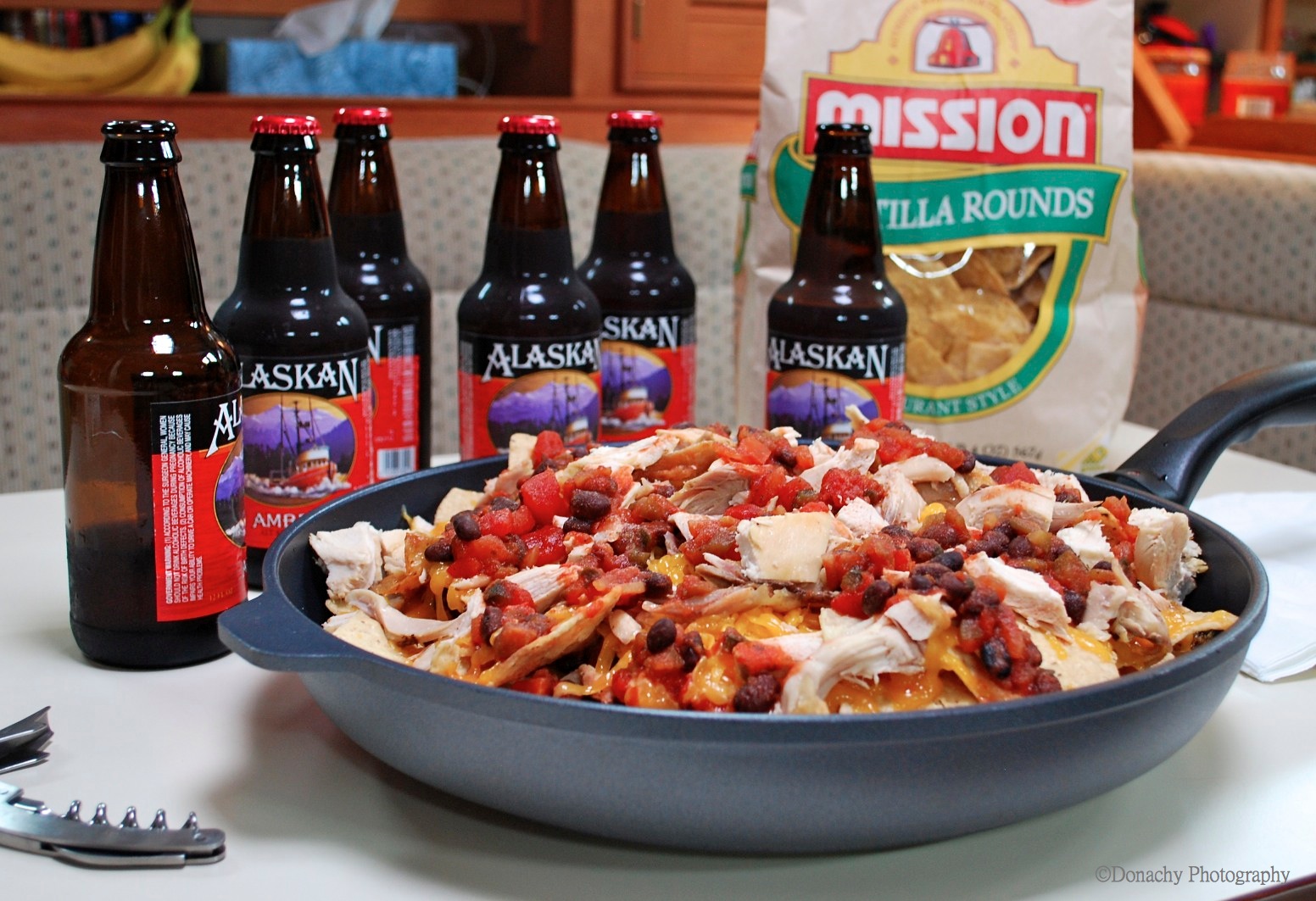
A heavy skillet, a bag of your favorite tortilla chips, salsa spiced up with jalapenos, medium cheddar cheese and an already-roasted chicken from the supermarket are all you need for the best nachos you’ve ever had!

By the time we were finished cleaning fish yesterday, it was already close to five o’clock. Tired, hungry and in dire need of a beer (or three), we had J-Dock vacuum pack and flash freeze our fillets, absent-mindedly forgetting to set aside a piece of salmon for ourselves for dinner. We’d fished hard and filled our cooler, and neither one of us was keen to cook. “How about super nachos?” Barbra suggested. “We could get one of those roasted chickens at Safeway….”

“And a case of beer,” I added.

We already had everything else we needed: medium-aged Tillamook cheddar cheese, sliced jalapeno peppers, Newman’s Own salsa, and Mission tortilla chips. Here’s all there is to it.

Pick a heavy frying pan, one that heats evenly and won’t burn the chips. Pour in a little olive oil, turn the heat to low or medium low, and when it’s hot, put in a layer of chips followed by a layer of cheese, a few spoonfuls of salsa, a few jalapenos sliced thin or diced fine (cook’s choice), and a generous amount of chunks of roasted chicken. Lay down a second layer of chips, cheese, salsa jalapenos and chicken, cover the pan with a lid, and cook over low heat till all the cheese is melted. Add a couple dollops of sour cream or guacamole when it’s all done if you want, serve it right in the pan, and keep the beers coming. Pop in a movie and eat and drink more than you should.

I had a few black beans on hand and added those this time, but usually I make this with no beans. This dish is great without the chicken (or any other meat), too. Next time I make this, I’m going to use rockfish and see how that goes. Future experiments might include caribou, moose or ground black bear.

Leftover S’mores Ingredients? Bake a S’mores Cheesecake!

After grilling s’mores for ourselves and our dock neighbors, we were still left with half a bag of marshmallows, a box of graham crackers, and a whole bar of dark chocolate. Such problems… Cheesecake was the answer to this problem!

Our galley kitchen is small. The counter space is measured in inches. Our pantry has just the basics. Our cookware and dishes are on the multifunctional and minimal side. We did outfit our little home with Denby dishes, which can be baked in. So, forget about the springform pan and the food processor in this preparation. What follows is how I made S’mores Cheesecake, galley style.

S’mores Cheesecake

Ingredients

Crust-

  • a little more than 1 cup of ground graham crackers. I ground the graham crackers using our coffee grinder.
  • 3 tbsp brown sugar
  • 1/4 cup melted unsalted butter
Cheesecake Filling
  • 8 oz. cream cheese, brought to room temperature
  • 2 eggs, also room temperature
  • 4 tbsp brown sugar
  • 1/4 cup of coarsely chopped dark chocolate bar

Topping

  • Marshmallows, quartered
  • 1/4 cup of coarsely chopped dark chocolate bar

Directions

  1. Mix graham cracker crumbs with 3 tbsp brown sugar and butter.
  2. Press into a well-buttered pasta bowl that can be baked (or springform pan if you are in a standard kitchen).
  3. In a medium-sized pot, beat eggs and remaining 4 tbsp. of brown sugar. I used brown sugar to add flavor in lieu of vanilla extract.
  4. Whisk in cream cheese until smooth. A mixer would have come in handy for this step. My arm was a little tired here.
  5. Mix in 1/4 cup of chopped dark chocolate. I did experiment with using a vegetable peeler to curl pieces of chocolate. Using a cutting board and a chopping knife was easier and turned out with equally good results.
  6. Pour cream cheese mixture into graham cracker crust and bake in a 320 degree F oven. My little oven may bake a little warmer than yours, so you may need to increase the temperature a bit.
  7. Bake for about 40 minutes, until the center is almost set.
  8. Evenly place marshmallows on top of cheesecake. Sprinkle with remaining 1/4 cup of chocolate. Bake for another 5 minutes, marshmallows should just be tanning.
  9. Remove from oven and let cool for about an hour. No matter how much Jack begs, tell him he can’t have any cheesecake until tomorrow.
  10. Refrigerate overnight. Fortunately, our camper is parked in the harbor parking lot and is equipped with a nice little fridge.

I was pleasantly surprised that we could pop the cheesecake out of the pasta bowl. I thought we were going to have to enjoy this dessert spoonful by spoonful. Who needs springform pans?!

Grilled S’mores? Who Knew? A Better (messier) Campfire Snack

This twist on a summertime favorite kicks the s’mores experience up a couple of notches. Graham crackers, thick chunks of dark chocolate, and marshmallows are as good as you remember them when you were a kid. Maybe better.

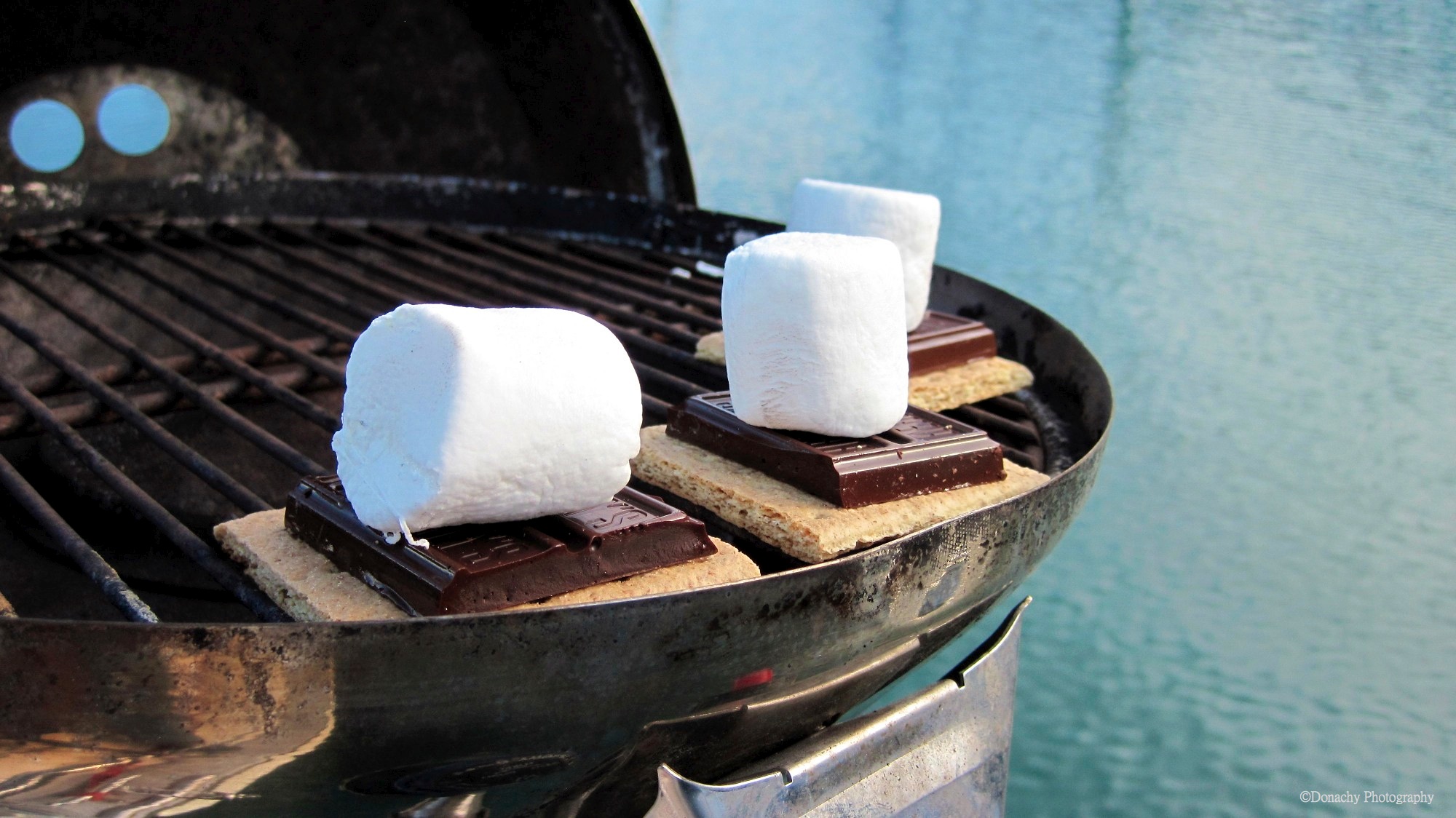
Guilty as charged: hardly a summer goes by when we don’t have s’mores at least once. They’re a great campfire dessert. But when a friend recently suggested we try grilling our s’mores instead of only toasting the marshmallows, we figured that maybe tried-and-true had been improved.

Hot off the grill, these s’mores don’t look dangerous. But looks, as everyone knows, can be deceiving. What you’re seeing here is molten goo ready to start pouring all over your hands, mouth, face, shirt and jeans at the slightest touch.

The chocolate looks like it’s set. It isn’t. As soon as it’s even slightly disturbed, it turns to liquid. The molecular science behind this is beyond our ken, but one thought came to mind: there’s a market for the s’mores equivalent of lobster bibs! The cracker is toasted crispy and warm, and the marshmallows are perfectly heated through – gooey and never burned.

Don’t Bogart that Collar, My Friend: Yelloweye Rockfish Melts

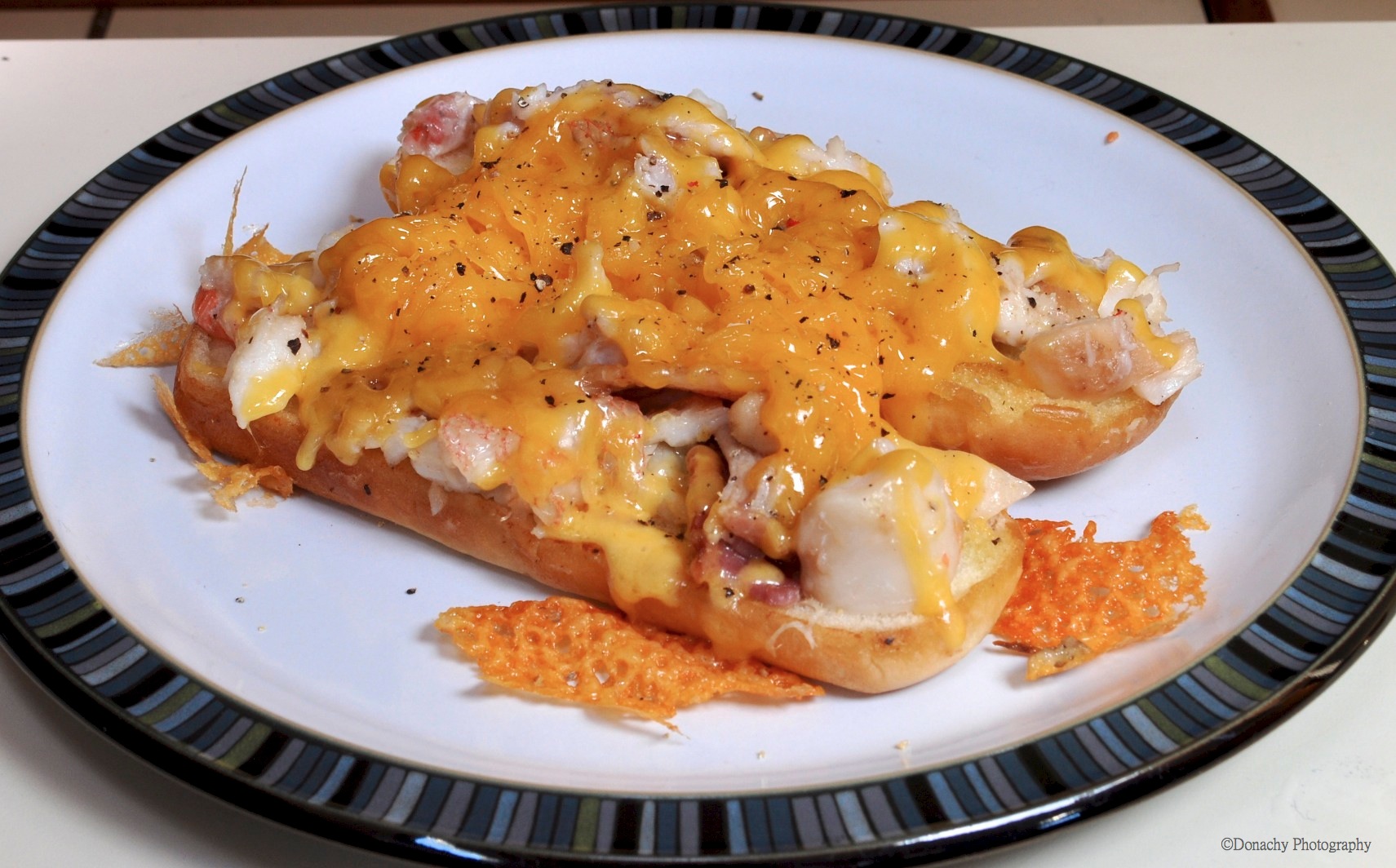
A pan-toasted sourdough bun, a chunky heap of yelloweye rockfish, and Tillamook cheddar cheese along with a couple of grinds each of sea salt and pepper are all you need for a gourmet lunch. The collar meat of yelloweye has a texture and flavor reminiscent of lobster and in similar fashion puffs up when you cook it.

While crab or shrimp are the classic seafoods in a melt, firm, white-meated fish is every bit as good. Enter yelloweye rockfish (Sebastes ruberrimus) collar meat. The large, firm chunks of meat are perfect on melts. Lingcod, halibut, grouper, snapper and freshwater walleye are good candidates for this dish as well, and while collar meat is an excellent choice, any boneless portion of fish works fine.

I like to start with pan-toasted sourdough bread. Heat some olive oil in a frying pan, place in the bread and move the down side around so it become coated with the oil. Cook over medium-lowor low heat till it’s toasted golden brown. Sometimes I add a little butter or some garlic to the olive oil.

Meanwhile, in a separate pan where you’ve also heated a little olive oil, place the fish and cook it over medium-low heat.

If you’ve timed things right, the first side of the bread is toasted and ready to flip at about the same time the seafood is cooked through.

Flip the bread to toast the other side, place the hot, cooked seafood on the toasted side of the bread, cover with shredded cheddar cheese, add a few grinds of pepper and some sea salt, then cover the pan with a lid and continue cooking over low heat till the cheddar is melted.

A few slices of avocado or fresh fruit on the side, a cold lager, iced tea or freshly-squeezed lemon-ade, and you’ve got a quick and easy lunch that will be relished as much by most kids as by gourmets.

Rockfish in Sweet & Spicy Beans with Miso

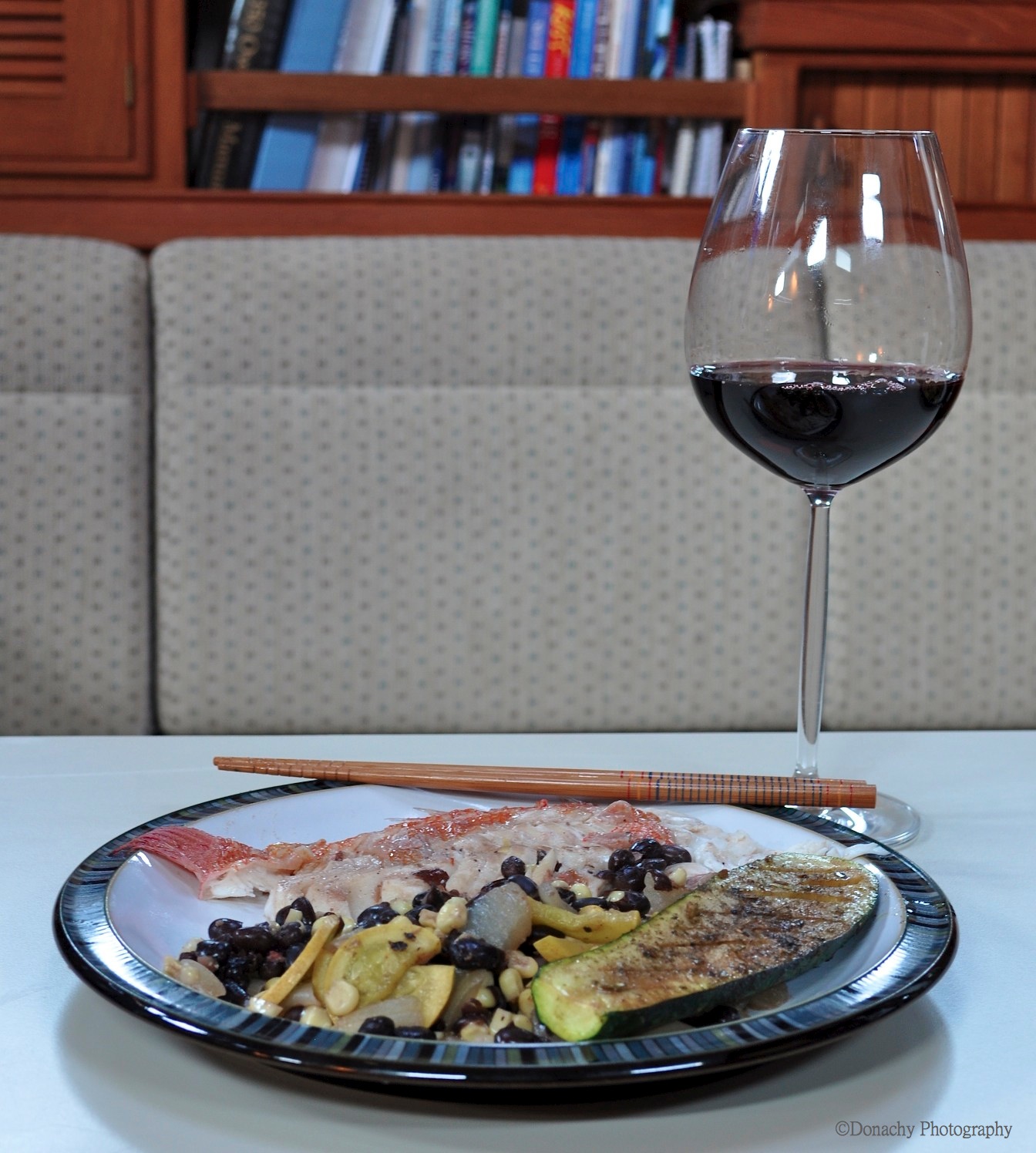
Yelloweye rockfish poached in miso soup with black beens, sweet corn and summer squash. The broth is sweetened with honey and spiced with a Jamaican-style rub for a little heat to balance out the sweet.

In Japan, I was served a dish featuring carp cooked in sweetened beans. It was good, though a bit sweet to my tastes. Later, I began catching kurosoi, a black rockfish (genus Sebastes) common in northern Japan. After broiling a couple of them, I knew I had a good candidate to try in a spicier bean dish.

Two pound rockfish such as this yelloweye are perfect for a whole-fish-for-two dinner. A small zucchini, cut in half, scored, drizzled with olive oil and seasoned with herbs de provence, makes a nice side dish. 

A variety of firm, white-meated fish work well in this dish. Any of the rockfishes in genus Sebastes, black seabass, small stripers, snappers and porgy (sea bream) would be good choices. Any leftover broth from this dish can be served the following day as an excellent soup.

Rockfish in Sweet and Spicy Beans with Miso

For two diners…

Ingredients:

  • One rockfish (or other fish with firm, white meat) weighing about 1 1/2 to 2  pounds with scales, gills and entrails removed.
  • 1 pound of black beans
  • 1 cup of red miso soup broth (make it a little stronger than usual)
  • 1/2 tbsp Jamaican rub or other spicy seasoning featuring hot peppers. Cumin and oregano may be included in the seasoning, or may be added separately.
  • Several cloves of garlic, chopped coarse
  • 1/2 sweet onion, chopped coarse
  • sweet corn (one ear’s worth – about 1 cup)
  • 1 yellow squash (summer squash), sliced into circles, circles cut in half (optional)
  • sea salt to taste (the miso will add quite a bit of salt)
  • freshly ground black pepper, to taste
  • hot chili pepper, sliced thin or chopped fine – just a little for additional heat (optional)
  • two tablespoons honey
  • two tablespoons olive oil
Directions:
  1. Thoroughly clean the fish, pat dry with paper towels, and set aside.
  2. Over medium-low heat, prepare the miso broth in a pan large enough to hold the whole fish (an oblong poacher works best for this, but any large, round pan that has a lid will do).
  3. Stir in the honey until dissolved.
  4. Add the beans, onions, corn, spices (including slices of chili pepper), olive oil and freshly ground pepper. Taste. Add salt and more spices, if desired. Cover with a lid and bring to a simmer.
  5. Add the fish, working it down into the broth.
  6. Cover with a lid and maintain a simmer, reducing heat if necessary, and cook for about 7 minutes. Using two spatulas, carefully turn the fish so that both sides are cooked in the broth. Add the summer squash at this time. Continue simmering on low heat for another 10 to 13 minutes. The fish will be all but falling apart when done. (Cooking the first side for a shorter time before turning the fish will mean that the fish is firmer and therefore easier to turn over.)
  7. Carefully remove the fish to a serving platter. Arrange beans and vegetables around the fish and serve piping hot.
We enjoyed this fish with a red table wine from the state of Washington. Syrah, Malbec, or Merlot would pair well with this dish.

And don’t forget a colorful seasonal salad!