That’s not a map… THIS is a map!

We’d been looking for a wall map and hadn’t found the right one. Till now. Advertised as a “wall mural,” this National Geographic map is 9′ 2″ wide by 6′ 4″ high and occupies a commanding place on our living room wall. The map is made of vinyl coated wallpaper material, so it looks great and should be durable.

We’ve begun using it to mark places we’ve been to and, more importantly, places we hope to visit. Flag pins with numbers correlate with brief descriptions of the various locales posted on a wall near the map. It makes us smile, and it’s a great conversation piece!

Beaver Fur Hats: Real Warm

Inupiat craftsman Isaac Atungana of Point Hope specializes in these luxuriously warm and comfortable beaver fur hats.

After months of admiring the ruffs on the parkas of our students and friends in Shishmaref, I got a beautiful wolf ruff for Barbra.  Our friend Nancy sewed on it. Aside from its beauty, the ruff around her hood serves a very practical purpose: protection from the elements. Whether made of polar bear fur, wolf fur, or, perhaps best of all, wolverine fur, a good ruff traps a pocket of warm air around the wearer’s face, keeps the wind off bare skin, and cuts down on the sun’s glare. Barbra loves hers. “You should get one,” she’s been urging this past winter.

Partly out of tightfistedness, partly out of skepticism, I’ve been resisting. First, good ruffs are fairly expensive. Second, I just couldn’t see how a little fur, fur that isn’t even lying next to one’s skin, could make that much difference. So I’ve soldiered on with my performance fleece face mask and my Mountain Hardware Polartec watch cap. Quality gear, and with my head and face thus ensconced and tucked beneath the down hood of my Mountain Hardware parka, I reasoned that I should be plenty warm.

And down to about zero degrees Fahrenheit, I am. Below that, if I have to be out long, especially if there’s wind, I get cold pretty fast.

“Face hurts,” I say to Barbra.

“You should let me get you a ruff,” she replies. “A real good one. Wolverine.”

“Maybe,” I answer back like a record with a needle stuck.

The other day, Isaac Atungana, who makes superbly warm beaver fur hats, showed me his latest creation. Unlike his other hats, this one was completely lined with thick, soft, warm beaver fur.

I try it on. It’s a little big. “I can take it in right along this seam,” he says pointing.

The first time I wore the hat, it was negative 17 outside with a windchill pushing the temperature down to negative 50. It was a revelation. My face didn’t hurt at all. In fact, I felt downright… cozy! And that was with the hat on backwards! (I’ve since been instructed as to the proper positioning of the hat on one’s head.)

The beaver fur extends past my face and traps a pocket of air the same way a ruff does. And the hat, which weighs nearly a pound, is thick and well-insulated, comfortable and warm. Man, if I had had this hat when deer hunting and ice fishing back in Pennsylvania…

Rustic Moose Pot Pie

Lean wild game, roasted to perfection, sliced into bite-sized cubes and baked in a pie topped with a hearty whole wheat crust is the kind of meal that can fend off consecutive days of negative 20 degree cold.

When a friend recently presented us with a two-pound moose roast, we were thrilled. But we were also a bit perplexed. Looking over the meat, I couldn’t find even a trace of fat. Add that to the fact that neither one of us cooks roasts, and I was at something of a loss as to what to do. “Stew,” was the suggestion I most frequently came across. “Stew or stir fry,” was a friend’s suggestion.

We love good stew. In fact, we have enough caribou stew in the freezer to see us through the end of the school year. So that was out. Stir fry, too, is a regular dinner item. I wanted to do something traditional but new for us.

In the end, I did roast the moose. Inspired by a recipe for lamb from the cookbook Nobu West by Nobu Matsuhisa, I marinated the roast in miso seasoned with garlic and ginger before putting it in the oven. Despite my best efforts it came out a bit drier than I had hoped, although the miso marinade helped to caramelize the roast when I pan-seared it prior to roasting. I served the finished roast sliced thin with a tosa-zu dipping sauce along with carrots and parsnips cut into long, thin strips and sautéed in a combination of olive oil, butter, garlic and soy sauce.

Dinner that night started with scallop, shrimp and smoked quail egg chawan mushi, segued to roasted beats with pan-crisped pine nuts, was followed by cedar planked shrimp on mushrooms and culminated with the moose roast. For dessert, Barbra brought out individual baked apples capped with pastry. Inside each apple was apple pie filling. The dessert was delicious – and fun, and the whole-wheat pie crust topping the apple gave us the idea of making a large pot pie stuffed with leftover moose, vegetables and gravy.

Regarding the recipe below, a note about bouillon: We’ve become fans of Better Than Bouillon products. In our opinion, the flavor is superior to other soup bases we’ve tried.

Rustic Moose Pot Pie

Ingredients:

  • 1 3/4 cups water
  • 1 1/2 tablespoons “Better Than Bouillon Beef Base” (or other bouillon, or use beef broth)
  • 1 bay leaf
  • 1 teaspoon dried rosemary
  • 1 2/3 cups potatoes, cut into 1/2″ cubes, skin on
  • 4 tablespoons olive oil
  • 1/3 cup flour
  • 1/2 pound roasted moose meat, cut into 1/2″ cubes
  • 1/2 cup sweet corn
  • 1/3 cup celery, diced coarse
  • 1/2 cup carrots, sliced into discs or chopped coarse
  • 1/3 cup broccoli florets, cut coarse
  • (Optional) 1/3 cup mushrooms, chopped coarse
  • 1/2 rounded teaspoon cumin
  • 1 teaspoon dried sage
  • several generous grinds freshly cracked black pepper
  • salt, to taste

Directions:

  1. Preheat oven to 375 °F. **Baking time and temperature may vary depending on type of crust used.**
  2. Place the water in a pot and heat over medium-high heat. Stir in enough beef bouillon for a strongly flavored base. Add bay leaf and rosemary. Bring to a simmer.
  3. Add potatoes. You will simmer potatoes till just tender, but do not overcook. When potatoes still have about 5 minutes of cooking to go, add the carrots. When there is about 1 minute, add all the remaining vegetables. Continue simmering until potatoes are just tender and remove from heat. (They will continue cooking in the pie.)
  4. Use a strainer to separate potatoes and vegetables from the beef stock. Remove bay leaf and place potatoes and vegetables in a large bowl. Return beef stock to original pot.
  5. Place approximately 4 tablespoons olive oil in small frying pan and heat over low to medium-low heat. When oil is heated, slowly stir in flour. Continue stirring until mixture thickens. Remove from heat.
  6. Heating beef broth over medium heat, stir in oil and flour mixture. Combine thoroughly. This will result in a thick gravy.
  7. To the bowl that already has the potatoes and vegetables, add the meat, gravy and the remaining seasonings and mix together.
  8. Pour meat and vegetable mixture directly into a deep pie dish. Cover with a crust. Be sure to make holes in the crust to allow steam to escape. Brushing on a beaten egg will help create a golden brown crust.
  9. Place on baking sheet and bake at 375 °F for 25 – 30 minutes or until crust is golden brown.

Serve piping hot with big glasses of Old Vine Zinfandel.

Bison Joes with Roasted Bell Peppers

Roasted bell peppers and ground bison combined with freshly baked buns for a memorable version of an America Classic.

One of the challenges of living hundreds of miles beyond the road system is that we frequently can’t get the ingredients we want for cooking. With the school year rapidly drawing to a close (fewer than eight weeks remain now) and an abundance of ground bison in our freezer, Barbra had been requesting Sloppy Joes. “I’ll make the buns!” she promised. Problem is, the village store hasn’t had onions since early January. The last shipment was frozen solid and had to be tossed out. We’re out as well, and I couldn’t quite imagine Sloppy Joes without diced sweet onions mixed in with the meat and sauce.

And then, out of the blue, a friend gave us two green bell peppers. Roasted and skin peeled, these would provide the tangy sweetness I was looking for. I had a large carrot in the fridge that needed to be used, so I diced and sautéed it and added it to the ingredients as well.

Mixed together with an off-the-cuff sauce, our Bison Joe’s came out great – more savory than sloppy, and sweet enough to please the kid in us.

Bison Joes with Roasted Bell Peppers

Ingredients

  • 1 pound ground bison
  • 5 cloves garlic, chopped fine
  • 2 bell peppers, cut in half, stems and seeds removed
  • 2/3 cup finely chopped carrots
  • olive oil, as needed
  • 1/2 cup Sloppy Joe sauce (below)
Directions for roasting bell peppers:
  1. Place a baking sheet (a good, thick one is best) into oven and preheat to 500 °F.
  2. Using a brush, spray bottle or fingers, thoroughly cover bell pepper halves with light olive oil, canola oil or other oil that will withstand high temperatures.
  3. When oven is preheated, place bell peppers open side down on baking sheet. Roast until peppers soften, skin begins to loosen, and outside begins to brown. Turn the peppers over and continue to roast until desired color is achieved. (You will see at least some spots burned black. How much of this you want is up to you. I go for just a little black.)
  4. Remove peppers from baking sheet, place in paper bag and close. This will help steam the skins loose.
  5. When cool enough to handle, peel off the skin.
  6. Dice the peppers (about 1/4″ pieces) and set aside.
Directions for bison, carrots and garlic:
  1. Add about 2 tablespoons olive oil to a large frying pan and heat over medium heat. Add ground bison. Breaking up the meat and stirring, cook until evenly browned. Pour out on paper towels to drain off oil and fat and set aside.
  2. Add about 1 tablespoon olive oil to a medium frying pan and heat over medium to medium-low heat. Add carrots, stirring frequently. Just before done, add the garlic and cook an additional 1 to 2 minutes. Place in a small bowl and set aside to cool.
Sloppy Joe Sauce
Ingredients
  • 1/3 cup ketchup
  • 1/4 cup Dijon mustard
  • 1/2 tablespoon Worcestershire sauce
  • 1 tablespoon Cholula sauce
  • 1 tablespoon soy sauce
  • 1 teaspoon cumin
  • 1 teaspoon dried oregano
  • 1/2 teaspoon basil
  • couple dashes powdered cinnamon
  • 1/2 teaspoon chili powder
  • several grinds freshly cracked pepper
  • 2 tablespoons olive oil

Directions:

  1. Add all ingredients to a non-reactive bowl and mix thoroughly. Add the garlic and carrots (above). Add the bell peppers. Add additional chili powder, cumin or Cholula for more of a kick.
  2. Place the browned bison in a large skillet. Heat on medium heat and add enough sauce to coat the meat. Beyond that, how much sauce to add is a matter of cook’s choice. Mix thoroughly, cooking and stirring till everything is hot.

Serve on toasted buns or toasted bread with a frosty mug of root beer.

Cedar Planked Sweet Alaskan Shrimp on Mushrooms

Cedar planks add fire-cooked aroma and rustic class to seafood. The planks work in ovens as well as on the grill. In making this dish, I supplemented a few Crimini caps given to me by a friend with pieces of dried oyster mushrooms.

We are convinced that one of Alaska’s best kept secrets is that it is a food-lover’s paradise. Many Alaskans harvest wild game such as moose, Sitka deer, caribou, mountain sheep and ptarmigan. Ranched reindeer, bison and elk are available as well.

The growing season may be short, but with long hours of sunshine, markets in central and southeast Alaska are typically full of locally grown produce. Strawberries, blueberries, blackberries, raspberries, cloudberries, currents and more can be found growing wild or purchased at local markets, making Alaska one of the best places on earth to get a slice of pie or a jar of jam. Meanwhile, foraging for mushrooms and edible plants, including seaweed, remains an important part of the culture up here. Not long ago, we were treated to a salad featuring young fireweed shoots, and the seaweed salads we’ve had have been delicious. While the wines we pour with this bounty are shipped up, we don’t have to go far at all to enjoy superbly crafted local beers.

But the centerpiece of Alaskan food is without a doubt seafood, starting with salmon. All five Pacific species are abundant, and they all have their place in the kitchen. Fresh halibut is a revelation on the palate, not to mention one of the most versatile fishes one can cook with. People who eat a lot of fish often find that they end up preferring various species of delicately flavored rockfish. Our own top choice is sea-run Dolly Varden – a char with pale orange flesh, a delicate flavor, and just enough fat to be self-basting. Aside from these fin fish, there are oysters, sea scallops, clams and several species of crabs, all of which benefit from Alaska’s clean, cold seas.

And, of course, there are shrimp. Known as amaebi in Japan, the shrimp of Alaska’s waters are prized for their natural sweetness. The recipe offered below has many possible variations. For example, try a shiso leaf instead of the tarragon, freshly picked chanterelles or Portabellos instead of Crimini mushrooms, or, for a lighter flavor, sea salt instead of soy sauce. Ginger, lime zest, sherry or a sprinkling of sake would add yet another dimension.

Cedar Planked Sweet Alaskan Shrimp on Mushrooms

Ingredients

  • cedar or alder plank, soaked for at least 2 hours
  • 12 Alaskan shrimp, peeled, deveined, butterflied, tail on, and if large enough, lightly scored
  • 12 fresh mushroom caps or 12 appropriately sized pieces of any good mushroom
  • 2 tablespoons clarified butter
  • 2 cloves garlic
  • 1 tablespoon soy sauce
  • 1 teaspoon dried tarragon
  • freshly cracked pepper
Directions
  1. Preheat oven broiler to hot (500 °F).
  2. Heat clarified butter in frying pan over medium heat. Add garlic and mushrooms. Add soy sauce, sprinkling on mushrooms and in butter, and move mushrooms around to coat with butter and soy sauce. Cook till mushrooms are just cooked, turning once.
  3. Remove mushrooms from pan and place on plank. Sprinkle each piece with dried tarragon, or add leaves of fresh tarragon. Place shrimp on mushrooms, fixing in place with toothpicks. Add freshly cracked pepper.
  4. Place plank in oven and broil for 3 – 5 minutes.

If you make more than a few of these, your guests will not have room for dinner. They are addicting. They’d be terrific prepared on a grill, too, and would pair beautifully with hot sake.

Butter Toffee Almonds

Plain, cayenne pepper, or rock salt. We liked all three. Which will you make?

We don’t like to visit friends empty-handed, especially when we invite ourselves over to watch a sporting event on TV. In bush Alaska, there aren’t six-packs of beer or bottles of wine to grab at the store. Our ready gift is usually something we’ve created in the kitchen. Recently we were running late for one of the March Madness basketball games and had nothing already prepared, so a few whirls in the kitchen and we had buttered toffee almonds – three ways. The original plain version is quite tasty. Two other versions were made by sprinkling cayenne pepper on some for that back-of-your-throat-bite and by sprinkling large grains of sea salt for another pleasant surprise. All three versions were tied for first place. This recipe was finished in 15 minutes. Lucky for us, the walk over in sub-freezing temperatures cooled the almonds enough to eat as soon as we entered our friends’ home.

Butter Toffee Nuts Recipe

Ingredients

  • 1 cup sugar
  • 1 cup butter (2 sticks)
  • 3 tablespoons water
  • 3 cups whole almonds (or use 3 cups peanuts)
Directions
  1. Use a deep, heavy-bottomed saucepan to heat all of the ingredients, except the nuts. Stir the mixture constantly to prevent scorching. Using a candy thermometer and medium heat, bring the mixture to 300 degrees. The temperature will rise as the water is boiled off, and this can happen quickly, so be prepared to lower the heat or remove the candy from the heat as needed.
  2. As soon as the mixture reaches the desired temperature, remove it from the stove and add the nuts. Mix until all nuts are coated. Pour the nut mixture onto a greased cookie sheet spread into an even layer. Let fully cool. This step works well on parchment paper.

Recipe adapted from http://www.life123.com/food/candies-fudge/toffee/making-butter-toffee-almonds.shtml.

The Sailing Vessel Bandon

The t’s have been crossed and the final i dotted. All 37 feet and 12 tons of the sailing vessel Tarsus is ours.

What have we gotten into?

There’s a line from the film The Shipping News that seems to fit. “Course, you don’t know nothin’ about boats, but that’s entertaining, too.” 

Four years ago when we bought our C-Dory, Gillie, I’d never piloted a power boat longer than 12 feet – my dad’s aluminum car-topper with its 5 hp engine. Barbra had even less experience with boats. All we really knew was that we wanted a fishing boat. So we did our due diligence – read books, researched on the Internet, visited dealerships, checked out boats in marinas, talked to people and attended boat shows. In the end, we came to a familiar set of conclusions, the short of which go like this: There are a lot of boats for sale, and most of ‘em float. Out of all those boats, a few makes stand out. After that, everything is a compromise. The boat we really wanted was too big to readily trailer; thus it was not the boat we really wanted. We took the plunge, bought Gillie and a year later towed her all the way to Alaska, to the Port of Valdez, which is over 3,000 miles from Sacramento. We then launched her, ran 90 miles to the Port of Cordova, and spent the next eight days and nights fishing and camping aboard our boat in Prince William Sound.

Above: Jagged rocks and islands create a maze leading from Resurrection Bay out into the Gulf of Alaska. Top photo: Massive Blackstone Glacier towers above its namesake bay near Whittier, Alaska.

Time and tide kept me from sailing, but I honestly can’t remember a time in my life when I didn’t want to sail. It’s always been there. Landlocked in western Pennsylvania, my family would take summer vacations to the coast – up to Cape Cod, down to North Carolina’s Outer Banks, west to Oregon – where we’d spend a week frenetically touring museums and historical sites, dining out in restaurants, perusing art galleries and shopping. For my part, I could have spent all day every day on those vacations doing nothing more elaborate than fishing the first tide of the day, combing the beaches, and walking the marina docks. The boats, particularly the sailboats, were magical. Mesmerizing. I’d see their owners emerging from below deck, or topside working on this or that, or just relaxing and looking off in the distance and I wanted to be those people. I had so many questions for them, but I never worked up the courage to break free from my family, approach one of them and ask. Questions like, How does it work? How do you steer it? Do you live on it? What does its name mean? Where have you been on it? Where will you go next?

Tarsus’ former owners were podiatrists. Although we haven’t completed a formal name change yet, on each piece of paper associated with the sale (for a boat this size, there’s nearly as much paperwork as in a home sale) we have penned in Bandon where the vessel’s name appears.

Sea otters are a common, always welcome sight along Alaska’s southeast and central coasts. 

There’s a small town on the southern Oregon coast where a river with runs of salmon, steelhead and striped bass joins the Pacific. Bandon. For a long time, Barbra and I looked at land on the Coquille River upstream from Bandon. In addition to the fish, the area has deer, turkeys, game birds and elk as well as good mushrooming and abundant wild berries. It’s a quiet part of the world, not overly far from wine country. We talked about a piece of land with trees, a spot for a garden, raising chickens there and cutting our own firewood for a wood burning stove in a cozy house where we would homestead.

Bandon is that. But it’s more. This time, it’s not the boat that represents the compromise. It’s the lifestyle. Choosing to become sailors means, at least for now, not becoming homesteaders. It means not driving our camper all over North America, or having a cabin on the shores of a lake full of walleyes, or collecting wine, or, in Barbra’s case, getting a pilot’s license.

Bandon will be docked in the Marina at Seward, pictured here in early July.

To borrow from Robert Frost, Bandon is the road we’ve taken. She’s got a sound hull, every amenity and comfort we need and then some, and sails to take us over any sea. It is dreams come true for us, and in some of those dreams there is a placid lake full of walleyes, and endless summer days touring North America in our camper, a herd of elk feeding on windfalls beneath our apple trees, a salmon fresh from our river for Thanksgiving dinner, a wood burning stove and a freshly made blackberry pie.
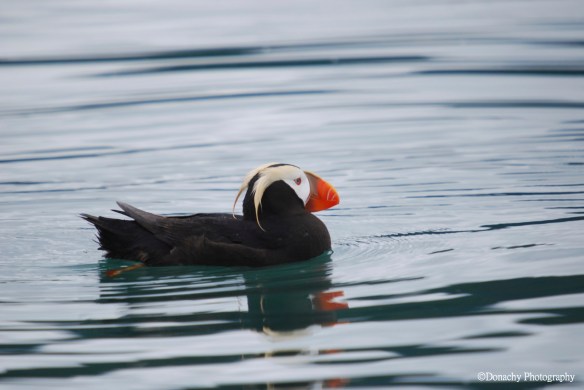
Resurrection Bay, where Seward is located, has one of the largest summertime concentrations of Coho salmon in North America. There is an abundant, varied and rich ecosystem in the bay, making it a premier locale for everything from watching sea birds and otters to seeing whales, dolphins and porpoises. The surrounding mountains are spectacular and help ensure for predictable winds, making Resurrection Bay a great place to sail. For more information about the sailing vessel Bandon, click on the word Tarsus.

Scallop and Shrimp Chawan Mushi with Smoked Quail Eggs

Chawan mushi combines two of my favorite things: custard and an element of pleasant surprise. Although the custards served to me (mostly by my grandmother) in my youth were invariably sweet, it was love at first spoonful when I had my first taste of chawan mushi in a Tokyo restaurant. On that occasion, I would have been happy just to enjoy the small ramekin of savory soupy custard that came with my meal. But when one of those spoonfuls revealed a sweet shrimp, and another a tender boiled quail egg, I was full-blown, head-over-heals gone.

Japanese diners seem to think of chawan mushi more as a soup than a custard, and I have to admit that over time, I have come to prefer this dish fairly loosely set. In addition to fresh, grilled or smoked seafood (a bit of smoked salmon makes a nice finishing piece), fresh vegetables such as peas, butter beans, lotus root or mushrooms, or a tender piece of salty grilled chicken, beef or wild game all work well. Creative cooks may want to experiment with the basic dashi recipe or substitute chicken or beef broth. A pinch of smoked sea salt adds another dimension to this versatile dish which can be served hot to take the chill of a winter evening or refreshingly cold on a warm summer day.

Below are the directions for Scallop and Shrimp Chawan Mushi with Smoked Quail Eggs – with much appreciation to a Japanese friend who mailed us a package of smoked quail eggs, thus inspiring this dish. By the way, chawan means tea cup; mushi means steaming.

The Watercourse, a signed and numbered giclée by Whitehorse, Yukon Territory artist Nathalie Parenteau serves as the backdrop for this All-Clad poacher. With its raised tray, it’s perfect for steaming chawan mushi either in an oven or on a stove top. In the past, I’ve improvised with a large round kettle fitted with an inverted shallow wicker basket. The same kettle also works with an inverted metal strainer that happens to fit.

Jack’s Dashi

Ingredients

  • 2 cups water
  • sheet of dried kombu (Japanese kelp) about 4″ x 4″ (about 5 grams)
  • 1 teaspoon “Better than Bouillon Lobster Base” (or make traditional dashi with 1/4 cup dried bonito flakes)

Directions

  1. Add two cups of water and the kombu to a pan. Heat over medium heat.
  2. Just before the water boils, remove the kombu. Turn off heat and stir in the lobster base bouillon.
  3. Strain through cheese cloth or fine-mesh strainer to remove stray pieces of kombu (or bonito flakes, if those are used). The lobster bouillon base will create a slightly darker dashi than bonito flakes. In the finished chawan mushi, this will create an attractive cream color.
  4. Set aside to cool.

Scallop and Shrimp Chawan Mushi with Smoked Quail Eggs

Ingredients

  • 6 small ramekins, preferably with loosely fitted lids. Plastic wrap with a small puncture (to allow steam to escape) can be used to cover the ramekins if lids are not available.
  • 2 cups dashi (see recipe above)
  • 3 large eggs
  • 1 tablespoon soy sauce
  • 6 sea scallops
  • 6 sweet shrimp, peeled, deveined, tails removed (Alaskan shrimp are similar to the ama-ebi of Japan and are perfect for this dish)
  • 6 smoked quail eggs
  • (optional) sea salt to taste
  • (optional) 2 tablespoons good sake

Directions

  1. In a bowl, whisk eggs until smooth. Make sure dashi is cool (so it won’t cook the eggs) and stir into egg mixture. Add soy sauce (and sake, optional) and mix together, but avoid mixing so vigorously that foam is created. Taste for appropriate saltiness. If more salt is desired, use sea salt. Set mixture aside.
  2. Slice scallops depth-wise into three or four parts. Place scallops and 1 shrimp each into the ramekins.
  3. If there are bubbles or foam on the egg and dashi mixture, use a spoon to remove. The finished chawan mushi should be smooth. Cover the scallops and shrimp with the egg and dashi mixture so that ramekins are about 2/3 full. Cover each ramekin with a loosely fitting lid or punctured piece of plastic wrap.
  4. Arrange the covered ramekins in a steamer and gently steam for 12 minutes, until mixture is loosely set.
  5. Turn off heat. Place a smoked quail egg atop each chawan mushi, cover with lids again, and keep them in the steaming pan so that the custard continues to set and the egg warms through – approximately 3 – 5 additional minutes.

This dish makes a delicious appetizer, can be served as one would serve a soup, or as part of the main meal. It will keep nicely in the refrigerator for a day or two. Our village in bush Alaska is dry, so sake is not an option. But I highly recommend you include it, as it really compliments the flavors of this dish – and pairs well as a drink served with the finished chawan mushi.

Rosemary Kalamata Olive Loaf

Aromatic and flavorful, tonight this rosemary kalamata olive loaf will accompany a moose roast. Roasted lamb, too, would be a good choice, and we anticipate it pairing well with Italian or Greek dishes, as well. This morning we served toasted slices with olive oil with halibut omelets. During the baking process, our kitchen was filled with the irresistible scent of rosemary. We agreed it was one of the best savory breads we’ve ever had.

This is another recipe from 300 Best Bread Machine Recipes by Donna Washburn and Heather Butt. Monitor the dough during the kneading process to make sure the amount of flour/moisture is right. Because the kalamata olives added moisture, I found I needed to add a little more flour than is indicated below.

Olive Rosemary Loaf

Ingredients

  • 1 cup water
  • 3/4 cup kalamata olives, pitted and chopped coarse, extra moisture gently squeezed out in paper towels
  • 1 tsp salt
  • 1 tbsp granulated sugar
  • 2 tbsp extra virgin olive oil
  • 3 1/4 cups all purpose flour
  • 1/4 cup fresh rosemary (or 2 tsp dried)
  • 1 1/4 tsp yeast

Directions

  1. Measure ingredients into baking pan in the order recommended by the bread machine manufacturer. Insert pan into the oven chamber. Start your machine. During the kneading phase, check to make sure the dough is of proper consistency. Add flour or water as needed.

Chocolate Truffle Cookies with Pecans

Dedicated to fully addicted chocoholics, this chocolatey chocolate with chocolate-chip cookie is not for people who just “like” chocolate. Are you getting how chocolatey these are? 

This low-flour cookie is dense and fudge-like. Because the dough is quite sticky, I recommend using a cookie scoop and then rolling the chilled dough in a coating such as chopped nuts, confectioner’s sugar or coconut in order to make handling the dough easier. This extra touch also enhances the taste, texture and the presentation.

Chocolate Truffle Cookies

makes 3 dozen cookies

Ingredients

  • 2 cups semisweet chocolate chips, divided equally
  • 6 tablespoons butter
  • 3 eggs
  • 1 cup white sugar
  • 1 1/2 teaspoons vanilla extract
  • 1/2 cup all-purpose flour
  • 2 tablespoons unsweetened cocoa powder
  • 1/4 teaspoon baking powder
  • 1/4 teaspoon salt
  • 1 cup finely chopped pecans

Directions

  1. In a microwave or in a bowl warmed over a pan of simmering water, place the butter and 1 cup of chocolate chips and melt together, stirring occasionally until smooth. Remove from heat and set aside to slightly cool.
  2. In a large bowl, beat eggs and sugar until thick and pale, about 2 minutes. Stir in the vanilla and the chocolate mixture until well mixed.
  3. In a separate bowl, combine the flour, cocoa powder, baking powder and salt. Gradually stir into the chocolate mixture. Fold in remaining 1 cup chocolate chips. Cover dough and chill for at least an hour or overnight.
  4. Preheat oven to 350 degrees F (175 degrees C). Roll chilled dough into 1 inch balls. Roll dough balls to coat with chopped pecans. Place on ungreased cookie sheets so they are 2 inches apart.
  5. Baking time will vary depending on how chilled the dough is when it goes into the oven. Place cookies into preheated oven. Check at 9 minutes. Finished cookies should be puffed up and slightly cracked on top. This may take up to 15 minutes. Allow cookies to cool on baking sheet for 5 minutes before removing to a wire rack to cool completely.

This recipe was adapted from http://allrecipes.com/recipe/chocolate-truffle-cookies/detail.aspx.