Better Bagels (it’s the sourdough)

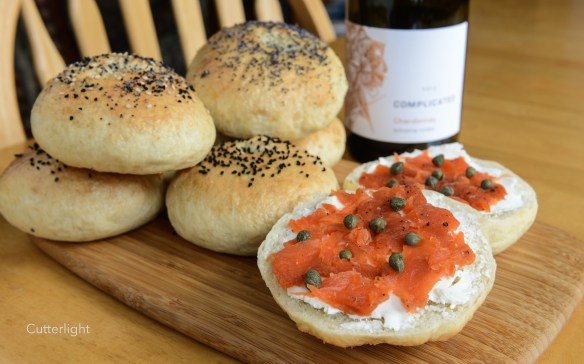
The addition of sourdough gives these bagels texture and flavor.

I’m been really happy with my sourdough starter. I’ve used it for pancakes, waffles, and English muffins. Every week, I use this delicious starter to turn out two beautiful loaves of sourdough bread to accompany many of our meals. Recently, I finished a batch of homemade lox. I wondered what would happen if I included some of my trusty starter in my bagel recipe.

Wow. What an improvement. The resulting bagels have a subtle sourdough flavor. But the flavor wasn’t the main improvement – it was the texture. These bagels have a perfectly soft interior and a perfectly chewy exterior. We couldn’t believe the difference from an already tried and true recipe. I’ve made the recipe twice now with the same happy results. It’s a keeper!

Sourdough Chewy Bagels

Ingredients

  • 2 tsp active dry yeast
  • 1 1/2 tbsp granulated sugar
  • 1 1/2 cups warm water (105° F/40° C)
  • ½ cup sourdough starter
  • 3 cups all-purpose flour
  • 1 1/2 tsp salt
  • 3 qts water
  • 3 tbsp granulated sugar
  • 1 egg, beaten
  • toppings such as poppy seeds, toasted onions, sesame seeds, etc. (optional)

Directions

  1. In a large bowl, stir together yeast, 1 1/2 tbsp sugar and water. Let sit for about 5 minutes to make sure the yeast is good. (It will foam.)
  2. Stir in sourdough starter
  3. Stir in salt and the flour, 1/2 cup at a time. The last 1/2 cup, you will need to knead in by hand.
  4. Knead the dough until it is smooth and elastic.
  5. Coat the inside of a large bowl with oil and place the dough inside.
  6. Cover bowl with plastic wrap and let dough rise until doubled, about an hour.
  7. Line baking sheet with parchment paper.
  8. Cut dough into 8 equal pieces.
  9. Roll pieces into balls.
  10. Flatten balls slightly.
  11. Poke your finger through center of each ball and twirl dough around your finger to enlarge the hole.
  12. Place bagels on parchment-lined baking sheet to rest.
  13. Bring 3 qts water to boil in large pot. Stir in 3 tbsp sugar.
  14. Place 4 bagels in boiling water. Boil for 1 minute. Flip bagels and let boil for another minute.
  15. Place boiled bagels on clean, dry towel.
  16. Place remaining 4 bagels in boiling water. Repeat boiling process with these bagels.
  17. Take bagels from towel and place them on parchment-lined baking sheet.
  18. Preheat oven to 375° F (190° C).
  19. Brush bagels with beaten egg.
  20. Sprinkle desired toppings on bagels (poppy seeds, sesame seeds, charnushka, minced dried onion and minced dried garlic are some of our favorites).
  21. Bake in preheated oven for 20 – 25 minutes, until browned.
Roasted Stacked Beet Salad

Roasted Beets & Goat Cheese

Almost ten years ago, I went on a fabulous California North Coast honeymoon with my honey. As I’m sure you can imagine, that get-away was filled with culinary delights. We ate and drank at wonderful restaurants and Jack grilled us fabulous meals on the balcony outside our honeymoon suite. One of our favorite memories is of a dinner at the River’s End restaurant in Jenner, California. The chef included locally sourced food, some of which came from a garden right on the grounds outside the restaurant.

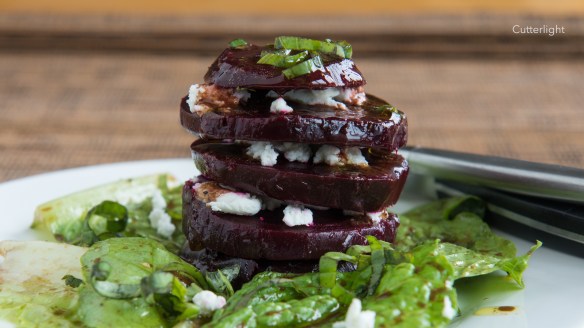
We’d just completed a fantastic run along a trail on a bluff looking out over the Pacific Ocean, and we were famished. We began our meal with oysters on the half shell and a crisp amber ale. Next, Jack and I ordered two entrées to share along with what proved to be a wonderful bottle of old vine Zinfandel from a California winery. Jack opted for roasted elk while I went for duck prepared three ways. While we were waiting for our entrées, we tucked into a pair of beautifully presented stacked beet salads. What a revelation! Growing up, I’d always been served canned, pickled beets. I developed a disdain for those beets. But roasted, fresh beets? Wow, who knew? River’s End’s creation featured three colors of perfectly roasted beet discs atop garden-fresh greens. In between each of the discs were crumbles of creamy goat cheese. A garnish of chiffonade basil and a drizzle of balsamic vinaigrette completed the presentation. The combination of flavors and textures were perfection.

Earlier this fall, beets showed up in our Farm Lodge vegetable box. With a lovely memory of our honeymoon meal, I set out to recreate this delicious salad. My version came out just as good as my memory. The combination of the earthiness of a roasted beet, a curl of basil, creamy goat cheese and tangy  vinaigrette can’t be beat.

Roasted Stacked Beet Salad

Ingredients

  • two portions of salad greens
  • two medium-sized beets
  • extra virgin olive oil
  • a few sprigs of basil
  • 2 tbsp goat cheese

Vinaigrette

  • 3 tablespoons balsamic vinegar
  • 1 tablespoon Dijon mustard
  • 1 garlic clove, minced
  • 1/2 cup olive oil
  • Salt and freshly ground pepper to taste

Directions

  1. Preheat oven to 425° F.
  2. Coat beet roots in olive oil.
  3. Wrap beets in aluminum foil.
  4. Roast for about an hour.
  5. Beets are done when easily pierced with a knife.
  6. Let them cool enough to handle. Using a paring knife, skin the beets.
  7. Slice the beets while warm. Set aside.
  8. Prepare the vinaigrette by mixing vinaigrette ingredients well.
  9. Place greens on plates. Top greens with one slice of roasted beet. Sprinkle beet slice with goat cheese. Continue with remaining beet slices and cheese. Repeat this process on another plate with the second beet.
  10. Roll up basil leaves and slice into thin strips. Sprinkle strips atop each salad plate.
  11. Drizzle each salad with vinaigrette dressing.
  12. Serve with freshly baked bread to sop up every crumb and delicious drop left on the plate.

Light and Airy Raspberry Mousse

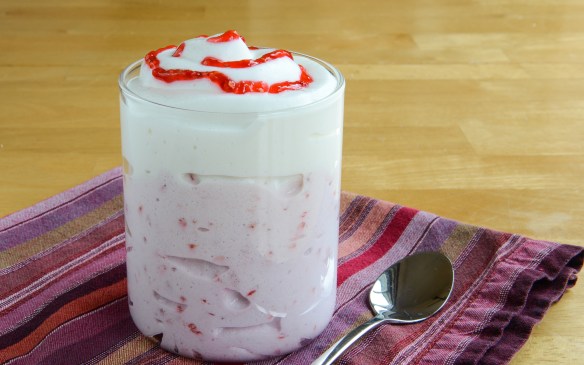
Airy and light, but packing a powerful raspberry punch, this raspberry mousse is a delightful dessert after a rich meal.

Two of my favorite culinary pastimes are making jams and ice creams. We love to pick local berries. The usual varieties around Chignik Lake are blueberries, cranberries, crowberries, currants, and raspberries. Unfortunately, this year was a terrible year for berries. Our usual spots are yielding small amounts or no berries at all. Except for the raspberries. Years ago, someone planted a garden of raspberries and currants. The raspberries, as raspberries do, have spread out from their original patch to a nearby hill. Last year, this hill was crazy with berries. This year, it was the only place we could find a decent amount of berries of any kind. So this winter portends many creations featuring the delicious raspberry.

Today’s recipe stemmed from my other joy – ice cream. Many of our favorite ice creams are the custard type, requiring several egg yolks. This tends to leave us with quite a bit of leftover egg whites at times. What to do? Omelets are good, up to a point. I’ve made batches of meringues, too. But this time, I wanted to do something different. What about whipping the egg whites into a foamy mousse?

This is a simple recipe that can be made in minutes and is best whipped up right before it’s eaten. The first time I made it, I whipped up heavy cream to top it off. That was good, but a little too heavy for this airy-light dessert. Today’s version is topped with a whipped topping made from nonfat powdered milk and ice water. It, too, must be made just before serving. Drizzled with a little raspberry jam, this mousse makes for a light and delicious dessert fit to end a beautiful feast.

Light and Airy Raspberry Mousse

Ingredients

  • 1/2 cup egg whites (or whites from 4 eggs)
  • 4 tsp granulated sugar
  • 4 tbsp raspberry jam
  • whipped topping

Directions

  1. Whip egg whites until stiff peaks are formed.
  2. Add sugar to whites and continue to whip until well mixed.
  3. Fold in raspberry jam.
  4. Divide egg white mixture into two parfait glasses.
  5. Top with whipped topping.

The End of Summer in Chignik Lake: A river full of Silver Salmon, a Two-Day Storm and Halibut Chowder

Smokey Halibut Chowder

With a freezer brimming with Sockeyes and Coho, entering September we have salmon security for the coming winter. The Coho have been particularly fun to put away. These silvery bright ocean-fresh eight to 12 pound fish often hit our lures right at our feet as we cast, swing and retrieve through the Chignik River’s clear green water. We caught and filleted the last fish we need Friday evening just before two straight days of gale force winds lashed our village with heavy rain and turned our lake into an angry, white-capped sea. Today was a good day to stay inside. While José González played quietly in the background on our Bose speaker, Barbra bottled a couple of cases of beer – a red ale and an amber – and turned out two handsome loaves of her famously delicious sourdough bread. I cured a couple of skeins of salmon eggs and tucked in with David McCullough’s fascinating Pulitzer Prize winning biography, John Adams.

A few days ago, a friend presented us with halibut and alder-smoked Sockeye salmon. Today was the perfect day to thaw the halibut and put these gifts to use. The secret to this recipe is to cook the potatoes and the vegetables separately and to then put the chowder together. Roasting the potatoes adds to the depth of flavor and texture. When cutting ingredients up, you want pieces small enough so that more than one item can fit on a soup spoon, but big enough to carry flavor. Celery and bell pepper can be strongly flavored, so cut these finer and go easy on the amount of each. Precooking will significantly soften and sweeten the flavor of these vegetables.

Smokey Halibut Chowder

Ingredients

  • 1 pound halibut cut into chunks
  • 1 1/2 cups of smoked salmon, skin removed diced (or substitute bits of crispy bacon or salt pork and use less)
  • About double the amount of potatoes as halibut, skin on, diced
  • 1 leek, sliced into fairly thin discs
  • 3/4 cup of bell pepper, diced small
  • 1/2 cup celery, diced small
  • 1 can of sweet corn (or 2 cobs worth)
  • about 4 cups of milk
  • about 1 cup of heavy cream
  • olive oil
  • butter
  • smoked sea salt
  • tarragon
  • oregano
  • nutmeg
  • black pepper
  • sherry (or white wine or mirin)

Directions

  1. Place a tray suitable for roasting on the oven’s center rack and preheat to 450° F. (230° C)
  2. Lightly salt the halibut and set aside
  3. Place the diced potatoes into a bowl. Toss with olive oil and smoked sea salt.
  4. Roast the potatoes till soft and beginning to brown and crisp – about 10 minutes. Remove from heat.
  5. Meanwhile, heat some butter in a large pan. Add the bell pepper and some sherry and cook for about 2 minutes. Then add the celery, leeks and sweet corn. Add smoked sea salt, and perhaps a little more sherry, to taste, stirring occasionally. When the vegetables have just cooked through and become soft, add the tarragon, oregano, nutmeg and black pepper, tasting as you go. Toss together thoroughly and remove from heat.
  6. Add the potatoes and the cooked vegetables to a large pot making sure to scrape out all the butter & sherry mixture from the vegetable pan. Add the halibut and salmon and toss everything together well. Add enough milk and cream in about a 4 to 1 ratio to sufficiently cover all the ingredients. Add additional salt as needed. Heat on high heat just until the chowder is steaming and the halibut is cooked through. Don’t boil and don’t overcook.
  7. Serve piping hot with sour dough bread and butter.

Let the weather do its worst.

What to do with leftover instant oatmeal packets? Maple and Brown Sugar Muffins, Of Course!

Instant oatmeal packets – overly sticky-sweat on their own –  can be transformed into moist, tasty, healthy breakfast treats. 

I really hate to see food wasted. So when we recently discovered several instant oatmeal packs fated to be thrown out, I grabbed them up thinking they might make decent breakfast fare for backpacking. Unfortunately, as it turns out the oatmeal is way over-processed and there’s far too much sugar. So I began thinking about how else they might be used. Muffins! I added leftover trail mix to the batter as well as to the topping to add some crunch and flavor. Moist and flavorful,  these muffins along with some fruit and freshly brewed coffee make for a quick and delicious breakfast. In fact, we’ve found ourselves snacking on them throughout the day!

Maple and Brown Sugar Oatmeal Muffins

Ingredients

Streusel Topping

  • 3 tbsp all purpose flour
  • 3 tbsp brown sugar
  • 1/2 tsp cinnamon
  • 1/4 cup nuts, chopped coarse
  • 2 tbsp unsalted butter, melted

Muffins

  • 1 3/4 cup all purpose flour
  • 1/2 cup brown sugar
  • 1 tbsp baking powder
  • 1/4 tsp salt
  • 2 packets flavored instant oatmeal
  • 2 eggs, beaten
  • 1/4 cup milk
  • 3/4 cup plain yogurt
  • 1/4 cup vegetable oil
  • 1 tsp vanilla
  • 2 tbsp real maple syrup
  • 1 cup trail mix, chopped coarse

Directions

  1. Preheat oven to 400 degrees F (200 degrees C). Grease 12-muffin cup tin.
  2. In a small bowl, combine all streusel ingredients. Mix with fork until the mixture resembles coarse crumbs. Break larger pieces. Set aside.
  3. In a large bowl, add first 5 muffin ingredients. Mix together using a whisk.
  4. In a medium bowl, whisk together eggs, milk, yogurt, oil, vanilla and syrup.
  5. Mix wet ingredients into dry.
  6. Fold in trail mix.
  7. Spoon batter into prepared muffin tin. Each cup will be about 2/3 full.
  8. Sprinkle streusel topping on each muffin.
  9. Bake in preheated oven for 15 minutes. When done, a wooden pick inserted into center of muffin will come out clean.
  10. Let cool in pan on wire rack for 5 minutes before serving.

Sometimes it’s the Little Things: Farm Fresh Vegetables in Bush Alaska

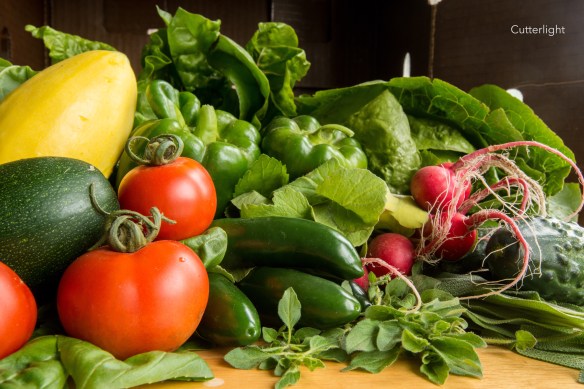
Courtesy of The Farm in Port Alsworth, a newly-arrived box of fresh vegetables fit to inspire any food-lover.

Once a week flown in a little bush airplane, a box shows up packed with freshly picked vegetables. It’s like having a birthday each week!

We’ve written a number articles about how we get food out to the tiny, remote Alaskan bush villages where we live. There’s a story about carefully packing a year’s worth of food from Costco into durable Rubbermaid tubs. More recently, we’ve been ordering much of our food from the Fred Meyer grocery store on Debarr Road in Anchorage. The people there take great care getting our groceries out to us, sending us impeccably wrapped and packed goods usually within about four days of the request. Amazon’s grocery store is another great way to get groceries, although sometimes that involves a wait of several weeks. When we lived in Point Hope we discovered a company in Washington called Full Circle, which mails farm fresh gourmet vegetables to select communities in Alaska. We would get multi-colored carrots and Swiss chard, yellow beets, and pink haricots verts. These premium veggies came at a premium price, but I will admit that after eating frozen vegetables our first year in the bush, we threw our budget to the wind in the name of fresher, tastier fare. Besides, it was fun to experiment in our cooking with colorful and interesting ingredients.

When we moved to Chignik Lake, we heard about “The Farm” in Port Alsworth. It was almost spoken as a whisper – a secret to be kept tight within an inner circle. The scoop was that they would sync orders with local flights and ship boxes filled with vegetables picked that very morning. Freshly picked veggies? Right to our door? The same day they’re picked? Our response – “What’s the phone number?” In the same secretive way we’d first heard about this magical place, we were handed a phone number. Imagine a folded slip of paper passed from one to another during a knowing handshake. When I looked up The Farm in Port Alsworth on the internet, I was surprised to discover that there was no evidence of such a place. I took out the note with the scrawled number and called.

“Hello?” an informal voice came through the receiver. Oh, dear. I must have a wrong number, I remember thinking. They should have answered the phone with a jaunty, “The Farm!” Right?

Tentatively I asked, “Is this The Farm?”

“Yes!” came the cheerful reply. Sometimes things in Alaska don’t come about the way one might imagine.

“The Farm” is actually “The Farm Lodge.” Located in Port Alsworth on beautiful Lake Clark, the lodge is operated by the same company that runs Lake Clark Air, which we regularly fly with. The lodge features a picturesque greenhouse, inviting grounds and accommodations for guests who travel to Port Alsworth for nature viewing, hunting and fishing expeditions. In addition to world class salmon fishing and wildlife photo opportunities, the lodge boasts excellent home cooked meals featuring, of course, their garden fresh vegetables. Since Chignik Lake is a regular stop for Lake Clark Air, we benefit from the surfeit of fresh produce grown in their greenhouse.

They may not have multi-colored beets or artisan green beans, but they nonetheless offer wonderful produce. We’ve received many of the crisp favorites one might find in a typical garden – cucumbers, green-leaf lettuce, tomatoes, chard, beets, radishes, bell peppers and sugar snap peas. With long hours of summertime daylight, Alaska is famous for the truly humongous size certain vegetables attain up here. The cabbage that came in our box last week was as big as a large mixing bowl – and yet it turned out to be only half the original head!

The only downside to The Farm’s service is that the growing season ends in October. But until then, we have all the fresh vegetables we can eat to go with meals of the equally fresh salmon we catch in the river in front of our house!

If you are in our area and would like to participate in The Farm Lodge’s special deliveries, here is the secret phone number (907) 310-7630.

Broiled Salmon Spine with Roasted Vegetables on Farfalle: Getting The Most out of Every Fish

Close to the bone, salmon meat near the skeleton is lean and tasty. Salmon spines (salmon carcasses with some meat still attached) are perfect candidates for the broiler. Add some vegetables to the broiling pan and you’ve got a gourmet meal for two.

No sooner did we return back home in Chignik Lake than we began turning our attention to filling our freezer and smoker with salmon. Wild salmon are precious, and every last bit of salmon meat is delicious. I don’t always get the fillets off the bones as cleanly as I’d like. That’s where this dish comes in. While the photos depict a Sockeye salmon, other species work well, too, and of course a fillet works as well as a spine in this recipe.

1. Position your oven rack to the second level below the broiler. Place a broiling pan on the rack and turn on the broiler to preheat the pan and the oven.

2. Chop up some of your favorite vegetables. Pick ones that are hardy enough to withstand a few minutes under the broiler. Whole garlic cloves roast up soft, slightly charred and delicious in this recipe. Fruit such as pitted olives work well, too.

3. To serve two, measure out about two cups of Farfalle pasta. Other types of pasta are fine.

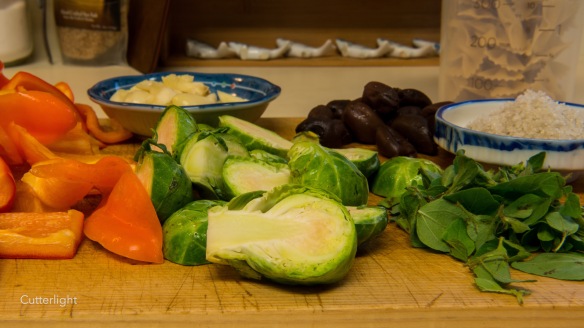
Mise en place: whole garlic cloves, bell peppers, Brussels sprouts, fresh oregano, sea salt, pasta and Kalamata olives. You’ll also need a good extra virgin olive oil, a broiling pan, and, of course, the salmon spine or fillet. 

4. Toss the vegetables together in a bowl along with sea salt and olive oil. Fresh or dried thyme or oregano are good herb choices.

Sprinkle salt into the vegetables to taste, add a couple of tablespoons of olive oil, then mix together. As an additional option, a tablespoon or so of mirin – a light, sweet cooking wine – adds a hint of sweetness and helps the vegetables brown and char.

5. Next, rinse the salmon in cold water and dry and clean it with paper towels. There may be some dark matter running along the spine inside the skeletal cavity. That’s the kidney. If there’s a lot of this, you can use a knife or even a spoon to scrape it out. It can be further cleaned up with a stiff brush. A toothbrush works well for this.

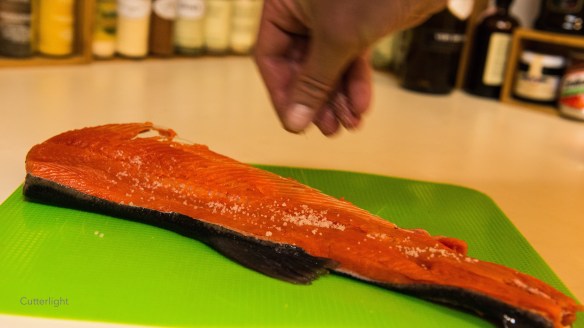
6. Place the salmon spine on a cutting board and give it a fairly generous sprinkling of salt.

A good sea salt (we like gray sea salt) really brings out the flavor of salmon.

7. Take the preheated broiling pan out of the oven. Use a brush or spatula to coat the surface with olive oil. Arrange the salmon and the vegetables on the pan.  It should be sizzling hot. Place the pan back into the oven and broil for about 8 or 9 minutes.

8. While the salmon is broiling, prepare the pasta according to the maker’s directions.

Colored bell peppers and Brussels sprouts char and caramelize beautifully under a broiler.

9. After about 8 or 9 minutes, remove the broiling pan from the oven. Transfer the salmon to a cutting board and use a fork to pull the meat off the bones. You want chunks of a good size to go on a fork along with a bite of vegetable and a bit of pasta.

10. Finally, plate up the pasta. Add the salmon and vegetables. Finish with freshly grated Parmesan cheese and a couple of grinds of freshly cracked pepper. Serve hot with a bright Willamette Valley Pinot Gris.


Eight-Weights: Alaska Peninsula Summer Trek – Going Off the Grid for Salmon, Trout, Char, Grayling and Pike

Early last Friday morning we put the finishing touches on packing for this summer’s (potentially epic) fishing-centric trek on the upper Alaska Peninsula. Two Salsa Fargo bikes equipped with semi-fat tires, to be loaded with Big Agnes Rattlesnake Mountain Glow tent, down sleeping bags, Alpacka pack rafts, tenkara rods, fly rods, freeze-dried camping food, cookware, compact stove, minimal camera gear, blank writing journals, waders, rain gear, and (for me) just one extra pair of underwear. We then borrowed a pickup truck drove the gear to Chignik Lake’s airstrip and loaded it onto a Lake Clark Cessna headed for Nondalton.

I’ll turn 58 on this trip and I’m a little apprehensive – not as sanguine in my physical endurance and strength as I was in the old days. For the first time in my life, I am aware of physical limitations in a way I’ve never before felt those limitations. But I want to get out there and try this and see if I can handle it. I think I can handle it. If it comes together all right, this trip will set the stage for the next several summers. Fortunately, Barbra has greeted the prospects this summer holds forth with unbridled enthusiasm sufficient to douse my doubts. “Pace yourself,” a friend advised, and although that two-word phrase is anathema to the way I’ve gone about things most of my life, I have to concede that on this series of treks, it’s probably the most prudent recommendation I could receive.

Iliamna Lake is the epicenter of the world’s most prolific Sockeye Salmon nursery.

Nondalton is a perfect starting point. The Newhalen River threads together some of Alaska’s (and by extension, the World’s) most storied fly-fishing waters, including Lake Clark upriver and legendary Iliamna Lake downriver. Along with their nearly innumerable tributaries, the entire watershed constitutes the world’s greatest Sockeye Salmon spawning grounds and nursery. Oh, there are kings, silvers, pinks and chums, char, grayling, white fish and pike, too – and at the right time and place lots of them and large ones. But the keystone species is the Sockeye, and it’s because of these millions of spawning salmon and the ocean-borne nutrients they carry upriver each summer that the watershed is home to some of highest numbers of large rainbow trout found anywhere. Trout 18” and up are common. How far up? The Kvichak River, which flows out of Iliamna and into Bristol Bay, gave up a 23-pounder in 1999, and while there don’t seem to be as many super large trout as in the past, fish well over 20 inches are still abundant, as are large Dolly Varden Char, Arctic Grayling, Northern Pike and Lake Trout. In fact, when I ticked off a list of modestly-sized personal bests for the species we’ll be targeting this summer, our friend Jerry, who talked us into this trek, kind of laughed and replied, “You’re gonna break all those records right here on Six Mile.”

After exploring the Six Mile Lake area, the possibilities are practically limitless. Virtually every lake, stream and river in this part of the Bristol Bay watershed is a world class angling destination. So it’s almost a given that we’re going to catch a lot of fish. And camp, and hike, and pick wild berries, and raft, and swat mosquitoes and see bears and moose and cap an especially good day with a bourbon toast from a small flask a fair distance from anything that looks like civilization.

But it’s not all gonna be blueberry patches and easy trout. We might have to bush-whack into some places, and we won’t use guides or take float planes in to the best water. We’re determined to make the fishing our own, and that will mean fishless stretches at times as we explore, and it might mean tough going at times. That’s the price for getting off the beaten path.

If we each get a few personal bests this summer and have a few fish-after-fish-after-fish days, a few memorable wildlife sightings, a few meals of freshly caught fish… If we learn a few things, experience a few new things…

It’ll be a great summer.

JD

And with that, the staff of CutterLight is off on vacation for blessed weeks on end with no phone service, no computers and no news. Look for accounts of our adventures when we resume publishing toward the end of the summer. 

Ink and Light: Chickadee Flamenco and thoughts on art and spring from Su Tung P’o

Chickadee Flamenco

What a wonderful talent – that can create an entire Spring
from a brush and a sheet of paper. If he would try poetry
I know he would be a master…
Su Tung P’o – On a Painting by Wang the Clerk of Yeng Ling, c. 1080

Also known as Su Shi, Su Tung P’o (1037-1101) was a Song Dynasty writer, calligrapher, painter, poet, statesman and noted gourmet. The dish “dungpo pork” is named for him.

May 1 Plane Crash near Chignik Lake: A Tribute to our Bush Pilots

A nine-seater from Grant Aviation cuts through the mountains just after leaving Chignik Lake this past March.

They’ve been called Alaska’s cowboys, and life without them would range from difficult to impossible for those of us in the remote parts of Alaska that make up most of the state. They’re our bush pilots – the men and women who navigate the trackless wilderness between population hubs and the isolated communities we and thousands of other Alaskans call home. They bring us everything from mail to grocery staples to visitors (when we’re lucky enough to have them). With skill and confidence, these men and women navigate through weather that can change in a blink (it alternately was sunny, rained, snowed, hailed and rained again as I wrote this morning) and through winds most of us wouldn’t even want to take a walk in. We complain a little among ourselves when the planes don’t fly (earlier this year we went for over a week with no mail as our Brussels sprouts and other groceries languished in King Salmon) and we grumble when grounded flights mean truncated vacation time or a delay in friends reaching us. But we understand – safety first. And we know that if it’s possible to fly, the pilots serving Southwest Alaska – our pilots – will be in the air.

Yesterday we lost one.

By mid-afternoon word had swept through the village that a Grant Aviation plane – a Cessna Grand Caravan, the nine-seaters that are fairly standard in the bush – had gone missing. It was en route from Port Heiden to Perryville (see map at end of article), scheduled to arrive at 2:15 PM. At 2:00, just 15 minutes out of Perryville, the plane’s Emergency Locator sounded. The pilot, making a cargo and mail run, was the vessel’s only passenger.

This photo was taken near Perryville, a coastal community about 28 miles southwest of Chignik Lake. The Aleutian Mountain Range sprawls across the Alaska Peninsula. It’s breathtakingly rugged country where high winds can spring up out of nowhere. The name Chignik means “Big Winds.”

Soon afterwards, a Coast Guard C-130 and an MH-60 Jayhawk helicopter began combing the mountainsides, tundra and lakes around Chignik Lake. In fact, the chopper landed here to take aboard volunteers to serve as additional pairs of eyes out the helicopter’s windows. At 5:49 PM, 3,000 feet up on a steep mountainside at a place known as Windy Pass, the wreckage was spotted. A rescue swimmer was subsequently lowered to the crash site where he confirmed that the pilot had died. Given the difficult terrain and cloud cover, recovery of the pilot’s body and the cargo he was carrying will be challenging.

Gabriele Cianetti, 54, the pilot of the downed Cessna 208B, touched many lives, including ours. Our thoughts and condolences go out to his family and friends as well as to his extended family at Grant Aviation. Additionally, our deep appreciation is extended to the men and women of the United States Coast Guard: Semper Paratus – Always Ready.

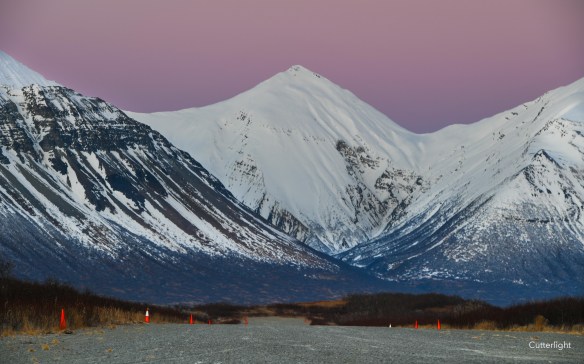
The Chignik Lake airstrip at dawn. The pilots who serve our community and Alaska’s other bush communities are true heroes in a land where air travel is not a luxury, but a necessity.

The above map includes Port Heiden, where the plane departed from and Perryville, where the plane was heading. Chignik Lake is marked in red.

Additional details for this article were pulled from KTVA news and Alaska Dispatch News.