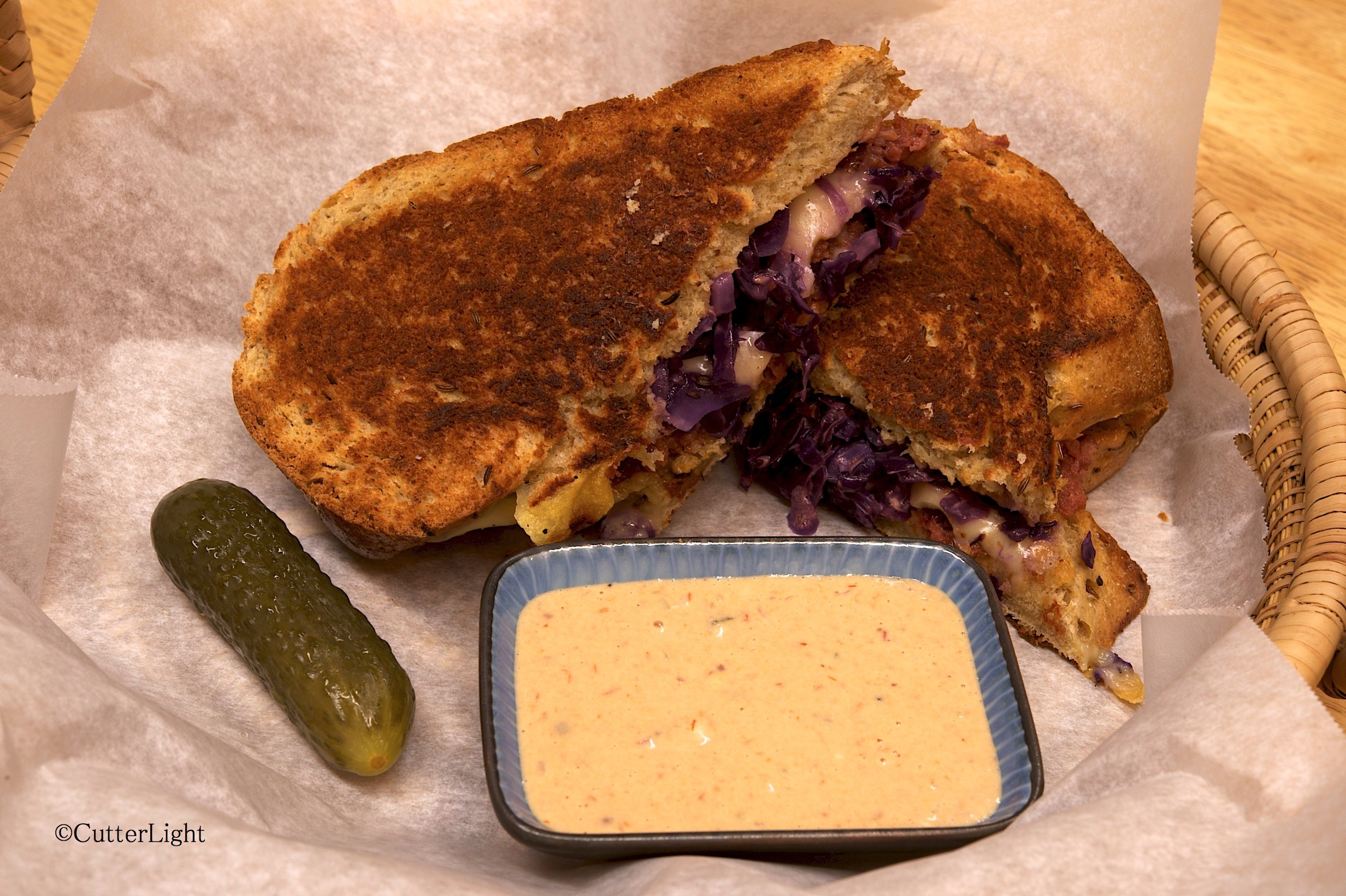
Rustic Reuben with Righteous Rye and Robust Russian Dressing

reuban from scratch b nBursting with flavor, this satisfying from-scratch version of an East Coast classic was delicious to the last caraway seed!

Jack suggested we make reuben sandwiches with the gorgeous purple kraut I’d just created. For this menu request, I would need my freshly baked righteous rye bread, corned beef, Russian dressing (see below), Swiss cheese, and butter. I already had all these items on hand except for the corned beef, and since this year the majority of the protein in our freezers is fish, that was going to be a challenge.

I wrinkled up my nose at Jack’s suggestion that we walk to the Native Store to see if they had any canned corned beef. Lo and behold, they did. “Premium” canned corned beef – it even had a little key on the side with which to open the can. This was new to me. I have had canned tuna and chicken, but neither of those items came with a key. I stared at this can turning it over and over to try and figure out how to open the darn thing. Thanks to YouTube, I now know how to open a can of corned beef!

Fortunately the homemade elements of this reuben added enough to the premium canned corned beef to make it a terrific, bush-style sandwich. Had this sandwich been made with homemade corned beef, or corned caribou, it would have been fit for Food and Wine magazine! Sounds like I have a new goal as soon as I can trade for caribou (or wild mountain goat, Bixlers, if you’re reading this)!

For this phenomenal reuben sandwich you need:

  • 2 thick slices of rye bread
  • Russian dressing
  • corned beef
  • sauerkraut
  • swiss cheese
  • butter or olive oil

Instructions

  1. Generously spread butter on one side of each slice of bread.
  2. On the opposite side of bread, generously spread Russian dressing.
  3. Place enough corned beef to cover one piece of bread.
  4. Add a layer of Swiss cheese.
  5. Add a layer of sauerkraut.
  6. Cover sandwich with second piece of bread.
  7. Place sandwich in heavy skillet on stovetop over medium heat.
  8. Press sandwich down while cooking, about 5 minutes on one side.
  9. Flip sandwich.
  10. Press sandwich down on second side, and cook for another 5 minutes. Cheese should be melting out of the sandwich.
  11. Slice sandwich diagonally and serve with a dill pickle.

The Russian dressing is taken directly from Zingerman’s deli recipe which was posted on Food Network’s website. The only adaptations I made were to use my own homemade mayonnaise and to omit parsley.

Russian Dressing

Ingredients

  • 3/4 cup mayonnaise
  • generous 1/4 cup chili sauce
  • 2 tbsp sour cream
  • 1 1/2 tbsp minced shallots
  • 1 1/2 tbsp minced dill pickle
  • 1/2 tsp lemon juice
  • 1/2 tsp grated horseradish
  • 1/4 tsp Worcestershire sauce

Directions

  1. Combine all ingredients in a bowl and mix well.

DIY Small Batch Purple Sauerkraut

sauerkraut diy_n

To make this beautiful purple kraut, you need only a few days of fermenting time and items you already have in your kitchen.

Every year I pick one thing I want to learn to make and force the issue by removing it from our annual shopping list. Last summer, a friend had us taste her homemade kraut infused with locally picked highbush cranberries, which grow in Alaska. It was delicious. Her quick directions gave me confidence that I could easily make sauerkraut, too.

The purpose of lacto-fermenting vegetables is to store the summer harvest so that vegetables can be enjoyed throughout the year. Since I had only one head of cabbage which weighed a pound-and-a-half,  I turned to small batch food preservation methods. Credit for the following directions goes to a blog called The Kitchn where the author posts all sorts of information about lacto-fermentation, photos, and step-by-step directions.

Our first menu with the finished kraut was a knock-your-socks-off reuben. We’ll post that  recipe in an upcoming article.

DIY Small Batch Purple Sauerkraut

Ingredients

  • 1 small head purple cabbage (about 1.5 lbs.)
  • 1 tbsp kosher salt
  • 1 tbsp caraway seeds
  • 1 tbsp dried juniper berries

Directions

  1. Gather materials you will need to process kraut: 2 quart container, cutting board, chef’s knife, gallon Ziploc bag, large mixing bowl, and lidded quart container for final product.
  2. Slice cabbage into ribbons. Discard core.
  3. Place cabbage ribbons into large mixing bowl. Sprinkle salt all over cabbage.
  4. Knead, massage, and squeeze salt into cabbage, until cabbage begins to become shiny and loses liquid. This will take about 10 minutes.
  5. Mix in caraway seeds and juniper berries.
  6. Pack mixture into 2 quart container. Pour any liquid from mixing bowl into container, too.
  7. Fill Ziploc bag with water and set inside 2 quart container to weigh down and cover cabbage.
  8. Press down cabbage every few hours. This will cause air to come to the surface.
  9. If there is not enough liquid to cover the cabbage in 24 hours, add 1 cup water mixed with 1 tsp salt.
  10. Keep the container out of light and at a temperature of 65 – 75 degrees F.
  11. Allow to ferment from 3 – 10 days. Begin tasting at 3 days. Mine tasted just right at 3 days. The longer you leave it, the more sour it will be.
  12. Put finished sauerkraut in a 1 quart container and store in the refrigerator. It should keep for several months.

Vanilla Flan with Traditional Caramel Sauce

flan_n

Enjoy this vanilla custard, caramel-topped dish with a freshly brewed cup of coffee or tea to complete a memorable dinner with friends.

Crème caramel (flan) and crème brûlée are classic oven-baked custards. We’ve both loved flan from the first taste. The soft, custardy texture is very satisfying and the way the caramel sauce  drizzles down the side of this dessert when you invert it is just plain fun. When I was in my twenties, I made flan the instant way – squeeze the packet of caramel on the bottom of a dish and pour in the custard. Jack discovered flan in Japan, where it is commonly sold in convenience stores as a complete, packaged snack and less frequently in coffee shops.

After learning to make flan authentically – preparing stovetop caramel from scratch and baking the dessert in a water bath – there is no turning back. The vanilla flavor in this recipe is intense, thanks to the addition of vanilla paste, and the caramel was sweet with just a hint of bitterness just as my Culinary Institute of America teacher said it should. Many flavors could be substituted for the vanilla; try orange, chocolate, cinnamon, or chai for an equally excellent dessert.

Vanilla Flan with Caramel Sauce

Ingredients

  • 1 cup and 1/3 cup granulated sugar, separated
  • 1/4 cup water
  • 1 1/4 cup whole milk
  • 3/4 cup heavy whipping cream
  • 1 tbsp vanilla paste, or 1 vanilla bean, split
  • 3 eggs

Instructions

  1. Place 1 cup granulated sugar and 1/4 cup water in a pot. Gently stir to blend.
  2. Bring mixture to a boil without stirring, putting a lid on pan so that moisture from boiling syrup will wash down sides.
  3. Let mixture continue to boil until it starts to turn a light brown color.
  4. Take pan off heat and allow mixture to cool until it has a honey-like consistency.
  5. Pour caramel into 4 small ramekins. Swirl caramel around so it covers the bottoms of the ramekins. Set aside.
  6. Preheat oven to 300 degrees F.
  7. Warm milk, 1/3 cup sugar and vanilla on stovetop.
  8. Whisk eggs in a medium bowl. Pour warm milk mixture into eggs, whisking continuously. Add cream and continue to whisk until thoroughly mixed.
  9. Pour milk mixture into prepared ramekins.
  10. Place ramekins in a larger pan, for example a roasting pan, and fill the roasting pan until water reaches halfway up the ramekins.
  11. Bake custards in oven for 30 – 40 minutes.
  12. Custards will be done when there is a small wiggle in the custard. Allow ramekins to cool off and wipe them dry. Refrigerate for a couple of hours, or overnight.
  13. To present the dessert, run a small knife around the edges of the ramekins. Place a serving plate on top of the ramekin. Flip the dish and give it a quick jerk in order to remove the flan from the ramekin. The caramel should now be on top and will drizzle over sides to plate.

Salmon Cheddar Soup with Lobster Mushrooms

salmon cheddar soup n

With or without lobster mushrooms (see photo below), this quick, easy seafood soup is one of our wintertime favorites.

The inspiration for this recipe comes from A. J. McClane’s excellent cookbook, North American Fish Cookery. McClane’s original recipe is sans mushrooms and calls for lobster, but the basic stock – milk and cheddar cheese seasoned with nutmeg – lends itself to a variety of innovations. The first time we created this dish we substituted grilled steelhead for the lobster. Other iterations have featured broiled or grilled salmon, smoked salmon, and Alaska shrimp. In fact, we’ve never used lobster, and although freshly ground nutmeg remains a must in our soup, we usually spice it up with the addition of ground smoked chipotles or other peppers and smoked sea salt. Most recently we made this soup with our own canned smoked red salmon, lobster mushrooms and red bell pepper.

lobster mushroom salmon cheddar soup n

Ready for soup: a lobster mushroom, nutmeg, our own blend of smoked chipotles and other seasoning, and a jar of smoked Copper River red salmon.

Salmon Cheddar Soup

Ingredients

  • ¼ to ½ pound smoked salmon, grilled salmon, raw salmon, lobster or shrimp cut into ½-inch chunks. (If using raw seafood, allow for a few minutes cooking time in soup till done.)
  • 1¼ cups lobster mushrooms cut into chunks slightly smaller than the seafood. (Optional) These particularly mushrooms work well because they have a firm texture, nice color, and mild flavor.
  • Part of a red bell pepper cut into thin strips – 4 to 5 strips per serving. Sauté until tender and set aside.
  • 1/4 cup olive oil or butter
  • 3 tbsp flour, as a thickening agent. Rice flour works especially well, but all-purpose flour is fine.
  • 3 cups milk
  • 1¾ cups shredded cheddar cheese
  • 1/8 tsp ground nutmeg
  • 1/2 tsp ground smoked chipotle (optional)
  • freshly ground black pepper
  • sea salt or smoked sea salt
  • paprika (finishing garnish – a dash or 2 per serving)

Directions

  1. Place olive oil or butter in a large pot over medium heat.
  2. Add lobster mushrooms, a little salt, a couple grinds of pepper and sauté for about two minutes.
  3. Lower heat and vigorously stir in flour. Then add milk and seasonings, stirring until mixture begins to thicken and becomes hot. Do not allow to boil.
  4. Stir in seafood and cheddar cheese. Give the soup a taste and adjust seasonings as necessary.
  5. Serve piping hot, garnished with a few strips of bell pepper and a dash or two of paprika.

We enjoyed this soup with homemade biscuits.

Waste Not Want Not Potato Bread

potato bread b n

We don’t normally buy instant mashed potatoes, but when friends offered us a couple packets at the end of their Alaska camping trip last summer, we came up with a good use for them.

The packets of instant mashed red potatoes remained in our pantry for over a year – until the other day when I was thumbing through a friend’s bread machine recipe book and saw that potato bread could be easily made with instant mashed potatoes. Let the experimenting begin!

The potato bread recipes I came across included lard, butter, milk and salt. Since the pre-mixed potato packet already had many of these ingredients, I adjusted the recipe to fit packet at hand. If you make this recipe with plain instant potatoes, I’d recommend the addition of more butter and salt.

Mashed Potato Bread

Ingredients

  • 1 cup instant mashed potatoes
  • 1 tbsp unsalted butter
  • 1 cup milk
  • 1/2 cup water
  • 5 cups all-purpose flour
  • 1 tbsp granulated sugar
  • 1 tbsp yeast

Directions

  1. Rehydrate instant potatoes according to directions.
  2. Mix in butter.
  3. Place potato mixture, milk, water, flour, sugar and yeast into bread machine in the order recommended by the manufacturer. Turn on dough setting.
  4. Turn out dough onto floured surface.
  5. Split dough into two pieces and knead into loaf shapes that will fit into loaf pans.
  6. Bake in oven preheated to 350 degrees F for 30 minutes. Loaves will sound hollow when tapped.

Whole Fish Salted and Broiled: Easy, Elegant, Delicious!

dolly varden shioyaki_n

This Chukchi Sea Dolly Varden Char was liberally salted, broiled and served with roasted Peruvian potatoes and garlic cloves. Salt grilling or broiling brings out the natural sweetness of species ranging from porgy and snapper to trout, char and salmon. 

When a friend recently presented us with two harvested-from-the-ocean-this-morning char, we knew immediately what we wanted to do with one of them: shioyaki. Although Japanese cuisine is better known for sushi and sashimi, far more fresh fish on Japanese tables is served well salted and then broiled or grilled.

The Japanese eat a lot of fish, and it is for good reason that shioyaki fish is weekly fare in most households. It’s quick, it’s easy, and fish prepared this way are deliciously savory and sweet. This is also an excellent method for preparing freshly caught trout while camping. Simply clean the catch, skewer it lengthwise, cut a few shallow slashes into the skin, rub salt on the fish and roast it on an open fire or over a grill. Brook trout served this way make for memorable camp fare, as do Japanese iwana (char).

dolly varden side by side_n

This pair of sea run Dolly Varden char have all the characteristics of fresh fish: bright, clear eyes, firm, nicely colored flesh, and no evidence of bruising. 

Because the fish are seasoned only with salt (and perhaps the smoke from a grill or fire), it is imperative that it be absolutely fresh. When you’re purchasing fish, look for a healthy shine, bright colors and clear, bright eyes. The scales should be intact and the gills, if any remain, should be bright red. Don’t be shy about giving a fish you’re considering purchasing a whiff. It should smell clean. Fish does not smell fishy; it is bacteria growing on poorly cared for or old fish that carries the unpleasant smell often called “fishy.”

Salt-Broiled Whole Fish

  1. Start with a clean, fresh fish. If it is a salmon, trout or char, it need not be scaled, but all traces of gill and viscera should be removed. Rinse the fish in cold water and pat dry inside and out. (Fish, such as porgy, snapper and rockfish should be scaled.)
  2. Preheat broiler to high and position a broiling pan a few inches from the heating element. (You may have to experiment to find the right position in your oven.)
  3. Use a very sharp knife to cut shallow diagonal slashes about an inch apart down the length of the fish.
  4. Rub a generous amount of salt into the fish. Let rest for a few minutes up to half an hour. Coarse grey sea salt from France (Celtic sea salt) is perfect for this recipe.
  5. When the broiler is hot, coat the broiling pan with oil by either brushing on or spraying with a pump spray. Canola oil or light olive oil work well.
  6. Place the fish on the pan. It should sizzle. If it doesn’t, it will stick to the pan.
  7. Cook for approximately 8 to 10 minutes per inch of thickness. Do not move fish during cooking. (On a grill, you will want to turn the fish once to ensure even cooking.) The fish is done when the tail and fins are crisp, the eyes are opaque and clear juice is no longer bubbling up through the slashes. With a fat fish, you will see some white fat in the slashes. This is good.

This dish requires no further adornment and is delicious with a glass of cold sparkling water, a craft ale, or a fine daiginjyo sake.

Baked Minestrone Soup: Celebrating Summer’s Garden

minestrone soup n

A hearty bowl of minestrone soup is the perfect way to enjoy seasonally abundant vegetables from your own garden, your CSA, the local farmers’ market or the grocer.

Before there was Rome, there was minestrone soup, and although some may insist that true minestrone must have this or that, the spirit of this dish lies in taking advantage of whatever vegetables are on hand. Add pasta or not, rice or not, and although contemporary versions of minestrone usually feature a bean broth, some versions use vegetable or even meat broth. Chunk up some halibut, striped bass or loup de mer (European seabass), toss it in and you’ve got a hearty fish stew. Here’s how we made our minestrone – courtesy of the abundance of vegetables we have now that we are receiving weekly deliveries to our Arctic home from Full Circle Farm. A good smoked sea salt works beautifully in this soup. A dollop of sherry is nice, too.

Ingredients (feel free to change quantities and freely substitute):

  • olive oil
  • 2 1/2 pounds tomatoes, sliced
  • 1/2 large sweet onion, diced
  • 6 cloves garlic, chopped
  • two sunburst squash, diced (zucchini or summer squash also work well)
  • 1/2 cup kalamata olives, sliced
  • 1 cup (1 ear) sweet corn
  • 1 1/2 cups green beans, cut into 1 inch pieces
  • 1/2 cup parsley, chopped
  • several leaves of basil, cut into thin ribbons chiffonade style. (You can do this by rolling the leaves cigar style, then slicing them.)
  • 1 bunch spinach, chopped coarse
  • 2 cups pinto beans (or other beans), cooked till they’re tender. Separate from broth and save the broth.
  • sea salt
  • black pepper
  • Italian herbs

Directions:

  1. Start by cooking the beans in a pot till they are soft. Save the broth, as it will be the base of the soup. Set aside beans and broth.
  2. Preheat oven to 400° F.
  3. Place olive oil and tomatoes in a large pot over medium heat stirring occasionally till the tomatoes are falling apart. Add onions and green beans and cook till they just begin to soften. Add garlic and squash, followed by parsley and basil. (You will add the beans, spinach and corn later.)
  4. Stir the broth and pour into the pot so that the vegetables are just covered. Add herbs, salt and pepper to taste. Cover with a lid and bring to a boil.
  5. As soon as the broth begins to boil, place the pot into the preheated oven and bake for 15 minutes.
  6. Remove pot from oven. Add beans, spinach and corn. Give the soup a taste and add seasonings as necessary. Return to oven and bake for an additional 15 minutes.
  7. Remove from oven, stir in a good olive oil for added flavor and give it a final taste. Let soup rest with lid on for about 10 minutes.
  8. Serve with freshly grated parmesan cheese and a baguette of French bread or a crunchy bolillo.

A Great Brine and Smoke – Soy Sauce, Brown Sugar and Seasonings for Salmon, Trout and other Fish

smoked salmon in rows_n

For the past couple of years, our brining and smoking method for salmon, trout, sturgeon and other fish has been the most popular article on our blog. Here it is again, with updated notes and photos.

If you’ve ever looked at those electric smokers sold in sporting goods stores and wondered if they did the job, the short answer is, “They do.” Our favorites are the Big Chief, Little Chief and Mini Chief models made by Smokehouse in Hood River Valley Oregon. Inexpensive, easy to use, easy to store and efficient, these smokers come with complete directions and a useful booklet that details the how-to of smoking and provides a number of recipes for fish, shellfish, poultry, meat, cheese, and even noodles, soup and breads.  My own most recent experiment with smoking was sea salt. It came out… smokey!

smoked salmon fillet_nTo obtain the best smoked fish, start with high-quality fish. Fresh fillets from bright fish make for a far better product than poorly cared for fillets from a badly handled fish. Also – and this is important -the method we use is not designed to kill parasites. It is recommended that fish be frozen at the lowest freezer setting possible for at least seven days before smoking them in order to ensure that they are parasite-free. You can read NOAA’s full recommendations here.

Below: A double batch of sockeye salmon in side-by-side Big Chief smokers.

smoking salmon double batch_n

For salmon, trout, sturgeon and similar fish with fairly firm meat, we marinate fillets in a wet brine for roughly six to 10 hours depending on the size and thickness of the fish or fillets. The fish can be brined in non-reactive glass, plastic or stainless steel (not aluminum) pans in the refrigerator or in a bucket or cooler with a couple of sealed Ziplock bags of ice thrown in to keep the mixture cool. Following are the step-by-step instructions we use for whole small trout and the fillets of salmon and other fish. The recipe can easily be modified to add other flavors or to finish the smoked fish with a sesame seed glaze.

Brine

Ingredients: For eight pounds of salmon, trout, sturgeon or other fish

  • 8 to 10 pounds fillets, skin on, rinsed, patted dry, cut into small pieces. A good size is about 3″ x 6″, but smaller or slightly larger is fine. Small trout can be cleaned and smoked whole.
  • 8 cups water
  • 2 cups soy sauce (Kikkoman is our favorite)
  • 1 1/2 cups brown sugar
  • 1/2 cup sea salt or kosher salt (Do not use iodized salt. It will impart an unpleasant flavor.)
  • 1 1/2 tbsp granulated garlic
  • 1 tbsp ginger

Directions:

  1. Mix brining ingredients together in a large bowl.
  2. Pour mixture over fillets, making sure they are covered, or until they float.
  3. Cover containers and marinate for about 8 hours (or overnight) in the refrigerator.
  4. Remove fillets from brine, pat dry with paper towels, and arrange on racks to dry for about an hour – until a glaze forms on the surface of the fish.
  5. Smoke fish according to your smoker’s directions with alder wood, mesquite, fruit tree or hickory chips. Check occasionally, keeping in mind that air temperature will influence smoking time. Typical smoking times range from 6 to 12 hours. A slightly wet product is best suited for many of the recipes we enjoy and for canning. For straight snacking, a drier product may be preferred.

Sockeye Salmon: Earth-friendly Sashimi

sockeye sashimi removing pin bones_n

Above: Removing the pin bones from a Sockeye fillet. Of the eight species of Pacific salmon, Sockeye (red salmon) have the firmest flesh and are second only to Chinook in terms of fat content. These attributes make them a perfect choice for sashimi or seared tataki. 

Among Pacific salmon, there is a direct correlation between how far each species travels and how much fat or oil the meat contains. Chinook, which may run 100’s of miles up natal rivers, have meat so laced with fat eating a piece of an upriver bright can be akin to letting a piece of of light, fresh, creamery butter melt in your mouth. While sockeye aren’t quite that fatty, their relatively long spawning runs during which they don’t feed necessitate ample amounts of stored fat. Bluebacks (another name for Sockeye) have rich, oily meat – self-basting on the grill and ideal for sashimi.

sockeye with running tap_n

Marbled with fat, the belly meat of Sockeye is comparable to toro – the highly-esteemed belly meat of tuna.

The term “Sockeye” is derived from similar sounding native American words meaning “red” – which is both the color of sockeye meat and the color they take on during their spawning run. The fillets are beautiful, and given the relative abundance of wild Sockeye and their generally reasonable market price, it’s puzzling that they aren’t utilized more often by sushi restaurants. Unfortunately, most sushi restaurants serve farmed Atlantic salmon – a bland substitute for wild fish.

Chinook fillet on grill_n

Butterfly-filleted, seasoned with salt and pepper, and ready for the grill this ocean-caught king salmon (Chinook) shows this species’ characteristic orange color.

Since producers are permitted to dye farmed Atlantic salmon to match the color of wild fish, looks alone are not always a good way to determine whether or not you’re making a sustainable choice when you purchase a piece of salmon at the market or order salmon at a sushi-ya or other restaurant. Look and ask.  If the menu merely says “salmon,” it’s a sure bet the product came from a farm. Wild Chinook are highly prized and command a higher price than farmed fish; therefore anyone selling wild kings is going to accurately label them as such. The meat of sockeye has a distinctive red coloration and is noticeably firmer than that of other species. Sockeye, too, are highly prized and are almost certain to be accurately labeled.

sockeye sashimi_n

The upper part of Sockeye fillets, the back meat, is beautifully colored and wonderfully firm. 

Sockeye are primarily filter feeders. They have more gill rakers than other salmon, and these gill rakers help them sift out small crustaceans such as krill. These crustaceans are rich in carotene which give red salmon their red color. Krill are also loaded with oil, giving Sockeye their rich, oily flavor.

sockey sashimi with beaver wasabi_n

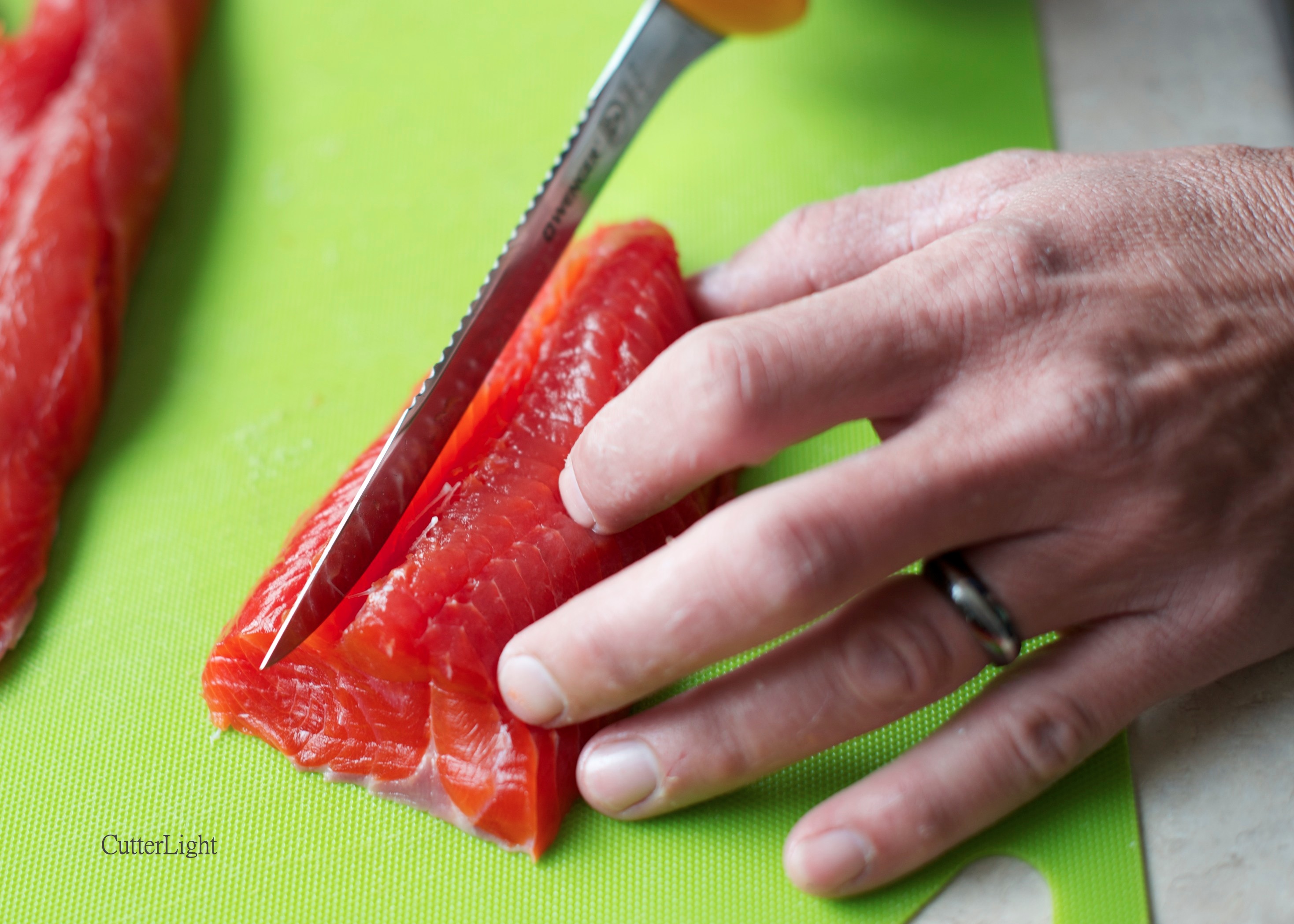
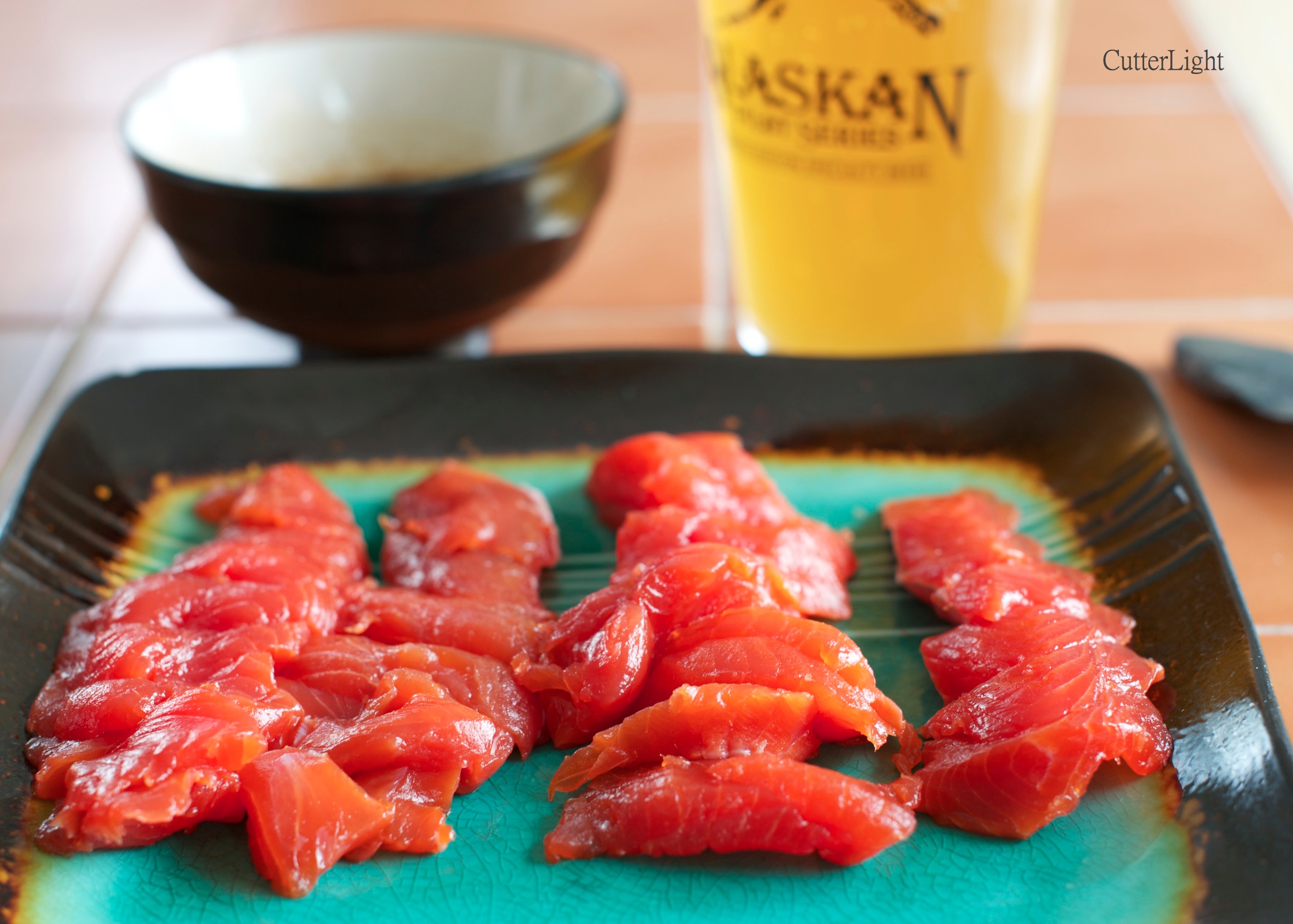
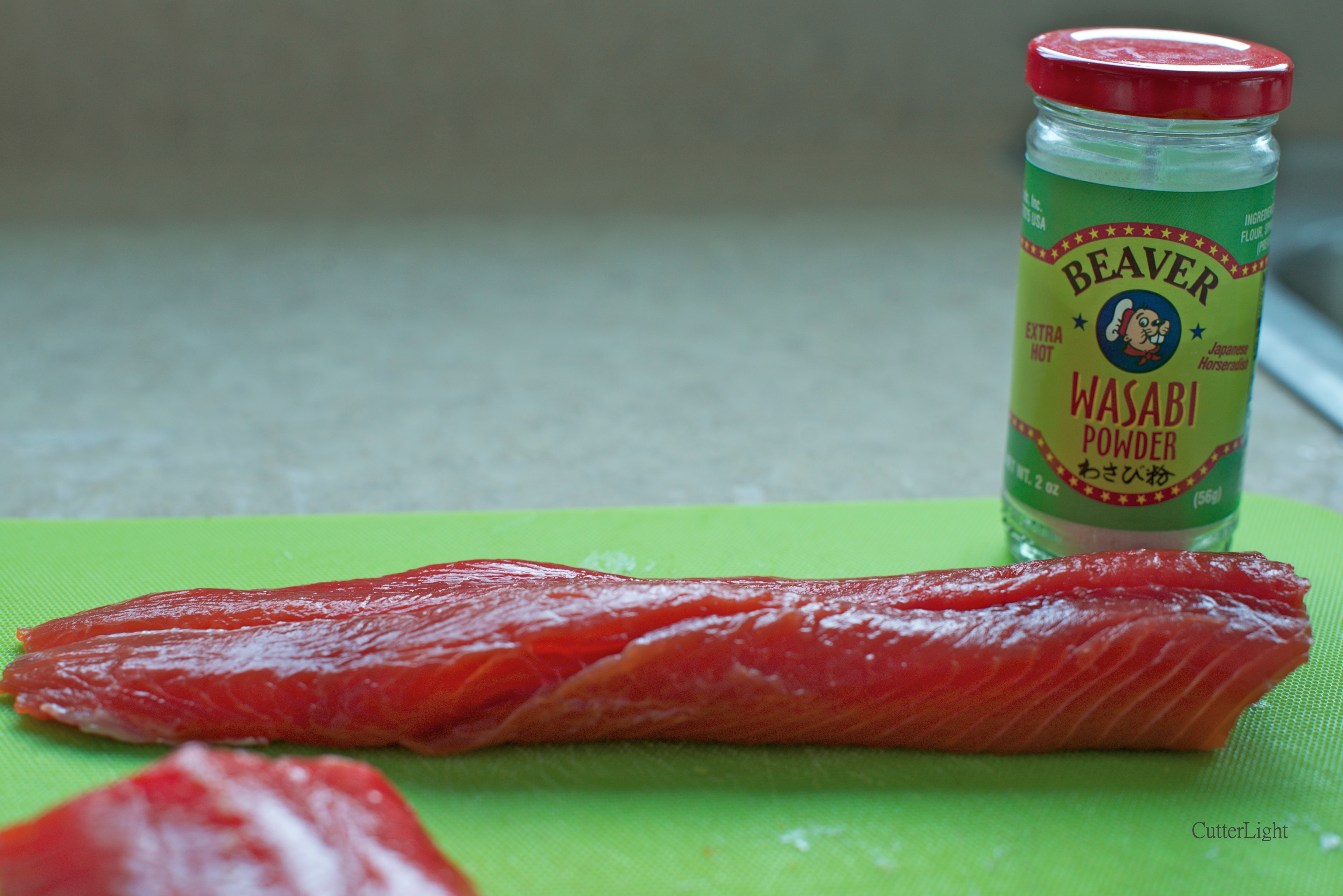
A sashimi-grade Sockeye fillet fresh from Alaska’s famed Copper River is ready to be sliced into thin, bite-sized pieces and dipped in soy sauce with just a hint of wasabi. Enjoy with a favorite craft beer, a good daiginjo sake, or a lightly-chilled Chablis. *We strongly advise readers to freeze salmon and other fish for at least 24 hours before serving raw in order to kill parasites. 

Whole Sheefish (or any fish) Poached in Foil

sheefish whole poached in foil_n

A large fish poached and served whole makes for a dramatic presentation and a first-class dining experience. You don’t need a fancy fish poacher to pull this off. Aluminum foil works beautifully in the galley, on the grill, over a campfire, or in the kitchen. Here are the basics. 

Sheefish whole poach_n

This past winter, we’ve been dining on sheefish (inconnu) in the six-to-eight-pound class. Measuring 25 – 30 inches, these fish of the far north are just small enough to fit into our oven and serve whole. Because sheefish is bony and not easily filleted, they are well-suited to this cooking method; when served, the meat comes easily off the bones. With firm white meat in large, sweet, flakey chunks, sheefish are comparable to striped bass, European seabass, Japanese seabass (suzuki) and similar fish. Here in Alaska, foil poaching works beautifully with salmon, rockfish, char and small halibut.

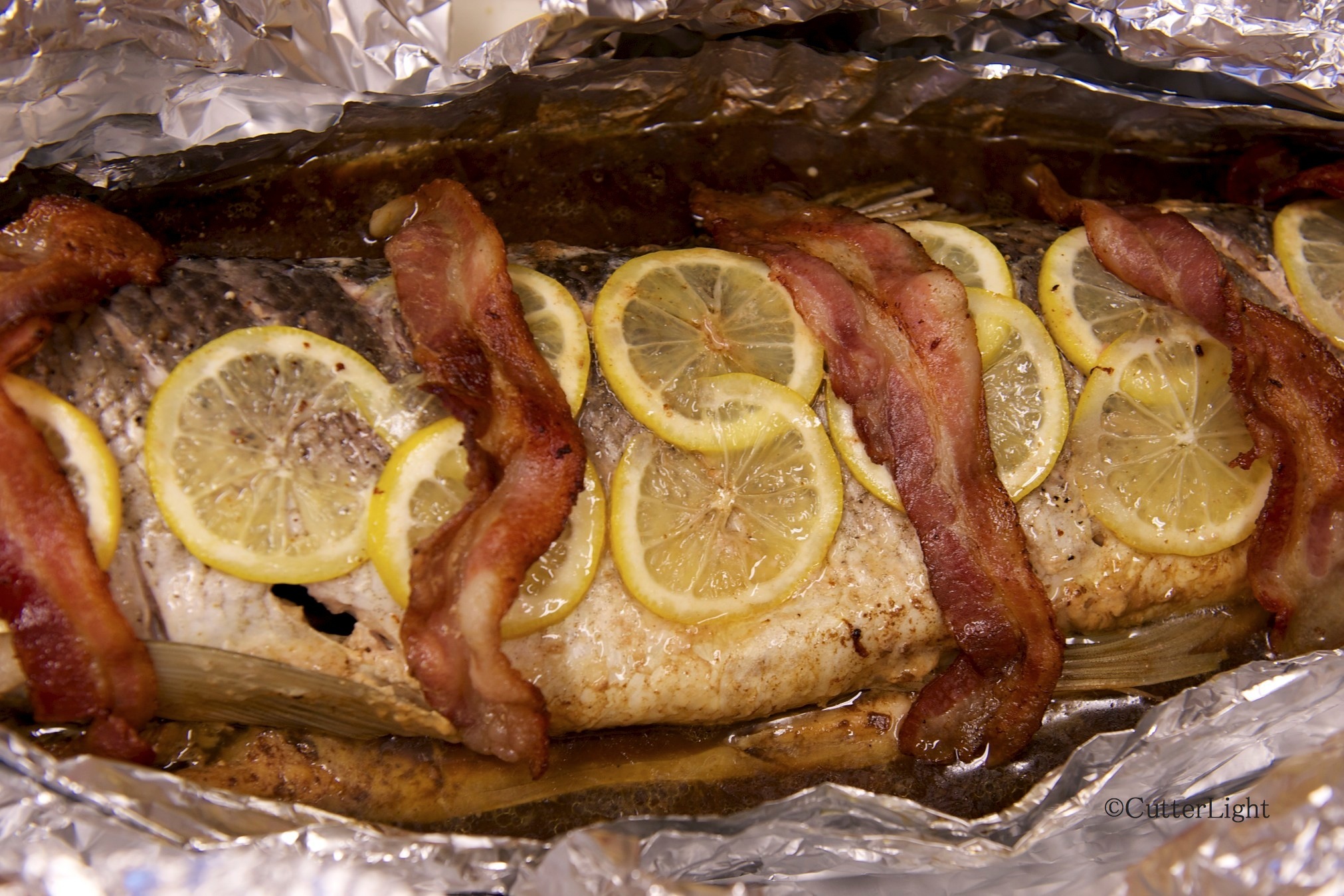
Poaching and steaming recipes need not be complicated. Although we generally start with a court bouillon or dashi and add Chardonnay when we have it, equal parts of water and Chardonnay alone make a perfectly acceptable basic poaching stock. No wine on hand? A little water – enough to keep the fish bathed in steam – is sufficient. Anything else is a matter of taste. We’ve found it difficult to improve on a combination of sea salt, freshly cracked pepper, lemon, butter and bacon. Olive oil makes a good substitution for butter and bacon.

One of the beautiful things about this recipe is that the ingredients can be prepared beforehand so that they’re ready for a shore lunch or camp dinner to celebrate a special catch.

Incidentally, wakame (dried kelp) and dried bonito flakes are an ideal base for fish stock for campers and sailors. These ingredients are light, easy to store, and last indefinitely. This dashi-style stock can be enhanced with salt, soy sauce, white wine, sherry or sake.sheefish

See more of Detlef Buettner’s beautiful art at: http://home.gci.net/~lifesize.fish/salmonids.htm

Poached fish is an excellent meal to serve with freshly baked French bread or sourdough bread. We and our guests enjoyed the above sheefish served on saffron rice cooked in a clam juice broth, spooning the poaching broth onto our rice and fish.

Ingredients:

  • 1 whole fish, scaled, gutted, gilled, rinsed off and patted dry.
  • aluminum foil sufficient to entirely wrap around the fish. We double wrap to prevent leaking.
  • poaching/steaming liquid – approximately 1/3 cup per pound of fish. (About 2 1/2 cups for an 8-pound fish.) See below for easy poaching liquid recipe.
  • 1 tbsp butter per pound of fish. (An 8-pound fish takes 1 stick of butter.)
  • very thin slices of lemon to cover one side of fish
  • strips of bacon to cover one side of fish. (about 5 strips for an 8-pound fish)
  • lemon juice to rinse stomach cavity – approximately 2 tbsp for an 8-pound fish
  • sea salt and freshly cracked pepper to rub into cavity and both sides of fish – approximately 2 – 3 tbsp sea salt for an 8-pound fish

Directions:

  1. Place large baking sheet in oven and preheat to 450 °F.
  2. Arrange aluminum foil on flat surface. Thoroughly coat foil with butter where fish will be placed.
  3. Rub lemon juice into fish’s stomach cavity. 
  4. Use a very sharp knife to make shallow diagonal slashes spaced about 1 inch apart from the head of the fish to the tail. Do this on both sides.
  5. Rub salt and pepper mixture onto both sides of fish and into cavity.
  6. Place fish onto buttered foil.
  7. Rub butter into fish’s cavity. Rub remaining butter on top side of fish.
  8. Arrange lemon slices on top side of fish.
  9. Arrange bacon slices atop fish.
  10. Pour poaching liquid along the sides of fish, taking care not to rinse the off the top of the fish.
  11. Close foil around fish and place on baking sheet (or on grill, etc.) Cook until a few dorsal fin rays can be easily pulled from fish. Total time will be approximately 5 – 6 minutes per pound. An 8-pound fish will cook for 40 minutes.
  12. Note: We like to remove the bacon when the fish is finished cooking, crisp it up in a pan, and return the bacon to the top of the fish prior to serving. The bacon drippings can be drizzled atop the fish as well.

Poaching Liquid Recipe:

Ingredients:

  • 3 cups water
  • 5 inch square of wakame (dried kelp – available in Asian grocers.)
  • 5 grams (0.17 ounces) dried bonito flakes
  • 1/4 teaspoon sea salt (or 1/2 teaspoon soy sauce)
  • 1 tbsp miso paste (optional)
  • Optional: replace 1/2 cup water with white wine or sake

Directions:

  1. Place water in pan and heat over high heat. Add wakame and salt, stir occasionally and continue heating but do not boil.
  2. When Wakame is soft, add bonito flakes. Cook briefly in steaming water and stir gently. Do not boil.
  3. Pour mixture through wire strainer into pan or bowl.
  4. If desired, return strained soup to low heat and stir in miso paste till dissolved.