Unknown's avatar

About Jack & Barbra Donachy

Writers, photographers, food lovers, anglers, travelers and students of poetry

Winter Landscape in Black and White: Spruce Tree with Mountain

spruce-tree-w-mountain-bw-copy-n

I made this photo just a few feet from my home in Chignik Lake. The challenge was to somehow clean up the assortment of utility poles, wires, satellite dishes and the dissonant array of scrub alder closer to eye level. I actually knew as soon as this assignment (Winter Landscape in Black and White – the second weekly assignment from Outdoor Photographer magazine) was posted the scene I wanted to shoot. I put on a long lens, waited for the right light, and got this frame.

Next Thursday: Patterns of Winter


Roasted Pumpkin Soup with Mahlab and Moose Meat

spiced-pumpkin-soup-n

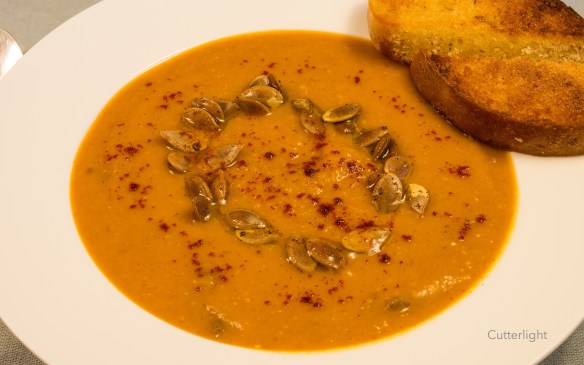
With or without meat, a zesty bowl of pumpkin or squash soup garnished with roasted pumpkin seeds is an Autumn through Wintertime favorite.

Once you’ve got the basic concept of a spiced pumpkin soup down, it’s likely to become a favorite. There’s almost no end to possible flavor combinations – from simply shaking in your favorite Thai-style or Indian-style blend to trying a little of this and a little of that based on what’s on hand in your spice rack.

A new twist for us this time around was the addition of mahlab, an aromatic Middle East spice made from grinding the seeds of the St. Lucie, or Mahaleb, Cherry. Think almonds with a hint of cherries. This was, for us, a new spice recently ordered from Penzeys Spices. Although it’s usually used as an addition to pastries, breads, and custards (this spice will definitely go into our next crème brûlée) one whiff and we knew it would be a perfect compliment to pumpkin soup. If you’d like to do some of your own experimenting with this unique spice, we recommend that you purchase the seeds whole and grind them yourself as, reportedly, the flavor of powdered mahlab goes off fairly quickly.

Having just come into some really wonderful moose meat courtesy of a friend, we pan fried some in olive oil and cumin to add to the soup. Other wild game, beef or chicken would work well, too. Alternatively, this soup makes for an excellent vegetarian dish by going sans mean and substituting vegetable broth for chicken broth. Although not necessary, a little maple syrup is very good in this soup.

Ingredients

  • 2 pounds roasted pumpkin (preferably a pie pumpkin) or squash such as Butternut Squash
  • 2 cups chicken broth
  • 2 tsp powdered Mahlab
  • 1/2 tsp lemon grass
  • 1/2 tsp ancho chili powder
  • 1/2 tsp chipotle powder
  • 1/2 tsp cumin
  • 1 tbsp Thai red curry paste
  • 1/2 tsp powdered garlic
  • 1/2 tsp mace
  • 1/4 tsp cinnamon
  • 2 tbsp almond butter (or substitute a quality peanut butter)
  • 1 cup coconut cream
  • 4 tbsp maple syrup (or 2 tbsp brown sugar)
  • sea salt
  • 2 tbsp dried red bell peppers (or use fresh, diced fine)
  • 1 pound moose meat, other wild game, beef or chicken cut small, seasoned with cumin powder and cracked pepper, and pan fried in olive oil
  • smoked paprika (to garnish)
  • roasted pumpkin seeds (to garnish)
  • drizzles of extra virgin olive oil (to garnish)

Directions

  1. Place a baking sheet on lower center rack of oven and preheat oven to 400° F (200° C).
  2. Cut pumpkin in half and remove stem and seeds. Slice into wedges and use a very sharp knife to cut away stringy matter. Leave skin on and brush pumpkin flesh with olive oil. Place skin side down on a preheated backing sheet and roast for about 20 minutes. Test with a fork. It should be very soft.
  3. Remove pumpkin wedges from oven and place on a cutting board to cool an lower oven to 300° F (150° C).
  4. Meanwhile, clean seeds and place in a bowl. Mix with a little olive oil and sea salt. Spread evenly in a single layer over baking sheet. Bake for 45 minutes or until golden brown, stirring occasionally. Place seeds on paper towels to cool.
  5. Meanwhile cut the pumpkin away from the rind. In a large pot over low heat, combine pumpkin chunks and chicken broth and use a stick blender to purée until smooth. It is a good idea to hold some chicken broth in reserve to ensure that soup is sufficiently thick.
  6. Add Thai chili paste, seasonings and almond butter, mix well. Bring mixture to a very low simmer, stirring occasionally. Add salt and additional seasonings as desired.
  7. Add coconut cream and maple syrup. Use a stick blender to thoroughly combine.
  8. Add cooked meat and red bell peppers and let simmer a few more minutes.
  9. Serve hot with roasted pumpkin seed, a sprinkle of smoke paprika, and a drizzle of olive oil.

Ink and Light: Framed in Light and “Something like a Raven”

x-framed-in-light-copy-n

Framed in Light: Umiaks and Northern Lights, Point Hope, Alaska

                   …in silence                  where all things
      and all beings reach                 back into time before iron and oil.
        dg nanouk okpik – Tulunigraq: Something like a Raven, 2012

Whaling crews of the Inupiat Eskimo village of Point Hope still hunt on the Chukchi Sea from traditional umiaks – small whaling skiffs with wooden frames and bearded seal skin hulls.

dg nanouk okpik is an Inupiaq-Inuit poet from Alaska’s North Slope. Nanouk is Polar Bear and Okpik is Cloudberry in the Inupiaq language. Her book Corpse Whale was published by the University of Arizona Press in 2012.

Smokey, Spicy Mix: In Hearty Soups, as a Rub for Poultry and Pork, and on Salmon, our Go-To Seasoning

jacks-smokey-blend-n

Jack’s Mix: Nine herbs, spices and seasonings create a blend that adds deep flavor and an agreeable spike of heat to pumpkin soup, chicken breasts, pork, broiled salmon fillets, moose meat pizza and more. 

Every kitchen should have a few items like this in stock – a house dressing, a specialty dipping sauce, or a proprietary spice or herb blend. This is “the secret:” the bottle that invariably gets emptied first, the jar that has to be replenished again and again while other similar items languish with their contents intact.

In the case of Jack’s Mix, sure, there are a wide variety of commercial rubs available, and most of them are quite tasty. But we wanted something a little smokier in flavor and with a certain zip that would best compliment our style of cooking. And since we prefer to add salt as a separate item in cooking, we wanted a salt-free blend. So we came up with our own blend from a handful of ingredients we always have on hand.

Our message in this post is to encourage you to give it a try. Pick something you use frequently – salsa, an Italian herb blend, barbecue sauce, salad dressing or a spicy rub and instead of continuing to purchase Brand X at the store, start experimenting with your own creation. It’s fun, you’ll likely learn something valuable about the way flavors work together, and when a guest exclaims, “This _____ is fantastic! What kind is it?” You can smile and casually reply, “It’s mine, just a little something I threw together.”


Winter Macro Photography: Other Worlds

abstract-3-stacked-planets-n

Abstract #4: Parallel Worlds – Among new projects in 2017 is a commitment to taking on the “Weekly Photo Assignment” challenge at Outdoor Photographer magazine. The first new assignment for 2017 was Winter Macro. 

abstract-4-fracture

Abstract #4: Fracture – For the first time in perhaps five years, our lake, Chignik Lake, has frozen solid. The first day it was reasonably safe to walk on the ice, it was incredibly clear.

abstract-9-n

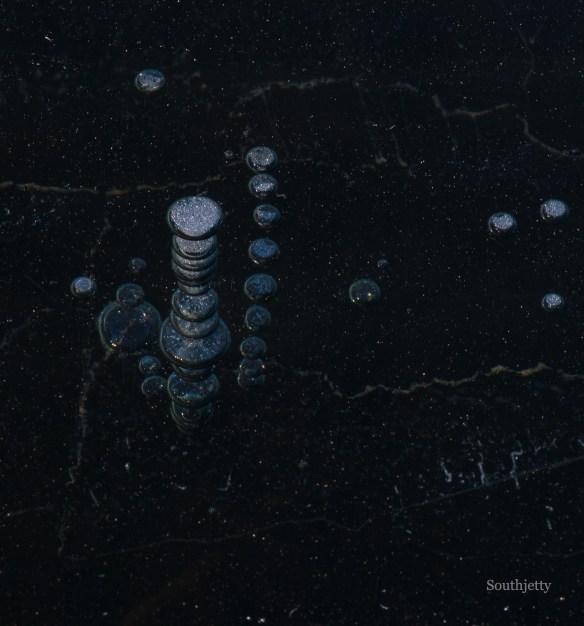
Abstract #9: Galaxy – As I walked around scanning the bottom for fish and aquatic insects, here and there I noticed bubbles trapped in the clear ice.

Next Thursday: Winter Landscape in Black and White

Ink and Light: “A River Runs through It” and Spring Snow in in the World’s Coldest National Capital

x-snow-dancers-copy-n

Snow Dancers: Ulaanbaatar, Mongolia – 2016

At over 4,400 feet in altitude, Ulaanbaatar, Mongolia, is the world’s coldest national capital city. Lows of -20° F and lower – sometimes much lower – are common.

She was as beautiful a dancer
as he was a fly caster.
Norman Maclean – A River Runs Through It, 1976

Norman Maclean (1902-1990) was 70 when he began writing A River Runs Through It and Other Stories. Rejected by every major publishing firm, the novella and two accompanying short stories were finally accepted by Chicago University Press where Maclean had taught in the Department of English. The book, which was almost instantly recognized as a classic, became the first piece of fiction the CU Press published.

Adzuki Maple Bars with Matcha Maple Frosting

maple-bars-w-azuki-and-matcha-frosting-n

Mmmmm – matcha green tea and sweet adzuki bean paste – a flavor combination we love add a Japanese twist to an American classic. Just the thing with piping hot green tea after a cold morning of birding.

Matcha green tea powder and adzuki beans may not be in everyone’s pantry, but they are always in ours. If you’ve been following this blog, you know that this flavor combination makes a regular appearance in our kitchen. When a friend gave me a recipe for maple bars, I couldn’t help imagining them stuffed with sweet adzuki bean paste (directions to make the paste here), and changing up the frosting recipe to include the zip of spiced matcha tea along with maple syrup. I think the original maple bar recipe somehow reminded me of cinnamon rolls. I’d made a version of cinnamon rolls where the adzuki bean paste was spiraled into a dough which in turn was infused with matcha tea powder. That was delicious! So why not tinker around with this maple bars?

Today’s recipe initially started out with my friend’s successful recipe. Her dough recipe is deliciously flavored with cinnamon. After baking, I sliced the rolls in half and spread them generously with adzuki bean paste. I did change up her maple icing and made more of a donut glaze that I then flavored with matcha green tea powder and real maple syrup. (Thank you JW for sending us some real Pennsylvania maple syrup!)

Matcha powder is used to make high quality green tea. I enjoy baking with this flavorful ingredient – adding it to breads, cookies, cakes, and even custard dishes. If you are not convinced that I really do enjoy this ingredient, just search “matcha” in the search bar on our blog and look at all the lovely recipes. 😉 I’m happy to report that both adzuki beans and matcha green tea powder are easy to procure – even in remote places like Chignik Lake, Alaska – thanks to the Internet.

Adzuki Maple Bars with Matcha Maple Frosting

Ingredients

Maple Bars

  • 1 1/2 cups milk
  • 1/3 cup unsalted butter
  • 4 tbsp granulated sugar
  • 2 tsp cinnamon
  • 4 1/2 tsp instant yeast
  • 2 large eggs, beaten
  • 4 3/4 cups all purpose flour
  • 2 cups sweet adzuki bean paste

Frosting

  • 1/4 cup unsalted butter
  • 1/2 cup real maple syrup
  • 1 cup powdered sugar
  • 1 tsp matcha green tea powder

Directions

  1. Combine milk, butter, sugar, and cinnamon in a medium saucepan.
  2. Stir over medium heat until butter is melted. Remove from heat.
  3. Let milk mixture cool slightly. Mixture should cool to about 110 8° F, or cooler.
  4. Pour milk mixture into a large mixing bowl. Stir in yeast.
  5. Stir beaten eggs into mixture.
  6. Stir in flour, one cup at a time.
  7. The last 3/4 cup of flour will need to be kneaded in.
  8. Once flour is well incorporated and dough can remain in the shape of a ball, let rise in the mixing bowl for an hour covered with plastic in a warm place with no draft.
  9. Punch down dough and roll out to about a 1″ thickness.
  10. Cut dough into 16 rectangular pieces. Place bars on baking sheet covered with parchment paper. Cover with plastic wrap and let rise for another 30 minutes.
  11. Heat oven to 425° F. Remove plastic covering and bake bars for 8 – 10 minutes. Finished bars should be lightly browned.
  12. Let bars cool on wire rack for 15 minutes before icing.
  13. Make icing by mixing together icing ingredients and stirring until smooth.
  14. Cut bread bars in half, like a sandwich.
  15. Spread adzuki bean paste on lower half of bar.
  16. Take top half and dip it into matcha maple frosting.
  17. Place dipped top part of bread onto bottom which has been prepared with adzuki paste.
  18. Serve immediately or  serve later the same day. Just make sure to cover them with plastic so they don’t dry out.

Ink and Light: “For John Clare” and a Redpoll in Mongolia

x-thin-air-n

Thin Air: Common Redpoll, Ulaanbaatar, Mongolia

Redpolls breed in Arctic regions around the world, descending into lower latitudes in winter. A bird of the North, they generally are uncommon south of Canada.

For John Clare
The whole scene is fixed your mind,
the music all present,
as though you could see
each note as well as hear it.
John Ashbery, lines from For John Clare, published in 1969

John Ashbery’s (1927-) poetry has earned nearly every major award including the Pulitzer. The subject of this poem, John Clare (1793-1864), emerged from difficult early years to write beautiful poetry about the natural world before later being institutionalized for insanity.

Uni & Ikura Amuse Bouche (Sea Urchin & Salmon Roe)

sea-urchin-amuse-bouche-n

Fresh from the sea, uni and ikura create a salty, savory combination.

Much as is true of most Japanese people, most Alutiiqs love virtually anything harvested from the sea. From octopus to chitons (locally known as bidarki), if it’s fresh from the ocean it’s likely to find its way onto the menu here in Chignik Lake. Sea urchins are highly prized.

And there’s really nothing to preparing them. Insert a small knife into the opening on the bottom of the shell, cut the shell open, and remove the bright yellow lobes, which are the urchins’ reproductive organs.  (They are not roe.) Most people are careful to remove the dark colored matter inside the shell, but the urchins we had were small and including this substance added, we thought, both a subtle additional flavor and contrasting color. In Alaska, we almost always have a jar or cured salmon roe on hand. This bright, salty, translucent salmon caviar is a perfect finishing touch on many dishes. For a popular recipe for making your own ikura, click here.

Oh, Daddy! Umami! Clam Fettuccine and Sea Urchin Amuse-Bouches

dorner-bay-clams-n-urchins-n

Fresh sea urchin appetizers, clams still wet with Chignik Bay brine, freshly made fettuccine, and  home-brewed Bavarian Weissbier – Ringing in 2017 Off the Beaten Path. Oh, Daddy! Umami! (Recipe below)

clam-fettucini-dorner-bay-n

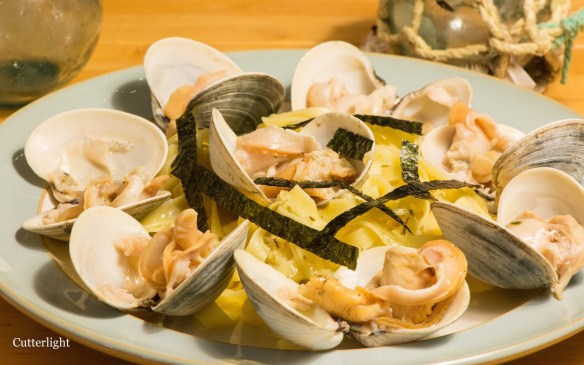
When a friend showed up at our door on New Year’s Eve with a big bowl of fresh-from-the-sea clams and sea urchins, we immediately began planning out a celebratory dinner to greet 2017. While Barbra whipped up two servings of fettuccine, I set to work cleaning and preparing the seafood. A carafe of hot sake might have been perfect, but Barbra’s medium-bodied, slightly citrusy, Weissbier proved to be an excellent compliment to a shellfish feast that couldn’t have been any fresher.

sea-urchin-amuse-bouche-n

Umami Power: Sea urchin topped with salmon roe. Note to self: Stock a few bottles of sake for these occasions!

Clam Fettuccine for Two: This is a simple yet elegant dish. The standard butter and garlic mixture really comes to life with the addition of tarragon and a dash or two of grey sea salt.

Ingredients

  • Fettuccine
  • Cherrystone Clams, Butter Clams, Cockles or Ark Clams, rinsed to remove any debris. Clams should be closed tight. If a clam isn’t closed, give it a few vigorous taps. If it still doesn’t close, discard it, as it’s dead and may be unfit to eat.
  • Butter, preferably unsalted
  • Olive Oil
  • 4 large cloves of Garlic, chopped fine
  • 1/2 tsp dried Tarragon crumbled fine (or 1 tsp fresh chopped)
  • 1/4 tsp Coarse Grey Sea Salt
  • Nori (dried laver) cut into thin strips for garnish

Directions

  • Prepare the fettuccine as you normally would. Drain and then return to the pan with a little olive oil and toss together. This will prevent the noodles from sticking together.
  • In a small pan, heat about 6 tablespoons of butter and 2 tablespoons of olive oil over medium-low heat. Once butter has melted, place on very low heat to keep warm. Just before serving, return to medium heat, add the garlic, tarragon and sea salt and briefly cook while stirring. In about 30 seconds, you’ll begin to smell the aromas of the garlic and tarragon. Provided you have chopped the garlic fine, that’s all the cooking it needs.
  • Meanwhile, place clams in a metal strainer – one that will fit into a larger pot. Add an inch or so of water to the pot and place clams in strainer inside pot. The clams should be above the water so that they steam rather than boil. (Hint: If you place the clams inside a heat-proof bowl inside the strainer, you can save the juice from them as they steam open. The juice can be used in soups, sauces or in Bloody Mary Cocktails.) Cover clams with a lid and bring water to a boil. When clams are cooked, the shells will pop open. This generally takes about five minutes.
  • Meanwhile, place clams in a metal strainer – one that will fit into a larger pot. Add an inch or so of water to the pot and place clams in strainer inside pot. The clams should be above the water so that they steam rather than boil. (Hint: If you place the clams inside a heat-proof bowl inside the strainer, you can save the juice from them as they steam open. The juice can be used in soups, sauces or in Bloody Mary Cocktails.) Cover clams with a lid and bring water to a boil. When clams are cooked, the shells will pop open. This generally takes about five minutes.
  • Use a small knife to cut the clam’s abductor muscles away from the shell so that they can be easily eaten, but leave the clam meat inside the shell for a more attractive presentation.
  • Place the fettuccine on serving plates. (It helps to keep plates warm in the oven.) Arrange the clams on the plate. Pour the butter sauce on the clams and pasta. Add nori. Serve with slightly chilled Chardonnay or warm sake.