Unknown's avatar

About Jack & Barbra Donachy

Writers, photographers, food lovers, anglers, travelers and students of poetry

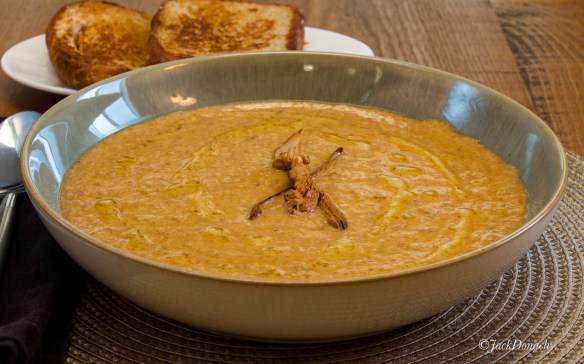
Wonderfully Silky, Sumptuous Chanterelle Mushroom Soup

Forget everything you know about mushroom soup and slip a spoon into chanterelle magic.

This past fall when Costco (which we can now have delivered to our home in the Alaska bush) offered fresh, wild-picked chanterelle mushrooms, I couldn’t resist ordering a few pounds. I wasn’t sure what I wanted to do with them other than savor them with a little olive oil, garlic and mozzarella on one of Barbra’s homemade thin pizza crusts, or perhaps present them in an egg-white omelette, but I was confident I’d find something. An internet search brought up Escoffier’s Chanterelle Soup. Reading through the recipe, I began mentally picking out the bottle of Chardonnay I’d pull from the rack to serve with it.

While I stayed fairly true to Auguste Escoffier’s Veloute Agnes Sorel – based on the various English versions of the recipe I scanned through – I made a few adjustments, particularly the second time around. We don’t stock brandy, but we have bourbon on hand; that was an easy swap and it worked well. The chicken broth the original recipe calls for is fine… but we felt that lobster stock, made with Better than Bouillon’s Lobster Base, worked exceptionally well. And toward the end of cooking, a taste suggested that not only serving a Chard with this soup would make for an excellent pairing, but that a quarter cup or so to finish the soup might be warranted as well. In fact, we were amazed at the way in which a little Chardonnay brought this soup together, making the already subtle, silky transitions in the flavors of cream, butter, bourbon, saffron and chanterelles even smoother.

This is not a difficult recipe, but it does have distinct preparation steps. A velouté (vәl-ü-tā) must be created – a mixture of butter, flour and broth. And in the creation of a liaison of egg yolks and cream lies much of the secret of this soup’s silky feel.

Oh, and don’t skimp on the saffron.

Ingredients  (Serves 4+)

For the Velouté

  • 6 cups lobster stock (use Better than Bouillon Lobster Base)
  • 2 tbsp unsalted butter
  • 2 tbsp all purpose flour

For the Soup

  • 1 pound of chanterelle mushrooms, chopped fine
  • salt
  • 1/2 cup shallots, chopped fine
  • 1 tbsp unsalted butter
  • 3 egg yolks
  • 1/2 cup heavy whipping cream
  • 2 oz bourbon
  • saffron – approximately 2 full pinches
  • 1/4 cup or slightly more of Chardonnay
  • salt to taste/if necessary
  • a few especially nice chanterelles set aside as a garnish for each bowl

Directions

  1. Heat the stock, but try to keep the temperature just below simmering.
  2. Meanwhile, in a separate pot or pan (a large sauteuse pan works well for this) over medium-low heat, melt the butter until it begins to froth. Whisk in the flour. Continue whisking until mixture is cooked through and smooth, but do not allow to brown. This is called a roux.
  3. Whisk the broth into the roux and bring to a low simmer, stirring frequently. Cook this down by about a fourth or slightly more. Don’t let it boil. A very gentle simmer will reduce the velouté in about 30 minutes.
  4. Meanwhile, sweat the chopped mushrooms and shallots with a little salt over medium-low heat in a dry pan. Stir occasionally and cook till the shallots are translucent and the mushrooms have given up moisture and have browned. When they’re ready, add a tablespoon of butter and stir together.
  5. Crumble the saffron into the bourbon. This can be done earlier. The idea is to allow the saffron to begin releasing its flavor and color.
  6. Add the bourbon and saffron mixture to the mushroom mixture. Turn the heat up and stir until most of the bourbon has evaporated.
  7. Purée the mushroom mixture in a food processor or with a stick blender.
  8. When the velouté has cooked down by 1/4 or slightly less of its original volume, add the mushroom purée and stir well. Try to keep the temperature just below simmering or at a very low simmer. When the mushroom mixture is thoroughly incorporated, turn the heat to low to keep the soup hot without simmering.
  9. In a mixing bowl, whisk together the egg yolks and cream. This is a liaison. The intention here is to create a binding agent that will thicken the soup.
  10. Into the egg yolk and cream mixture, whisk in about 1/4 cup of soup at a time. By introducing the hot soup a little at a time while whisking, you will ensure that the liaison remains smooth and doesn’t break up. Once you’ve whisked in a total of about two cups of soup, you can now stir all of the liaison into the soup. Again, keep the soup hot, but at or below a very low simmer. Do not let it boil.
  11. Add 1/4 cup of Chardonnay. Give the soup a taste. Add a little more wine or salt, if necessary.
  12. To serve, garnish each bowl with a chanterelle and perhaps a drizzle of melted butter. Enjoy with a crusty piece of bread and a favorite Chardonnay.

Video: The 500 Hour Experiment – Learning to Play the Guitar at 60

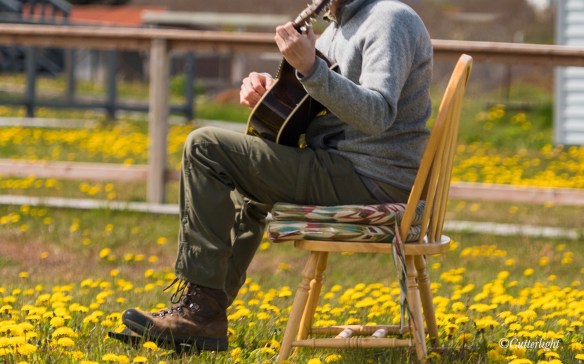
At the outset of this experiment, I had said that once I got 500 hours of practice under my belt, I’d post a brief video performance to document whatever progress I had made – good, bad or indifferent. Here’s the video.

To recap if you’re a regular reader and to explain what this video is about if you’re not…

I turned 60 this year. On December 31st of 2019, New Year’s Eve, I decided to finally attempt to learn to play the guitar I’d been toting around for most of my adult life. I had very little formal background in music in general, and essentially no experience playing the guitar beyond three badly played chords and a mistake-filled one-note-at-a-time version of Twinkle, Twinkle Little Star laboriously picked. The whole thing seemed to be beyond me, so in homes from Arctic Alaska to Mongolia and points in between, my guitar sat cradled in its stand, faithfully dusted, usually kept in tune, and otherwise untouched.

But I love music, I especially love steel string acoustic music and I realized that if I didn’t learn the guitar now, I may as well take Barbra’s advice and sell the instrument.

On January first, I began the experiment – to determine whether or not a person my age could learn to play or whether age had closed doors. I scoured the Internet looking for answers to questions I had about older people learning to play the guitar from scratch and could find nothing useful. Nothing at all – just patronizing advice about setting your sights low and maybe learning to play Happy Birthday, getting your cats to finally stop yowling when you play, or being content with “the benefits seniors can get from taking up a musical instrument.”

In other words, the advice seemed to be a patronizing pat on the head and the implied message, “Go back to your rocking chair. Learning to play a musical instrument is for younger people.”

But it was also clear from my Internet research that others had questions similar to the ones I was asking. I want to underscore that these questions are not about whether someone who used to play when they were young can continue playing into their 60’s and beyond. There are many, many examples of people who have done so, as well as of people who set aside their guitar for awhile and then came back to it later in life. Acquiring a complex skill for the first time, from scratch, is a very different matter than continuing with a skill already acquired.

With no answers to be found, I decided to do my best to find answers myself. Five hundred hours of practice seemed about right – enough time to give myself a chance. To learn to read music, to understand scales, to learn the Circle of Fifths, to understand the principles of improvising, to practice some flat-picking and finger-style techniques, to memorize a few dozen songs. In other words, to achieve a status somewhere around “Advanced Beginner.”

A move from Chignik Lake to Newhalen as well as the need to take time out to stock our freezer with salmon fillets, blueberries and mushrooms took a bite out of my playing time, but in early November I hit my goal. Five hundred hours. Had it not been for the move, I would probably have hit 500 sometime in late August.

I can’t say whether or not my experiment was “successful.” I believe that is for each individual listener-viewer to evaluate. What I can tell you is that I’ve already begun my next 500 hours.

Please look past the low production values. I videoed myself with the equipment I have on hand, which is not the right equipment for this sort of thing. Thanks for watching. And let me know what you think.

Jack Donachy
Newhalen, Alaska

You can read more about The 500 Hour Experiment by clicking these links:

Why 500 hours?

Learning to Play the Guitar at 60: La Grande Expérience (or is it even possible?)

Learning to Play the Guitar at 60: Begin

Salmon (or any fish) in Saffron Broth with New Potatoes

Salmon worked wonderfully in this easy yet exotic meal, but halibut would also shine as would walleye, rockfish and most other fillets.

Saffron, the dried stigmas of crocus flowers, imbues food with a rich yellow-orange color and distinctive flavor that goes especially well with fish. Since it only takes a healthy pinch of the crumbled filaments, it’s not as expensive to use as you might think. We’ve been using Spanish coupe grade saffron from Penzeys Spices and have been very happy with it.

Crocus sativus, the saffron crocus – https://commons.wikimedia.org/wiki/File:Saffron8.jpg

This is our take on a recipe we found in a recent addition to our cookbook collection, The Complete Mediterranean Cookbook from America’s Test Kitchen. Their recipe calls for hake, chorizo and clam juice. Along with a few other minor changes, we substituted salmon fillets, thick-cut bacon and fish broth made from salmon and added a bit of powdered chipotle, cayenne and mesquite to emulate chorizo’s spicy smokiness. With most of the fat rended from the bacon, and the cooked bacon then pressed between paper towels, this is a healthful, satisfying one-bowl dinner. Add hunks of crusty rustic-style bread, and while you can seldom go wrong with salmon and Chardonnay, try pairing this dish with a Riesling that has a hint of sweetness to it.

Salmon in Saffron Broth with New Potatoes

Ingredients

  • extra virgin olive oil
  • sweet onion, chopped fine
  • thick-cut bacon, fried, pressed between paper towels and cut into small pieces
  • garlic cloves, minced
  • saffron
  • fish stock – clear, preferably homemade from fresh fish as we’ve found it difficult to obtain quality fish stock otherwise. Or use clam juice.
  • water
  • dry white wine
  • small red or yellow potatoes
  • seasonings: bay leaf, marjoram, soy sauce (or sea salt), chipotle powder, cayenne pepper,   and mesquite (for additional smokiness)
  • salmon fillets, skin removed and fillets patted dry (We felt that almost any type of fish   would work well in this dish.)
  • freshly ground black pepper
  • chervil or parsley
  • fresh lime juice

Directions

This works best in a sauteuse pan. You don’t need a lot of broth in this dish – perhaps a cup or so per serving. The potatoes and fish should rest in the broth, not be completely covered by it.

  1. Sauté the onions in olive oil. When they just begin to caramelize, add the minced garlic and crumble in the saffron. Cook for about 30 seconds, just till the garlic releases its aroma.
  2. Stir in fish stock and wine.
  3. Add potatoes and the seasonings – just a little of each as you can always add more if you need to. Give the broth a taste. If the flavor of the fish stock or clam juice is too strong, add a bit of water.
  4. Keep heat fairly low, at – or preferably just below – a low simmer. Cook until potatoes are tender – almost ready to serve. Taste broth and adjust seasonings as desired.
  5. Season the salmon fillets with freshly cracked pepper. Create space in the pan and position the salmon fillets skinned side down in the broth. Cook at or just below a low simmer for 7 to 12 minutes, depending on the thickness of the fillet. With salmon, you’ll see white albumin form on the fillet when it is cooked through. You can check with a thermometer – 140° F for fish.
  6. Remove pan from heat. Gently stir in a little lime juice and a sprinkle of chervil or parsley.
  7. Serve in shallow bowls, spooning some broth over the fillet.

Changes and Milestones, a Question and an Answer

Full Moon at Sunrise, October 15, Newhalen Alaska
I had been looking at this particular landscape about five miles from our house ever since June when we moved to Newhalen. The scene had elements of a good photo, but I just couldn’t see a picture. Then, one morning a few weeks ago as a full moon was hanging low on the horizon, the rising sun put some nice color in the sky. Sensing that their might be a moment, I drove out and there it was.

I began 2019 with four major goals. I wanted to:

– send out a few articles to magazines for publication

– write a book

– run a half-marathon after my 60th birthday, and

– starting from scratch with very little meaningful background in music, I wanted to put in 500 hours on the guitar and see where that got me

After putting together a couple of articles I quickly abandoned the first goal as both too time-consuming and not reflective of the kind of writing I want to do, and therefore not where I want to put my energy at this point in my life and career.

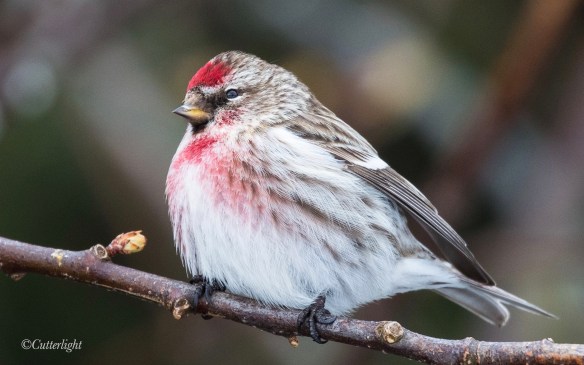
From Gavia pacifica (Pacific Loon) to Pinicola enucleator (Pine Grosbeak), I documented some 80 species of birds at Chignik Lake, including species that had never before been recorded in the region. Redpolls (above) were among our favorites.

Nonetheless, writing remains a central part of my life, and while I didn’t finish a book, I’ve begun. Over the coming weeks (and months), look for Birds of Chignik Lake to be published in installments on Cutterlight. It is my hope that I’ll be able to make a meaningful contribution to the work of others. Perhaps I’ll even be able to interest a publisher in producing a printed edition of this book when it’s finished. Either way, I’m excited to have begun the book and I’m eager to begin sharing my findings on Cutterlight.

Commitment to a fitness regimen paid off, and on October 23, running side by side, Barbra and I completed our first half-marathon in over 10 years. We did this as a “virtual run,” signing up for the Long Beach Half-Marathon (a race we did in person 12 or 13 years ago), and having documented our successful completion of the run up here in Newhalen, we’re now awaiting our finisher medals and T-shirts which should be arriving in the mail soon. Time was never part of the objective; my racing days are behind me. But I am happy to report that we remained injury free and were able to complete the full 13.1 miles running the entire distance. This bodes well for another season of hiking up and down salmon and trout rivers.

The nearby Tazimina River flows through a spectacularly wild  landscape. Cold and pristine enough to drink from, it’s loaded with large grayling, trout, and in fall, salmon.

All of this was terrific – including the manner in which not achieving the first goal led to the positive outcome of more clearly defining what it is I want to do with my writing and my time. I’m in the process of putting together templates for each of the 80-some species I recorded at Chignik Lake, and with other foundational work already done – and with permission from the Cornell Lab of Ornithology to use their range maps secured – I hope to begin publishing installments later this month. And finally, fresh off the success of our October half, we’ve already signed up for another event, the February 2 Huntington Beach Surf City Half-Marathon. This is another race we did on site some years ago (coinciding with the Pittsburgh Steelers scoring their sixth Super Bowl victory), and that we’ll participate in virtually up here in Newhalen.

That leaves just the final and most important of the four 2019 goals to account for – the goal that I believed would help me answer a question that has been on my mind since December 31 of 2018.

Can a 60-year-old person learn to play the guitar to any meaningful skill level starting essentially from scratch?

As I mentioned in a previous article, the Internet seems to offer no answer to this question, though it’s clear others have posed it.

Again, this is not about having learned at a younger age and continuing to play into one’s seventh decade. Nor is it about picking up an instrument again after a hiatus of a few years. My question had nothing to do with learning to pick the notes to Happy Birthday or similar songs, as one site suggests. And it’s certainly not about “deriving benefits,” or finally playing well enough that the “cat stops yowling,” as per a particularly insulting Washington Post article.

We age. Our memories grow less sharp, our hearing less keen. Fingers slow. Nails grow brittle. New skills are acquired less easily. Even sitting for a long period of time in a given position can present challenges that our younger selves didn’t imagine. Over the years, injuries accumulate – a broken finger here, a finger sliced to the bone there – injuries long forgotten… till you sit down with a guitar in your hands.

It’s a simple question, and the manner in which expert upon expert appears to avoid directly answering it left me fearing that… Well, time marches on. At some point windows close. Patronizing assurances that begin with “Anyone can…” are invariably fibs.

At the beginning of the year, I made a commitment to stick with it, put in 500 hours with no expectations, and discover what I might discover. Good, bad or indifferent, I promised to report what I learned.

Yesterday morning, I completed my 500th hour of practice. I will report soon.

To read more about my journey with the guitar, type Learning to Play the Guitar in the “Search Cutterlight Articles” bar near the top of the page.

Hot off the Grill: Two-Cheese Alaska Salmon Burgers

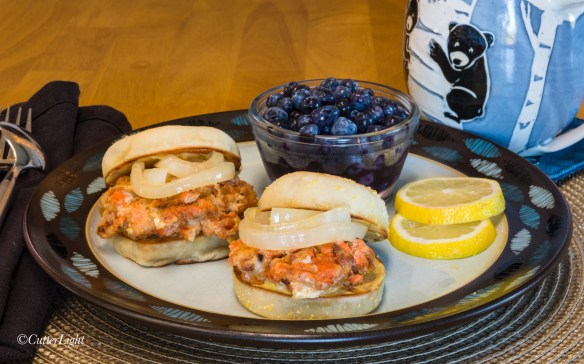
Wild Alaska Salmon on pan toasted homemade English muffins, wild Alaska blueberries and a big mug of coffee – a wild way to start the weekend.

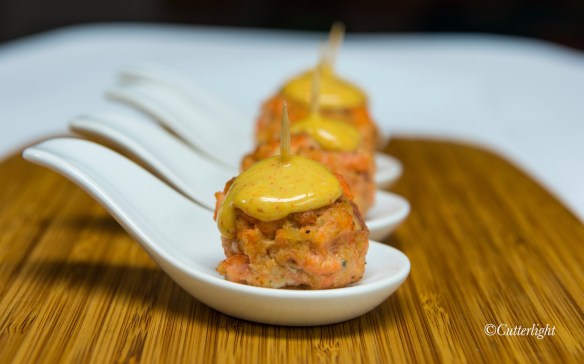
This is easy. Take a wild salmon fillet, remove the skin, chop up the fillet and put it in a bowl. Add equal parts grated mozzarella and crumbled goat cheese. Sprinkle in a spicy seasoning – something with smoked chipotle is especially nice. No salt needed as the cheese should be salty enough. That’s it. Now shape the mixture into burgers and fry in olive oil, flipping once.

Served on English muffins that have been pan toasted in olive oil, these make for a terrific weekend brunch. Or put the burgers in traditional hamburger buns. Try them with a little Dijon mustard. Bon appétit!

Nobu West Comes North: Paper-Thin Salad with Wild Alaska Sockeye Tataki

Crisp, paper thin vegetables and a tangy, spicy jalapeño dressing accent flash fried Sockeye salmon in this fusion salad from chefs Nobu Matsuhisa and Mark Edwards. 

For the first time this summer, yesterday was downright cool. We rode our Hondas 25 miles over a combination of paved road and then ever narrowing dirt and gravel to see the falls on the Tazimina River, northeast of Newhalen. Our jackets were zipped against the fall-like chill in the air. With most of the fireweed going to seed, the Sockeye run long over and Barbra due to begin her school year later this week, I wanted to prepare a dish that might capture a sense of summer’s fleeting final days in a land where autumn comes early. A bottle of Sauvignon Blanc was already chilling in the refrigerator.

I found what I was looking for in the cookbook Nobu West, a joint effort between Nobu Matsuhisa and Mark Edwards. The key to this salad is to use a mandolin to slice the vegetables as thin as possible and then to soak them in ice water to make them as crisp.

Salmon Tataki with Paper-Thin Salad (from Nobu West, by Nobu Matsuhisa & Mark Edwards)

Ingredients

Vegetables

  • small red beet
  • carrot
  • zucchini
  • summer squash
  • red radish
  • cucumber
  • other vegetables as desired

Jalapeño Dressing

  • 1 jalapeño pepper, seeds removed, diced fine
  • 6½ tbsp rice vinegar
  • 1 tbsp garlic chopped fine
  • 1 tsp sea salt
  • 1/2 cup grape seed oil (or extra virgin olive oil, etc.)

Salmon Tataki

  • sashimi grade salmon fillet(s), skin removed, seasoned with coarsely ground black pepper
  • bowl of ice water
  • stainless steel or cast iron pan and cooking oil with a high smoking point (such as avocado oil)

Directions

1.  Vegetables: Prepare two bowls of ice water. Use a mandolin to slice vegetables lengthwise as thin as possible. Immerse slices in ice water for an hour to make the vegetables crisp. Do the beets separately, using a separate bowl, to keep them from coloring the other vegetables. (You might want to wear nitrile gloves to keep the beets from staining your fingers.)

2. Jalapeño Dressing: You will need a stick blender or food processor for this.
– Place diced jalapeño, vinegar, garlic and sea salt in food processor (or in a narrow container suitable to a stick blender). Purée ingredients.
– Continuing to process ingredients, slowly drizzle in olive oil. (If the ingredients separate, whisk together just before serving.)

3.  Salmon Tataki:
– Place cooking oil in a frying pan and heat on medium-high.
– When oil is ready to sizzle, sear salmon fillet, frying for about 5 seconds on each side. Outside of salmon should be white where cooked.
– Plunge seared salmon into ice water to stop cooking and to firm up flesh. Pat dry with paper towels and refrigerate till ready for use.
– Just before serving , cut salmon fillet into thin strips, about ¼ inch thick. Do this at the last moment so that the salmon remains flavorful.

4. Serving the salad:
– Pour jalapeño dressing on serving plates so that it covers the plates.
– Arrange salmon strips on plates.
– Place vegetables on salmon to form a mound.

Serve immediately while vegetables and salmon are still chilled.


Wild About Wild Mushrooms – Lentil and Wild Porcini Pâté

Wild Alaskan porcini mushrooms star in this pâté recipe – the perfect snack or appetizer served on rice crackers, summer squash or zucchini. 

Many years ago, Jack and I took a mushroom foraging class from a park ranger in Oregon. With the help of our instructor, we learned about local mushrooms and actually found one King Bolete mushroom. At the end of that experience, I had more fear of “false mushrooms” that could make me sick or even kill me than anything else. Since then, I’ve been on countless hikes and found countless mushrooms I wouldn’t dare eat – even though they look perfectly safe. When we moved to Newhalen and began fishing and foraging for berries, we began noticing mushrooms the color of browned bread. Big ones. As usual, Jack and I wondered if they were edible. After one quick wondering, we resigned ourselves to knowing our mushrooms would come from a store and went back to the task at hand.

We were delighted to learn that one of the locals here in Newhalen is an expert on mushrooms. She volunteered to take a few of us out a couple of weeks ago and teach us about Newhalen fungi. Turns out, all those big mushrooms we had been seeing are types of boletes (otherwise known as porcini) and are not just edible, but are delicious!

Many people dry these mushrooms. We also heard that they can be frozen. After a bit of experimenting, we decided to vacuum-pack them and freeze them for the winter. Of course, we’ve kept out a few for now. Many have already starred in our recent evening meals – sautéed with garlic in olive oil to serve over pasta and atop Swiss mushroom burgers. Mmmm. Both of us are alive and kicking and now armed with confidence to continue foraging for these delicious beauties on our local hikes.

I came up with this mushroom pâté recipe a couple of years ago with store-bought ingredients. It was created with an intent to mimic one of my favorite Jewish foods – chopped chicken liver. This recipe not only tastes surprisingly like the delicious spread from my memory, but it brings it into the category of good for you, not just tasty. Traditional chopped chicken liver recipes are loaded with flavorful, but not so healthy fats. The chicken liver itself is low in fat but is high in cholesterol. You can use store-bought crimini, button, or shiitake mushrooms. But if you have access to wild porcini or other wild mushrooms, they will up the flavor of this pâté. Also, don’t save this recipe for a special occasion. This scrumptious mushroom and lentil spread is packed with flavor, is low in fat and cholesterol and high in fiber and protein, which makes it a go-to for a pre-run snack or a mid-afternoon pick-me-up.

Nutrition Info Lentil Wild Porcini Pâté

Wild Porcini Mushroom and Lentil Pâté

Ingredients

  • 2 cups cooked lentils, any color
  • 2 cups chopped wild porcini mushrooms
  • 4 tbsp extra virgin olive oil
  • 1 small onion, diced
  • 4 cloves garlic, diced
  • 1 cup almond flour
  • 1 tbsp freshly squeezed lemon juice
  • 1 tbsp soy sauce
  • 1 tsp rosemary
  • 1 tsp thyme
  • 1 tsp honey
  • pinch cayenne pepper
  • salt to taste
  • extra olive oil, needed

Directions

  1. In a large sauté pan, heat 4 tbsp olive oil over medium heat.
  2. Add onions and sauté until translucent.
  3. Add garlic and sauté for 2 minutes.
  4. Add mushrooms and cook until they are soft and cooked through. Remove from heat and set aside.
  5.  In a large bowl, combine almond flour, lemon juice, soy sauce, rosemary, thyme, sage, honey, and cayenne.
  6. Stir in mushroom mixture.
  7. Using a stick blender (or food processor), purée the mixture.
  8. Add in cooked lentils.
  9. Purée the mixture until smooth.
  10. If the mixture feels too thick, thin it with additional olive oil.
  11. Salt to taste.

Cedar Planked Mushroom Caps Stuffed with Salmon, Blueberries and Goat Cheese

Cedar planks on the grill infuse salmon and mushroom caps with an irresistibly smokey flavor, and the indirect heat ensures for a deliciously moist, perfectly cooked bite.

With enough freshly caught, silver-bright Sockeye Salmon vacuum packed and in the freezer, we’ve lately turned our attention to gathering wild blueberries (while waiting for Coho Salmon – the stars of the fly-fishing season – to begin running). This recipe is a snap, and although grilling over charcoal on cedar requires a bit of extra effort, you’ll be glad you took the trouble.

Cedar Planked Mushroom Caps Stuffed with Salmon, Blueberries and Goat Cheese

Ingredients: You will need one or more untreated cedar planks soaked in water for at least a couple of hours

  • Crimini or Portobella mushroom caps (stems removed and set aside and a shallow depression cut into each cap’s center)
  • Mushroom stems, chopped coarse
  • Fillet of wild-caught Pacific Salmon seasoned with Italian herbs (or your own favorites) and broiled, grilled or pan fried till just cooked through. (Should flake easily). This step will remove some of the liquid from the fillets and result in a firmer dish.
  • Goat cheese, crumbled or cut into bean-sized pieces
  • Blueberries
  • Garlic chopped fine
  • Soy sauce
  • Extra virgin olive oil
  • Additional herbs and spices to taste
  • Sherry or dry white wine

Directions

  1. Fire up the grill.
  2. Combine ingredients in a mixing bowl and gently fold together. Fingers work best for this. Take care not to overwork the mixture.
  3. Stuff each mushroom cap and place on a cedar plank that has been well soaked in water.
  4. Place plank with stuffed mushrooms over hot charcoal. Cover grill with vented lid to ensure for high temperature.
  5. Depending on how hot the grill is, allow for 10 to 20 minutes cooking time. Mushrooms should be completely cooked through.
  6. Serve warm.

The Bounty of Newhalen, Alaska

Start with greens from a friend’s garden. Layer on chopped summer squash, zucchini and roasted beets from the Farm Lodge. Add slices of tomato and avocado from same-day-Costco-delivery. Sprinkle with feta cheese and squirts of lemon from Fred Meyer mail order. Top off the salad with local hand-picked blueberries and cedar-plank grilled wild sockeye salmon from the Newhalen River. Serve with homemade onion focaccia and a glass of lightly chilled, deliciously buttery chardonnay. Now that’s a meal!

Jack and I have moved a few times. Well, many times compared to the average American. According to a quick search, several articles agree that the average American moves just over 11 times in their lifetime after the age of one. Defining moving as leaving one residence and occupying another for over three months, our most recent move puts Jack’s count at 21 and my count at 18. It’s a good thing that, generally speaking, we both enjoy moving.

As for our moves together – eight in all, we’ve always looked forward to figuring out where to relocate, learning about unfamiliar places and embracing the opportunities that come with new. This last move was different though. This time moving wasn’t a choice. That put a huge damper on our normal excitement. In fact, it was the most difficult move we have experienced together. We didn’t want to leave Chignik Lake. I didn’t want to leave my students or my school. They are a terrific group of kids supported by a wonderful group of parents and a great community. We didn’t want to leave the little wilderness village surrounded by stunning mountains. We didn’t want to leave the lake and the adjoining river that serves as the main highway – by skiff – in a mostly roadless landscape. We didn’t want to leave the salmon, the birds we were documenting, and the charismatic megafauna like wolverine, wolves, foxes, moose, otters and brown bears that were regular parts of our lives there.

Last spring, when the school enrollment was hanging steady at two fewer than the state-required ten, the school board voted to close the school and move me to another site. The site with said opening was in Newhalen, Alaska. (See Where in the world is Newhalen, Alaska?) Last April, I had a chance to come visit Newhalen and scope it out. It was during that trip that this lovely village began courting me. I couldn’t have asked for a more beautiful flight from Chignik Lake to Newhalen. The sky was clear and blue. The portion of the flight over Lake Iliamna was stunning – imagine a huge multi-hued blue lake rimmed by snow-capped mountains. “Wow!” I mouthed to myself as we landed in nearby Iliamna. It wasn’t Chignik Lake, but it sure was beautiful. During my visit, I learned several appealing things about the Newhalen area that made the location very attractive. It would be easy to bring our truck and fishing boat over. I found out that there were many nearby places to hike and boat. All the people I met were very welcoming and seemed happy we would be joining the community.

Back home in Chignik Lake, as the process of packing and shipping continued and the cloud of leaving our home hovered, the memory of the blue-hued lake faded along with all the appealing details.

Then, in June, we moved. As we began settling into our new home, Newhalen took up courting where she had left off back in April. As promised, Sockeye salmon began their run in earnest up the Newhalen River in July. In a matter of a few easy outings, armed with flies we had tied, Jack and I filled our freezer with our goal of 100 pounds of filets. Those days were mostly sunny, clear and warm. The scenery at the new fishing hole at the Newhalen Rapids was astoundingly beautiful.

As the salmon finished their run, it became time for berry picking. We’ve lived in the bush long enough to know not to ask where to pick berries. People always have their secret spots and obviously are not keen to share that specific knowledge. Turns out the best spot to pick blueberries in Newhalen is Anywhere! I had heard that there were lots of berries, but brother, lots of berries is an understatement. Oh, Newhalen, you are really working your magic.

The bounty of Newhalen is not just about what naturally occurs in this locale. Many people garden around here. We have already been lucky enough to be the beneficiaries of fresh strawberries and salad greens straight from the garden onto our plates! We were happy to learn that the Farm Lodge will regularly deliver its greenhouse fare to us in Newhalen, as it did to Chignik Lake. The icing on the cake turned out to be same-day delivery of produce (and anything else we need) from Costco in Anchorage. Did you read that? Same. Day.

As bonafide foodies, we are now officially in hog heaven. Newhalen continues to do her magic. We will always have an abiding love for Chignik Lake. But if you can’t be with the one you love, love the place you’re in. 😉

Where in the World is Newhalen, Alaska?

The red star (just right of center) marks Newhalen, Alaska – our new home at the mouth of the Newhalen River on the shores of Lake Iliamna. Temporarily up in the air this past spring with the closing of the school in Chignik Lake, we’ve landed in the heart of some of the best trout and salmon fishing in Alaska – and hence in the world. 

On June 21st, we said our goodbye-for-nows to friends in Chignik Lake, boarded a small bush plane, and bid farewell to the tiny village in the Alaska wilderness that had been our home for the past three years. Our summer has been something of a whirlwind since.

A parting view of our wonderful village on Chignik Lake. The red dot (near center) marks our home there. The good news is that in late July, a family with children moved to The Lake, so the school is restored to the minimum enrollment necessary to open this fall. 

From The Lake, we flew straight to Newhalen and began familiarizing ourselves with our new community. The house we were to move into was still occupied, so we quickly tucked ourselves into a nearby apartment, boarded another plane, and flew across Cook Inlet (the large body of water on the right side of the above map) to Homer where our truck, camper, C-Dory fishing boat and canoe have been in storage. The scramble was on.

It’s hard to believe this photo of Gillie was taken over 10 years ago in Cordova, Alaska. She’ll be happy to be exploring Lake Iliamna and other nearby waters near our new home.

Six days later, we’d made the drive to Anchorage to take care of errands, appointments and catching up with friends, drove back to Homer (450 miles round trip), delivered the truck, canoe and boat to a transportation company to be barged across Cook Inlet, driven on a haul road to Lake Iliamna, then barged across the lake to our home, returned the camper to storage in Homer, then flew back to Newhalen. Two weeks later, our house-to-be opened up and we began moving in. Since then, we’ve been engaged in daily projects large and small, turning this house into our home.

Meanwhile, we’ve been sandwiching in regular runs in preparation for the half-marathon we’ve signed up for in October, tying flies, catching salmon and putting away 100 pounds of beautiful Newhalen River Sockeye in our freezer, squeezing in a little guitar practice, picking blueberries (gotta have berry security for the coming months) and managing to still have time for our traditional evening games of Scrabble or chess. We’ve barely touched photography and writing during this time.

A thick mattress of soft lichen makes sitting or kneeling to pick blueberries quite comfortable. There is also an abundance of lingonberry (low bush cranberry) along with crowberries and, here and there, cloudberries.

We have begun to get the lay of the land. For about three weeks in mid-July, a nearly steady stream of tens of thousands of salmon ascended the Newhalen River. The fish get temporarily bottlenecked at The Rapids – a spectacular piece of unnavigable white water that forces the salmon close to the banks were anglers (such as ourselves) attempt to get a fly into their mouths. Where there are salmon there are bears, and although we haven’t seen any yet, there are signs of their presence. We have seen a couple of foxes, a set of moose tracks, and a number of interesting birds including ospreys, merlins and loons. The landscape is a mix of tundra with berry patches everywhere (and I mean everywhere) and taiga forest predominated by black spruce and some white spruce. The horizon is shaped by mountains.

With very limited roads, Hondas (ATVs/quads) are a great way to get out and explore. There are extensive trail systems lacing through the area.

With only a few miles of road and no practical way in or out of the village except by plane, this is till the Alaska bush. But coming from truly remote Arctic villages such as Shishmaref and Point Hope as well as Chignik Lake nearly 300 miles down the Alaska Peninsula, Newhalen and its sister village five miles up the road, Iliamna, are like no bush village we’ve lived in. Some of the roads here are paved! This is a hub for commercial fishermen, sport anglers and eco-tourists, and as such, the area has a decidedly cosmopolitan feel about it. Fairly large planes fly in and out, there is a modern, fully-staffed health clinic, a small grocer and a slightly larger, exceptionally well-stocked general store that carries everything from food to hardware to clothing with even a little fishing tackle in the mix. And get this: we can now get same-day delivery from Costco. It almost feels like cheating. “Cush Bush,” we’ve heard it called. Or “Bush Lite.”

Iconic Brooks Falls in Katmai National Park is just 90 miles – a short bush flight – from Newhalen. (Photo Credit: NPS/Michael Fitz – https://www.nps.gov/media/photo/view.htm?id=76833AAD-1DD8-B71B-0B3BA028DA419061)

At the same time, there are only about 300 residents between the two villages. During our three to five mile morning runs along the main road, we’ve never seen more than a handful vehicles. And the people here are super friendly. New friends at the airport call us when we have freight, and folks at the post office are happy to do the same when we’re expecting something important. Whether we’re on our bicycles, running, or driving our pickup, virtually everyone waves as they drive by. And it’s quiet. Not Chignik Lake quiet, but aside from an occasional plane, once we’re beyond the edge of town all we can usually hear is birds chattering and the distant roar of the Newhalen River. Inside our home, we hear almost nothing from outside. There are no police officers, virtually no litter, and most people don’t bother locking their doors.

Coho Salmon will be arriving in the river soon. A few miles beyond the village the Tazimina River is renowned for trophy-sized grayling and rainbow trout over 20 inches. Fly fishermen catch rainbows that large and larger at the mouth of the Newhalen, a 15 minute walk from our home. We’re a short bush plane ride from Katmai National Park, famous for the Brooks Falls where massive brown bears gather to intercept migrating salmon. As part of the Bristol Bay watershed, rivers that fill with salmon, not to mention trout and char of huge proportions, lie in just about every direction.

When I was a young boy, sometimes my grandfather Donachy would let me have his old issues of Sports Afield, Outdoor Life and Field and Stream. I’d pore over those magazines, reading them cover to cover and then reading my favorite articles again and again. That’s where I first learned of Lake Iliamna, this massive body of water fed by streams and rivers filled with fish, its shores patrolled by wolves, bears and moose, a few isolated Indian villages dotting the landscape, bush planes the only way in… It was the stuff to make a young boy dream.

Well. Here we are.

Fireweed flowers are near their finish, but here and there harebell is in full bloom. We’ve finally got our cameras out and are beginning to really dig in and explore this exciting part of Alaska, so stay tuned!