Zaru Soba with Alaskan Scallops and Shrimp

Zaru soba (chilled buckwheat noodles) dressed up with fresh seafood makes for a quick but elegant meal. 


A challenge inherent to preparing meals onboard a boat or in a camper is that the stovetops tend to be small, and while this doesn’t necessitate limiting preparation to one or two pans, it steers a cook in that direction. Meals featuring something on a bed of noodles really shine, and one of our favorite types of noodles are soba – which is the Japanese word for buckwheat. Being thin, soba cooks quickly, and since zaru soba is served chilled, it’s no problem to rinse the noodles and set them aside while other food is prepared.

In the past, I’ve made this dish with salmon, halibut and rockfish. On this more recent occasion, I had large Alaskan scallops and fresh Alaskan shrimp on hand. Instead of serving the dish on traditional bamboo (the origin of the word zaru), I opted for pasta bowls.

Zaru Soba with Alaskan Scallops and Shrimp

Ingredients:

  • soba for two people
  • 1/4 pound shrimp, peeled
  • 1/4 pound sea scallops
  • 1/2 cup tsuyu (a dipping sauce available in the Asian section of most grocery stores). Divide into equal parts.
  • 1 sheet of nori (dried seaweed), cut into thin strips
  • 1/4 cup dry sherry or sake
  • olive oil
  • salt
  • 1/2 tbsp Thai seasoning
  • 1 tbsp fresh tarragon chopped course or 1 tsp dried tarragon (optional)
  • 1 green onions, sliced thin

Directions:

  1. Place scallops and shrimp in a mixing bowl. Add Thai seasoning and tarragon and toss together. Set aside.
  2. Boil soba according to the directions on the package. I use much less water than most directions call for and the noodles come out fine, but do salt the water.
  3. When the noodles are finished, pour them into a colander to drain and then rinse with cold water.
  4. Place noodles in pasta bowls. Add tsuyu to each bowl, tossing the noodles in the sauce.
  5. Heat a little olive oil in a large frying pan over medium heat. When oil is hot, add the seasoned scallops and shrimp. Add sherry or sake. Cook for about 1 minute, using a spatula to briskly stir and turn seafood.
  6. Place seafood on noodles. Top with sliced green onions and nori strips and serve. Alternatively, the cooked seafood can be chilled prior to adding to the noodles.

This dish and its variations has become a family favorite. It pairs beautifully with a Willamette Valley Pinot Gris or a crisp Sauvignon Blanc.
Let there be Fire

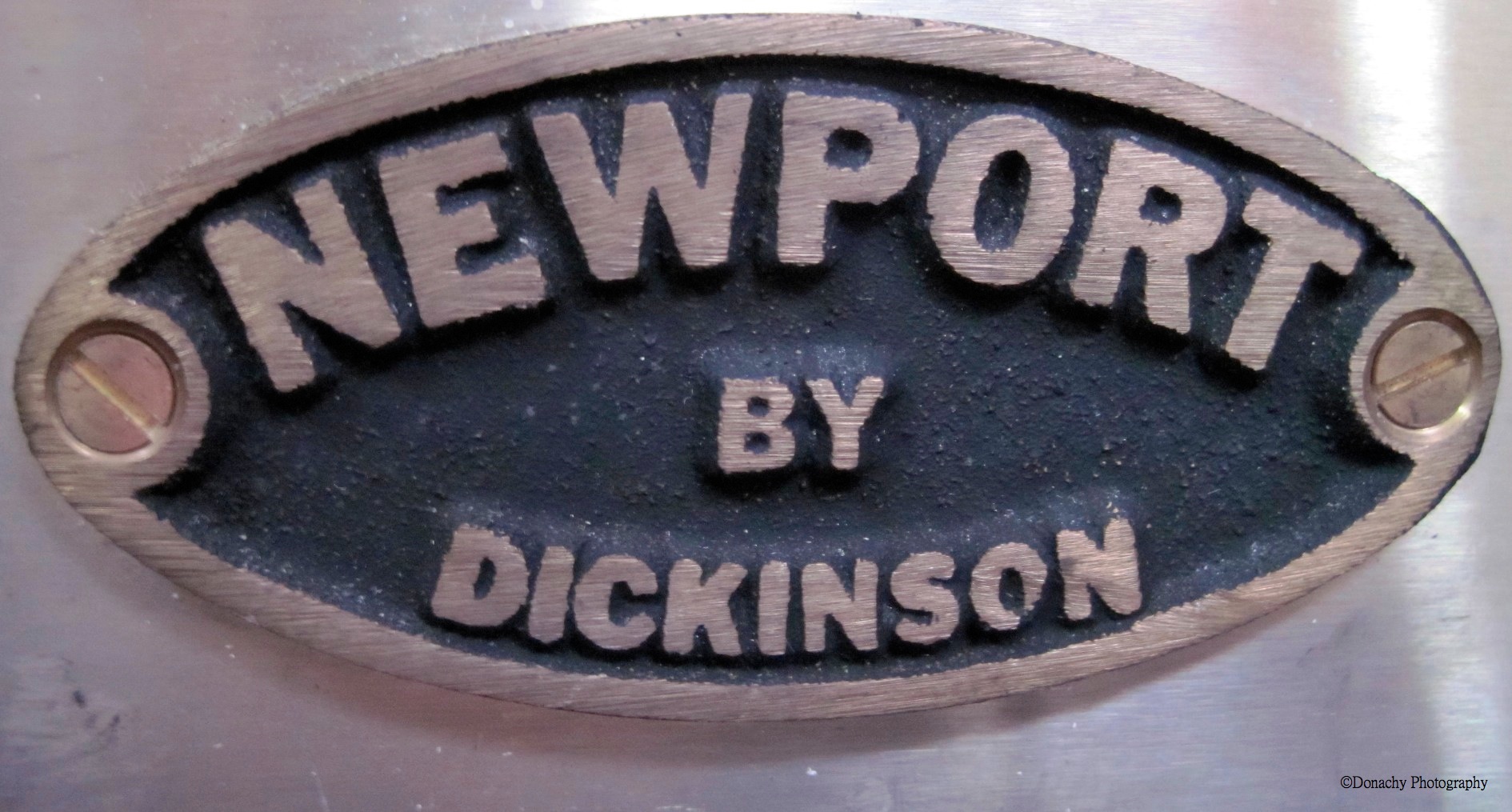
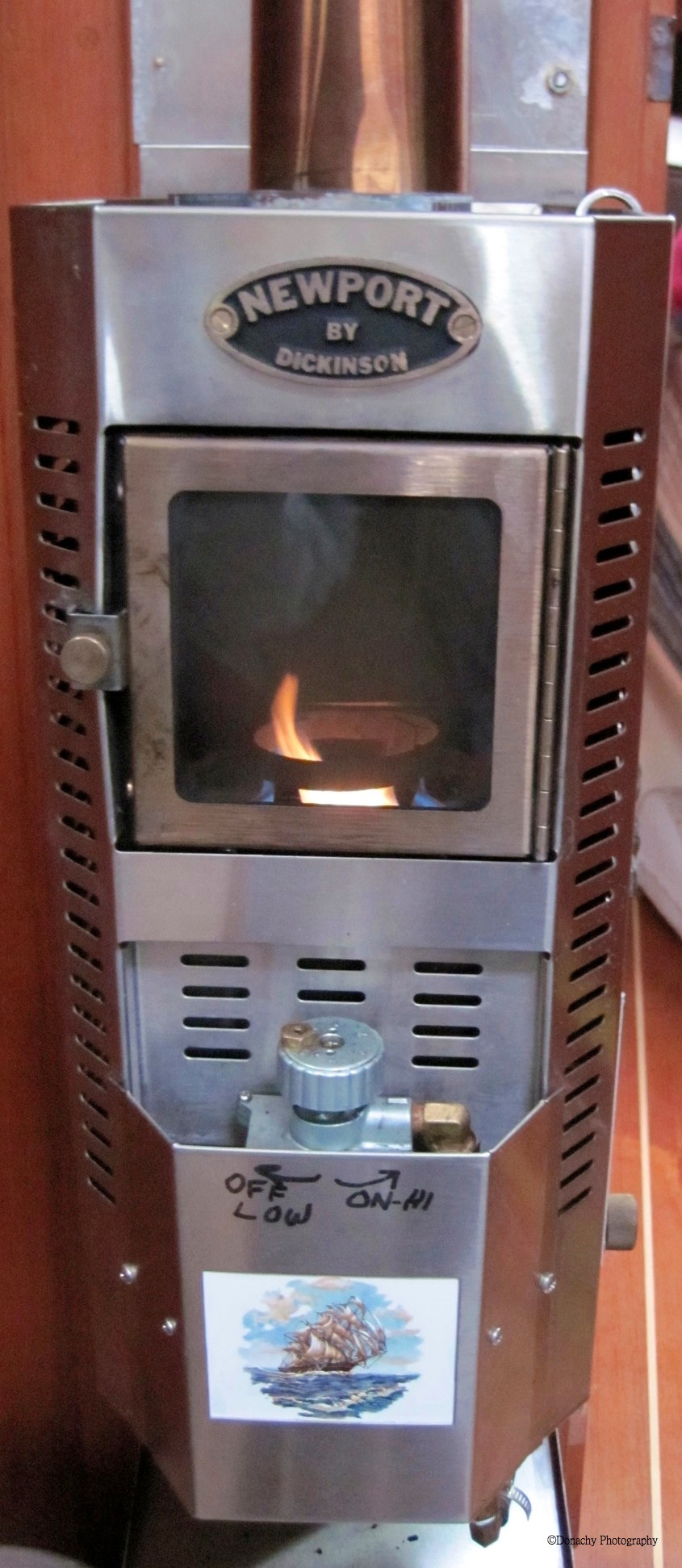
The first order of business before moving aboard Bandon was getting the heat going. That meant figuring out the boat’s Dickinson diesel heater – which proved to be no problem. Our Dickinson Newport uses fuel sparingly, burns clean, and provides plenty of warmth for our 35-foot boat. 

Although it’s warmed up a bit, last week nighttime temperatures were still dipping into the high 30’s and low 40’s. Cold. And although the cabin traps solar heat, as soon as the sun dips below the mountains surrounding Resurrection Bay, it gets pretty chilly.

We’d never used a diesel heater before, but Barbra jumped right in and had it figured out in short order. We soon discovered that in addition to warming up the cabin, the heater does a good job keeping it dry.

Cool sailing ship on the heater – no idea regarding the story behind it. 

It’s like having a miniature fireplace onboard – cozy and downright romantic. And there’s just enough room on top of the heater to, say, cook a couple of sweet potatoes or get a small kettle of water ready for tea.

In business since 1932, the Dickinson company is located in Surrey, British Columbia. Handmade, Dickinson products are respected for their reliability and ruggedness.

Bacon-Wrapped Smelts (Hooligans, Eulachons or Candlefish)

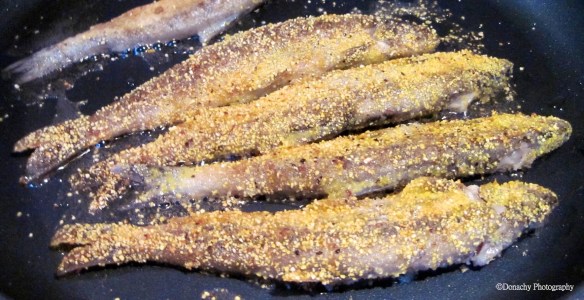
Freshly caught smelt prepared two ways: In the foreground, the fish was rolled in polenta. The smelt in back was dusted in seasoned flour. The fish were pan fried, wrapped in bacon and placed on whole leaves of Romain lettuce to be eaten from head to tail, bones and all. A sprig of asparagus and a few dollops of bright orange flying fish roe (tobiko) finishes the lettuce taco.

As I write this, one of the small rivers flowing into Resurrection Bay is jammed full of smelt. Specifically Thaleichthys pacificus, commonly referred to as hooligans. The AFS (American Fisheries Society) has settled on the name eulachon (pronounced you-luh-chawn), from the Chinook Indian name for the fish. Early west coast explorers and settlers called them candlefish because the spawning fish are so full of fat (about 15% of body weight) that when dried, they can be lit and will burn like a candle.

In the foreground: Polenta is especially coarse cornmeal. Seasoned with salt and pepper, rolling smelt in polenta gives these soft-fleshed fish a nice crunch when pan friend. In the back: another way to prepare smelt for the frying pan is by dropping them into a Ziplock bag containing seasoned flour and giving them a few shakes. Tarragon, fennel, marjoram and salt and pepper are a good start when seasoning these fish. Tongs make this a neat job. Note the asparagus in the pan on the stove.

The meat and bones of eulachons are quite soft. So soft, in fact, that when pan fried, the bones are barely noticeable. Their flavor is wonderful, but they definitely benefit from the addition of some crunch.

When the smelt are running in a river with a healthy population, getting enough for a meal or two is easy. On large rivers, a long-handled net might be necessary. But on this river, the fish were thick and close to shore. Two scoops of the net, and we had all the fish we needed.

Like their relatives, the salmon, eulachon are anadromous. They spend most of their life in the ocean, feeding on plankton, and then return to their natal streams and rivers to spawn, after which they die. Males arrive first and comprise virtually all the fish in the early part of the run. Later the females show up. Ideally, it’s the females you want, as a fresh fish laden with ripe eggs is a delicacy.

The males are quite good, too. In either case, cleaning these small fish (they average about eight inches/20 centimeters) is a simple matter of rinsing them in clean, cold water. There is no need to gill, gut or scale them.

A seemingly endless school of eulachons makes its way up an Alaskan river.

Prosciutto, Salami & Capicola with Egg and Cheddar on an Onion Bagel

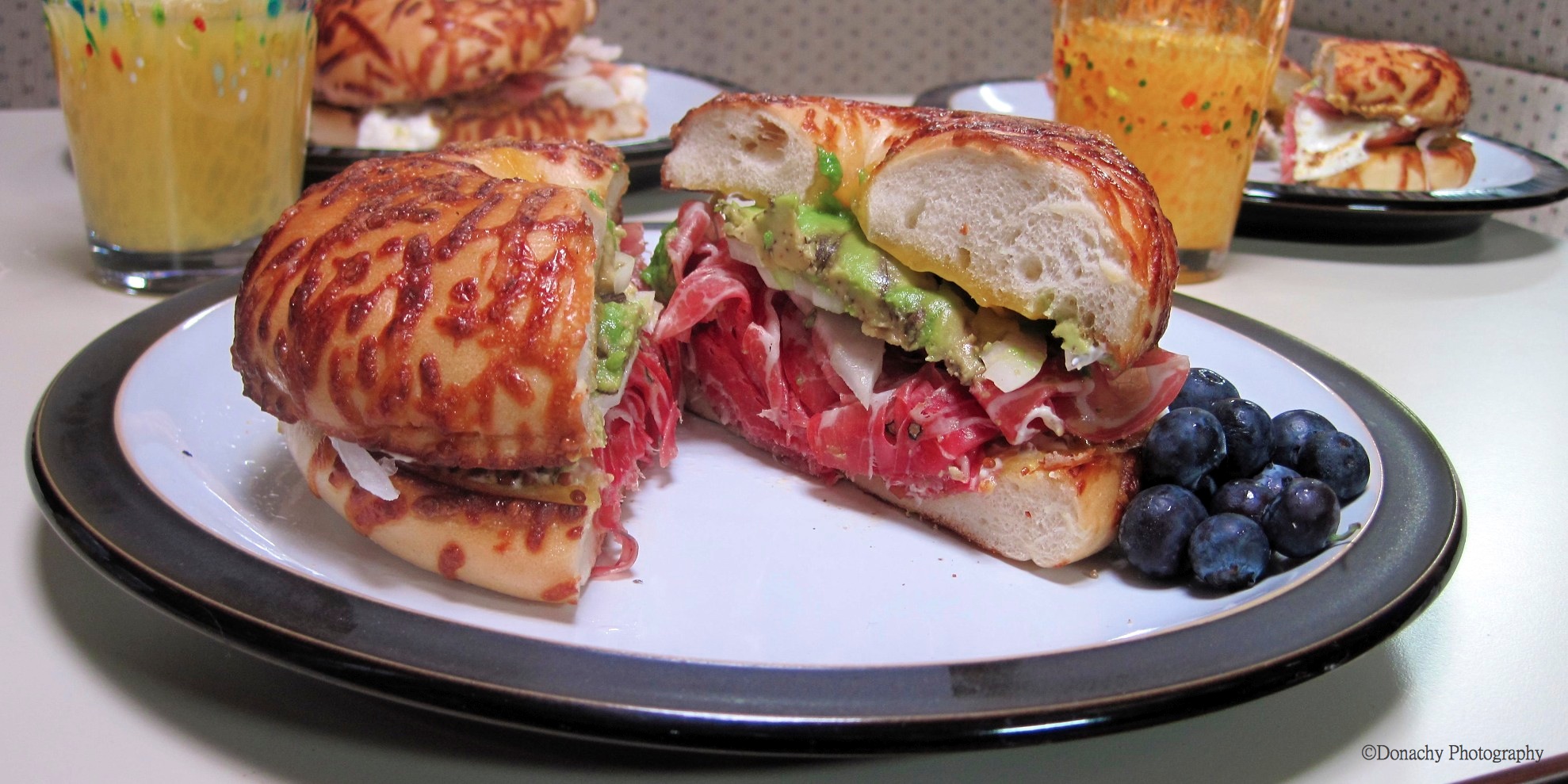
Our first breakfast is served aboard Bandon: Toasted asiago cheese bagels with melted Tillamook cheddar cheese, coarsely ground mustard, onion, cream cheese, avocado, a fried egg and three kinds of Italian-style meat – prosciutto, salami and capicola. 

Time for a good sandwich.

We spent about a week giving the sailboat a thorough cleaning as well as moving items off the boat that had been left behind by previous owners and moving aboard the things that will make this boat our home. We finished this process in time for daughter Maia’s visit, and when we returned to Seward with her from the Anchorage airport, we spent our first night aboard.

The next morning I made these bagel sandwiches for our breakfast. I began by toasting the sliced bagels in a large pan with a little olive oil, turning them once and adding thin slices of cheddar cheese to melt. Next, I removed the bagels from the pan and added coarse ground mustard, cream cheese and soft, ripe avocado. With the cheeses and spreads in place, I then added a thinly sliced onion and a generous amount of Italian-style hams: prosciutto, salami and capicola. The final touch was a fried egg.

A Study of Upper Summit Lake, Alaska

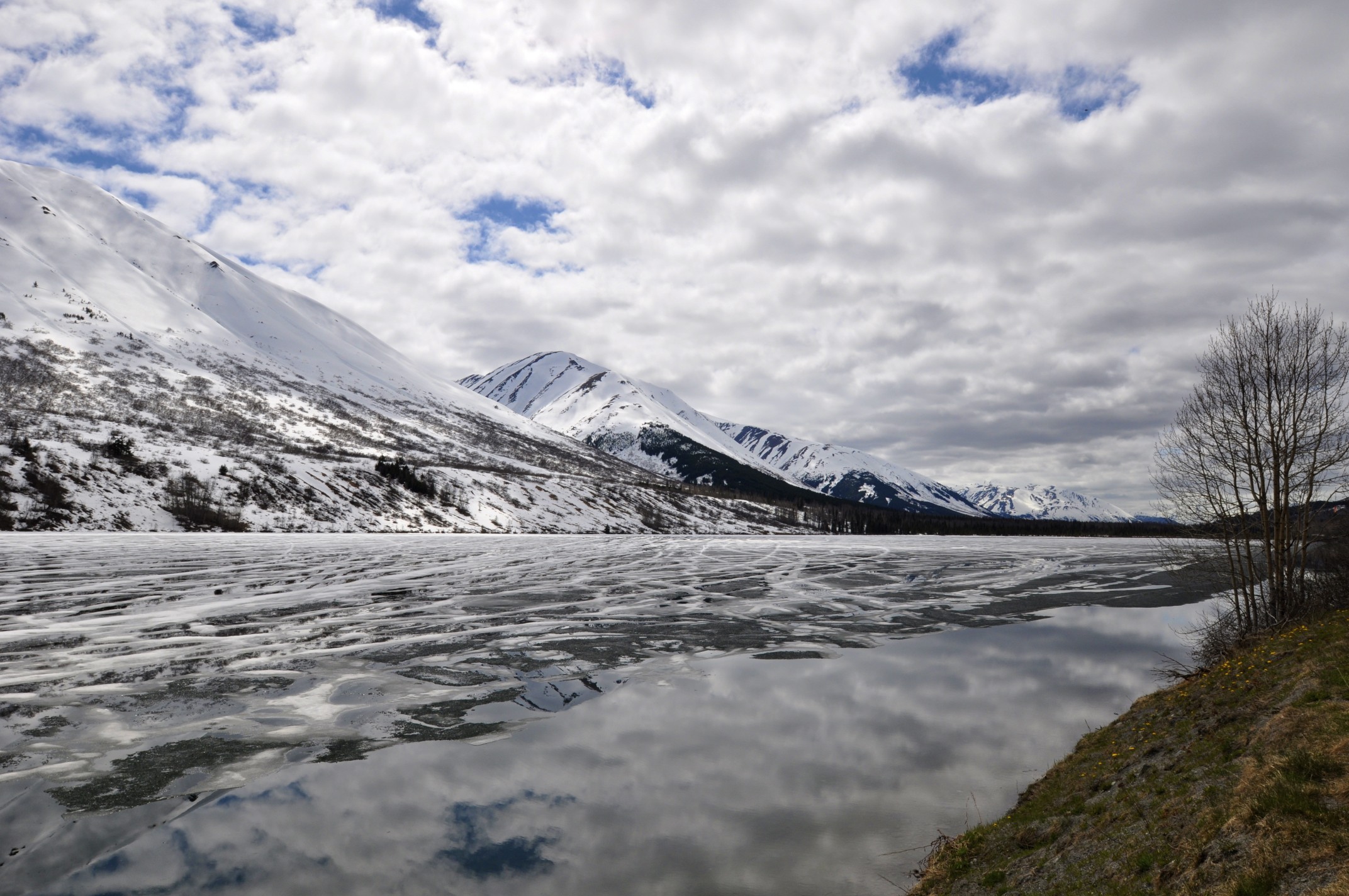
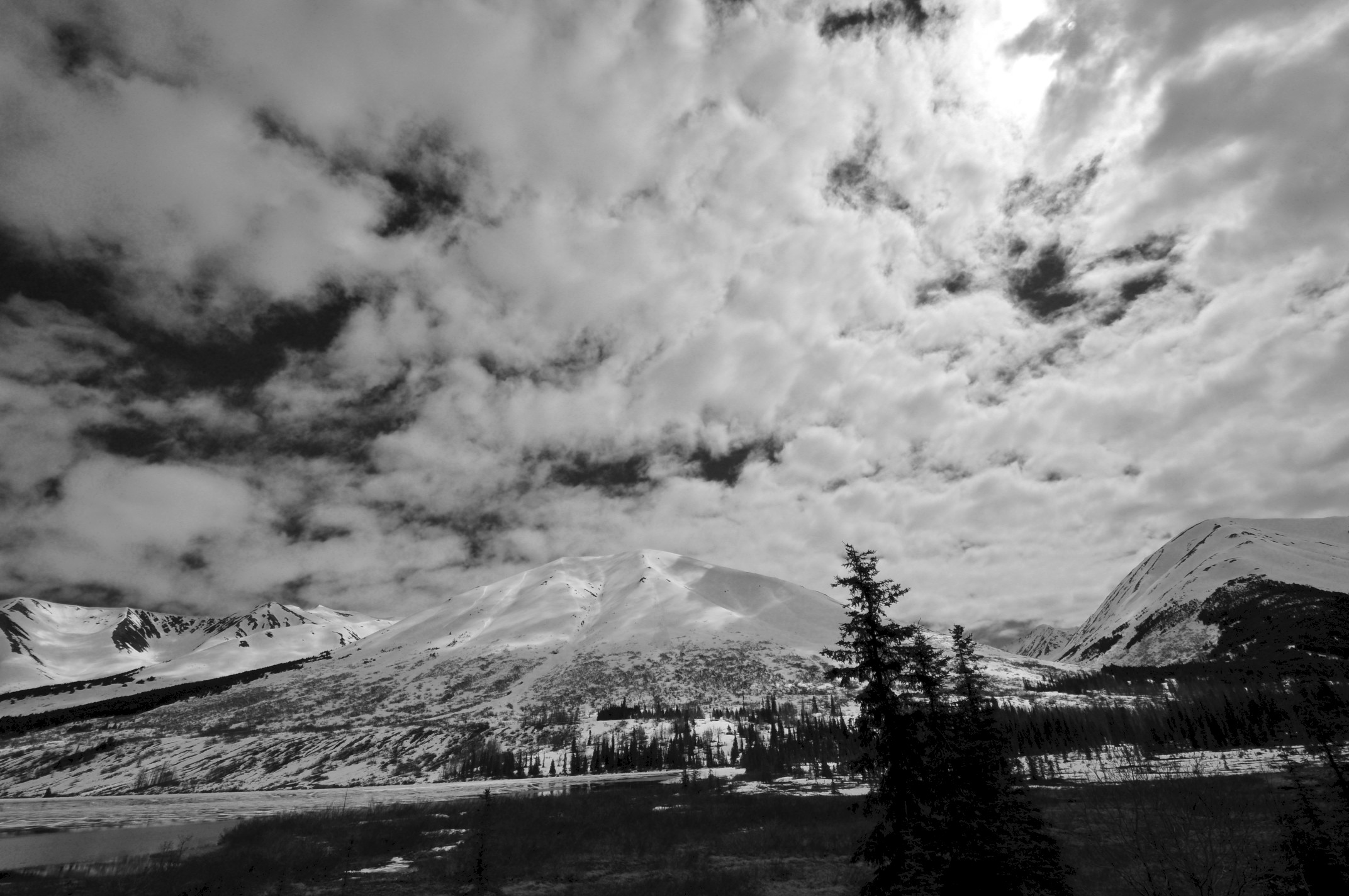
One of the most frequently photographed lakes in Alaska, Upper Summit Lake lies along the Seward Highway between Anchorage and Seward.

We recently got a wide-angle landscape lens and were eager to try it out. A broken sky over breaking up ice on Upper Summit Lake created a visually arresting set of contrasts and similarities.

We’d never been on the Kenai Peninsula early enough to see this much ice and snow. Only a few days prior, the lake was completely covered in ice, although it was apparent it was beginning to thin.

Notice the dandelions blooming in the foreground. Tough little flowers, pushing up through asphalt in the city, almost pushing away the ice and snow up here.

The upper end of Upper Summit Lake is the kind of place where we slow down and scan for moose.

Morning Song

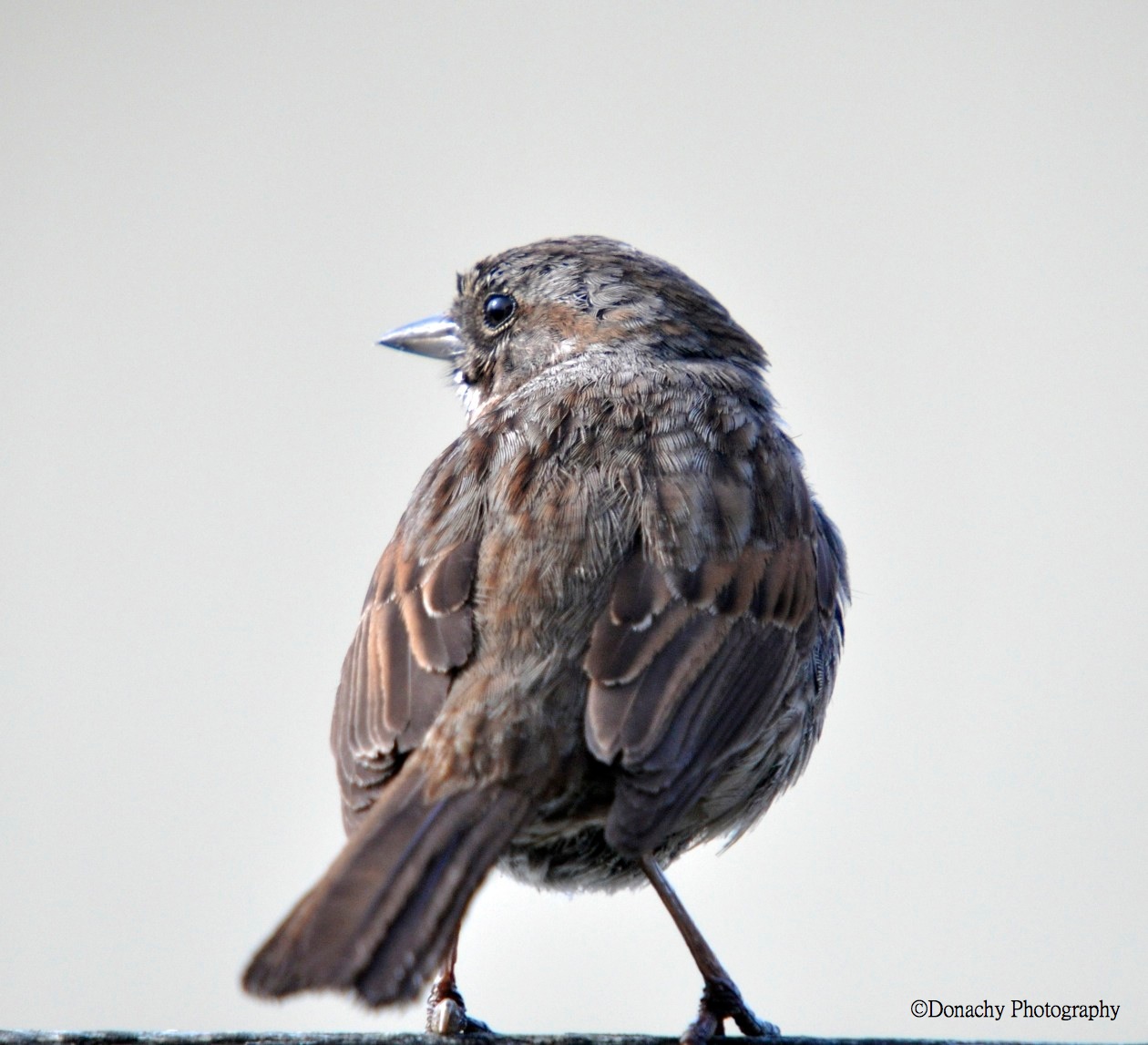
This little guy, a fox sparrow (Passerella iliaca) has been bringing in our days every morning here in Seward with the loveliest song. Day by day, he’s grown a bit tamer. Today he was gracious enough to allow us to get these photos. 

“LBB’s,” my undergraduate ornithology teacher called them. Little brown birds. You see one, and even if you get a really good look at it, when you go to Peterson’s or some other bird guide, what you see quickly becomes a blur of what you think you saw mixed in with a handful of similar-looking birds. But the songs are compelling and unique, and so you keep going back and forth from binoculars to field guides, and if you do this often enough over enough years, distinct species begin to take form.

Here he is, singing his heart out. No doubt some avian version of something clear and strong about being in the right time and place, eager and ready. We humans hear that in birdsong, and it lifts us. 

There are four subspecies of fox sparrows, each geographically unique, except when they overlap. Which they do. And when they do, the birds interbreed. More LBB’s. More scrutiny through binoculars. More head scratching over pictures in bird books.

When I approached too close, he went for a familiar place: the ground. Fox sparrows love underbrush and are often heard rustling through leaves or glimpsed flitting from one low willow to another. 

We’re lucky. We who live in North America. These migratory passerines breed up here. Which means they sing. In the places they head to during the winter, they don’t breed, and they typically don’t sing.

Before he flew off, he perched atop a wooden sign and gave a backward glance. The early morning sky was gray. I returned to the camper to make a blueberry pancake and fry some bacon while Barbra cut a grapefruit in half and made us big mugs of coffee.

Stanley and the Lance

Our home on wheels the past three summers – a Lance camper perched on a 3/4 ton Chevy Silverado, here parked for lunch with a gorgeous view of Resurrection Bay near Seward, Alaska. Note the hitch for towing our C-Dory 22 Angler. This photo was taken on May 21, 2012.

Our first summer in Alaska, we lived aboard our C-Dory 22 Angler, Gillie. Gillie’s pilot house and cuddy cabin made for a cozy nest, and the spirited little Toyota Tacoma that did the pulling over the 8,000 plus miles we drove that summer was, simply, the most enjoyable vehicle either one of us has ever driven. The 43 days we spent traveling in that rig made for a summer for the books. In fact, we talked for some time about traveling all across North America in this rig: exploring blue highways both on land and on water, envisioning jaunts down to the Florida Keys, out to Martha’s Vineyard, across the country to Catalina Island and everywhere in between. We even talked about launching the C-Dory at Pittsburgh, Pennsylvania and cruising all the way down the Ohio and the Mississippi to New Orleans.

But when we made the decision to move to Alaska, rent out our home in Sacramento, and spend our summers on the Kenai Peninsula…

A carved wooden hummingbird given to us by our daughter, Maia, on a trip that passed through a First Nations village in British Columbia greets us each time we open the door. Framed artwork and other personal touches make our camper a home.

After months of comparative shopping and researching campers and trucks, we still felt like we didn’t know as much as we would have liked. On the other hand, we knew enough to be comfortable making a decision. We’ve been very happy with both the Lance Camper and the Chevy Silverado 2500 it sits on.

The camper has a queen-size bed, lots of windows and skylights providing natural lighting, a three-burner propane stove with oven, an air conditioner and heater, a good shower and flush toilet, a TV and sound system, a great refrigerator/freezer, lots of storage space and enough room overhead to be comfortable for a person of my height (I’m 6′ 1″). We added a solar panel, which we highly recommend; even on cloudy days the battery charges. We also have a generator which, although rarely used, has been much appreciated the couple of times we’ve needed it.

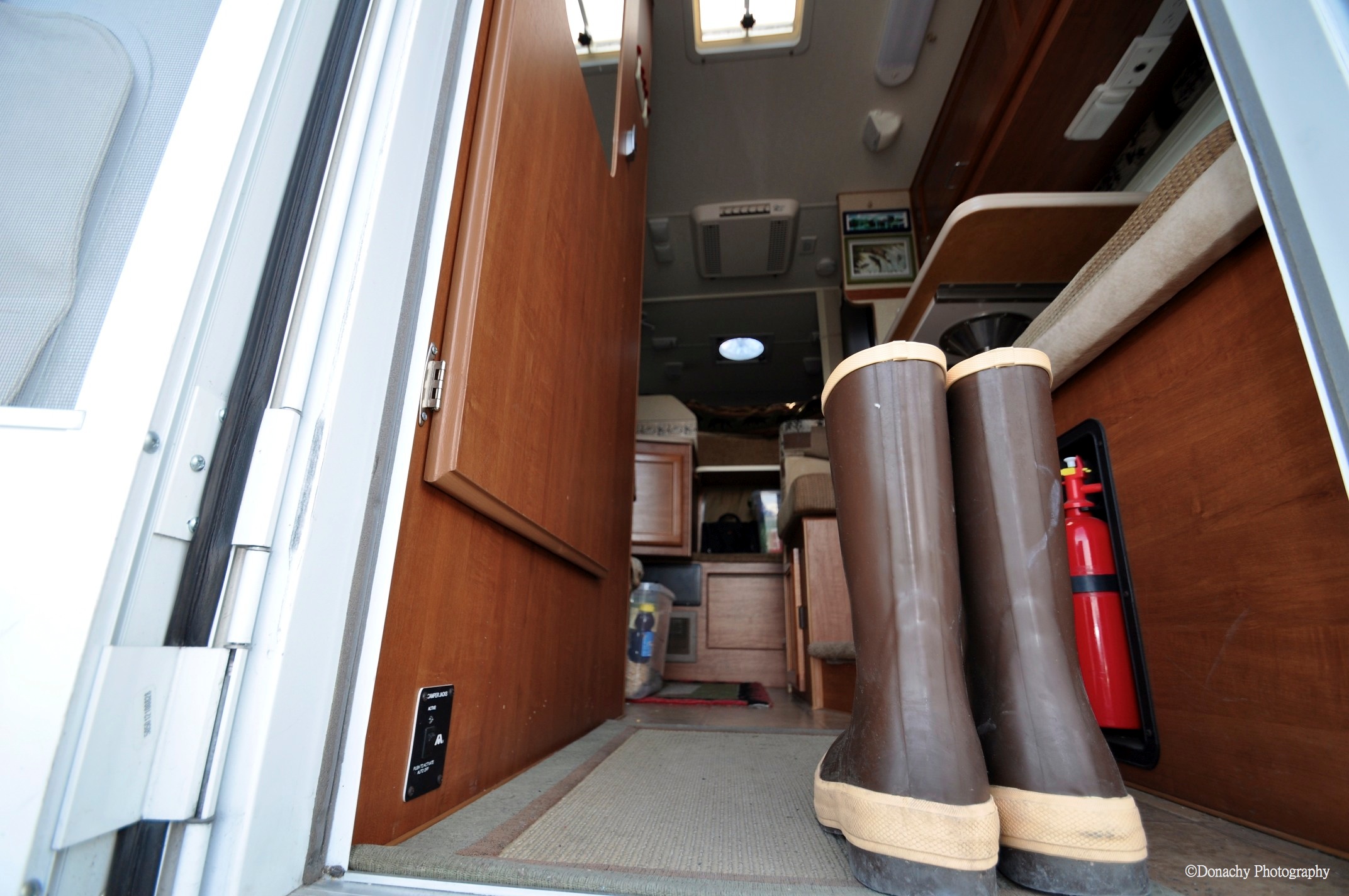
A pair of Xtratuff boots – iconic of Alaska anglers and boaters – is ready at the entrance. 

Stanley is a name conferring strength and dependability – like Stanley tools. Fitted with airbags (extra shock absorbers), our three-quarter ton Silverado has performed superbly carrying the camper and towing our 4,500 pound boat. Given a steep mountain grade, Stanley shifts down as if to say, “All right.” Nothing more. No groaning and straining, no needless extra shifting, just a simple, straightforward, “All right” and up the mountain we go. And kicked into four-wheel drive, this truck has the grit to power through even loose beach sand with the camper – a test we didn’t intend to put the truck through and won’t be repeating.

We went back and forth regarding two options: gas or diesel, and dual rear wheels or single. We opted for a gas engine and single wheels, and after three summers of putting this rig to the test we can say without hesitation that with the right tires, single wheels are fine. And we’re happy we don’t have to deal with the noise of a diesel engine (or impose that noise on our neighbors). That being said, the fact is we don’t put a lot of miles on our rig. A diesel engine offers some real advantages to campers engaged in extensive traveling.

To anyone contemplating a rig like this, we have one firm recommendation: Start by choosing the camper you want, then match it to the right truck. 

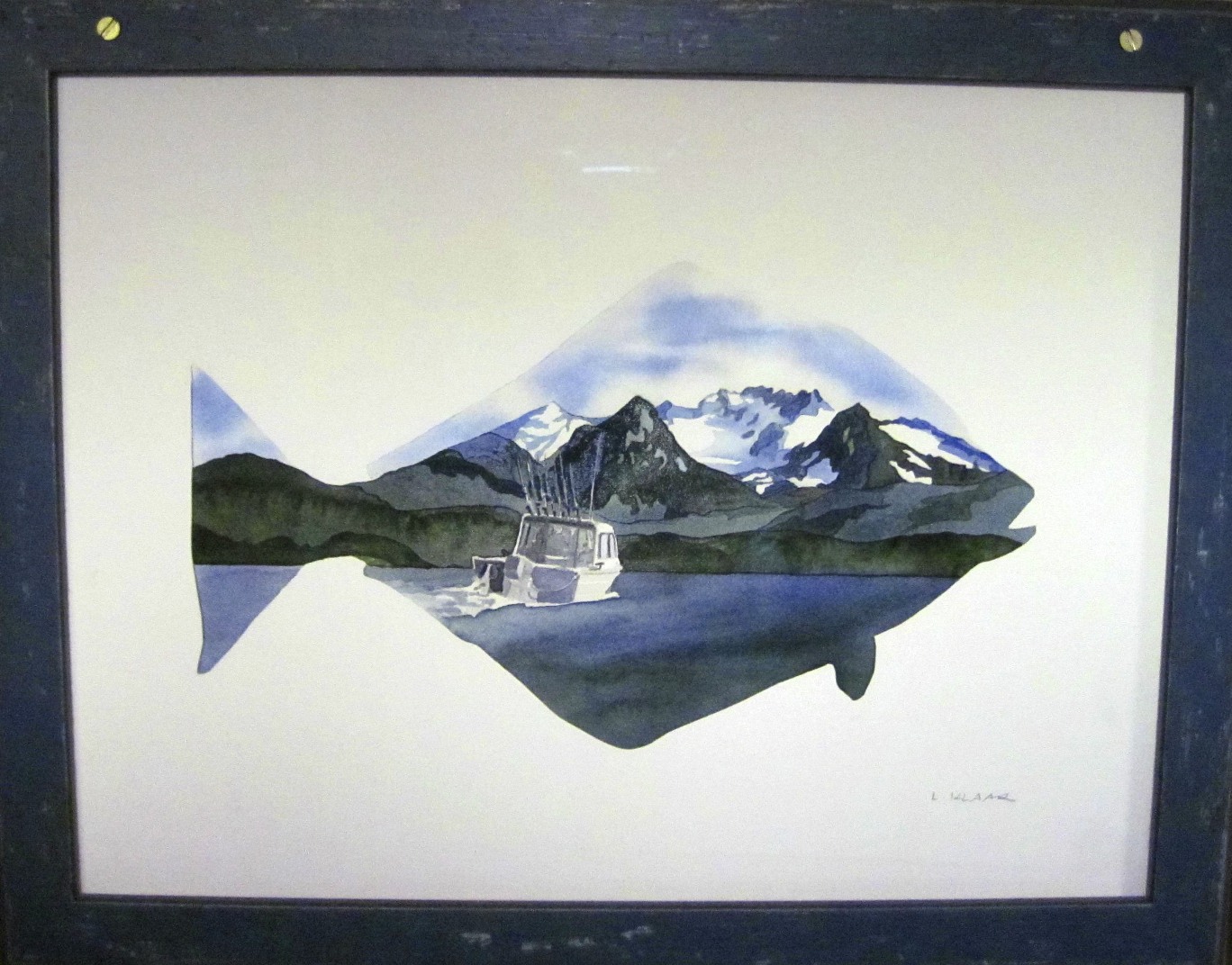
This watercolor by Homer, Alaska artist Leslie Klaar depicts a boat much like our C-Dory heading off for a day of fishing in the great Northwest. It hangs near the door of of our camper.

Scones and Lemon Curd – The Last Egg

How to use  up the last of the pear butter, lemon curd, orange marmalade and the lone remaining egg in the fridge? Whip up a batch of scones, set out the spreads, and watch it all disappear!

These scones were amazingly quick and easy and had just the right texture and flavor. When I set out a large glass baking dish filled with them in the school office, they were gone almost before I turned around.

To shape them, I used a circular cookie cutter and then cut those circles in half. For larger scones, you could roll the dough into a circle and cut it into eight wedges.

Scones

Ingredients

  • 3 cups all-purpose flour
  • 1/2 cup granulated sugar
  • 5 tsp baking powder
  • 1/2 tsp salt
  • 3/4 cup unsalted butter, softened
  • 1 egg, beaten
  • a little less than 1 cup milk
  • cinnamon/sugar mixture to dust the tops (optional)

Directions

  1. Preheat oven to 400 degrees F. Cover baking sheets with parchment paper.
  2. In a large mixing bowl, combine flour, sugar, baking powder, and salt. I used a stand mixer.
  3. Mix in butter.
  4. Put egg in a large measuring cup. Fill measuring cup to 1 cup line with milk. Mix well.
  5. Pour some of the egg mixture slowly into flour while mixing on low until mixture forms a dough ball. Set aside extra egg mixture.
  6. Turn the dough out onto lightly floured surface and knead briefly.
  7. Roll dough out to 1/2 inch thickness. Cut into the shape of your choice.
  8. Place scones on parchment-covered baking sheets. Brush with remaining egg mixture. Dust with cinnamon/sugar if desired.
  9. Bake 15 minutes in preheated oven, or until golden brown.

Coconut Butter Cookies – One Egg to Go

Chewy, sweet coconut butter cookies.

Some people count down by crossing off days. Up here in the village, the days are often counted in “sleeps.” This week, we’ve been counting in eggs. These cookies contain the second to last egg remaining in our refrigerator before we leave for the summer.

One egg, three days, two sleeps to go…

My mom cooked with fresh ingredients whenever she could, and so I have many memories of cracking coconuts and drinking the milk. Afterwards, we’d use fresh coconut shavings in various recipes.

Out here in bush Alaska, we’ve been using powdered coconut milk (obtained from our favorite Asian grocery store, New Sagaya, in Anchorage). Shredded coconut is also on our annual shopping list.

A few weeks ago, I made chocolate dipped macaroons. The coconut lovers around here gave them high marks. Others (those who couldn’t handle the coconut – you know who you are) diplomatically rated them “a-little-too-coconutty.” In an attempt to mellow out the coconut in this cookie, I mixed it into a tried and true butter cookie recipe. The coconut flavor and chewiness of these cookies goes perfectly with the butter-cookie sweetness. I was tempted to dip them in chocolate but resisted, thinking that might have made them too sweet. These cookies are already perfectly sweet!

Coconut Butter Cookies

Ingredients

  • 1 1/4 cups all-purpose flour
  • 1/2 tsp baking soda
  • dash salt
  • 1/2 cup unsalted butter
  • 3/4 cup granulated sugar
  • 1 egg
  • 1/2 tsp vanilla extract
  • 1 1/3 cups sweetened coconut

Directions

  1. Preheat oven to 350 degrees F.
  2. Mix together flour, baking soda and salt in a medium bowl. Set aside.
  3. In a separate mixing bowl, mix sugar and butter until smooth and pale colored.
  4. Mix egg into sugar mixture.
  5. Mix vanilla into sugar mixture.
  6. Blend in flour mixture to create a dough.
  7. Incorporate coconut into dough mixture.
  8. Drop dough by tablespoons onto parchment-lined baking sheets leaving 2 inches between cookies.
  9. Bake for 10 minutes or until cookies are toasted lightly on the top and golden brown on the bottom.
  10. Cool on wire racks.

Sandhill Cranes: Up Close and Personal

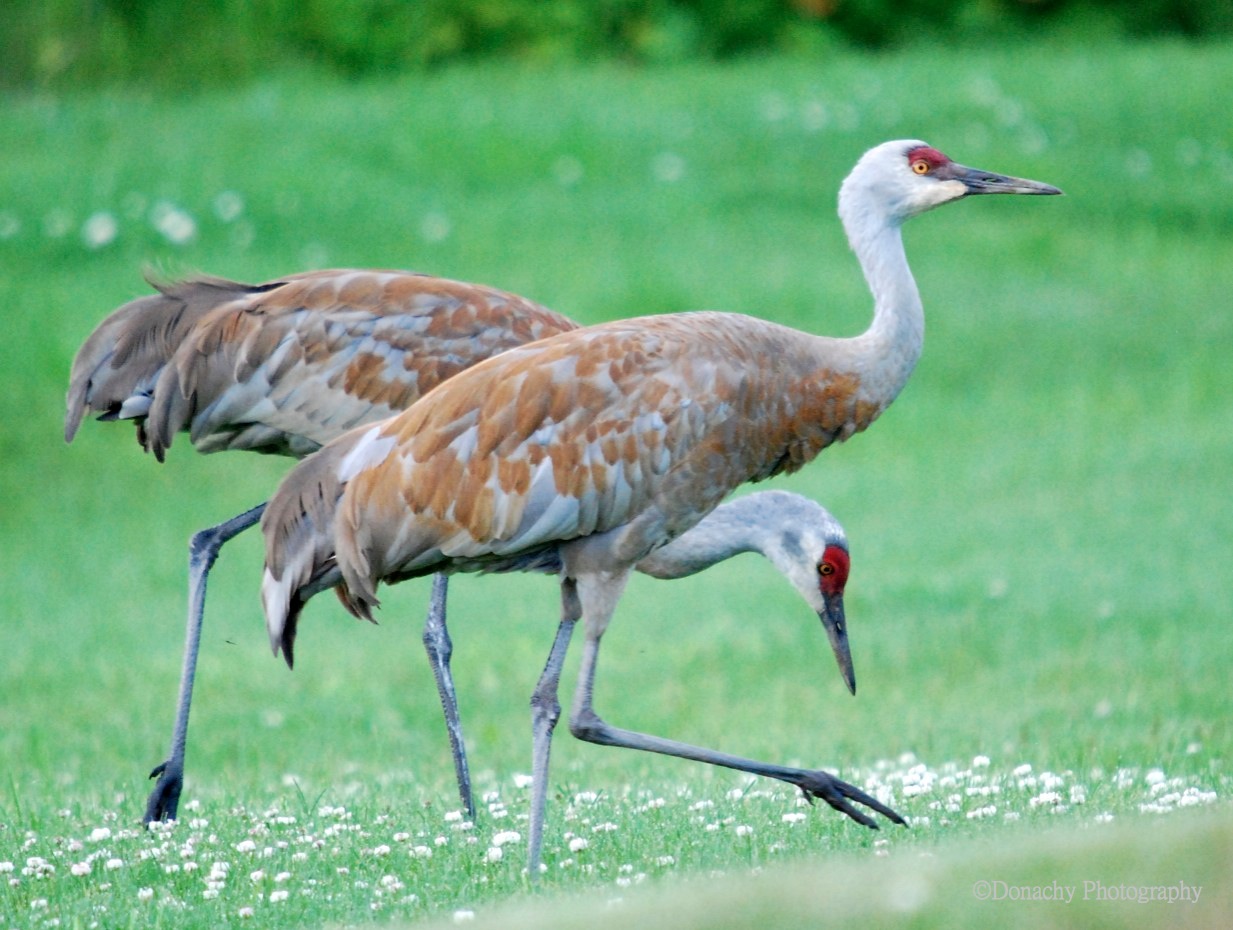
Driving into Homer, Alaska one summer we encountered this beautiful pair of gray and rust colored sandhill cranes (Grus canadensis) foraging on an expansive lawn. Cranes are opportunists, and although they are mainly herbivores seeking grains and seeds, they supplement their diet with insects, small mammals and other animals they encounter.

Bird weights can be deceptive due to their hollow bones. Even though adults have wingspans of six to seven feet (1.8 to 2.1 meters) and stand four to five feet tall (1 to 1.2 meters), they typically weigh less than 10 pounds (4 kilograms).

Since cranes are hunted in Alaska and can be quite wary, we felt lucky to find a pair that wasn’t too skittish. 

Other times we’d seen cranes, they were flying overhead, or, as was the case one summer in Yellowstone, far out on a plain. 

We stalked them for awhile, snapping photos, gauging our distance without spooking them into flight, and then we left the couple to continue their hunting. 

Of course, this being Alaska, when we looked up from the field where we’d been intently watching the cranes, this is what we saw – the Kachemak Glacier, which flows out of the Harding Icefield.