Birds of Chignik Lake – Tundra Swan: Harbinger of Springtime at The Lake

There may be snow on the ground and ice in the river, but when Tundra Swans begin showing up on the Chignik you know spring can’t be far behind. (March 16, 2017)

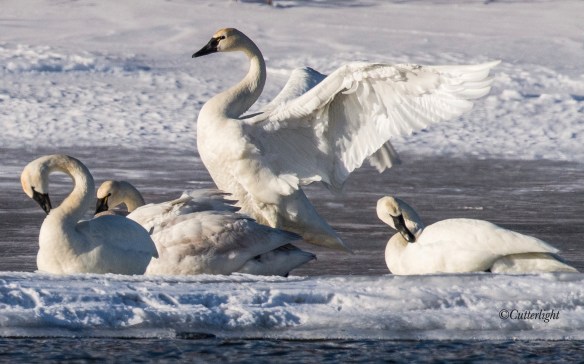
We were told that when swans show up on the river below the old dump, it’s a sure sign spring is on the way. While it seems possible to encounter Tundra Swans somewhere in the Chignik system in virtually any season (provided there’s open water), in early spring they’re still traveling in flocks, making it a good time to look for them. Prior to breeding, they’re often found with newly arrived ducks – Mallards, Northern Pintails, Buffleheads and other species.
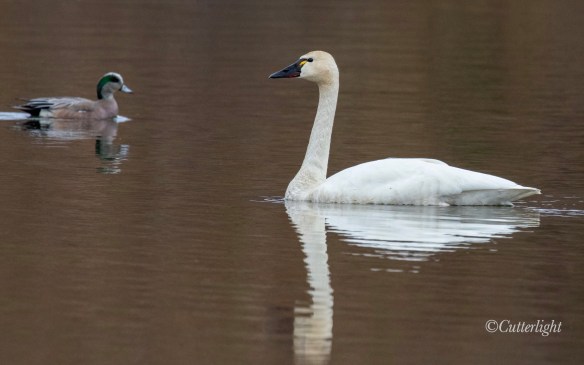
This Tundra Swan was part of a pair we found feeding with a small group of American Wigeons on the Chignik River. The yellow lores and a very white back are diagnostic. (May 4, 2019)

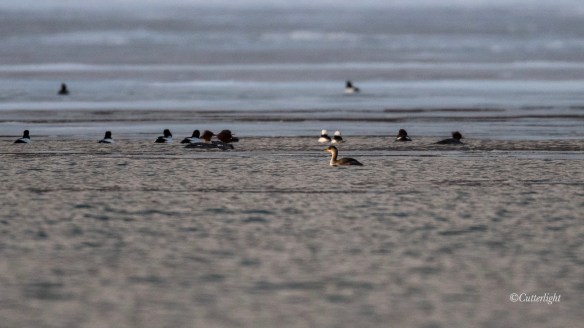
Swans and Ducks gather on The Chignik in Spring. In addition to the scaup, Mallards, Common Goldeneyes, and Buffleheads in this frame, Northern Pintails, and Red-breasted and Common Mergansers are often mixed in among the swans. (March 14, 2017)

A thin white line of several dozen swans underscores the Chignik Mountains at Black Lake. The shallow, weedy waters are important to waterfowl anytime the lake is ice-free. (January 3, 2018)

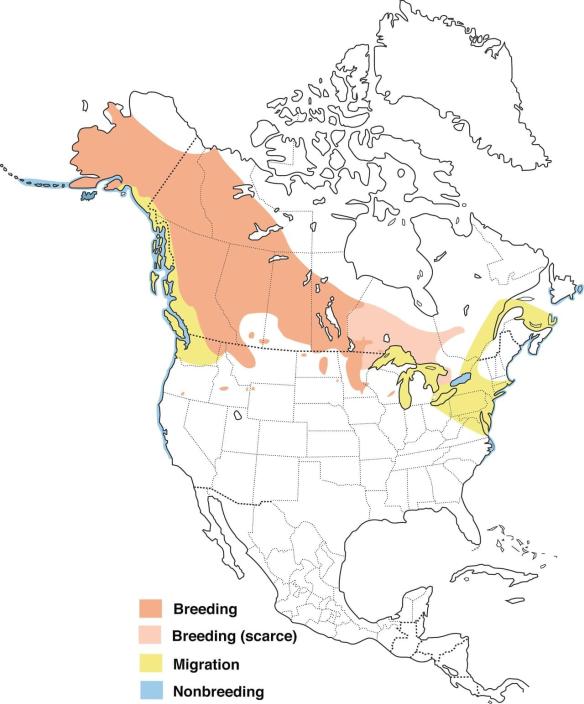
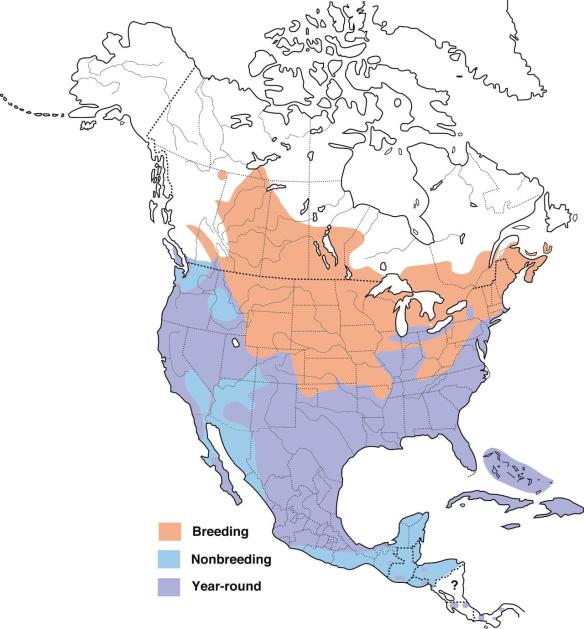
 Tundra Swan Range Map: with permission from The Cornell Lab of Ornithology, Birds of the World

Tundra Swan Cygnus columbianus
Order: Anseriformes
Cygnus: Latinized Greek for swan
columbianus: after the Columbia River (Meriweather Lewis of Lewis & Clark first named this species during their exploration across Northwest America)

Status at Chignik Lake 2016-19: 

David Narver, Birds of the Chignik River Drainage, summers 1960-63: Uncommon on Black Lake

Alaska Peninsula and Becharof National Wildlife Refuge Bird List, 2010:
Uncommon in Spring & Fall; Common in Summer; Rare in Winter

Aniakchak National Monument and Preserve Bird List: Presence Documented

Previous Article: Pelagic Cormorant

Next Article: Emperor Goose – Alaska’s Painted Beauty

*For a clickable list of bird species and additional information about this project, click here: Birds of Chignik Lake

© Photographs, images and text by Jack Donachy unless otherwise noted.


Birds of Chignik Lake: Pelagic Cormorant

A hint of iridescent gloss in its plumage, a Pelagic Cormorants skims above Chignik Lagoon on a blue-sky day in late winter. Pelagics are common in The Lagoon where the fish they feed on are plentiful. Only very occasionally do they stray inland to the river and lake. (Chignik Lagoon, May 9, 2019)

My first close encounter with cormorants came at a pool I was fishing on Japan’s upper Tama River some years ago. I was in the midst of a fruitless morning when a cormorant of some sort showed up and elbowed its way into my pool. In no more than a few minutes it dove six times and caught six fish. Impressive.

Pelagic Cormorants are common all along the rocky, fish-rich Pacific side of the Alaska Peninsula. Red-faced and Double-crested Cormorants can be found along this coast as well. As for Pelagics, most of the very few we saw in the study area of this project were in flight as they headed up or down the Chignik System – perhaps from one side of the peninsula to the other.

Although their feet are webbed, cormorants’ middle toes are hooked – an aid in preening. 

Belying their common name, (and their binomial specific name, pelagicus), Pelagics rarely venture far out to sea, preferring rocky nearshore ocean waters.

This first-year Pelagic was encountered feeding below the salmon weir on Chignik River. (October 24, 2018)

Pelagic Cormorant Range Map: with permission from The Cornell Lab of Ornithology, Birds of the World

Pelagic Cormorant Phalacrocorax pelagicus
Order: Suliformes
Phalacrocorax: from ancient Greek name for cormorants – literally “bald raven”
pelagicus: of the open ocean

Status at Chignik Lake 2016-19: Uncommon/Occasional: At times are regular summertime visitors near the mouth of Clarks River on Chignik Lake

David Narver, Birds of the Chignik River Drainage, summers 1960-63: Occasional on Chignik Lake after storms

Alaska Peninsula and Becharof National Wildlife Refuge Bird List, 2010:
Uncommon in Spring & Fall; Common in Summer; Rare in Winter

Aniakchak National Monument and Preserve Bird List: Presence Documented

Previous Article: Pied-billed Grebe

Next Article: Tundra Swan

*For a clickable list of bird species and additional information about this project, click here: Birds of Chignik Lake

© Photographs, images and text by Jack Donachy unless otherwise noted.

Birds of Chignik Lake: Pied-billed Grebe – an Alaska Peninsula First

As far as I can determine, this is the lone example of a Pied-billed Grebe recorded on the Alaska Peninsula. The facial striping indicates a first-year bird. (Chignik Lake, January 5, 2019)

The sun hadn’t yet peeked over the mountains rimming Chignik Lake when I noticed a small, grebe-like bird working a nearshore cove. I picked up the binoculars always handy near the living/dining room window and glassed the little bird.

The same bird as above in profile, skim ice in the background. (Chignik Lake, January 5, 2019)

Whoa! There’s a Pied-billed Grebe down below Fred’s! I exclaimed to Barbra. A couple of minutes later, I was clad in waders, camera fixed to its tripod slung over my shoulder. I quietly worked my way toward this out-of-place fellow. Wading out into the water, I stood still, hoping the bird might come closer to check me out.

The grebe did move in a little, but it was still a long shot and there was very little light. I set my aperture to its maximum opening, spun the ISO dial further than I would have cared to, and managed a couple of shots. Then the grebe swam off. Although it hung around for a few days, after that first morning it was always on the far side of the lake. And then it was gone.

From Wikipedia, a Pied-billed in summer plumage. (Mdf – First upload in en wikipedia on 21:02, 27 May 2005 by Mdf)

It’s hard to know what to make of a one-off such as this. Pied-billeds very occasionally have been reported in southern Alaska, but as the map below indicates, this individual was well beyond the typical range for this species. Things are changing in our world; it could be that Pied-billeds are pushing north. For now though, an occurrence such as this is best thought of as an “accidental.” In any event, I was happy to record this species. Maybe this small puzzle piece will have some significance in the future when others study the Chignik area.

Pied-billed Grebe Range Map: with permission from The Cornell Lab of Ornithology, Birds of the World

Pied-billed Grebe Podilymbus podiceps
Order: Podicipediformes
Podilymbus: Podi from Greek, refers to feet at the rear; lympus from the Greek kolympus = diver
podiceps: from Latin for rump-headed

Status at Chignik Lake 2016-19: Accidental

David Narver, Birds of the Chignik River Drainage, summers 1960-63: Not Reported

Alaska Peninsula and Becharof National Wildlife Refuge Bird List, 2010:
Not Reported

Aniakchak National Monument and Preserve Bird List: Not Reported

Previous Article: Red-necked Grebe

Next Article: Pelagic Cormorant

*For a clickable list of bird species and additional information about this project, click here: Birds of Chignik Lake

© Photographs, images and text by Jack Donachy unless otherwise noted.


Birds of Chignik Lake: Red-necked Grebe

What a beauty. The face striping marks this specimen as a juvenile. The Bend on the upper Chignik (just below the lake) proved to be a consistently reliable place to get close enough to waterfowl to score good photographs. (October 23, 2017)

Red-necked Grebes are another among the Chignik’s several fish-hunting birds. We didn’t see them often, but when they were on the lake or river we always grabbed our binoculars for a closer look. It’s a good bet that they breed on Black Lake or nearby tundra ponds.

Buffleheads, goldeneyes, mergansers… and center stage an adult Red-necked Grebe in nonbreeding plumage. (Chignik Lake, January 24, 2017)

These were two of three juveniles that visited the lake in the fall of 2017. (Chignik Lake, October 20, 2017)

Example of a Red-necked Grebe in breeding plumage. (Potter’s Marsh, Anchorage, Alaska. June 24, 2017)

Red-necked Grebe Range Map: with permission from The Cornell Lab of Ornithology, Birds of the World

Red-necked Grebe Podiceps grisegena
Order: Podicipediformes
Podiceps: from the Greek
podicis = rump – refers to the posterior positioning of the grebe’s feet
grisegena: from the Latin
griseus = gray & gena = cheek 

Status at Chignik Lake 2016-19: Occasional in Fall & Winter

David Narver, Birds of the Chignik River Drainage, summers 1960-63: Common on Black Lake; Rare on Chignik Lake

Alaska Peninsula and Becharof National Wildlife Refuge Bird List, 2010:
Uncommon in Spring, Summer & Fall; Rare in Winter

Aniakchak National Monument and Preserve Bird List: Presence Documented

Previous Article: Yellow-billed Loon

Next Article: Pied-billed Grebe – An Alaska Peninsula First

*For a clickable list of bird species and additional information about this project, click here: Birds of Chignik Lake

© Photographs, images and text by Jack Donachy unless otherwise noted.


Birds of Chignik Lake: Yellow-billed Loon

This handsome Yellow-billed Loon was hanging out in an eddy favored by piscivores on the Chignik River. During breeding season, in addition to a distinctive black-and-white chessboard back and bright red eyes, that massive bill would be a diagnostic lemon-sunshine yellow. (November 27, 2017)

When I began this project, I didn’t know that there was such a thing as a Yellow-billed Loon, so I was stoked when in November of 2016 a “different looking” loon sent me to my copy of The Sibley Field Guide. I’d love to see this species in its dramatic breeding plumage, but any sighting of this fairly rare bird constitutes a red-letter day.

What first drew my attention to the Yellow-bills I encountered was their size. Compared even with Commons, they’re large. And of course there’s that dagger Yellow-bills are armed with. While the bills of wintertime Commons can take on a light, blueish-silver color, there’s no mistaking the yellow in a Yellow-billed.

Salmon parr dimple the surface of The Bend on the Chignik River just below Chignik Lake. This is a good place to set a net for Sockeyes, cast a fly for Silvers, or check for fish-eaters such as otters, seals, eagles, kingfishers, mergansers and goldeneyes. (May 7, 2019)

—————————————————————

Range: Yellow-billed Loons are circumpolar Arctic breeders with about half of the world’s 10,000 birds living in Alaska. Their winter range includes the coastal waters of the Aleutian Islands, the Alaska Peninsula, and the Alaskan coast as it extends south and on into British Columbia. They are occasionally observed in fall and winter as far down the Pacific Coast as California, rarely to Mexico, occasionally to inland lakes.

Yellow-billed Loon: Gavia adamsii
Order: Gaviiformes
Gavia: sea mew
adamsii: after British naval surgeon & naturalist Edward Adams who collected and sketched this species

Status at Chignik Lake 2016-19: Occasional in Fall & Winter

David Narver, Birds of the Chignik River Drainage, summers 1960-63: Not Observed

Alaska Peninsula and Becharof National Wildlife Refuge Bird List, 2010:
Rare in Fall & Winter; Not Observed Spring & Summer

Aniakchak National Monument and Preserve Bird List: Probable but not Verified

Previous Article: Common Loon

Next Article: Red-necked Grebe

*For a clickable list of bird species and additional information about this project, click here: Birds of Chignik Lake

© Photographs, images and text by Jack Donachy unless otherwise noted.


Birds of Chignik Lake: Common Loon

Common Loon – Chignik Lake, August 17, 2018

Words such as “common,” “uncommon” and “rare” can be vexingly imprecise. So, what are the chances of seeing a Common Loon on Chignik Lake? Generally pretty good, which prompts the question: Have Common Loons – which David Narver recorded us “uncommon” back in the early ’60’s – become more common on The Lake in recent years? And if so, does that explain the relative absence of the smaller Red-throated Loon – which Narver reported as “common?” I love questions like this, even if the answers are tough to know.

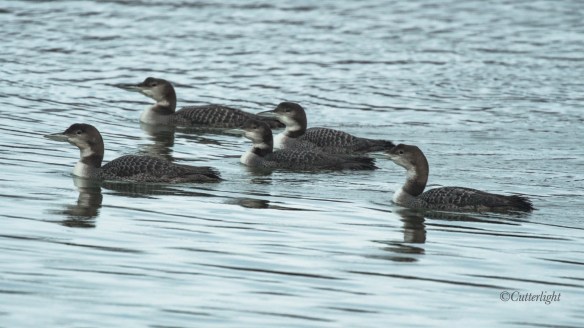
These Commons appeared to be cooperatively feeding as they worked their way along the shoreline. (Chignik Lake, January 14, 2018)

We encountered Common Loons with some frequency – as individuals, in pairs, and at times in what appeared to be family groups of four or five. Commons’ diets are comprised mainly of small fish – lots and lots of them. According the Cornell Lab of Ornithology, a pair with two chicks can consume about half a ton over a 15-week period. Unlike River Otters, mergansers and goldeneyes, Commons usually swallow their prey underwater. I was therefore unable to observe what species of fish they might be targeting. Sticklebacks, small char and juvenile salmon are all likely candidates. The system also holds populations of smelt and sculpins.

Right down to it’s gem-like eye and armed with a serious bill, Common Loons surely rank as one of North America’s most striking birds. (Chignik Lake, August 17, 2018)

Even in silhouette, there’s no mistaking a loon. (Common Loon, Chignik Lake, August 20, 2016)

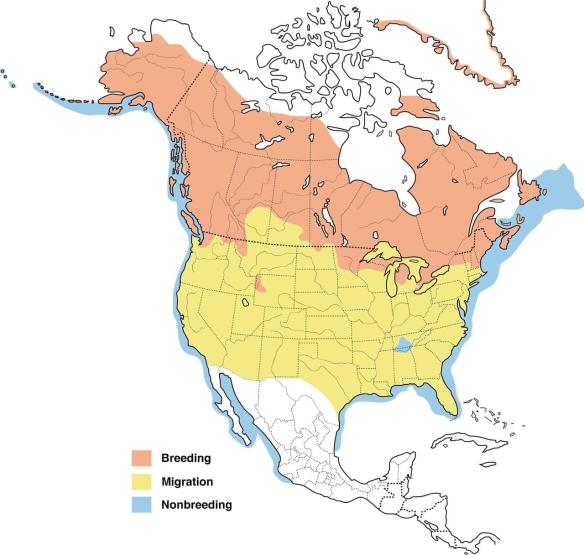
Common Loon Range Map: with permission from The Cornell Lab of Ornithology, Birds of the World

Common Loon Gavia Immer
Order: Gaviiformes
Gavia: sea mew
immer: perhaps from the Latin immergo – to immerse; or from the Swedish immer – which refers to the ashes of a fire and suggesting the loon’s coloration

Status at Chignik Lake 2016-19: Common to Uncommon

David Narver, Birds of the Chignik River Drainage, summers 1960-63: Uncommon

Alaska Peninsula and Becharof National Wildlife Refuge Bird List, 2010:
Common in Spring and Summer; Uncommon in Fall; Rare in Winter

Aniakchak National Monument and Preserve Bird List: Presence Documented

Previous Article: Pacific Loon

Next Article: Yellow-billed Loon

*For a clickable list of bird species and additional information about this project, click here: Birds of Chignik Lake

© Photographs, images and text by Jack Donachy unless otherwise noted.


Birds of Chignik Lake: Pacific Loon

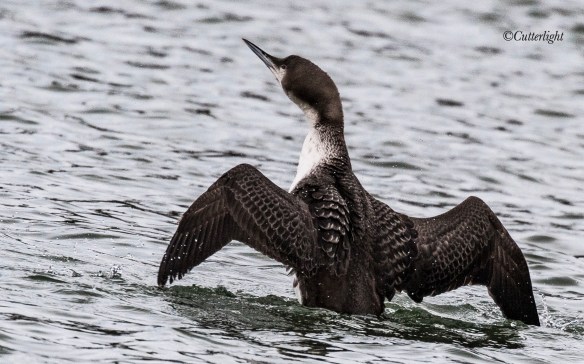
A Pacific Loon stretches between dives on a cold winter day. The Pacifics we encountered on Chignik Lake and Chignik River were wintertime visitors and therefore in their more drab plumage.  (Chignik River, January 12, 2018)

Pacific Loons are uncommon to occasional wintertime visitors on Chignik Lake and Chignik River. Although they sometimes appear in pairs, they didn’t arrive until well into wintertime and I saw no Pacifics in breeding plumage. As this species is known to nest on the Alaska Peninsula, it is possible that Pacific Loons could be found in spring and summer on Black Lake.

Abundant fish attract loons and other piscivorous birds to The Lake. As with other loons, in wintertime the estuary might be the best place to look for them. (Chignik Lake, December 5, 2017)

Several years before I got into birding (or serious photography), Barbra and I encountered this beautiful specimen in breeding plumage on a pond near Point Hope, Alaska. At the time, I didn’t realize that there is more than one species of loon! (Point Hope, Alaska, August 24, 2012)

Pacific Loon Range Map: with permission from The Cornell Lab of Ornithology, Birds of the World

Pacific Loon Gavia pacifica
Order: Gaviiformes
Gavia: sea mew
pacifica: of the Pacific region

Status at Chignik Lake 2016-19: Uncommon/Occasional

David Narver, Birds of the Chignik River Drainage, summers 1960-63: Not Observed

Alaska Peninsula and Becharof National Wildlife Refuge Bird List, 2010:
Rare in Spring and Summer; Uncommon in Fall and Winter

Aniakchak National Monument and Preserve Bird List: Probably Present but not Documented

Previous Article: Red-throated Loon

Next Article: Common Loon

*For a clickable list of bird species and additional information about this project, click here: Birds of Chignik Lake

© Photographs, images and text by Jack Donachy unless otherwise noted.


Birds of Chignik Lake: Red-throated Loon

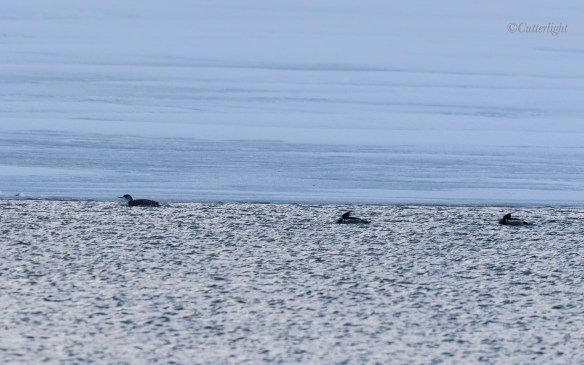
Fine and far off. In fly-fishing, the phrase refers to light tippets and long casts to wary trout. Here it refers to my lone Red-throated Loon sighting on Chignik Lake. It’s difficult to see the eponymous star-like speckling on its back in this photo, but a fine bill angled up slightly, a face showing more white than in other loons, and a smaller, more rounded overall profile add up to Red-throated. A pair of male Red-breasted Mergansers nap to the right on an icy Chignik Lake. (April 1, 2017)

Although Narver regularly encountered Red-throated Loons during his summertime observations in the early 1960’s, I recorded only one specimen during my three years at The Lake. This could reflect that in summertime Red-throateds mainly reside further up the watershed at Black Lake – and possibly breed there -, or it could indicate that in recent years Common Loons have supplanted their smaller cousins in the Chignik Drainage. Except for the breeding season, Red-throated Loons show a decided preference for salt water, so from fall through early spring Chignik Lagoon and nearby ocean waters – areas beyond the scope of this study – might be good places to check for them.

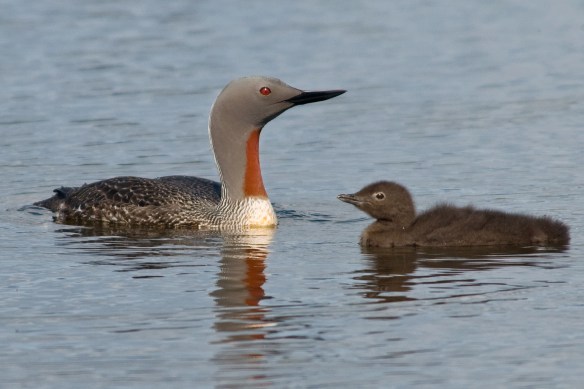
Red-throated in breeding plumage: Photo by David Karnå / Wikimedia Commons / CC BY 3.0

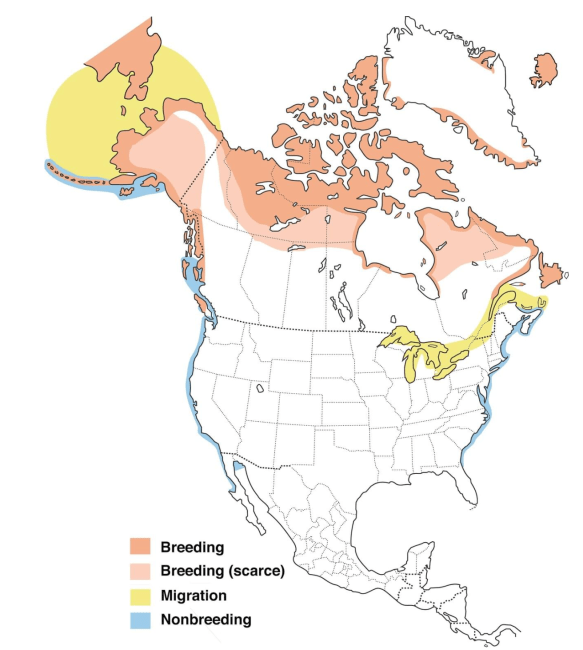
Red-throated Loon Range Map: with permission from Birds of North America

Red-throated Loon – Gavia stellata
Order: Gaviiformes
Gavia: sea mew
stellata: set with stars

Status at Chignik Lake 2016-19: Rare

Status on other relevant checklists:

David Narver, Birds of the Chignik River Drainage, summers 1960-63:
Common on Black Lake; Occasional on Chignik Lake

Alaska Peninsula and Becharof National Wildlife Refuge Bird List, 2010:
Uncommon in Spring and Summer; Rare in Fall and Winter

Aniakchak National Monument and Preserve Bird List: Presence Documented

Swallow Silhouette

Previous Article: Loons of Chignik Lake

Next Article: Pacific Loons

*For a clickable list of bird species and additional information about this project, click here: Birds of Chignik Lake

© Photographs, images and text by Jack Donachy unless otherwise noted.


Delightfully Sweet and Delightfully Sour – Lingonberry Chess Pie

While baking, tangy lingonberries, also known as lowbush cranberries, rise to the top of a custard-like pie filling. The combination of the tart berries and the sweet, creamy filling all in a crispy pie shell is possibly the best reward for shoveling out a driveway’s worth of fresh snow.

It’s been endlessly snowing for the past day. Our Alaskan home now resembles the Alaska home I imagined before we moved to this famously frozen state. As I left home this morning for my very short walk to school, I was surrounded by blinding white. The trees were covered. Rooftops were blanketed and fringed with shimmering icicles. A splash of bright red peeked through two feet of snow where our ATVs are parked. My first-floor classroom windows have shoulder-high drifts piled a quarter of the way up. The plow crews can barely keep up, and Jack has become the John Henry of snow shovelers. Sitting on her trailer, Gillie is up to her gunwales in a sea of white. We’re socked in with snow like we have never before been socked in. I love it!

With only two months of school remaining (unbelievable!), we are at that time of year where we challenge ourselves to empty out our freezer and pantry. There is one lonely gallon-sized bag left from one of our treasured fall harvests – lingonberries. Most of the lingonberries we picked have been baked into muffins, upside down cake, and fruit breads or pressed into juice for hot lingonberry tea. The snow outside spurred me to action last night. Baking is not only entertaining but also has three wonderful outcomes – a warm house, a delightful aroma, and of course, the delicious results. This recipe was slightly adapted from my favorite baking book, The Williams-Sonoma Baking Book. According to the recipe book, chess pies may be named such because they keep well in traditional storage cabinets, otherwise known as pie chests. Another explanation is that “chess” is a corruption of the word cheese, derived from a chess pie’s cheese-like filling. Whatever the etymological origins may be, the way the folded in lingonberries all rise to the top of the pie during baking is magical – and visually quite appealing. The effect when you eat the pie is interesting as well: The sweet and the sour are notably separate and in so become complementary flavors.

As to the shelf life of chess pie… It’s unlikely one has ever lasted long enough to tell!

Lingonberry Chess Pie

Ingredients

  • dough for a single crust pie
  • 1 1/3 cups granulated sugar
  • 1/2 cup unsalted butter, melted
  • pinch salt
  • 3 eggs
  • 1/4 cup all purpose four
  • 1/3 cup plain yogurt
  • 1 tsp cider vinegar
  • 1 tbsp orange zest, finely chopped
  • 2 cups frozen or fresh lingonberries

Directions

  1. Roll out pie dough to cover a 9-inch pie dish.
  2. Trim off excess. Leave plain or pinch edge to decorate.
  3. Chill dough-covered pie dish in refrigerator for 30 minutes.
  4. Place oven rack in lower third of oven. Preheat to 375° F.
  5. Blind bake pie by covering it with foil, weighting down the foil with rice or pie beads and baking for about 20 minutes. Crust should be very lightly browned and no longer look wet.
  6. Leave oven on and slightly cool crust on a wire rack while making the filling.
  7. In a large bowl, whisk together sugar, butter, salt, eggs, flour, yogurt and vinegar.
  8. Stir in orange zest.
  9. Fold in lingonberries.
  10. Pour the filling into the pie shell.
  11. Bake pie until top is golden brown and filling is firm, about 50 – 60 minutes.
  12. Cool on wire rack completely before serving.

Ice-Fishing on the Newhalen River

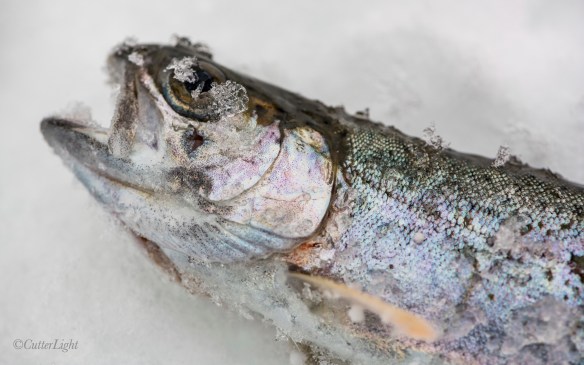
We were on the ice mostly to have a look and get a photo or two, but when I was offered a turn at fishing… how could I say “No?” It didn’t take long to put a pan-sized rainbow on ice. It took me back to being a kid on Pennsylvania’s Clarion River trying to get a few tasty perch for a wintertime fish-fry.

From an upstairs window, we could see the anglers begin to gather across the river. “Let’s go see what they’re up to!” It’s about a quarter mile walk to the river from our place and another three-quarters of a mile across the frozen water. No worries. The ice is over two feet thick.

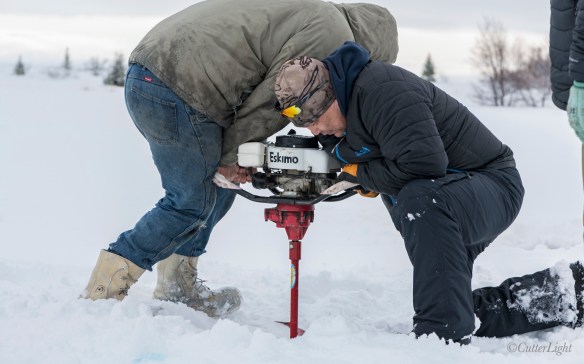
Ray Wassillie had organized the gathering and brought along the power ice auger. Now we want one! Between the Newhalen River and local lakes, there is an abundance of wintertime quarry: Northern Pike, Lake Trout, Dolly Varden Char, Rainbow Trout, Grayling and Burbot!

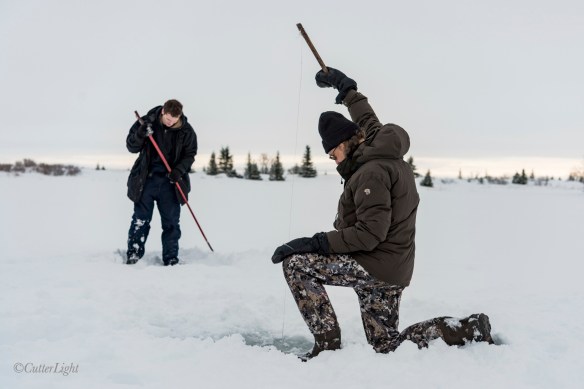
We’re both battling colds and therefore didn’t hang around long. The fishing was just starting to heat up as we were leaving and I really wanted a shot of someone pulling in a decent fish. This woman had the hot hand, so I kept my camera trained on her. Of course, that put the jinx on her. After a lull that seemed to last forever, she finally had a bite… and pulled out this tiddler! Some of the fish were pushing 20 inches… guess you’ll have to take our word for it.

In addition to a “Big Fish” contest, there was a side event to see who could chop through 30 inches of hard ice the old fashioned way – with a steel pike. Up from New York on a student teaching stint, Griffin was game. Talk about work though. I think he sufficiently had the “idea” of it by the time he got a foot or so into it and wisely put the pike aside to get back to fishing.

I had not intended to fish, but when Ray offered a line, what could I say? My first fish through the ice in… geez, over 40 years. As it is with any addiction, I should have known not even to unscrew the cap from the bottle. We’re now shopping ice augers!


m