Point Hope, Alaska from the Air

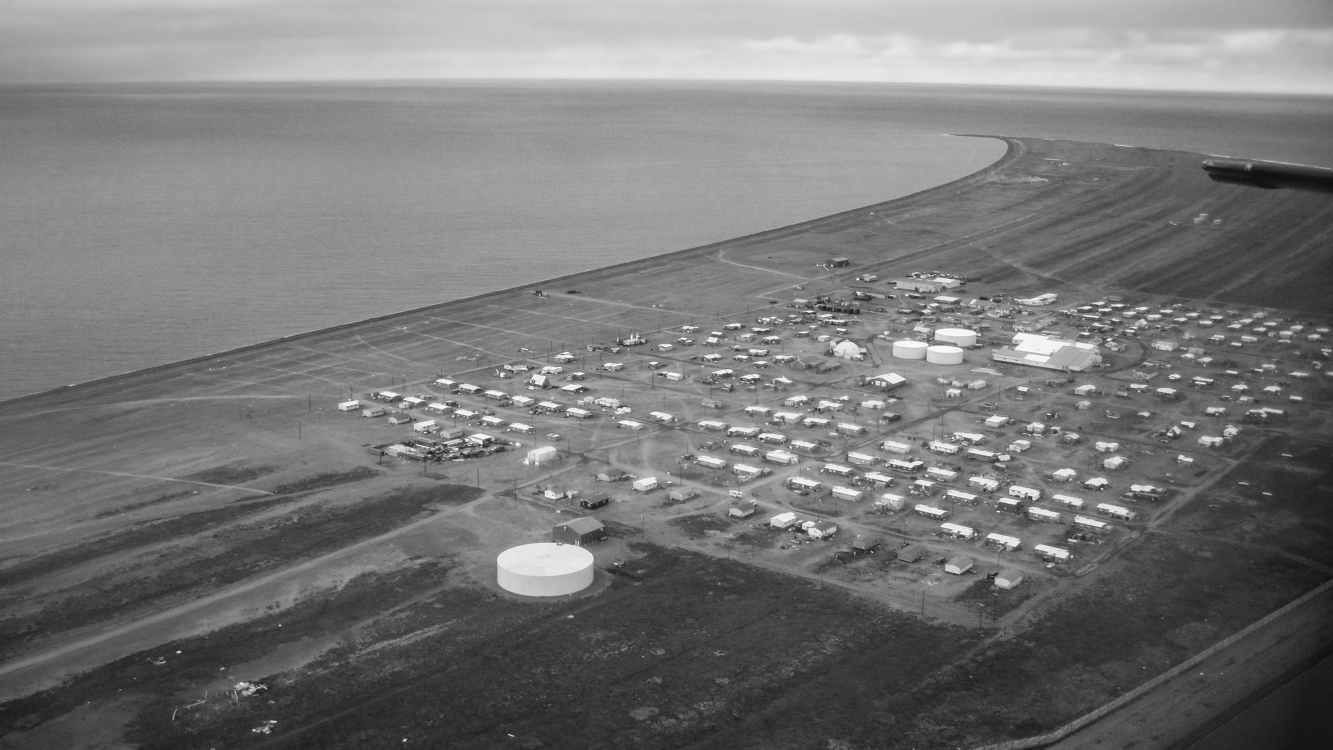
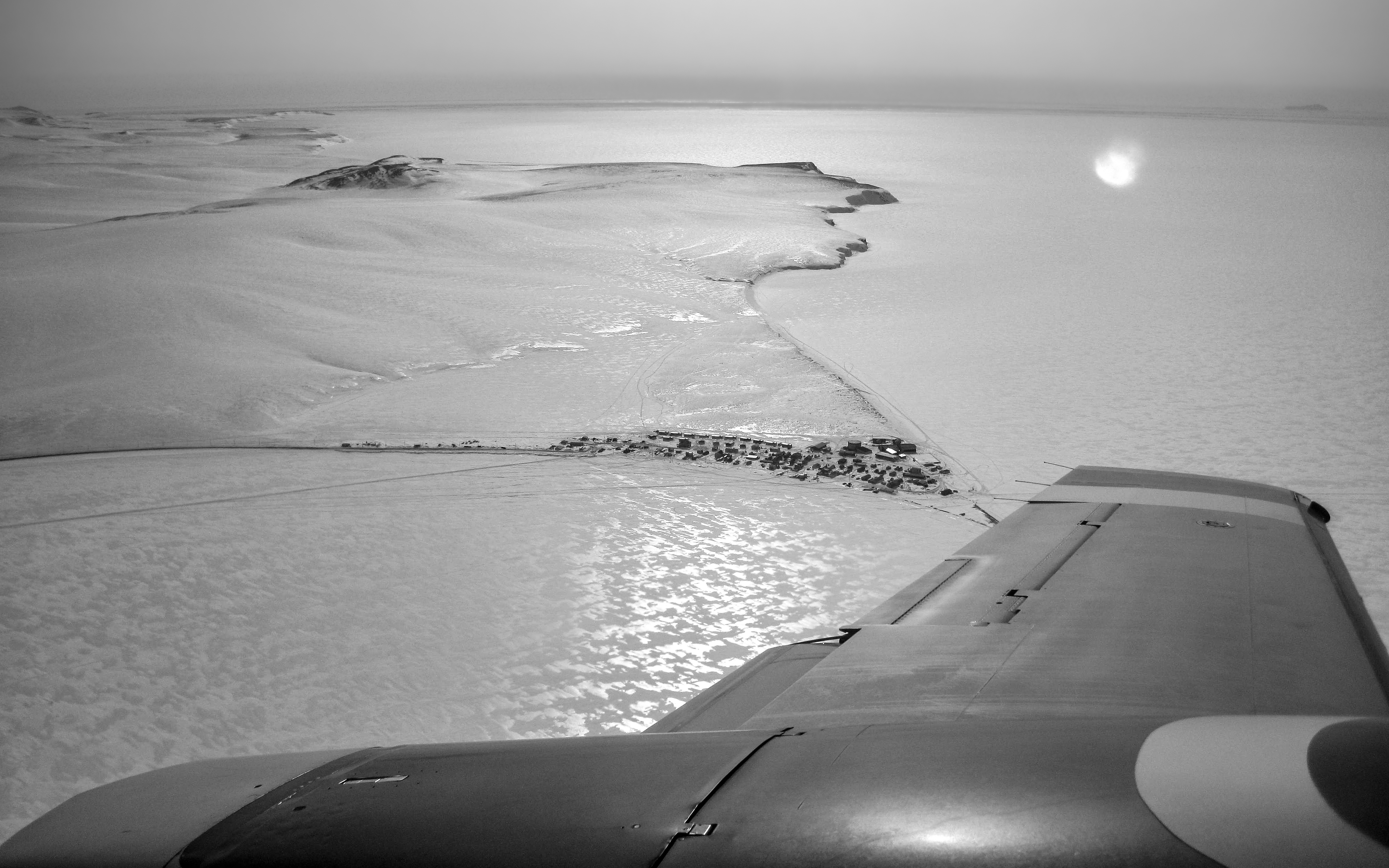
Our first view of Point Hope, Alaska – 125 miles north of the Arctic Circle (August 1, 2011)

Modern-day Point Hope is located on a narrow peninsula hooking into the Chukchi Sea. In the not-so-distant past, the village was further out on the peninsula, but erosion caused by an encroaching sea has wiped away a good bit of the peninsula, and the old village, called Tikigaq (which means index finger – for the peninsula’s shape), was relocated further inland due to seawater inundation. With evidence of habitation going back at least nine thousand years, Tikigaq Peninsula is regarded as one of the very oldest continuously inhabited sites in North America.

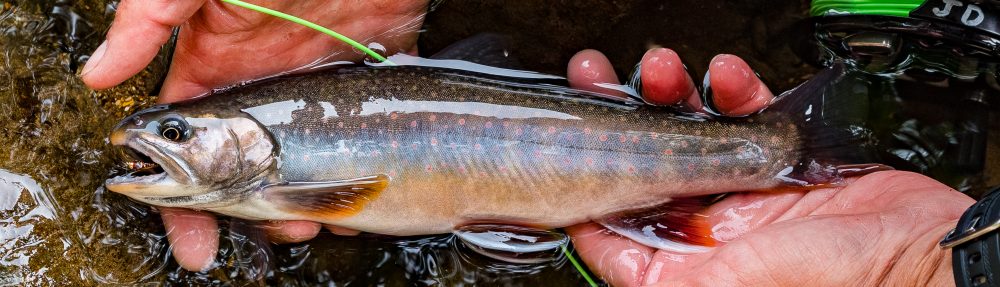
The very essence of an Alaskan bush village is its isolation and remoteness. The only road leading out of Point Hope, Seven Mile Road, ends abruptly a good bit less then seven miles: 250 miles from Barrow, 572 miles to Fairbanks, 694 miles from Anchorage. Thus Point Hope exists as a neatly lain out grid of homes and other buildings surrounded on two sides by water and on one by the vast Arctic tundra. Polar Bears and Arctic Foxes are regular visitors. To experience life in a place so thoroughly separated from the rest of the world is perspective changing – and in an unexpected way, exhilarating.

Large ocean-going barges freight in everything from the school bus – which keeps children safe from both frostbite and Polar Bears – to heavy equipment and building supplies; planes bring in smaller items, including groceries and mail. Hunting and gathering provide a great deal of additional food. This subsistence take includes Bowhead and Beluga whale meat and blubber, caribou, ducks, geese, ptarmigan, salmon, char and grayling along with cloudberries (Rubus chamaemorus) a few blueberries and in some families, seaweeds.

Photographs in coming days will show more of the village and perhaps lend some insight into life there. Thanks for reading.
Blueberry Days: and thoughts regarding Alaska’s bush education system

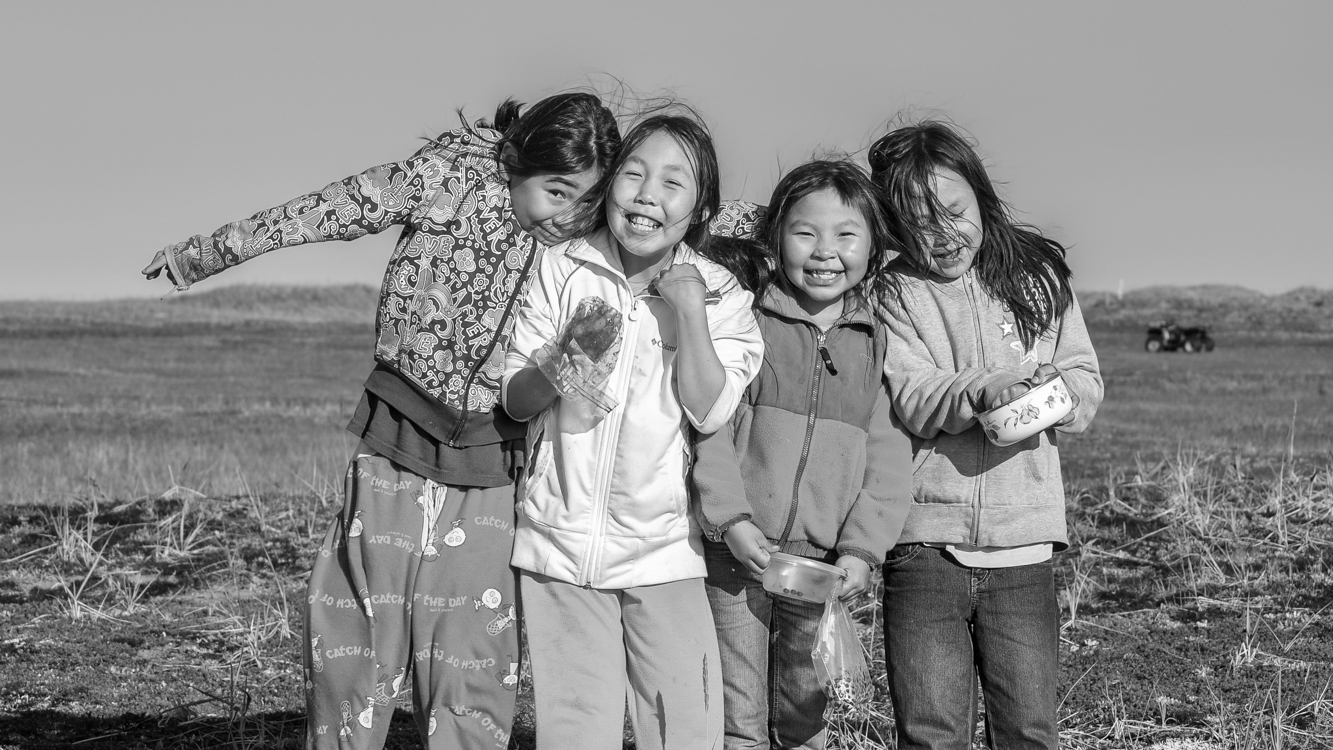
Blueberry picking on the Arctic tundra. This photograph was used in a Ted Talk about Climate Change. Sarichef Island, September, 2010

As is the case anywhere one might go, there are multiple realities in Shishmaref – or in any bush village. Some of these realities fit together neatly in a positive and even happy manner, like smiling faces after berry picking on a pleasantly crisp fall morning. Some realities exist more as collective memories, and you’d have to dig and observe closely to find their vestiges. Other realities contradict and clash and it can be difficult to understand how they are connected to the broader cultural, and still other realities go mostly undiscussed – pretended away – as they seep into village fabric like a sludgy toxin.

A reality in the “sludgy toxin” category in most bush communities we are familiar with are the schools. For anyone who was fortunate enough to be educated in a fairly decent k-12 system, or who has taught in such schools, the level of professional misfeasance and malfeasance – the combination of indifference, incompetence and outright corruption in Alaska’s bush schools – would probably defy belief. Before coming to Alaska, Barbra and I taught in good schools in the lower 48. So we know what that looks like. Nothing in that experience prepared us for what we encountered in the Alaskan Bush. The blame, when one talks to many teachers and administrators in bush Alaska, is placed on the children themselves and their parents. These educators and administrators spin their tales to state legislators, the governor’s office, department of education officials, university education departments and anyone else who asks, and Alaska’s state legislators, the governor’s office, department of education officials and university personnel nod along, agreeing that little can be done to improve matters.

But the reality is that any of the schools we taught in, visited or heard about from others could have easily… and I emphasize easily… been improved with a bit of competent administration. The acquiescence to self-serving fictions among Alaska’s leadership – the phony wistful sighs followed by reassurances among themselves that the problems can’t be fixed, so therefore they aren’t obliged to try – continues year after year.

Because it is easy to dismiss these bush schools and the Native communities they serve. After all, these are other people’s children.

Thank you for allowing me to finally get that off my chest. Comments, as always, are welcome. JD

Photo of The Day: Shishmaref Aerial

Flying into the village of Shishmaref for the first time was an unforgettable thrill. This wintertime photograph, in which the barrier island upon which Shishmaref is located appears to be connected to land, belies the village’s isolation. That is ice, not terra firma, surrounding Sarichef Island which encompasses only 2.8 square miles and rises no higher than 13 feet above the surrounding sea. The village itself is home to fewer than 600 mostly Inupiat residents. Tucked up against the ever encroaching Chukchi Sea, Shishmaref lies a mere 20 miles below the Arctic Circle, 105 miles from the Siberian coastline across the Bering Strait, 601 miles from Anchorage and 2,939 miles from L.A. The wintertime winds, with a fetch of perhaps thousands of miles across frozen northern seas, blew at times with terrifying ferocity and cold, on one memorable occasion all but burying the village in snow.

In the next few photos to come, I will try to show a bit about life in this remote village which is perhaps best known as being on the vanguard of the impacts of climate warming, but where also there is beautifully crafted artwork and a spirit of resilience. As always, your comments are welcome.

Arctic Spring

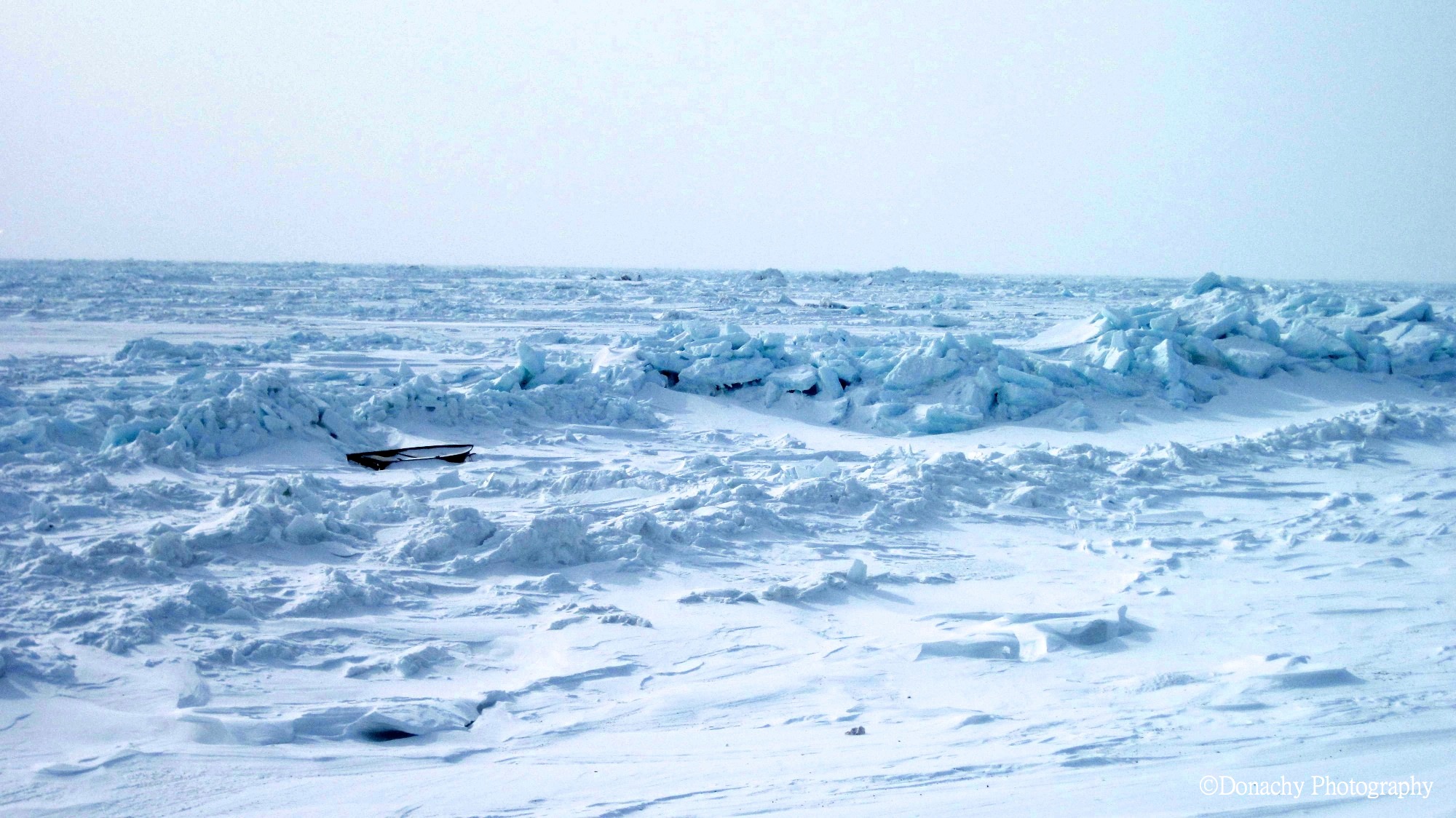
Hand stitched ugruk (bearded seal) skins cover the wooden ribs of this traditionally-crafted boat as it sits atop a rack in Point Hope, Alaska. With spring officially here (the Vernal Equinox was March 20), whaling season has begun. Whaling crews have been going out to break trail these past few days. This is rough going across the frozen, buckled landscape of the Arctic Ocean. 

Each Arctic day is lengthening by eight minutes, and the sun is shining with perceptible warmth as months of negative double digit cold gradually give way to highs approaching an even zero degrees Fahrenheit. Although the seas continue to be locked up tight, that is how it should be this time of year. Once the trail is broken, the village’s two whaling crews will set up their camps far out on the ice near open water, where, with boats stitched together from the skins of bearded seals at the ready, men dressed in warm, white parkas will wait and watch.

A small skiff seems to await the Chukchi Sea’s thaw.

Last year, three whales gave themselves to the village. That is the way people here say it. Animals are not “killed.” They give themselves, and for a whale to give itself, the hunters’ skill, preparation and worthiness must all come together. Point Hope is one of the oldest continuously inhabited settlements in the Americas. Perhaps the oldest. Here, the unique interplay of sea and river, hills and tundra bring salmon, char, seabirds, caribou, whales and even berries to the inhabitants. Compared to many other villages, the people of Tikigaq (Crooked Finger – so named for a narrow thrust of land at the tip of the peninsula that long since eroded away) have seldom had to go far for food.

The whales are bowheads, a right whale. These baleen whales may weigh 30 tons or more. Occasionally ivory, slate and jade harpoon heads of old are discovered buried deep in a whale’s blubber, indicating that they have a lifespan of at least 150 years. Although commercial whaling in the 1800’s pushed populations to near extinction, they have gradually recovered and numbers in the Chukchi Sea continue to grow by about 3% each year to over 10,000 currently.

Inuit artist Kenojuak Ashevak’s painting (above) depicts the circle of Arctic seasons. Her painting shows open water for less than half of the year.

When we leave the village in mid-May to spend our summer further south in Alaska, much of the tundra and the Chukchi Sea will still be locked in ice. When we return in mid-August, the tundra will be carpeted in shades of green, some of it already giving way to Autumn’s gold. In high summer, flowers bloom in profusion, but by August, most will be done. Berries – cloudberries, cranberries and crowberries near the village, joined by blueberries further out – will follow. Waves will tumble on the shore as though the ice never existed, and salmon and char will be swimming in the clear-green water.

Bison Joes with Roasted Bell Peppers

Roasted bell peppers and ground bison combined with freshly baked buns for a memorable version of an America Classic.

One of the challenges of living hundreds of miles beyond the road system is that we frequently can’t get the ingredients we want for cooking. With the school year rapidly drawing to a close (fewer than eight weeks remain now) and an abundance of ground bison in our freezer, Barbra had been requesting Sloppy Joes. “I’ll make the buns!” she promised. Problem is, the village store hasn’t had onions since early January. The last shipment was frozen solid and had to be tossed out. We’re out as well, and I couldn’t quite imagine Sloppy Joes without diced sweet onions mixed in with the meat and sauce.

And then, out of the blue, a friend gave us two green bell peppers. Roasted and skin peeled, these would provide the tangy sweetness I was looking for. I had a large carrot in the fridge that needed to be used, so I diced and sautéed it and added it to the ingredients as well.

Mixed together with an off-the-cuff sauce, our Bison Joe’s came out great – more savory than sloppy, and sweet enough to please the kid in us.

Bison Joes with Roasted Bell Peppers

Ingredients

  • 1 pound ground bison
  • 5 cloves garlic, chopped fine
  • 2 bell peppers, cut in half, stems and seeds removed
  • 2/3 cup finely chopped carrots
  • olive oil, as needed
  • 1/2 cup Sloppy Joe sauce (below)
Directions for roasting bell peppers:
  1. Place a baking sheet (a good, thick one is best) into oven and preheat to 500 °F.
  2. Using a brush, spray bottle or fingers, thoroughly cover bell pepper halves with light olive oil, canola oil or other oil that will withstand high temperatures.
  3. When oven is preheated, place bell peppers open side down on baking sheet. Roast until peppers soften, skin begins to loosen, and outside begins to brown. Turn the peppers over and continue to roast until desired color is achieved. (You will see at least some spots burned black. How much of this you want is up to you. I go for just a little black.)
  4. Remove peppers from baking sheet, place in paper bag and close. This will help steam the skins loose.
  5. When cool enough to handle, peel off the skin.
  6. Dice the peppers (about 1/4″ pieces) and set aside.
Directions for bison, carrots and garlic:
  1. Add about 2 tablespoons olive oil to a large frying pan and heat over medium heat. Add ground bison. Breaking up the meat and stirring, cook until evenly browned. Pour out on paper towels to drain off oil and fat and set aside.
  2. Add about 1 tablespoon olive oil to a medium frying pan and heat over medium to medium-low heat. Add carrots, stirring frequently. Just before done, add the garlic and cook an additional 1 to 2 minutes. Place in a small bowl and set aside to cool.
Sloppy Joe Sauce
Ingredients
  • 1/3 cup ketchup
  • 1/4 cup Dijon mustard
  • 1/2 tablespoon Worcestershire sauce
  • 1 tablespoon Cholula sauce
  • 1 tablespoon soy sauce
  • 1 teaspoon cumin
  • 1 teaspoon dried oregano
  • 1/2 teaspoon basil
  • couple dashes powdered cinnamon
  • 1/2 teaspoon chili powder
  • several grinds freshly cracked pepper
  • 2 tablespoons olive oil

Directions:

  1. Add all ingredients to a non-reactive bowl and mix thoroughly. Add the garlic and carrots (above). Add the bell peppers. Add additional chili powder, cumin or Cholula for more of a kick.
  2. Place the browned bison in a large skillet. Heat on medium heat and add enough sauce to coat the meat. Beyond that, how much sauce to add is a matter of cook’s choice. Mix thoroughly, cooking and stirring till everything is hot.

Serve on toasted buns or toasted bread with a frosty mug of root beer.