Bacon-Wrapped Smelts (Hooligans, Eulachons or Candlefish)

Freshly caught smelt prepared two ways: In the foreground, the fish was rolled in polenta. The smelt in back was dusted in seasoned flour. The fish were pan fried, wrapped in bacon and placed on whole leaves of Romain lettuce to be eaten from head to tail, bones and all. A sprig of asparagus and a few dollops of bright orange flying fish roe (tobiko) finishes the lettuce taco.

As I write this, one of the small rivers flowing into Resurrection Bay is jammed full of smelt. Specifically Thaleichthys pacificus, commonly referred to as hooligans. The AFS (American Fisheries Society) has settled on the name eulachon (pronounced you-luh-chawn), from the Chinook Indian name for the fish. Early west coast explorers and settlers called them candlefish because the spawning fish are so full of fat (about 15% of body weight) that when dried, they can be lit and will burn like a candle.

In the foreground: Polenta is especially coarse cornmeal. Seasoned with salt and pepper, rolling smelt in polenta gives these soft-fleshed fish a nice crunch when pan friend. In the back: another way to prepare smelt for the frying pan is by dropping them into a Ziplock bag containing seasoned flour and giving them a few shakes. Tarragon, fennel, marjoram and salt and pepper are a good start when seasoning these fish. Tongs make this a neat job. Note the asparagus in the pan on the stove.
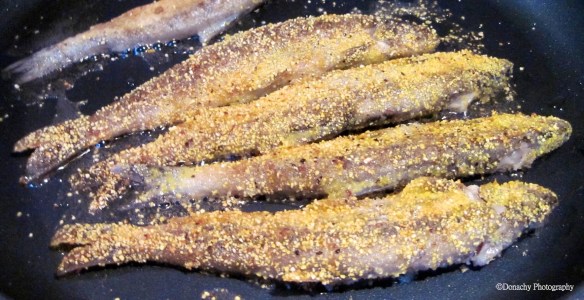
The meat and bones of eulachons are quite soft. So soft, in fact, that when pan fried, the bones are barely noticeable. Their flavor is wonderful, but they definitely benefit from the addition of some crunch.

When the smelt are running in a river with a healthy population, getting enough for a meal or two is easy. On large rivers, a long-handled net might be necessary. But on this river, the fish were thick and close to shore. Two scoops of the net, and we had all the fish we needed.

Like their relatives, the salmon, eulachon are anadromous. They spend most of their life in the ocean, feeding on plankton, and then return to their natal streams and rivers to spawn, after which they die. Males arrive first and comprise virtually all the fish in the early part of the run. Later the females show up. Ideally, it’s the females you want, as a fresh fish laden with ripe eggs is a delicacy.

The males are quite good, too. In either case, cleaning these small fish (they average about eight inches/20 centimeters) is a simple matter of rinsing them in clean, cold water. There is no need to gill, gut or scale them.

A seemingly endless school of eulachons makes its way up an Alaskan river.

Big, Fluffy Blueberry One-Pan Pancakes

The one pancake to a pan pancake: Half of one makes for a hearty breakfast. Perfectly crispy on the outside, light and fluffy and jammed full of fruit on the inside, served with a couple strips of thick bacon and maple syrup, who needs the other food groups? Well, coffee…

I’ve been messing around with pancakes for a long time. Here’s what I now think I know about making the perfect pancake.

First, while one can make them from scratch, there is no reason to. Krusteaz has come up with a mix that nails it. We buy Krusteaz mix in bulk at Costco and enjoy waffles or pancakes – or both – once or twice a week.

Second, put the butter in the pan, not on the pancake. Pancakes fry up crispier, turn a lovely golden brown, and taste more decadent when fried in roughly equal parts light olive oil and butter.

Third, the right pan makes a big difference. Barbra and I have become big fans of Swiss Diamond nonstick cookware. The pans are thick and heavy, so food scorch is avoided, and once they heat up, they cook with incredible evenness.

Fourth, do your best to get away with as little water and as little mixing as possible. The result is a fluffier pancake.

Fifth, forget medium heat. Low and long is the way to go. I start on medium-low, and then go a little lower than that, giving the cake time to rise without burning.

Sixth, one big pancake cooks up better – in every regard – than several small ones. Think 11 1/2″ pan and enough batter to cover most of it. Big pancakes can hold more fruit per volume and rise up higher and fluffier than smaller pancakes. (Get a big spatula, and be ready for a little splatter when you flip the cake.)

And finally… Fruit. Adding a generous amount of fruit to the batter lends more than just the added flavor and texture of the fruit itself to the cake; it also adds a creaminess that a fruitless pancake cannot match. Whole blueberries are great, and as this is Alaska, we use them frequently. Chopped bananas are superb. But our favorite? Strawberries. There is something about fresh strawberries, diced, that takes a pancake to another world.

Honey, jam, preserves or maple syrup – they all do a good pancake justice. Crispy around the edges, creamy in the middle, the maple syrup getting on the bacon, a hot cup of coffee to cut through the sweetness… It’s good morning food.

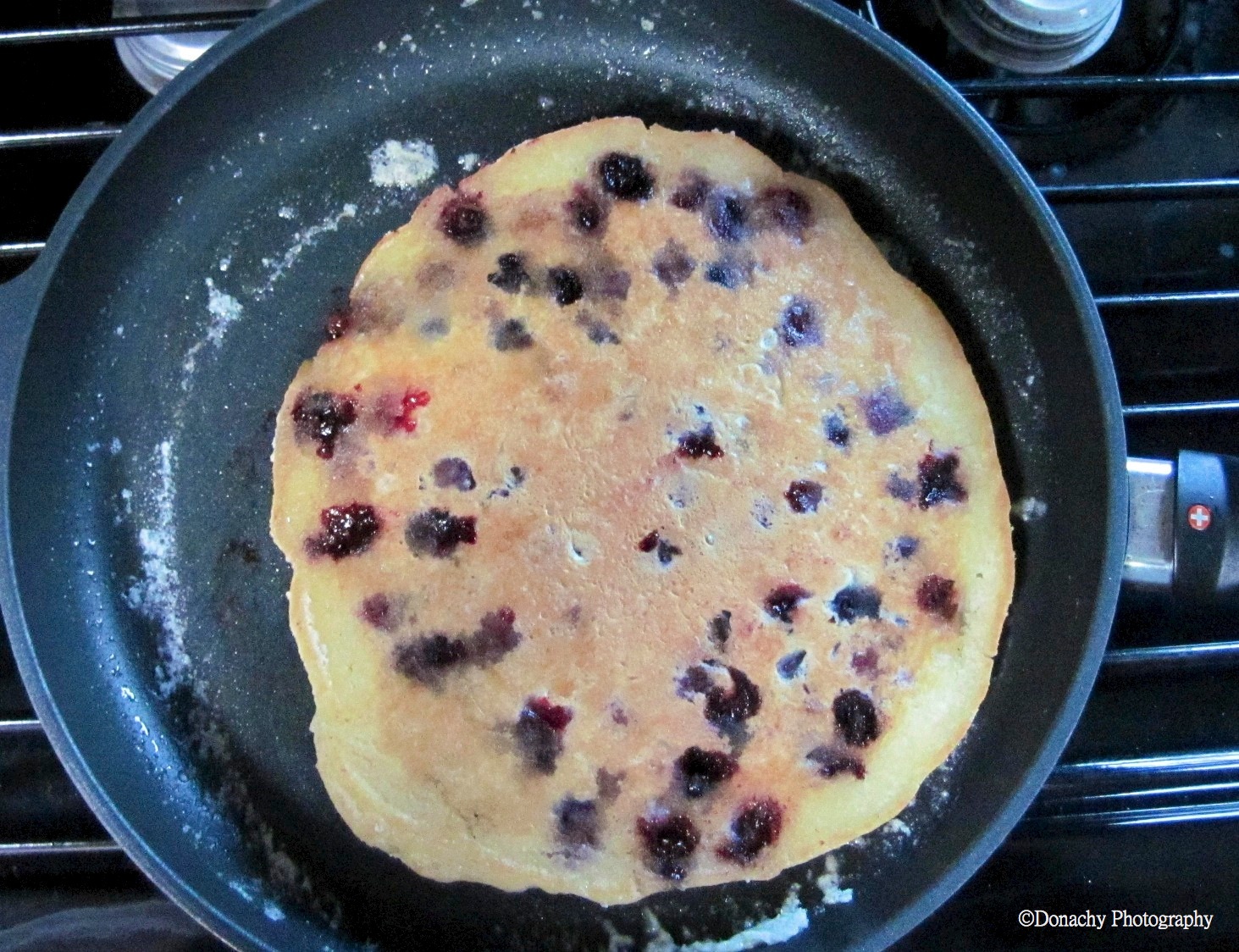
A big blueberry pancake, just about ready to be cut in half and served for breakfast. 

A Study of Upper Summit Lake, Alaska

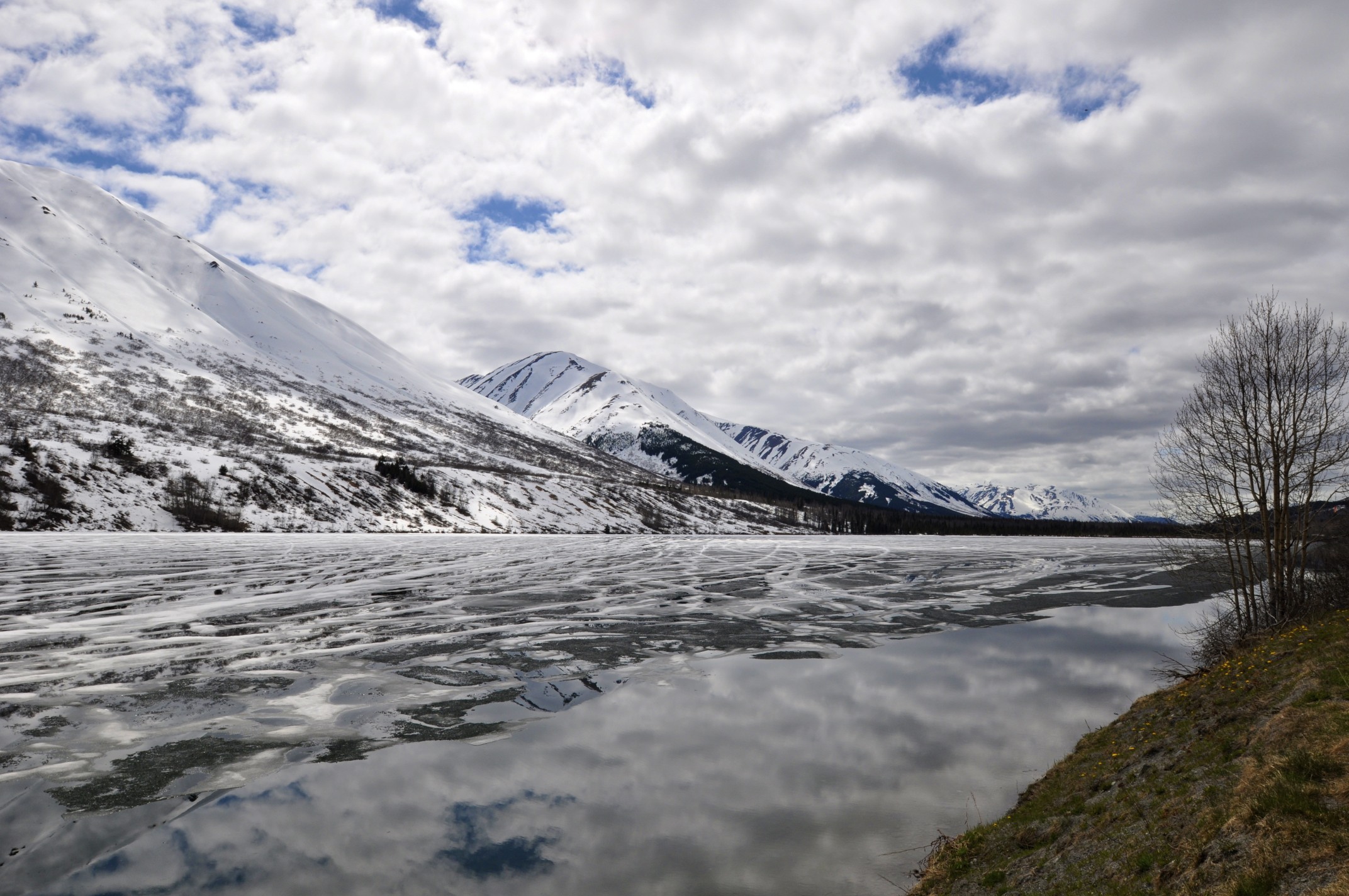
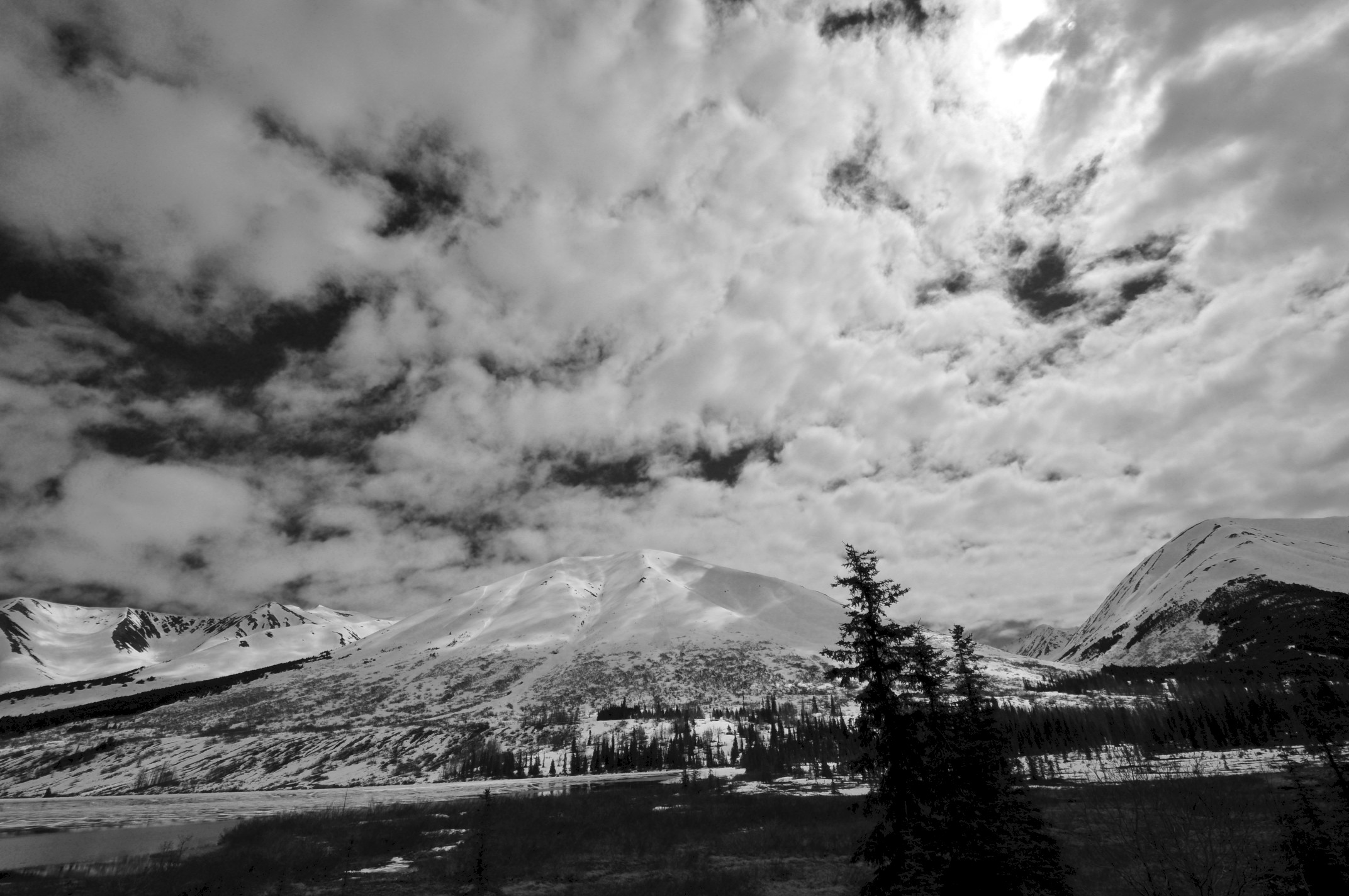
One of the most frequently photographed lakes in Alaska, Upper Summit Lake lies along the Seward Highway between Anchorage and Seward.

We recently got a wide-angle landscape lens and were eager to try it out. A broken sky over breaking up ice on Upper Summit Lake created a visually arresting set of contrasts and similarities.

We’d never been on the Kenai Peninsula early enough to see this much ice and snow. Only a few days prior, the lake was completely covered in ice, although it was apparent it was beginning to thin.

Notice the dandelions blooming in the foreground. Tough little flowers, pushing up through asphalt in the city, almost pushing away the ice and snow up here.

The upper end of Upper Summit Lake is the kind of place where we slow down and scan for moose.

Morning Song

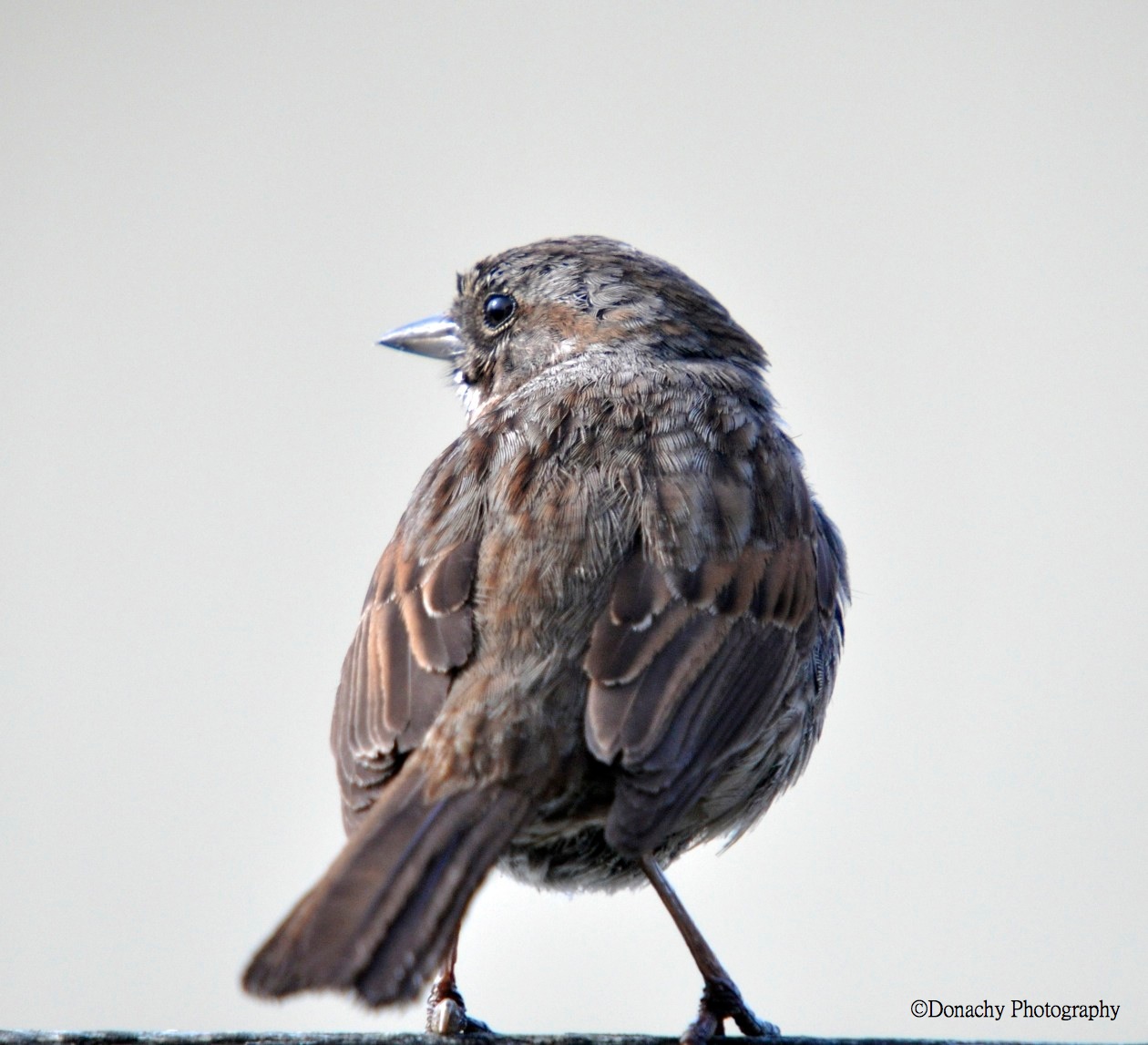
This little guy, a fox sparrow (Passerella iliaca) has been bringing in our days every morning here in Seward with the loveliest song. Day by day, he’s grown a bit tamer. Today he was gracious enough to allow us to get these photos. 

“LBB’s,” my undergraduate ornithology teacher called them. Little brown birds. You see one, and even if you get a really good look at it, when you go to Peterson’s or some other bird guide, what you see quickly becomes a blur of what you think you saw mixed in with a handful of similar-looking birds. But the songs are compelling and unique, and so you keep going back and forth from binoculars to field guides, and if you do this often enough over enough years, distinct species begin to take form.

Here he is, singing his heart out. No doubt some avian version of something clear and strong about being in the right time and place, eager and ready. We humans hear that in birdsong, and it lifts us. 

There are four subspecies of fox sparrows, each geographically unique, except when they overlap. Which they do. And when they do, the birds interbreed. More LBB’s. More scrutiny through binoculars. More head scratching over pictures in bird books.

When I approached too close, he went for a familiar place: the ground. Fox sparrows love underbrush and are often heard rustling through leaves or glimpsed flitting from one low willow to another. 

We’re lucky. We who live in North America. These migratory passerines breed up here. Which means they sing. In the places they head to during the winter, they don’t breed, and they typically don’t sing.

Before he flew off, he perched atop a wooden sign and gave a backward glance. The early morning sky was gray. I returned to the camper to make a blueberry pancake and fry some bacon while Barbra cut a grapefruit in half and made us big mugs of coffee.

Dungeness Crab in Beer and Miso

Whether fresh or previously frozen, Dungeness crabs and blue crabs are a great meal to linger over.

Flip a coin. Heads its Dungeness, tails its blue. We’re in either way. Some of the most memorable meals we’ve enjoyed were centered around freshly steamed or boiled crabs, good beer or wine, and a long, leisurely meal with just the two of us or with friends cracking and picking crabs.

We prefer fresh crabs whenever we can get them. In South Carolina, there was a private dock on a saltwater cut through the marsh that could be counted on to produce blue crabs on incoming tides. And when I lived in Oregon, throwing out a couple of crab pots was a matter of course on salmon fishing trips. Because Dungeness populations are depressed in the parts of Alaska we frequent, their harvest isn’t currently permitted in those locales. So most of the crabs we’ve been getting are purchased already cooked, but we still heat them before serving.

Our favorite way to boil-steam crabs is fairly simple. We start with about a half-bottle (6 – 8 ounces) of beer and 1 tablespoon of miso per Dungeness crab. Since more liquid than this is necessary, we add a cup of water or two. The idea is to ensure that there is enough liquid so that it doesn’t all boil off in the 12 minutes or so required to heat through a previously frozen Dungeness. For two crabs, add a 12-ounce bottle of beer, a little more miso, and, if necessary, a little more water.

I usually don’t immerse the entire crab. This is because I’m frugal (cheap) and hate wasting beer. I boil-steam the crab on one side for a few minutes, then flip it and continue cooking it for a few minutes more. If I’m doing multiple crabs, I arrange them in the pot as best I can and rotate them once during the cooking – although this really may not be necessary.

Previously cooked crabs are inevitably already plenty salty. The beer and miso bath gives them a mild sweetness. If you’re starting with fresh crabs, you might want to add some salt to the broth. A good rule of thumb is to steam fresh crabs for about 7 – 8 minutes per pound – which means a two-and-one-half pound crab needs about 20 minutes in the pot. One crab this side is usually plenty for the two of us, served with, say, a salad, fresh corn on the cob, and a loaf of crusty bread.

Our favorite dipping sauce? Melted butter, olive oil, garlic, lemon and soy sauce. For two people, melt about 6 tablespoons of butter. Add a clove of minced garlic and sauté  it for a minute or so. Then add 1 tablespoon of olive oil, the juice from half a lemon, and 1 tablespoon of soy sauce. A slice or two from a really great loaf of bread can be used to sop up any remaining sauce.

Crab goes great with a wide range of beers or a buttery Chardonnay.

Stanley and the Lance

Our home on wheels the past three summers – a Lance camper perched on a 3/4 ton Chevy Silverado, here parked for lunch with a gorgeous view of Resurrection Bay near Seward, Alaska. Note the hitch for towing our C-Dory 22 Angler. This photo was taken on May 21, 2012.

Our first summer in Alaska, we lived aboard our C-Dory 22 Angler, GillieGillie’s pilot house and cuddy cabin made for a cozy nest, and the spirited little Toyota Tacoma that did the pulling over the 8,000 plus miles we drove that summer was, simply, the most enjoyable vehicle either one of us has ever driven. The 43 days we spent traveling in that rig made for a summer for the books. In fact, we talked for some time about traveling all across North America in this rig: exploring blue highways both on land and on water, envisioning jaunts down to the Florida Keys, out to Martha’s Vineyard, across the country to Catalina Island and everywhere in between. We even talked about launching the C-Dory at Pittsburgh, Pennsylvania and cruising all the way down the Ohio and the Mississippi to New Orleans.

But when we made the decision to move to Alaska, rent out our home in Sacramento, and spend our summers on the Kenai Peninsula…

A carved wooden hummingbird given to us by our daughter, Maia, on a trip that passed through a First Nations village in British Columbia greets us each time we open the door. Framed artwork and other personal touches make our camper a home.

After months of comparative shopping and researching campers and trucks, we still felt like we didn’t know as much as we would have liked. On the other hand, we knew enough to be comfortable making a decision. We’ve been very happy with both the Lance Camper and the Chevy Silverado 2500 it sits on.

The camper has a queen-size bed, lots of windows and skylights providing natural lighting, a three-burner propane stove with oven, an air conditioner and heater, a good shower and flush toilet, a TV and sound system, a great refrigerator/freezer, lots of storage space and enough room overhead to be comfortable for a person of my height (I’m 6′ 1″). We added a solar panel, which we highly recommend; even on cloudy days the battery charges. We also have a generator which, although rarely used, has been much appreciated the couple of times we’ve needed it.

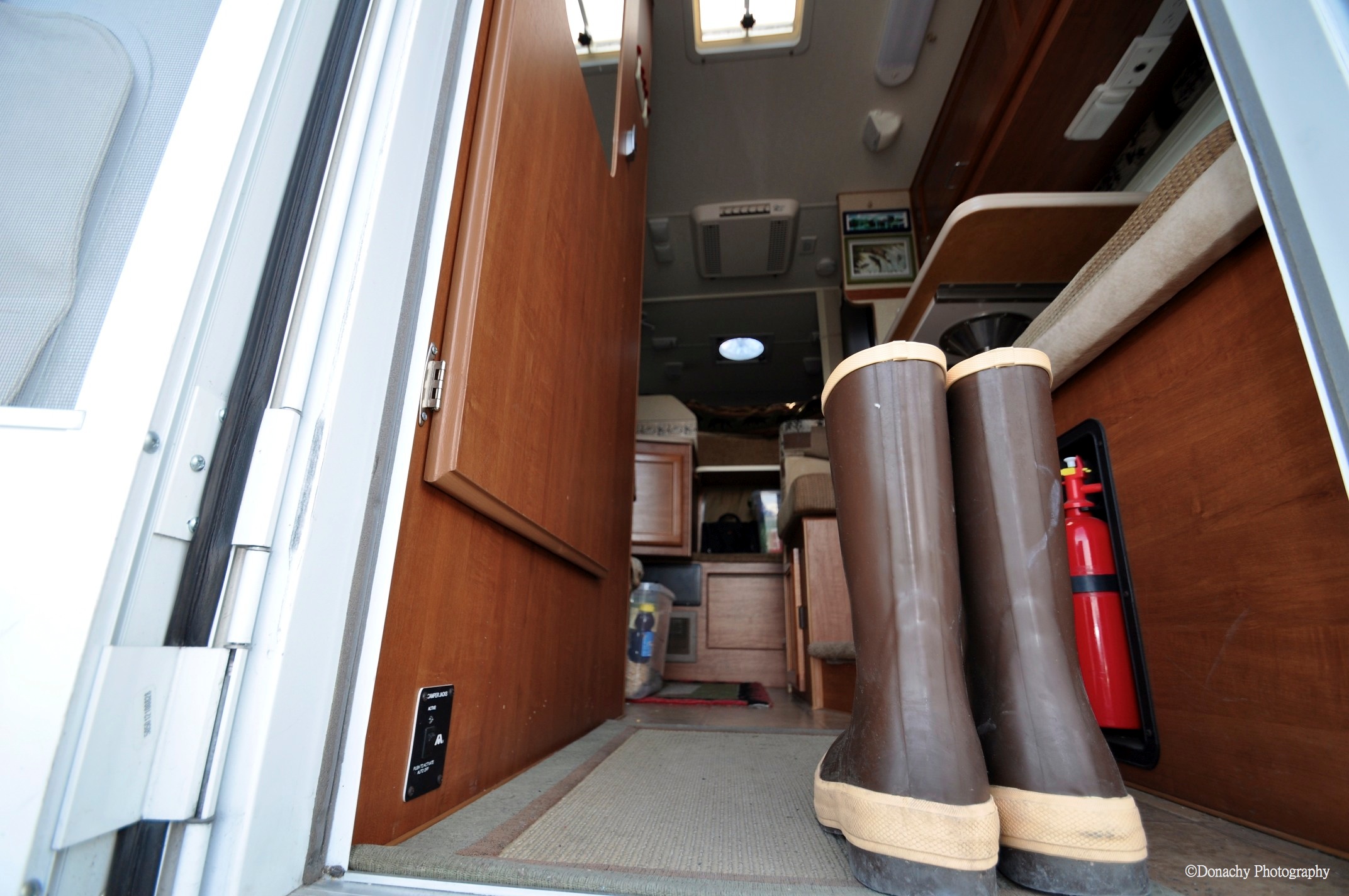
A pair of Xtratuff boots – iconic of Alaska anglers and boaters – is ready at the entrance. 

Stanley is a name conferring strength and dependability – like Stanley tools. Fitted with airbags (extra shock absorbers), our three-quarter ton Silverado has performed superbly carrying the camper and towing our 4,500 pound boat. Given a steep mountain grade, Stanley shifts down as if to say, “All right.” Nothing more. No groaning and straining, no needless extra shifting, just a simple, straightforward, “All right” and up the mountain we go. And kicked into four-wheel drive, this truck has the grit to power through even loose beach sand with the camper – a test we didn’t intend to put the truck through and won’t be repeating.

We went back and forth regarding two options: gas or diesel, and dual rear wheels or single. We opted for a gas engine and single wheels, and after three summers of putting this rig to the test we can say without hesitation that with the right tires, single wheels are fine. And we’re happy we don’t have to deal with the noise of a diesel engine (or impose that noise on our neighbors). That being said, the fact is we don’t put a lot of miles on our rig. A diesel engine offers some real advantages to campers engaged in extensive traveling.

To anyone contemplating a rig like this, we have one firm recommendation: Start by choosing the camper you want, then match it to the right truck. 

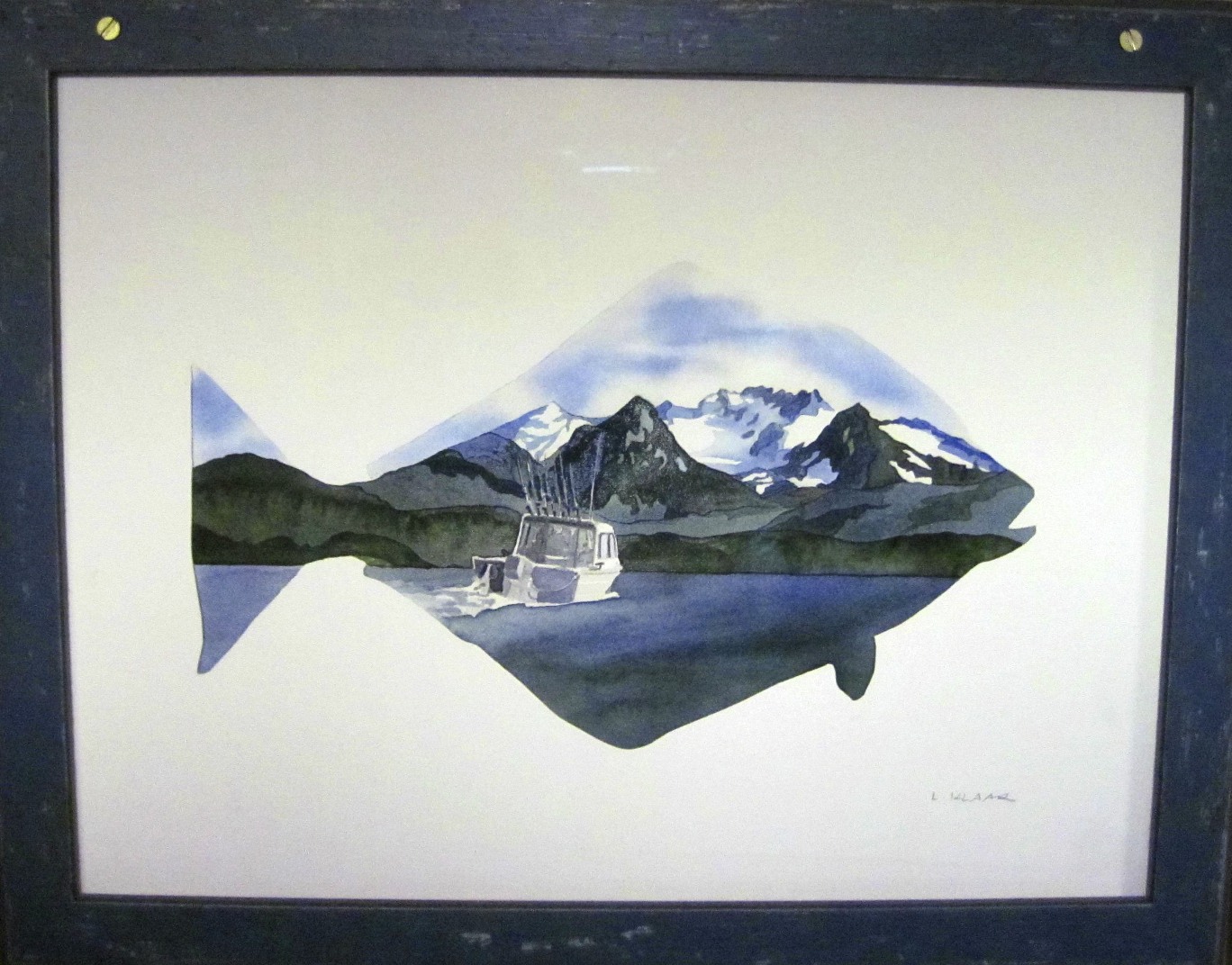
This watercolor by Homer, Alaska artist Leslie Klaar depicts a boat much like our C-Dory heading off for a day of fishing in the great Northwest. It hangs near the door of of our camper.

Sandhill Cranes: Up Close and Personal

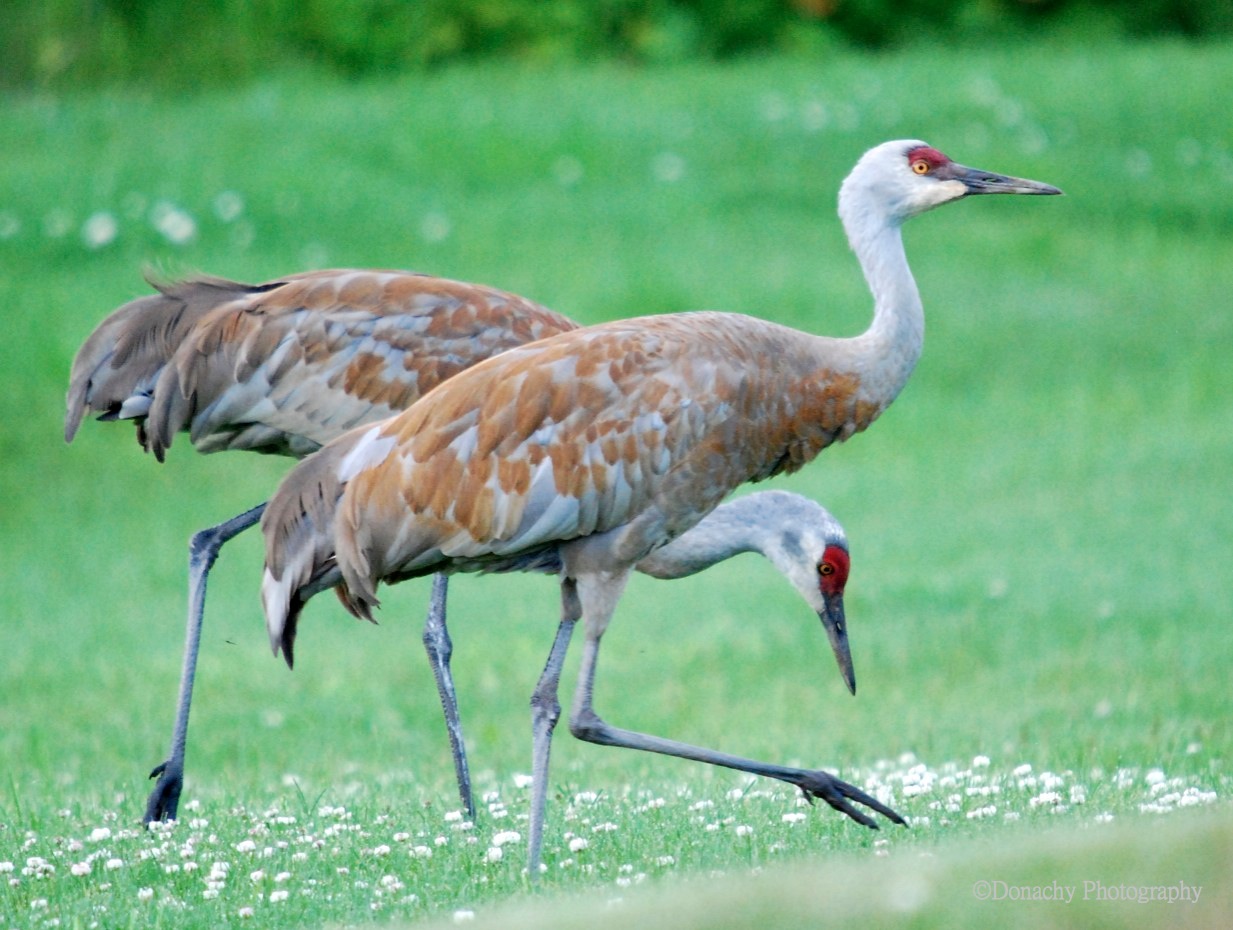
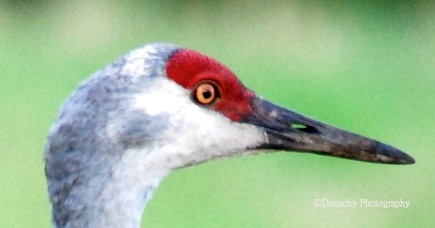
Driving into Homer, Alaska one summer we encountered this beautiful pair of gray and rust colored sandhill cranes (Grus canadensis) foraging on an expansive lawn. Cranes are opportunists, and although they are mainly herbivores seeking grains and seeds, they supplement their diet with insects, small mammals and other animals they encounter.

Bird weights can be deceptive due to their hollow bones. Even though adults have wingspans of six to seven feet (1.8 to 2.1 meters) and stand four to five feet tall (1 to 1.2 meters), they typically weigh less than 10 pounds (4 kilograms).

Since cranes are hunted in Alaska and can be quite wary, we felt lucky to find a pair that wasn’t too skittish. 

Other times we’d seen cranes, they were flying overhead, or, as was the case one summer in Yellowstone, far out on a plain. 

We stalked them for awhile, snapping photos, gauging our distance without spooking them into flight, and then we left the couple to continue their hunting. 

Of course, this being Alaska, when we looked up from the field where we’d been intently watching the cranes, this is what we saw – the Kachemak Glacier, which flows out of the Harding Icefield.

Childs Glacier: When Ice Falls

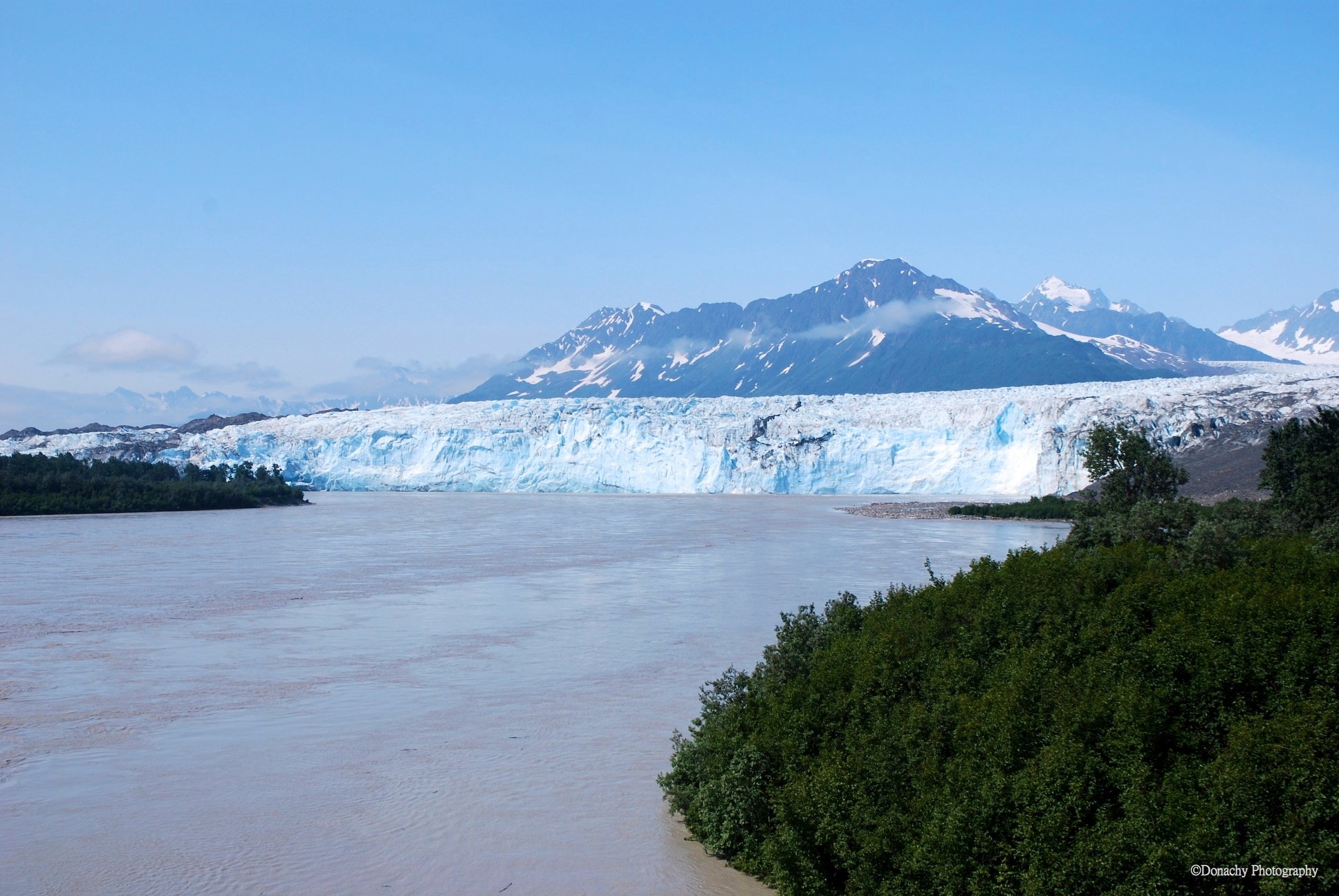
The face of Childs Glacier forms a bank on the Copper River near Cordova, Alaska. This is the same Copper River famed for its runs of wild salmon.

Two days prior, we’d launched our C-Dory in Valdez and made the 90-mile run across a section of Prince William Sound to Cordova – a fishing village accessible only by air or water. The livelihood of many of Cordova’s 2,000 or so inhabitants is connected to the massive runs of salmon that ascend the nearby Copper River. A running event, the Alaska Salmon Runs Marathon and Half-Marathon road races, had lured us to this idyllic village. We hadn’t even known about Childs Glacier when we first put together our travel plans.

Just 400 yards across the river is a picnic area offering excellent views of the glacier.

As often happens at running events, it wasn’t long after we’d finished the half-marathon that we fell into conversation with another couple. They were planning on renting a car and driving out to see the glacier the following day. When they asked if we’d be interested in splitting the rental car and joining them, we didn’t hesitate. This would be our first opportunity to get close to a glacier.
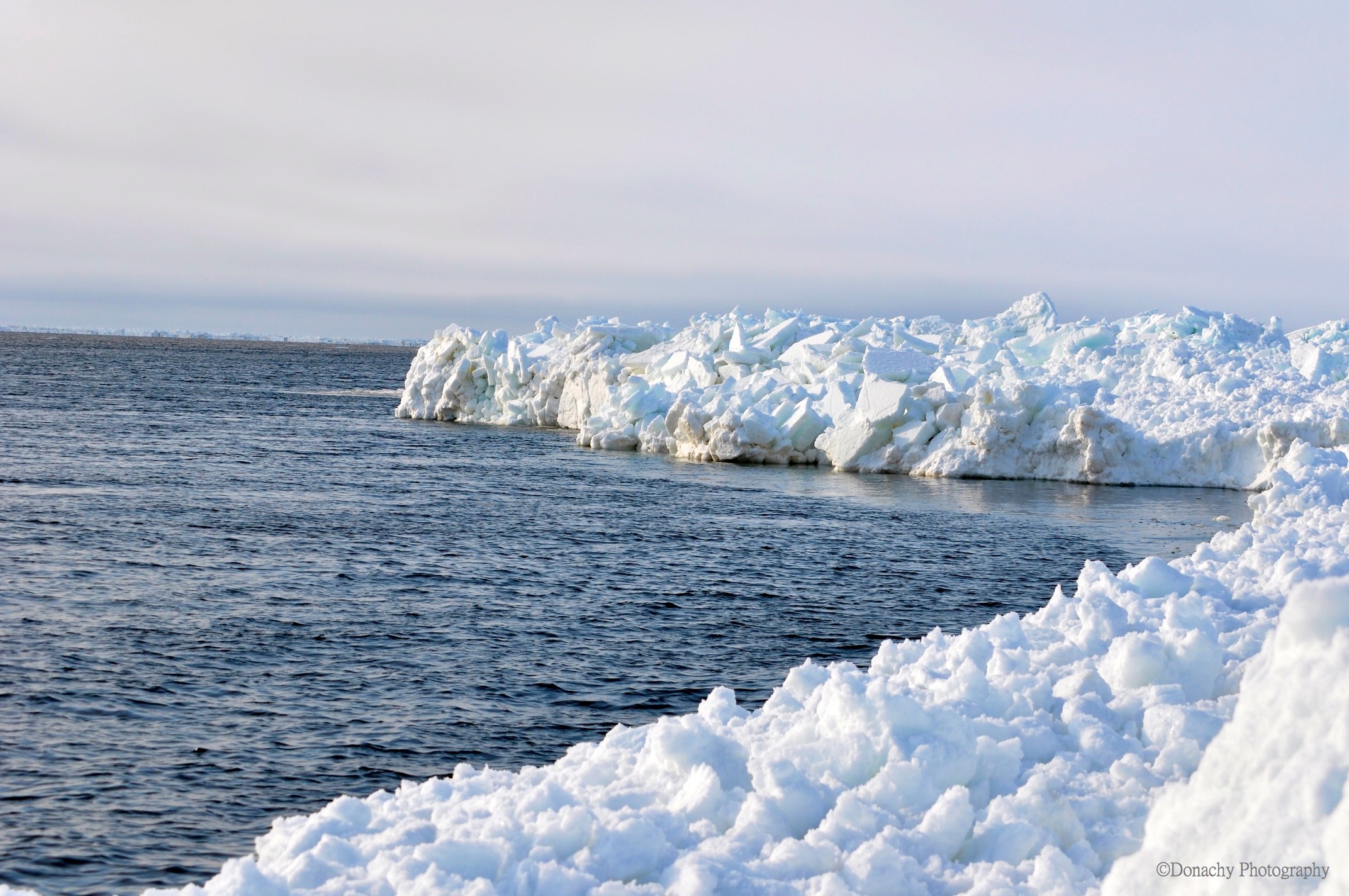
We figured we’d drive out, snap a few photos, have lunch at the picnic area, and drive back. If we were lucky, we might see a moose or a bear along the way. This was before we understood the dynamic nature of sea-level glaciers. We were completely unprepared for what we would experience.

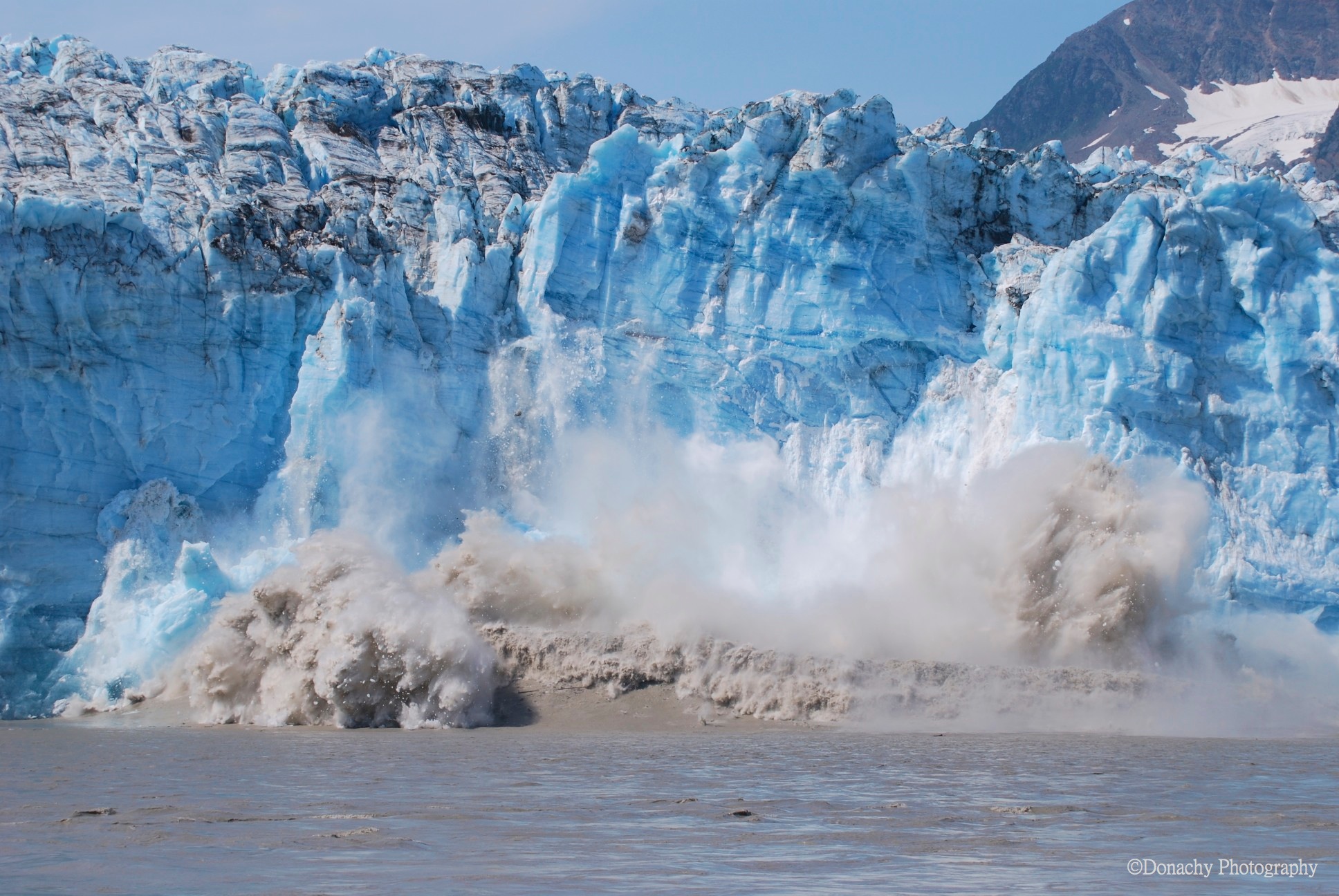
A shower of ice sloughs off the glacier’s face.

The width of the chalky-brown Copper River was all that separated the picnic area from this very active mass of slowly moving ice. Think of the cracking and popping sounds a couple of fresh ice cubes make in a glass of whisky. Now imagine those sounds magnified to amplitudes ranging from rifle fire to dynamite charges as ice almost continuously breaks away from the glacier’s face. We were mesmerized. The half-hour we’d planned on staying turned into an hour, then into two, and then into three.

We were witnessing yet another Alaskan phenomenon so large and full of energy that it is all but impossible to adequately capture on film or with words – an event you have to experience to comprehend, and we were here, experiencing it. Although neither Barbra nor I gave voice to the thought, it was probably on this day, watching and listening to this glacier, that the idea of moving up here began to root itself in us.

We sensed that something BIG was about to happen.

Suddenly, a massive section of ice below a seam we had been watching seemed to sag. A fraction of a second later a prolonged groaning, cracking explosion unlike any we’d heard before reached our ears as the face of the glacier fell away, collapsing into the water with a force that sent a small tidal wave curling toward us. The four of us looked at each other, eyes wide, jaws dropped, and quickly gathered our gear and scurried for higher ground. Seconds later, the wave hit the shore, inundating the area where we’d been standing only moments earlier. It was thrilling.

This large iceberg in Prince William Sound is the result of a glacier calving event in one of the sound’s fjords. Kittiwakes and gulls have claimed it as a roosting place.

Laying in a Year’s Worth of Supplies Part II: The Well-Stocked Kitchen

Penzeys spices have earned a prominent place in our well-stocked kitchen. We recently received an order of items we wanted to make sure we have on hand when we return to Point Hope at the end of the summer. From left to right in the foreground: arbol peppers, star anise and chipotle peppers. 

As I write this, I’m surrounded by several stacks of Rubbermaid totes. Each stack has four to seven nested totes duck taped together, ready to be mailed to Anchorage where they’ll be filled with dry goods and mailed back up here for the next school year. We’re down to the tail end of most of our groceries, which is the way it should be with only 10 days remaining before we fly down to south-central Alaska for the summer.

Planning out a well-stocked kitchen, experimenting with new dishes and baked goods, and writing this blog make the extra effort and expense of laying in everything we need for our kitchen worth it. In addition to mail-ordering spices to supplement what we already have on hand, we’ve prepared a five-page Excel spreadsheet shopping list we’ll take care of in Anchorage. And, of course, there are the ice chests we mailed down earlier, waiting to be filled with some of the world’s best seafood – the salmon, halibut and rockfish we catch and package ourselves. Come late summer when we return to the village, our kitchen will be ready!

Various types of salt, cooking oils and a full compliment of herbs and spices inspire an eclectic approach to cooking and baking, and allow us to create many of our own rubs and grilling sauces.

Although the theme of our summer posts will shift to fishing, hiking, boating and sailing, we’ll continue to write about the cooking we do for ourselves and our guests. And during the summer, we’ll finally be able to enjoy wine and beer with our meals!

Click here to see A Year’s Worth of Food: Provisioning for the Alaska Bush, Part I

Whaling: Two Miles Out on the Frozen Chukchi Sea

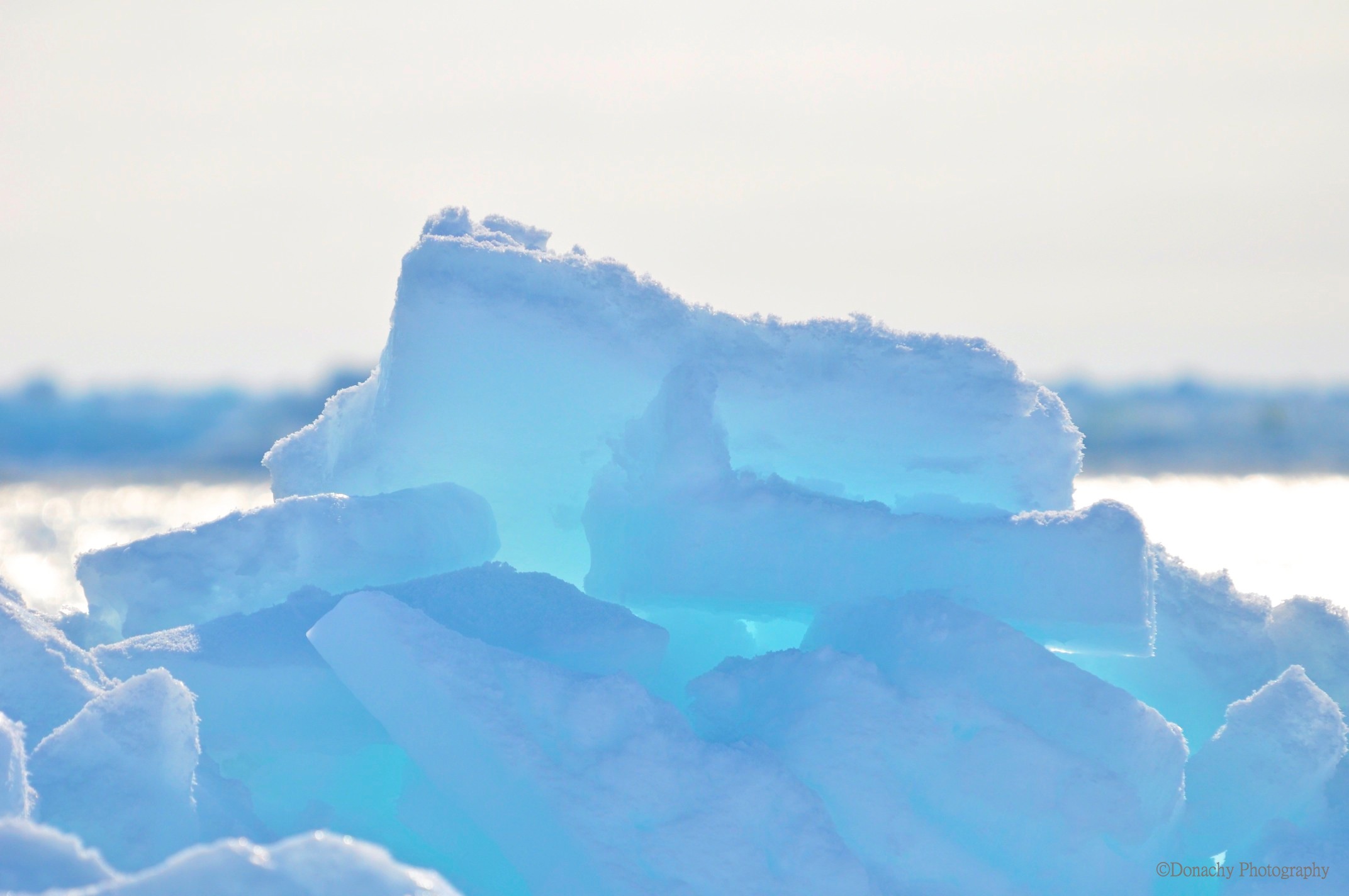
Two miles from land across the frozen Chukchi Sea, the ocean ice is constantly breaking up and reforming, creating ridges of fragmented ice. The blocks of ice in this photo weigh from hundreds to thousands of pounds, but are so clear they seem to be lit from within. 

We had heard that the bowhead whale was out near the point, three miles west of the village of Point Hope. But once out there, we saw few signs of activity. We found a trail leading out onto the ice and began following it in hopes of locating the lead – the place where currents and wind had caused a break in the ice and created open water. That’s where the whaling camp would be.

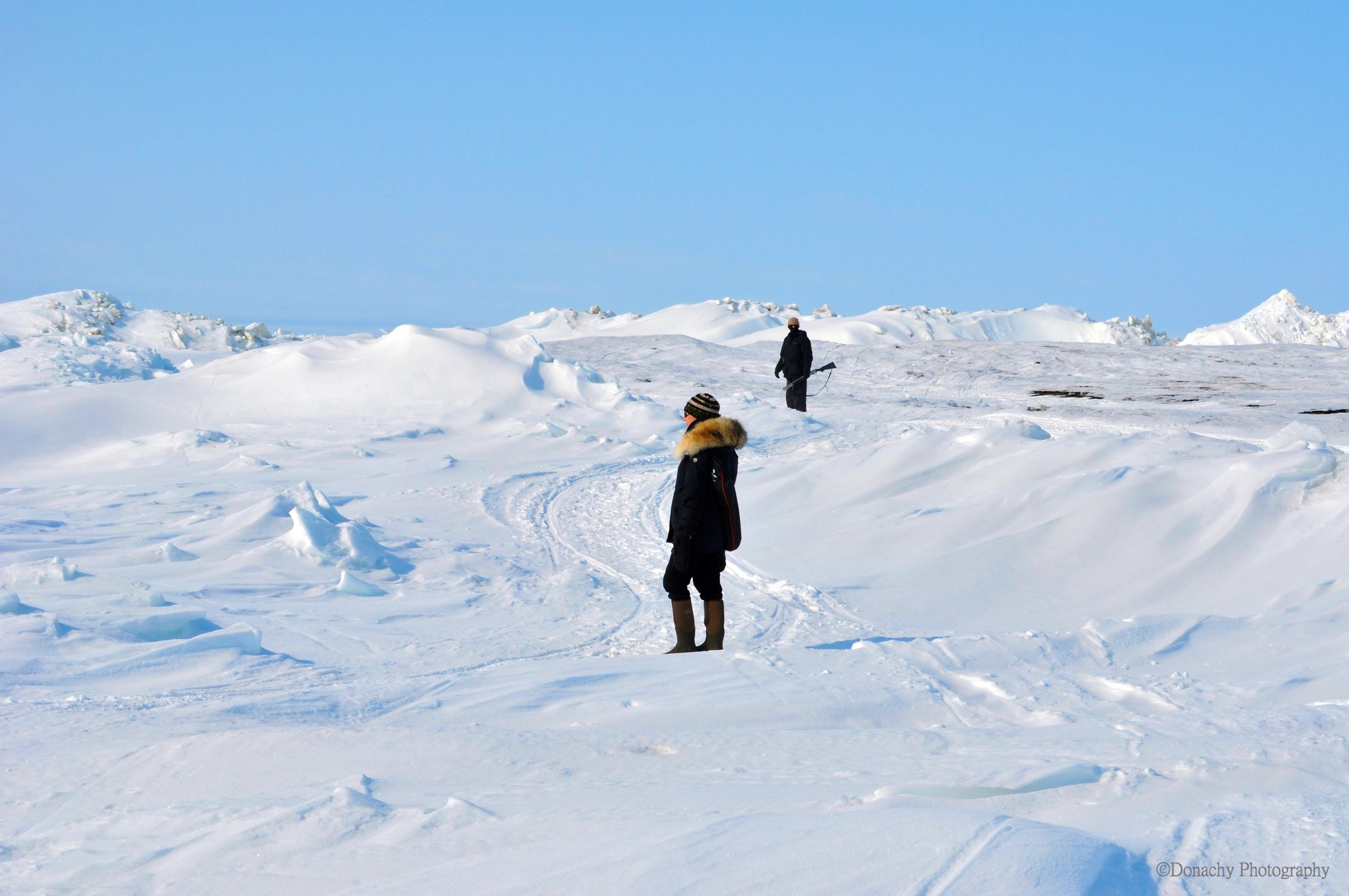
The ball and pyramid, above, were a familiar trail marker from a previous trek out onto the ice. (Click here to see “Whale Camp: Frozen Sees and Icescapes.” A frozen sea is not smooth. It is more like an otherworldly, windswept rock and sand desert with the rocks replaced by ice and snow replacing the sand. Note the faint snowmobile tracks curving along the right edge of the photo – that’s the trail. 

A mile or more out on the ice, Barbra and our friend, Bill, pause to scan for telltale seabirds that might give away the location of the lead. This is an area frequented by polar bears, hence the gun Bill is carrying. We saw no bears, but did cross a number of fox tracks.

Huge, luminescent fragmants of snow-dusted ice reminded me of the hardtack candy my grandmother used to keep in a crystal bowl. 

Leads can open and close in moments, leaving people stranded when a break-off occurs, or generating enough force to place this pickup-truck-sized block of ice precariously atop a mass of fragments. A walk across sea ice gives one a glimpse into the forces behind tectonic plates and events such as earthquakes and the formation of mountain ranges.

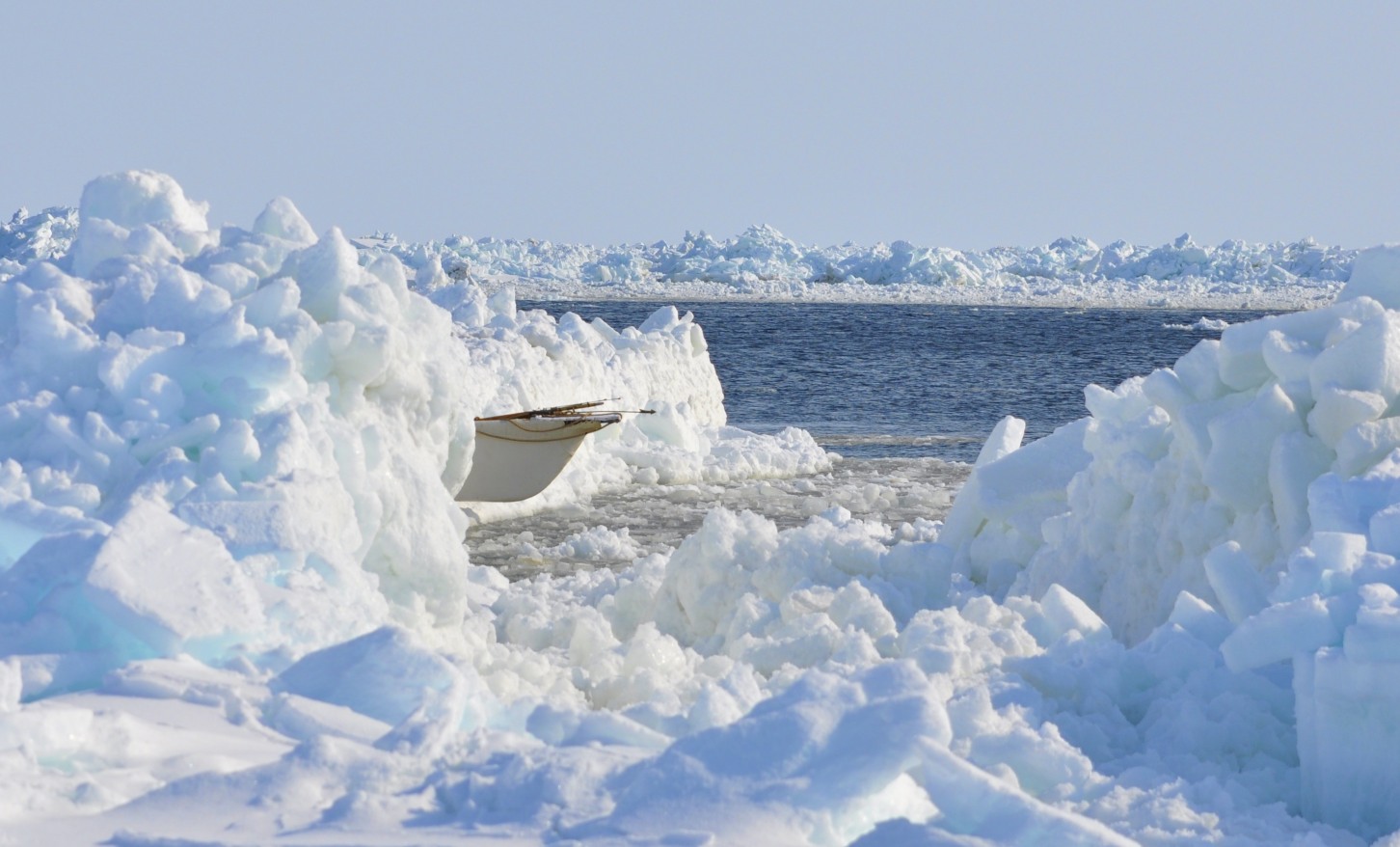
We’d walked over five miles by the time we finally found the lead – a fairly narrow band of water hemmed in between two ice sheets. The bow of a seal-skin boat was a sure sign we were nearing the main whaling site.

This is a typical whaling outpost. The seal-skin boat, which is about 17  feet long, is made from hand-stitched bearded seal hide. The boats are light, able to be moved on a moment’s notice. The jumble of ice at the edge of the lead was piled there by natural forces and serves as both wind shield and hunting blind. Note the mass of floating ice out on the water. 

At the edge of the lead, the ice does not taper. It is thick and strong, but susceptible to breaking off if the wind shifts. 

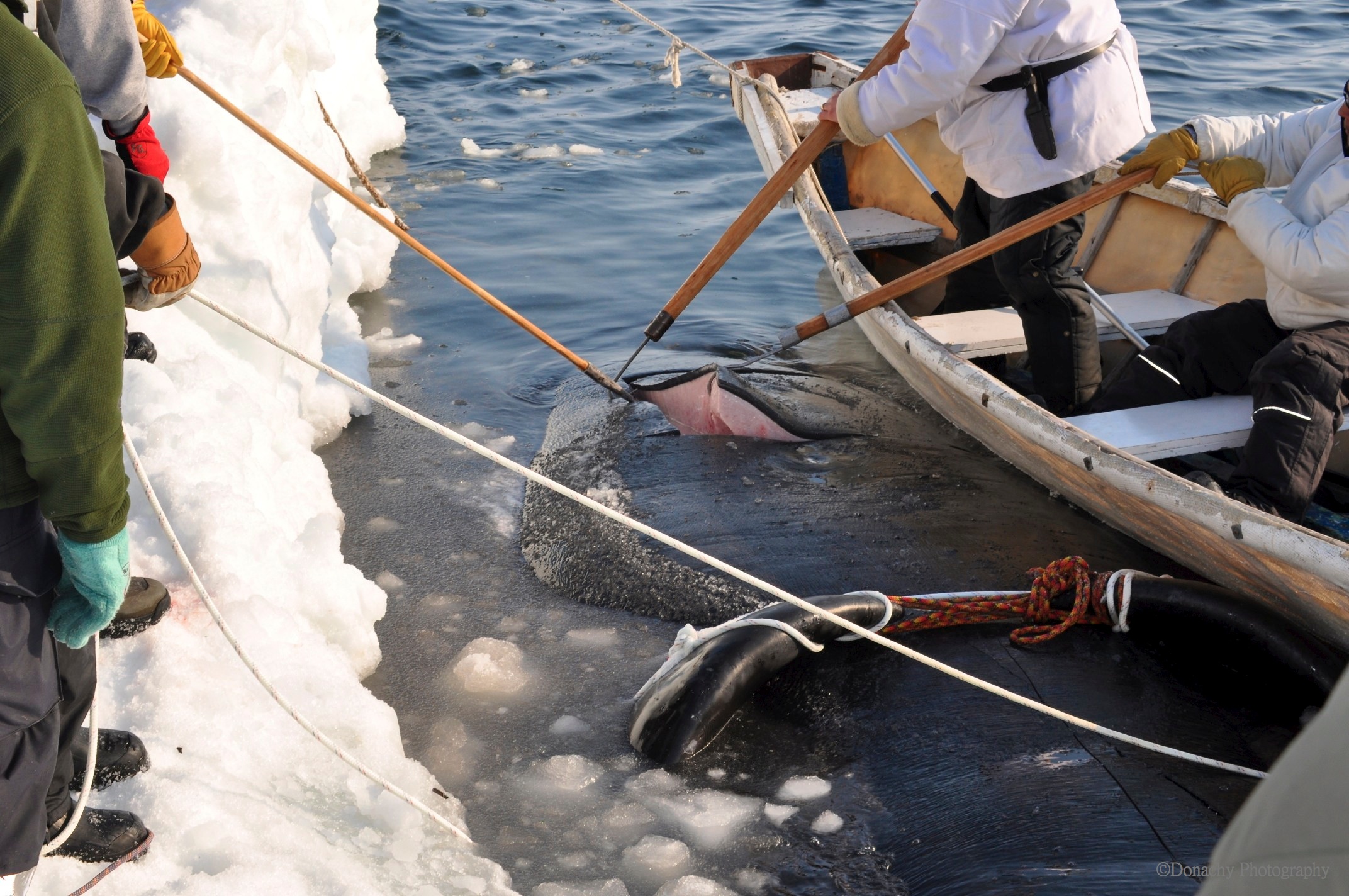
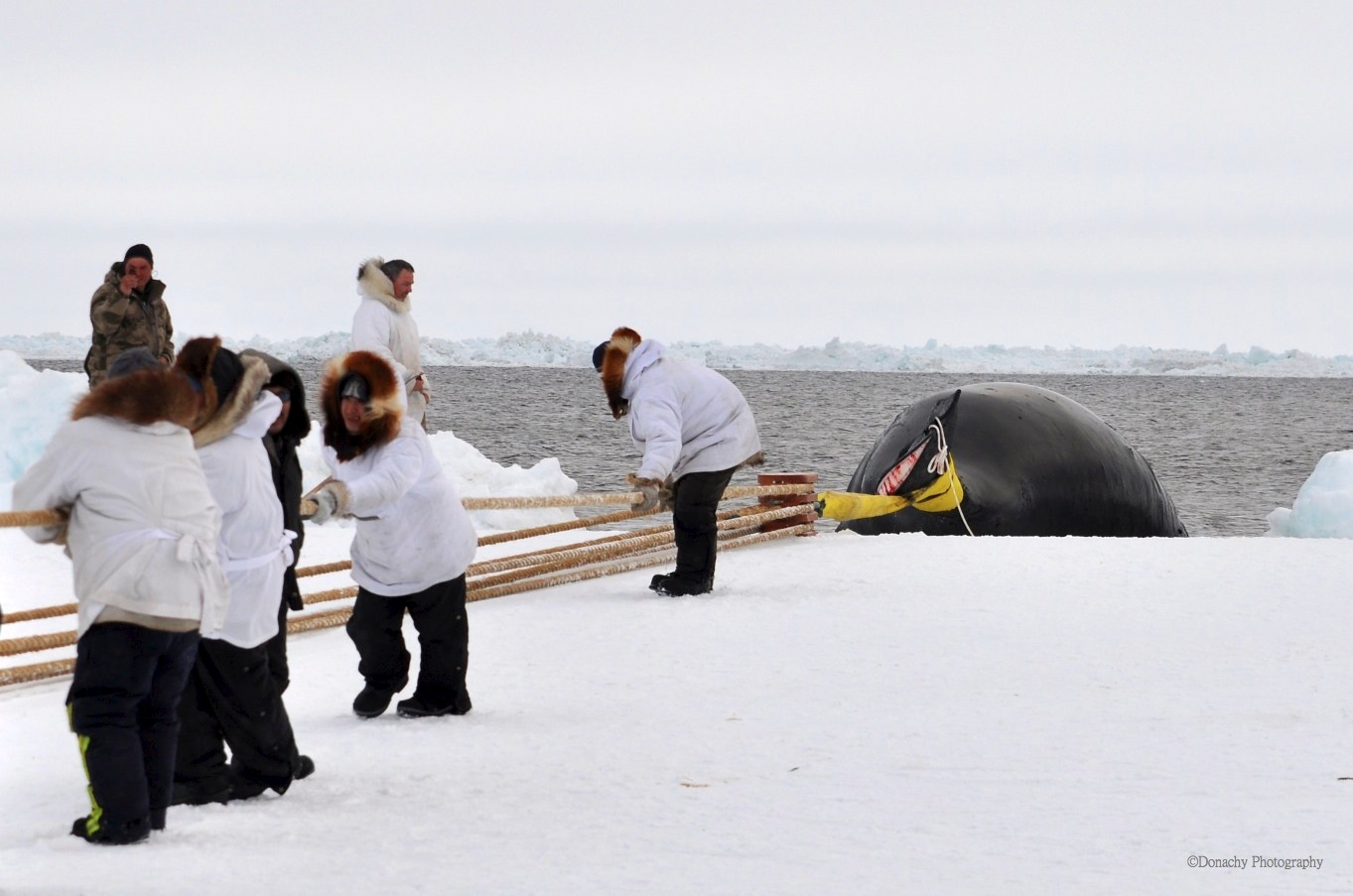
We had wondered how a whale weighing 10, 30 or even 50 tons is pulled from the water. Two heavy block and tackles are anchored to the ice. The one nearest open water is pegged with a thick metal spike. Fifty yards or so back a second block and tackle is anchored by drilling two holes through the ice and securing the it with a strong harness. Even with the modest mechanical advantage of pulleys, it takes dozens of people pulling for all they’re worth to bring the whale out of the water.

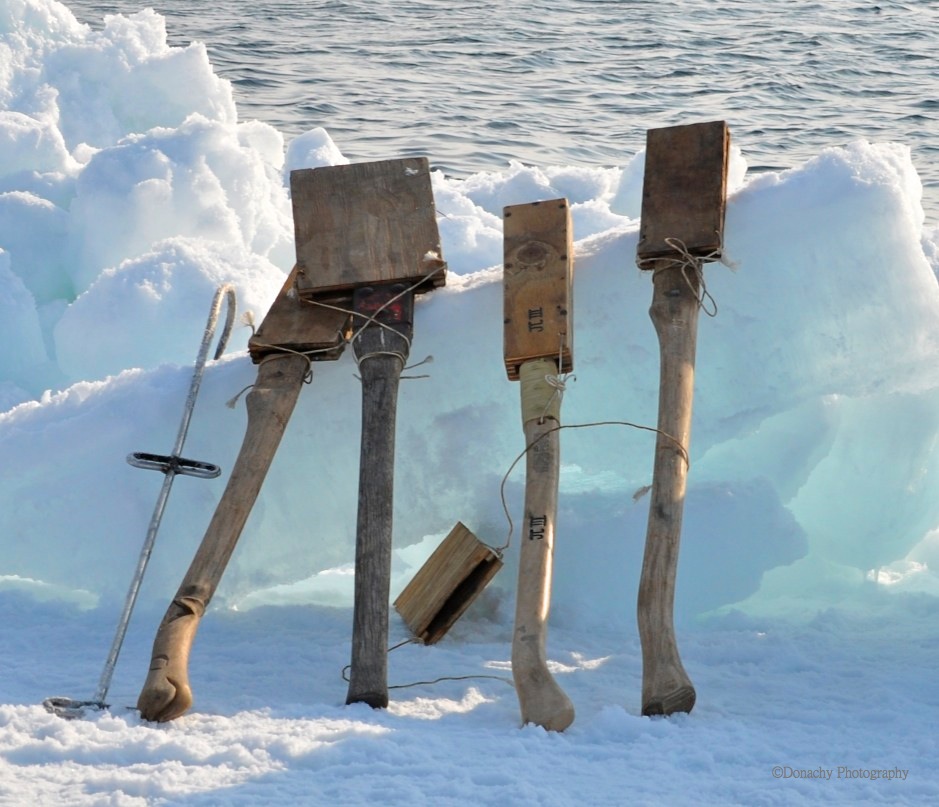
Most of the tools used are hand-crafted. The spade-like implements on the right are butchering tools.


We were very aware of this deep crack in the ice, as, no doubt, were the whaling captain and his crew. While the ice to the right of the crack was sturdy enough to support a house, a shift in the wind could have caused it to suddenly break off. 

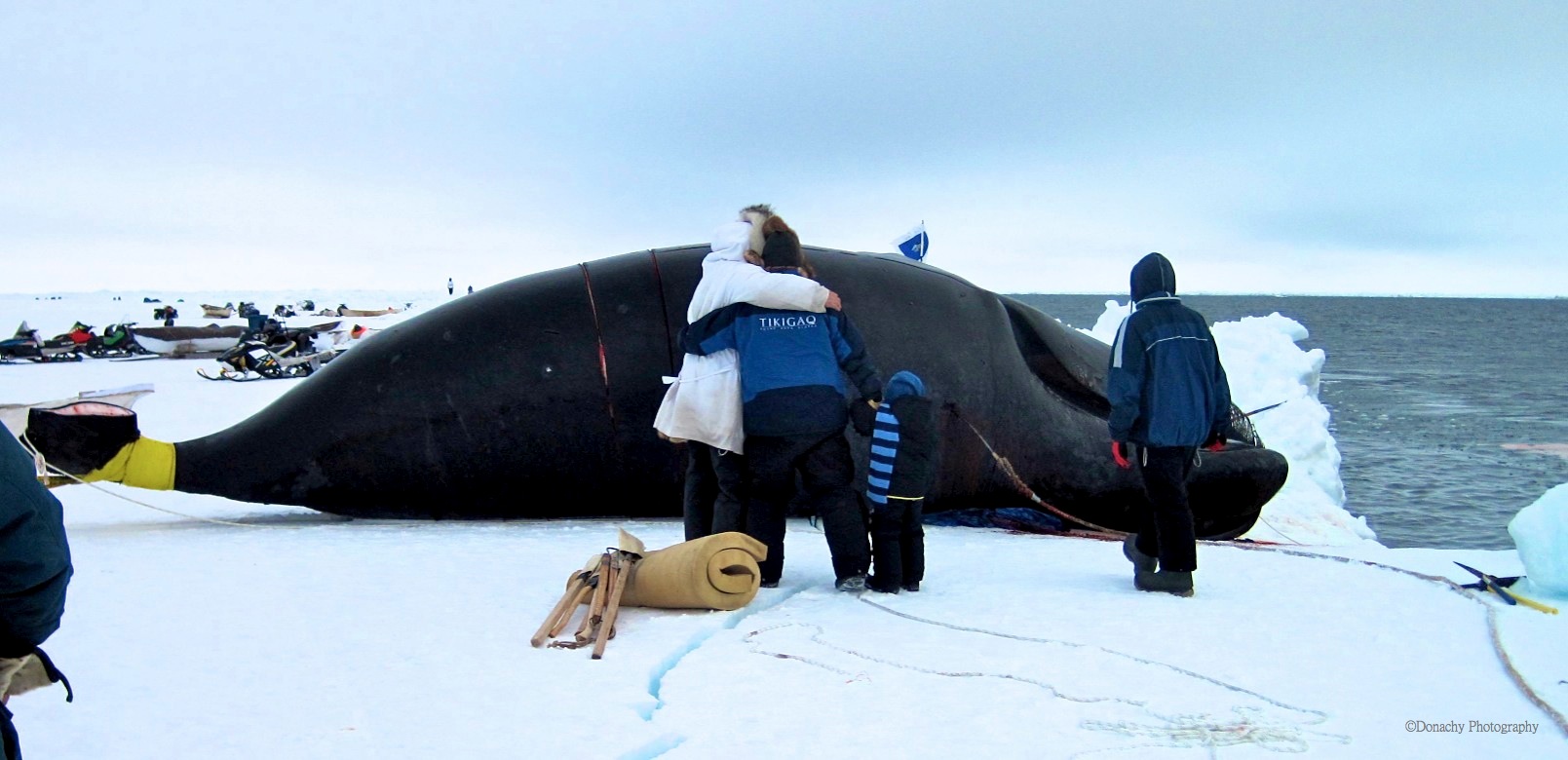
The whale was small, a young one. Here a ceremonial first piece weighing 30 pounds or more is cut for soup in which the only ingredients are melted snow and fresh whale – a welcome celebratory meal against the cold.

When the pull began, I handed my camera to Barbra and found a place on the rope. The pull started with grunts and chanting, but as the whale begin to emerge from the sea onto the ice, the chanting gave way to whoops of joy and cheers.

The captain (in the blue coat) shared a celebratory hug (above)…

…and then his crew member headed off with a friend for a bowl of hot whale soup. By this time, Bill, Barbra and I had been out on the ice for nearly five hours and we had a two-mile hike back over the sea to land. We were thrilled to have witnessed and taken part in a tradition that goes back to the roots of this Inupiat village.