Alaska’s Permanent Fund and Trout Unlimited

Daughter Maia works a pool in the canyon country of Oregon’s Deschutes River.

This past summer, we fell in love with the film Away We Go in which Verona De Tessant (Maya Rudolph) and Burt Farlander (John Krasinski) find themselves in the enviable, daunting and sometimes scary position of realizing that, although they are not wealthy, they can live virtually anywhere they choose to. Their story unfolds as a touching, insightful comedy as they criss-cross North America searching for just the right place.

Verona: I can do my job from anywhere. And all you need’s a phone, right?

Burt: Well, we don’t want to go back to Chicago, do we?

Verona: No, we did Chicago.

Burt: I used to picture myself in Alaska. God, I love that landscape.

Verona: Alaska?

Burt: Yeah.

Verona: You’ve never mentioned Alaska.

Burt: Wow, they pay people to live in Alaska.

Burt’s line about people being paid to live in this great state gets laughs from audiences, although for different reasons depending on who the audience is. While it’s not true that people are paid to live here, there is something called the Permanent Fund. Without getting into the complexities, Alaska’s Permanent Fund is a constitutional provision established in 1976 that, essentially, taps oil revenues allowing the state government to pay an annual check to every Alaskan resident once they’ve lived here one fiscal year. The amount of the check varies from year to year. The current five-year average is $1,341. This year’s payout was lower, but still appreciable at $878.

That’s where Trout Unlimited comes in.

Barbra and I feel a deep commitment to helping to conserve, protect and restore America’s cold water resources. This commitment flows naturally from our love of salmon and trout and the beautiful and often pristine environs they inhabit and depend upon. Protecting our cold water resources, though, is about more than protecting fish. Trout Unlimited has worked in concert with others to bring down dams that are no longer useful – thus restoring countless miles of free flowing rivers and streams. They work with vineyard owners and other farmers to help ensure water-wise land use. And all across the landscape, TU has, for decades, been instrumental in ensuring that mining, timbering and other resource extraction be carried out with sensible respect for its impact on rivers, streams and estuaries when sensible respect is possible, and that extractive industries be turned away when they can’t conduct their business without destroying watersheds.

At present, TU is in the midst of several critical battles. One of them involves a multi-national mining proposal that threatens the world’s greatest salmon estuary, Bristol Bay. The proposed Pebble Mine could wipe out runs that number into the millions of salmon, as well as fishing jobs and subsistence fishing that generations upon generations of Alaskans (and salmon consumers throughout the world) have depended on. TU is also on the vanguard in fighting against irresponsible extraction of natural gas locked underground in Marcellus Shale. The extraction requires fracking, and it is posing a major risk to the streams and rivers I cut my teeth on as a young angler in Western Pennsylvania.

Again, this isn’t just about trout and salmon. We humans, too, drink the water, grow our farms and forests with it, admire its beauty, and are responsible for passing down a legacy of clean water to future generations.

And so, presented with money that is essentially a gift from our adopted state, the choice on how to spend it was easy. This year, Barbra and I will become lifetime members of Trout Unlimited.

After vetting dozens of organizations, we came to feel that in TU, our contributions will support the causes closest to our hearts. Not just for us, but for generations to come.

To read more about TU’s efforts, click on the following links:

Trout Unlimited’s Home Page

Marcellus Shale Project

Bristol Bay

Maia on a seldom-fished hike-in lake raptly watching her fly line for a twitch. 

Smoked Salmon Quiche and Butternut Squash Pie: Savory and Sweet Breakfast (or Dinner)

Savory smoked salmon quiche, sweet butternut squash tarts, a strip of smoked salmon and a mug of black French roast coffee make for a hearty Fisherman’s Breakfast. 

Whether served as breakfast, lunch or dinner, we’re big fans of quiche. It’s easy to make, and since it’s delicious either hot or cold, there are no complaints about leftovers. In making this particular quiche, I set out to resolve two questions. First, would smoked salmon that has been frozen and then thawed work well, and second would the Penzeys dried shallots I’d recently gotten live up to their billing. I’m happy to report that the smoked salmon seemed to suffer not at all from freezing, and the dried shallots were flavorful enough to merit making them a standard part of our kitchen here in the Alaskan bush.

For the squash pie, I used a modification of Craig Claiborne’s pumpkin pie recipe that has long served well. Since the baking times and temperatures for these two pies was similar, I baked them together. We had a bit of squash purée and pie crust dough left over, so Barbra used a muffin pan to make a few squash tarts.

Smoked Salmon Quiche

Ingredients:

  • 1 pie crust
  • 4 large eggs
  • 3/4 cup heavy cream
  • 1/2 cup milk
  • 1 cup shredded Swiss or Gruyère cheese
  • 1/4 cup shallots chopped fine (I used Penzeys dried shallots,which were excellent)
  • 1/2 cup mushrooms, cut into less-than-bite-sized pieces
  • 1/3 to 1/2 pound smoked salmon, cut into less-than-bite-sized pieces
  • 1/3 cup sun dried tomatoes, cut into small pieces
  • 1 tsp dried majoram
  • sea salt to taste
  • freshly ground pepper to taste

Directions:

  1. Preheat oven to 350 degrees F. Bake pie crust for 20 minutes. Halfway through baking, cover edges with aluminum foil or a pie ring to prevent edge of crust from burning.
  2. Remove the pie crust from the oven and set aside.
  3. Turn oven up to 400 degrees F.
  4. Whisk eggs until blended. Add cream, milk, shallots, marjoram, salt and pepper and mix together.
  5. Add mushrooms, sun-dried tomatoes and smoked salmon, mixing together gently so as not to break up the salmon.
  6. Pour and scrape ingredients into the baked pie crust and place on oven’s center rack. You do not need to place on a baking sheet.
  7. Bake quiche at 400 degrees F. for 15 minutes. Turn down oven to 350 degrees F. and continue baking for 25 – 35 minutes – until a wooden toothpick poked into the center comes out clean.
  8. Serve hot or cold.

Butternut Squash Pie

Ingredients:

  • 1 pie crust
  • 3 cups butternut squash (or pumpkin) purée
  • 1/2 cup sugar
  • 1/2 tsp salt
  • 1/2 tsp grated nutmeg
  • 1/2 tsp cinnamon
  • 1/2 tsp powdered ginger
  • 3 large eggs, lightly whisked
  • 2 tablespoons Bourbon (optional, but very tasty)
  • 1 cup heavy cream

Directions:

  1. Preheat oven to 425 degrees F.
  2. Have a chilled, unbaked pie crust ready.
  3. Squash purée: Cut away the stem of the squash and discard. Then slice squash into into round discs approximately 1 inch thick. Cut the disks into 4 to 6 parts. When you get to the bulb, remove the seeds and fibrous part and slice into 6 strips as you would a pumpkin or melon. Steam, oven roast or grill the squash until a fork passes easily through the flesh. Let cool and cut off the skin. Use a stick blender, regular blender or food processor to purée the squash.
  4. Combine the purée with all the other ingredients in a large mixing bowl, blend together, and pour into the chilled pie crust.
  5. Place on oven’s center rack. Bake for 15 minutes, then reduce heat to 350 degrees F. and continue baking for 30 or 40 minutes, until the filling is set. Cracks will begin to appear on the surface of the pie when the filling is set.
  6. Serve warm or chilled, with or without whipped cream.

For a great recipe for making smoked salmon, see Smoked Salmon with Soy Sauce and Brown Sugar Brine.

Tikigaq Cemetery

Weathered jawbones of bowhead whales form a fence around the cemetery in Tikigaq, (Point Hope) Alaska).

After four consecutive weeks of daily rain – a precipitation rate almost unheard of in this semi-arid region of the Arctic – we’ve had several days of brilliant sunshine. The past three mornings, the gravel that makes up the ground here in Point Hope has been hard underfoot. Frost. The cloudberries are over, and the frost means it’s time to go pick cranberries. In the old days, the dead were not buried. “The land all around was our graveyard,” I was told by one of the people of the village. But when the missionaries came, they told the people of the village that the dead must be buried. And so this cemetery was created. 

Today while Barbra and I were eating lunch, we saw a snowy owl outside my classroom window. Last week a brown bear – a grizzly – passed by the edge of town. This might be a good weekend to get up early and walk up the beach in hopes of seeing a walrus.

Smoked Salmon with Soy Sauce and Brown Sugar Brine

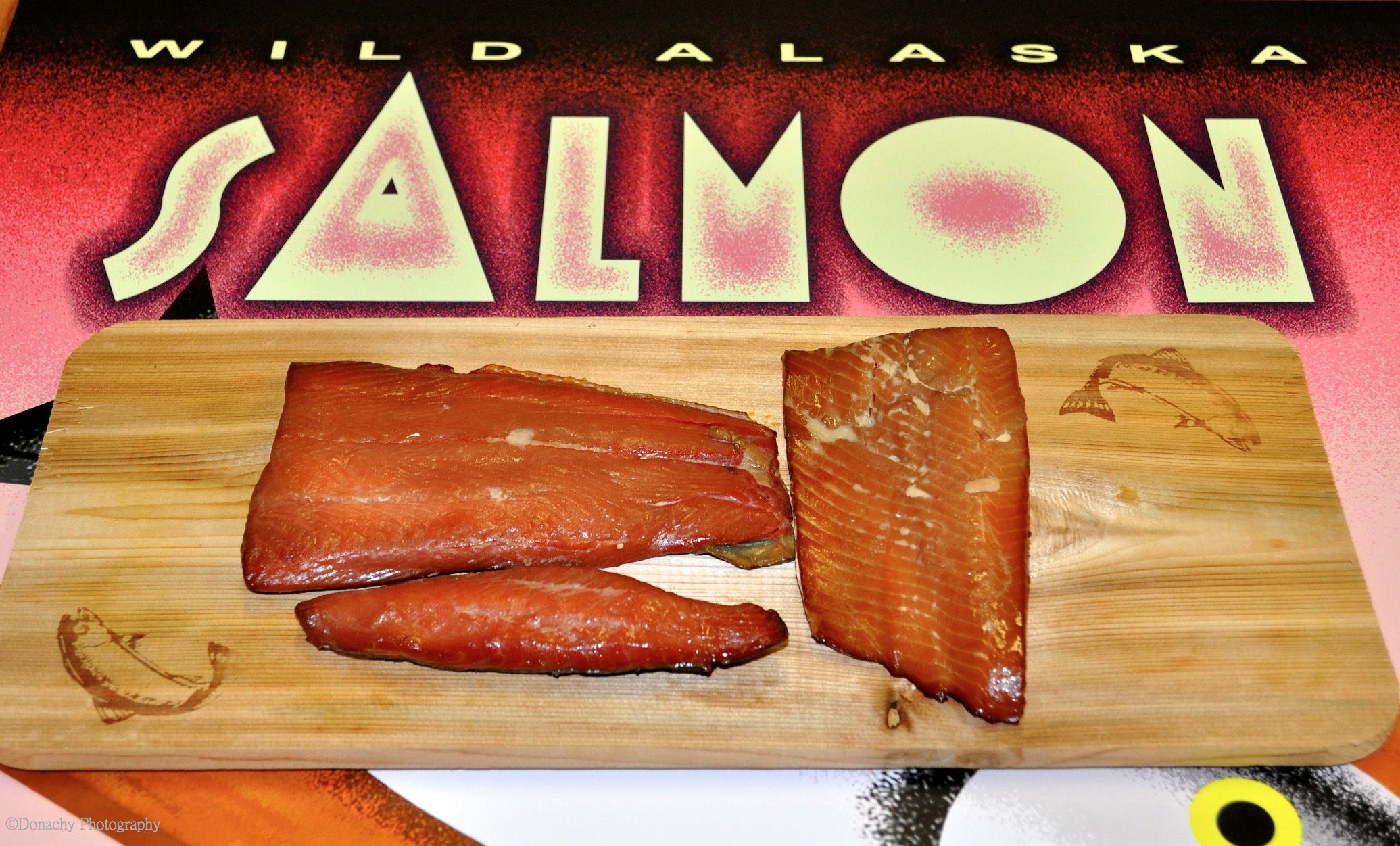
Smoked salmon is a highly anticipated delicacy. With another successful fishing season behind us, I used a tried and true recipe to turn out several pounds worth.

Smoked salmon mousse, smoked salmon omeletes, smoked salmon on pasta, and smoked salmon on crackers are among the many great reasons to set aside a couple of days and smoke part of your catch. Once you’ve done a batch of smoked fish, it’s easy to appreciate why it’s expensive. Smoking takes time. But the results are very much worth it. There’s really not much to our favorite recipe. From year to year and batch to batch, I might vary the amount of garlic or ginger or try a new spice or seasoning. But other than that… well, here it is.

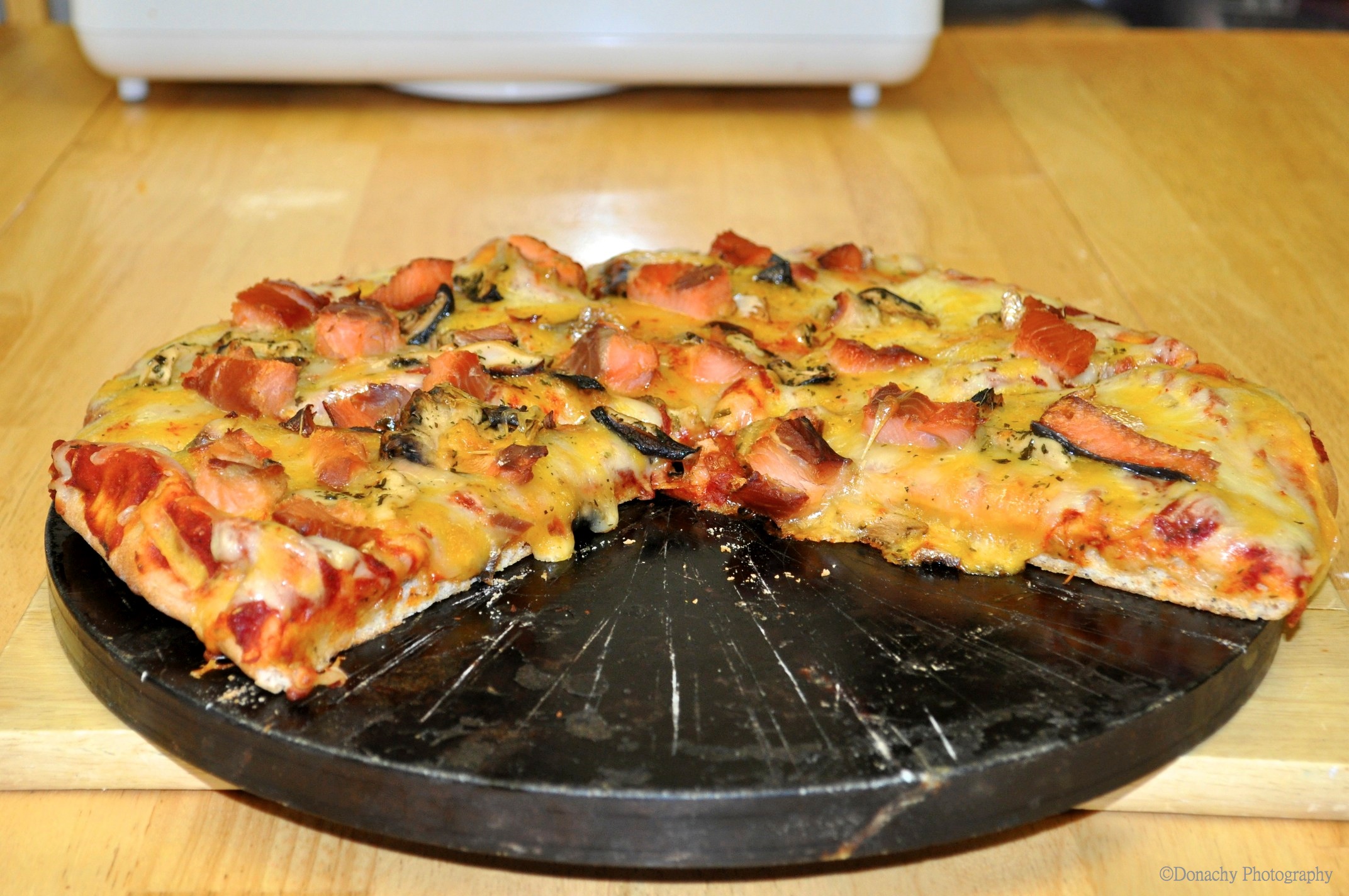
Smoked salmon pizza always draws rave reviews. 

Smoked Salmon with Soy Sauce and Brown Sugar Brine

The basic recipe is 4 parts water to 1 part soy sauce with 1/4 cup sea salt for every cup of soy sauce. Figure about 1 cup brine per pound of fish. Add brown sugar, garlic and ginger to taste. White pepper, cayenne pepper, and other seasonings and spices can be added to create unique brines.

Pyrex clear glass bakeware with their plastic lids is perfect for marinating the fillets. If you’re using a Big Chief or Little Chief smoker, the metal racks fit atop the empty Pyrex containers – and with the fillets atop the racks this setup works well for drying the fillets in the refrigerator prior to smoking.

Ingredients: For eight pounds of salmon, trout, sturgeon or other fish

  • 8 pounds fillets, skin on, rinsed, patted dry, cut into small pieces (a good size is about 3″ x 6″, but smaller or slightly larger is fine)
  • 8 cups water
  • 2 cups soy sauce (Kikkoman is our favorite)
  • 1 1/2 cups brown sugar
  • 1/2 cup sea salt or kosher salt
  • 1 1/2 tbsp granulated garlic
  • 1 tbsp ginger

Directions:

  1. Arrange salmon fillets in glass baking dishes or similar non-reactive containers.
  2. Mix remaining ingredients in a large bowl.
  3. Pour mixture over fillets, making sure they are covered, or until they float.
  4. Cover containers and marinate for about 8 hours (or overnight) in the refrigerator.
  5. Remove fillets from brine, pat dry with paper towels, and arrange on racks to dry in the refrigerator for 6 to 8 hours (or overnight)
  6. Smoke fish according to your smoker’s directions with alder wood, mesquite, fruit tree or hickory chips. Check frequently, keeping in mind that air temperature will influence smoking time. Typical smoking times range from 6 to 8 hours. A slightly wet product is best suited for many of the recipes we enjoy. For straight snacking, a drier product may be preferred.

Don’t have a smoker? Excellent smoked fish can be made on a charcoal grill. I’ve done small batches on my little Weber Smokey Joe and larger batches on Weber’s larger models.

Looking for a recipe to use your smoked salmon in? Type “smoked salmon” into the search tool on this page for some great ideas.

Homemade Cloudberry Syrup – For Belgian Waffles and Italian Sodas

Although ripe cloudberries are golden amber in color, the syrup they produce is a luminescent dark pink. Thick and flavorful, mixed with carbonated water, the syrup makes refreshing Italian sodas. This morning, it topped our Belgian waffles.

We’ve already turned about 20 pounds of freshly picked cloudberries (click here to see cloudberry photos) into two kinds of jam as well as sorbet. Our most recent venture out on the tundra yielded another eight pounds that I hadn’t counted on. When I asked a berry-picking friend what she thought I should make, she enthusiastically replied, “Syrup!”

The syrup, which is easy to make, turned out a beautiful dark pink color. I hadn’t expected this because the fruit I started with was a lovely salmon color. The seeds seemed to color the juice. I made freezer jam with the remaining pulp in order to save every luscious part of the berries. I thought if the “pulp jam” didn’t look good, it could still be used as a key ingredient in fruit breads. Any kind of berries could be used to make this syrup with an adjustment to the amount of sugar used.

Aqpik (Cloudberry) Syrup

Ingredients: (Yields 4 cups syrup)

  • 10 cups of berries
  • 4 cups of water
  • 3 cups granulated sugar

Directions

  1. Place berries and water in a large pot. Cook on medium high heat.
  2. Boil berries for about 15 minutes.
  3. Line a strainer with cheesecloth. Elevate strainer over a bowl so that syrup can drain through cheesecloth and into the bowl. (I used a strainer that stands by itself set on a wire cooling rack set on a large mixing bowl.)
  4. Place berries in pot and puree them using an immersion or stick blender.
  5. Pour pureed berries and all liquids from pot into cheesecloth lined strainer.
  6. Let berries sit in strainer for at least two hours to drain off liquid.
  7. Take the liquid that has drained into the large mixing bowl and put it in a pot.
  8. Add sugar to the pot.
  9. Cook over medium-high heat, stirring frequently, until syrup boils.
  10. Skim off any foam and discard.
  11. Pour juice into canning jars to freeze or into decorative bottles to refrigerate.

Smoky, Fiery Chili con Carne with Beans and Sweet Corn

Berry leaves are turning red and the grass is going to autumn gold. Nightly temperatures are dipping into the thirties. We’re losing about seven minutes of daylight each day. Winter’s coming, and so today I made the season’s first Big Pot of chili.

I’ve been doing this for years now – one or two pots of chili con carne every fall and winter. No two pots are the same. Here’s this year’s first four-gallon batch. The smoked chipotle’s, smoked sea salt and charcoal grilled meat made this batch the best chili to date!

Ingredients:

  • 2 3/4 lbs tri-tip steak
  • 1 tbsp cumin – divided into two equal portions of 1/2 tbsp each
  • olive oil
  • 1 tbsp sweet mesquite seasoning
  • 13 lbs, 10 oz diced tomatoes, seeds removed
  • 1 1/2 pounds (24 oz) tomato paste
  • 3 3/4 pounds sweet onions, chopped coarse
  • 2 1/2 lbs sweet corn
  • 9 pounds beans, soaked, tender, and ready to go. Pinto and black beans in equal portions work well. Alternatively, all black beans are fine.
  • water, as needed (about 1 to 2 cups)
  • 2 bay leaves
  • 1 1/2 tbsp dry oregano, crushed
  • 1 tbsp dry sage
  • 1/2 tsp smoked paprika
  • 1/2 tsp white pepper
  • 1 tsp black pepper
  • 1 tsp smoked sea salt (to taste)
  • 2 arbol chilis, with seeds, chopped fine
  • 4 smoked chipotle chilis, with seeds, chopped fine
  • 2 tbsp chili garlic sauce
  • 2 tbsp mince garlic

Directions:

  1. Fire up a grill to a fairly hot temperature. Charcoal gives the best flavor, but a gas grill is fine.
  2. Cut the tri-tip into small cubes. And place into a mixing bowl. Add 1/2 tbsp cumin, 1 tbsp mesquite seasoning, and 1 tbsp olive oil. Mix together and place on a sheet of heavy duty aluminum foil that has been coated with olive oil.
  3. Place the aluminum foil with the meat on it on the grill and cover. Use a spatula to occasionally turn and stir the meat till it’s cooked through. Remove meat from grill, place in a bowl and set aside.
  4. Meanwhile, place tomato paste in a bowl and stir in just enough water to make a thick liquid. If you’re using canned diced tomatoes, the liquid from those will be plenty. Set aside.
  5. Add olive oil to a large pot, heat over medium heat, and add onions. Stir to ensure even cooking. When onions just begin to turn translucent, add the tomatoes, the tomato paste (from step 4), and all the remaining spices and seasonings. Heat over medium heat and stir till well mixed. Add the beans. The spices will become more pronounced with cooking, so wait at least an hour before adding additional spices.
  6. Bring pot to just barely boiling, then reduce heat to a low simmer. Use a flame tamer if necessary. Cook for one hour, or more.
  7. Stir in the sweet corn and the meat.
  8. Serve piping hot with corn bread fresh out of the oven and perhaps some grated cheddar cheese.

Leaving Seward, 2012

Rainbow over Cook Inlet – this photo was taken the second week of August, our last week in Seward.

For us, our summer in Seward came to an end in early August. Our sailboat, Bandon, is sitting on the hard with a fresh coat of bottom paint. We are already counting the days till next May when we’ll move back aboard.

Below: There are days on the Kenai Peninsula when it looks and even feels like we could be in Hawaii or some South Pacific paradise. As it is, we are in a paradise – Alaska. We can’t imagine a better place to cut our teeth as sailors than in Seward. 

Cloudberry Country

In northern latitudes where they grow, cloudberries (Rubus chamaemorus) are prized as a delicacy. 

Sept 1, Point Hope, Alaska: It has rained for at least part of each day ever since we came back to Point Hope on August 11 – twenty-two consecutive days. Yesterday, the sun finally broke free, and after an energizing breakfast of French toast, smoked salmon, honeydew mellon, orange juice and coffee, we borrowed one of the school’s vehicles and four of us drove out Seven-mile road (which is actually only five miles) to pick some of the last of this year’s aqpik – the Inupiat word for cloudberries.

Cloudberries like wet tundra, but can also be found in meadows. The boggy fields near Point Hope necessitate Muck Boots or similar footwear. 

We’re glad we don’t have to choose a favorite fruit, but a good way to think of fruit is in terms of where they are best served. If I could have a freshly-picked, perfectly juicy, slightly tart ruby red grapefruit every morning for breakfast, I’d seldom want any other fruit with my morning meal. Peaches shine when grilled to caramelize some of their sugar and served with mascarpone cheese or goat cheese. And I occasionally have dreams about the elderberry pies my grandmother used to bake for me made from the dark purple fruit I picked near my boyhood home in Pennsylvania.

Snowy owls, ground squirrels, foxes, caribou and occasionally brown bears are visitors and residents of the tundra where, in addition to cloudberries, stunted willows grows. 

Soft, juicy, and slightly creamy, cloudberries make a sorbet that is sublime, and they are excellent in ice cream as well. They are delicious as freezer jam, and this year we made syrup from the juice of some of the berries. Recently Barbra made a delicious cloudberry bread which was perfect with our peanut butter and jam sandwiches. Cloudberry liqueur is popular, and apparently there is a Canadian-brewed beer that features them.

The last of the cloudberries signal the end of summer here in Point Hope. The salmon and char are nearing the ends of their runs, and we’ve already had a little sleet. 

Click on the links below for additional cloudberry recipes, and stay tuned for recipes on cloudberry syrup and spicy cloudberry chipotle sauce for poultry, pork and fish.

Cloudberry Freezer Jam                                                               Cloudberry Sorbet

Cloudberry Upside-Down Cake                                                  Cloudberry Syrup

Halibut with Smoked Chipotle Blue Cheese and Pine Nuts

Smothered in a mixture of tangy blue cheese, crunchy pine nuts and fiery, smokey peppers, a fillet of halibut, rockfish, snapper or walleye has no chance when placed in front of hungry diners. Here a fillet of black rockfish is served on a bed of black rice.

This year we brought up several wedges of Rogue Caveman Bleu Cheese to Point Hope. This is good stuff, thick and creamy with complex flavors ranging from smoked bacon and butter to sweet fruit. I’ve been eager to use it in cooking, and last night it made its debut on a thick fillet of perfectly flaky black rockfish – one of our favorite fish. Substitute the more traditional halibut for this bleu cheese recipe, or try it with walleye, snapper, porgy or red drum (redfish). Luck into some nice-sized crappie? This twist on the standard bleu cheese topping is just the ticket.

While cayenne pepper powder alone works fine, the wood-smoked chipotles (available from Penzeys Spices) in the following recipe gave this dish a delectable aroma and flavor. Leaving the seeds in the arbol chili kicked up the heat.

Ingredients (Serves 2 to 4):

  • 1 pound halibut fillet, cut into 2 to 4 pieces
  • 1/2 cup bleu cheese, crumbled
  • 1/3 cup chopped pine nuts (or pecans, almonds or walnuts)
  • 1 whole, dried arbol chili pepper, crushed (or 1/2 tsp cayenne powder)
  • 2 smoked, dried chipotle chili peppers, seeds removed, crushed (or use unsmoked chili peppers)
  • 1 tsp dried tarragon, crushed
  • 1 tsp dried marjoram, crushed
  • a few grind of black pepper
  • 1 tsp sugar
  • 2 cloves garlic, minced
  • 2 tbsp lemon juice
  • 1 tbsp extra virgin olive oil
  • additional olive oil for sautéing the mixture

Directions:

  1. Rinse fillets, pat dry with paper towels and set aside.
  2. Set oven on broil and preheat a broiling pan.
  3. In a non-reactive bowl (glass works well) mix together the bleu cheese, pine nuts, spices, herbs and sugar.
  4. Add some olive oil to a small frying pan and heat over medium-low to low heat. Add bleu cheese & pine nut mixture, stirring and turning until cheese is melted.
  5. Add minced garlic and lemon juice to the mixture, cooking for about 1 minute while combining thoroughly. Remove pan from heat and cover with a lid.
  6. Place fillets on broiling pan. Fillets should sizzle when they touch the pan. Broil for about 5 to 7 minutes, depending on thickness of fish. Fish should just be turning opaque when cooked through.
  7. Cover fillets with bleu cheese mixture and continue to broil for 2 to 3 minutes.
  8. Serve piping hot.

We served the fillets on black rice. It was a coin flip between that or saffron rice. This would pair well with a chilled, slightly sweet Gewürztraminer.

Salt Encrusted Whole Fish Stuffed with Shrimp

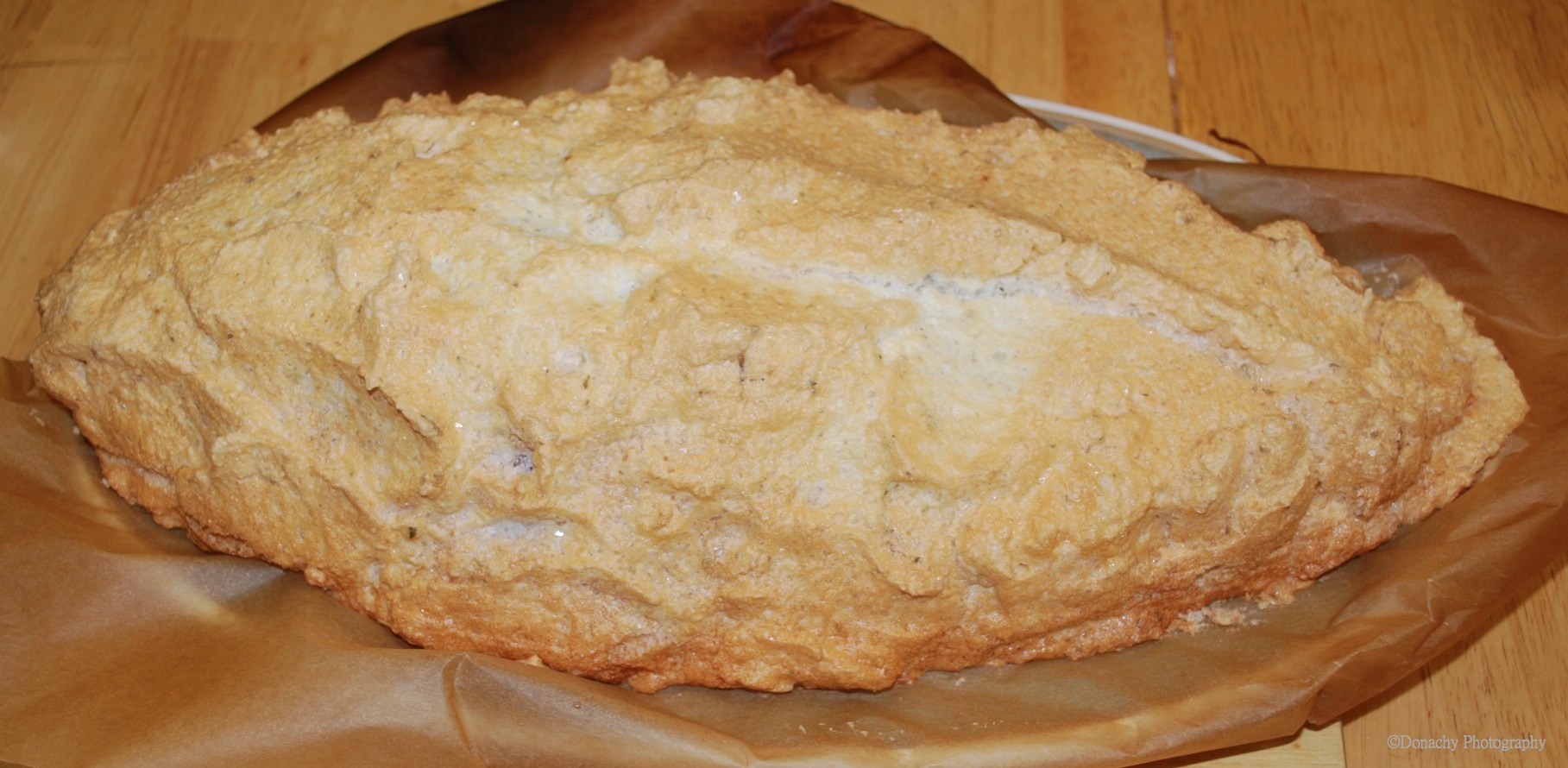
Pesce al Sale – Whole fish baked in a salt crust.

I’d read about this simple yet dramatic presentation for many years, but only got around to trying it when a recipe appeared in the June issue of Field & Stream magazine, which I subscribe to. The basic cooking method is a breeze and could easily be prepared onboard a boat or at camp. It is a show stopper when placed on the dining table, both in terms of the beautiful presentation and in terms of the incredibly moist, flavorful fish that results.

Encased in salt and egg white paste, the fish is ready for the oven.

While I had on hand a two pound yelloweye rockfish (Sebastes ruberrimus) which was perfect for this recipe, there are many fish which would work as well. The first that comes to mind are the true porgies – fish in the genus Pagras and Acanthopagrus. In Britain, these fish are commonly known as sea bream. In Japan, they’re are known as tai, and I would love to place a whole salt-crusted madai or kurodai on the table for Japanese guests, who typically revere these fish. Snapper, walleye, striped bass, pompano, black sea bass and even a firm-fleshed Coho salmon would all work well. A halibut just small enough to fit on a large oven tray and served this way would surely draw oohs and aahs.

About a half an hour later, the fish is ready to serve. 

Keep in mind that the best fish dinners start with the freshest fish possible. Good fish should smell as fresh as the sea they came from. Sadly, most American grocers still haven’t figured this one out, so if you’re having trouble finding good fish, try to locate a Japanese grocery store or an Asian market that sells to Japanese customers. Whole Foods and specialty butcher shops also usually carry quality, fresh fish. Costco, too, sometimes carries whole fish and can generally be depended on for a fresh product.

Voila! The dull side of a knife is used to crack and remove the crust, revealing a succulent fish that wants only a drizzle of olive oil and a squirt of lemon.

Figure about one pound of cleaned, gutted whole fish for every two diners. Thus, a two-pound fish will serve four.

Salt-Crusted Whole Fish with Shrimp

Ingredients: Serves 4

All you really need are the first four ingredients. The others are optional and can be omitted entirely or substituted freely.

  • One 2-pound (.9 kilogram) fish, scaled, gilled and gutted but otherwise left whole
  • 4 egg whites
  • 2 cups sea salt
  • a good-tasting extra virgin olive oil
  • parchment paper and baking sheet or baking platter
  • lemon wedges (preferably from Meyer lemons)
  • 1/4 pound shrimp, peeled (optional)
  • tarragon – either 1 or 2 sprigs fresh or 1 tsp dried & crushed (optional)
  • 1 tsp dried marjoram (optional)
  • 1 or 2 bay leaves, crushed (optional)
  • freshly ground pepper (optional)
  • additional sea salt (optional)

Directions:

  1. Line a baking sheet or platter with parchment paper.
  2. Preheat oven to 450 degrees F. (232 degrees Celsius)
  3. Use paper towels to pat the fish dry. Use a brush (a clean tooth brush works well) to remove all traces of viscera from the stomach and head cavity. Rub cavity with salt, pepper and crushed tarragon, if desired, or place a sprig or two of fresh tarragon in the cavity. Stuff with the shrimp. Set fish aside.
  4. Whip the egg whites until they from stiff peaks.
  5. Gently fold the salt (and the crushed bay leaves and marjoram, if desired) into the egg whites until a paste is formed.
  6. Spread about 1/3 of the salt paste on the parchment paper in a shape large enough to hold the entire fish.
  7. Place the fish on the salt paste and completely cover with remaining salt paste.
  8. Bake for 25 minutes. Turn oven off and continue baking for five minutes. Remove fish from oven, place on dining table and allow it to rest for another 5 to 10 minutes.
  9. Remove crust by cracking it open with the dull side of a knife. The crust can be lifted off with a spatula, large spoon or wide knife blade. The top layer of the fish will easily lift away from the bones.
  10. Serve with lemon wedges and drizzles of extra virgin olive oil.

We served the fish with oven-roasted potatoes and steamed vegetables. This dish would be fun with Margaritas.