Smoked Anchovy and Salmon Pizza

Smoked Anchovy & Sage-Seared Salmon Pizza_n

Salmon seasoned with sage and briefly seared, smoked anchovies, shitake mushrooms and mozzarella cheese top a whole wheat crust brushed with garlic-infused olive oil.

The base for this elegant, satisfying pizza is a baked crust brushed with olive oil. This year, we’ve been experimenting with whole wheat crusts, and in this particular recipe it is perfect. Baked on a pizza stone, the whole wheat comes out light and crisp. The sage adds a wonderful aroma and flavor to this dish. This would be a great pizza to cook on a charcoal grill or in a cast iron frying pan with a lid in camp.

Ingredients:

  • 1 pizza crust, pre-baked
  • 2 cups shredded mozzarella cheese
  • 1/2 pound salmon fillet, skin on or off, cook’s choice. We prefer skin on.
  • 1 tin (2 oz) smoked anchovy fillets, oil drained and fillets separated
  • 2 tbsp tbsp pine nuts
  • garlic cloves. Small cloves can be left whole, large cloves cut into smaller pieces to make about 20 pieces of garlic.
  • two or three shitake mushrooms, sliced thin
  • 1 tsp dried sage
  • 1/2 tsp Italian seasoning
  • ground pepper
  • 3 very thin onion slices, cut in half
  • 2 tbsp extra virgin olive oil, preferably infused with garlic, but plain olive oil is fine
  • 1/2 tsp powdered garlic
  • additional Italian seasoning, to taste

Directions:

  1. Place a pizza stone on oven’s center rack and preheat to 400 degrees F.
  2. Ensure all bones are removed from salmon fillet. Rub sage into skinless side of fillet and set aside.
  3. In a medium-sized frying pan, heat a tablespoon of olive oil over medium heat. Add the onions, shitake slices, 1/2 tsp of Italian seasoning and ground pepper and briefly sauté. Onions should still be slightly crisp. Remove mixture to a plate to stop cooking.
  4. Return pan to medium heat and add garlic cloves and pine nuts. Sauté until garlic just turns soft and edges are light brown. Remove mixture to a plate to cool.
  5. Return pan to medium heat. Place salmon fillet sage side down and sear for 30 seconds. Use your hand or a spatula to apply light pressure to the fillet to ensure that it is evenly seared. Turn fillet over and sear the other side for 30 seconds. Remove to a cutting board to cool.
  6. Place 2 tablespoons extra virgin olive oil and 1/2 tsp powdered garlic in a small bowl and mix together. Using a pastry brush, brush olive oil onto the pizza crust.
  7. Sprinkle mozzarella cheese on the crust.
  8. Evenly sprinkle the mushrooms and onions atop the cheese.
  9. Arrange the anchovy fillets in a pinwheel on the pizza.
  10. Use very sharp knife to cut/separate the salmon along the grain of the fillet. Pieces should be 1 or 2 inches long. Arrange these pieces on the pizza.
  11. Add the pine nuts and garlic, and finish with a sprinkle of Italian seasoning.
  12. Bake for 10 minutes. Crust should be browned and the bottom should be crisp. Rest pizza for a few minutes before slicing to allow toppings to set.

Enjoy this pizza with a lightly-chilled Chardonnay or a cold Amber Ale.

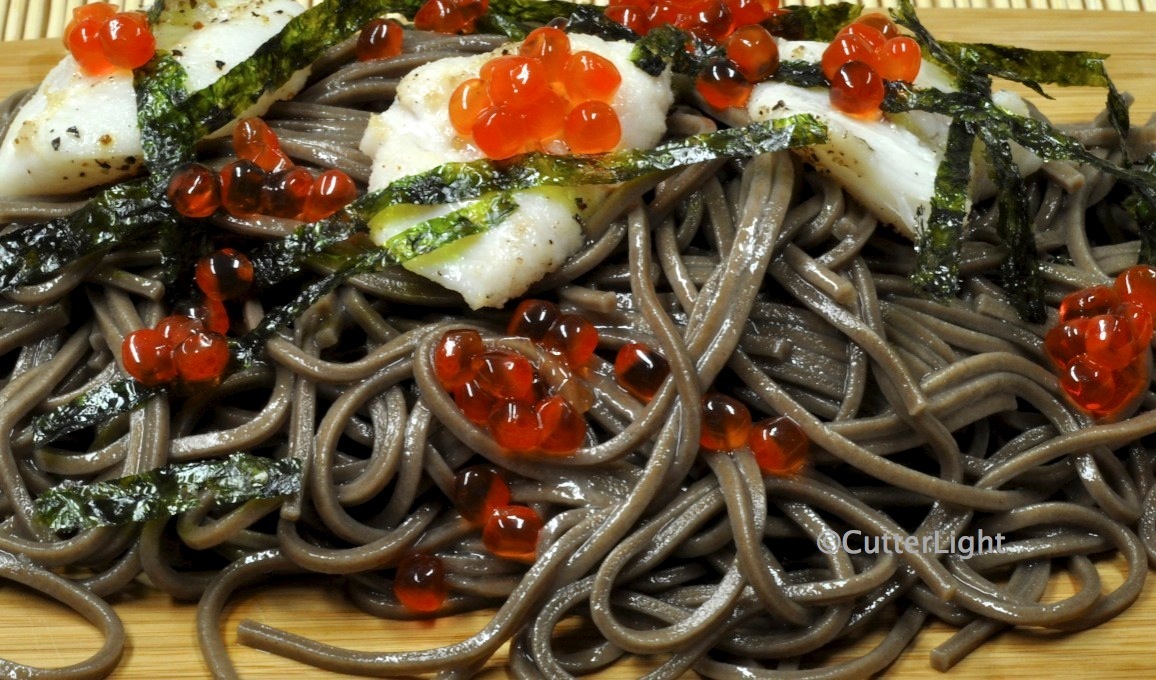
Zaru Soba: Chilled Buckwheat Noodles with Seared Scallops and Ikura

Buckwheat soba w seared scallops & ikura_n

Chilled buckwheat noodles topped with whatever imagination and taste comes up with and served with tsuyu dipping sauce combines the terms “gourmet” with “healthful.” Recipes follow.

A favorite food memory from the days I spent in Japan is the combination of sultry summer afternoons and lunches of refreshingly chilled buckwheat noodles. The first time I was served zaru soba in a Japanese restaurant, I knew I’d begun a life-long love affair.

Soba refers to thin noodles made from buckwheat, which in Japan is mainly grown in Hokkaido. Zaru refers to a seive-like bambo tray the soba is often served on, although these days it is popular to drain the soba in a colander and to then place the noodles on a tray or dish. Often served plain or with thin strips of nori and perhaps toasted sesame seeds, the noodles are almost always served with tsuyu, dashi, mirin and sweetened soy sauce mixture. The mixture is typically refrigerated or chilled with ice, and just prior to serving wasabi and scallions can be mixed in. Chopsticks are used to gather up a portion of soba which is then dipped into the tsuyu and, at least in Japan, the noodles are eaten with loud, appreciative slurps.

Buckwheat soba w seared scallops & ikura close_n

In addition to being tasty and very simple to make, soba is an especially healthful food. Easy to digest and packed with energy, soba contains all eight essential amino acids as well as antioxidants and important nutrients such as thiamine.

Soba and tsuyu are available at Asian grocers and in the Asian sections of many grocery stores. Tsuyu can be fairly easily made from scratch, provided you have on hand the necessary kombu, katsuo (bonito) flakes, mirin and soy sauce. Cooking up a serving or two of zaru soba – or several – for lunch or a light dinner is a breeze.

Zaru Soba with Seared Scallops and Ikura (for 2 servings)

Soba Ingredients:

  1. Two serving’s worth of soba (It generally comes packages with ribbons used to tie off serving-sized bundles.)
  2. Water to boil the soba
  3. Salt

Prepare according to package instructions much as you would pasta. Drain cooked soba in a colander and rinse thoroughly with cold water, using your hand or tongs to toss. Place rinsed, drained soba on plates, top with seared scallops, ikura and strips of nori and serve.

Seared Scallop Medallions

Directions:

  1. Select 4 large sea scallops. Cut them into medallions (approximately 1/8 inch (o.3 cm) thick.
  2. Dust medallions with seasonings of your choice. (We like a mixture of sesame seeds, chili pepper, powdered garlic, cinnamon and nutmeg. Commercially prepared Thai seasoning blends work very well.)
  3. In a frying pan, heat a tablespoon or two of olive oil over medium heat till a drop of water placed in the pan sizzles. Sear medallions on each side for just a few seconds. Use tongs or chopsticks to flip.
  4. Immediately remove medallions to a cool plate. Cover and refrigerate if they are to be used later.

ikura cured salmon eggs_nTo create sushi grade ikura in your own kitchen, see our article Ikura: Curing Salmon Eggs

Readers might also be interested in:

Alaskan Shrimp Harumaki with Lime-Infused Ponzu Dipping Sauce

Arctic Anpan Two Ways: Sweet Azuki and Caribou Cha Sui

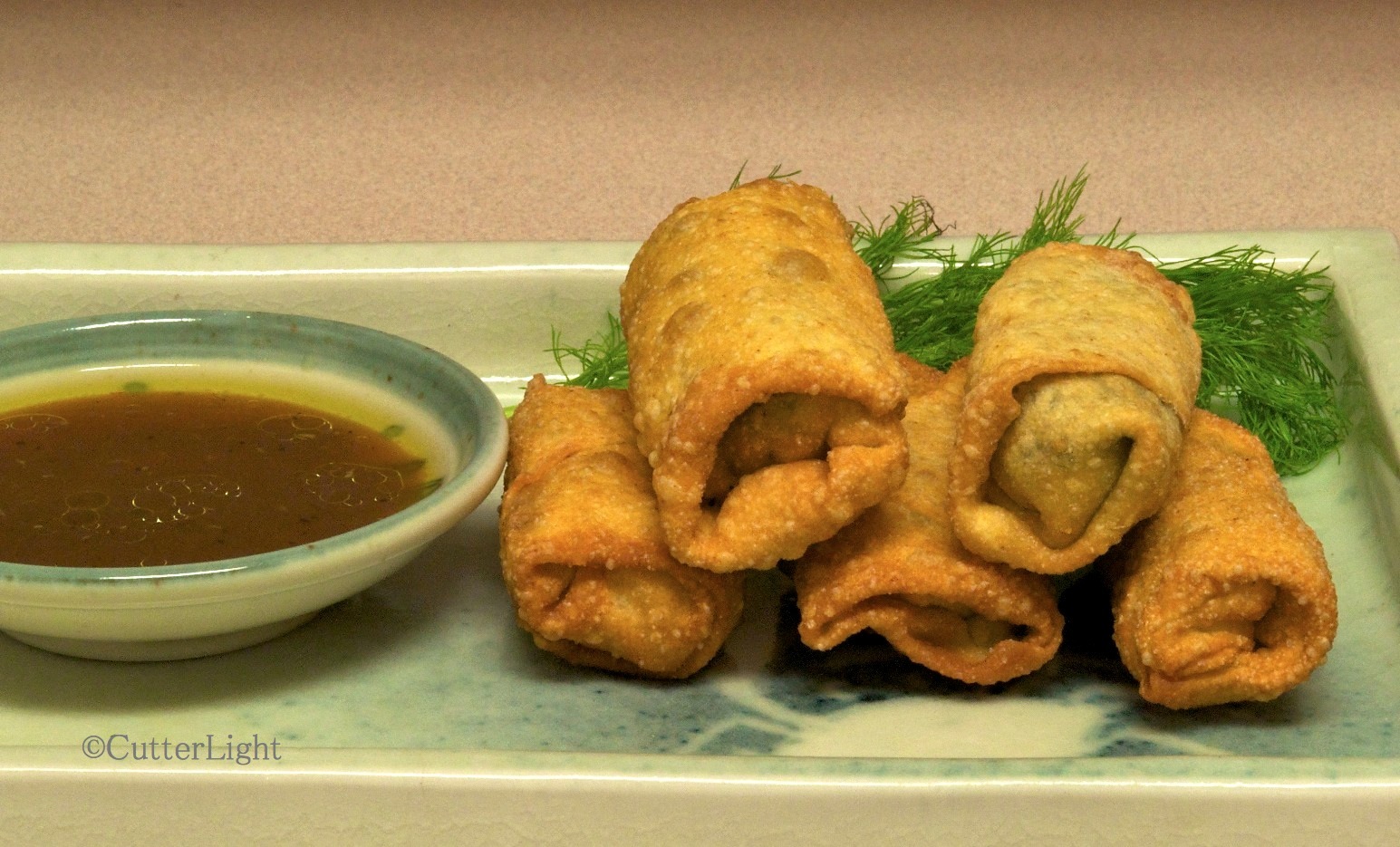
Alaskan Shrimp Harumaki with Lime-Infused Ponzu Dipping Sauce

Harumaki w shrimp 2_n

Harumaki (spring rolls) are a fun, tasty, easy-to-make appetizer or side dish. Both the wrappers and the filling can be modified to suit just about any taste. Recipes follow.

So named because they were a traditional part of Chinese New Year and a celebration of the coming spring, originally spring rolls were filled with vegetables and shaped like gold bars; thus they were a symbol of prosperity and good fortune. When Chinese immigrants brought this popular food to Japan, the name was directly translated to haru (spring) maki (roll). These days spring rolls are part of menus the world over, in part because they easily lend themselves to fusion cooking.

Our contribution to a recent dinner party was harumaki filled with sweet Alaskan shrimp, shitake mushrooms and fennel, which we’d recently been presented as a gift. These ingredients were arranged on a piece of nori (dried seaweed) and rolled up in thin squares of one of our favorite pasta doughs. Served hot from the deep fryer along with a lime-infused Ponzu dipping sauce, they were a big hit.

The Alaskan shrimp we use in our recipes are usually pink, coon stripe or side stripe shrimp – species often served in sushi restaurants as ama-ebi (sweet shrimp). The pinks and side stripes in particular have a distinctively sweet flavor.

Alaska Shrimp Harumaki (for eight, two-bite rolls)

Ingredients:

  • 2 to 4 shitake mushrooms
  • nori (dried seaweed) rectangles approximately 2 1/2″ x 3 “
  • 8 wrappers 3″ x 3″ (we used pasta dough). (Ready-made egg roll wrappers are available in most grocery stores.)
  • 8 ounces shrimp, shelled and veins removed
  • fresh fennel leaves – enough for each roll
  • 1 tbsp lime juice
  • sea salt
  • freshly ground pepper
  • olive oil
  • water (to help seal the wrappers)

Directions:

  1. Cut the mushrooms into 1/4 inch slices.
  2. If shrimp are small, use whole. Otherwise cut into 1 to 2 inch pieces
  3. In a bowl, toss together the mushrooms, shrimp, lime juice, ground pepper and sea salt.
  4. Place 1 tbsp olive oil in a frying pan and heat over medium heat till oil sizzles when a drop of water is added. Add the shrimp mixture, stirring frequently for about 90 seconds. Remove from heat and return mixture to bowl to avoid overcooking.
  5. Place one piece of nori in center of each wrapper. (Prevent nori from breaking by first dipping in water.) Place shrimp mixture and fennel in center of nori.
  6. To wrap: Position square so that one corner is toward you. Fold this corner over the filling. Next fold the right and left corners over the filling. Then roll wrapper toward top (remaining) corner as you would a burrito.
  7. Seal by slightly moistening the last corner and gentle pressing closed. Seal well to prevent oil from leaking in during deep frying.
  8. In a deep fryer or sufficiently large pot: Add enough frying oil (we use light olive oil or canola oil) so that rolls will be completely submersed. Bring oil to 350°F. Place rolls into oil and cook until wraps are golden brown. Do not overcrowd. Remove and drain on a plate covered with paper towel.
  9. Serve immediately with ponzu dipping sauce.

Harumaki w shrimp 1_n

Lime-Infused Ponzu Dipping Sauce

Ingredients:

  • 1/4 cup soy sauce
  • 1/2 cup rice vinegar
  • 1/4 cup lime juice
  • small square (about 3/4 inch) konbu (dried kelp)

Directions:

  1. Mix the ingredients together in a non-reactive container and let rest for 8 hours.
  2. Remove konbu.
  3. Combine the following dried ingredients to make 1 tbsp: onion, garlic, chili pepper, cilantro. Or use fresh ingredients.

Pasta Wrappers

Ingredients:

  • 1 cup semolina
  • 1 egg
  • 1 tbsp olive oil
  • water

Directions:

  1. In a bowl, combine the ingredients with a fork.
  2. Add 1 tbsp water. Continue combining. Consistency of dough should be as dry scrambled eggs. Add more water 1 tbsp at a time as necessary.
  3. Kneed dough by hand till it forms a ball. Wrap ball in plastic (or cover container tightly) and let rest for 20 minutes.
  4. Finish processing into squares using a manual pasta machine.

Alaska Salmon Seafood Chowder with Fennel Sheefish Stock (and a Brief History of the Tomato)

Salmon & seafood tomato chowder_n

Pink salmon and sweet shrimp from the cold, clean seas of Alaska along with a terrific fish stock are key ingredients in this hearty, tomato-based seafood chowder. Made from a little of this, a little of that, and a lot of whatever the catch-of-the-day may have been, in many kitchens and galleys no two chowders are exactly the same. This one was especially tasty, and so we’ve provided the recipe, below.

Native to the Americas, tomatoes didn’t find their way to Europe until Spanish explorers took the fruit back in the late 1400’s or early 1500’s. Even after tomatoes found their way to Britain, leading horticulturalists there believed them to be poisonous. And so this versatile, luscious fruit was not generally consumed in Britain or her American colonies until the mid 1800’s.

It was in the 1800’s that Portuguese immigrants introduced tomato-based seafood chowders such as Manhattan clam chowder to New York and other American cities. Among the endless variations of this soup is the national dish of Bermuda: Bermuda fish chowder is built around a sumptuous combination of fish, tomato purée, onions, a healthy dollop of dark rum and sherry pepper sauce. 

See also: Manhattan-style Razor Clam Chowder

New England-style Alaska Clam Chowder

Alaska Salmon Seafood Chowder 

Ingredients: (makes about

  • 4 cups fish stock (see recipe below)
  • 1 1/2 pounds salmon, cut into 1/2″ or 3/4″ cubes (skin removed or not, chef’s choice)
  • 4 potatoes, diced into cubes smaller than the salmon cubes
  • 1 large onion, chopped semi-coarse
  • 1 cup carrots, chopped into discs
  • 3/4 cup celery, chopped coarse
  • 3/4 lb. shrimp, peeled and veins removed. Leave whole or cut to smaller pieces, depending on size of shrimp.
  • 3/4 lb. shellfish such as razor clams, other types of clams or oysters. Reserve juice to add to fish stock. (We used equal portions of clams and oysters)
  • 1 bay leaf
  • 1/2 tbsp oregano (dry)
  • ground pepper to taste
  • olive oil
  • smoked sea salt (to taste)
  • 1 lb. diced tomatoes (fresh or canned)
  • 6 oz tomato paste
  • 2 cups spinach leaves, chopped large (or use 1/2 cup frozen)
  • 5 cloves garlic, chopped into thin slivers
  • 1/4 cup good sherry or white wine (optional)

Directions:

  1. In a large kettle: Add fish stock, clam or oyster juice, bay leaf, oregano, ground pepper and tomato paste. Stir till paste is thoroughly mixed in.
  2. Add potatoes and tomatoes, ensuring that there is sufficient liquid to cover them. Add additional water, as necessary.
  3. Bring to a boil and then reduce heat to simmer. Continue cooking just until potatoes are tender.
  4. Meanwhile, in a large skillet: Add enough olive oil to cover skillet bottom. Add onions and cook for about 1 minute, stirring frequently. Add carrots and celery and continue stirring for about 3 minutes. Stir in garlic and continue cooking and stirring for 1 more minute – about 5 minutes total. Onions should be just turning translucent. Place in a bowl to prevent over-cooking and set aside.
  5. When the potatoes have just become tender, add sautéed onion mixture to soup. Add sherry or wine, if desired. Return soup to a simmer.
  6. Add salmon, shrimp and shellfish. At this point, we remove the pot from heat – the ambient temperature will cook the seafood sufficiently. (Seafood should be fresh or fresh-frozen.)
  7. Serve piping hot. This soup needs nothing, but a little freshly grated parmesan cheese, a few pieces of nori (dried seaweed), crackers or croutons make nice condiments.

Fennel Fish Stock

Ingredients:

  • 1 1/2 lbs. fish bones & head, cleaned, scaled, gills removed (preferably a white-meated fish such as striped bass, sea bass, snapper, porgy, rock fish, halibut, walleye, etc. We used sheefish.) It is important that the fish is fresh.
  • fennel – leaves and stalks from 2 stalks, chopped coarse (or use 1/2 tbsp fennel seeds or powdered fennel)
  • 1/2 tbsp thyme
  • 1 tsp rosemary
  • 1 bay leaf
  • 8 whole pepper corns
  • 1 tsp smoked sea salt
  • 1/2 cup coarsely chopped carrots
  • 1/2 cup coarsely celery
  • 1 sweet onion, coarsely chopped
  • 1/4 cup good sherry or white wine (optional)
  • water

Directions:

  1. Cut up fish bones and split fish head butterfly style so that everything can be lain as flat as possible in the bottom of a large kettle. 
  2. Place all other ingredients on top of the fish bones and head, arranging so that ingredients are fairly compact so that as little water as possible is needed to cover them.
  3. Cover ingredients with cold water. Bring to a boil over medium heat.
  4. As soon as pot is boiling, reduce heat to simmer. You may need to use a flame shield if stock is boiling too vigorously.
  5. Gently simmer for 20 minutes.
  6. Remove from heat and allow to stand an additional 15 minutes.
  7. Strain through a wire mesh colander and set stock aside.
  8. Stock can be placed into containers and frozen for later used, or used immediately.

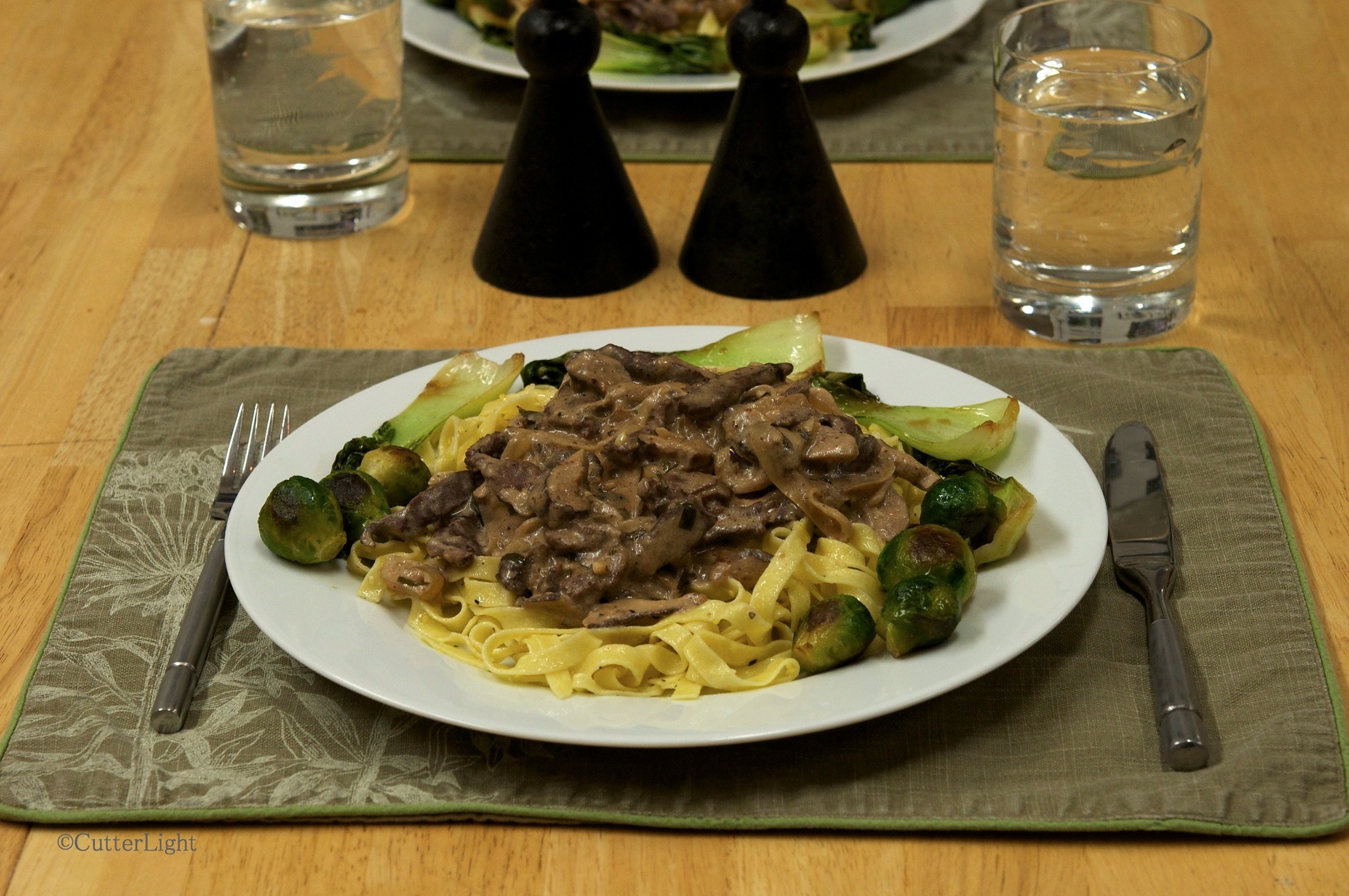
Caribou Stroganoff: A Classic Favorite Featuring Wild Game

Caribou Stroganoff on homemade fettuccine_n

From San Francisco to Sydney and from Tokyo to Toronto, Beef Stroganoff is a popular dinner item. Here’s a twist on a classic favorite.

Ever since its origination in 19th century Russia, Stroganoff has been served to rave reviews. Early iterations were created with beef cubes and and early written recipe for the sauce included mustard. Mushrooms and onions came later. These days, cubes have largely given way to thin strips of meat and mustard is considered optional by many cooks.

I’d not made Stroganoff till recently. Happy to fill requests, I put some caribou we’d recently been given to good use. The Stroganoff came out can’t-stop-eating-it good and we and our guests made short work of it. But even as I was simmering the sauce, I knew next time I’d add tarragon.

In our view, the addition of this herb really brought the dish alive. Other than that, be gentle with additional flavors, including garlic. This dish is about meat and mushrooms.

Caribou Stroganoff

Ingredients

  • 1 pound caribou cut into thin strips, about 1/4″ x 1″ (or use similar meat game such as elk, venison or lean beef)
  • 1/2 cup beef broth. (Excellent broth can be made using Better than Bouillon)
  • 3/4 tbsp Dijon mustard
  • 1/2 tsp Worcestershire sauce
  • 1/2 pound mushroom caps, sliced thin (Shitake mushrooms are a good choice. Here in bush Alaska, we use dried mushrooms.)
  • 1/2 large onion, sliced thin
  • 1 clove garlic, chopped fine
  • 1/2 tbsp soy sauce
  • 1 cup sour cream
  • 1/2 cup heavy cream
  • 2 tbsp flour, separated into equal portions
  • 1 tbsp butter
  • 2 tbsp olive oil separated into equal portions
  • salt
  • freshly ground pepper
  • 1/2 tsp dried tarragon
  • red wine – just a splash

Directions

  1. In a bowl, combine Dijon mustard, Worcestershire sauce, soy sauce, sour cream, heavy cream, a few grinds of pepper and tarragon. Set aside.
  2. Place caribou strips in a large bowl. Add 1 tbsp flour and a few grinds of fresh pepper and mix ingredients so that meat is coated.
  3. In a large pan over medium heat, heat 1 tbsp olive oil. When oil is hot enough to cause a drop of water or a pinch of flour to sizzle, add the meat. Stir and turn meat frequently to ensure all sides are seared. When meat is cooked through (about 5 minutes), place in a bowl and set aside.
  4. Pour pan juices into a bowl and set aside to cool.
  5. Deglaze the pan with a splash of red wine. Add 1 tbsp olive oil and butter, heat over medium heat, and add the onions. Stir frequently. After about two minutes, add the mushrooms and garlic and sprinkle the pan’s contents with flour, reducing heat if necessary. Continue to cook and stir just till onions begin to become translucent (about 5 minutest total).
  6. Return the meat to the pan. Thoroughly mix ingredients together and add the beef broth. Cover and simmer over low heat till broth is well reduced (cooked down) – about 15 to 30 minutes.
  7. Combine pan juices with sour cream mixture and stir into the pan. Heat to piping hot (but do not boil) and serve over fettucini, other pasta, or rice.

Serve with fall vegetables and a gin and tonic with a wedge of lime.

Tikigaq School 5th Graders Perform Point Hope Eskimo Dances

The rhythms are played on traditionally-crafted drums; the dances have been passed down from generation to generation. These fifth graders demonstrate that Inupiat traditions are alive and well in Point Hope, Alaska.

With the help of village elder Aaka Irma, my fifth graders and I learned an old Point Hope Eskimo dance that hadn’t been performed in some time. Under the guidance of our Inupiat language teacher, Aana Lane, the students also practiced popular traditional Point Hope dances. The students performed these dances for the Christmas presentation last month to an enthusiastic crowd.

The group of students I have this year is very connected to their culture and heritage, particularly when it comes to dancing. It’s amazing to see every student in the class become so completely engaged in a cultural tradition. During their performance in December, the students captivated the entire audience. The performance culminated with the students inviting one and all to join them on the gym floor in the closing Common Dance – a dance familiar to virtually everyone in our village.

Winter Light and Polar Bear Prints, Point Hope, Alaska

Sun, 3 PM Dec 22, Point Hope_n

This photo was taken on December 22, 2012, a day in the midst of the month during which the sun does not rise above the horizon in Point Hope, Alaska. 

The sun dipped below the horizon 31 days ago on December 6 and did not rise again till yesterday, January 6. And yet, there was light each day, dim, brief, often breath taking.

We walked to the beach on one of those days when the sun didn’t rise. It was about 3:00 pm, and the sky was filled with shades of red, violet, amber and gold. The sea, which lies just 300 meters or so from our doorstep, is locked in ice. This time of year, polar bears are always a possibility as they roam the ice, searching for food.

Maia's hand in Polar Bear Track, Dec 22, 2012_n

Maia’s hand is dwarfed by a fresh polar bear paw print. 

Edging the beach where ice met land was a fresh set of polar bear tracks. The evidence that we share this environment with these magnificent animals was thrilling – but also a reminder that caution is in order. We scanned in every direction as far as our eyes would take us. No movement. The bear had probably passed through in the dark of early morning.

Polar Bear Tracks on South Beach Dec 22, 2012_n

Arctic foxes often follow polar bears in hopes of dining on scraps of the bear’s kill. Above, you can see the small paw prints of a fox near the bear’s tracks. Notice the tell-tale scrape marks in the snow on the forward edge of some of the bear tracks. Their long claws leave these scrapes as the bears amble along.

We waited and watched and listened. The wind moving over the seemingly endless frozen sea was all we could hear. In the distance to the east, we could see Cape Thompson’s snowy cliffs bathed in light etched against the pink horizon. As we walked along the edge of the sea, we found a murre, apparently exhausted, tucked into a snowy alcove against a bank of ice. The bird was lucky the fox had already passed by. Although the murre found the strength to take flight as we drew near, it is doubtful it went far. The Arctic winter is unforgiving.

Maia walking to ocean Dec 22 Point Hope II_n

Walking west, toward the sea, on a December day in Point Hope…

Daughter Maia was in the village for a two-week visit over winter break from college. Unfortunately, the Northern Lights didn’t cooperate, but the sky still put on some amazing displays.

Point Hope South Beach Dec 22 3 pm Nikon D90

Pumpkin Pancakes: A Tasty, Healthy Way to Start the Day

Pumpkin Pancakes

Give your pancakes a tasty nutritional boost by stirring in some pumpkin purée left over from baking pies. Hot off the grill, these especially light pancakes are served with chopped pecans and a slice of smoked Alaskan salmon.

Pumpkin pie is practically a staple at our Thanksgiving and Christmas meals. Easy to make and inexpensive (pumpkins can generally be had for pennies per pound), pumpkin is also one of the more healthful pies. In fact, we sometimes have a slice sans whipped cream along with an egg for breakfast. But what to do with the leftover pumpkin purée, particularly if all you have is a cup or so? One of our favorite solutions is pumpkin pancakes. Use the same spices you would with pumpkin pie, hold the sugar, and you’ve got a great start to your day!

Pumpkin Pancakes 

Ingredients (4 medium-sized pancakes):

  • 1/2 cup pumpkin purée (or use butternut squash)
  • 1 cup your favorite pancake mix (we use Krusteaz buttermilk mix, which we buy in bulk at Costco)
  • approximately 3/4 cup cold water
  • 2 tbsp light olive oil
  • 1 – 2 tbsp butter
  • a healthy dash of nutmeg
  • a healthy dash of ginger
  • 1/4 tsp cinnamon

Directions:

  1. Place purée and pancake mix in a small bowl or large measuring cup. Add cold water and stir. Mixture should be thick but pourable. Do not overstir. Batter should have lumps. This ensures for better rising pancakes.
  2. Meanwhile, heat a griddle or large frying pan over medium heat. Place the olive oil and butter onto the griddle. When oil is hot enough to sizzle when a small drop of batter is added, it’s ready. Pour batter onto the griddle in 4 separate portions and reduce heat to medium-low.
  3. When the surface of the pancakes have formed bubbles and the bottoms are golden brown, turn them over with a spatula.
  4. Reduce heat further, if necessary, and continue cooking pancakes till golden brown.

Once the griddle or pan is hot and the batter has been poured, reducing the heat will allow the pancakes to rise better. A fairly thick, heavy griddle or pan works best.

See also:

Big, Fluffy Blueberry One-Pan Pancakes

Smoked Salmon with Soy Sauce and Brown Sugar Brine

Maple Pecan Pumpkin Pie

Pumpkin and Pecan Pies

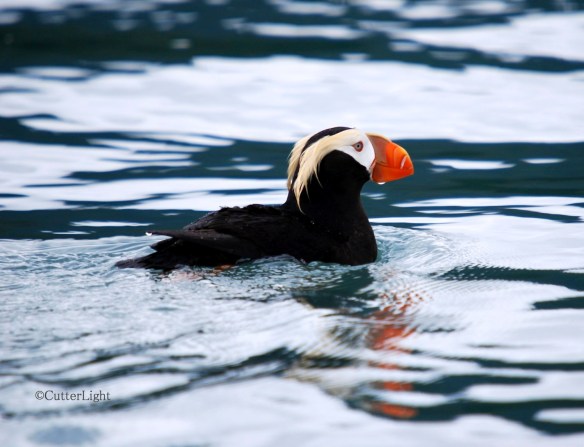
Tufted Puffins, a Name Change and Best Wishes for 2013

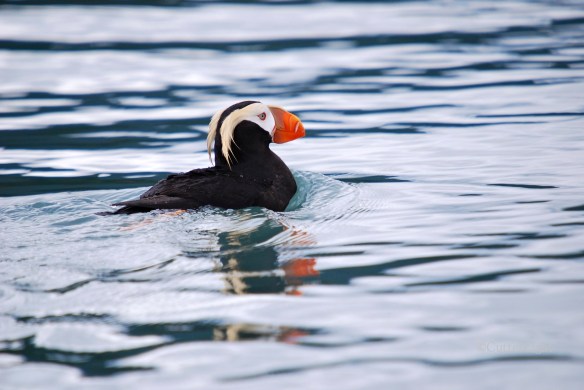
Tufted puffin near Homer I_nUnmistakable with their toucan-like bright orange beaks and combed back white tufts of head feathers, tufted puffins (Fratercula cirrhata) are among Alaska’s most familiar ambassadors.

When we began this blog a little over two years ago, it was for ourselves. The blog was to be a place to catalogue our recipes and keep a photographic record of our travels and adventures. And so we named it Frozen Moments and didn’t think too much about it. It seemed an appropriate name for a blog where photographs are highlighted (frozen moments) and especially so since our home nine months of the year is in Arctic Alaska (frozen months).

Tufted puffin near Homer II_nBut as we got more into it, we discovered that Frozen Moments was a little too obvious. Others were already using the name. We realized we’d eventually want to make a change. CutterLight has its origins in two sources. Cutter derives from our summer home in Seward – our cutter-rigged sailboat. To us, the term evokes images not just of sailing, but of travel and adventure in general, as well as a spirit of being willing to learn and experience new things.

Tufted puffin near Homer III_nLight, too, holds multiple meanings for us. There is of course the “light” which all photographers are concerned with. As our skills and interest in photography grow, we are finding that we are becoming, inevitably perhaps, obsessed with light. It permeates our world now in ways it never did before, and this newfound awareness affects everything from the way we watch movies to how we perceive the world around us to how we deal with the deceptively elusive basic elements of photography.

Tufted puffin near Homer IV_nBut Light holds a second meaning – one which is perhaps even more central to our lives. As we move forward toward fulfilling our goals as writers, photographers and sailors, we have pared away much of what we once considered necessary. Not much fits on a 35-foot sailboat. A succession of yard sales and donations to thrift shops allowed us to part with most of our possessions before we moved to Alaska three years ago. Since then, every new item we add to our lives is carefully evaluated for the value it brings in terms of utility and pleasure. Few items make the cut. We are moving forward with a life that feels lighter yet stronger. It is a wonderful feeling.

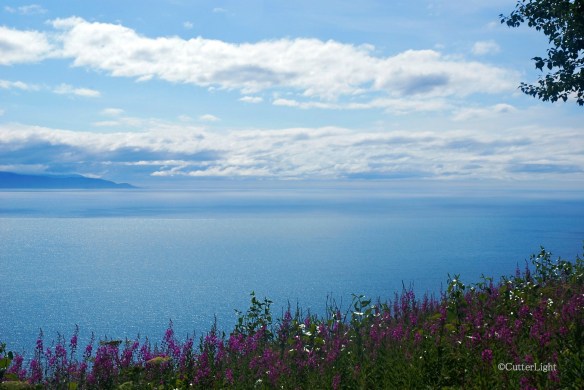
Lower Cook Inlet near Homer_nLooking out over lower Cook Inlet from the bluffs above Homer, Alaska.

As we look back on 2012, it is with a deep sense of appreciation. Many new friends came into our lives this year, and we also were fortunate to have had some really special reconnections with people from our former lives. We are happy, too, that our blog is finding an appreciative audience. We wish one and all fair winds and following seas in the coming year.

Jack and Barbra Donachy

How Have Long Life: Life Philosophy from Alaska’s Longest Reindeer Herder

winter sky_n

The sun doesn’t rise now. In its absence, there is darkness and dusk. And there is beauty in the pink hues and  blue silhouettes of midday.

Words to live by from the longest reindeer herder, Chester Asakak Seveck.

For long live and joy life,

I believe these things –

Keep busy and do good work.

Have much good exercise.

Eat good food,

no waste anything

and every day enjoy what it gives

and do not spoil this day with much worry of tomorrow.

Be happy.

I know this way

how I be “Longest Reindeer Herder.”

Start 1908, finish 1954,

altogether 46 years herd reindeer.

From Longest Reindeer Herder: A true life story of an Alaskan Eskimo covering the period from 1890 to 1973, by Chester Asakak Seveck