Pecan Crumble Overnight French Toast

 Let French bread cubes soak up the cream and egg mixture overnight. The next morning top it with pecans and brown sugar and pop it in the oven for a freshly baked delicious breakfast worthy of kings!

Serve this easy yet impressive baked French toast with slices of fresh fruit, maple syrup, hot coffee and a side of bacon or smoked salmon for breakfast or brunch.

Pecan Overnight French Toast

Ingredients

  • 1 French bread baguette
  • 7 eggs
  • 2 cups half and half
  • 1 cup whole milk or soy milk
  • 2 tbsp granulated sugar
  • 1 tsp vanilla extract
  • 1 tsp ground cinnamon

Ingredients for pecan topping:

  • 1 stick unsalted butter, melted
  • 1 cup packed brown sugar
  • 1  1/2 cups chopped pecans

Directions

  1. Butter a 9 x 13 inch glass baking dish.
  2. Cut French bread into approximately 1-inch cubes.
  3. Spread cubes on bottom of glass baking dish.
  4. Thoroughly mix together eggs, cream, milk, sugar, vanilla, and cinnamon.
  5. Pour egg mixture over bread. Cover dish and place in refrigerator overnight.
  6. Bring bread mixture out of refrigerator while preheating oven to 350 degrees F.
  7. Prepare pecan topping by mixing butter, pecans, and brown sugar.
  8. Spread pecan mixture evenly over bread mixture.
  9. Bake for 40 minutes, until golden and puffed.
  10. Serve with maple syrup.

You might also like Overnight French Toast with Blueberries.

The Night Sky at Point Hope (A Whaler to His Son)

The northern lights have been out nearly every night lately. Here they frame two umiak – seal skin boats used for the spring whale hunts.

A Whaler to his Son

This poem is

an empty sigluaq

a seal skin boat

a lookout camp

on a new lead

This poem is

your grandfather’s parka

a snow squall on the horizon

a polar bear’s track

imprinted in the snow

This poem is

a fluke flipped and sounding

in a silk-white wake

like stars

washed over the Chukchi

This poem is

our village

carved like scrimshaw

on an ivory dawn

the dim Arctic sun

small and perfect

as a bowhead’s eye.

.

*A sigluaq is an ice cellar dug into the tundra used to store whale meat (and other meat)

Jiro Dreams of Sushi: A Philosophy of Life and Sushi

Yanagiba (sushi knife), ohashi (chopsticks) properly resting on an ivory spotted seal hashioki, and David Gelb’s documentary of world-renowned sushi chef Jiro Ono. Let the feast begin.

The shots of sushi will wow you. Segments depicting 85-year-old Jiro Ono magically transforming rice and fish into pieces of art that are at once too beautiful to be eaten and yet must be eaten will mesmerize you. The manner in which he and his 51-year-old son run Sukiayabashi Jiro, a 10-seat sushi restaurant in the underground subway system in Tokyo’s ritzy Ginza District will, perhaps, prompt you to make subtle (or not so subtle) changes in the way you run your own kitchen. At the very least, you are likely to come away from the film with a heightened appreciation of tamagoyaki – the grilled egg dish frequently served on nigiri sushi menus. Sukiabashi Jiro is the only sushi restaurant in the world to earn Michelin’s top rating – the coveted three stars. The simple definition of a three-star restaurant is this: a restaurant that by itself makes a trip to that country worthwhile.

As a self-taught chef, as a father, as a person who is seeking to perfect my own path in life, and as one who lived in Japan for nine years and came to deeply appreciate the Japanese sensibility toward life, this film profoundly moved me. Jiro Ono embodies the characteristics of the shokunin – a master craftsman or artisan who, while possessing superb technical skills in his field, is also aware of his responsibility to model an honorable life and to look out for the welfare of others. In the film, Masahiro Yamamoto, one of Japan’s leading food critics,  identifies the five attributes of a great chef. These attributes are no doubt valued by all shokunin.

1. A serious attitude toward one’s work

2. Aspiration to improve – to strive for perfection

3. Cleanliness (which includes a proper order in one’s life and work)

4. Lead rather than collaborate

5. Bring passion to one’s work, (and through that passion to discover moments of ecstasy)

I’m going to add a sixth element to Yamamoto’s list. If Jiro’s life is about striving for perfection, the question is begged, “Perfection to what end?” To what purpose are the above five attributes?

It is this: They are all aimed toward providing others with an ultimate experience. Jiro dreams of sushi, yes. But what he really dreams of is providing his customers with a perfect dining experience. That is the sixth attribute: The desire to provide others with a penultimate experience.

Some of these attributes are, perhaps, antithetical to current western thinking. Therein lies the core of the criticisms of this film. Aren’t we supposed to value collaboration? Is the emphasis on cleanliness really so important? Is Jiro truly interested in others, or is he merely a shallow, self-inflated ego with no meaningful connection to other human beings – including his wife and his two sons? Doesn’t taking one’s work too seriously lead to imbalance in life?

I think this much is fair to observe: The path Jiro Ono has chosen in life is not a path that would suit everyone. But it is a path I admire. In the director’s cut, it is mentioned that a regret is that Jiro’s wife was unable to be in the film. This seems to be owing to the health of a woman in her 80’s, not about a failed partnership. His sons are both key players in the film, and speak of their father with honor, respect and love. They have both chosen to follow in his line of work, to embrace his teaching and have become highly respected sushi chefs in their own right. In turn, Jiro speaks with pride and admiration of both of his sons. As a father, I can very much relate to Jiro’s philosophy regarding child-rearing. You spend your life teaching and guiding, and in the end you hope a good bit of it takes root. In both of Jiro’s sons, his teaching did stick, his guidance payed off, and because his sons worked for many years in his restaurant, he ultimately spent more time with them than most fathers ever spend with their children.

As to taking one’s work too seriously and carving out one’s own path rather than collaborating, I grew up in a family wherein, not just in my nuclear family but in all the uncles and aunts in my extended family, the life philosophy most frequently espoused was an admonition to not take work (or anything else) too seriously. It was a philosophy that did not work for me, and ultimately inspired an opposing philosophy.

At the age of 4o, I began the long, sometimes arduous, deeply satisfying process of remaking my life. Part of the remaking has been rooted in a newfound freedom – a self-given permission to pursue life with renewed passion, dedication and a commitment to honor and excellence.  As I move forward with this life as a sailor, chef, writer, photographer, father and husband, this film that so eloquently captures the life and spirt of a true shokunin resonates.

Chasing the Elusive Perfectly Flaky Crust: Double-Crust Apple Apricot Pie

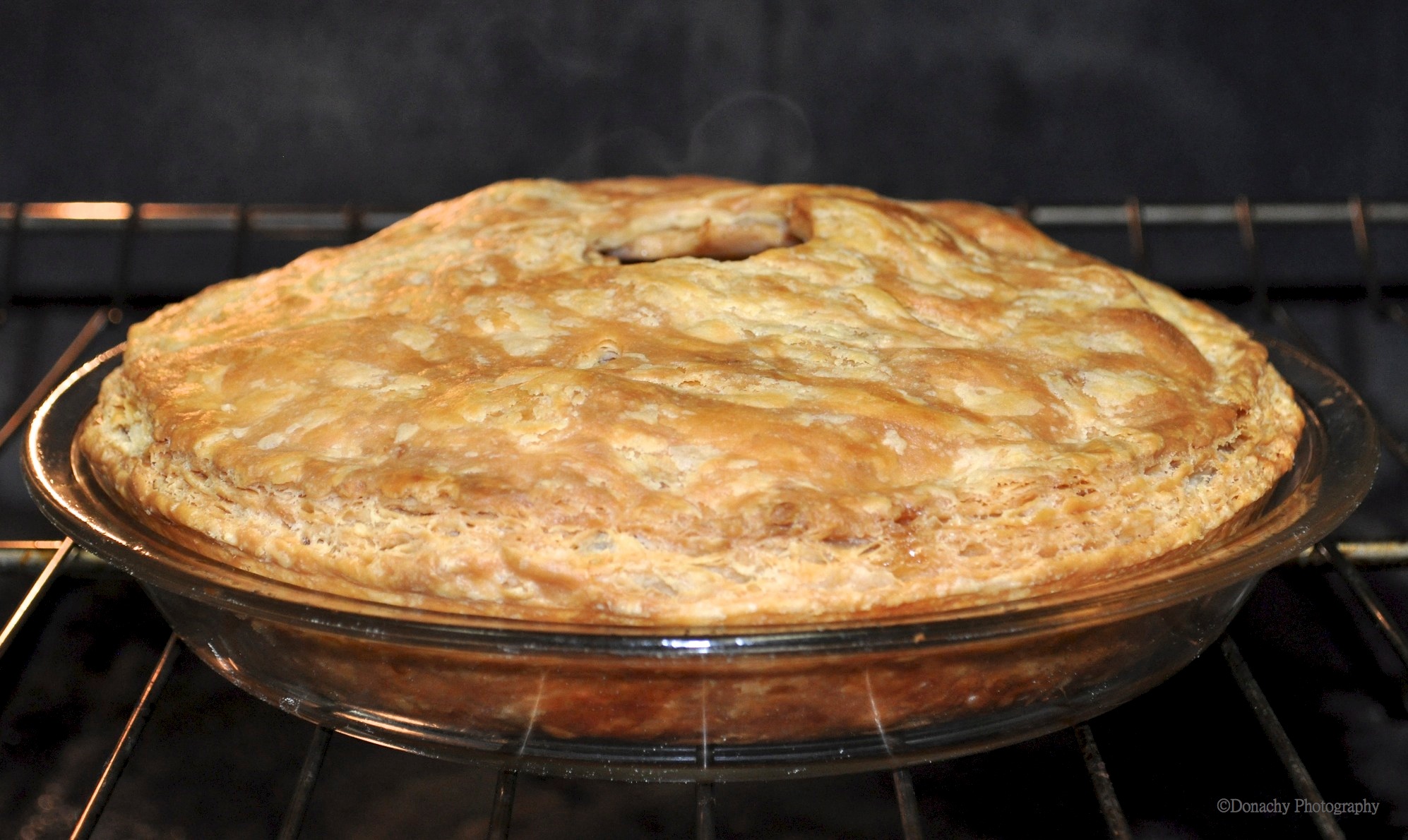
This rustic-style pie evoked images of apron-clad moms setting out steaming-hot baked goods on windowsills to cool. The scent of baked apple and cinnamon filled the entire house, contributing to the sense of nostalgia.

I’d always heard that baking the elusive flaky pie crust was so difficult, it wasn’t worth the time and effort. The standard advice was, “Buy pre-made crusts. They’ll come out better.” But as someone who has baked her own graham crackers, I wasn’t so easily deterred.

After doing some research, I began to understand why people shied away from making their own crusts. Fastidious attention to temperature of the ingredients seems to be the key. My first crusts came out fairly decent, but I wasn’t completely happy with the texture. Then this month’s Food & Wine magazine ran an article about making a perfectly flaky crust.

Along with directions for “perfectly flaky butter pie dough,” the magazine also had a recipe for a double-crust apple-apricot pie. Perfect! Granny Smith apples are available at our Native Grocery Store, and dried apricots are a staple in our pantry. The finished pie came out of the oven steaming with the scent of apples and apricot and with a golden-brown crust puffed up into a flaky  top.

Double-Crust Apple-Apricot Pie

Ingredients

  • 1 tbsp all-purpose flour
  • dough for two pie crusts (see link below for pie crust recipe and directions)
  • 1 egg white, beaten
  • 5 large Granny Smith apples, peeled, cored, quartered, and cut into thick slices
  • 1/2 cup granulated sugar
  • 1/2 cup diced dried apricots
  • 1 tsp finely grated orange zest
  • 1 tsp ground cinnamon

Directions

  1. Roll out a little more than half of the dough into a 13-inch disc. Transfer to a 9-inch glass pie dish.
  2. Roll out the remaining dough into a 12-inch disc and keep in refrigerator until you are ready for it.
  3. Preheat oven to 400 degrees F.
  4. In a large bowl, toss together apples, apricots, orange zest, flour, cinnamon and sugar.
  5. Pour apple mixture into crust.
  6. Brush edge of crust with egg white. This will help seal the two crusts together.
  7. Place second pie crust on top of first. Trim edges and decoratively crimp. Cut slashes in top crust to allow steam to vent.
  8. Place oven rack on lower third of oven. Place pie on a baking sheet and put in over to bake for 1 hour. Cover edges of pie with a pie ring or aluminum foil during last 20 minutes of baking to prevent burning.
  9. Remove pie from oven and allow to cool before serving.

We served this pie with extra rich vanilla ice cream, which was excellent. A slice of sharp cheddar cheese is another traditional option.

Recipe adapted from Food & Wine Magazine, November 2012 issue.

Alaska: Northern Lights in the Big Point Hope Sky

Named for the Roman Goddess of dawn, Aurora, and the Greek word for north wind, Boreas, Aurora Borealis events originate with the sun and are carried to Earth on solar winds.

Notice the seal skin boats in front of the snow fence in this photo looking northwest along the lagoon at Point Hope. The most common color for  Northern Lights is green – whitish green on nights of weak activity. Yellows, pinks, reds and purples are less common. Any color in the night sky is a thrill.

We have a phone tree set up so we can let each other know when the lights are out in force. When our phone woke us just after five AM this morning, we didn’t even pick up. We threw on warm clothes and coats (the windchill was below zero degrees Fahrenheit) put together the camera and tripod, and headed out the door. 

We walked away from the town’s lights, to the darkness near the lagoon, and set up. We took these shots with a 15 second exposure. When the lights are active, they move, constantly changing shape and color. 


The Arctic Foxes at Tikigaq Cemetery

Stunning in their soft, white coats, Arctic foxes (Vulpes lagopus) are common in this part of Alaska. The size of a small dog and as soft on their feet as a cat, these omnivores forage on whatever is available, from berries to insects to small mammals and birds – and it appears, big, fat marine worms!

In the past few weeks, there have been spawning events on our beaches near Point Hope. A couple of weeks ago, we were hearing about small fish – probably capelin (smelt) – coming ashore with the surf. More recently, we’ve been finding large marine worms on the beach. The size of Ball Park Franks, the appearance of these worms has coincided with egg cases in areas of coarse sand and gravel. In turn, these spawning events have drawn numbers of snowy owls and Arctic foxes looking for easy meals to the point of land west of town.

Morning sunlight slants through the jawbones of bowhead whales commingled with crosses at the Tikigaq cemetery in Point Hope, Alaska.

Not so long ago, National Geographic Magazine ran an article about domesticating foxes. Apparently there’s been some success, as breeders in Russia select the most gentle, friendly, trainable and inquisitive offspring generation upon generation. At an average size of six to eight pounds, Arctic foxes would be just the right size to curl up on the sofa for an evening of popcorn and a movie.

Like ribs pushing up from the tundra, these bowhead jawbones mark the resting place of one of Tikigaq’s last shamans.

The diversity – and sheer number – of animals and plants that manage to hack a living out of this cold land amazes us. Far from being the vast, frozen desert the Arctic has often been described as, each season brings with it an astounding number and variety of flora and fauna to the land and sea around Point Hope. Tracks in the snow near our house reveal that we have a weasel or two living beneath our porch!

Quiche de Poireaux: Leek Quiche with Oysters and Smoked Salmon

Just a hint of spice is enough in this quiche that combines sautéed leeks, small oysters and smoked salmon.

When a friend recently bestowed upon us three large leeks, our thoughts converged on a family favorite: leek quiche. Craig Claiborne includes a recipe for this classic dish in his New York Times Cookbook. His Quiche de Poireaux includes ham, which, in our kitchen, had become bacon and more recently smoked salmon. One of the things we like best about quiche is its versatility, working equally well as a breakfast, lunch or dinner item.

When choosing oysters for this quiche, choose the smallest you can find. If fresh oysters aren’t available, canned oysters such as Pacific Pearl are an excellent substitute. Add spices sparingly so that the flavor of the sautéed leeks shines through. Accompanied by a lightly chilled glass of viognier, a morning with not much to do, and a crossword puzzle, this quiche makes an excellent breakfast or brunch entrée.

Ingredients:

  • 1 unbaked, standard-sized pie crust (or use one a bit deeper than usual)
  • 4 large eggs
  • 1/2 cup heavy cream
  • 3/4 cup milk
  • 2 large leeks, diced into thin circles
  • 6 oz extra small oysters (fresh or canned)
  • 3 oz smoked salmon, broken into chunks
  • 1 cup shredded Swiss, Gruyére or similar cheese
  • 2 healthy pinches ground smoked chipotle pepper
  • healthy pinch arbol or cayenne pepper
  • couple dashes paprika
  • 1/2 tsp teaspoon oregano
  • several grinds black pepper
  • 1/2 tsp smoked sea salt
  • 1 tbs olive oil
  • 1 tbs butter

Directions:

  1. Shape pie dough to pan. Cover and refrigerate to keep cool.
  2. Preheat oven to 400 degrees F.
  3. Heat a large frying pan over medium heat, add olive oil, butter and diced leeks. Stir occasionally, until leeks separate and are tender – about 5 minutes. Place in a bowl and set aside to cool.
  4. In a large mixing bowl, whisk eggs together till well-blended. Add seasonings, salt, pepper, milk and cream and stir together with a spoon. Stir in cheese and leeks. Last, gently stir in smoked salmon and oysters, taking care not to break them up.
  5. Remove pie shell from refrigerator and pour mixture into chilled shell. Place pie pan on baking sheet and put into preheated oven.
  6. Bake at 400 degrees for 15 minutes.
  7. Lower oven temperature to 375 degrees F. Cover exposed pie crust with foil or pie ring (to prevent crust from burning) and continue baking for 30 minutes, or until quiche is set. (The filling will no longer jiggle when gently shaken.)
  8. Remove from oven and let cool on a wire rack for 10 minutes before serving.

Serve with fresh fruit such as grapes, melon, sliced pears or other fresh fruit. Given the mildly spicy nature of this quiche, it would pair well with a viognier.

Pear and Ricotta Tart

Creamy, sweetened homemade ricotta cheese makes for a lighter, healthier delicious alternative to cream cheese in this cheesecake-like tart. In this version, slices of pears have been brushed with peach preserves prior to baking.

I was surprised how easy it was to make a ricotta-style cheese at home. My first batch of ricotta went into Jack’s moose cannelloni. A second batch was split between blintzes and a pear and ricotta tart. Infused with vanilla, the beaten egg and ricotta base was smooth, creamy and light. The sliced pears were brushed with a vanilla peach jam which added another subtle layer of flavor.

Pear and Ricotta Tart

Ingredients

  • pie crust
  • 2 cups ricotta cheese
  • 3 eggs
  • 1/2 cup granulated sugar
  • 1 tsp vanilla extract
  • 2 d’Anjou pears, halved, cored and sliced
  • 1 heaping tbsp of peach preserves

Directions

  1. Preheat oven to 375 degrees F.
  2. Press pie dough into a 9-inch springform pan and bake for 5 minutes then remove from oven.
  3. Reduce oven heat to 350 degrees F.
  4. Beat together ricotta, eggs, sugar and vanilla.
  5. Pour ricotta mixture into pre-baked pie shell.
  6. Arrange sliced pears on top of ricotta mixture.
  7. Brush pears with preserves.
  8. Bake for 50 minutes, or until tart no longer jiggles in the center.
  9. Let cool. Cover and place in refrigerator until ready to serve. Remove from springform pan just before serving.

Hearty Bean, Roasted Squash and Sausage Soup

Hunks of crusty, toasted baguette and parmesan cheese accompany one of our favorite wintertime soups.

We don’t get many fresh vegetables up here in Arctic Alaska. Squash really shines. It ships well and keeps for months, so every August we fill a tub with an assortment of acorn, butternut and spaghetti squash, put in in the mail, and use them in pies, soups and entrées over the following months. Puréed butternut squash is a terrific way to thicken hearty soups. I do a version of bean and sausage soup every winter in my big soup kettle. This year’s was our favorite to date, and although ingredients on hand will always necessitate minor changes, we’ve now got a base recipe that’s a keeper.

Although ingredients can be freely substituted, the combination of smoked chipotle peppers and star anise is especially nice. Make this dish even tastier by roasting the squash and the tomatoes on a charcoal grill.

Hearty Bean, Roasted Squash and Sausage Soup

Ingredients:  Makes about 2 gallons. If you do not have whole peppers, substitute powdered cayenne or similar pepper, or use a good chili or Thai blend.

  • 1 medium butternut squash
  • 1o cups black and pinto beans (or use all black beans), soaked, tender and ready for cooking
  • 3 stars of star anise
  • 8 cloves garlic, chopped coarse or sliced
  • 3 smoked chipotle peppers, ground fine (use a food processor)
  • 1 ancho pepper, ground fine
  • 1 tbs oregano
  • 1/2 tbs thyme
  • 1 bay leave
  • two sweet onions, chopped coarse
  • several grinds black pepper
  • 1 1/2 pounds sweet corn
  • 1 pound sausage, sliced (I used chicken sausage.)
  • olive oil
  • chicken broth – enough to cover beans plus some additional broth to use when puréeing the squash. (I use Better Than Bouillon to make the broth.)
  • 2 pounds diced tomatoes, canned or fresh, seeds removed
  • smoked sea salt, to taste

Directions:

  1. Place a cooking sheet in an oven and preheat to 400 degrees F.
  2. Squash: Cut away the stem and slice into discs approximately one inch thick. Quarter these slices. Remove seeds and stringy flesh. Leave the skin on.
  3. Place the squash in a large pan, add olive oil, and toss till all pieces are well coated.
  4. Lightly oil the heated baking sheet in the oven and place the oiled squash pieces on the pan. Roast until thoroughly cooked through and soft – about 20 minutes.
  5. Place cooked squash on a large cutting board. When cool enough to work with, use a knife to remove the skin.
  6. Use a stick blender or food processor to purée the squash a few chunks at a time. Keep the mixture fairly thick.
  7. When all the squash has been puréed, place in a container and set aside.
  8. Meanwhile, in a large soup kettle combine the beans, star anise, garlic, chipotles, anchos, oregano, thyme, black pepper, bay leave, enough chicken broth to cover all the ingredients, and 2 tablespoons olive oil. Bring to a simmer, stirring occasionally, and continue cooking on a low simmer for about 20 minutes.
  9. Stir in the puréed squash.
  10. Add the tomatoes, corn and sausage. Add smoked sea salt, if needed.
  11. The soup is ready to serve, but will be even better if it rests for an hour or more.

Serve with freshly baked French baguettes. 

A Ghost Town, Grizzlies, and the Best Fish and Chips Anywhere

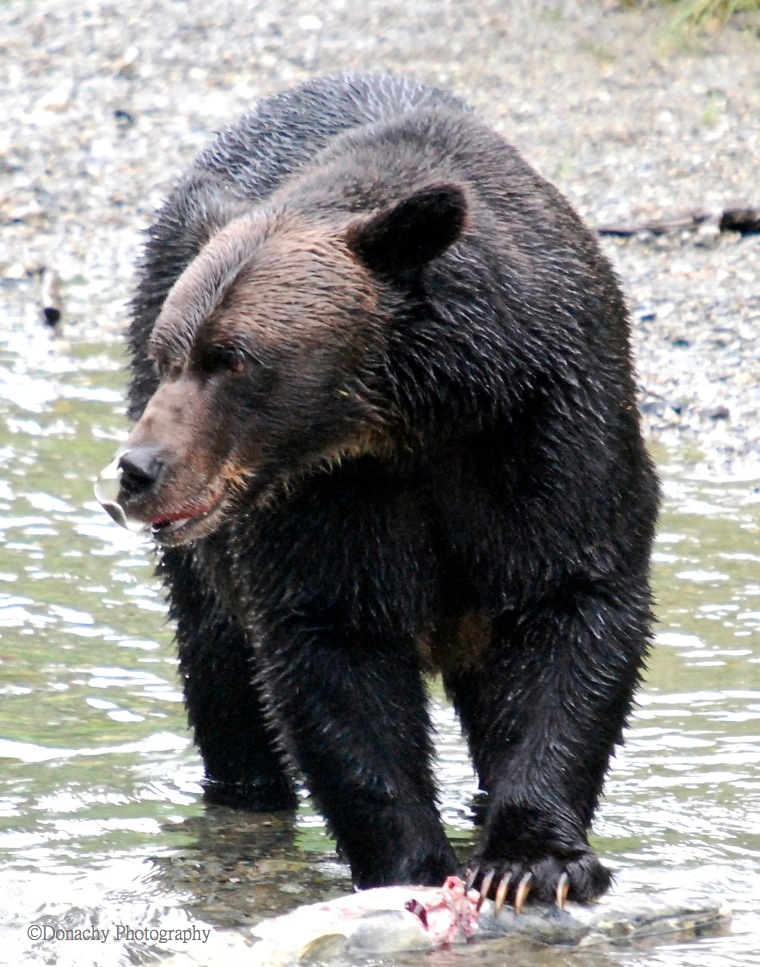
Patrolling Hyder, Alaska’s Fish Creek like she owns it, 600-pound Monica fattens up on a freshly subdued chum salmon.

With a population of fewer than 100 residents, Hyder, Alaska, bills itself as “The Friendliest Ghost Town in Alaska.” The town is one of those gems that is far enough off the beaten path to still be something of a secret, known mainly to the relatively few people who travel the Cassiar Highway in western British Columbia. Many of these travelers are on their way to or from Alaska, and not even all of these travelers are aware of what Hyder offers.

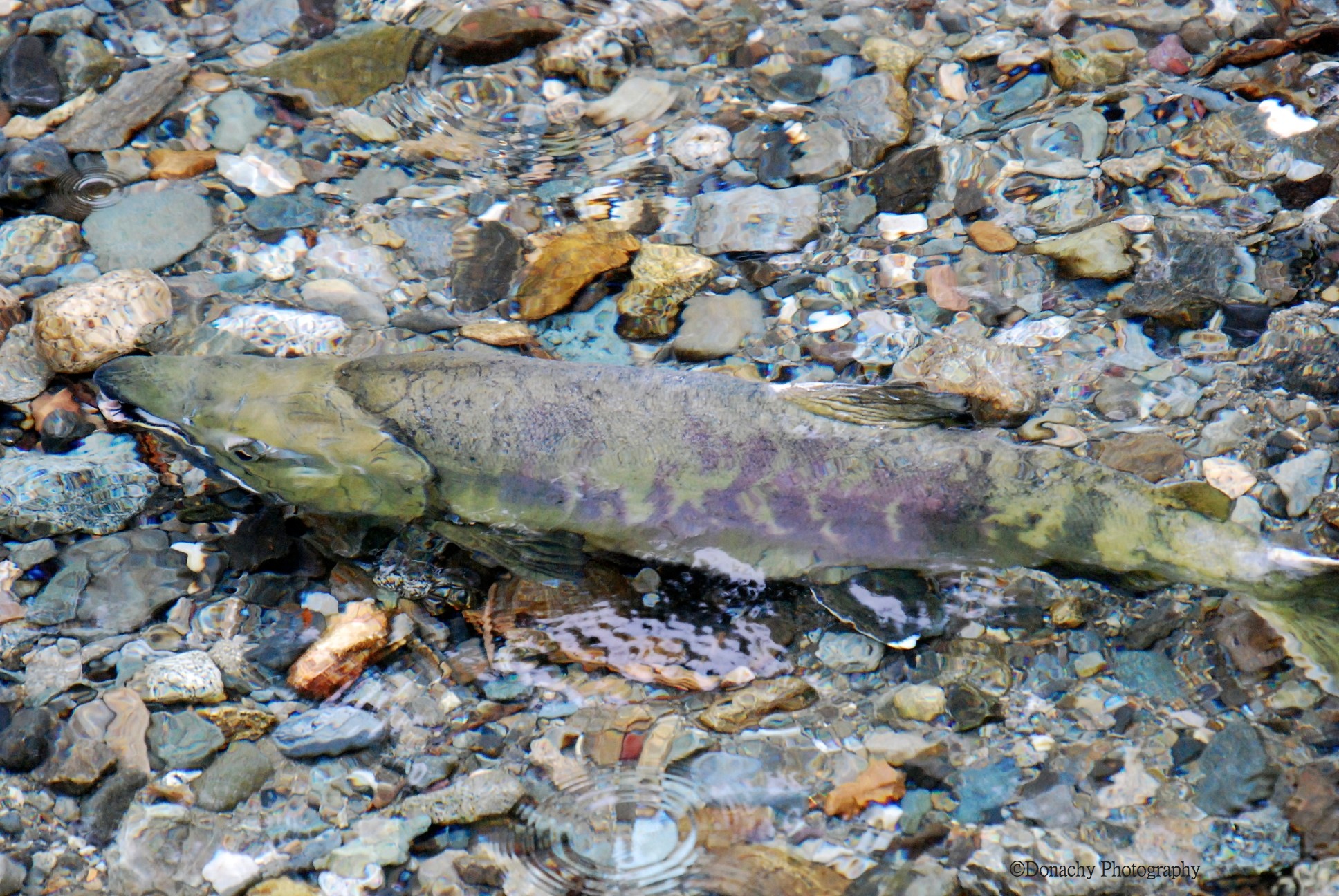
A prize for any grizzly, this beautifully marked chum salmon makes its way up the air-clear water of Fish Creek. 

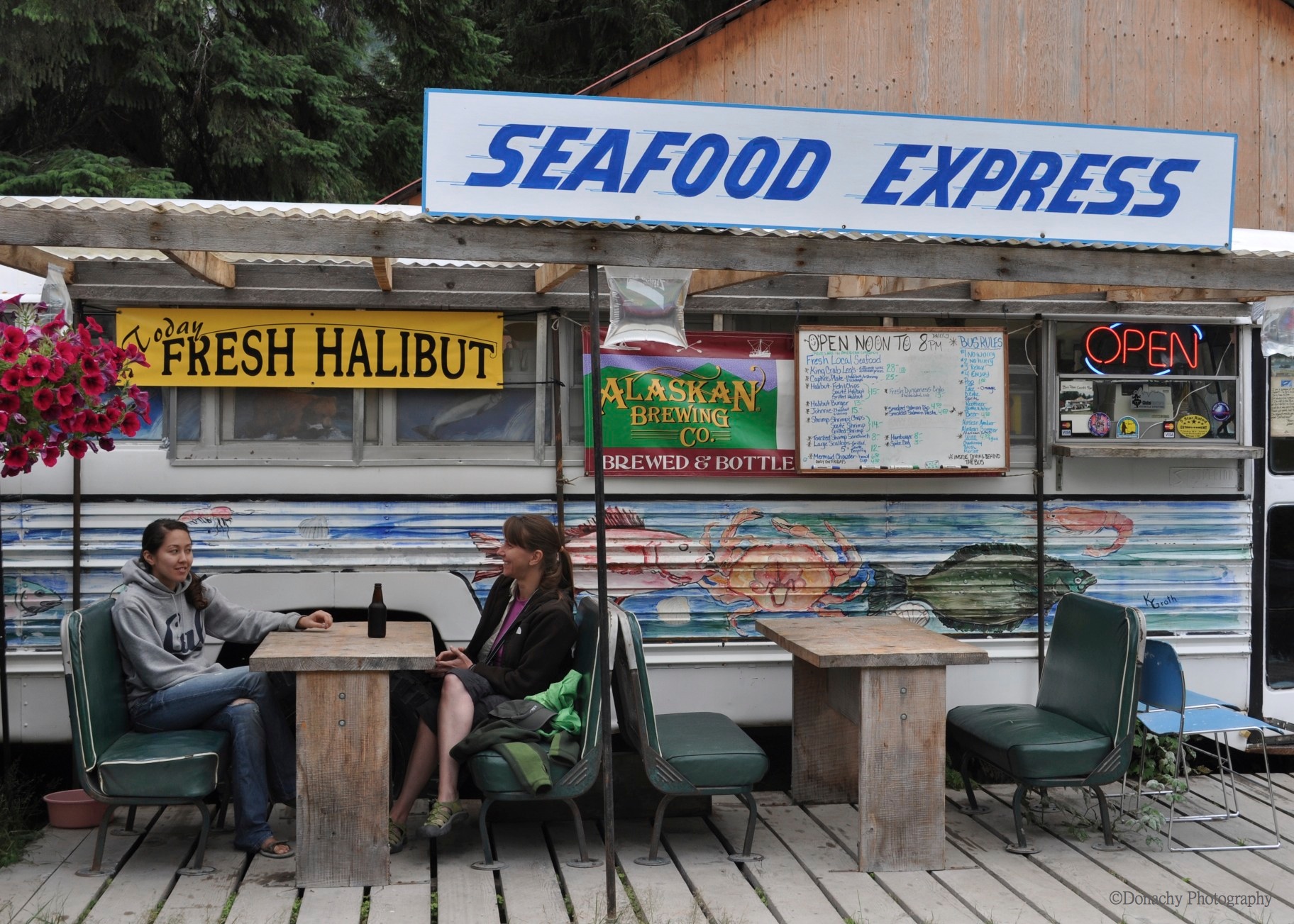
In addition to rare opportunities to watch and photograph grizzlies up close from a safe vantage point (an elevated viewing deck runs along a short portion of Fish Creek), Hyder boasts what is surely one of the world’s most unusual destination restaurants. We’ve written about the Seafood Express in a previous post. Established in 1998, the school bus Jim and Diana Simpson converted into a restaurant continues to turn out the very best fish and chips we’ve ever had. Even when the salmon and bears aren’t in, the restaurant alone makes taking the turnoff to Hyder worthwhile. Jim, a fisherman by trade, supplies the fresh salmon, halibut, shrimp and prawns Diana magically transforms into perfectly crispy, golden-brown, airily light creations that seem to disappear in one’s mouth. Complimented by a bottle of Alaskan Amber Ale, lingering over a meal there is the perfect way to relax after a morning of nature watching while Rufous Hummingbirds trill musically from the nearby spruce and fir forest.

A female common merganser (Mergus merganser) leads her brood of chicks (next photo) down Fish Creek’s crystalline currents.

Merganser chicks scurry to keep up with their mother. This type of duck typically nests in tree cavities near water. They feed on small fish, insects and (I’m guessing) salmon eggs when they can find them.

Since 1998, the Seafood Express has been serving up gourmet-quality fish and chips

The viewing platform on Fish Creek provides one of the very few places in North America where people can routinely and safely view wild grizzlies from a fairly close distance. The platform is manned by knowledgable U. S. Forest Service Rangers. The best viewing is from late July through September.

A trip to Alaska through British Columbia by car, camper or motorhome is a trip of a lifetime. If your route takes you along the Cassiar Highway, Hyder should be a “must visit” destination!

For more, click here to see our iReport on CNN.