Ikura: Curing Salmon Eggs

Ikura, transluscent, close_n

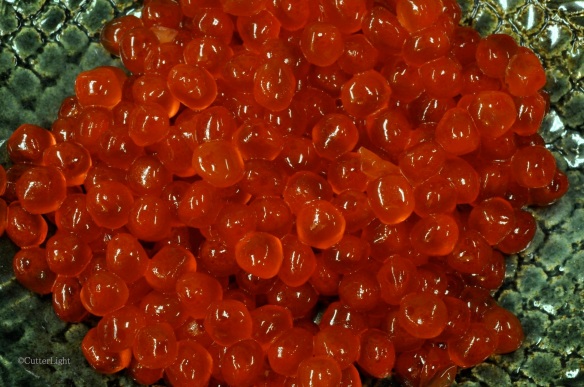
Like fire opals lit from within, freshly cured salmon eggs are ready to be served as ikura sushi, sprinkled on a bowl of rice (ikuradon), as a seafood garnish, with cream cheese and rice crackers, or simply gobbled by the spoonful!

At $40 to $50 a pound wholesale (and more expensive than that at the grocery store, when you can find it), cured salmon roe is not a regularly featured food in most kitchens. But if you catch your own salmon – or are friends with someone who does – it can be. Although the process of curing fresh salmon roe is somewhat time consuming, it is not difficult, and with patience almost anyone can turn out a sushi-grade batch of this delicacy.

Salmon eggs, King, in sacs_n

These two matching skeins of eggs, or roe sacs, from a Chinook salmon were frozen this past summer and went into one of our ice chests when we flew to our home in Point Hope, Alaska this fall. Japanese chefs typically prefer the eggs of chum salmon (they’re big), but the eggs from any salmon species are fine. In fact, very attractive cured roe can be made from the smaller eggs of large char, too.

Whether you use fresh or fresh-frozen eggs, the first step (once the roe is completely thawed) is to separate the individual eggs from the skein. The riper the eggs, the easier this process will be. There’s a trick that makes this process much easier than it might otherwise be. Bring a pot of water to a temperature of about 120 degrees Fahrenheit and plunge the whole skein into the hot water. Remove the pot from heat and gently swirl the eggs around. You’ll probably want a pair of nitrile or plastic gloves for this. As you do this, you’ll notice the eggs becoming opaque – cream colored. They’ll look as though you’ve ruined the batch. You haven’t.

Ikura after soaking in hot water_n

Hot water temporarily colors the roe and makes it easier to remove from the membranous roe sac. Provided you have kept the water temperature below 140° F, do not be concerned if your eggs become whiter and more opaque than those in the above photograph.

Next, pour the eggs and the water into a strainer. Plastic colanders, with their smooth surfaces, work well for this step. A lot of the extraneous tissue will drain off at this point. Place the strainer with the eggs in a large pot, fill with cold water, and continue to swirl the eggs around. The fat and other unwanted tissue will tend to rise above the eggs and can be skimmed off with a wire mesh skimmer. Some of the eggs will still have tissue attached. These can be cleaned by hand.

Ikura before and after being cured_n

Left: Salmon roe separated and cleaned and ready to be cured. Right: the finished product – fresh, salty ikura.

The next step is magical. For each cup of salmon roe, add just less than a teaspoon of salt. Finely ground sea salt or kosher salt works best for this step. Gently but thoroughly mix the salt into the eggs with your hands. The eggs will immediately begin to turn bright and translucent. Taste and roe and, if desired, add additional salt.

Finally, place the eggs in a strainer one more time to allow excess liquid to drain off. The cured roe will keep for several days in the refrigerator. It can also be kept in the freezer in tightly sealed jars.
Ikura on plaice plate_n

One you get the basic method down, you can substitute soy sauce for some of the salt or add a splash or two of sake (酒) to create subtly different flavors.

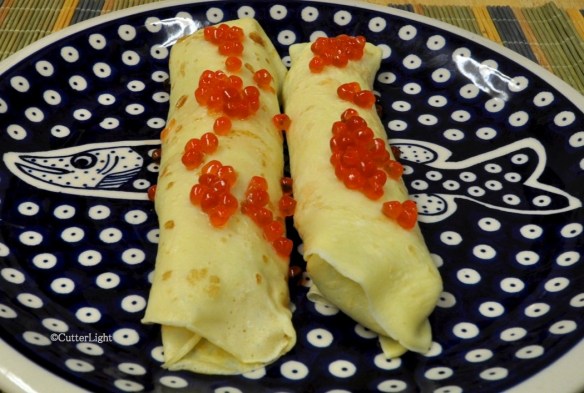
We serve ikura on everything from scrambled eggs to seafood pizza, as well as on traditional Japanese dishes such as chawan-mushi and zaru soba. Below, they add a splash of color and flavor to crepes wrapped around smoked Alaskan salmon and herbed cream cheese.
Crepes w smoked salmon & herbed cheese_n

Pecan Crumble Overnight French Toast

 Let French bread cubes soak up the cream and egg mixture overnight. The next morning top it with pecans and brown sugar and pop it in the oven for a freshly baked delicious breakfast worthy of kings!

Serve this easy yet impressive baked French toast with slices of fresh fruit, maple syrup, hot coffee and a side of bacon or smoked salmon for breakfast or brunch.

Pecan Overnight French Toast

Ingredients

  • 1 French bread baguette
  • 7 eggs
  • 2 cups half and half
  • 1 cup whole milk or soy milk
  • 2 tbsp granulated sugar
  • 1 tsp vanilla extract
  • 1 tsp ground cinnamon

Ingredients for pecan topping:

  • 1 stick unsalted butter, melted
  • 1 cup packed brown sugar
  • 1  1/2 cups chopped pecans

Directions

  1. Butter a 9 x 13 inch glass baking dish.
  2. Cut French bread into approximately 1-inch cubes.
  3. Spread cubes on bottom of glass baking dish.
  4. Thoroughly mix together eggs, cream, milk, sugar, vanilla, and cinnamon.
  5. Pour egg mixture over bread. Cover dish and place in refrigerator overnight.
  6. Bring bread mixture out of refrigerator while preheating oven to 350 degrees F.
  7. Prepare pecan topping by mixing butter, pecans, and brown sugar.
  8. Spread pecan mixture evenly over bread mixture.
  9. Bake for 40 minutes, until golden and puffed.
  10. Serve with maple syrup.

You might also like Overnight French Toast with Blueberries.

Jiro Dreams of Sushi: A Philosophy of Life and Sushi

Yanagiba (sushi knife), ohashi (chopsticks) properly resting on an ivory spotted seal hashioki, and David Gelb’s documentary of world-renowned sushi chef Jiro Ono. Let the feast begin.

The shots of sushi will wow you. Segments depicting 85-year-old Jiro Ono magically transforming rice and fish into pieces of art that are at once too beautiful to be eaten and yet must be eaten will mesmerize you. The manner in which he and his 51-year-old son run Sukiayabashi Jiro, a 10-seat sushi restaurant in the underground subway system in Tokyo’s ritzy Ginza District will, perhaps, prompt you to make subtle (or not so subtle) changes in the way you run your own kitchen. At the very least, you are likely to come away from the film with a heightened appreciation of tamagoyaki – the grilled egg dish frequently served on nigiri sushi menus. Sukiabashi Jiro is the only sushi restaurant in the world to earn Michelin’s top rating – the coveted three stars. The simple definition of a three-star restaurant is this: a restaurant that by itself makes a trip to that country worthwhile.

As a self-taught chef, as a father, as a person who is seeking to perfect my own path in life, and as one who lived in Japan for nine years and came to deeply appreciate the Japanese sensibility toward life, this film profoundly moved me. Jiro Ono embodies the characteristics of the shokunin – a master craftsman or artisan who, while possessing superb technical skills in his field, is also aware of his responsibility to model an honorable life and to look out for the welfare of others. In the film, Masahiro Yamamoto, one of Japan’s leading food critics,  identifies the five attributes of a great chef. These attributes are no doubt valued by all shokunin.

1. A serious attitude toward one’s work

2. Aspiration to improve – to strive for perfection

3. Cleanliness (which includes a proper order in one’s life and work)

4. Lead rather than collaborate

5. Bring passion to one’s work, (and through that passion to discover moments of ecstasy)

I’m going to add a sixth element to Yamamoto’s list. If Jiro’s life is about striving for perfection, the question is begged, “Perfection to what end?” To what purpose are the above five attributes?

It is this: They are all aimed toward providing others with an ultimate experience. Jiro dreams of sushi, yes. But what he really dreams of is providing his customers with a perfect dining experience. That is the sixth attribute: The desire to provide others with a penultimate experience.

Some of these attributes are, perhaps, antithetical to current western thinking. Therein lies the core of the criticisms of this film. Aren’t we supposed to value collaboration? Is the emphasis on cleanliness really so important? Is Jiro truly interested in others, or is he merely a shallow, self-inflated ego with no meaningful connection to other human beings – including his wife and his two sons? Doesn’t taking one’s work too seriously lead to imbalance in life?

I think this much is fair to observe: The path Jiro Ono has chosen in life is not a path that would suit everyone. But it is a path I admire. In the director’s cut, it is mentioned that a regret is that Jiro’s wife was unable to be in the film. This seems to be owing to the health of a woman in her 80’s, not about a failed partnership. His sons are both key players in the film, and speak of their father with honor, respect and love. They have both chosen to follow in his line of work, to embrace his teaching and have become highly respected sushi chefs in their own right. In turn, Jiro speaks with pride and admiration of both of his sons. As a father, I can very much relate to Jiro’s philosophy regarding child-rearing. You spend your life teaching and guiding, and in the end you hope a good bit of it takes root. In both of Jiro’s sons, his teaching did stick, his guidance payed off, and because his sons worked for many years in his restaurant, he ultimately spent more time with them than most fathers ever spend with their children.

As to taking one’s work too seriously and carving out one’s own path rather than collaborating, I grew up in a family wherein, not just in my nuclear family but in all the uncles and aunts in my extended family, the life philosophy most frequently espoused was an admonition to not take work (or anything else) too seriously. It was a philosophy that did not work for me, and ultimately inspired an opposing philosophy.

At the age of 4o, I began the long, sometimes arduous, deeply satisfying process of remaking my life. Part of the remaking has been rooted in a newfound freedom – a self-given permission to pursue life with renewed passion, dedication and a commitment to honor and excellence.  As I move forward with this life as a sailor, chef, writer, photographer, father and husband, this film that so eloquently captures the life and spirt of a true shokunin resonates.

Hearty Bean, Roasted Squash and Sausage Soup

Hunks of crusty, toasted baguette and parmesan cheese accompany one of our favorite wintertime soups.

We don’t get many fresh vegetables up here in Arctic Alaska. Squash really shines. It ships well and keeps for months, so every August we fill a tub with an assortment of acorn, butternut and spaghetti squash, put in in the mail, and use them in pies, soups and entrées over the following months. Puréed butternut squash is a terrific way to thicken hearty soups. I do a version of bean and sausage soup every winter in my big soup kettle. This year’s was our favorite to date, and although ingredients on hand will always necessitate minor changes, we’ve now got a base recipe that’s a keeper.

Although ingredients can be freely substituted, the combination of smoked chipotle peppers and star anise is especially nice. Make this dish even tastier by roasting the squash and the tomatoes on a charcoal grill.

Hearty Bean, Roasted Squash and Sausage Soup

Ingredients:  Makes about 2 gallons. If you do not have whole peppers, substitute powdered cayenne or similar pepper, or use a good chili or Thai blend.

  • 1 medium butternut squash
  • 1o cups black and pinto beans (or use all black beans), soaked, tender and ready for cooking
  • 3 stars of star anise
  • 8 cloves garlic, chopped coarse or sliced
  • 3 smoked chipotle peppers, ground fine (use a food processor)
  • 1 ancho pepper, ground fine
  • 1 tbs oregano
  • 1/2 tbs thyme
  • 1 bay leave
  • two sweet onions, chopped coarse
  • several grinds black pepper
  • 1 1/2 pounds sweet corn
  • 1 pound sausage, sliced (I used chicken sausage.)
  • olive oil
  • chicken broth – enough to cover beans plus some additional broth to use when puréeing the squash. (I use Better Than Bouillon to make the broth.)
  • 2 pounds diced tomatoes, canned or fresh, seeds removed
  • smoked sea salt, to taste

Directions:

  1. Place a cooking sheet in an oven and preheat to 400 degrees F.
  2. Squash: Cut away the stem and slice into discs approximately one inch thick. Quarter these slices. Remove seeds and stringy flesh. Leave the skin on.
  3. Place the squash in a large pan, add olive oil, and toss till all pieces are well coated.
  4. Lightly oil the heated baking sheet in the oven and place the oiled squash pieces on the pan. Roast until thoroughly cooked through and soft – about 20 minutes.
  5. Place cooked squash on a large cutting board. When cool enough to work with, use a knife to remove the skin.
  6. Use a stick blender or food processor to purée the squash a few chunks at a time. Keep the mixture fairly thick.
  7. When all the squash has been puréed, place in a container and set aside.
  8. Meanwhile, in a large soup kettle combine the beans, star anise, garlic, chipotles, anchos, oregano, thyme, black pepper, bay leave, enough chicken broth to cover all the ingredients, and 2 tablespoons olive oil. Bring to a simmer, stirring occasionally, and continue cooking on a low simmer for about 20 minutes.
  9. Stir in the puréed squash.
  10. Add the tomatoes, corn and sausage. Add smoked sea salt, if needed.
  11. The soup is ready to serve, but will be even better if it rests for an hour or more.

Serve with freshly baked French baguettes. 

A Ghost Town, Grizzlies, and the Best Fish and Chips Anywhere

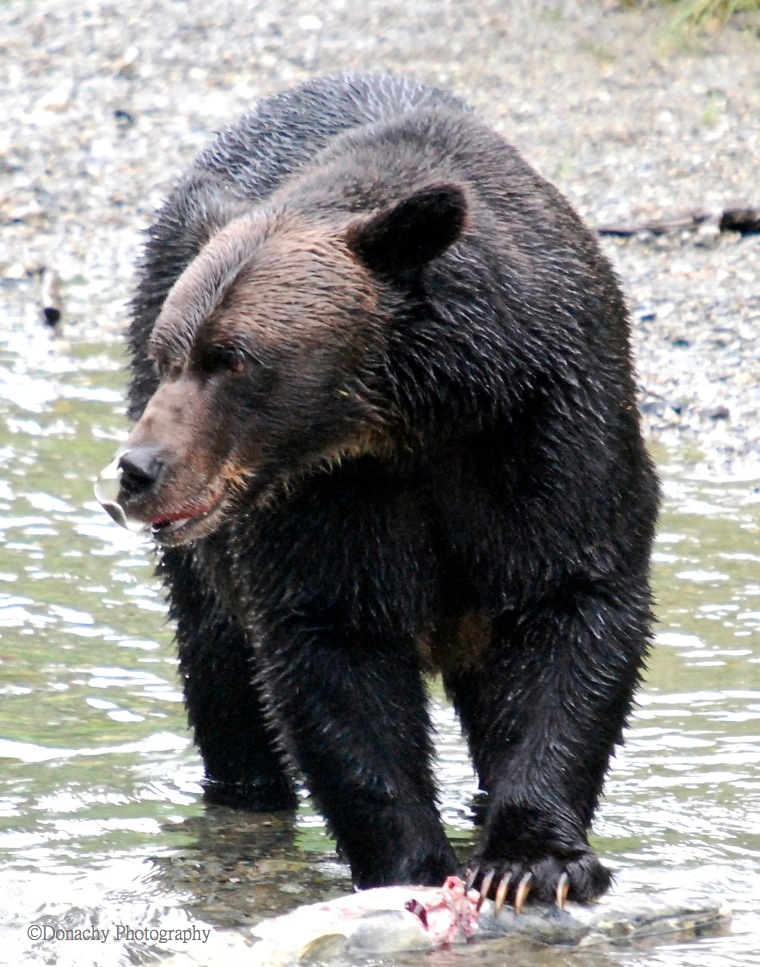
Patrolling Hyder, Alaska’s Fish Creek like she owns it, 600-pound Monica fattens up on a freshly subdued chum salmon.

With a population of fewer than 100 residents, Hyder, Alaska, bills itself as “The Friendliest Ghost Town in Alaska.” The town is one of those gems that is far enough off the beaten path to still be something of a secret, known mainly to the relatively few people who travel the Cassiar Highway in western British Columbia. Many of these travelers are on their way to or from Alaska, and not even all of these travelers are aware of what Hyder offers.

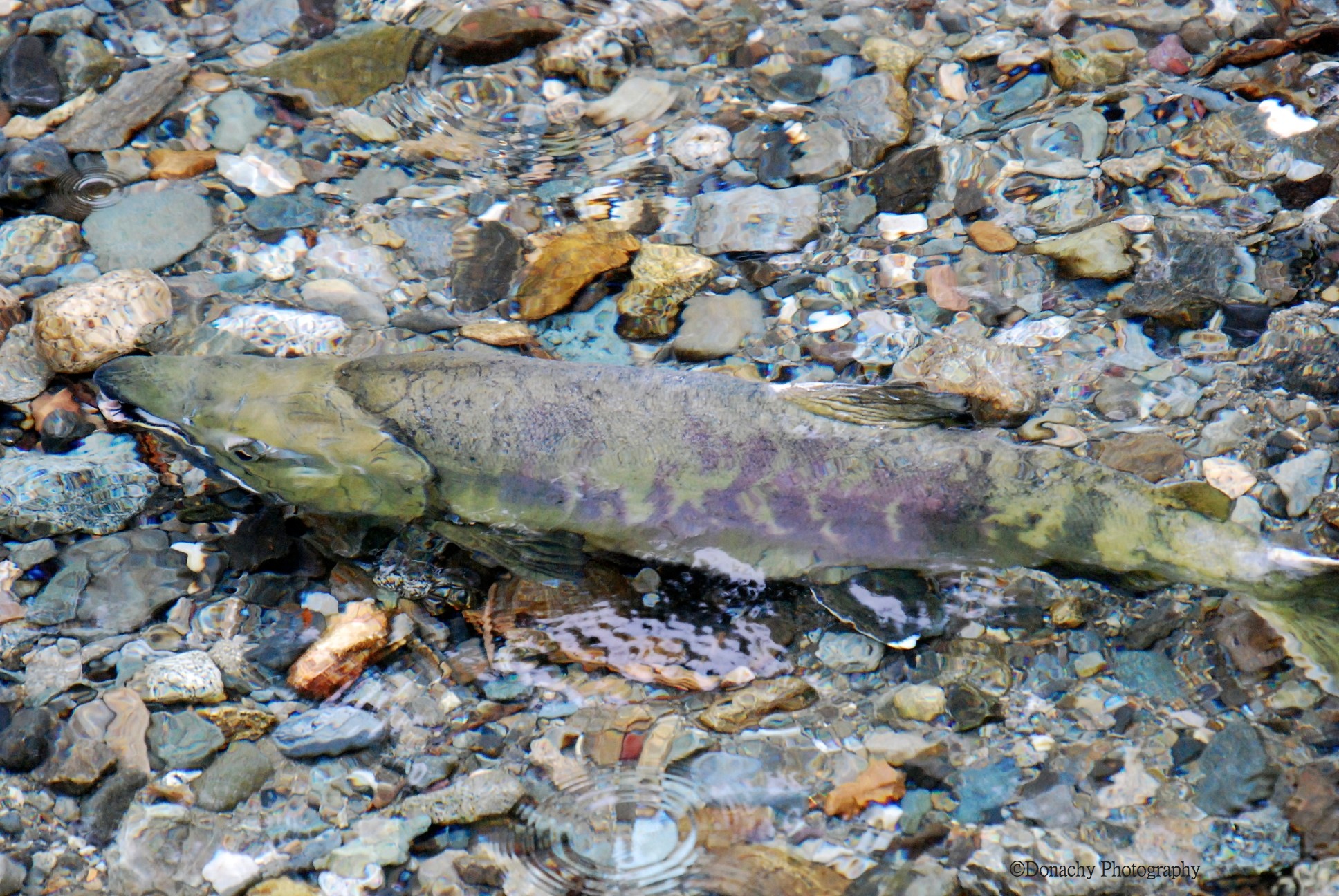
A prize for any grizzly, this beautifully marked chum salmon makes its way up the air-clear water of Fish Creek. 

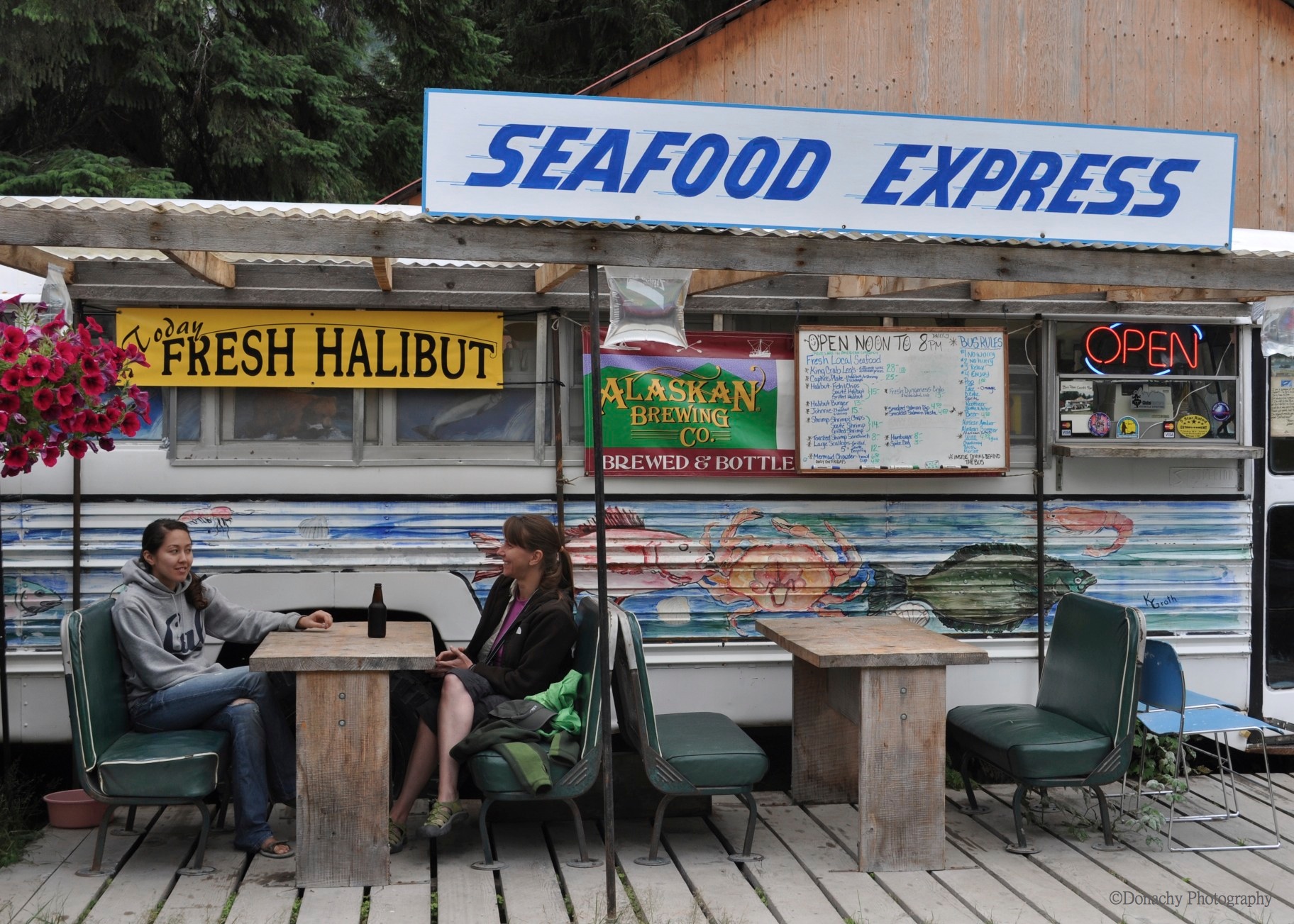
In addition to rare opportunities to watch and photograph grizzlies up close from a safe vantage point (an elevated viewing deck runs along a short portion of Fish Creek), Hyder boasts what is surely one of the world’s most unusual destination restaurants. We’ve written about the Seafood Express in a previous post. Established in 1998, the school bus Jim and Diana Simpson converted into a restaurant continues to turn out the very best fish and chips we’ve ever had. Even when the salmon and bears aren’t in, the restaurant alone makes taking the turnoff to Hyder worthwhile. Jim, a fisherman by trade, supplies the fresh salmon, halibut, shrimp and prawns Diana magically transforms into perfectly crispy, golden-brown, airily light creations that seem to disappear in one’s mouth. Complimented by a bottle of Alaskan Amber Ale, lingering over a meal there is the perfect way to relax after a morning of nature watching while Rufous Hummingbirds trill musically from the nearby spruce and fir forest.

A female common merganser (Mergus merganser) leads her brood of chicks (next photo) down Fish Creek’s crystalline currents.

Merganser chicks scurry to keep up with their mother. This type of duck typically nests in tree cavities near water. They feed on small fish, insects and (I’m guessing) salmon eggs when they can find them.

Since 1998, the Seafood Express has been serving up gourmet-quality fish and chips

The viewing platform on Fish Creek provides one of the very few places in North America where people can routinely and safely view wild grizzlies from a fairly close distance. The platform is manned by knowledgable U. S. Forest Service Rangers. The best viewing is from late July through September.

A trip to Alaska through British Columbia by car, camper or motorhome is a trip of a lifetime. If your route takes you along the Cassiar Highway, Hyder should be a “must visit” destination!

For more, click here to see our iReport on CNN.

Moose and Spinach Cannelloni with Homemade Ricotta and Homemade Pasta

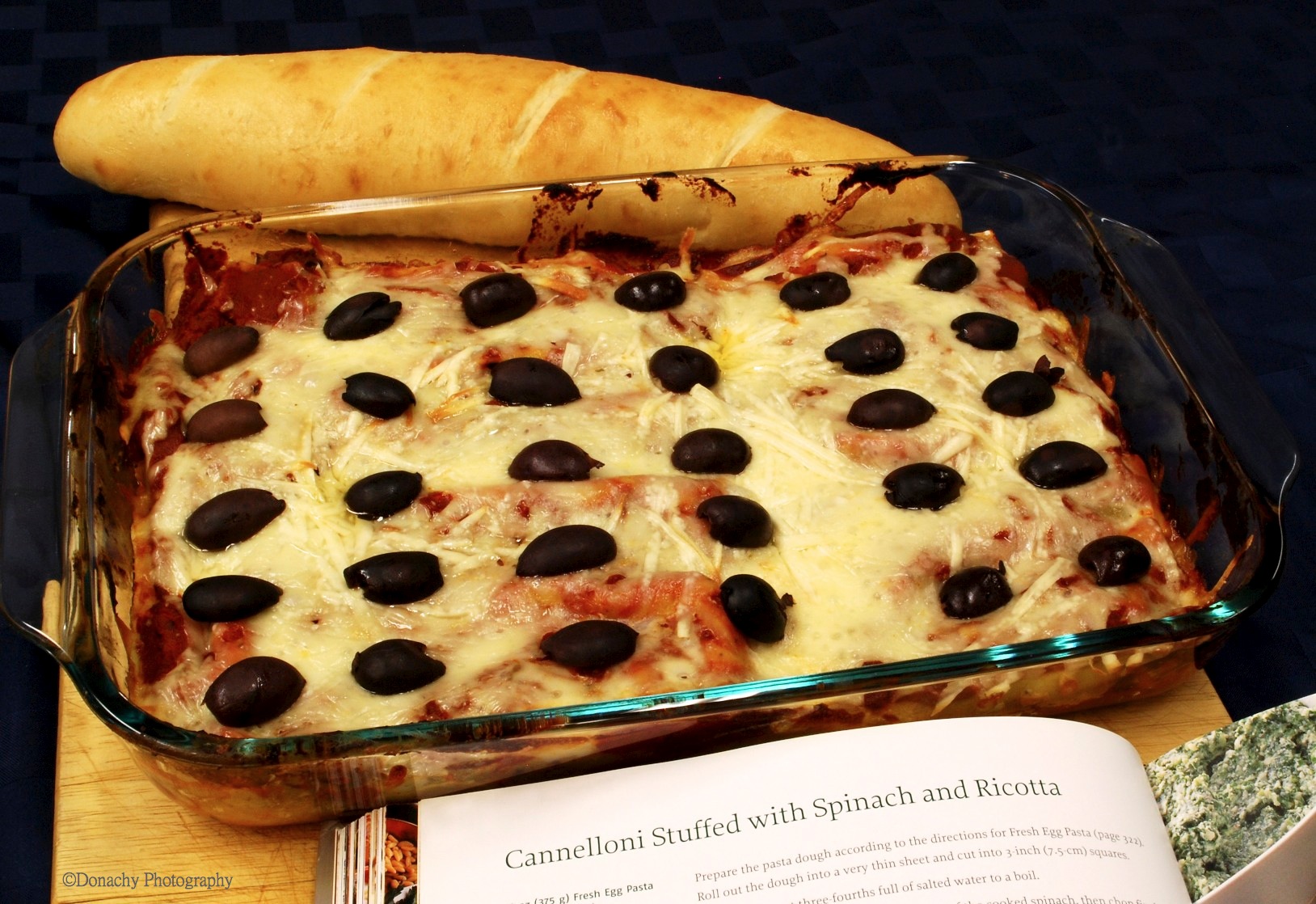
New Traditions. Smothered in mozzarella and parmesan and topped with Kalamata olives, 10 individual cannelloni pastas stuffed with homemade ricotta cheese, ground moose, and spinach await dinner guests.

Cooking in bush Alaska requires a certain amount of ingenuity and flexibility. Last year when I made a couple of pans of moose lasagna, with no ricotta cheese on hand I substituted mozzarella and called it lasagna anyway. It was excellent. The hot, stringy mozzarella was reminiscent of a deep dish Margherita pizza.

When a friend gave me a few pounds of moose again this year, Barbra said, “I’ll make you ricotta cheese for your lasagna.” She also made the pasta – 20 five-inch-by five-inch squares, ready to be rolled around ricotta cheese, spinach, sautéed  moose burger and tomato sauce. This is not traditional cannelloni, but, like last year’s lasagna, has twin roots in Italy and Alaska.

A serving of two moose, spinach and ricotta cannelloni fresh out of the oven. Each cannelloni (literal translation, “big reed”) is a five-inch-long cylinder of fresh pasta wrapped around ricotta cheese and other ingredients. 

Moose and Spinach Cannelloni

Ingredients for one 13 x 9 inch baking dish:

  • 1/2 pound ground moose, sautéed in olive oil till browned
  • pasta to make ten 5 x 5 inch tubes (cannelloni). (Or substitute store-bought manicotti.)
  • three 6-oz. cans tomato paste with enough water to thin the sauce to the thickness of marinara sauce
  • fresh spinach, cut so that the leaves will easily fit into cannelloni tubes (or substitute frozen spinach)
  • 1 1/2 cups ricotta cheese
  • 1/4 pound mozzarella cheese grated (about 1 cup)
  • 1/4 cup parmesan cheese grated fine
  • 1 1/2 tablespoons Italian herbs, separated into 2 equal parts
  • 1 tsp ground fennel (optional)
  • 2 or 3 cloves garlic, minced
  • several grinds of black pepper
  • 2 tbsp olive oil
  • salt (optional)
  • additional mozzarella and parmesan cheese to top cannelloni before baking (optional)
  • Kalamata olives, sliced in half lengthwise (optional)

Directions:

  1. Preheat oven to 350 degrees F.
  2. Place tomato paste, garlic, olive oil, black pepper, half the Italian herbs, fennel (and salt, if desired) in a nonreactive bowl and mix together, adding water to thin till sauce is just pourable.
  3. Cover a 9 x 13 inch baking dish with a layer of tomato sauce. Set aside remaining sauce.
  4. Place ricotta, mozzarella and parmesan into a large bowl. Add remaining Italian seasoning, a few grinds of pepper and mix together well by hand.
  5. Shape a piece of ricotta blend so that it lays end-to-end across one of the pasta squares. Position a few pieces of spinach leaves next to the ricotta. Use a spoon to lay down a thin bed of tomato sauce Add moose meat. Roll the pasta into a tube, pinch/press closed and position the tube seam side down atop the tomato sauce in the baking dish.
  6. Repeat till all the pasta squares have been filled and placed in the baking dish. Cover the cannelloni with the remaining sauce.
  7. (Optional). If desired, sprinkle grated mozzarella and parmesan atop the sauce-covered cannelloni. Top with Kalamata olives.
  8. Cover baking dish with aluminum foil and place on center rack of oven. Bake for 30 minutes.
  9. Remove foil and finish baking for an additional 5 to 10 minutes – to melt and lightly brown the cheese.

Deep Dish Garlic Margherita Pizza

Uptown Chicago on the Chukchi Sea: Pan-fried garlic chips and lots of parmesan create a tasty topping for this Margherita-stye deep dish pizza. 

Barbra’s formative food experiences were considerably more worldly than mine. For her, deep dish pizzas were part of growing up. But I still vividly remember my first encounter with deep dish pizza. It occurred during my senior year of high school when one of my track teammates qualified for nationals in the javelin. The meet was in Chicago. When he got back, he raved about a strange and wondrous food called “Chicago Deep Dish Pizza.” The way he told it, a single lare slice of this thick, crusty, meat-and-cheese-stuffed pie would constitute a meal for a regular person.

After that, I kept my eyes open, hoping to find such a pizza on a local menu or in our supermarket’s frozen food section. But back then, in my small town in western Pennsylvania, there were no Chicago Style Deep Dish Pizzas. (I felt like an epicurean adding a little extra cheese and a sprinkle of Italian Seasoning on my frozen Red Barrons.) Many years later, when I finally did get the opportunity to try a deep dish pizza, it was at a well-known pizza chain where, not surprisingly, the experience was entirely anticlimactic.

I’m happy to say that I have finally experienced the gustatory joy of digging into an authentic, perfectly baked, zesty, cheesy satisfying deep dish pizza. Barbra kept the ingredients fairly simple, starting with a Margherita-style filling featuring diced tomatoes, slices of mozzarella, olive oil and a blend of Italian herbs. She topped this with shredded parmesan and pan-fried garlic slices. In our view, pizzas ultimately stand or fall on their crusts. This one was perfect.

Deep Dish Garlic Margherita Pizza

Ingredients

Crust

  • 4 cups all-purpose flour
  • 3 tbsp yellow cornmeal
  • 2 3/4 tsp yeast
  • 1 3/4 tsp salt
  • 4 tbsp olive oil
  • 4 tbsp butter, melted
  • 1 1/4 cup water

Filling and Toppings

  • 3/4 lb. mozzarella cheese, sliced
  • 28 ounces (two 14 ounce cans) of diced tomatoes, drained thoroughly
  • 3 tsp dried Italian seasonings
  • 1 tsp dried garlic powder
  • 1 cup freshly grated Parmesan cheese
  • salt and pepper to taste
  • garlic chips (see recipe below)

Directions for Crust

  1. Preheat oven to 400 degrees F.
  2. Place the crust ingredients in the bread machine pan in the order recommended by the manufacturer.
  3. Turn on dough setting.
  4. Place the dough in a lightly oiled bowl.
  5. Oil a pizza pan or two 9-inch pie pans by pouring a couple of tablespoons of olive oil in pan and tilting it to cover bottom(s).
  6. Stretch the dough to make a large circle. Do this with your hands or with a rolling pin on a lightly oiled surface.
  7. Lay the dough in the pan and stretch the dough up the sides of the pan. Cover and let rest for 15 minutes.
  8. Bake crust for 10 minutes until set and very lightly browned

Directions for Filling and Toppings

  1. Combine tomatoes with herbs, garlic, salt and pepper.
  2. Cover the bottom of baked crust with mozzarella slices.
  3. Add tomato mixture.
  4. Sprinkle parmesan cheese on the top.
  5. Top with garlic chips (See below).
  6. Bake pizza for about 25 minutes. If edges begin to brown too much, cover edges with foil during baking. When finished, pizza filling should be bubbly and top should be golden brown.
  7. Allow pizza to cool for about 10 – 15 minutes before serving.

Garlic Chips

  1. Slice 6 large cloves of garlic into thin slivers.
  2. Heat olive oil over medium-low heat in a medium frying pan. Add garlic slivers and sauté until just browned and edges are crisp.
  3. Remove chips from heat and drain on paper towel.

Smoky, Fiery Chili con Carne with Beans and Sweet Corn

Berry leaves are turning red and the grass is going to autumn gold. Nightly temperatures are dipping into the thirties. We’re losing about seven minutes of daylight each day. Winter’s coming, and so today I made the season’s first Big Pot of chili.

I’ve been doing this for years now – one or two pots of chili con carne every fall and winter. No two pots are the same. Here’s this year’s first four-gallon batch. The smoked chipotle’s, smoked sea salt and charcoal grilled meat made this batch the best chili to date!

Ingredients:

  • 2 3/4 lbs tri-tip steak
  • 1 tbsp cumin – divided into two equal portions of 1/2 tbsp each
  • olive oil
  • 1 tbsp sweet mesquite seasoning
  • 13 lbs, 10 oz diced tomatoes, seeds removed
  • 1 1/2 pounds (24 oz) tomato paste
  • 3 3/4 pounds sweet onions, chopped coarse
  • 2 1/2 lbs sweet corn
  • 9 pounds beans, soaked, tender, and ready to go. Pinto and black beans in equal portions work well. Alternatively, all black beans are fine.
  • water, as needed (about 1 to 2 cups)
  • 2 bay leaves
  • 1 1/2 tbsp dry oregano, crushed
  • 1 tbsp dry sage
  • 1/2 tsp smoked paprika
  • 1/2 tsp white pepper
  • 1 tsp black pepper
  • 1 tsp smoked sea salt (to taste)
  • 2 arbol chilis, with seeds, chopped fine
  • 4 smoked chipotle chilis, with seeds, chopped fine
  • 2 tbsp chili garlic sauce
  • 2 tbsp mince garlic

Directions:

  1. Fire up a grill to a fairly hot temperature. Charcoal gives the best flavor, but a gas grill is fine.
  2. Cut the tri-tip into small cubes. And place into a mixing bowl. Add 1/2 tbsp cumin, 1 tbsp mesquite seasoning, and 1 tbsp olive oil. Mix together and place on a sheet of heavy duty aluminum foil that has been coated with olive oil.
  3. Place the aluminum foil with the meat on it on the grill and cover. Use a spatula to occasionally turn and stir the meat till it’s cooked through. Remove meat from grill, place in a bowl and set aside.
  4. Meanwhile, place tomato paste in a bowl and stir in just enough water to make a thick liquid. If you’re using canned diced tomatoes, the liquid from those will be plenty. Set aside.
  5. Add olive oil to a large pot, heat over medium heat, and add onions. Stir to ensure even cooking. When onions just begin to turn translucent, add the tomatoes, the tomato paste (from step 4), and all the remaining spices and seasonings. Heat over medium heat and stir till well mixed. Add the beans. The spices will become more pronounced with cooking, so wait at least an hour before adding additional spices.
  6. Bring pot to just barely boiling, then reduce heat to a low simmer. Use a flame tamer if necessary. Cook for one hour, or more.
  7. Stir in the sweet corn and the meat.
  8. Serve piping hot with corn bread fresh out of the oven and perhaps some grated cheddar cheese.

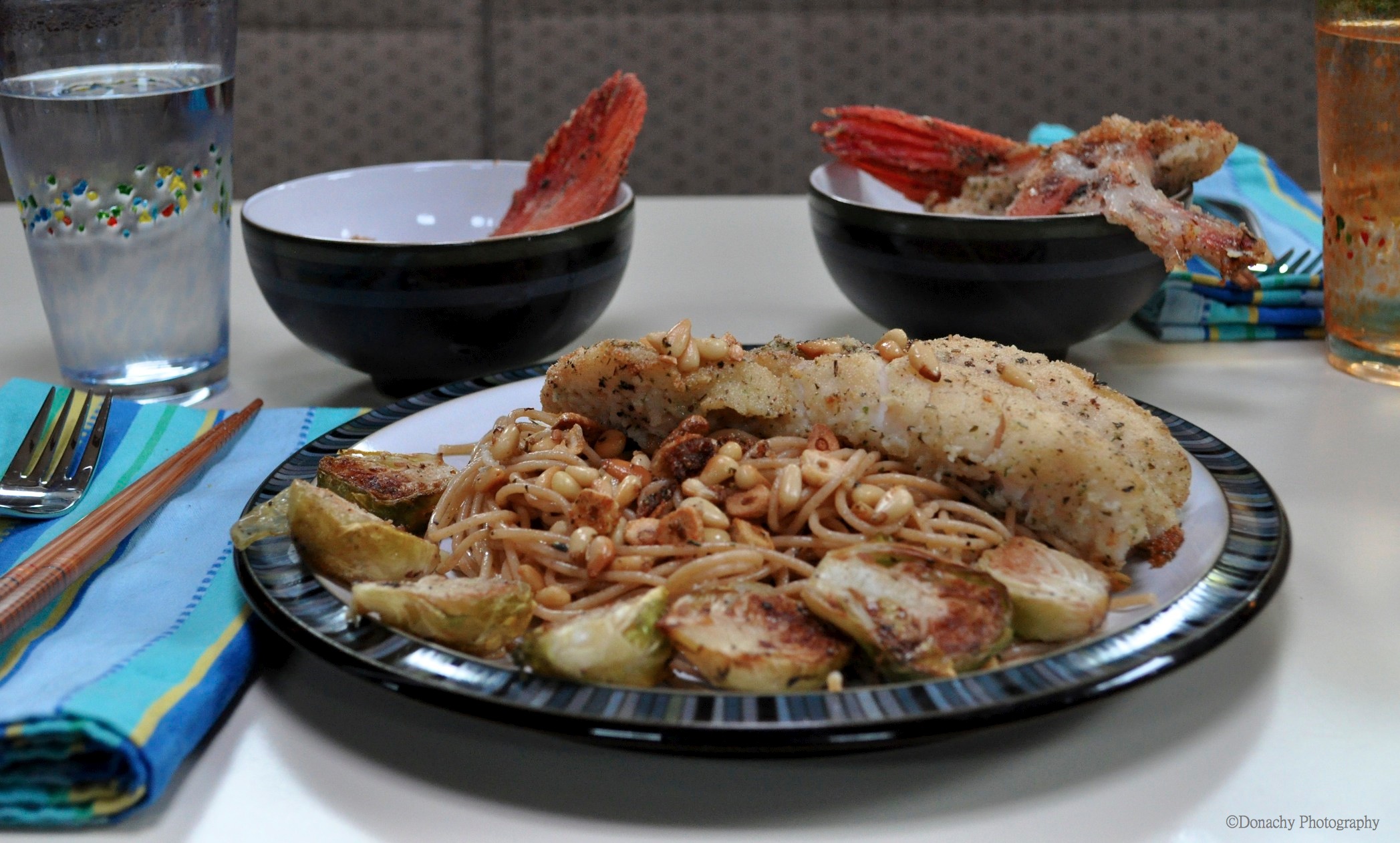
Rockfish Meunière on Whole Wheat Pasta

A fillet prepared à la meunière and served on pasta is one of our favorites when cooking with firm, delicately flavored white fish. We modify the traditional recipe, which means “miller’s wife” (descriptive of the flour this method employs) by using olive oil instead of butter and by skipping the lemon and butter finishing sauce.

Our three favorite methods for preparing fish, in no particular order, are as follows: sashimi – raw, thinly sliced fish dipped in a soy sauce and wasabi mixture; shioyaki – fish salted and then broiled or grilled; and à la meunière – dredged in seasoned flour and pan fried. These three preparation methods are the epitome of simplicity, emphasizing the freshness of the fish rather than sauces or seasonings, and can be accomplished in even the most bare-bones of kitchens. While they won’t adequately cover every species of fish (some species do well only when poached, and a few others shine best when deep fried), they are good methods to have in one’s repertoire.

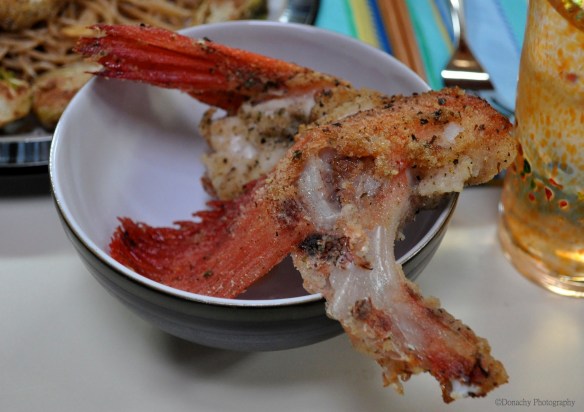
A collar – the meat just behind the fish’s head, including the pectoral and ventral fins – is a good candidate for meunière. Pictured is the collar from a two to three pound yelloweye rockfish.

Each cooking method works particularly well with certain species of fish. Chinook salmon, for example, is a superb fish for shioyaki and a much underutilized sashimi fish. Yellowtail and other tuna are excellent served as sashimi. When you think of meunière, think of fish that is white, firm but not dense, and mildly or even delicately flavored. Some of the best candidates are sole, flounder, greenling and Pacific rockfish in the genus Sebastes such as black rockfish, copper rockfish, yelloweye and so forth.

Rockfish à la Meunière on Pasta for Two

Ingredients:

  • two fish fillets 1/4 to 1/2 pounds each (110 to 230 grams), cleaned, skin removed, rinsed and patted dry with paper towels. Do not use a thick cut of fish for this. The fillets should be fairly thin – less than an inch thick (2.5 cm) as opposed to using part of a fillet from a large fish.
  • 1/3 cup semolina flour. (All-purpose or other flour is fine, but semolina will result in a very pleasant additional crunch and fuller texture to the finished fillet.)
  • 1/2 tablespoon herbs de Provence, plus 1 teaspoon herbs de Provence, separate
  • 1/8 teaspoon sea salt
  • 1/2 teaspoon freshly cracked pepper
  • 3 to 6 cloves of garlic, sliced thin
  • 2 tablespoons pine nuts (optional)
  • 1 tablespoon extra virgin olive oil
  • olive oil for frying
  • enough pasta for two servings
Directions:
  1. Cook pasta according to directions. Drain off water, return to pot and toss with about 1 tablespoon of extra virgin olive oil and 1 teaspoon herbs de Provence. Set aside. (Or do this simultaneously while cooking the fish.)
  2. In a plastic Ziplock bag, or in a mixing bowl or on a plate, mix together the flour, 1/2 tablespoons herbs de Provence, salt and freshly ground pepper.
  3. Thoroughly dredge the fillets in the flour mixture and set aside on a plate or cutting board. Left over flour can be used as a bed for the fillets.
  4. In a frying pan large enough to hold both fillets, add olive oil to about 1/8 inch depth. Heat over medium to medium-low until oil causes a pinch of flour to sizzle.
  5. Position fillets in pan making sure they do not touch. Cook uncovered over medium to medium-low heat for about 3 to 5 minutes.
  6. Carefully turn the fillets over. Add garlic slices and pine nuts and continue cooking for 3 to 5 minutes. The first few times you cook fish this way, you may have to break the fillets apart to check for doneness as it will vary depending on thickness, type of fish and cooking temperature.
  7. Place pasta on dinner plates. Remove fillets from pan and place on pasta. Use a slotted spoon to separate garlic and pine nuts from oil and sprinkle on fish and pasta.
  8. Serve hot with freshly grated Parmesan cheese.

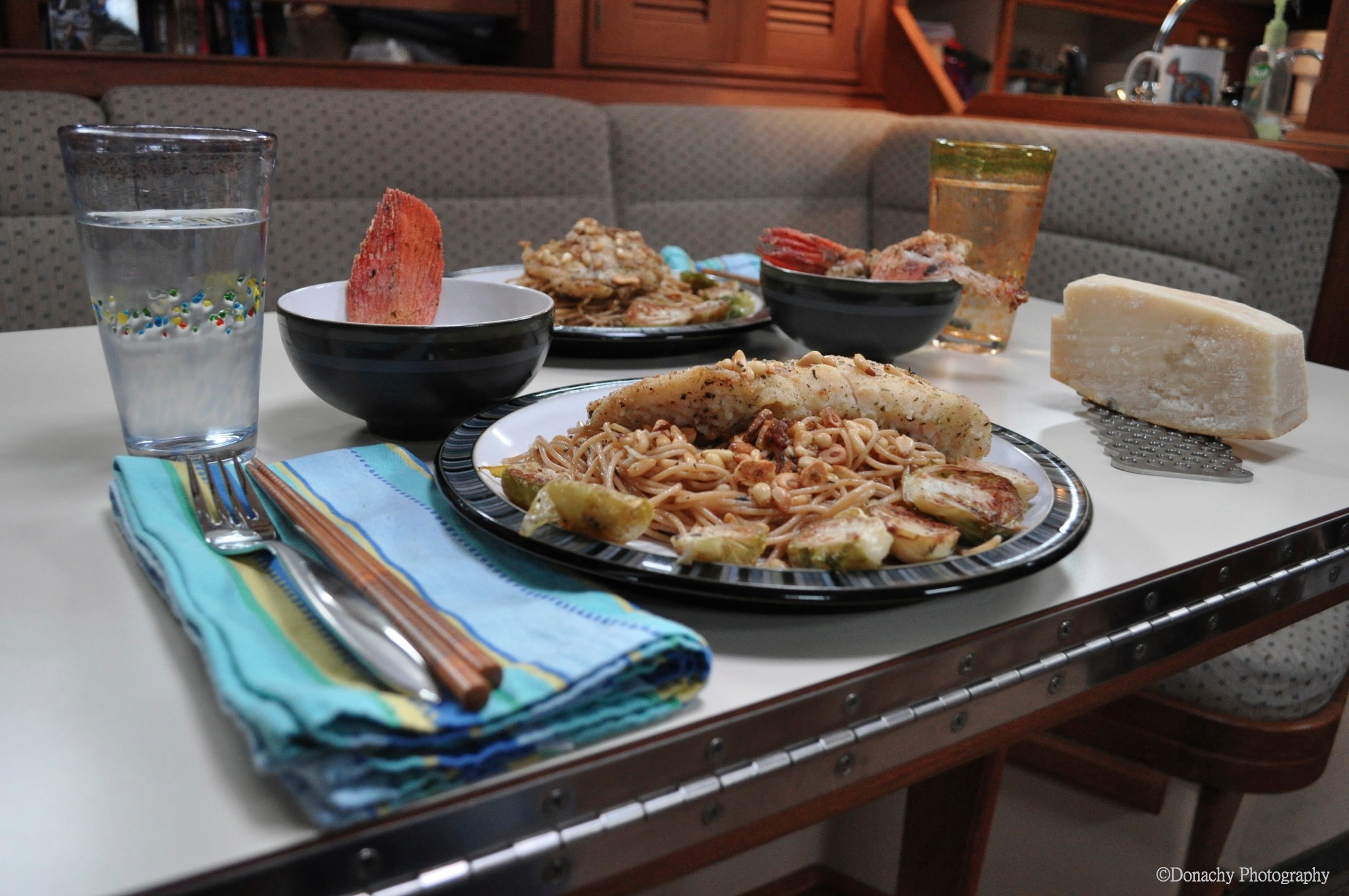
We served the pasta and fillet with a side of fish collars, also prepared à la meunière, and brussels sprouts sliced in half, seasoned with salt and pepper, and pan roasted. This is a simple yet elegant meal that can be prepared in a galley, on a camp stove, or in virtually any kitchen.

Most Excellent Nachos

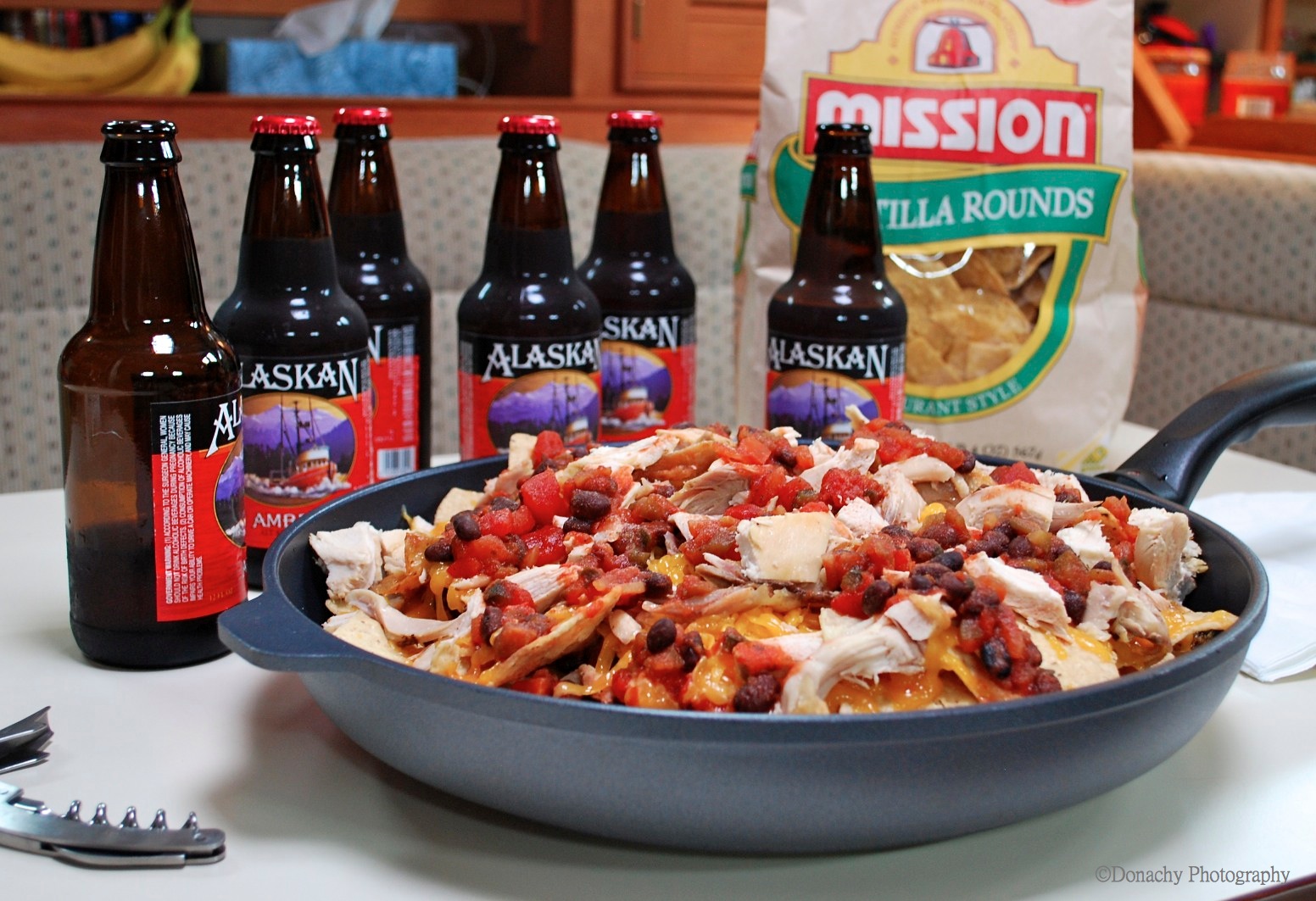
A heavy skillet, a bag of your favorite tortilla chips, salsa spiced up with jalapenos, medium cheddar cheese and an already-roasted chicken from the supermarket are all you need for the best nachos you’ve ever had!

By the time we were finished cleaning fish yesterday, it was already close to five o’clock. Tired, hungry and in dire need of a beer (or three), we had J-Dock vacuum pack and flash freeze our fillets, absent-mindedly forgetting to set aside a piece of salmon for ourselves for dinner. We’d fished hard and filled our cooler, and neither one of us was keen to cook. “How about super nachos?” Barbra suggested. “We could get one of those roasted chickens at Safeway….”

“And a case of beer,” I added.

We already had everything else we needed: medium-aged Tillamook cheddar cheese, sliced jalapeno peppers, Newman’s Own salsa, and Mission tortilla chips. Here’s all there is to it.

Pick a heavy frying pan, one that heats evenly and won’t burn the chips. Pour in a little olive oil, turn the heat to low or medium low, and when it’s hot, put in a layer of chips followed by a layer of cheese, a few spoonfuls of salsa, a few jalapenos sliced thin or diced fine (cook’s choice), and a generous amount of chunks of roasted chicken. Lay down a second layer of chips, cheese, salsa jalapenos and chicken, cover the pan with a lid, and cook over low heat till all the cheese is melted. Add a couple dollops of sour cream or guacamole when it’s all done if you want, serve it right in the pan, and keep the beers coming. Pop in a movie and eat and drink more than you should.

I had a few black beans on hand and added those this time, but usually I make this with no beans. This dish is great without the chicken (or any other meat), too. Next time I make this, I’m going to use rockfish and see how that goes. Future experiments might include caribou, moose or ground black bear.