Dutched Hot Cocoa

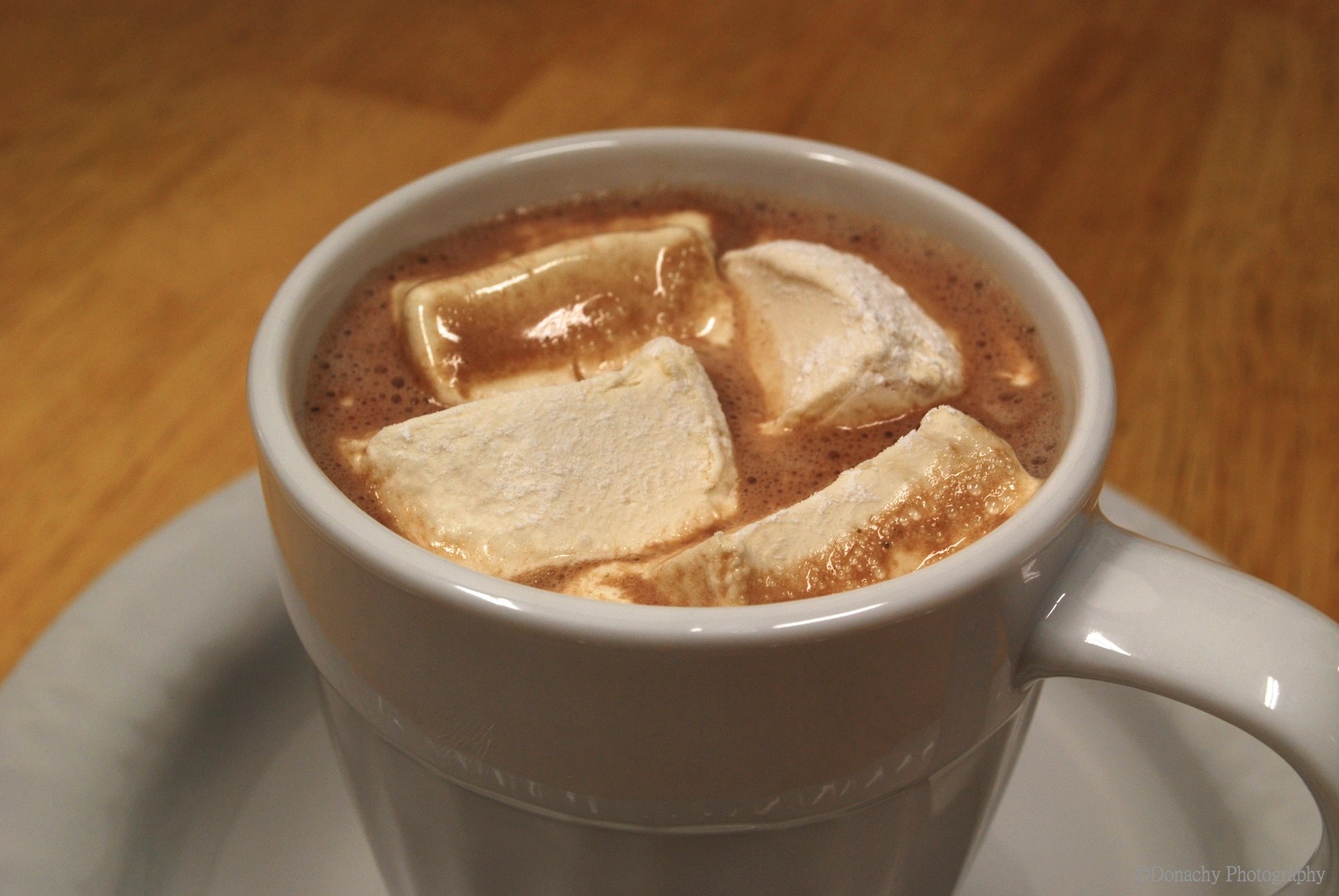
Rich, creamy and with a wicked cocoa flavor you can almost sink your teeth into, Dutched cocoa and homemade marshmallows make the perfect after dinner or home movie hot beverage.

Homemade Hot Cocoa with Homemade Marshmallows

Every great food has “secret ingredients.” Here, they are Dutch process high fat cocoa and homemade marshmallows. Also known as “Dutched” cocoa, this cocoa is made from the richest grade of cocoa available and is processed for an especially smooth flavor. As for the marshmallows… As sticky and messy as these are to make from scratch, having experienced how flavorful and wonderfully gooey a melted marshmallow can be, it’s going to be hard to go back to store-bought.

Ingredients (2 cups)

  • 2 cups milk or soy milk
  • 1 tbs Dutch Process High Fat Cocoa (available from Penzeys Spices)
  • 1 1/2 tbs sugar
  • dash of cinnamon
  • dash of vanilla
  • a couple of homemade marshmallows cut into chunks

Directions: Heat milk, cocoa, sugar, cinnamon and vanilla in a heavy pot (to prevent scorching) over medium low heat. A whisk works well for mixing in the cocoa. Do not boil. When steam develops and liquid is hot to the touch, pour into mugs and top with marshmallows.

Sweet, Sticky, Delicious Fun: Marshmallows from Scratch!

From-scratch always seems to taste better than store-bought. Marshmallows are a sticky but fun example.

An early Saturday morning and terrific step-by-step instructions, including helpful photographs, were the ingredients I needed to check something off my “try-to-make-from-scratch” list – marshmallows. Holy cow, these are messy and delicious! It took almost two hours to make them and about a half an hour to clean up, but there are no complaints from me. I think a stand mixer and candy thermometer are non-negotiable for this project. Normally, I play around with a few recipes and try to come up with something on my own. This time, I followed the Hungry Mouse’s instructions to the tee. What delicious fun for a Saturday morning!

Homemade Marshmallows

Ingredients

  • 5 tbsp unflavored gelatin
  • 2 cups cold water (1 cup for the gelatin and 1 cup for the sugar syrup)
  • 3 cups granulated sugar
  • 2 cups light corn syrup
  • 1/2 tsp salt
  • 4 tbsp vanilla extract
  • Powdered sugar, for dusting

Directions

  1. Put 1 cup of cold water in the bowl of your mixer.
  2. Add the gelatin to the water.
  3. It will immediately absorb the water and turn into a kind of sandy mass.
  4. Give it a stir to combine the gelatin and water well.
  5. It will have the consistency of soft, wet sand.
  6. Let the gelatin sit uncovered, for about 30 minutes.
  7. Secure your mixing bowl onto your stand mixer.
  8. Fit the mixer with the whisk attachment so it’s ready to go when your sugar is hot..
  9. With a strainer, dust a 13″ x 9″ glass baking pan with a thick layer powdered sugar. This will keep the marshmallows from sticking to the bottom.
  10. Set your pan aside so it is ready when your marshmallow fluff is done.
  11. Once your gelatin is ready and your pans are dusted, put 1 cup of water in a large-­sized pot on the stove over high heat. Use a pot that’s deep enough so that the sugar will have plenty of room to boil without boiling over, like a 5-quart pot.
  12. Add in the sugar and salt.
  13. Pour in the corn syrup.
  14. Whisk the mixture together to combine well and melt the sugar. This will take a minute or two, since the corn syrup is so thick. Keep whisking ’til the mixture is even and easy to stir.
  15. With any candy making, it’s important to dissolve all the sugar even the little bits stuck to the side of the pot.
  16. Sugar is finicky and wants to clump together and re­crystalize when it’s in a supersaturated solution like this. (Which will screw up the consistency of your marshmallow.
  17. As the mixture is coming up to a boil, wash down the sides of the pot with a brush dipped in cold water. Keep dipping and brushing ’til you can’t see any sugar crystals. This won’t take long, but it’s important to do.
  18. Clip your candy thermometer onto the side of the pot. The end of the thermometer should be submerged, but not touching the bottom of the pot.
  19. Keep the heat on high to bring the mixture to a boil. When it boils, it will rise up a few inches rapidly, then stop. It’s kind of alarming the first time you see it, but if your pot is deep enough, you shouldn’t have any problems.
  20. Keep a close eye on your pot and have a pair of potholders handy. (If it boils over, turn the heat off and fan the surface of the sugar to cool it. It should recede rapidly. Hot sugar is nasty stuff, so keep your hands and face clear. Better to have a mess on your stove than get burned.)
  21. Boil the sugar (keep the heat on high) until it reaches Firm Ball stage at 244 degrees F.
  22. When the sugar reaches 244 degrees F, take the pot off the heat.
  23. Turn the mixer on low speed. The whisk will start to chunk up the gelatin.
  24. With the mixer running on low, slowly (and carefully!!) pour the hot sugar mixture into the gelatin.
  25. Now, at this point, it’s going to smell kind of awful. That’s just fine. Unflavored gelatin is kind of stinky business. It will be fine with a little vanilla extract at the end.
  26. When all the sugar is in the bowl, fit your mixer with a splash guard, if you have one. Turn the speed up to medium­high (do this slowly if you don’t have a guard on, to avoid splashes) and whip the mixture for 20 minutes.
  27. As you whip the mixture, it will gradually increase in volume and turn an opaque white.
  28. After about 20 minutes, you’ll have a bowl of bona fide marshmallow fluff.
  29. After 20 minutes of whipping, pour in the vanilla extract.
  30. Beat to combine for another 5 minutes.
  31. After 5 minutes, stop the mixer, and remove the bowl and whisk. Your marshmallow fluff should be thick and white.
  32. Pour the fluff into your prepared pan.
  33. Dust the tops of the marshmallow with more powdered sugar.
  34. Leave the pans uncovered on the counter overnight to set up.
  35. The next day unmold and cut your marshmallows.
  36. Put a cup or two of powdered sugar in a gallon­size zip­top bag. (This is for rolling the cut marshmallows.)
  37. Dip a thin, sharp knife in a glass of hot water, then run the knife around the inside edge of each pan until the marshmallow loosens.
  38. If the knife starts to stick, just dip it back into the hot water.
  39. When the marshmallow is loose, lift it out and set it on a board.
  40. With a large, sharp knife, cut the marshmallow into cubes (or any other shape you like).
  41. Roll the cut marshmallows in the bag of powdered sugar to coat each side.
  42. Knock the excess sugar off and…voila! Marshmallow!
  43. Repeat with the rest of the marshmallows. Store them in an airtight container or zip­top bag. Enjoy!

Thank you to The Hungry Mouse for the recipe and terrific instructions! And click here for a great cup of

Baked Lingcod with Lobster Sauce: Celebrating The Rough, Tough King of Northern Pacific Reefs

Seasoned breadcrumbs, lobster sauce with Alaskan shrimp, and a couple dabs of lumpfish roe are fitting accompaniment for one of the sea’s most prized fish – lingcod. This fillet is served on a bed of couscous and is surrounded by thin slices of Coho salmon sashimi. Recipes can be found at the end of this article.

Lingcod (Ophiodon elongatus – long tooth) are a special fish. Their leopard-like spotting marks them for what they are: aggressive predators that, save for other, bigger lingcod, are at the top of the food chain among the fish with which they share rocky Northern Pacific reefs. They lie in ambush, waiting for unsuspecting greenling, rockfish, octopuses or whatever else might happen by, and then spring into action with massive jaws encircling 18 needle-sharp teeth. In the heart of their range – from British Columbia through Southcentral Alaska – 20 to 40-pound lingcod are common, with fish over 50 pounds showing up each year. The all-tackle IGFA record stands at 82 lb 9 0z and came from the Gulf of Alaska. Larger fish have been reported in commercial catches.

Welcoming a nice ling aboard our C-Dory 22 Angler. Note the two-pound rockfish hanging from the lower end of the metal jig.

A few of the usual customers you can expect to run into dropping a metal jig off a deep, rocky point in Alaska: salmon, rockfish, and a lingcod. 

Lings thump a jig like few other fish, and although pound-for-pound the smaller eight to 20-pounders seem to fight harder than the big cows, all lings generally give a good account of themselves, typically peeling line from reels as they dive for the rocks after being hooked. Many an angler has hooked a two or three pound

A 10″ twister tail grub on a 1 pound jighead is dwarfed in the maw of a 40-pounder. Root beer is a favorite color among lingcod fishermen. Here the color is paired with a glow-in-the-dark jig.

rockfish and while reeling in the catch had it violently intercepted by a lingcod. Frequently in these cases, the ling isn’t even hooked, but will hang onto its catch as tenaciously as a bulldog, fighting all the way to the boat where, if the angler is quick-witted enough, it can be gaffed or scooped up in a net. A moment’s hesitation, slack line, or lifting of the hitch-hiking ling’s head above water, however, can cause the predator to release its prey and nonchalantly swim back to the bottom.

If I had just one type of lure to fish rocky reefs, there’d be no contest as to what I’d choose: metal jigs in the right hands are deadly. 

On the table, it is our view that lingcod is unsurpassed among white-meated fish. It compares favorably with grouper, halibut, snapper, and similar fish whether baked, broiled, pan-fried or deep-fried. Interestingly, the meat of fresh lingcod is sometimes blue. This does not affect the flavor or texture at all, and when cooked, the meat comes out in big, white, flakey chunks.

Lingcod are susceptible to overfishing. Most of the ones we catch go back to keep growing and to sustain the population.

Baked Lingcod with Breadcrumbs

Ingredients (serves 4)

  • 24 ounce lingcod fillet cut into 4 separate pieces, skin removed
  • 1/2 cup olive oil, placed in a bowl
  • 2 cups seasoned breadcrumbs (We make our own breadcrumbs and season them with an Italian seasoning blend of our own making, but any good commercial blend is fine.)
  • salt
  • freshly ground pepper
  • Additional olive oil for baking

Directions

  1. Place a baking sheet on the center rack of an oven and preheat to 425 degrees F.
  2. Place breadcrumbs in a bowl and season with Italian seasoning, salt and pepper to taste. Then transfer 1 1/2 cups of breadcrumbs to a plate where you will roll the fillets, and spread the remaining 1/2 cup of breadcrumbs on a cutting board where you will rest the fillets once they’re coated with breadcrumbs.
  3. Dip fillets one at a time in olive oil and completely cover with oil. Then roll the fillet in the breadcrumbs, covering all sides. Place atop breadcrumbs on cutting board.
  4. Coat baking sheet with olive oil. When oil is sizzling hot, place fillets on baking sheet and bake for about 10 minutes (for fillets that are 1 inch thick). Breadcrumbs should be golden brown when fillet is done.
  5. Remove fillets from oven and place on a bed of couscous, rice or farfalle pasta.
  6. Spoon lobster sauce on fillets. Garnish with caviar, lumpfish roe or ikura (cured salmon eggs) and serve piping hot.

Lobster Sauce with Alaskan Shrimp

Ingredients

  • 1 tablespoon Better than Bouillon lobster base or similar lobster base
  • 1/4 pound peeled shrimp. Small shrimp are preferable; larger shrimp can but cut into smaller pieces.
  • 1/2 cup water
  • 1 cup heavy cream
  • 1 1/2 tablespoons rice flour (or substitute all-purpouse flour), as a thickener
  • 1 tablespoon butter
  • 1 tablespoon olive oil
  • 1/4 cup finely chopped sweet onion
  • 1/4 tsp paprika
  • 1 teaspoon dried tarragon
  • Freshly ground pepper
  • Salt, if needed

Directions

  1. In a small pot over medium-low heat, place olive oil and onions. Stir occasionally till onions begin to turn translucent.
  2. Lower heat and add water and lobster bouillon, stirring until mixed together.
  3. Add rice flour, tarragon, pepper, paprika and butter, stirring constantly until flour is completely mixed in and mixture begins to thicken. Cover and lower heat (use a flame tamer if necessary).
  4. Add cream a little at a time, stirring constantly, until desired consistency is achieved.
  5. Add shrimp. Continue to stir until shrimp is cooked through (about 2 to 3 minutes).
  6. Remove pan from heat, but keep warm until sauce is needed.

Deep Dish Garlic Margherita Pizza

Uptown Chicago on the Chukchi Sea: Pan-fried garlic chips and lots of parmesan create a tasty topping for this Margherita-stye deep dish pizza. 

Barbra’s formative food experiences were considerably more worldly than mine. For her, deep dish pizzas were part of growing up. But I still vividly remember my first encounter with deep dish pizza. It occurred during my senior year of high school when one of my track teammates qualified for nationals in the javelin. The meet was in Chicago. When he got back, he raved about a strange and wondrous food called “Chicago Deep Dish Pizza.” The way he told it, a single lare slice of this thick, crusty, meat-and-cheese-stuffed pie would constitute a meal for a regular person.

After that, I kept my eyes open, hoping to find such a pizza on a local menu or in our supermarket’s frozen food section. But back then, in my small town in western Pennsylvania, there were no Chicago Style Deep Dish Pizzas. (I felt like an epicurean adding a little extra cheese and a sprinkle of Italian Seasoning on my frozen Red Barrons.) Many years later, when I finally did get the opportunity to try a deep dish pizza, it was at a well-known pizza chain where, not surprisingly, the experience was entirely anticlimactic.

I’m happy to say that I have finally experienced the gustatory joy of digging into an authentic, perfectly baked, zesty, cheesy satisfying deep dish pizza. Barbra kept the ingredients fairly simple, starting with a Margherita-style filling featuring diced tomatoes, slices of mozzarella, olive oil and a blend of Italian herbs. She topped this with shredded parmesan and pan-fried garlic slices. In our view, pizzas ultimately stand or fall on their crusts. This one was perfect.

Deep Dish Garlic Margherita Pizza

Ingredients

Crust

  • 4 cups all-purpose flour
  • 3 tbsp yellow cornmeal
  • 2 3/4 tsp yeast
  • 1 3/4 tsp salt
  • 4 tbsp olive oil
  • 4 tbsp butter, melted
  • 1 1/4 cup water

Filling and Toppings

  • 3/4 lb. mozzarella cheese, sliced
  • 28 ounces (two 14 ounce cans) of diced tomatoes, drained thoroughly
  • 3 tsp dried Italian seasonings
  • 1 tsp dried garlic powder
  • 1 cup freshly grated Parmesan cheese
  • salt and pepper to taste
  • garlic chips (see recipe below)

Directions for Crust

  1. Preheat oven to 400 degrees F.
  2. Place the crust ingredients in the bread machine pan in the order recommended by the manufacturer.
  3. Turn on dough setting.
  4. Place the dough in a lightly oiled bowl.
  5. Oil a pizza pan or two 9-inch pie pans by pouring a couple of tablespoons of olive oil in pan and tilting it to cover bottom(s).
  6. Stretch the dough to make a large circle. Do this with your hands or with a rolling pin on a lightly oiled surface.
  7. Lay the dough in the pan and stretch the dough up the sides of the pan. Cover and let rest for 15 minutes.
  8. Bake crust for 10 minutes until set and very lightly browned

Directions for Filling and Toppings

  1. Combine tomatoes with herbs, garlic, salt and pepper.
  2. Cover the bottom of baked crust with mozzarella slices.
  3. Add tomato mixture.
  4. Sprinkle parmesan cheese on the top.
  5. Top with garlic chips (See below).
  6. Bake pizza for about 25 minutes. If edges begin to brown too much, cover edges with foil during baking. When finished, pizza filling should be bubbly and top should be golden brown.
  7. Allow pizza to cool for about 10 – 15 minutes before serving.

Garlic Chips

  1. Slice 6 large cloves of garlic into thin slivers.
  2. Heat olive oil over medium-low heat in a medium frying pan. Add garlic slivers and sauté until just browned and edges are crisp.
  3. Remove chips from heat and drain on paper towel.

Burebrot or Swiss Farmer’s Bread

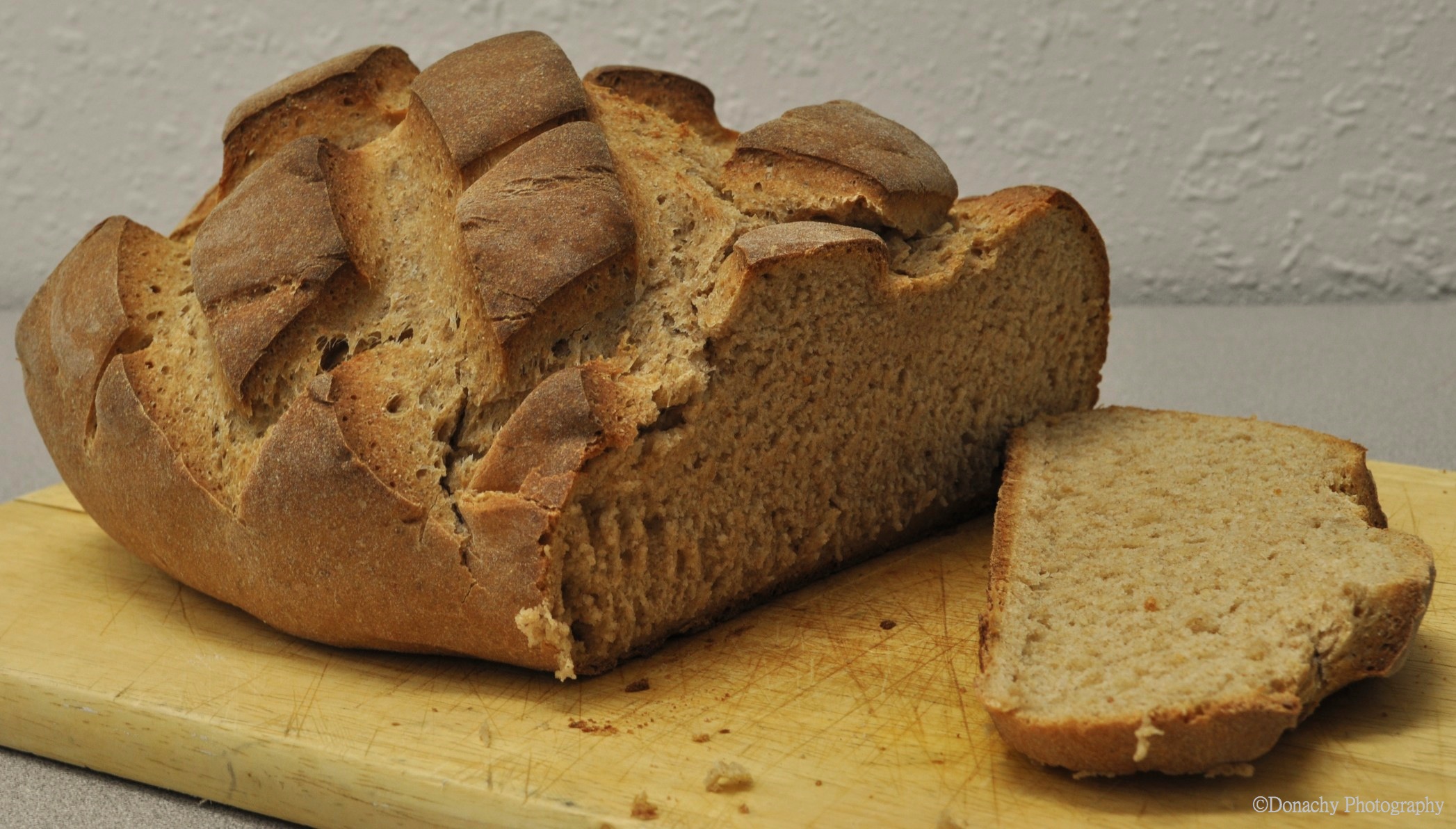
Just waiting to be slathered with fresh butter and a favorite jam, you can almost hear the crust crunching on a slice of this rustic Swiss Farmer’s Bread.

One of my fondest childhood memories is of visiting my favorite auntie in Switzerland and talking with her in broken English and Swiss over my favorite breakfast: cafe mit schlag with a schniteli: milk coffee and farmer’s bread slathered with freshly made creamery butter and jam.

As I began baking different kinds of bread last year, I wanted to see if I could create Burebrot in my own kitchen. It turned out that every recipe I could find included rye flour. So, I had to wait until this fall, after we did our annual summer shopping.

After the bread finished baking, Jacked whipped up a small pot of tasty broccoli soup. I cut two generous pieces of Burebrot and topped them with butter. The bread was just the way I remembered it: hearty and wonderfully crusty. This is the perfect bread to pair with a slice of savory swiss cheese. We have a few pounds of rye flour for the year, so this bread will be making several encores.

The following recipe is a result of adaptions of several recipes to match the ingredients that are in my pantry. I processed the dough in my Zojirushi bread machine so it would rise properly in my Arctic home.

Burebrot

Ingredients

  • 8 oz buttermilk
  • 7 oz water
  • 2 2/3 cups all-purpose flour
  • 1 1/4 cups whole wheat flour
  • 1 1/2 cups rye flour
  • 3/4 tsp salt
  • 2 1/2 tsp dry yeast

Directions

  1. Place the above ingredients in the bread machine pan according to the manufacturer’s recommendations.
  2. Turn on dough cycle.
  3. Preheat oven to 400 degrees F.
  4. Shape the dough into an oval on a baking sheet lined with parchment paper. Cover and let rise for 30 minutes.
  5. Cut a lattice pattern into dough with a sharp knife.
  6. Bake for 40 – 45 minutes. Bread will be crusty when finished.

Coffee Ice Cream

Patiently steeping coffee beans in a cream mixture base creates an ice cream infused with coffee flavor.

When I suggested coffee as an ice cream flavor to Jack, he shrugged his shoulders, obviously not impressed. But it’s one of my favorites, and since it seemed like I’d come up with the right egg ratio for the ice cream base, I ignored his indifference and went for it. I could already imagine my creamy cold dessert topped with homemade fudge. The process of steeping coffee beans in a custard base brought the coffee flavor to life. Jack’s response after a sample of the final product? “Wow!” That’s what a cook wants to hear.

Coffee Ice Cream

Ingredients

  • 1 cup whole milk
  • 3/4 cup granulated sugar
  • 1 1/2 cups whole coffee beans
  • 2 cups heavy cream
  • 5 egg yolks
  • 1 tsp vanilla extract

Directions

  1. Heat cream and milk in a medium saucepan over medium heat.
  2. Add coffee beans and sugar and heat until mixture almost boils, about 5 – 8 minutes.
  3. Remove from heat, cover and let steep for one hour.
  4. Beat yolks and vanilla until the mixture is light yellow and smooth.
  5. Strain coffee beans out of coffee mixture. Leave any remaining specks of coffee.
  6. Reheat coffee-cream mixture until it almost boils.
  7. Add 4 tbsp on hot cream mixture to egg mixture and stir until combined. This will temper the eggs.
  8. Slowly add warmed yolk mixture to warm cream back into saucepan. Stir continuously in order to not cook/curdle eggs.
  9. Cook entire mixture over low heat until slightly thickened and mixture coats the back of a spoon.
  10. Cool completely. I put the mixture in the refrigerator overnight before I use it.
  11. Pour into freezer bowl of ice cream machine. Turn machine on and mix until mixture thickens, about 20 minutes.
  12. Transfer to airtight container and place in freezer until firm, about 2 hours.

Matcha Green Tea Ice Cream

A Japanese ramekin heaped with a couple of scoops of matcha ice cream is the perfect dessert after a sushi dinner.

A few years ago after a lovely meal at a Japanese restaurant in San Francisco, I enjoyed a scoop of creamy green tea ice cream. Inspired by that memory and an abundance of matcha tea powder in our pantry, I attempted to recreate that delicious dessert. The intense flavor of the matcha powder gave this ice cream a rich, complex flavor. Keeping with Japanese preferences, this recipe calls for only about half the sugar American palettes might prefer, but is still satisfyingly sweet.

Matcha Green Tea Ice Cream

Ingredients

  • 3 cups heavy cream
  • 1 cup whole milk
  • 3 egg yolks
  • 1/4 cup sugar
  • 2 tbsp matcha green tea powder
  • 1 tsp vanilla bean paste

Directions

  1. Heat cream and milk in a medium saucepan over medium heat.
  2. Add vanilla paste and green tea powder and heat until mixture almost boils, about 5 – 8 minutes.
  3. Reduce heat to low.
  4. Meanwhile, beat yolks and sugar until the mixture is light yellow and smooth.
  5. Add 4 tbsp on hot cream mixture to egg mixture and stir until combined. This will temper the eggs.
  6. Slowly add warmed yolk mixture to warm cream. Stir continuously in order to not cook/curdle eggs.
  7. Cook entire mixture over low heat until slightly thickened and mixture coats the back of a spoon.
  8.  Cool completely. I put the mixture in the refrigerator overnight before I use it.
  9. Pour into freezer bowl of ice cream machine. Turn machine on and mix until mixture thickens, about 20 minutes.
  10. Transfer to airtight container and place in freezer until firm, about 2 hours.

If you liked this post, you might like to read about matcha green tea cookies.

Extra Rich Homemade Vanilla Ice Cream

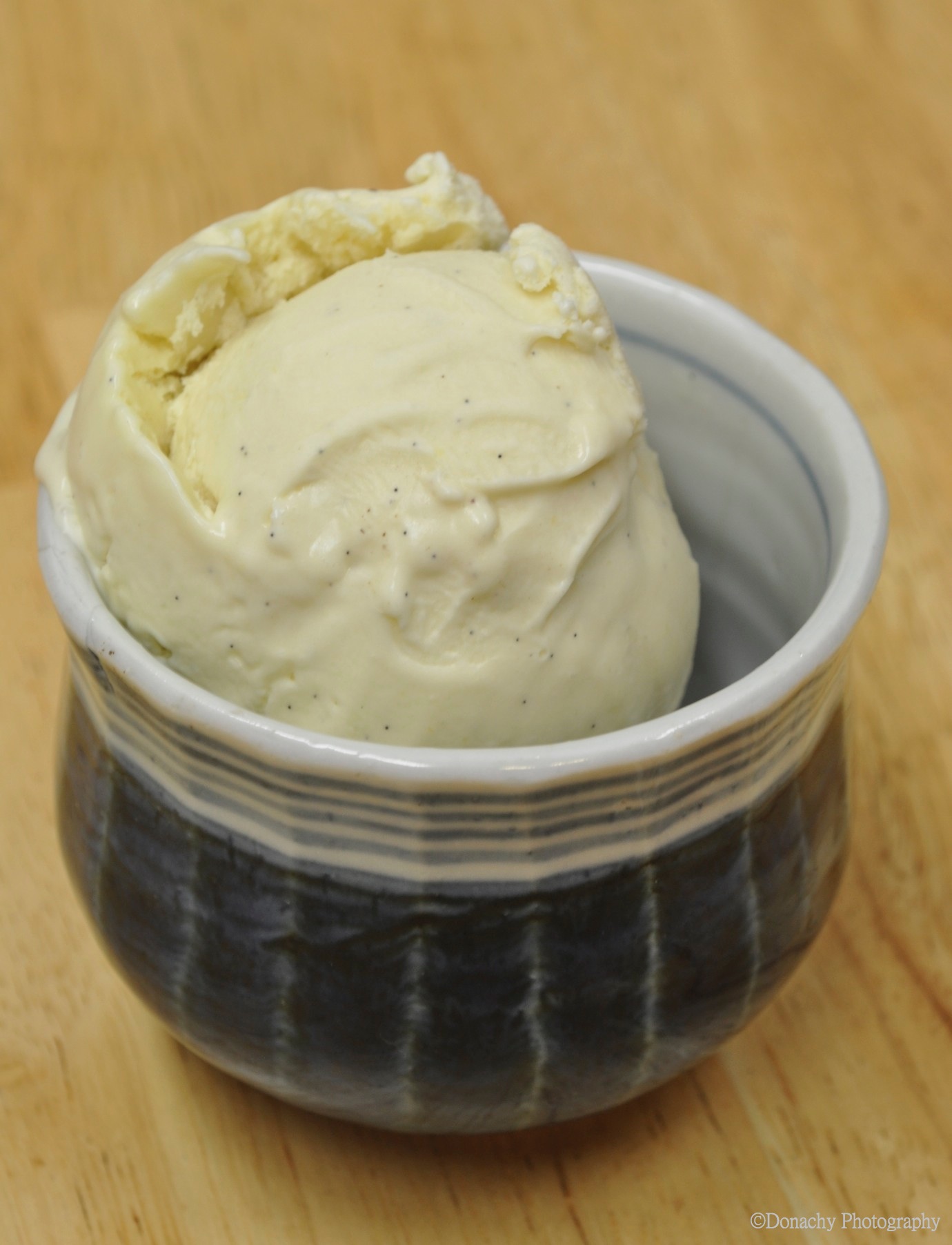
Almost like gelato…

For the third year in a row, I’ve gone to the trouble of obtaining several quarts of heavy cream (whipping cream) out here in the Alaskan bush. It’s an item our Native Store doesn’t stock. The past two years, I’ve paid a tidy sum for a grocery store in Fairbanks ship out cream on a cargo plane. Another year I happened to be visiting a village where the Native Store did stock heavy cream; I hand carried several quarts of the precious liquid on the bush plane back to our village.

We love homemade ice cream, so it’s worth the trouble.

And we like variety. Last year, I experimented with eleven different flavors of ice cream and sorbet. We treated guests to rocky road, toasted almond, fireweed and honey, peanut butter chip, toffee crunch and more. This year, I stretched my ice cream making wings a bit further by experimenting with new flavors and by improving last year’s favorites. I’m happy to report that all of this year’s batches turned out terrific. One of the biggest hits has been this year’s vanilla.

I have a vanilla ice cream recipe that came with the Cuisinart ice cream maker Jack’s daughter Maia gave us a few years ago. It’s a good recipe as it stands, but I wondered what would happen if I were to leave out the milk and only only use heavy cream. The second modification I made was to use vanilla bean paste. A new addition to our kitchen, this paste packs an intense vanilla flavor. The result was a thick, creamy, gelato-like creation that has left guests exclaiming “Wow!”

Extra Rich Vanilla Ice Cream

Ingredients

  • 4 cups heavy cream
  • 2 tsp vanilla bean paste
  • 3 egg yolks
  • 1/2 cup sugar

Directions

  1. Heat cream in a medium saucepan over medium heat.
  2. Add vanilla paste and heat until mixture almost boils, about 5 – 8 minutes.
  3. Reduce heat to low.
  4. Meanwhile, beat yolks and sugar until the mixture is light yellow and smooth.
  5. Add 4 tbsp on hot cream mixture to egg mixture and stir until combined. This will temper the eggs.
  6. Slowly add warmed yolk mixture to warm cream. Stir continuously in order to not cook/curdle eggs.
  7. Cook entire mixture over low heat until slightly thickened and mixture coats the back of a spoon.
  8.  Cool completely. I put the mixture in the refrigerator overnight before I use it.
  9. Pour into freezer bowl of ice cream machine. Turn machine on and mix until mixture thickens, about 20 minutes.
  10. Transfer to airtight container and place in freezer until firm, about 2 hours.

Bagels 3 Ways: Blue Poppy Seed, Roasted Sesame Seed and Onion

Just the way we like them – chewy on the outside and soft on the inside, these bagels are topped with Penzey’s minced onion, blue poppy seeds, and roasted sesame seeds.

I let the Zojirushi bread machine do the first steps of mixing, rising, and kneading the bagel dough while I tended to other things today. After about one and a half hours, it was my turn to finish the bagels by shaping them, boiling them and baking them. When the finished bagels came out of the oven, we knew the dinner menu would feature these beauties smeared with cream cheese and topped with Jack’s smoked salmon.


Bread Machine Bagels

Ingredients

  • 1 1/4 cup water
  • 1 1/2 tsp salt
  • 2 tbsp granulated sugar
  • 2 cups all purpose flour
  • 2 1/2 tsp active dry yeast
  • 3 quarts boiling water
  • 3 tbsp sugar
  • 1 egg, beaten
  • toppings of your choice

Directions

  1. Place first 5 ingredients in the bread machine pan in the order recommended by the manufacturer. Select dough setting.
  2. When cycle is complete, turn dough out onto a lightly floured surface and let rest.
  3. Bring 3 quarts of water to a boil. Add 3 tbsp of white sugar.
  4. While water is coming to a boil, cut dough into 8 pieces. Roll each piece into a ball. Flatten balls into discs about 1/2 inch thick. Poke a hole in each disc and twirl the disk around your finger to enlarge the hole. Place bagels back on the lightly floured surface to rest until the water boils.
  5. Cover a baking sheet with parchment paper.
  6. Preheat oven to 375 degrees F.
  7. When water is boiling, place bagels in water. Boil for 1 minute, then flip to boil for an additional minute. (I fit 4 bagels at a time in my pot.)
  8. After bagels have boiled, remove them from the water with a slotted spoon or strainer spoon made for frying. Place bagels on a clean, dry towel.
  9. Arrange bagels on baking sheet. Brush tops of bagels with beaten egg. Sprinkle with topping of your choice, or leave plain.
  10. Bake for 20 – 25 minutes, until well browned.

Smokey, Spicy Butternut Squash Soup with Almonds

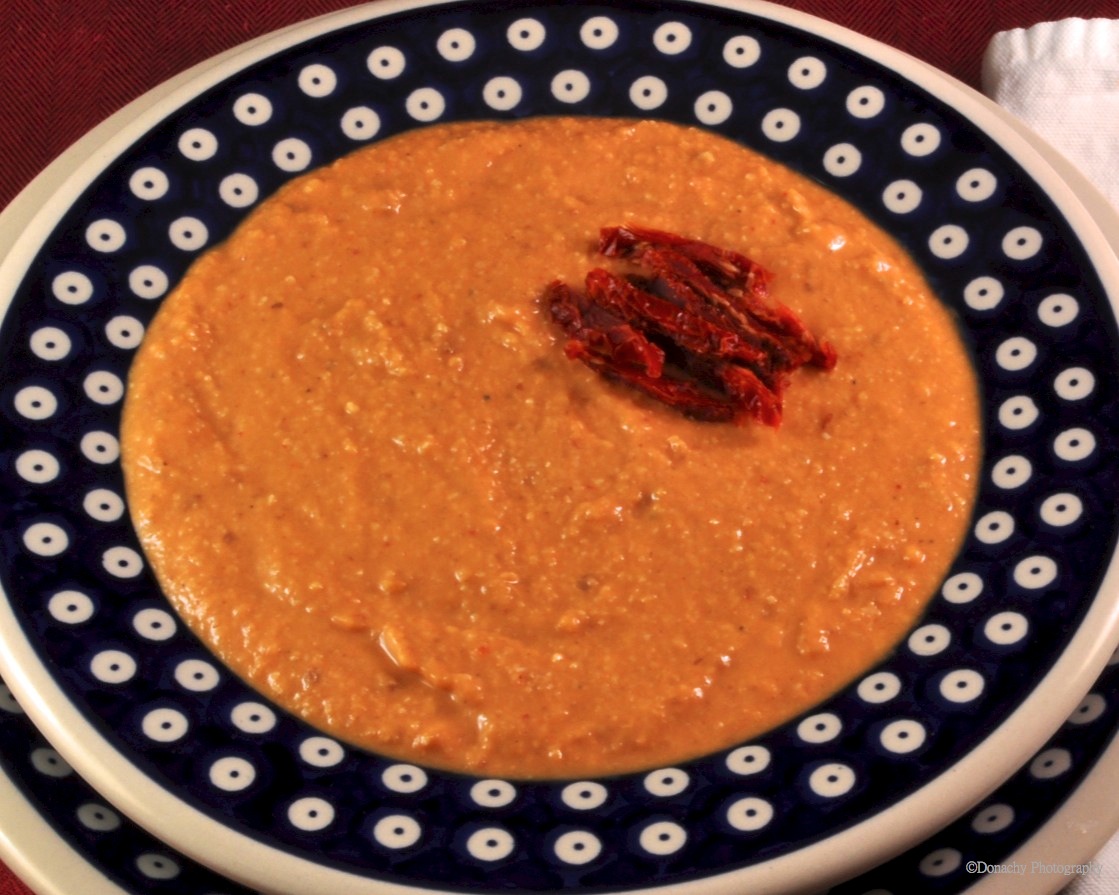
This hearty, flavorful butternut squash soup will take the chill off of crisp autumn evenings. 

Recipes go through iterations until, it is hoped, something approaching perfection is obtained. Of the many squash and pumpkin soups I’ve made over the years, this, so far, has been our favorite. The secret? Smoked chipotle peppers. These robust, pleasantly fiery chili peppers have been this fall’s find in our kitchen. Combined with even hotter arbol chili peppers, the combination has been adding extra zip and depth to our chilies and soups. (Barbra’s worried I’m going to start putting these chilies into our morning oatmeal and waffles.)

The other twist to this particular squash soup was the addition of toasted almonds. As with many recipes, this one invites experimentation. Roasting or grilling the tomatoes and squash adds a dimension of flavor, as does toasting the chopped almonds. And don’t overlook the small pumpkins that are available this time of year as a possible main ingredient. A mug or bowl of this soup served with a hunk of crusty French bread is just the thing as fall days turn wintery.

Ingredients:

  • 3 cups butternut squash purée (made from steamed, roasted or grilled squash, or from canned pumpkin or squash)
  • 1 large sweet onion, chopped (about 2 cups)
  • 1 pound diced tomatoes, seeds removed
  • 1/2 cup chopped almonds (preferably toasted)
  • 2 cups chicken broth (I used Better than Bouillon)
  • 3 dried smoked chipotle chili peppers, chopped fine
  • 2 dried arbol chili peppers, chopped fine
  • 1 tsp powdered coriander
  • 3 cloves garlic
  • 1 tsp powdered ginger
  • 1 tsp powdered cinnamon
  • 1 tsp grated nutmeg
  • freshly ground black pepper to taste
  • sea salt to taste
  • 1 cup heavy cream
  • olive oil

Directions:

  1. Cut up a butternut squash into discs roughly 1 inch thick, and then cut the discs into halves or quarters. Scoop away the seeds and fibrous matter. Roast, grill or steam the squash and peel away and discard the skins. To oven-roast, heat oven to 400 degrees F., place a baking sheet covered in olive oil in the oven, and when it’s hot, add the squash. Roast for 30 to 40 minutes, or until some of the squash starts to brown.
  2. Combine the chopped onions, tomatoes and garlic and grill, roast or sauté until onions are translucent. This can be done by placing some olive oil in a large skillet, heating over medium heat, and adding the tomatoes, onions and garlic, stirring occasionally.
  3. Combine all of the ingredients except the cream in a large mixing bowl. Purée with a stick blender (or in a food processor or with a conventional blender).
  4. Scrape and pour ingredients into a large pot. Cook over medium heat, stirring occasionally, until soup begins to simmer. Continue simmering on low heat for 20 minutes. A flame tamer may be necessary to prevent soup from boiling. Continue to stir occasionally.
  5. Stir in cream and return soup to a simmer.
  6. Serve piping hot.

Garnish individual bowls of soup with sun-dried tomatoes cut into thin strips, a spoonful of toasted garlic and almonds, or both.