The Darker the Syrup… Part 1: Maple-Glazed Salmon or Trout

Maple-glazed salmon and salmon spuds (home-fried Yukon golds and sweet potatoes) harken back to American culinary traditions predating recorded history. After several goes at a recipe worthy of this syrup, we came up with one that combined a little fire with the sweet for a taste that struck us as just right.

Maple syrup has been part of Northeastern American cooking since before recorded history. There are reports of Native Americans cooking venison in maple sap. Although these days it is perhaps best known as a topping for pancakes, waffles and French toast, its unique flavor is used to enhance smoked and cured meats and to sweeten a variety of desserts. Both maple syrup and maple sugar are the base for a number of tasty candies.

Gathered in early spring, about 40 quarts of maple sap is needed to produce just one quart of syrup, so it’s not surprising that this amber liquid is rather expensive; a bottle of quality, grade A syrup costs as much as decent bottle of bourbon. But once you’ve tasted authentic maple syrup, it’s awfully hard to go back to cheaper, corn-syrup based, artificially-flavored imitations.
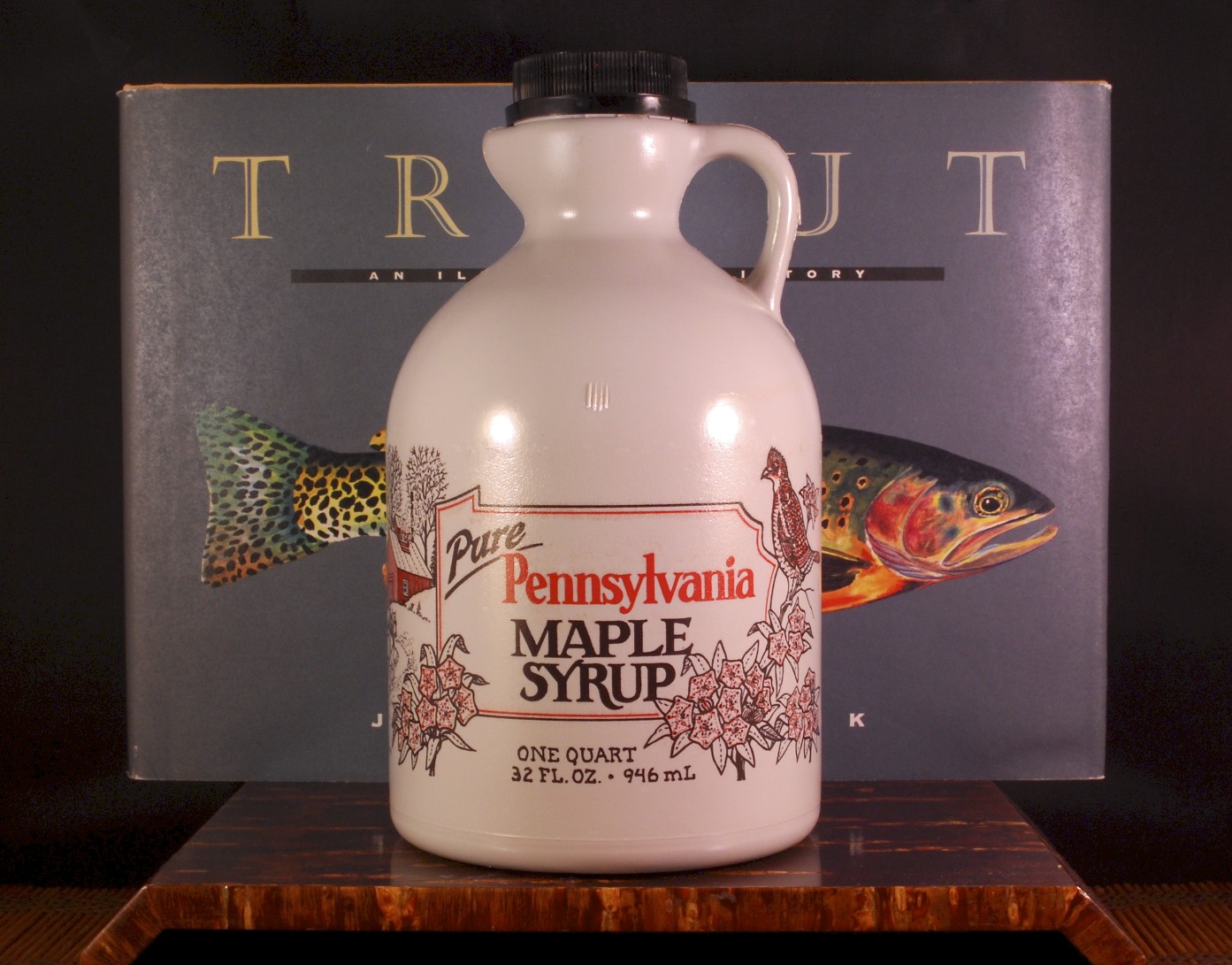
Maple syrup from Yeany’s Farm near Marionville, Pennsylvania, just a few miles from where I grew up. Located in Forest County, the Allegheny Mountains there are laced with the small trout streams I cut my teeth on as a young angler, and where, as the bottle suggests, I kicked out many a ruffed grouse on hikes through the woods. Much thanks to our friend and fellow Pennsylvanian Jack Williams for the thoughtful gift of this excellent syrup.

Maple-Glazed Salmon

Ingredients:

  • 2 salmon, charr or trout fillets, 6 ounces each, skin on
  • 1/3 cup soy sauce
  • 2 tablespoons maple syrup
  • 1/2 tsp powdered ginger
  • 2 cloves minced garlic (or use powdered garlic)
  • 1/3 cup water
  • 1/2 tablespoon sea salt
  • Penzeys Northwoods Fire Seasoning (or make your own blend in a food processor from ingredients such as salt, chipotle pepper, smoked paprika, Tellicherry pepper, garlic powder, oregano, marjoram, thyme, rosemary, cayenne, etc.)
  • olive oil

Directions:

  1. Mix together soy sauce, water, sea salt, ginger and garlic in a glass baking dish just large enough to hold both fillets side-by-side.
  2. Place fillets in marinade, skin side up. Marinate for 30 minutes or slightly longer.
  3. Meanwhile, place a broiling pan in the oven and preheat on high. (Pan should be positioned near the top of the oven – near the broiling element.)
  4. Place maple syrup in a small pan such as a small frying pan and heat over low heat until the syrup simmers and bubbles. Cook down until syrup is thick. Remove from heat and set aside.
  5. After 30 minutes, remove fillets from from marinade. Pat dry with paper towels and sprinkle with Northwoods Fire Seasoning.
  6. Coat broiling pan with olive oil. When sizzling hot, place fillets skin side down on pan. Broil for approximately 7 minutes.
  7. Spoon maple syrup on top of fillets. (You may have to reheat the syrup if it cools and hardens.) Broil for 3 more minutes. Serve hot.

The heat from the seasoning goes perfectly with the sweetness of the Maple syrup. These fillets are excellent with home-fried potatoes seasoned with soy sauce, Cholula sauce, and a couple shakes of Penzeys Southwest Seasoning or a similar mildly fiery seasoning. Enjoy the meal with a fine bourbon.

Click here for a delicious Maple Walnut Fudge recipe.

Tastes of Fall – Hot Apple Crisp with Homemade Butter Pecan Ice Cream

Welcome in autumn with hot cinnamon-spiced apples under a crisp brown sugar topping served with rich butter pecan ice cream.

Colored leaves, clear blue skies and crisp evenings – some of them already laced with a hint of snow – are among the harbingers of fall we love most as the days grow shorter and the nights grow longer. This is our favorite time of year, and our favorite season to bring into the kitchen. Almost anywhere one lives in North America, freshly made pumpkin pies, squash soups, and dishes and desserts featuring the year’s bounty of pecans, apples, grapes and other crops are part of  fall traditions.

Although Point Hope has no trees and has been crispy cool for some time (the autumn crunch under our feet is  snow rather than fallen leaves), we are inspired by the calendar and the full stocks of Granny Smith apples at our Native Store as well as our own memories of picking apples and gathering nuts in the lower 48.

Hot Apple Crisp

Ingredients

  • 2 Granny Smith apples, sliced fairly thin (We prefer skins intact.)
  • 1/3 cup granulated sugar
  • 1 tbsp all-purpose flour
  • 1 tsp ground cinnamon
  • 1 tbsp caramel sauce
  • 1/2 cup quick-cooking oats
  • 1/2 cup all-purpose flour
  • 1/2 cup brown sugar
  • 1/4 tsp baking soda
  • 1/4 tsp baking powder
  • 1/4 cup unsalted butter, melted

Directions

  1. Preheat oven to 350 degrees F.
  2. In a medium bowl, toss white sugar, tablespoon of flour, and cinnamon with apple slices.
  3. Mix in caramel topping.
  4. Pour apple mixture into a 8″ x 8″ pyrex-type baking dish.
  5. Combine oats, flour, brown sugar, baking soda, baking powder, and melted butter.
  6. Crumble oat mixture and sprinkle on top of apples.
  7. Bake for 45 minutes.

Butter Pecan Ice Cream

Ingredients

  • 1/3 cup chopped pecans
  • 1 tbsp unsalted butter
  • 3 cups heavy cream
  • 1 cup whole milk
  • 1 cup brown sugar
  • 1 tsp vanilla extract
  • 3 egg yolks

Directions

  1. In a small skillet, saute pecans in butter until lightly browned. Set aside.
  2. Heat cream and milk in a medium saucepan over medium heat.
  3. Add vanilla extract and heat until mixture almost boils, about 5 – 8 minutes.
  4. Reduce heat to low.
  5. Meanwhile, beat yolks and sugar until the mixture is smooth.
  6. Add 4 tbsp on hot cream mixture to egg mixture and stir until combined. This will temper the eggs.
  7. Slowly add warmed yolk mixture to warm cream. Stir continuously in order to not cook/curdle eggs.
  8. Cook entire mixture over low heat until slightly thickened and mixture coats the back of a spoon.
  9.  Cool completely. I put the mixture in the refrigerator overnight before I use it.
  10. Pour into freezer bowl of ice cream machine. Turn machine on and mix until mixture thickens, about 20 minutes. During the last 5 minutes of mixing, add buttered pecans.
  11. Transfer to airtight container and place in freezer until firm, about 2 hours.

Baked Lingcod with Lobster Sauce: Celebrating The Rough, Tough King of Northern Pacific Reefs

Seasoned breadcrumbs, lobster sauce with Alaskan shrimp, and a couple dabs of lumpfish roe are fitting accompaniment for one of the sea’s most prized fish – lingcod. This fillet is served on a bed of couscous and is surrounded by thin slices of Coho salmon sashimi. Recipes can be found at the end of this article.

Lingcod (Ophiodon elongatus – long tooth) are a special fish. Their leopard-like spotting marks them for what they are: aggressive predators that, save for other, bigger lingcod, are at the top of the food chain among the fish with which they share rocky Northern Pacific reefs. They lie in ambush, waiting for unsuspecting greenling, rockfish, octopuses or whatever else might happen by, and then spring into action with massive jaws encircling 18 needle-sharp teeth. In the heart of their range – from British Columbia through Southcentral Alaska – 20 to 40-pound lingcod are common, with fish over 50 pounds showing up each year. The all-tackle IGFA record stands at 82 lb 9 0z and came from the Gulf of Alaska. Larger fish have been reported in commercial catches.

Welcoming a nice ling aboard our C-Dory 22 Angler. Note the two-pound rockfish hanging from the lower end of the metal jig.

A few of the usual customers you can expect to run into dropping a metal jig off a deep, rocky point in Alaska: salmon, rockfish, and a lingcod. 

Lings thump a jig like few other fish, and although pound-for-pound the smaller eight to 20-pounders seem to fight harder than the big cows, all lings generally give a good account of themselves, typically peeling line from reels as they dive for the rocks after being hooked. Many an angler has hooked a two or three pound

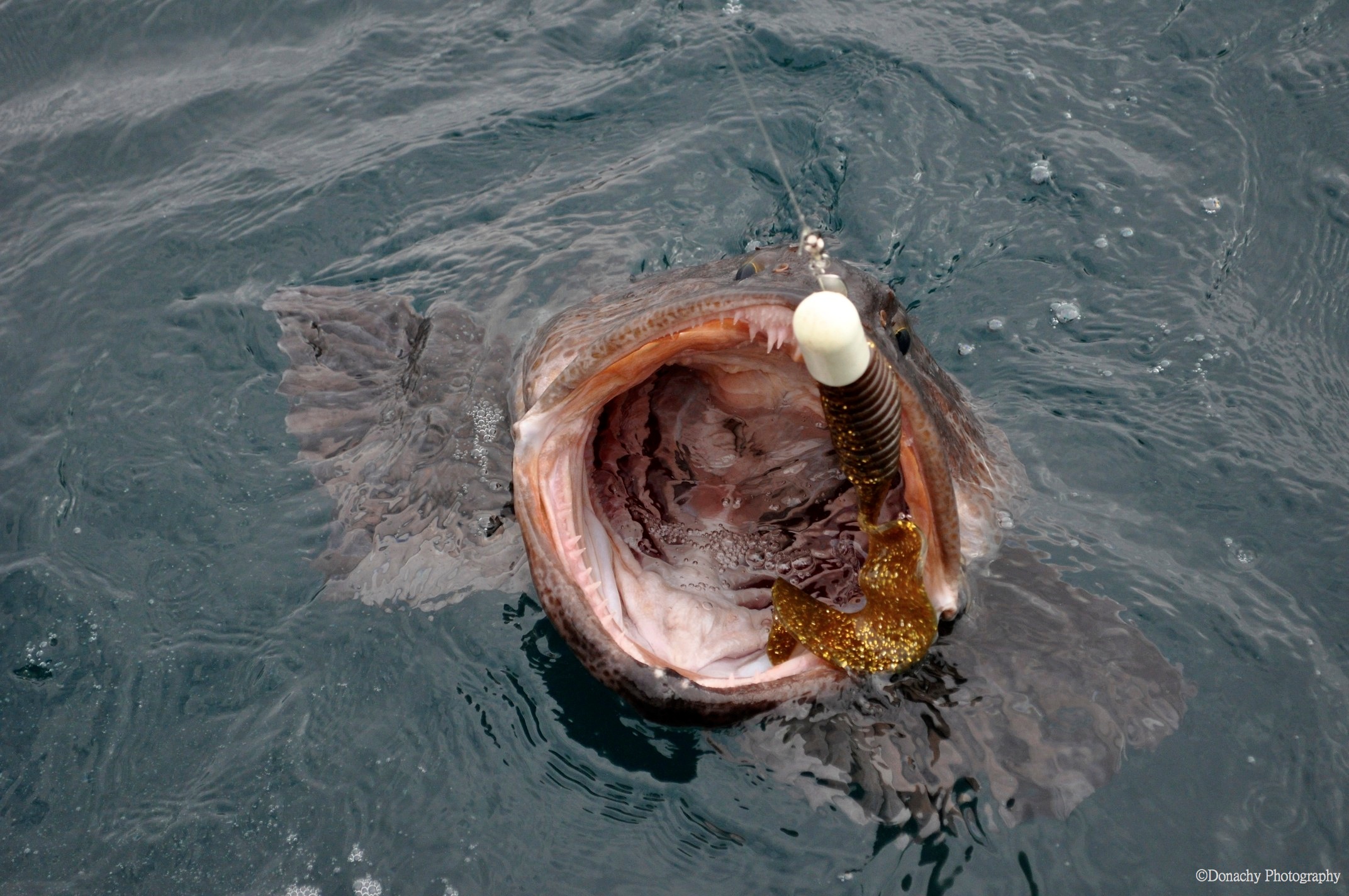
A 10″ twister tail grub on a 1 pound jighead is dwarfed in the maw of a 40-pounder. Root beer is a favorite color among lingcod fishermen. Here the color is paired with a glow-in-the-dark jig.

rockfish and while reeling in the catch had it violently intercepted by a lingcod. Frequently in these cases, the ling isn’t even hooked, but will hang onto its catch as tenaciously as a bulldog, fighting all the way to the boat where, if the angler is quick-witted enough, it can be gaffed or scooped up in a net. A moment’s hesitation, slack line, or lifting of the hitch-hiking ling’s head above water, however, can cause the predator to release its prey and nonchalantly swim back to the bottom.

If I had just one type of lure to fish rocky reefs, there’d be no contest as to what I’d choose: metal jigs in the right hands are deadly. 

On the table, it is our view that lingcod is unsurpassed among white-meated fish. It compares favorably with grouper, halibut, snapper, and similar fish whether baked, broiled, pan-fried or deep-fried. Interestingly, the meat of fresh lingcod is sometimes blue. This does not affect the flavor or texture at all, and when cooked, the meat comes out in big, white, flakey chunks.

Lingcod are susceptible to overfishing. Most of the ones we catch go back to keep growing and to sustain the population.

Baked Lingcod with Breadcrumbs

Ingredients (serves 4)

  • 24 ounce lingcod fillet cut into 4 separate pieces, skin removed
  • 1/2 cup olive oil, placed in a bowl
  • 2 cups seasoned breadcrumbs (We make our own breadcrumbs and season them with an Italian seasoning blend of our own making, but any good commercial blend is fine.)
  • salt
  • freshly ground pepper
  • Additional olive oil for baking

Directions

  1. Place a baking sheet on the center rack of an oven and preheat to 425 degrees F.
  2. Place breadcrumbs in a bowl and season with Italian seasoning, salt and pepper to taste. Then transfer 1 1/2 cups of breadcrumbs to a plate where you will roll the fillets, and spread the remaining 1/2 cup of breadcrumbs on a cutting board where you will rest the fillets once they’re coated with breadcrumbs.
  3. Dip fillets one at a time in olive oil and completely cover with oil. Then roll the fillet in the breadcrumbs, covering all sides. Place atop breadcrumbs on cutting board.
  4. Coat baking sheet with olive oil. When oil is sizzling hot, place fillets on baking sheet and bake for about 10 minutes (for fillets that are 1 inch thick). Breadcrumbs should be golden brown when fillet is done.
  5. Remove fillets from oven and place on a bed of couscous, rice or farfalle pasta.
  6. Spoon lobster sauce on fillets. Garnish with caviar, lumpfish roe or ikura (cured salmon eggs) and serve piping hot.

Lobster Sauce with Alaskan Shrimp

Ingredients

  • 1 tablespoon Better than Bouillon lobster base or similar lobster base
  • 1/4 pound peeled shrimp. Small shrimp are preferable; larger shrimp can but cut into smaller pieces.
  • 1/2 cup water
  • 1 cup heavy cream
  • 1 1/2 tablespoons rice flour (or substitute all-purpouse flour), as a thickener
  • 1 tablespoon butter
  • 1 tablespoon olive oil
  • 1/4 cup finely chopped sweet onion
  • 1/4 tsp paprika
  • 1 teaspoon dried tarragon
  • Freshly ground pepper
  • Salt, if needed

Directions

  1. In a small pot over medium-low heat, place olive oil and onions. Stir occasionally till onions begin to turn translucent.
  2. Lower heat and add water and lobster bouillon, stirring until mixed together.
  3. Add rice flour, tarragon, pepper, paprika and butter, stirring constantly until flour is completely mixed in and mixture begins to thicken. Cover and lower heat (use a flame tamer if necessary).
  4. Add cream a little at a time, stirring constantly, until desired consistency is achieved.
  5. Add shrimp. Continue to stir until shrimp is cooked through (about 2 to 3 minutes).
  6. Remove pan from heat, but keep warm until sauce is needed.

Burebrot or Swiss Farmer’s Bread

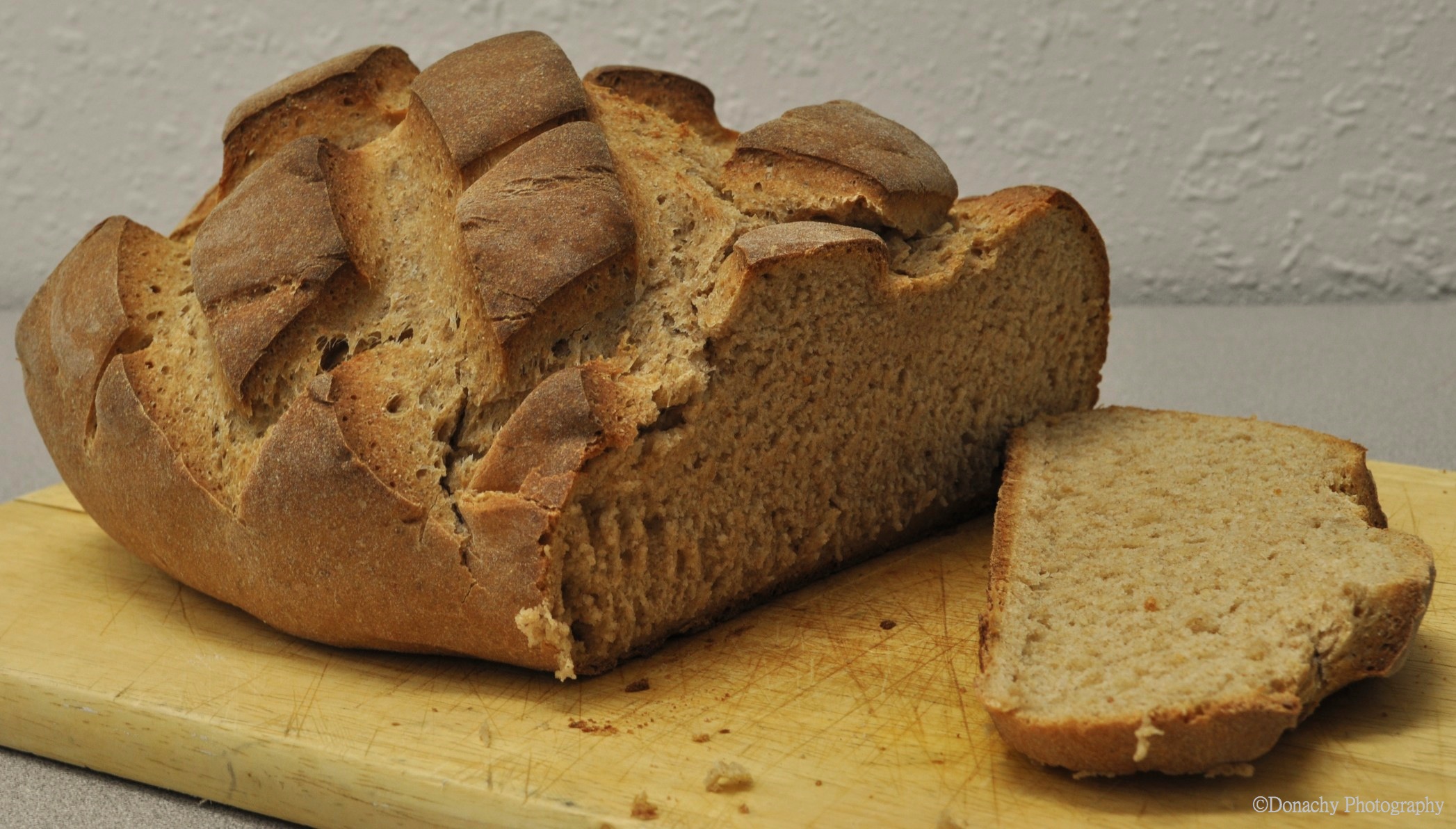
Just waiting to be slathered with fresh butter and a favorite jam, you can almost hear the crust crunching on a slice of this rustic Swiss Farmer’s Bread.

One of my fondest childhood memories is of visiting my favorite auntie in Switzerland and talking with her in broken English and Swiss over my favorite breakfast: cafe mit schlag with a schniteli: milk coffee and farmer’s bread slathered with freshly made creamery butter and jam.

As I began baking different kinds of bread last year, I wanted to see if I could create Burebrot in my own kitchen. It turned out that every recipe I could find included rye flour. So, I had to wait until this fall, after we did our annual summer shopping.

After the bread finished baking, Jacked whipped up a small pot of tasty broccoli soup. I cut two generous pieces of Burebrot and topped them with butter. The bread was just the way I remembered it: hearty and wonderfully crusty. This is the perfect bread to pair with a slice of savory swiss cheese. We have a few pounds of rye flour for the year, so this bread will be making several encores.

The following recipe is a result of adaptions of several recipes to match the ingredients that are in my pantry. I processed the dough in my Zojirushi bread machine so it would rise properly in my Arctic home.

Burebrot

Ingredients

  • 8 oz buttermilk
  • 7 oz water
  • 2 2/3 cups all-purpose flour
  • 1 1/4 cups whole wheat flour
  • 1 1/2 cups rye flour
  • 3/4 tsp salt
  • 2 1/2 tsp dry yeast

Directions

  1. Place the above ingredients in the bread machine pan according to the manufacturer’s recommendations.
  2. Turn on dough cycle.
  3. Preheat oven to 400 degrees F.
  4. Shape the dough into an oval on a baking sheet lined with parchment paper. Cover and let rise for 30 minutes.
  5. Cut a lattice pattern into dough with a sharp knife.
  6. Bake for 40 – 45 minutes. Bread will be crusty when finished.

Homemade Cloudberry Syrup – For Belgian Waffles and Italian Sodas

Although ripe cloudberries are golden amber in color, the syrup they produce is a luminescent dark pink. Thick and flavorful, mixed with carbonated water, the syrup makes refreshing Italian sodas. This morning, it topped our Belgian waffles.

We’ve already turned about 20 pounds of freshly picked cloudberries (click here to see cloudberry photos) into two kinds of jam as well as sorbet. Our most recent venture out on the tundra yielded another eight pounds that I hadn’t counted on. When I asked a berry-picking friend what she thought I should make, she enthusiastically replied, “Syrup!”

The syrup, which is easy to make, turned out a beautiful dark pink color. I hadn’t expected this because the fruit I started with was a lovely salmon color. The seeds seemed to color the juice. I made freezer jam with the remaining pulp in order to save every luscious part of the berries. I thought if the “pulp jam” didn’t look good, it could still be used as a key ingredient in fruit breads. Any kind of berries could be used to make this syrup with an adjustment to the amount of sugar used.

Aqpik (Cloudberry) Syrup

Ingredients: (Yields 4 cups syrup)

  • 10 cups of berries
  • 4 cups of water
  • 3 cups granulated sugar

Directions

  1. Place berries and water in a large pot. Cook on medium high heat.
  2. Boil berries for about 15 minutes.
  3. Line a strainer with cheesecloth. Elevate strainer over a bowl so that syrup can drain through cheesecloth and into the bowl. (I used a strainer that stands by itself set on a wire cooling rack set on a large mixing bowl.)
  4. Place berries in pot and puree them using an immersion or stick blender.
  5. Pour pureed berries and all liquids from pot into cheesecloth lined strainer.
  6. Let berries sit in strainer for at least two hours to drain off liquid.
  7. Take the liquid that has drained into the large mixing bowl and put it in a pot.
  8. Add sugar to the pot.
  9. Cook over medium-high heat, stirring frequently, until syrup boils.
  10. Skim off any foam and discard.
  11. Pour juice into canning jars to freeze or into decorative bottles to refrigerate.

Leaving Seward, 2012

Rainbow over Cook Inlet – this photo was taken the second week of August, our last week in Seward.

For us, our summer in Seward came to an end in early August. Our sailboat, Bandon, is sitting on the hard with a fresh coat of bottom paint. We are already counting the days till next May when we’ll move back aboard.

Below: There are days on the Kenai Peninsula when it looks and even feels like we could be in Hawaii or some South Pacific paradise. As it is, we are in a paradise – Alaska. We can’t imagine a better place to cut our teeth as sailors than in Seward. 

Cloudberry Country

In northern latitudes where they grow, cloudberries (Rubus chamaemorus) are prized as a delicacy. 

Sept 1, Point Hope, Alaska: It has rained for at least part of each day ever since we came back to Point Hope on August 11 – twenty-two consecutive days. Yesterday, the sun finally broke free, and after an energizing breakfast of French toast, smoked salmon, honeydew mellon, orange juice and coffee, we borrowed one of the school’s vehicles and four of us drove out Seven-mile road (which is actually only five miles) to pick some of the last of this year’s aqpik – the Inupiat word for cloudberries.

Cloudberries like wet tundra, but can also be found in meadows. The boggy fields near Point Hope necessitate Muck Boots or similar footwear. 

We’re glad we don’t have to choose a favorite fruit, but a good way to think of fruit is in terms of where they are best served. If I could have a freshly-picked, perfectly juicy, slightly tart ruby red grapefruit every morning for breakfast, I’d seldom want any other fruit with my morning meal. Peaches shine when grilled to caramelize some of their sugar and served with mascarpone cheese or goat cheese. And I occasionally have dreams about the elderberry pies my grandmother used to bake for me made from the dark purple fruit I picked near my boyhood home in Pennsylvania.

Snowy owls, ground squirrels, foxes, caribou and occasionally brown bears are visitors and residents of the tundra where, in addition to cloudberries, stunted willows grows. 

Soft, juicy, and slightly creamy, cloudberries make a sorbet that is sublime, and they are excellent in ice cream as well. They are delicious as freezer jam, and this year we made syrup from the juice of some of the berries. Recently Barbra made a delicious cloudberry bread which was perfect with our peanut butter and jam sandwiches. Cloudberry liqueur is popular, and apparently there is a Canadian-brewed beer that features them.

The last of the cloudberries signal the end of summer here in Point Hope. The salmon and char are nearing the ends of their runs, and we’ve already had a little sleet. 

Click on the links below for additional cloudberry recipes, and stay tuned for recipes on cloudberry syrup and spicy cloudberry chipotle sauce for poultry, pork and fish.

Cloudberry Freezer Jam                                                               Cloudberry Sorbet

Cloudberry Upside-Down Cake                                                  Cloudberry Syrup

Halibut with Smoked Chipotle Blue Cheese and Pine Nuts

Smothered in a mixture of tangy blue cheese, crunchy pine nuts and fiery, smokey peppers, a fillet of halibut, rockfish, snapper or walleye has no chance when placed in front of hungry diners. Here a fillet of black rockfish is served on a bed of black rice.

This year we brought up several wedges of Rogue Caveman Bleu Cheese to Point Hope. This is good stuff, thick and creamy with complex flavors ranging from smoked bacon and butter to sweet fruit. I’ve been eager to use it in cooking, and last night it made its debut on a thick fillet of perfectly flaky black rockfish – one of our favorite fish. Substitute the more traditional halibut for this bleu cheese recipe, or try it with walleye, snapper, porgy or red drum (redfish). Luck into some nice-sized crappie? This twist on the standard bleu cheese topping is just the ticket.

While cayenne pepper powder alone works fine, the wood-smoked chipotles (available from Penzeys Spices) in the following recipe gave this dish a delectable aroma and flavor. Leaving the seeds in the arbol chili kicked up the heat.

Ingredients (Serves 2 to 4):

  • 1 pound halibut fillet, cut into 2 to 4 pieces
  • 1/2 cup bleu cheese, crumbled
  • 1/3 cup chopped pine nuts (or pecans, almonds or walnuts)
  • 1 whole, dried arbol chili pepper, crushed (or 1/2 tsp cayenne powder)
  • 2 smoked, dried chipotle chili peppers, seeds removed, crushed (or use unsmoked chili peppers)
  • 1 tsp dried tarragon, crushed
  • 1 tsp dried marjoram, crushed
  • a few grind of black pepper
  • 1 tsp sugar
  • 2 cloves garlic, minced
  • 2 tbsp lemon juice
  • 1 tbsp extra virgin olive oil
  • additional olive oil for sautéing the mixture

Directions:

  1. Rinse fillets, pat dry with paper towels and set aside.
  2. Set oven on broil and preheat a broiling pan.
  3. In a non-reactive bowl (glass works well) mix together the bleu cheese, pine nuts, spices, herbs and sugar.
  4. Add some olive oil to a small frying pan and heat over medium-low to low heat. Add bleu cheese & pine nut mixture, stirring and turning until cheese is melted.
  5. Add minced garlic and lemon juice to the mixture, cooking for about 1 minute while combining thoroughly. Remove pan from heat and cover with a lid.
  6. Place fillets on broiling pan. Fillets should sizzle when they touch the pan. Broil for about 5 to 7 minutes, depending on thickness of fish. Fish should just be turning opaque when cooked through.
  7. Cover fillets with bleu cheese mixture and continue to broil for 2 to 3 minutes.
  8. Serve piping hot.

We served the fillets on black rice. It was a coin flip between that or saffron rice. This would pair well with a chilled, slightly sweet Gewürztraminer.

Salt Encrusted Whole Fish Stuffed with Shrimp

Pesce al Sale – Whole fish baked in a salt crust.

I’d read about this simple yet dramatic presentation for many years, but only got around to trying it when a recipe appeared in the June issue of Field & Stream magazine, which I subscribe to. The basic cooking method is a breeze and could easily be prepared onboard a boat or at camp. It is a show stopper when placed on the dining table, both in terms of the beautiful presentation and in terms of the incredibly moist, flavorful fish that results.

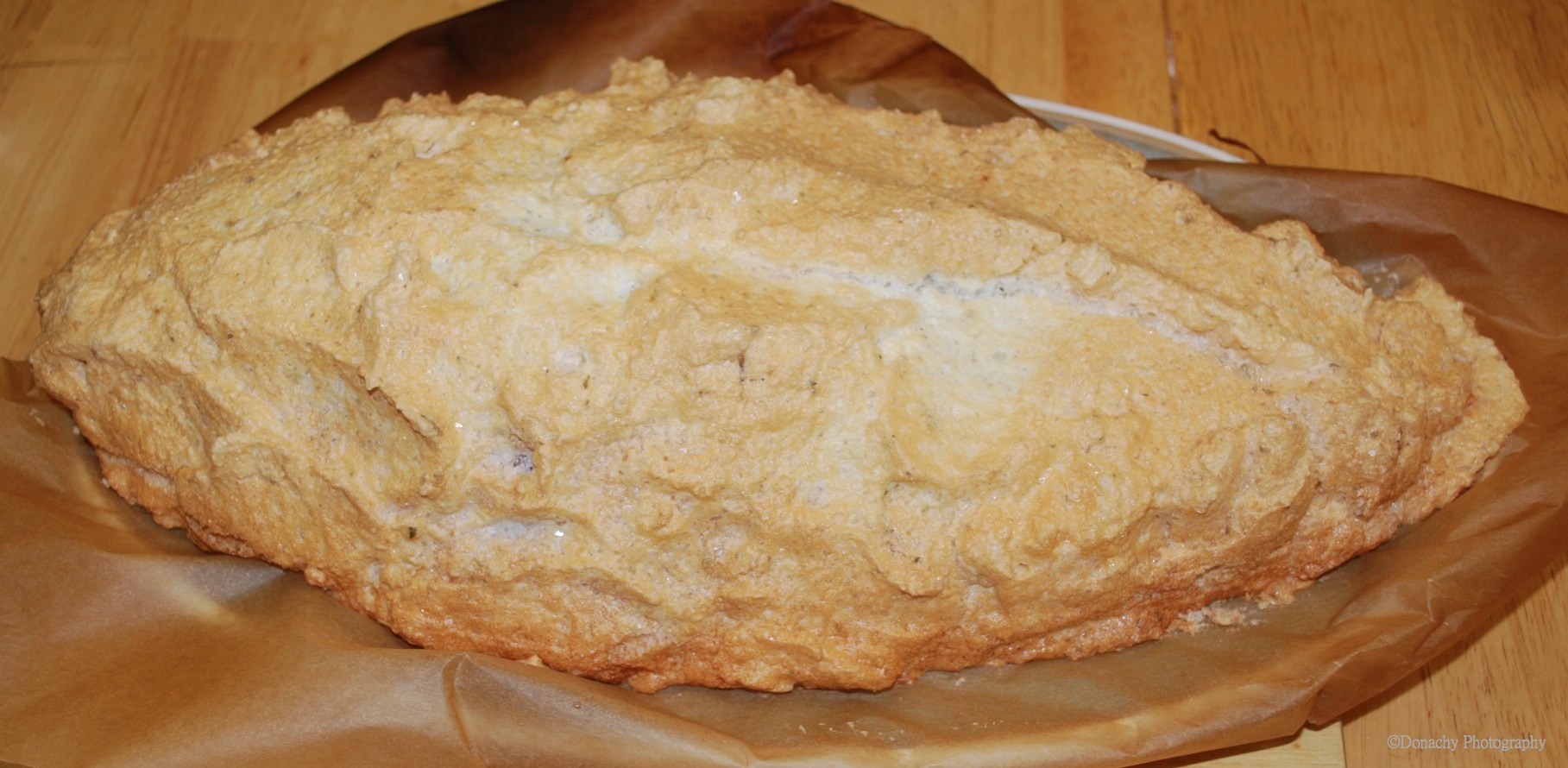
Encased in salt and egg white paste, the fish is ready for the oven.

While I had on hand a two pound yelloweye rockfish (Sebastes ruberrimus) which was perfect for this recipe, there are many fish which would work as well. The first that comes to mind are the true porgies – fish in the genus Pagras and Acanthopagrus. In Britain, these fish are commonly known as sea bream. In Japan, they’re are known as tai, and I would love to place a whole salt-crusted madai or kurodai on the table for Japanese guests, who typically revere these fish. Snapper, walleye, striped bass, pompano, black sea bass and even a firm-fleshed Coho salmon would all work well. A halibut just small enough to fit on a large oven tray and served this way would surely draw oohs and aahs.

About a half an hour later, the fish is ready to serve. 

Keep in mind that the best fish dinners start with the freshest fish possible. Good fish should smell as fresh as the sea they came from. Sadly, most American grocers still haven’t figured this one out, so if you’re having trouble finding good fish, try to locate a Japanese grocery store or an Asian market that sells to Japanese customers. Whole Foods and specialty butcher shops also usually carry quality, fresh fish. Costco, too, sometimes carries whole fish and can generally be depended on for a fresh product.

Voila! The dull side of a knife is used to crack and remove the crust, revealing a succulent fish that wants only a drizzle of olive oil and a squirt of lemon.

Figure about one pound of cleaned, gutted whole fish for every two diners. Thus, a two-pound fish will serve four.

Salt-Crusted Whole Fish with Shrimp

Ingredients: Serves 4

All you really need are the first four ingredients. The others are optional and can be omitted entirely or substituted freely.

  • One 2-pound (.9 kilogram) fish, scaled, gilled and gutted but otherwise left whole
  • 4 egg whites
  • 2 cups sea salt
  • a good-tasting extra virgin olive oil
  • parchment paper and baking sheet or baking platter
  • lemon wedges (preferably from Meyer lemons)
  • 1/4 pound shrimp, peeled (optional)
  • tarragon – either 1 or 2 sprigs fresh or 1 tsp dried & crushed (optional)
  • 1 tsp dried marjoram (optional)
  • 1 or 2 bay leaves, crushed (optional)
  • freshly ground pepper (optional)
  • additional sea salt (optional)

Directions:

  1. Line a baking sheet or platter with parchment paper.
  2. Preheat oven to 450 degrees F. (232 degrees Celsius)
  3. Use paper towels to pat the fish dry. Use a brush (a clean tooth brush works well) to remove all traces of viscera from the stomach and head cavity. Rub cavity with salt, pepper and crushed tarragon, if desired, or place a sprig or two of fresh tarragon in the cavity. Stuff with the shrimp. Set fish aside.
  4. Whip the egg whites until they from stiff peaks.
  5. Gently fold the salt (and the crushed bay leaves and marjoram, if desired) into the egg whites until a paste is formed.
  6. Spread about 1/3 of the salt paste on the parchment paper in a shape large enough to hold the entire fish.
  7. Place the fish on the salt paste and completely cover with remaining salt paste.
  8. Bake for 25 minutes. Turn oven off and continue baking for five minutes. Remove fish from oven, place on dining table and allow it to rest for another 5 to 10 minutes.
  9. Remove crust by cracking it open with the dull side of a knife. The crust can be lifted off with a spatula, large spoon or wide knife blade. The top layer of the fish will easily lift away from the bones.
  10. Serve with lemon wedges and drizzles of extra virgin olive oil.

We served the fish with oven-roasted potatoes and steamed vegetables. This dish would be fun with Margaritas.

30,000 Seabirds

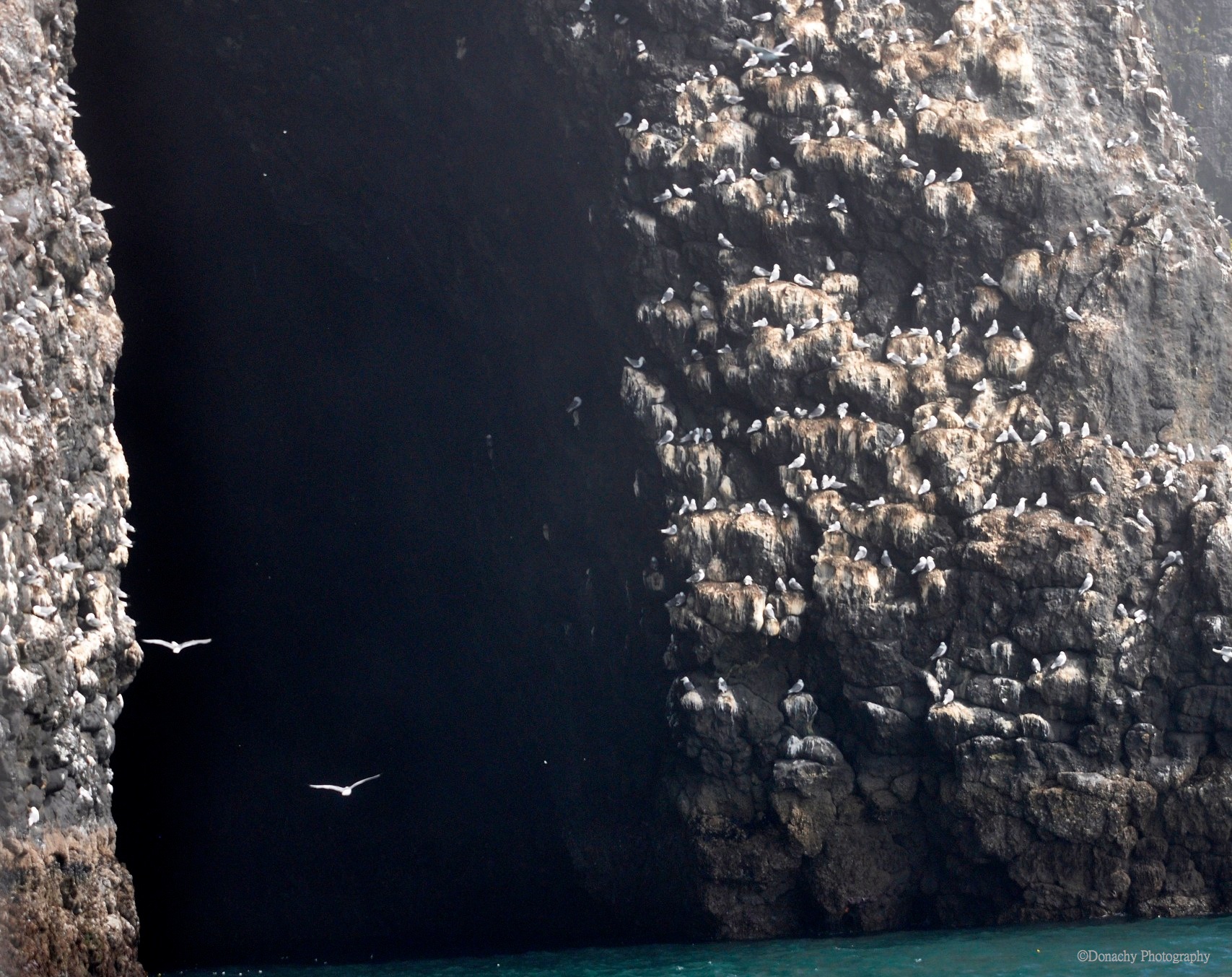
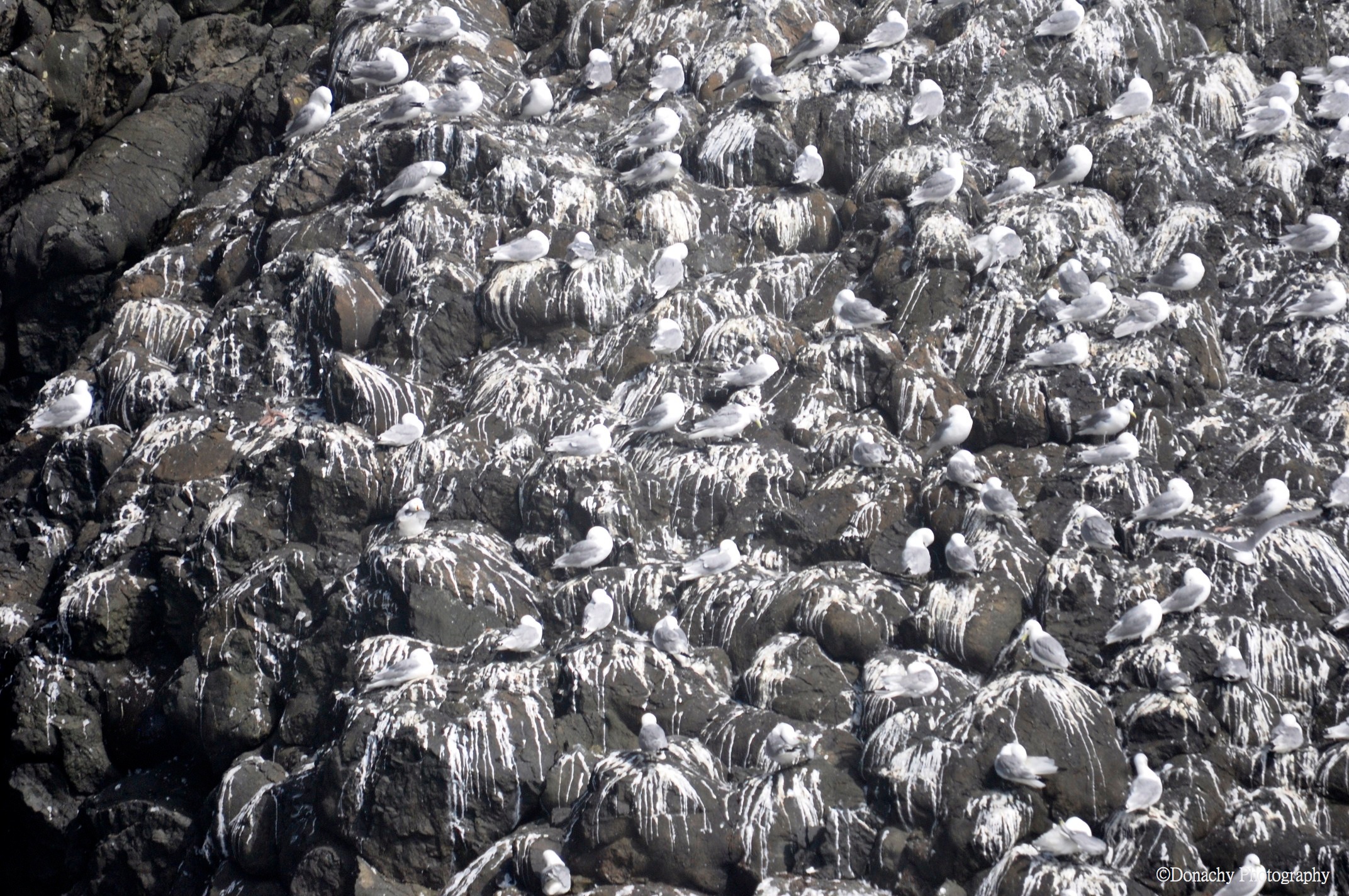
At any given moment, there are as many as 30,000 seabirds roosting, nesting, flying and feeding at Cape Resurrection near Seward, Alaska. While kittiwakes and common murres are the two most abundant species, tufted and horned puffins, murrelets, guillemots, auklets, oyster catchers, cormorants, various gulls and other seabirds are also in the mix. Above and below: black-legged kittiwakes in the thousands take advantage of every available ledge.

The noise (and smell) generated by these colonies is as startling as the sheer number of birds. 

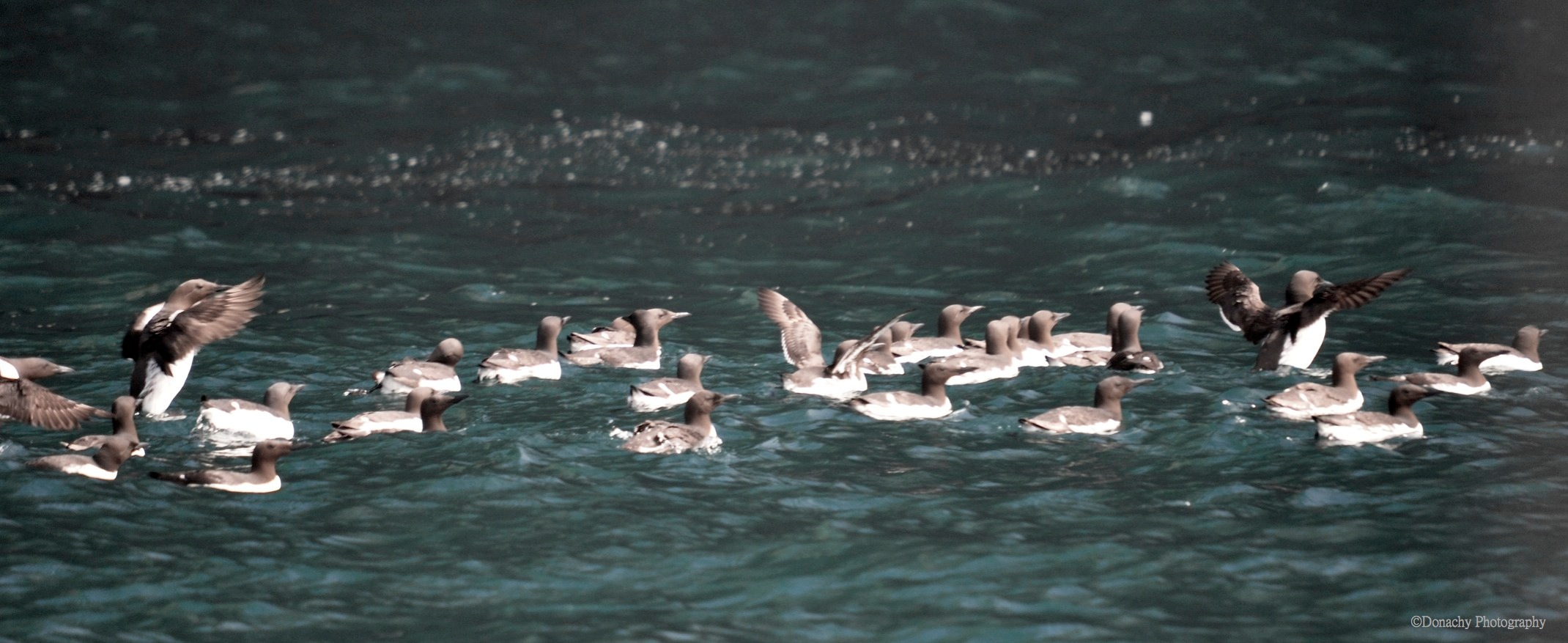
The cape also hosts large rafts of common murres containing dozens or even hundreds of birds.  

Horned puffins (above) and tufted puffins are also quite common. They use their thick, uniquely-hinged bills not only to fish, but to dig nesting burrows up to several feet deep. Once the nesting season is over, puffins spend the rest of the year at sea.

In flight, puffins look like large bumblebees, beating the air into submission with their stubby wings. In search of the small fish they feed on, puffins can dive up to 80 or more feet deep and are agile swimmers. 

On land, with their white bellies and dark backs, murres look a lot like penguins, and like penguins, they are very much at home in water. Murres have been recorded diving to depths of  600 feet. Their eggs are various shades of blue with brown speckles and are steeply pointed at one end to prevent them from rolling off the cliffs where they nest.