Unknown's avatar

About Jack & Barbra Donachy

Writers, photographers, food lovers, anglers, travelers and students of poetry

Coconut Butter Cookies – One Egg to Go

Chewy, sweet coconut butter cookies.

Some people count down by crossing off days. Up here in the village, the days are often counted in “sleeps.” This week, we’ve been counting in eggs. These cookies contain the second to last egg remaining in our refrigerator before we leave for the summer.

One egg, three days, two sleeps to go…

My mom cooked with fresh ingredients whenever she could, and so I have many memories of cracking coconuts and drinking the milk. Afterwards, we’d use fresh coconut shavings in various recipes.

Out here in bush Alaska, we’ve been using powdered coconut milk (obtained from our favorite Asian grocery store, New Sagaya, in Anchorage). Shredded coconut is also on our annual shopping list.

A few weeks ago, I made chocolate dipped macaroons. The coconut lovers around here gave them high marks. Others (those who couldn’t handle the coconut – you know who you are) diplomatically rated them “a-little-too-coconutty.” In an attempt to mellow out the coconut in this cookie, I mixed it into a tried and true butter cookie recipe. The coconut flavor and chewiness of these cookies goes perfectly with the butter-cookie sweetness. I was tempted to dip them in chocolate but resisted, thinking that might have made them too sweet. These cookies are already perfectly sweet!

Coconut Butter Cookies

Ingredients

  • 1 1/4 cups all-purpose flour
  • 1/2 tsp baking soda
  • dash salt
  • 1/2 cup unsalted butter
  • 3/4 cup granulated sugar
  • 1 egg
  • 1/2 tsp vanilla extract
  • 1 1/3 cups sweetened coconut

Directions

  1. Preheat oven to 350 degrees F.
  2. Mix together flour, baking soda and salt in a medium bowl. Set aside.
  3. In a separate mixing bowl, mix sugar and butter until smooth and pale colored.
  4. Mix egg into sugar mixture.
  5. Mix vanilla into sugar mixture.
  6. Blend in flour mixture to create a dough.
  7. Incorporate coconut into dough mixture.
  8. Drop dough by tablespoons onto parchment-lined baking sheets leaving 2 inches between cookies.
  9. Bake for 10 minutes or until cookies are toasted lightly on the top and golden brown on the bottom.
  10. Cool on wire racks.

Sandhill Cranes: Up Close and Personal

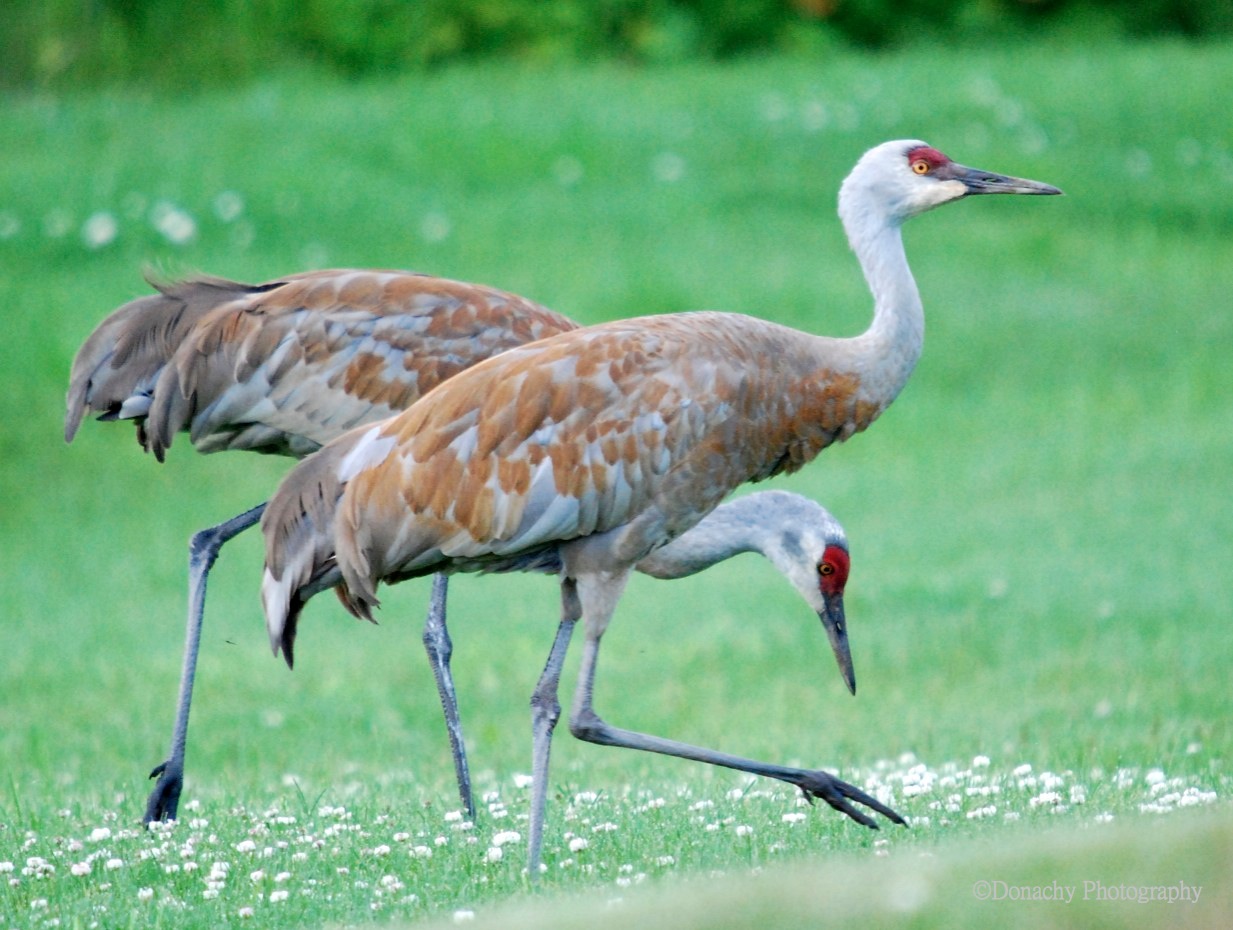
Driving into Homer, Alaska one summer we encountered this beautiful pair of gray and rust colored sandhill cranes (Grus canadensis) foraging on an expansive lawn. Cranes are opportunists, and although they are mainly herbivores seeking grains and seeds, they supplement their diet with insects, small mammals and other animals they encounter.

Bird weights can be deceptive due to their hollow bones. Even though adults have wingspans of six to seven feet (1.8 to 2.1 meters) and stand four to five feet tall (1 to 1.2 meters), they typically weigh less than 10 pounds (4 kilograms).

Since cranes are hunted in Alaska and can be quite wary, we felt lucky to find a pair that wasn’t too skittish. 

Other times we’d seen cranes, they were flying overhead, or, as was the case one summer in Yellowstone, far out on a plain. 

We stalked them for awhile, snapping photos, gauging our distance without spooking them into flight, and then we left the couple to continue their hunting. 

Of course, this being Alaska, when we looked up from the field where we’d been intently watching the cranes, this is what we saw – the Kachemak Glacier, which flows out of the Harding Icefield.

Razor Clam Fritters & Wasabi Slaw: Fusion Comfort

Something tried-and-true, something new: clam fritters and wasabi slaw – fusion comfort food.

My dad gave me two pieces of advice which have stood the test of time – 1) Take the stairs whenever you can, and take them two-at-a-time, and 2) eat as much fried food as you can when you’re young, because at some point you won’t be able to.

Clam fritters are so easy, I’m not sure why I don’t make them more often. Although I made these with razor clams, in South Carolina I made them out of the whelks I’d find, and at other times I’ve made them out of canned clams. The slaw is comprised of fairly standard ingredients – mayonnaise (homemade), pickle juice, vinegar, sugar, salt, pepper, carrots and cabbage – and given a kick with two teaspoons of powdered wasabi.

The fritters are adapted from Craig Claiborne’s recipe as it appears in The New York Times Cook Book, with the only difference being my substitution of dried tarragon and basil, which I have, for fresh parsley, which I do not have.

Clam Fritters: serves 4

Ingredients

  • 1 cup chopped clams
  • 1 egg, lightly beaten
  • 1 tsp lemon juice
  • 1 tbsp chopped tarragon (or substitute dry tarragon or marjoram)
  • 1 tsp baking soda
  • 1 cup flour
  • 1/4 cup clam juice
  • 1/4 cup milk
  • 1 1/2 tbsp melted butter
  • couple dashes cayenne pepper (to taste)
  • freshly ground black pepper to taste
  • oil for frying

Directions

  1. Chop clams on a cutting board. Not too fine. Place them in a mixing bowl.
  2. Add the egg, lemon juice, tarragon, baking soda and flour and stir.
  3. Blend the clam juice and milk. Add gradually to the clam mixture, stirring continuously. Do not make the batter too runny.
  4. Stir in the butter, cayenne and black pepper.
  5. Heat about 1/8 inch of oil in a frying pan.
  6. Drop batter in the hot oil – about 2 tablespoons per fritter. (They’ll cook better if they’re fairly small.)
  7. Turn when the bottom is browned, as you would for pancakes.

We served these with salmon sauce. Tarter sauce, shrimp sauce, or a squeeze of lemon works well, too. These seemed to beg for an amber ale. (Or maybe it’s Barbra and me doing the begging after nine months of living in a dry village!) Enjoy!

Lemon Brioche Croissants

Flaky and buttery croissants made from scratch using brioche dough. Stuff them with anything you like – I chose homemade lemon curd.

We leave for the summer in six days. After surveying the pantry for what will not survive three months, we determined the lemon juice, coconut and salsa are on the “must finish” list. Obviously, no recipe is going to take care of all three ingredients in one fell swoop — not one I’d want to eat, anyway! Salsa chicken and rice will be on this week’s menu. Coconut butter cookies for the staff potluck. And lemon curd stuffed croissants for breakfast.

From a culinary and baking standpoint, this summer should be interesting. We’ve cooked for weeks at a time in our camper. We’ve also cooked for weeks on a Coleman stove while tent and boat camping. This summer, it will be all galley cooking on our sailboat, Bandon. We’re both eager to outfit her galley with the least amount of quality tools that will help us with the most culinary tasks. We are also excited to fish the south central waters of Alaska and cook up the freshest and tastiest seafood for ourselves and our guests. Stay tuned to see what will be created from the galley of Bandon!

Lemon Brioche Croissants

makes 8 croissants

Ingredients

  • 1/2 cup whole milk
  • 1/8 cup granulated sugar
  • 2 eggs
  • 1 1/2 – 2 cups all-purpose flour
  • 1/2 tbsp instant yeast
  • 1/2 tsp salt
  • 3/4 cup soft unsalted butter
  • 3/4 cup lemon curd or other filling (see below for separate lemon curd recipe)

Directions

  1. Pour milk in saucepan and heat until lukewarm.
  2. Pour milk in mixing bowl. Add sugar. Mix until incorporated.
  3. Beat eggs. Pour eggs into milk mixture. Mix until incorporated.
  4. Add 1/2 cup of flour. Mix until incorporated.
  5. Add yeast and a second 1/2 cup of flour. Mix until incorporated. I switched to a dough hook on the mixer at this point.
  6. Add salt and last 1/2 cup of flour. Mix again until incorporated. Dough should be sticky.
  7. Mix butter into dough in increments of about 2 tbsp at a time.
  8. Once the butter is completed incorporated, cover dough with plastic wrap and refrigerate for at least 4 hours, or overnight.
  9. After at least 4 hours, place the dough on a lightly floured surface.
  10. Roll the dough out to form a circle with about a 15-inch diameter.
  11. Cut dough into 8 pieces (pizza style) using a pizza wheel, forming 8 triangles.
  12. Place a heaping tbsp of lemon curd near the base of the triangle.
  13. Roll dough from base of triangle toward point.
  14. Curve into a crescent shape and pinch ends closed.
  15. Place croissants on parchment-lined baking sheet and cover sheet with plastic wrap. Let rest for 45 minutes.
  16. Preheat oven to 350 degrees F while dough is resting. Bake croissants for 15 – 20 minutes until lightly browned.
  17. Cool on a wire rack.

Lemon Curd

Ingredients

  • 1/2 cup lemon juice
  • 3/4 cup granulated sugar
  • 2 eggs
  • 1/2 cup (1 stick) softened unsalted butter
  • zest of one orange (about a tablespoon)

Directions

  1. Mix together lemon juice, sugar, eggs, and zest. Mix in butter 1/4 cup at a time.
  2. Place bowl on simmering pot of water (double boiler). Stirring constantly, cook until mixture reaches 160 degrees F (about 10 minutes).
  3. Store covered in refrigerator. I used a mason jar.

The above recipe used about half of the lemon curd. Enjoy the extra on scones, with yogurt, or to replace jam in any other recipe.

Croissant recipe adapted from http://www.cookingbread.com/classes/class_lemon_brioche_croissants.html

Lemon curd recipe adapted from http://www.recipegirl.com/2008/11/10/meyer-lemon-curd/

Childs Glacier: When Ice Falls

The face of Childs Glacier forms a bank on the Copper River near Cordova, Alaska. This is the same Copper River famed for its runs of wild salmon.

Two days prior, we’d launched our C-Dory in Valdez and made the 90-mile run across a section of Prince William Sound to Cordova – a fishing village accessible only by air or water. The livelihood of many of Cordova’s 2,000 or so inhabitants is connected to the massive runs of salmon that ascend the nearby Copper River. A running event, the Alaska Salmon Runs Marathon and Half-Marathon road races, had lured us to this idyllic village. We hadn’t even known about Childs Glacier when we first put together our travel plans.

Just 400 yards across the river is a picnic area offering excellent views of the glacier.

As often happens at running events, it wasn’t long after we’d finished the half-marathon that we fell into conversation with another couple. They were planning on renting a car and driving out to see the glacier the following day. When they asked if we’d be interested in splitting the rental car and joining them, we didn’t hesitate. This would be our first opportunity to get close to a glacier.

We figured we’d drive out, snap a few photos, have lunch at the picnic area, and drive back. If we were lucky, we might see a moose or a bear along the way. This was before we understood the dynamic nature of sea-level glaciers. We were completely unprepared for what we would experience.

A shower of ice sloughs off the glacier’s face.

The width of the chalky-brown Copper River was all that separated the picnic area from this very active mass of slowly moving ice. Think of the cracking and popping sounds a couple of fresh ice cubes make in a glass of whisky. Now imagine those sounds magnified to amplitudes ranging from rifle fire to dynamite charges as ice almost continuously breaks away from the glacier’s face. We were mesmerized. The half-hour we’d planned on staying turned into an hour, then into two, and then into three.

We were witnessing yet another Alaskan phenomenon so large and full of energy that it is all but impossible to adequately capture on film or with words – an event you have to experience to comprehend, and we were here, experiencing it. Although neither Barbra nor I gave voice to the thought, it was probably on this day, watching and listening to this glacier, that the idea of moving up here began to root itself in us.

We sensed that something BIG was about to happen.

Suddenly, a massive section of ice below a seam we had been watching seemed to sag. A fraction of a second later a prolonged groaning, cracking explosion unlike any we’d heard before reached our ears as the face of the glacier fell away, collapsing into the water with a force that sent a small tidal wave curling toward us. The four of us looked at each other, eyes wide, jaws dropped, and quickly gathered our gear and scurried for higher ground. Seconds later, the wave hit the shore, inundating the area where we’d been standing only moments earlier. It was thrilling.

This large iceberg in Prince William Sound is the result of a glacier calving event in one of the sound’s fjords. Kittiwakes and gulls have claimed it as a roosting place.

Way Better Than Pop Tarts

Flaky stuffed pillows of pie crust sprinkled with cinnamon sugar. One bite of these, and you’ll never look a Pop-Tart straight in the face again.

Back in the day, my childhood home was known as the “health food” house. (It was also known as the “twigs and berries” house.) My mom primarily shopped at the health food coop. She didn’t allow processed sugar, and so when I saw my friends eat those tantalizingly sugar-laced Pop-Tarts (as advertised on TV), I could only imagine how wonderful they must taste. Mmm… Flaky golden crust, sweet and smooth icing, bursting with delicious chocolate or thick, sugary berry jam.

Well, one day, I worked up the courage to sneak one! Oh yes, my sister and I became masterful at sneaking sugar. At our secret hiding spot, my friend handed me one of these foil-wrapped treasures. I held it in my hands, heart beating with anticipation. Then I ripped into the wrapping, took a giant bite and…

Blech! The flavorless, cardboard-like confection I held in my hands bore no semblance to the treats that came popping out of toasters in TV land.  Later in life, I tried a health food version of a Pop-Tart and, again, ended up wishing I hadn’t.

Because of those experiences, I’m not a person who walks through life thinking about Pop-Tarts. So, coming up with the idea to make today’s creation caught me by surprise. A couple of months ago, I’d made some fantastic pear butter. It has the best texture, aroma, and flavor. It seemed a waste to leave it in the freezer over the summer. I thawed it and started my search for recipes. I thought the pear butter would be delicious layered between some kind of pastry. I envisioned a layer of mellow cheese (think mascarpone) topped with the pear butter.  I started my Internet search with the sole word “tart” just to see what would result. (Fortunately, I had the “safe” filter on my browser, otherwise who knows what images “tart” might have conjured forth.) As luck would have it, the third result was homemade pop tarts from Smitten Kitchen.

Way Better Than Pop-Tarts

Makes 9 Pastries

Ingredients

  • 2 cups all-purpose flour
  • 1 tbsp granulated sugar
  • 1/2 tsp salt
  • 2 sticks (1 cup) of unsalted butter
  • 2 large eggs
  • 2 tbsp milk
  • 3/4 cup pear butter or jam
  • 1 tbsp cornstarch mixed with 1 tbsp cold water
  • 1 tsp cinnamon mixed with 3 tsp granulated sugar for the topping
Directions
  1. Preheat oven to 350 degrees F.
  2. Mix flour, sugar and salt. Slice butter into pats. Mix in butter with a pastry blender or your fingers. Do this until butter is pea-sized. It is ready when dough holds together when you squeeze it.
  3. Whisk together one egg and milk.
  4. Stir egg mixture into dough. Dough should form into a ball.
  5. Divide dough in half and shape each half into a rectangle (about 3 x 5 inches).
  6. Roll out one half of the dough on a lightly floured surface. Try to keep the shape rectangular. Roll out until dough is about 1/8 inch thick and is about 9″ x 12.” Cut the dough into nine 3″ x 4″ rectangles. Repeat with second half of dough.
  7. Mix together pear butter (or jam) and cornstarch mixture.
  8. Beat the second egg and brush it on one 3″ x 4″ piece.
  9. Place a heaping tablespoon of pear butter mixture in center of egg-covered dough. Spread out the pear mixture leaving a 1/2″ border.
  10. Place a second 3″ x 4″ dough rectangle on first dough rectangle. Press down on edges to seal the two pieces together.
  11. Use tines of a fork on the perimeter of rectangle to complete the seal and to add a decorative touch.
  12. Repeat with remaining tarts.
  13. Place tarts on parchment-lined baking sheets. Wash the tops with remaining egg mixture. Sprinkle tops with cinnamon-sugar mixture. Prick each tart a few times to allow steam to escape.
  14. Place in oven for 20 minutes. The tarts should be a golden brown. Cool in pan on wire rack.
Adapted from http://smittenkitchen.com/2010/04/homemade-pop-tarts/


Laying in a Year’s Worth of Supplies Part II: The Well-Stocked Kitchen

Penzeys spices have earned a prominent place in our well-stocked kitchen. We recently received an order of items we wanted to make sure we have on hand when we return to Point Hope at the end of the summer. From left to right in the foreground: arbol peppers, star anise and chipotle peppers. 

As I write this, I’m surrounded by several stacks of Rubbermaid totes. Each stack has four to seven nested totes duck taped together, ready to be mailed to Anchorage where they’ll be filled with dry goods and mailed back up here for the next school year. We’re down to the tail end of most of our groceries, which is the way it should be with only 10 days remaining before we fly down to south-central Alaska for the summer.

Planning out a well-stocked kitchen, experimenting with new dishes and baked goods, and writing this blog make the extra effort and expense of laying in everything we need for our kitchen worth it. In addition to mail-ordering spices to supplement what we already have on hand, we’ve prepared a five-page Excel spreadsheet shopping list we’ll take care of in Anchorage. And, of course, there are the ice chests we mailed down earlier, waiting to be filled with some of the world’s best seafood – the salmon, halibut and rockfish we catch and package ourselves. Come late summer when we return to the village, our kitchen will be ready!

Various types of salt, cooking oils and a full compliment of herbs and spices inspire an eclectic approach to cooking and baking, and allow us to create many of our own rubs and grilling sauces.

Although the theme of our summer posts will shift to fishing, hiking, boating and sailing, we’ll continue to write about the cooking we do for ourselves and our guests. And during the summer, we’ll finally be able to enjoy wine and beer with our meals!

Click here to see A Year’s Worth of Food: Provisioning for the Alaska Bush, Part I

Whaling: Two Miles Out on the Frozen Chukchi Sea

Two miles from land across the frozen Chukchi Sea, the ocean ice is constantly breaking up and reforming, creating ridges of fragmented ice. The blocks of ice in this photo weigh from hundreds to thousands of pounds, but are so clear they seem to be lit from within. 

We had heard that the bowhead whale was out near the point, three miles west of the village of Point Hope. But once out there, we saw few signs of activity. We found a trail leading out onto the ice and began following it in hopes of locating the lead – the place where currents and wind had caused a break in the ice and created open water. That’s where the whaling camp would be.

The ball and pyramid, above, were a familiar trail marker from a previous trek out onto the ice. (Click here to see “Whale Camp: Frozen Sees and Icescapes.” A frozen sea is not smooth. It is more like an otherworldly, windswept rock and sand desert with the rocks replaced by ice and snow replacing the sand. Note the faint snowmobile tracks curving along the right edge of the photo – that’s the trail. 

A mile or more out on the ice, Barbra and our friend, Bill, pause to scan for telltale seabirds that might give away the location of the lead. This is an area frequented by polar bears, hence the gun Bill is carrying. We saw no bears, but did cross a number of fox tracks.

Huge, luminescent fragmants of snow-dusted ice reminded me of the hardtack candy my grandmother used to keep in a crystal bowl. 

Leads can open and close in moments, leaving people stranded when a break-off occurs, or generating enough force to place this pickup-truck-sized block of ice precariously atop a mass of fragments. A walk across sea ice gives one a glimpse into the forces behind tectonic plates and events such as earthquakes and the formation of mountain ranges.

We’d walked over five miles by the time we finally found the lead – a fairly narrow band of water hemmed in between two ice sheets. The bow of a seal-skin boat was a sure sign we were nearing the main whaling site.

This is a typical whaling outpost. The seal-skin boat, which is about 17  feet long, is made from hand-stitched bearded seal hide. The boats are light, able to be moved on a moment’s notice. The jumble of ice at the edge of the lead was piled there by natural forces and serves as both wind shield and hunting blind. Note the mass of floating ice out on the water. 

At the edge of the lead, the ice does not taper. It is thick and strong, but susceptible to breaking off if the wind shifts. 

We had wondered how a whale weighing 10, 30 or even 50 tons is pulled from the water. Two heavy block and tackles are anchored to the ice. The one nearest open water is pegged with a thick metal spike. Fifty yards or so back a second block and tackle is anchored by drilling two holes through the ice and securing the it with a strong harness. Even with the modest mechanical advantage of pulleys, it takes dozens of people pulling for all they’re worth to bring the whale out of the water.

Most of the tools used are hand-crafted. The spade-like implements on the right are butchering tools.


We were very aware of this deep crack in the ice, as, no doubt, were the whaling captain and his crew. While the ice to the right of the crack was sturdy enough to support a house, a shift in the wind could have caused it to suddenly break off. 

The whale was small, a young one. Here a ceremonial first piece weighing 30 pounds or more is cut for soup in which the only ingredients are melted snow and fresh whale – a welcome celebratory meal against the cold.

When the pull began, I handed my camera to Barbra and found a place on the rope. The pull started with grunts and chanting, but as the whale begin to emerge from the sea onto the ice, the chanting gave way to whoops of joy and cheers.

The captain (in the blue coat) shared a celebratory hug (above)…

…and then his crew member headed off with a friend for a bowl of hot whale soup. By this time, Bill, Barbra and I had been out on the ice for nearly five hours and we had a two-mile hike back over the sea to land. We were thrilled to have witnessed and taken part in a tradition that goes back to the roots of this Inupiat village.

Cloudberry Cake: An Arctic Treat

Cloudberry jam is baked right into the top of this moist vanilla cake. Try it with a hot cup of tea and a scoop of vanilla bean ice cream.

 Continuing with the clean-out-the-pantry theme, I had a couple jars of cloudberry freezer jam left from our fall berry picking. These delicious orange berries of the far north are only available for a few short weeks at the end of the Alaska summer. Growing in patches on small mounds across the boggy tundra, Akpik (the Inupiaq word for the berries) are at first a brilliant red before turning orange during their peak ripeness. We picked two gallons and turned them into some of the best jam, sorbet and ice cream we’ve ever eaten. Prized wherever they grow, (they’re protected by law in some European locales) cloudberries have a distinctive sweet flavor with a hint of agreeable tartness. They have become our favorite berry.

Cloudberry Cake

Ingredients

  • 1 cup granulated sugar
  • 5 eggs
  • 1 cup unsweetened applesauce
  • 1 tsp vanilla extract
  • 2 tbsp sour cream
  • 2 cups all-purpose flour
  • 2 tsp baking powder
  • 2 cups cloudberry jam (or other jam)

Directions

  1. Preheat oven to 350 degrees F.
  2. Beat sugar and eggs until pale yellow (about 5 minutes). Beat in applesauce. Add vanilla and sour cream. Mix again.
  3. Sift flour and baking powder together. Stir into egg mixture.
  4. Grease a 9-inch springform pan.
  5. Pour batter into springform pan.
  6. Dot the jam on top of the cake batter. Poke some of the jam down into the batter.  Bake 45 minutes or until a toothpick or cake tester comes out clean.

Matcha Green Tea Cookies

As our school year comes to a close, I searched our pantry for baking inspiration. It is a dual goal – bake something interesting and use something up that may not weather sitting for three months in a cabinet. Today’s ingredient? Matcha green tea. This is a powdered or finely milled form of shade-grown tea, which is used in Japanese tea ceremonies. It is very flavorful. Increasingly, matcha is finding its way as an ingredient into other food where it adds color and flavor.

This is probably not an everyday pantry item. Jack and I greatly enjoy tea. Before we moved up to Alaska, we purchased lots of tea from a favorite shop in California that was (sadly) closing. We had one opened bag of this delicious powder with exactly three teaspoons left… the perfect amount for a cookie recipe! If you would like to try this recipe, we suggest checking with a tea shop that carries Japanese teas.

Matcha Green Tea Cookies

Ingredients

  • 7 tbsp softened, unsalted butter
  • 6 tbsp confectioner’s sugar
  • 1 egg yolk and 1 egg
  • 1 tsp vanilla extract
  • 3/4 cup all-purpose flour
  • 6 tbsp finely ground almonds
  • 3 tsp matcha powder
  • 2 tbsp granulated or turbinado sugar

Directions

  1. In a medium mixing bowl, cream together butter and confectioner’s sugar. Add eggs and vanilla. Blend thoroughly. Set aside.
  2. In a separate bowl, sift together flour and matcha powder. Add in almonds. Mix thoroughly.
  3. Add flour mixture to butter mixture. Mix until dough comes together into a ball.
  4. Shape dough into a log with about a 2-inch diameter. Wrap in plastic wrap and chill in the refrigerator.
  5. Preheat the oven to 350 degrees F.
  6. Line baking sheets with parchment paper.
  7. Sprinkle granulated or turbinado sugar onto a plate. Roll chilled log in sugar, pressing log into sugar to coat.
  8. Using a sharp knife, cut 1/2 slices. Place slices on baking sheet leaving room between cookies for slight spreading.
  9. Bake for 12 minutes or until cookies are lightly browned on the edges.
  10. Cool on baking sheet for 2 minutes before transferring to a wire cooling rack.

Recipe adapted from http://chocolateandzucchini.com/archives/2009/10/matcha_shortbread_cookies.php