First Sea Ice, Point Hope 2013

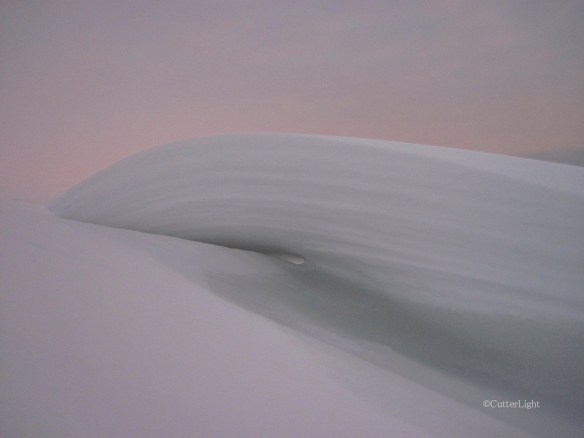
snow arc point hope beach n

Wind and cold sculpted this mixture of sea spray and snow into a delicate arch. The sea ice has been late in coming to the Chukchi Sea this year. This photo was taken at 3:00 p.m. with the winter sun already skimming low on the horizon. Our month of day-long darkness will begin December 6.

The thick, slushy sea ice hisses and softly moans as it moves with the current past ice already frozen fast to shore. The hissing is vaguely reminiscent of a soft autumn breeze filtering through the dry leaves of oaks and maples in my native Pennsylvania. The moans sound like the muted voices of whales deep below the sea. All else is still, the ice stretching out as far as one can see. There is no wind, and there is no other sound.

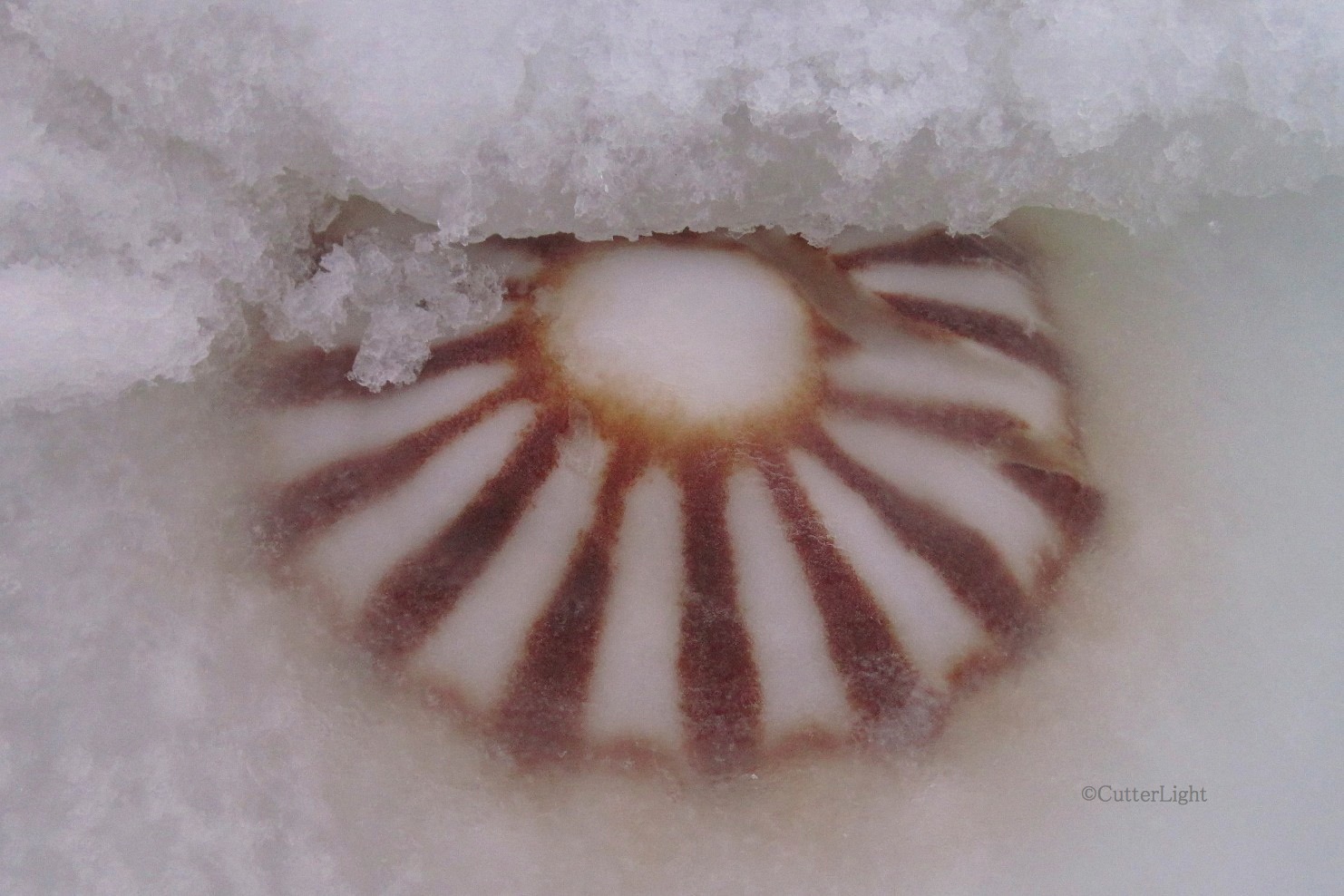
sea jelly caught in ice n

This sea jelly, entombed in shore ice, is about the size of a polar bear’s paw.

We searched for signs of life, perhaps a seal out on the ice or a snowy owl coursing the shoreline, or even the tracks of an Arctic fox. There is nothing, just the steady hiss of the ice as it flows before us. We walk along the pebbled beach for maybe a mile and finally spot a small group of ravens. Tough birds, making a living up here during the winter.

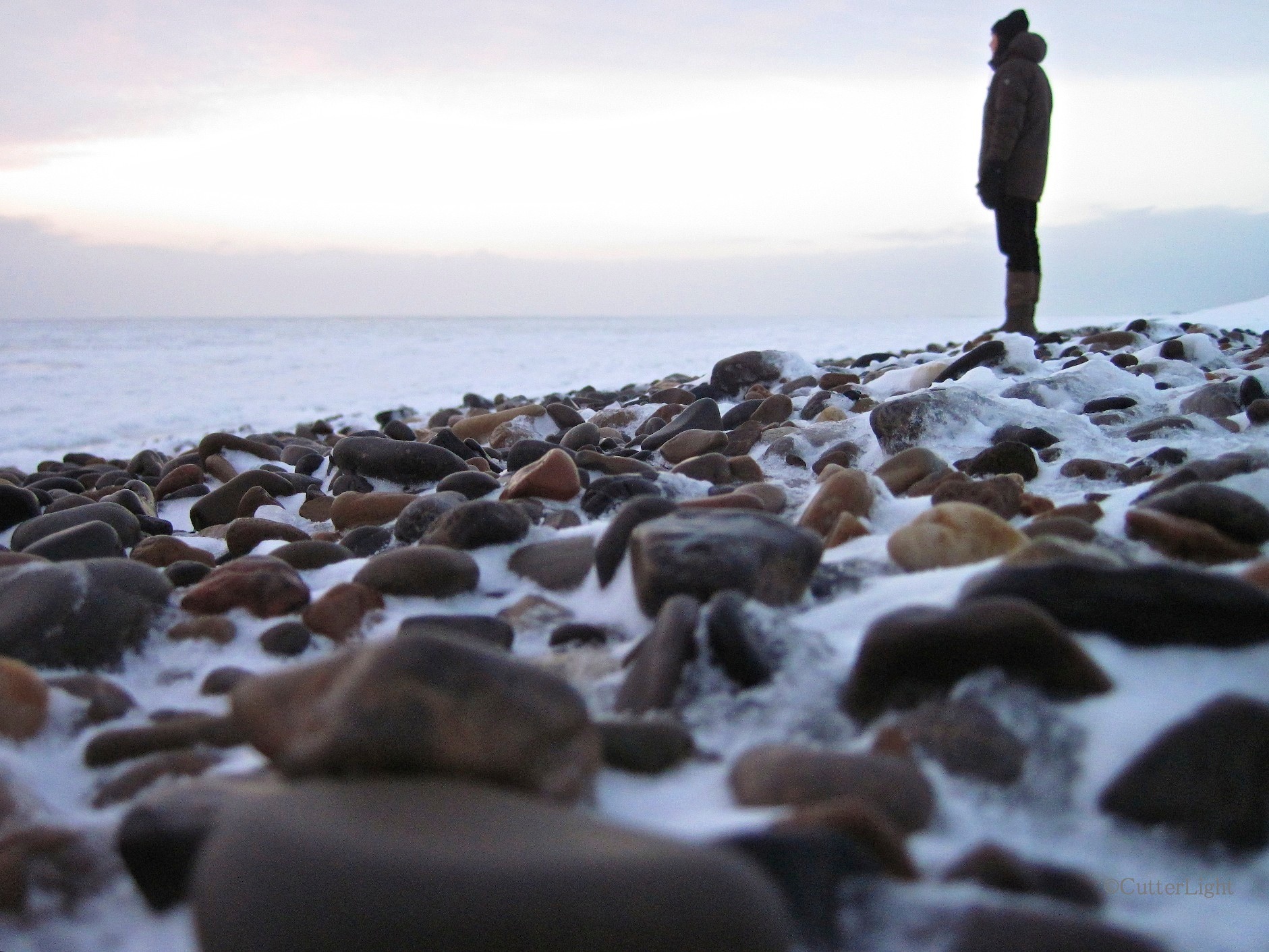
point hope frozen beach n

If you look closely among the rocks along the Point Hope Beach, it’s common to find jade. Less common are fragments of mastodon tusks.

first sea ice 2013 n

Thick ice prevents the shore from eroding during winter storms. Polar bears depend on the ice to hunt seals. Things are changing up here. The ice seems to be coming later, and there is less of it. Red foxes are becoming more common, pushing out their smaller Arctic cousins. Once winter truly locks up the sea and the sun sinks below the horizon, there is no place on earth that is quieter. It is cold and stark but beautiful. 

sea jelly caught in ice b n

We don’t always take our big cameras along on walks. Today we relied on “Little Blue,” our Cannon PowerShot D10, our trusty point and shoot.

Ptarmigan and Cloudberries: A Walk on Alaska’s Arctic Tundra

willow ptarmigan pair n

Looking almost like exquisite mounts in a museum diorama, these Willow ptarmigan (Lagopus lagopus) proved to be quite approachable. While hiking on the tundra near Point Hope in September we came across two coveys totaling about 20 birds.

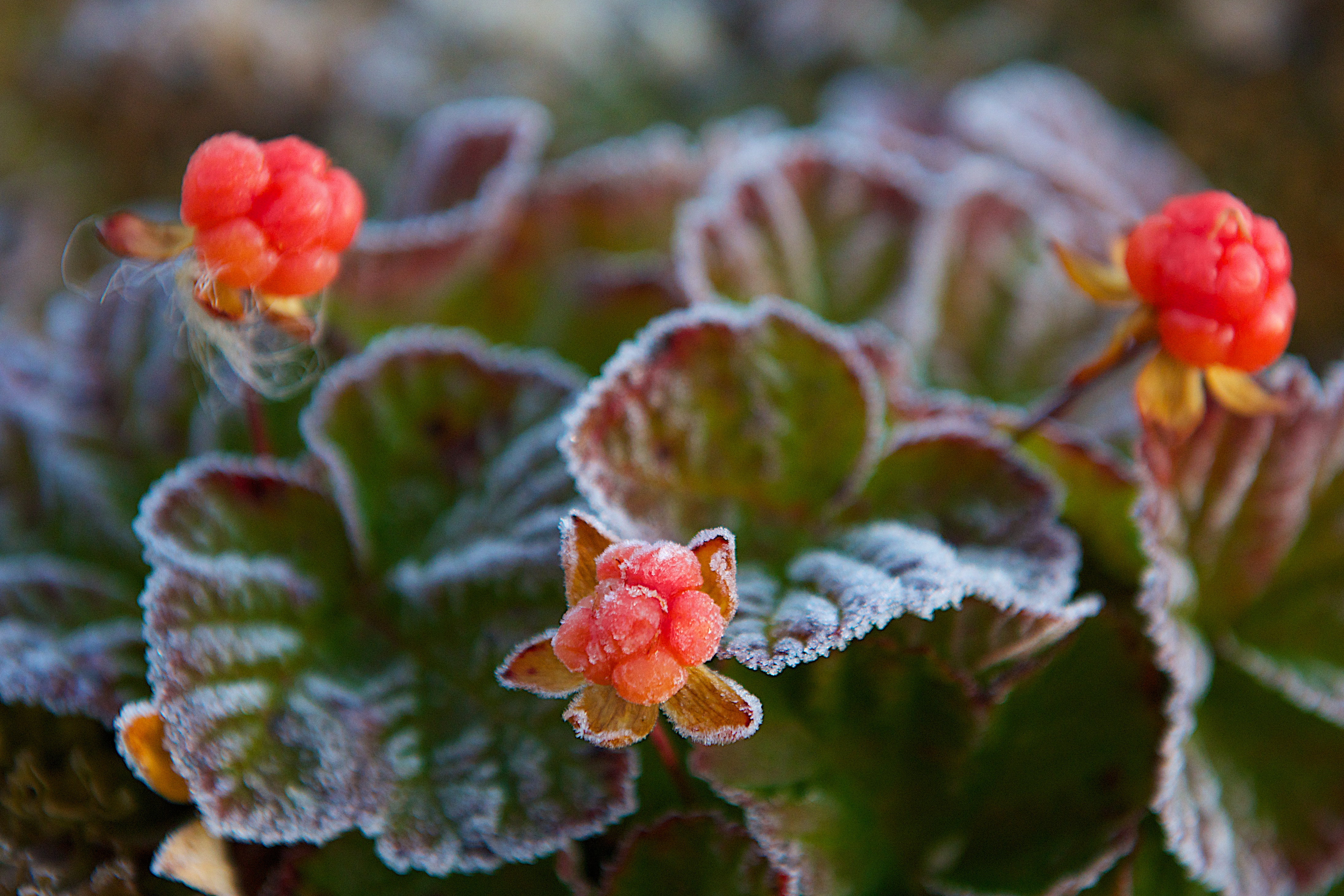
cloudberries early frost

Nipped with frost, these cloudberries tasted like sorbet and were no doubt what had drawn the ptarmigan.

willow ptarmigan jack shooting n

Barbra cautiously approached the birds as I lay on my stomach, inching through the boggy terrain, shooting, hoping a few shots might come out.

willow ptarmigan solitary n

The plumage of these fall birds is in transition from the mottled browns and reds of summer to the snow white of winter. These are the same species as the red grouse of Scotland.

willow ptarmigan barbra approaching n

Barbra crouches and stalks closer to the birds. Note the densely feathered legs. The Latin lagopus translates to “hare foot” for the resemblance of ptarmigans’ feather-covered legs and feet to those of snowshoe hares. 

caribou antler fall tundra n

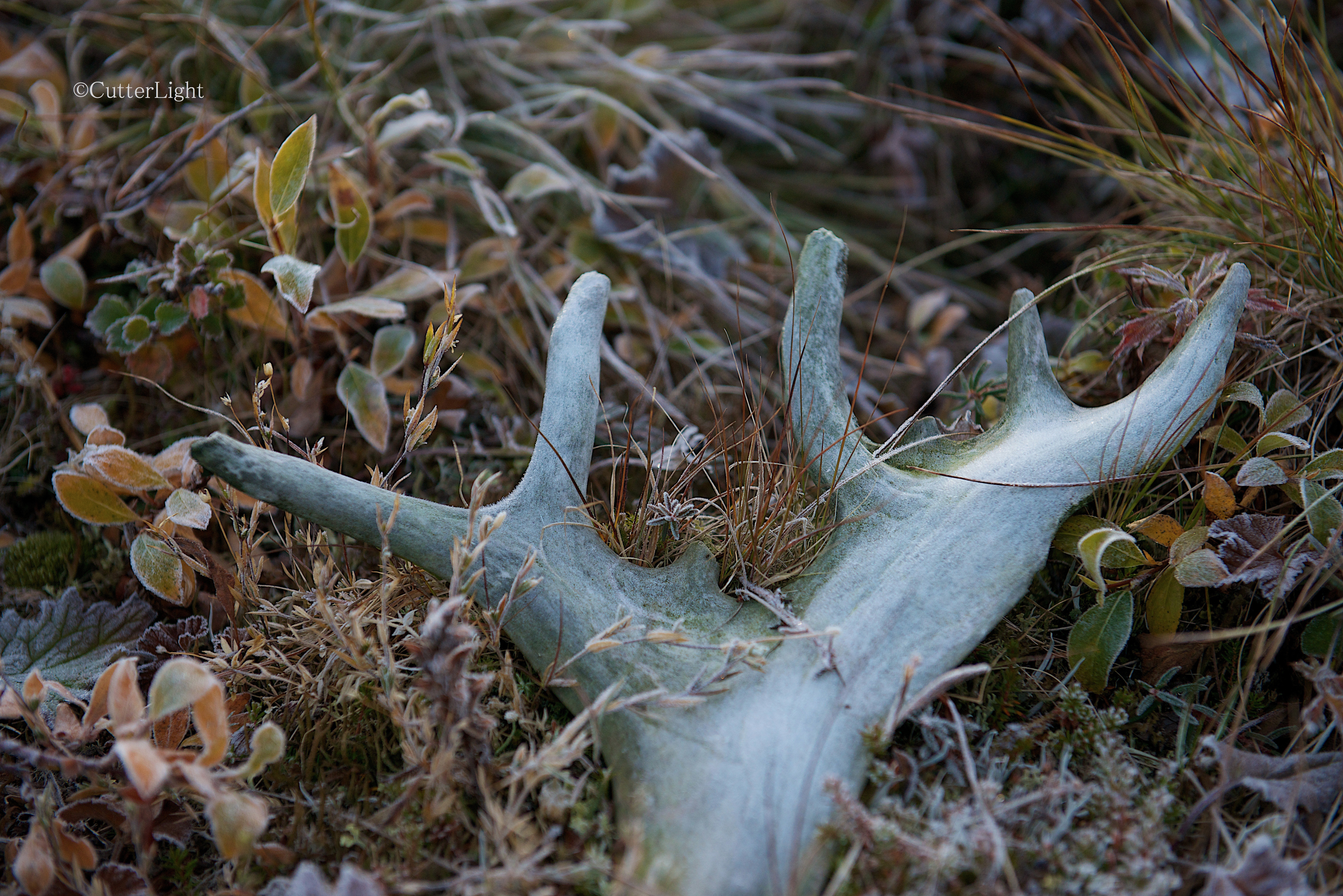
There’s always evidence of a rich ecosystem on the Arctic tundra. Caribou antlers, bird nests, animal burrows and an amazing array of plants are part of our walks.

brown bear track tundra beach n

Brown bears (grizzlies) are common visitors to the beaches and tundra near Point Hope. We found a set of fresh tracks along the shores of an inlet off the Chukchi Sea not far from where we encountered the ptarmigan. Red foxes, Arctic foxes, Arctic ground squirrels, weasels and caribou are frequently seen mammals. Wolves and musk oxen are less common, but also figure in the mix. In the foothills and mountains east of Point Hope there are wolverines and at higher elevations, Dall sheep. Rarely, moose are seen in the scrub willows along the nearby Kukpuk River, and during the winter months polar bears show up both on the sea ice and on land. 

snow geese lifting off n

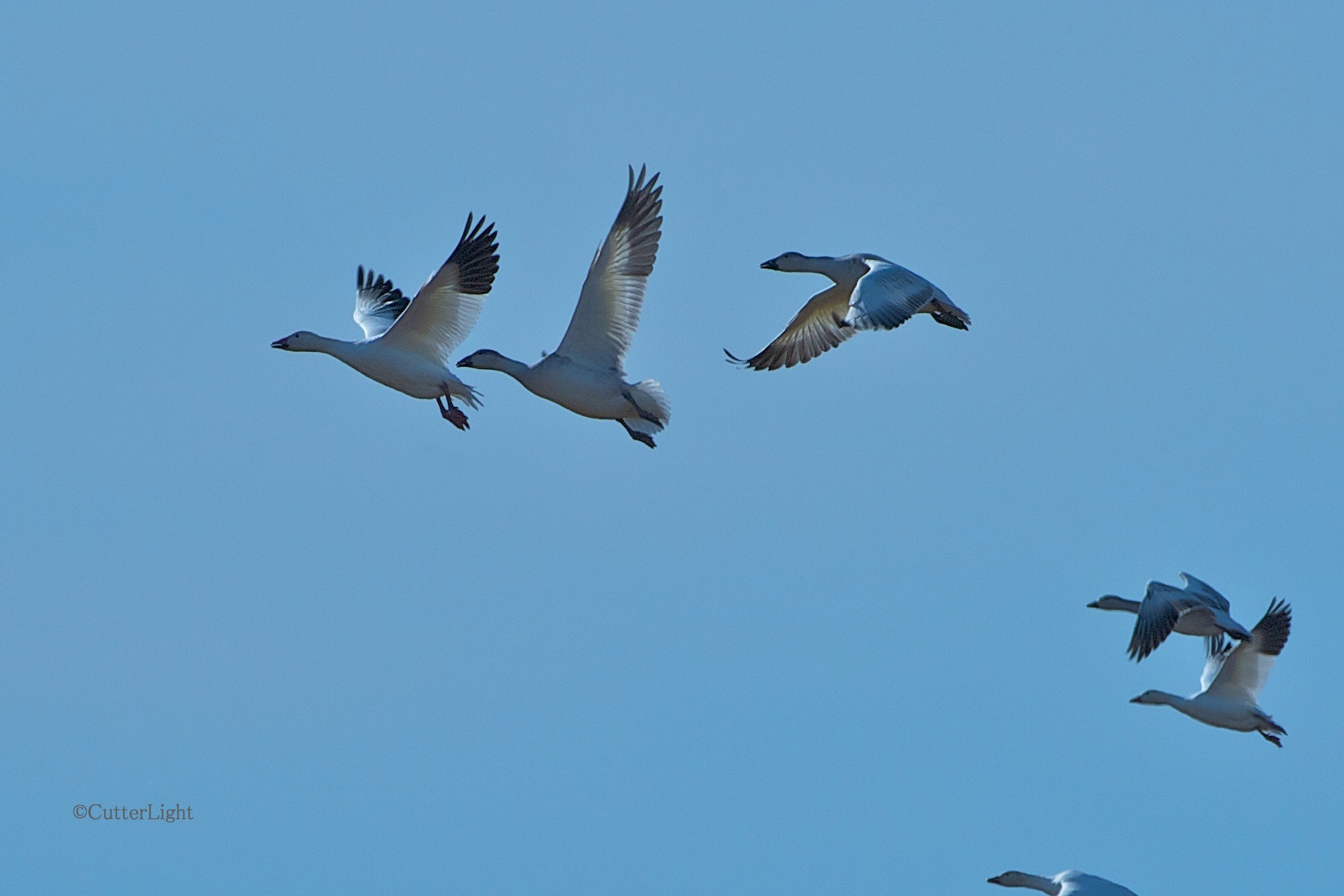
During the fall migration, snow geese are fairly common. (Above and below)

snow geese lifting off close n

Brandt, Canada geese, and a wide variety of ducks and shore birds are also common.

willow ptarmigan in flight n

When the ptarmigan finally had enough of us, they glided off a few yards, regrouped and resumed feeding. At that point we turned for home. 

cloudberries frozen in hand n

A handful of frozen sweetness for the road. 

cranes flying into the hills n

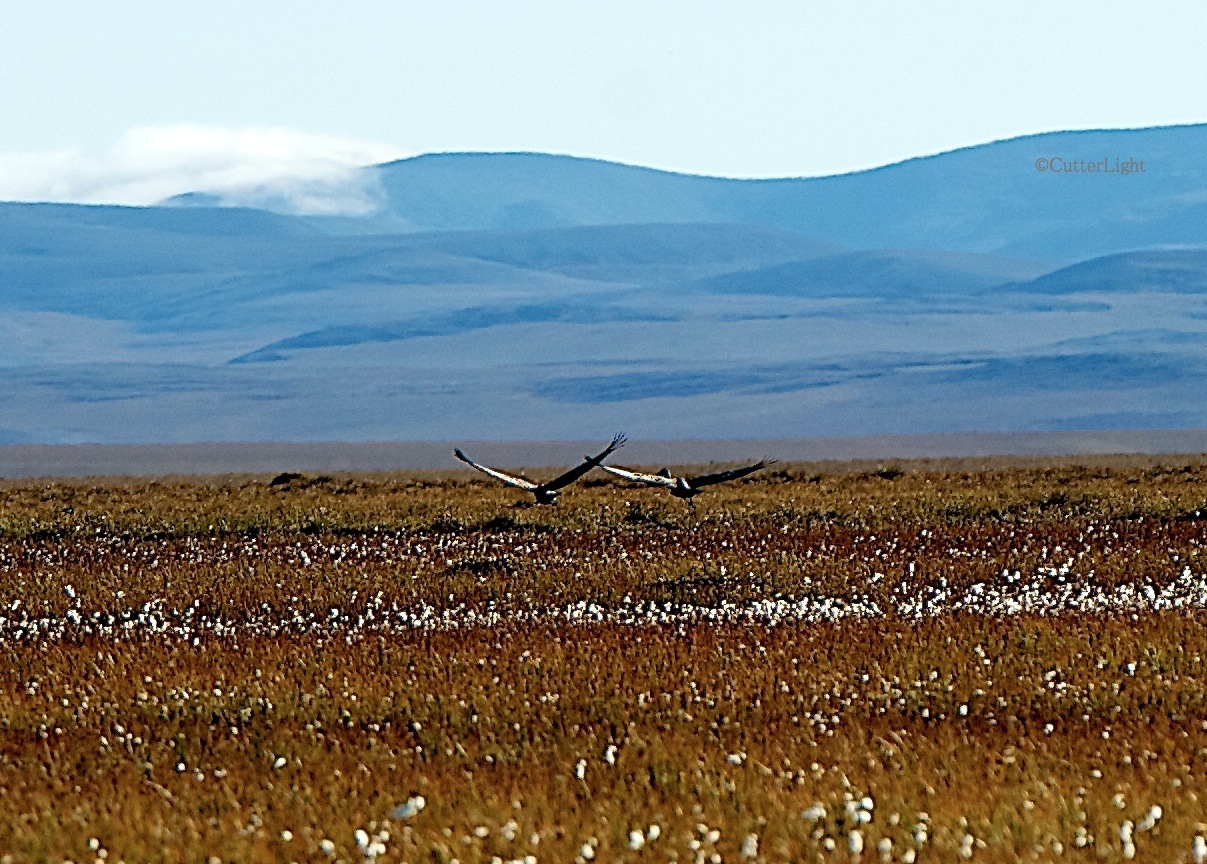
A pair of sandhill cranes lifts off above the last of the cotton grass on the tundra near Point Hope.

The Arctic Terns of Tern Lake: Artists that Redefine the Air

arctic tern hovering n

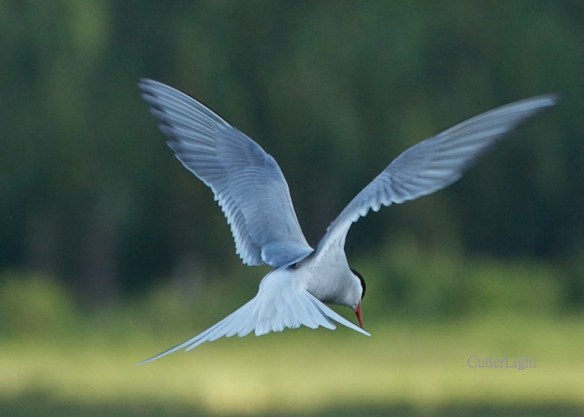
With a brood of chicks waiting to be fed, this Arctic tern (Sterna paradisaea) hovers above the water in search of small fish, its primary food source. Minute control over individual tail and wing feathers enables terns to be graceful, formidable hunters as well as inspiring to watch.

Making an annual round-trip of roughly 50,000 miles (80,000 km) between their breeding grounds in the Arctic and their summer feeding grounds in the Antarctic , Arctic terns are a species that fill one with awe and wonder. Unlike most of their cousins in the gull family, they are true seabirds as their migrations take them over vast oceans far from land. To stand on northern beach and watch terns fly is to watch an artist redefine the air.

arctic tern scouting n

Breeding pairs mate for life and most terns return year after year to the same grounds where they were hatched. There they scratch out a shallow depression in the earth and lay one to three eggs (sometimes more) the size and color of large, brown-flecked olives. Approximately three weeks later the eggs hatch and three to four weeks after that the young birds are fledged. In fall, they will join their parents in making the longest migration of any bird species.

arctic tern head on n

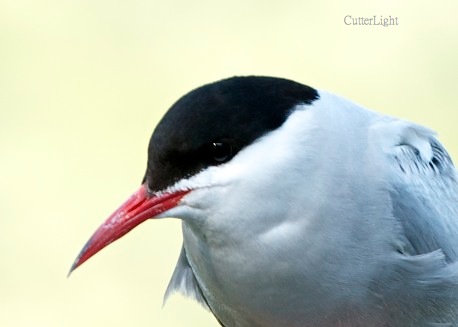
Inky black eyes almost disappear into a jet black cap. Although their legs seem impossibly short, terns are fairly adept on land. A specialized gland allows Arctic terns and other seabirds to extract the salt they ingest and expel it through their nasal cavities. 

Arctic tern close nAlthough one individual is reported to have lived to the advanced age of 34, the average lifespan of an Arctic tern is about 20 years. Their preferred nesting sites are on islands where they’re relatively safe from predators such as foxes and domestic cats, although they lose some eggs and young to gulls and other birds. At one point the millinery trade took a heavy toll on tern populations, but in recent years the greatest threat appears to be decreasing food supplies due to human overfishing. At present, there are estimated to be about one million Arctic terns worldwide.

arctic tern soaring n

Above: An Arctic tern scans the water below for the tell-tale silvery flash of a school of small fish. 

tern showing scissored tail n

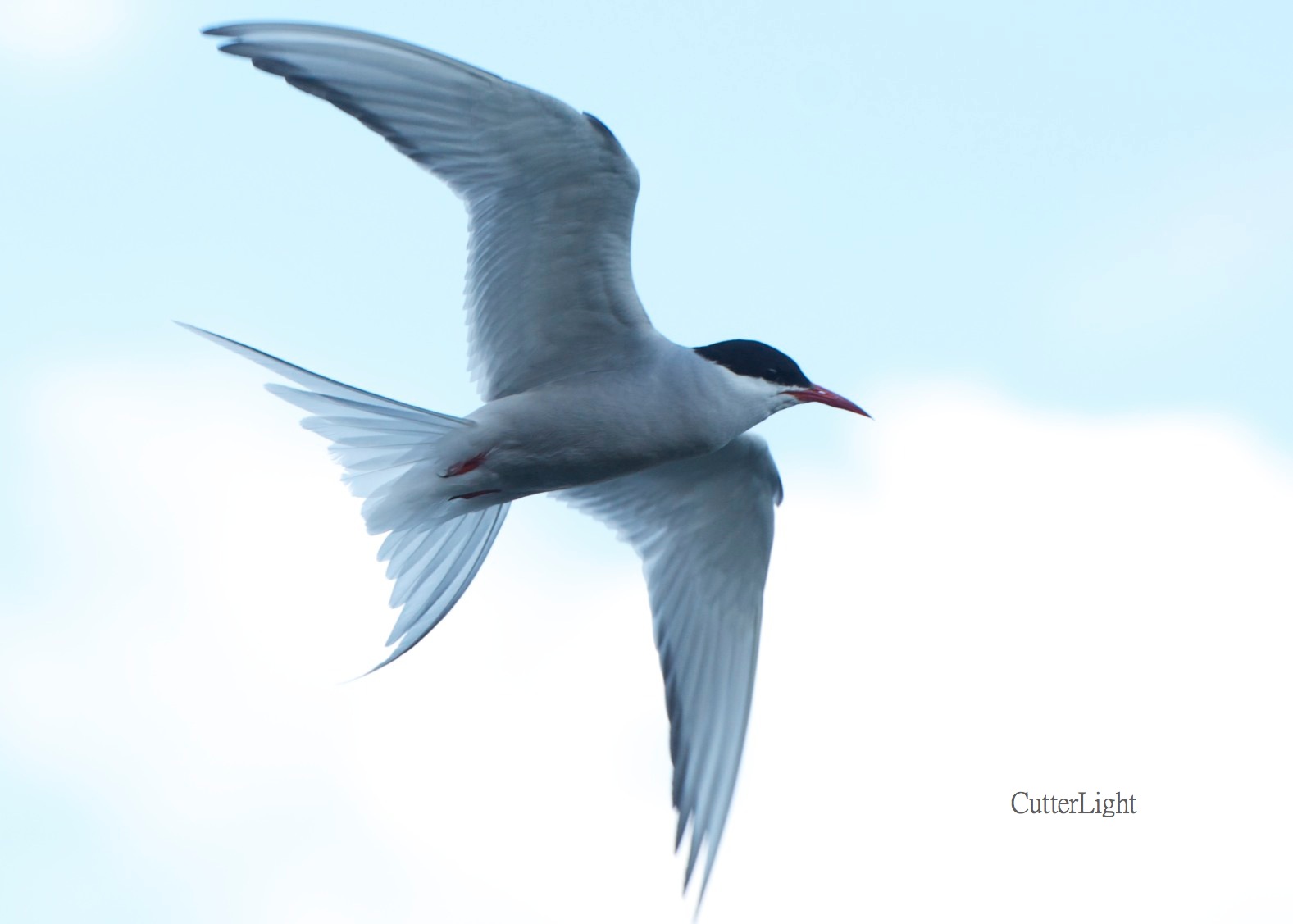
Often flying with a scissored tail and the ability to execute amazing aerial acrobatics – including backflips – account for the Arctic tern’s genus specific name paradisaea – paradise – reminiscent of birds of paradise.

arctic tern reflected n

He’s probably not really looking at his own reflection, but with a snappy red bell and a handsome black cap like that, who could blame him if he is?

Glaciers and Green: The Coastal Classic – A Five Star Train Ride from Seward to Anchorage

Coastal Classic sky reflection _n

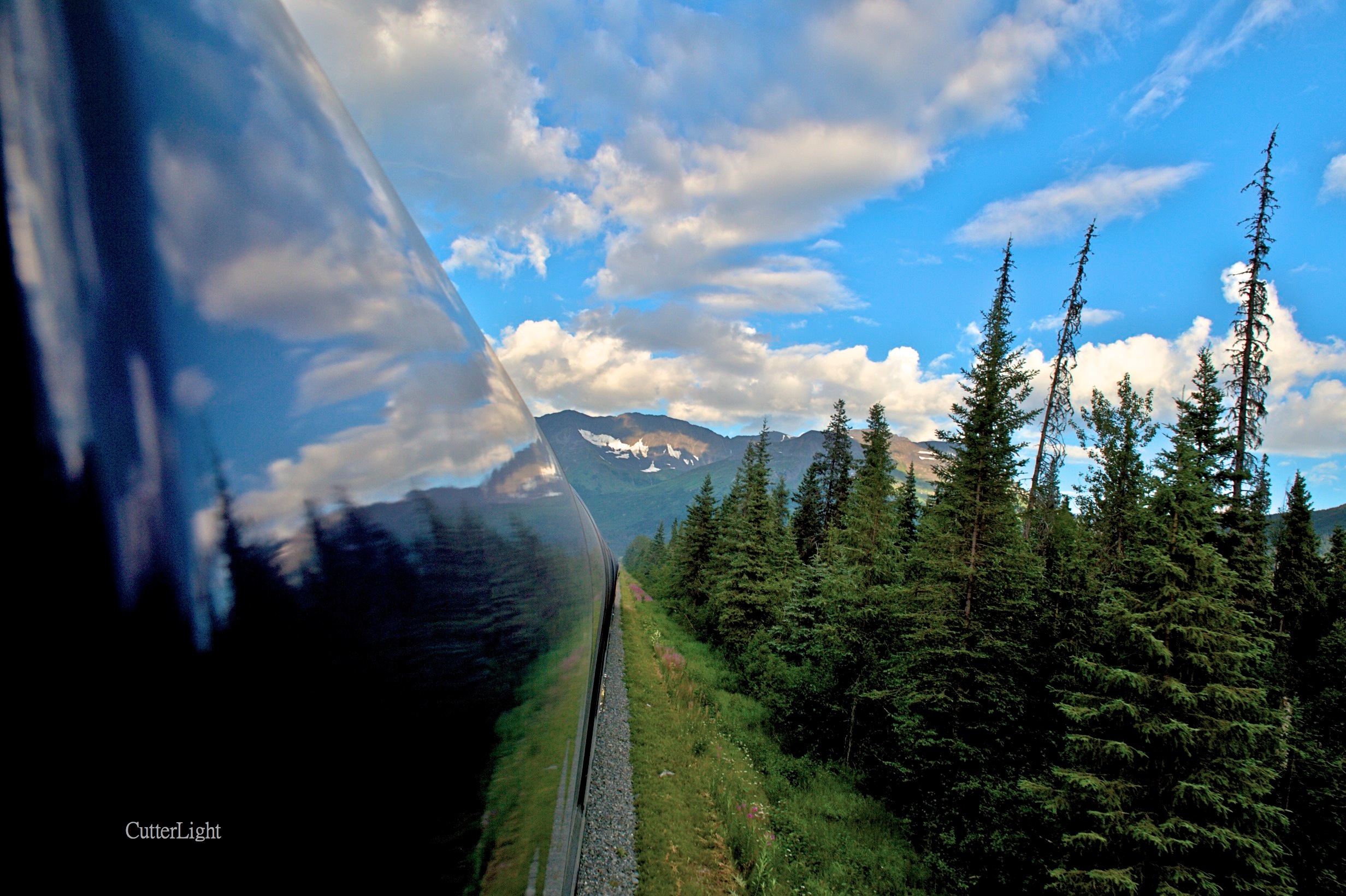
The mid-summer sky is reflected on one of Alaska Railroad’s GoldStar coaches on the Coastal Classic train. Mountainsides of magenta fireweed and, mixed forests, moose, Dall sheep, eagles and glaciers (and sometimes bears and caribou) were part of the 114 mile train trip between Seward and Anchorage.

Trains are magical. Whether we’re talking about Northern California’s quaint Skunk Train or Japan’s lightening fast, silky smooth shinkansen (bullet trains), we love the rhythm and glide of moving through the countryside on steel rails. As we brought our summer to a close this year, we decided to take the train from Seward. We departed at 6:00 PM and four hours later arrived in Anchorage energized and relaxed.

Alaska Train Coastal Classic_n

Fireweed, startling in its vibrance, lines the tracks along the Coastal Classics route through Kenai Peninsula forests and mountains.

Large windows and the freedom to get up and walk around are part of what make train travel so pleasant. After a very good meal of almond-crusted Alaskan cod accompanied by a glass of wine, we made our way to the rear of our GoldStar car where an open deck allowed us to take in the sights, converse with fellow passengers, and enjoy the warm (for Alaska) summer air.

coastal classic  bartlett glacier_n

The Coastal Classic passes by three large glaciers: Trail, Spencer and (above) Bartlett. 

Jack on coastal classic_n

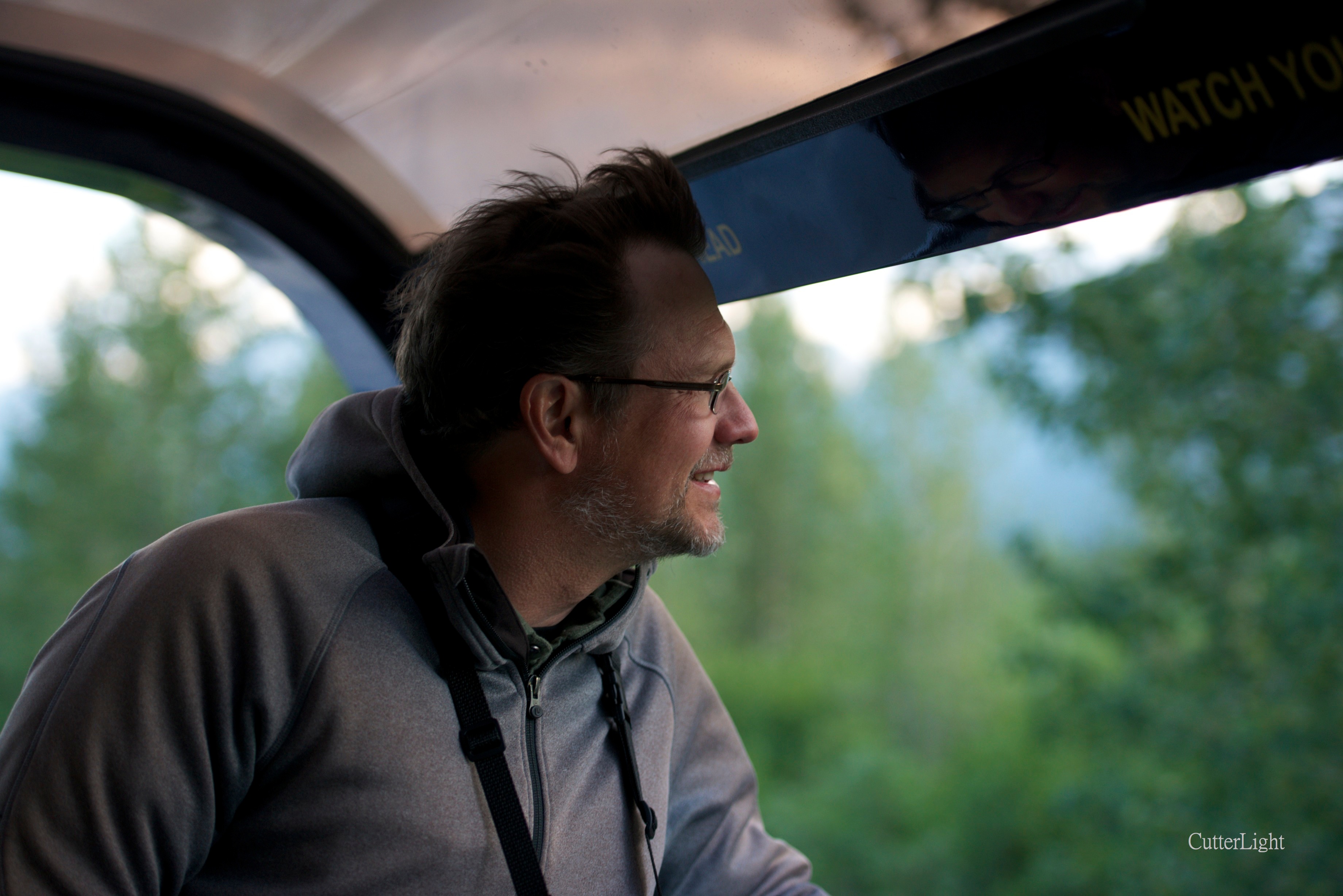
Scanning the terrain for animals from the observation deck of one of the double-deck GoldStar cars, we saw moose, eagles, beaver lodges and Dall sheep. Bears – both grizzly and black – and caribou are also frequently sighted. We’re already looking forward to taking the train from Anchorage to Seward when we return in May next year. 

Coastal Classic sunlight through car_n

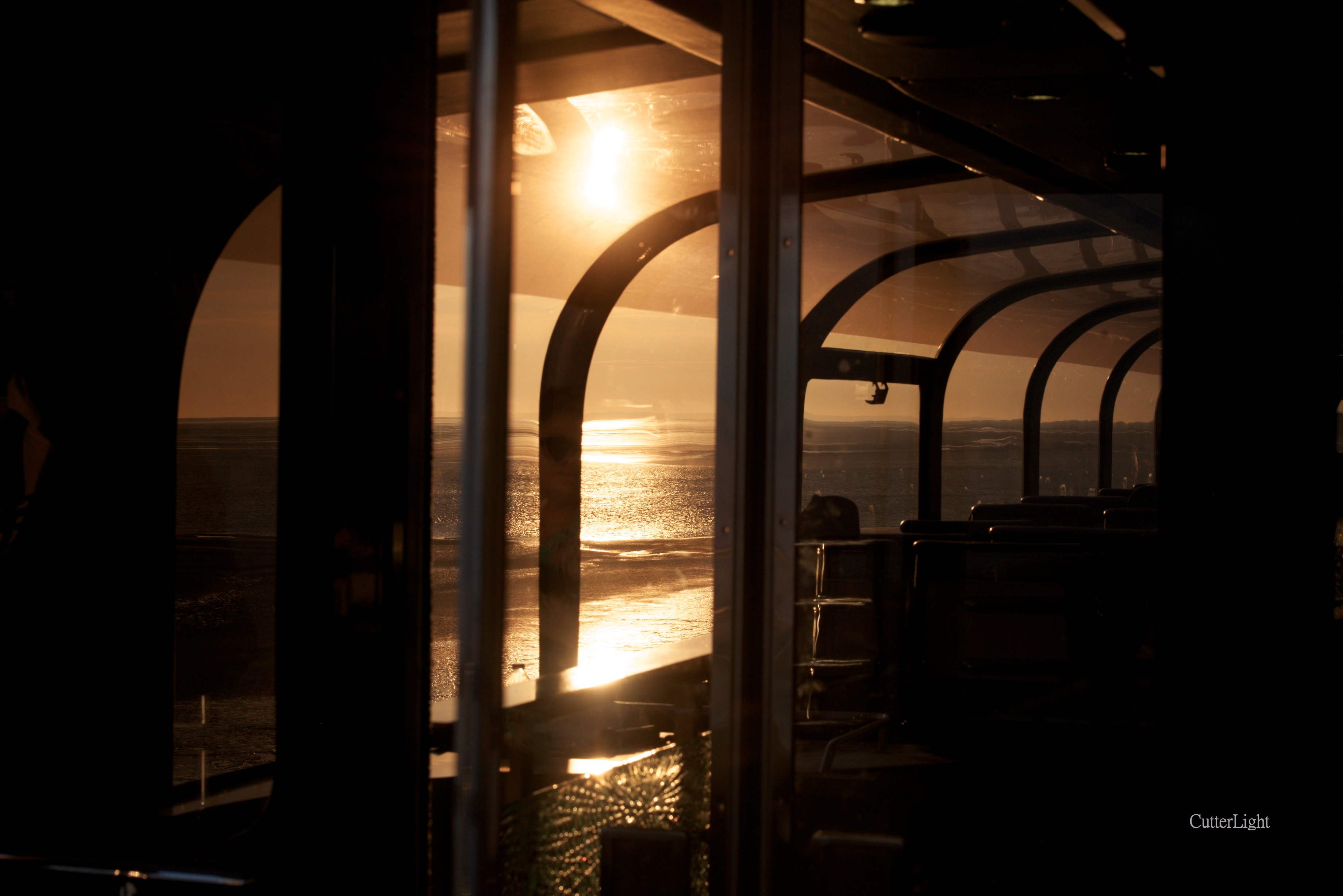
The evening sun reflects off Cook Inlet though the car’s upper deck windows. After a wonderful four-hour trip, the train pulled into the station at Anchorage. Early the following morning, we boarded a plane for the Alaskan bush and our other home.

Cedar-Planked Portabella Mushrooms Stuffed with Smoked Salmon and Manchego Cheese

mushroom 1_n

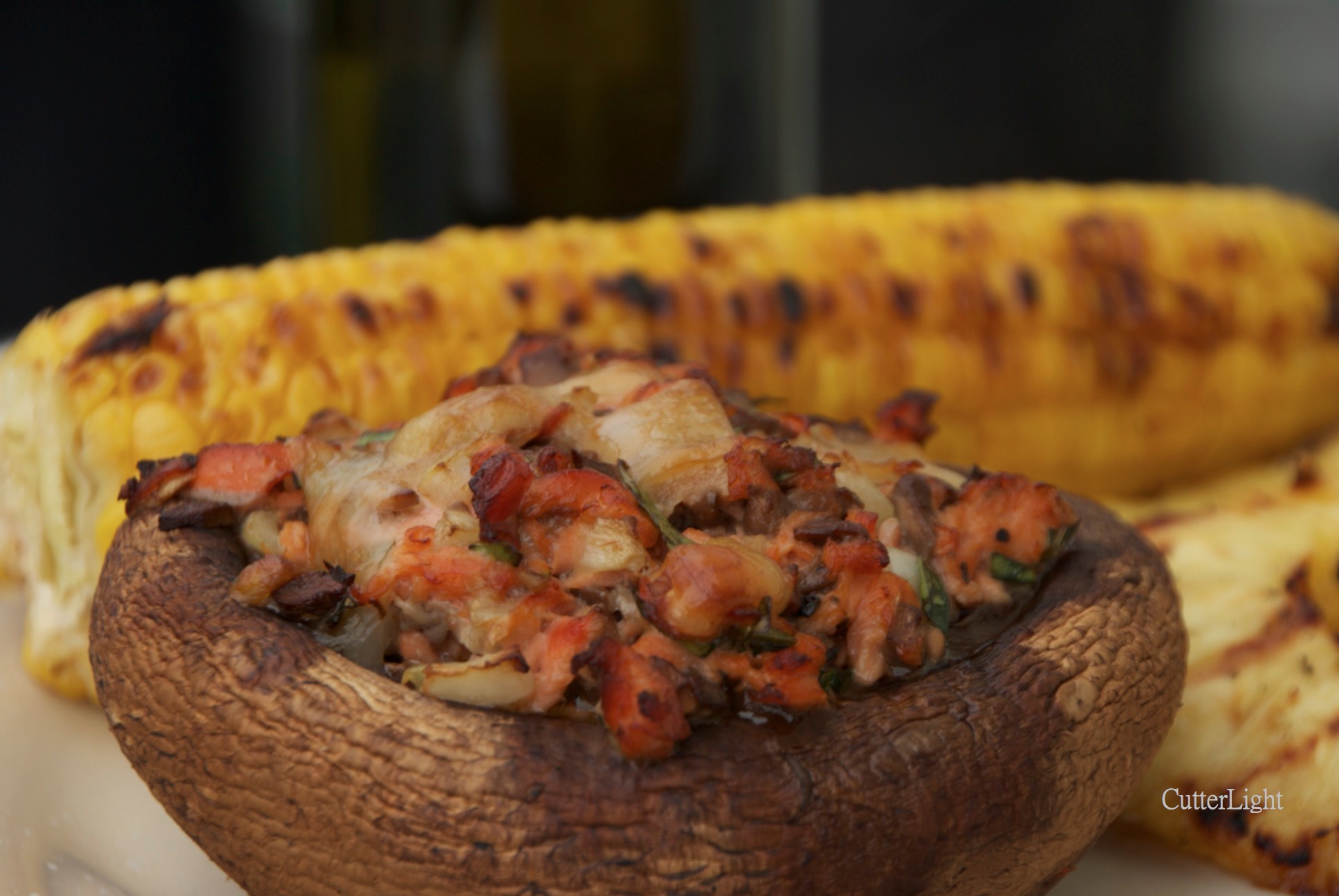
Simple and elegant, cedar plank cooking has been part of the Pacific Northwest since early native Americans first discovered this method. Food such as these these stuffed Portabella caps lend themselves to leisurely evenings complimented with good wine and good friends.

The most difficult thing in cedar plank grilling is remembering to soak the planks before you’re ready to fire up the  grill. Aluminum foil is the solution. Although it’s best to soak the planks hours in advance of cooking, they also work perfectly well soaked just a short time prior to going on the grill provided they’re placed in a shallow aluminum foil “boat” with a little liquid added. Fold up the corners of the foil, pour in a little water or water and white wine, and you’re ready! Grilled on cedar, salmon and other foods come out wonderfully moist and take on smokey, woodsy flavors.

mushroom 6_n

Grilled over charcoal, caramelized corn on the cob and pineapple rings go well with stuffed mushrooms.

cedar planked salmon_nRight: A split, whole king salmon self-bastes on cedar planks over hot charcoal.

Although cedar is popular, alder, hickory and boards from fruit trees work well too. Thoroughly cleaned, the boards can be used multiple times. Since plank cooking creates a barrier between the coals and the food, cooking time will be a little longer. In addition to preserving moistness and imbuing food with more complex flavors, planking typically results in more evenly cooked food than straight charcoal grilling.

Cedar-Planked Portabella Mushrooms Stuffed with Smoked Salmon and Manchego Cheese

Directions:

  1. Cut out the Portabella stems, chop course and place in a bowl. Add shredded or finely cubed Manchego cheese, finely chopped sweet onions, finely chopped garlic, tarragon, freshly cracked pepper, extra virgin olive oil, a small amount of sherry or white wine, and soy sauce or sea salt to taste. Mix thoroughly.
  2. Break up smoked salmon, cedar planked salmon, or any previously cooked salmon into small pieces and gently fold into the above mixture.
  3. Spoon mixture into mushroom caps and place on a cedar plank that has been well soaked. If desired, fashion a shallow aluminum foil boat slightly larger than the cedar plank and place 1/2 cup of water and white wine in the foil to help keep the plank moist.
  4. Grill over medium to medium-high heat for about 20 minutes, until a fork passes easily through the mushroom.

An Italian Amarone – a full-bodied red wine with lots of cherry – pairs especially well with a cedar-planked feast.

Sockeye Salmon off the Beaten Path: Dipnetting on Alaska’s Copper River

barbra dipnetting sockeye b and w_n

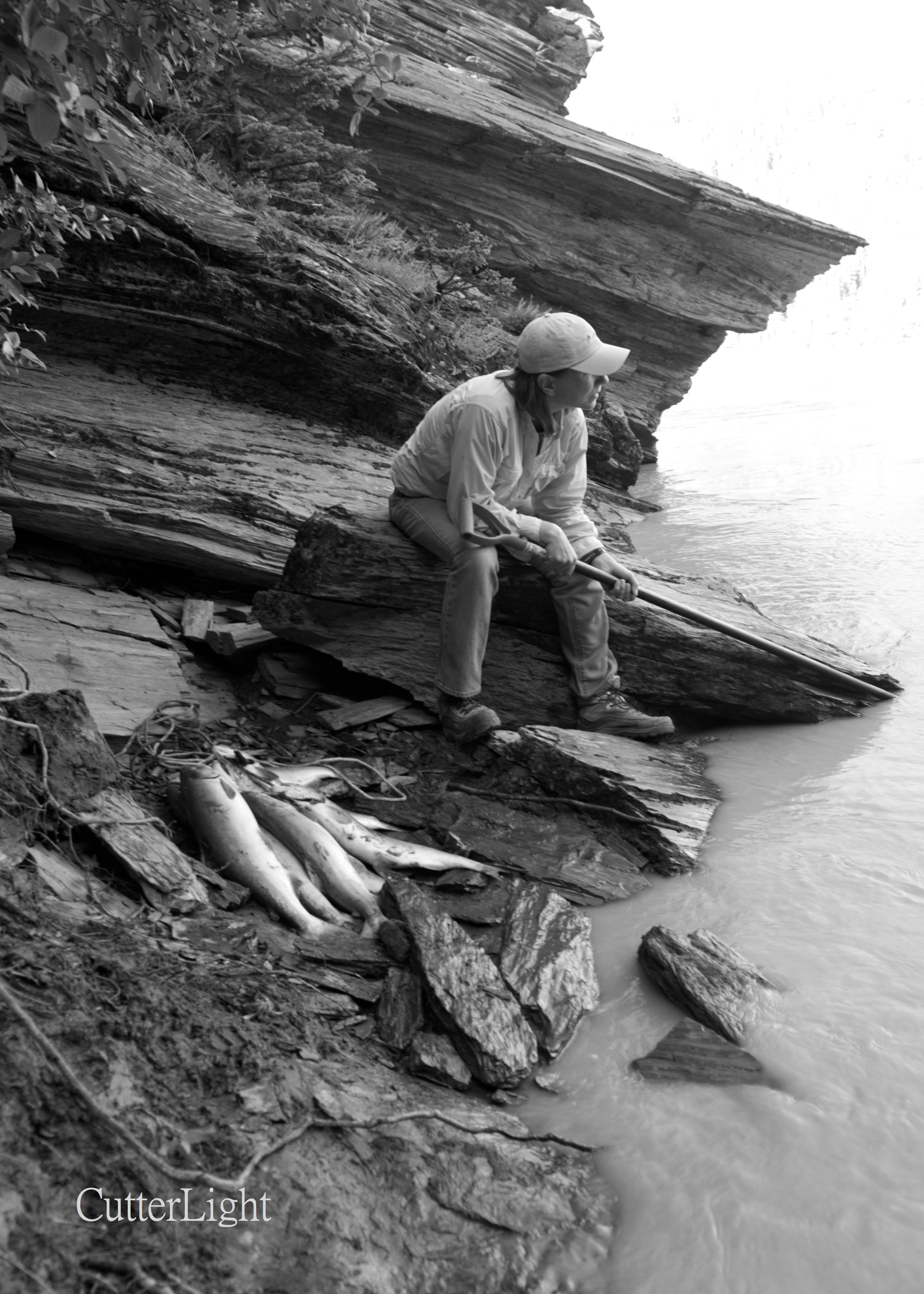
A two-mile hike into the canyon, a scramble down a steep bank, a piece of river with no one else in sight, and a run of red salmon hugging the shoreline, pushing upstream, heading home… 

Chalky-brown with glacial silt and bank erosion, the broad river sweeps by below, swift, powerful, wild. If we’ve timed it right, the piece of water we’ve chosen to fish will be full of sockeyes. Fireweed has just begun to bloom, and the forest trail above the river is lined with bluebells and pink wild roses.

barbra dipnetting sockeye_n

Barbra fishes an eddie where the fish swim close to the bank on their journey to spawning grounds further upstream.

This is not the fishing of hackle and thread carefully presented on graceful, arcing casts, nor even of Pixie spoons heaved out and fluttered through clear riffles. The net our friend Nathaniel Wilder has loaned us measures roughly three feet across and four feet long and is attached to a 12-foot handle. The rig is cumbersome, made more so by the surging tug of the current and we take turns bracing the handle against a slate rock outcropping to keep it steady in the river’s flow. When a fish hits, the net comes to life.

barbra dipnetting sockeye b_n

With a salmon in the net, the scramble for solid footing begins. 

sockeye in net_nLeft: On average the hens are smaller, but the roe is a delicacy. 

They come one, two and even three at a time and average six pounds apiece. The limit is 30, and it’s quickly apparent it won’t take long to put that many on the bank. A small, ice-cold stream cascading down the canyon wall provides the perfect place to clean the catch. We’re happy to have packed in a scrap of wood to serve as a filleting table.

The two-mile hike back to our camper, our backpacks loaded with 90 pounds of fish between the two of us is work, but a good kind of work. Back home, we’ll smoke and can the bright red fillets. The roe we’ve kept will be cured and made into ikura.

sockeye fillets_nBrilliant red-orange and marbled with fat, these sockeye fillets are ready to be brined and smoked, seasoned and broiled, grilled on a cedar plank, or sliced thin and served as sashimi. As per standard practice in Japanese sushi shops, we freeze salmon (and other fish) for at least 24 hours prior to preparing raw.

eagle in high water_n

Warm weather in Alaska has meant quickly melting ice and high water. 

wild roses_n

blue bells and trestle ruins_n

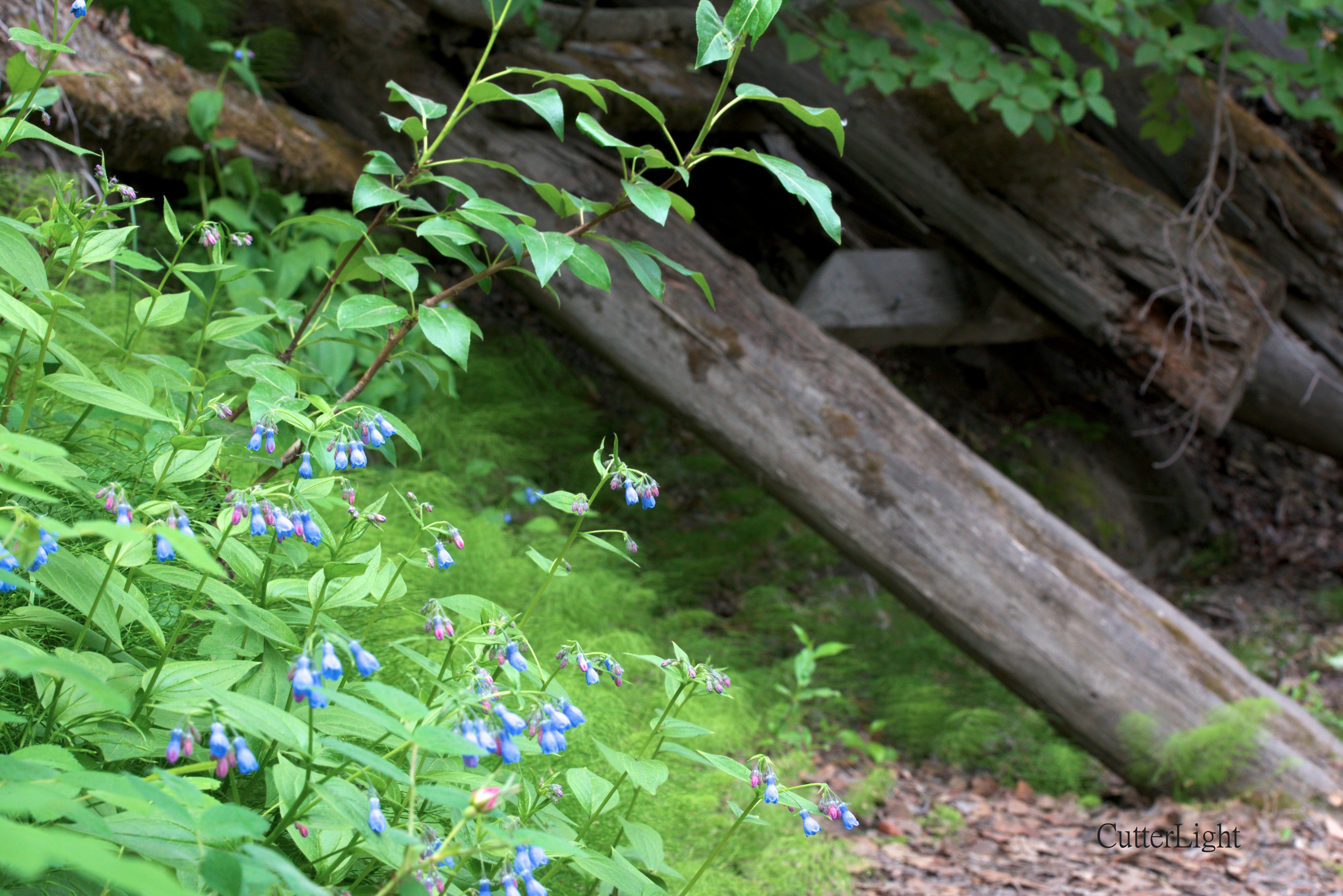
Above left: Bluebells, horsetail ferns and salmonberries take over the ruins of an old train trestle. Right: Dense patches of wild rose perfume the air along the trail. Below: We hiked out of the canyon at midnight, just as the Alaskan sun was setting.

copper river midnight sunset_n

For an excellent recipe for brining and smoking salmon, see: Smoked Salmon with Soy Sauce and Brown Sugar Brine

For an easy ikura curing method, see: Ikura: Curing Salmon Eggs

Honeymoon Crabs: Dungeness Crabs in Miso and Beer with Lime, Soy, Olive Oil, Butter and Garlic Sauce

crabs honeymoon clase d800By themselves, freshly caught Dungeness crabs make the Pacific Northwest a worthy food destination. Steam boiling them in a large, covered frying pan results in a gourmet meal for two. This recipe works equally well with both fresh and pre-cooked crabs.

Growing up, a highlight of every summer was our vacations on North Carolina’s Outer Banks where a kettle of freshly boiled blue crabs were spread out on a newspaper tablecloth, crab crackers were passed out, and lunch was served. Blue crabs are relatively small, but their succulent meat makes the pickin’ totally worth the effort. In those days, we dipped chunks of crab in straight melted butter or somewhat fancier drawn butter if we were at a restaurant.

crabs honeymoon d800

A large 12.5 inch skillet is perfect for two Dungeness crabs as each can fully sit in the simmering liquid. Your choice of bread with this meal may be as important as your choice of wine. It’s hard to beat a loaf of good sourdough bread and a buttery Chardonnay. La Crema has proven year in and year out to produce just such a wine at a reasonable price.

Years later I moved to Oregon and discovered Dungeness crabs. Weighing in at around a pound-and-three-quarters each, there’s enough meat in one Dungeness to satisfy a hearty eater. And their flavor? We’ve eaten all kinds of of crabs; our favorites are Dungeness and blues, but other types are delicious as well. This is our favorite cooking method, and after years of experimenting with different dipping sauce combinations, we’ve perfected a combination of lime, soy sauce, olive oil, butter and garlic.

Honeymoon Dungeness Crabs

Ingredients: (You will need a large frying pan with a lid. We use a Swiss Diamond 12.5 inch pan.)

  • 2 whole Dungeness crabs, preferably fresh but pre-cooked is absolutely fine
  • 12 ounces of a good beer such as a red amber
  • 3 – 4 tablespoons miso paste
  • 2 cups of water
  • 1 tsp sea salt

Directions: (A general rule is to cook Dungeness crabs for about 15 – 18 minutes – roughly 7 – 8 minutes per pound.)

  1. Rinse crabs. Use a brush to remove any mud.
  2. Over high heat, mix ingredients thoroughly and position crabs bottom side down.
  3. Bring to a low boil, reduce to a simmer and cook for about 7 minutes.
  4. Use tongs to flip crabs onto their backs and continue simmering for 7 minutes.
  5. Remove crabs from skillet and let them rest on their backs for a few minutes before flipping over and serving belly side down.

Lime, Soy, Olive Oil, Butter and Garlic Dipping Sauce

Ingredients: (measurements are approximate)

  • 6 tbsp butter
  • 3 tbsp extra virgin olive oil
  • 2 – 3 tbsp soy sauce
  • a few cloves of garlic either chopped fine or minced
  • juice from 1 large lime or 2 small limes

Directions:

  1. In small pan over medium-low heat, melt 2 tbsp butter. Add the garlic and lightly sauté for a minute or two.
  2. Reduce heat to low and add the rest of the butter and completely melt.
  3. Add the remaining ingredients, mix and heat through thoroughly.
  4. Pour into separate dipping bowls and serve.

Another Great Year in Point Hope: On to Seward!

uniak on ice waiting_n

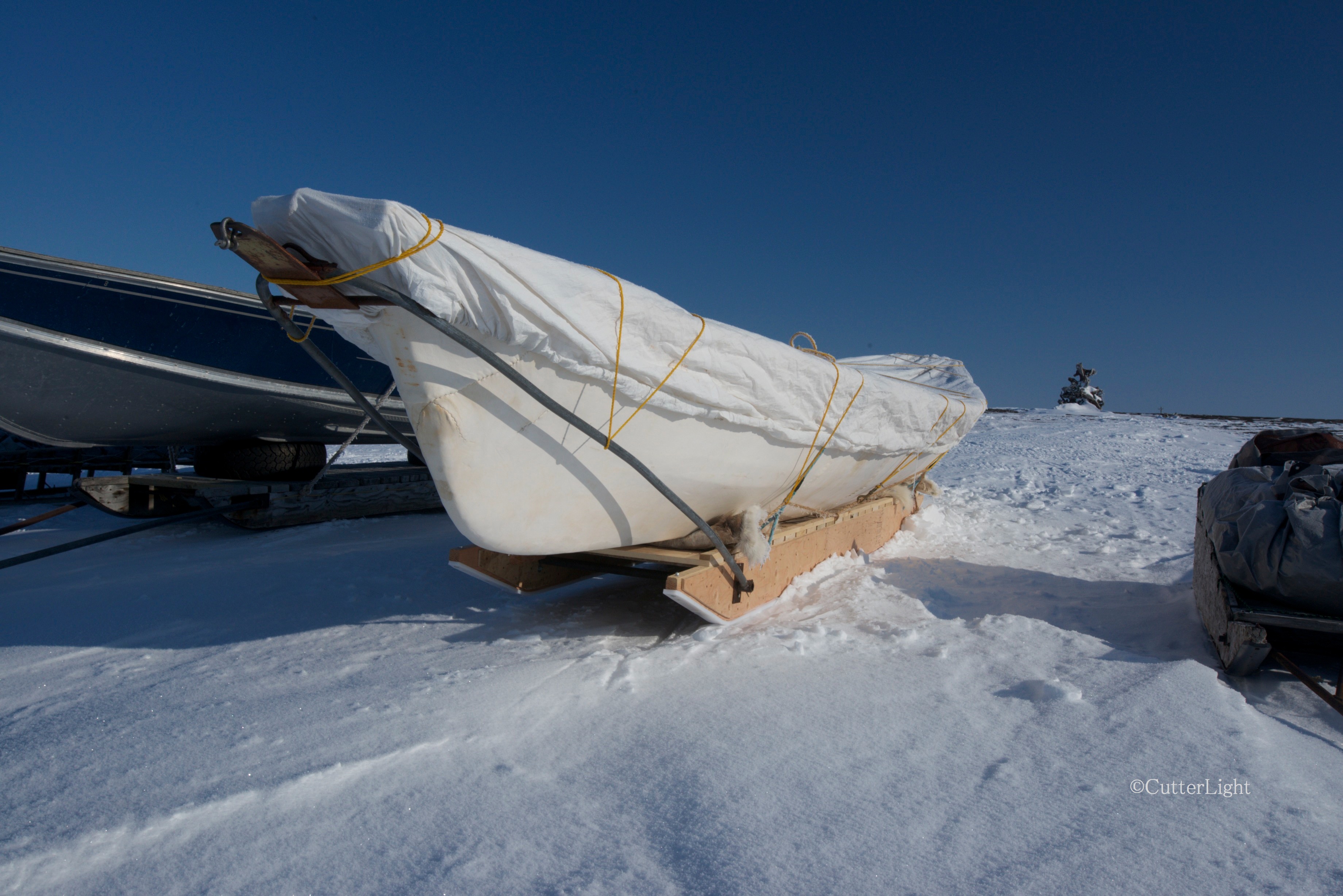
An umiak with its recently sewn seal skin stretched tight sits on the Chukchi Sea ice, waiting for whaling season to begin in March. 

May 17, Point Hope, Alaska: Near-blizzard conditions forced a one-hour delay to the start of school yesterday, the day before the end of our school year. A little snow and high winds notwithstanding, all 30 of our 3rd, 4th and 5th grade  students eventually arrived. It’s much more calm today. Scattered snow flurries have been breaking up an otherwise sunny day, and at 19 degrees Fahrenheit, the McKay’s buntings and gulls that showed up a few weeks ago when the weather was warmer (in the low 30’s) are out again. Looks like clear weather for our flight out tomorrow.
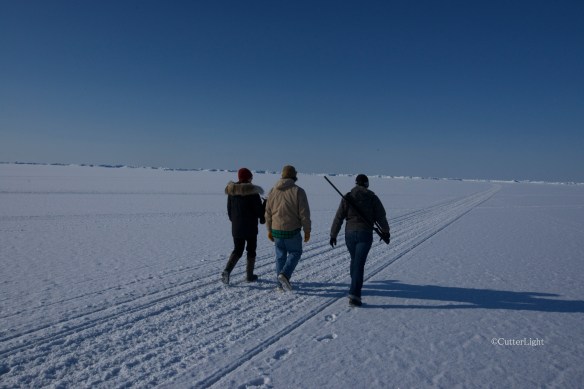
hiking out on ice_n

Near shore, the going is easy across the frozen sea. But the ice ridge on the horizon hints at the arduous work involved in breaking the trails that will allow whaling crews to get their boats and gear out to the lead (open water).

This marks our third year in Arctic Alaska. We’ll be back for a fourth in August. We’re up here in Point Hope at a time in our lives when Time to study, Time to write, and Time to hone our skills as photographers, writers and chefs is especially valuable. Yes, it’s cold – brutally so at times-, and there is the entire month in mid-winter when we do not see the sun. But that’s part of the narrative. So are the dazzling displays of northern lights, the sublimely sweet cloudberries that grow only in these extreme latitudes, and the Arctic foxes, snowy owls, polar bears and whales that are part of the fabric of life up here. Learning to stock a gourmet kitchen in the bush nearly 1,000 roadless miles from stores in Anchorage has prompted us to master “from scratch” cooking to a level of expertise I doubt we would achieved had we remained in our comfortable bungalow back in California.
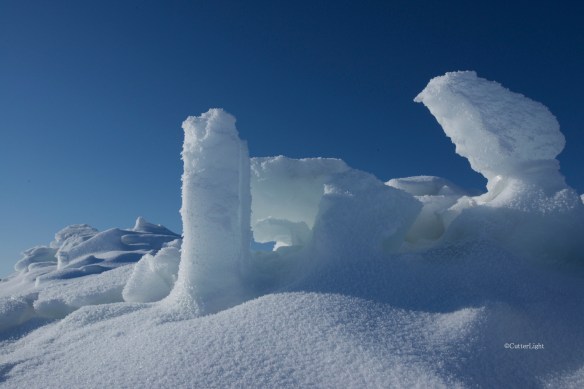
ice sculpture chukchi sea_n

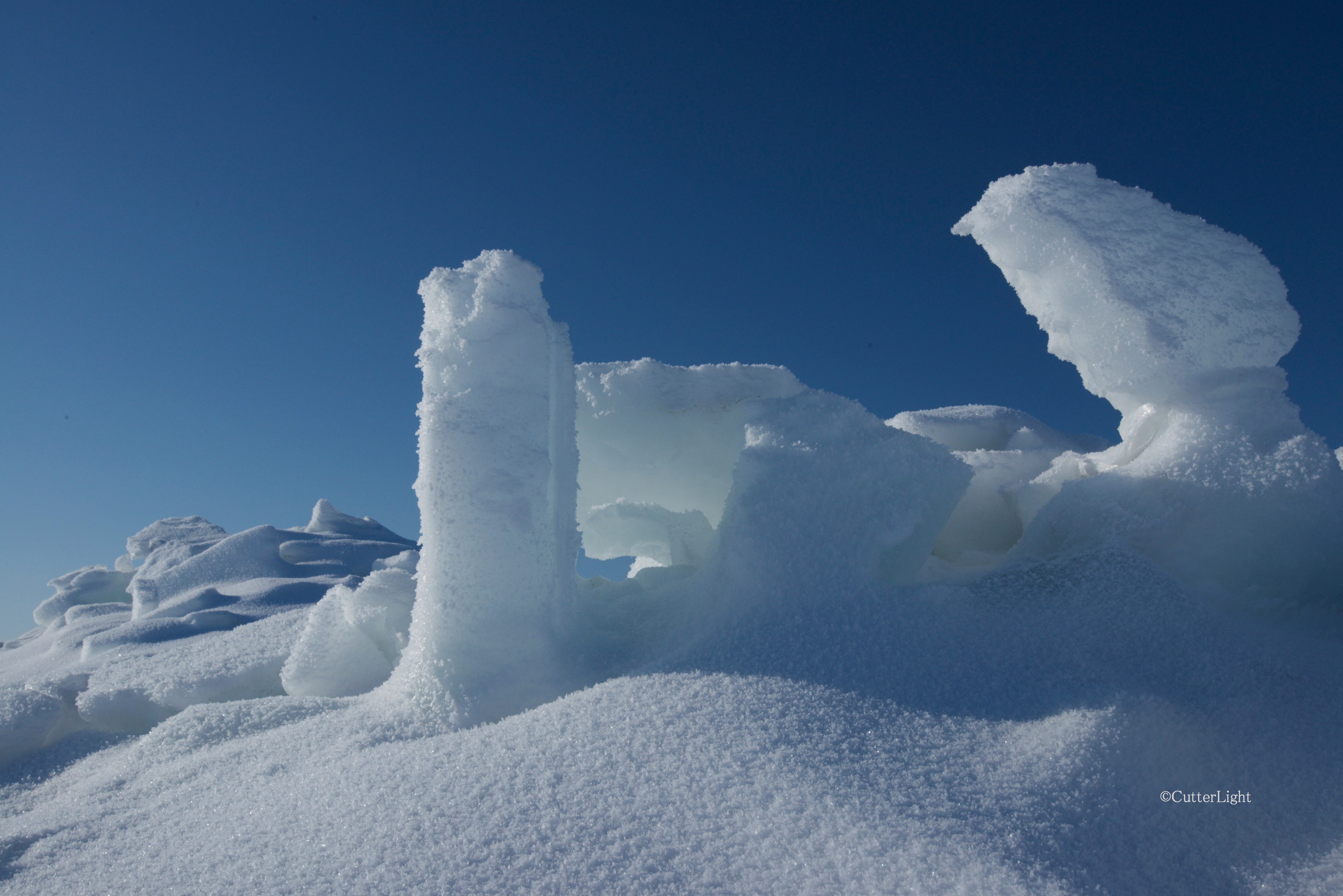
A fresh dusting of snow powders  ice sculptures that were pushed up when shifting winds caused  massive plates of ice to collide. Anytime you’re out on the ice, you’re mindful that another shift in the wind could push the ice apart again, leaving you stranded. You learn to keep an eye on the cracks.

By this time next week, we’ll be in Seward living aboard our summer home, the sailing vessel Bandon. Among other things we’re looking forward to is an intensive wine appreciation course we’ll be taking with another couple. We’re also eager to do some serious shooting with our new Nikkor 200-400 mm telephoto lens- a tool that should help us get intimate photographs of the amazing wildlife in and around Resurrection Bay. Daughter Maia will come up in July for our annual visit centered around fishing, hiking, great meals (and great conversation) and general catching up. The puzzles of turning out excellent meals from our small galley, figuring out where the salmon are in the nearby sea, experimenting with our new tenkara fly rods on smaller streams and maybe finally getting good photos of wary tundra swans are among other things that will keep us happily occupied in the coming months.
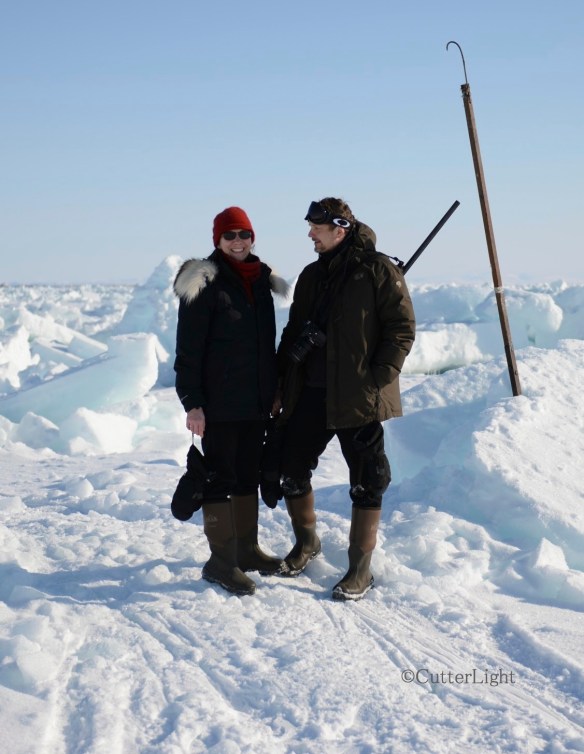
jack and bar on chukchi_n

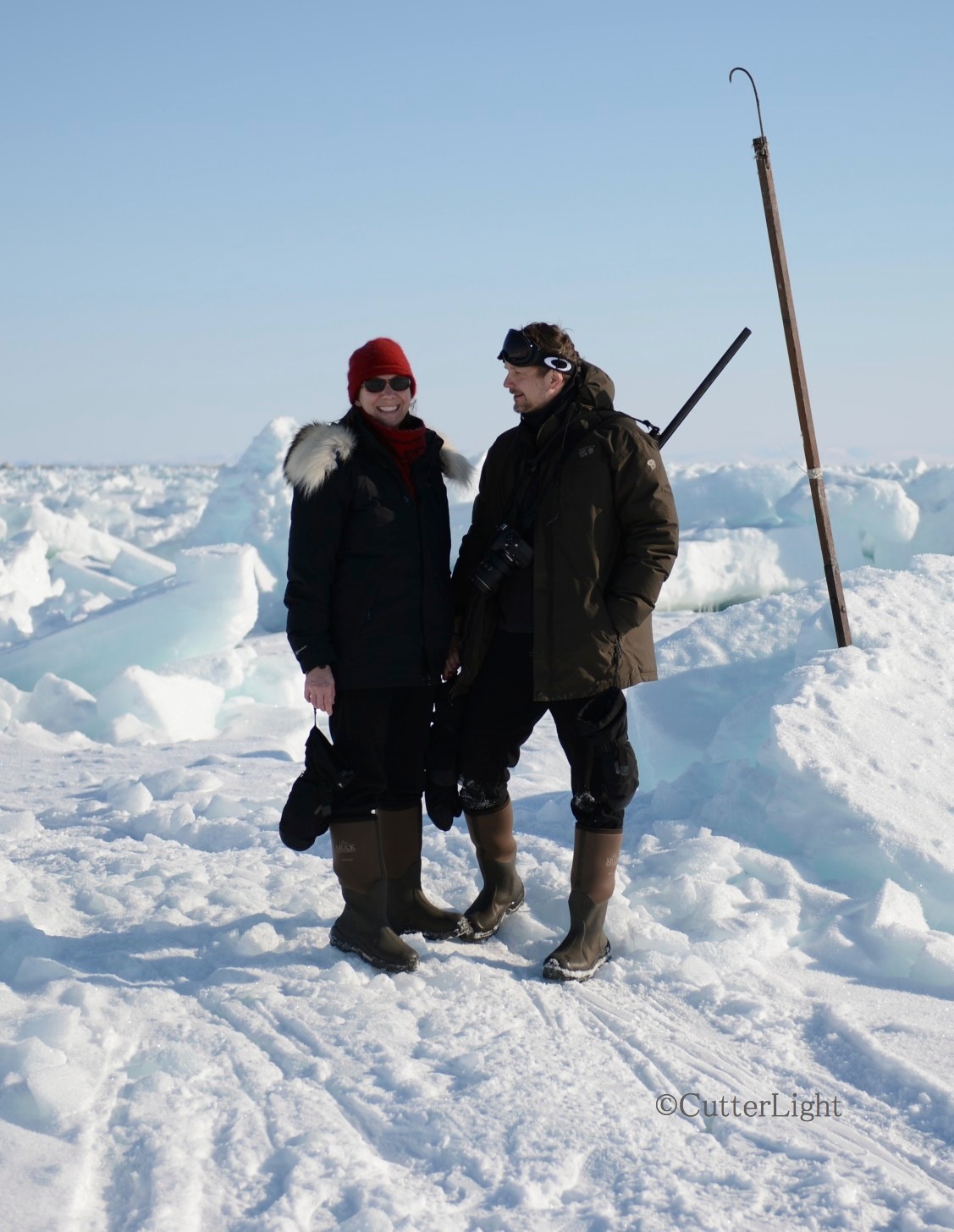
A whaling hook marks the trail out to the camps. This was a good year in Point Hope – five bowhead whales, lots of beluga whales, and everyone came back safe. Each whale represents tens of thousands of dollars worth of groceries that didn’t necessitate a river being drained for irrigation, fertilizer being spread (that ends up over-nutrifying nearby water systems), or a single drop of pesticide being sprayed. Nor were barrels of fossil fuel burned getting this food up here. 

An important part of our summer in Seward involves seeing to our own provisions. When we return to Point Hope in August, we’ll bring with us 200 pounds of salmon, halibut, rockfish and lingcod fillets – enough for us and for gifts for our friends up here. We’ll also be making shopping runs to Costco and other stores and ship up the usual bags of flour, rice, beans and sugar as well as everything from jars of Kalamata olives to tins of anchovies.

jack and bar on chukchi b_n

Wherever this summer finds you, we hope you’ll be following your dreams or taking steps to make those dreams come true. And we hope you’ll continue reading CutterLight.

Sincerely, Jack and Barbra

Winter Light and Polar Bear Prints, Point Hope, Alaska

Sun, 3 PM Dec 22, Point Hope_n

This photo was taken on December 22, 2012, a day in the midst of the month during which the sun does not rise above the horizon in Point Hope, Alaska. 

The sun dipped below the horizon 31 days ago on December 6 and did not rise again till yesterday, January 6. And yet, there was light each day, dim, brief, often breath taking.

We walked to the beach on one of those days when the sun didn’t rise. It was about 3:00 pm, and the sky was filled with shades of red, violet, amber and gold. The sea, which lies just 300 meters or so from our doorstep, is locked in ice. This time of year, polar bears are always a possibility as they roam the ice, searching for food.

Maia's hand in Polar Bear Track, Dec 22, 2012_n

Maia’s hand is dwarfed by a fresh polar bear paw print. 

Edging the beach where ice met land was a fresh set of polar bear tracks. The evidence that we share this environment with these magnificent animals was thrilling – but also a reminder that caution is in order. We scanned in every direction as far as our eyes would take us. No movement. The bear had probably passed through in the dark of early morning.

Polar Bear Tracks on South Beach Dec 22, 2012_n

Arctic foxes often follow polar bears in hopes of dining on scraps of the bear’s kill. Above, you can see the small paw prints of a fox near the bear’s tracks. Notice the tell-tale scrape marks in the snow on the forward edge of some of the bear tracks. Their long claws leave these scrapes as the bears amble along.

We waited and watched and listened. The wind moving over the seemingly endless frozen sea was all we could hear. In the distance to the east, we could see Cape Thompson’s snowy cliffs bathed in light etched against the pink horizon. As we walked along the edge of the sea, we found a murre, apparently exhausted, tucked into a snowy alcove against a bank of ice. The bird was lucky the fox had already passed by. Although the murre found the strength to take flight as we drew near, it is doubtful it went far. The Arctic winter is unforgiving.

Maia walking to ocean Dec 22 Point Hope II_n

Walking west, toward the sea, on a December day in Point Hope…

Daughter Maia was in the village for a two-week visit over winter break from college. Unfortunately, the Northern Lights didn’t cooperate, but the sky still put on some amazing displays.

Point Hope South Beach Dec 22 3 pm Nikon D90

Arctic Anpan 2 Ways: Azuki and Caribou Cha Sui (Sweetened Red Bean and Marinated Caribou)

Anpan with Sweet Azuki Paste_n

Delicious steamed buns filled with sweetened red bean paste were the finishing touch to an Asian-inspired meal. All that was lacking was a cold Sapporo Beer… The beer will have to wait until summer.*

Wintertime fishing, birding or just bike riding with my daughter Maia in Japan is indelibly linked with one of my happiest food memories: stopping by a local bakery and purchasing piping hot steamed buns filled with sweetened bean filling (anpan) or marinated pork (nikuman). The filling was so hot we’d have to be careful not to burn our tongues. Those steamed buns were the perfect on-the-go snack on chilly days.

Anpan ready for the steamer_n

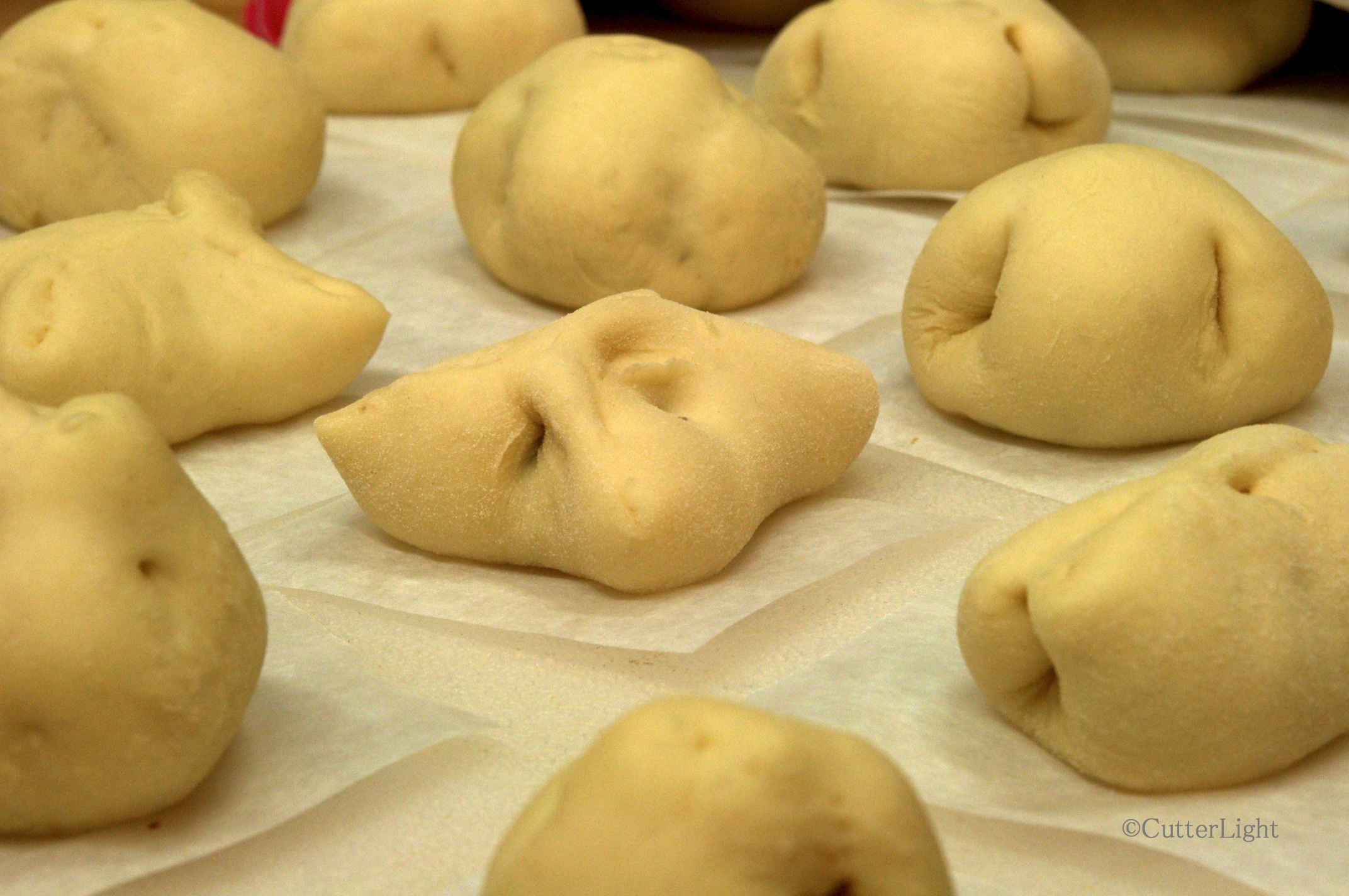
Filled with bean paste or marinated meat and ready for the steamer…

Known as bao or baozi in China, steamed buns were on our list of items to try making this year. With Maia in Point Hope visiting over winter break from Berkeley, the anpan and nikuman Barbra created turned out just like the ones we’d enjoyed back in Japan. After devouring anpan with sweet red bean filling, we all could imagine the buns stuffed with a variety of other fillings: vegetable mixtures, curry, barbequed caribou, fruit, or even chocolate!

Anpan freshly steamed_n

Light, freshly steamed, piping hot and ready to be lifted out of our fish poacher, anpan definitely fit the category “comfort food.”  The ones we made were about the size of tangerines.

Because we rely on our Zojirushi bread machine to regulate the temperature for consistently rising dough, the following recipe has been created for the dough cycle of a bread machine. As an alternative to steaming, the dough can be given an egg wash and baked at 350 degrees F for 15 minutes. A recipe for Caribou Cha Sui follows the anpan recipe below. Click here to see a recipe for sweetened red bean filling.

Anpan

Ingredients

  • 1 cup water
  • 1 tbsp extra light olive oil
  • 1  3/4 cups all purpose flour
  • 1  1/2 tbsp granulated sugar
  • 1/4 tsp salt
  • 1 tbsp dry yeast
  • 1/2 tsp baking powder
  • 1 tbsp white vinegar

Directions

  1. Place first 6 ingredients into pan of bread machine in the order recommended by the manufacturer.
  2. Set machine to dough cycle. Start.
  3. After cycle is complete, punch down dough on a lightly floured surface.
  4. Sprinkle baking powder evenly over surface of dough.
  5. Knead dough for 5 minutes.
  6. Divide dough in half. Place half of dough in a covered bowl.
  7. Cut the remaining dough into 12 equal pieces.
  8. Roll dough pieces into balls and then flatten. Make sure that edges are thinner than the center.
  9. Fill dough with 1 teaspoon of desired filling. Bring edge of circle up to pinch closed so that none of the filling is showing.
  10. Place filled dough on a small piece of waxed or parchment paper. Continue with remaining dough balls.
  11. Repeat process with dough that has been covered in the bowl.
  12. Let all filled dough balls stand covered for another 30 minutes.
  13. Steaming process could be done in a steamer basket or a wok. I have a fish poacher with a raised grate and used this to steam the buns.
  14. Bring water and 1 tbsp vinegar to a boil in steamer.
  15. Place as many buns as will fit in steamer, allowing for about an inch between buns so that they don’t stick together as they cook.
  16. Cover with lid. Steam over boiling water for 15 minutes.

———————————————————————————————————————

Caribou Cha Sui (Works well with venison, moose, elk, lean beef or similar meat)

The first step is to create a marinade and let the tenderized caribou absorb the flavors overnight in the refrigerator. The next day, make a filling with the marinated caribou and stuff the anpan. The filling will make enough for 6 steamed buns (nikuman). This recipe is best started a day in advance to ensure the meat is properly marinated.

Ingredients (Makes 6 nikuman)

Filling:

Ingredients

  • 1/4 lb caribou, pounded/tenderized till 1/2 inch thick or thinner
  • cha sui marinade (see below)
  • 1/4 cup finely diced onions
  • 2 tbsp soy sauce
  • 1 tbsp honey
  • 1 tsp sesame oil
  • 1/4 cup beef stock (we use Better than Bouillon)
  • 1 tsp cornstarch
  • extra light olive oil

Directions:

  1. Place tenderized caribou in a glass bowl or container and completely cover with marinade.
  2. Cover glass container and place in refrigerator overnight.
  3. The following day…
    1. In a medium-sized frying pan, heat 1/2 tbsp oil over medium-high heat until a drop of water sizzles in pan.
    2. Sear caribou on each side to seal in the juices.
    3. Reduce heat to medium and cover pan. Continue cooking for 3 minutes on each side. Meat should be cooked to “medium.”
    4. Remove pan from heat and place cooked meat on a cutting board to rest a few minutes.
    5. Dice cooked caribou into 1/4 inch cubes and set aside.
    6. In a small bowl, mix cornstarch and beef stock and set aside
    7. Wipe out the pan used to cook the caribou. Heat 1/2 tbsp oil over medium heat.
    8. Add diced caribou and onion to pan. Cook for about 1 minute, stirring occasionally.
    9. Add soy sauce, honey and sesame oil to pan. Stir fry for another minute.
    10. Add cornstarch and stock mixture to pan and continue cooking until sauce thickens, about 2 minutes.
    11. Place caribou in bowl to cool prior to filling anpan rolls.
    12. See above directions for anpan to complete recipe.

Cha Sui Marinade:

Combine the following ingredients in a glass bowl:

  • 4 large cloves garlic, minced or chopped fine
  • 1/2 tsp dried ginger
  • 1 tbsp honey
  • 2 tbsp soy sauce
  • 1/4 tsp white pepper
  • 1/4 tsp dry fennel
  • 1/4 tsp ground cinnamon
  • 1/2 tsp sesame oil
  • pinch salt

*Point Hope, like many bush villages in Alaska, is dry. Every now and again a certain meal calls for a special adult beverage. At these times we miss being able to enjoy an alcoholic beverage. Most of the time we are content to wait until summer, which we spend in the “wet” town of Seward, Alaska or traveling.