More Vegetables, Please! Spiced Carrot Cake with Rich Vanilla Cream Cheese Frosting

Packed with raisins, pecans and puréed carrots, this is a tasty way to enjoy a serving (or two) of carrots!

Living out in bush Alaska, there are certain ingredients that are a luxury in our pantry – like cream cheese. With recent outdoor temperatures agreeably mimicking a nicely chilled fridge, it was time to mail order dairy items requiring colder temperatures. Our here in Chignik Lake, Alaska, we’ve been relying heavily on the wonderful services of the mail order department at the Anchorage Fred Meyer (Debarr store). About every two weeks, we email a grocery list to the store and within four to five days, we receive  our items carefully wrapped or zip-top bagged for a nominal packing fee. A few weeks ago, we received heavy whipping cream, cream cheese and sour cream all nicely chilled in the belly of a little bush plane. Culinary feats take a bit of planning ahead, but with the cooperating weather, we can get most of what we need out here in tiptop condition. I can’t speak highly enough of our mail order friends in the Debarr Fred Meyer store!

If you’ve been following along, you’ll know that I periodically bake for my students. This has now become a time-honored tradition that has followed me through several schools. Last week, one of my students requested a cake for our “bake sale” (students can spend tickets they earn in class on a variety of rewards, including my baked creations). After my students polished off a bag of trail mix packed with raisins and nuts last week, I was confident that a carrot cake stuffed with nuts and raisins would be healthful and would be well-received by my young customers. Ok, and I like carrot cake, too, so I picked up my trusty Williams-Sonoma Baking Book to see what they had to say on the subject. Every recipe I’ve tried in this book has come out fantastically. The carrot cake recipe looked delicious. The one difference I noticed is that it called for puréed instead of shredded carrots. Pumpkin purée is a favorite, so why not a purée of carrots? Turns out the purée adds more moisture and the carrot flavor is slightly sweeter. I modified the recipe a bit and was highly pleased with the result. The cake was moist and smooth. The texture was only improved by the chopped nuts and raisins. What did the students say? They loved it! They especially liked the spice and the frosting, of course. If you won’t believe the kids, all the adults I shared the cake with agreed it was delicious!

Spiced Carrot Cake with Rich Vanilla Cream Cheese Frosting

Ingredients

  • 3/4 lb carrots, peeled and cut into 1/2 inch slices
  • 1 1/4 cups all purpose flour
  • 2 tsp baking powder
  • 1/2 tsp baking soda
  • generous pinch salt
  • 1 tsp ground cinnamon
  • 1/2 tsp mace (or substitute nutmeg)
  • 2 large eggs
  • 1 1/3 firmly packed light brown sugar
  • 1/2 cup whole milk
  • 1/2 cup unsalted butter, melted
  • 3/4 cup pecans, chopped coarse
  • 1/2 cup golden raisins
  • cream cheese frosting (see recipe below)

Directions

  1. Boil carrots until tender, about 10 minutes. Drain and let cool.
  2. Purée the carrots with a blender, stick blender or food processor. Set aside.
  3. Preheat oven to 350 degrees F (180° C). Line the bottom of an 8-inch square baking pan with parchment paper. Set aside.
  4. In a small bowl, whisk together flour, baking powder, baking soda, salt, cinnamon and mace.
  5. In a large bowl, whisk together eggs, brown sugar, milk and butter.
  6. Whisk the flour mixture into the egg mixture.
  7. Whisk in the carrot purée.
  8. Fold in the pecans and raisins.
  9. Pour batter into square baking pan.
  10. Bake 45 – 50 minutes in preheated oven. Cake will be lightly browned and wooden pick inserted into middle of cake will come out clean when cake is done.
  11. Let cake cool on a wire rack.
  12. Run a knife around edge of pan. Invert cake onto serving plate. Peel off parchment paper.
  13. Frost cake and serve right away.

Rich Vanilla Cream Cheese Frosting

Ingredients

  • 4 oz. cream cheese
  • 2 tbsp unsalted butter, melted
  • 3/4 cup powdered sugar
  • 3/4 tsp pure vanilla extract

Directions

  1. Using a mixer, beat all the frosting ingredients on medium speed until mixture is totally smooth and well-mixed.
  2. Alternatively, hand-mix all the frosting ingredients until smooth and totally mixed using a rubber spatula.
Ink and Light: The Bones of Tikigaq and a Tribute to Tatanka Yotanka, Sitting Bull

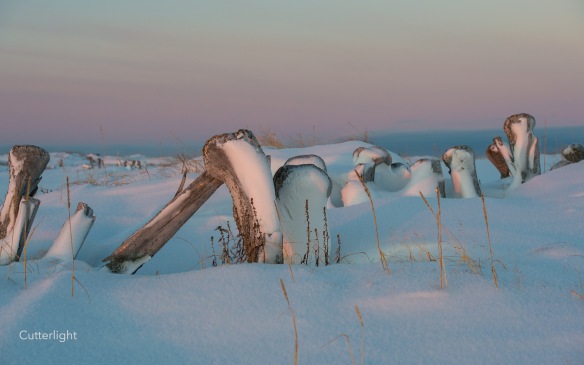
x whale bone ruins Tikigaq copy n

Whale Bones and Ruins: Old Tikigaq Village, Point Hope, Alaska

Tikigaq’s sod, driftwood and whalebone igloos (homes) were occupied until the mid-1970’s when the village was abandoned due to erosion from the sea. By this time, some of the houses were wired for electricity. Sigluaks, freezers dug deep in the permafrost at Tikigaq, are still used by the people of nearby Point Hope to store the whale meat they’ve harvested.

If a man loses anything
and goes back and looks carefully for it
he will find it…
Tȟatȟáŋka Íyotȟake (Sitting Bull) – Pine Ridge Reservation Speech, 1883

Tatanka Yotanka (1831-1890) was a Lakota Sioux holy man who earned his place in history through his fierce resistance to white encroachment on Lakota lands. A vision he had seemed to foretell the victory a combined force of Sioux and Cheyenne would have over United States troops led by General Custer at The Battle of Little Bighorn in 1876. In 1880, Tatanka Yotanka was assassinated by Indian Agency Police at Fort Yates on the Standing Rock Agency (reservation) who feared that he would lead an uprising. His remains are buried near his birthplace in Mobridge, South Dakota. A monument marks the site.

Assignment #6: A Sense of Place – Suutei Tsai in a Mongolian Ger

mongolia-woman-pouring-milk-n

Outdoor Photographer’s challenge two weeks ago: an environmental, visual or cultural photo depicting a strong connection with a specific place. Here, our hostess at her ger in the Mongolian countryside prepares a pot of suutei tsai to take the chill off an October night – piping hot milk with a little tea and a dash of salt. 


Wildlife Wednesday: Black-capped Chickadees!

barbra-feed-chickadee-dec-2016-n

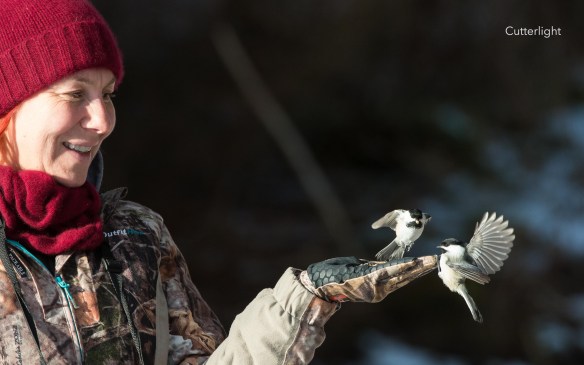
Gregarious, full of curiosity and brimming with personality, Black-capped Chickadees are often happy to take seeds right from a friendly hand. Weighing only about 10 grams (less than half an ounce) their little claws are nonetheless quite strong!

Many a hunter sitting quietly in a northern woods while waiting for a White-tailed Deer or Wild Turkey to come by has experienced a chickadee approaching ever nearer before boldly perching right on the rifle barrel – or even on the hunter’s arm or cap. Such an event feels like a stamp of imprimatur from Mother Nature herself.

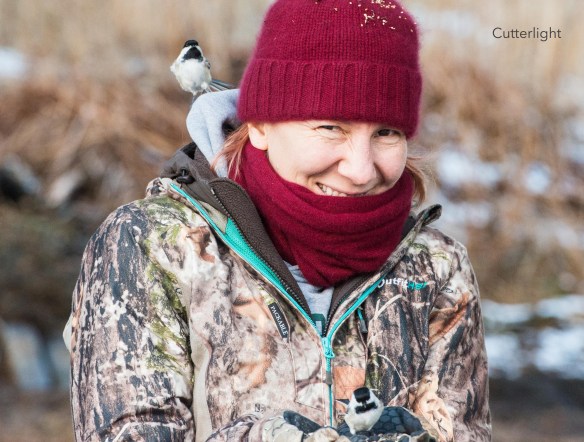
Last fall, when we hung bird feeders at the White Spruce Grove a little over half-a-mile from our home and began putting out seeds for Chignik Lake’s birds, within just a few days we noticed something uncanny. As soon as we hit the trail to the feeders, chickadees would descend upon us, fluttering and chattering with a familiarity that suggested that they somehow knew us. And each day as we came within view of the spruce trees themselves, a dozen or so chickadees would erupt in excited calls, flitting down from the boughs as though to greet us. There seemed to be no doubt that these little birds recognized us, Barbra in her red hat and scarf, me in my black watch cap, both of us in camouflage jackets. That sent us to the internet to do some research.

barbra-chickadee-shoulder-dec-2016-n

As it turns out, Black-capped chickadees are remarkably intelligent little beings, in possession of 13 different, complex vocalizations as well as memories that allow them to recall the precise location of food they’ve cached for up to several weeks. Regarding their vocalizations, not only do they warn each other with rapid dee-dee-dees, it has been shown that these calls vary according to the danger at hand, with their longest and most insistent alarms reserved for Pygmy Owls, a predator that poses an especial threat to chickadees.

Another, happier call among our local chickadees (it seemed to us) appeared to go something like, “Here come Jack and Barbra with more seeds!” While the various sparrows hung back demurely, deep in the cover of the spruce trees, the chickadees would land on our camera lens and flap around our heads.

“I once had a sparrow alight upon my shoulder for a moment, while I was hoeing in a village garden, and I felt that I was more distinguished by that circumstance than I should have been by any epaulet I could have worn.”
Henry David Thoreau in Walden

We wondered if we could get these bold, inquisitive birds to take seeds from our hands – and whether or not it would be ethical to do so.

chickadee-broke-bill-jan-2017-n

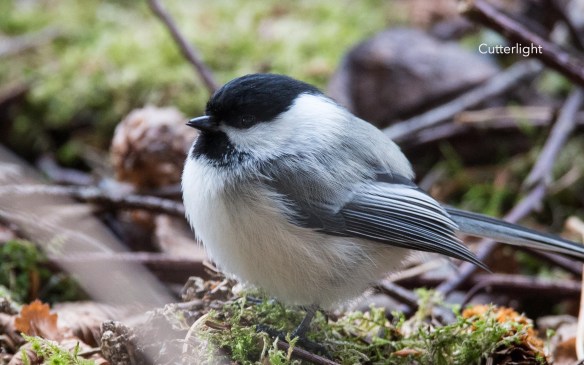
One of the advantages of feeding birds is that it provides opportunities to closely study individuals. Early last fall, we noticed that this chubby-looking fellow had broken off the tip of his upper beak. We wondered if this would adversely affect his ability to make it through the winter. Happily, it hasn’t. We still see him, and he still looks like he’s not missing any meals.

There’s no doubt that some wild animals should not be fed. Most North Americans are familiar with the cautionary proverb, A fed bear is a dead bear. That’s because bears that learn to associate humans with food become dangerous, destructive nuisances. But chickadees? After doing our due diligence in research and considering the welfare of the birds from a variety of perspectives, we felt comfortable taking our bird feeding to the next level.

Getting the birds to come to our hands proved to be fairly easy. One morning, we temporarily took down their favorite feeder, stood near the tree with outstretched arms and seeds in our hands… and waited. After a number of feints and false starts, one particularly brave bird took the plunge and was rewarded with a nice, fat sunflower seed. After that, it was one bird after another.

jack-chickadee-head-dec-2016-n

For the next few days, hand feeding our feathered friends was the highlight of the day. During those few days, we learned quite a lot. In addition to their many and varied vocalizations, Black-capped Chickadees establish pecking order by silent bill-gaping – an aggressive, open-mouthed gesture that is enough to cow a rival bird into waiting its turn or leaving the immediate feeding area altogether. There also seemed to be quite a range of distinctive personalities, with some birds readily and repeatedly feeding from our hands – and remaining long enough to carefully sort through the offerings for the choicest seeds -, while other birds hung back or landed only briefly.

The National Audubon Society encourages people to feed wild birds. Habitat is shrinking, and with that loss food sources can be scarce. Place your feeders in areas where birds have easy, quick access to the safety of shrubbery and trees, keep cats indoors, and to prevent the spread of disease among birds, occasionally clean the feeders. Once you start, keep the feeders full so that birds that have come to expect a food source aren’t suddenly left high and dry during inclement weather. But be warned: you might discover that the view out your window becomes more interesting than whatever’s on TV!

Ink and Light: “Point Hope” – The Aurora Borealis & Jack London

x-point-hope-copy-n

Point Hope: Point Hope, Alaska

Solar winds disrupting Earth’s magnetic field cause the Aurora Borealis. They are often most spectacular on finger-numbingly cold nights in the depths of winter.

Point Hope is an Inupiaq Eskimo village of about 750 inhabitants located 200 miles above the Arctic Circle on Alaska’s North Slope. Originally known as Tikigaq (index finger for the slender peninsula that once extended into the Chukchi Sea before erosion took it away), the area is one of the oldest continuously inhabited places in North America. Subsistence hunting for caribou and Bowhead Whales continues to be an important part of the culture. With no roads existing beyond the village, the local airport (lit up in the above photo) is an important lifeline to and from the outside world.

…the aurora borealis flaming coldly overhead,
…the stars leaping in the frost dance,
…the land numb and frozen under its pall of snow…
Jack London – from The Call of the Wild, 1903

  – Jack London (1876-1916) was one of the first authors to become wealthy writing fiction. Mostly self-educated, after stints as a hobo, a sailor, and 30 days in the Erie County Penitentiary in the state of New York for vagrancy, he made his way to California where he attended high school and began writing in earnest.

Ink & Light: “At First Sight” – Love and Lines from Richard Brautigan

x-at-first-sight-copy-n

At First Sight: Sandhill Cranes, Northern British Columbia

Sandhill Cranes choose partners based on graceful mating dances and remain together for life.

…and our graves will be like two lovers washing
their clothes together
In a laundromat
If you will bring the soap
I will bring the bleach.
Richard Brautigan (from Romeo and Juliet, 1970)

– Raised in abject poverty, Richard Brautigan (1935-1984) was struggling to gain a foothold in San Francisco’s literary scene when, in 1967, he published Trout Fishing in America. The counter-culture novel catapulted him to international fame. A year later he solidified his reputation with In Watermelon Sugar. 

Ink and Light: “The meanest flower that blows…”

x-feather-fan-n

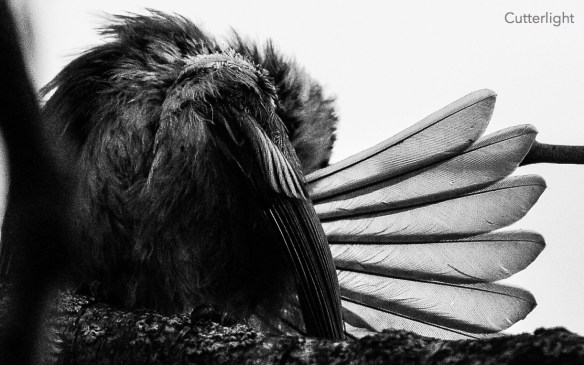
Feather Fan: Junco

To me the meanest flower that blows can give
Thoughts that do often lie too deep for tears.
William Wordsworth – Intimations of Immortality, 1807

Along with Samuel Coleridge, Wordsworth (1770-1850) is credited with founding English Literature’s Romantic Age. He was the country’s Poet Laureate from 1843 until his death.

Oyster Po’ Boy with Zesty Rémoulade and a Side of The World’s Best Bar Snack


oster-po-boy-w-fried-parsnips-n

The Carolinas meet California in a Po’ Boy that combines a favorite from each coast. Served up with our home-brewed hefeweizen. 

True, po’ boys originated in Louisiana, but the fried oyster sandwiches of my youth were served up in family-run seafood shacks on North Carolina’s Outer Banks. You had to remember to ask for unsweetened iced tea in those Southern establishments, shoes were optional – even the waitresses often went barefooted -, and a proudly displayed Department of Health rating of “C” was a guarantee that the seafood would be fresh, authentic and delicious.

A warm, soft bun slathered with tartar sauce or rémoulade, a wedge of lemon, and sides of fries and ‘slaw are traditional and tough to improve on. Some folks add lettuce, tomatoes, or pickles (or even the ‘slaw) for a little crunch, but when we chomp down on an oyster po’ boy, all we want is soft bun and even softer, deep-fried, juicy oysters. The crispy coating on the oysters is crunch enough. But how about a few slices of creamy avocado?

Oh, The World’s Best Bar Snack? That’s what Bill Briwa, Chef-Instructor at the Culinary Institute of America, calls deep-friend parsnips. These are a cinch to make, and, yeah, they just might be the World’s Best Bar Snack. Get the recipe here.

Rémoulade

Ingredients

Directions

  1. Mix the above ingredients together.
  2. Allow to sit for a few minutes so flavors come together.

Deep Fried Oysters

Ingredients

  • a dedicated deep-frying pot or a good stainless steel pot. For safety, the pot should be large enough so that the oil (see below) does not fill it more than half full.
  • cooking thermometer that attaches to the pot so you can monitor oil temperature
  • a slotted steel spoon or wire mesh (spider) for removing the oysters from the oil
  • cutting board or platter on which to rest oysters after they’ve been rolled in crackers
  • tongs
  • platter with paper towel to rest and drain fried oysters
  • a gallon-sized sealable plastic bag
  • 1 pint fresh oysters (The only way we can have fresh oysters in Bush Alaska is to freeze them. Happily, they freeze well.)
  • approximately 50 ounces cooking oil that withstands high heat Canola or peanut oil are good choices.
  • 3 eggs, well beaten in a bowl with fairly steep sides
  • 1/2 tbsp soy sauce
  • 1/2 tbsp Cholula or similar hot sauce
  • 1/2 cup all-purpose flour
  • 1/2 tbsp chili powder mixture, preferably one with chipotle, divided into two equal portions
  • 1/4 tsp salt
  • cracked pepper
  • 2 cups crushed saltine crackers (we use salted saltines)

Directions

  1. Drain oysters and set aside. You might want to gently roll them in paper towels to remove excess moisture.
  2. Add canola oil to a large pot and heat over high heat to 360° F (180° C). Keep an eye on the temperature, lowering burner heat as necessary. You can test the oil’s readiness for cooking by dropping in a pinch of crushed saltines. They should immediately sizzle.
  3. Meanwhile, add soy sauce, Cholula, and half of the powdered chili mix to the beaten eggs and whisk together.
  4. Add the flour, half the powdered chili mix, salt and pepper to the gallon-sized plastic bag, seal and shake well to mix. Pour the mixture into a shallow bowl or onto a plate.
  5. Place the crushed saltines in a shallow bowl or on a plate. A good way to crush them is to put them in a gallon-sized sealable plastic bag. Seal the bag, but leave a small opening so air can escape. Use a rolling pin to crush the crackers in the bag.
  6. Arrange items on your counter in the following order, leading toward the frying pot: oysters, flour mixture, egg mixture, crushed crackers, board/platter for resting oysters.
  7. Using tongs: Place an oyster into the flour mixture and thoroughly coat but give it a shake to let excess flour fall off. Then place the oyster in the egg mixture, thoroughly coat it, but hold it above the bowl for a moment to let excess egg drip off. Next, roll it in the crushed crackers, making sure it’s completely covered. Finally, set it on the board/platter to rest. Repeat till all oysters are ready to be fried.
  8. Hopefully you or your sous chef have been keeping an eye on the temperature of the cooking oil. 360° F is about right. Use tongs to carefully add oysters one at a time – no splattering. Keep adding oysters, but don’t overcrowd the pot. Try to keep them from touching each other – better too few oysters at a time than too many. Using tongs, gently turn the oysters to ensure that all side are evenly cooked to a golden brown. This will take 1 to 3 minutes. Don’t overcook them.
  9. Use a steel slotted spoon or a spider to remove fried oysters. Place on platter with paper towel to drain. You can keep them warm and crisp on the center rack of a warm oven, or loosely cover them with a towel.

The Po’ Boy

  1. It can be nice to toast the sandwich roll.
  2. Spread both sides with rémoulade. Arrange the fried oysters and give them a squirt of lemon juice from a lemon wedge. Top with slices of avocado. Drop the lemon wedge into your hefeweizen and dig in.

“Dry and Sunny, a Break from Winter Weather” – OP Assignment #4

dunes big with human n

It doesn’t get much drier and sunnier than Mongolia’s Gobi Desert. Above, Khongoryn Els, the famed “Singing Dunes,” stretch across the landscape. See nine additional photos from our October 2014 trip below.

OLYMPUS DIGITAL CAMERA

As in any desert, no resource is more precious than water.

gazelle galloping kicking up dirt n

Well adapted for this parched climate, over a million Mongolian Gazelle flourish in arid steppe grasslands which include portions of the Gobi. Mongolia’s grasslands are considered to be one of the world’s last, great wilderness areas.

red-billed choughs sunset n

Red-billed Choughs, a striking member of the crow family, close out the day at Yolyn Am Canyon…

ibex bull 2nd look n

Earlier in the day a magnificent Siberian Ibex, protective of his harem, kept a wary eye on an approaching photographer.

OLYMPUS DIGITAL CAMERA

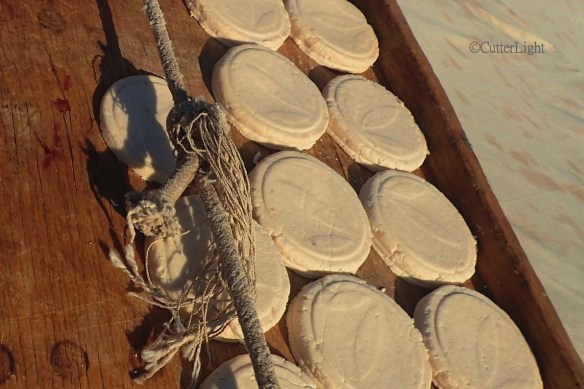
As we journeyed, we stayed with families in their gers (yurt homes). Here, aruul, a type of cheese, bakes into a hard cake on a tray atop a ger.

camel skull & white cliffs n

Not only dry but extremely cold and windswept, winters in the Gobi can be unforgiving. The worst of them are know as zud and can wipe out millions of livestock.

gobi-night-sky-10-17-2014-n

The nighttime skies were spectacular.  The Big Dipper hangs over our lighted ger. 

Not all deserts have camels, of course, but they certainly add an exotic element. In Mongolia, two-humped Bactrians are utilized for transportation, meat, milk and the most excellent cream cheese we’ve ever tasted. Here, Barbra’s mount and I exchange inquisitive looks.

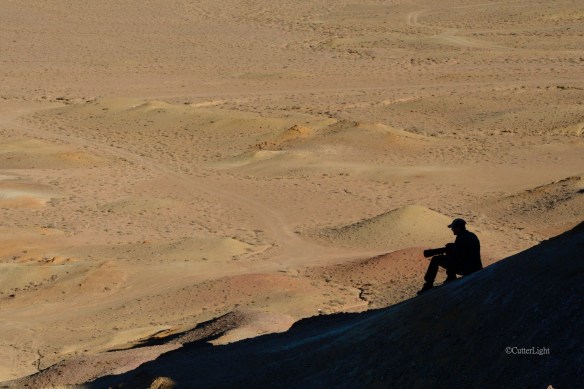
photographer jack @ white cliffs n

Our eight-day trek through part of the Gobi Desert was one of the highlights of our two-year stay in Mongolia. Not only did we get to briefly experience the lifestyle of one of the world’s few remaining semi-nomadic people, we also got to sample new foods, see exotic animals we’d read about in books as children, feel the Singing Dunes hum mystically through our bodies…  and, yes, riding a camel to seldom-visited sand dunes was a first and it was fun. At Bayanzag (pictured above), the legendary Flaming Cliffs where the first fossilized dinosaur eggs were discovered, we even found a large, fragile skull with teeth intact and a spine radiating out several feet, the fossilized remains of some species that no longer walks the earth. It’s 20° F (-7° C), a north wind swirling falling snow as I write this. A trip back to the Gobi through photographs was indeed a nice break from winter.

Next Thursday: Assignment #5 – Motivational Moments: the things that get us out of bed at 4:00 AM to go out and shoot; or that inspire us to sit for hours waiting for a capture. I already have a few ideas in mind. Stay tuned!

Broiled Salmon Udon – It’s all about the Noodle Bowls

broiled-salmon-udon-02-08-2017-n

For lunch or dinner, on a cold winter’s day nothing beats a bowl of agreeably slippery udon noodles served in piping hot miso soup. The trick is finding the right bowl.

Ramen, soba, udon – we are big fans of Asian noodles. In Mongolia our apartment came ready with two perfectly-sized bowls for serving up this kind of fare. Back in America, finding the right bowls proved to be much more of a challenge than we anticipated. The average soup/cereal/pasta bowl isn’t big enough, and the average serving bowl is too big.

With a bit of persistence we found just what we were looking for. Mrs. Lin’s Kitchen carries beautiful karakusa swirl noodle bowls in classic white and classic black. These bowls are made in Japan and reminiscent of higher-end noodle shops there. Karakusa is a traditional arabesque design of repeating swirls popular in Japanese ceramics. The bowls are simultaneously elegant and sturdy. Best of all they’re large enough to fill up with a true noodle soup meal.

And the people at Mrs. Lin’s know how to pack fragile items. Here in Chignik Lake, our post office is just a two-minute walk from our house – but it can be a treacherous walk, especially on days such as yesterday when the road and footpaths were covered in hard ice. On the return trip, my feet went up and I came down – hard – as did the box containing our brand new noodle bowls. I was fine, but I dreaded what I might find when I opened the box. We needn’t have worried. In fact, we don’t think we’ve ever seen anything packed quite so well.