Pear and Ricotta Tart

Creamy, sweetened homemade ricotta cheese makes for a lighter, healthier delicious alternative to cream cheese in this cheesecake-like tart. In this version, slices of pears have been brushed with peach preserves prior to baking.

I was surprised how easy it was to make a ricotta-style cheese at home. My first batch of ricotta went into Jack’s moose cannelloni. A second batch was split between blintzes and a pear and ricotta tart. Infused with vanilla, the beaten egg and ricotta base was smooth, creamy and light. The sliced pears were brushed with a vanilla peach jam which added another subtle layer of flavor.

Pear and Ricotta Tart

Ingredients

  • pie crust
  • 2 cups ricotta cheese
  • 3 eggs
  • 1/2 cup granulated sugar
  • 1 tsp vanilla extract
  • 2 d’Anjou pears, halved, cored and sliced
  • 1 heaping tbsp of peach preserves

Directions

  1. Preheat oven to 375 degrees F.
  2. Press pie dough into a 9-inch springform pan and bake for 5 minutes then remove from oven.
  3. Reduce oven heat to 350 degrees F.
  4. Beat together ricotta, eggs, sugar and vanilla.
  5. Pour ricotta mixture into pre-baked pie shell.
  6. Arrange sliced pears on top of ricotta mixture.
  7. Brush pears with preserves.
  8. Bake for 50 minutes, or until tart no longer jiggles in the center.
  9. Let cool. Cover and place in refrigerator until ready to serve. Remove from springform pan just before serving.

Hearty Bean, Roasted Squash and Sausage Soup

Hunks of crusty, toasted baguette and parmesan cheese accompany one of our favorite wintertime soups.

We don’t get many fresh vegetables up here in Arctic Alaska. Squash really shines. It ships well and keeps for months, so every August we fill a tub with an assortment of acorn, butternut and spaghetti squash, put in in the mail, and use them in pies, soups and entrées over the following months. Puréed butternut squash is a terrific way to thicken hearty soups. I do a version of bean and sausage soup every winter in my big soup kettle. This year’s was our favorite to date, and although ingredients on hand will always necessitate minor changes, we’ve now got a base recipe that’s a keeper.

Although ingredients can be freely substituted, the combination of smoked chipotle peppers and star anise is especially nice. Make this dish even tastier by roasting the squash and the tomatoes on a charcoal grill.

Hearty Bean, Roasted Squash and Sausage Soup

Ingredients:  Makes about 2 gallons. If you do not have whole peppers, substitute powdered cayenne or similar pepper, or use a good chili or Thai blend.

  • 1 medium butternut squash
  • 1o cups black and pinto beans (or use all black beans), soaked, tender and ready for cooking
  • 3 stars of star anise
  • 8 cloves garlic, chopped coarse or sliced
  • 3 smoked chipotle peppers, ground fine (use a food processor)
  • 1 ancho pepper, ground fine
  • 1 tbs oregano
  • 1/2 tbs thyme
  • 1 bay leave
  • two sweet onions, chopped coarse
  • several grinds black pepper
  • 1 1/2 pounds sweet corn
  • 1 pound sausage, sliced (I used chicken sausage.)
  • olive oil
  • chicken broth – enough to cover beans plus some additional broth to use when puréeing the squash. (I use Better Than Bouillon to make the broth.)
  • 2 pounds diced tomatoes, canned or fresh, seeds removed
  • smoked sea salt, to taste

Directions:

  1. Place a cooking sheet in an oven and preheat to 400 degrees F.
  2. Squash: Cut away the stem and slice into discs approximately one inch thick. Quarter these slices. Remove seeds and stringy flesh. Leave the skin on.
  3. Place the squash in a large pan, add olive oil, and toss till all pieces are well coated.
  4. Lightly oil the heated baking sheet in the oven and place the oiled squash pieces on the pan. Roast until thoroughly cooked through and soft – about 20 minutes.
  5. Place cooked squash on a large cutting board. When cool enough to work with, use a knife to remove the skin.
  6. Use a stick blender or food processor to purée the squash a few chunks at a time. Keep the mixture fairly thick.
  7. When all the squash has been puréed, place in a container and set aside.
  8. Meanwhile, in a large soup kettle combine the beans, star anise, garlic, chipotles, anchos, oregano, thyme, black pepper, bay leave, enough chicken broth to cover all the ingredients, and 2 tablespoons olive oil. Bring to a simmer, stirring occasionally, and continue cooking on a low simmer for about 20 minutes.
  9. Stir in the puréed squash.
  10. Add the tomatoes, corn and sausage. Add smoked sea salt, if needed.
  11. The soup is ready to serve, but will be even better if it rests for an hour or more.

Serve with freshly baked French baguettes. 

A Ghost Town, Grizzlies, and the Best Fish and Chips Anywhere

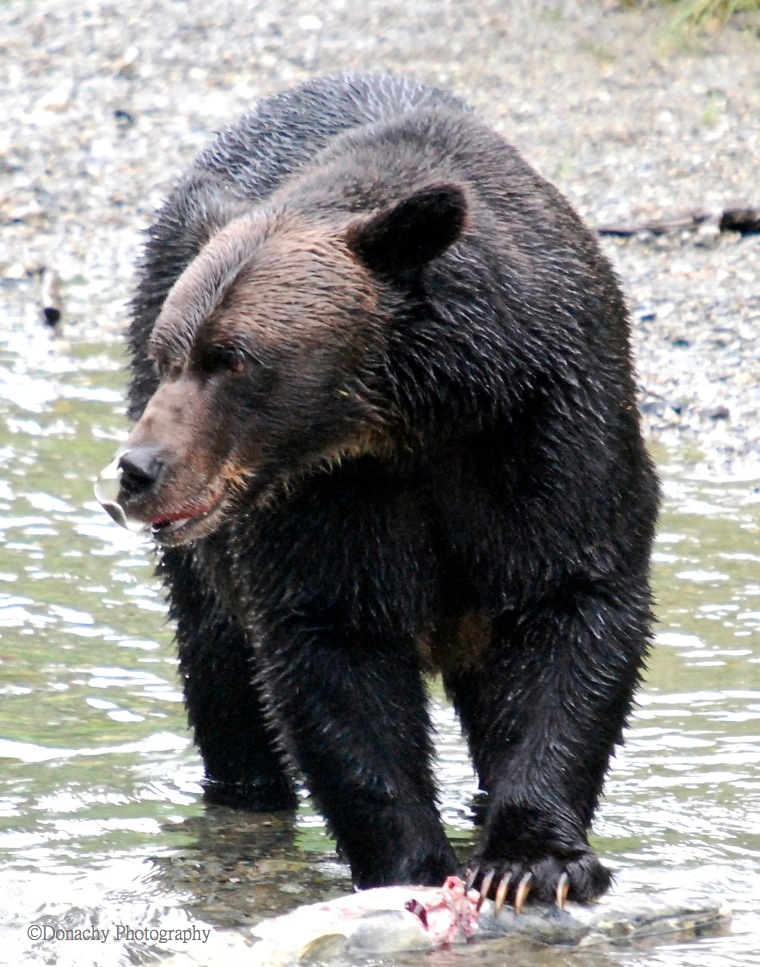
Patrolling Hyder, Alaska’s Fish Creek like she owns it, 600-pound Monica fattens up on a freshly subdued chum salmon.

With a population of fewer than 100 residents, Hyder, Alaska, bills itself as “The Friendliest Ghost Town in Alaska.” The town is one of those gems that is far enough off the beaten path to still be something of a secret, known mainly to the relatively few people who travel the Cassiar Highway in western British Columbia. Many of these travelers are on their way to or from Alaska, and not even all of these travelers are aware of what Hyder offers.

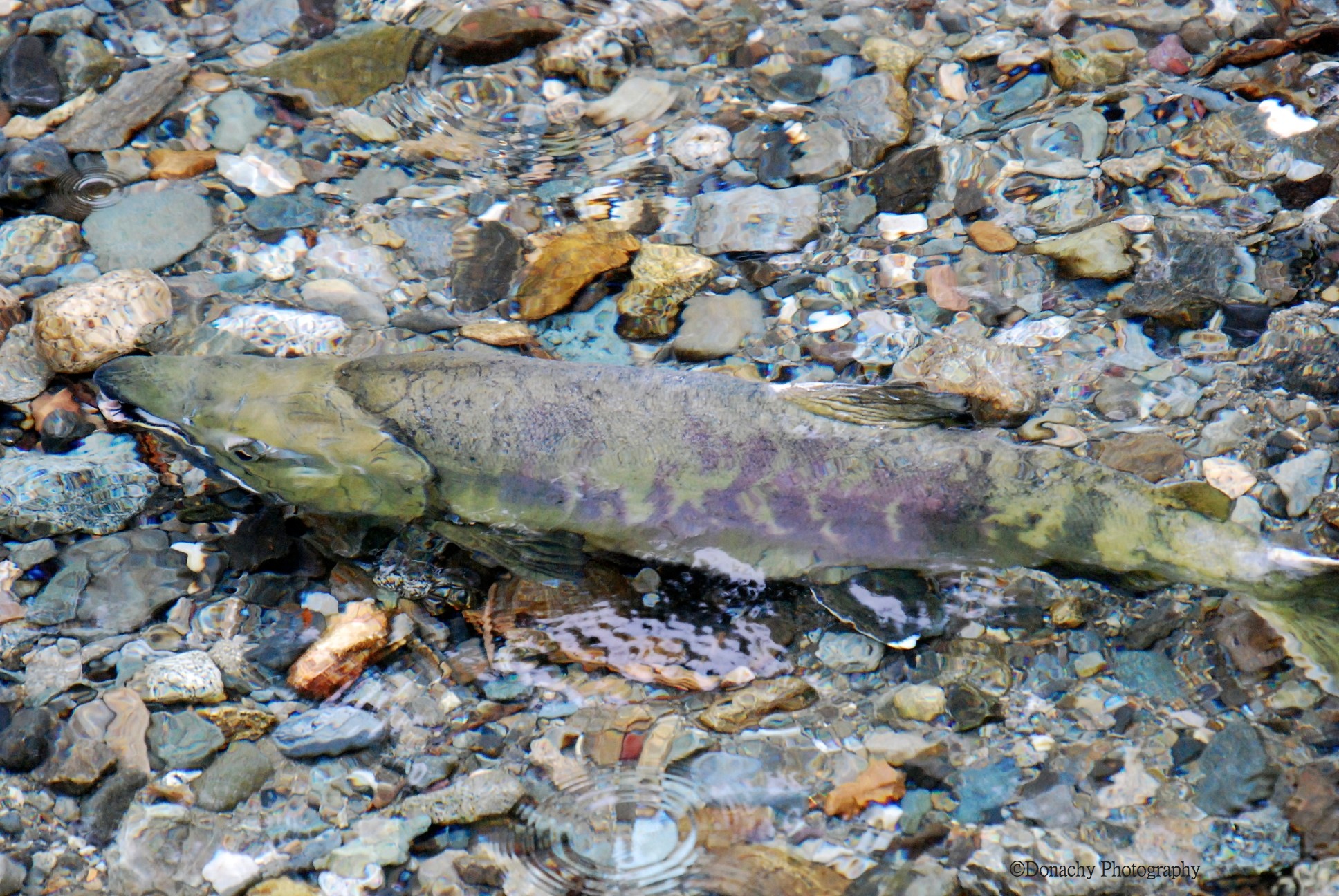
A prize for any grizzly, this beautifully marked chum salmon makes its way up the air-clear water of Fish Creek. 

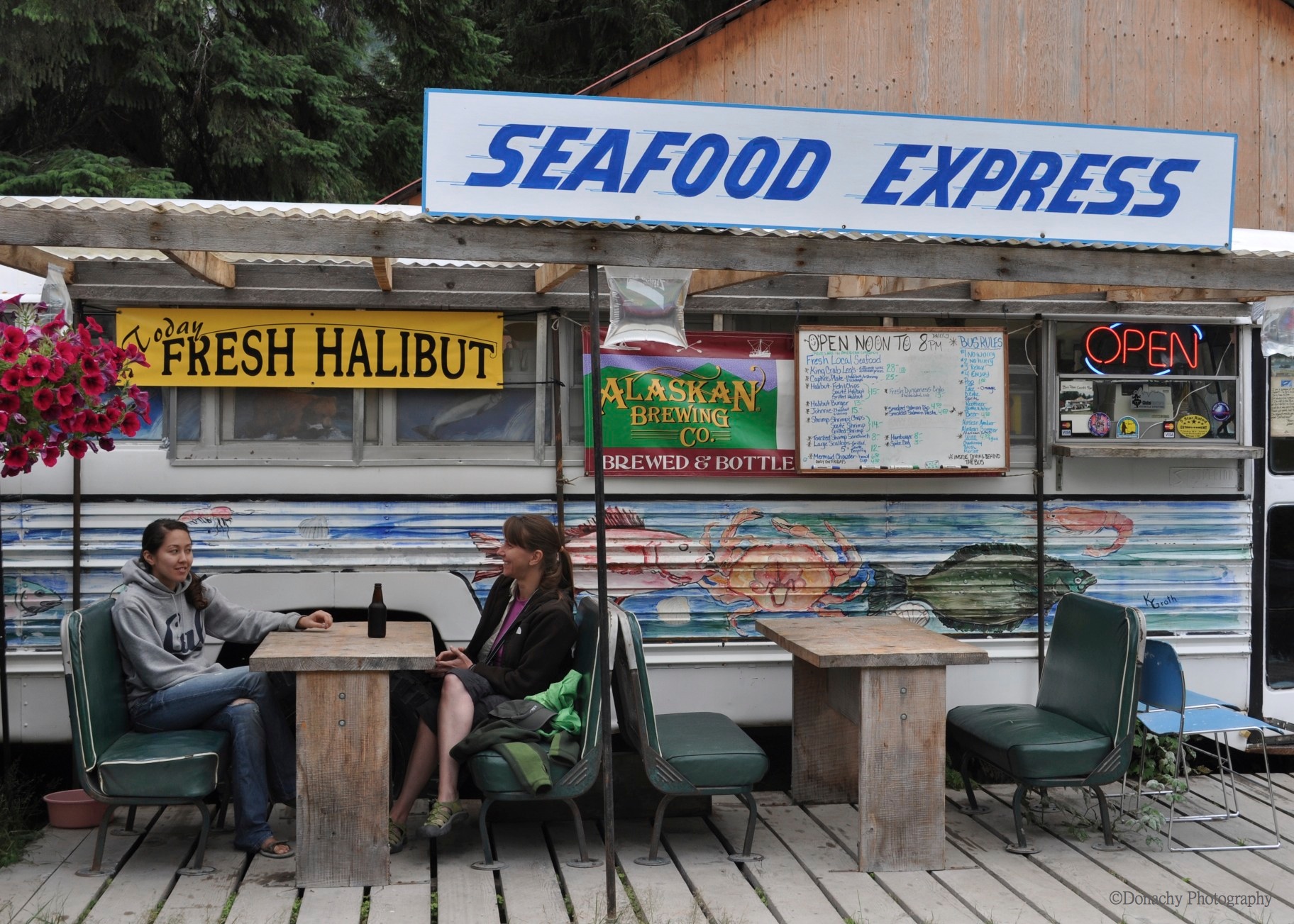
In addition to rare opportunities to watch and photograph grizzlies up close from a safe vantage point (an elevated viewing deck runs along a short portion of Fish Creek), Hyder boasts what is surely one of the world’s most unusual destination restaurants. We’ve written about the Seafood Express in a previous post. Established in 1998, the school bus Jim and Diana Simpson converted into a restaurant continues to turn out the very best fish and chips we’ve ever had. Even when the salmon and bears aren’t in, the restaurant alone makes taking the turnoff to Hyder worthwhile. Jim, a fisherman by trade, supplies the fresh salmon, halibut, shrimp and prawns Diana magically transforms into perfectly crispy, golden-brown, airily light creations that seem to disappear in one’s mouth. Complimented by a bottle of Alaskan Amber Ale, lingering over a meal there is the perfect way to relax after a morning of nature watching while Rufous Hummingbirds trill musically from the nearby spruce and fir forest.

A female common merganser (Mergus merganser) leads her brood of chicks (next photo) down Fish Creek’s crystalline currents.

Merganser chicks scurry to keep up with their mother. This type of duck typically nests in tree cavities near water. They feed on small fish, insects and (I’m guessing) salmon eggs when they can find them.

Since 1998, the Seafood Express has been serving up gourmet-quality fish and chips

The viewing platform on Fish Creek provides one of the very few places in North America where people can routinely and safely view wild grizzlies from a fairly close distance. The platform is manned by knowledgable U. S. Forest Service Rangers. The best viewing is from late July through September.

A trip to Alaska through British Columbia by car, camper or motorhome is a trip of a lifetime. If your route takes you along the Cassiar Highway, Hyder should be a “must visit” destination!

For more, click here to see our iReport on CNN.

White Chocolate Chip Cherry Pecan Chunk Cookies

Cookies bursting with chewy cherry chunks, white chocolate chips and delicious pecans are so good straight from the oven and even better a couple of days later… if they make it that long! 

It was a cold, overcast afternoon 200 miles north of the Arctic Circle. After two late nights of work in a row, we  were rewarded with a two-hour head start on our weekend. All we needed was a cup of hot tea and some warm cookies to go with. What? No cookies? A quick perusal of the pantry revealed a bag of white chocolate chips, dried cherries, and pecan halves. Don’t worry, Jack, fresh warm cookies are on the way!

White Chocolate Chip Cherry Pecan Chunk Cookies

Ingredients

  • 12 tbsp unsalted butter, softened
  • 1 cup packed brown sugar
  • 1/2 cup granulated sugar
  • 2 eggs
  • 1 tsp vanilla extract
  • 3 cups all-purpose flour
  • 1 tsp baking soda
  • 2 tbsp milk
  • 1 cup chopped pecans
  • 1/2 cup dried cherries, chopped
  • 1 cup white chocolate chips

Directions

  1. Preheat oven to 350 degrees F.
  2. Cream together butter and sugars.
  3. Mix in eggs, one at a time.
  4. Mix in vanilla.
  5. Mix in milk.
  6. In a separate bowl, combine flour and baking soda.
  7. Stir flour into butter mixture until just combined.
  8. Use same bowl as flour to mix together nuts, cherries, and chocolate chips.
  9. Stir nut mixture into dough, until just combined.
  10. Drop by tablespoons onto parchment-covered baking sheets.
  11. Bake for 11 minutes.
  12. Let cool on wire racks.

Recipe adapted from food network.com.

Moose and Spinach Cannelloni with Homemade Ricotta and Homemade Pasta

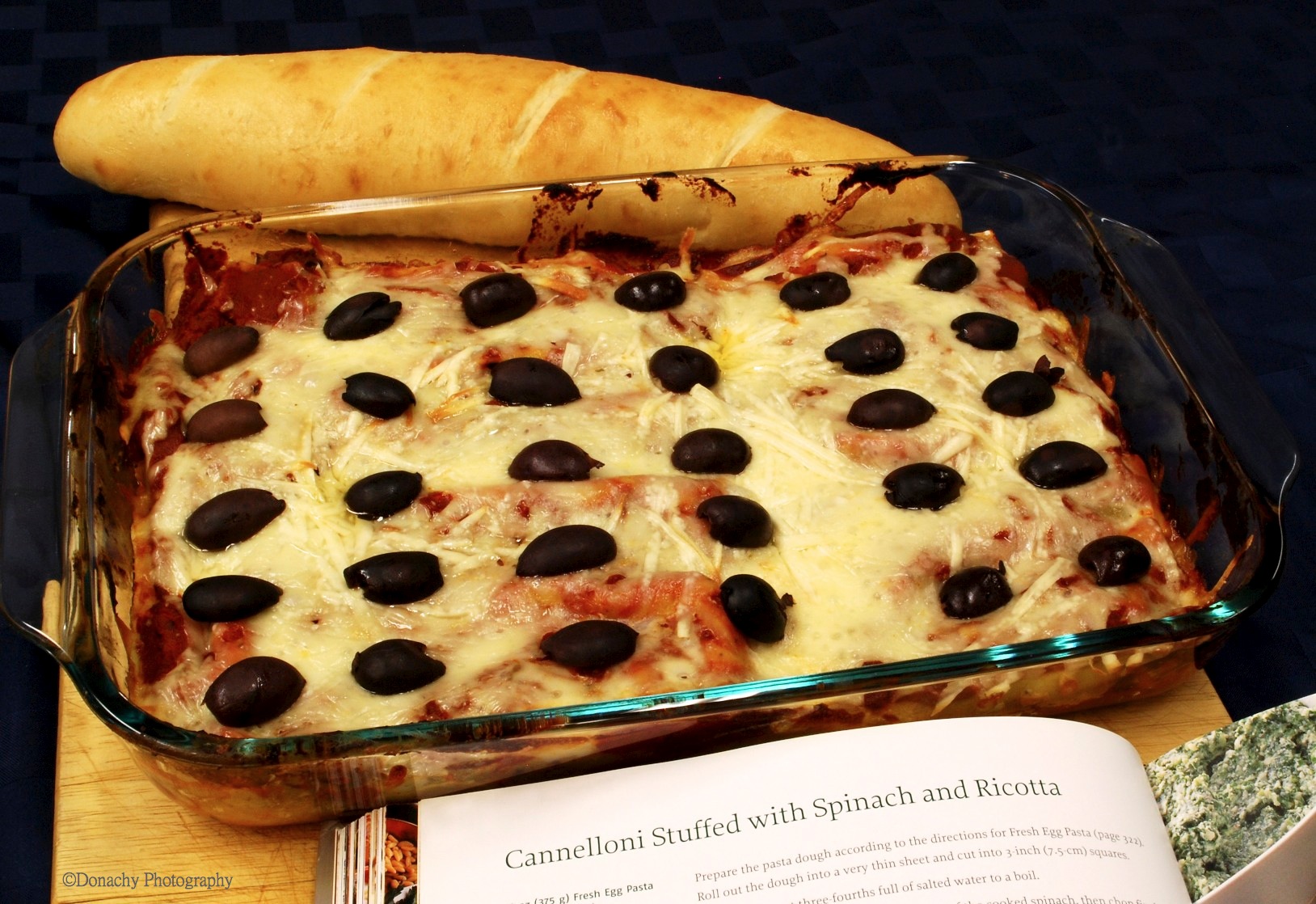
New Traditions. Smothered in mozzarella and parmesan and topped with Kalamata olives, 10 individual cannelloni pastas stuffed with homemade ricotta cheese, ground moose, and spinach await dinner guests.

Cooking in bush Alaska requires a certain amount of ingenuity and flexibility. Last year when I made a couple of pans of moose lasagna, with no ricotta cheese on hand I substituted mozzarella and called it lasagna anyway. It was excellent. The hot, stringy mozzarella was reminiscent of a deep dish Margherita pizza.

When a friend gave me a few pounds of moose again this year, Barbra said, “I’ll make you ricotta cheese for your lasagna.” She also made the pasta – 20 five-inch-by five-inch squares, ready to be rolled around ricotta cheese, spinach, sautéed  moose burger and tomato sauce. This is not traditional cannelloni, but, like last year’s lasagna, has twin roots in Italy and Alaska.

A serving of two moose, spinach and ricotta cannelloni fresh out of the oven. Each cannelloni (literal translation, “big reed”) is a five-inch-long cylinder of fresh pasta wrapped around ricotta cheese and other ingredients. 

Moose and Spinach Cannelloni

Ingredients for one 13 x 9 inch baking dish:

  • 1/2 pound ground moose, sautéed in olive oil till browned
  • pasta to make ten 5 x 5 inch tubes (cannelloni). (Or substitute store-bought manicotti.)
  • three 6-oz. cans tomato paste with enough water to thin the sauce to the thickness of marinara sauce
  • fresh spinach, cut so that the leaves will easily fit into cannelloni tubes (or substitute frozen spinach)
  • 1 1/2 cups ricotta cheese
  • 1/4 pound mozzarella cheese grated (about 1 cup)
  • 1/4 cup parmesan cheese grated fine
  • 1 1/2 tablespoons Italian herbs, separated into 2 equal parts
  • 1 tsp ground fennel (optional)
  • 2 or 3 cloves garlic, minced
  • several grinds of black pepper
  • 2 tbsp olive oil
  • salt (optional)
  • additional mozzarella and parmesan cheese to top cannelloni before baking (optional)
  • Kalamata olives, sliced in half lengthwise (optional)

Directions:

  1. Preheat oven to 350 degrees F.
  2. Place tomato paste, garlic, olive oil, black pepper, half the Italian herbs, fennel (and salt, if desired) in a nonreactive bowl and mix together, adding water to thin till sauce is just pourable.
  3. Cover a 9 x 13 inch baking dish with a layer of tomato sauce. Set aside remaining sauce.
  4. Place ricotta, mozzarella and parmesan into a large bowl. Add remaining Italian seasoning, a few grinds of pepper and mix together well by hand.
  5. Shape a piece of ricotta blend so that it lays end-to-end across one of the pasta squares. Position a few pieces of spinach leaves next to the ricotta. Use a spoon to lay down a thin bed of tomato sauce Add moose meat. Roll the pasta into a tube, pinch/press closed and position the tube seam side down atop the tomato sauce in the baking dish.
  6. Repeat till all the pasta squares have been filled and placed in the baking dish. Cover the cannelloni with the remaining sauce.
  7. (Optional). If desired, sprinkle grated mozzarella and parmesan atop the sauce-covered cannelloni. Top with Kalamata olives.
  8. Cover baking dish with aluminum foil and place on center rack of oven. Bake for 30 minutes.
  9. Remove foil and finish baking for an additional 5 to 10 minutes – to melt and lightly brown the cheese.

Homemade “Ricotta” – A Successful Experiment with Powdered Milk and Powdered Cream

Simple, delicious cheese you can make at home without any additives or preservatives. What a revelation! Perfect for cannelloni, lasagna, cannoli, ravioli, calzone or the Indian dessert Ras Malai.

A culinary goal for my Arctic kitchen this year was to experiment with cheese-making. I’m all for anything we can make at home in order to reduce our consumption of chemicals, stabilizers, and other weird junk. In addition to the drawbacks of processed foods, our Native Store here in Point Hope isn’t much larger than a typical quick-shop convenience store, and often doesn’t have items we need. Last year, a friend brought up ricotta cheese for us. This year, I decided to make my own.

Our store does not sell cream or whole milk, so my experiment with homemade cheese had one unusual ingredient – dried milk and cream. The only powdered milk I could find during our annual summer shopping in Anchorage was non-fat. Yuck. Thank goodness for the Internet! And especially thank goodness for Amazon’s free shipping. I bought two large cans of powdered whole milk (apparently abundant in Mexico!) and a can of powdered 72% butterfat cream. These would be the main ingredients for my “ricotta.” And by the way, the end product – made with powdered ingredients – was delicious.

The cheese that resulted is not a true ricotta, but is more like an unpressed paneer – with a slightly tangy, lighter taste than ricotta. In any case, it’s going into Jack’s moose cannelloni later today, rolled into homemade cannelloni tubes. Yum!

Homemade “Ricotta” – Perfect for Sweet or Savory Dishes

Ingredients

  • 2 cups whole milk powder
  • 1 cup powdered cream
  • 8 cups of water
  • 4 tbsp distilled white vinegar
  • 1/2 tsp salt

Directions

  1. Place powdered milk and cream into a large pot. Add water. Whisk until incorporated.
  2. Heat mixture until it steams but doesn’t boil (between 165 and 180 degrees F using an instant read or candy thermometer).
  3. Remove from heat.
  4. Slowly stir in vinegar. Milk should curdle.
  5. Stir in salt.
  6. Cover pot with clean cloth and let sit for 2 hours.
  7. Line colander with cheesecloth. I read paper towels or a kitchen towel will also work.
  8. Scoop curds out of pot and into lined colander.
  9. Let whey (watery substance) drain out of curds. I let it drain overnight in the refrigerator because I wanted a less watery product for the lasagna.

Brown Sugar and Butter Plum Upside Down Cake – for Breakfast or Dessert

Persimmon slices add a splash of fall orange to a breakfast that will get you ready for weekend chores. 

For most of the year, we rely on the fresh fruits and vegetables that make their way up to Point Hope by way of  the school and the Native Store. This means most of the fresh fruit we get is of the type that travels well – apples, pears and occasionally kiwis. This week, purple plums arrived. They were a bit on the hard side, so instead of gobbling up our coveted fresh fruit right away, Jack and I set them aside to ripen with thoughts of baking something interesting.

The result was this scrumptious upside down plum cake featuring ample amounts of brown sugar and butter. A friend returning to Point Hope from the big city (Anchorage) brought back fresh persimmons, Jack fried eggs seasoned with his special blend of Italian herbs, and breakfast was on. This cake went equally well with homemade extra rich vanilla ice cream for an after dinner dessert.

Brown Sugar and Butter Plum Upside Down Cake

Ingredients

  • 12 tbsp softened unsalted butter
  • 1/2 cup packed light brown sugar
  • 5 medium plums, pitted and sliced
  • 3/4 cup granulated sugar
  • 1 tbsp lemon juice
  • 3 eggs
  • 1  1/3 cup all purpose flour
  • 1  1/2 tsp baking powder
  • 1/4 tsp salt
  • 1 tsp cinnamon
  • 1/2 cup whole milk

Directions

  1. Preheat oven to 350 degrees F.
  2. Place 4 tablespoons of butter in an 8-inch square cake pan and heat in oven until butter is melted.
  3. Remove pan from oven and sprinkle brown sugar evenly on bottom of pan.
  4. Arrange plum slices on top of brown sugar and set aside.
  5. In a large mixing bowl, cream remaining butter with sugar and lemon juice. Add eggs, one at a time, beating until combined.
  6. In a medium bowl, mix together flour, baking powder, salt and cinnamon.
  7. Add about 1/3 of flour mixture to butter mixture along with about 1/3 of the milk. Mix together. Repeat with second 1/3 and third 1/3 of flour and milk.
  8. Pour cake batter over plums. Spread evenly.
  9. Bake until a toothpick inserted in center of cake comes out clean, about 40 minutes.
  10. Let cool 10 minutes.
  11. Invert onto serving dish. Let cool slightly before serving.

Recipe adapted from the Cake Duchess.

The Darker the Syrup… Part 1: Maple-Glazed Salmon or Trout

Maple-glazed salmon and salmon spuds (home-fried Yukon golds and sweet potatoes) harken back to American culinary traditions predating recorded history. After several goes at a recipe worthy of this syrup, we came up with one that combined a little fire with the sweet for a taste that struck us as just right.

Maple syrup has been part of Northeastern American cooking since before recorded history. There are reports of Native Americans cooking venison in maple sap. Although these days it is perhaps best known as a topping for pancakes, waffles and French toast, its unique flavor is used to enhance smoked and cured meats and to sweeten a variety of desserts. Both maple syrup and maple sugar are the base for a number of tasty candies.

Gathered in early spring, about 40 quarts of maple sap is needed to produce just one quart of syrup, so it’s not surprising that this amber liquid is rather expensive; a bottle of quality, grade A syrup costs as much as decent bottle of bourbon. But once you’ve tasted authentic maple syrup, it’s awfully hard to go back to cheaper, corn-syrup based, artificially-flavored imitations.

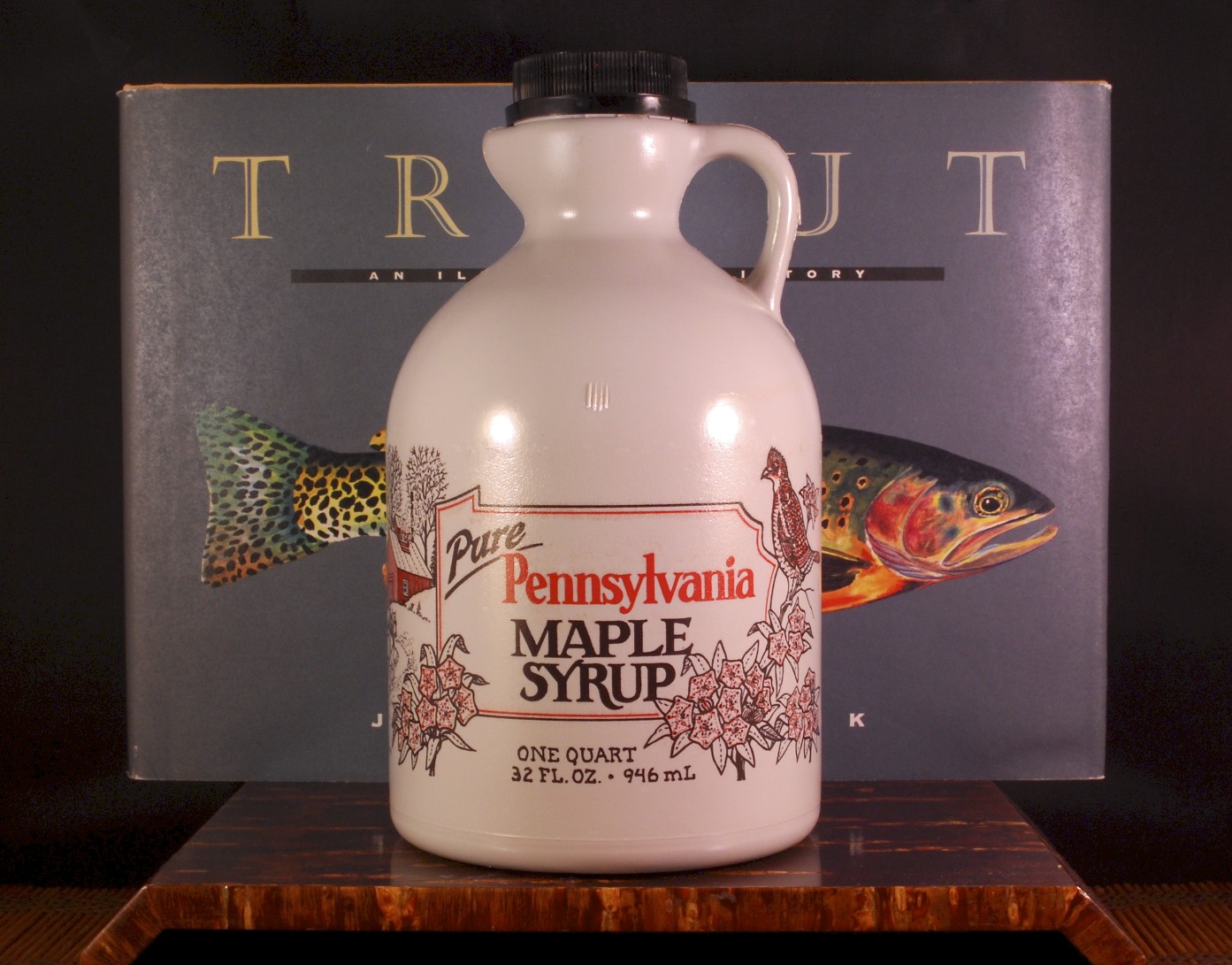
Maple syrup from Yeany’s Farm near Marionville, Pennsylvania, just a few miles from where I grew up. Located in Forest County, the Allegheny Mountains there are laced with the small trout streams I cut my teeth on as a young angler, and where, as the bottle suggests, I kicked out many a ruffed grouse on hikes through the woods. Much thanks to our friend and fellow Pennsylvanian Jack Williams for the thoughtful gift of this excellent syrup.

Maple-Glazed Salmon

Ingredients:

  • 2 salmon, charr or trout fillets, 6 ounces each, skin on
  • 1/3 cup soy sauce
  • 2 tablespoons maple syrup
  • 1/2 tsp powdered ginger
  • 2 cloves minced garlic (or use powdered garlic)
  • 1/3 cup water
  • 1/2 tablespoon sea salt
  • Penzeys Northwoods Fire Seasoning (or make your own blend in a food processor from ingredients such as salt, chipotle pepper, smoked paprika, Tellicherry pepper, garlic powder, oregano, marjoram, thyme, rosemary, cayenne, etc.)
  • olive oil

Directions:

  1. Mix together soy sauce, water, sea salt, ginger and garlic in a glass baking dish just large enough to hold both fillets side-by-side.
  2. Place fillets in marinade, skin side up. Marinate for 30 minutes or slightly longer.
  3. Meanwhile, place a broiling pan in the oven and preheat on high. (Pan should be positioned near the top of the oven – near the broiling element.)
  4. Place maple syrup in a small pan such as a small frying pan and heat over low heat until the syrup simmers and bubbles. Cook down until syrup is thick. Remove from heat and set aside.
  5. After 30 minutes, remove fillets from from marinade. Pat dry with paper towels and sprinkle with Northwoods Fire Seasoning.
  6. Coat broiling pan with olive oil. When sizzling hot, place fillets skin side down on pan. Broil for approximately 7 minutes.
  7. Spoon maple syrup on top of fillets. (You may have to reheat the syrup if it cools and hardens.) Broil for 3 more minutes. Serve hot.

The heat from the seasoning goes perfectly with the sweetness of the Maple syrup. These fillets are excellent with home-fried potatoes seasoned with soy sauce, Cholula sauce, and a couple shakes of Penzeys Southwest Seasoning or a similar mildly fiery seasoning. Enjoy the meal with a fine bourbon.

Click here for a delicious Maple Walnut Fudge recipe.

The Darker the Syrup… Part II, Maple Walnut Fudge

These maple walnut fudge squares were made from an especially rich, dark grade-A syrup.

The fall season and homemade candy seem to go together, and with an unexpected extra half-gallon of maple syrup in our pantry, our thoughts went straight to maple fudge. I love how food can take you home, and the maple candy Barbra created took me all the way to Pennsylvania. (Click here for more on Maple Syrup.)

Maple Walnut Fudge

Ingredients

  • 1  1/2 cups real maple syrup
  • 1  3/4 cups granulated sugar
  • 2/3 cup heavy cream
  • 1/4 tsp salt
  • 1/4 cup unsalted butter
  • 1 tsp vanilla extract
  • 1 cup chopped walnuts

Directions

  1. Line an 8 inch square pan with nonstick foil and spray with cooking spray.
  2. Combine syrup, sugar, heavy cream and salt in a medium saucepan, preferably a non stick one; bring to boiling over medium high heat, stirring constantly. Once boiling, cook 7 to 8 minutes or until mixture registers 238 degrees F on a candy thermometer.
  3. Remove pan from heat. With an electric mixer, beat in butter and vanilla.
  4. Continue to beat on high power for 8 to 9 minutes, or until thickened, light in color and fudge loses its glossy finish. Stir in nuts and spread in prepared pan. Let stand until firm about 25 minutes, then cut into squares.

Recipe adapted from food.com.

North of the Arctic Meets the Middle East

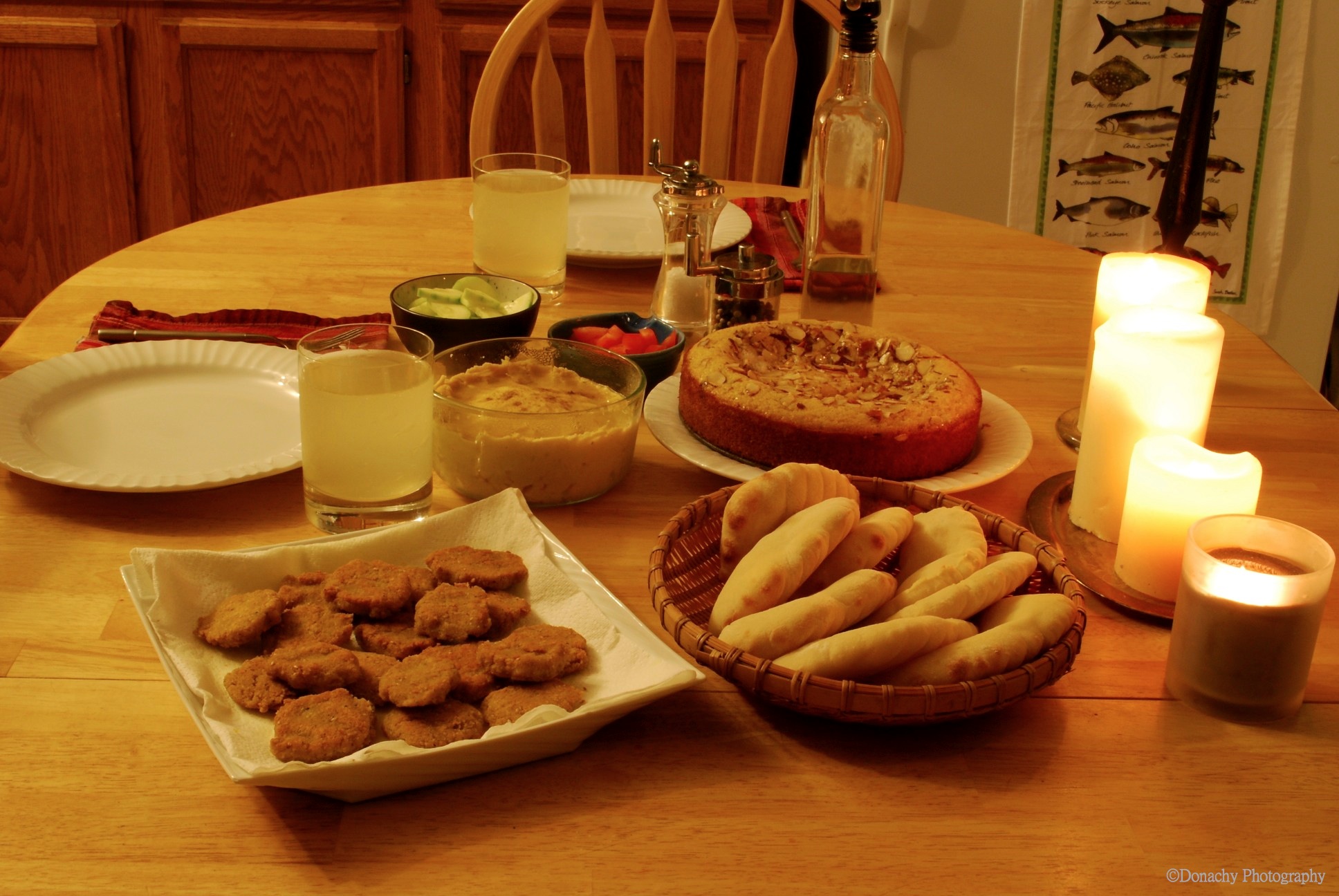
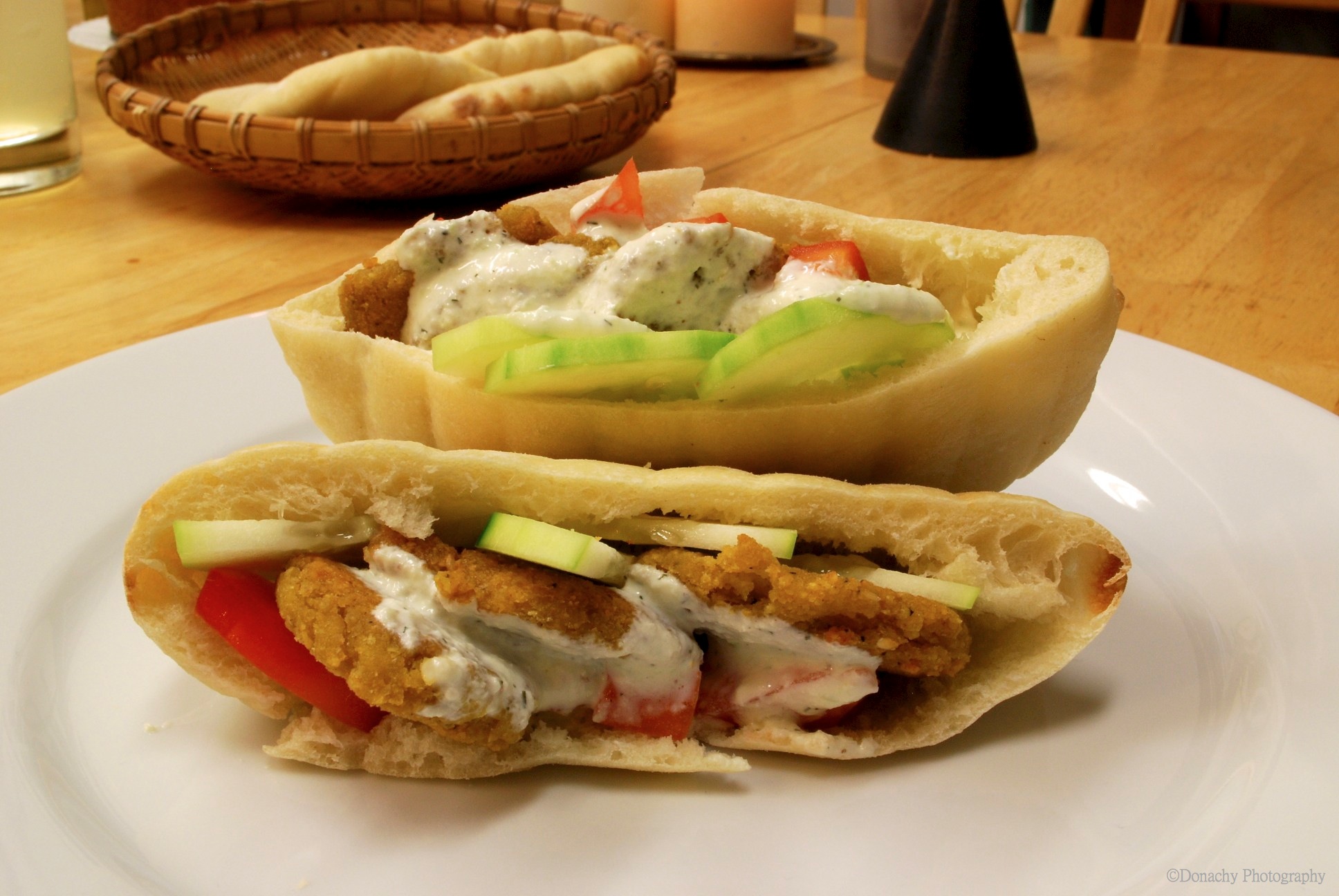
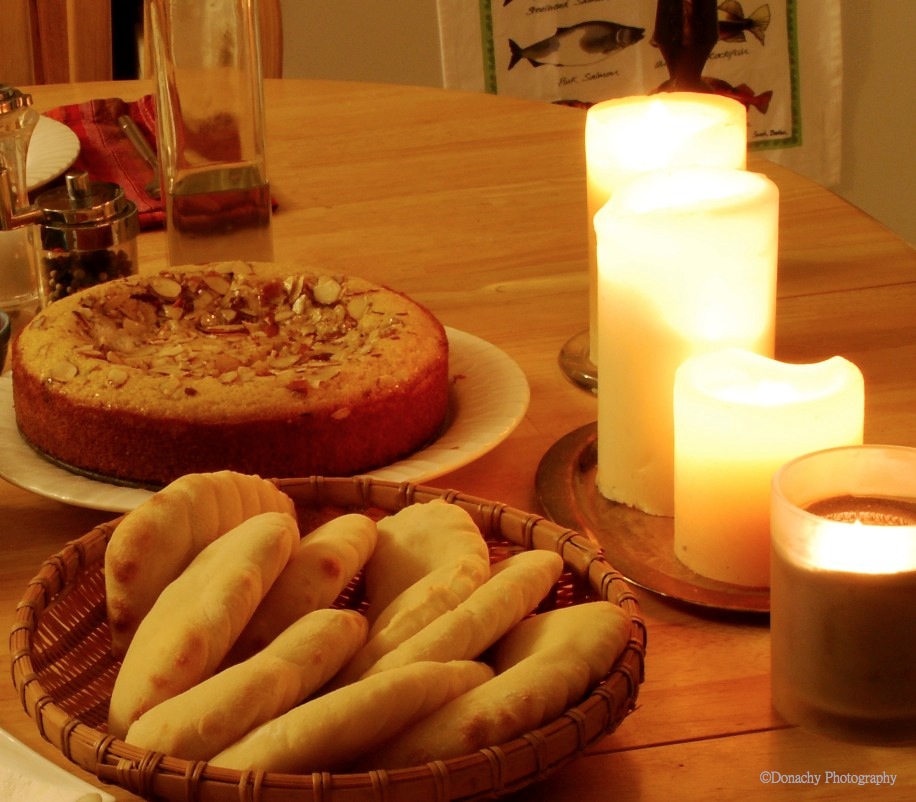
Crispy fried falafel – fragrant with cumin-, freshly baked pita pocket bread, garlicky tzatziki sauce, homemade hummus, honey-orange spritzers and Basbousa cake for dessert made for an eclectic gustatory tour of the Middle East. 

Last night’s meal was a self-imposed culinary challenge: Everything was created from scratch (right down to soaking dried garbanzo beans) in our little kitchen 200 miles north of the Arctic Circle. Jack is usually the chef, but on this night I wanted him to relax, sit back and let me take over. A date.

The menu included homemade pita bread stuffed with slices of cucumber, tomato and falafel drizzled with tzatziki sauce. A bowl of garlicky hummus was available to spread on extra pieces of pita. Orange honey spritzers, made with our SodaStream, provided a sweet balance to the spices and garlic. The candlelit meal was capped off with Basbousa cake and mugs of steamy-hot rooibos almond tea.

In preparation for this meal, I soaked two cups of dried garbanzo beans the previous night. The falafel mixture and the tzatziki sauce were made Saturday morning in order to let the flavors meld together.

Following are the recipes made in the order I used.

Falafel

Ingredients

  • 1 cup dried chickpeas
  • 1 tbsp water
  • 1 1/3 tbsp sesame seeds
  • 2 tsp ground cumin
  • 1 tsp salt
  • 1 tsp baking powder
  • 1 tsp ground coriander
  • 1/2 tsp ground black pepper
  • 1/2 tsp red chili powder
  • 1/2 tsp white sugar
  • 1/4 tsp ground turmeric
  • 1 pinch ground fennel powder
  • vegetable oil for frying

Directions

  1. Place dried chickpeas in a bowl. Fill with water to cover. Soak at least 8 hours or overnight in refrigerator. Drain.
  2. Place soaked and drained chickpeas in a blender or food processor; blend to a paste.
  3. Pour water into chickpea paste and blend until smooth. Scrape down sides of blender with spatula if needed.
  4. Place sesame seeds, cumin, salt, baking powder, coriander, black pepper, red chili powder, sugar, turmeric, and fennel powder in blender with chickpea paste; blend until well mixed. Transfer chickpea mixture to a bowl.
  5. Chill chickpea mixture in refrigerator to allow flavors to blend, at least 1 hour and up to two days.
  6. Cover bottom of skillet with vegetable oil and and heat to 370 degrees F over medium heat (188 degrees C).
  7. Scoop up chickpea mixture by heaping tablespoons and form into balls the size of ping pong balls and flatten slightly.
  8. Fry balls in hot oil until golden brown, 3 to 5 minutes on each side.

Recipe adapted from allrecipes.com

Tzatziki Sauce

Ingredients

  • 1/2 cucumber, seeded, peeled and cut into small cubes
  • 1/2 cup sour cream
  • 1 tbsp olive oil
  • 1 tbsp lemon juice
  • 1 tsp dried dill
  • 2 cloves garlic, peeled
  • salt and pepper to taste

Directions

  1. Mix ingredients together.
  2. Blend or food process until well combined.
  3. Chill in refrigerator until you are ready to use.

Pita Bread

Ingredients

  • 1  1/4 cups warm water (110 degrees F/45 degrees C)
  • 3 cups all-purpose flour
  • 1 tsp salt
  • 1 tbsp vegetable oil
  • 1  1/2 tsp white sugar
  • 1  1/2 tsp active dry yeast

Directions

  1. Place all ingredients in bread pan of your bread machine, select Dough setting and start.
  2. Turn dough onto a lightly floured surface. Gently roll and stretch dough into a 12 inch rope. With a sharp knife, divide dough into 8 pieces. Roll each into a smooth ball. With a rolling pin, roll each ball into a 6 to 7 inch circle. Set aside on a lightly floured countertop. cover with a towel. Let pitas rise about 30 minutes until slightly puffy.
  3. Preheat oven to 500 degrees F (260 degrees C). Place 2 or 3 pitas on a wire cake rack. Place cake rack directly on oven rack. Bake pitas 4 to 5 minutes until puffed and tops begin to brown. Remove from oven and immediately place pitas in a sealed brown paper bag or cover them with a damp kitchen towel until soft. Once pitas are softened, either cut in half or split top edge for half or whole pitas. They can be stored in a plastic bag in the refrigerator for several days or in the freezer for 1 or 2 months.

Recipe adapted from allrecipes.com.

Click here for our post about basbousa cake.

So, Jack, what did you think about your Middle Eastern feast?