Changes and Milestones, a Question and an Answer

Full Moon at Sunrise, October 15, Newhalen Alaska
I had been looking at this particular landscape about five miles from our house ever since June when we moved to Newhalen. The scene had elements of a good photo, but I just couldn’t see a picture. Then, one morning a few weeks ago as a full moon was hanging low on the horizon, the rising sun put some nice color in the sky. Sensing that their might be a moment, I drove out and there it was.

I began 2019 with four major goals. I wanted to:

– send out a few articles to magazines for publication

– write a book

– run a half-marathon after my 60th birthday, and

– starting from scratch with very little meaningful background in music, I wanted to put in 500 hours on the guitar and see where that got me

After putting together a couple of articles I quickly abandoned the first goal as both too time-consuming and not reflective of the kind of writing I want to do, and therefore not where I want to put my energy at this point in my life and career.
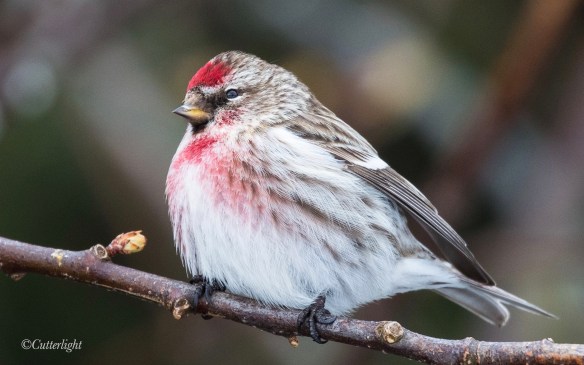
From Gavia pacifica (Pacific Loon) to Pinicola enucleator (Pine Grosbeak), I documented some 80 species of birds at Chignik Lake, including species that had never before been recorded in the region. Redpolls (above) were among our favorites.

Nonetheless, writing remains a central part of my life, and while I didn’t finish a book, I’ve begun. Over the coming weeks (and months), look for Birds of Chignik Lake to be published in installments on Cutterlight. It is my hope that I’ll be able to make a meaningful contribution to the work of others. Perhaps I’ll even be able to interest a publisher in producing a printed edition of this book when it’s finished. Either way, I’m excited to have begun the book and I’m eager to begin sharing my findings on Cutterlight.

Commitment to a fitness regimen paid off, and on October 23, running side by side, Barbra and I completed our first half-marathon in over 10 years. We did this as a “virtual run,” signing up for the Long Beach Half-Marathon (a race we did in person 12 or 13 years ago), and having documented our successful completion of the run up here in Newhalen, we’re now awaiting our finisher medals and T-shirts which should be arriving in the mail soon. Time was never part of the objective; my racing days are behind me. But I am happy to report that we remained injury free and were able to complete the full 13.1 miles running the entire distance. This bodes well for another season of hiking up and down salmon and trout rivers.

The nearby Tazimina River flows through a spectacularly wild  landscape. Cold and pristine enough to drink from, it’s loaded with large grayling, trout, and in fall, salmon.

All of this was terrific – including the manner in which not achieving the first goal led to the positive outcome of more clearly defining what it is I want to do with my writing and my time. I’m in the process of putting together templates for each of the 80-some species I recorded at Chignik Lake, and with other foundational work already done – and with permission from the Cornell Lab of Ornithology to use their range maps secured – I hope to begin publishing installments later this month. And finally, fresh off the success of our October half, we’ve already signed up for another event, the February 2 Huntington Beach Surf City Half-Marathon. This is another race we did on site some years ago (coinciding with the Pittsburgh Steelers scoring their sixth Super Bowl victory), and that we’ll participate in virtually up here in Newhalen.

That leaves just the final and most important of the four 2019 goals to account for – the goal that I believed would help me answer a question that has been on my mind since December 31 of 2018.

Can a 60-year-old person learn to play the guitar to any meaningful skill level starting essentially from scratch?

As I mentioned in a previous article, the Internet seems to offer no answer to this question, though it’s clear others have posed it.
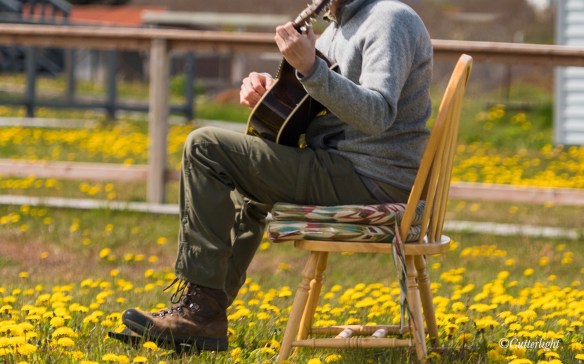
Again, this is not about having learned at a younger age and continuing to play into one’s seventh decade. Nor is it about picking up an instrument again after a hiatus of a few years. My question had nothing to do with learning to pick the notes to Happy Birthday or similar songs, as one site suggests. And it’s certainly not about “deriving benefits,” or finally playing well enough that the “cat stops yowling,” as per a particularly insulting Washington Post article.

We age. Our memories grow less sharp, our hearing less keen. Fingers slow. Nails grow brittle. New skills are acquired less easily. Even sitting for a long period of time in a given position can present challenges that our younger selves didn’t imagine. Over the years, injuries accumulate – a broken finger here, a finger sliced to the bone there – injuries long forgotten… till you sit down with a guitar in your hands.

It’s a simple question, and the manner in which expert upon expert appears to avoid directly answering it left me fearing that… Well, time marches on. At some point windows close. Patronizing assurances that begin with “Anyone can…” are invariably fibs.

At the beginning of the year, I made a commitment to stick with it, put in 500 hours with no expectations, and discover what I might discover. Good, bad or indifferent, I promised to report what I learned.

Yesterday morning, I completed my 500th hour of practice. I will report soon.

To read more about my journey with the guitar, type Learning to Play the Guitar in the “Search Cutterlight Articles” bar near the top of the page.

Singing His Heart Out: A Pleasant Morning at White Spruce Grove

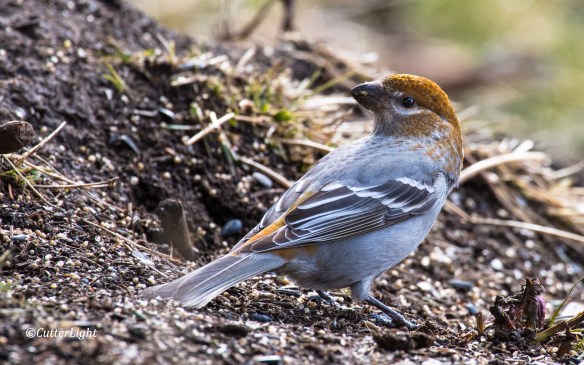
Resplendent! This male Pine Grosbeak came down from a tree crown to forage beneath one of the feeders at White Spruce Grove.

When we stepped out the door yesterday morning, the first thing we noticed was a new song in the air. A spring song. Returning Fox Sparrows have been the first to begin this each year we’ve been in Chignik Lake, but the warbling melody didn’t sound like a Fox Sparrow’s riff. We could see the bird, a plump silhouette atop a spruce tree near the church and since we were on the way to the White Spruce Grove to top off bird feeders anyway, the obvious choice of walking path was the one that would bring us nearer to the singer.

The female grosbeak briefly joined her mate.

Pine Grosbeak, brilliant red and singing for all he was worth. Quite a change from the brief but distinctive Peek Peek! we hear from this species throughout fall and winter. It wasn’t a new bird, but it was new behavior. We continued on the half-mile to the spruce grove with anticipation.

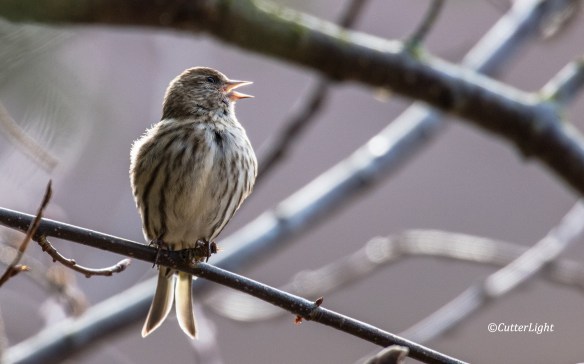
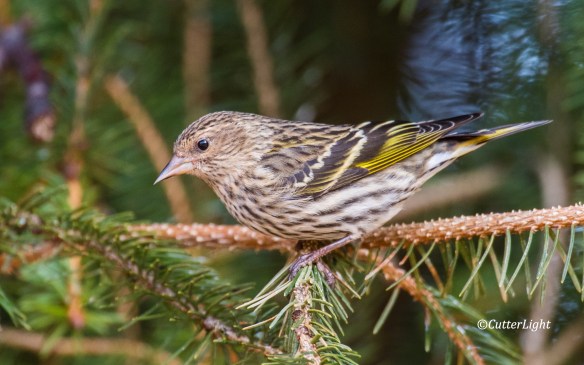
Our Pine Siskins were their usual raucous selves, singing, squabbling, gorging on seeds, darting from tree to tree.

Along the way scattered flocks of Pine Siskins buzzed and called from the sky and from a neighbors’ house where they sometimes take refuge in a few spruce trees while visiting the feeder there. Magpies, common here at The Lake, made their presence known, as did a woodpecker, almost certainly a Downy though we couldn’t find it. Further along a pair of Black-capped Chickadees gave a couple of their various calls from willows, the branches of the scrubby trees suddenly having turned bright yellow-green and beginning to bud.

My guess is that when the time comes, the siskins will head up the peninsula to the denser spruce forests around Lake Iliamna and similar places to nest, but they’ve been welcome winter visitors the past two years.

At the White Spruce Grove the usual Siskins, which showed up last fall and have spent the winter, were busy at the feeders as well as prying the last seeds from cones. But there were a few larger, rounder shapes foraging on the ground as well. We didn’t get our binoculars up in time to have a look, but as we were filling the feeders we heard the unmistakable plaintive song of Golden-crowned Sparrows.

There’s just a touch more gold in this Golden-crowned Sparrow’s crown than there may have been a month ago. He’s still a ways off from full breeding plumage though.

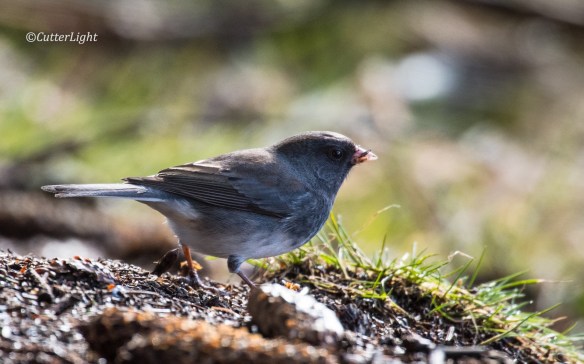
Sure enough, once we scattered a little seed along the brushy edge where they like to feed, they began to show up, and they brought a Dark-eyed Junco with them. Seldom observed out on the Alaska Peninsula – and absent altogether or marked with a question on most of the region’s birding lists – Juncos have shown up in small numbers each of the three winters we’ve spent here. In fact, we think we have the only documentation on the peninsula of Oregon race juncos.

While there have been fewer Juncos at the Lake than there were last year, every so often we see one or two or three.

The Golden-crowned Sparrows appear to have just begun growing in their breeding plumage. Some of the male Siskins though are already there, showing off brilliant canary yellow in their primaries. At one point a Belted Kingfisher rattled by, most likely a male getting things ready for the females that will soon return. Ravens called in throaty croaks from a far hill. No ducks on the water and no eagles on their usual perches, which is a little unusual. Perhaps the ducks are already up at Black Lake where most of the nesting occurs. Gulls will begin returning any day.

Sleepy but looking well fed, she lost both of her fully-fledged chicks last year, one to an electrical box on a utility pole and the other to some other cause. We’re hoping she nests again this year with much better luck.

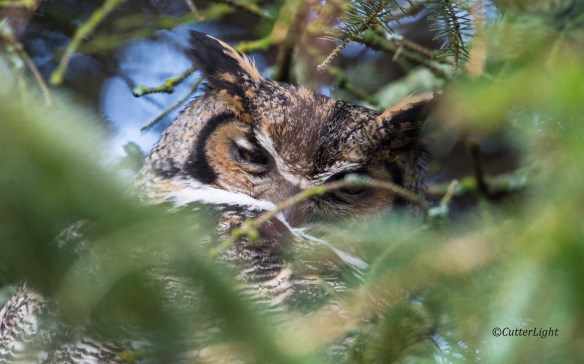
We aren’t always lucky enough to see one and we rarely see both of them, but this was a red letter day as both of our Great Horned Owls – the female and the slightly smaller, more lightly colored male – were perched where we were able to find them. As is usually the case, they were buried in shadows behind thick evergreen boughs, aware of our presence but seemingly unconcerned. The ground beneath their favorite roosts is littered with bits of hair, feather, bone and beaks and oblong balls the size of two thumbs placed together packed tight with the remains of the various voles, Magpies, ermine, lemmings or whatever else constitutes one of their meals. Last year the female spent several days perched atop a winter-white Snowshoe Hare – several meals.

Discernibly smaller and with brighter plumage, we feel fairly certain that this is the male. The Ainu – Japan’s indigenous people – believed that owls protected their villages. They are certainly regal animals.

Frost on the ground this morning, but if you look closely at the photos, you can see other signs that spring is coming to Chignik Lake. Hopefully I’ll be posting a video of a Fox Sparrow singing in the near future.

With their uplifting songs and stunning plumage, if birds didn’t actually exist I don’t think we’d believe that they even could exist. They certainly brighten our world.

Skiffin’ – A Chignik Version of the Sunday Drive: Sunshine, Sea Birds, Seals and Snow-covered Mountains)

The view at Hatchery Beach, a wind-swept shore on Chignik Lake where sufficient upwelling and pea-sized gravel create ideal conditions for Sockeye Salmon to spawn. The stream-fed pond behind the strip of land is a feasting area for our huge brown bears from summer through fall.

It was a perfect day for skiffin’ – full-on sunshine, light breezes and a mid-day high tide pushing far enough up the river for The Shallows to be passable. The tide meant access to the Lagoon, the saltwater estuary where Chignik River debouches into the Alaska Gulf and an opportunity to photograph Emperor Geese. So when a friend called with an invitation to go out in his 18-foot Lund, we made quick work of lunch and pulled our camera gear together. Oh, and we bundled up; highs are only reaching 40° or so (4 or 5 degrees C) and it’s always colder on the water.

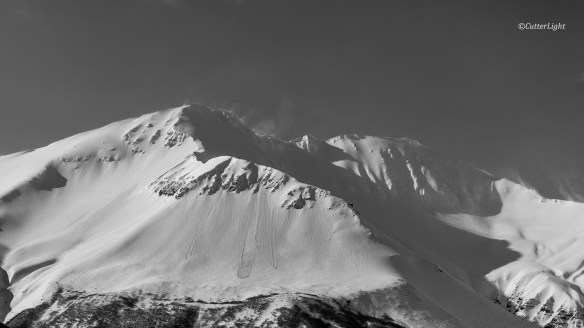
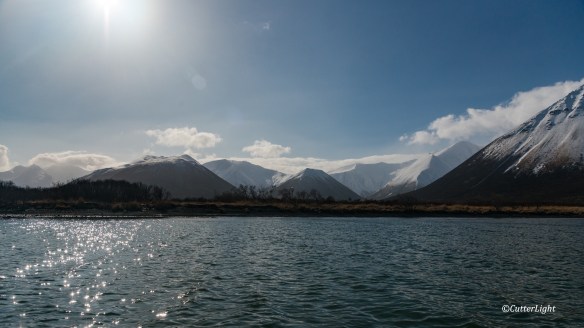
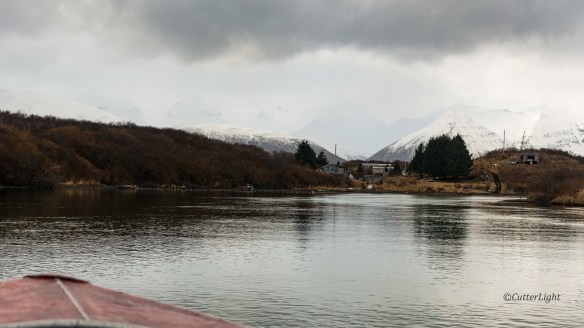
The Chignik Mountains surrounding the lake were shouldered in fresh, powdery snow. Kudos to Barbra on the landscape photographs in this article. It can be tough getting good shots from a bouncing boat.

Every plane coming into the village prompts two questions: Mail? Freight? Other than this plane and one other skiff, we had the lake, the river, the lagoon and the day to ourselves. 

Check out those talons… and that beak! Although we see eagles nearly every day, we always pause to admire these magnificent birds. I surprised myself a little with this shot. Even with a light breeze there was enough chop on the water to have the skiff (Chignik for what Pennsylvanians would call a boat) bouncing like crazy – a problem magnified several times over with a long wildlife lens and a teleconverter attached to my camera. Most of the time I couldn’t even find the bird in my viewfinder, and when I did I had less than a second to shoot before the boat rocked and the bird wildly bounced out of the frame. But he (or she) was patient with me and I had plenty of light to shoot fast when the chance came. They’ll be nesting soon, I imagine.

Here’s Hatchery Beach looking back toward the Clarks River watershed – a significant spawning tributary and with its nearly clear-as-air flow a magical place to fly-fish.

And a third shot moving up the lake along the Hatchery Beach shoreline. We’ve often thought that a lot of these mountains, which top out at just over 3,000 feet (1,000 meters), would make for a good climb. The main feat might be getting through the jungle-thick alders at the base.

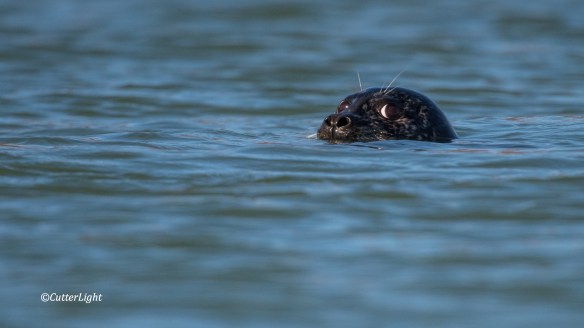
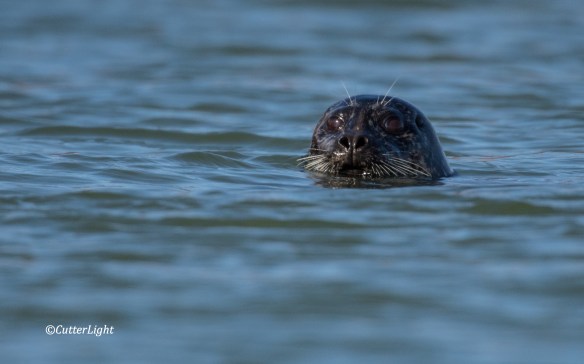
Cute, right? There always seem to be a few Harbor Seals in Chignik Lake and, I’m told, further up in the headwaters at Black Lake.

Here in Alaska, the population of Harbor Seals in Lake Iliamna gets a fair amount of attention. Yet we’ve never read a single word about the year-round seals in the Chignik System. One year I got a photo of nine seals hauled out together on lake ice across from our house. On this day, we saw this one and another that was sunning itself on a rock. I’d love to know more about what they eat once the salmon runs are finished.

Heading back down the lake toward the lagoon we passed our village on the right. Our house is the white duplex closest to the water toward the right of the photo. The large building to the left and behind our house is the school, and just to the left of that, almost center, you can see the golden steeple on the Russian Orthodox Church. Just 30 yards from the lake, our living room/dining room windows are ideal for wildlife viewing. From these windows we’ve seen a wolf, a wolverine, a beaver, moose, ermine, voles, lemmings and a number of brown bears, otters and harbor seals. Eagles, kingfishers, several species of ducks, common loons, magpies, ravens and a number of passerines are common along with our resident Great Horned Owls. Falcons are less common but Merlins nest here, and during summer we frequently hear and occasionally see sandhill cranes.

This photo was taken at the head of the Chignik River on the return upriver to the village. I include it because it shows the copse of 20 trees we call White Spruce Grove – a small but important piece of bird habitat. This is where we see most of the black-capped chickadees, juncoes and other sparrows, redpolls, Pacific wrens, golden-crowned kinglets, pine siskins and white-winged and red crossbills we’ve written about in other articles. Thus far, we’ve documented over 70 species of birds in or near Chignik Village, a few of which had, to our knowledge, never before been reported on the Alaska Peninsula. Predators such as sharp-shinned hawks, merlins, owls and shrikes use these trees as well. Note the net, marked by a line of white floats on the water, extending from a skiff out into the river. A neighbor has been catching Sockeyes of about 22 to 23 inches, most probably a resident strain of fish that never go out to sea.

Although they occasionally visit the river during summers, and rarely are seen on the lake, we found lots and lots of harlequin ducks at the lagoon, the males (far right) already beginning to come into breeding plumage.

As with the harlequins, pelagic cormorants are uncommon visitors to the lake and river but abundant in the lagoon. And as with the photo of the eagle, some of these shots surprised me when I got them on the computer. This was a point, swing, hope and click effort with a pelagic heading in the opposite direction as our skiff cruised by.

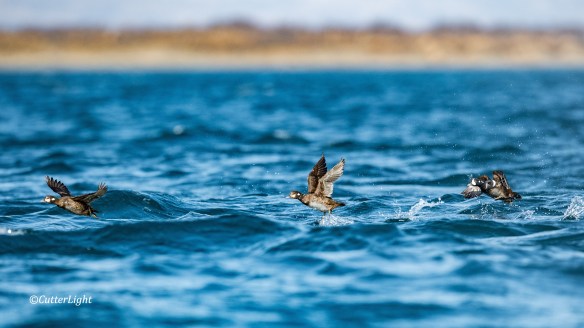
I can count on one hand the number of times long-tailed ducks have shown up on the lake. Usually mixed in with other species, their distinctive coloration (a little like a scoop of strawberry, chocolate and vanilla Neapolitan ice cream) always makes me do a double-take. But they proved to be probably the most common bird on the estuarine lagoon on this outing, rivaled only by harlequins. The center bird is displaying his eponymous tail. Like harlequins, long-tailed ducks are fairly catholic in their dining habits and there’s simply a broader smorgasbord in the lagoon than in nearby freshwater. We foolishly left our binoculars behind, but there were a number of other species on the lagoon including what appeared to be a football-shaped phalarope so stuffed with whatever it was eating it could barely fly. From June through September the lagoon and nearby waters are a staging area for millions of returning salmon – in good years nearly two million reds (sockeyes) along with tens of thousands of silvers (coho) as well as pinks, chums and kings. 

Our friend had mentioned the lagoon’s flocks of Emperor Geese and I was hopeful of getting some photos. Unfortunately, as a hunted species, they proved to be fairly wary. Here a group of 200 or so birds take flight while we’re still well off their sand spit roost. (Thanks for the hero shot, Barbra!)

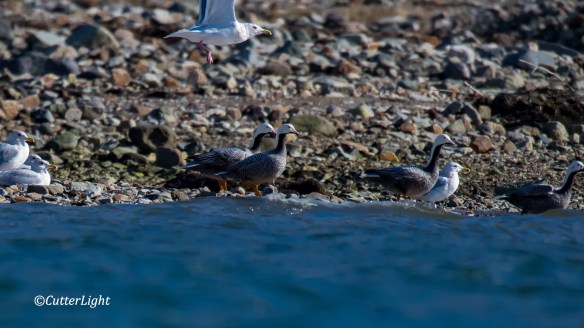
At the one place where we were able to get reasonably close to a few geese, colliding current and wind caused the skiff to bounce like crazy. But these handsome birds with white heads and napes, pink bills and yellow-orange legs are emperors – the first I’d photographed and a new bird for my Chignik List.

There’s little as stirring as wildlife abundance. I estimated close to 200 geese crowded together along with a few gulls on this last significant spit before the lagoon opens into the Alaska Gulf.

And there they go. I hate spooking wildlife. Just prior to this shot, birds were still dropping in to join the roost – but often it only takes one bird with antsy wings to get the rest up and going. The day was a lot of fun though and we got a few shots. Hopefully we’ll do another episode of skiffin’ in a few weeks to inventory the bird population again!

If you enjoyed this article, try typing “birds” into the search bar near the top of the page. You can find additional reading about our tiny bush village of Chignik Lake by typing those words into the search bar as well.

Purple Martins: The Highest-Flying Swallow

purple martins w draggonfly n

The Catch: Purple Martins, Kimiwan Lake Bird Walk, Alberta, Canada

Swallows are a favorite bird wherever they fly, and among them North America’s largest and most universally appreciated species is without a doubt the Purple Martin (Progne subis). Before Europeans ever came to North America, Native Americans in the South were known to hang hollow gourds as nesting boxes to attract these birds. The beneficial nature of Martins is well known: not only do they consume enormous quantities of insects that humans consider pests – among them horseflies, beetles, termites and grasshoppers -, they also aggressively drive away birds of prey as well as crows and thus were traditionally welcomed by farmers. Often soaring at altitudes of several hundred feet, Martins capture their prey exclusively on the wing; they quench their thirst on the wing as well, skimming the surface of ponds, lakes and rivers.

purple martin male gun metal n

Iridescent purples and gun metal blues mark the plumage of the male Martin.

Although the range of the three subspecies of Martins covers most of the U. S. and sections of southern Canada, they tend to be rather uncommon. This is due in part to their very specific nesting requirements and to the fact that invasive species – European starlings and house sparrows – frequently outcompete Martins for preferred sites. Formerly found in hollow trees, Eastern Martins have almost exclusively shifted their nests to human created housing: apartment-like complexes on poles, rows of houses side-by-side, or, particularly in the South, hollow gourds. Like Chimney Swifts and Barn Swallows, Eastern Purple Martins have become dependent upon humans for nesting sites.

purple martin female n

The plumage of females is lighter in color, predominated by shades of brown.

Writing in the early 1800’s, John Audubon observed the ubiquitous nature of Martin nesting boxes in America:

The… Indian is also fond of the Martin’s company. He frequently hangs up a calabash on some twig near his camp, and in this cradle the bird keeps watch, and sallies forth to drive off the Vulture that might otherwise commit depredations on the deer-skins or pieces of venison exposed to the air to be dried. The slaves in the Southern States take more pains to accommodate this favourite bird. The calabash is neatly scooped out, and attached to the flexible top of a cane, brought from the swamp, where that plant usually grows, and placed close to their huts. Almost every country tavern has a Martin box on the upper part of its sign-board; and I have observed that the handsomer the box, the better does the inn generally prove to be. 

All our cities are furnished with houses for the reception of these birds; and it is seldom that even lads bent upon mischief disturb the favoured Martin. He sweeps along the streets, here and there seizing a fly, bangs to the eaves of the houses, or peeps into them, as he poises himself in the air in front of the windows, or mounts high above the city, soaring into the clear sky, plays with the string of the child’s kite, snapping at it, as he swiftly passes, with unerring precision, or suddenly sweeps along the roofs, chasing off grimalkin, who is probably prowling in quest of his young. Birds of America, John J. Audubon, printed 1827 – 1838.

Purple Martin male wings n

Healthy Martin colonies indicate a healthy environment.

The next time you see a large flock of dark birds, look closely. Although often starlings, Martins, too, come together in the thousands and even hundreds of thousands, particularly in late summer as they prepare to migrate to South America.

For more information about Purple Martins, or to learn more about building a nesting complex of your own to attract them, visit www.purplemartin.org

For more information on the wonderful Kimiwan Nature Walk and Interpretive Center in McLennan, Alberta, please visit www.kimiwanbirdwalk.ca.


Still Life with Woodpecker

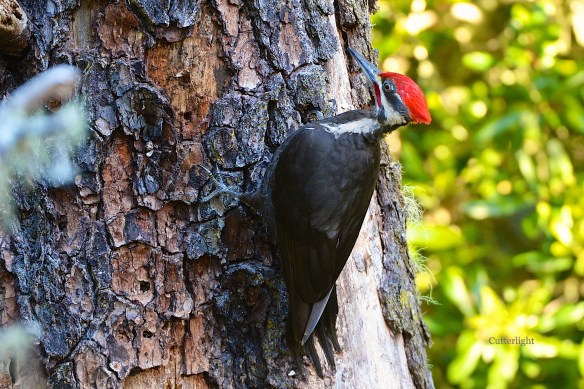
pileated woodpecker n

Traveling up Highway 1 through Oregon, heading back home to Alaska, reading Tom Robbins’ Still Life with Woodpecker along the way. Saw this pileated woodpecker in Bullards Beach State Park.

Lots of wildflowers and butterflies, too, and a herd of Roosevelt elk.

Still Life with Woodpecker

Red-billed Chough: Corvids are Cool

Red-billed chough

Striking a regal pose after a morning of catching grasshoppers: Close cousins of crows, ravens, jays and magpies and adaptable to both urban and wilderness environs, choughs are common around Ulaanbaatar.

chough convention n

The convention: On the crest of this rocky hill, there were dozens of choughs. A hundred. Maybe more. Many of them were gathered around a cluster of chough feathers near these rocks. A fox? A kite? An eagle or hawk? Some predator had diminished their numbers by one. The entire flock was concerned.

choghs flock of n

Choughs in dawn light, hanging together, winging their way across the mountains and steppe near Ulaanbaatar.

Penduline Tits: Nest-Builders Extraordinaire

Penduline tit gathering nesting material

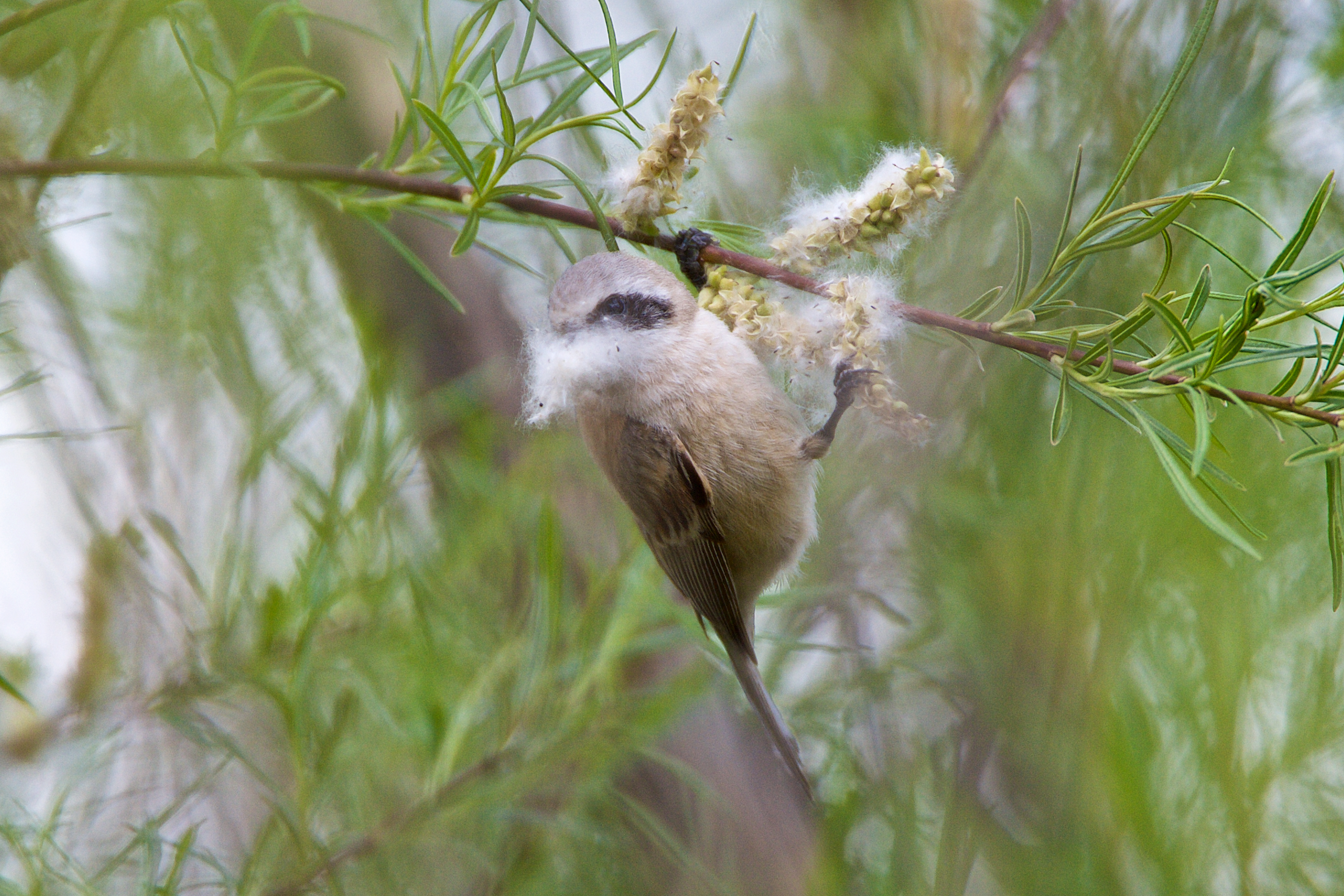
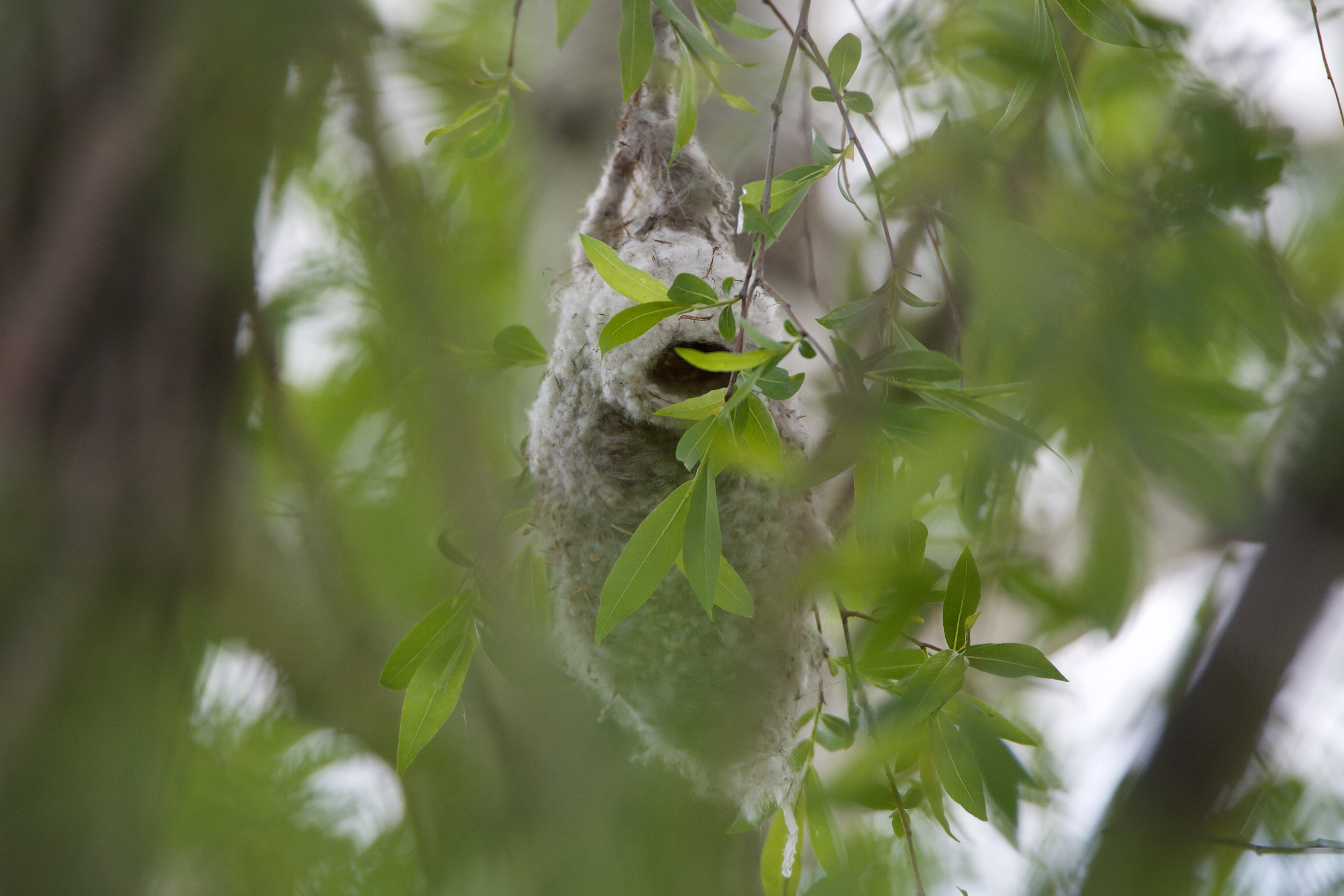
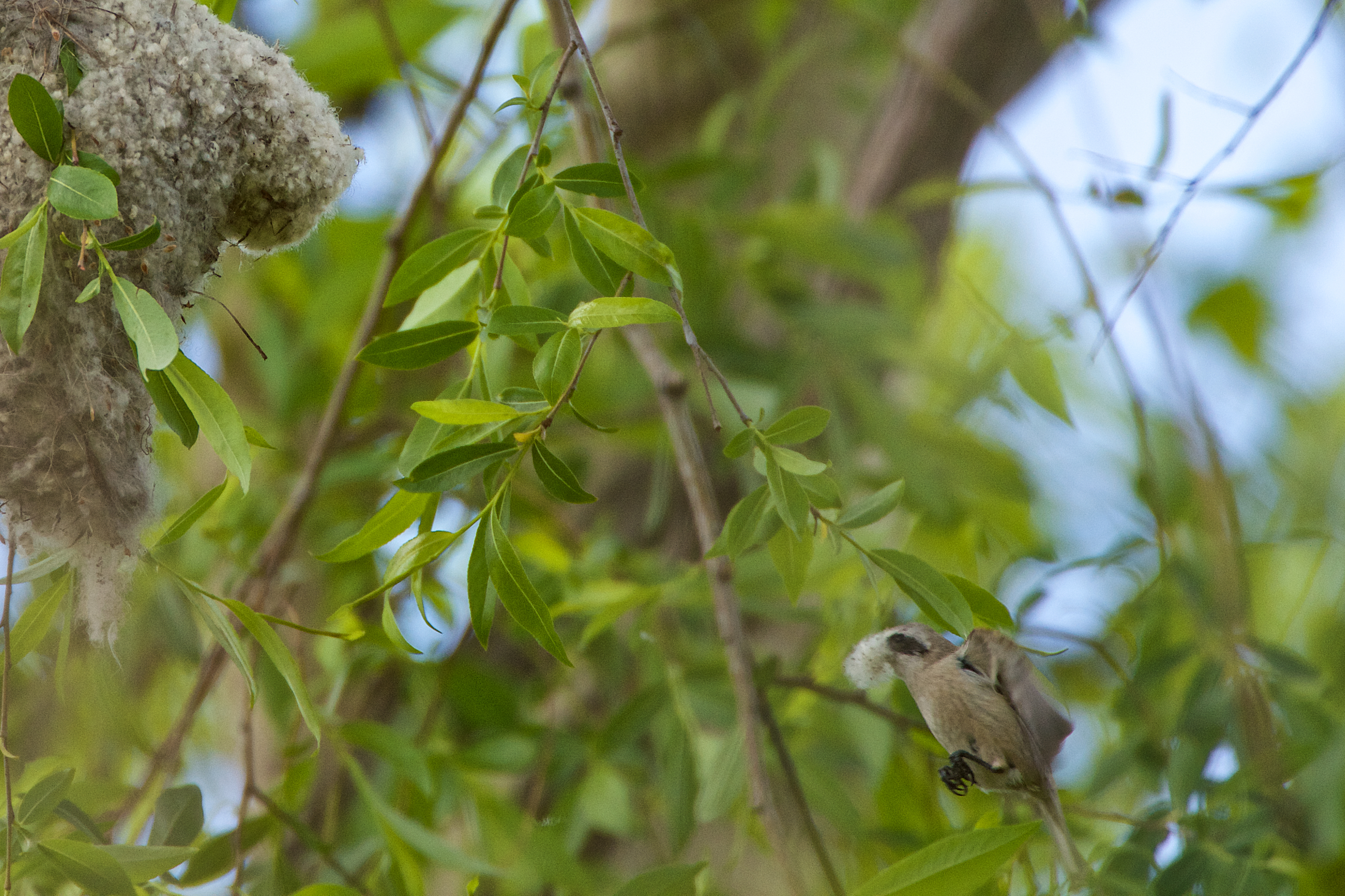
His face stuffed with down from willow catkins, this male white-crowned penduline tit (Remix coronatus) was hard at work finishing one the bird world’s most unique nests. (Eight more photos)

During this past winter, we found a couple of mitten-shaped nests suspended from bare branches near the Tuul River. The birds were long gone, but I looked up the nest: Penduline tits, a new species for us and one we hoped to see when they returned in springtime. So, on a recent evening as I was walking along the river, I was listening for something I hadn’t heard before. With the willows and poplars now leafing out, I figured song was my best bet at locating nesting pendulines.

Sure enough, not long into my walk I heard something I hadn’t heard before – a twittering and song that sounded like it came from a small passerine. I followed the voice till I thought I was as close as I dare get without spooking whatever was singing, quietly set up my camera and tripod, froze, listened, tried to part the dense willow tangles with my eyes, caught movement and hoped the bird would present itself where I could get a decent photo.

Above is my first photo of a penduline tit.

Penduline tit nest hidden plain sight

Hidden in plain view…

I knew that finding the bird was no guarantee I’d find his nest, but using clues from the nests we’d stumbled upon over the winter, I located the same sort of tree in the same sort of setting, looked carefully among the boughs about 17 feet up, and there it was, hidden in plain view. Penduline tits do not reuse their nests, but they do seek out the same habitat year after year.

There was cloud cover off and on, it was getting late in the day, and the light was all wrong to shoot the nest from the front, so I moved to the side. I was concerned about spooking him off his nest (the males do most of the building), so I kept a distance and tucked in behind some small willows.

Penduline tit nest profile detail

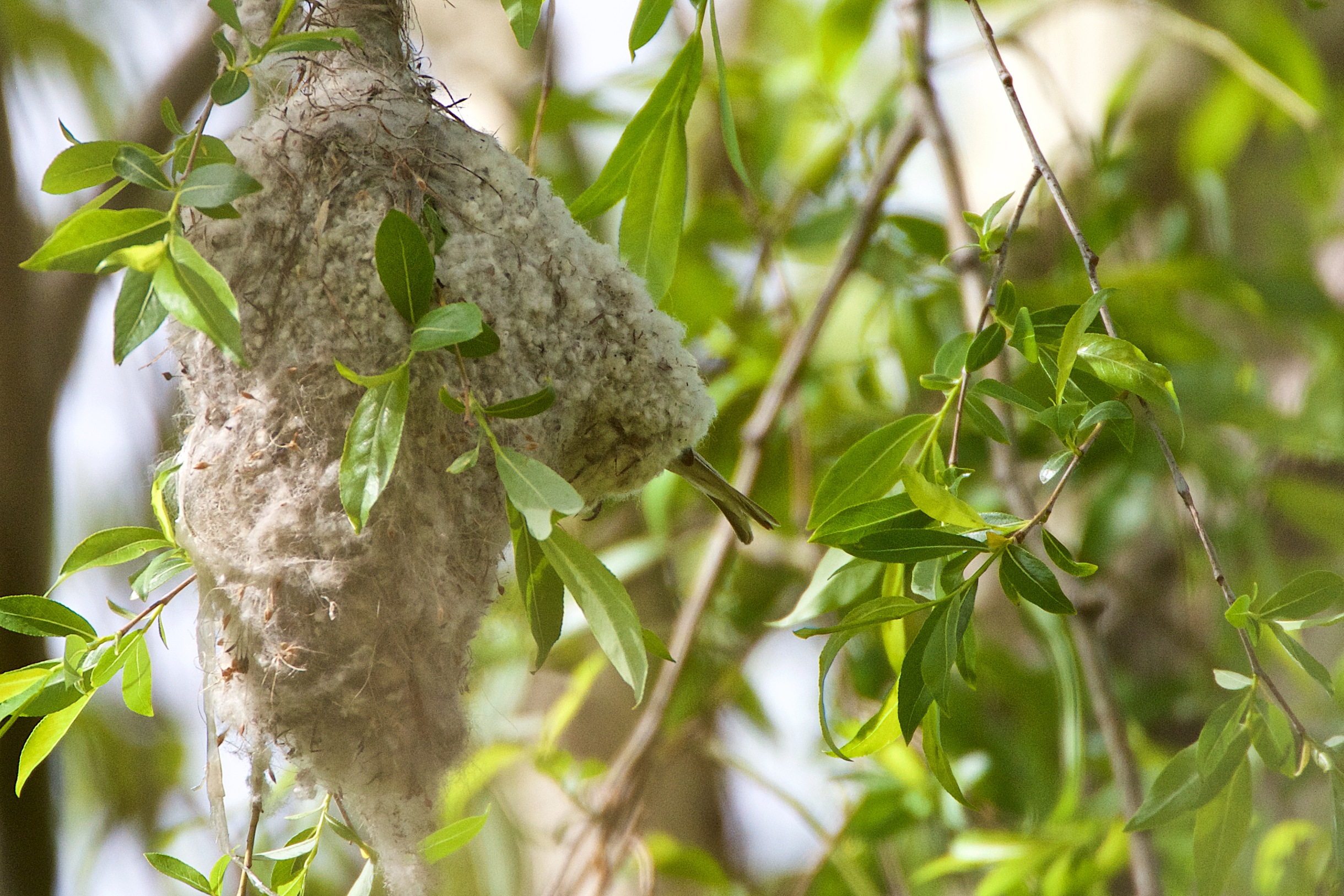
Cottony-soft and virtually impervious to rain and predators, these tough, tightly-woven nests were used as children’s slippers in Europe in the past. The Masai of Africa used those of a related species as purses. This one was swaying and rocking in the fresh spring breezes.

Penduline tit flying to nest w material

Intervals of several minutes passed between the bird’s visit to his nest. I waited still and quiet, my ears straining for his voice among the songs and sounds of rose finches, azure tits, magpies, sparrows and other birds in the riverine forest. I was able to spend a fair amount of time with this little fellow. Above, he is heading into his nest with more downy material.

Pendulin tit entering nest

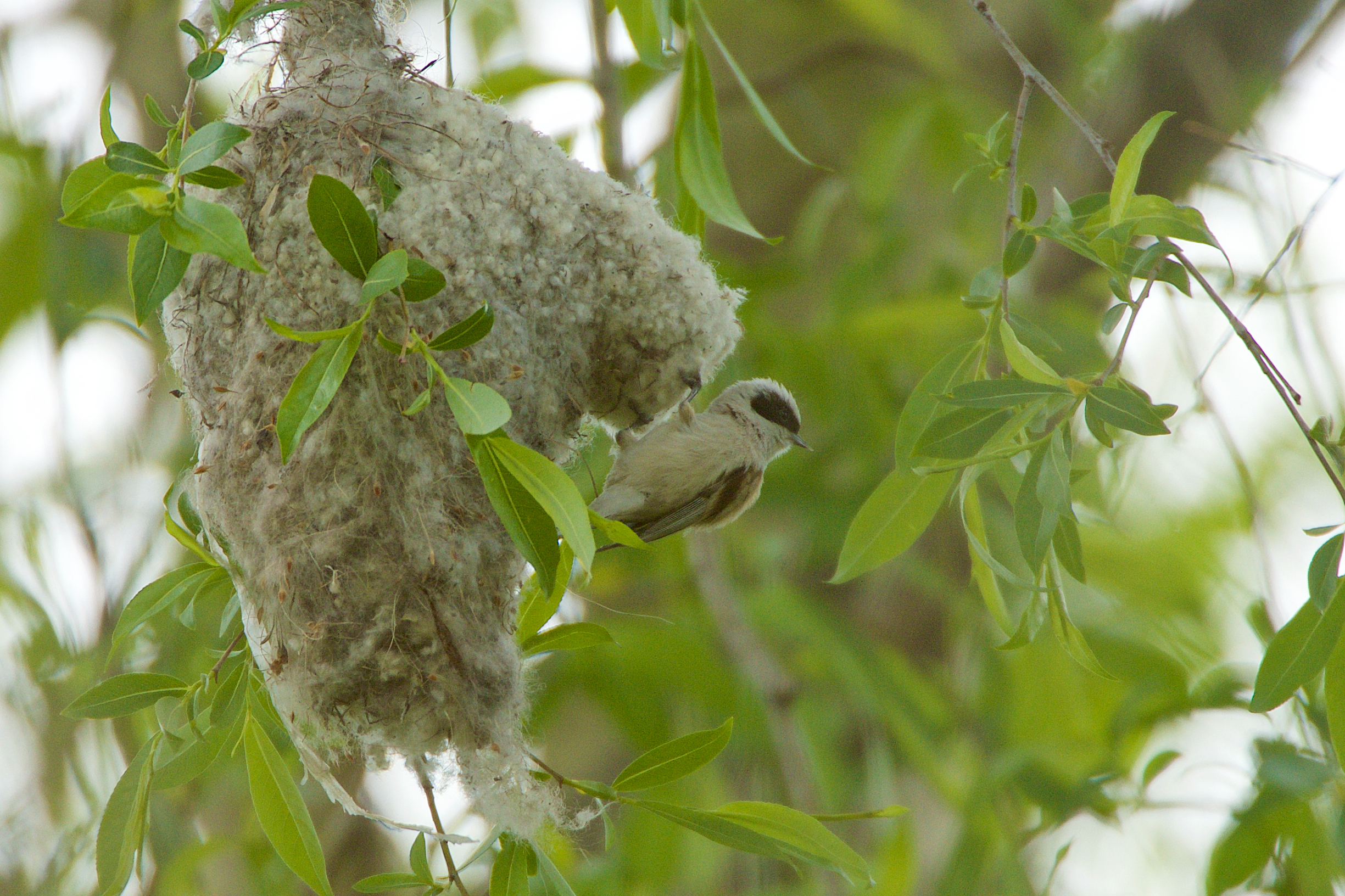
In this frame I caught him just as he was disappearing into his nest. I read that there is a flap, which the bird must open, inside the nest.

Pendulin tit tail feathers

A slight pause just before completely entering… 

Penduline tit taking a look fm nest

A quick look over his shoulder…

Penduline tit taking off fm nest

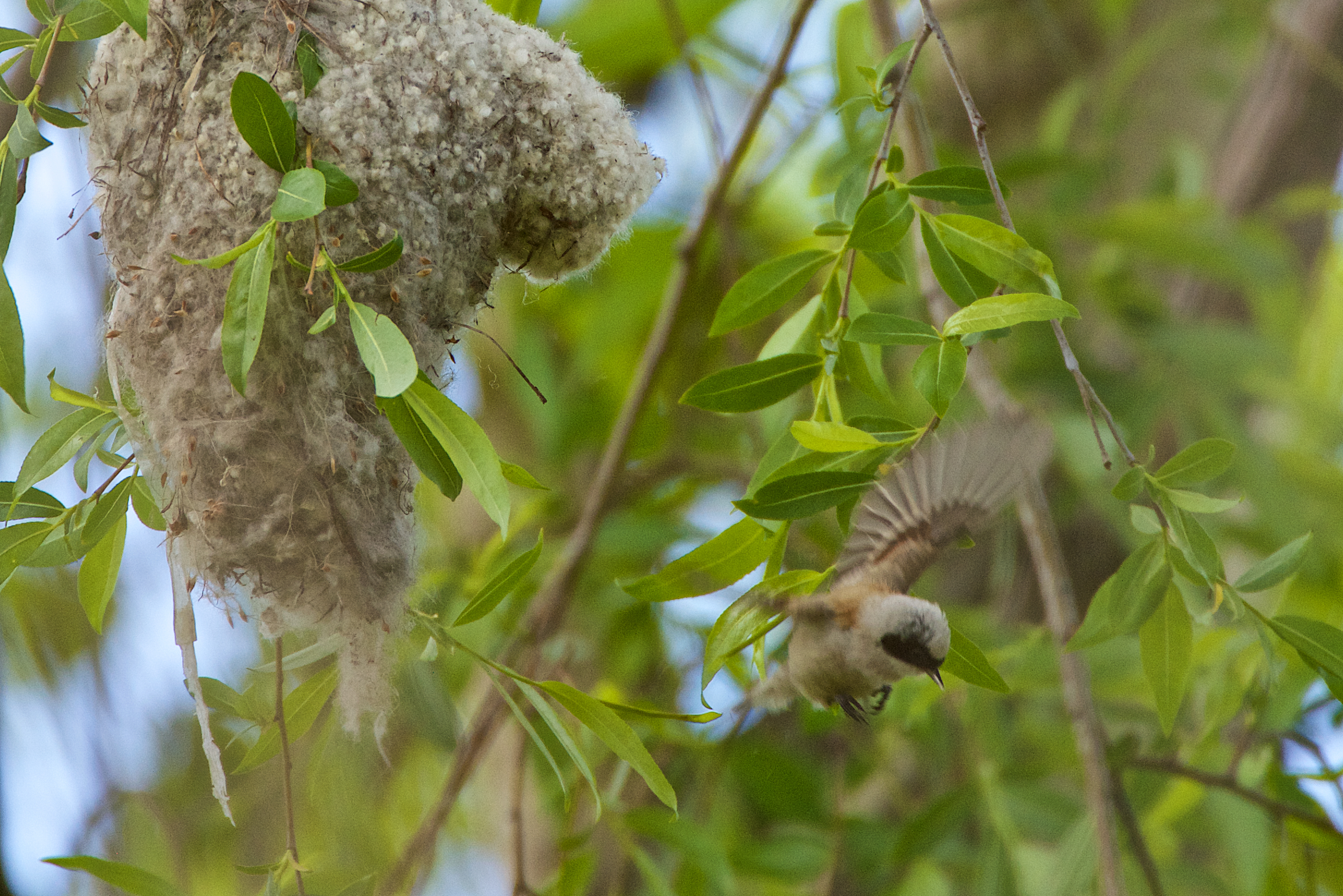
   …and off again for more material.

Pendulin tit working into evening

He was still hard at work when it was time for me to call it an evening and meet up with Barbra…

Click these links to read more about our birding and hiking adventures near Ulaanbaatar, Mongolia

Urban Birding in the World’s Coldest Capital City: A Winter Walk along Ulaanbaatar’s Tuul River

Crows Ice Fishing for Caddis Larva: Tuul River, Mongolia

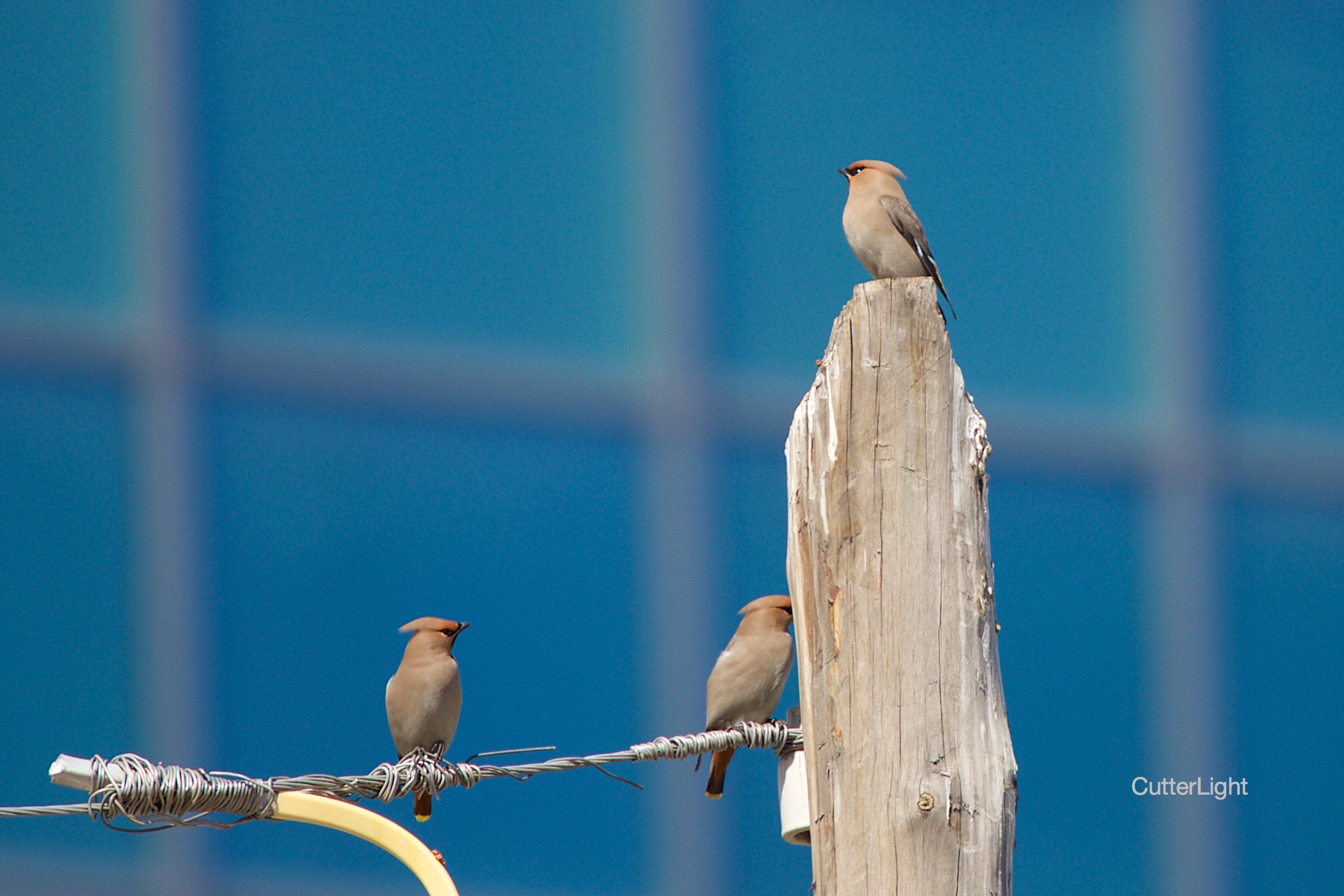
Connected by Waxwings

Spring! April in the World’s Coldest Capital

Bohemian waxwing april 2015 n

Warmer temperatures are bringing flocks of new birds to Ulaanbaatar. These Bohemian Waxwings won’t stick around long; they’re on their way to nesting grounds in Siberia.

One day temperatures are in the 50’s or 60’s (in the teens, Celsius). The next day it’s below freezing with snowfall. And so it has been for the past few weeks from late March through mid-April. Welcome to Ulaanbaatar, Mongolia – officially recognized as the world’s coldest capital city. As transplants from Alaska, it feels like home – albeit a little warmer than our former north-of-the-Arctic-Circle village of Point Hope.

pussy willows catkins n

Pussy Willows – flowers of willow trees – have begun pushing out of their buds along the banks of Ulaanbaatar’s Tuul River.

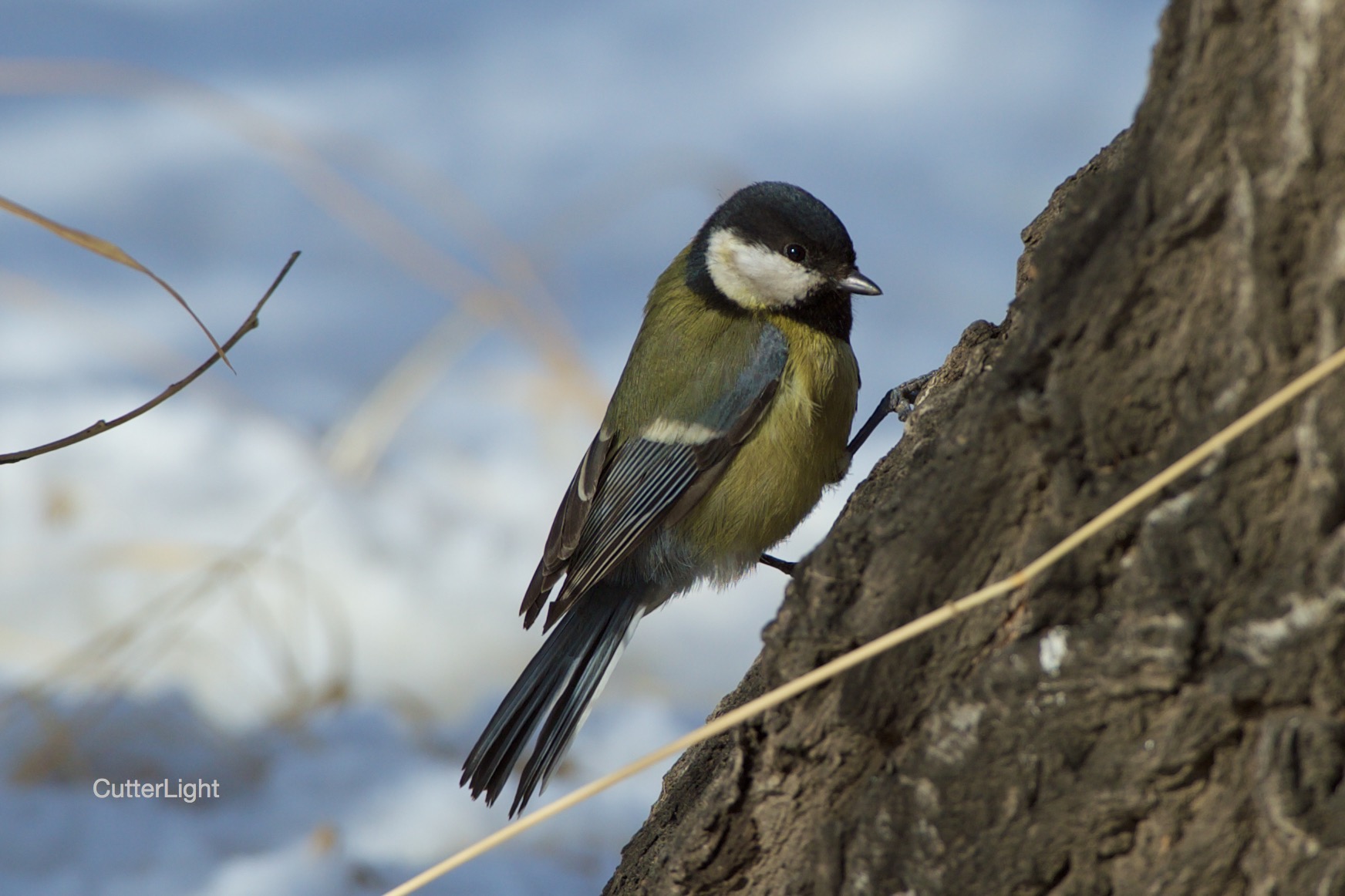
great tit profile tree n

Great tits, above and below, are common residents along the Tuul River as well as in the nearby mountain forests.

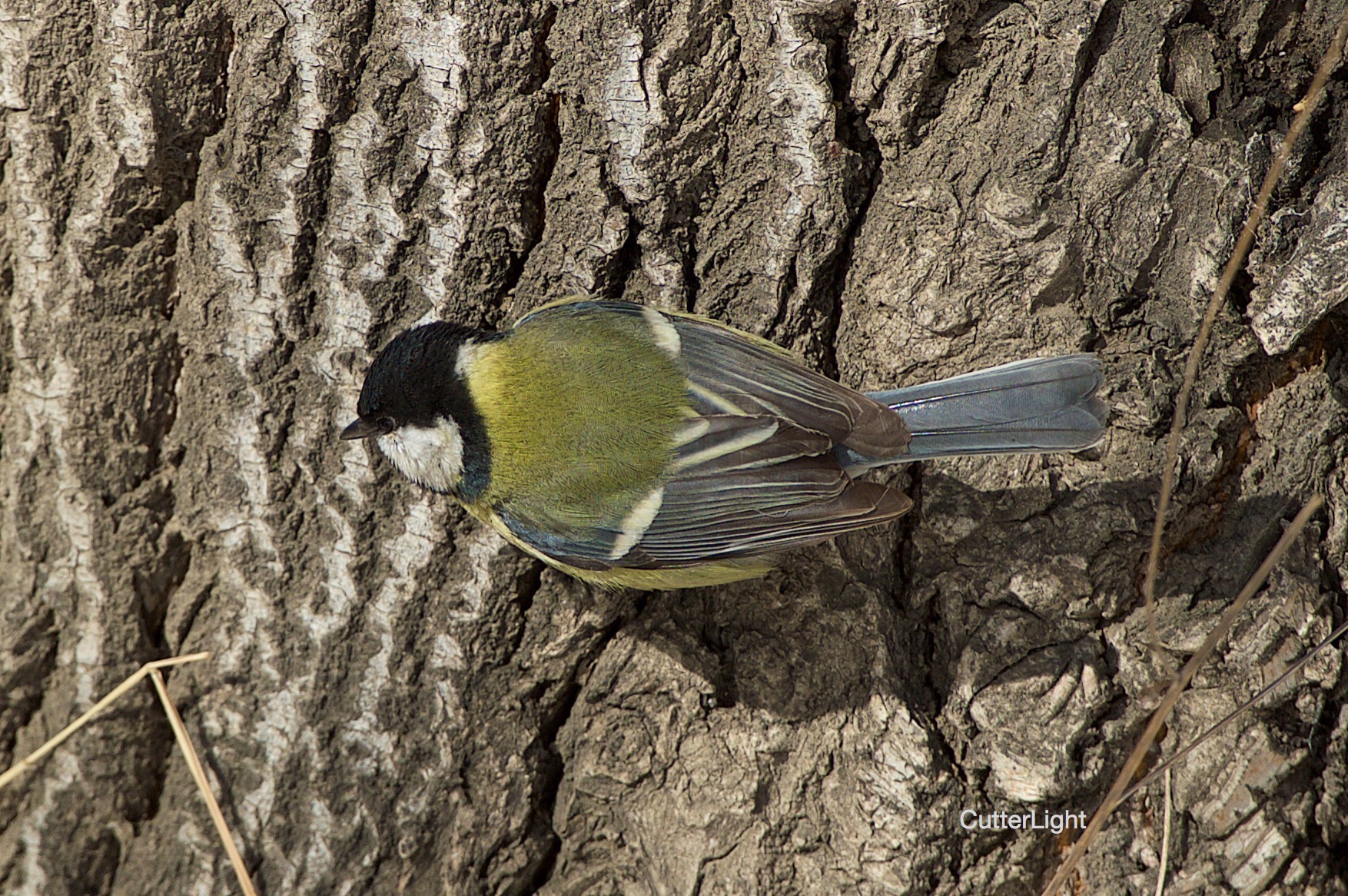
great tit back tree n

Such interesting little birds, all camouflage and color from the head to the mid-back, an abrupt line, and then symmetry from the mid-back through the tail, which, in nature, is its own form of camouflage.
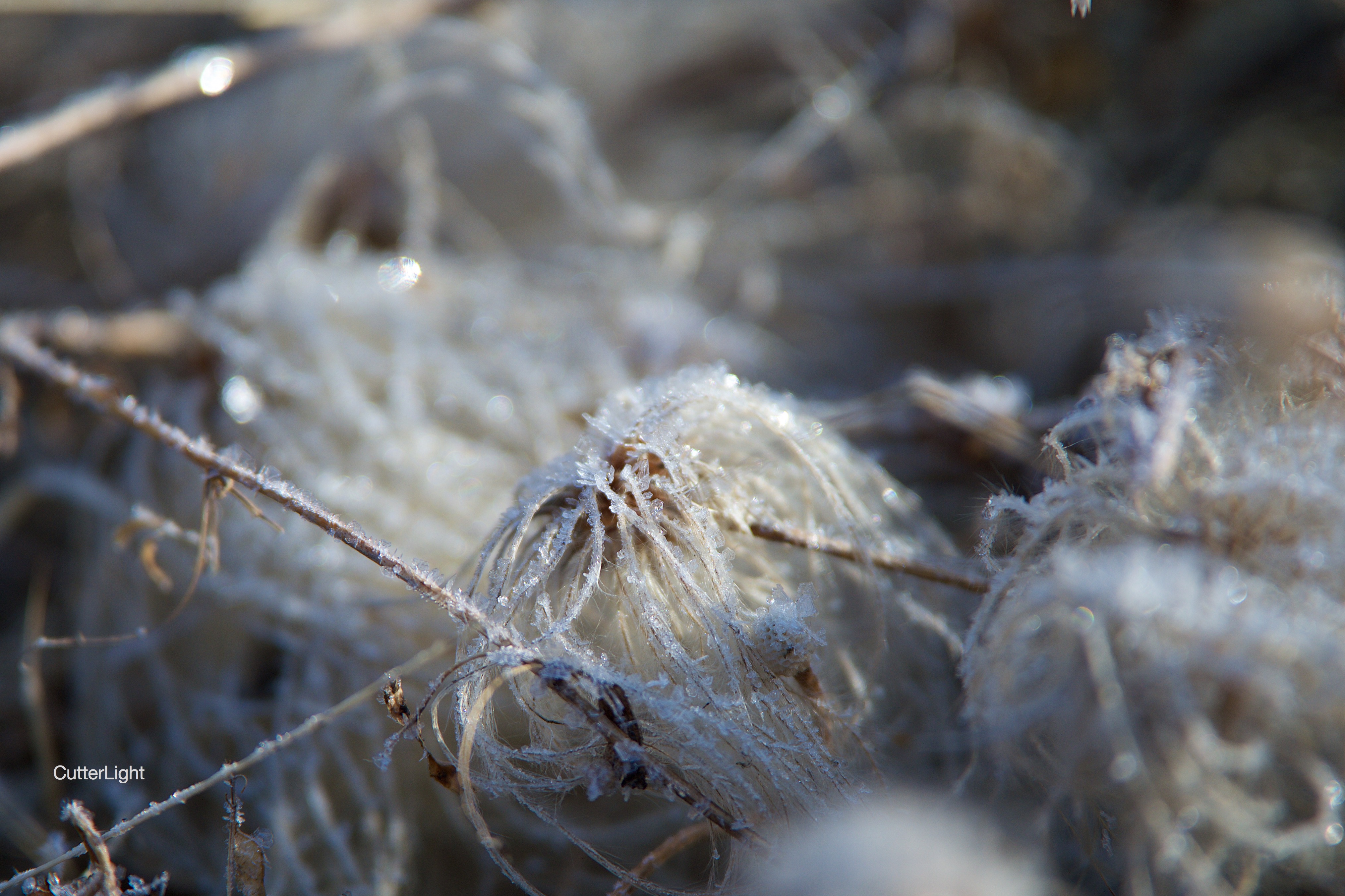
frost jellyfish weed april 2015 n

Early morning frost turned the withered remnant of last fall’s flowers into frozen jellyfish.

jellyfish weed april 2015 n

By late morning, the sun had melted most of the frost…

long-tailed rosefinch n

…while in shaded pockets where snow still lingered, newly arrived long-tailed rosefinches filled up on last year’s store of seeds. The willows and grasses along the Tuul provide the perfect habitat for many species of birds. And, judging by tracks in the snow, rabbits as well.

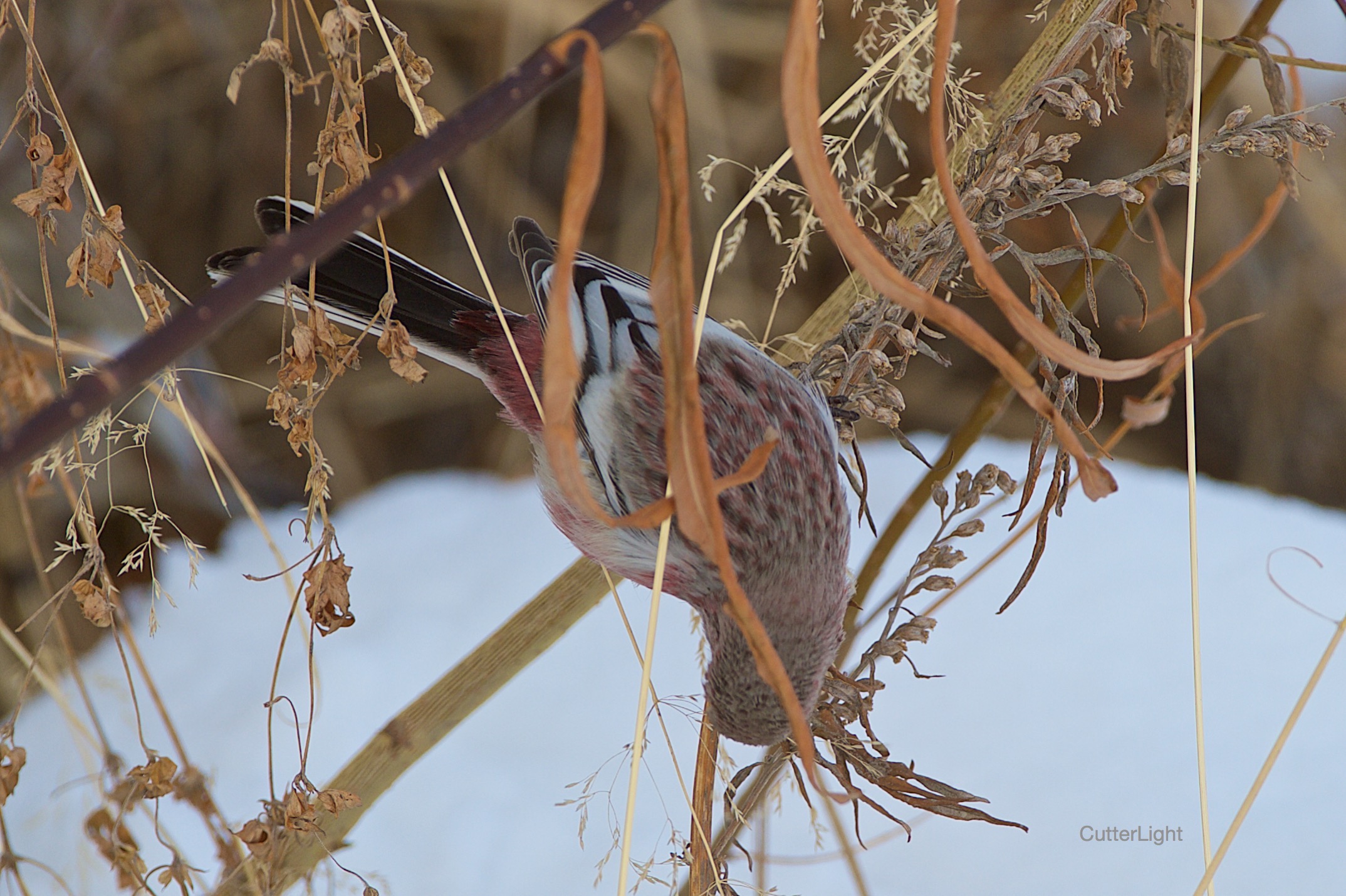
long-tailed rose finch upside down n

Finches become acrobats in pursuit of a good meal.

female long-tailed rose finch n

As is typically the case among passerines, the colors of the female long-tails are subdued compared to their male counterparts.

Magpie March 2015 n

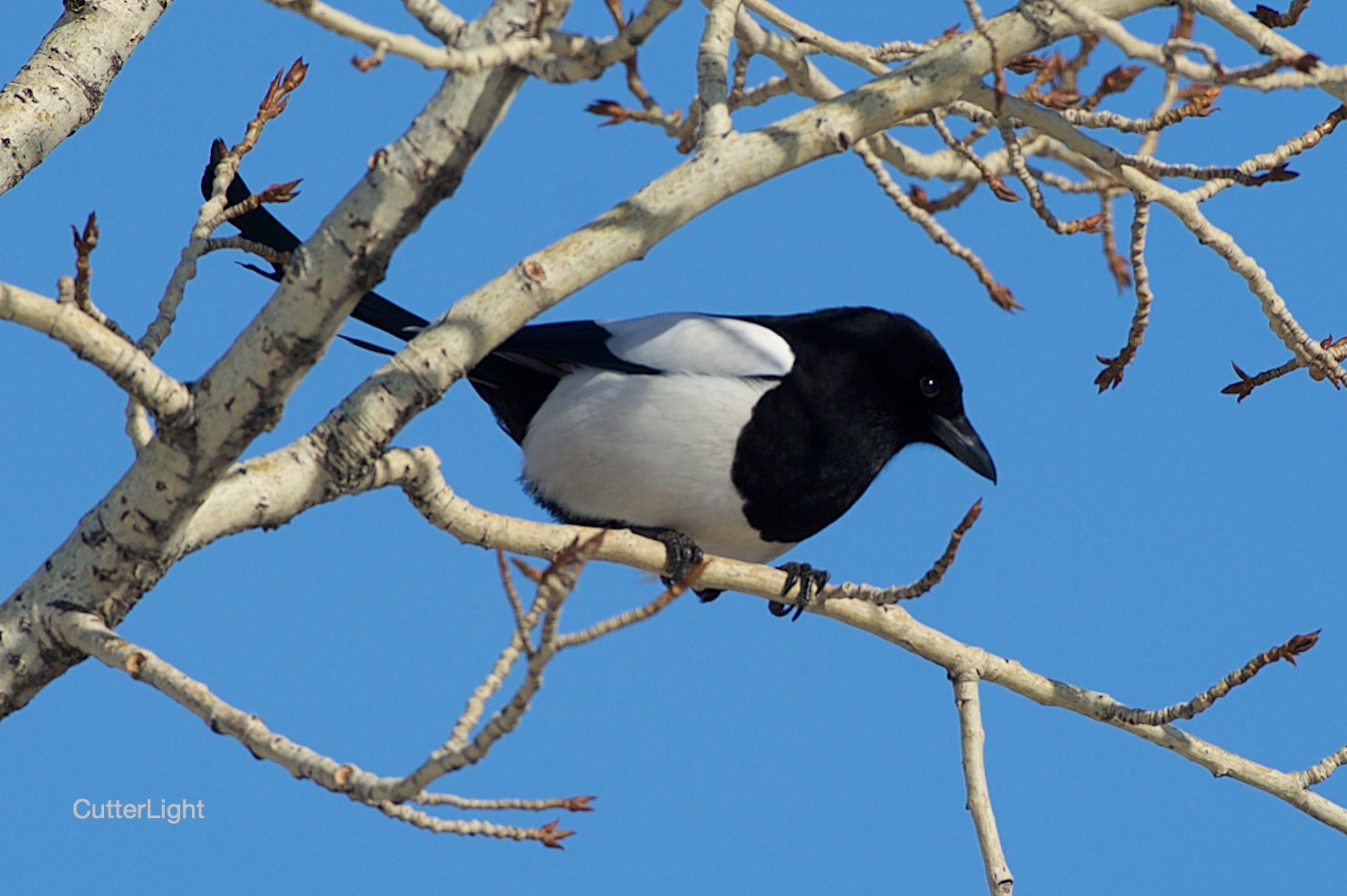
Magpies were out in force, searching for nesting material to add to the massive jumbles of sticks they build in trees. It must work. They return to the same nests year after year, building them ever higher. Note the hooked beak; passerines beware. Magpies are predators, and no mistake.

big tree w sun april Tuul n

The Tuul River green belt is our favorite place in Ulaanbaatar. In addition to providing habitat for year-round resident birds and summer nesters, the abundant seeds provide critical fuel for passerines migrating further north.  The belt is also important hunting grounds for kestrels and other birds of prey as they make their way to their own nesting grounds. The banks of the Tuul are what’s left of an increasingly fragmented ecosystem. We’ve even caught fleeting glimpses of some type of quail or partridge in the thick willow undergrowth!

Resurrection Bay Wildlife, a C-Dory Angler Tour: Sea Lions, Mountain Goats and More

sea lion roaring 2014 nWith a mighty roar this young bull sea lion bellows out that this rock in Resurrection Bay near Seward, Alaska is his rock. Nestled between snow-capped mountains and hosting an abundance of otters, porpoises, seals and sea lions, sea birds by the tens of thousands and with whales almost a given, the bay offers lots to look at. 

A morning filled with sunshine, calm seas and friends visiting from out of town were inspiration to take our C-Dory out for a lap around Resurrection Bay.

mountain goat may 2014 n

sea otter spy hopping 2014 n


Sea otters like this curious spy-hopper are abundant along the shoreline. Meanwhile, scan the mountainsides on the east side of the bay for puffy white balls; put binoculars on them and they might become mountain goats. 

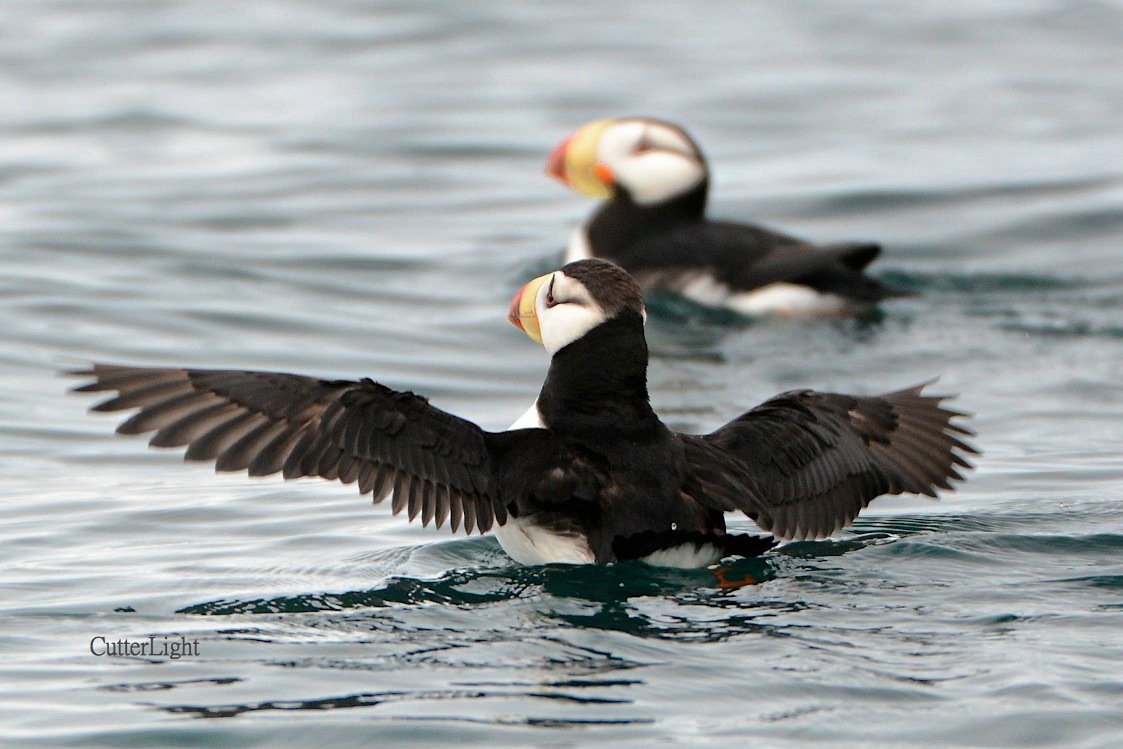
A pair of juvenile sea lions were swimming in the harbor near our boat as we made ready, and almost as soon as we cleared the marina a harbor porpoise arced near our boat. Bald eagles chirped and spiraled in the blue sky overhead, terns and kittiwakes dive-bombed for small fish, and several cormorants, including a crested cormorant, were drying their wings on the remnants of a pier after a morning of fishing. horned puffins may 2014 nHorned puffins are among the tens of thousands of seabirds that nest in the rocky mountainsides surrounding Resurrection Bay.  whale tale may 2014 nNo cruise is complete without encountering the whales that call the outer parts of the bay and the nearby Alaska Gulf home. This sounding humpback appeared to be feeding on herring.  sea lions communicating nThere’s sometimes a fine line between love and aggression. At one point, the smaller sea lion appeared to have its mouth entirely inside the larger one’s. After some barking back and forth and a little more bared-teeth interplay, the larger animal slid into the ice water – perhaps to forage.
kittiwakes nesting 2014 n

Approaching Cape Resurrection by boat, you can smell the rookery well before your eyes pick out individual birds on the whitewashed cliffs. Here, thousands upon thousands of black legged kittiwakes jockey for position as they haphazardly construct precariously perched nests.

murres raft 2014 n

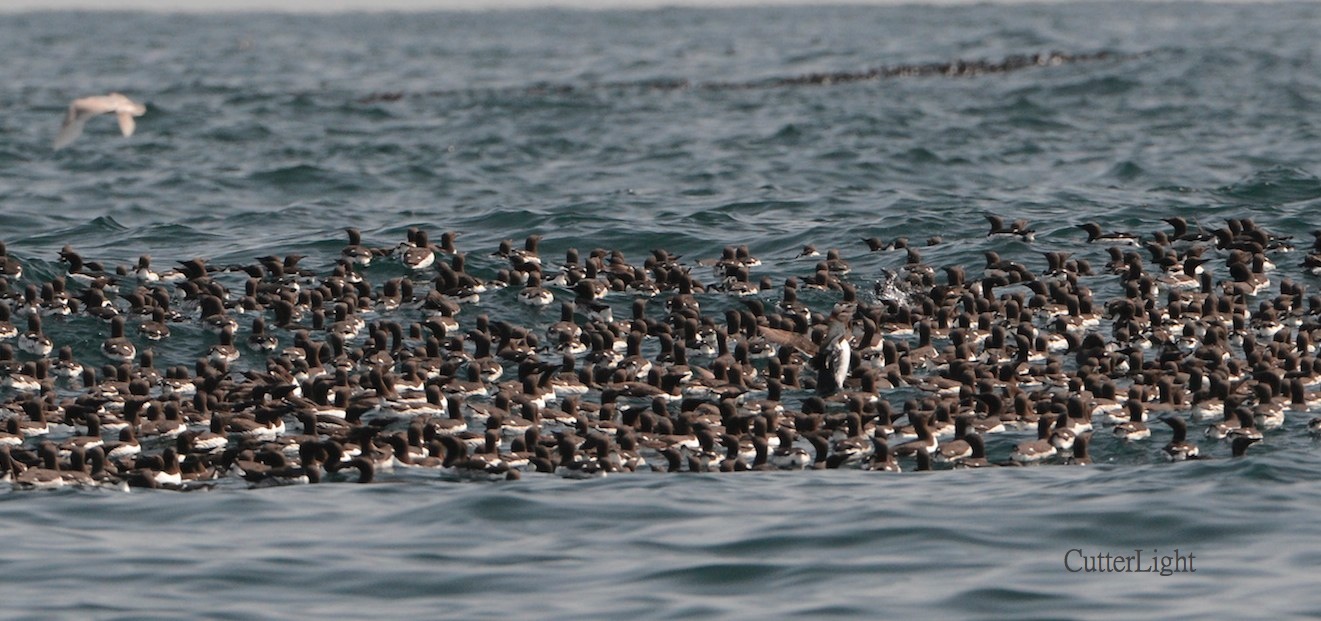
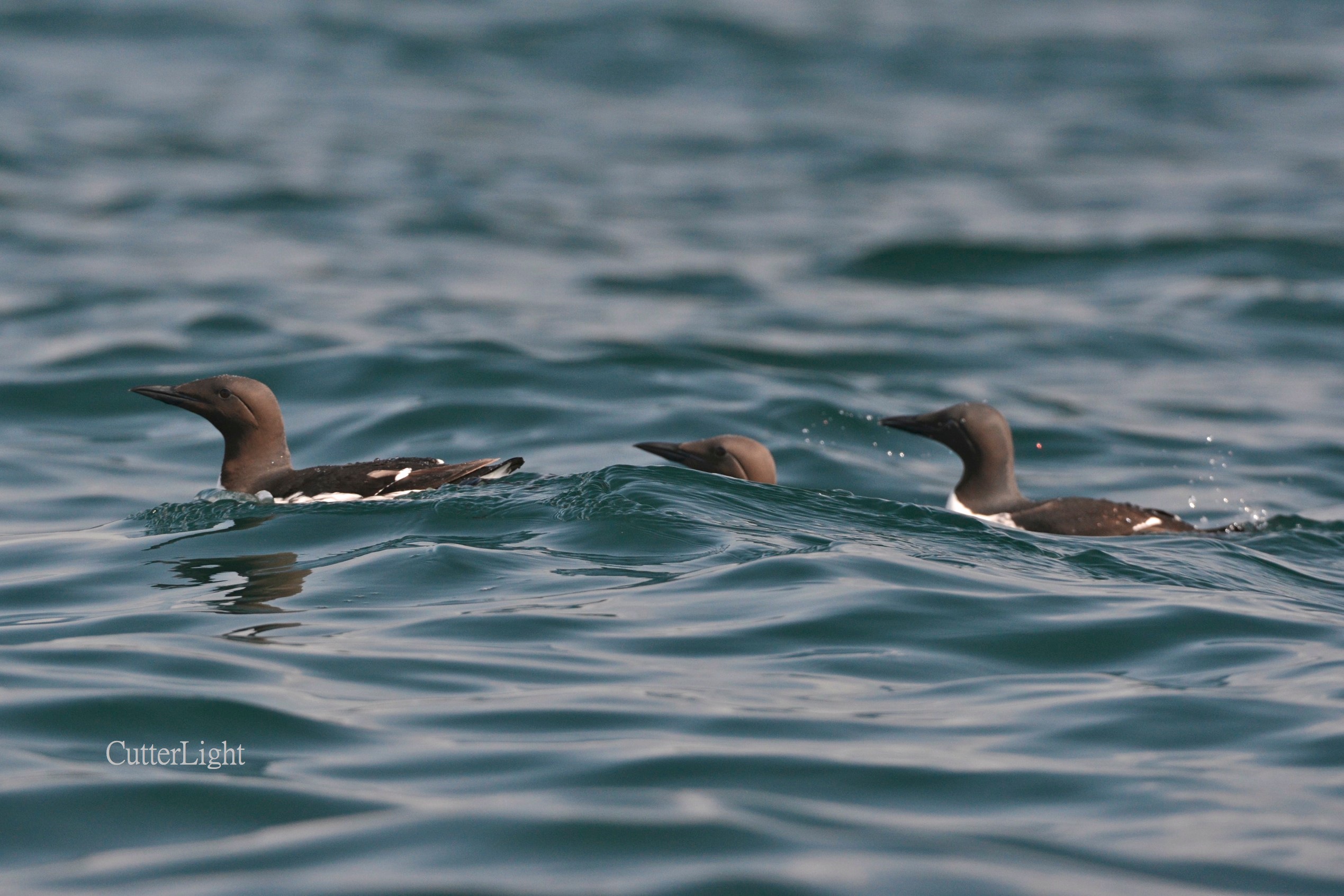
Dense rafts of murres rest near current seams that disorient small fish – the murres’ prey. At times, acres of herring can be seen just below the surface of Resurrection Bay’s waters.

murres 3 2014 n

Thick-Billed Murres are so common it can be easy to forget what amazing birds they are. Somewhat stubby-looking on land, they can achieve flight speeds of 75 miles an hour. In water, they transform into sleek acrobats, capable of dives to over 300 feet deep – the length of a football field.  
tufted puffins may 2014 n

A pair of tufted puffins, golden sunlight illuminating their eponymous feathers, glide through the waters of Resurrection Bay in search of small fish.

Whether life takes you to coastal Alaska or some other shore, we can’t recommend a boat tour of inshore and nearshore waters highly enough. In Seward, local tour boat companies offer daily cruises captained by experienced National Park Service rangers – a not-to-be-missed experience.

C-Dory_new.jpg