Laying in a Year’s Worth of Supplies Part II: The Well-Stocked Kitchen

Penzeys spices have earned a prominent place in our well-stocked kitchen. We recently received an order of items we wanted to make sure we have on hand when we return to Point Hope at the end of the summer. From left to right in the foreground: arbol peppers, star anise and chipotle peppers. 

As I write this, I’m surrounded by several stacks of Rubbermaid totes. Each stack has four to seven nested totes duck taped together, ready to be mailed to Anchorage where they’ll be filled with dry goods and mailed back up here for the next school year. We’re down to the tail end of most of our groceries, which is the way it should be with only 10 days remaining before we fly down to south-central Alaska for the summer.

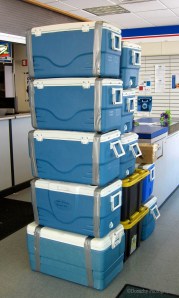
Planning out a well-stocked kitchen, experimenting with new dishes and baked goods, and writing this blog make the extra effort and expense of laying in everything we need for our kitchen worth it. In addition to mail-ordering spices to supplement what we already have on hand, we’ve prepared a five-page Excel spreadsheet shopping list we’ll take care of in Anchorage. And, of course, there are the ice chests we mailed down earlier, waiting to be filled with some of the world’s best seafood – the salmon, halibut and rockfish we catch and package ourselves. Come late summer when we return to the village, our kitchen will be ready!

Various types of salt, cooking oils and a full compliment of herbs and spices inspire an eclectic approach to cooking and baking, and allow us to create many of our own rubs and grilling sauces.

Although the theme of our summer posts will shift to fishing, hiking, boating and sailing, we’ll continue to write about the cooking we do for ourselves and our guests. And during the summer, we’ll finally be able to enjoy wine and beer with our meals!

Click here to see A Year’s Worth of Food: Provisioning for the Alaska Bush, Part I

Whaling: Two Miles Out on the Frozen Chukchi Sea

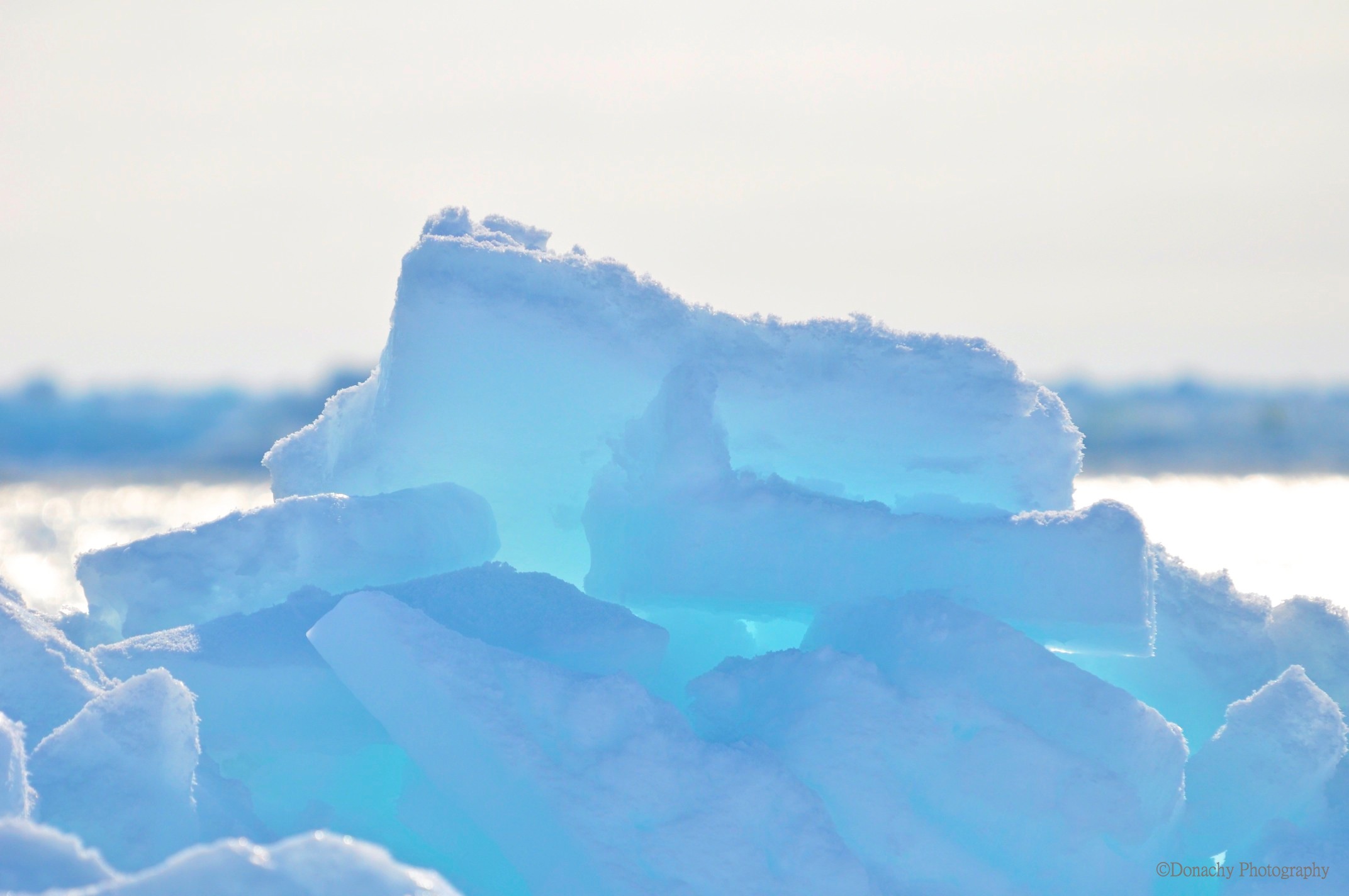
Two miles from land across the frozen Chukchi Sea, the ocean ice is constantly breaking up and reforming, creating ridges of fragmented ice. The blocks of ice in this photo weigh from hundreds to thousands of pounds, but are so clear they seem to be lit from within. 

We had heard that the bowhead whale was out near the point, three miles west of the village of Point Hope. But once out there, we saw few signs of activity. We found a trail leading out onto the ice and began following it in hopes of locating the lead – the place where currents and wind had caused a break in the ice and created open water. That’s where the whaling camp would be.
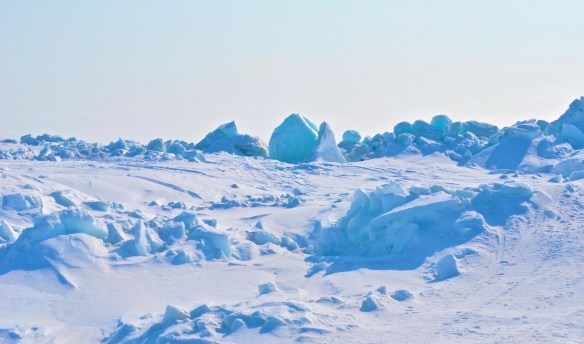
The ball and pyramid, above, were a familiar trail marker from a previous trek out onto the ice. (Click here to see “Whale Camp: Frozen Sees and Icescapes.” A frozen sea is not smooth. It is more like an otherworldly, windswept rock and sand desert with the rocks replaced by ice and snow replacing the sand. Note the faint snowmobile tracks curving along the right edge of the photo – that’s the trail. 
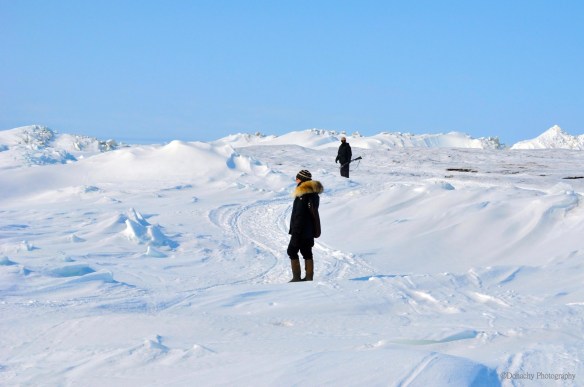
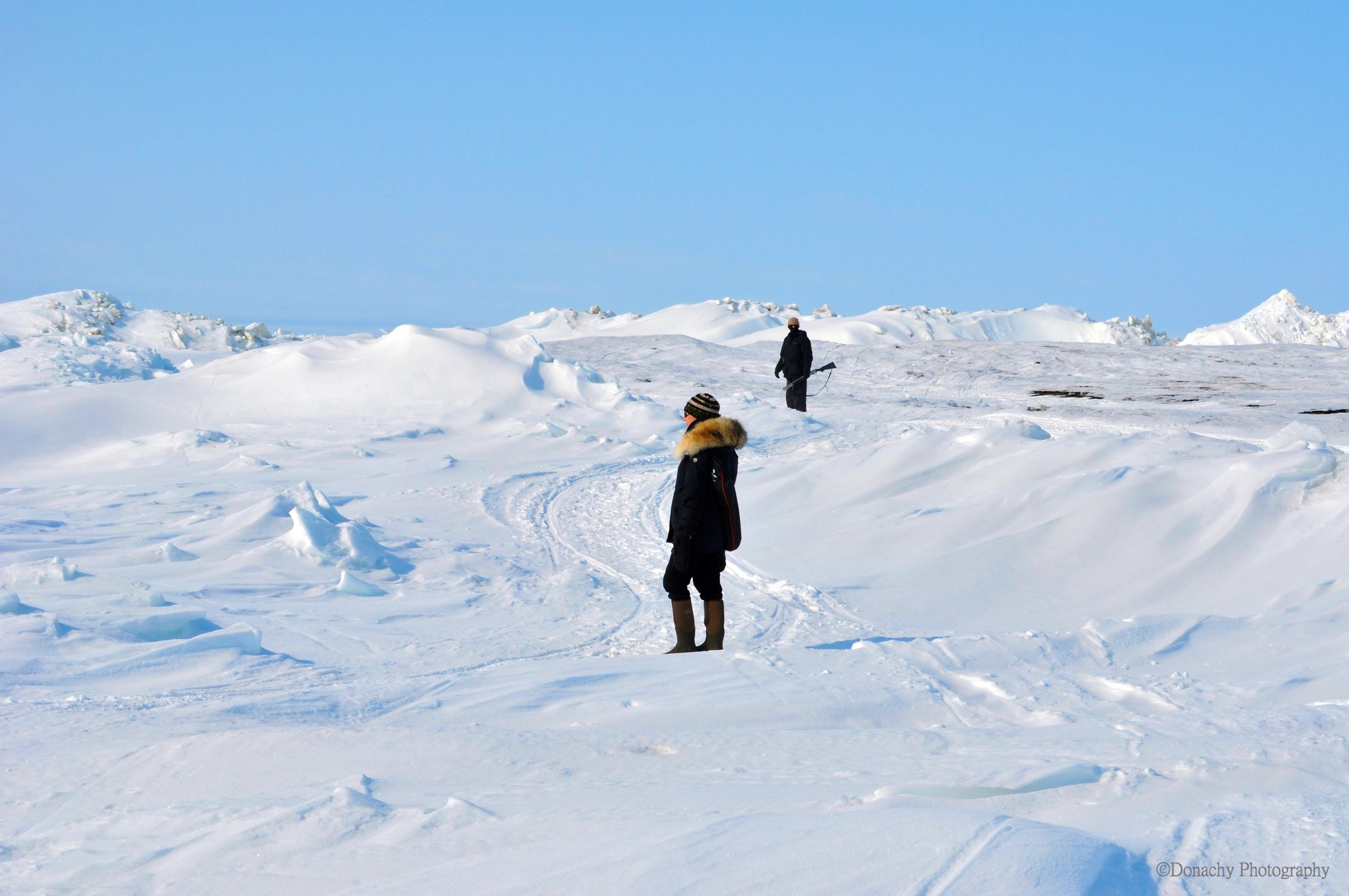
A mile or more out on the ice, Barbra and our friend, Bill, pause to scan for telltale seabirds that might give away the location of the lead. This is an area frequented by polar bears, hence the gun Bill is carrying. We saw no bears, but did cross a number of fox tracks.
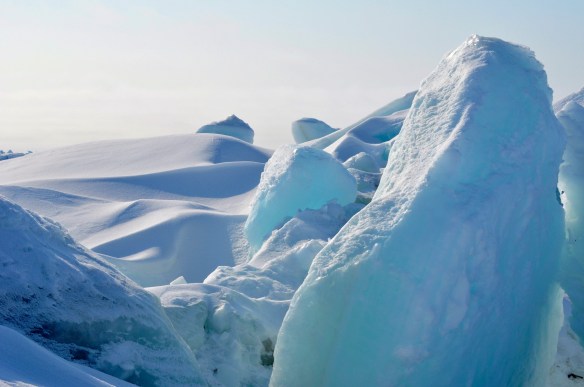
Huge, luminescent fragmants of snow-dusted ice reminded me of the hardtack candy my grandmother used to keep in a crystal bowl. 
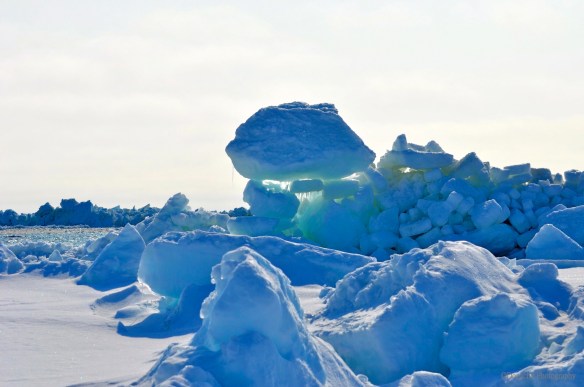
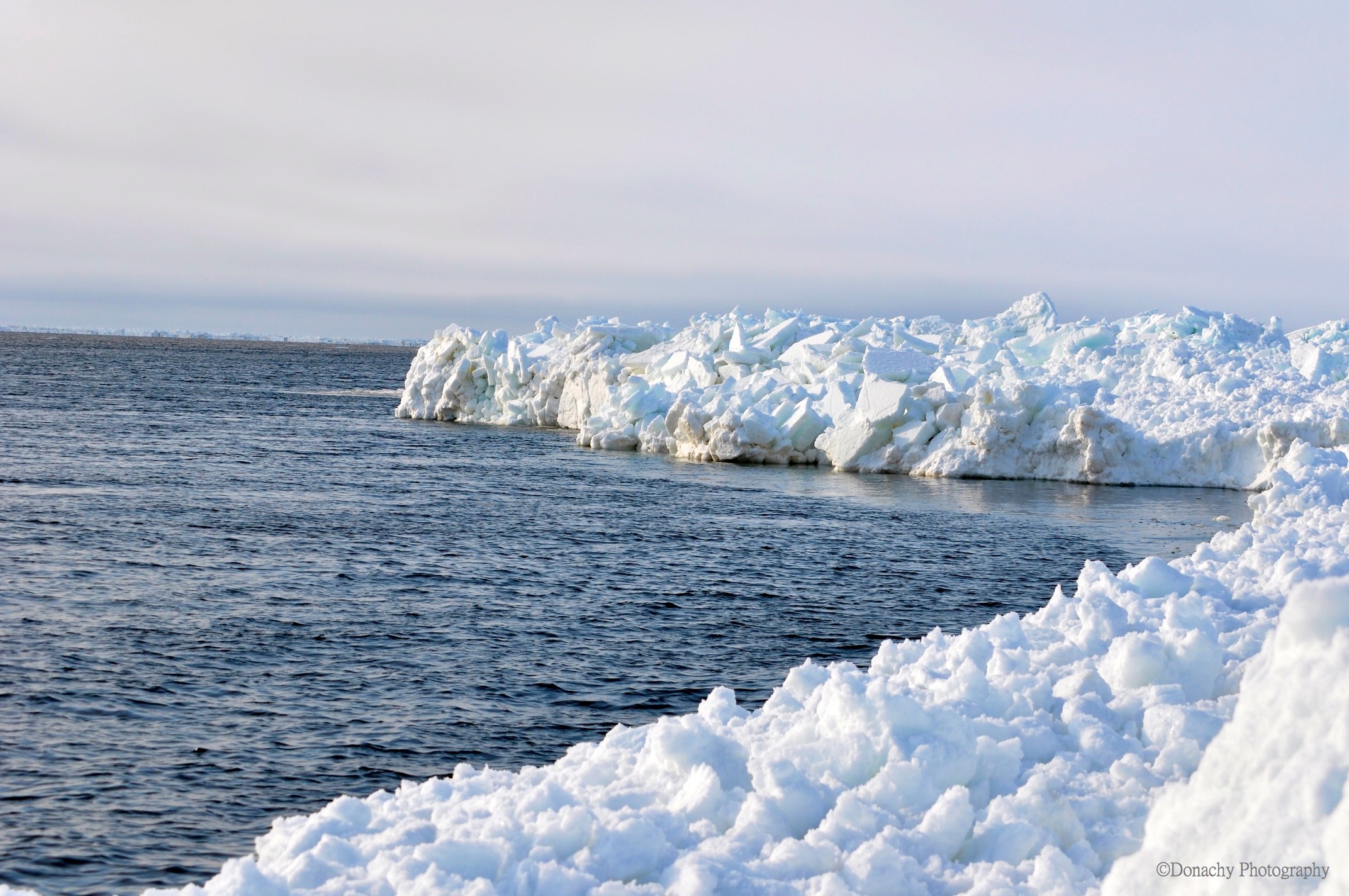
Leads can open and close in moments, leaving people stranded when a break-off occurs, or generating enough force to place this pickup-truck-sized block of ice precariously atop a mass of fragments. A walk across sea ice gives one a glimpse into the forces behind tectonic plates and events such as earthquakes and the formation of mountain ranges.

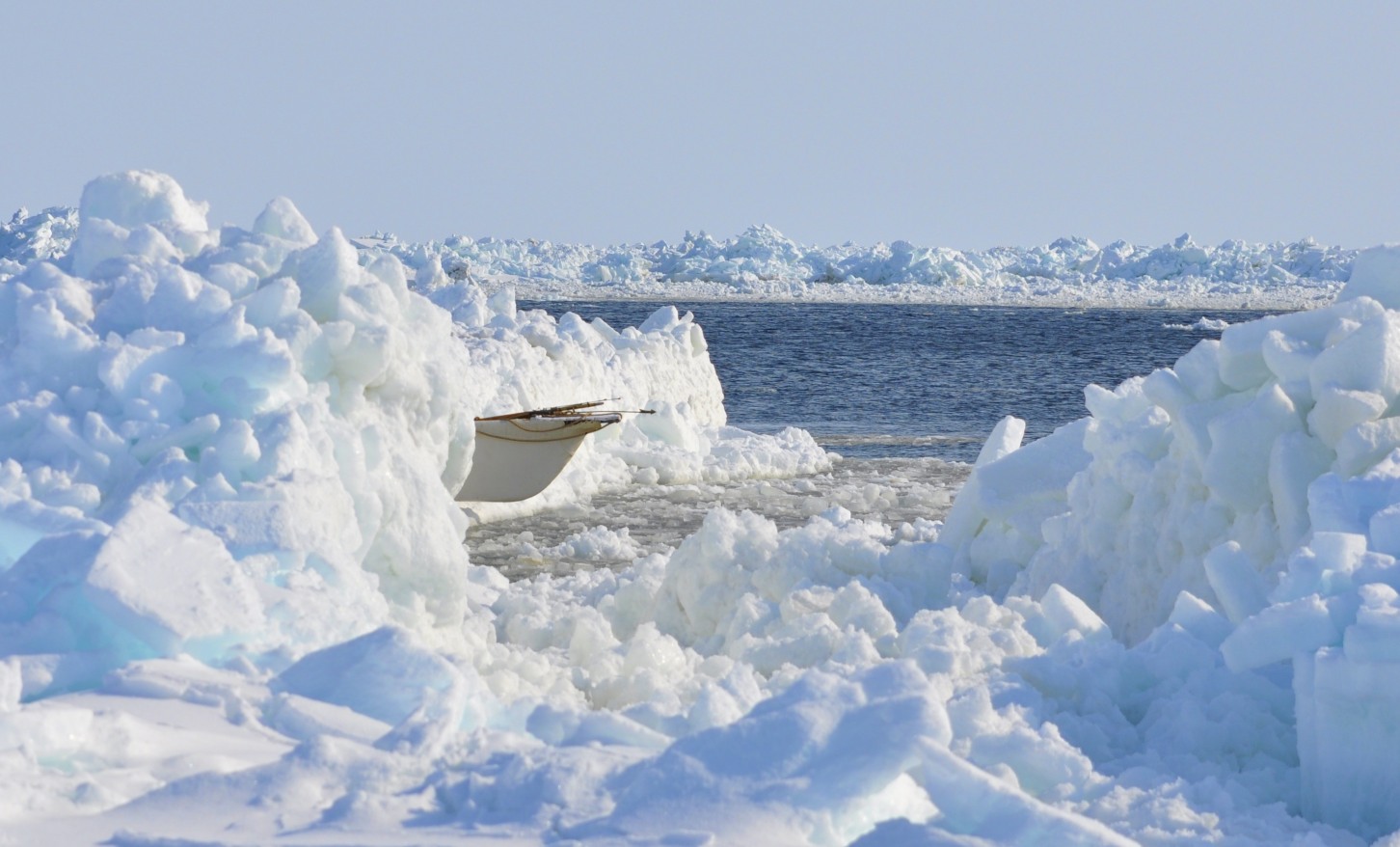
We’d walked over five miles by the time we finally found the lead – a fairly narrow band of water hemmed in between two ice sheets. The bow of a seal-skin boat was a sure sign we were nearing the main whaling site.
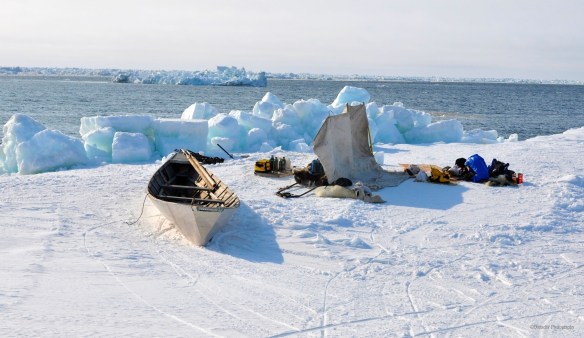
This is a typical whaling outpost. The seal-skin boat, which is about 17  feet long, is made from hand-stitched bearded seal hide. The boats are light, able to be moved on a moment’s notice. The jumble of ice at the edge of the lead was piled there by natural forces and serves as both wind shield and hunting blind. Note the mass of floating ice out on the water. 

At the edge of the lead, the ice does not taper. It is thick and strong, but susceptible to breaking off if the wind shifts. 
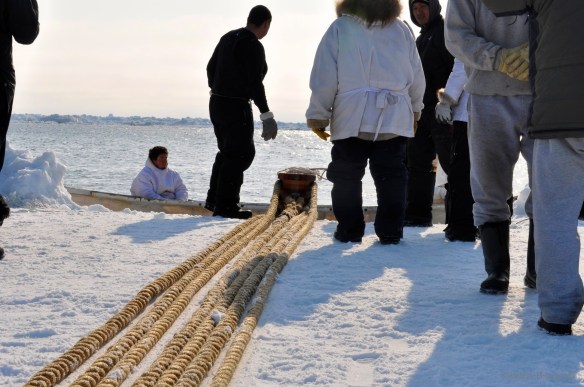
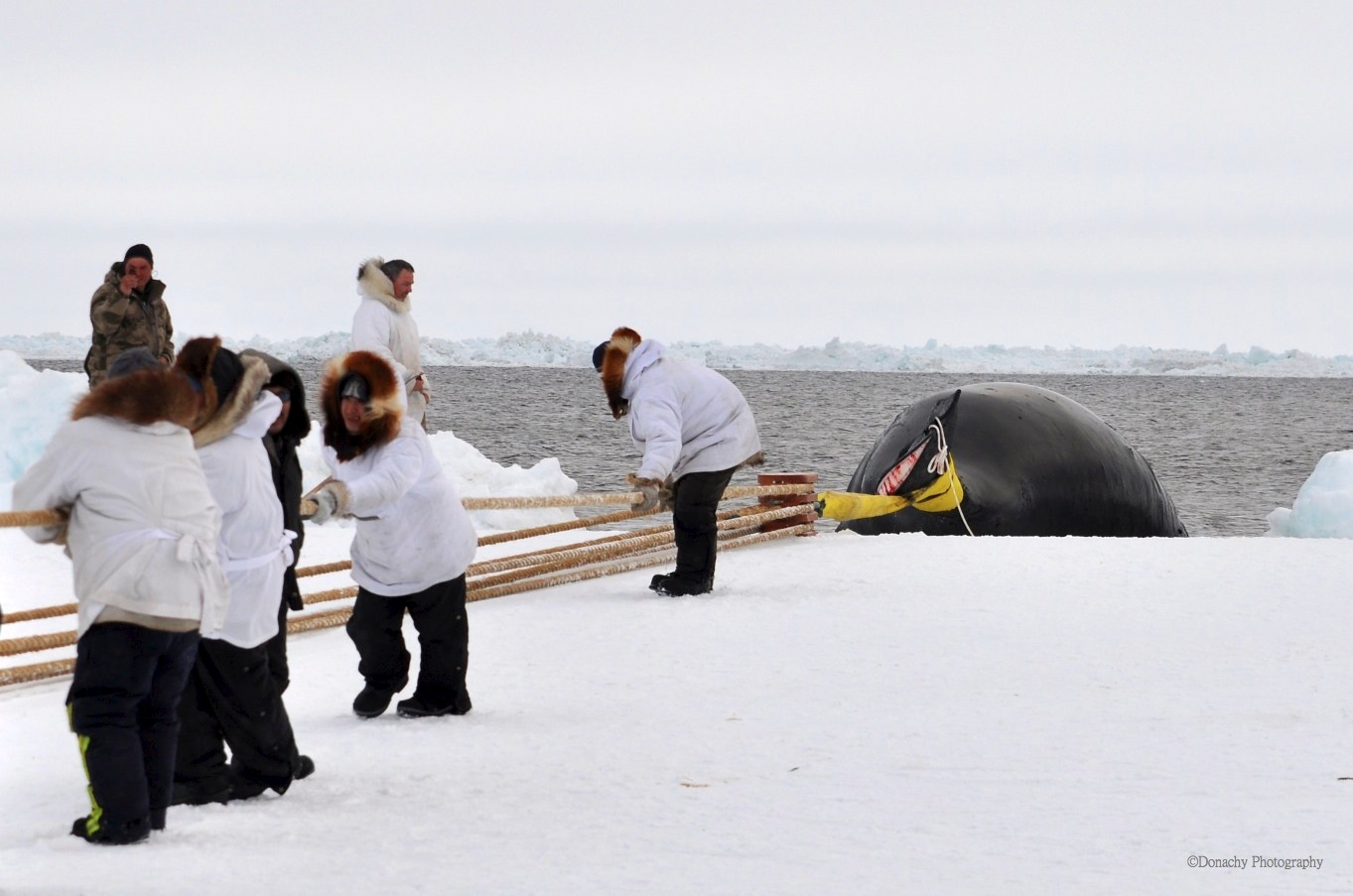
We had wondered how a whale weighing 10, 30 or even 50 tons is pulled from the water. Two heavy block and tackles are anchored to the ice. The one nearest open water is pegged with a thick metal spike. Fifty yards or so back a second block and tackle is anchored by drilling two holes through the ice and securing the it with a strong harness. Even with the modest mechanical advantage of pulleys, it takes dozens of people pulling for all they’re worth to bring the whale out of the water.

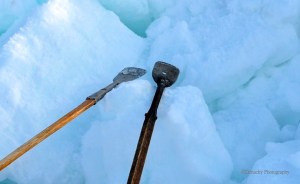
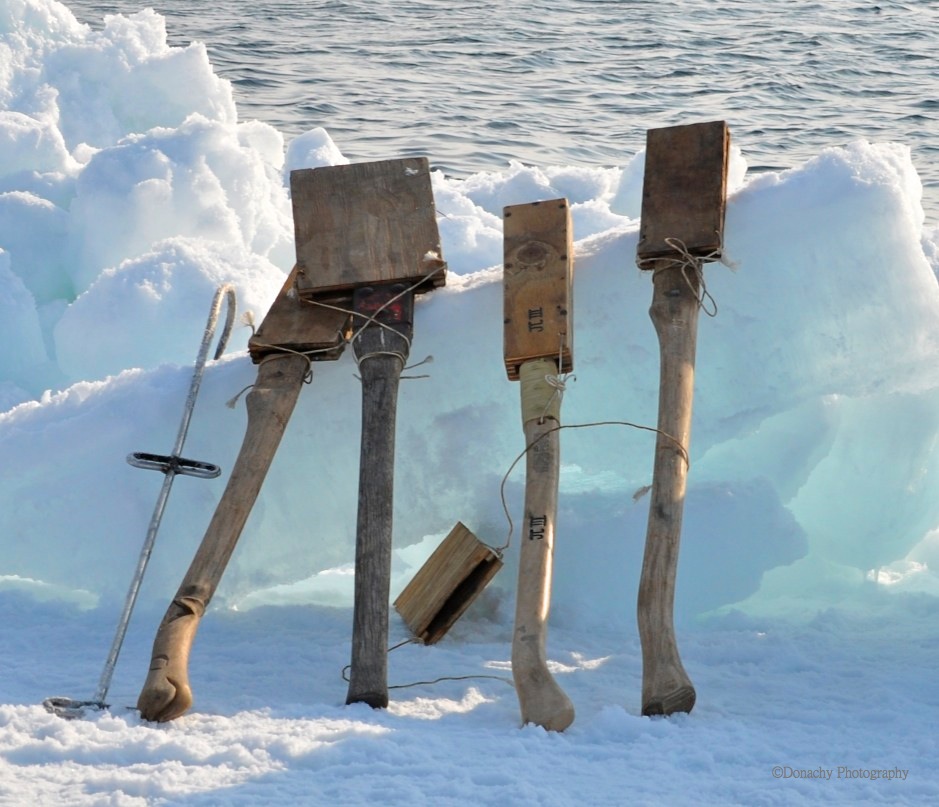
Most of the tools used are hand-crafted. The spade-like implements on the right are butchering tools.
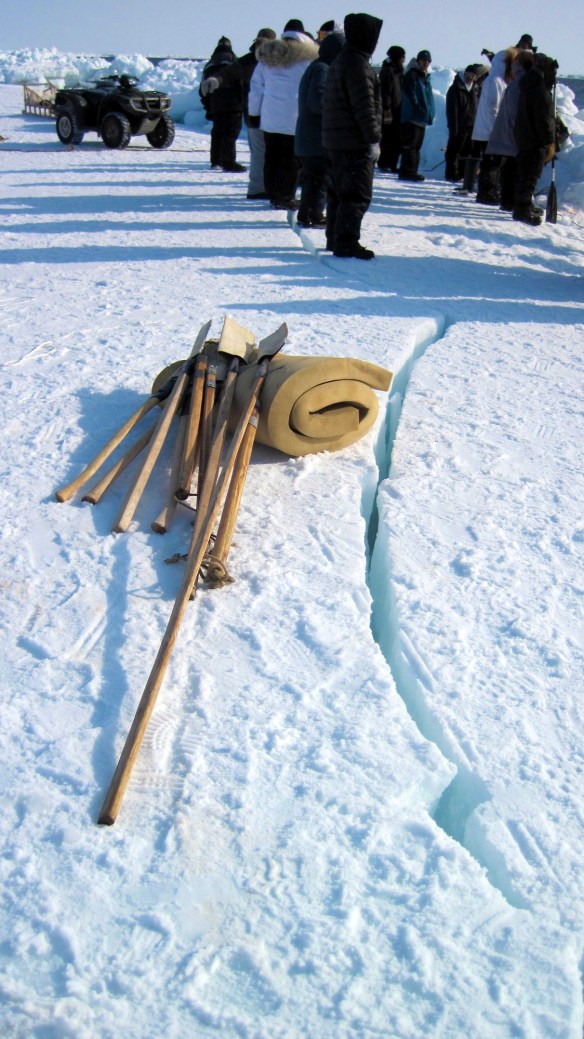

We were very aware of this deep crack in the ice, as, no doubt, were the whaling captain and his crew. While the ice to the right of the crack was sturdy enough to support a house, a shift in the wind could have caused it to suddenly break off. 
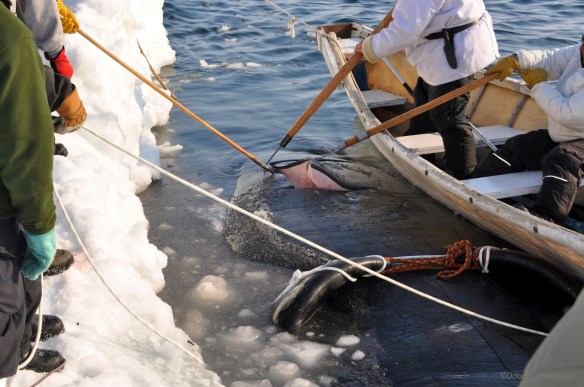
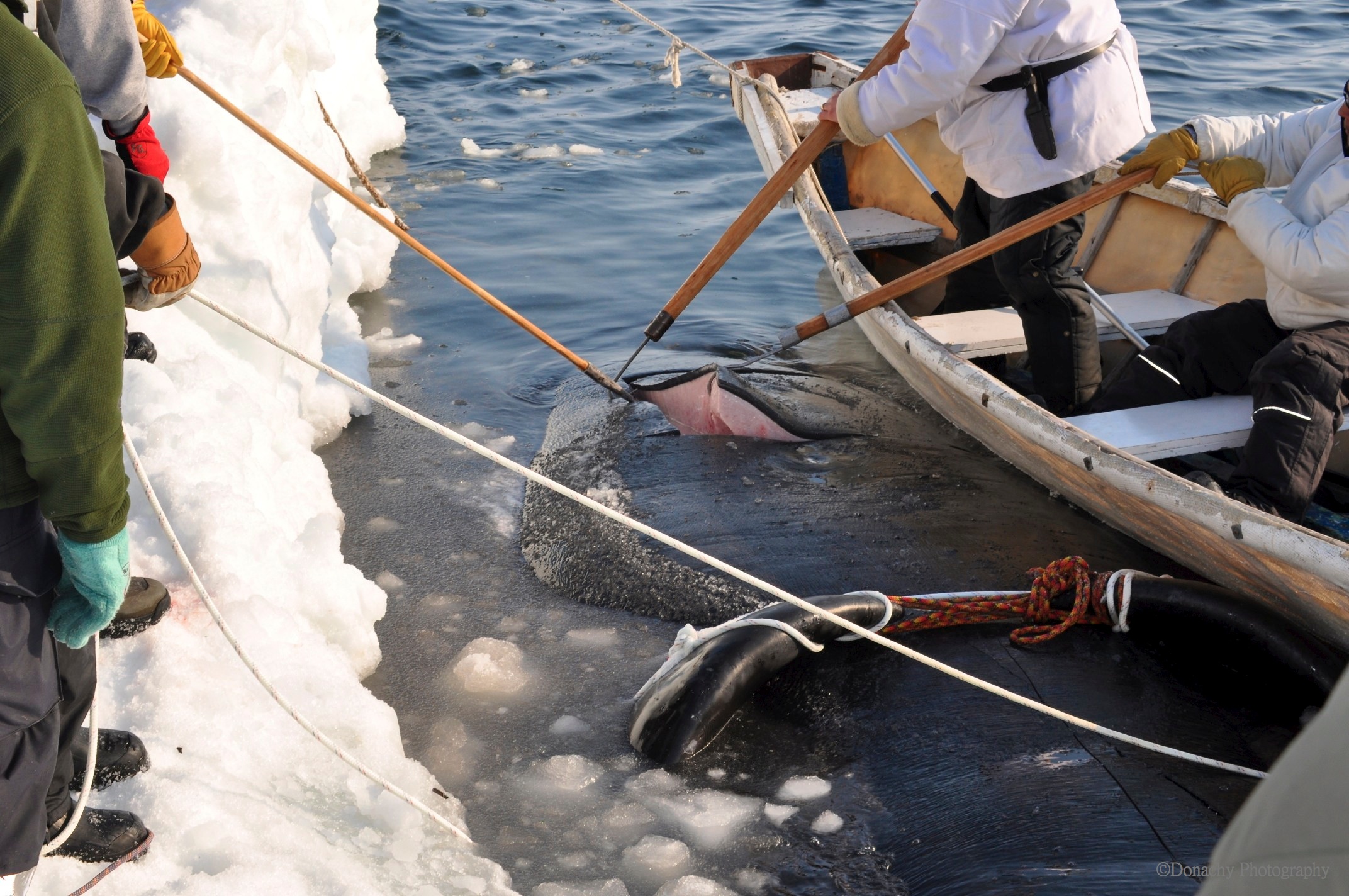
The whale was small, a young one. Here a ceremonial first piece weighing 30 pounds or more is cut for soup in which the only ingredients are melted snow and fresh whale – a welcome celebratory meal against the cold.
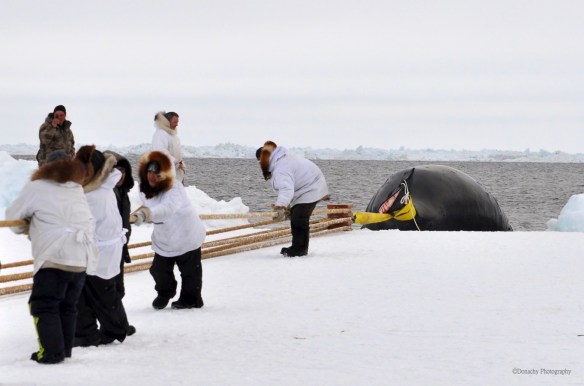
When the pull began, I handed my camera to Barbra and found a place on the rope. The pull started with grunts and chanting, but as the whale begin to emerge from the sea onto the ice, the chanting gave way to whoops of joy and cheers.
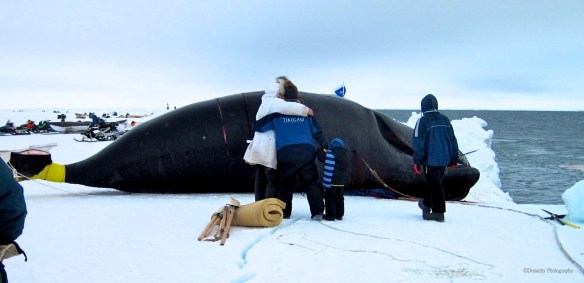
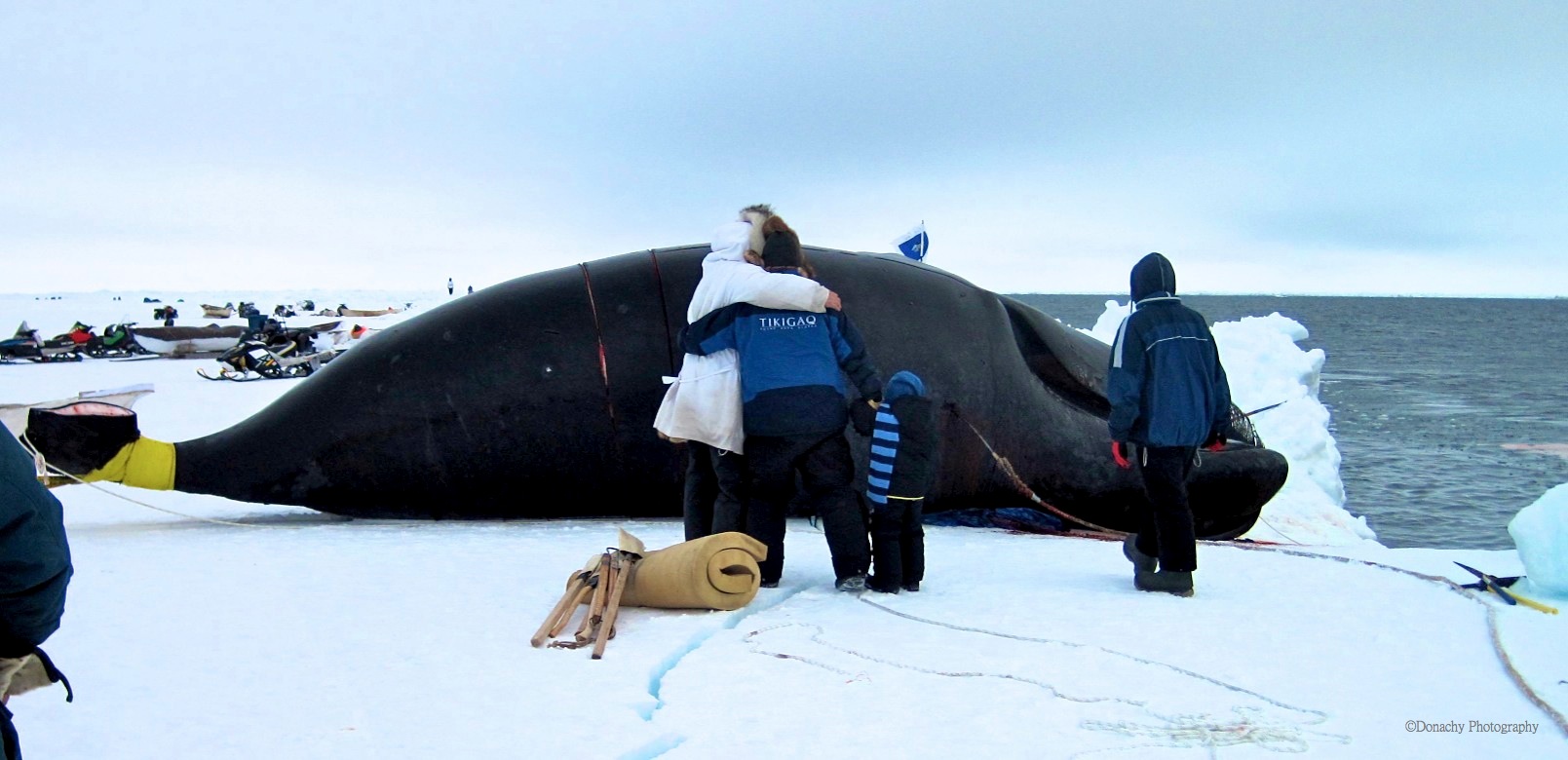
The captain (in the blue coat) shared a celebratory hug (above)…

…and then his crew member headed off with a friend for a bowl of hot whale soup. By this time, Bill, Barbra and I had been out on the ice for nearly five hours and we had a two-mile hike back over the sea to land. We were thrilled to have witnessed and taken part in a tradition that goes back to the roots of this Inupiat village.
Cloudberry Cake: An Arctic Treat

Cloudberry jam is baked right into the top of this moist vanilla cake. Try it with a hot cup of tea and a scoop of vanilla bean ice cream.

 Continuing with the clean-out-the-pantry theme, I had a couple jars of cloudberry freezer jam left from our fall berry picking. These delicious orange berries of the far north are only available for a few short weeks at the end of the Alaska summer. Growing in patches on small mounds across the boggy tundra, Akpik (the Inupiaq word for the berries) are at first a brilliant red before turning orange during their peak ripeness. We picked two gallons and turned them into some of the best jam, sorbet and ice cream we’ve ever eaten. Prized wherever they grow, (they’re protected by law in some European locales) cloudberries have a distinctive sweet flavor with a hint of agreeable tartness. They have become our favorite berry.

Cloudberry Cake

Ingredients

  • 1 cup granulated sugar
  • 5 eggs
  • 1 cup unsweetened applesauce
  • 1 tsp vanilla extract
  • 2 tbsp sour cream
  • 2 cups all-purpose flour
  • 2 tsp baking powder
  • 2 cups cloudberry jam (or other jam)

Directions

  1. Preheat oven to 350 degrees F.
  2. Beat sugar and eggs until pale yellow (about 5 minutes). Beat in applesauce. Add vanilla and sour cream. Mix again.
  3. Sift flour and baking powder together. Stir into egg mixture.
  4. Grease a 9-inch springform pan.
  5. Pour batter into springform pan.
  6. Dot the jam on top of the cake batter. Poke some of the jam down into the batter.  Bake 45 minutes or until a toothpick or cake tester comes out clean.

Matcha Green Tea Cookies

As our school year comes to a close, I searched our pantry for baking inspiration. It is a dual goal – bake something interesting and use something up that may not weather sitting for three months in a cabinet. Today’s ingredient? Matcha green tea. This is a powdered or finely milled form of shade-grown tea, which is used in Japanese tea ceremonies. It is very flavorful. Increasingly, matcha is finding its way as an ingredient into other food where it adds color and flavor.

This is probably not an everyday pantry item. Jack and I greatly enjoy tea. Before we moved up to Alaska, we purchased lots of tea from a favorite shop in California that was (sadly) closing. We had one opened bag of this delicious powder with exactly three teaspoons left… the perfect amount for a cookie recipe! If you would like to try this recipe, we suggest checking with a tea shop that carries Japanese teas.

Matcha Green Tea Cookies

Ingredients

  • 7 tbsp softened, unsalted butter
  • 6 tbsp confectioner’s sugar
  • 1 egg yolk and 1 egg
  • 1 tsp vanilla extract
  • 3/4 cup all-purpose flour
  • 6 tbsp finely ground almonds
  • 3 tsp matcha powder
  • 2 tbsp granulated or turbinado sugar

Directions

  1. In a medium mixing bowl, cream together butter and confectioner’s sugar. Add eggs and vanilla. Blend thoroughly. Set aside.
  2. In a separate bowl, sift together flour and matcha powder. Add in almonds. Mix thoroughly.
  3. Add flour mixture to butter mixture. Mix until dough comes together into a ball.
  4. Shape dough into a log with about a 2-inch diameter. Wrap in plastic wrap and chill in the refrigerator.
  5. Preheat the oven to 350 degrees F.
  6. Line baking sheets with parchment paper.
  7. Sprinkle granulated or turbinado sugar onto a plate. Roll chilled log in sugar, pressing log into sugar to coat.
  8. Using a sharp knife, cut 1/2 slices. Place slices on baking sheet leaving room between cookies for slight spreading.
  9. Bake for 12 minutes or until cookies are lightly browned on the edges.
  10. Cool on baking sheet for 2 minutes before transferring to a wire cooling rack.

Recipe adapted from http://chocolateandzucchini.com/archives/2009/10/matcha_shortbread_cookies.php

A Year’s Worth of Food: Provisioning for the Alaska Bush, Part I

Salmon, halibut and rockfish fillets from fish caught in Resurrection Bay, vacuum sealed and flash frozen for fresh-from-the sea taste, ready to make the trip north to Point Hope. And a plug for Alaskan seafood: it’s wild, sustainable, healthy, and some of the best-tasting on the planet!

One of the biggest challenges living in the bush presents is provisioning for a year’s worth of meals. When we  moved to Alaska, Barbra and I brought with us some of the skills we’d acquired in our lives in Oregon and California.

For starters, we’ve always had Costco memberships and we use those memberships to stock up on bulk purchases from rice to olive oil to meat, fish and poultry. To make this work, we use a FoodSaver vacuum-pack system to repackage meat in smaller portions, which we then freeze. In addition to having some of the very best meat, poultry and fish available – and at prices well below specialty stores carrying products of comparable quality – Costco also carries the best frozen fruits and vegetables we have found. Their Executive Membership, which costs more than a regular membership, offers a 2% rebate on purchases, and thus more than pays for itself, meaning that we don’t incur a membership cost. But even if we had to pay a nominal fee, we’d still be Costco members. They treat their employees well, and they offer quality products and service. And buying in bulk is green: less packaging (much of our repackaging material is reusable), and fewer trips to the store means less fuel consumption.

In our life before Alaska, we were already harvesting most of our seafood and freezing (and smoking) it. Annual berry-picking pilgrimages provided us with a year’s worth of blueberries – a fruit that not only is delicious and versatile, but which freezes well, too.

The challenge we faced upon moving to the bush was getting all this food, and other supplies, out to the village. Here’s the short explanation of the solution: Rubbermaid Roughneck Totes and Coleman Xtreme 52-quart coolers.

.      .

Left: Drilling holes in lids and totes to be zip-tied shut for parcel post. Right: Empty coolers at the post office, ready to be mailed south where they’ll be filled with frozen and cold food at the end of the summer and checked on our planes north to the village.

We drill the Rubbermaid totes so that the lids can be zip-tied (cable-tied) to the tub. Rubbermaid totes are tough and unaffected by cold temperatures. Cheaper totes don’t hold up, and in the long-run are expensive because they have to be replaced as they break down. All of our dry good are mailed up parcel post in these tubs. We’ve mailed hardy vegetables (squashes, potatoes and onions) and hard cheeses in these tubs as well. In Alaska’s cool temperatures, they’ve been fine.

The coolers travel on the plane when we fly up. There are better coolers than Coleman Xtremes, but so far these have been fine. The price is right, they’re tougher than really cheap coolers, and they weigh in at a reasonably light weight – an important consideration. The 52-quart size is manageable even when fully loaded with frozen food.

We stuff at least eight of these coolers with as much fish, meat, chicken and frozen vegetables and berries as we can and pay the extra luggage fee. We’ve been sealing these coolers with duck tape, but this summer we’re planning to experiment with a solution that won’t require having to use and throw away a roll or two of tape each time we ship.

New York Strip steaks (left) and filet mignon (right), purchased in bulk from Costco are packaged with one of each per vacuum-sealed pack for a Porterhouse without the bone. Meat, poultry and fish packaged and frozen this way will keep for over a year; the result is that we waste virtually nothing.

Whaling Camp: Frozen Seas and Icescapes

Ball and Pyramid, Chukchi Sea, Alaska: This icescape, photographed with a Nikon D90 and a Sigma Bigma 50 – 500 mm lens, has been slightly processed to increase contrasts. The operative word here is “slightly.” Even to the naked eye, these frozen-sea icescapes are other-worldly.

Evocative, perhaps, of a scene from Star Trek, winter hikers venture across the frozen ocean out to a whaling camp. The gun the lead person is carrying is for protection. Although we saw no sign of polar bears on this day, friends of ours who took a slightly different path encountered fresh tracks.

Seal-skin boat at the ready, these men stand vigile for bowhead and beluga whales. Note the light blue block of ice they’ve cut out and positioned near their gear as a shield. These men are standing on sea ice just a few feet from the open sea. Last year was a good year for whaling in Point Hope, with three bowhead whales harvested. The hunt is dependent on the right ice conditions, which can be elusive. So far this year, no whales have been taken.

A well-equipped wall tent, complete with a supply of propane, serves as one of several whaling camps near the village. These camps are set up on sea ice, and may be anywhere from a few hundred yards to several miles offshore. The hunters travel out to leads – areas where the ice is open. Winds and currents can open and close leads quickly, underscoring the need for whaling crews to be constantly alert.

Sea ice seem to be lit from within by blue light. Heaved up in pressure ridges and broken into fragments weighing several tons, it is easy to appreciate the arduous work “breaking trail” entails as hunters go out onto the ice to set up camps. 

A black and white composition heightens the contrasts in these massive blocks of broken ice.

There’s a sense of being somewhere other than Earth…

And then a flock of common murres skims across a lead…

Chocolate Dipped Coconut Macaroons

In our world of BPA warnings for canned products and ingredients in processed foods that I can’t pronounce (and have no clue what they are), Jack and I have decided to limit our use of canned products and make as much as we can from scratch. My search for a coconut macaroon recipe resulted in recipe after recipe indicating the need for sweetened condensed milk. I hesitated. First of all, canned milk was bound to cost a fortune in our little Arctic store and second, it would be in a can.

Eventually I found a homemade substitute, which, in addition to being less expensive and more natural, had none of that can aftertaste common to many canned products. With the help of a stick blender whipping 1 cup of powdered milk, 2/3 cup of sugar, 1/3 cup of boiling water, and 3 tablespoons of butter, I soon had 14 ounces of sweetened condensed milk. This homemade version keeps well covered in the refrigerator.

Coconut macaroons were always a top fix for sweet cravings for me. When I was a starving student, I would wait until Passover passed so I could buy cans of Manischewitz macaroons that had been marked down. They were tasty, but I these bite-sized treats would taste better fresh. Baked at home, they are a bit crunchy on the outside and chewy on the inside. If you shape them like a pyramid, they are easy to dip into melted chocolate, for a nice presentation.

Chocolate Dipped Coconut Macaroons

Ingredients

  • 2/3 cup sweetened condensed milk
  • 2 egg whites
  • 1 1/2 tsp vanilla extract
  • dash of salt
  • 3 1/2 cups of unsweetened flaked coconut
  • 10 oz. semi-sweet chocolate chips
Directions
  1. Preheat oven to 325 degrees F. Line two baking sheets with parchment paper.
  2. In a large bowl, stir together the sweetened condensed milk, egg white, vanilla and salt until combined.
  3. Stir in coconut until well blended.
  4. I used a cookie scoop to make uniform mounds on the baking sheets.
  5. Use wet hands to form mounds into pyramids. (Keep a bowl of cold water handy for this process.)
  6. Bake, one sheet at a time, until cookies are lightly browned, 15 – 20 minutes. (Don’t put away pan or throw out paper, yet.)
  7. Cool cookies on baking sheet until set, about 2 minutes. Then move to wire cooling racks.
  8. Melt chocolate chips in a double boiler, or in a heat-proof bowl over a simmering pot of water. Stir until smooth. Remove from heat.
  9. Holding the macaroon by its pyramid top, dip the bottom of the macaroon into the melted chocolate. Place the dipped macaroon back on the parchment-covered baking sheet. Repeat process with all the macaroons.
  10. Refrigerate the macaroons until the chocolate sets, about 15 minutes.

Recipe adapted from http://www.browneyedbaker.com/2009/06/19/chocolate-dipped-coconut-macaroons/.

Classic Chocolate Chip Cookies With a Twist

Ahh… Rows and rows of soft, moist, freshly baked chocolate chip cookies with orange zest fill a kitchen with one of the best aromas on earth.

When I was in high school, one of my favorite after-school activities was hanging out with my friends baking cookies. Our go-to cookie recipe was the original Nestle Toll House chocolate chip cookie recipe right off the back of the bag. We enjoyed batches straight out of the oven. After years of experimenting with different recipes, I’ve returned to the original because it is simply the best. In a way, these cookies are a metaphor for a life in which I, too, have returned to many of the things that brought me joy as a young woman.

I was talking to a friend earlier this year who is working on a family cookbook. She is collecting recipes that, in some way, each tell a story about family members. Most of the recipes have been created by her family. But when the subject of chocolate chip cookies came up, they all agreed that the Nestle recipe is unbeatable.

So, I bring you the original Nestle Toll House chocolate chip cookie… with a very slight twist. I added a teaspoon of orange zest because, lately, I’ve been on an orange and chocolate kick. Chocolate just seems to taste better with the zing of orange zest. (Were we not in a dry village, Grand Marnier would work beautifully with chocolate, too.)

Nestle® Toll House® Chocolate Chip Cookies

Ingredients

  • 2 1/4 cups all-purpose flour
  • 1 tsp baking soda
  • 1 tsp salt
  • 1 cup (2 sticks) butter, softened
  • 3/4 cup granulated sugar
  • 3/4 cup packed brown sugar
  • 1 tsp vanilla extract
  • 2 large eggs
  • 2 cups semi-sweet chocolate chips (chocolate morsels)
  • 1 cup chopped pecans (or other nuts)
  • 1 tsp orange zest (optional)

Directions

  1. Preheat oven to 375 degrees F.
  2. Combine flour, baking soda and salt in a small bowl.
  3. Beat butter, granulated sugar, brown sugar and vanilla extract in a large bowl until creamy. Add eggs, one at a time, beating well after each addition. Stir in zest.
  4. Gradually beat in flour mixture.
  5. Stir in chocolate morsels and nuts.
  6. Drop by rounded tablespoons onto ungreased baking sheets.
  7. Bake for 9 – 11 minutes or until golden brown.
  8. Cool on baking sheets for 2 minutes. Remove to wire  racks to completely cool.

Makes about 4 dozen cookies.

Alaskan Seafood Fettuccini with Shrimp, Sea Scallops and Salmon

Freshly made fettuccine tossed in olive oil and Italian seasonings and topped with a medley of Alaskan seafood sautéed in olive oil, garlic and tarragon.

Tarragon has long been among our favorite all-around herbs for many seafood dishes, and it really shines in this simple-to-prepare entrée. Sometimes referred to as dragon’s herb or dragon’s-wort, tarragon adds a gentle sweetness that hints at anise or fennel, but is more subtle.

The basic dish evolved from a piece of advice an older gentleman – an immigrant from Italy – shared with me some years ago when he observed that in his opinion the best tasting and easiest pasta dish is made by sautéing chopped garlic in olive oil and tossing the pasta in that and nothing more. Perhaps a little basil, marjoram or oregano might be added, he allowed.

In this dish, I’ve added chopped sweet onion, tomatoes and three kinds of seafood to the olive oil and garlic. Tarragon, sea salt and freshly cracked pepper flavor the seafood. When I lived in South Carolina, I used to make this dish with white shrimp which I was able to cast a net for, and instead of salmon, I used freshly caught striped bass or pompano.

For two servings:

Pasta Ingredients

  • pasta for two people (fettuccini, angel hair or spaghetti)
  • 1 tsp dried oregano or 1 tbsp fresh
  • 1 tsp dried basil or 1 tbsp fresh
  • 3 tbsp extra virgin olive oil
Directions:
  1. Cook pasta according to directions.
  2. Drain pasta. Place in large bowl. Add olive oil and herbs and toss.
Seafood Ingredients
  • equal portions of wild salmon fillet (skin removed, or not), sea scallops and shrimp. Use about 1/4 pound seafood per person or slightly more.
  • 1/4 cup chopped sweet onion
  • 3/4 cup diced tomatoes, canned or fresh, seeds removed
  • 1 1/2 tbsp chopped garlic
  • 3 tablespoons olive oil
  • 1 tbsp dried tarragon or 3 tbsp fresh
  • sea salt to taste
  • freshly ground pepper to taste

Directions:

  1. Cut salmon into 1/2-inch to 3/4-inch cubes. Slice sea scallops into 3 or 4 slices. Peel and devein shrimp.
  2. In a bowl, mix together seafood, garlic, tarragon, sea salt and pepper. Set aside.
  3. Add olive oil to a frying pan and heat over medium-high heat.
  4. Add onions and cook for two minutes, stirring occasionally.
  5. Add remaining ingredients. Stir frequently for about 1 1/2 to 3 minutes. Avoid overcooking. (Remember: seafood will continue cooking after being removed from heat.)
  6. Serve pasta. Top with seafood medley.
  7. Add additional ground pepper, grated Parmesan, pine nuts or a sprig of fresh tarragon.

Enjoy this with a crisp, well-chilled sauvignon blanc.

Rivers of Ice: Glaciers, Icefields and Floating Sculptures of Blue

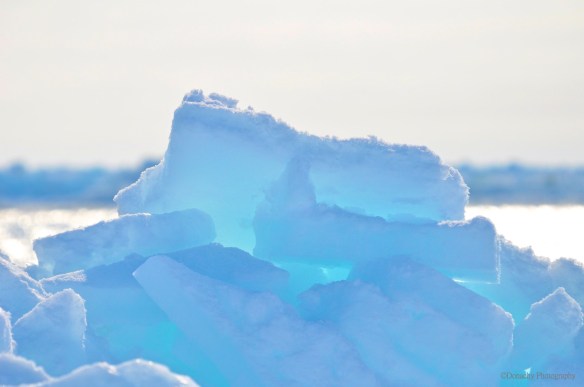
Icebergs such as this ethereal blue sculpture are the culmination of a dynamic process eons in the making.

It’s easy to imagine glaciers as static – water interrupted, subject to thaw and melt, but otherwise frozen in space and time. In reality, they’re more like slow moving rivers, pulled down by gravity, pushed forward by the unimaginable tonnage of ice and snow in the icefields where the originate. A fast-moving glacier can travel at a rate of 20 meters a day or more.

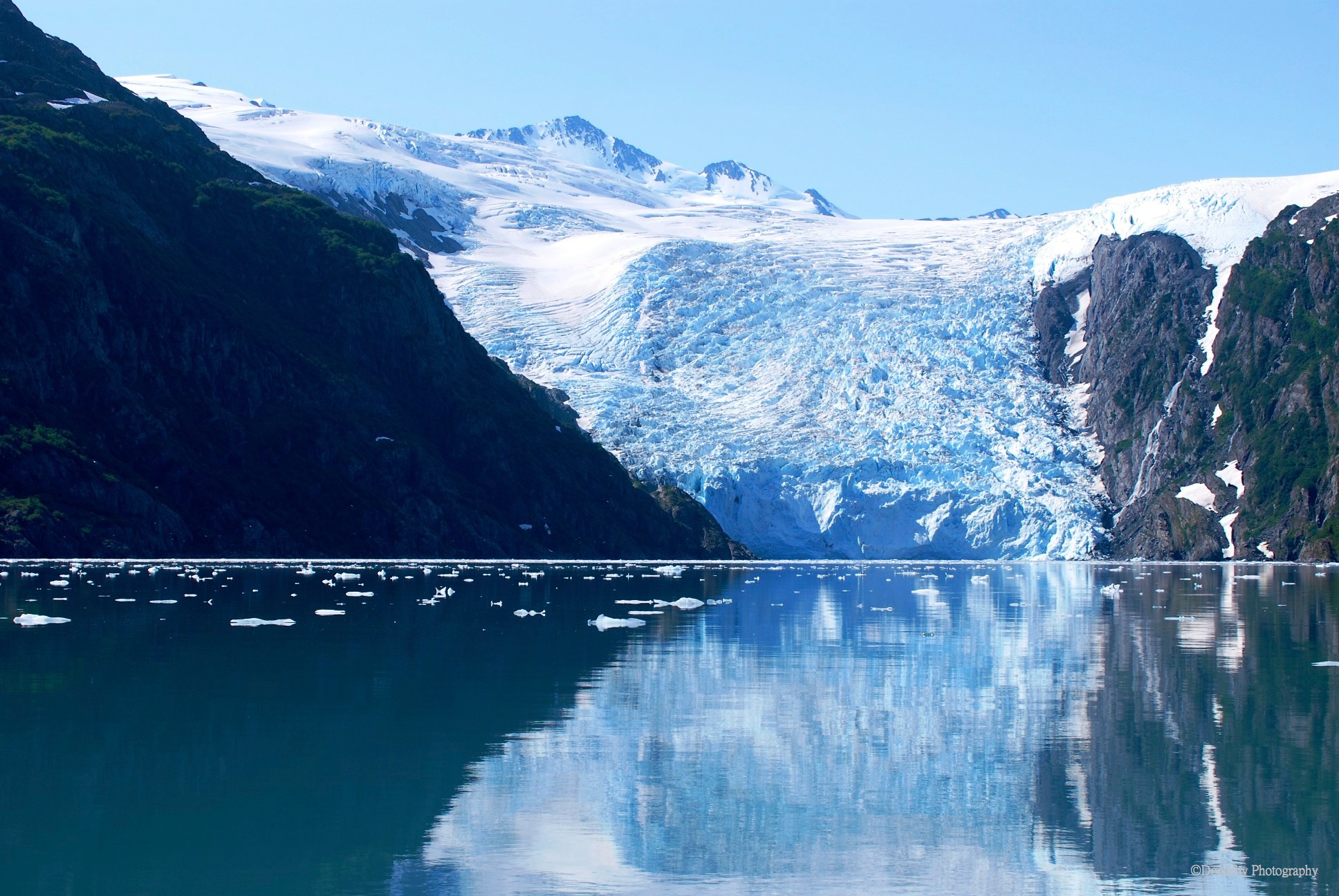
Tidewater glaciers are among the most dynamic forms of ice in nature. Like the Blackstone Glacier (pictured below), they flow from icefields, much as a mountain stream might originate as the outflow from an alpine lake. What makes tidewater glaciers so fascinating is that they don’t gradually turn to water as they descend down a mountain valley, warming and thawing with the descent.

Instead, tidewater glaciers terminate when they reach the sea. The ice continues to flow, pushing the face of the glacier forward. If the face of the glacier is large enough, the combination of forward movement and warmer air and water temperatures can result in spectacular calving events, with massive pieces of ice sloughing off into the sea.

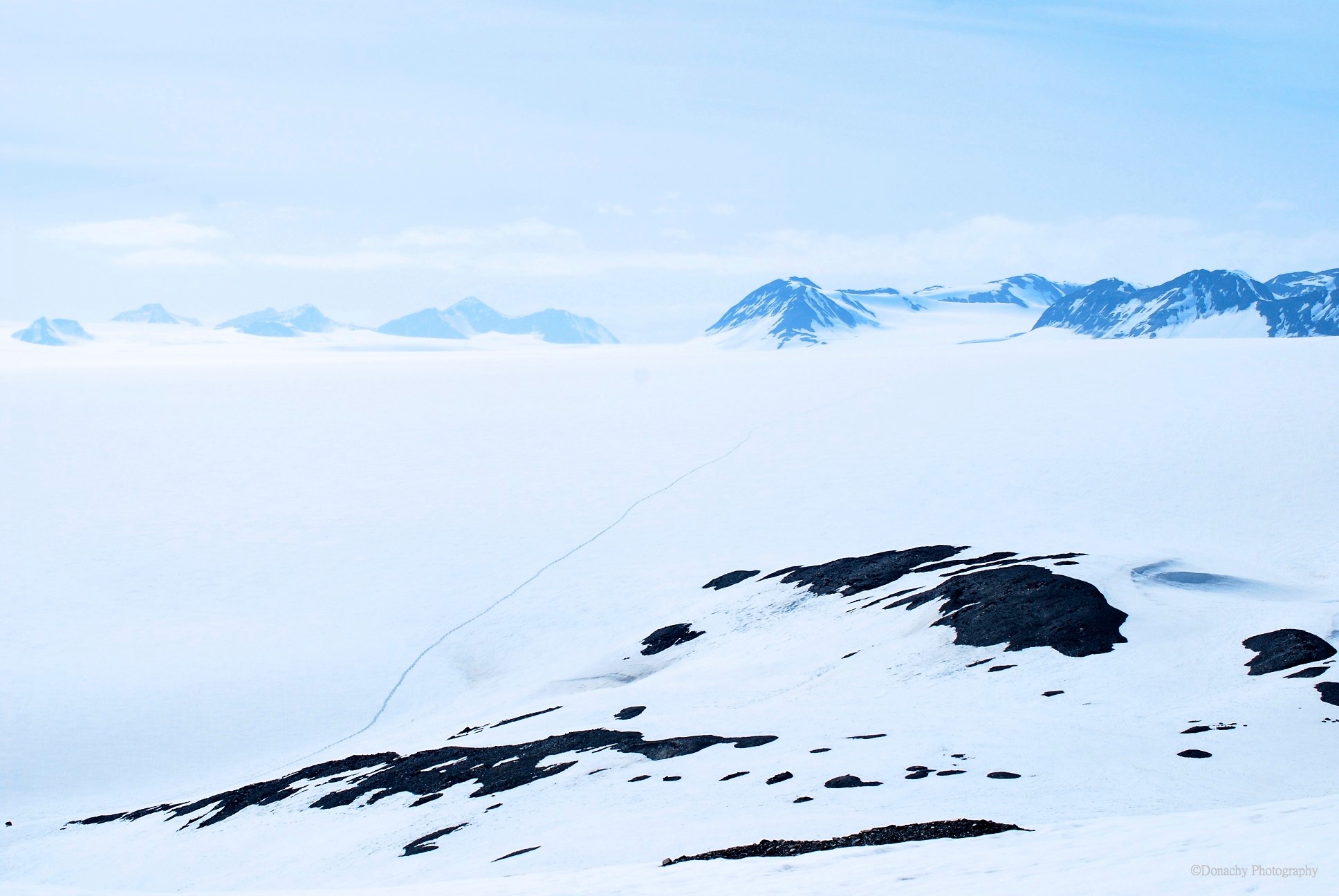
The Harding Ice Field, which gives birth to three dozen or more glaciers, stretches out like a vast, island-studed lake. 

As soon as the freshly calved ice hits the water, it become part of sea’s ecosystem. Harbor seals (above) and black-legged kittiwakes (members of the gull family, below) use the frozen islands to rest, feed and stage hunts. The seals also use the ice as nurseries.