Under Pressure: Delicious, Fast, Green Cooking

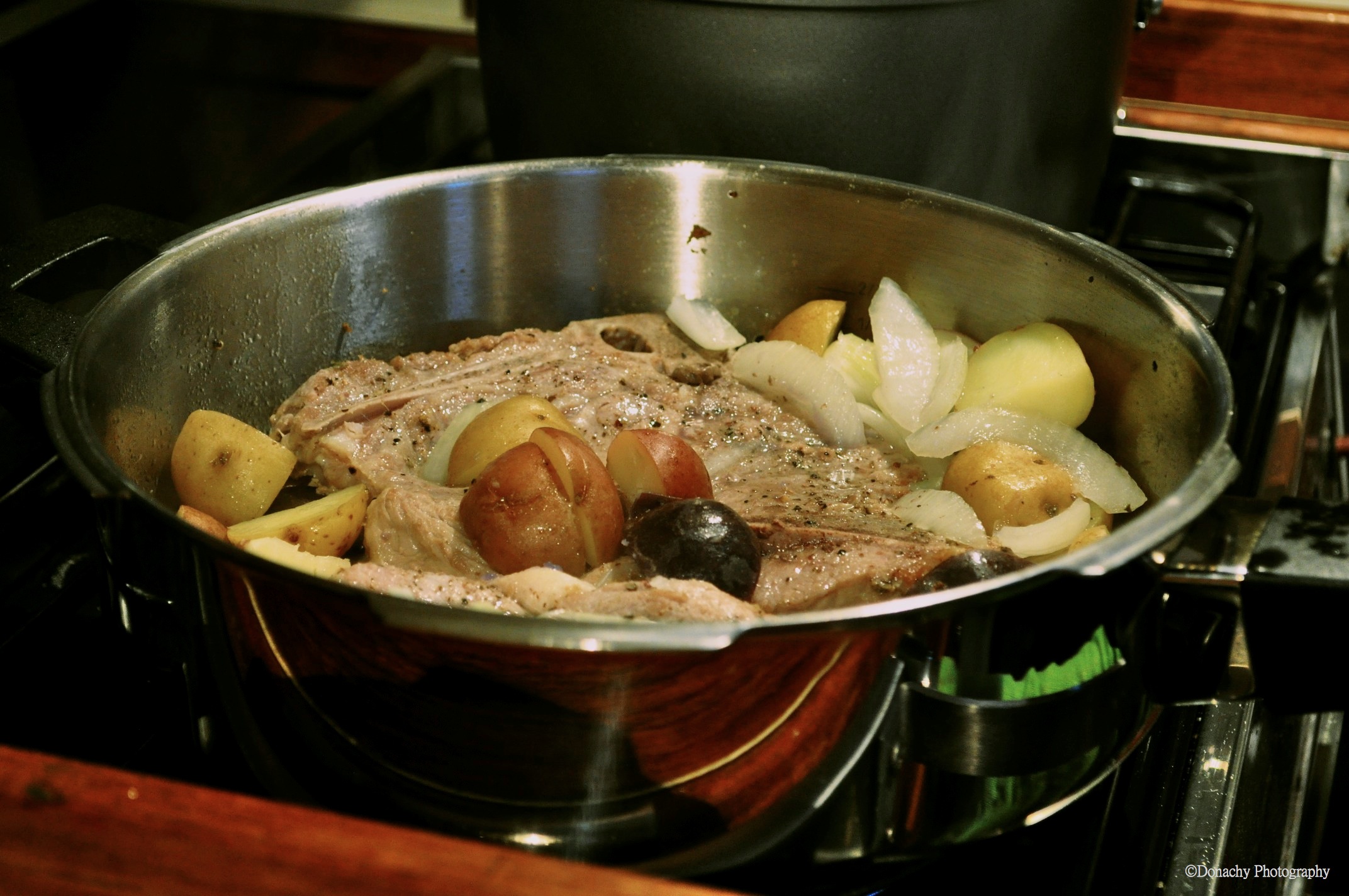
Pressure cooking is new to us, but we’re fast becoming converts. We made this one-pot-meal of two large pork chops, Peruvian potatoes and onions in about half the time the same meal would have taken in frying pan. In addition to cutting cooking time, pressure cooking requires less fuel than traditional methods.


Our first foray into pressure cooking involved one of our breakfast staples: steel cut oats. This is a new food for us, and now that we know what they are, it’s been a little tough to go back to quick rolled oats. But the time required is a deal-breaker on workdays. From start to finish, it takes about 35 minutes to cook up a couple servings of steel cut oats.

Enter the pressure cooker. These are not at all like crock pots or slow cookers – just the opposite. By sealing in steam pressure, these pans and pots speed up cooking time. As pressure rises, so does heat inside the pan. After some trial and error, I now have the preparation time for steel cut oats cut down to 17 minutes – and I think I may be able to bring the time down even further. Not only is the time cut in half, so is fuel consumption. Once the cooker is pressurized, the cooking flame can be cut back to low or even turned off altogether for up to 70% fuel savings over traditional cooking methods.

Also, since very little steam escapes during the cooking process, less water is required. This could prove to be valuable when sailing or boondocking. Less oil or cooking fat is required, too, and cooked under pressure, meats and certain vegetables that can be a little tough come out tender without being overcooked.

Years ago, I had heard that pressure cooking could be dangerous. Makes sense: hot steam, very high temperatures, pressure. I had an image of pan lids rocketing through kitchen ceilings. But whatever the risks involved with this cooking method may have been in the past, modern pressure cookers have addressed them. We purchased a two-and-a-half quart pan made by Kuhn Rikon, a Swiss company known for quality cookware. Engineered with safety in mind, the pan is made from heavy gauge stainless steel and features multiple pressure release systems to prevent over-pressurizing.

The real test came the other night when I attempted a one-pan meal for the two of us. I had two nice pork chops, some small red, white and purple Peruvian potatoes, and half a sweet onion chopped coarse. I seasoned all this with good old salt and pepper, heated a little olive oil over high heat in the pressure cooker, browned the chops for a minute on each side and then added a quarter cup of water (for steam). Then the potatoes and onions went in, I locked the lid in place, and…

Voila!

Seven minutes later we had a beautifully cooked meal. The meat was cooked through and juicy, the potatoes were just right, and we had just one pan to clean up! (And nothing was stuck to the pan.)

The meat lacked the crispy outer texture straight pan-fyring gives, but searing the meat prior to pressurizing it seemed to seal it well enough. Once pressure had built in the pan, I was able to lower the flame to low and then to turn off the heat altogether, so I’m guessing I used only two-thirds to one-half the propane I’d have used had I prepared the meal in a frying pan.
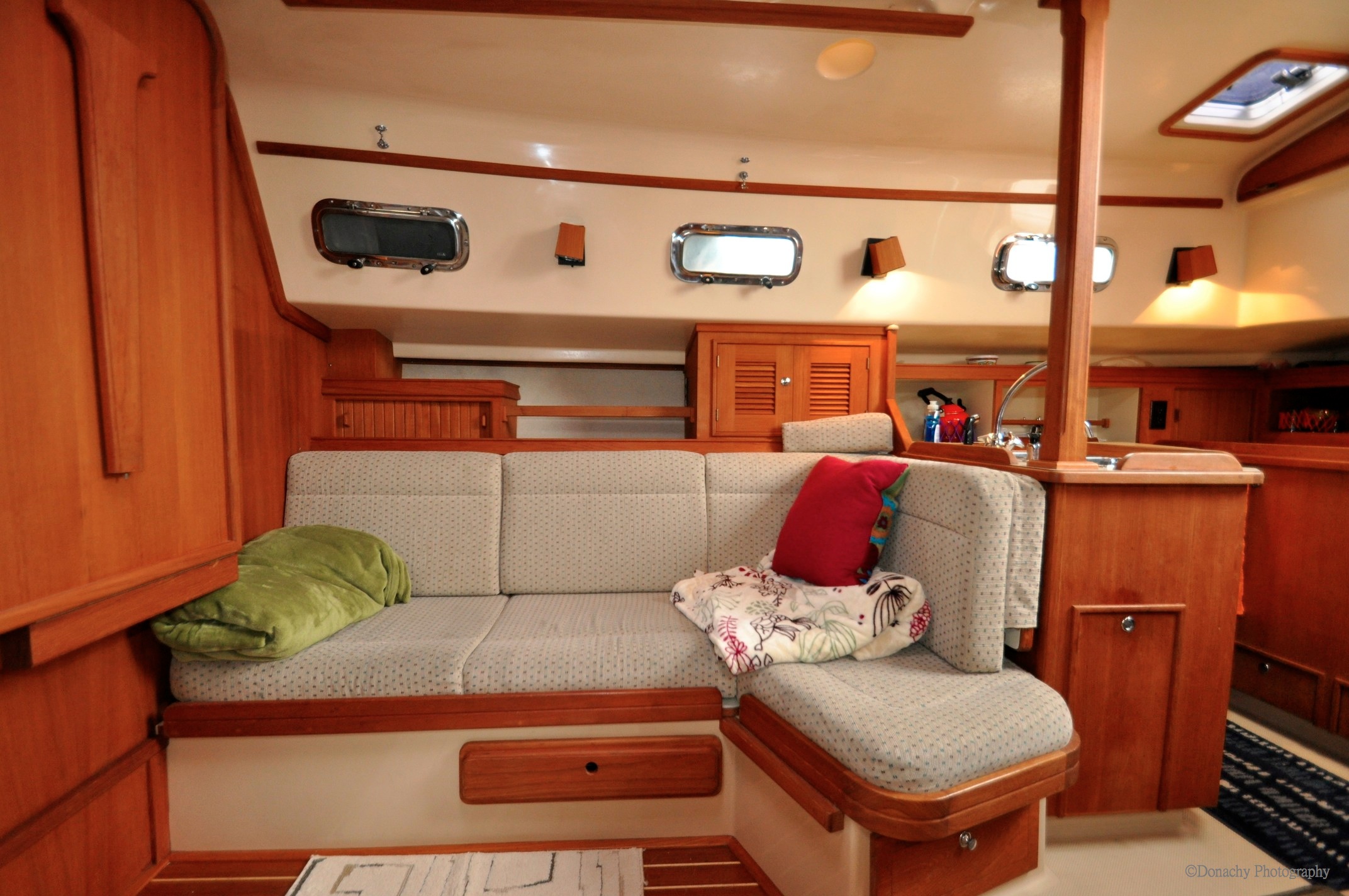
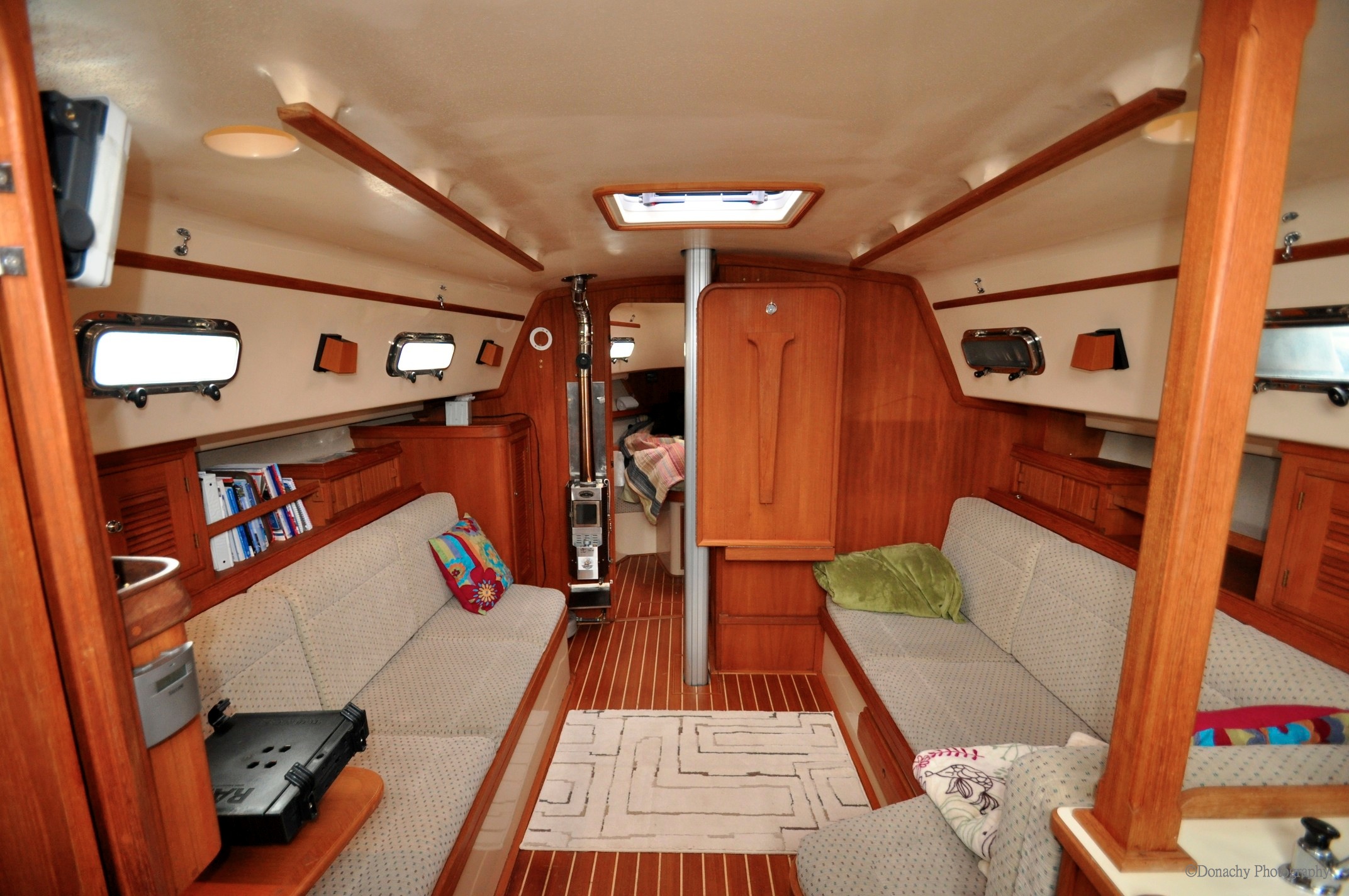
Small House Living: Island Packet 350 Interior

Below and behind the cushions of this settee is tons of storage space. The settee itself can be reconfigured to make a comfortable twin-sized bed. Aft of the settee (to the right) is a U-shaped galley complete with double basin sink, two burner stove, a deep cooler, and more storage space.

An element of campers and boats that fascinates us is how they are put together inside. The miniature stoves and heaters, ingeniously built-in storage spaces, cabinet doors that cleverly fold out into full-sized tables, and settees that work like jigsaw puzzles to convert into beds are perfect marriages of ingenuity meeting practicality. More than that, in many instances boat and camper interiors are beautiful, replete with richly textured wood, stainless steel and brass, and finely crafted finishing touches.

Below, the salon looking forward, on the left with the table up, on the right with the table down. The table has a folding leaf which, when opened, allows the port (left) settee to be used as dining seating as well. (Click on photos for larger view.)

Before we got into boats and campers, we had been researching small-house design. In fact, our craftsman-style bungalow in California, built in 1908, in many ways seems to have anticipated the small-house movement. With just 1,200 square feet of living space and features such as a space-saving Jack-and-Jill bathroom and built-in custom-crafted cabinetry, the E Street house is right in step with the small-house philosophy.

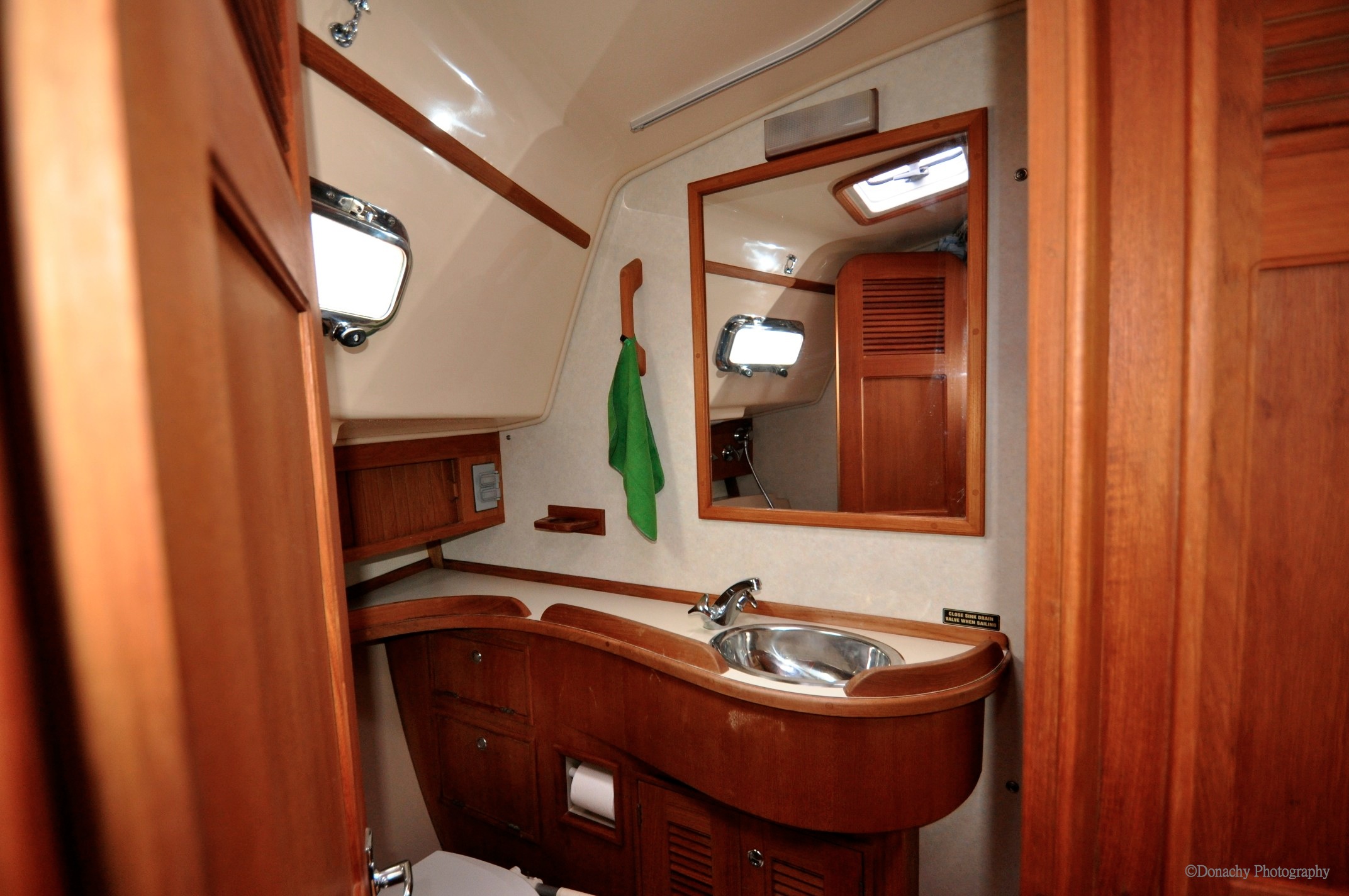
Bandon’s head has a porthole and skylight for plenty of natural lighting, and there’s ample elbow room. Forward (to the left) is a shower head. Separate doors alow for access from both the forward stateroom and the main salon.

One benefit of living in a relatively small space is that they don’t require much energy to heat up, cool off, or light. For example, a rooftop solar panel provides almost all the electrical energy we need in our camper, and we anticipate that once we install solar panels onboard Bandon and change the incandescent lighting over to LED, we’ll be able to live off the grid in our boat.

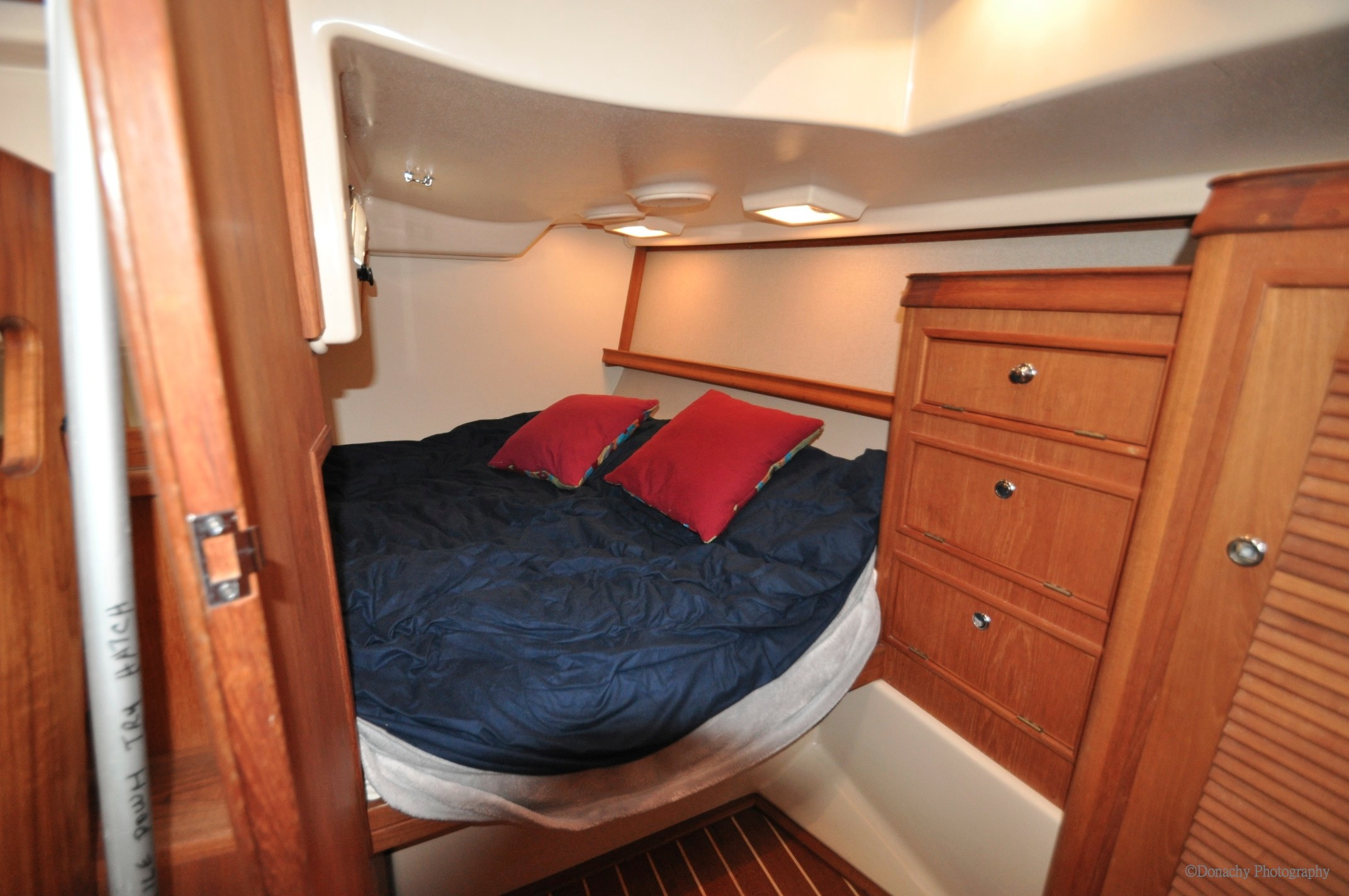
Above: The forward cabin features a comfortable full-size bed, a hanging locker, three cupboards, and additional storage in holds beneath the bed. Below: The aft cabin features another double bed and similar storage.

Another happy consequence of downsizing is that it has prompted us to examine how much stuff we acquire, hold onto and end up having to store or dust. We’ve discovered that as we pare away material possessions, the things we do have tend to better fit our lives in terms of form and function; with limited amounts of shelves, closets, cupboards and drawers, we do our best to only bring things into our lives that are particularly useful, durable, interesting or beautiful, whether the item is a piece of art, a set of dishes, or a cheese grater.

Above: Bandon’s galley is a U-shape favored by many sailors, providing a tight configuration where the cook can wedge in a keep the crew fed in rolling seas. A 100-gallon water tank provides water by both an electric pump and a hand pump. The two-burner stove runs on propane. Aft (to the right) is a deep ice chest accessed through the countertop. Below right: Dinner plates and bowls stay secure in purpose-build slotted cupboards.

How much space is enough is, of course, a personal matter. Onboard Bandon, we don’t have large clothing wardrobes or a rack full of pots and pans, and when we finish reading a book, it’ll go to friends or be sold back to the bookstore. Bandon has no TV, we removed the microwave oven, and we do our laundry at the local laundromat. When we want to watch a TV show or movie, we download it onto our computer or pop in a disc; microwave ovens haven’t been part of our kitchen for many years now; and our local laundromat is a cheerful place in town where we can browse shops or catch up on reading while taking care of laundry.

We’ve been pleased to note how little fuel, electricity and water we’re consuming. Early experiments with our new pressure cooker indicate that we will be able to cut water and fuel use even further.

Zaru Soba with Alaskan Scallops and Shrimp

Zaru soba (chilled buckwheat noodles) dressed up with fresh seafood makes for a quick but elegant meal. 


A challenge inherent to preparing meals onboard a boat or in a camper is that the stovetops tend to be small, and while this doesn’t necessitate limiting preparation to one or two pans, it steers a cook in that direction. Meals featuring something on a bed of noodles really shine, and one of our favorite types of noodles are soba – which is the Japanese word for buckwheat. Being thin, soba cooks quickly, and since zaru soba is served chilled, it’s no problem to rinse the noodles and set them aside while other food is prepared.

In the past, I’ve made this dish with salmon, halibut and rockfish. On this more recent occasion, I had large Alaskan scallops and fresh Alaskan shrimp on hand. Instead of serving the dish on traditional bamboo (the origin of the word zaru), I opted for pasta bowls.

Zaru Soba with Alaskan Scallops and Shrimp

Ingredients:

  • soba for two people
  • 1/4 pound shrimp, peeled
  • 1/4 pound sea scallops
  • 1/2 cup tsuyu (a dipping sauce available in the Asian section of most grocery stores). Divide into equal parts.
  • 1 sheet of nori (dried seaweed), cut into thin strips
  • 1/4 cup dry sherry or sake
  • olive oil
  • salt
  • 1/2 tbsp Thai seasoning
  • 1 tbsp fresh tarragon chopped course or 1 tsp dried tarragon (optional)
  • 1 green onions, sliced thin

Directions:

  1. Place scallops and shrimp in a mixing bowl. Add Thai seasoning and tarragon and toss together. Set aside.
  2. Boil soba according to the directions on the package. I use much less water than most directions call for and the noodles come out fine, but do salt the water.
  3. When the noodles are finished, pour them into a colander to drain and then rinse with cold water.
  4. Place noodles in pasta bowls. Add tsuyu to each bowl, tossing the noodles in the sauce.
  5. Heat a little olive oil in a large frying pan over medium heat. When oil is hot, add the seasoned scallops and shrimp. Add sherry or sake. Cook for about 1 minute, using a spatula to briskly stir and turn seafood.
  6. Place seafood on noodles. Top with sliced green onions and nori strips and serve. Alternatively, the cooked seafood can be chilled prior to adding to the noodles.

This dish and its variations has become a family favorite. It pairs beautifully with a Willamette Valley Pinot Gris or a crisp Sauvignon Blanc.

Let there be Fire

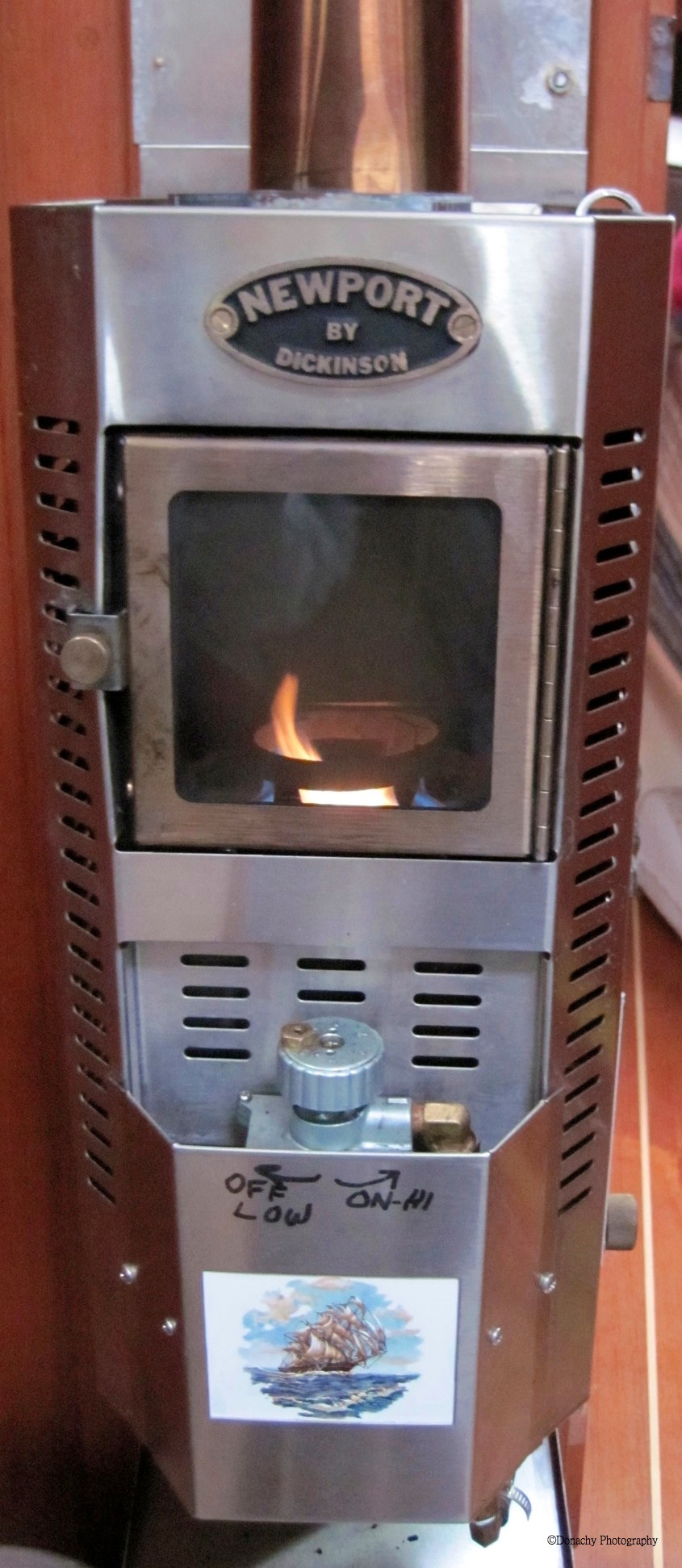
The first order of business before moving aboard Bandon was getting the heat going. That meant figuring out the boat’s Dickinson diesel heater – which proved to be no problem. Our Dickinson Newport uses fuel sparingly, burns clean, and provides plenty of warmth for our 35-foot boat. 

Although it’s warmed up a bit, last week nighttime temperatures were still dipping into the high 30’s and low 40’s. Cold. And although the cabin traps solar heat, as soon as the sun dips below the mountains surrounding Resurrection Bay, it gets pretty chilly.

We’d never used a diesel heater before, but Barbra jumped right in and had it figured out in short order. We soon discovered that in addition to warming up the cabin, the heater does a good job keeping it dry.

Cool sailing ship on the heater – no idea regarding the story behind it. 

It’s like having a miniature fireplace onboard – cozy and downright romantic. And there’s just enough room on top of the heater to, say, cook a couple of sweet potatoes or get a small kettle of water ready for tea.

In business since 1932, the Dickinson company is located in Surrey, British Columbia. Handmade, Dickinson products are respected for their reliability and ruggedness.

A Good Day Sailing

We took advantage of beautiful weather yesterday to do some sailing on Resurrection Bay. Dall porpoises showed up around our boat as usual and several times we saw salmon leaping. Maia got her first experience at the helm of a sailboat.

Air temperatures were in the low 60’s, so a light jacket was in order, but the sun felt great. 

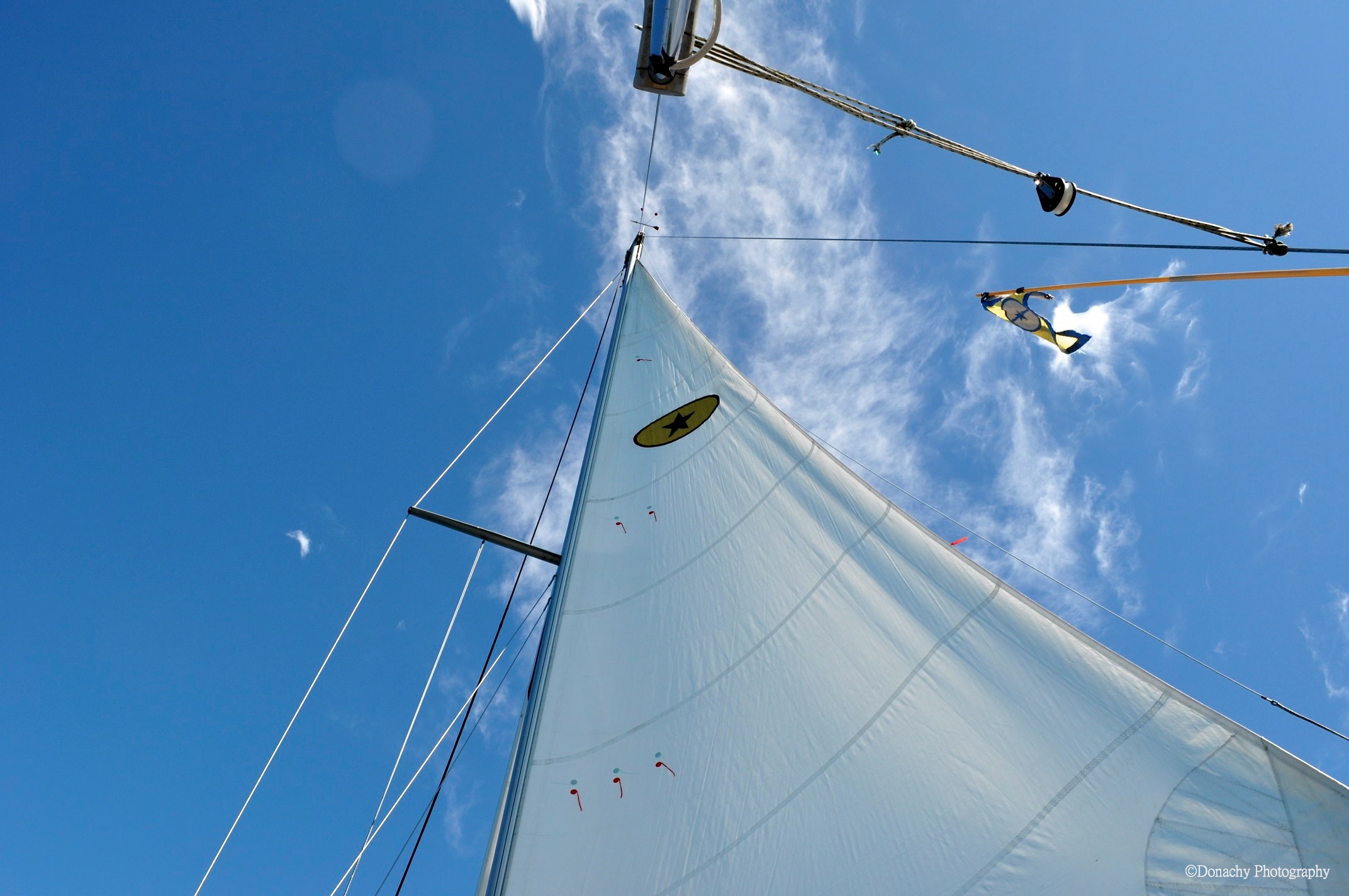
It’s always good to look up and see the mainsail catching wind.

These are the good old days.

Bacon-Wrapped Smelts (Hooligans, Eulachons or Candlefish)

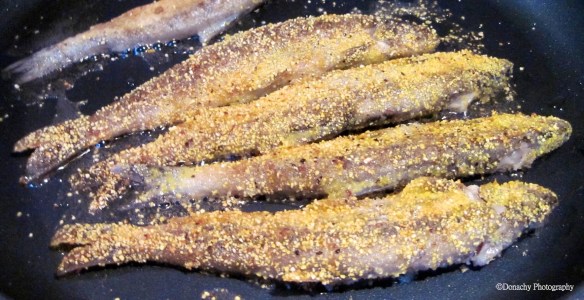
Freshly caught smelt prepared two ways: In the foreground, the fish was rolled in polenta. The smelt in back was dusted in seasoned flour. The fish were pan fried, wrapped in bacon and placed on whole leaves of Romain lettuce to be eaten from head to tail, bones and all. A sprig of asparagus and a few dollops of bright orange flying fish roe (tobiko) finishes the lettuce taco.

As I write this, one of the small rivers flowing into Resurrection Bay is jammed full of smelt. Specifically Thaleichthys pacificus, commonly referred to as hooligans. The AFS (American Fisheries Society) has settled on the name eulachon (pronounced you-luh-chawn), from the Chinook Indian name for the fish. Early west coast explorers and settlers called them candlefish because the spawning fish are so full of fat (about 15% of body weight) that when dried, they can be lit and will burn like a candle.

In the foreground: Polenta is especially coarse cornmeal. Seasoned with salt and pepper, rolling smelt in polenta gives these soft-fleshed fish a nice crunch when pan friend. In the back: another way to prepare smelt for the frying pan is by dropping them into a Ziplock bag containing seasoned flour and giving them a few shakes. Tarragon, fennel, marjoram and salt and pepper are a good start when seasoning these fish. Tongs make this a neat job. Note the asparagus in the pan on the stove.

The meat and bones of eulachons are quite soft. So soft, in fact, that when pan fried, the bones are barely noticeable. Their flavor is wonderful, but they definitely benefit from the addition of some crunch.

When the smelt are running in a river with a healthy population, getting enough for a meal or two is easy. On large rivers, a long-handled net might be necessary. But on this river, the fish were thick and close to shore. Two scoops of the net, and we had all the fish we needed.

Like their relatives, the salmon, eulachon are anadromous. They spend most of their life in the ocean, feeding on plankton, and then return to their natal streams and rivers to spawn, after which they die. Males arrive first and comprise virtually all the fish in the early part of the run. Later the females show up. Ideally, it’s the females you want, as a fresh fish laden with ripe eggs is a delicacy.

The males are quite good, too. In either case, cleaning these small fish (they average about eight inches/20 centimeters) is a simple matter of rinsing them in clean, cold water. There is no need to gill, gut or scale them.

A seemingly endless school of eulachons makes its way up an Alaskan river.

Prosciutto, Salami & Capicola with Egg and Cheddar on an Onion Bagel

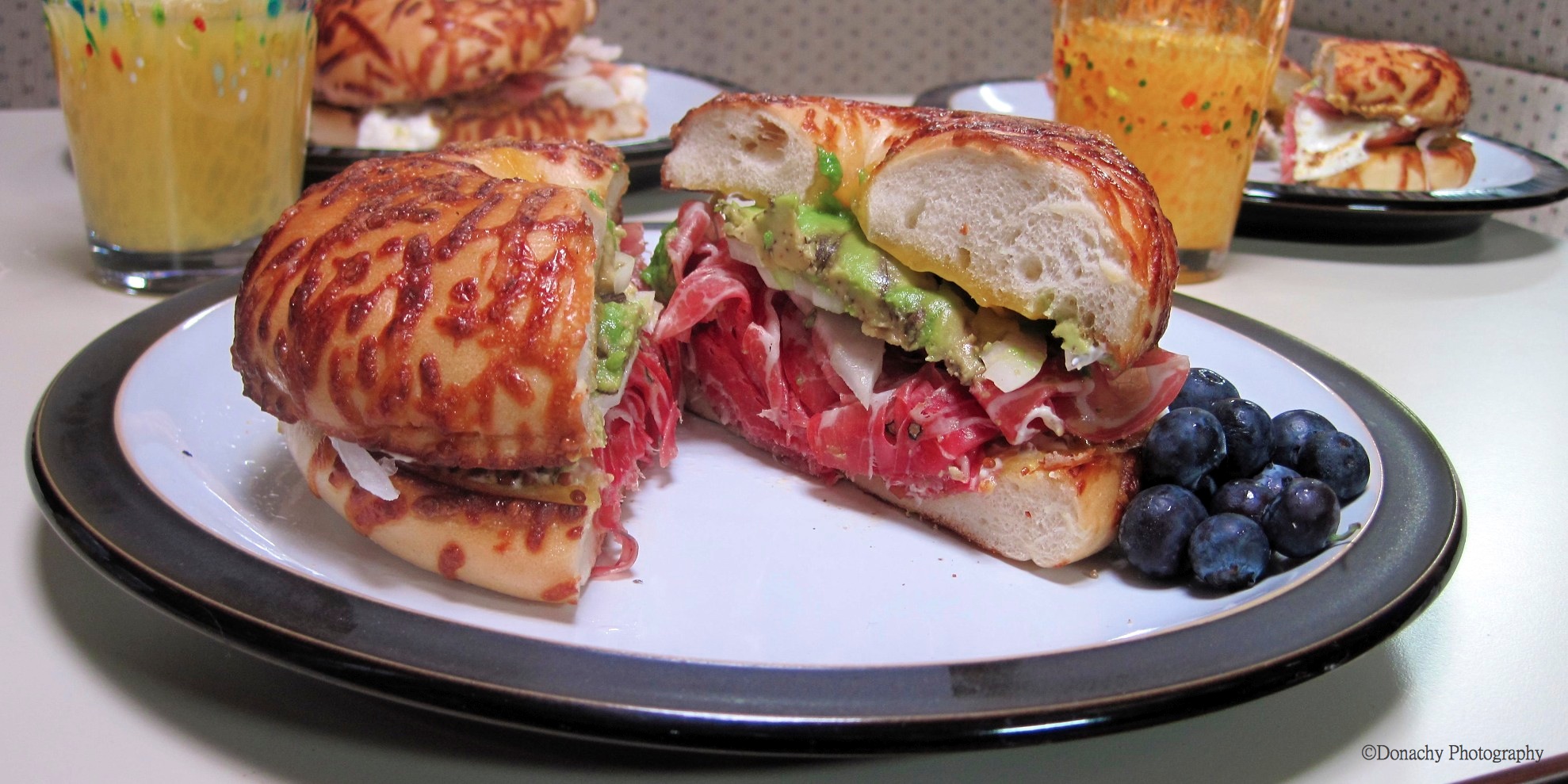
Our first breakfast is served aboard Bandon: Toasted asiago cheese bagels with melted Tillamook cheddar cheese, coarsely ground mustard, onion, cream cheese, avocado, a fried egg and three kinds of Italian-style meat – prosciutto, salami and capicola. 

Time for a good sandwich.

We spent about a week giving the sailboat a thorough cleaning as well as moving items off the boat that had been left behind by previous owners and moving aboard the things that will make this boat our home. We finished this process in time for daughter Maia’s visit, and when we returned to Seward with her from the Anchorage airport, we spent our first night aboard.

The next morning I made these bagel sandwiches for our breakfast. I began by toasting the sliced bagels in a large pan with a little olive oil, turning them once and adding thin slices of cheddar cheese to melt. Next, I removed the bagels from the pan and added coarse ground mustard, cream cheese and soft, ripe avocado. With the cheeses and spreads in place, I then added a thinly sliced onion and a generous amount of Italian-style hams: prosciutto, salami and capicola. The final touch was a fried egg.

Big, Fluffy Blueberry One-Pan Pancakes

The one pancake to a pan pancake: Half of one makes for a hearty breakfast. Perfectly crispy on the outside, light and fluffy and jammed full of fruit on the inside, served with a couple strips of thick bacon and maple syrup, who needs the other food groups? Well, coffee…

I’ve been messing around with pancakes for a long time. Here’s what I now think I know about making the perfect pancake.

First, while one can make them from scratch, there is no reason to. Krusteaz has come up with a mix that nails it. We buy Krusteaz mix in bulk at Costco and enjoy waffles or pancakes – or both – once or twice a week.

Second, put the butter in the pan, not on the pancake. Pancakes fry up crispier, turn a lovely golden brown, and taste more decadent when fried in roughly equal parts light olive oil and butter.

Third, the right pan makes a big difference. Barbra and I have become big fans of Swiss Diamond nonstick cookware. The pans are thick and heavy, so food scorch is avoided, and once they heat up, they cook with incredible evenness.

Fourth, do your best to get away with as little water and as little mixing as possible. The result is a fluffier pancake.

Fifth, forget medium heat. Low and long is the way to go. I start on medium-low, and then go a little lower than that, giving the cake time to rise without burning.

Sixth, one big pancake cooks up better – in every regard – than several small ones. Think 11 1/2″ pan and enough batter to cover most of it. Big pancakes can hold more fruit per volume and rise up higher and fluffier than smaller pancakes. (Get a big spatula, and be ready for a little splatter when you flip the cake.)

And finally… Fruit. Adding a generous amount of fruit to the batter lends more than just the added flavor and texture of the fruit itself to the cake; it also adds a creaminess that a fruitless pancake cannot match. Whole blueberries are great, and as this is Alaska, we use them frequently. Chopped bananas are superb. But our favorite? Strawberries. There is something about fresh strawberries, diced, that takes a pancake to another world.

Honey, jam, preserves or maple syrup – they all do a good pancake justice. Crispy around the edges, creamy in the middle, the maple syrup getting on the bacon, a hot cup of coffee to cut through the sweetness… It’s good morning food.

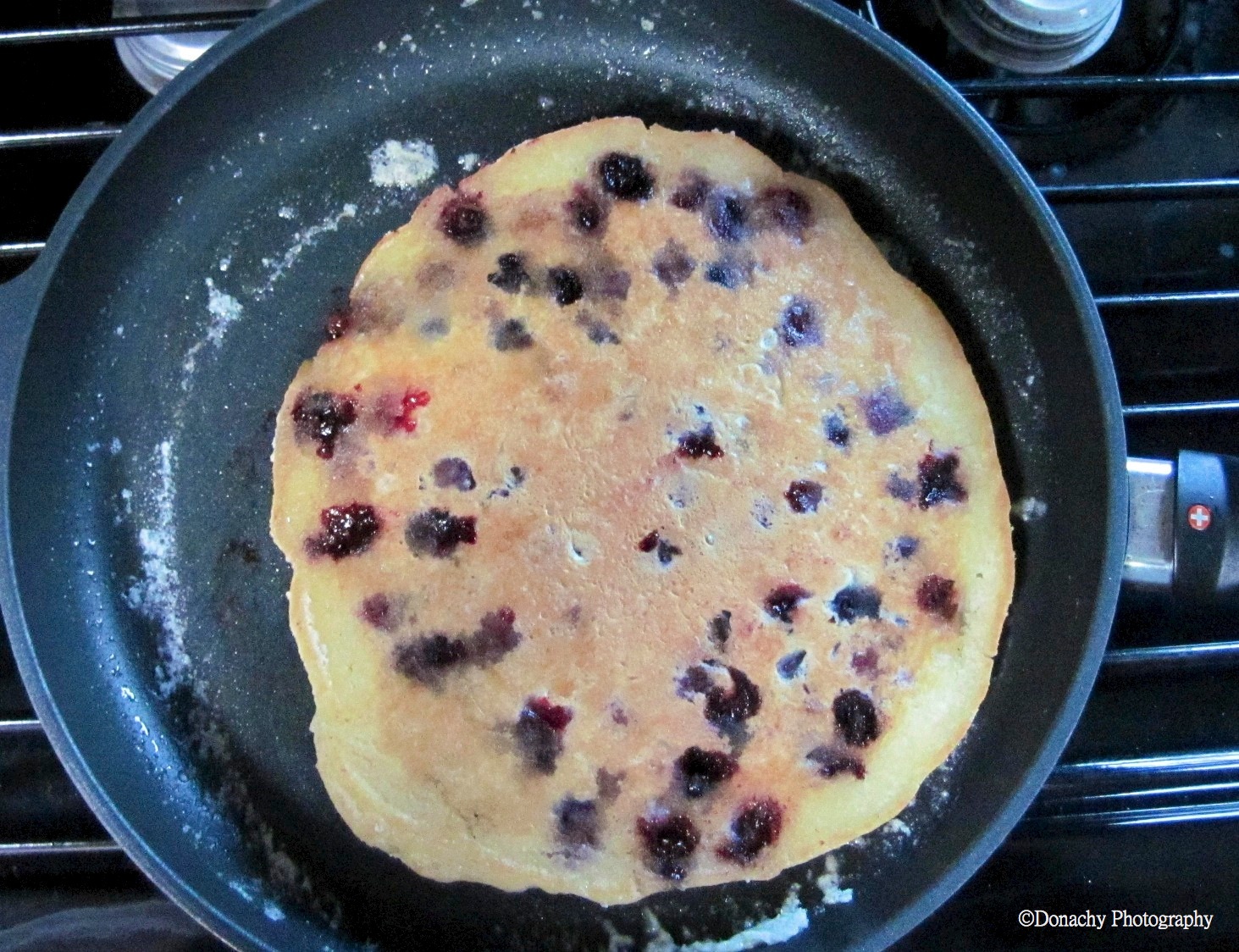
A big blueberry pancake, just about ready to be cut in half and served for breakfast. 

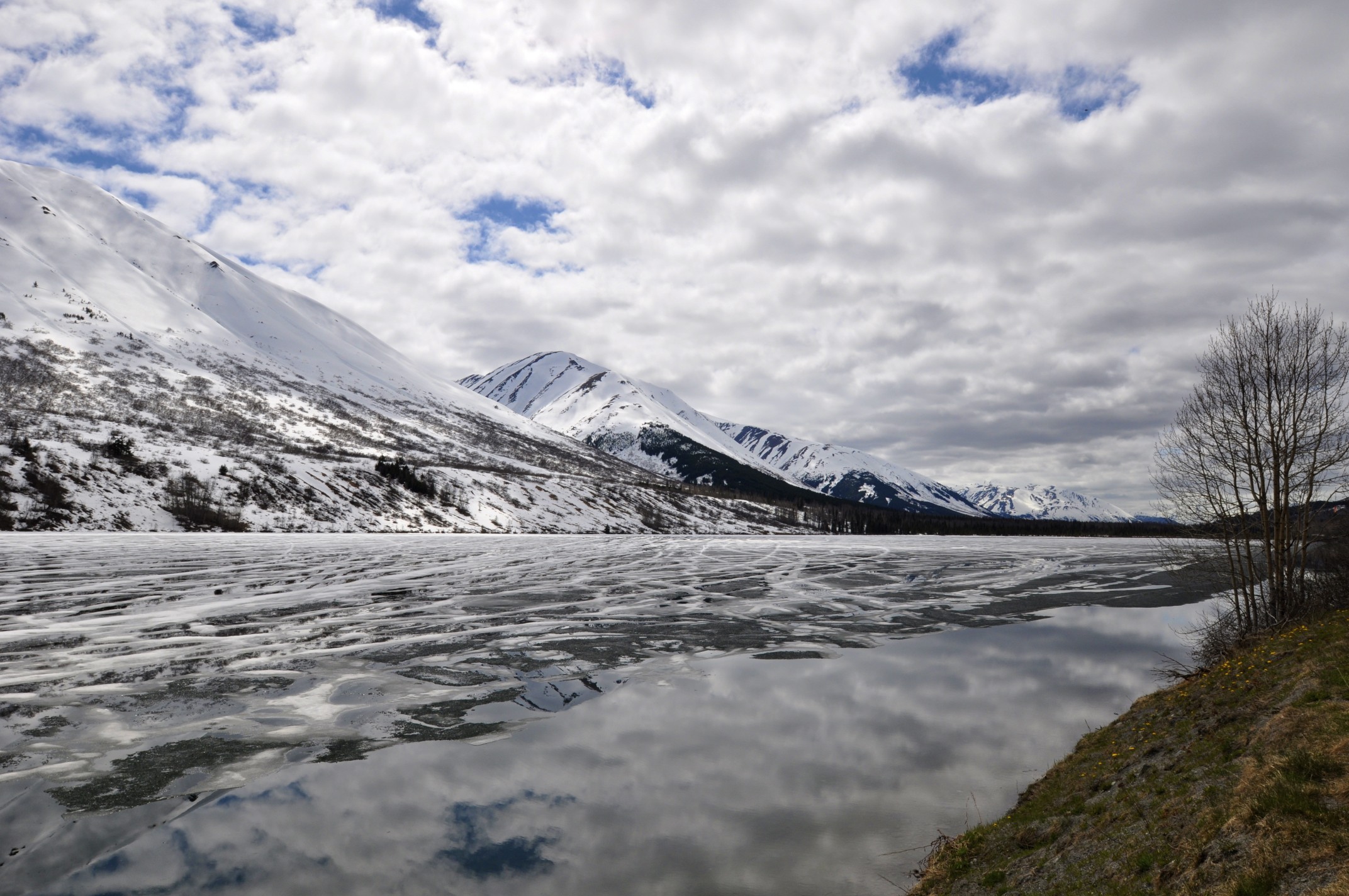
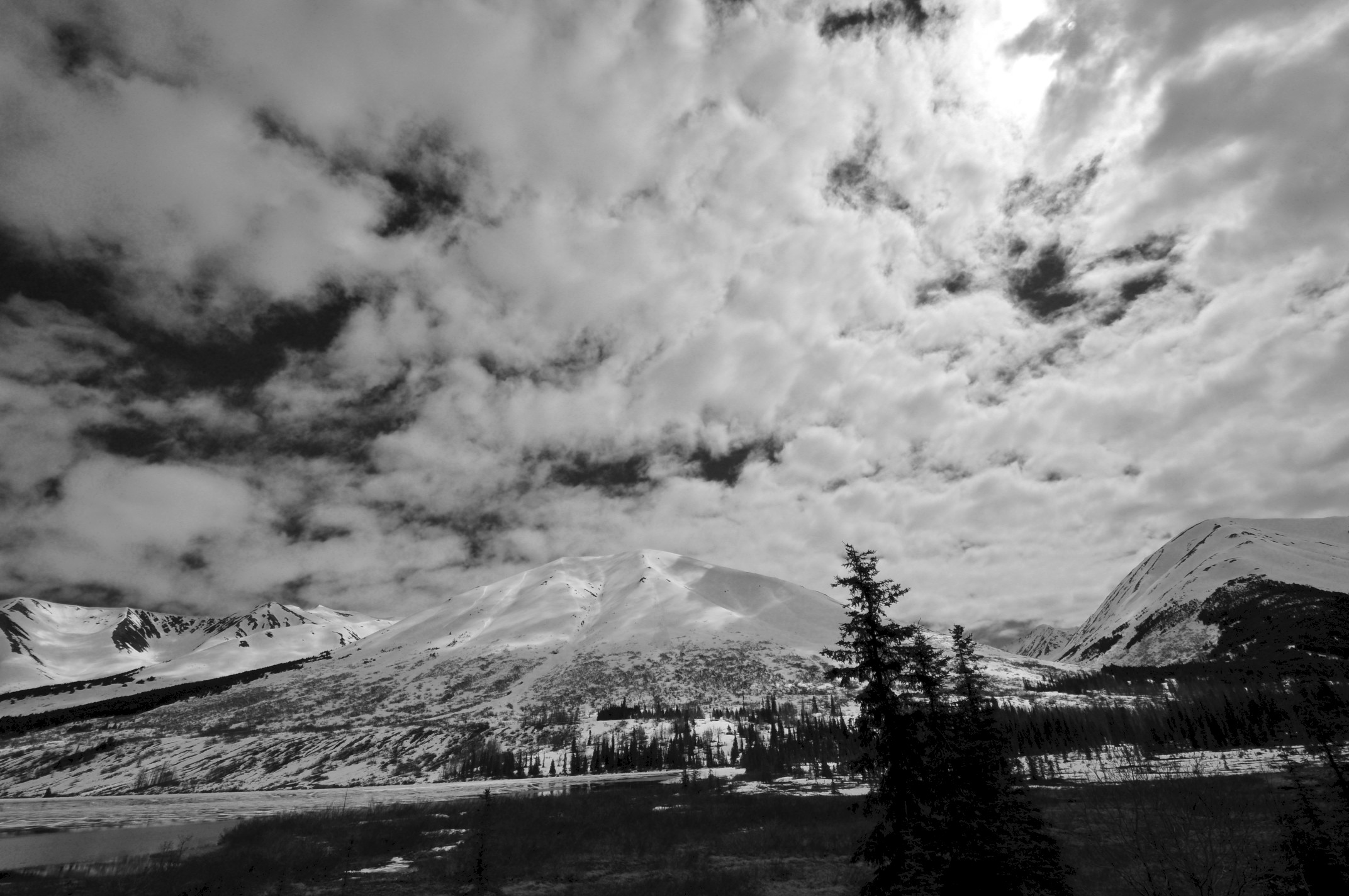
A Study of Upper Summit Lake, Alaska

One of the most frequently photographed lakes in Alaska, Upper Summit Lake lies along the Seward Highway between Anchorage and Seward.

We recently got a wide-angle landscape lens and were eager to try it out. A broken sky over breaking up ice on Upper Summit Lake created a visually arresting set of contrasts and similarities.

We’d never been on the Kenai Peninsula early enough to see this much ice and snow. Only a few days prior, the lake was completely covered in ice, although it was apparent it was beginning to thin.

Notice the dandelions blooming in the foreground. Tough little flowers, pushing up through asphalt in the city, almost pushing away the ice and snow up here.

The upper end of Upper Summit Lake is the kind of place where we slow down and scan for moose.

Morning Song

This little guy, a fox sparrow (Passerella iliaca) has been bringing in our days every morning here in Seward with the loveliest song. Day by day, he’s grown a bit tamer. Today he was gracious enough to allow us to get these photos. 

“LBB’s,” my undergraduate ornithology teacher called them. Little brown birds. You see one, and even if you get a really good look at it, when you go to Peterson’s or some other bird guide, what you see quickly becomes a blur of what you think you saw mixed in with a handful of similar-looking birds. But the songs are compelling and unique, and so you keep going back and forth from binoculars to field guides, and if you do this often enough over enough years, distinct species begin to take form.

Here he is, singing his heart out. No doubt some avian version of something clear and strong about being in the right time and place, eager and ready. We humans hear that in birdsong, and it lifts us. 

There are four subspecies of fox sparrows, each geographically unique, except when they overlap. Which they do. And when they do, the birds interbreed. More LBB’s. More scrutiny through binoculars. More head scratching over pictures in bird books.

When I approached too close, he went for a familiar place: the ground. Fox sparrows love underbrush and are often heard rustling through leaves or glimpsed flitting from one low willow to another. 

We’re lucky. We who live in North America. These migratory passerines breed up here. Which means they sing. In the places they head to during the winter, they don’t breed, and they typically don’t sing.

Before he flew off, he perched atop a wooden sign and gave a backward glance. The early morning sky was gray. I returned to the camper to make a blueberry pancake and fry some bacon while Barbra cut a grapefruit in half and made us big mugs of coffee.