Beading the Dolly Varden… And how Did they get that name?

OLYMPUS DIGITAL CAMERA

Spawning salmon attract opportunistic Dolly Varden char looking for easy pickin’s of fresh roe. It’s the perfect opportunity to grab a fly-rod, a handful of beads and hit the water. 

Chignik Lake’s main road begins at the dirt airstrip on the west side of the village and terminates at the riverside boat landing to the east. The 3.3 miles in-between, often marked with clumps of bear scat, moose tracks and even wolf prints, runs past a tiny post office on the ground floor of the postmaster’s home and a clinic only occasionally manned by itinerate healthcare providers who fly in from other villages. Along the way, the mostly dirt road winds past a school with a total enrollment of 19 students, a tiny Greek Orthodox church, a community center and a sparse collection of houses that are home to the village’s 50 or so inhabitants. Patches of salmonberries, alders and fireweed edge most of the road, which at one point crosses a crystalline stream that fills up with spawning char each fall.

The only practical ways in and out of the village are by bush plane or boat. And so, when a friend told us he’d be flying into the sister village of Chignik Bay and suggested we come down for some fishing, we needed to hitch a ride on someone’s skiff in order to make the 16-mile run down the Chignik River, through Chignik Lagoon, around the headlands and into Chignik Bay. Fortunately this didn’t present a problem, as we’re virtually the only two people in the village who don’t have an aluminum Lund v-hull with an outboard motor – the Chignik Lake version of a pickup truck

OLYMPUS DIGITAL CAMERA

Chignik resident Clinton Boskofsky runs his 18’ aluminum skiff down the Chignik River on a sunshine-filled day in early fall.

A few bald eagles eyed us cooly from bank-side perches as the skiff bounced down the remote river toward the Alaska Gulf. Two weeks ago on this same river I’d seen a handful of bears drawn by thousands of sockeye salmon teaming in the shallows, their bodies crimson red, heads moss green. But today salmon were scarce and the bears had moved up into the feeder streams where the fish were still spawning. 

Gradually, the brisk fall air took on a familiar briny scent as we approached the lagoon. The bones of an old gillnetter fishing boat rested along the southern shoreline and an abandoned cannery came into view on the opposite side, vestiges of a not-so-distant past.

old-wooden-fishing-boat-n

“Love this smell!” Barbra called out over the steady hum of the outboard.

“Tide’s out a little, flat calm. No bears I guess, but it’s a good day to see otters!” I called back.

Sure enough, as we broke into open water, a raft of sea otters popped up their heads to give us a curious look.

sea-otter-mother-n-baby-n

Puffins, kittiwakes, murres, gulls, cormorants, auklets and leaping salmon were also in the mix of wildlife as we hung a right, arced around the headlands and cruised into Chignik Bay. Surrounded by a semi-circle of mountains, the evening light over the village was fading fast. As the bow of the skiff nosed into the gravel beach with a metallic crunch, our friend Jerry walked down to greet us.

“Any fish up in the creek?” I asked him.

“I dunno,” he replied. “I just got here myself. Haven’t been up to look yet. I guess we’ll find out tomorrow morning.”

Work in Mongolia having pulled us away from our adopted state for the past two years, it had been awhile since we’d last seen our old friend. With lots of drinking… er… catching up to do, we ended up getting a late start the next day. Fortunately, it wouldn’t matter. If salmon were in the stream the Dollies would be close behind, sucking up any loose eggs that failed to get buried in the spawning redds. The char wouldn’t be fussy as long as we showed them beads approximating the size and color of the roe they were feeding on. 

Shortly after lunch the next day, the three of us were standing on a bridge at the edge of Chignik Bay village overlooking Indian Creek’s pellucid waters. A month ago, this very stretch of the stream had been thick with spawning pink salmon. That run was over. With and without polarized sunglasses, we strained our eyes hoping to catch a tell-tale flash or shadow below the rippled surface.

“There’s a salmon!” I looked to see where Jerry was pointing.

“Oh, yeah!” Barbra exclaimed. “There’s a few!”

Mildly irritated that I still hadn’t found the fish, I narrowed my eyes and kept looking. Gradually, almost magically, some of the multi-colored stream bed rocks I’d been staring at began to reveal themselves as animate objects, little light-gray torpedoes casting faint shadows. Pinks. Looking more closely, other, smaller shapes subtly shifting in the current materialized. Dollies.

OLYMPUS DIGITAL CAMERA

Colored rocks below a rippled surface paint a mosaic on Indian Creek.

Each of us rigged up with a standard 9’ leader terminating in a 5x tippet, threaded on an egg-sized bead somewhere in the orangish-red spectrum, tied on a small black hook, pinched down the barb and affixed a hot pink, fingernail-sized strike indicator a few feet above the egg. A translucent silicon stopper inserted into the bead would allow us to keep the egg in place a couple of inches above the hook.

Fishing beads is fairly straightforward. When salmon spawn, the female uses her caudal fin – her tail – to dig out a depression in the stream’s gravel bed. This nest is called a redd. As she deposits her eggs, a male releases milt. The female then moves upstream and again uses her tail to push gravel over the fertilized eggs. Thus buried, the eggs will remain well oxygenated and safe from predators until they hatch in the coming months.

OLYMPUS DIGITAL CAMERA

Male Dolly Varden in brilliant fall spawning colors. Note the orange bead “egg” just below its jaws. In a few hours of fishing covering two days, the three of us caught dozens and dozens of char from 10 to 19 inches. We kept 10 fish for the kitchen – a few small fish to charcoal grill whole and three larger fish for other recipes. (See Rustic Char and Dolly Varden Shioyaki.)

But there are invariably eggs that drift out of the redd before they can be buried. Mergansers, gulls, sculpins, trout, char and ravens are among a host of opportunists that seek out these loose eggs. On Indian Creek we encountered American dippers, a fascinating songbird able to hop into a stream and walk along the bottom, availing themselves of drifting roe.

OLYMPUS DIGITAL CAMERA

Dollies are fall spawners and the abdomen of this beautifully-marked female is swelled with her own eggs.

The objective is to present the bead so that it gently bounces along the bottom as a natural egg would. A cast straight upstream or quartering upstream is generally most effective. When a char intercepts the bead, the strike indicator floating with the current will hesitate. With a small, sharp, barbless hook, simply lifting the rod while tightening the line is sufficient to achieve a hookup.

OLYMPUS DIGITAL CAMERA

This male Indian Creek Dolly Varden was stuffed to the gills with fresh salmon roe. Note the red dot on the egg closest to the Dolly; it indicates that the egg has been fertilized.

The next morning, with a few hours to spare before our boat ride was scheduled to show up, we decided to have another go at Indian Creek. This time we wanted to give our tenkara rods a try. It’s origins in Japan, tenkara angling exemplifies simplicity at its finest.

There is no reel. Instead, a long line is attached directly to the tip of a light, delicate but strong, telescoping rod. Our tenkara rods are about 12 feet in length but telescope down to a mere 21 inches. The entire set-up weighs less than 2 1/2 ounces. Rated for a maximum tippet strength of about five pound test, these rods are perfect for hiking and stream exploring in pursuit of fish of a few inches up to a couple of pounds. Between the long rod, a slightly longer line and an outstretched arm, a cast of nearly 30 feet is achievable – plenty long enough to cover the water on streams, small rivers and even the weedy margins of a lakeshore. 
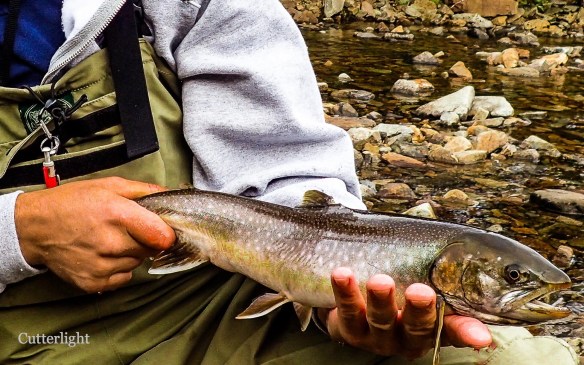
OLYMPUS DIGITAL CAMERA

Jerry took this stunning female Dolly on a tenkara rod and a bead. Rod, line, lure and pristine water… Angling doesn’t get any more beautifully simple.

Fishing over the same water we’d hit the previous day, we expected fewer fish. Happily, that wasn’t the case. In fact, our two largest char came on the tenkara rods. And for the second day in a row, except for a pair of dippers and a belted kingfisher, we had the stream to ourselves.

OLYMPUS DIGITAL CAMERA

So how did this fascinating member of the trout and char clan come to be called “Dolly Varden?” Glad you asked.

It seems that sometime in the 1870’s anglers on northern California’s McCloud River were catching a species of brightly-colored trouty-looking fish. Admiring the brilliant spots and colorful markings, the anglers called them “calico trout” after the floral-patterned cloth. A group of fisherman were looking over a catch of these “calico trout” and lamenting that there wasn’t a better name for them when a 16-year old girl, the daughter of local resort owners, happened along. The girl had been reading Charles Dickens’ Barnaby Rudge in which there is a character by the name of Dolly Varden. This character was named for the feminine fashion of the time, a  muslin dress worn over a brightly colored petticoat. In fact, the girl had recently received a dress and petticoat in that very style. “Why not call them ‘Dolly Varden?’” she suggested.

The name stuck, and so this most colorful salmonid came to known by a most colorful name.

screen-shot-2016-10-19-at-8-08-24-pm

The eponymous Dolly Varden fashion of the 1870s…

OLYMPUS DIGITAL CAMERA

 …And an exquisite specimen of Salvalinus malma – the Dolly Varden char.

Back in the skiff heading home, a squall packing icy rain hit us square in the face as we rounded the cape. We pulled jacket hoods tight and hunkered down, following Clinton’s directions to shift our weight against changes in wind and current in order to keep the boat on an even keel. No complaints. A few fish iced down in a small tub, time on a beautiful piece of water, a friendship renewed… And we never take for granted how fortunate we are to live in this land of staggering abundance.

OLYMPUS DIGITAL CAMERA

Sleeves rolled up and arms elbow deep in Indian Creek’s frigid waters, I snapped a few frames not sure what, if anything, I’d get. There appear to be four species of salmon as well as a couple of dozen char in this shot. 
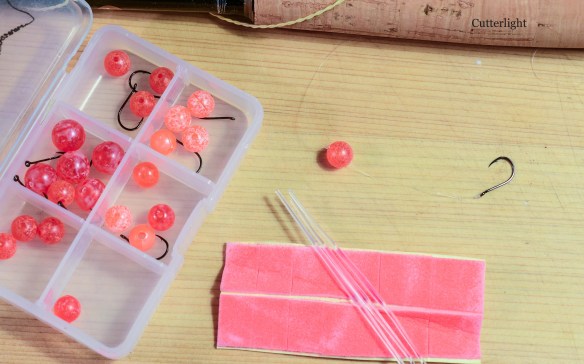
bead-egg-rig-n

A basic bead kit includes a box with a few beads and a few short-shank hooks, silicon toothpicks (if you’ve been using wood, try silicon), and a card of self-adhesive strike indicators. (There are 12 pink, fingernail-sized self-adhesive foam squares on this card.) The strike indicators can be slid up and down the line depending on water depth. The bead, pegged to the line with a silicon toothpick (inserted and trimmed close to the egg) can also be slid. Note that the egg is affixed about two inches above the hook. This positioning ensures that fish are consistently and neatly hooked in or just outside the jaw, minimizing injury. A pack of small split-shot sinkers to keep the egg near the bottom is also handy. There’s still one more step before this rig is finished – can you spot it?
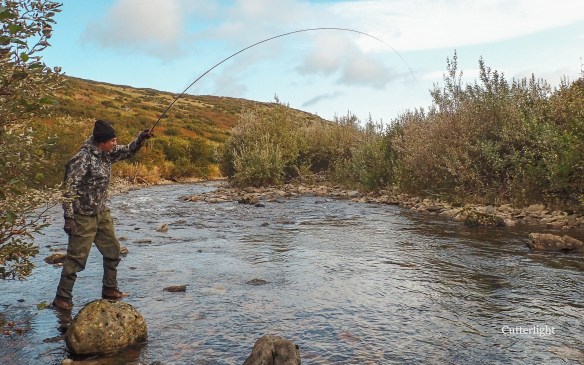
OLYMPUS DIGITAL CAMERA

Look Ma! No reel! Determined fighters, even small Dollies put a nice arc in a tenkara rod. My connection with genus Salvalinus, the chars, began when I was about seven years old and caught my first brook trout, S. fontinalis, on Minister Creek in Pennsylvania. It’s an arbitrary thing, I suppose, to have a favorite fish, but if I had to name mine…

Bury My Heart at Wounded Knee: Book Review and a Proposal for Reparations

Wikimedia.org

Tatanka Yotanka, Sitting Bull, Chief of the Hunkpapas of the Teton Sioux. (Photo: Wikimedia.org)

Bury my Heart at Wounded Knee by Dee Brown*, 1970 

I first read Dee Brown’s somber account of America’s treatment of Native Americans upon finding it on my parents’ bookshelves when I was in high school. Of course, none of my friends were reading anything like this, and when I attempted to discuss the book with my high school history teacher, a staunch conservative, his attitude was dismissive. If my parents actually read the book, they had little to say on the subject. And so I internalized what I was reading.

The book has stayed with me for the past 40 years, through visits to Native American reservations in the lower 48 and visits to First Nations villages in Canada. It was a presence in the back of my mind when, as was a young man hitch-hiking across America, I found myself in a plush white Cadillac heading west across Wyoming. Behind the wheel was a man in his 30’s. Spread across the front seat between us were legal books and document folders. He told me about how he had left his reservation – how difficult that had been -, how he had become a successful lawyer and how satisfying it was that some of his work included advocacy for his people. It has been with me these years in Alaska, living in Inupiat and Aleut/Alutiiq villages, making friends with my neighbors and admiring much in these communities. It was with me when I saw in the news that Lower 48 extremists were attempting to take over Bureau of Land Management acreage as though it’s theirs to take over, willfully ignorant of history; willfully ignorant of who was on these lands first, should they ever be ceded back to private ownership. The book again made its presence known in a restaurant in Anchorage where, on a restroom wall, someone who knows little about any of all this felt compelled to apprise other patrons of his bigotry toward Native Americans.

Forty years after that first read, I just finished rereading Bury My Heart. I read it aloud as Barbra listened, chapter by painful chapter. Throughout the read, I found myself rediscovering passages that have stayed with me these past 40 years – a song about ponies, stirring quotes from Chiefs, treaty violations by the American government that, even now thinking about their callous enormity, leave me without words.

A brutal history

It is a hard read. The facts, about which many Americans remain in denial, are brutal. Don’t be misled by reviews that insist Brown’s treatise isn’t meticulously researched. It is, with 23 pages of sources cited. As for bias, if anything Brown has left little unturned in a nearly fruitless effort to identify white Americans who took a courageous – or even principled – stand on behalf of the tribes that were being systematically wiped out. The best one reviewer claiming bias could come up with is that an army officer guilty of a massacre was cashiered. Independent sources state that in fact, the only “punishment” that officer received for overseeing the slaughter of women and children was that he was permitted to resign. For similar behavior, plenty of other army officers received promotions. In fact, it was General Sheridan who is credited for first proclaiming that “The only good Indian is a dead Indian,” a sentiment backed by war policy that shored up rather than hindered his career.

There are light spots among the 449 pages. The ancient songs stand by themselves as beautiful poetry; the many photographic portraits of Native American leaders, similarly, often capture grace and beauty. When Tatanka Yotanka (Sitting Bull) goes off script at a public ceremony to tell a white audience exactly what he thinks of the way they have treated him and his Native American brothers and sisters, it’s easy to cheer. And very, very occasionally a judge, army officer, or other white with enough power to matter does find in himself sufficient courage, empathy and sense of justice to come to the aid of a people being systematically extirpated. These respites notwithstanding, the reader knows from the beginning that the story is going to come to a bad end for the protagonists, and it does.

In these somewhat more enlightened times, people of good intent periodically speak of reparations for America’s past wrong deeds. The unfortunate reality is there isn’t much good land available to cede back and it is land that underpins many of the grievances. As to the loss of culture, language, family lines and entire tribes and nations… 

Practicable, meaningful reparations

But there are two things that could be done and that would have meaning:

  1. The manner in which many public schools serving Native Americans are run reflects a level of corruption reminiscent of the bad old “Indian Ring” that conspired to cheat Native Americans out of virtually every treaty provision they were granted. One by one, these schools need to be reformed; their administrators  removed and the corrupt review processes by which these schools remain accredited – facilitated by auditors who are either dishonest or inept – need to be completely overhauled. “Completely” means completely. Remove everyone who has overseen the mess, throw out all the old forms and guidelines, put in place people who care about these communities and who have the expertise to get it right, and start again from scratch.
  2. Add Bury My Heart at Wounded Knee to the canon of required reading in high schools and colleges across America. No adult literate American should go through life ignorant of this history, regardless of how uncomfortable it might make them.

*Doris Alexander Brown, 1908 – 2002. While many assume that Dee Brown must be Native American, in fact he was white, born in Louisiana and raised in Arkansas. Boyhood experiences with a kind acquaintance named Chief Yellow Horse and a friendship with a Creek boy prompted him to reject the stereotypes of his day. (Wikipedia.)

Roasted Squash Pecan Bread

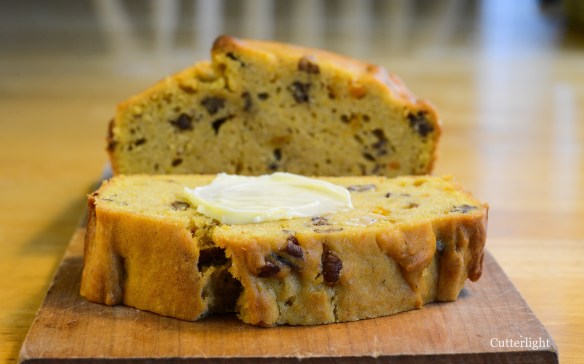
squash-pecan-bread-n

Imbued with traditional fall flavors, we have a feeling this bread could become a new Thanksgiving tradition!

During our annual shopping in July, we picked up several acorn and butternut squashes – favorite centerpieces in many of our recipes. There is also a practical side to squashes when living in the bush… they ship well and last a long time in a cool, dry location. Up in Point Hope, we used to keep squash and potatoes for months in our mudroom. Here in Chignik Lake, a much more damp location, the fridge serves as our long-term storage area.

Recently, after oven-roasting a butternut squash in olive oil and garlic, I decided to try something new. I have a time-tested base recipe for fruit bread, but instead of the usual pears or other fruit, I used the roasted squash. Even the raw dough was quite tasty! (I know, I know, I’m not supposed to eat raw dough…but I always do). The squash helps to make the bread moist and satisfying and pumpkin pie spices give it a sense of holiday seasons. Pecans add a layer of flavor and a hearty crunch. This would be a perfect Thanksgiving bread!

Roasted Butternut Squash Pecan Bread

Ingredients

  • 2 cups mashed roasted butternut squash (any roasted squash will work)
  • ½ cup vegetable oil
  • ½ cup unsalted butter, melted
  • 4 large eggs, beaten
  • 2 tsp vanilla extract
  • 1 ½ cups granulated sugar
  • 1 tsp galangal (or ground ginger)
  • ½ tsp ground nutmeg
  • 1 tsp ground cinnamon
  • 3 ½ cups all purpose flour
  • 1 tsp baking powder
  • ½ tsp salt
  • 1 cup chopped pecans

Directions

  1. Grease two 8 in. x 4 in. x 2 in. loaf pans. Set aside.
  2. Preheat oven to 350 degrees F (175 degrees C).
  3. In a large bowl mix together squash, oil, butter.
  4. Mix in eggs and vanilla.
  5. Mix in sugar.
  6. Sift in spices, flour, baking powder and salt.
  7. Mix well, but do not over mix.
  8. Fold in pecans.
  9. Pour batter into two prepared pans.
  10. Bake for 60 minutes or until a wooden pick inserted into center of loaf comes out clean.
  11. Top should be lightly browned.
  12. Cool for a few minutes in pans. Remove loaves and finish cooling on wire racks.

It’s All in the Details – Super Rich Chocolate Chip Brownies and the Writing Process

brownies-chocolate-chip-n

Moist, cakey, fudgy… forget the description, just give me some of that!

Sometimes the lines get blurred between teaching elementary students and baking. *Warning* Do not read the following blog on an empty stomach. In writing, young students often find it difficult to add appropriately intriguing details to their writing. In order to teach these skills, I often model an example by writing in front of them. I will write something very simple like “My favorite dessert is a brownie sundae.” I will explain that interesting writing about food should make the reader hungry. They usually agree that my initial example didn’t accomplish this goal. Then I will write something like the following –

Imagine a brownie. Not just any brownie. This one is cooling from the oven. Its texture is somewhere between a rich chocolate cake and gooey chocolate fudge. The warm brownie has been saturated with melted chocolate chips that have been baked into this brownie. Atop this brownie mountain is a scoop of custardy French vanilla ice cream speckled with seeds from real vanilla beans. Homemade whipped cream with a faint aroma of vanilla is on top of the ice cream. Hot, thick fudge is dripped over the top of the dessert. It is warm enough to slightly melt the ice cream, but not hot enough to hurt your tongue. Of course, the whole sundae is topped with salty peanuts and a sweet, red maraschino cherry.

By the time I get to the description of the fudge, the students are usually squirming in misery. And my point is made.

The centerpiece and foundation of this favorite dessert is the brownie. Many people are staunch cakey brownie lovers. In the other camp are those who demand the gooey fudgy brownie. This brownie recipe results in a balance of moist cake texture with enough gooeyness to satisfy those who need that intense dense brownie. Enjoy this brownie in your favorite sundae – or straight from the oven. Do let it cool a bit before you dig in!

Super Rich Chocolate Chip Brownie

Ingredients

  • 2 cups granulated sugar
  • 5 large eggs
  • 1 cup canola oil (or other light vegetable oil)
  • 1 tsp vanilla extract
  • 1 1/3 cups all purpose flour
  • ½ cup Dutch processed cocoa powder
  • generous pinch salt
  • 1 cup semi-sweet chocolate chips

Directions

  1. Grease a 9 x 13 inch glass baking dish. Set aside.
  2. Preheat oven to 350 degrees F (175 degrees C).
  3. In a large bowl, stir together sugar, eggs, oil, and vanilla extract.
  4. Sift flour, cocoa powder and salt into egg mixture.
  5. Mix until moistened, do not overmix.
  6. Evenly spread batter into prepared baking dish.
  7. Sprinkle chocolate chips over batter.
  8. Bake for 30 minutes. Brownies will start to pull away from edge of dish when finished.
  9. Be patient. Allow to cool a bit before cutting.

Hot Spiced Lingonberry Tea (aka Hot Lowbush Cranberry Tea)

lingonberry-hot-tea-n

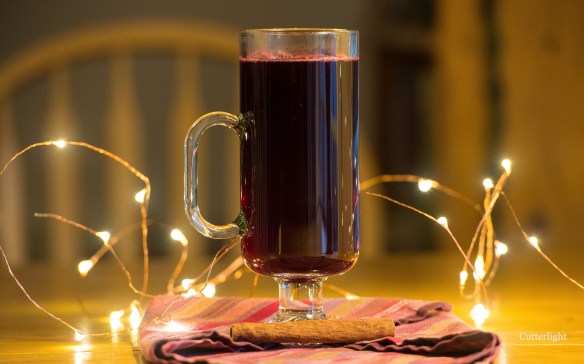
Hot spiced lingonberry juice – a magical potion.

When we were in Mongolia, we were served hot fruit tea, particularly sea buckthorn berry tea. Based on our experience with teas, we expected this drink to be made from tea leaves along with dried fruit. The tea we were served was not really tea, but heated fruit juice infused with spices. Although we’d both previously enjoyed hot, spiced cider, it hadn’t occurred to us to heat other juices and enjoy them this way. Thank you, Mongolia.

Fast-forward to the present. Now is the time to pick lowbush cranberries in Alaska. We’ve been told for years to wait until after the first frost to pick these bright red beauties. In Point Hope, the first frost often coincided with snow and the first Arctic blasts from points still further north. By the time this happened, it was painfully cold to go out and pick these gems. Chignik Lake lies at a much lower latitude, and mornings that begin with a glaze of frost have been warming up into the 50’s. So, we’ve been picking lowbush cranberries by the gallon. Lowbush cranberries, otherwise known as lingonberries, are the wild cousins of the big juicy cranberries that appear in stores around Thanksgiving. Because of my recent experience with Mongolian fruit teas, I processed my lowbush cranberries into juice, saving the remaining pulp to make delicious cranberry sauce to go with dishes such as roast turkey and grilled pork tenderloins.

Making the juice was easy. I combined four cups of berries with two-and-a-half cups of water. I brought the water to a simmer for about ten minutes. While the berries were simmering, I took a silicon spatula and stirred and squashed the berries. After ten minutes, I hung a piece of cheesecloth in a tall food storage container and placed the berry mixture in the cheesecloth in order to separate the pulp and the juice. I froze the resulting juice in ½ cup portions. I also froze the pulp to be made into cranberry sauce later.

After all this lingonberry processing, I was ready to sit down and enjoy a cup of hot berry tea! A steaming, aromatic cup of this juice spiced with warm wintertime flavors was a perfect reward for my work in the kitchen. I can’t adequately describe how satisfying this tea is. The aroma and flavor evoked the best memories of a warm, cozy home on cold winter nights, kind of like mulled cider. At the same time, I felt like I was pouring some incredibly healthy elixir into my body. It is something like the feeling, I imagine, of drinking a magical potion from a friendly witch.

Hot Spiced Lingonberry Tea

Ingredients

  • 1 cup brown sugar, packed
  • 4 cups lingonberry juice
  • ½ tsp allspice
  • 1 stick cinnamon
  • 6 whole cloves
  • dash ground nutmeg

Directions

  1. Place juice and brown sugar in a pot. Whisk until well blended.
  2. Add allspice, cinnamon and cloves.
  3. Simmer 10 minutes.
  4. Ladle tea into mugs through a fine wire mesh sieve.
  5. Grate a dash of nutmeg onto hot juice and serve immediately.

Blueberry Jam Bars – The Best Part of a Survival Kit for Stormy Afternoons

blueberry-jam-bars-n

Stormy afternoon survival kit: A great book, freshly brewed tea, and blueberry jam bars still warm from the oven.

My morning chores were to make a batch of yogurt, sourdough loaves for the week and sourdough pizza crusts for the freezer. Those tasks complete, it would have been nice to go outside for a walk. But this Saturday’s weather turned it into a stay-inside kind of day. We’ve heard that October is the month that Chignik Lake earned its name. Chignik means big winds in the native language. Saturday, it poured rain sideways. The lake was blown into a froth of whitecaps. Our little home here hunkered down solidly, just like our little house in Point Hope. It was the kind of day to curl up with a warm drink, a book, and a blanket. In our house, this scene also begs for a home-baked accompaniment. With a shelf of preserves made from berries we picked earlier, I had no trouble baking up a batch of oat bars filled with jam. The hardest part was to choose which jam – blueberry, currant, raspberry, or cranberry. Blueberry! In just over 30 minutes, I had delicious bars ready to go. This recipe is as easy as pie… or as blueberry oat bars.

Blueberry Oat Bars

Serves 9 polite eaters, or 2 ( if you have limited willpower)

Ingredients

  • 1/2 cup dark brown sugar, packed
  • 1 cup all-purpose flour
  • 1/4 tsp baking soda
  • pinch salt
  • 1 cup rolled oats
  • 1/2 cup unsalted butter, melted
  • 1 cup homemade blueberry jam (substitute any jam you have on hand)

Directions

  1. Preheat oven to 350 degrees F (175 degrees C).
  2. Grease 8 inch square baking dish.
  3. Combine sugar, flour, baking soda, salt, and oats in a medium bowl.
  4. Drizzle melted butter into flour mixture.
  5. Toss until mixture is crumbly.
  6. Press 2 cups of the mixture evenly into bottom of baking dish.
  7. Spread jam on top of flour mixture.
  8. Sprinkle remaining flour mixture atop jam, as even as you can.
  9. Lightly press flour mixture into jam.
  10. Bake for 35 minutes. Finished bars should be lightly browned.
  11. Allow to cool before cutting.

Rustic Char

char-rustic-in-pan-n

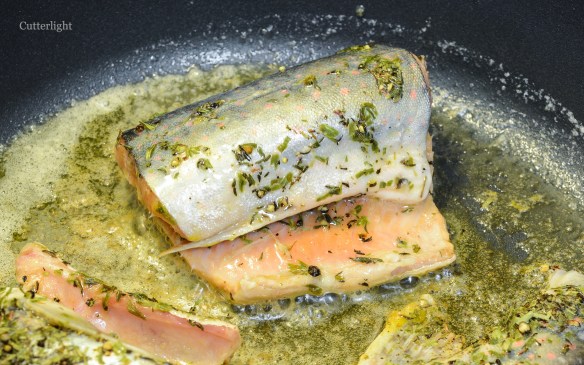
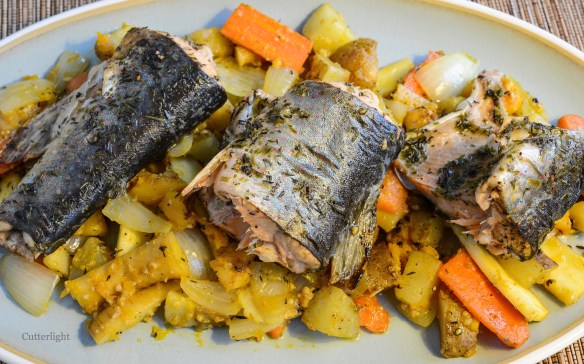
A great pleasure in life is obtaining seasonally fresh ingredients to take back to the kitchen. With Dolly Varden char at their fattest in fall and entering local streams, now is the time to go out and get them. Brookies and small lake trout shine equally well in this simple, exceptionally satisfying dish, as do Arctic char which are sustainably farmed and available in markets.

Char generally have a flavor that is richer than trout but lighter than most salmon. The keys to this dish are hearty vegetables, fresh charr, thyme, butter or quality olive oil and a good white wine. Add a spritz of lemon juice and a dash of salt and pepper. Don’t get hung up on specific ingredients; this is camp-style fare at its finest. And by all means, if you live where fresh herbs are available, substitute them for the dried herbs we use here in Chignik Lake.

rustinc-char-photo-n

This dish can easily be made in one pan. Simply hold the fish in reserve and add to the vegetables during the last half of cooking. Otherwise, prepare in two pans as follows.

The vegetables:

Ingredients

  • 3 or 4 cups hearty vegetables such parsnips, carrots, potatoes, sweet potatoes, butternut squash, pumpkin, etc. chopped coarse
  • sweet onion, chopped coarse
  • approximately 8 to 10 garlic cloves, cut in half
  • 1/2 tbsp thyme (dry)
  • 1/4 tbsp rosemary (dry)
  • 1 tablespoon olive oil
  • 1 tablespoon butter
  • 1/4 cup white wine
  • sea salt and freshly ground pepper to taste

Directions

  1. Add butter and olive oil to pan and heat over medium-high heat.
  2. Add vegetables and seasonings, turning to ensure everything is well coated and seasoned.
  3. Add wine, stir and cover pan. Reduce heat. Stir occasionally. When done, a fork will easily pass through vegetables.

The fish:

Ingredients

  • 1 fresh char of about 2 lbs, gutted, head and tail removed, rinsed and patted dry
  • 1 tablespoon olive oil
  • 1 tablespoon butter
  • 1/2 tbsp thyme
  • 1/2 tbsp tarragon (optional)
  • 1/2 tbsp marjoram (optional)
  • lemon juice
  • splash or two of white wine
  • sea salt and freshly ground pepper to taste
  • additional olive oil or butter for prepping fish

Directions

  1. Sprinkle lemon juice inside and outside of fish.
  2. Use fingers or a brush to cover fish inside and out with a light coating of butter or olive oil. Gently rub thyme and other herbs (if used) inside cavity and outside. Cut fish into three or four pieces and set aside.
  3. Place butter and olive oil in a pan and heat over medium-high heat.
  4. When oil/butter are hot enough to sizzle, add fish pieces. Add salt, pepper and a splash of white wine. Cover and lower heat to medium-low. Cook for six minutes.
  5. Gently turn fish. Sprinkle salt and pepper and add a splash of white wine. Cook for six minutes.
  6. Fish is done when flesh is opaque inside the cavity.
  7. Arrange vegetables on plates or serving platter, top with fish and serve piping hot with a favorite Chardonnay, Viognier or dry Riesling.

Dolly Varden Shioyaki (Salted, Grilled Char)

char-shioyaki-n

As the autumn air grows clear and crisp, Dolly Varden – close relatives of brook trout – are ascending streams on annual spawning runs. Salted and grilled over charcoal, there is no finer way to celebrate the coming of fall.

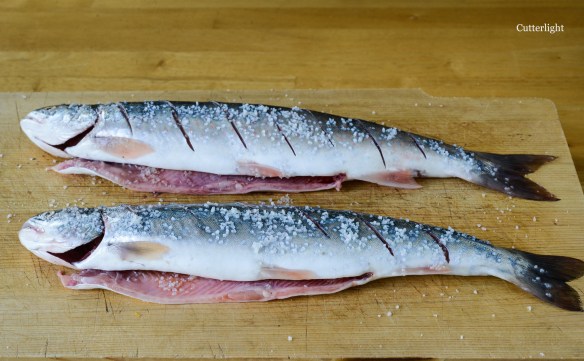
The small, icy-cold, brilliantly crystalline stream that flows less than 100 meters from our home has suddenly become positively choked with char. Only a week ago, the pools were bereft of anything but a smattering of fingerling salmon parr and equally diminutive juvenile Dolly Varden. The scene changed overnight when we woke to see the mountains rimming Chignik Lake gleaming with the season’s first snow. As the day warmed and the snow melted, the village stream filled to its brim with fresh snowmelt as clear and bracing as an Alaska September morning. Apparently that’s the signal Chignik Lake’s char were awaiting. When I checked that evening, each of the lower pools was packed with one of our favorite fish – Dolly Varden char. To be sure, there were no trophies among them, although a couple appeared to be pushing 16 inches. That’s fine. Eight to 12 inch fish (20 to 30 cm) are the perfect size for one of our very favorite foods – fresh char salted and grilled over charcoal.

I first encountered this simple but elegant fare while living in Japan. At festivals, fairs and inns in mountain villages, ayu (a trout-like fish highly regarded in Japan and South Korea) and iwana (white-spotted char very similar to Dolly Varden, Arctic Char and Brook Trout) are salted, skewered on bamboo sticks and roasted over hot coals till their skin turns a crisp golden-brown. With very small char, the bones are soft; it is common practice to eat the entire fish from tail to head.

char-salted-slashed-n

Char Shioyaki (Salted Grilled Char)

Ingredients

  • 8-to-16-inch char, gutted and gilled but with head left intact. (Brook Trout, Dolly Varden or Arctic Char)
  • Sea Salt (We have found coarse gray sea salt, Sel Gris, to be best for complimenting salmon, trout and char.)
  • Wooden skewers, soaked in water to prevent them from burning (Bamboo is traditional, but skewers fashioned from hardwoods such as alder, peach, apple, hickory and similar woods also work well.)

Directions

  1. Prepare a charcoal grill or campfire. (Alternatively, fish can be broiled on a baking sheet on the top rack of the oven.)
  2. Thoroughly clean stomach cavity and gills from fish. Do not scale. Leave head intact. Rinse in cold water and pat dry with paper towels.
  3. Using a very sharp knife, make shallow oblique cuts spaced about 1″ apart through the skin. Avoid cutting too deeply.
  4. Run sharpened skewer into fish’s mouth and through the body, making sure fish is securely skewered.
  5. Liberally salt the fish inside and outside.
  6. Placed directly on a very hot grill. To prevent skin from sticking to grill, do not move fish. Turn only once, gently loosening with a spatula if necessary. Roast till skin, tail and fins are crisp and golden brown, eyes are white and opaque, and meat is splitting where slashed. Alternatively, fish can be roasted on roasting stick over hot coals.

Serve with cider, a favorite bourbon, sake, or Pinot Gris.


First Snow, Chignik Lake

September 18: First snow in the mountains.

September 21: First frost along the lake.

Cranberry Days

cranberry-miniature-xtra-close-n

Framed in a boggy, wet miniature world between yellowing willow leaves and a lime-green horsetail stalk, clusters of ripe low-bush cranberries (lingonberries) push up through densely growing crowberry plants. Chignik Lake, Alaska.

The savannah sparrows that have been passing through in small flocks are absent today. The last of their kind, they’ve joined the white-crowned, golden-crowned and fox sparrows along with the wrens and warblers that flew south back at the beginning of the month. With most of the passerines gone, the shrikes, too, will soon go, following their prey. It’s been two weeks since we’ve seen sandhill cranes and at least that long since loons were gliding across the lake. This morning following a spectacular, fiery red sunrise, the light broke almost white. Winter light.

Making my way through the village toward the trail to the berry meadow, I spot a kingfisher perched stalk-still on a dead alder along the lake. A few glaucous-winged gulls wheel and soar low over the lake, calling listlessly as others sit placidly rocking on the windblown water. In the sky overhead, a pair of ravens show off their vocals with deep, resonating qua-orks and are gone. As the trail enters the dense growth of willow, salmonberry, alder and fireweed stalks gone to cottony seed, I can’t help but notice the absence of birdsong. Not even the chickadees are out. A mile later, up in the bog, there is only wind blowing through the raggedy last of the cotton grass and bowing the sedges in undulating, yellow-green waves.

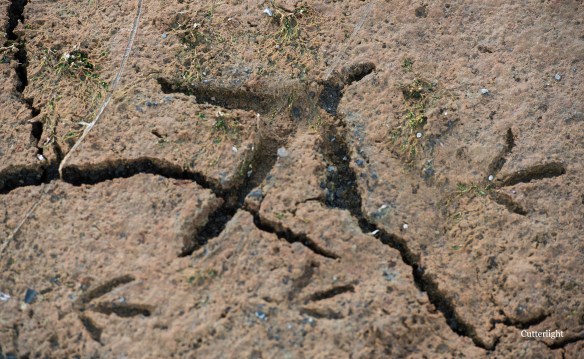
 crane-track-2016-n

Remains of summer: Sandhill crane footprint and raven tracks on the edge of an ephemeral pond near the berry bog.

I enter the berry meadow quietly from downwind and scan for moose and bears. There are tracks and other sign in the soft mud, but no animals. A sudden gust sprinkles my face with cold, misting drizzle.

I pull a five-cup container from my backpack and begin walking the edges of the watery meadow looking for mounds of crowberry plants. Cranberries seem to like growing among these mosslike plants. It’s not long before I find the perfect mound. Looking carefully among the needle-shaped crowberry leaves, I see the tell-tale maroon that gives away the berries I’m after. As my eyes hone in on this specific shade of red, I see more. And then lots.

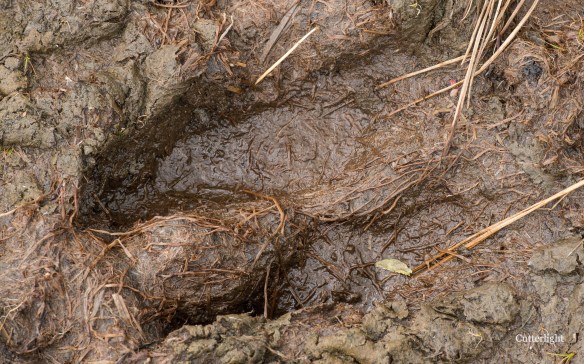
moose-track-1st-meadow-n

We sometimes find moose tracks at the berry bog as they come to feed on nutrient-rich sedges.

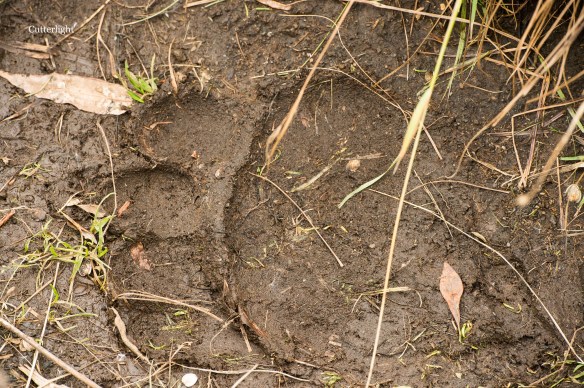
bear-track-1st-meadow-9-19-n

Brown bears (grizzlies) come to the meadow looking for the same thing that draws me – an abundance of bog-loving blueberries, crowberries and cranberries. Even with the nearby river and feeder streams brimming with salmon and charr, it’s common to find piles of bear scat loaded with little but berries and berry seeds.

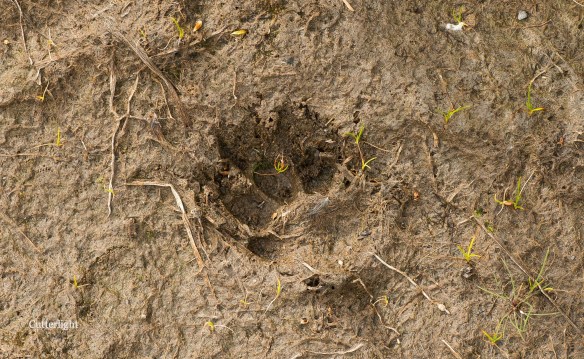
fox-track-1st-meadow-n

Red foxes love berries too, and are frequent visitors.

Picking goes fairly quickly and by lunchtime I’ve filled two containers with perfectly ripe, agreeably tart, firm berries. These I’ll clean and add to the two-and-a-half quarts Barbra and I picked yesterday, making well over a gallon. Freezing these lingonberries will sweeten them up a bit. After that, we’ll turn them into syrup to add to our Soda Stream fizzed water and into sauces for grilled pork cutlets, roasted chicken and Thanksgiving turkey. 

cranberries-in-moss-berries-n

Wild geranium leaves turned orange-red add a splash of color to one quart and one cup of low-bush cranberries… No one with a stash of gold ever felt wealthier.

While picking, my mind follows its own path in and out of dialogs and dreams but I try to remain vigilant to the possibility of animals. In addition to bears, moose, foxes and an array of birds, wolves, too, occasionally travel through the meadow. Just as I top off the second container, I hear a succession of three distinctive snorts directly downwind. Something has picked up my scent. A bear? A moose? I slowly stand and look. Whatever made the noise is buried deep in alders some distance away. I probably won’t get a look, but just in case I check the settings on my camera, make sure my canister of bear spray is handy, and pack up for the mile-long walk home.

Along the trail back to Chignik Lake, crimson fireweed stalks accent the gold of autumn willows. Up on the mountains, the season’s first snow.

As I come around a bend in the trail a snipe explodes into the air, it’s back marbled in browns and streaked with white. Sunshine breaks through the September clouds and the meadow and hills and distant mountains light up. I recall a story about a boy who fell asleep, and when he woke couldn’t determine if he was still asleep and dreaming, or wide awake in a new land.