The Sailing Vessel Bandon

The t’s have been crossed and the final i dotted. All 37 feet and 12 tons of the sailing vessel Tarsus is ours.

What have we gotten into?

There’s a line from the film The Shipping News that seems to fit. “Course, you don’t know nothin’ about boats, but that’s entertaining, too.” 

Four years ago when we bought our C-Dory, Gillie, I’d never piloted a power boat longer than 12 feet – my dad’s aluminum car-topper with its 5 hp engine. Barbra had even less experience with boats. All we really knew was that we wanted a fishing boat. So we did our due diligence – read books, researched on the Internet, visited dealerships, checked out boats in marinas, talked to people and attended boat shows. In the end, we came to a familiar set of conclusions, the short of which go like this: There are a lot of boats for sale, and most of ‘em float. Out of all those boats, a few makes stand out. After that, everything is a compromise. The boat we really wanted was too big to readily trailer; thus it was not the boat we really wanted. We took the plunge, bought Gillie and a year later towed her all the way to Alaska, to the Port of Valdez, which is over 3,000 miles from Sacramento. We then launched her, ran 90 miles to the Port of Cordova, and spent the next eight days and nights fishing and camping aboard our boat in Prince William Sound.

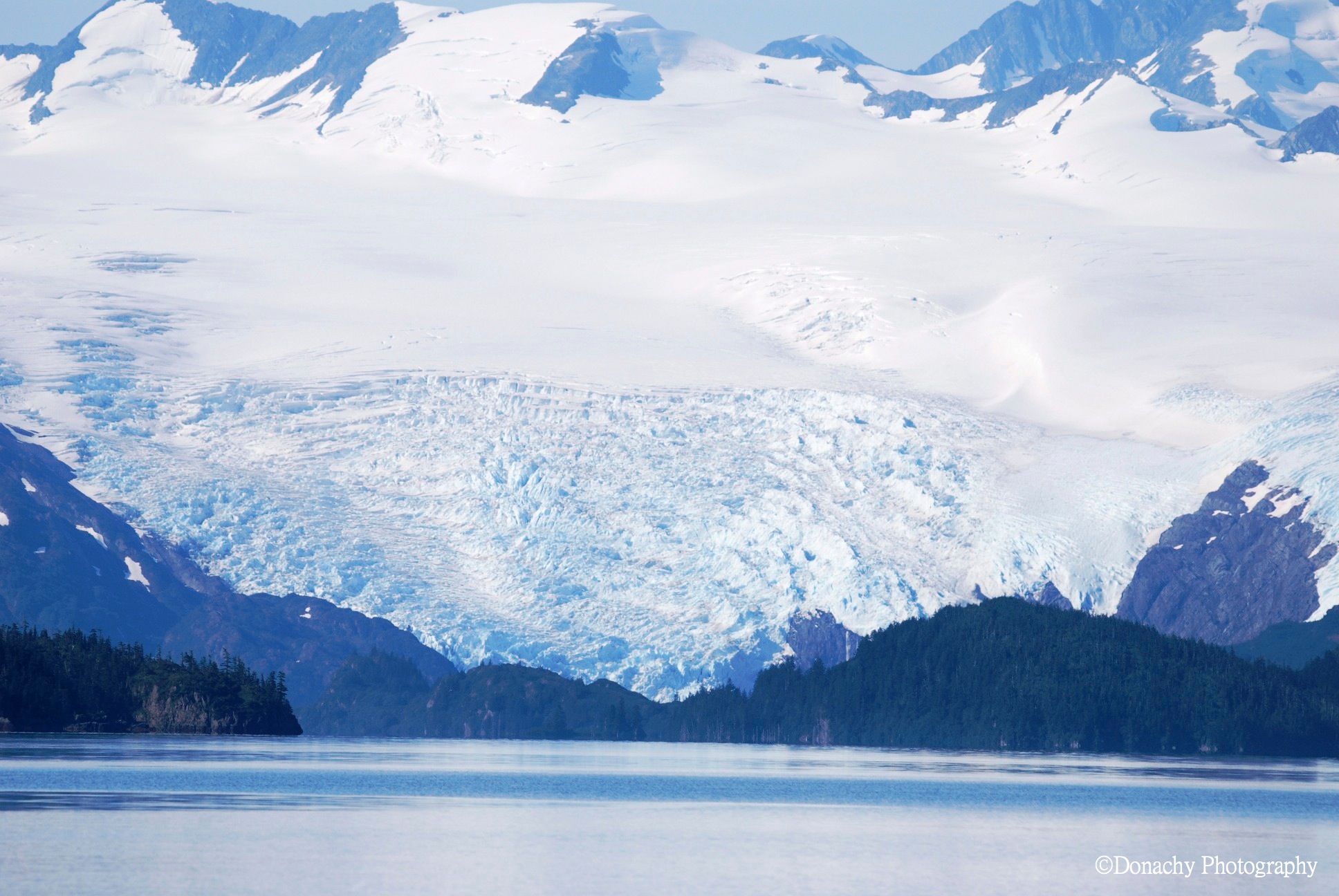
Above: Jagged rocks and islands create a maze leading from Resurrection Bay out into the Gulf of Alaska. Top photo: Massive Blackstone Glacier towers above its namesake bay near Whittier, Alaska.

Time and tide kept me from sailing, but I honestly can’t remember a time in my life when I didn’t want to sail. It’s always been there. Landlocked in western Pennsylvania, my family would take summer vacations to the coast – up to Cape Cod, down to North Carolina’s Outer Banks, west to Oregon – where we’d spend a week frenetically touring museums and historical sites, dining out in restaurants, perusing art galleries and shopping. For my part, I could have spent all day every day on those vacations doing nothing more elaborate than fishing the first tide of the day, combing the beaches, and walking the marina docks. The boats, particularly the sailboats, were magical. Mesmerizing. I’d see their owners emerging from below deck, or topside working on this or that, or just relaxing and looking off in the distance and I wanted to be those people. I had so many questions for them, but I never worked up the courage to break free from my family, approach one of them and ask. Questions like, How does it work? How do you steer it? Do you live on it? What does its name mean? Where have you been on it? Where will you go next?

Tarsus’ former owners were podiatrists. Although we haven’t completed a formal name change yet, on each piece of paper associated with the sale (for a boat this size, there’s nearly as much paperwork as in a home sale) we have penned in Bandon where the vessel’s name appears.

Sea otters are a common, always welcome sight along Alaska’s southeast and central coasts. 

There’s a small town on the southern Oregon coast where a river with runs of salmon, steelhead and striped bass joins the Pacific. Bandon. For a long time, Barbra and I looked at land on the Coquille River upstream from Bandon. In addition to the fish, the area has deer, turkeys, game birds and elk as well as good mushrooming and abundant wild berries. It’s a quiet part of the world, not overly far from wine country. We talked about a piece of land with trees, a spot for a garden, raising chickens there and cutting our own firewood for a wood burning stove in a cozy house where we would homestead.

Bandon is that. But it’s more. This time, it’s not the boat that represents the compromise. It’s the lifestyle. Choosing to become sailors means, at least for now, not becoming homesteaders. It means not driving our camper all over North America, or having a cabin on the shores of a lake full of walleyes, or collecting wine, or, in Barbra’s case, getting a pilot’s license.

Bandon will be docked in the Marina at Seward, pictured here in early July.

To borrow from Robert Frost, Bandon is the road we’ve taken. She’s got a sound hull, every amenity and comfort we need and then some, and sails to take us over any sea. It is dreams come true for us, and in some of those dreams there is a placid lake full of walleyes, and endless summer days touring North America in our camper, a herd of elk feeding on windfalls beneath our apple trees, a salmon fresh from our river for Thanksgiving dinner, a wood burning stove and a freshly made blackberry pie.

Resurrection Bay, where Seward is located, has one of the largest summertime concentrations of Coho salmon in North America. There is an abundant, varied and rich ecosystem in the bay, making it a premier locale for everything from watching sea birds and otters to seeing whales, dolphins and porpoises. The surrounding mountains are spectacular and help ensure for predictable winds, making Resurrection Bay a great place to sail. For more information about the sailing vessel Bandon, click on the word Tarsus.

Fire in the Sky: Aurora Borealis Point Hope, Alaska

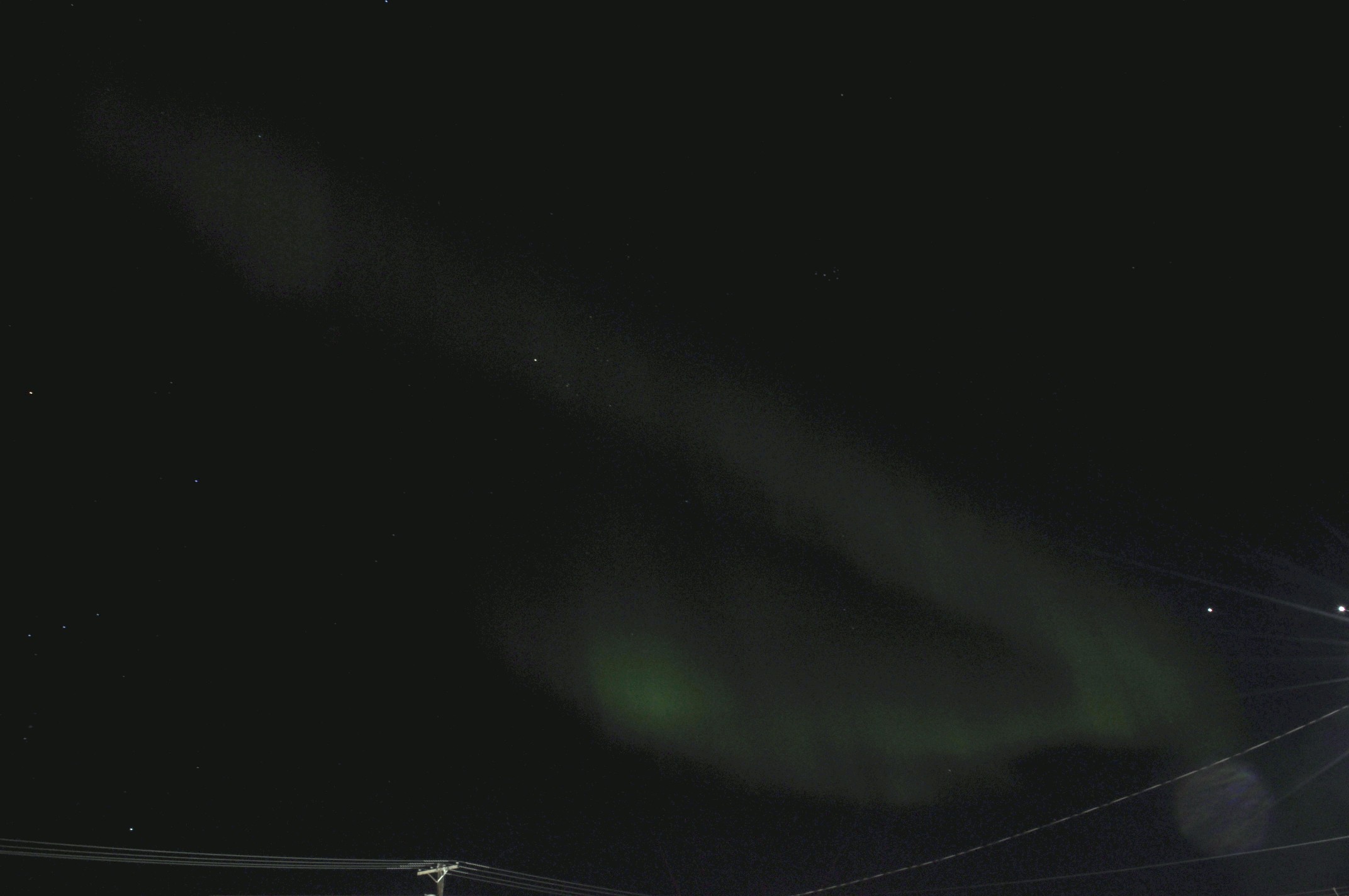
Mars hangs above a water silo aglow with lights from the school, a band of auroral light seeming to shoot from the silo like flames. (Click on photos for larger images.)

No photo – and certainly not our first attempts – can do justice to a northern sky on fire and dancing with the eerie green and purple glow of an Aurora Borealis. On this night 200 miles above the Arctic Circle, temperatures were an icy negative 10, pushed even lower by a steady breeze. As the sun sank below the frozen sea to the west, the full moon emerged in the east, close to Earth and huge, the color of a blood orange, hanging on the horizon. Jupiter and Venus were aligned, Mars glowed red as an ember against the black sky and Orion’s belt burned bright. Washing over it all was a breathtaking display of slowly moving green bands, some of them edged in purple, some of them jagged and electric, the band on the northern horizon streaked with pink mixed in with the green.

It’s not uncommon to see a bit of faint green or greenish yellow in the night sky up here. But what we were seeing on this night was of a different magnitude – a rare event tracing back to a spike in activity on the Sun a a few days ago. We made a few quick phone calls to friends. “Go outside and look up!” Meanwhile we got our camera and gear together, realizing, suddenly, that we weren’t  sure how to capture any of this. We met one of our friends in front of the school and walked with her toward the lagoon on the north side of town, away from the lights. In every direction, from horizon to horizon and straight overhead, what we saw stunned us. “This is amazing,” we kept repeating.

Note the three aligned stars of Orion’s belt to the left.

By the time we got our camera figured out, our fingers hurt with cold and the peak of the lights was past. But we still got some photos. A large part of photography is capturing light, and this was a quest for capturing light on a sublime scale.

Fireworks over the Columbia River while sharing a bottle of wine from a balcony at my apartment in Astoria, Oregon, tumblers of Scotch and a sky so impossibly filled with stars we felt like the deck of our mountain cabin in Yosemite was sailing through the Milky Way, a full moon hanging over a becalmed ocean on Prince William Sound with not another boat on the water, a campfire, mesmerizing, at our tent site at Oregon’s Sunset Bay State Park… night skies to come in remote anchorages on the Pacific… Our lives are filled with light.

Point Hope in Winter from the Air

The village of Point Hope, Alaska, February 24, 2012, as seen from a nine-passenger Cessna Caravan.

Viewed from the air, a continuous sheet of ice and snow obscures the boundaries between land and sea in the Arctic north. We were happy to fly south to Anchorage for a few days, thereby escaping the steady string of days with temperatures hovering around negative 20 degrees Fahrenheit. Compared to Point Hope, the weather in Anchorage was downright balmy, with highs around 28 degrees. Intermittent snow showers filled the crisp air with big, soft snowflakes.

Six days later our plane touched down on the icy Point Hope runway. As we descended the ladder, a blast of icy wind crushed into our faces, momentarily taking our breath away. The previous week, the absence of wind made walking outside pleasant enough, but now the wind chill is frequently dipping to 50 or 60 below and even colder. Cases of frostbite are up, as are cases of frozen plumbing. Each day, we’re gaining eight minutes of daylight. Still cold. Still a lot of winter left.

Denali – The High One

Denali – meaning “The High One” in Koyukon Athabascan – is known by many as Mount McKinley. 

The day we toured Denali National Park the namesake mountain was shrouded in clouds, a situation so commonplace we weren’t disappointed at not being able to see more than its base sloping up into the shrouding mist. In fact, a small industry exists to fly people up through the clouds for a bird’s eye view of North America’s highest summit. But with prices for those flights running hundreds of dollars per passenger, we figured we’d take our chances and wait for happenstance to put us on a plane flying near the elusive peak.

This past Friday, a flight from Point Hope to Anchorage via Kotzebue finally gave us the view we’d been hoping for. Denali’s rugged shoulders seemed to float on a sea of thick clouds. Barbra and I looked out our window awestruck as we contemplated the tectonic forces capable of thrusting this much solid granite nearly four miles above sea level.

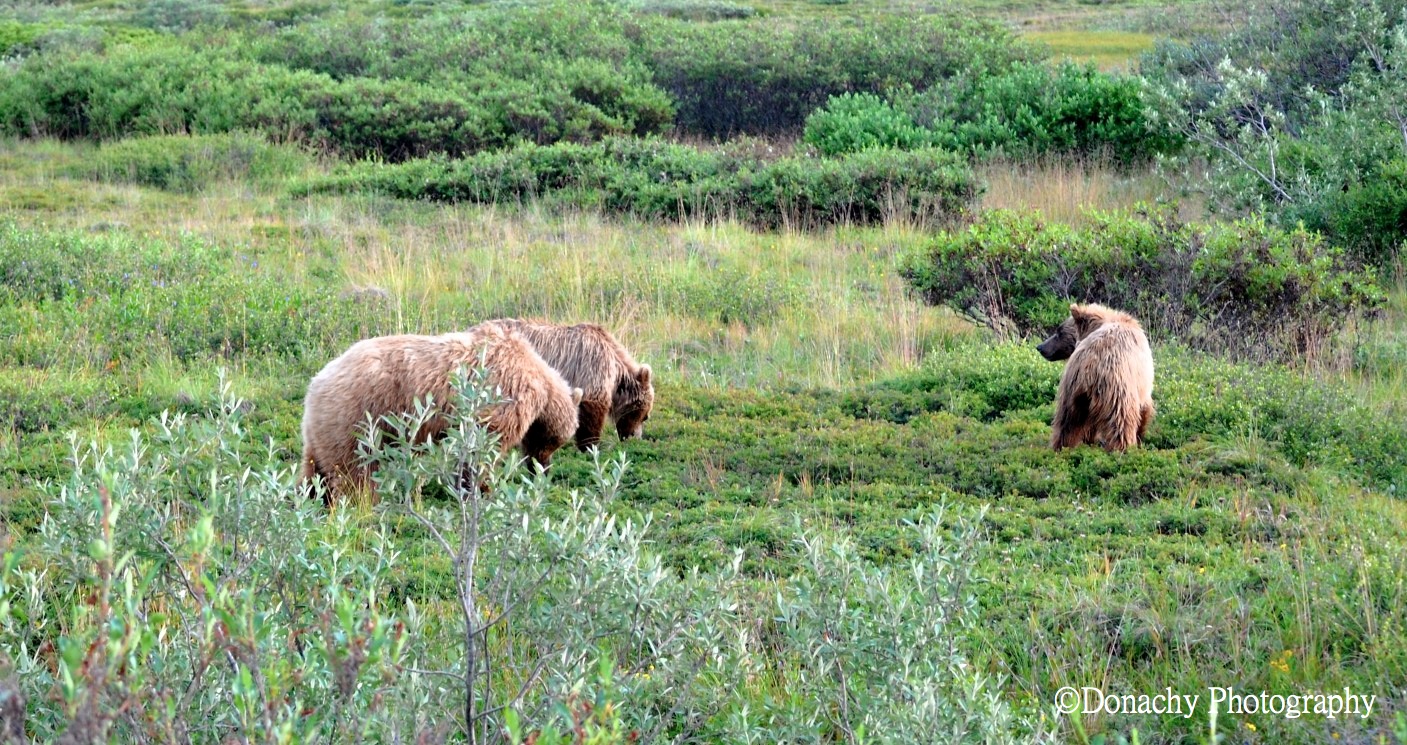
In 2010, our trip to Denali National Park took place on a foggy day in mid-summer. The hills and valleys were verdant, wildflowers were in bloom and animals seemed to be everywhere. Ptarmigan burst from roadside cover, golden eagles soared overhead, moose browsed the willows along creeks, and Dall sheep – some with thick, heavy, fully-curled racks – dotted the slopes like tufts of white cotton. We saw three different sets of female grizzlies and their cubs, and after having heard wolves on different occasions while camping in Yellowstone and Yukon Territory, we finally saw a pack of wolves, males, females and cubs, resting and playing on a grassy hill. That alone made the trip to Denali worth it for us.

Although there is a very brief window in which a limited number of lottery winners (literally) are permitted to drive their own vehicles deep into the park, the more typical approach is to sign up for one of the bus tours. These shuttle tours are no frills, economical, and worth every penny. While we camped on the park’s outskirts (our campground neighbor showed us a photo of a lynx he’d seen the previous day), camping – both tent and RV – is available in the park as well. A 91 mile road – almost all of it unpaved – cuts through the heart of the park, but only the first 15 miles are open to the public. That’s where the bus tours come in. Backpacking permits are available as well.

We took the bus all the way to the end of the road at Wonder Lake, hoping against hope for a photo of The High One reflected in the lake’s glassy waters. No mountain, but lots of wild blueberries!

Yelloweye & Grits: Breakfast Onboard Gillie

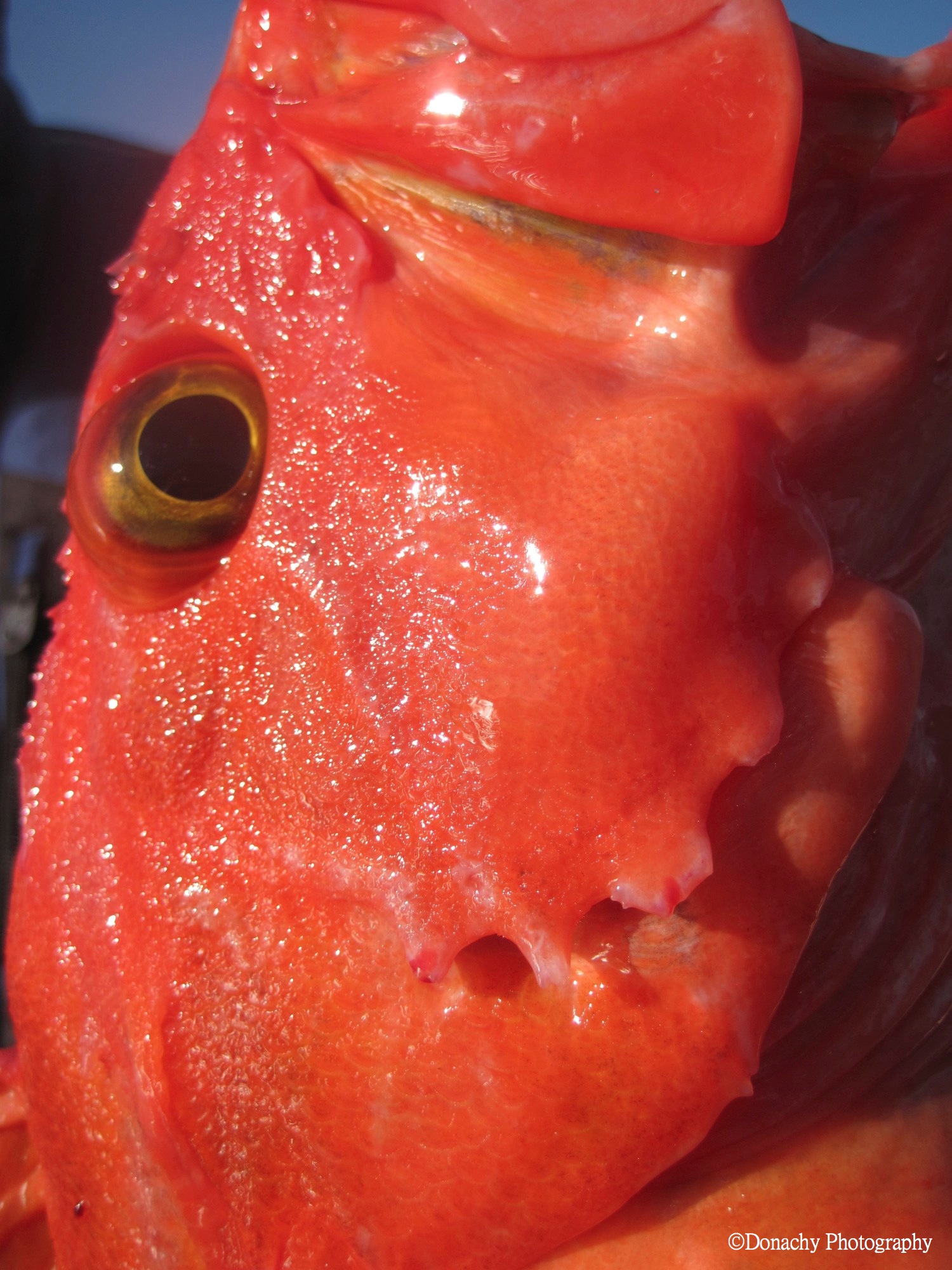
Yelloweye rockfish (Sebastus ruberrimus), a species of the Pacific Coast from Baja Mexico to Prince William Sound Alaska, is prized for its delicate flavor.

We’d spent most of the night on our C-Dory, drifting over deep water on Prince William Sound, admiring the moon and stars in the clear summer sky, talking about our life and occasionally dropping heavy, water-slicing knife jigs to the rocky bottom 160 feet below. Fishing was slow – a few small lingcod notwithstanding. The night was as still as a painting, the inky water mirroring the heavenly lights. With the engine cut off, the quiet was enveloping. When the yelloweye hit, I knew right away it wasn’t another ling. “Might be our yelloweye!” I said to Barbra as I worked the fish up from the depths.

And sure enough, it was. Barbra expertly scooped it up in the net, I did a quick fillet job, put it in a plastic container which I set in our cooler, and we headed back to port for some well-earned sleep. It was already early morning, though not quite yet dawn.

A few hours later when we woke, the sun was already high in the sky and the marina was bustling with activity. With daylight burnin’, we walked up the dock to the showers, blue skies and a few puffy white clouds overhead, deep green hanging on the mountains rimming the harbor.

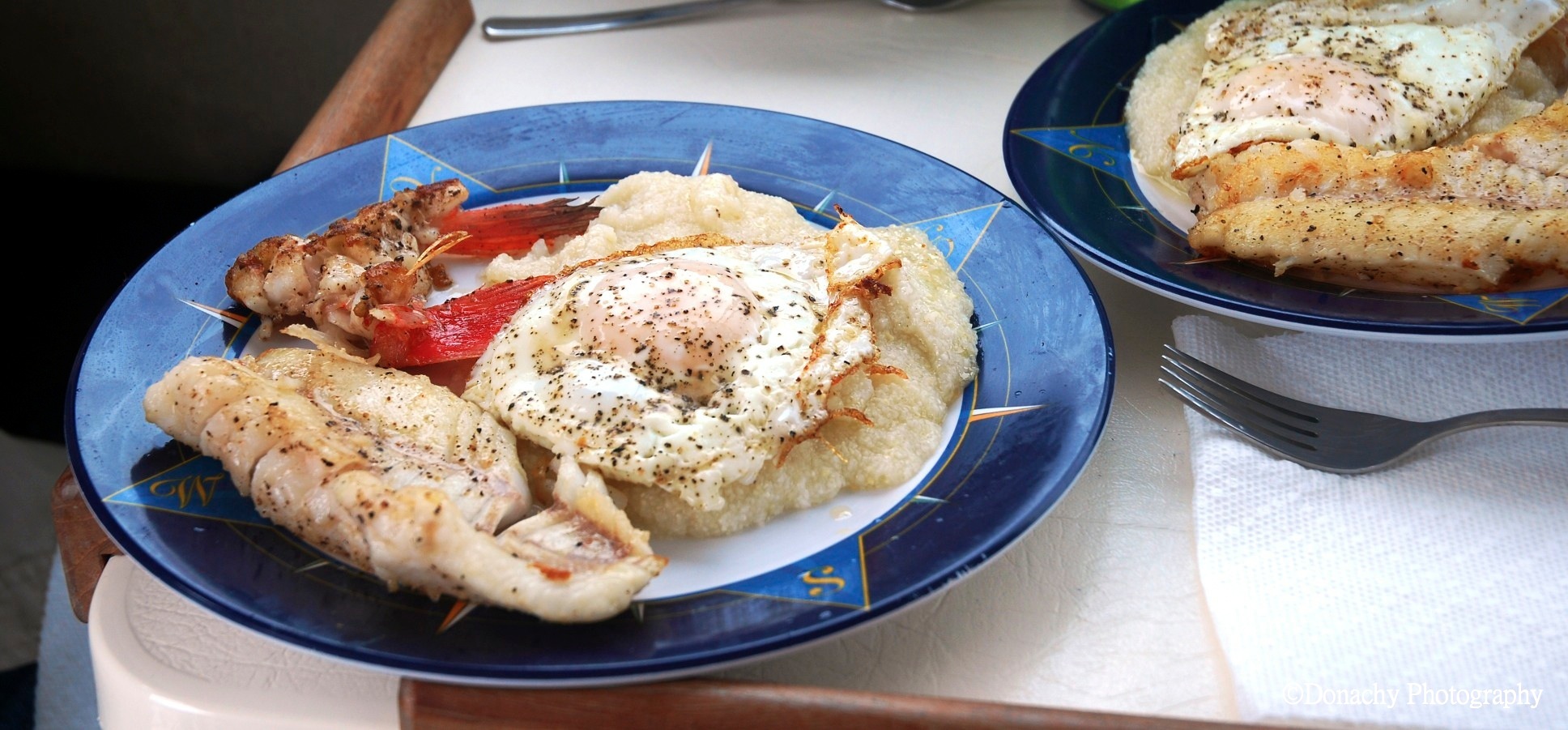
Back onboard Gillie I put the Coleman stove on the aft deck, fired it up, and after Barbra made coffee I fixed a fisherman’s breakfast of southern-style grits topped with easy-over eggs and a couple of yelloweye fillets along with the collars – that especially sweet piece of meat that includes the pectoral fin muscle. (The collar looks a little like a lobster in the above photo.)

Not a fancy breakfast, but a special one. I kept the seasoning simple: a little sea salt and black pepper ground coarse. The steaming plates of food accompanied by French roast coffee made for a great start to another day in paradise.

A Lance Camper, a C-Dory and Two Mighty Trucks

A mighty little truck. The first year we came up to Alaska, 2009, we used our C-Dory as our camper and towed it up and back – more than 8,000 miles over 43 days with our 2004 Toyota Tacoma. We had a sunroof, which proved to be just the thing for wildlife photography. Here the rig is parked in front of Muncho Lake in Northern British Columbia. Right after we took this photo, three Rocky Mountain Sheep ewes and their several lambs crossed the road right in front of us. (See C-Dory 22 Angler: A Boat for Alaska)

I have long admired the line from Robert Frost’s poem The Road not Taken, “…Yet knowing how way leads on to way…” for the simple, universal truth it holds. When we purchased this boat, we had no idea we’d be towing it to Alaska, using it as our camper both on land (it was a great conversation starter in campgrounds) and on the water. Nor did we have any idea that we would fall so hard for this great state. I don’t recall who spoke first, but on our way back to California that summer at some point one of us turned to the other and said what we’d both been thinking: “We need to figure out how to move up here.”

A few months later, we had job offers in the Alaskan bush, a new Lance camper and a Chevy Silverado 2500 pickup truck. We were ready!

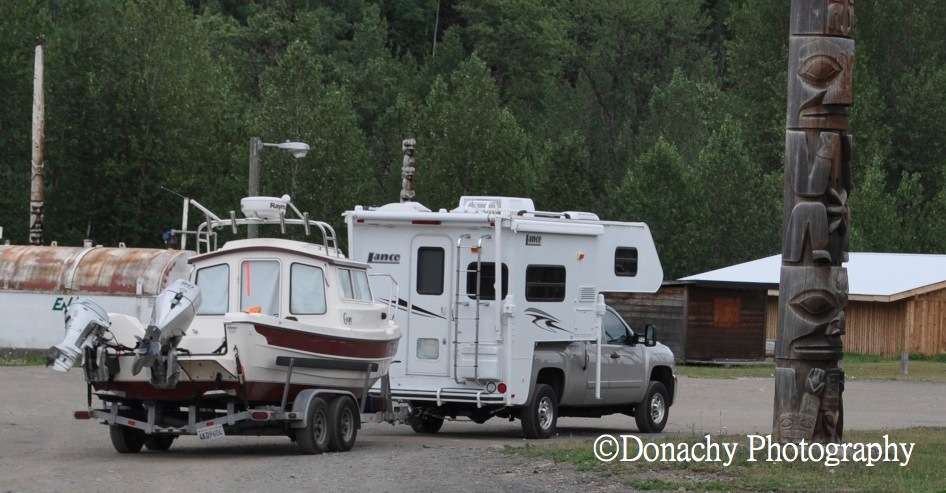
The camper is equipped with air conditioning, heat, a shower and toilet, three-burner stove, a surprisingly large and very adequate refrigerator-freezer, TV, stereo, queen-sized bed, small dining table and comfortable seating, skylights and lots of cupboards and cabinets. Good headroom, too. We’re comfortable living small, so for the two of us it’s a plush set-up. We keep reminding ourselves that we’re preparing for a future chapter in our lives when, hopefully, we will live aboard a sailboat. An item we installed that has proved indispensable is the solar panel which, even on cloudy days, supplies enough of an extra trickle of electricity to make life easier.

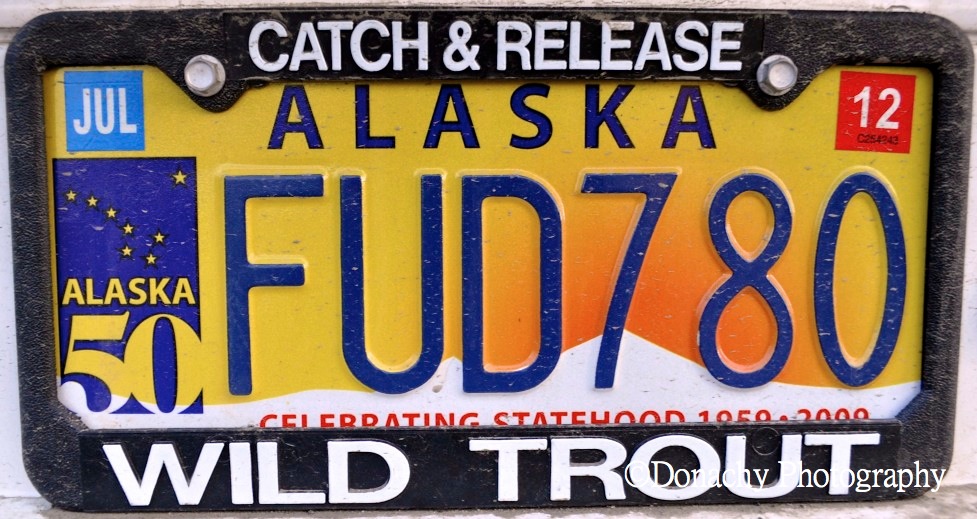
It was a red-letter day when we got our Alaska license plates! That morning we walked into the DMV in Haines where a friendly clerk gave us a couple of driver’s license booklets to study. We walked to a nearby coffee shop, had our soy lattes, returned to the DMV, took the test, got our photos taken, and were issued licenses.
.
.
Although we are in the heart of a near-record cold spell, we’re over the hump in the school year and our thoughts are beginning to turn toward another summer in Seward, exploring the Kenai Peninsula and boating and fishing the beautiful waters of Resurrection Bay.
.
.
Gool ol’ Stanley, our reliable Chevy Silverado 3/4 ton, loaded up on her maiden trip to Alaska.
.

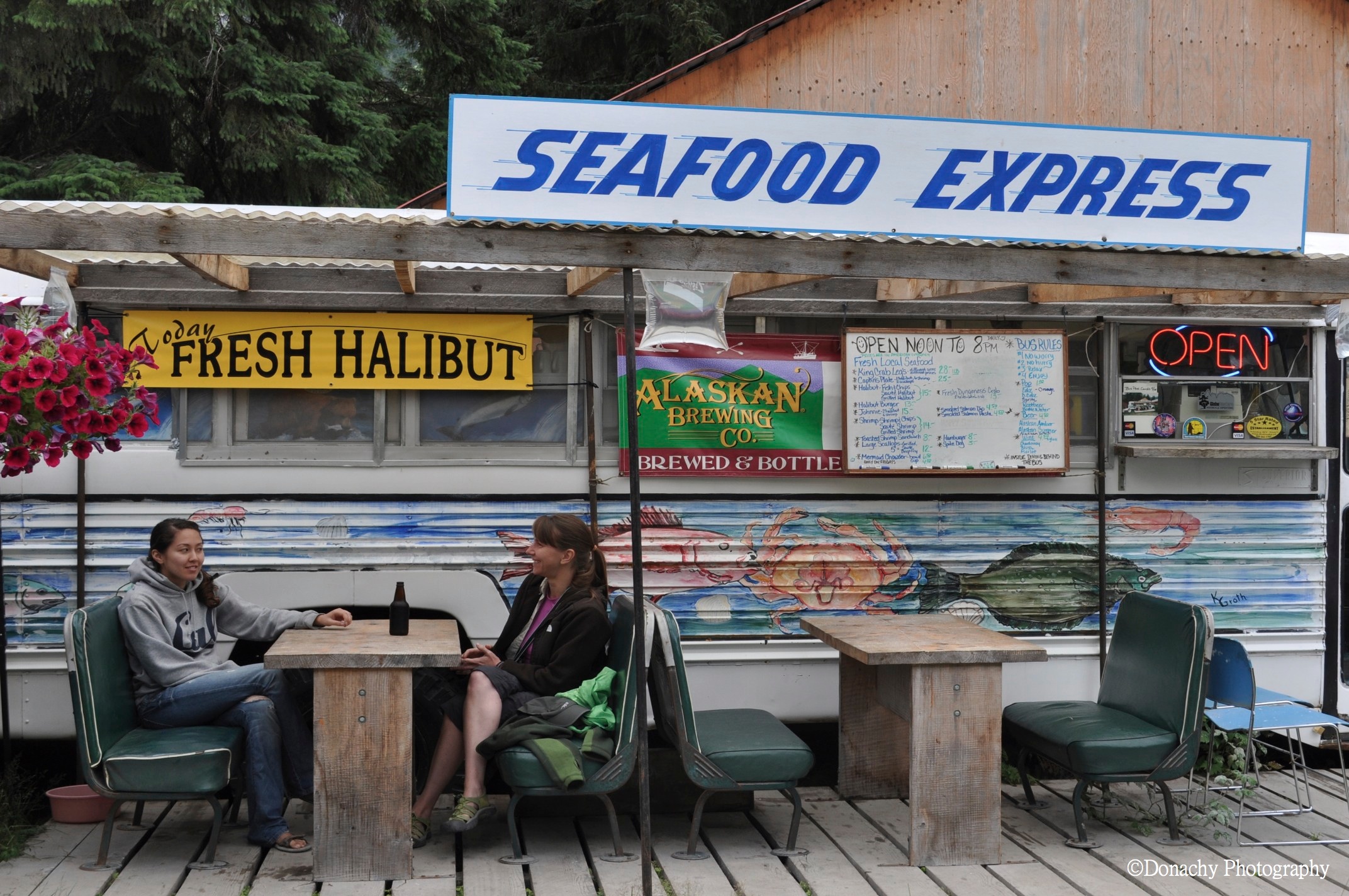
The Bus in Hyder: The Best Fish & Chips Anywhere

Barbra and Maia waiting for orders of fried halibut and fried shrimp at The Bus in Hyder, Alaska

We blogged about Hyder before (A Ghost Town and a Grizzly, February 5, 2011). It’s an interesting  town of 87 inhabitants, definitely worth the side trip if you find yourself traveling the Cassiar Highway in northern British Columbia. Go there when the chum salmon are running in late July and August, and you’ll have an excellent opportunity to view grizzlies up close from a deck overlooking Fish Creek.

A hip little shop on main street, Boundary Gallery and Gifts run by Caroline Steward, features dulcimers beautifully crafted from Sitka Spruce as well as some of the best fudge we’ve ever had. There’s a hotel, a post office, a small, sparsely-stocked grocery store, a couple of RV parks and a boat launch on Portland Canal, which isn’t a canal at all but is a narrow, 71-mile long fjord separating Southeastern Alaska from British Columbia. It’s the kind of place that takes you back in time. None of the streets are paved. The residents are friendly and the ones we’ve met have been happy to while a way a piece of the day talking. Maybe the quiet, natural beauty of the place brings out easy-going attitudes. Part of the movie Insomnia (Al Pacino, Robin Williams, Hilary Swank) was filmed here in 2001.

If you do go to Hyder, the one place you shouldn’t miss is The Bus. Diana and Jim Simpson came up with the idea to permanently park a school bus on one of the side streets in town and convert it into a kitchen. Jim’s the fisherman. Diana’s the cook. The catch of the day generally features fresh halibut and Alaska’s incredibly delicious shrimp along with salmon and other shellfish. Traveling from place to place, we’ve come across really good deep fried fish from time to time. Heck, I make pretty good deep fry myself. I don’t know exactly what Diana does, but the fare at The Bus is in a class by itself. It’s been our good fortune to dine there on two separate occasions, two different summers. Both times, our plates of fried halibut, shrimp and French fries disappeared fast and left us talking with amazement for some time afterwards. Diana also keeps icy cold Alaska Amber Ale and Alaska Summer Ale on hand – the perfect compliments to enjoying the food while Rufus Hummingbirds call back and forth from the tops of spruce trees.

Running North of the Arctic Circle

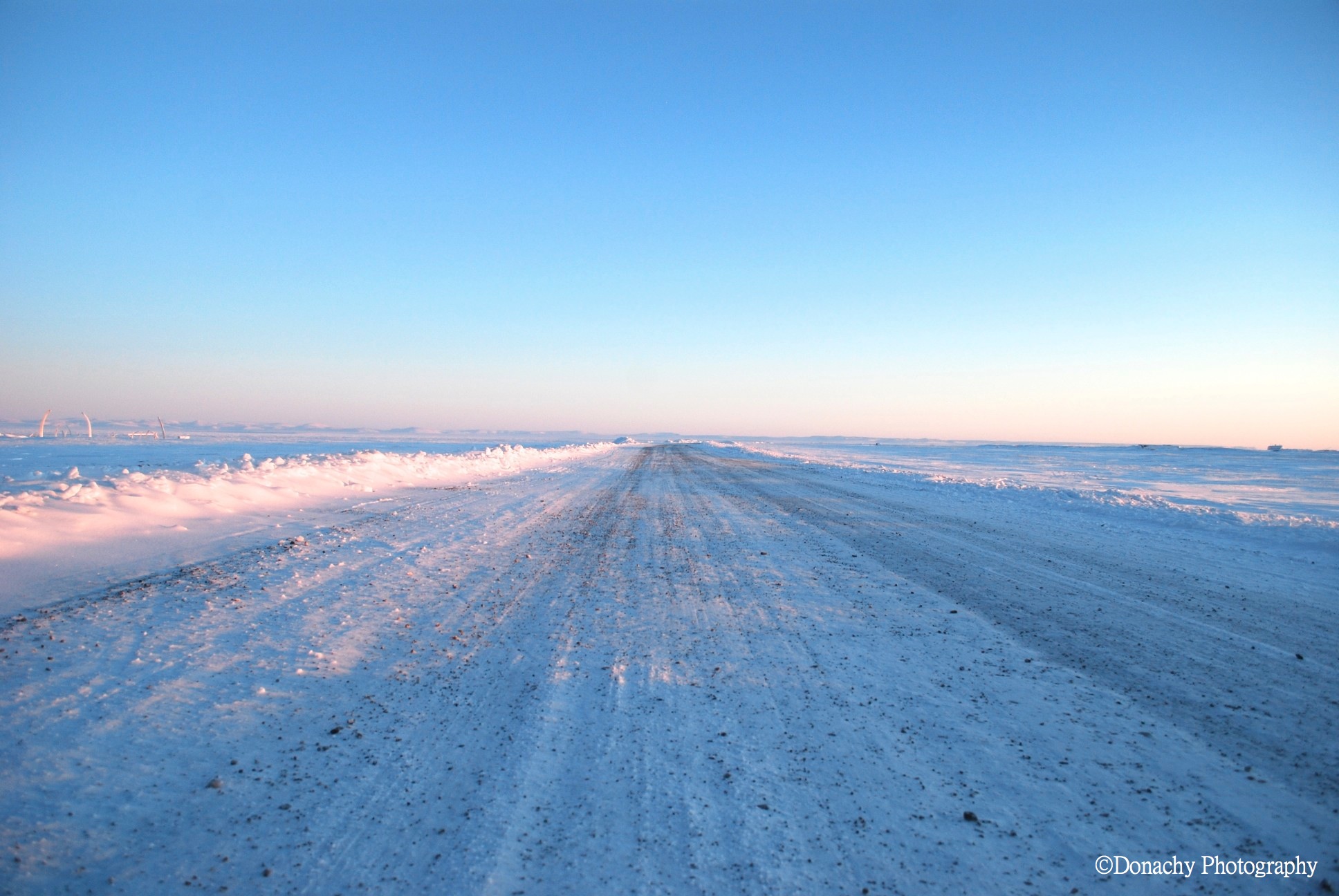
7 Mile Road pictured above is one of our Arctic “rave runs.” Our other choice is running along the frozen shore of the Arctic Ocean. Brrr!

Before moving to Alaska, Jack and I took part in about three “destination” half marathons each year. These runs took us to places such as California’s wine country, San Diego and vicinity, and the coastal redwood forests of northern California. But it’s now been two-and-a-half years since our last half marathon–the Salmon Festival Half Marathon in Cordova, Alaska in the summer of 2009. After that first visit to Alaska, our life became consumed with moving up here. Then, when we moved to Shishmaref, we managed to sit on our rear ends for the majority of the school year. We were painfully reminded of our lack of exercise during an embarrassing mile-and-a-half walk from the Nome airport into Nome last spring which was way more taxing than it should have been.

Fast forward to the present.

We both really enjoy the challenge of half marathons, a race just long enough to be physically challenging and mentally rewarding without being so long that the preparation consumes our lives or we’re left feeling overly whipped after the event. Aside from running halfs, our secondary goal has always been to stay fit enough that we are able to run five miles at the drop of a hat, or take off on a reasonably strenuous hike. With those goals in mind, we vowed to make changes in our fitness regimen when we moved to Point Hope.

Prior to the start of the school year, we managed to get in a couple of runs outside. But our options in a town paved in unforgivingly hard concrete and situated on a point of land carpeted in small rocks proved to be quite limited. And then there’s the weather… Luckily our school has a decent weight room equipped with two treadmills and an elliptical trainer.

Jack used his years of running experience to draw up a running schedule for us–one that would get us back in shape quickly without risking injury. I’ve always liked having a goal event to shoot for–a road race of some kind–but our summer schedule is still up in the air, and there aren’t a lot of races up here. The event we’re most likely to take part in is the Mayor’s Marathon and Half Marathon in Anchorage on the summer solstice. Otherwise, we might get out our maps and GPS, measure off our own course, give it a name and reward ourselves with the traditional beers and t-shirts once we’ve run it!

Even with goals set and schedules printed, honestly, running on the treadmill is BORING! We’ve loaded our iPod with podcasts and music, and one of our colleagues positioned the treadmills so people can run side-by-side and talk (just like the old days when Jack and I used to run the trails along the American River in Sacramento!). I also have audio books ready to upload to help combat my new nemesis. The other challenge (and this one is kind of ironic) is that I’ve always hated to run in the heat; our weight room, kept at a constant, breezeless temperature of 70 degrees means minimum running attire and lots of water. Ugh! The tiny fans on the treadmills put out a barely perceptible stream of air.

All that being said, it’s time to pack my workout bag, make sure my iPod has my latest running playlist and get ready to pretend I’m running on a cool morning in Maui!

A Perfect Night

Full moon over Prince William Sound near Whittier, Alaska

Summer days in Alaska are long–near midsummer, they are nearly endless. In our home states of California and Pennsylvania, fall is the season we like best. Up here, it’s summer.

We were camping on our boat in the marina at Whittier one summer in early August. The fishing had been only so-so, but with massive glaciers spilling into protected bays and rafts of sea otters in the nearby waters, the nature viewing was spectacular. On our last day, at about 6:00 p.m. with the sun out and clear skies above, Jack and I decided to take the C-Dory out for an evening cruise. We motored out as the last of the boats of fishermen and sightseers were heading in. We didn’t really have a plan. We just wanted to be out on the water.

Once we got a few miles beyond the harbor, we found a spot to fish and so we cut the motor. There was not another boat in sight. It was as if no one else in the world existed. Surrounded by mountain peaks dusted in the remainder of last winter’s snow, the sea was glassy-calm. Gillie barely rocked as we drifted silently with the current. The slowly setting sun, lit up the few low clouds. As the sun slipped below the horizon, the full moon glowed against a dark blue sky.

We began to pick up fish here and there–mostly small lingcod. The moon climbed higher in the sky and shone brighter and brighter, it’s reflection dancing across the water as our own movements caused the boat to rock. At times we broke the quiet with talk about different possibilities for the future. But for long stretches we were quiet, lost in our own thoughts, washed in this phenomenal night.

The shaker lings continued to periodically attack our jigs, and then Jack connected with something that fought differently. He worked the fish up from 160 feet down and I did net duties on a beautiful yelloweye rock fish. With a fish in the cooler that would provide for a gourmet breakfast the following morning, it was a good place to call it a night. I started up the engine and guided us home across the moonlit water.

Rock Patterns

Ice scraped past in the form of a glacier, high above the ground and left this beautiful rock pattern.

Shot taken at the top of Exit Glacier on the edge of the Harding Ice Field.