Another Great Year in Point Hope: On to Seward!

uniak on ice waiting_n

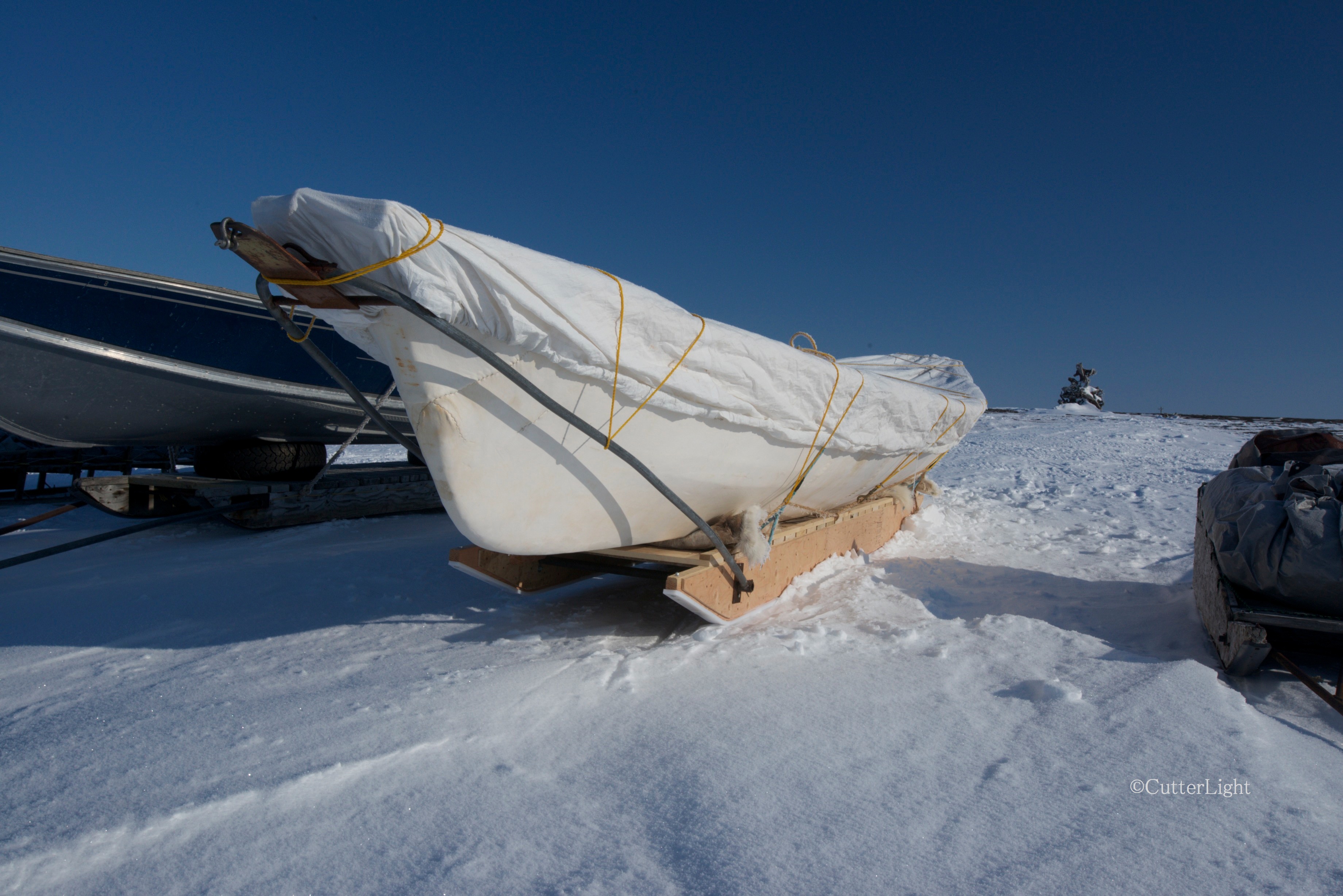
An umiak with its recently sewn seal skin stretched tight sits on the Chukchi Sea ice, waiting for whaling season to begin in March. 

May 17, Point Hope, Alaska: Near-blizzard conditions forced a one-hour delay to the start of school yesterday, the day before the end of our school year. A little snow and high winds notwithstanding, all 30 of our 3rd, 4th and 5th grade  students eventually arrived. It’s much more calm today. Scattered snow flurries have been breaking up an otherwise sunny day, and at 19 degrees Fahrenheit, the McKay’s buntings and gulls that showed up a few weeks ago when the weather was warmer (in the low 30’s) are out again. Looks like clear weather for our flight out tomorrow.

hiking out on ice_n

Near shore, the going is easy across the frozen sea. But the ice ridge on the horizon hints at the arduous work involved in breaking the trails that will allow whaling crews to get their boats and gear out to the lead (open water).

This marks our third year in Arctic Alaska. We’ll be back for a fourth in August. We’re up here in Point Hope at a time in our lives when Time to study, Time to write, and Time to hone our skills as photographers, writers and chefs is especially valuable. Yes, it’s cold – brutally so at times-, and there is the entire month in mid-winter when we do not see the sun. But that’s part of the narrative. So are the dazzling displays of northern lights, the sublimely sweet cloudberries that grow only in these extreme latitudes, and the Arctic foxes, snowy owls, polar bears and whales that are part of the fabric of life up here. Learning to stock a gourmet kitchen in the bush nearly 1,000 roadless miles from stores in Anchorage has prompted us to master “from scratch” cooking to a level of expertise I doubt we would achieved had we remained in our comfortable bungalow back in California.
ice sculpture chukchi sea_n

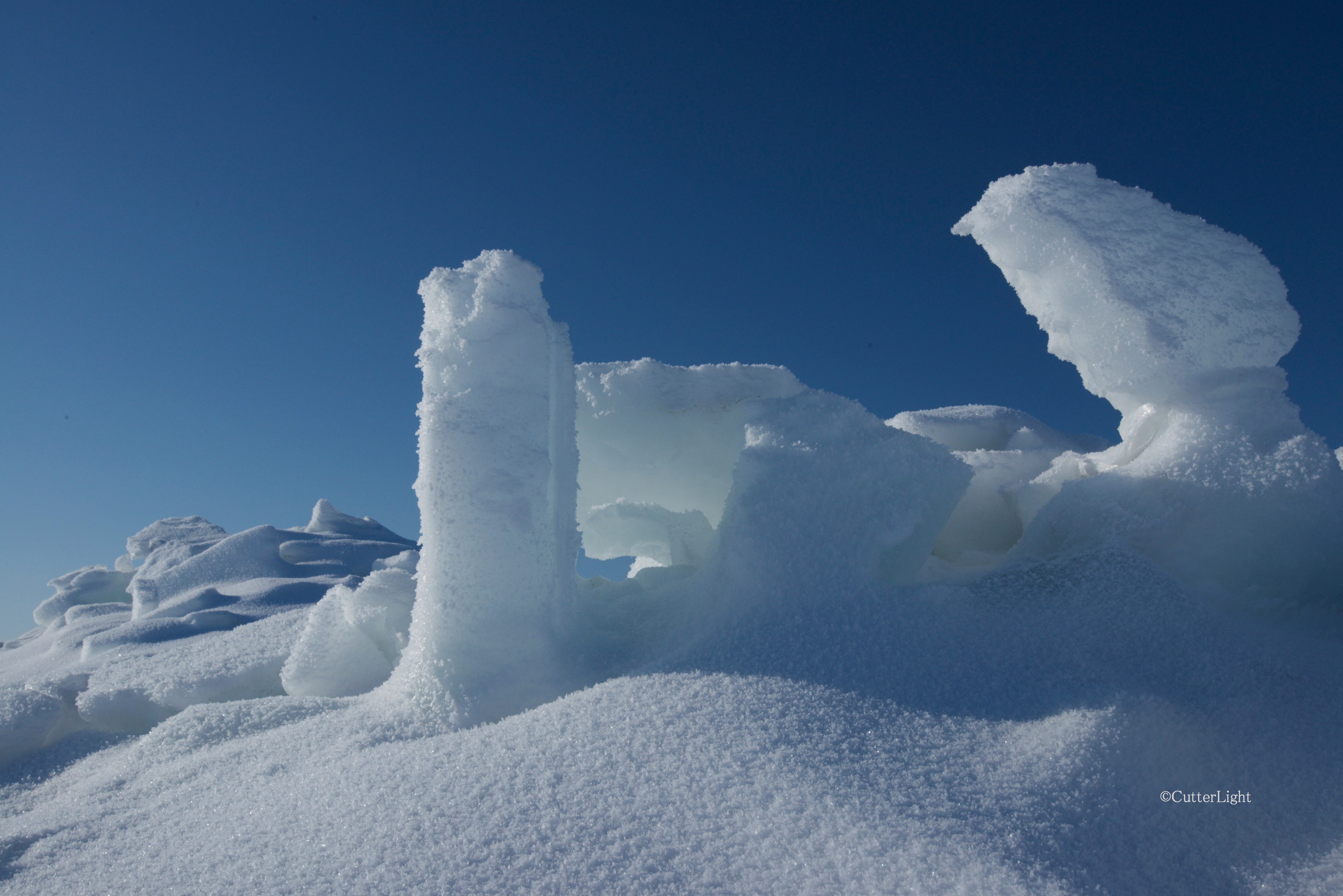
A fresh dusting of snow powders  ice sculptures that were pushed up when shifting winds caused  massive plates of ice to collide. Anytime you’re out on the ice, you’re mindful that another shift in the wind could push the ice apart again, leaving you stranded. You learn to keep an eye on the cracks.

By this time next week, we’ll be in Seward living aboard our summer home, the sailing vessel Bandon. Among other things we’re looking forward to is an intensive wine appreciation course we’ll be taking with another couple. We’re also eager to do some serious shooting with our new Nikkor 200-400 mm telephoto lens- a tool that should help us get intimate photographs of the amazing wildlife in and around Resurrection Bay. Daughter Maia will come up in July for our annual visit centered around fishing, hiking, great meals (and great conversation) and general catching up. The puzzles of turning out excellent meals from our small galley, figuring out where the salmon are in the nearby sea, experimenting with our new tenkara fly rods on smaller streams and maybe finally getting good photos of wary tundra swans are among other things that will keep us happily occupied in the coming months.
jack and bar on chukchi_n

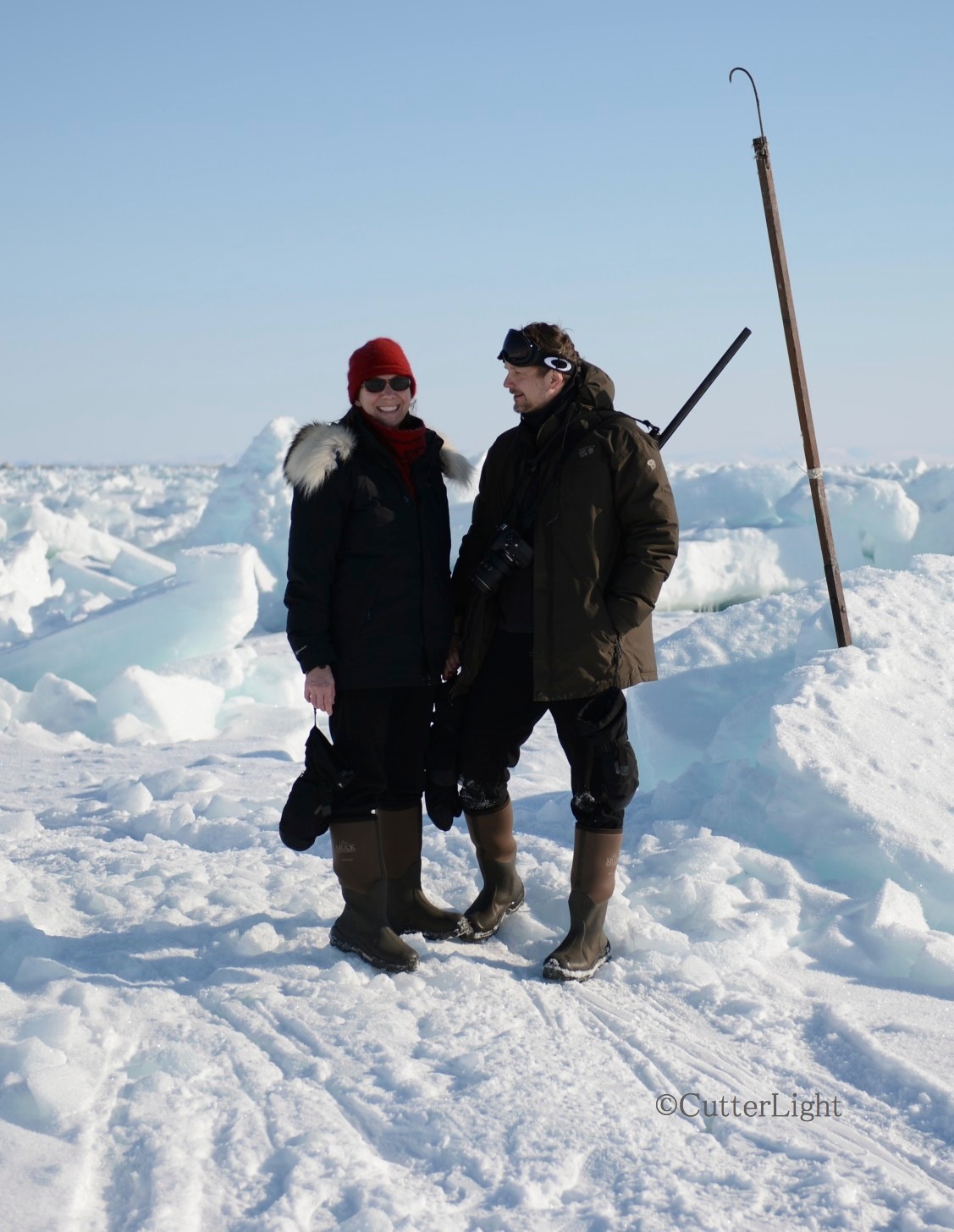
A whaling hook marks the trail out to the camps. This was a good year in Point Hope – five bowhead whales, lots of beluga whales, and everyone came back safe. Each whale represents tens of thousands of dollars worth of groceries that didn’t necessitate a river being drained for irrigation, fertilizer being spread (that ends up over-nutrifying nearby water systems), or a single drop of pesticide being sprayed. Nor were barrels of fossil fuel burned getting this food up here. 

An important part of our summer in Seward involves seeing to our own provisions. When we return to Point Hope in August, we’ll bring with us 200 pounds of salmon, halibut, rockfish and lingcod fillets – enough for us and for gifts for our friends up here. We’ll also be making shopping runs to Costco and other stores and ship up the usual bags of flour, rice, beans and sugar as well as everything from jars of Kalamata olives to tins of anchovies.

jack and bar on chukchi b_n

Wherever this summer finds you, we hope you’ll be following your dreams or taking steps to make those dreams come true. And we hope you’ll continue reading CutterLight.

Sincerely, Jack and Barbra

Alaska: Northern Lights in the Big Point Hope Sky

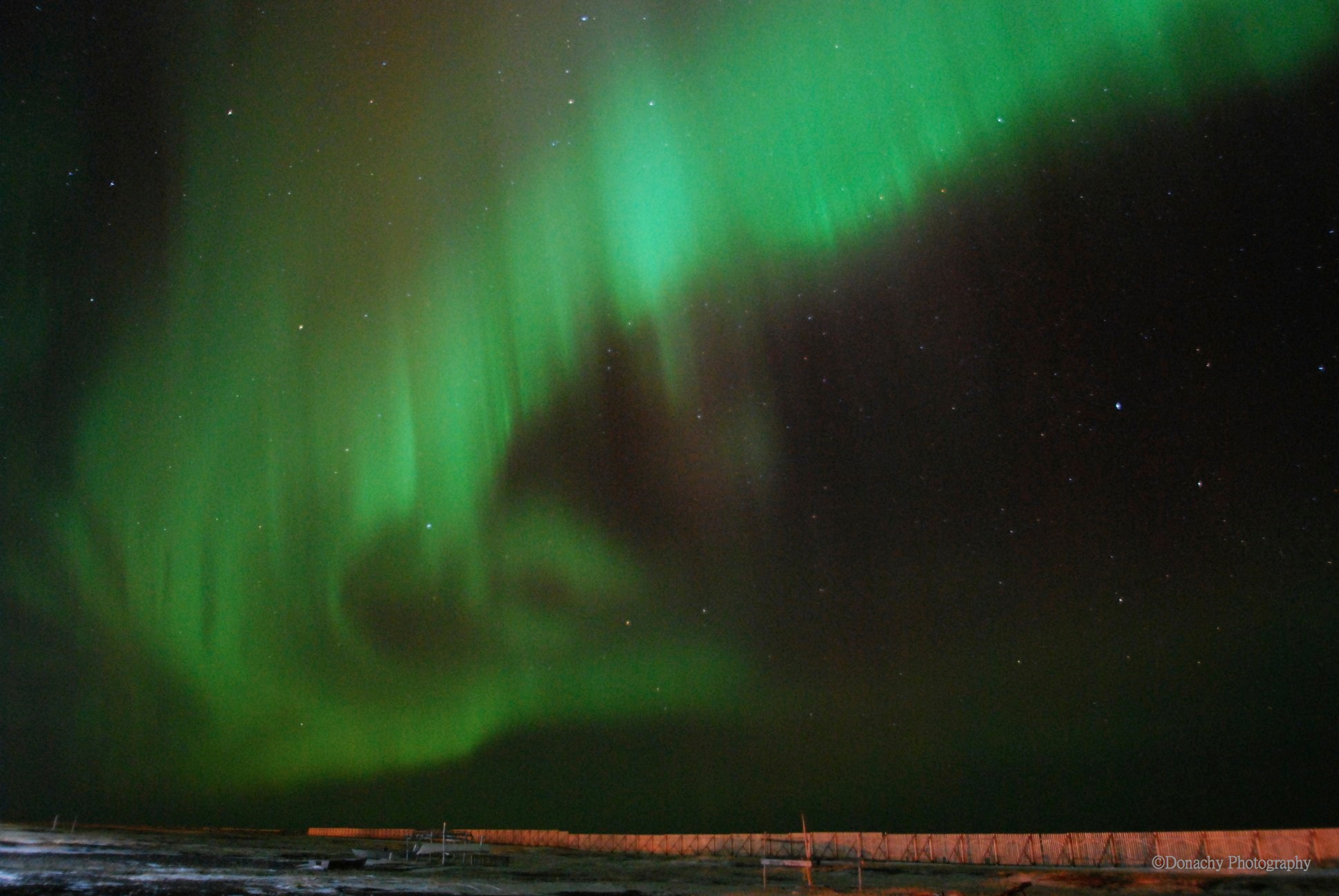
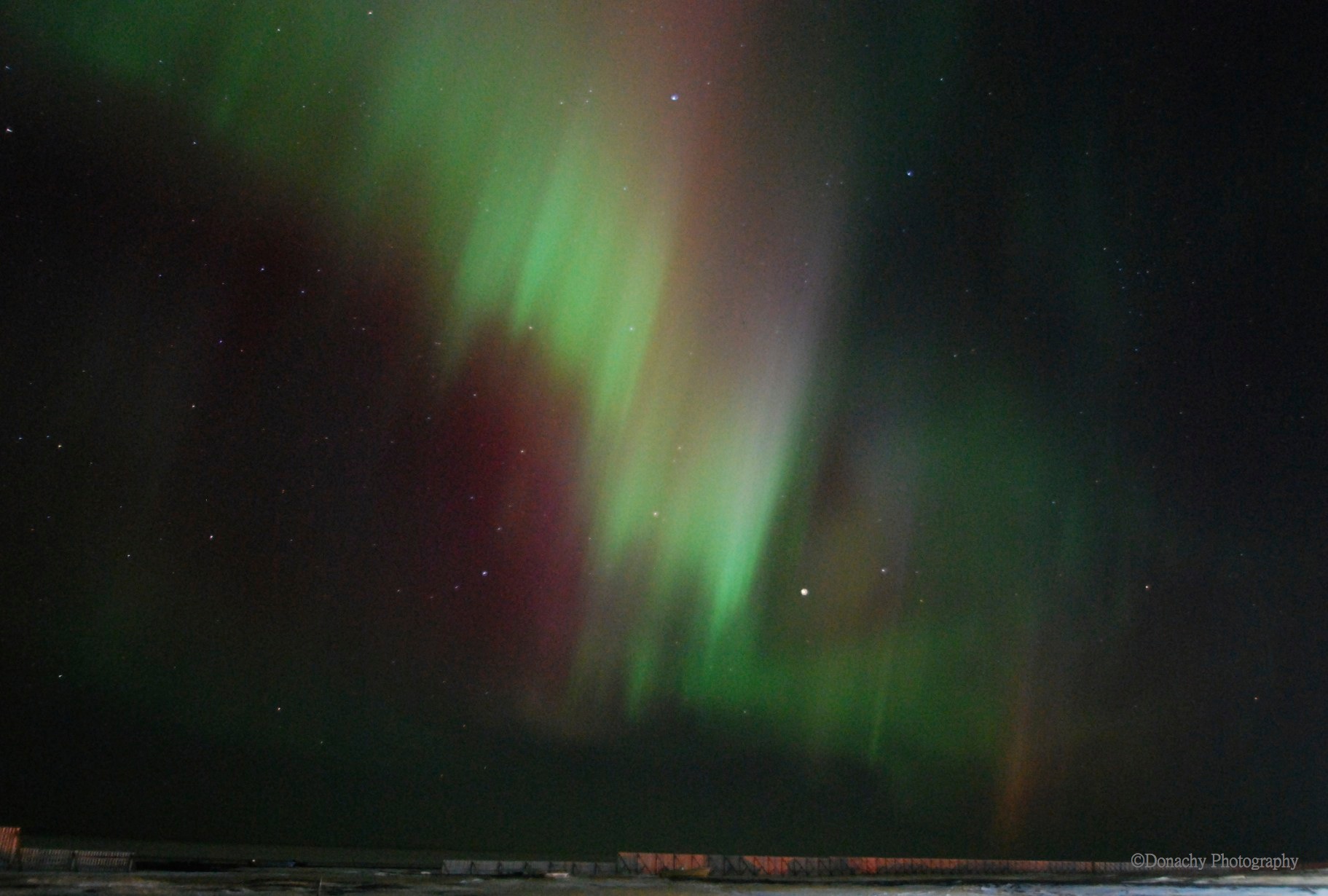
Named for the Roman Goddess of dawn, Aurora, and the Greek word for north wind, Boreas, Aurora Borealis events originate with the sun and are carried to Earth on solar winds.

Notice the seal skin boats in front of the snow fence in this photo looking northwest along the lagoon at Point Hope. The most common color for  Northern Lights is green – whitish green on nights of weak activity. Yellows, pinks, reds and purples are less common. Any color in the night sky is a thrill.

We have a phone tree set up so we can let each other know when the lights are out in force. When our phone woke us just after five AM this morning, we didn’t even pick up. We threw on warm clothes and coats (the windchill was below zero degrees Fahrenheit) put together the camera and tripod, and headed out the door. 

We walked away from the town’s lights, to the darkness near the lagoon, and set up. We took these shots with a 15 second exposure. When the lights are active, they move, constantly changing shape and color. 


A Ghost Town, Grizzlies, and the Best Fish and Chips Anywhere

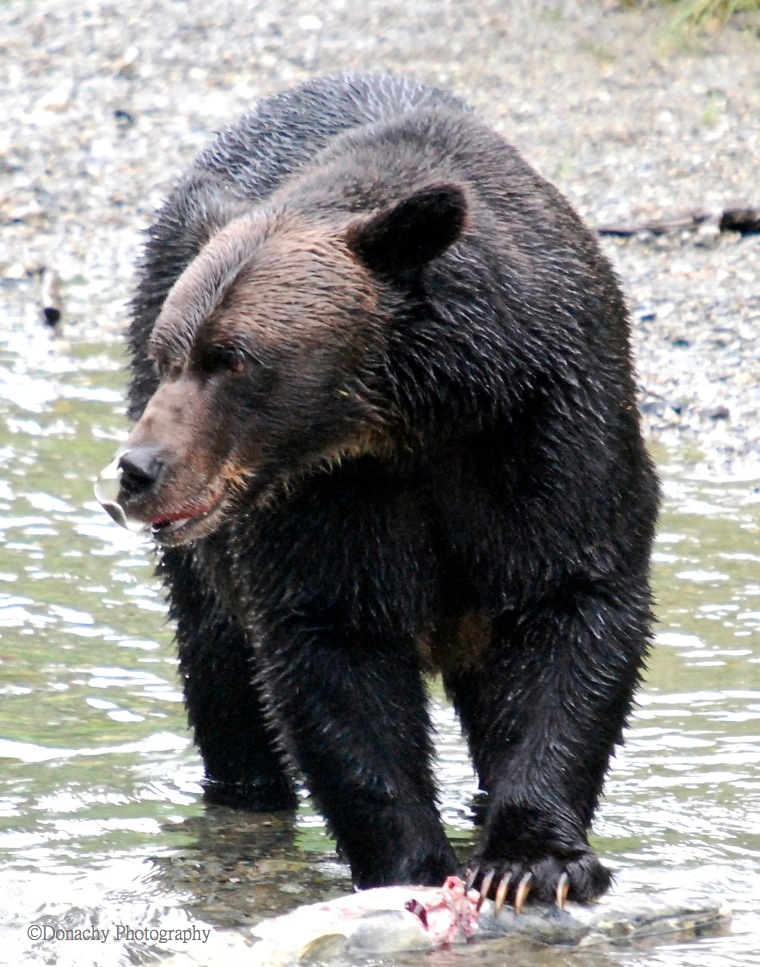
Patrolling Hyder, Alaska’s Fish Creek like she owns it, 600-pound Monica fattens up on a freshly subdued chum salmon.

With a population of fewer than 100 residents, Hyder, Alaska, bills itself as “The Friendliest Ghost Town in Alaska.” The town is one of those gems that is far enough off the beaten path to still be something of a secret, known mainly to the relatively few people who travel the Cassiar Highway in western British Columbia. Many of these travelers are on their way to or from Alaska, and not even all of these travelers are aware of what Hyder offers.

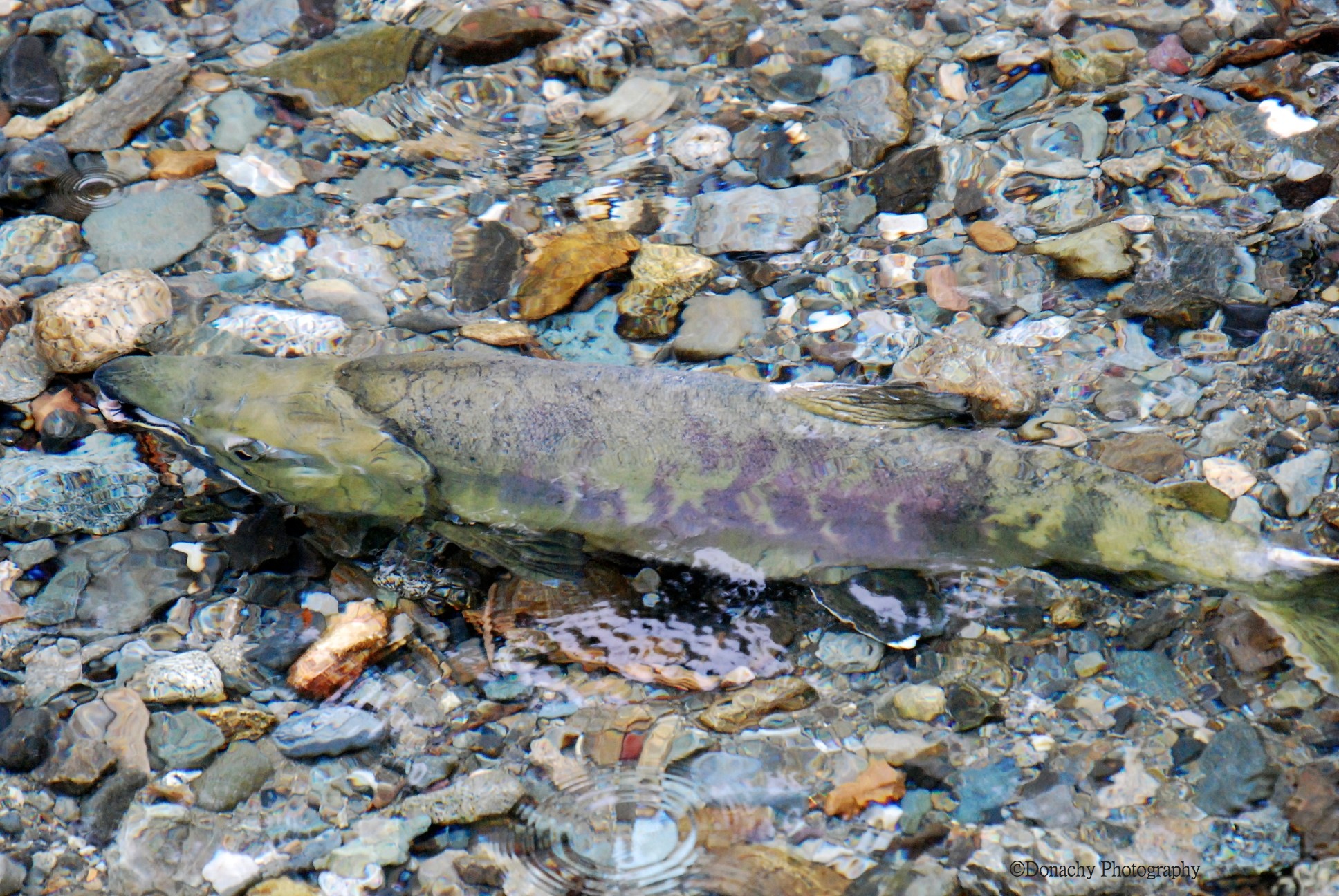
A prize for any grizzly, this beautifully marked chum salmon makes its way up the air-clear water of Fish Creek. 

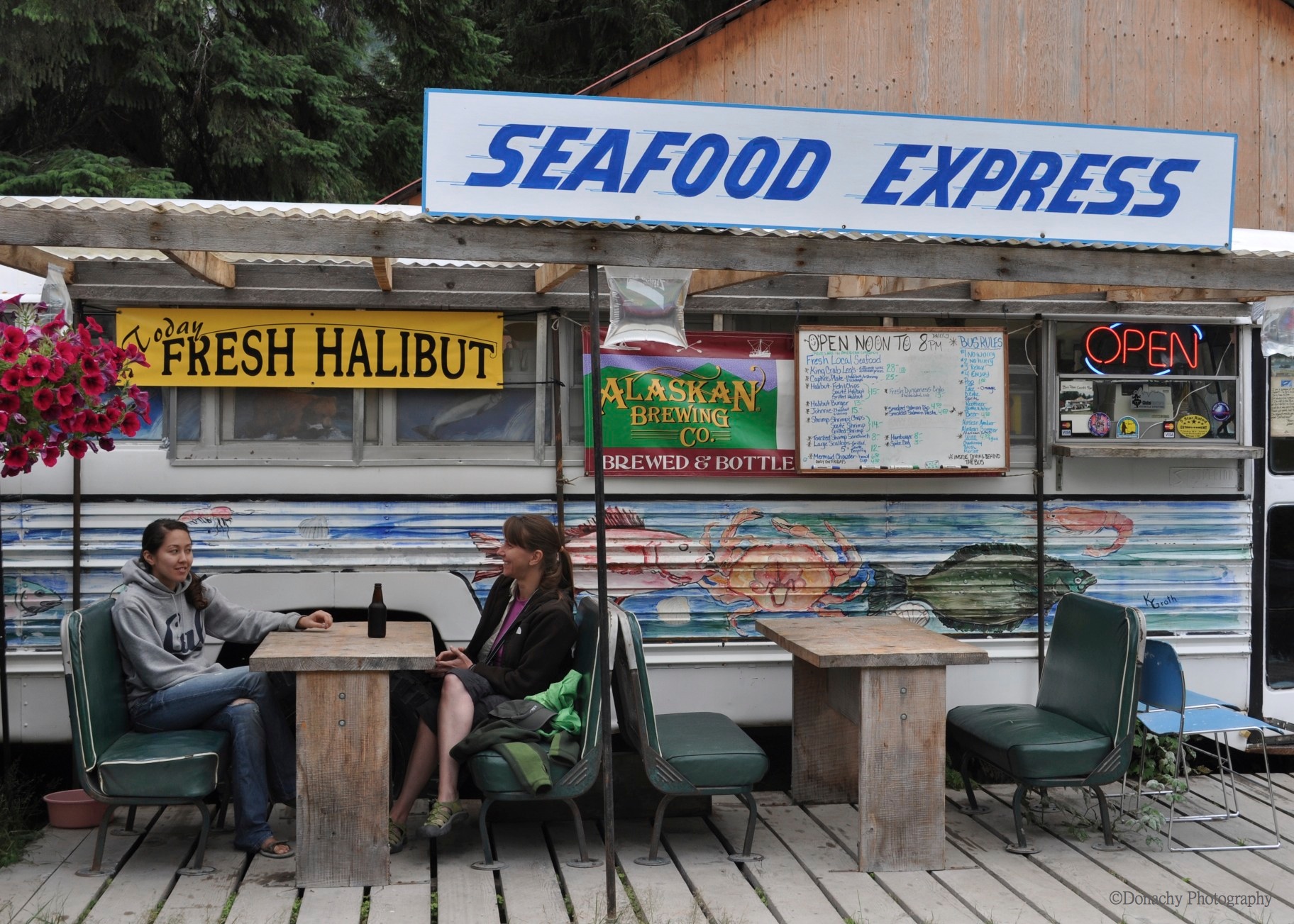
In addition to rare opportunities to watch and photograph grizzlies up close from a safe vantage point (an elevated viewing deck runs along a short portion of Fish Creek), Hyder boasts what is surely one of the world’s most unusual destination restaurants. We’ve written about the Seafood Express in a previous post. Established in 1998, the school bus Jim and Diana Simpson converted into a restaurant continues to turn out the very best fish and chips we’ve ever had. Even when the salmon and bears aren’t in, the restaurant alone makes taking the turnoff to Hyder worthwhile. Jim, a fisherman by trade, supplies the fresh salmon, halibut, shrimp and prawns Diana magically transforms into perfectly crispy, golden-brown, airily light creations that seem to disappear in one’s mouth. Complimented by a bottle of Alaskan Amber Ale, lingering over a meal there is the perfect way to relax after a morning of nature watching while Rufous Hummingbirds trill musically from the nearby spruce and fir forest.

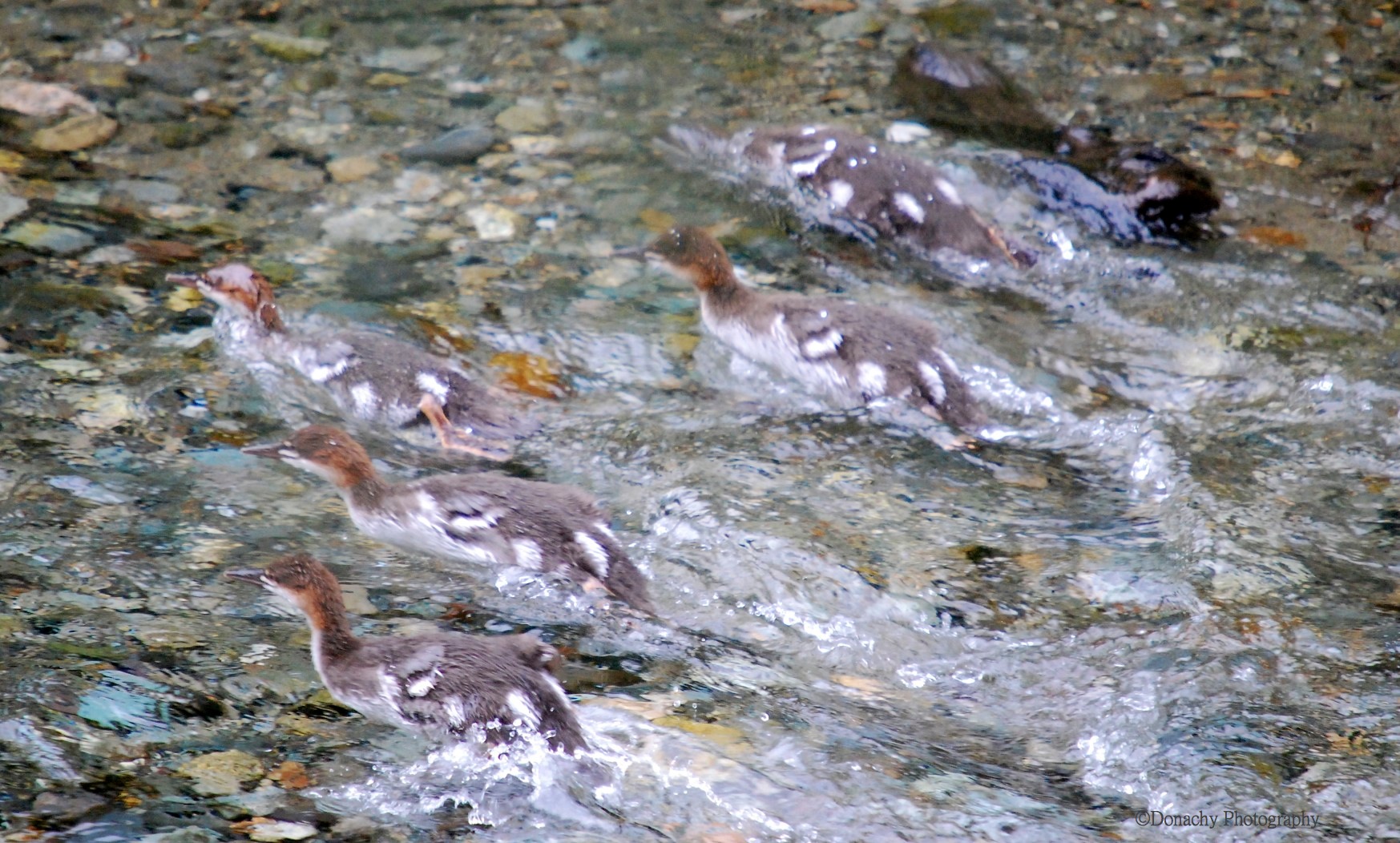
A female common merganser (Mergus merganser) leads her brood of chicks (next photo) down Fish Creek’s crystalline currents.

Merganser chicks scurry to keep up with their mother. This type of duck typically nests in tree cavities near water. They feed on small fish, insects and (I’m guessing) salmon eggs when they can find them.

Since 1998, the Seafood Express has been serving up gourmet-quality fish and chips

The viewing platform on Fish Creek provides one of the very few places in North America where people can routinely and safely view wild grizzlies from a fairly close distance. The platform is manned by knowledgable U. S. Forest Service Rangers. The best viewing is from late July through September.

A trip to Alaska through British Columbia by car, camper or motorhome is a trip of a lifetime. If your route takes you along the Cassiar Highway, Hyder should be a “must visit” destination!

For more, click here to see our iReport on CNN.

Leaving Seward, 2012

Rainbow over Cook Inlet – this photo was taken the second week of August, our last week in Seward.

For us, our summer in Seward came to an end in early August. Our sailboat, Bandon, is sitting on the hard with a fresh coat of bottom paint. We are already counting the days till next May when we’ll move back aboard.

Below: There are days on the Kenai Peninsula when it looks and even feels like we could be in Hawaii or some South Pacific paradise. As it is, we are in a paradise – Alaska. We can’t imagine a better place to cut our teeth as sailors than in Seward. 

Bacon-Wrapped Smelts (Hooligans, Eulachons or Candlefish)

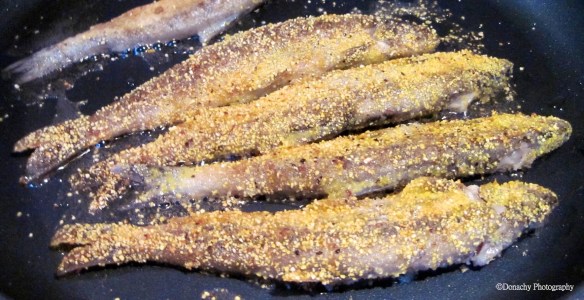
Freshly caught smelt prepared two ways: In the foreground, the fish was rolled in polenta. The smelt in back was dusted in seasoned flour. The fish were pan fried, wrapped in bacon and placed on whole leaves of Romain lettuce to be eaten from head to tail, bones and all. A sprig of asparagus and a few dollops of bright orange flying fish roe (tobiko) finishes the lettuce taco.

As I write this, one of the small rivers flowing into Resurrection Bay is jammed full of smelt. Specifically Thaleichthys pacificus, commonly referred to as hooligans. The AFS (American Fisheries Society) has settled on the name eulachon (pronounced you-luh-chawn), from the Chinook Indian name for the fish. Early west coast explorers and settlers called them candlefish because the spawning fish are so full of fat (about 15% of body weight) that when dried, they can be lit and will burn like a candle.

In the foreground: Polenta is especially coarse cornmeal. Seasoned with salt and pepper, rolling smelt in polenta gives these soft-fleshed fish a nice crunch when pan friend. In the back: another way to prepare smelt for the frying pan is by dropping them into a Ziplock bag containing seasoned flour and giving them a few shakes. Tarragon, fennel, marjoram and salt and pepper are a good start when seasoning these fish. Tongs make this a neat job. Note the asparagus in the pan on the stove.

The meat and bones of eulachons are quite soft. So soft, in fact, that when pan fried, the bones are barely noticeable. Their flavor is wonderful, but they definitely benefit from the addition of some crunch.

When the smelt are running in a river with a healthy population, getting enough for a meal or two is easy. On large rivers, a long-handled net might be necessary. But on this river, the fish were thick and close to shore. Two scoops of the net, and we had all the fish we needed.

Like their relatives, the salmon, eulachon are anadromous. They spend most of their life in the ocean, feeding on plankton, and then return to their natal streams and rivers to spawn, after which they die. Males arrive first and comprise virtually all the fish in the early part of the run. Later the females show up. Ideally, it’s the females you want, as a fresh fish laden with ripe eggs is a delicacy.

The males are quite good, too. In either case, cleaning these small fish (they average about eight inches/20 centimeters) is a simple matter of rinsing them in clean, cold water. There is no need to gill, gut or scale them.

A seemingly endless school of eulachons makes its way up an Alaskan river.

A Study of Upper Summit Lake, Alaska

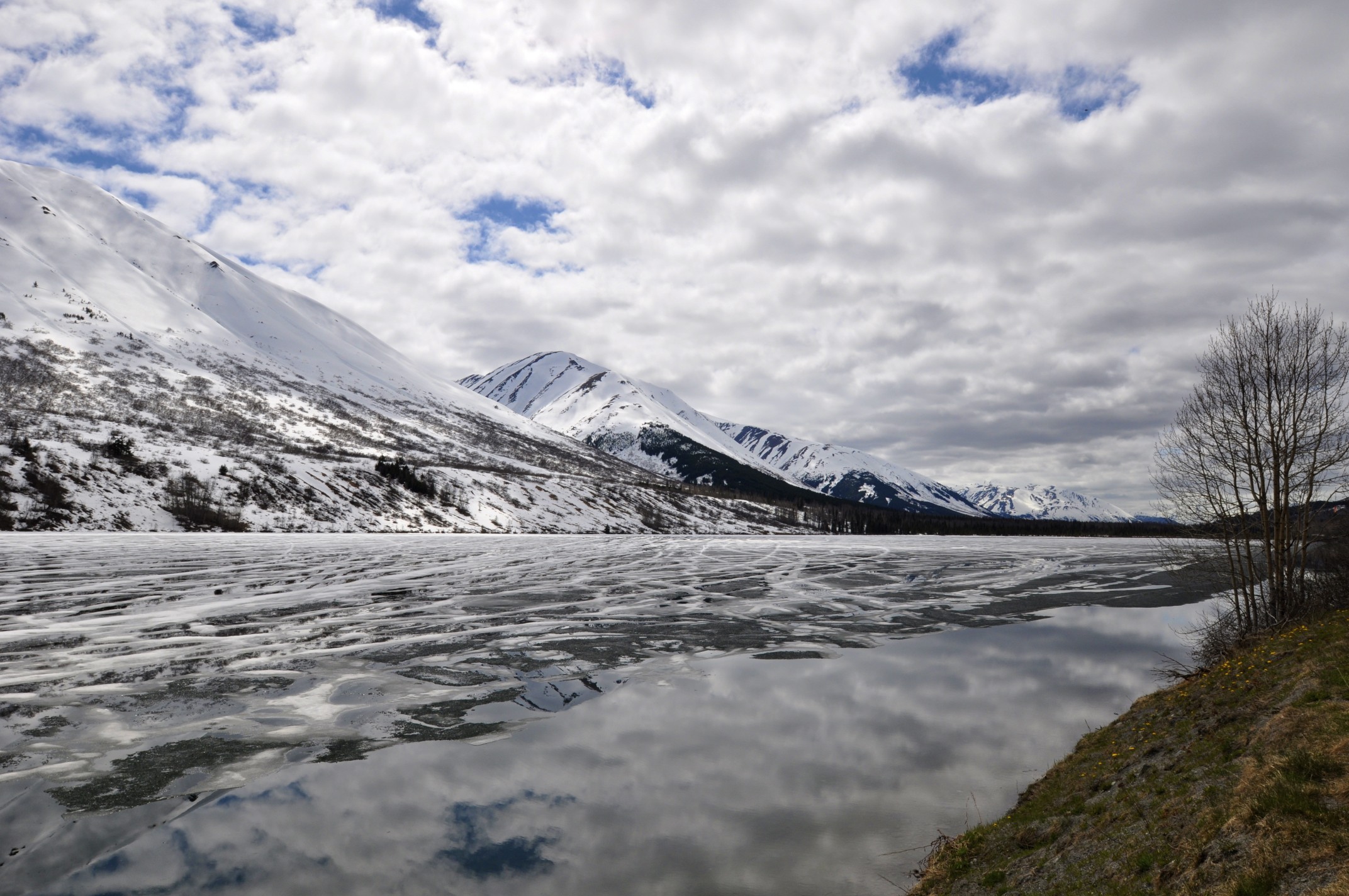
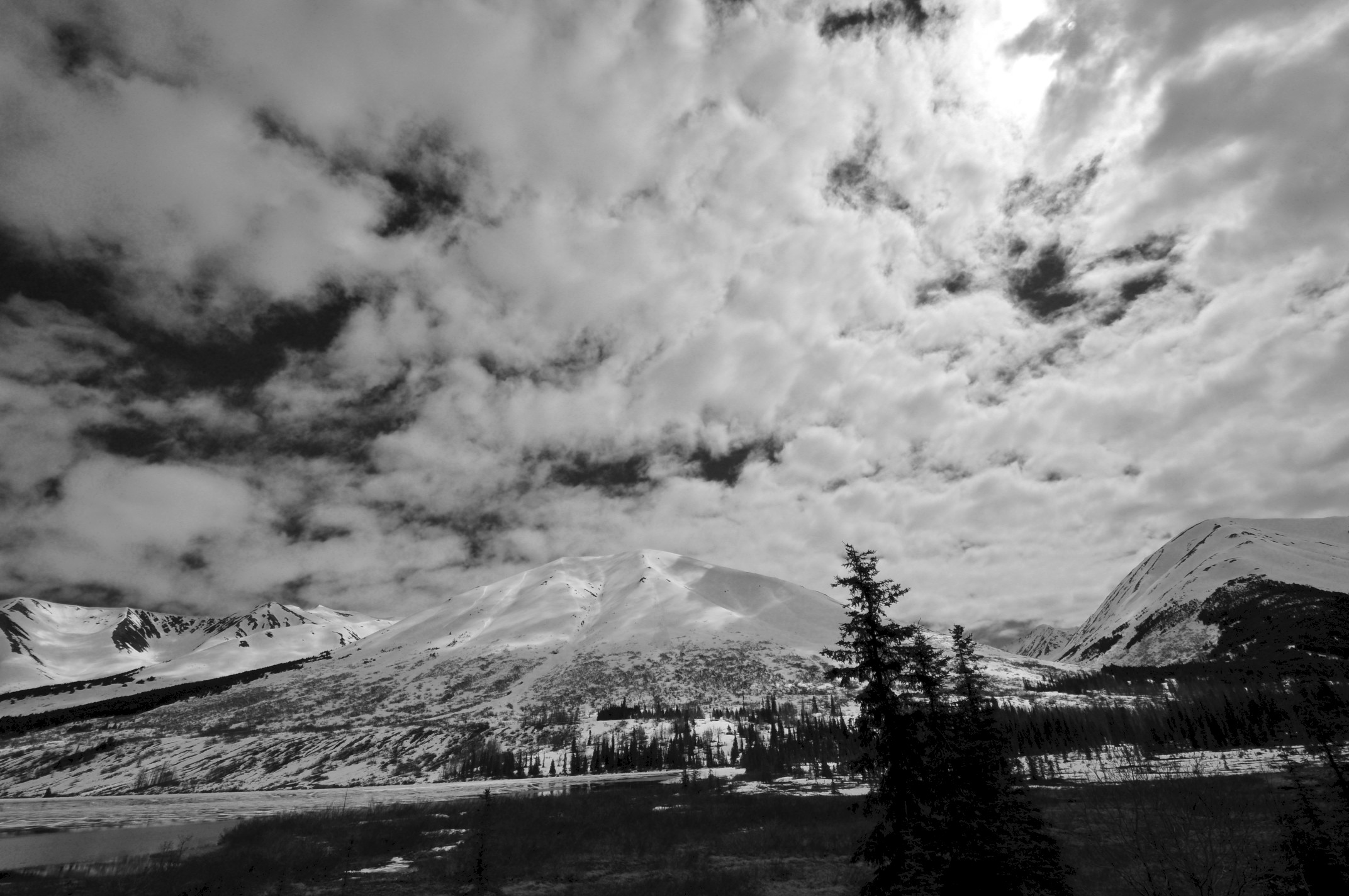
One of the most frequently photographed lakes in Alaska, Upper Summit Lake lies along the Seward Highway between Anchorage and Seward.

We recently got a wide-angle landscape lens and were eager to try it out. A broken sky over breaking up ice on Upper Summit Lake created a visually arresting set of contrasts and similarities.

We’d never been on the Kenai Peninsula early enough to see this much ice and snow. Only a few days prior, the lake was completely covered in ice, although it was apparent it was beginning to thin.

Notice the dandelions blooming in the foreground. Tough little flowers, pushing up through asphalt in the city, almost pushing away the ice and snow up here.

The upper end of Upper Summit Lake is the kind of place where we slow down and scan for moose.

Stanley and the Lance

Our home on wheels the past three summers – a Lance camper perched on a 3/4 ton Chevy Silverado, here parked for lunch with a gorgeous view of Resurrection Bay near Seward, Alaska. Note the hitch for towing our C-Dory 22 Angler. This photo was taken on May 21, 2012.

Our first summer in Alaska, we lived aboard our C-Dory 22 Angler, GillieGillie’s pilot house and cuddy cabin made for a cozy nest, and the spirited little Toyota Tacoma that did the pulling over the 8,000 plus miles we drove that summer was, simply, the most enjoyable vehicle either one of us has ever driven. The 43 days we spent traveling in that rig made for a summer for the books. In fact, we talked for some time about traveling all across North America in this rig: exploring blue highways both on land and on water, envisioning jaunts down to the Florida Keys, out to Martha’s Vineyard, across the country to Catalina Island and everywhere in between. We even talked about launching the C-Dory at Pittsburgh, Pennsylvania and cruising all the way down the Ohio and the Mississippi to New Orleans.

But when we made the decision to move to Alaska, rent out our home in Sacramento, and spend our summers on the Kenai Peninsula…

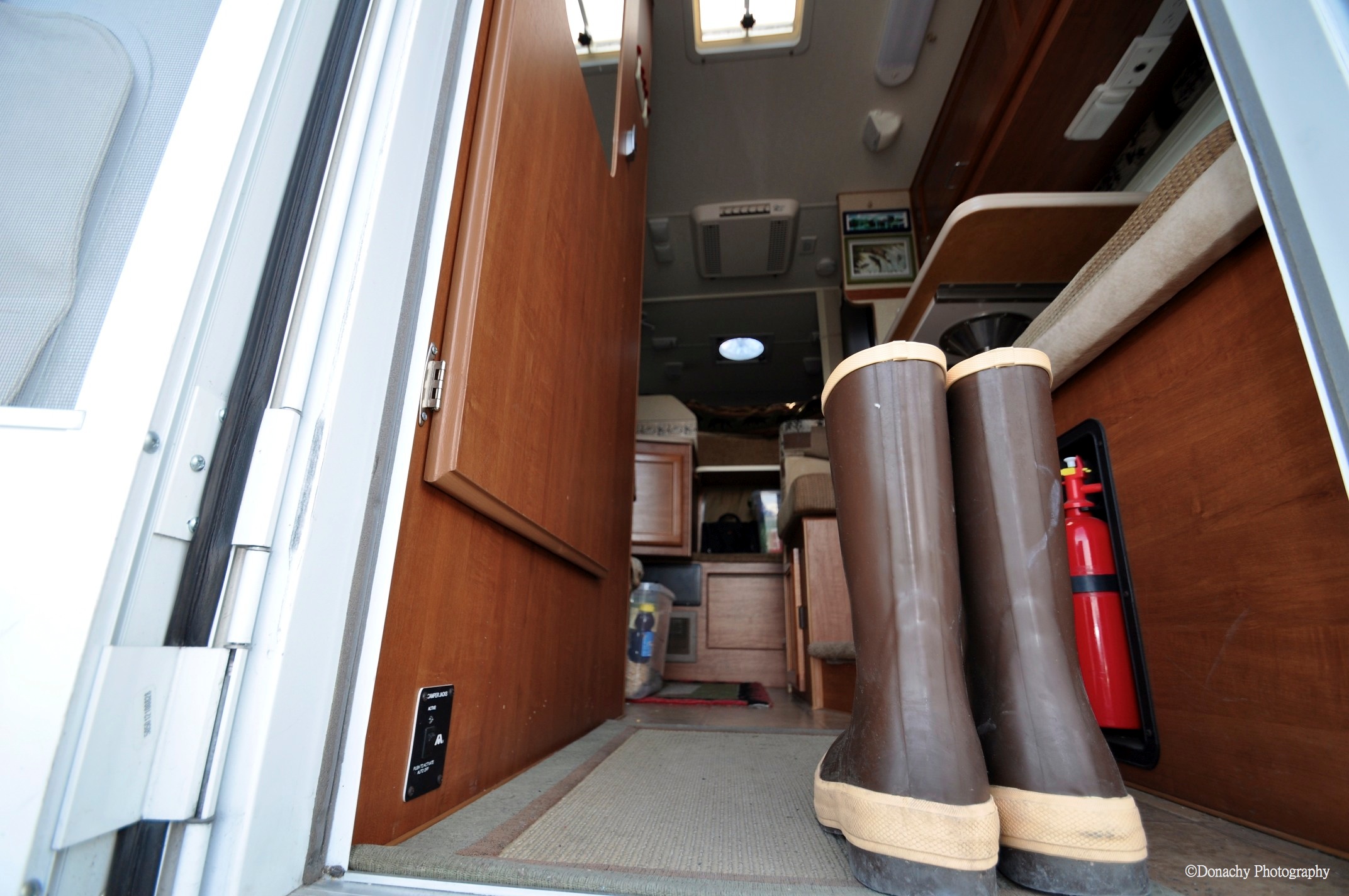
A carved wooden hummingbird given to us by our daughter, Maia, on a trip that passed through a First Nations village in British Columbia greets us each time we open the door. Framed artwork and other personal touches make our camper a home.

After months of comparative shopping and researching campers and trucks, we still felt like we didn’t know as much as we would have liked. On the other hand, we knew enough to be comfortable making a decision. We’ve been very happy with both the Lance Camper and the Chevy Silverado 2500 it sits on.

The camper has a queen-size bed, lots of windows and skylights providing natural lighting, a three-burner propane stove with oven, an air conditioner and heater, a good shower and flush toilet, a TV and sound system, a great refrigerator/freezer, lots of storage space and enough room overhead to be comfortable for a person of my height (I’m 6′ 1″). We added a solar panel, which we highly recommend; even on cloudy days the battery charges. We also have a generator which, although rarely used, has been much appreciated the couple of times we’ve needed it.

A pair of Xtratuff boots – iconic of Alaska anglers and boaters – is ready at the entrance. 

Stanley is a name conferring strength and dependability – like Stanley tools. Fitted with airbags (extra shock absorbers), our three-quarter ton Silverado has performed superbly carrying the camper and towing our 4,500 pound boat. Given a steep mountain grade, Stanley shifts down as if to say, “All right.” Nothing more. No groaning and straining, no needless extra shifting, just a simple, straightforward, “All right” and up the mountain we go. And kicked into four-wheel drive, this truck has the grit to power through even loose beach sand with the camper – a test we didn’t intend to put the truck through and won’t be repeating.

We went back and forth regarding two options: gas or diesel, and dual rear wheels or single. We opted for a gas engine and single wheels, and after three summers of putting this rig to the test we can say without hesitation that with the right tires, single wheels are fine. And we’re happy we don’t have to deal with the noise of a diesel engine (or impose that noise on our neighbors). That being said, the fact is we don’t put a lot of miles on our rig. A diesel engine offers some real advantages to campers engaged in extensive traveling.

To anyone contemplating a rig like this, we have one firm recommendation: Start by choosing the camper you want, then match it to the right truck. 

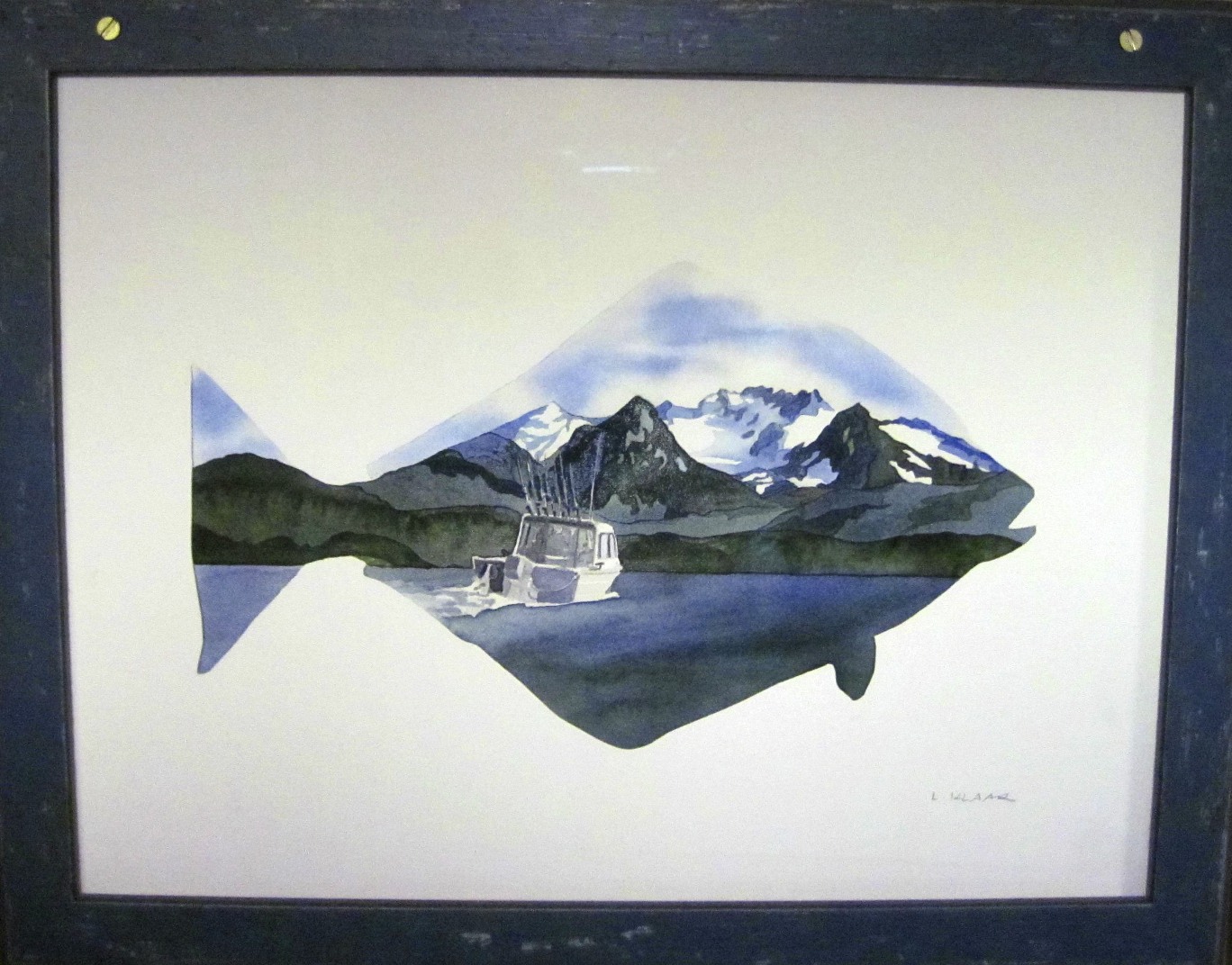
This watercolor by Homer, Alaska artist Leslie Klaar depicts a boat much like our C-Dory heading off for a day of fishing in the great Northwest. It hangs near the door of of our camper.

Childs Glacier: When Ice Falls

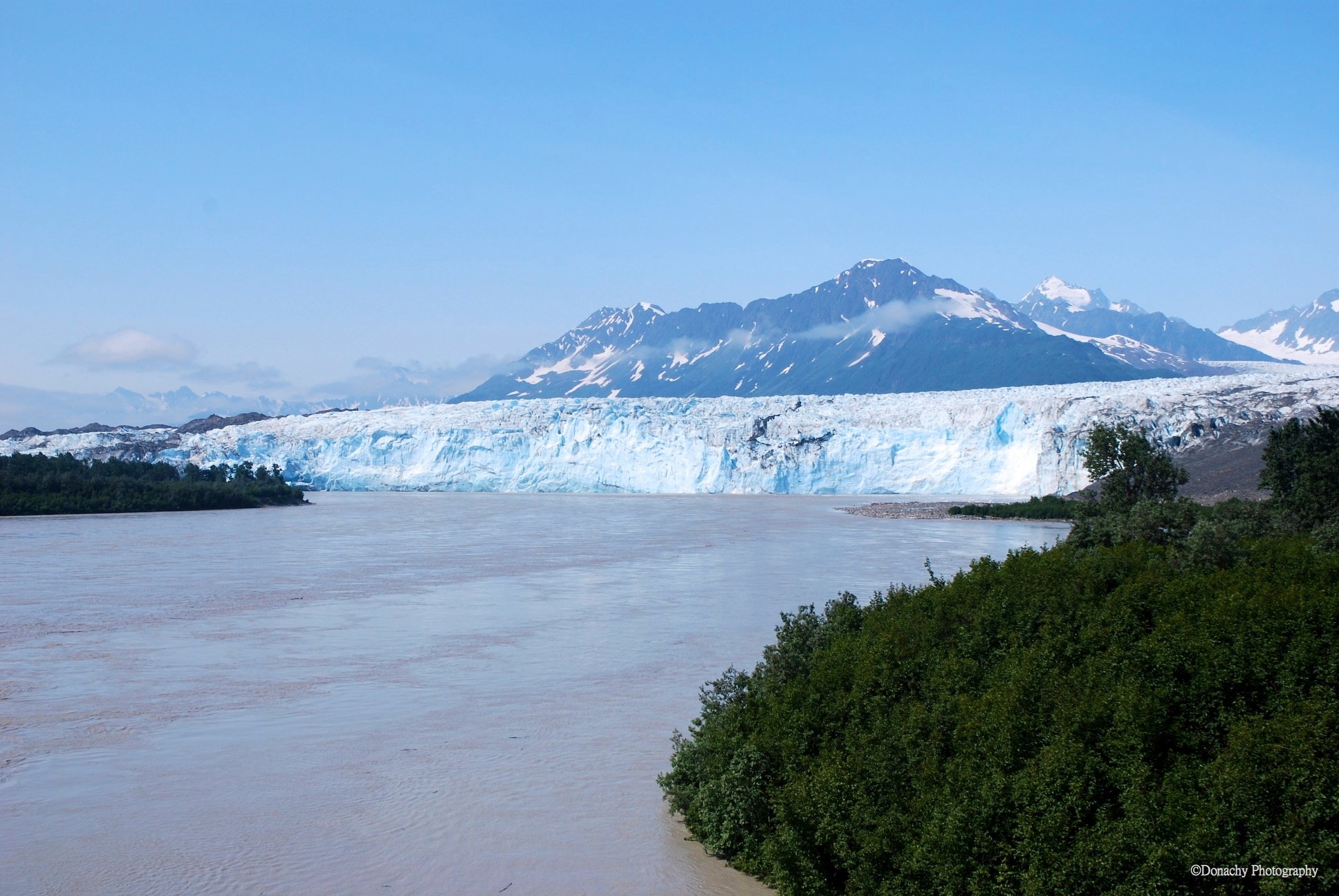
The face of Childs Glacier forms a bank on the Copper River near Cordova, Alaska. This is the same Copper River famed for its runs of wild salmon.

Two days prior, we’d launched our C-Dory in Valdez and made the 90-mile run across a section of Prince William Sound to Cordova – a fishing village accessible only by air or water. The livelihood of many of Cordova’s 2,000 or so inhabitants is connected to the massive runs of salmon that ascend the nearby Copper River. A running event, the Alaska Salmon Runs Marathon and Half-Marathon road races, had lured us to this idyllic village. We hadn’t even known about Childs Glacier when we first put together our travel plans.

Just 400 yards across the river is a picnic area offering excellent views of the glacier.

As often happens at running events, it wasn’t long after we’d finished the half-marathon that we fell into conversation with another couple. They were planning on renting a car and driving out to see the glacier the following day. When they asked if we’d be interested in splitting the rental car and joining them, we didn’t hesitate. This would be our first opportunity to get close to a glacier.

We figured we’d drive out, snap a few photos, have lunch at the picnic area, and drive back. If we were lucky, we might see a moose or a bear along the way. This was before we understood the dynamic nature of sea-level glaciers. We were completely unprepared for what we would experience.

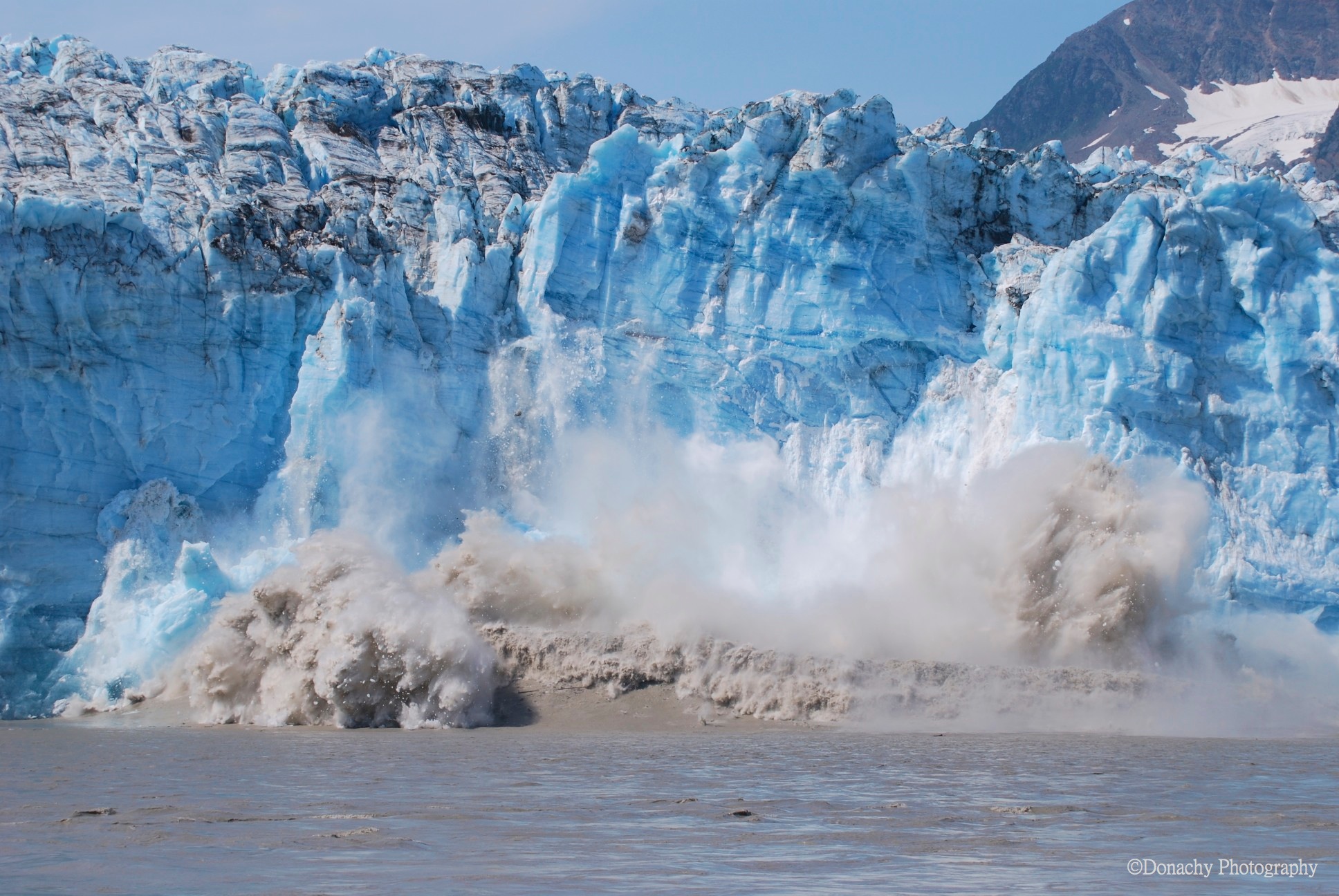
A shower of ice sloughs off the glacier’s face.

The width of the chalky-brown Copper River was all that separated the picnic area from this very active mass of slowly moving ice. Think of the cracking and popping sounds a couple of fresh ice cubes make in a glass of whisky. Now imagine those sounds magnified to amplitudes ranging from rifle fire to dynamite charges as ice almost continuously breaks away from the glacier’s face. We were mesmerized. The half-hour we’d planned on staying turned into an hour, then into two, and then into three.

We were witnessing yet another Alaskan phenomenon so large and full of energy that it is all but impossible to adequately capture on film or with words – an event you have to experience to comprehend, and we were here, experiencing it. Although neither Barbra nor I gave voice to the thought, it was probably on this day, watching and listening to this glacier, that the idea of moving up here began to root itself in us.
We sensed that something BIG was about to happen.

Suddenly, a massive section of ice below a seam we had been watching seemed to sag. A fraction of a second later a prolonged groaning, cracking explosion unlike any we’d heard before reached our ears as the face of the glacier fell away, collapsing into the water with a force that sent a small tidal wave curling toward us. The four of us looked at each other, eyes wide, jaws dropped, and quickly gathered our gear and scurried for higher ground. Seconds later, the wave hit the shore, inundating the area where we’d been standing only moments earlier. It was thrilling.

This large iceberg in Prince William Sound is the result of a glacier calving event in one of the sound’s fjords. Kittiwakes and gulls have claimed it as a roosting place.

Whaling: Two Miles Out on the Frozen Chukchi Sea

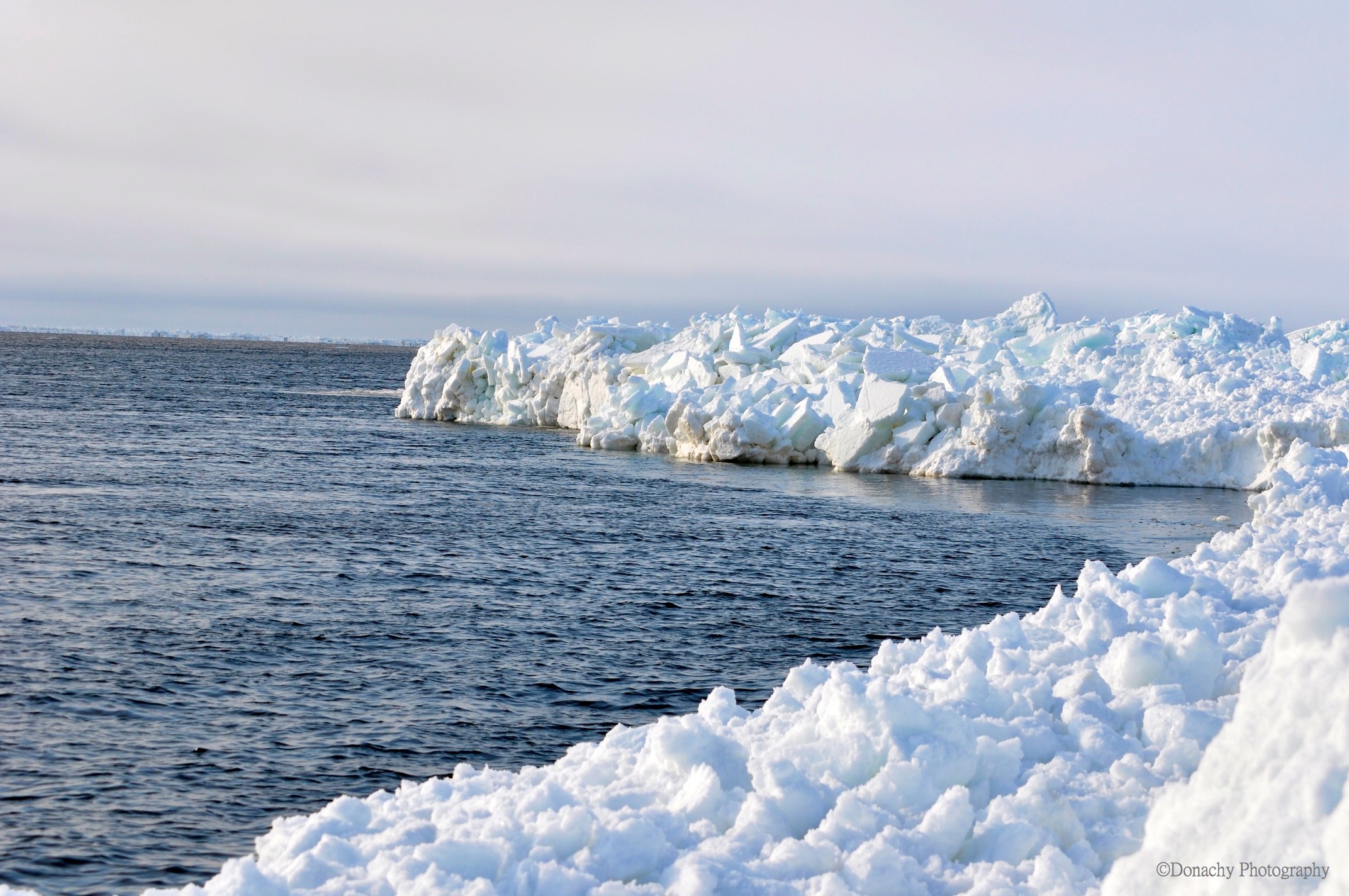
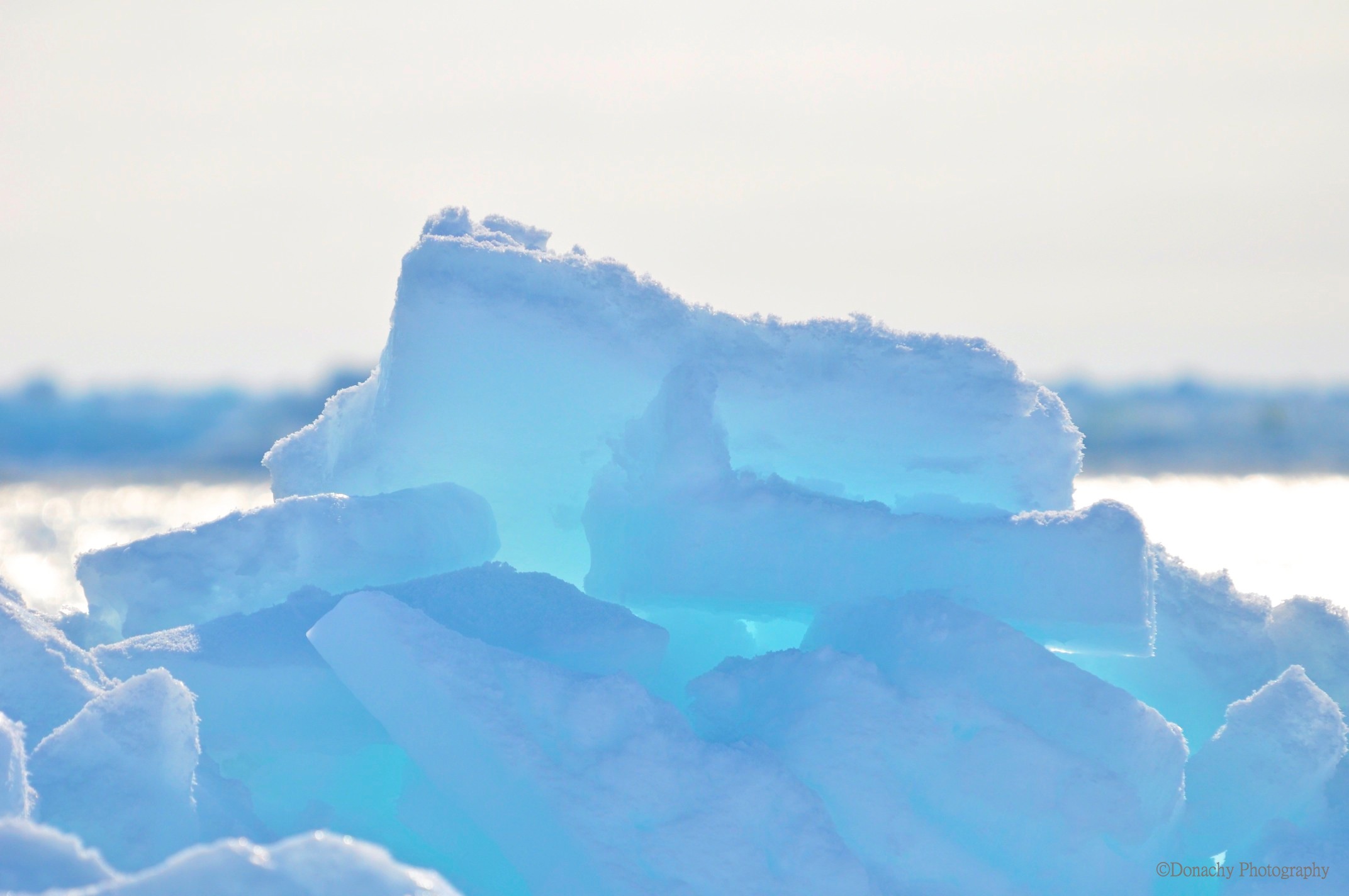
Two miles from land across the frozen Chukchi Sea, the ocean ice is constantly breaking up and reforming, creating ridges of fragmented ice. The blocks of ice in this photo weigh from hundreds to thousands of pounds, but are so clear they seem to be lit from within. 

We had heard that the bowhead whale was out near the point, three miles west of the village of Point Hope. But once out there, we saw few signs of activity. We found a trail leading out onto the ice and began following it in hopes of locating the lead – the place where currents and wind had caused a break in the ice and created open water. That’s where the whaling camp would be.

The ball and pyramid, above, were a familiar trail marker from a previous trek out onto the ice. (Click here to see “Whale Camp: Frozen Sees and Icescapes.” A frozen sea is not smooth. It is more like an otherworldly, windswept rock and sand desert with the rocks replaced by ice and snow replacing the sand. Note the faint snowmobile tracks curving along the right edge of the photo – that’s the trail. 

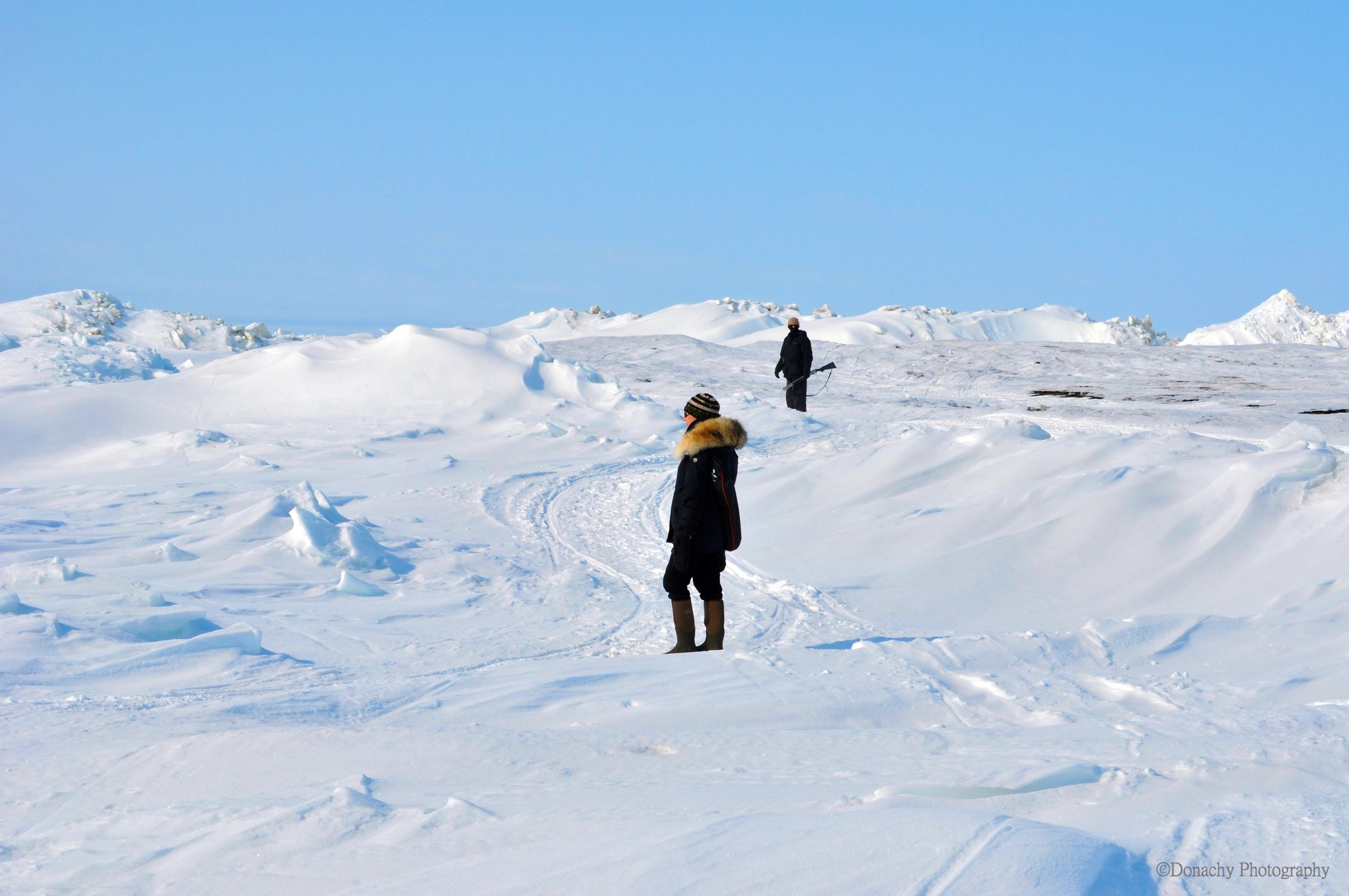
A mile or more out on the ice, Barbra and our friend, Bill, pause to scan for telltale seabirds that might give away the location of the lead. This is an area frequented by polar bears, hence the gun Bill is carrying. We saw no bears, but did cross a number of fox tracks.

Huge, luminescent fragmants of snow-dusted ice reminded me of the hardtack candy my grandmother used to keep in a crystal bowl. 

Leads can open and close in moments, leaving people stranded when a break-off occurs, or generating enough force to place this pickup-truck-sized block of ice precariously atop a mass of fragments. A walk across sea ice gives one a glimpse into the forces behind tectonic plates and events such as earthquakes and the formation of mountain ranges.

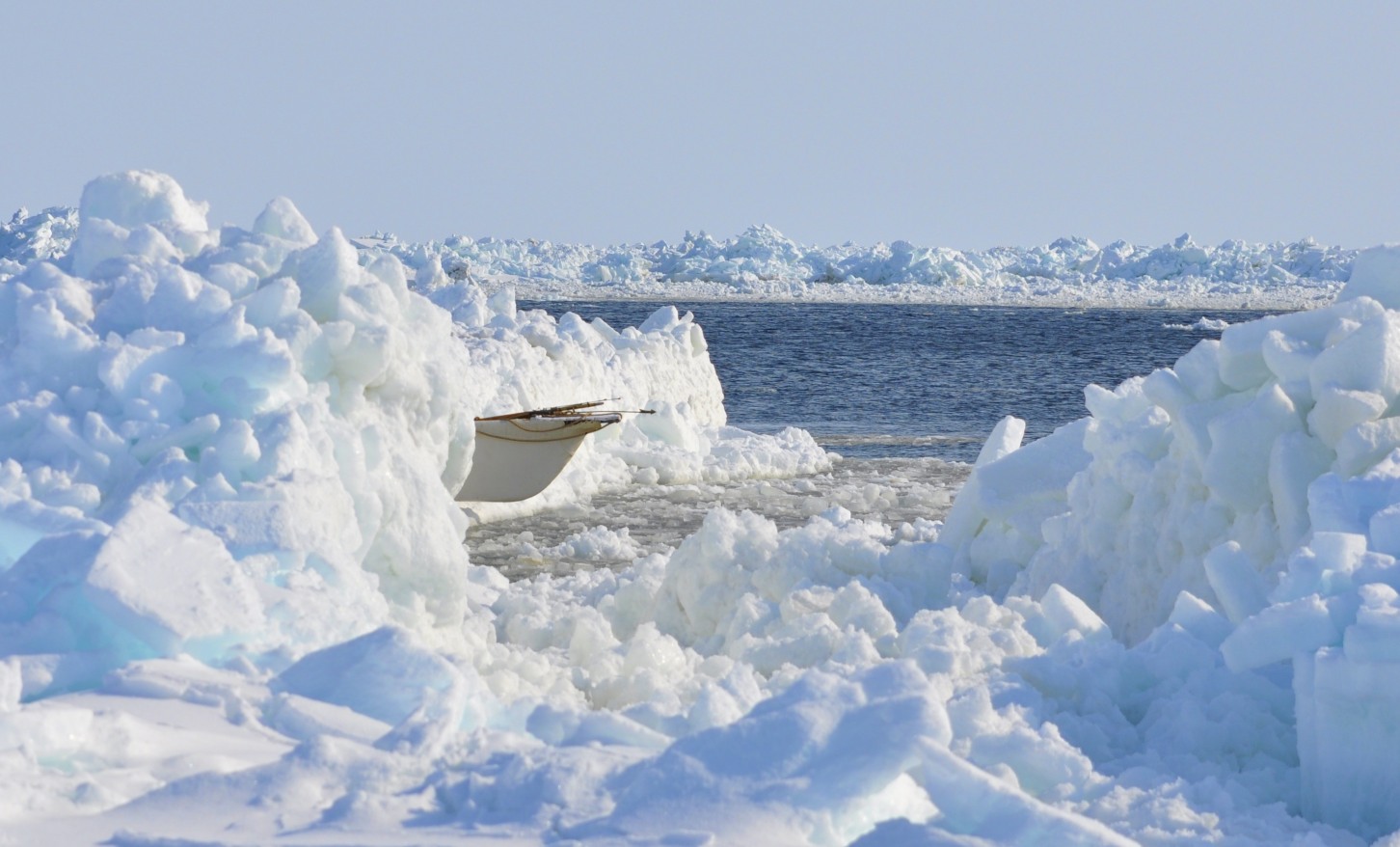
We’d walked over five miles by the time we finally found the lead – a fairly narrow band of water hemmed in between two ice sheets. The bow of a seal-skin boat was a sure sign we were nearing the main whaling site.

This is a typical whaling outpost. The seal-skin boat, which is about 17  feet long, is made from hand-stitched bearded seal hide. The boats are light, able to be moved on a moment’s notice. The jumble of ice at the edge of the lead was piled there by natural forces and serves as both wind shield and hunting blind. Note the mass of floating ice out on the water. 

At the edge of the lead, the ice does not taper. It is thick and strong, but susceptible to breaking off if the wind shifts. 

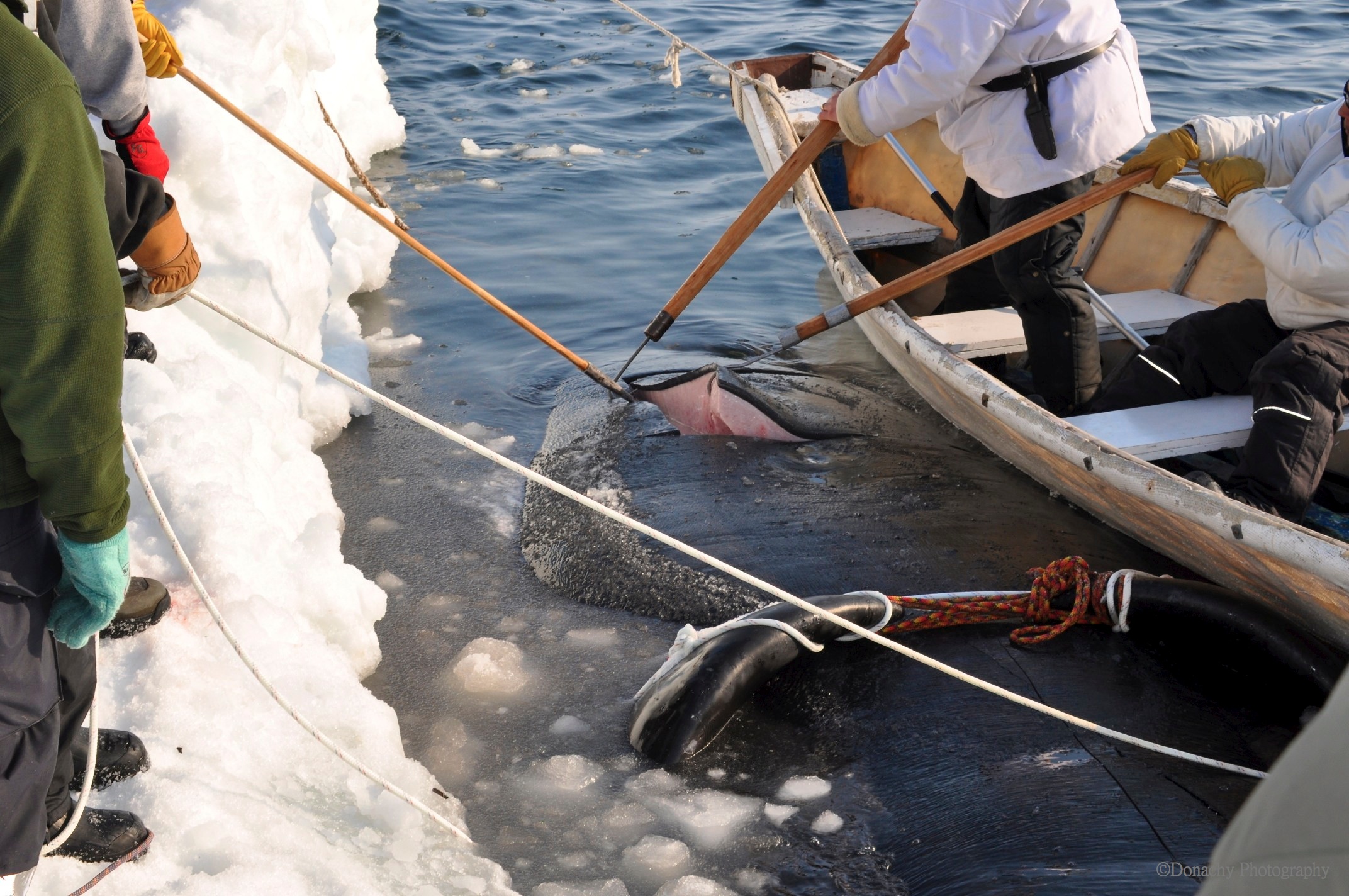
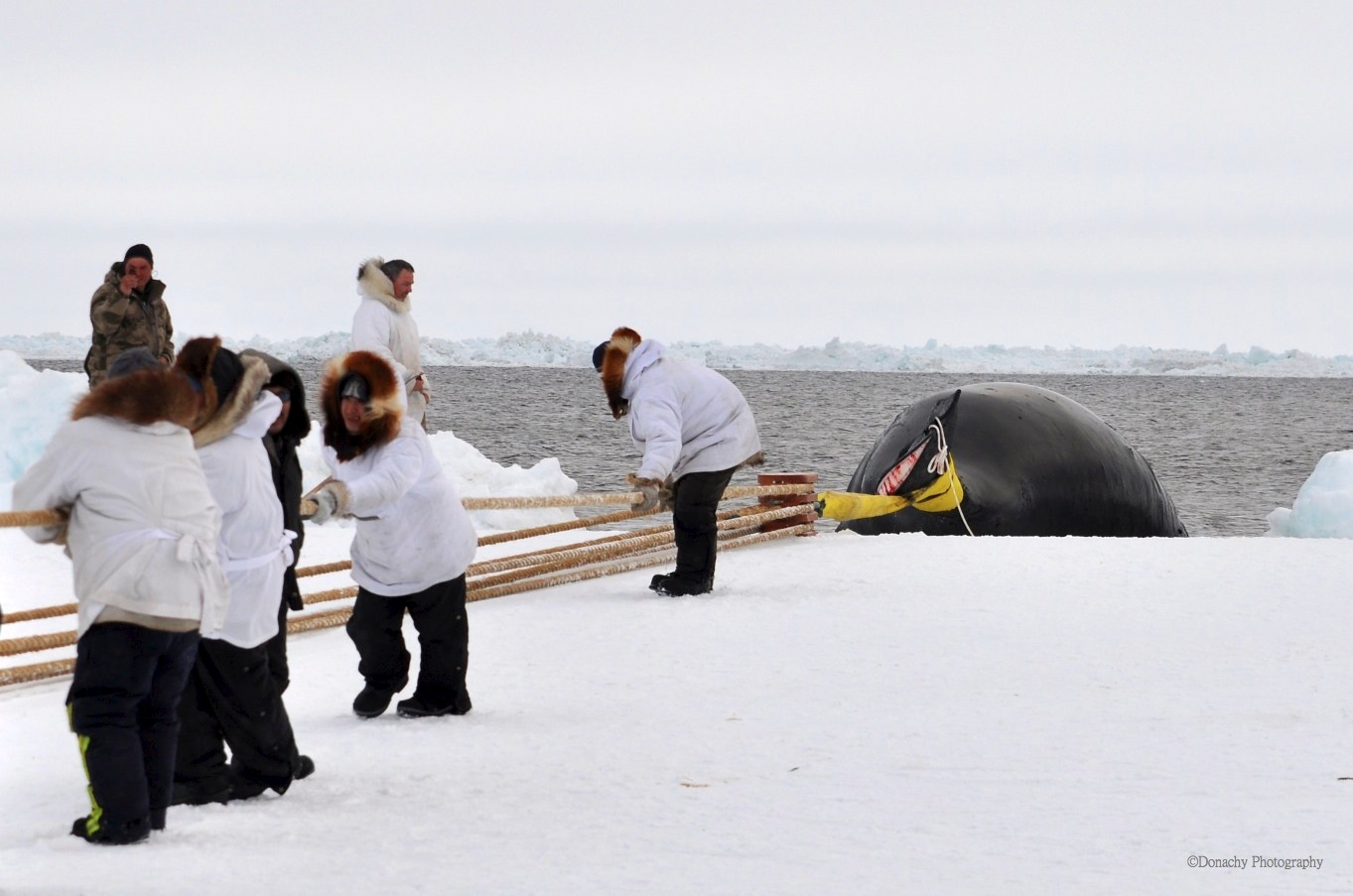
We had wondered how a whale weighing 10, 30 or even 50 tons is pulled from the water. Two heavy block and tackles are anchored to the ice. The one nearest open water is pegged with a thick metal spike. Fifty yards or so back a second block and tackle is anchored by drilling two holes through the ice and securing the it with a strong harness. Even with the modest mechanical advantage of pulleys, it takes dozens of people pulling for all they’re worth to bring the whale out of the water.

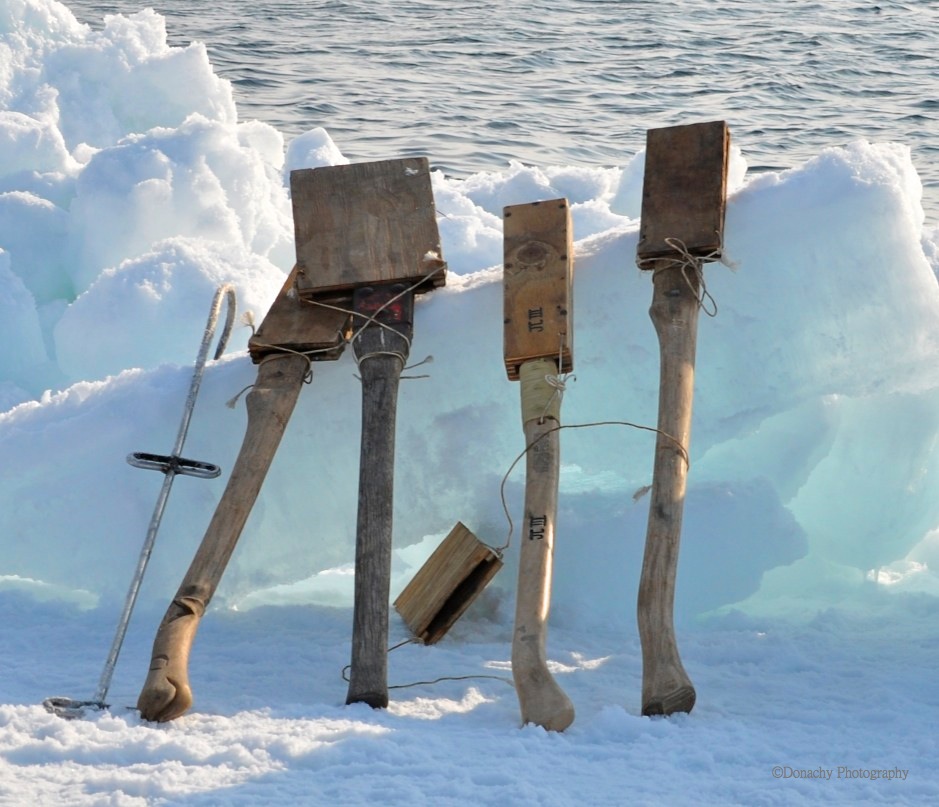
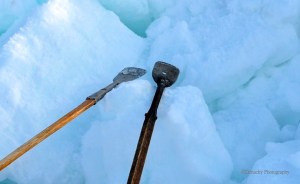
Most of the tools used are hand-crafted. The spade-like implements on the right are butchering tools.


We were very aware of this deep crack in the ice, as, no doubt, were the whaling captain and his crew. While the ice to the right of the crack was sturdy enough to support a house, a shift in the wind could have caused it to suddenly break off. 

The whale was small, a young one. Here a ceremonial first piece weighing 30 pounds or more is cut for soup in which the only ingredients are melted snow and fresh whale – a welcome celebratory meal against the cold.

When the pull began, I handed my camera to Barbra and found a place on the rope. The pull started with grunts and chanting, but as the whale begin to emerge from the sea onto the ice, the chanting gave way to whoops of joy and cheers.
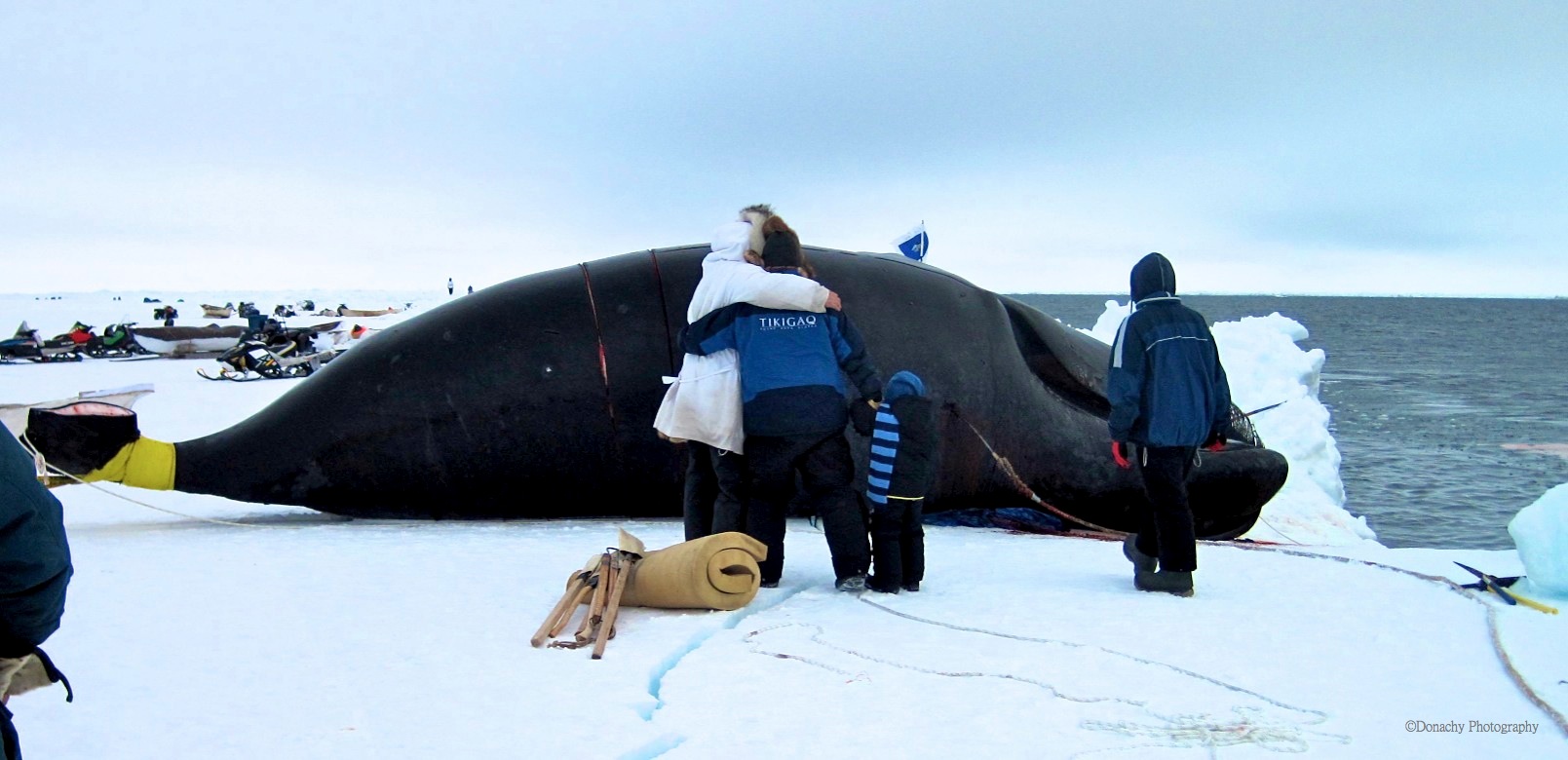
The captain (in the blue coat) shared a celebratory hug (above)…

…and then his crew member headed off with a friend for a bowl of hot whale soup. By this time, Bill, Barbra and I had been out on the ice for nearly five hours and we had a two-mile hike back over the sea to land. We were thrilled to have witnessed and taken part in a tradition that goes back to the roots of this Inupiat village.

Rivers of Ice: Glaciers, Icefields and Floating Sculptures of Blue

Icebergs such as this ethereal blue sculpture are the culmination of a dynamic process eons in the making.

It’s easy to imagine glaciers as static – water interrupted, subject to thaw and melt, but otherwise frozen in space and time. In reality, they’re more like slow moving rivers, pulled down by gravity, pushed forward by the unimaginable tonnage of ice and snow in the icefields where the originate. A fast-moving glacier can travel at a rate of 20 meters a day or more.

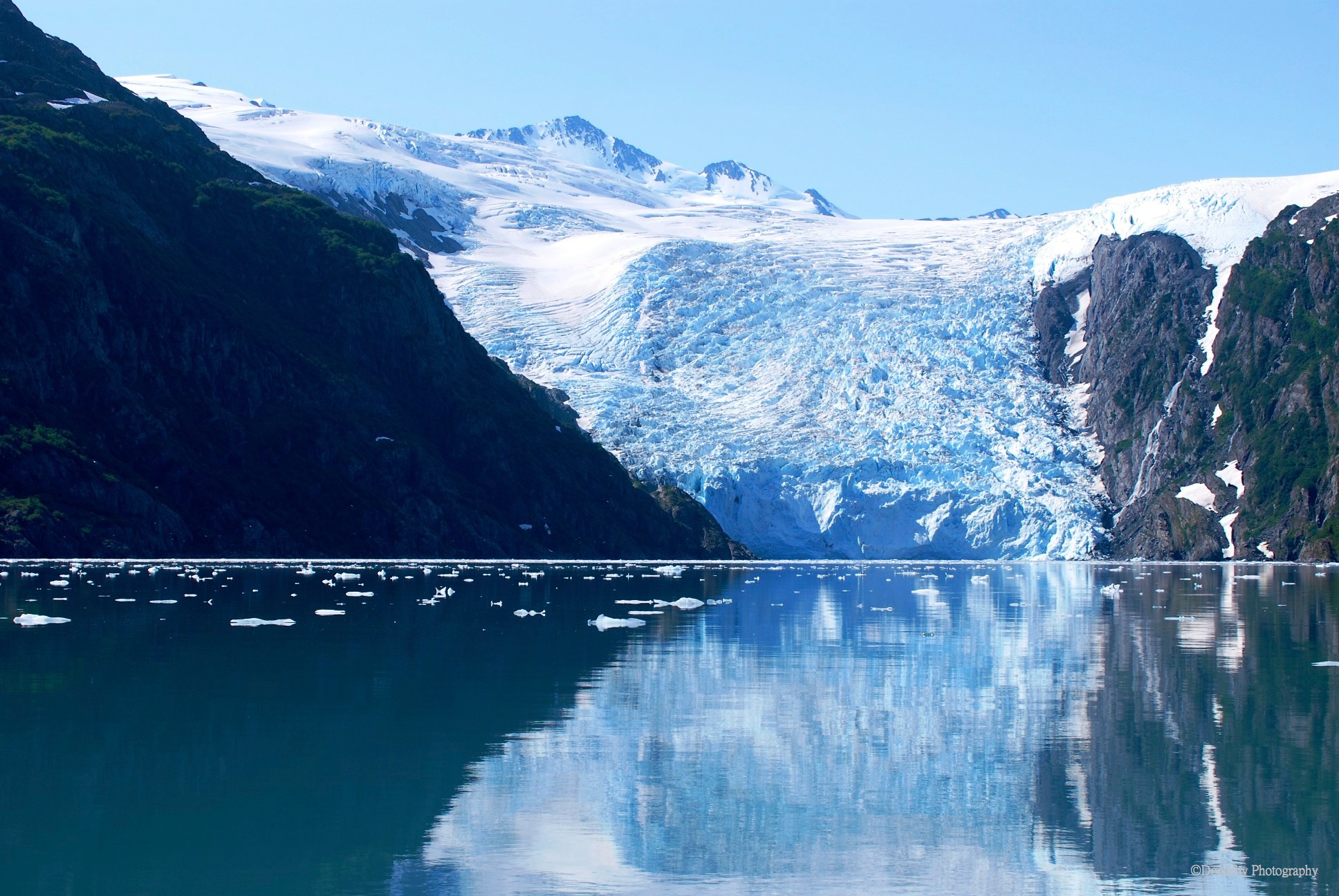
Tidewater glaciers are among the most dynamic forms of ice in nature. Like the Blackstone Glacier (pictured below), they flow from icefields, much as a mountain stream might originate as the outflow from an alpine lake. What makes tidewater glaciers so fascinating is that they don’t gradually turn to water as they descend down a mountain valley, warming and thawing with the descent.

Instead, tidewater glaciers terminate when they reach the sea. The ice continues to flow, pushing the face of the glacier forward. If the face of the glacier is large enough, the combination of forward movement and warmer air and water temperatures can result in spectacular calving events, with massive pieces of ice sloughing off into the sea.

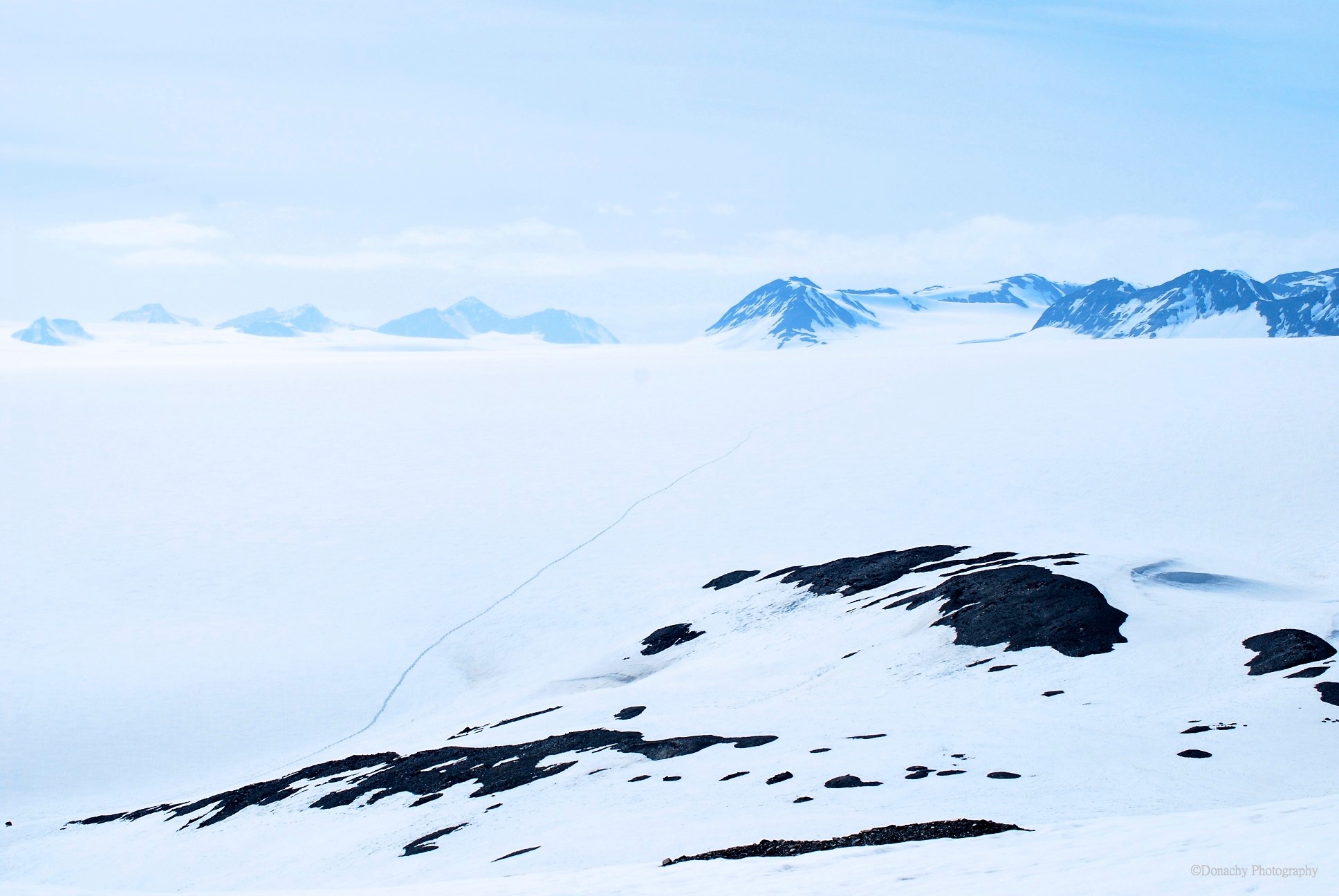
The Harding Ice Field, which gives birth to three dozen or more glaciers, stretches out like a vast, island-studed lake. 

As soon as the freshly calved ice hits the water, it become part of sea’s ecosystem. Harbor seals (above) and black-legged kittiwakes (members of the gull family, below) use the frozen islands to rest, feed and stage hunts. The seals also use the ice as nurseries.