Unknown's avatar

About Jack & Barbra Donachy

Writers, photographers, food lovers, anglers, travelers and students of poetry

White Chocolate Orange Bites

white chocolate orange bites n

Soft bite-sized cookies spiked with orange essence and loaded with white chocolate chunks… irresistible!

No matter the weather outside or the latitude where we reside, as soon as the calendar rolls over to March, I think Spring! The thermometer right now is a wicked reminder that it is not time to get the day pack out for hiking just yet. While I patiently wait for the mercury to rise, I decided to bring some spring flavors into the house. The sunny smiles in the room after eating all of these cookies warmed up our day.

Orange White Chocolate Bites: Makes about 40 cookies

Ingredients

  • 3 cups all-purpose flour
  • generous pinch salt
  • 1 tbsp baking powder
  • 1 1/4 cups unsalted butter, melted
  • 1 cup granulated sugar
  • 1 tbsp orange extract
  • 1 large egg
  • 2 tbsp whole milk
  • 2 tbsp Penzeys dried orange peel
  • 1/2 cup good quality white chocolate chips

Directions

  1. Preheat oven to 350 degrees F (175 C). Line a baking sheet with parchment paper. Set aside.
  2. Sift together flour, baking powder, and salt in a medium bowl. Set aside.
  3. In a large bowl mix together sugar, orange extract, egg, milk, and dried orange peel.
  4. Stir half of flour into sugar mixture. Mix well.
  5. Mix in other half of flour into cookie dough.
  6. Mix in chocolate chips.
  7. Drop tablespoons of dough about an inch apart onto prepared baking sheet. Flatten cookies slightly.
  8. Bake cookies for 10 minutes. They should be beginning to brown. Let baked cookies cool completely on wire rack before serving.

Double Cinnamon Biscotti

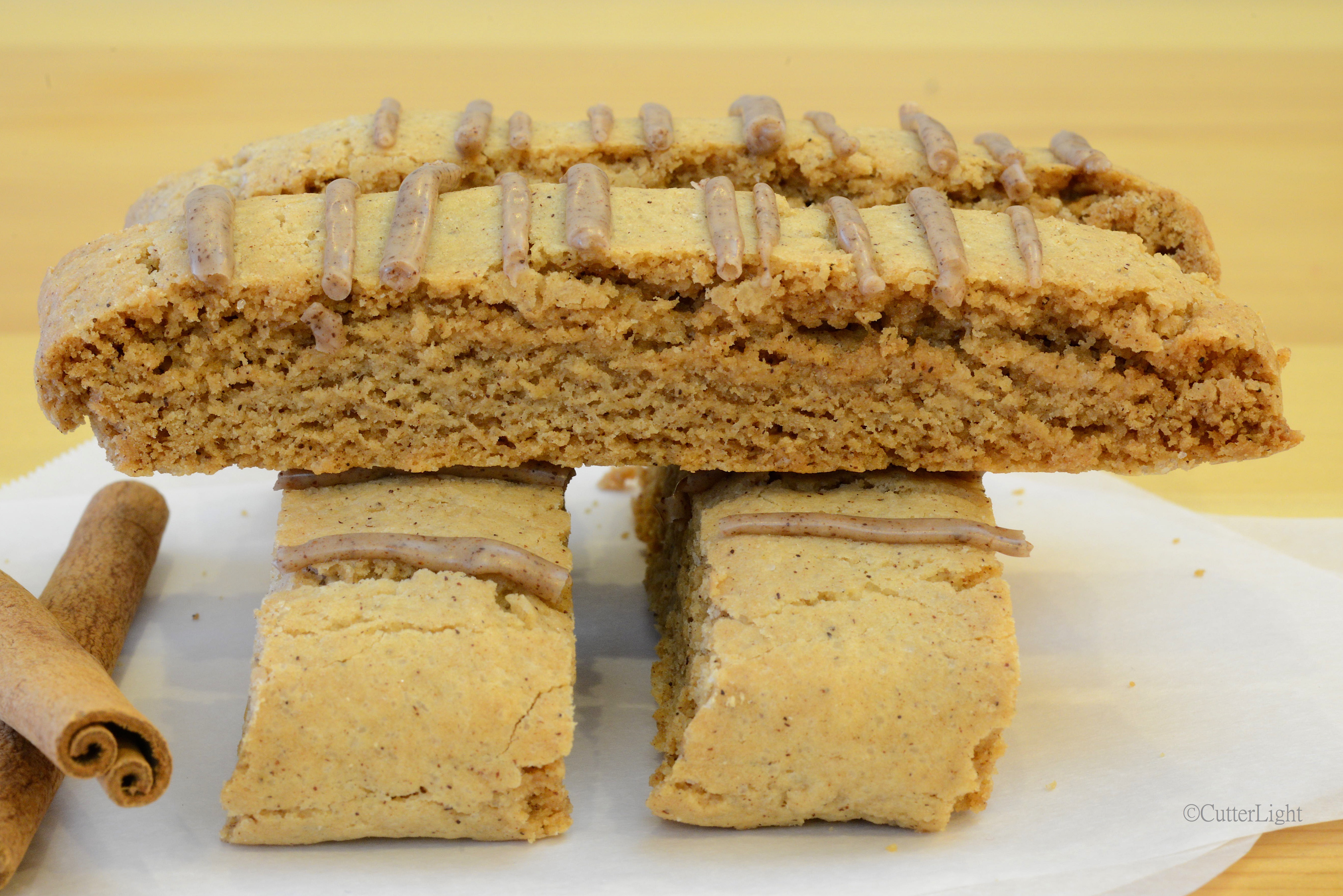
biscotti double cinnamon n

Cinnamon is magical. It should be included in your diet because of all its health benefits, right? Some say cinnamon may cut your risk of heart disease. Other research will tempt you with cinnamon’s high quantity of antioxidants. I say just enjoy the flavor of this spice and the way it adds a layer of sweetness without adding sugar. For me, cinnamon conjures sweet and savory memories, from warm Indian dishes created in our cozy kitchens around the world to sweet baked creations with hot cups of tea on cold days.

The latter memory inspired today’s cookie creation – double cinnamon biscotti. I generally lean toward soft cookies. Biscotti are the crunchy exception. Paired with a hot beverage, the speckles of cinnamon in the cookie and the sweet stripes of cinnamon icing atop the biscotti make for a winning combination.

Double Cinnamon Biscotti

Ingredients

  • 2 cups all purpose flour
  • 2 1/2 tsp ground cinnamon
  • 1 tsp baking powder
  • pinch salt
  • 2/3 cup granulated sugar
  • 3/4 cup unsalted butter, melted
  • 2 eggs
  • 1 tsp vanilla extract

Drizzle

  • 1/2 cup confectioners’ sugar
  • 1 tsp ground cinnamon
  • 1 tbsp whole milk

Directions

  1. Preheat oven to 325 degrees F (165 degrees C). Line a baking sheet with parchment paper. Set aside.
  2. Sift together flour, cinnamon, baking powder and salt in medium bowl.
  3. In a large bowl, stir together butter and sugar.
  4. Stir in eggs, one at a time.
  5. Mix in vanilla extract.
  6. Thoroughly mix in flour mixture into egg mixture, half at a time.
  7. Divide dough in half.
  8. Shape 1/2 of dough into a long log on baking sheet, about 1 1/2 inches wide and about 9 inches long.
  9. Repeat with other 1/2 of dough. Give logs space in between because dough will spread during baking.
  10. Bake biscotti for about 15 minutes.
  11. Remove from oven and cool for about 15 minutes.
  12. Cut logs into 1/2 slices with a serrated knife.
  13. Place sliced cookies back on baking sheet and bake for 15 additional minutes.
  14. Flip cookies to opposite side and bake for 15 additional minutes.
  15. Cool on wire racks.
  16. Make drizzle by mixing confectioners’ sugar, cinnamon and milk.
  17. Place drizzle in a zip top bag and snip off a tiny piece of bottom corner.
  18. Squeeze drizzle over cooled biscotti. Let drizzle set before serving.
  19. Store leftover cookies in airtight container.

Fire and Ice Needles: Dawn, Hustai National Park, Mongolia

ice needles at dawn n

Stalked a group of stag red deer

up a draw to the top of a rise 

where the sun broke fiery and cold

lighting feather grass and ice needles

suspended in the negative something air.

Along the ridge, winter-hard antlers

lit with sunlight

scattered into the dawn.

– Hustai National Park, Mongolia, 2014

Jack Donachy


Mongolia’s Impressive Red Deer

red deer stag pair n

Red deer stags (Cervus elaphus) in early morning light. Among the world’s largest deer, this species shares an extinct ancestor in common with North American elk: Megaloceros, the massive Irish elk. 

Historically, red deer ranged from the British Isles east through Mongolia and other parts of Asia and south into northern Africa. Until about two decades ago, their numbers in Mongolia were strong with some 130,000 individuals taking advantage of forest, steppe and mountain habitat. In recent years, however, poaching has decimated red deer herds in this country as their antlers command increasingly high prices as an ingredient in traditional medicines in China and elsewhere. Even National Football League players in America have been implicated in purchasing these medicines. Elk and red deer grow new antlers each year. When the antlers are growing, they are covered in soft tissue and are said to be “in velvet.” This is when the antlers are valuable.

Here’s the problem for the elk and deer. Some studies indicate there may actually be health benefits gained from using medicinal antler and regardless of the science, a lot of people believe they derive benefit from the antler. The trade is annually running over 1.5 billion U.S. dollars, and it is destroying populations of these magnificent animals. Although no recent population surveys have been conducted, it is believed that there are now fewer than 10,000 red deer in Mongolia.

red deer males bedded down n

On a recent trip to Mongolia’s Hustai National Park, we encountered a herd of approximately 100 mature male red deer. Separated by sex during the winter months, females were miles away in a different part of the park. These stags will drop their anglers in early spring.

Among deer, only Alces alces – called moose in North America and Eurasian elk in Europe and Asia, North American elk (wapiti), and sambar deer are larger. Adult male red deer attain weights between 550 – 770 pounds (250 – 345 kg). Some subspecies grow even larger. The extinct Irish elk, Megaloceros, which occupied much of the same range as modern-day red deer, was believed to have attained a weight of 1,500 pounds (700 kg) and had truly massive, moose-like antlers – perhaps contributing to its demise. Because of their value as a food and game species (these are the “harts” and “stags” of European hunting lore), red deer have been introduced to New Zealand, Australia, Chili and Argentina.

red deer males on alert n

We stalked these deer stooping and crawling for about half a mile (1 kilometer). Suddenly nearly all of them stood up – 100 animals including the ones outside the frame of this photo -, made nervous by an approaching rider on a horse.

red deer femals on snow n

Rutting season occurs in autumn. The rest of the year females and young form distinct groups away from the mature males.

OLYMPUS DIGITAL CAMERA

It’s not just poachers that prompt vigilance among red deer. This wolf track spotted near a herd of females and young was fresh.

red deer 3 males gathering scent n

Some scent on the air kept causing the largest of these three males to look back. 

red deer running over hill n

Dozens of stags stream over a break in the hillside. In a land where nomads and their herds have shared the landscape with wild animals for millennia, the countryside would seem empty without the red deer. As Mongolia’s human population continues to grow, it will become increasingly necessary that places such as Hustai National Park are protected if the deer are to continue to thrive.

Takhi – A Success Story in the Land of Chinggis Khan

Takhi w magpie full n

Magpie and takhi (Przewalski’s horse) – old friends reacquainted in a scene that has played out for many thousands of years but that was sadly interrupted in those decades during which the takhi were extinct in the wild. 

In 1967, somewhere on the arid steppe of Mongolia’s Western Gobi Dessert, the last small herd of wild takhi was seen. Two years later, only one horse remained. And then Equus przewalskii vanished completely from the wild. Although closely related to modern domestic horses, takhi were never tamed. This differentiates their status as “truly wild” from the ferrel mustangs of America which are descendants of domestic horses.

In their natural environment, wolves were their main predators, and the dry, harsh, cold conditions of the steppe would invariably claim victims each winter. But the main cause of the demise of the takhi was probably due to its being hunted for meat.

Takhi nursing winter n

Takhi form small family groups comprised of a lead stallion, two or three mares, and their offspring. These family groups loosely intermingle with other families as well as with bachelor stallions which often travel in pairs or groups of three. Stocky and with zebra-like manes, takhi are comparatively small, standing only about 48 – 56 inches tall at the shoulders. They have 66 chromosomes, two more than any other species of horse. 

By 1970, the only living specimens existed in a few zoos and private ranches. Extinct in the wild, it seemed only a matter of time till their official extinction from the planet would be announced.

Then something truly remarkable occurred. In a cooperative venture between the Zoological Society of London and Mongolian biologists, the horses were reintroduced to Mongolia’s Khustai (Hustai) National Park where they’ve been thriving even since.

takhi with red deer n

On a morning bright with ice needles in the air and a fresh dusting of snow on the ground, takhi and female red deer (Cervus elaphus) share a piece of rugged terrain in Mongolia’s Khustai National Park. 

takhi stallion pair n

In full winter coats, these wild takhi are as beautiful as they are tough.

We counted ourselves as lucky to have spent a few days in Khustai during some of the coldest stretches of winter. The deeply rutted dirt roads were quiet, wildlife was abundant, and the horses seemed only mildly curious regarding our presence.

takhi in summer field

Takhi can readily be viewed in summertime as well. We can’t say which season is more beautiful. There are wild horses in this world still. That is beautiful.

A Taste of Spring – Lemon Poppy Seed Drizzle Cake

Lemon Poppyseed Drizzle Cake n

Moist and not overly sweet, lemon poppy seed cake is a quick way to brighten up a cold winter day.

This afternoon, the sunshine poured through the living room window, filling our third floor apartment with warmth and the illusion that it wasn’t as cold as it actually is outside. But no mistake, we’re still deep in winter’s grip here in Ulaanbaatar. Today, the temperature soared to a chilly high of 17 degrees F – a bit warmer than it’s been the past several days. Snug inside our apartment, we fantasized about spring while we sat in the sunbeams enjoying warm pieces of moist lemon poppyseed cake with freshly brewed cups of tea.

Lemon Poppy Seed Drizzle Cake

Ingredients

  • 3 cups all-purpose flour
  • 1 tsp salt
  • 1 1/2 tsp baking powder
  • 2 tbsp poppy seeds
  • 2 1/4 cups granulated sugar
  • 1 tbsp lemon zest
  • 1 cup vegetable oil
  • 3 large eggs
  • 1 1/2 cups plain yogurt
  • 2 tsp almond extract
  • 1/2 cup lemon juice

Drizzle

  • 1/4 cup lemon juice
  • 3/4 cup powdered sugar

Directions

  1. Preheat oven to 350 degrees F (175 degrees C).
  2. Grease two regular-sized loaf pans.
  3. In a large mixing bowl, whisk together flour, salt, baking powder, poppy seeds, sugar, and lemon zest.
  4. Stir in oil, eggs, yogurt, almond extract, and lemon juice.
  5. Pour batter into prepared pans.
  6. Bake for 50 – 55 minutes, until a toothpick inserted into center of cake comes out clean.
  7. Mix together drizzle ingredients.
  8. Prick cake many times with tines of a fork while warm.
  9. Brush drizzle on top of cake allowing the drizzle to settle into the cake.

Off The Beaten Path – In Remote, Wild, Spectacular Mongolia!

Thanks to Lesley Carter for publishing this post on Bucket List Publications!

Off the Beaten Path – In Remote, Wild, Spectacular Mongolia!


Big, Beautiful Grizz Chillin’ at the Edge of an Alaskan Forest

Grizzley admiring nails n

We caught this Alaskan grizzly bear chillin’ on the edge of a forest on a cool, overcast morning in mid-summer. With nails like that, who wouldn’t lie around admiring them? (Six more photos.)

Grizzley looking straight on n

The previous day, I (yours truly, Jack Donachy) managed to drop and break “the big lens.” But this sleepy guy barely paid us any attention as we photographed him from the safety of our Chevy, so the 70-200 mm with a 1.4 teleconverter got us close enough. Hard to say how many cars had driven by this big, blonde-brown hulk without noticing that morning. We stayed with him – and he with us – for about half an hour.

Grizzly the Thinker n

He’d doze off for a bit, wake up, think about whether or not to get up (or maybe he was trying to remember where he’d left his car keys last night), give a little sigh and then drop off to sleep again. 

grizzly sleeping  a n

Grizzly looking to his right n

And then he’d wake and take a look around.

Grizzly picking up scent n

Eventually a scent on the air caught his attention…

Grizzly ambling off diorama n

And he ambled off. Almost looks like he’s posed in a diorama. The overcast morning light really made the colors pop.

Individual Apple Pies (You Don’t Have to Share)

individual apple pies n

All the pleasures of indulging in a whole pie without the downside of consuming a regular-sized pie – these individual apple pies feature sautéed Fuji apples in a brown-sugar-speckled crust topped with gooey caramel dulce de leche sauce.

We love desserts that could, in theory, be shared but are best enjoyed on your own. Click the links to see these delicious ways we’ve end meals with individual serving desserts: pecan persimmon upside down cake, anniversary crème brûlée, fall harvest cakes and, of course, molten lava chocolate cake.  Individual miniature desserts are especially enjoyable because you can savor the textures and flavors of the entire pie.

Individual Apple Pies

Ingredients

Crust

  • 2 1/2 cups all purpose flour
  • 1 tsp salt
  • 2 tbsp dark brown sugar
  • 1 cup frozen, unsalted butter
  • 14 tbsp ice cold water

Filling

  • 5 large Fuji apples, peeled, cored and chopped into 1/4 inch cubes (6mm)
  • 2 tbsp unsalted butter
  • 1 tsp ground cinnamon
  • 3 tbsp dark brown sugar

Directions

  1. Liberally grease a 12-muffin tin with butter. Set aside.
  2. Make dough. Whisk together flour, salt and dark brown sugar in a medium bowl.
  3. Using a cheese grater, grate frozen butter into flour mixture. Stir so that butter is evenly distributed in flour mixture.
  4. 1 tbsp at a time, mix ice water into flour mixture until dough comes together. Knead a few times on a floured surface. Form dough into a flattened disc. Wrap in plastic wrap and chill for at least 30 minutes.
  5. While dough is chilling, make apple filling.
  6. Melt butter over medium heat. Add apples, cinnamon and dark brown sugar.
  7. Sauté apple mixture for about 8 minutes. Apples should be firm but soft enough to pierce with a fork. Set aside to cool slightly.
  8. Place chilled dough on a lightly floured surface and roll it out to about 1/4 inch (6mm) thick.
  9. Cut circles of dough to fit muffin tin cups.
  10. Fill pies to the brim with apple mixture.
  11. Bake for 30 minutes in a 350 degree F (175 C) oven. Crusts should be golden brown when finished.
  12. Let pies cool for 10 minutes before removing them from the tin.
  13. Drizzle dulce de leche on top of pies just before serving.

Dulce de Leche Topping

Ingredients

  • 1 can sweetened condensed milk

Directions

  1. Pour 1 can sweetened condensed milk into top of double-boiler pan; cover. Place over boiling water.

  2. Cook over low heat, stirring occasionally, for 40 to 50 minutes, or until thick and light caramel-colored. Remove from heat. Beat until smooth.


Crows Ice Fishing for Caddis Larvae: Tuul River, Mongolia

carion crow flock tuul  n mountains n

Corvids – a group which includes crows, ravens, rooks, jays, magpies and nutcrackers – fascinate. On a frigid December afternoon, we found them ice-fishing for caddis larvae in Mongolia’s Tuul River in the heart of Ulaanbaatar. (Click any of the photos for a larger view.)

The most intelligent of all birds, and with a brain-to-body-mass ratio rivaling that of the great apes and cetaceans, crows and their allies often exhibit remarkable behavior. Members of this family have been observed using and to some degree engineering purpose-specific tools – the only nonhuman animal other than the great apes to do so. There’s little doubt that certain feeding behaviors adopted by crows have been learned by watching other birds and animals.

carrion crows wings n cadis n

Note the object in the beak of the crow on the left. It’s a caddis larva casing.

The Tuul River flows through Ulaanbaatar, Mongolia’s capital city. Despite urbanization, the river’s water quality remains high – good enough to support species of trout as well as sensitive aquatic insects such as mayflies, stoneflies and caddisflies – species which spend the early part of their lives as larvae on the bottoms of clean rivers and streams. The Tuul is fast-flowing. Consequently, despite weeks on end of sub-freezing temperatures, here and there pockets of water remain open over shallow, stony, silt-free bottom.

OLYMPUS DIGITAL CAMERA

We took a cue from watching the crows and began scanning the ice for caddis larvae casings. As our eyes tuned into the proper size and shape, the empty husks appeared everywhere. This casing, constructed of tiny sticks and pebbles, is about 1.5 inches long (3.8 cm) and belonged to a member of the Northern case maker caddisfly family. 

Perhaps the crows learned of the abundance of wintertime food in these areas of open water by watching dippers – a robin-sized bird that happily plunges into pools and riffles in all seasons in search of aquatic insects and small fish. In fact, on this day we saw a white-throated dipper submerge itself in one of the riffles where the crows were feeding and come up with a small fish.

carion crow w caddis n

Here a carrion crow (Corvus corone) has his prize – a caddis larva pried from its pebble and stick casing.

Not adapted to plunge into water, the crows were fishing from the edge of the ice – thus gaining access to water not overly deep, but deep enough to provide habitat for slow-moving caddis larvae. Resourceful birds, are crows.