Unknown's avatar

About Jack & Barbra Donachy

Writers, photographers, food lovers, anglers, travelers and students of poetry

Almost There, or… Who Does This? Hokkaido Bicycle Trek 2018

Made it to Haneda! Bicycles, trailer, gear & clothing. On to Chitose!

Planning a bike trek around Hokkaido, Japan has been quite a challenge. People travel abroad. We’ve traveled abroad. People go on fishing sojourns. We’ve gone on fishing sojourns. People undertake photography safaris. We’ve undertaken photo safaris. People bike trek. We’ve… ridden our bikes. The challenge has been that people don’t typically do all these things in one, long, self-guided camping trip. Nor do they normally wait until they’re in their 50’s to attempt their first foray into something like this. 

To prepare, we read books on bike trekking – from words of wisdom on ultra light traveling to advice from folks who tote along babies and dogs. We watched countless videos on how people pack and camp with their bikes. Along the way we feathered in fishing. And photography. And pack-rafting. And camp cooking. And backpacking. And bird watching. And then there was the fitness training schedule to help us get into shape for this adventure. With as many people in the world who have already pioneered all of these different adventures, no one seems to have attempted the catch-all combination of what we are hoping to embark on. 

During the planning phase, we practice-packed several times. Each time, we realized another layer of equipment had to be fine-tuned. Without bringing a pack mule or a SAG wagon, we weren’t going to be able to carry along everything that we wanted to. 

The pack raft was the first thing to go. Our rafts compact into fairly small bags, but they necessitate paddles and PFDs. The amount of space and additional weight all of that entails wasn’t going to work. A subsequent trial packing made it clear that our plan to backpack and camp in the back country of the Shiretoko Peninsula, a world heritage site, also required too much stuff – mainly the backpacks themselves. We still plan to explore a backpacking trip, but we’ll look into renting backpacks. 

The next activity to get a hard look was fishing. Hokkaido is reported to have good populations of trout and char and even some salmon fishing as well as opportunities to ply ocean beaches and rocky shorelines for a variety of species. While we considered getting into at least some fishing to be a non-negotiable, we desperately had to figure out how to skinny down our equipment to one rod tube and one waist pouch. The compromise we settled was sharing gear instead of bringing two of everything. Additionally, we modified our lone fly rod to double as a spinning rod. (If it works, we’ll tell you all about it.) In the end, we packed a fly reel, a spinning reel, an 8-weight rod, a tenkara rod, a few small boxes of flies and lures and a small assortment of leaders and tippet material.

The next nonnegotiable was photography gear. Last summer, we limped through with substitute equipment and felt handicapped the entire summer. When we returned home and finally got our photos up on the computer screen for editing, they left us disappointed with the quality. So, our preparation for this summer involved numerous discussions and field tests regarding what gear would best capture the sights and experiences of our journey. What made the cut may seem like a lot to some, but we feel confident that we’ve streamlined our gear without sacrificing too much versatility.

The guiding question in all of this was, What kind of experiences do we most want to have? And the not-so-surprising lesson has been that if the trip is to be about going and doing rather than simply going and seeing, a certain amount of specialty gear is necessary. We know, for example, that we can enjoy first-rate food experiences while keeping our budget reasonably low by visiting markets and cooking for ourselves. But this strategy necessitates carrying with us cookware up to the task. Even birding pretty much requires that we take along a decent pair of compact binoculars and a field guide (which Jack went through with a box cutter and pared down to the bare essentials).

With our gear as fine-tuned as possible, we flew to Anchorage where Paramount bike shop took over the bike-packing – otherwise known as breaking down the bikes and packing them into big cardboard boxes. Meanwhile, we filled two much smaller cardboard moving boxes with the rest of our gear – boxes we’ll discard once we arrive in Hokkaido. And so, ready or not we’ve begun this summer’s adventure with three bicycle boxes and two moving boxes colorfully decorated with neon orange duck tape, packed to withstand the long journey down the West Coast and across the Pacific Ocean. 

At the Anchorage airport, a helpful Alaska Airlines ticket agent was ready to assist us with the puzzle of moving our over-sized bike boxes through the maze of four planes, four airports, two languages and two countries. We were nervous about our baggage surviving the journey or getting lost along the way. As unconventional as it is to travel with ducked-taped cardboard boxes, we are happy we did. At our San Francisco stop, we looked out the plane window and saw our boxes being loaded into the plane. And thanks to the day-glow orange tape, we quickly spotted our luggage as it hit the conveyor belt in Tokyo. Hi-vis tape was a great idea! By the way Big Kudos go out to Terrie at the Alaska Airlines desk-for-troubled-travelers. She was able to figure out how to check our bags all the way to Hokkaido from Anchorage. Amazingly, the cost for all of our baggage was a very-reasonable $200! (Go Club 49!)

As the nerve-wracking airplane travel segment of our journey comes to a happy conclusion, we can now focus on the next leg of the adventure: putting our bikes back together, finding stove fuel and purchasing a few groceries. And then we will answer the question that has been in the backs of our minds (and the pits of our stomachs) ever since we conceived this trip: Will we be able to balance, steer and propel these vehicles??? Stay tuned!

Planes, bikes, ferries & feet – Ready for 85 Days in Hokkaido, Japan

Nowhere in particular to get to… and all summer to get there.

May 19: We’d saved a couple fingers of bourbon for this, our final evening in Chignik Lake. Measured out in a pair of our favorite glasses, the mellow amber-brown glow of the whisky suited a similar mellowness that had settled over us as we looked around a clean, tidy home that only a few days before had been an explosion of camping gear, bikes, technical clothing, camera gear, panniers and check lists. Our bicycles and camping gear had already been flown to Anchorage where they were waiting for us at Lake Clark Air. Scheduled to fly out of Chignik Lake the following day, ahead of us was a five-day scramble in the big city of Anchorage in which to reconnect with friends, make last-minute adjustments to our bikes and have them boxed for air travel, and to pick up necessities ranging from fly-fishing leaders to all-purpose hiking/biking/street/camp shoes as well as a couple of dozen additional odds and ends. Oh, and to get one of the three store-bought haircuts we treat ourselves to each year.

And then on Saturday, May 26, we’ll board Alaska Air bound for San Francisco where we’ll switch to Japan Airlines into Chitose, Hokkaido. If all goes according to plan, we’ll spend the next 85 days exploring Hokkaido, Japan by bike.

Why Hokkaido? I suppose it comes down to the fact that both of us have wanted to do a bicycle trek ever since we were kids but never did. Lacking experience in this sort of thing, it made sense to go for it in a country known for being safe and for having a bicycle friendly culture. Factor in campgrounds that typically range in price from free to $5 or $6 dollars, a cool, comfortable summer climate, beautifully diverse landscapes featuring smoking volcanoes, snow-capped mountains, bird-rich marshes and forests, fields of flowers, six national parks, seaside villages and the distinct possibility that we just might get into some decent trout and char fishing.  Japan’s northernmost island seemed to us to be the best possible place to make this leap into a new way of travel.

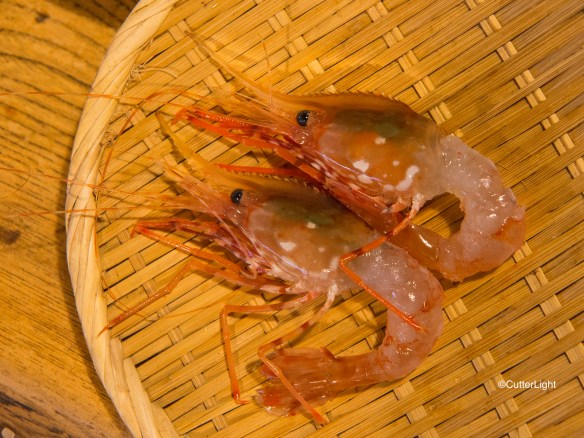
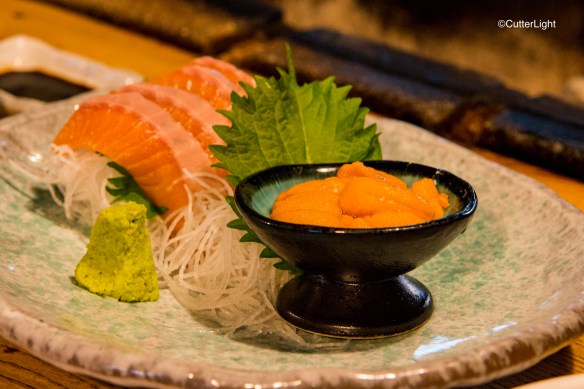
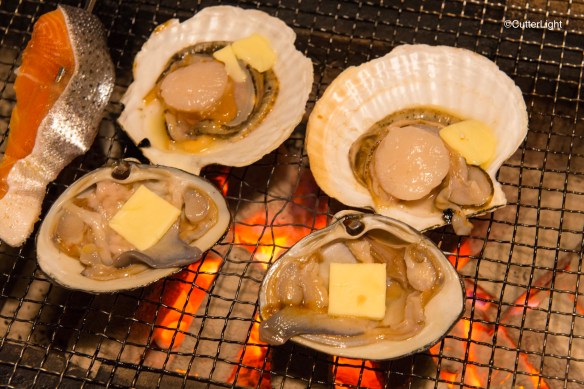
Hokkaido’s cuisine surely ranks among the world’s finest. Regional seafood specialties include scallops, oysters, several species of crab, shrimp, salmon, squid and succulent, softball-sized sea urchins. As Japan’s agricultural capital, Hokkaido is also known for its fresh fruits and vegetables as well as local beef and pork, and people rave about the rich ice-cream. There may even be opportunities to sample wild game. Soba – those tasty buckwheat noodles that are especially delicious served cold – is made from local grain, and it seems that virtually every city, town and village has its own unique twist on ramen. Visions of donburi – bowls of rice piled high with a variety of colorful, fresh seafood – have been dancing in our heads for months. If that’s not enough, micro-brews have caught on, there’s a nascent wine industry and even a couple of world-class single malt distilleries. Every yen we don’t spend on campground fees is another yen we’ll be able to spend eating our way around the island. 

So stay tuned. We intend to publish throughout the summer – food experiences that inspire, new birds, exotic species of trout of char, encounters with wildlife and the challenges and successes we’re bound to encounter pedaling our way along sea coasts and through mountain villages. But the thing we’re most looking forward to is meeting new people and immersing ourselves in a new culture. I’ve been practicing my Japanese, to be sure. But if experience is any guide, connections trump vocabulary. We can’t wait to share our loves of fly-fishing, photography, birds, food, camping and hiking with friends we haven’t yet met, half-a-world away, who find similar joy and fascination in such things. Hopefully our journeys will bring us into conversations with soba masters, commercial fishermen, trout chasers, farmers, ranchers, biologists and people who call Hokkaido home and love living there.

Wherever the coming summer finds you, we wish for you days filled with pleasant adventures, good food and deepened connections old and new.

New Homes Available! Swallow Nesting Boxes at Chignik Lake

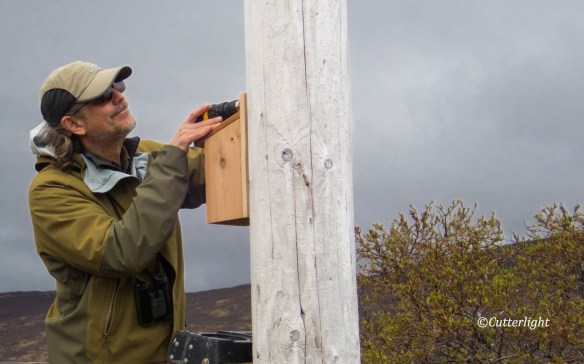
Construction Complete! Lovely one-room summer homes with lake and mountain views available now! Perfect for rearing a brood of chicks.

Reading John J. Audubon’s accounts of his journeys throughout the United States in search of every species of bird for his paintings, I’m always charmed by his portraits of communities and their abundant bird nesting boxes.

“Almost every Country tavern has a Martin box on the upper part of its signboard;” he wrote of 1840’s America, “and I have observed that the handsomer the box, the better does the inn generally prove to be.”

The prevalence of hollow gourds fashioned with holes and used as nesting sites in Native American villages is also well documented. Apparently the symbiotic relationship between swallows and humans goes back a long time and cuts across cultures. Virtually everyone seems to love these harbingers of spring, their artistic mastery of the air, and the serious damage they do to mosquito populations and to other annoying insects.

And so it is here in Chignik Lake. Upon moving here we were struck by the numerous swallow nesting boxes situated on posts, nailed to utility poles and affixed to buildings throughout the village. Here we have mostly Tree Swallows along with occasional Violet-green Swallows. In the absence of invasive species such as House Sparrows and Starlings – which take over nesting boxes -, and with a lake featuring copious hatches of midges and other insects, this is a perfect place for swallows to rear a brood of chicks. Magpies can be a scourge, so it’s important that nesting boxes not feature any sort of perch to allow them to access the eggs and chicks, but other than our Merlins, there are essentially no other serious threats to the swallows of Chignik Lake.

The major factor limiting the number of swallows Chignik Lake can accommodate is… accommodations. So this spring we did our part to help these birds out by putting up four new cedar nesting boxes. The first Tree Swallows showed up sometime around May 9, and the early birds have already begun choosing nesting sites. Our boxes may have gone up a bit late for this year’s birds, but after they’ve weathered for a year and the swallows have had an opportunity to check them out, we’re hopeful they’ll attract these welcome summer visitors in future years.

Location, location, location. High enough up, away from occupied buildings and busy roads, near a lake chock full of bugs, and a pesticide & herbicide-free environment. Heck, if we were Tree Swallows, we’d spend our summers here!

If you’d like to put up swallow nesting boxes in your area:

  • Place the boxes high enough off the ground to avoid predators
  • Although swallows like to feed and nest near water, position the boxes well back from the shore. Predators cruise shorelines.
  • Although swallows will at times happily nest in apartment-style boxes (a friend in Chignik Lake has a row of about a dozen boxes that fill up with residents every summer) it is generally recommended that for Tree Swallows and Violet-greens, boxes be placed at least 30 feet apart.
  • Do Not attach a roosting peg or ledge anywhere on the box. Swallows don’t need such a perch, but avian predators will use it to to prey on eggs and chicks.
  • Swallows prefer nesting boxes in open areas, at least 30 feet or so away from buildings. This is by no means a hard-and-fast rule, and don’t let a lack of open space prevent you from putting up nesting boxes. Boxes placed near shrubs and trees are likely to attract wrens, sparrows and other birds rather than swallows.
  • Do what you can to keep European Starlings and House Sparrows out of the boxes. These invasive species have had a negative impact on a number of native bird species. A hole diameter of 1⅛” – 1⅜” is said to be large enough for swallows but will keep starlings and sparrows out.
  • Keep cats indoors. This is a good general rule to protect wildlife, but is especially important if your aim is to attract birds. You don’t want to invite birds only to have them and their chicks fall prey to a pet.

Powering Through with Coconut Chocolate Chip Tahini Fudge

Fueling up with fudge. These tasty snacks helped us through today’s 3½ hour bicycle training ride. Sixteen days till we arrive in Hokkaido!

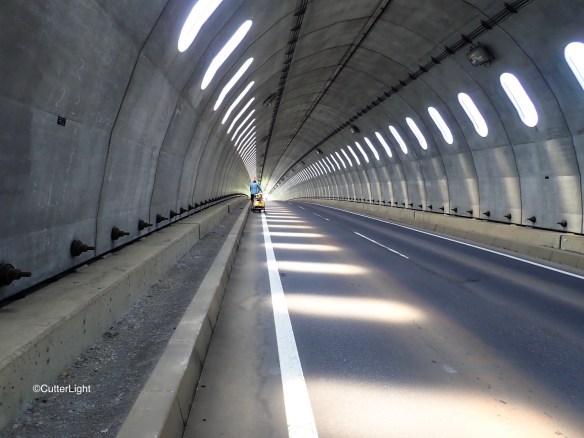
We are beginning to wrap up the preparation for our 3-month bicycle adventure in Hokkaido, Japan. Our home looks like an outdoor store that has barely survived a tornado attack. Bicycles with halfway-packed panniers are leaned up against walls, an assortment of bags are strewn about having either passed or failed packing tests, and there are a number of items that have not quite yet found a home in our portable summer transportation scheme. If anyone were to peek into on our home, they would surely worry for us. Will we really be ready to start sending our gear on this Wednesday’s flight out of Chignik Lake? In reality, this light-at-the-end-of-the-tunnel mess is absolutely normal for us right before everything comes together.

Along with the flurry of final packing, we still are relentlessly adhering to our fitness-training schedule. We both have a lot of experience with preparing for running events, but a bicycle adventure is new. It turns out that prepping is not as simple as setting up a beginner, intermediate or advanced program as we would for a running event. We’ve had to take into account that we need enough “seat time” to avoid sore rear ends. We also factored in our ages and an overall goal that emphasizes endurance over speed. Our Hokkaido schedule will be very flexible. Free from the pressure of reservations (we’ll be tent camping throughout the summer), we’ll be able to ride very short days if we want to stay in a particular location – but we also want to be in shape to put some serious mileage behind us when we want to get somewhere.

After doing quite a bit of research, we settled on a training program called “Sofa to 50k.” With an 8-week schedule culminating today with a 3½ ride, this program is set up similarly to a marathon running schedule. Yikes! Did I say 3½ hours? OK, saddle up!

We usually start our Sundays – the day of our long rides – with steel cut oatmeal. We like to add homemade yogurt and homemade jam for extra flavor and calories. As the long ride days grew longer, we’ve needed to add additional mid-ride calories. Trail mix, nuts, or Figgy-pops have been our go-to snacks. But with a 3½ hour ride looming, I wanted some kind of a nutrition-packed snack that we would look forward to. We couldn’t be more sick of Figgy-pops! With half a jar of tahini left over from a previous recipe, I had an idea for a fudge-like confection packed with protein and energy. After sharing an entire batch today on our longest ride, we both agreed these little treats were fantastic! One tip: You’ll want to keep these in the fridge till you’re ready to eat them. They get sticky at room temperature.

Coconut Chocolate Chip Tahini Fudge

Ingredients

  • ½ cup tahini
  • ½ cup unsweetened coconut flakes
  • ¼ cup honey
  • 2 tbsp coconut oil, melted
  • ½ tsp cinnamon
  • ½ tsp vanilla paste (or extract)
  • ¼ cup semi sweet chocolate chips, chopped
  • pinch salt

Directions

  1. Mix all ingredients thoroughly.
  2. Place tablespoon-sized scoops in a silicon ice cube tray.
  3. Freeze for at least 30 minutes.
  4. Pop frozen confections out of tray and store in an airtight container in the refrigerator.

Whale Bones and Crosses, the Cemetery at Point Hope

Whale Bones & Crosses, Point Hope, Alaska

Perhaps its most iconic landmark, the cemetery at Point Hope, Alaska, is enclosed in Bowhead Whale ribs positioned as one would a picket fence. The above image was made at 2:25 PM, November 7. At that time of year, there are slightly less than six hours between sunrise and sunset. By early December, the sun sinks completely below the horizon and will not show itself again for 32 days.

In 1890, three years after a commercial whaling base called Jabbertown had been established near the village, the first Christian missionary arrived in Point Hope. A doctor by profession, it is reported that John Driggs performed “heroic” medical work, but his attempts at converting the village’s inhabitants to his religious beliefs were unsuccessful. In fact, the Episcopal Church that sponsored him reported that Driggs had become “eccentric and absent” in his duties to proselytize. Nonetheless, by 1910 Christianity had become predominant throughout Arctic Alaska. By this point the new religion had been spread from village to village by converts among the Inupiat themselves.*

*See: The Inupiat and the christianization of Arctic Alaska, Ernest S. Burch, Jr., Etudes/Inuit/Studies,1994

Full Moon over Frozen Lake: Chignik Lake, Alaska

Full Moon over Frozen Lake – Chignik Lake,6:56 PM January 30, 2018

Twilight, that sliver of light between the day’s last direct sunlight and darkness, is often the prettiest light of the day. I was happy that Fred has his lights on. This shot was taken from the beach in front of our house. (Snowing here this morning, May 6.)

Point Hope Red, Orange, Blue 2011

Chukchi Sea Red, Orange Blue 2011

This November 19, 2011 sunset looking out over a Chukchi Sea nearly frozen solid reminded us of a Mark Rothko painting. The quality of light in the far north is often breathtaking.

Looking for Love

His colors will never be brighter than they are right now, nor his call more cheerful. Pine Grosbeaks tend to be irregular in their presence, but for the past two years in Chignik Lake they’ve been regular residents. For a look at a nearby female, which is very differently colored, see below. (Note the midges flying around to the right in the above photo. With big insect hatches coming off the lake and river, our swallows should be here any day!) 

Most days in the village the optimistic Peee-Peeet! of Pine Grosbeaks can be heard as they fly overhead or perch atop the tallest spruce trees. Always striking, the males are particularly colorful during springtime. Like their crossbill cousins, Pine Grosbeaks can be remarkably unwary. Move slowly around them, sit quietly, and they may forage on the ground practically at your feet. I’ve even had one perch on my head!

Female Pine Grosbeaks feature a rich olive-gold on their head, upper back, rump and often on their upper breast. This time of year, the leaf buds of deciduous trees figure heavily in Pine Grosbeaks’ diets. During wintertime they can be attracted to feeders featuring black oil sunflower seeds, suet or (I’m guessing) peanuts. They also love small fruit and during warmer months will include insects in their diet.

The “gros” of grosbeak is from the French gros, which means large. This is a species we’ll be looking for this summer in Hokkaido, Japan – part of their ranged across the Northern Hemisphere.

Chignik Lake Bald Eagle

Waiting for Salmon, Chignik Lake, Alaska

May 1, Tuesday Morning, frost: Eagles are once again daily encounters as they take up familiar roosts and join the village in watching for salmon. A few fish have trickled in, but usually it’s June before the run really gets going. A couple of nice char have been caught. Catkins on the willows, leaf buds everywhere ready to burst. A small flock of Pine Grosbeaks was in the village yesterday, the males as brilliant pinkish-red as they’ll ever be.

Point Hope Aerial, 2013

Point Hope, Alaska, February 22, 2013

One of the great privileges in our life was to live for three years in the Inupiat village of Point Hope, Alaska. Lying 200 miles north of the Arctic Circle and still deeply connected to a whaling-based subsistence culture, it is said that the Tikigaq Peninsula has been inhabited for some 9,000 years, making it one of the oldest continuously inhabited sites in North America. It is a place of aqpik berries and caribou, snowy owls and arctic foxes, fierce winds and frozen seas, a full month of darkness and the most magically soft pink, gold and orange morning and evening light we’ve ever seen. One day in early fall we hiked out to the end of the peninsula, stood on the beach, and watched in wonder as thousands upon thousands of murres, puffins, auklets and other seabirds streamed by on their way to the open ocean to spend the winter, their nesting season complete – surely one of the planet’s greatest migratory events. We endured a mid-winter three-day blow of hurricane force winds that forced most of the village to huddle together in the school which had its own generating system and could offer warm shelter and hot meals. Polar bears sauntered through the village right past our house and there were nights when the Northern lights danced above our heads in electric greens, pinks, purples and reds.  And it was a place of friends, some of the toughest, most generous people we’ve ever known. Tikiġaġmiut – the people of this peninsula in the Chukchi sea.