Ink and Light: Silver on Ice and lines from John Masefield

Silver on Ice: Onboard Gillie, Gulf of Alaska outside Resurrection Bay

Also known as Silver Salmon, tens of thousands to hundreds of thousands of Coho Salmon return to Resurrection Bay near Seward, Alaska each summer where they constitute the greatest Coho Salmon sport fishery in the world. 

I must go down to the sea again, for the call of the running tide
Is a wild call and a clear call that may not be denied;
And all I ask is a windy day with the white clouds flying,
And the flung spray and the blown spume, and the sea-gulls crying.
John Masefield – Sea Fever, 1912

John Masefield (1878-1967) went to sea at the age of 16. About a year later he deserted ship, initially thereafter living as a vagrant and taking odd jobs, but the awe he experienced on the open sea never left him. Masefield was England’s Poet Laureate from 1930-1967.

Ink and Light: Snow Birds and Basho

Snow Birds: House Sparrows, Ulaanbaatar, Mongolia

Come!
Let’s go snow-viewing
till we’re buried!
Matsuo Basho, 1644 – 1694

House Sparrow males and females are dimorphic: a female is center in this photo, accompanied by three males. This species has adapted so well to life with people, they’ve become nearly ubiquitous in places of human habitation throughout the world – and nearly absent in more natural environments.

Basho suffered from severe bouts of depression, occasionally becoming recluse for long periods of time. A solitary nature took him on a number of journeys, alone, along routes that were often well off the beaten path. The Edo Five Routes which he followed on one of his earliest journeys were considered to be among Japan’s most dangerous roads; When he first embarked on this trek, he expected to be killed by thieves or to simply die along the way. Widely regarded as the world’s finest master of hokku (haiku), his poetic travel log Oku no Hosomichi (The Narrow Road to the Interior) is considered to be his finest work. 

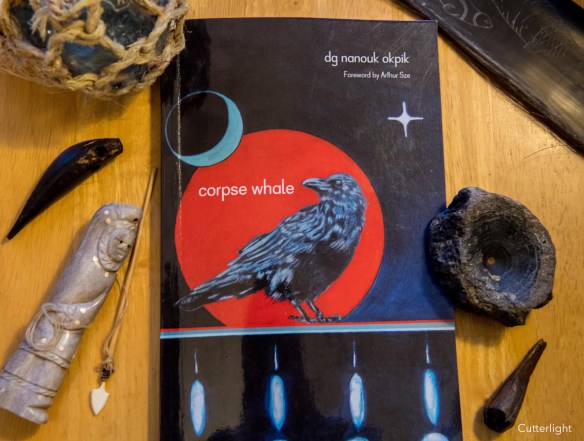
dg nanouk okpik’s Corpse Whale – Sifting through Myth and Time in the Far North

corpse-whale-n

Reading these poems is reminiscent of carefully digging through an archeological site located in Arctic permafrost as fossils, bones, carvings, memories and spirits emerge.

While looking for a few words to accompany a photo of umiaks (seal skin whaling boats) framed in Northern Lights I’d made a few years ago, I came across these lines from dg nanouk okpik’s poem “Tulunigraq: Something Like a Raven:”

screen-shot-2017-03-03-at-11-50-05-am

Okpik arranges her images across the page in a manner that forces the reader to go slowly, to breathe slowly, to see, and to hear, and as Barbra and I read, we felt ourselves being taken back – to Alaska’s North Slope, to the village of Point Hope and to other places we’d been in the far north, and then further back, to places we’ve never been – to old Tikigaq, to villages and settings scattered across Alaska and Greenland and beyond, to a time, indeed, “before iron and oil.”

Okpik’s writing is sure and precise, at times reminiscent of carefully sifting through an archeological dig, creating anticipation for what might be found and reverence for what is found. The place she invites the reader into is one of myth-making, spirituality, subsistence hunting and gathering, veneration of elders and ancestors and an intimacy with sinew and bone and cold. The landscape is of ice and sea, of magma cooling and the vast sweep of the tundra. Threaded through this are spirits and caribou, whales and ground squirrels, edible plants and seal oil lamps, Eucharist wafers and hooligan jigs. Okpik has given us poems that take us to places and to times few of us have experienced or will experience. The journey is mesmerizing.

Wildlife Wednesday: Black-capped Chickadees!

barbra-feed-chickadee-dec-2016-n

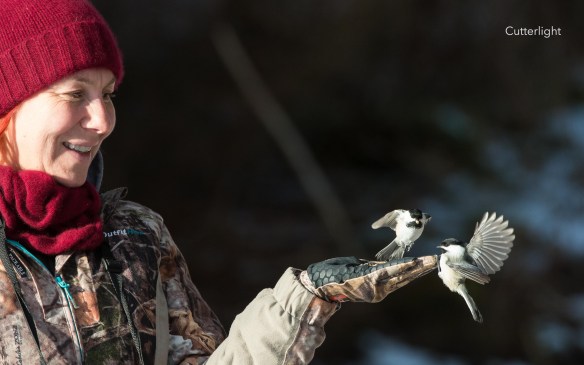
Gregarious, full of curiosity and brimming with personality, Black-capped Chickadees are often happy to take seeds right from a friendly hand. Weighing only about 10 grams (less than half an ounce) their little claws are nonetheless quite strong!

Many a hunter sitting quietly in a northern woods while waiting for a White-tailed Deer or Wild Turkey to come by has experienced a chickadee approaching ever nearer before boldly perching right on the rifle barrel – or even on the hunter’s arm or cap. Such an event feels like a stamp of imprimatur from Mother Nature herself.

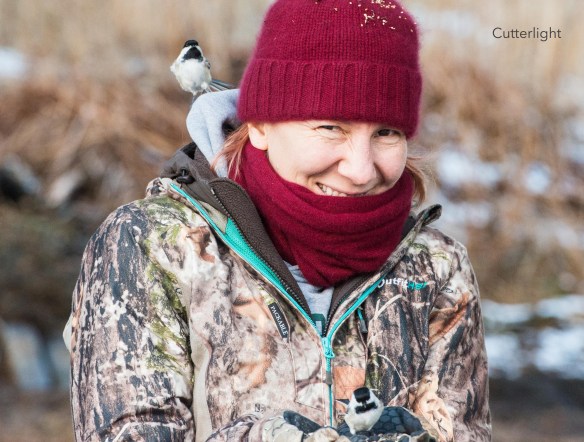
Last fall, when we hung bird feeders at the White Spruce Grove a little over half-a-mile from our home and began putting out seeds for Chignik Lake’s birds, within just a few days we noticed something uncanny. As soon as we hit the trail to the feeders, chickadees would descend upon us, fluttering and chattering with a familiarity that suggested that they somehow knew us. And each day as we came within view of the spruce trees themselves, a dozen or so chickadees would erupt in excited calls, flitting down from the boughs as though to greet us. There seemed to be no doubt that these little birds recognized us, Barbra in her red hat and scarf, me in my black watch cap, both of us in camouflage jackets. That sent us to the internet to do some research.
barbra-chickadee-shoulder-dec-2016-n

As it turns out, Black-capped chickadees are remarkably intelligent little beings, in possession of 13 different, complex vocalizations as well as memories that allow them to recall the precise location of food they’ve cached for up to several weeks. Regarding their vocalizations, not only do they warn each other with rapid dee-dee-dees, it has been shown that these calls vary according to the danger at hand, with their longest and most insistent alarms reserved for Pygmy Owls, a predator that poses an especial threat to chickadees.

Another, happier call among our local chickadees (it seemed to us) appeared to go something like, “Here come Jack and Barbra with more seeds!” While the various sparrows hung back demurely, deep in the cover of the spruce trees, the chickadees would land on our camera lens and flap around our heads.

“I once had a sparrow alight upon my shoulder for a moment, while I was hoeing in a village garden, and I felt that I was more distinguished by that circumstance than I should have been by any epaulet I could have worn.”
Henry David Thoreau in Walden

We wondered if we could get these bold, inquisitive birds to take seeds from our hands – and whether or not it would be ethical to do so.
chickadee-broke-bill-jan-2017-n

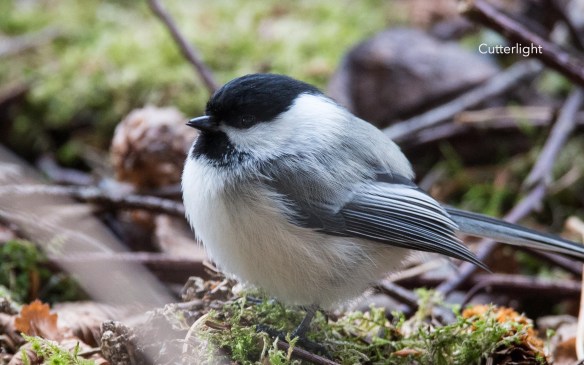
One of the advantages of feeding birds is that it provides opportunities to closely study individuals. Early last fall, we noticed that this chubby-looking fellow had broken off the tip of his upper beak. We wondered if this would adversely affect his ability to make it through the winter. Happily, it hasn’t. We still see him, and he still looks like he’s not missing any meals.

There’s no doubt that some wild animals should not be fed. Most North Americans are familiar with the cautionary proverb, A fed bear is a dead bear. That’s because bears that learn to associate humans with food become dangerous, destructive nuisances. But chickadees? After doing our due diligence in research and considering the welfare of the birds from a variety of perspectives, we felt comfortable taking our bird feeding to the next level.

Getting the birds to come to our hands proved to be fairly easy. One morning, we temporarily took down their favorite feeder, stood near the tree with outstretched arms and seeds in our hands… and waited. After a number of feints and false starts, one particularly brave bird took the plunge and was rewarded with a nice, fat sunflower seed. After that, it was one bird after another.

jack-chickadee-head-dec-2016-n

For the next few days, hand feeding our feathered friends was the highlight of the day. During those few days, we learned quite a lot. In addition to their many and varied vocalizations, Black-capped Chickadees establish pecking order by silent bill-gaping – an aggressive, open-mouthed gesture that is enough to cow a rival bird into waiting its turn or leaving the immediate feeding area altogether. There also seemed to be quite a range of distinctive personalities, with some birds readily and repeatedly feeding from our hands – and remaining long enough to carefully sort through the offerings for the choicest seeds -, while other birds hung back or landed only briefly.

The National Audubon Society encourages people to feed wild birds. Habitat is shrinking, and with that loss food sources can be scarce. Place your feeders in areas where birds have easy, quick access to the safety of shrubbery and trees, keep cats indoors, and to prevent the spread of disease among birds, occasionally clean the feeders. Once you start, keep the feeders full so that birds that have come to expect a food source aren’t suddenly left high and dry during inclement weather. But be warned: you might discover that the view out your window becomes more interesting than whatever’s on TV!

Ink and Light: “Point Hope” – The Aurora Borealis & Jack London

x-point-hope-copy-n

Point Hope: Point Hope, Alaska

Solar winds disrupting Earth’s magnetic field cause the Aurora Borealis. They are often most spectacular on finger-numbingly cold nights in the depths of winter.

Point Hope is an Inupiaq Eskimo village of about 750 inhabitants located 200 miles above the Arctic Circle on Alaska’s North Slope. Originally known as Tikigaq (index finger for the slender peninsula that once extended into the Chukchi Sea before erosion took it away), the area is one of the oldest continuously inhabited places in North America. Subsistence hunting for caribou and Bowhead Whales continues to be an important part of the culture. With no roads existing beyond the village, the local airport (lit up in the above photo) is an important lifeline to and from the outside world.

…the aurora borealis flaming coldly overhead,
…the stars leaping in the frost dance,
…the land numb and frozen under its pall of snow…
Jack London – from The Call of the Wild, 1903

  – Jack London (1876-1916) was one of the first authors to become wealthy writing fiction. Mostly self-educated, after stints as a hobo, a sailor, and 30 days in the Erie County Penitentiary in the state of New York for vagrancy, he made his way to California where he attended high school and began writing in earnest.

Ink & Light: “At First Sight” – Love and Lines from Richard Brautigan

x-at-first-sight-copy-n

At First Sight: Sandhill Cranes, Northern British Columbia

Sandhill Cranes choose partners based on graceful mating dances and remain together for life.

…and our graves will be like two lovers washing
their clothes together
In a laundromat
If you will bring the soap
I will bring the bleach.
Richard Brautigan (from Romeo and Juliet, 1970)

– Raised in abject poverty, Richard Brautigan (1935-1984) was struggling to gain a foothold in San Francisco’s literary scene when, in 1967, he published Trout Fishing in America. The counter-culture novel catapulted him to international fame. A year later he solidified his reputation with In Watermelon Sugar. 

Ink and Light: “The meanest flower that blows…”

x-feather-fan-n

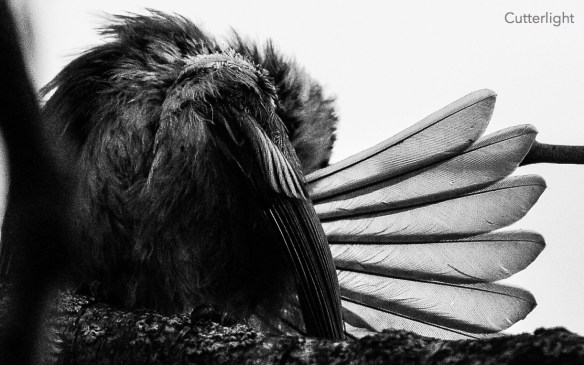
Feather Fan: Junco

To me the meanest flower that blows can give
Thoughts that do often lie too deep for tears.
William Wordsworth – Intimations of Immortality, 1807

Along with Samuel Coleridge, Wordsworth (1770-1850) is credited with founding English Literature’s Romantic Age. He was the country’s Poet Laureate from 1843 until his death.

“Dry and Sunny, a Break from Winter Weather” – OP Assignment #4

dunes big with human n

It doesn’t get much drier and sunnier than Mongolia’s Gobi Desert. Above, Khongoryn Els, the famed “Singing Dunes,” stretch across the landscape. See nine additional photos from our October 2014 trip below.

OLYMPUS DIGITAL CAMERA

As in any desert, no resource is more precious than water.

gazelle galloping kicking up dirt n

Well adapted for this parched climate, over a million Mongolian Gazelle flourish in arid steppe grasslands which include portions of the Gobi. Mongolia’s grasslands are considered to be one of the world’s last, great wilderness areas.

red-billed choughs sunset n

Red-billed Choughs, a striking member of the crow family, close out the day at Yolyn Am Canyon…

ibex bull 2nd look n

Earlier in the day a magnificent Siberian Ibex, protective of his harem, kept a wary eye on an approaching photographer.

OLYMPUS DIGITAL CAMERA

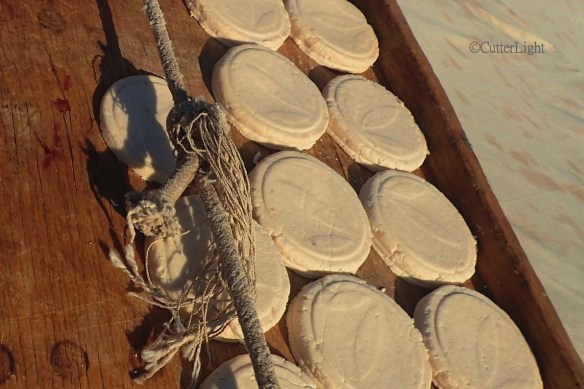
As we journeyed, we stayed with families in their gers (yurt homes). Here, aruul, a type of cheese, bakes into a hard cake on a tray atop a ger.

camel skull & white cliffs n

Not only dry but extremely cold and windswept, winters in the Gobi can be unforgiving. The worst of them are know as zud and can wipe out millions of livestock.

gobi-night-sky-10-17-2014-n

The nighttime skies were spectacular.  The Big Dipper hangs over our lighted ger. 

Not all deserts have camels, of course, but they certainly add an exotic element. In Mongolia, two-humped Bactrians are utilized for transportation, meat, milk and the most excellent cream cheese we’ve ever tasted. Here, Barbra’s mount and I exchange inquisitive looks.

photographer jack @ white cliffs n

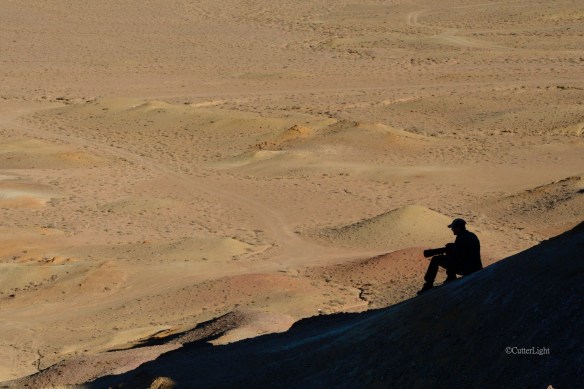
Our eight-day trek through part of the Gobi Desert was one of the highlights of our two-year stay in Mongolia. Not only did we get to briefly experience the lifestyle of one of the world’s few remaining semi-nomadic people, we also got to sample new foods, see exotic animals we’d read about in books as children, feel the Singing Dunes hum mystically through our bodies…  and, yes, riding a camel to seldom-visited sand dunes was a first and it was fun. At Bayanzag (pictured above), the legendary Flaming Cliffs where the first fossilized dinosaur eggs were discovered, we even found a large, fragile skull with teeth intact and a spine radiating out several feet, the fossilized remains of some species that no longer walks the earth. It’s 20° F (-7° C), a north wind swirling falling snow as I write this. A trip back to the Gobi through photographs was indeed a nice break from winter.

Next Thursday: Assignment #5 – Motivational Moments: the things that get us out of bed at 4:00 AM to go out and shoot; or that inspire us to sit for hours waiting for a capture. I already have a few ideas in mind. Stay tuned!

Wildlife Wednesday: The Short, Happy Life of Chippy the Long-Tailed Weasel*

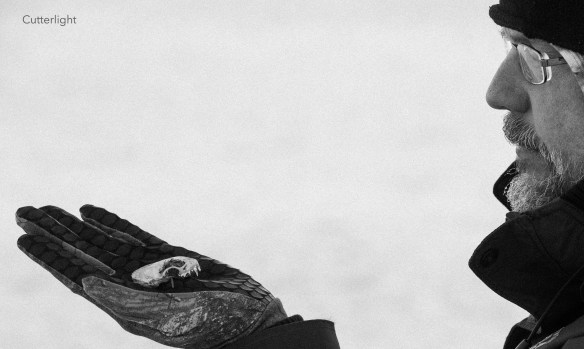
weasel-skull-02-2017-n

Alas, poor Chippy. I knew him, Barbra; a fellow of infinite jest; of most excellent fancy…

I was probably about 12 when I read Jean Craighead George’s My Side of the Mountain. In this book, which surely ranks as among the greatest adventure stories for young people ever written, the 15-year-old protagonist, Sam, leaves his parents’ confining New York City apartment and strikes out for his great grandfather’s abandoned farm in the Catskills. There, he takes up residence in a hollow Hemlock Tree, catches trout, raises a Peregrin Falcon and…

Finds a weasel in a box trap he’d set in hopes of catching animals for sustenance. Sam allows the weasel to come and go as it pleases. The weasel hangs around and Sam bestows on it the name Barron for its bold, confident demeanor. How cool. wanted a weasel like that.

Imagine my thrill when, shortly after moving into our place here in Chignik Lake, one of these spry little fellows practically ran across my foot as he darted past me and dashed under the steps of our Arctic entrance as I opened our front door. The steps, while inside the foyer, are open and the foyer itself sits atop earth. It is a haven for voles, shrews and, of course, weasels. Chippy (I named him or her almost immediately) spun around, sat up and looked at me through the steps. What a handsome, self-assured creature with those large eyes, round ears, pink nose and whiskered face, dapper in a brown coat and white underbelly. In truth, I only saw Chippy a couple of times after that, and only for the briefest of moments each time. Nonetheless…

We had a weasel living with us.

But winter came, and neither of us had seen Chippy for quite some time. Occasionally in the early morning after a fresh snowfall, we’d see weasel tracks and although they could have belonged to any number of weasels (there is no shortage of them here in the village), we liked to imagine they were Chippy’s, evidence of happy nights spent chasing voles and other small creatures.

Meanwhile, the area beneath the owl trees has become a veritable boneyard. Magpie feathers, skulls and wishbones litter the ground along with smaller avian skulls, vole-sized pellets of mashed together bone, teeth and fur, jawbones of small mammals and…

The skull of a weasel. We’re very happy that our resident Great Horned Owls are making it through this unusually cold winter, but… Chippy, we hardly knew ye.

Short-tailed Weasel, Mustela erminea (Photo Credit: Steve Hillebrand, USFWS on Wikipedia)
Also known as Stoats and Ermine, Long-tailed Weasels are related to otters, mink, martens and wolverines. Although they’re only about 10 inches long (25 cm) from nose to tail tip, like their biological cousins, they are fierce predators, sometimes preying on much larger animals. In winter, their fur becomes snow white except for the tip of their tail which remains black. Six years is a long life for a Short-tailed Weasel.

*It is unlikely that the skull we found beneath the White Spruce Grove is actually Chippy’s – or that this is the only weasel Chignik Lake’s Great Horned Owls have dined on.

Fans of Shakespeare will recognize this passage from Hamlet’s musing on mortality as he holds in his hand the exhumed skull of a favorite court jester, Yorick.

This is the first article for Wildlife Wednesday, a new column on Cutterlight. Stay tuned (or sign up) for weekly articles on birds, mammals, insects, wildflowers and more.

Ink and Light: “Amber Eyes” with a quote by Sir David Attenborough

amber-eyes-11-16-2012-n

Amber Eyes: Arctic Fox, Point Hope, Alaska

The thick, soft fur of the Arctic Fox is the most efficiently warm of any land mammal.

It seems to me that the natural world is the greatest source of excitement; the greatest source of visual beauty; the greatest source of intellectual interest. It is the greatest source of so much in life that makes life worth living.
David Attenborough – BBC Life documentary series, 2009

Knighted in 1985, Sir David Attenborough turned 90 in 2016. The world’s most recognized narrator of natural history films, he remains in possession of amazing vitality.