A Little Glitch & a Lotta Help: Welcome to Japan (and Murray is not your friend)

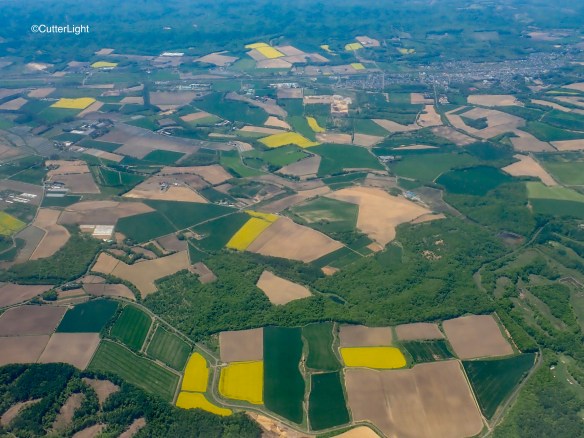
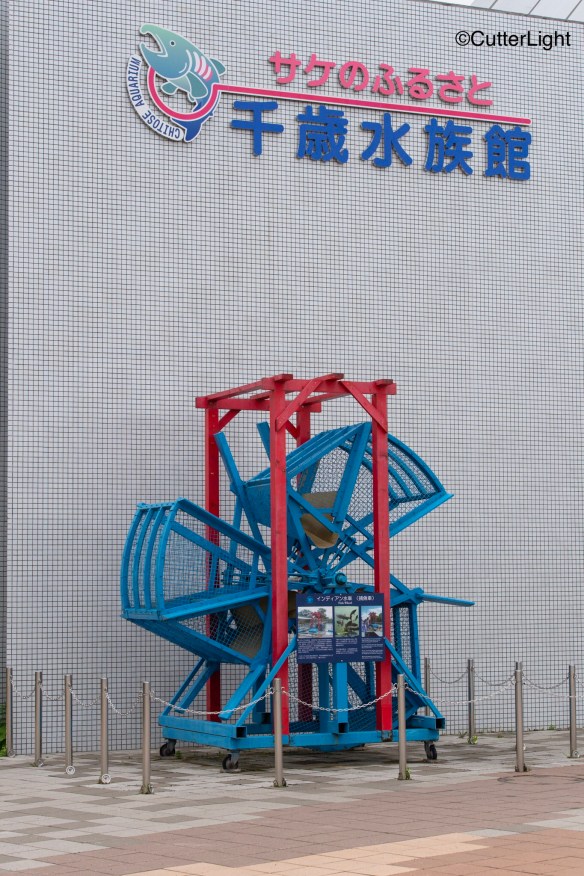
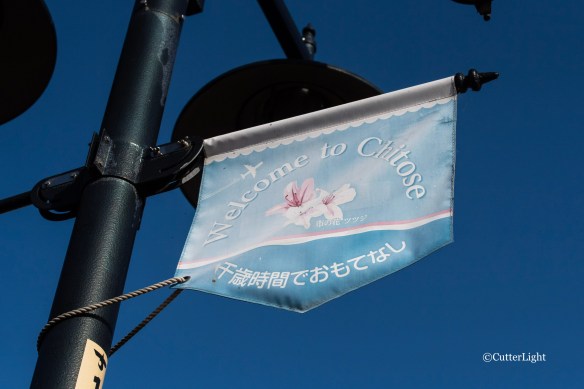
Just south of Sapporo, the beautiful city of Chitose was our entry point into Hokkaido.

Having lived in Japan both as a 7th Fleet sailor stationed in Yokosuka onboard USS Blue Ridge and as an English language teacher after that, I’m familiar with Japan – its ins and outs, the aspects of life here that make it fascinating and wonderful as well as – at times – puzzling and frustrating. In selling Barbra on the idea of doing our first bike tour in Hokkaido, I’d pretty much painted for her a picture of paradise. I described a land of exceptionally low crime, cleanliness, every modern convenience conceivable, incredibly kind people, great camping spots, and a culture different enough from our own to keep things interesting. There might even be some decent fishing, I offered. She already knew about the food – some of the best seafood, beef, pork and noodle dishes in the world. Given that Hokkaido is the least populated and least visited part of Japan, we probably wouldn’t even have to deal with the crowds that often plague other parts of the country. In fact, the only con I conceded was that Japan can be quite expensive; but even that deficit could be offset by the inexpensive (sometimes free) camping I anticipated.

However, as the trip got closer I began to have a tiny, nagging doubt. Maybe I’d oversold Japan. After all, it had been awhile since I’d lived there. In the interim, Japan had experienced a bubble economy collapse, a disastrous nuclear energy plant melt down, and the passing of time along with the challenges an ever changing world presents to all of us. And then there are the tricks our own memories play on us. What if it turned out to not be as good as I remembered it?

Anchorage to Seattle to San Francisco marked the first leg of our flight schedule, and it wasn’t until the final stop on that leg, San Francisco, that we realized we had not allowed enough time between landing at Haneda Airport, Tokyo and our connecting flight to Chitose, Hokkaido. An optimistic Japan Airlines ticketing agent in San Francisco assured us we’d make our connection – but I was fairly certain we’d made a mistake.

Upon arriving in Haneda we scurried to baggage claim where I had my first opportunity to dust off my never-was-very-good Japanese and explain our situation. Incredibly – and impressively – the baggage handler at the luggage carousel already knew about us and our bikes. He smiled and nodded in their direction as a baggage handler approached pushing a handtruck loaded with three boxes – our two bikes and our bike trailer. Almost simultaneously, our two “luggage” boxes with their brilliant orange duck tape emerged onto the carousel. Phew! Next…

A woman in a JAL uniform seemed to materialize out of thin air. While Yamamoto-San (Ms. Yamamoto) explained to us that we needed to get over to the domestic flights air terminal as quickly as possible. Meanwhile, two baggage handlers helped us load our luggage onto two smaller hand carts – which, by the way, are free in Japan. The race was on.

We followed Yamamoto-San to the baggage check-in counter where she consulted with other JAL agents, and then she made what appeared to be a “command decision” to circumvent normal baggage check-in procedures and get us and our luggage directly over to the boarding gate. With the perfectly quaffed, calm Yamamoto-San alternately leading the way and helping to load these huge boxes onto the elevator to the train shuttle platform, we were all perspiring a little. Arriving on the shuttle deck it looked like we just might make it. Yamamoto-San was on a radio, talking urgently and quickly enough that I could understand almost nothing…

…until she mentioned Murray. Murray… Murray… The word sounded so familiar and yet I couldn’t quite recall its meaning. And then, with what sounded like disappointment in her voice, she said the word again. Muri. 

Muri! As language sometimes does, the meaning suddenly came back to me. Muri means impossible. 

We were not going to make our connecting flight. Despite our assurances that we weren’t really bothered by this turn of events, Yamamoto-San seemed truly disappointed. Back at the baggage check-in counter, she offered to book us into a hotel. I explained that the glitch was really our fault for not allowing sufficient time between flights, but she insisted that, no, it was her airline’s responsibility. In all of my glowing descriptions to Barbra regarding Japan, I had probably not payed sufficient homage to the legendary customer service the Japanese people are known for. 

In the end, we declined the hotel, reasoning it would be simpler to spend the night stretched out on the comfortable seats in the waiting area, grab a cup of coffee in the morning and board a flight that would get us into Chitose at a time coinciding with check-in at our hotel. Our hotel in Chitose, by the way, did not charge us for the cancelled reservation.

Udon & Iced Coffee – our first breakfast in Japan!

And so, rather than arriving in Chitose on the night of May 29 as planned, we spent the night in Haneda Airport, sleeping relatively soundly in the seating area. The floors were so clean they gleamed. The restrooms were spotless. The coffee and bowl of udon we had for breakfast were excellent. And when we finally arrived at our modestly-priced hotel in Chitose, our room, though perhaps a bit small by American standards, was utterly immaculate, appointed with an excellent bathroom (including a nice, deep tub and more features on the toilet than either one of us is likely to ever use), a comfortable bed and truly plush bathrobes. 

Welcome to Japan.

Planes, bikes, ferries & feet – Ready for 85 Days in Hokkaido, Japan

Nowhere in particular to get to… and all summer to get there.

May 19: We’d saved a couple fingers of bourbon for this, our final evening in Chignik Lake. Measured out in a pair of our favorite glasses, the mellow amber-brown glow of the whisky suited a similar mellowness that had settled over us as we looked around a clean, tidy home that only a few days before had been an explosion of camping gear, bikes, technical clothing, camera gear, panniers and check lists. Our bicycles and camping gear had already been flown to Anchorage where they were waiting for us at Lake Clark Air. Scheduled to fly out of Chignik Lake the following day, ahead of us was a five-day scramble in the big city of Anchorage in which to reconnect with friends, make last-minute adjustments to our bikes and have them boxed for air travel, and to pick up necessities ranging from fly-fishing leaders to all-purpose hiking/biking/street/camp shoes as well as a couple of dozen additional odds and ends. Oh, and to get one of the three store-bought haircuts we treat ourselves to each year.

And then on Saturday, May 26, we’ll board Alaska Air bound for San Francisco where we’ll switch to Japan Airlines into Chitose, Hokkaido. If all goes according to plan, we’ll spend the next 85 days exploring Hokkaido, Japan by bike.

Why Hokkaido? I suppose it comes down to the fact that both of us have wanted to do a bicycle trek ever since we were kids but never did. Lacking experience in this sort of thing, it made sense to go for it in a country known for being safe and for having a bicycle friendly culture. Factor in campgrounds that typically range in price from free to $5 or $6 dollars, a cool, comfortable summer climate, beautifully diverse landscapes featuring smoking volcanoes, snow-capped mountains, bird-rich marshes and forests, fields of flowers, six national parks, seaside villages and the distinct possibility that we just might get into some decent trout and char fishing.  Japan’s northernmost island seemed to us to be the best possible place to make this leap into a new way of travel.

Hokkaido’s cuisine surely ranks among the world’s finest. Regional seafood specialties include scallops, oysters, several species of crab, shrimp, salmon, squid and succulent, softball-sized sea urchins. As Japan’s agricultural capital, Hokkaido is also known for its fresh fruits and vegetables as well as local beef and pork, and people rave about the rich ice-cream. There may even be opportunities to sample wild game. Soba – those tasty buckwheat noodles that are especially delicious served cold – is made from local grain, and it seems that virtually every city, town and village has its own unique twist on ramen. Visions of donburi – bowls of rice piled high with a variety of colorful, fresh seafood – have been dancing in our heads for months. If that’s not enough, micro-brews have caught on, there’s a nascent wine industry and even a couple of world-class single malt distilleries. Every yen we don’t spend on campground fees is another yen we’ll be able to spend eating our way around the island. 

So stay tuned. We intend to publish throughout the summer – food experiences that inspire, new birds, exotic species of trout of char, encounters with wildlife and the challenges and successes we’re bound to encounter pedaling our way along sea coasts and through mountain villages. But the thing we’re most looking forward to is meeting new people and immersing ourselves in a new culture. I’ve been practicing my Japanese, to be sure. But if experience is any guide, connections trump vocabulary. We can’t wait to share our loves of fly-fishing, photography, birds, food, camping and hiking with friends we haven’t yet met, half-a-world away, who find similar joy and fascination in such things. Hopefully our journeys will bring us into conversations with soba masters, commercial fishermen, trout chasers, farmers, ranchers, biologists and people who call Hokkaido home and love living there.

Wherever the coming summer finds you, we wish for you days filled with pleasant adventures, good food and deepened connections old and new.

Whale Bones and Crosses, the Cemetery at Point Hope

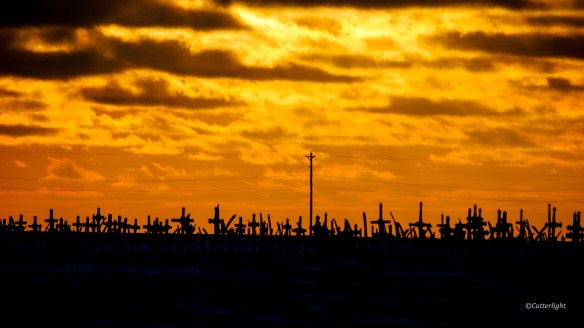
Whale Bones & Crosses, Point Hope, Alaska

Perhaps its most iconic landmark, the cemetery at Point Hope, Alaska, is enclosed in Bowhead Whale ribs positioned as one would a picket fence. The above image was made at 2:25 PM, November 7. At that time of year, there are slightly less than six hours between sunrise and sunset. By early December, the sun sinks completely below the horizon and will not show itself again for 32 days.

In 1890, three years after a commercial whaling base called Jabbertown had been established near the village, the first Christian missionary arrived in Point Hope. A doctor by profession, it is reported that John Driggs performed “heroic” medical work, but his attempts at converting the village’s inhabitants to his religious beliefs were unsuccessful. In fact, the Episcopal Church that sponsored him reported that Driggs had become “eccentric and absent” in his duties to proselytize. Nonetheless, by 1910 Christianity had become predominant throughout Arctic Alaska. By this point the new religion had been spread from village to village by converts among the Inupiat themselves.*

*See: The Inupiat and the christianization of Arctic Alaska, Ernest S. Burch, Jr., Etudes/Inuit/Studies,1994

Full Moon over Frozen Lake: Chignik Lake, Alaska

Full Moon over Frozen Lake – Chignik Lake,6:56 PM January 30, 2018

Twilight, that sliver of light between the day’s last direct sunlight and darkness, is often the prettiest light of the day. I was happy that Fred has his lights on. This shot was taken from the beach in front of our house. (Snowing here this morning, May 6.)

Point Hope Red, Orange, Blue 2011

Chukchi Sea Red, Orange Blue 2011

This November 19, 2011 sunset looking out over a Chukchi Sea nearly frozen solid reminded us of a Mark Rothko painting. The quality of light in the far north is often breathtaking.

Point Hope Aerial, 2013

Point Hope, Alaska, February 22, 2013

One of the great privileges in our life was to live for three years in the Inupiat village of Point Hope, Alaska. Lying 200 miles north of the Arctic Circle and still deeply connected to a whaling-based subsistence culture, it is said that the Tikigaq Peninsula has been inhabited for some 9,000 years, making it one of the oldest continuously inhabited sites in North America. It is a place of aqpik berries and caribou, snowy owls and arctic foxes, fierce winds and frozen seas, a full month of darkness and the most magically soft pink, gold and orange morning and evening light we’ve ever seen. One day in early fall we hiked out to the end of the peninsula, stood on the beach, and watched in wonder as thousands upon thousands of murres, puffins, auklets and other seabirds streamed by on their way to the open ocean to spend the winter, their nesting season complete – surely one of the planet’s greatest migratory events. We endured a mid-winter three-day blow of hurricane force winds that forced most of the village to huddle together in the school which had its own generating system and could offer warm shelter and hot meals. Polar bears sauntered through the village right past our house and there were nights when the Northern lights danced above our heads in electric greens, pinks, purples and reds.  And it was a place of friends, some of the toughest, most generous people we’ve ever known. Tikiġaġmiut – the people of this peninsula in the Chukchi sea.

Four Days of Quiet Solitude (Except for the Hurricane-force Winds): The Cabin on Black Lake

Fire Mountain: Barbra got this beautiful photo of sunset rimming a mountain – possibly 8,200 foot Veniaminof Volcano, its top missing. That’s me left of center, shooting a closer perspective. During our stay at a nearby cabin, the forecast had been for temperatures in the mid 30’s (low single digits Celsius) and the usual 10 to 20 knot breezes. The subfreezing temperatures, heavy sleet and snowfall, and hurricane-force winds we experienced seemed to come out of nowhere.

Every night before we go to bed and every morning upon waking, I slide the dining room/living room window open and scan the lakeshore with a small, powerful spotlight. You never know what you’ll see. Though not necessarily at night, from these very windows we’ve seen brown bears, moose, foxes, owls, weasels, otters, eagles, falcons, beavers, a wolverine and a wolf, not to mention an array of waterfowl including cranes, swans, loons and ducks.

“You oughta take that spotlight and stay in my cabin up on Black,” Fred texted one morning. “You’d like it up there.” Fred’s Chignik Lake home sits atop a high bluff, big picture windows overlooking a good bit of Chignik Lake and the beginning of Chignik River. He spends a fair amount of time doing the same thing we do – scanning for wildlife.

Snow Bunting, Black Lake, Alaska. We’re told that in years past, Snow Buntings were common winter visitors to Chignik Lake. Recently, they’ve been scarce. Although the flock of three birds we came upon only gave me a chance for a couple of quick shots, I was happy to get this record for a project I’m working on to document area birds. (Stay tuned for more on this.) In addition to waterfowl, Black-capped Chickadees, Common Redpolls, magpies, eagles and a Northern Shrike rounded out the avian life we encountered. 

Fred’s text came on the last day of December, a few days before Barbra’s winter break was over. The two of us were antsy from days-on-end rain we’d been enduring through most of autumn and early winter. Fred’s offer wouldn’t change the weather, but it would change the scenery. We were in.

That evening we packed up our gear: down sleeping bags, rain gear, extra rain gear for when the first rain gear was soaked, cameras and binoculars, pens and journals, cookware, four days worth of dehydrated backpacking food, four sweet onions and four Fuji apples…

…and awoke the next morning to find that the weather had taken a nasty turn. Rain we can work with, but when winds started blowing spray off the whitecaps on the lake, there was no way Fred would be launching his skiff. “We’ll try again tomorrow,” we agreed. In retrospect, this squall which hadn’t been forecast should have tipped us off that our local weather patterns were unstable.

The following morning we rose early, hoping for the best. During winter, the sun doesn’t break over the mountains rimming our valley till sometime after 10:00 AM, but a flashlight cutting into the pitch black indicated that Fred and his friend Nick were already down at the beach getting the skiff ready. The wind had settled and a mist was falling under a lightless sky that swallowed the lake in inky darkness.

By nine o’clock the first crepuscular twilight silhouetted the mountains to the south. With breakfast behind us and a hint of light on the water, we loaded up the skiff and began the 18-mile run north up the valley. Pockets of near-freezing drizzle appeared and disappeared, prompting us to pull our hoods tight. The forecast – which up here is usually spot on – was for similar weather over the coming days with a few sun breaks mixed in. Ahh, sun breaks. This year, we’ve been living for sun breaks.

As we cut across the lake and proceeded up Black River, a loon and a few mallards and pintails lifted from resting places in coves and a pair of eagles were startled from their riverside perches. Most of the bears are denned up by this time of year, though here and there a few late-run salmon still cling to life in feeder streams. There’s always a chance of seeing a wolf.

Fins, January 2, 2018: The Chignik System is known to receive the latest salmon runs in North America. Still, we were amazed to find a few Coho in a nearby feeder stream near the cabin. More remarkable still, some of these fish appeared to spawning.

 A rim of shore ice at the mouth of the stream provided a dining table for otters, who left plenty of salmon scraps for ravens. Although we didn’t see the otters, evidence of their presence was everywhere. We also found signs of moose, foxes, weasels, hares and wolves. In fact, we have reason to suspect that at one point a wolf was just around the bend from us.
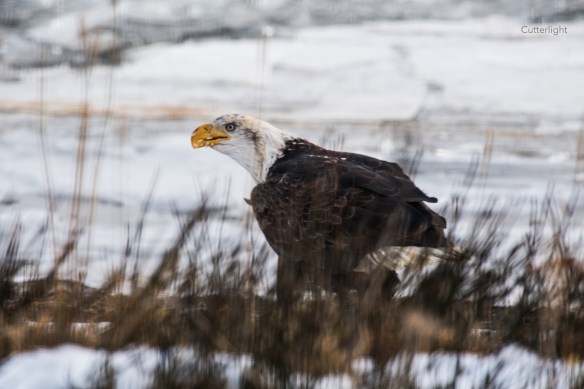
After the storm, a fully intact salmon carcass managed to find its way to the shore in front of our cabin – quite possibly plucked from a patch of open water and dropped by this very eagle. I grabbed this shot through a double-paned window – not ideal for a photograph, but what a handsome bird. The moment I opened the cabin door, she took off.

If you come across a single antler from a member of the deer family, it’s been shed, part of an annual process in which male deer, elk and moose grow antlers for the mating season and then lose them. If you come across an entire rack joined by skull bone, it’s the result of a kill. Some years ago, when Fred was scouting out the location for a cabin from his skiff, he came upon five wolves on a downed bull moose right on the beach where he hoped to one day build. Years later, someone found this rack in a nearby alder thicket – undoubtedly that same moose having been dragged there by the predators. 

Fred described the cabin he and a couple of friends had built as “sturdy, snug and cozy,” a spot-on description. Insulated from floor to roof and appointed with double-paned windows, the cabin’s 10 x 15 interior is just big enough to comfortably house a diesel heater, three-burner propane stove, hand-made wooden bed frames, small pantry, a table and three hand-made wooden stools. Snug and cozy. The lines looked square and sturdy, points that would soon be tested.

Once Nick got the heater going, the cabin was toasty warm in no time. Fred introduced us to the vagaries of the propane stove, pointed out the water catchment system (a bucket hanging near a roof gutter), and assured us once again that we were welcome to dip into any of the food in the pantry.
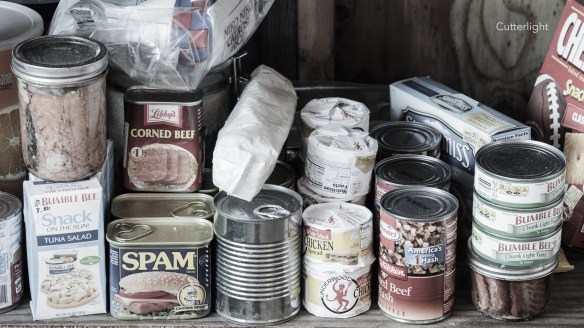
I muted the color in this pantry photo. The cabin’s door is never locked and the assortment of canned fish, deviled meat, rice and crackers could be a lifesaver for anyone caught in a sudden storm or out of luck with a dead engine. Although we brought plenty of our own food, I have to confess that the temptation of a skillet of fried Spam was more than I could resist, not having had this treat since childhood. It was, to my mild surprise, every bit as good as I remembered.

With winds pushing 100 miles per hour and sub-freezing temperatures, our water catchment system failed. Fortunately, the wind blew beautifully clear sheets of ice onto our shore.

Following two days of snow and sleet pushed by fierce, cabin-rattling winds, the sun rose serenely over a frozen lake Black Lake. Black River, which leads to Chignik Lake, begins in the gap between the mountains where the light is breaking through. If things didn’t warm up and melt the ice, there was doubt that Fred would be able to make across the lake in his skiff. Fortunately, by the next day the ice had thinned and lay in broken patches. We learned later that two of our neighbors in the village out on a different adventure had to be emergency rescued when the storm came up.

The view from the cabin shoreline after the storm passed: Although we didn’t get the waterfowl and wildlife encounters we’d hope for – and the weather certainly had our full attention for awhile – our four days on Black Lake were wonderfully memorable. And left us with this thought: Why aren’t we doing more landscape photography? New adventures lead to new thoughts, new studies, new goals. 

“Hope you guys get lucky and see some wildlife,” Fred said as he and Nick headed to the skiff. Motioning across the bay toward the far shore from where a racket of honking and quacking was issuing, he added, “Of course, those swans and ducks never stop chattering. They’ll keep it up all night.” I helped shove off the skiff, and as the last echoing hum of the boat was enveloped in the valley we’d just come up, we found ourselves wonderfully and utterly alone. Over the next four days, the only human-generated sound we would hear was the drone of a couple of bush planes flying into the village 18 miles to the south.
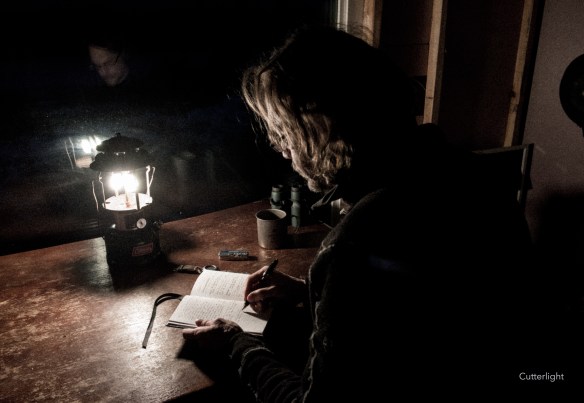
Sketching a novel outline at the cabin on Black Lake: Thirty-some years ago, aboard USS Blue Ridge, a friend and I made elaborate post-enlistment plans to go up into the Colorado Rockies, find a cabin, and live there for a year. We talked about the staples we’d need to lay in: flour, rice, coffee and so forth, the rifles and shotguns we’d take to hunt with, canning equipment, and the desirability of locating ourselves not overly far from a small town where we could reprovision as necessary. We would write. Fundamental to that objective would be pens and journals and a small, carefully selected library of literature. My friend got out a few months before I did… and disappeared. When I called the number he’d given me, his mother picked up the phone. She sounded distraught, with no idea where her son was. No one knew. I’m still not sure if we were kidding ourselves or if we’d really intended to go through with the plan, but either way I couldn’t see going it alone. When an acceptance packet came from the University of Colorado at Boulder, I took the door that was open. But I never completely let go of that idea… someplace quiet, off the grid, armed with books to read and journals to fill.

January 26, Chignik Lake, Alaska
 

Ink and Light: The Gobi Desert’s Singing Dunes and Inspiration from Herman Melville

Khongoryn Els: The Singing Dunes, Gobi Desert, Mongolia

A trace of slate in the sand grains at Khongoryn Els results in vibrations that are not only easily audible, but which reverberate through one’s body.

…I am tormented
with an everlasting itch
for things remote.
Herman Melville – Moby-Dick; or, The Whale, 1851

Herman Melville (1819-1891) served aboard a whaling ship before deserting in the Marquesas. Although he knew his subject (the book draws from Melville’s own experience, The Bible, Shakespeare’s work, research into whaling, the actual account of a hard-to-catch white whale nicknamed Mocha Dick and the sinking of the American whaling ship Essex by a whale, Moby Dick received mixed reviews and was a commercial flop. Dedicated to Nathaniel Hawthorn “in token of my admiration for his genius,” the book sold just 3,200 copies in Melville’s lifetime and was out of print at his death. 

A year after Melville’s death, Moby Dick was reprinted by Harper and Brothers. Literati circles – mostly in New York – kept interest in the book (barely) alive over the next several years until it was rediscovered by larger audiences. Of the book, William Faulkner said that he wished he’d written it himself; D. H. Lawrence called it “the greatest book of the sea ever written,” and in time it found its place as an icon of American literature.

Ink and Light: The Bones of Tikigaq and a Tribute to Tatanka Yotanka, Sitting Bull

x whale bone ruins Tikigaq copy n

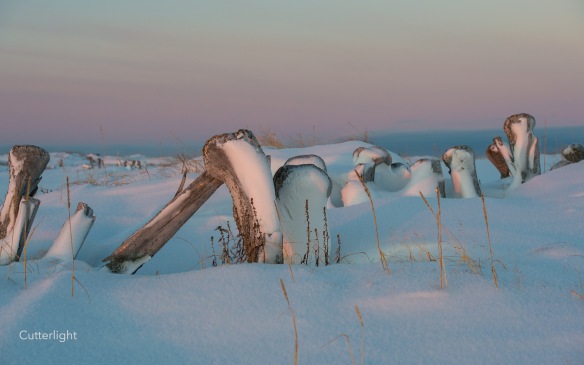
Whale Bones and Ruins: Old Tikigaq Village, Point Hope, Alaska

Tikigaq’s sod, driftwood and whalebone igloos (homes) were occupied until the mid-1970’s when the village was abandoned due to erosion from the sea. By this time, some of the houses were wired for electricity. Sigluaks, freezers dug deep in the permafrost at Tikigaq, are still used by the people of nearby Point Hope to store the whale meat they’ve harvested.

If a man loses anything
and goes back and looks carefully for it
he will find it…
Tȟatȟáŋka Íyotȟake (Sitting Bull) – Pine Ridge Reservation Speech, 1883

Tatanka Yotanka (1831-1890) was a Lakota Sioux holy man who earned his place in history through his fierce resistance to white encroachment on Lakota lands. A vision he had seemed to foretell the victory a combined force of Sioux and Cheyenne would have over United States troops led by General Custer at The Battle of Little Bighorn in 1876. In 1880, Tatanka Yotanka was assassinated by Indian Agency Police at Fort Yates on the Standing Rock Agency (reservation) who feared that he would lead an uprising. His remains are buried near his birthplace in Mobridge, South Dakota. A monument marks the site.

Assignment #6: A Sense of Place – Suutei Tsai in a Mongolian Ger

mongolia-woman-pouring-milk-n

Outdoor Photographer’s challenge two weeks ago: an environmental, visual or cultural photo depicting a strong connection with a specific place. Here, our hostess at her ger in the Mongolian countryside prepares a pot of suutei tsai to take the chill off an October night – piping hot milk with a little tea and a dash of salt.