That’s not a map… THIS is a map!

We’d been looking for a wall map and hadn’t found the right one. Till now. Advertised as a “wall mural,” this National Geographic map is 9′ 2″ wide by 6′ 4″ high and occupies a commanding place on our living room wall. The map is made of vinyl coated wallpaper material, so it looks great and should be durable.

We’ve begun using it to mark places we’ve been to and, more importantly, places we hope to visit. Flag pins with numbers correlate with brief descriptions of the various locales posted on a wall near the map. It makes us smile, and it’s a great conversation piece!

Beaver Fur Hats: Real Warm

Inupiat craftsman Isaac Atungana of Point Hope specializes in these luxuriously warm and comfortable beaver fur hats.

After months of admiring the ruffs on the parkas of our students and friends in Shishmaref, I got a beautiful wolf ruff for Barbra.  Our friend Nancy sewed on it. Aside from its beauty, the ruff around her hood serves a very practical purpose: protection from the elements. Whether made of polar bear fur, wolf fur, or, perhaps best of all, wolverine fur, a good ruff traps a pocket of warm air around the wearer’s face, keeps the wind off bare skin, and cuts down on the sun’s glare. Barbra loves hers. “You should get one,” she’s been urging this past winter.

Partly out of tightfistedness, partly out of skepticism, I’ve been resisting. First, good ruffs are fairly expensive. Second, I just couldn’t see how a little fur, fur that isn’t even lying next to one’s skin, could make that much difference. So I’ve soldiered on with my performance fleece face mask and my Mountain Hardware Polartec watch cap. Quality gear, and with my head and face thus ensconced and tucked beneath the down hood of my Mountain Hardware parka, I reasoned that I should be plenty warm.

And down to about zero degrees Fahrenheit, I am. Below that, if I have to be out long, especially if there’s wind, I get cold pretty fast.

“Face hurts,” I say to Barbra.

“You should let me get you a ruff,” she replies. “A real good one. Wolverine.”

“Maybe,” I answer back like a record with a needle stuck.

The other day, Isaac Atungana, who makes superbly warm beaver fur hats, showed me his latest creation. Unlike his other hats, this one was completely lined with thick, soft, warm beaver fur.

I try it on. It’s a little big. “I can take it in right along this seam,” he says pointing.

The first time I wore the hat, it was negative 17 outside with a windchill pushing the temperature down to negative 50. It was a revelation. My face didn’t hurt at all. In fact, I felt downright… cozy! And that was with the hat on backwards! (I’ve since been instructed as to the proper positioning of the hat on one’s head.)

The beaver fur extends past my face and traps a pocket of air the same way a ruff does. And the hat, which weighs nearly a pound, is thick and well-insulated, comfortable and warm. Man, if I had had this hat when deer hunting and ice fishing back in Pennsylvania…

The Sailing Vessel Bandon

The t’s have been crossed and the final i dotted. All 37 feet and 12 tons of the sailing vessel Tarsus is ours.

What have we gotten into?

There’s a line from the film The Shipping News that seems to fit. “Course, you don’t know nothin’ about boats, but that’s entertaining, too.” 

Four years ago when we bought our C-Dory, Gillie, I’d never piloted a power boat longer than 12 feet – my dad’s aluminum car-topper with its 5 hp engine. Barbra had even less experience with boats. All we really knew was that we wanted a fishing boat. So we did our due diligence – read books, researched on the Internet, visited dealerships, checked out boats in marinas, talked to people and attended boat shows. In the end, we came to a familiar set of conclusions, the short of which go like this: There are a lot of boats for sale, and most of ‘em float. Out of all those boats, a few makes stand out. After that, everything is a compromise. The boat we really wanted was too big to readily trailer; thus it was not the boat we really wanted. We took the plunge, bought Gillie and a year later towed her all the way to Alaska, to the Port of Valdez, which is over 3,000 miles from Sacramento. We then launched her, ran 90 miles to the Port of Cordova, and spent the next eight days and nights fishing and camping aboard our boat in Prince William Sound.
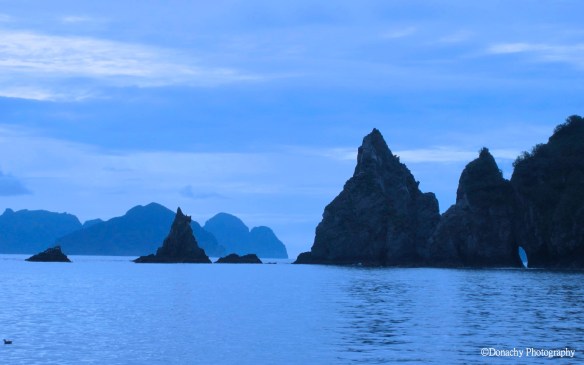
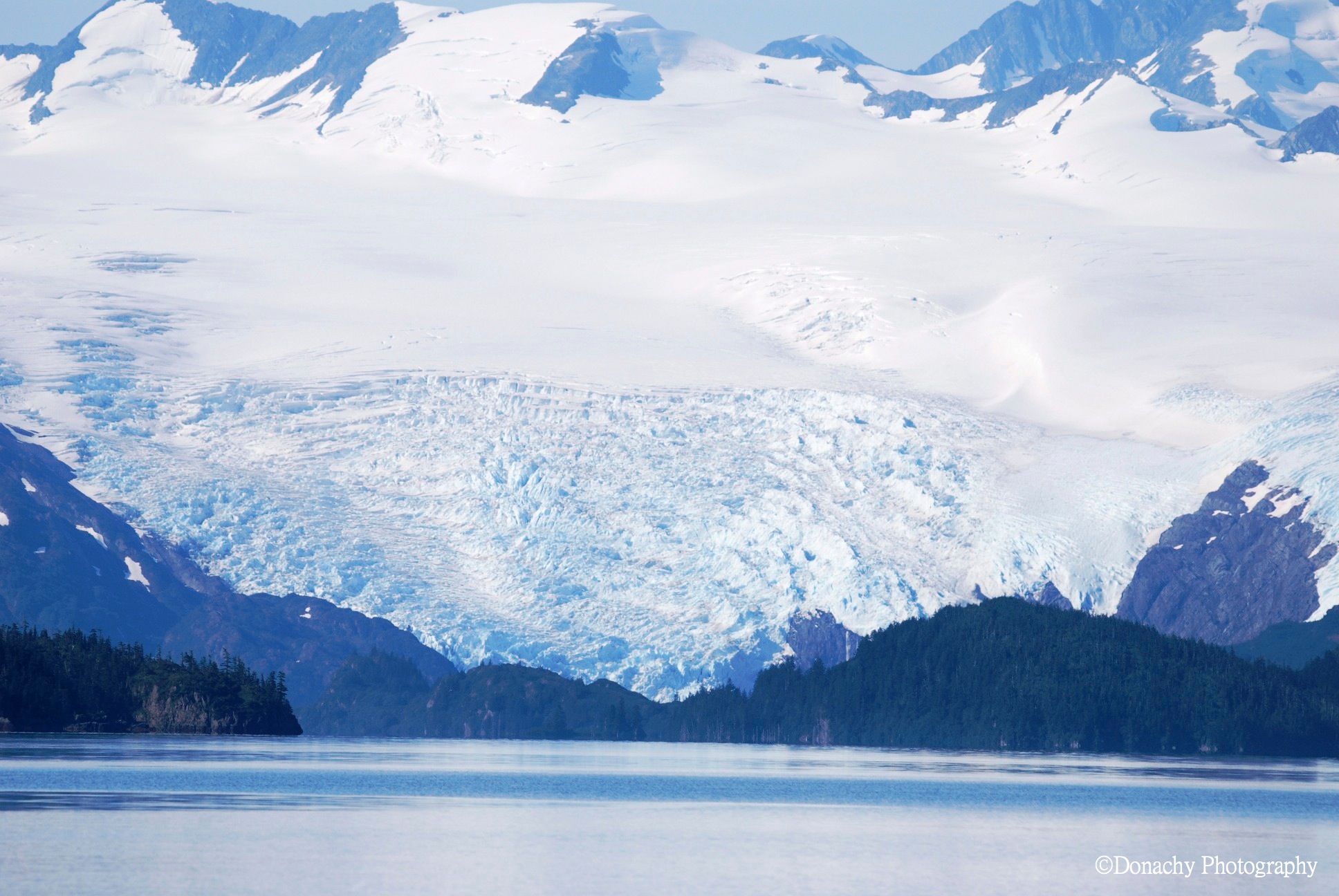
Above: Jagged rocks and islands create a maze leading from Resurrection Bay out into the Gulf of Alaska. Top photo: Massive Blackstone Glacier towers above its namesake bay near Whittier, Alaska.

Time and tide kept me from sailing, but I honestly can’t remember a time in my life when I didn’t want to sail. It’s always been there. Landlocked in western Pennsylvania, my family would take summer vacations to the coast – up to Cape Cod, down to North Carolina’s Outer Banks, west to Oregon – where we’d spend a week frenetically touring museums and historical sites, dining out in restaurants, perusing art galleries and shopping. For my part, I could have spent all day every day on those vacations doing nothing more elaborate than fishing the first tide of the day, combing the beaches, and walking the marina docks. The boats, particularly the sailboats, were magical. Mesmerizing. I’d see their owners emerging from below deck, or topside working on this or that, or just relaxing and looking off in the distance and I wanted to be those people. I had so many questions for them, but I never worked up the courage to break free from my family, approach one of them and ask. Questions like, How does it work? How do you steer it? Do you live on it? What does its name mean? Where have you been on it? Where will you go next?

Tarsus’ former owners were podiatrists. Although we haven’t completed a formal name change yet, on each piece of paper associated with the sale (for a boat this size, there’s nearly as much paperwork as in a home sale) we have penned in Bandon where the vessel’s name appears.
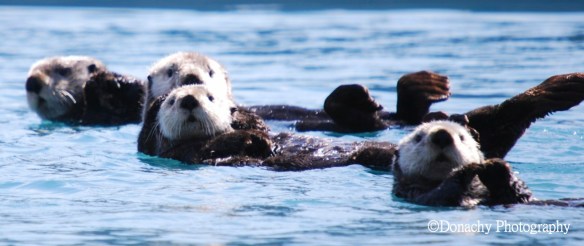
Sea otters are a common, always welcome sight along Alaska’s southeast and central coasts. 

There’s a small town on the southern Oregon coast where a river with runs of salmon, steelhead and striped bass joins the Pacific. Bandon. For a long time, Barbra and I looked at land on the Coquille River upstream from Bandon. In addition to the fish, the area has deer, turkeys, game birds and elk as well as good mushrooming and abundant wild berries. It’s a quiet part of the world, not overly far from wine country. We talked about a piece of land with trees, a spot for a garden, raising chickens there and cutting our own firewood for a wood burning stove in a cozy house where we would homestead.

Bandon is that. But it’s more. This time, it’s not the boat that represents the compromise. It’s the lifestyle. Choosing to become sailors means, at least for now, not becoming homesteaders. It means not driving our camper all over North America, or having a cabin on the shores of a lake full of walleyes, or collecting wine, or, in Barbra’s case, getting a pilot’s license.
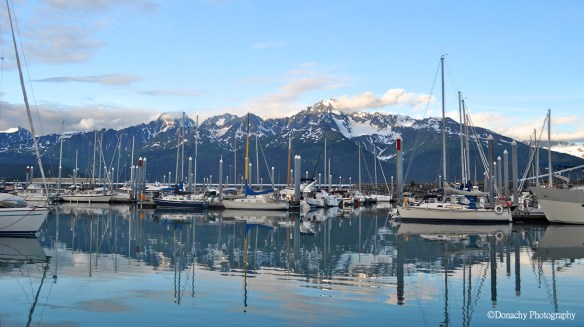
Bandon will be docked in the Marina at Seward, pictured here in early July.

To borrow from Robert Frost, Bandon is the road we’ve taken. She’s got a sound hull, every amenity and comfort we need and then some, and sails to take us over any sea. It is dreams come true for us, and in some of those dreams there is a placid lake full of walleyes, and endless summer days touring North America in our camper, a herd of elk feeding on windfalls beneath our apple trees, a salmon fresh from our river for Thanksgiving dinner, a wood burning stove and a freshly made blackberry pie.
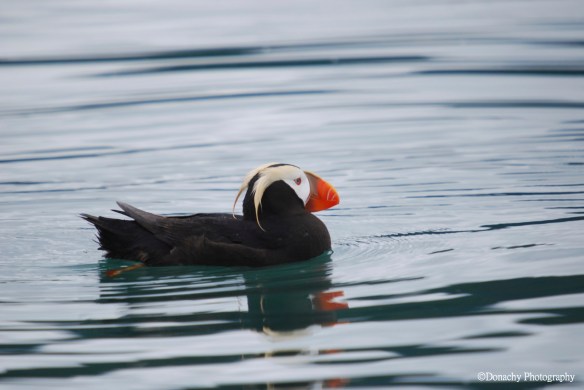
Resurrection Bay, where Seward is located, has one of the largest summertime concentrations of Coho salmon in North America. There is an abundant, varied and rich ecosystem in the bay, making it a premier locale for everything from watching sea birds and otters to seeing whales, dolphins and porpoises. The surrounding mountains are spectacular and help ensure for predictable winds, making Resurrection Bay a great place to sail. For more information about the sailing vessel Bandon, click on the word Tarsus.

Fishing and Camping along Oregon’s Deschutes River

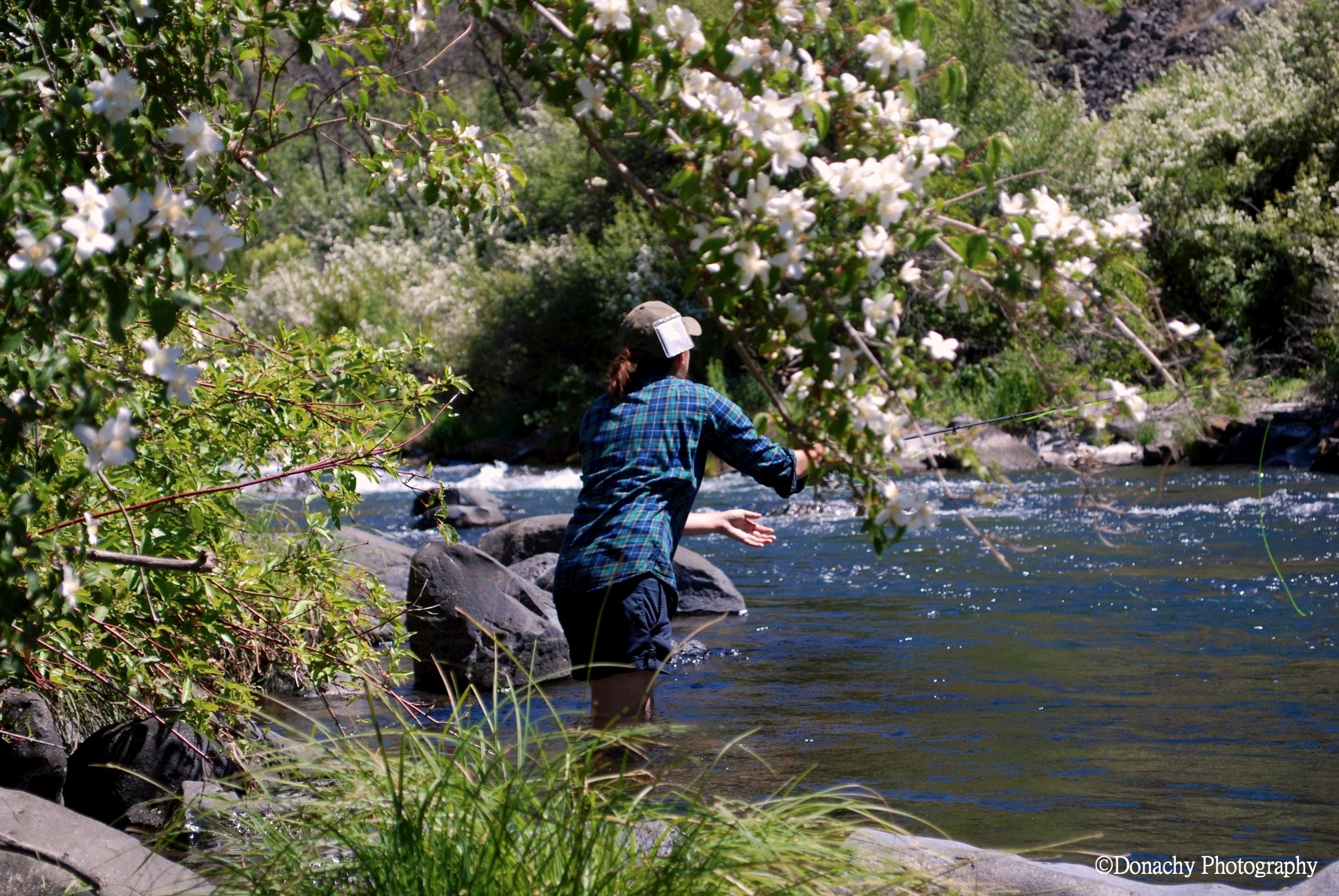
Edged by a thin strip of green, the Deschutes River is born in mountains southwest of Bend. Brookies – aggressive and abundant – dominate the headwaters where it flows out of Little Lava Lake. When the river hits Crane Prairie Reservoir, rainbows (and largemouth bass) dominate. Once the river drops into canyon country north of Bend, redbands come into their own. Although canyon trout typically don’t run large, there’s a good chance you’ll have the water to yourselves, as we did. Further downstream, steelhead attract attention from fly fishermen who spend hours swinging flies in hopes of that one, elusive, electrifying grab. (Click on any of the photos for a larger view.)

In June of 2009, Maia and I spent a week camped along the Deschutes River near Bend, Oregon where we were enrolled in an Orvis Fly Fishing School – an experience we highly recommend to any parent-son/daughter, husband-wife or fishing partner team looking to boost their skills and knowledge. (We’d love to take one of their saltwater fly fishing or wing shooting schools in the future.)

Tumalo State Park proved to be an excellent location for our headquarters. Tent friendly, it was both quiet and conveniently close to Bend and the region’s excellent fly fishing. In addition to the Deschutes Canyon, we also explored the nearby Metolius River, Lava Lake, Little Lava Lake and the Upper Deschutes.

Fishing an elk hair caddis, Maia coaxed a pair of the Deschute’s redband trout from this canyon pool.

The redbands of the canyon are not large, but numbers are good, the water is beautiful and the setting is dramatic.

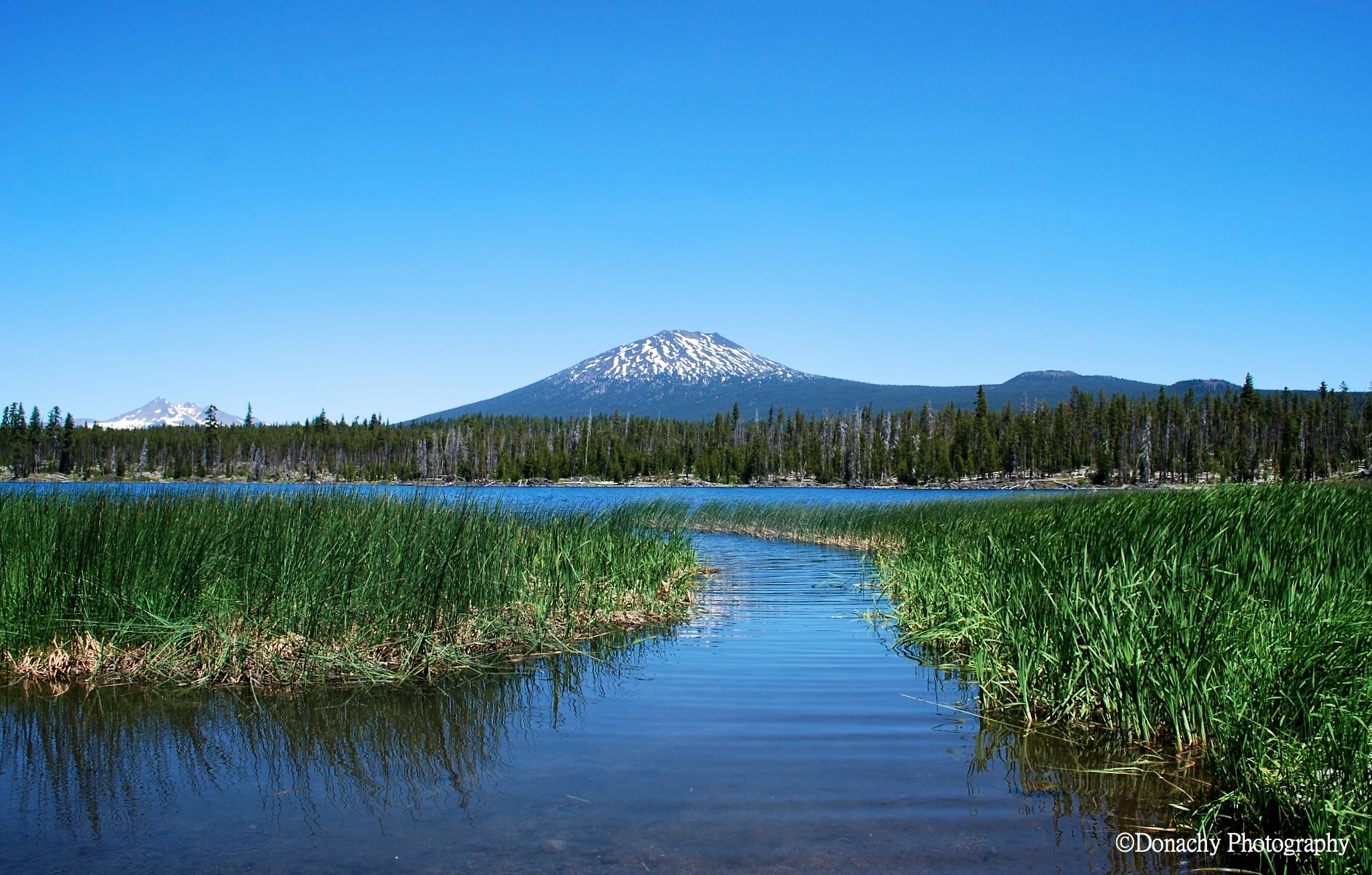
The float tube launch on Lava Lake seems to lay out a path to Mount Bachelor, one of Oregon’s premier ski destinations.

As Maia and I were preparing to launch our float tubes on Lava Lake, a fly fisherman who appeared to be in his 70’s was just coming in. “Wanna see what I’ll be having for breakfast?” he asked with a playful grin. He then pulled from a wet canvas creel a fat, 18 inch rainbow. The silvery fish had undoubtedly been stocked as a fingerling and grown heavy on a diet rich with scuds and aquatic insects. “Been coming here for decades,” he said. “Fishing’s still good, and you can’t beat the setting.” Since we were after a trout or two for dinner that night, we were heartened by his success. And sure enough, in addition to a couple of smaller trout, a rainbow just shy of two pounds fell to an bead head olive wooly bugger in the short time we spent on the lake.

After a dinner of salad, pan-friend New York strip steak, freshly caught trout and multi-colored Peruvian potatoes, we relaxed in front of our campfire enjoying a finger or two of Scotch, reminiscing about the day’s fishing, about the fishing we’d had other days going all the way back to afternoons spent float fishing for bluegills and bass on our home river in Japan when Maia was only three, and dreaming about trips we’d take in the future…

Until I lived in Oregon, I’d never seen garter snakes hunt fish. This one was working the margins of Lava Lake.

We had read about Hosmer Lake’s unique (and quite challenging) Atlantic Salmon and Brook Trout fishing. Kicking around in our float tubes in water only slightly less clear than air, we could see fish – big ones – nearly 20 feet deep. The white edges on their fins gave the brookies away; the others, we surmised, must be the salmon. The fish were beyond us on this particular day, but what a lovely piece of water. Excellent nature watching, too – birds, otters, wild flowers along the shore, and, of course, the fish in aquarium-like conditions.

In the week we spent sampling the fishing near Bend, we barely scratched the surface. In addition to miles of river, there are several lakes accessible by vehicle and numerous  hike-in fisheries. Area campground fees range from reasonable to downright cheap, and Bend itself is a cool city of about 80,000 that merits time set aside for exploration.

There is a Lake…

At a remote lake we discovered by chance, the trout are not as long as your leg. Lots and lots (and lots) of 14 to 18 inchers though.

Weighing in at about 15 pounds (including flippers), Super Cat pontoons inflate quickly, can be worn like backpacks, and fish comfortably.

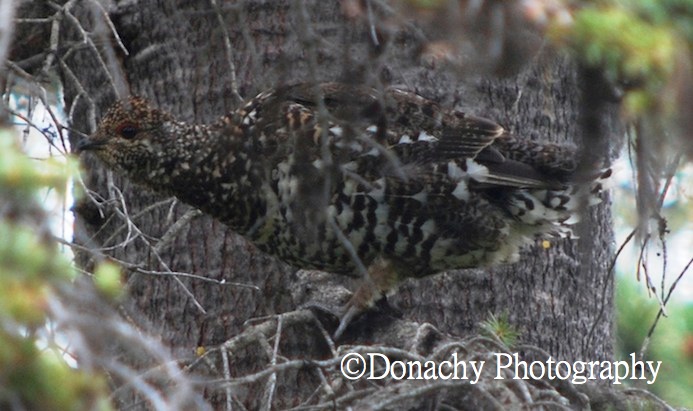
The walk in to remote waters is part of the adventure. On this particular hike, there were wildflowers, game tracks, berries, and a well-camouflaged covey of grouse perched in spruce trees.

Each summer, Maia, Barbra and I make it a point to meet up somewhere to fish, cook together, catch up with each other’s lives, and enjoy good wine and beer and stories. The fishing is secondary, but catching is definitely more fun than not catching. This is the kind of lake where you lose count of the fish turned, hooked or landed and settle into a gentle rhythm of casting, kicking and intense line watching, vigilant for the slightest twitch.

It is a beautiful and rare thing these days to fish a lake – no matter how remote – free from even a solitary scrap of litter. Such was the case on this lake. There was a hiking trail, and part of it traversed a log and board walk over a marshy area, but it was clear that those who know about this lake care about it. Save for a few mountain goats high up on a slope overlooking the lake, a pair of ospreys occasionally circling overhead and a small family of loons, we had the pristine water to ourselves.

On many remote (and not so remote) lakes, a size 8 or 10 bead head nymph dressed in olive, brown or black and jazzed up with something that sparkles is a killing pattern, and such was the case on this day. Lush beds of weeks were visible in the clear water. That’s where the insects were, and of course, the trout.

With a healthy population of trout and several size classes represented, we kept four smaller fish for dinner back at our campsite on a different lake. Evidence of a diet rich with scuds (freshwater shrimp), their flesh was as red as sockeye salmon flesh.

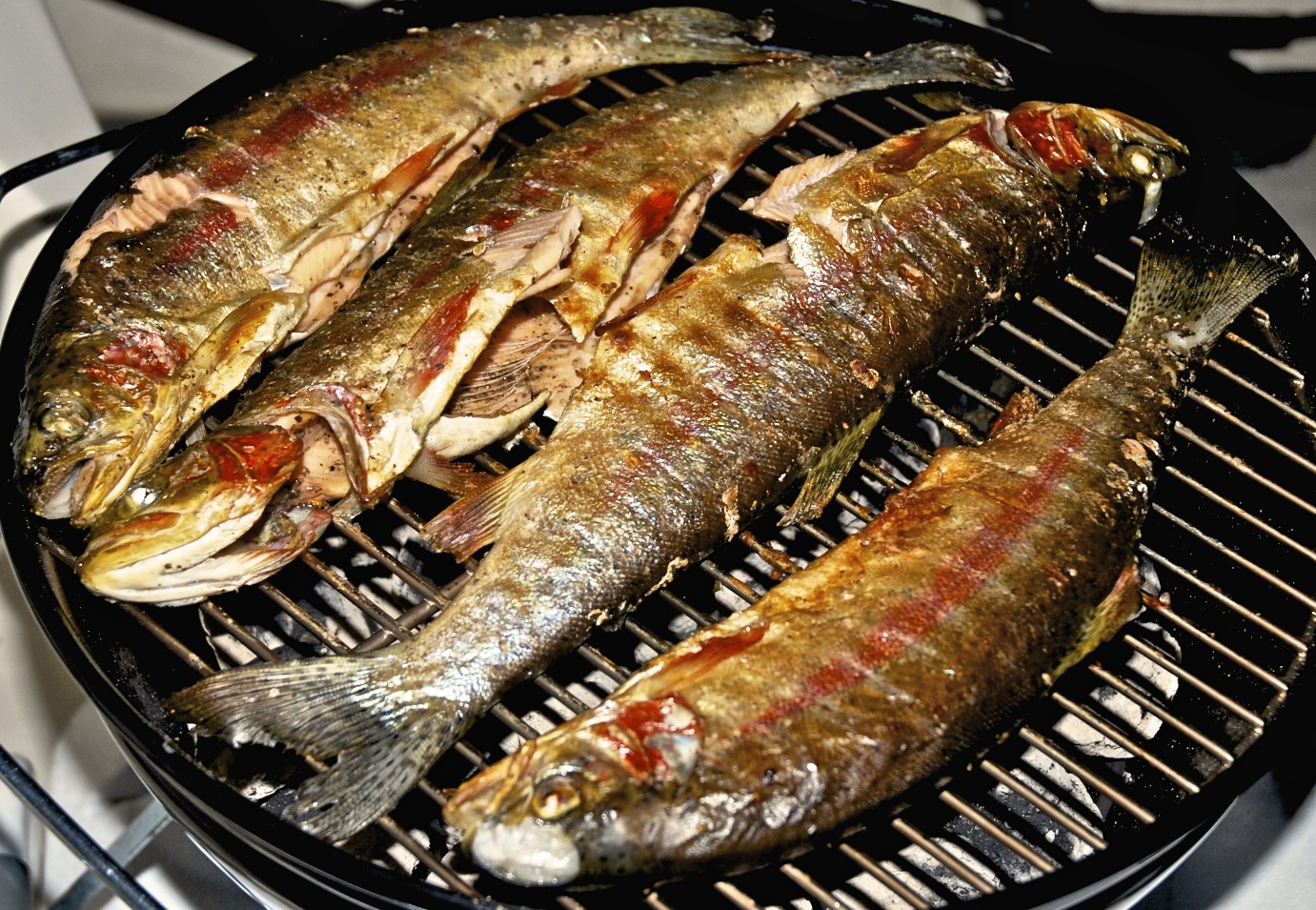
It’s difficult to improve on salt, ground pepper, and glowing charcoal when cooking just-caught fish. Accompanied with freshly picked sweet corn, roasted potatoes and a bottle of Chardonnay enjoyed around a campfire as the evening sky grew dark, our conversation was punctuated by an occasional pop from the fire and loons calling back and forth across the lake. 

Point Hope in Winter from the Air

The village of Point Hope, Alaska, February 24, 2012, as seen from a nine-passenger Cessna Caravan.

Viewed from the air, a continuous sheet of ice and snow obscures the boundaries between land and sea in the Arctic north. We were happy to fly south to Anchorage for a few days, thereby escaping the steady string of days with temperatures hovering around negative 20 degrees Fahrenheit. Compared to Point Hope, the weather in Anchorage was downright balmy, with highs around 28 degrees. Intermittent snow showers filled the crisp air with big, soft snowflakes.

Six days later our plane touched down on the icy Point Hope runway. As we descended the ladder, a blast of icy wind crushed into our faces, momentarily taking our breath away. The previous week, the absence of wind made walking outside pleasant enough, but now the wind chill is frequently dipping to 50 or 60 below and even colder. Cases of frostbite are up, as are cases of frozen plumbing. Each day, we’re gaining eight minutes of daylight. Still cold. Still a lot of winter left.

Denali – The High One

Denali – meaning “The High One” in Koyukon Athabascan – is known by many as Mount McKinley. 

The day we toured Denali National Park the namesake mountain was shrouded in clouds, a situation so commonplace we weren’t disappointed at not being able to see more than its base sloping up into the shrouding mist. In fact, a small industry exists to fly people up through the clouds for a bird’s eye view of North America’s highest summit. But with prices for those flights running hundreds of dollars per passenger, we figured we’d take our chances and wait for happenstance to put us on a plane flying near the elusive peak.

This past Friday, a flight from Point Hope to Anchorage via Kotzebue finally gave us the view we’d been hoping for. Denali’s rugged shoulders seemed to float on a sea of thick clouds. Barbra and I looked out our window awestruck as we contemplated the tectonic forces capable of thrusting this much solid granite nearly four miles above sea level.

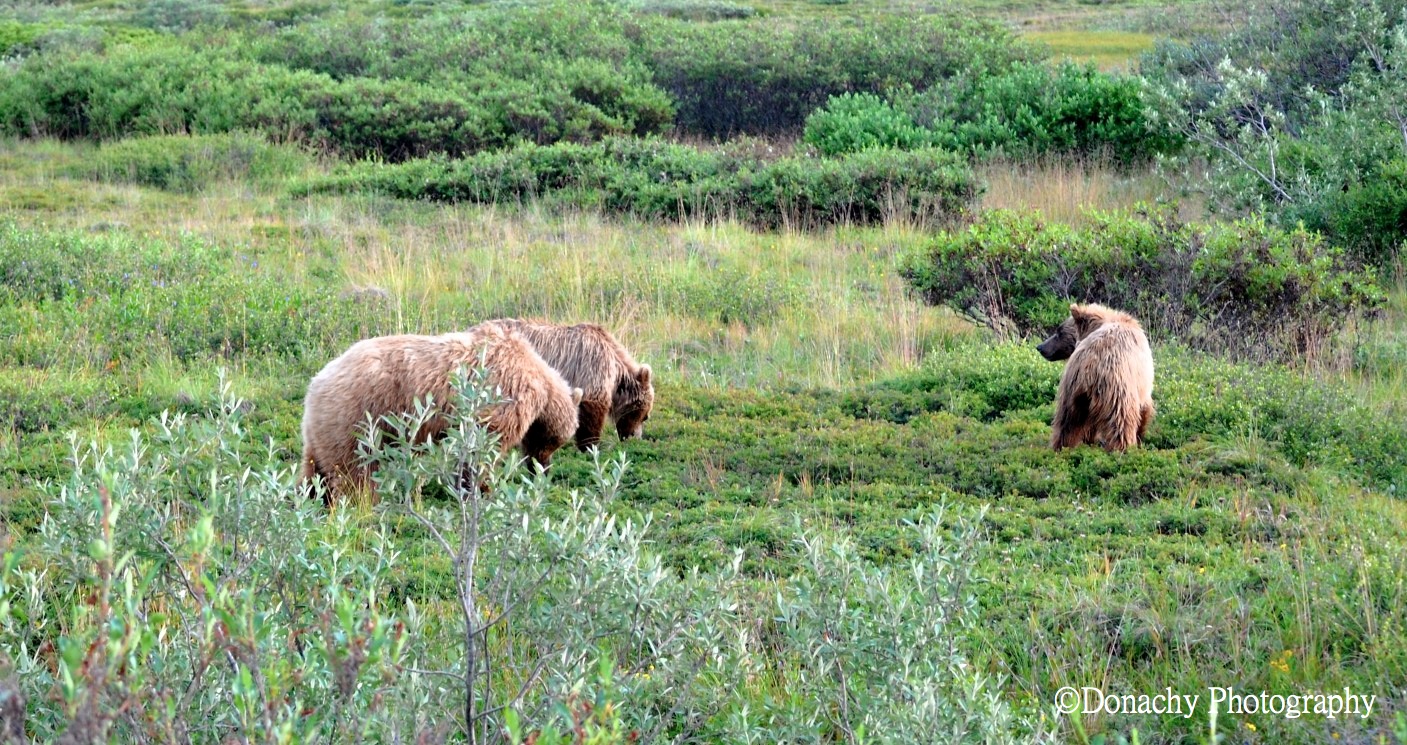
In 2010, our trip to Denali National Park took place on a foggy day in mid-summer. The hills and valleys were verdant, wildflowers were in bloom and animals seemed to be everywhere. Ptarmigan burst from roadside cover, golden eagles soared overhead, moose browsed the willows along creeks, and Dall sheep – some with thick, heavy, fully-curled racks – dotted the slopes like tufts of white cotton. We saw three different sets of female grizzlies and their cubs, and after having heard wolves on different occasions while camping in Yellowstone and Yukon Territory, we finally saw a pack of wolves, males, females and cubs, resting and playing on a grassy hill. That alone made the trip to Denali worth it for us.

Although there is a very brief window in which a limited number of lottery winners (literally) are permitted to drive their own vehicles deep into the park, the more typical approach is to sign up for one of the bus tours. These shuttle tours are no frills, economical, and worth every penny. While we camped on the park’s outskirts (our campground neighbor showed us a photo of a lynx he’d seen the previous day), camping – both tent and RV – is available in the park as well. A 91 mile road – almost all of it unpaved – cuts through the heart of the park, but only the first 15 miles are open to the public. That’s where the bus tours come in. Backpacking permits are available as well.

We took the bus all the way to the end of the road at Wonder Lake, hoping against hope for a photo of The High One reflected in the lake’s glassy waters. No mountain, but lots of wild blueberries!

I do enjoy long walks on the beach.


An October snow blankets the beach on Sarichef Island. The sea is still open. For now.

I remember my family taking me to the beach when I was very young. I loved the feeling of the warm sand on my feet and the gentle, salt-scented breeze on my face. I especially loved the energy I felt from the crashing waves. Sometimes when we had to go home, when we had to leave the beach, I would cry. Now, my home is a two-minute walk from the beach. Even though we’re only 22 miles south of the Arctic Circle, in late summer the days were surprisingly warm. Temperature weren’t much different from those on beaches in Northern California or Oregon.

But that was two months ago. Soon, the sea will freeze. On our daily walks along the shore, we notice patches of ice on the sand, and the near-shore water where it is most shallow is slushy at times. Most of the shorebirds are gone now.