Day 3: Tsagaan Suvarga, The Gobi Desert’s White Cliffs – Gazelles and Ger Life

camel skull & white cliffs n

In the distance, Mongolia’s Tsagaan Suvarga – The White Cliffs. In the foreground, a camel skull. A zud (harsh winter) can wipe out hundreds of thousands or even millions of livestock. And yet a hardy breed of people thrive here and in a land where humans and their herds of animals have coexisted with nature for millennia, wild animals are surprisingly abundant.

As we continued our journey south, the land unfolding before us bore little resemblance to what we had imagined the Gobi would be like. Throughout the journey, our van passed through nearly endless mixed flocks of passerines – wheatears, larks, buntings and sparrows. Eagles, hawks, ravens and vultures soared overhead. And there were times when gazelle seemed to be everywhere.

barbra photo camel n

Initially, we had no idea what to expect from the domesticated Bactrian camels we encountered, so we approached with caution. As it turned out, they were even-tempered and in some cases not opposed to having their heads scratched. With thick coats of fur, sturdy legs, heavily muscled bodies and the capacity to go for a full week without water, these magnificent animals have evolved to thrive in one of the world’s harshest environments.

“Would you ride one?” Barbra asked playfully motioning toward the group of camels standing a few meters from us. I could tell by the smile on her face and the twinkle in her eyes that she was in.

“Maybe,” I replied with some hesitation. They appeared to be docile enough.  “But not in circles in some tourist camp. If I get on a camel, it’s going to be to go somewhere.”

In fact, we’d get our opportunity in a couple of days. Between seeing several mammal and bird species that were new to us and after eating and drinking things we’d previously only read about (and in a couple of instances had never heard of) this proved to be a trip of firsts.

gazelle bull vocalizing n

A thick-necked buck (center) vocalizes an alarm to his group of females and young. Mongolian gazelle (Procapra gutturosa) are the definition of skittish. It took our group several attempts before we began to learn how to approach these shy animals closely enough to get decent photographs.

Almost constantly on the move and sometimes covering thousands of square miles in a given year, Mongolian gazelle have adopted a nomadic lifestyle well-suited to the arid steppe and desert. Hunted both legally and illegally, their numbers remain robust at more than a million individuals. On our trip from Ulaanbaatar to the Gobi, we encountered thousands.

gazelle galloping kicking up dirt n

Pounding hooves and flying dirt. Standing about as tall as a man’s knee at the shoulder, these diminutive ungulates are capable of speeds up to 40 miles an hour (65 kph). (Click any of these photos to enlarge them.)

With seven of us in the van along with camera gear, sleeping gear, cooking gear, small chairs, tubs of food, extra water, eight three-liter boxes of wine, gifts for our host families, day packs and clothing bags rattling over steppe and desert, you might suspect we felt crowded and uncomfortable. It amazed us that we did not. We never tired of seeing the wildlife and landscapes and anticipating what might be around the next hill.

Nonetheless, after a day of bouncing across the open range, we were always happy to pull into our next ger, meet our hosts, and settle in.

hostess airating tea horizongtal

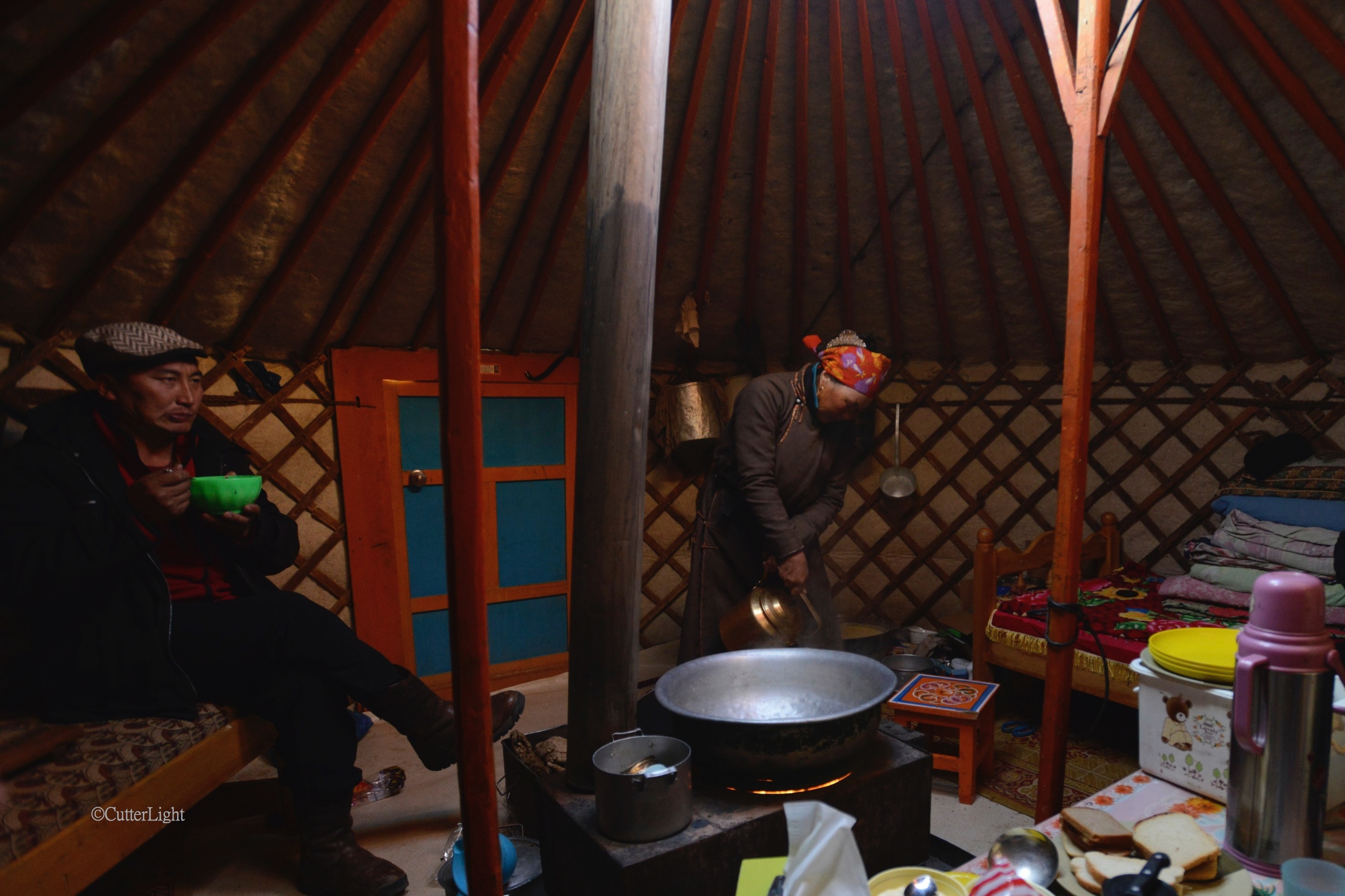
Our hostess aerates a steaming pot of yamani suute tsai (suu – te – tsay) . Goat milk tea is a staple beverage in many Mongolian gers. Adamant non milk drinkers, Barbra and I loved the warmth, nutrition and flavor of this drink and came to look forward to a steamy bowl of it (or of the equally delicious temeeni suite tsai – camel milk tea) before dinner each evening. 

Gers are eminently well-suited to the life of nomadic herdsmen and their families. Round and with conical roofs, there are no flat walls or edges to catch the wind. Covered with felt, they are well insulated. At around 500 square feet, (46 square meters) these one-room homes are an answer to the “tiny house” movement’s quest for a comfortable, efficient living space.

In modern times, many gers feature solar panels and batteries to power TVs and lights. A centrally-positioned steel stove, generally fueled with dry dung, serves as both a cook-stove and a heating system. Typical gers are appointed with wooden-framed beds, a small dining table, a few chairs, and perhaps a chest of drawers or two, all generally brightly colored. If you look around carefully, you’re likely to notice a rifle tucked away somewhere; wolves are still a threat to livestock in many locales, and foxes are common. There is no running water.

red motorcycle & ger n

Although many herdsmen tend their animals on horseback, motorcycles have proved their usefulness as well.

OLYMPUS DIGITAL CAMERA

In the last remaining light of the day, our host prepares a young sheep for dinner. His wife used the entrails to whip up the best country sausage we’ve ever tasted. Nothing was wasted. As the eldest in our group, I was offered dibs on the heart, kidneys, lungs, blood sausage, liver and the highly prized, succulently fatty tail. Some of these were epicurean firsts. Salted and otherwise very lightly seasoned, all were quite toothsome. The cigarette, which our host hand-rolled prior to beginning this chore, never left his lips.
nimka & ger life n

Breakfast. Our driver, Nimka, relaxes with a bowl of goat milk tea in which homemade sausage from the previous night’s meal is steeping.

Jack sipping goat milk tea w sausage n

Following Nimka’s lead, I have a bowl of the same. It was absolutely delicious.

rustic bucket & Ladle n

No doubt the key to the excellent flavor of everything was its freshness. Here is the bucket our hosts used for milking the goats.

photographer jack @ white cliffs n

Looking out over the desert plain from a vantage point on the White Cliffs. Day by day, hour by hour, we found ourselves falling in love with this country.

Next stop: Yolin Am Canyon: Remnants of the Gobi’s last glacier. Ibex, Picas, Raptors and more…
Gobi Desert Trek Day II: The Central Mongolian Steppe from Ikh Khayrkhan Uul to Baga Gazaryn Uul

horses in salt lake n

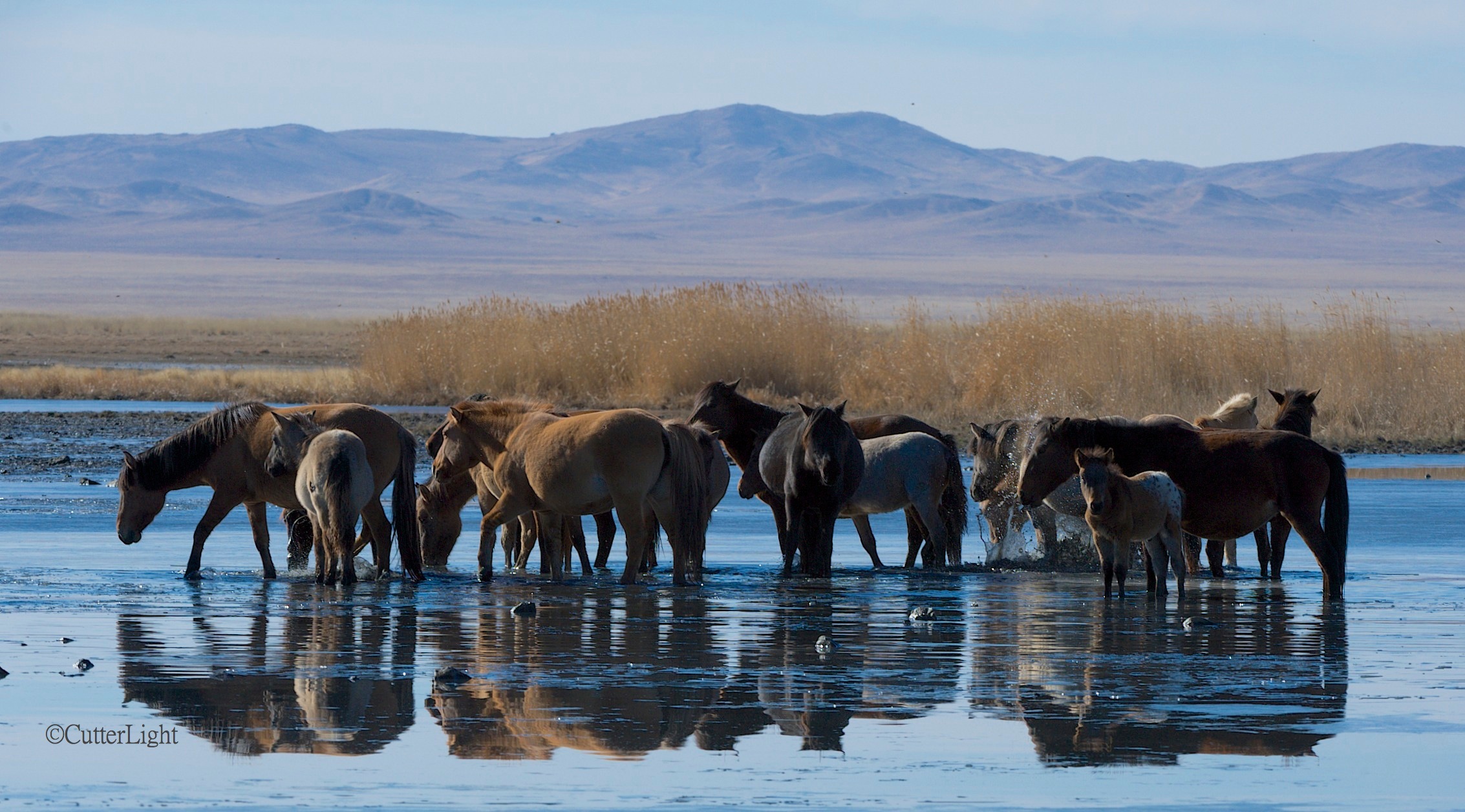
It’s a tough breed of horses that call Mongolia home. Most Mongolians were practically born in the saddle, and even Ulaanbaatar’s urbanites ride them with ease. But these horses are never truly tamed in the western sense of that word. Here a group wades a small salt lake on a mid-October morning a few ticks above freezing.

We woke after spending our first night in a ger to a world of frosted grass and blue skies. After breakfast and some casual rock climbing on nearby outcrops, we piled into the van and resumed our journey south to the Gobi Desert.

russian van off road n

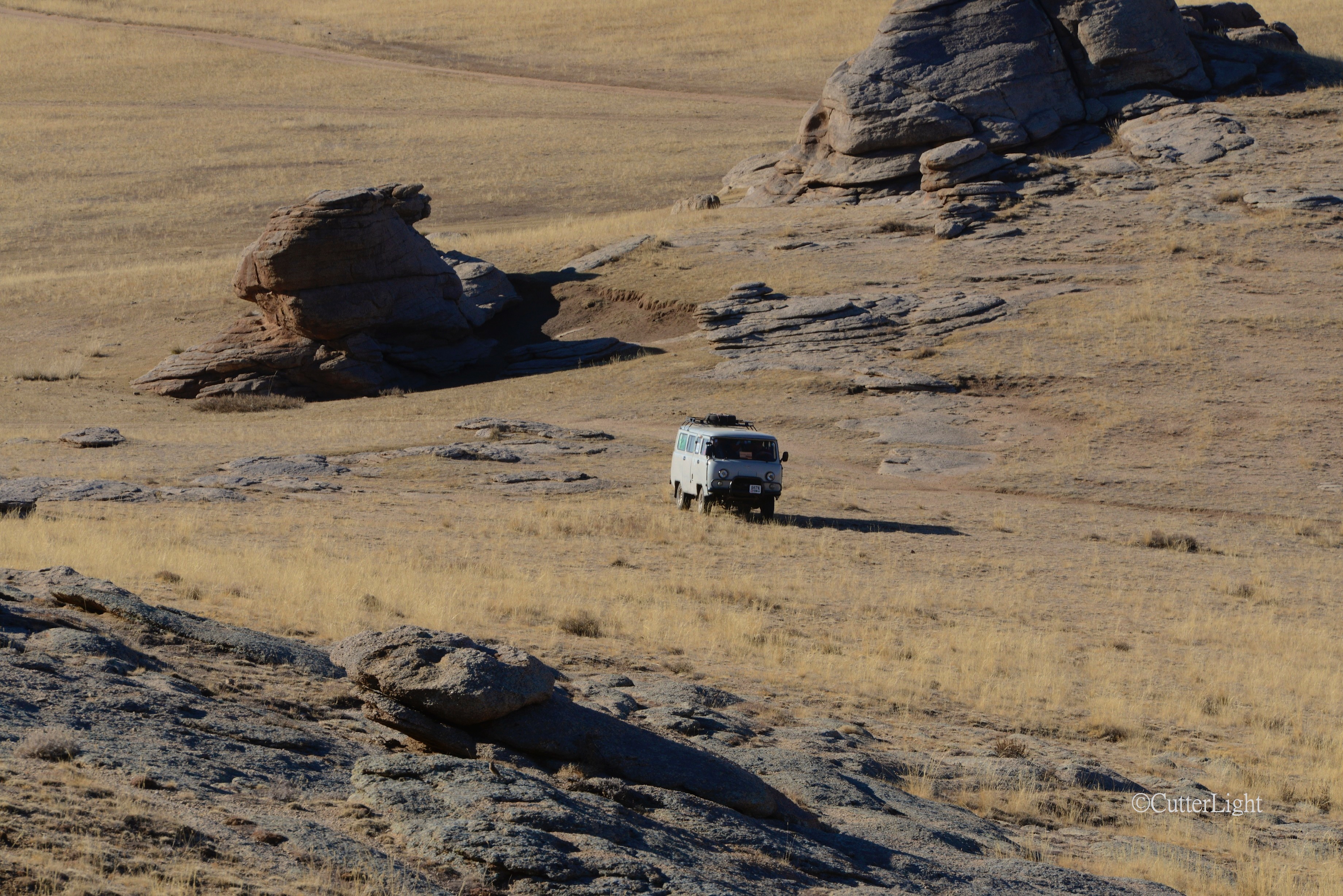
Beefy and easy to keep running, four-wheel drive Russian-built vans are standard on the Mongolian steppe. 

ruddy shelducs salt lake n

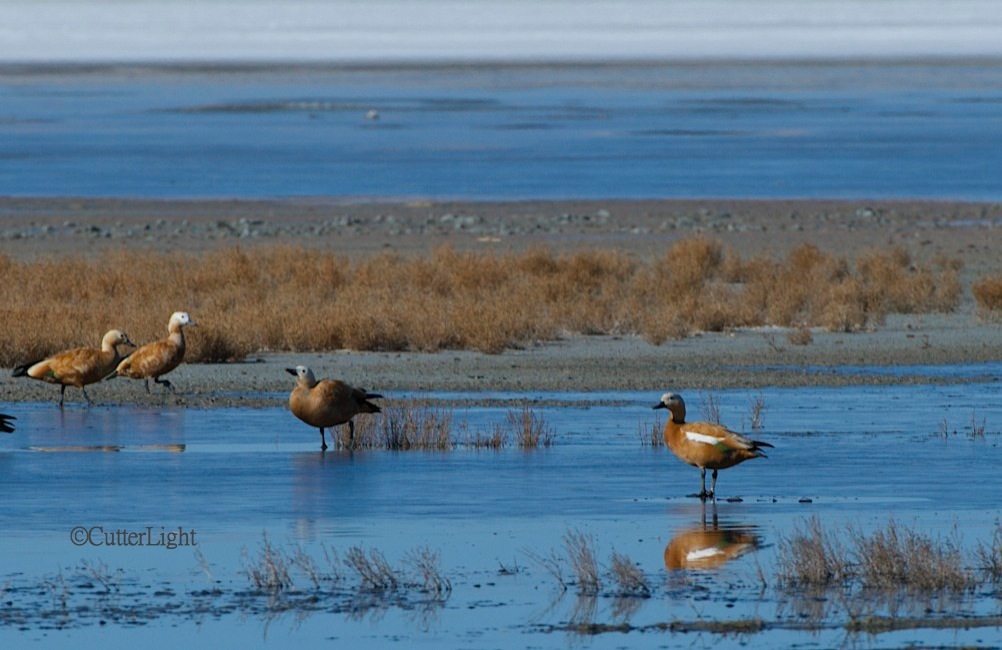
Ruddy shelducks (Tadorna furruginea). The white edge along the lakeshore at the top of this photo is salt.  Known for their affinity for brackish water, ruddy shelduck numbers are declining worldwide as salty wetlands are drained for agriculture. In addition to the horses in the photo above, the lake was also populated with common shelducks and teal. 

common shelducks salty lake n

Heads down and tails up, common shelducks (Tadorna tadornain muted late fall plumage sift through the lake’s briny muck. Meanwhile, hundreds of passerines, including scores of horned larks, flitted through the air and along the shoreline.

The sun moved higher into the sky. With the soft morning light leaving the lake’s waters, it was time to climb back into the van. The vastness of the land, dotted here and there with horses, cattle, goats, sheep and wild gazelle, continued to mesmerize us. But ever so subtly, we noticed that the grass itself was becoming more sparse.

Off in the distance, a group of especially large-looking horses caught our attention. As we drew closer, humps emerged from their backs. Camels! In less than a morning’s drive, we found ourselves transitioning from the lush grasslands of the steppe to the northern edge of one of the world’s great deserts: the Gobi.

OLYMPUS DIGITAL CAMERA

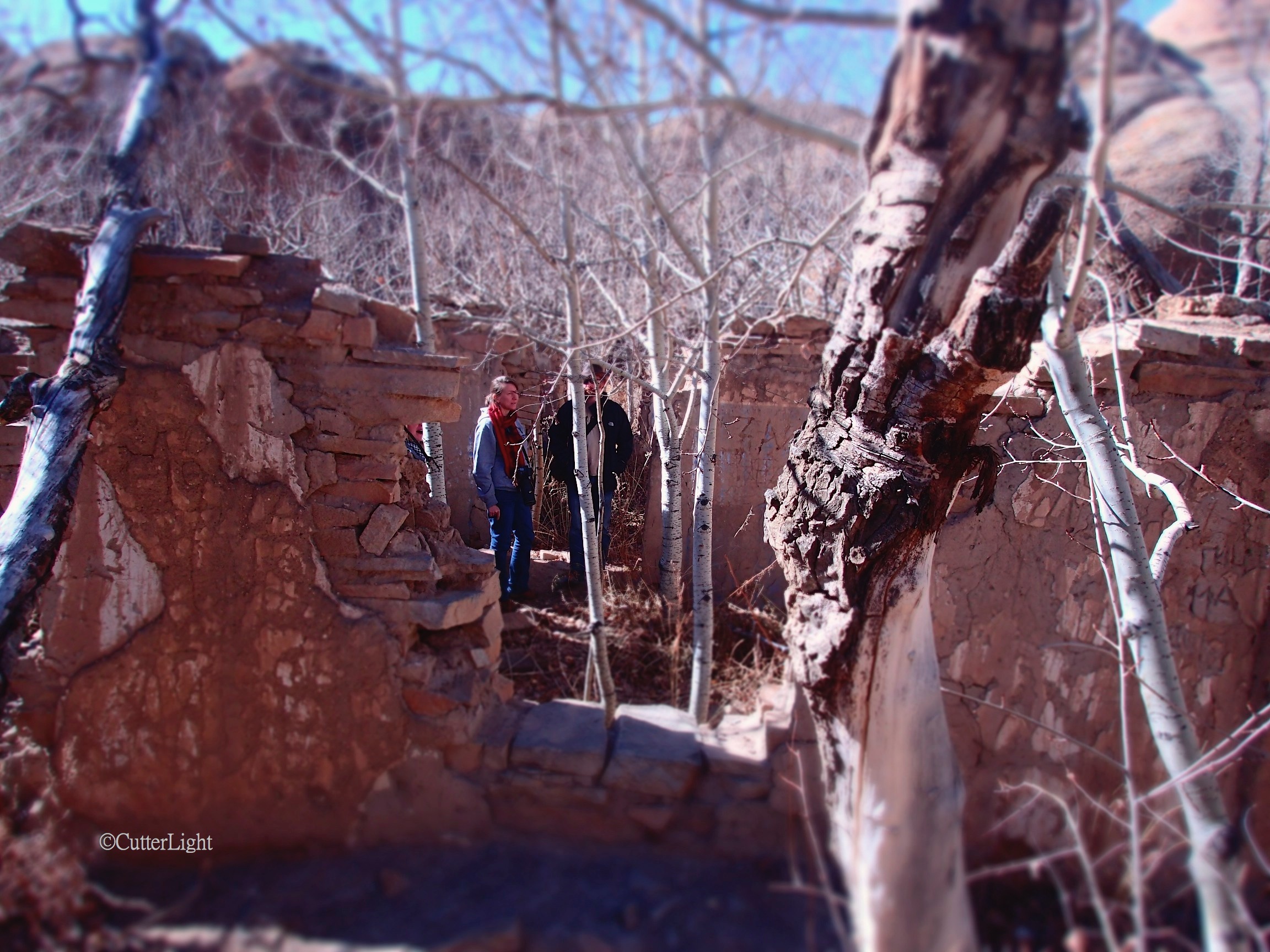
Birch trees tell a tale of water just below the ground’s surface in an otherwise parched landscape, and it was here a band of monks established a monastery long since abandoned and fallen to ruins. 

OLYMPUS DIGITAL CAMERA

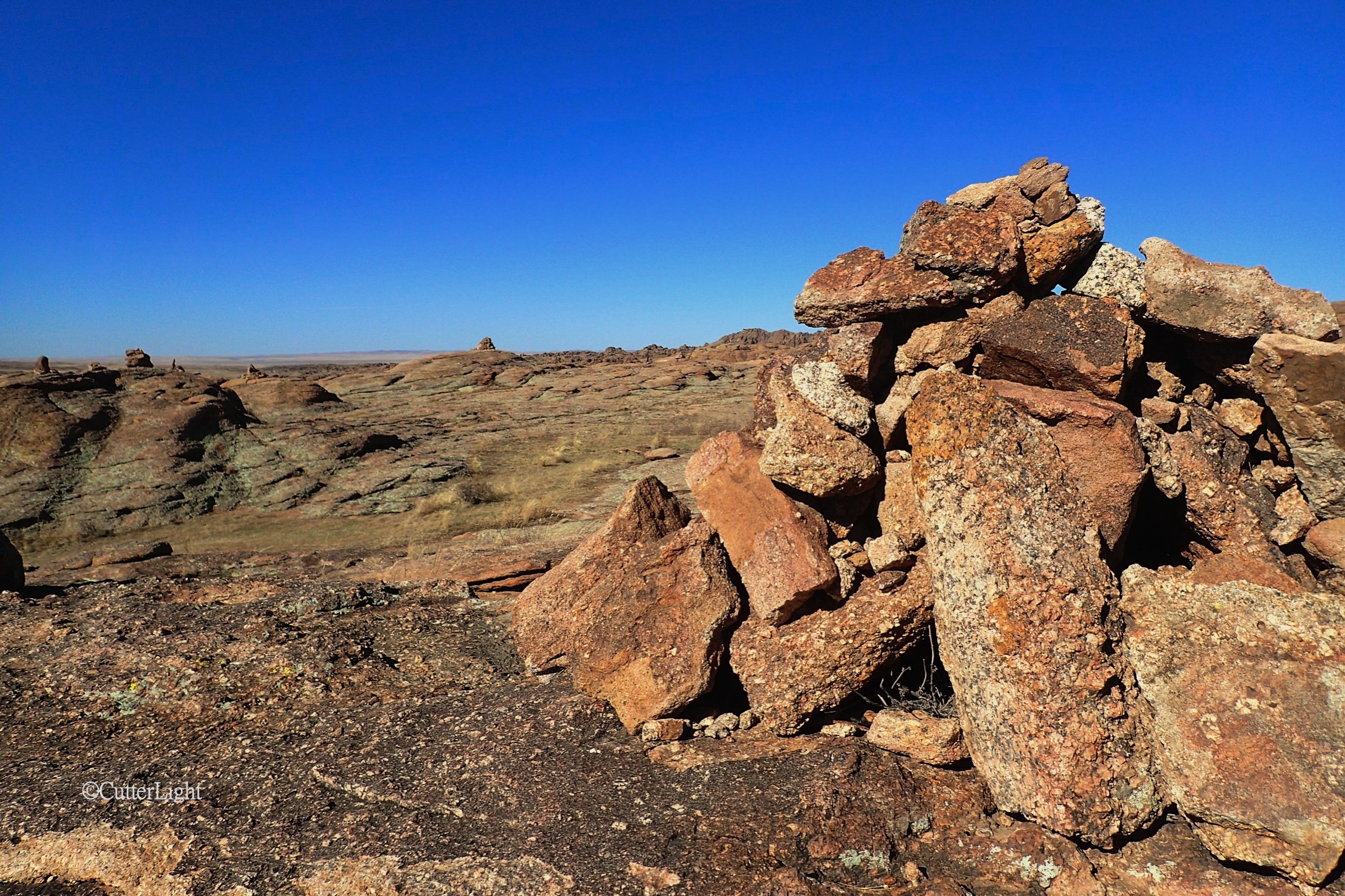
And yet in a sense, the monastery is still alive and vibrant as these nearby ovoos attest. It is the custom in Mongolia to add rocks and other items to these cairns and walk around them clockwise three times out of respect for the sky and earth and to ensure a safe journey.

grasshopper_new

Brown with late autumn, this familiar grasshopper is a testament to species similarity throughout the Northern Hemisphere. Existing in tremendous numbers in a country where pesticides are still all but unheard of, these hopping protein pills account for the huge number of birds here.

OLYMPUS DIGITAL CAMERA

Featuring a dinner of stew with Mongolian-style noodles, goat milk tea, and six liters of wine along with our hosts’  airag (fermented mare’s milk), our second night was celebratory. 

That night, we stayed with a nomadic family in their winter camp. Their gers and ungated livestock enclosures (where the otherwise free-ranging animals spend the night) were tucked away from the coming winter wind among rock outcrops.

Nomadic Mongolian herders don’t travel constantly; they maintain two to four seasonal camps. As the seasons change, they pack up their gers, gather their livestock, and take advantage of fresh pasture.

Twice at this camp – once in the evening and once in the morning – we flushed out large coveys of some type of partridge. Both times the birds flew directly into the low sun, so that all we got was the sudden wind-rush thrum of wings, hearts stopped dead in our chests, and winged silhouettes. As usual, rock buntings and other finch-like birds were abundant.

red rocks at sunset n

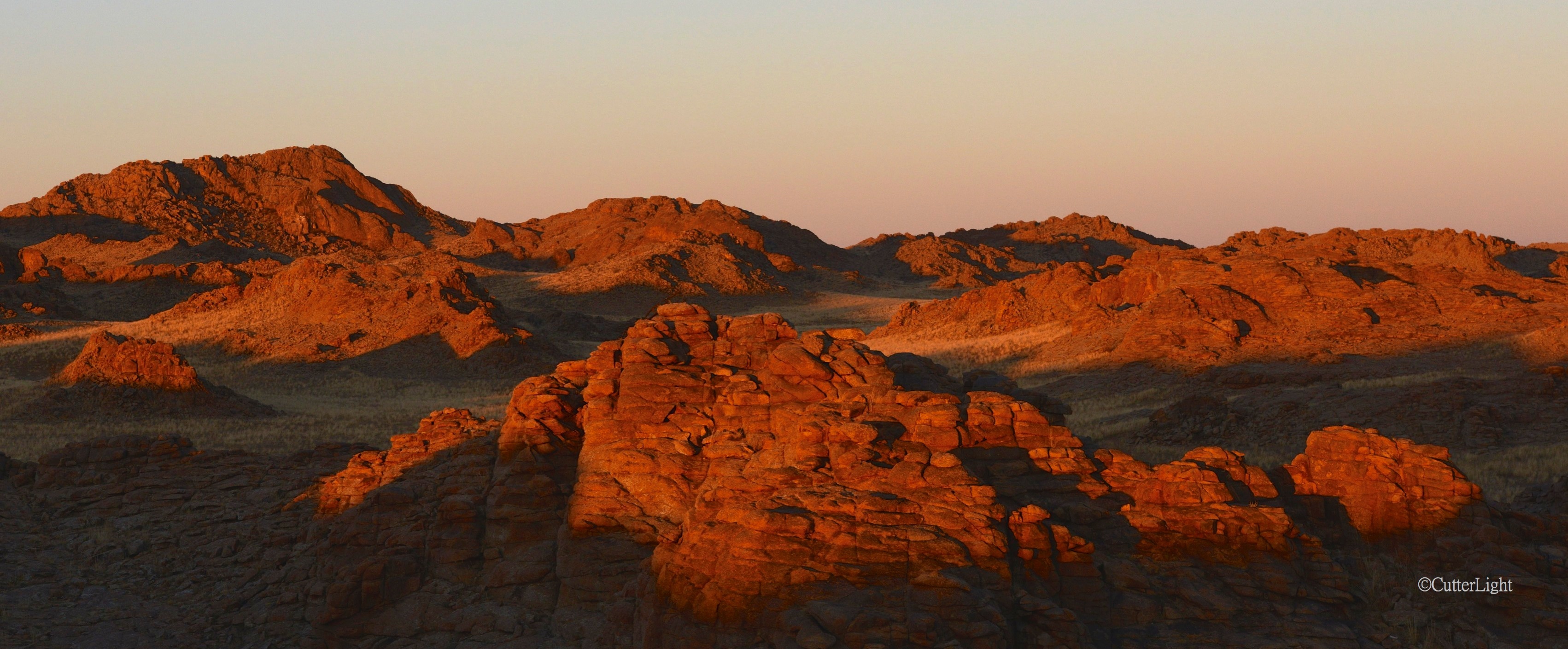
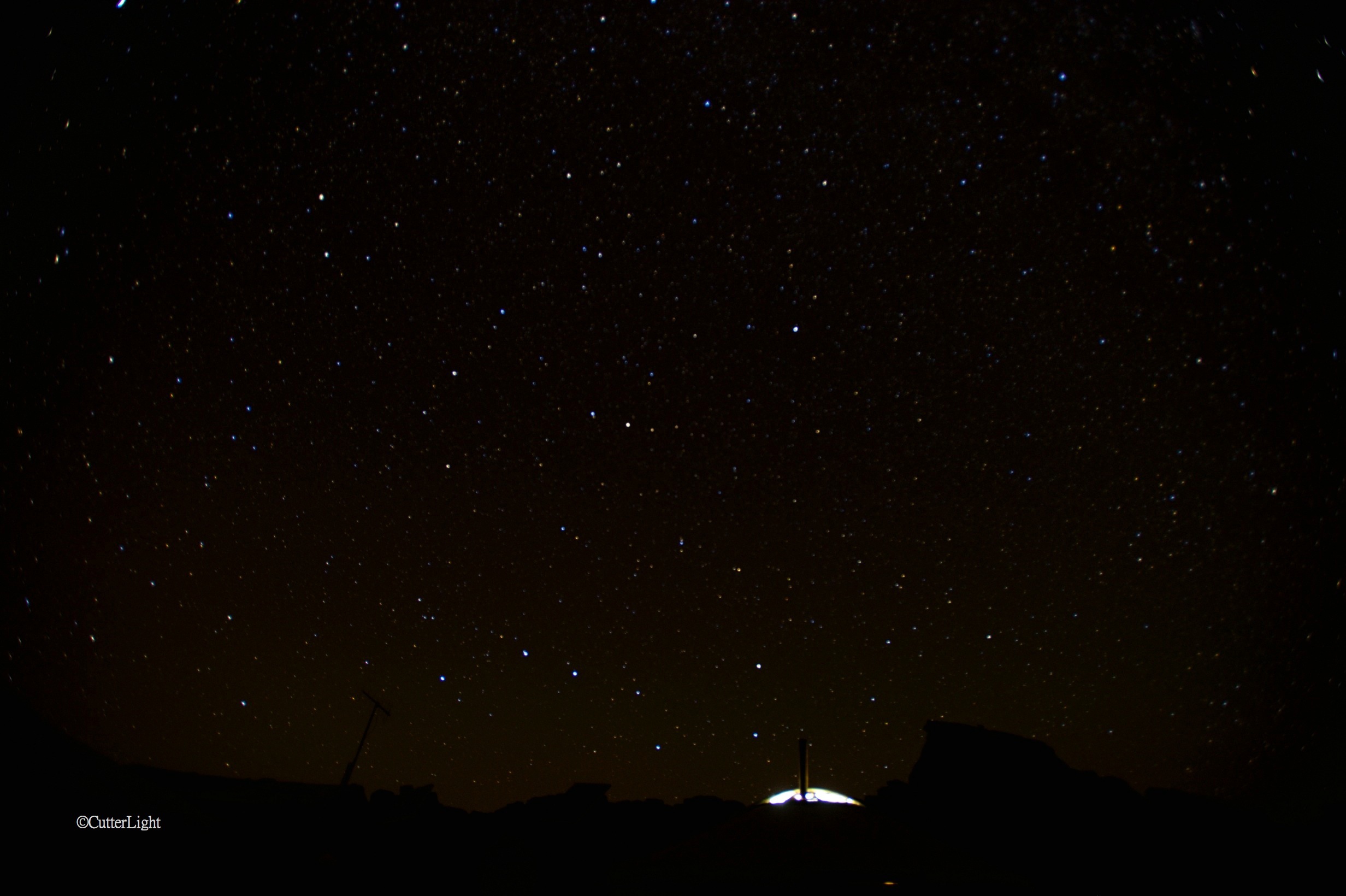
Sunset on another day in the cold, spare paradise we were discovering. Below, the night sky.

big dipper over ger n

Dipper scooping out the horizon… dome of the felt-covered ger glowing white on the sky… Fire inside against the chill of the night… Straight above, the wash of the Milky Way… 

Next: The Middle Gobi Desert: Life in a Mongolian ger.

Coming soon: Raptors, Gazelles, Ibex, Picas and a Pit Viper


Ulaanbaatar to the Singing Dunes of Khongoryn Els – Eight Days in Mongolia’s Gobi Desert: Part I

gers & horses in big country n

Roughly 75 miles (120 km) from Ulaanbaatar, grazing horses and the first ger we stayed in are dwarfed against vast grasslands rimmed in mountains. Although the mountains appear low, the grasslands themselves are over 4,000 feet above sea level. With abundant wildlife, few villages and virtually no paved highways, the Mongolian steppe is one of the world’s great high plains wildernesses.

We have no idea how our driver, Nimka, and our guide, Otgo, found the first ger we stayed in. Pitch dark except for the wash of the Milky Way in the night sky and the headlights from our van, Nimka steered from one set of indistinct dirt tracks in the grass to another. My insistence that we stop for a look at herds of gazelle coupled with our late-in-the-day start from Ulaanbaatar, Mongolia’s capital, had us arriving well after dark.

And then, suddenly, there it was. A faint glow gradually assumed the round shape of a nomadic family’s home. Nimka eased the van to a stop, introductions were made, and we soon were inside. A bowl filled to brimming with airag – fermented mare’s milk – was ladled out from a large leather bag hanging on one side of the ger’s wall and passed around.

OLYMPUS DIGITAL CAMERA

Proudly displayed on a rustic, hand-decorated wooden frame, this leather bag contains airag, the fermented mare’s milk that is the traditional welcoming offer in many gers throughout Mongolia. Slightly sour, slightly alcoholic, slightly sweet…

In addition to the airag, the couple who owned the ger prepared a large wok-shaped pot of mutton stew – hearty fare and welcome as we hadn’t eaten since noon. This was our first experience staying with a family in their ger, and initially it was a bit awkward. Our hosts spoke no English. We spoke almost no Mongolian. Would it be OK to take photos? Should we bring in a box of wine and offer it? And, uh… is there an outhouse or something?

Our guide Otgo, spoke excellent English and quickly helped us get acclimated. Upon entering a ger, one is to move clockwise. The oldest male in the party (in this case, me) is expected to sit at the “top” of the ger, directly across from the door. We’d be rolling out sleeping bags at bedtime. As for an outhouse… pick a bush, clump of tall grass or rock outcrop to duck behind, and for the “big jobs,” dig out a hole with the heel of your shoe.

OLYMPUS DIGITAL CAMERA

With a diameter of around 25 feet (7.6 meters), a typical ger has about 500 square feet (46 square meters) of living space. The ger’s centerpiece is a steel stove with a wok-like pot designed to fit perfectly. Outside temperatures at night dipped to freezing in mid-October, but a steady feed of dry manure kept the ger warm to roasting. 

OLYMPUS DIGITAL CAMERA

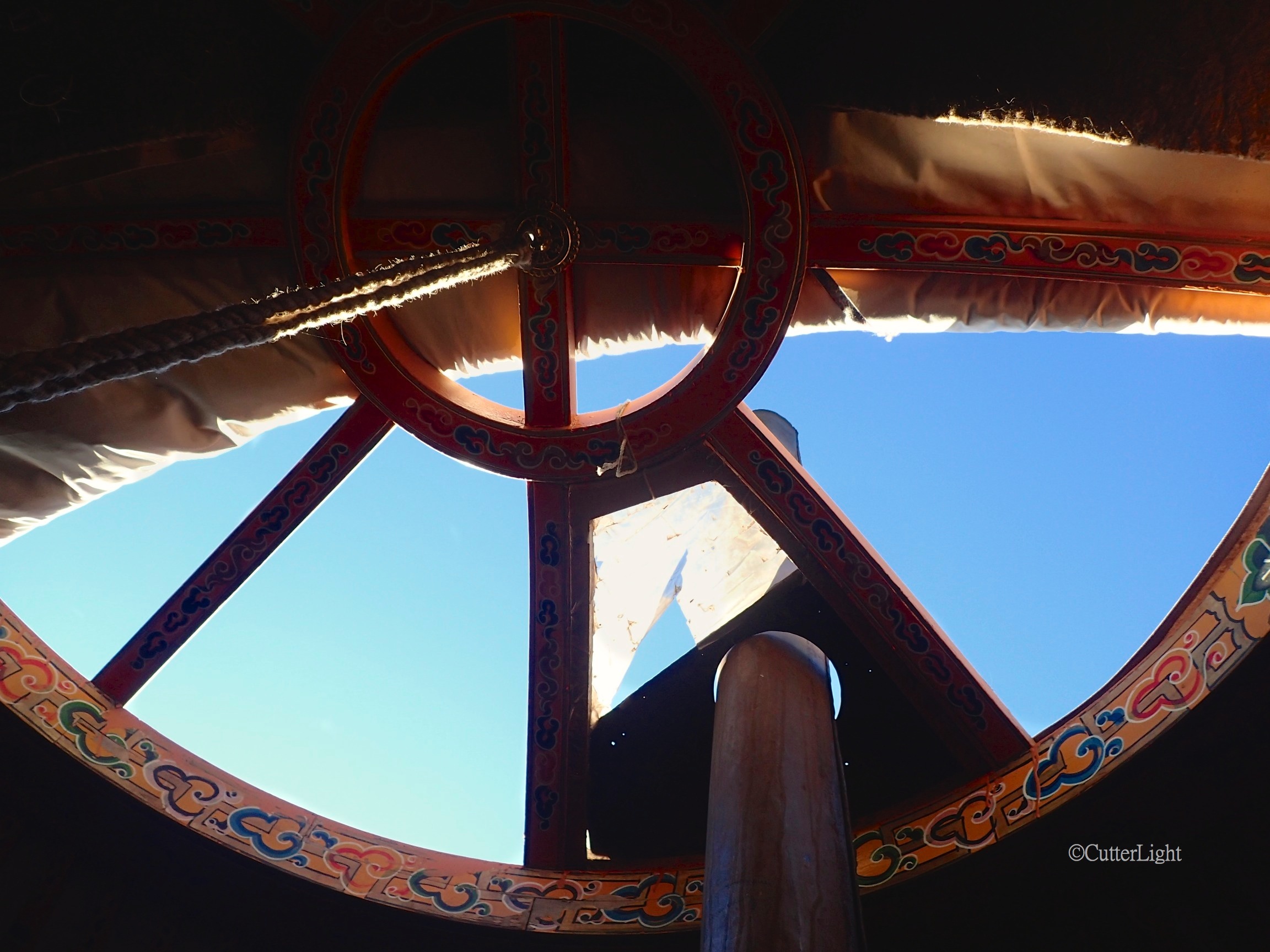
The stove’s chimney extends through an opening in the center of the ger. The sun hadn’t been up long when we sat down to breakfast: coffee, tea, cheese and bread and jam.

OLYMPUS DIGITAL CAMERA

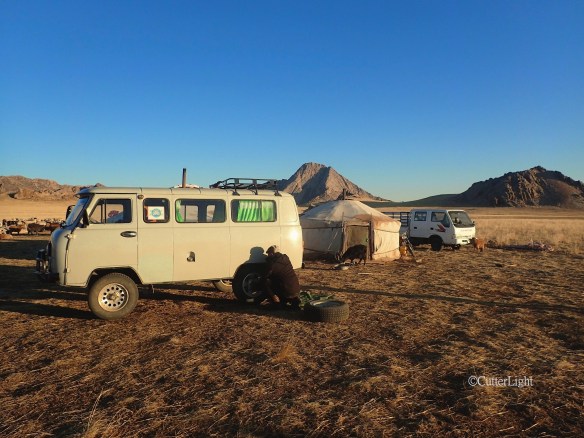
After breakfast, Nimka got to work changing one of the tires on his tough, Russan-built four-wheel drive van. This was the first of four flats during our eight-day trip.

OLYMPUS DIGITAL CAMERA

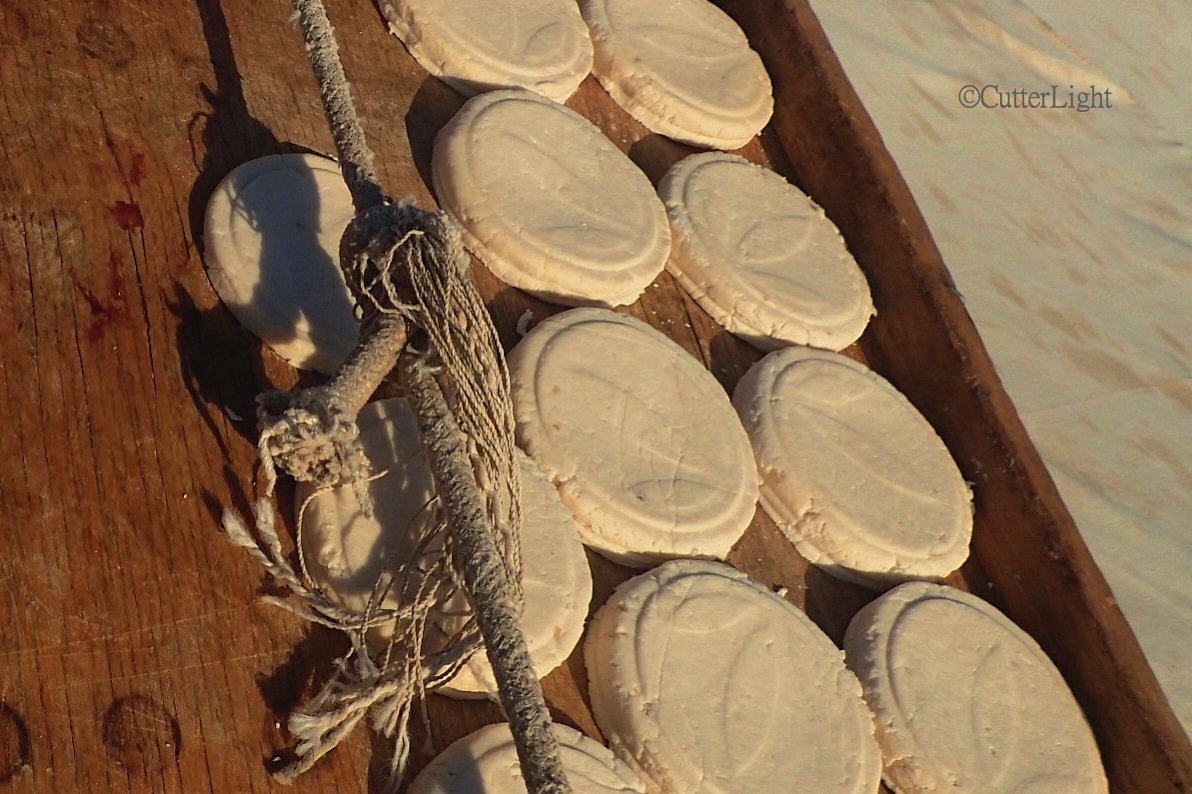
Freshly-made aaruul, a type of dried milk curd, cures in the early morning sun atop the roof of the ger. Once it’s dry, aaruul can be kept almost indefinitely. This was the food that fueled Chinggis Khan and his armies as they conquered the largest area of land ever to fall under one empire. Tasting like sour milk, aaruul is an acquired taste for most non-Mongolians.

horse with beautiful mane & tail n

Legendary for their endurance, the horses of Mongolia are sturdy, tough and beautiful. 

horse brand n

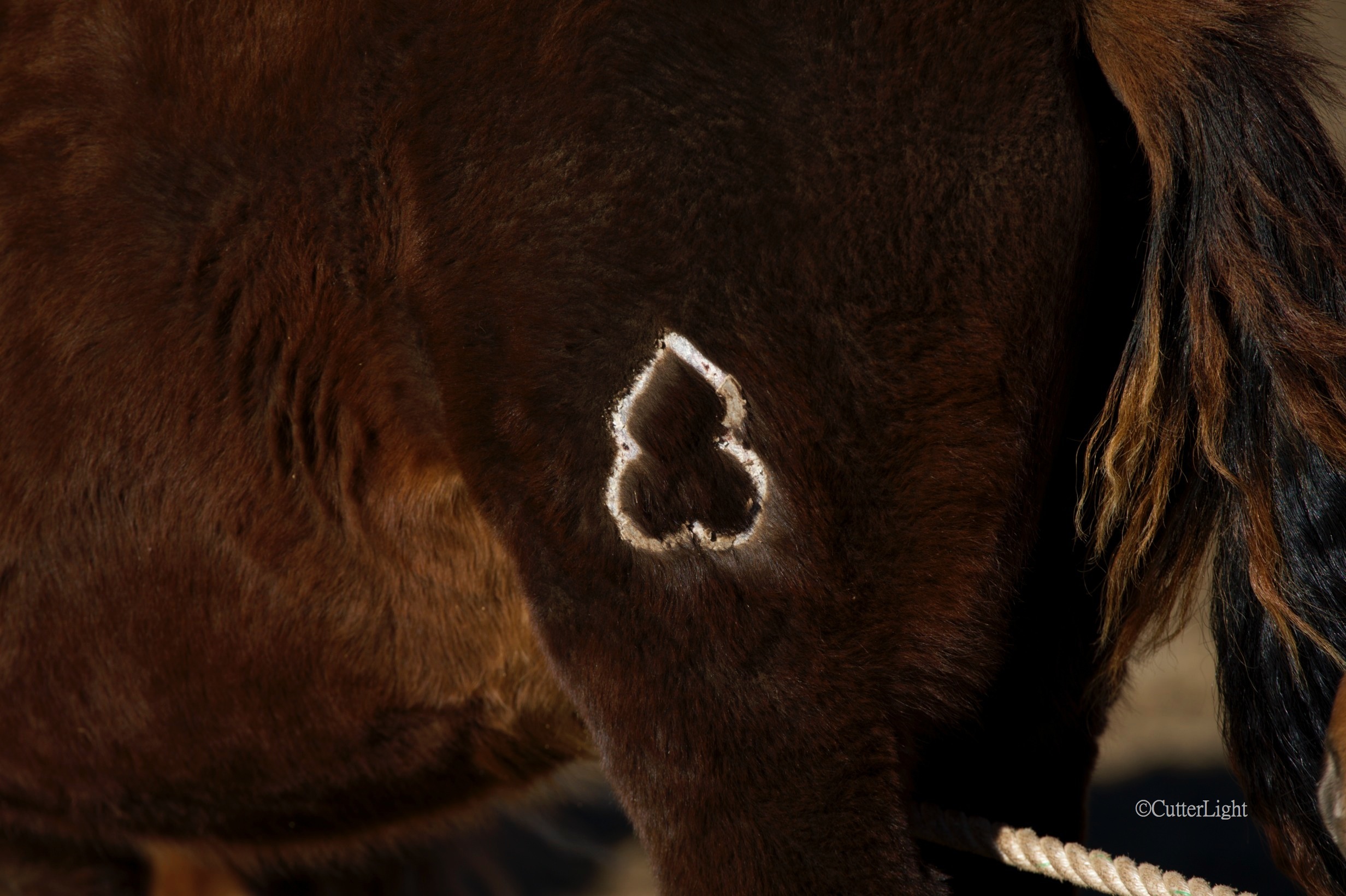
There essentially are no fences in the Mongolian countryside.

mongolian dog n

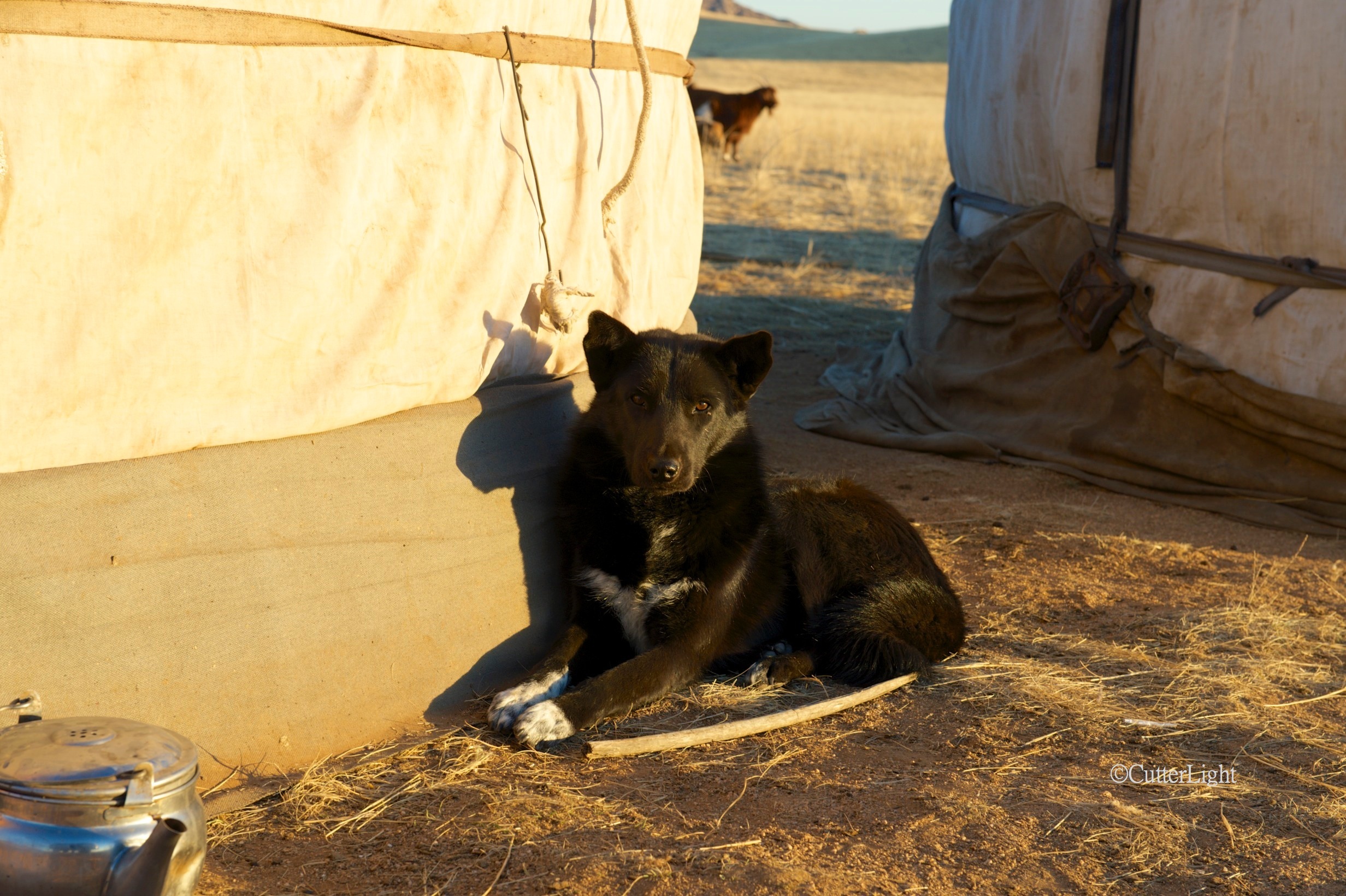
Dogs such as this handsome fellow are an integral part of herders’ lives. While not abundant, wolves are still part of the Mongolian landscape. This guy was quite friendly, as were most of the dogs we encountered.

1st ger landscape w cattle n

A string of cattle makes its way along tire tracks that pass for the local road near the first ger we stayed at. Over the next few posts, we will share more of what we saw and experienced on our trip to the Gobi, including encounters with thousands of Monglian gazelle, countless birds of prey, groups of Siberian ibex, dinosaur fossils, exotic traditional Mongolian cuisine, a sojourn into the desert by camel, and even a pit viper. Stay tuned!

The Wild Right Outside Ulaanbaatar: Hiking Mongolia’s Bogd Khan Mountain

bogdkahn hikers with lit up larches n

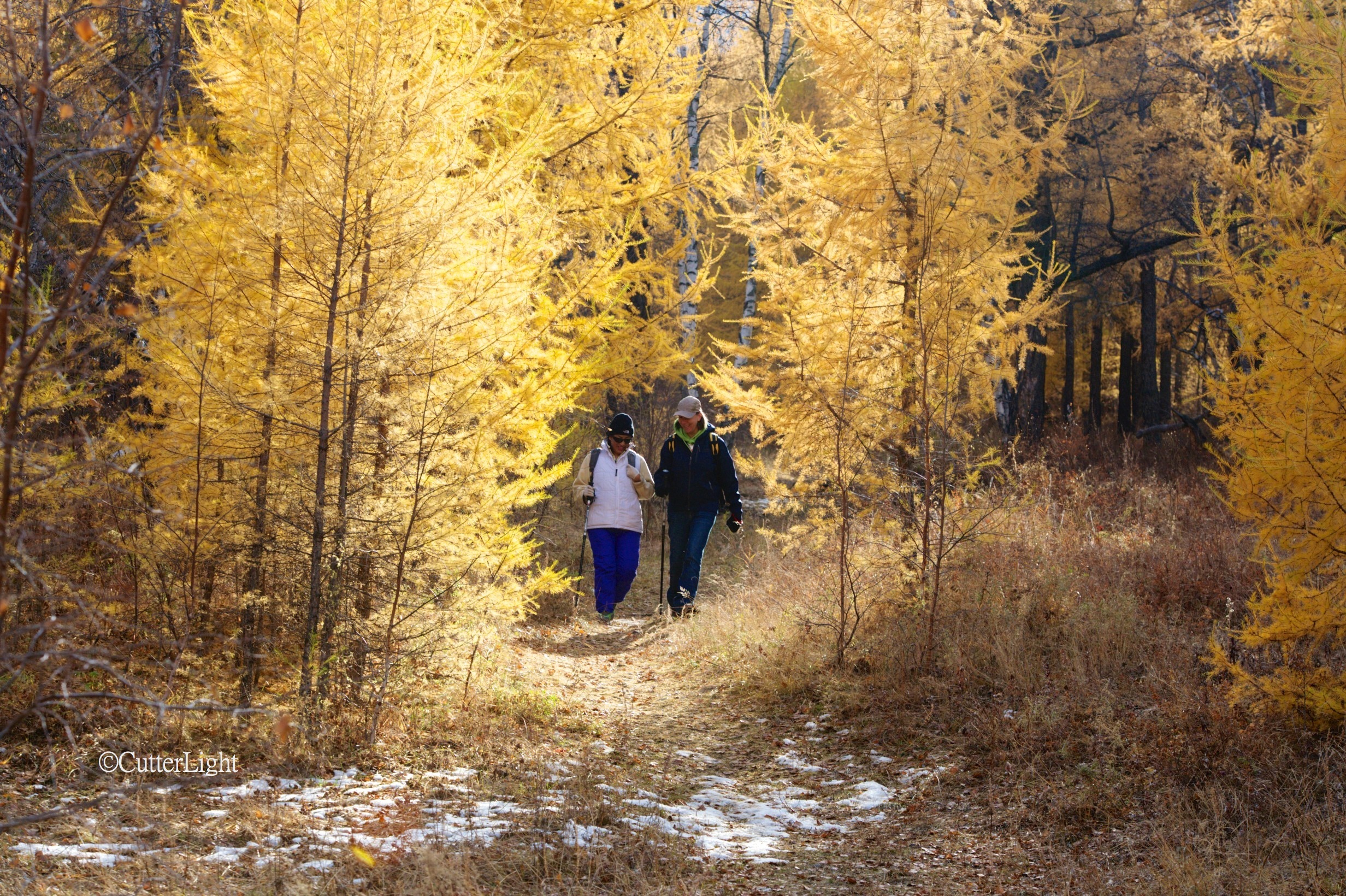
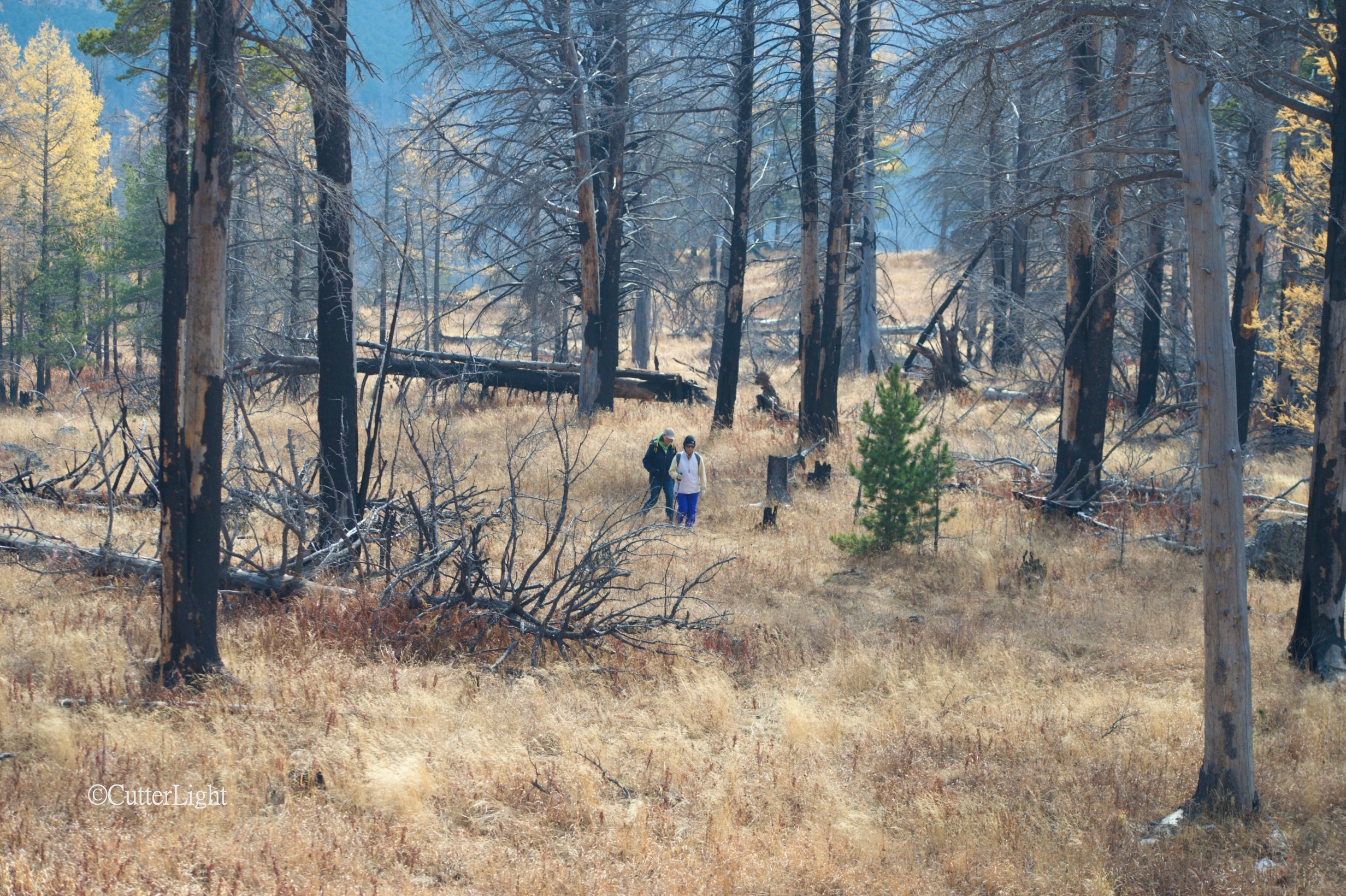
Yellow with fall, larch trees light the trail as Barbra and a friend make their way down from the summit of Bogd Khan Mountain. A Unesco Heritage Site, Bogd Khan rises 3,000 feet (914 meters) above the southern edge of the city of Ulaanbaatar, itself over 4,000 feet (1,310 meters) above sea level. Considered sacred by Mongolians, the mountain is home to numerous species of birds and other animals, some of which are rare.

Sciurus vulgaris eurasian red squirrel n

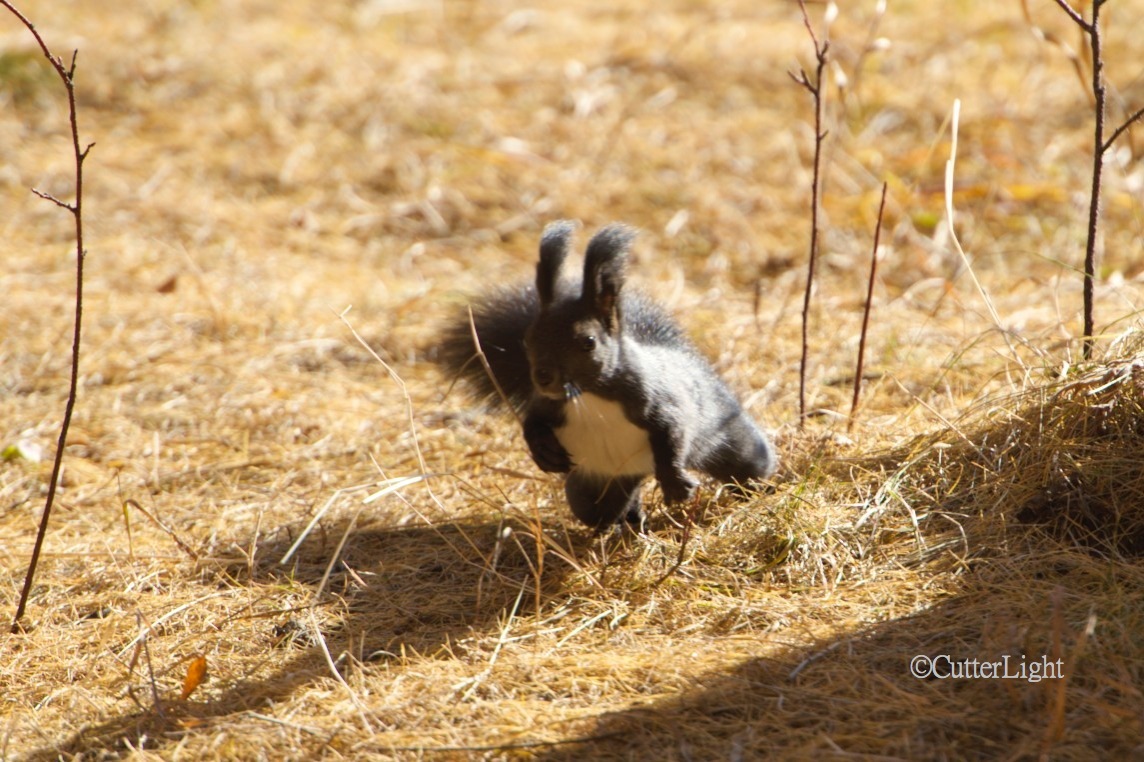
The Eurasian red squirrels (Sciurus vulgaris) of Bogd Khan are nearly black. Siberian Pine and Scotch pine provide ample forage for the forest’s squirrels and chipmunks; abundant birds of prey and foxes keep them on their toes. Prompted by increasingly cold nights, this one was a whir of activity as he scampered from tree base to tree base in an attempt to build his stash of pine seeds. 

red squirrel n

We followed a looping path up the mountain and back down, pausing at the summit for lunch under Mongolia’s signature blue skies. The hike took us through deciduous forests of mostly larch (Larix siberia) and birch (Betula paltyphylla) in the lower elevations, gradually giving way to evergreen forests predominated by Siberian and Scotch pine as we we climbed higher. 

icy stream with gold n

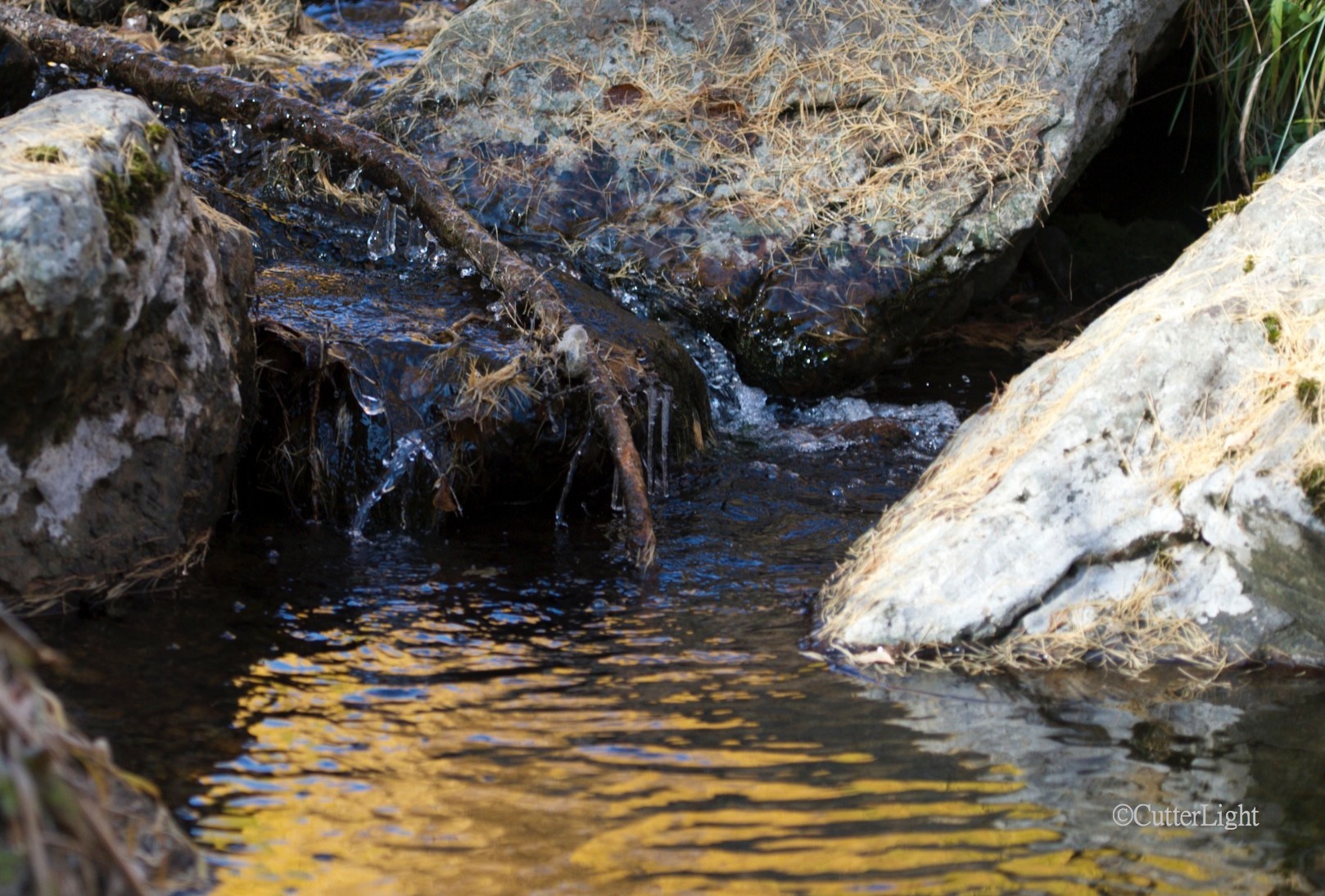
Recently nighttime temperatures have been plunging well below freezing with daytime highs climbing into the 40’s (degrees Fahrenheit), perfect fall hiking weather. This icy little brook is lit with the gold of larch trees and morning sunlight. 

Last embers of fall n

Catching the slanting rays of early sunlight, some of the last embers of red glow in this small meadow on the shoulders of Bogd Khan. Just weeks ago raptors such as black kites seemed to be everywhere. Now ravens and crows have taken over the skies. Winter is coming.

great tits Parus major n

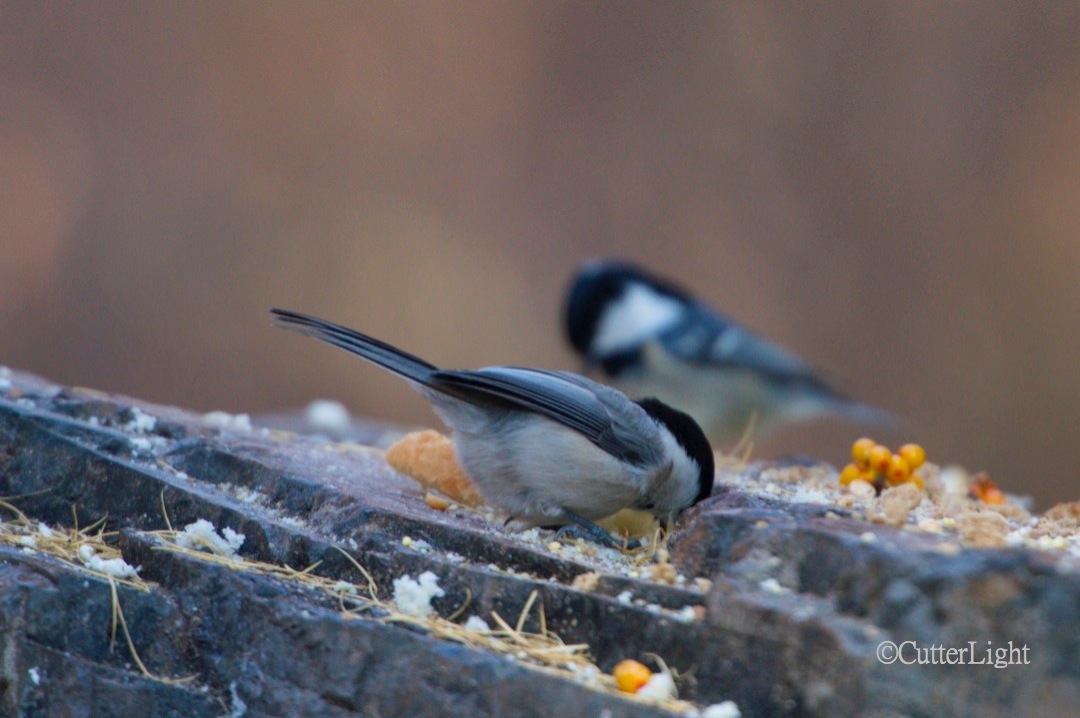
A previous hiker left a snack for these great tits (Parus major), including sea-buckthorn berries. They look and sound very much like their North American cousins, black-capped chickadees. 

eurasian nuthatch sitta europaea n

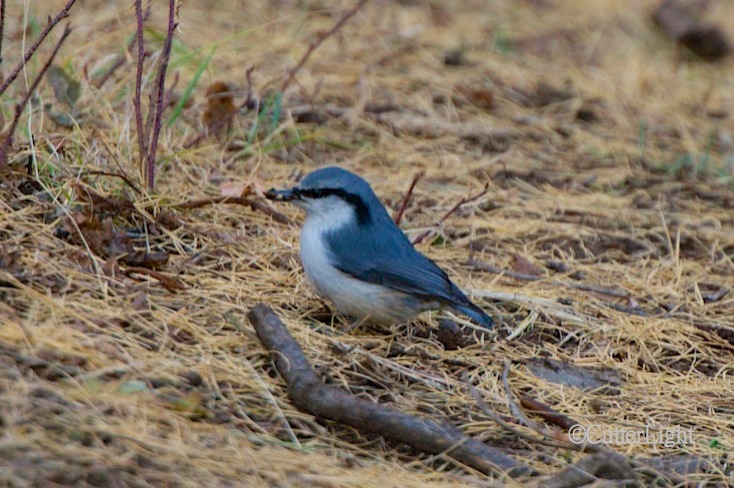
Another common resident of Mongolia’s forests is the Eurasian nuthatch, (Sitta europaea). This one is sorting through larch needles for insects and seeds. 

vulpus vulpus young red fox n

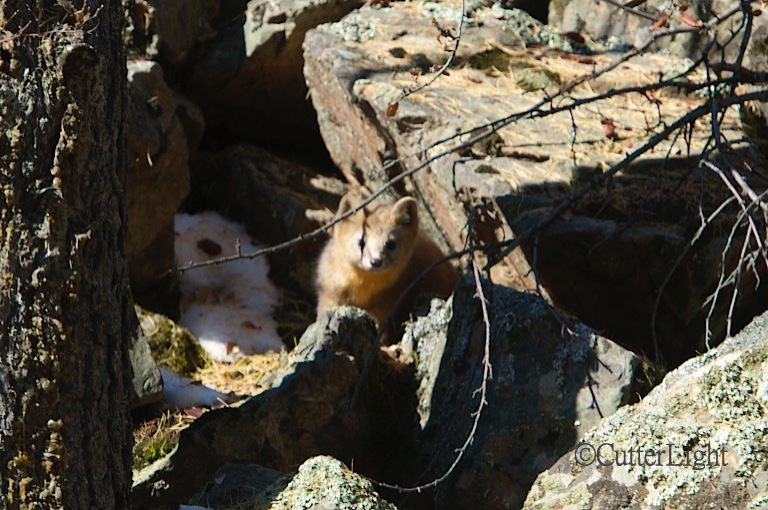
A first for us, this sable (Martes zibellina) appeared to be hunting when we startled each other. 

red fox hunting n

This little guy was quite skittish and didn’t hang around long before he took off for less populated (by us) hunting grounds. Picas, gerbils, squirrels and other rodents are abundant throughout the steppe and forests of Mongolia. Already thickened up for winter, his coat looks luxurious.

siberian chipmunk eutamias sibiricus n

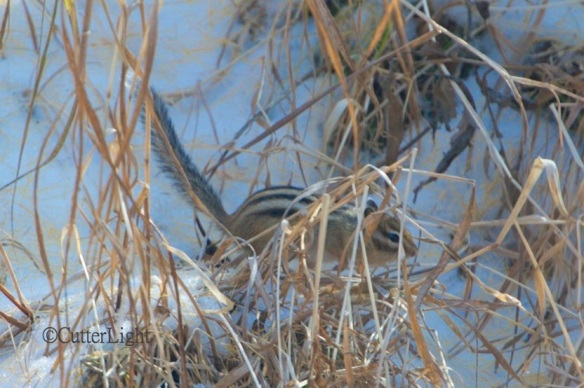
With foxes and sables on the prowl, this Siberian chipmunk didn’t sit still for even a second as he crammed his cheeks with seeds. Ranging from northern Japan through Europe, this is the only non-North American species of chipmunk. 

great tit n

As we gained altitude, stands of deciduous trees gave way to evergreens. The chirps and peeps of secretive birds followed us up the mountain.

garrulus glandarius brandtiieurasian jay n

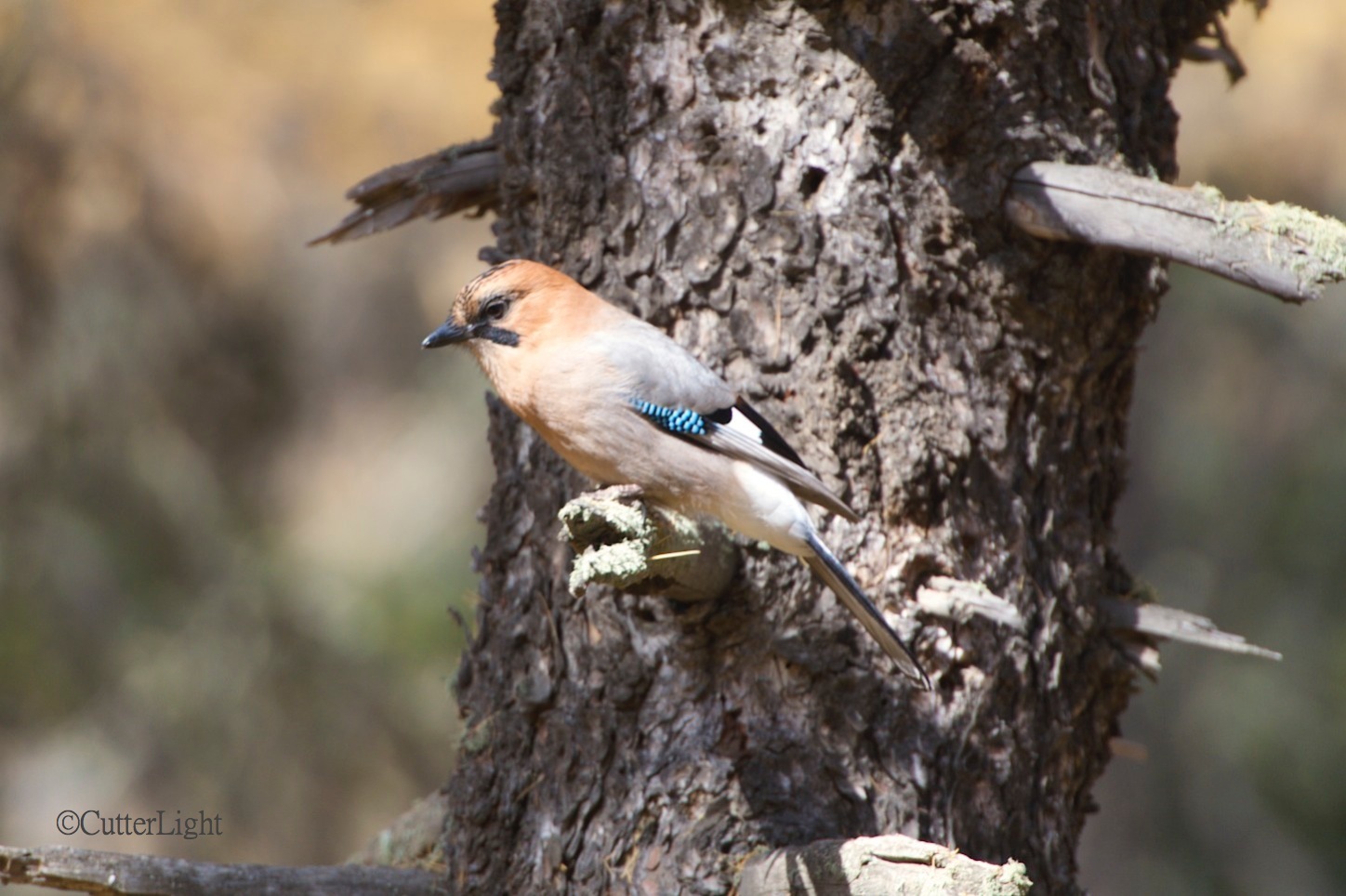
The jay from which all jays get their name – the Eurasian jay – was a bird we had really wanted to get a look at. The subspecies locally common in Mongolia, (Garrulus glandarius Brandtii) is one of the most colorful among this group. They appeared to us to be considerably larger than either the blue jay or the Steller’s jay of North America.

siberian jay in flight n

hike through fire-damaged bodkhan n

Fire opened the canopy in an area near the summit of Bogd Khan allowing a grassy meadow, laced with deer trails, to emerge. We’re looking forward to making this hike in warmer seasons when wildflowers are in bloom.

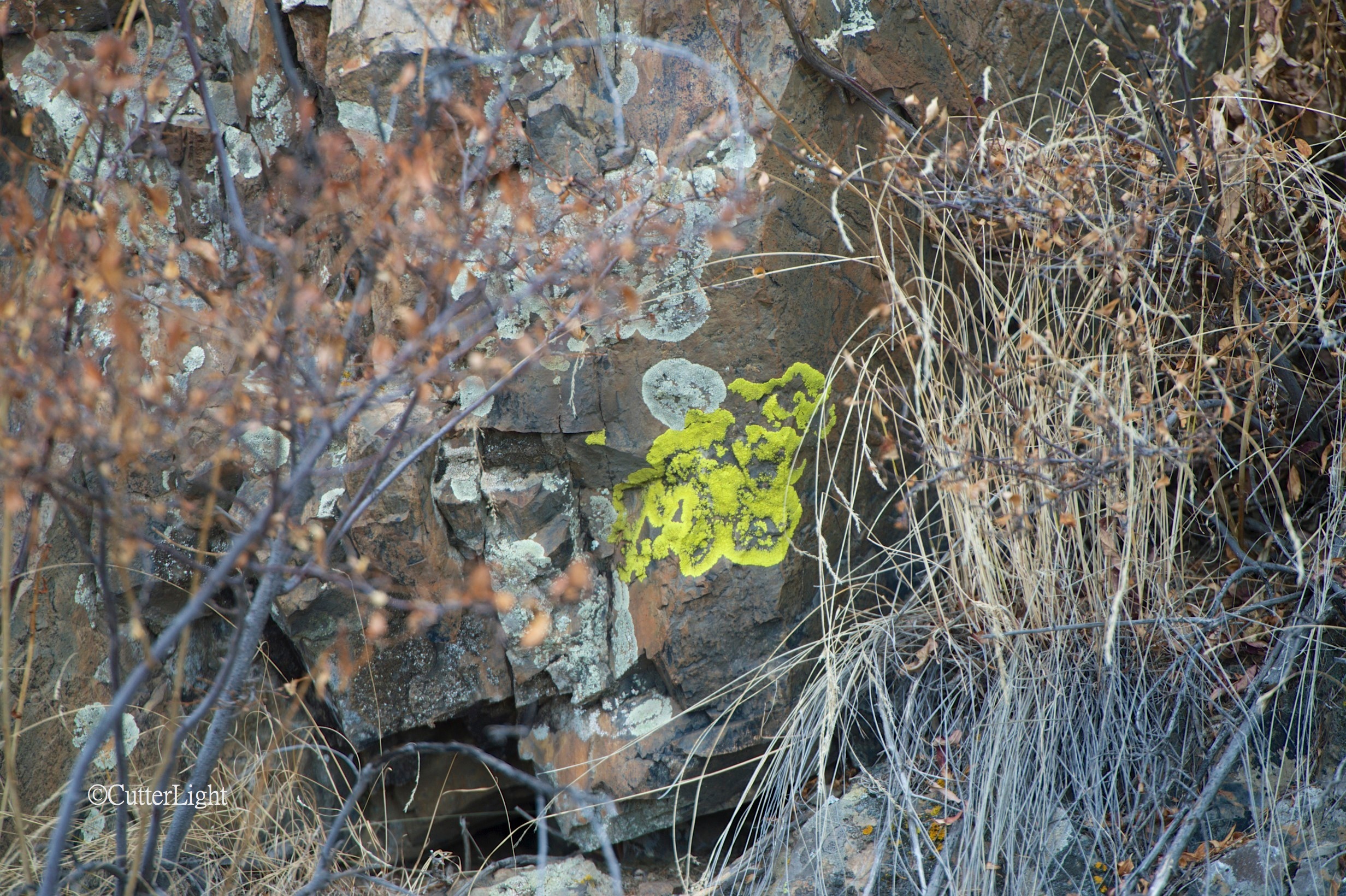
lichen chartreuse n

This splash of chartreuse from a rock-hugging lichen was startling.

yellow wildflower fall bloom n

As was the unexpected yellow in this small, late-blooming flower.

bodkhan fall larches birches n

And then their were landscapes like this… jumbles of birch and larch that seemed to be lit from within. 

OLYMPUS DIGITAL CAMERA

We emerged from the forest as the sun was beginning to sink below the mountain ridge, tired in the best possible way. It is a fortunate family that lives in this ger on the edge of this great forest.

Khorkhog: Eating, Drinking and Being Merry in Mongolia

OLYMPUS DIGITAL CAMERA

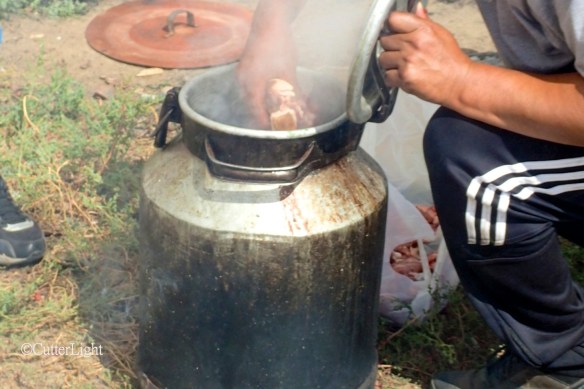
Traditional Mongolian barbecue consists of the meat of an entire animal (often sheep), fire-heated rocks and root vegetables placed together in a large cooking container. The heated rocks slow-cook the meat and vegetables while the sealed container keeps the flavor in.

To celebrate the beginning of the school year, our Mongolian colleagues prepared a khorkhog feast to share with us. Khorkhog refers to a Mongolian method of cooking meat as well as to the celebratory event where the meat is enjoyed.

OLYMPUS DIGITAL CAMERA

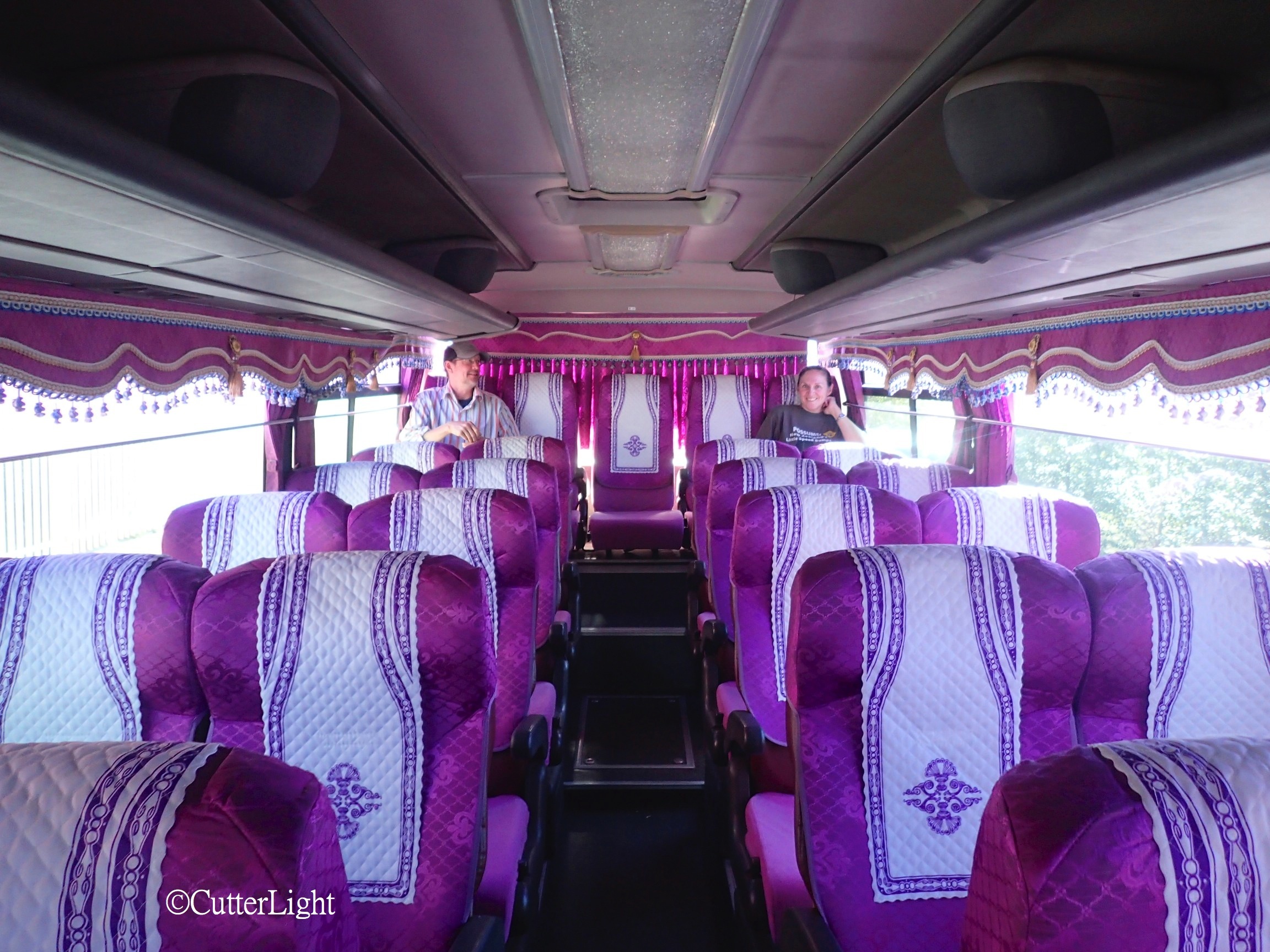
This elaborately decorated bus took us to the feast site. Opulent to our eyes, we were told that this is a “normal” bus. (Our friend Dawn Doig is seated on the right.)

OLYMPUS DIGITAL CAMERA

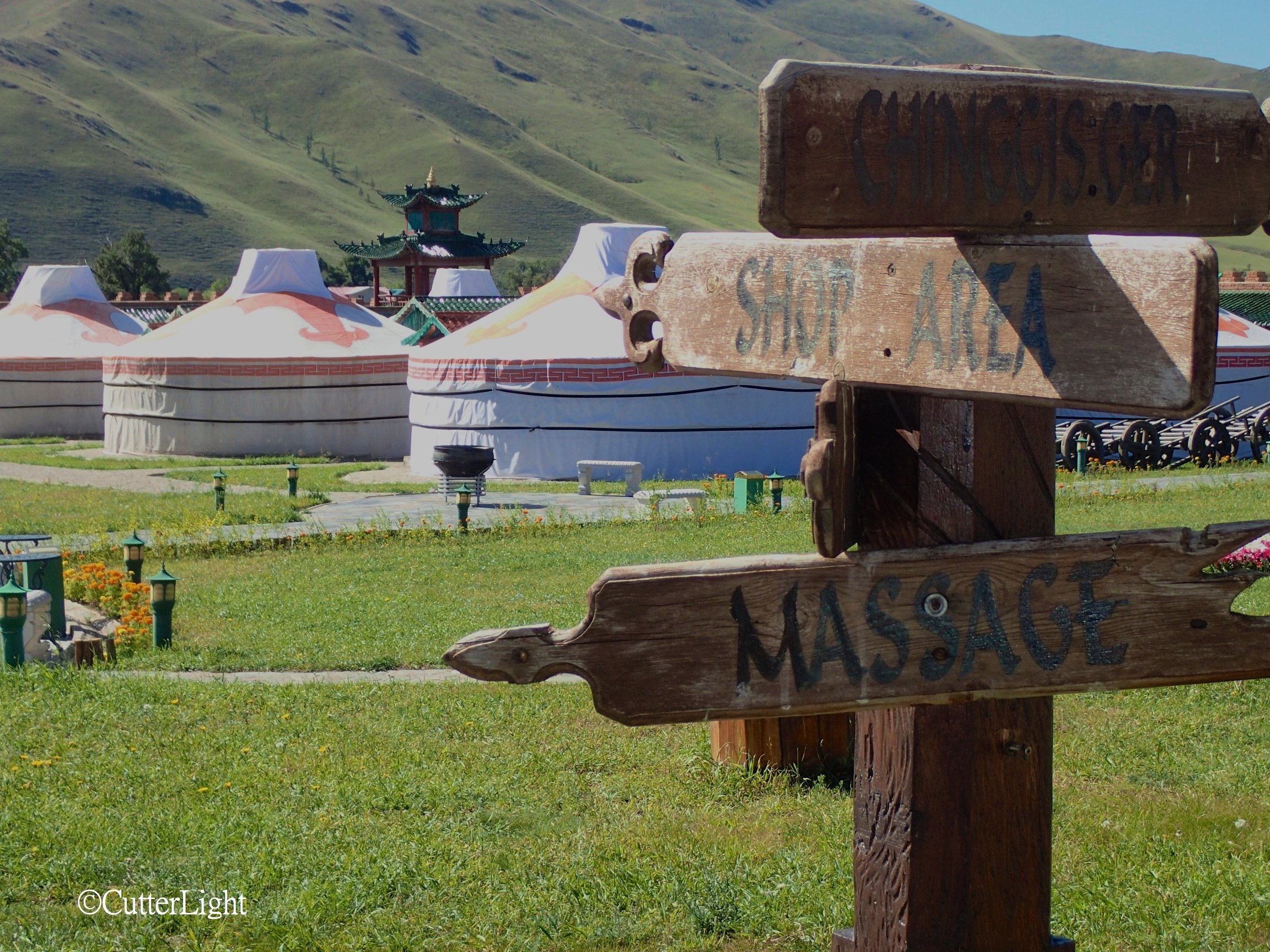
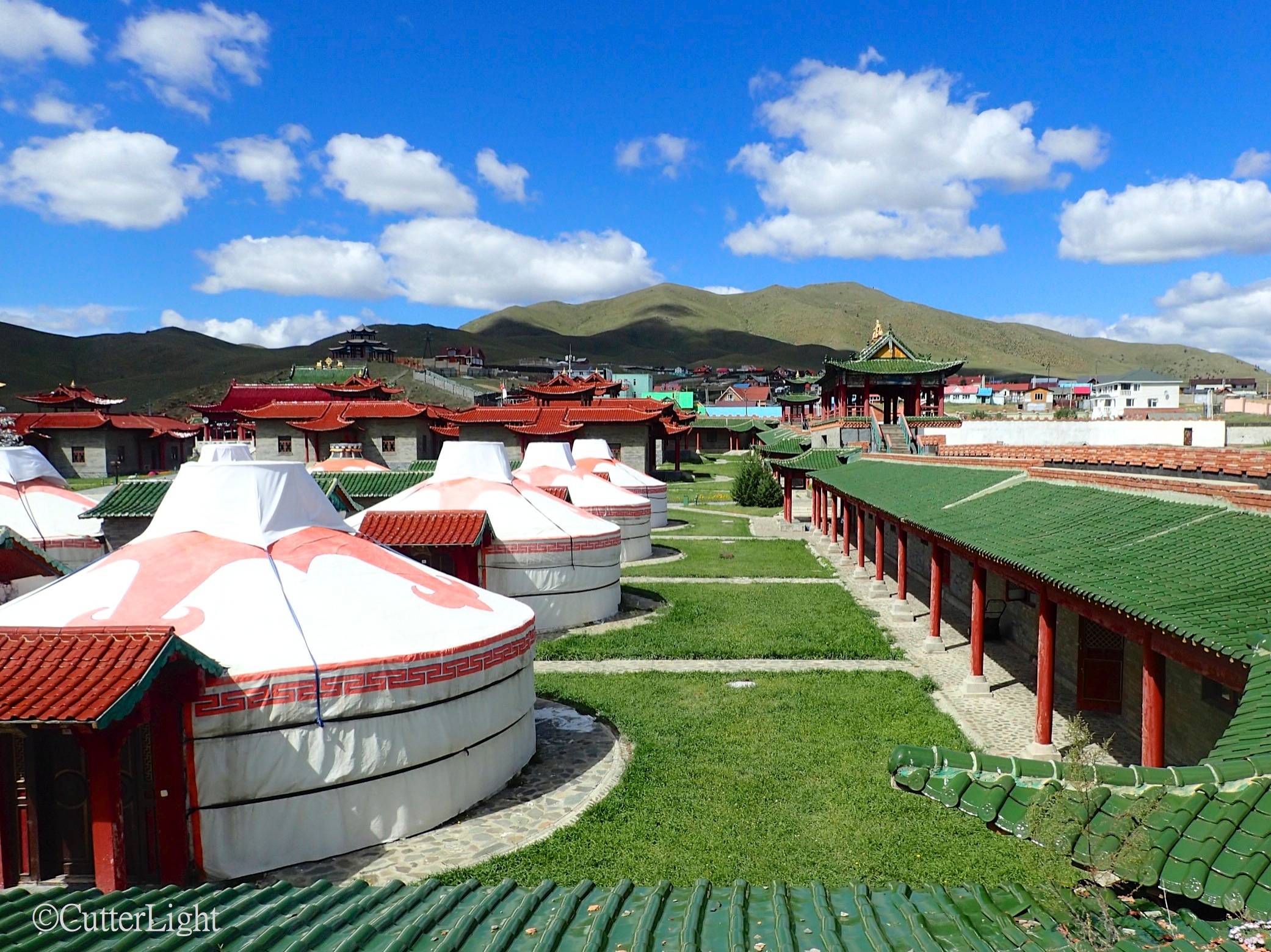
Our picnic site was located on the grounds of the Hotel Mongolia which offers upscale services along with ger (yurt) sleeping quarters. Traditionally made of felt walls and wood frames, gers are the portable homes of the nomadic people of the Mongolian steppe.

In the early 13th century a former Mongolian herder name Temujin was renamed Genghis Khan, ruler of all who live in felt tents. Under Genghis Khan and later his sons, the Mongolian Empire would eventually include an uninterrupted sweep of territory extending as far west as present day Hungary, east through southern Russia, central Asia, Northern China and Mongolia – the largest contiguous empire ever to exist. Military forays pushed into Southeast Asia and although never successfully invaded, Mongolian leadership even had their sights set on Japan. Present-day Mongolia is the 19th largest country – but with a population of about three million people is the least densely populated.

OLYMPUS DIGITAL CAMERA

In the center courtyard of the Hotel Mongolia is a silver tree fountain which was inspired by the Silver Tree of the ancient city of Karakorum, the 13th century capital of the Mongol Empire. The original sculpture was made of silver and other precious metals. When the khan wanted to serve drinks to his guests, the sculpture’s serpents would gush alcoholic beverages.

OLYMPUS DIGITAL CAMERA

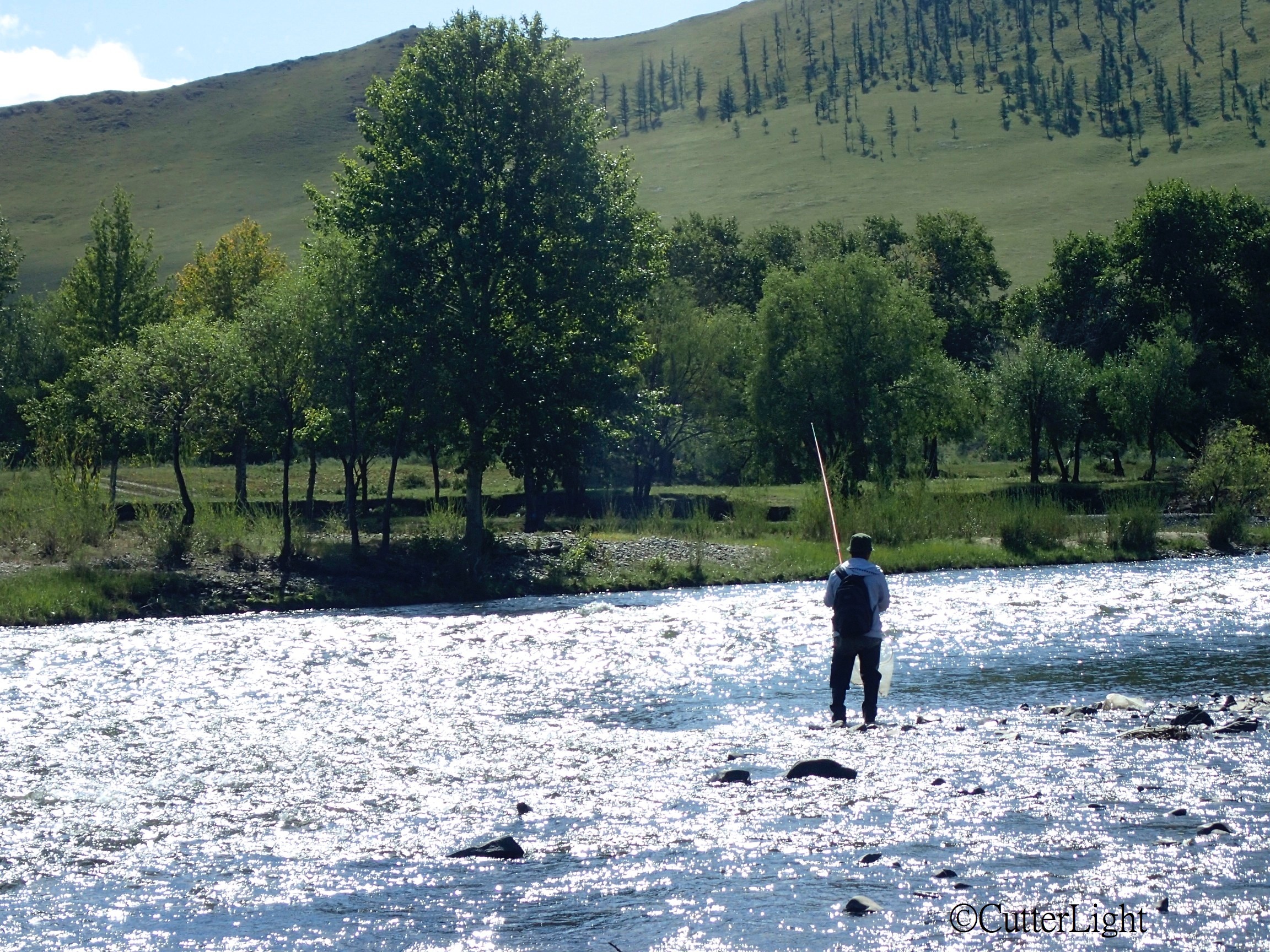
“Why didn’t you let me bring my tenkara rod?” Jack pouted as he watched a local fisherman try his luck in the Tuul River. Next time, Jack. Next time. The presence of stoneflies, mayflies and caddis larvae indicated good water quality, but we have yet to see a fish come out of this highly-pressured section of the Tuul River.

OLYMPUS DIGITAL CAMERA

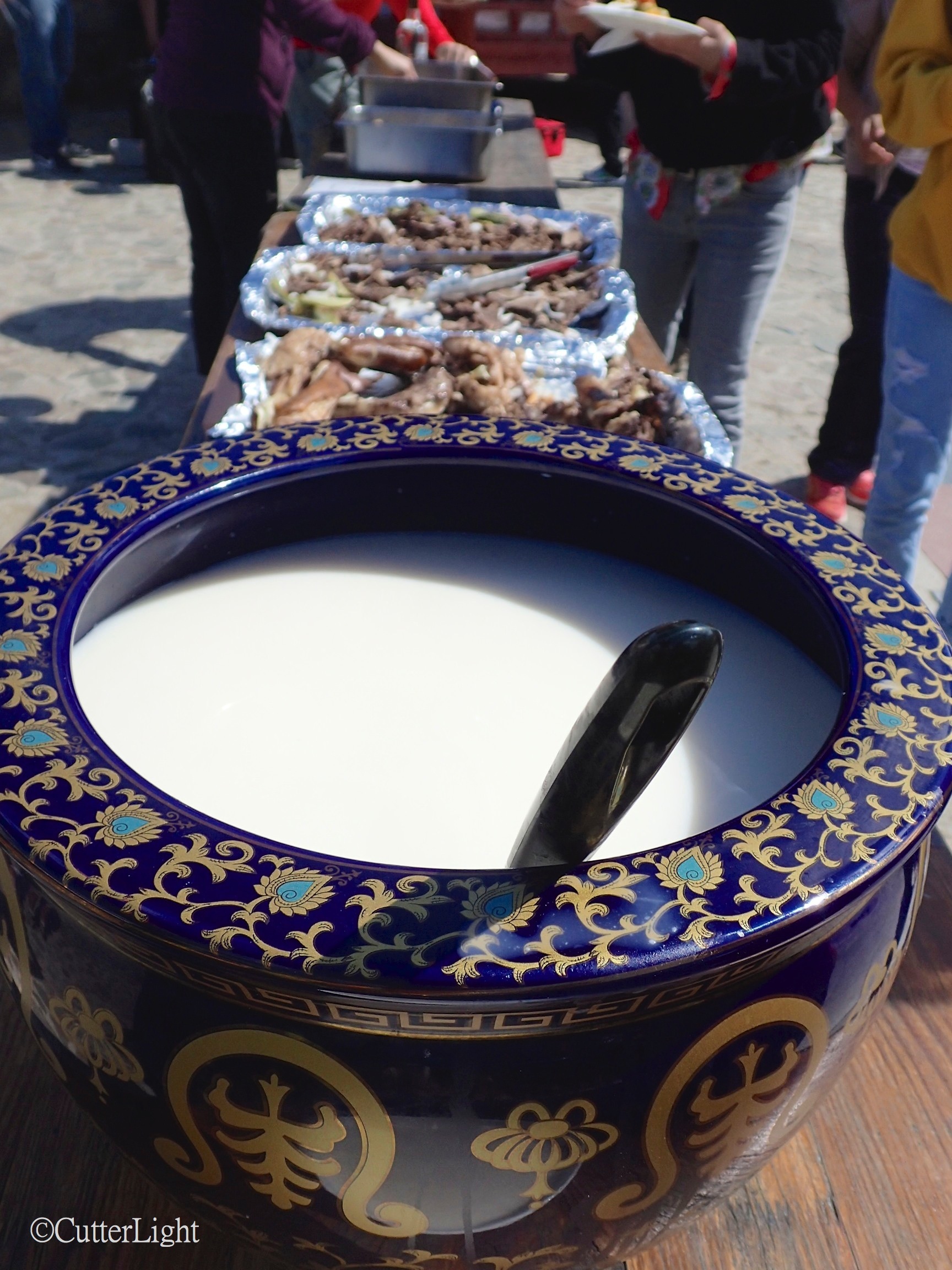
We were treated to a lovely picnic prepared by our Mongolian colleagues. Khorkhog meat cooked to perfection was served alongside roasted root vegetables and potatoes. An assortment of salads rounded out the meal and people were snacking on pine nuts from cones they’d found nearby. The centerpiece of the spread was a beautiful bowl of airag, fermented mare’s milk.

OLYMPUS DIGITAL CAMERA

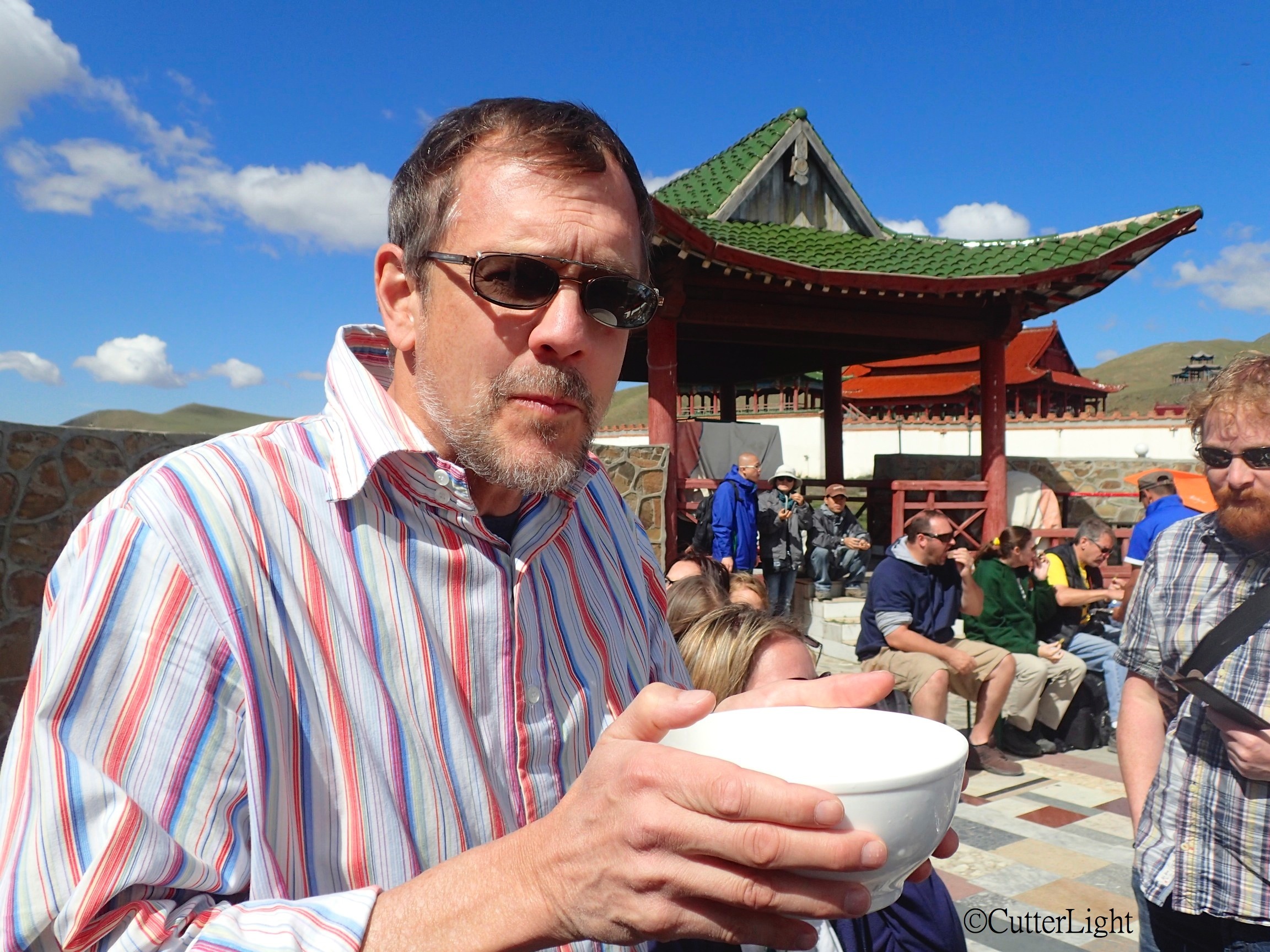
A bit of a sour face is a standard reaction upon first sampling a bowl of airag. We understand that this beverage is traditionally offered by nomadic hosts to guests in Mongolia. We anticipate sampling a few more airags in our future Mongolian adventures.

OLYMPUS DIGITAL CAMERA

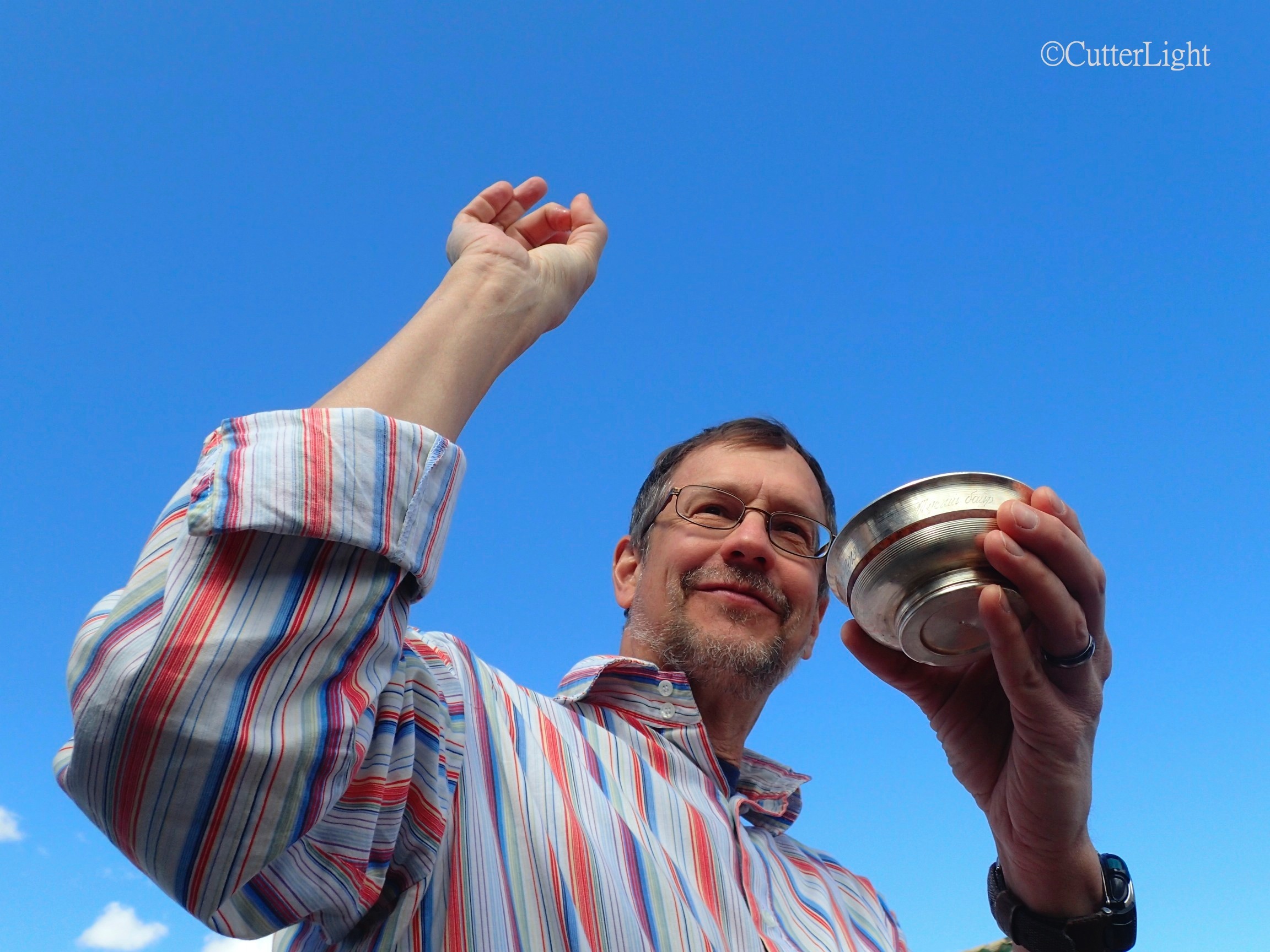
We were told it is customary to check the vodka (for poison?) by dipping one’s right ring finger into the drink and then scrutinizing the finger for black streaks. When the milk vodka passes the test, the drinker gives thanks to the spiritual world by flicking some of the liquid to the sky and to the left and right and then touching his forehead. This particular batch of mare’s milk vodka was brought by one of our colleagues whose family has a special recipe. The drink has a decided aftertaste of blue cheese.

OLYMPUS DIGITAL CAMERA

After a filling meal, we took a leisurely stroll atop the wall surrounding the hotel. Black kites, durian jackdaws, and red-billed choughs soared through the blue skies and we even startled a hare on our way to the picnic site.

OLYMPUS DIGITAL CAMERA

OLYMPUS DIGITAL CAMERA

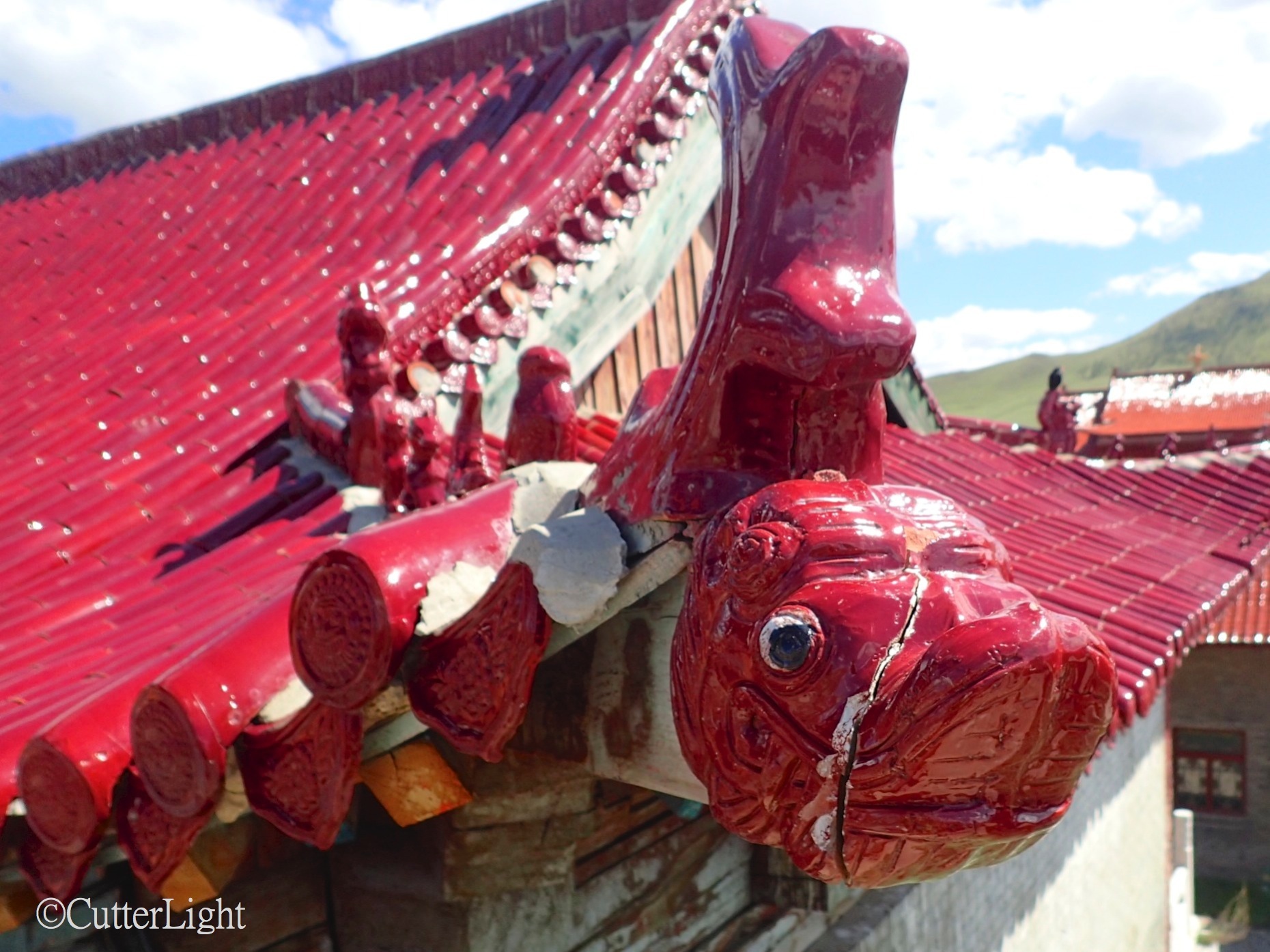
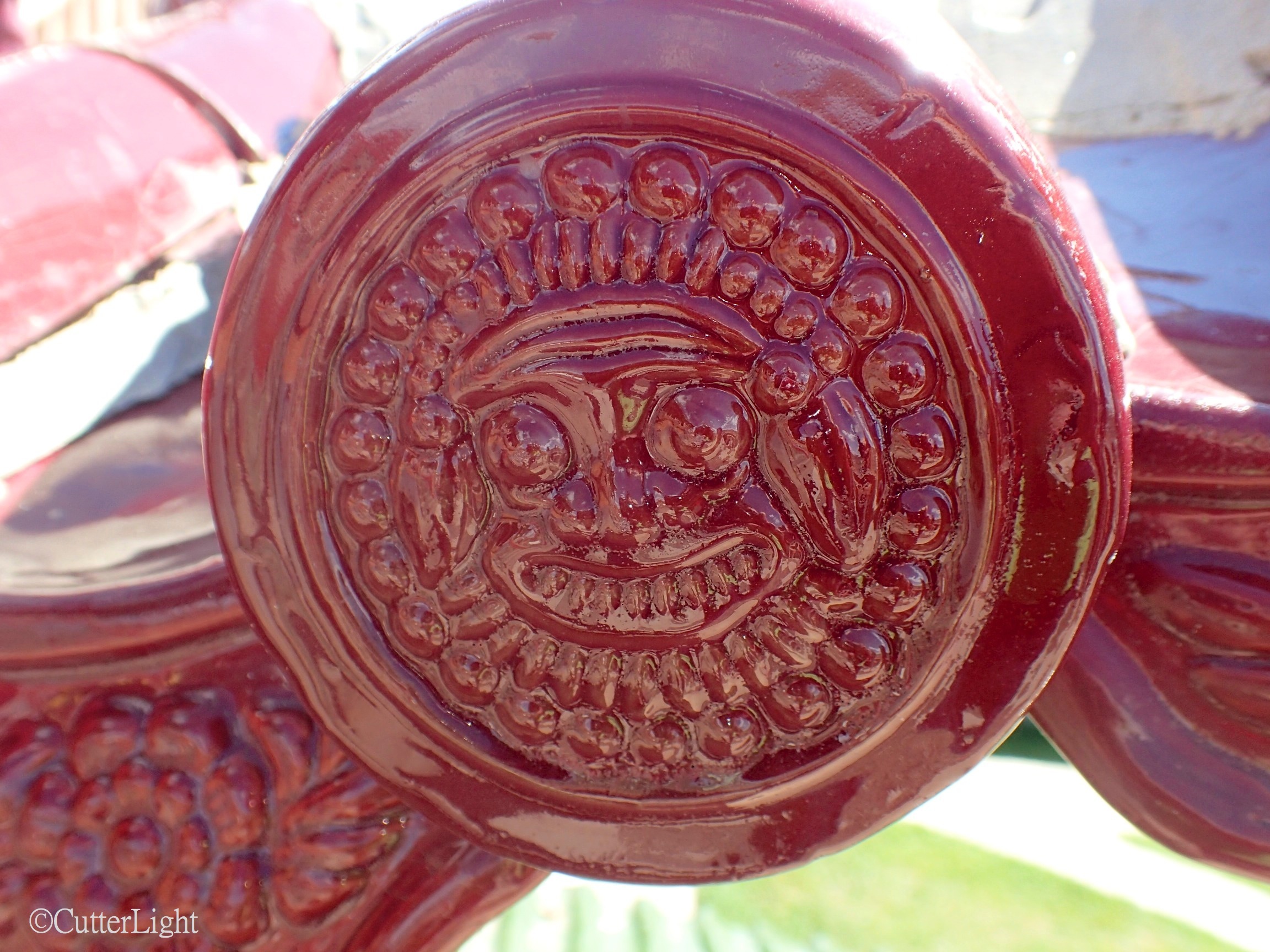
We stopped to check out the indicate details in the roof tiles of the main buildings.

OLYMPUS DIGITAL CAMERA Our walk ended where some of the men were preparing another khorkhog using the same cooking process as in the metal containers, but this time using a sheep’s stomach as the cooking vessel.

This was a day of feasting, drinking and being merry with new friends!

Hustai (Khustai) National Park, Mongolia: Biodiversity and Ancient Carved Gravestones

Przewalski's horses a n

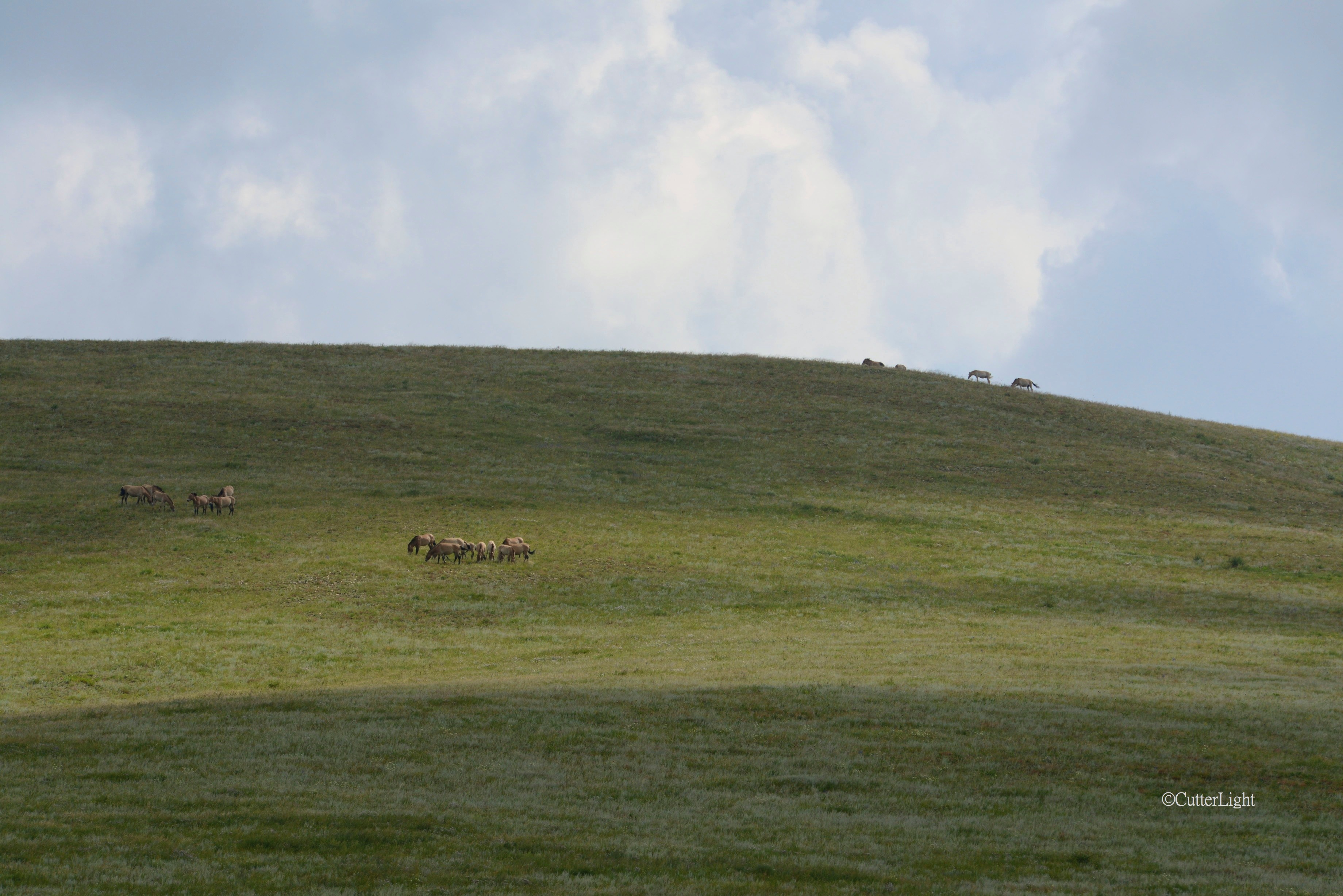
Wild Takhi, or Przewalski’s horses, graze the vast, rolling steppe lands of Mongolia’s Hustai National Park. Extinct in the wild by the late 1960’s, Takhi were reintroduced to Hustai in 1992 and have since flourished. Unlike the ferel “wild” horses of North America, Takhi are a true wild species – the only remaining wild horse in the world. We visited the park on a day when wildflowers and raptors seemed to be everywhere.

Located in Central Mongolia about 60 miles (100 km) west of the capital of Ulaanbaatar, Hustai National Park provides habitat for dozens of species of mammals and over 200 species of birds. Sixteen species of fish swim in the cold waters of the Tuul river which borders the southern edge of the park. On the day we visited in early August, recent rains had prompted a profusion of wildflowers.

Harebell n

Above, abundant hairbell blooms added vibrant splashes of color to the steppe as did pink bloom, (below). Interesting to us is that both species were familiar from hikes on the Alaskan tundra. 

Pink bloom n

marmots n

In any given year, as many as 150,000 marmots inhabit Hustai’s 195 square miles, providing food for the park’s foxes, wolves, lynx and birds of prey such as golden eagles.

black kite n

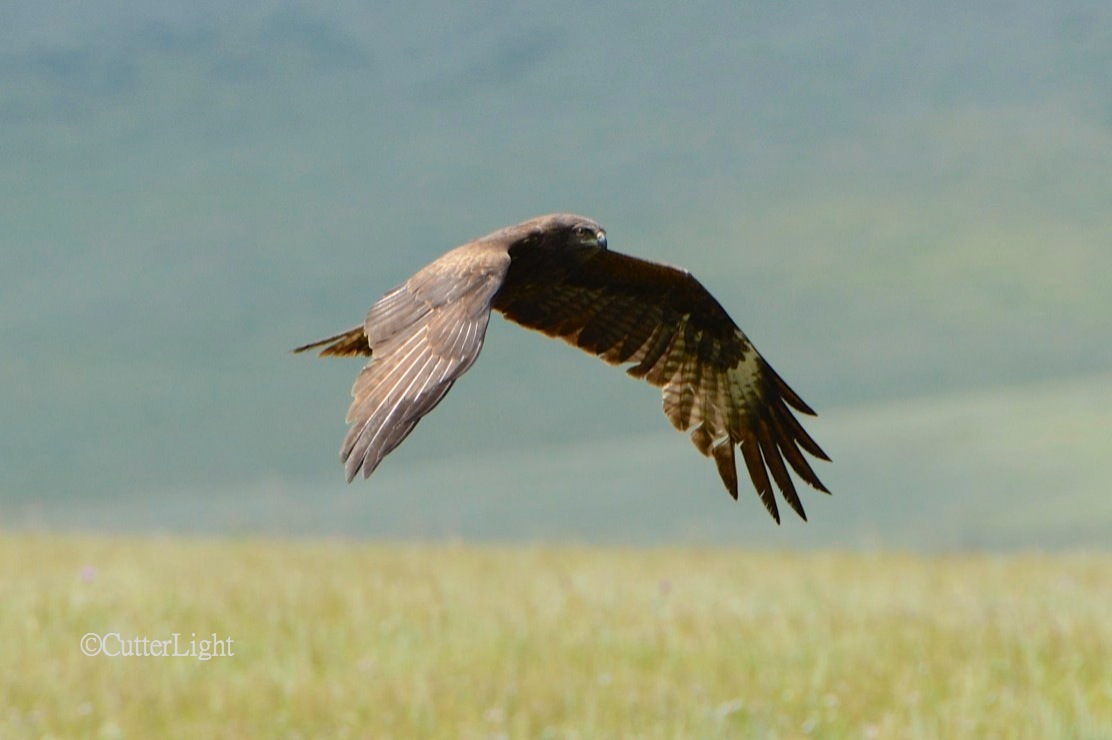
With our 200-400 mm lens in transit from the Nikon repair factory, we weren’t able to obtain the captures we wanted of the golden eagles and the beautifully marked lammergeiers we encountered. Happily, black kites like the handsome specimen above were abundant and not particularly shy. 

Mongolian herder n

His brightly colored traditional garb striking against the hazy pastels of the steppe, this nomadic herder was tending a mixed flock of sheep and goats. These herds share the grasslands with Mongolian gazelles, red deer, roe deer and the wild Takhi. 

DSC_7761 - Version 3 n

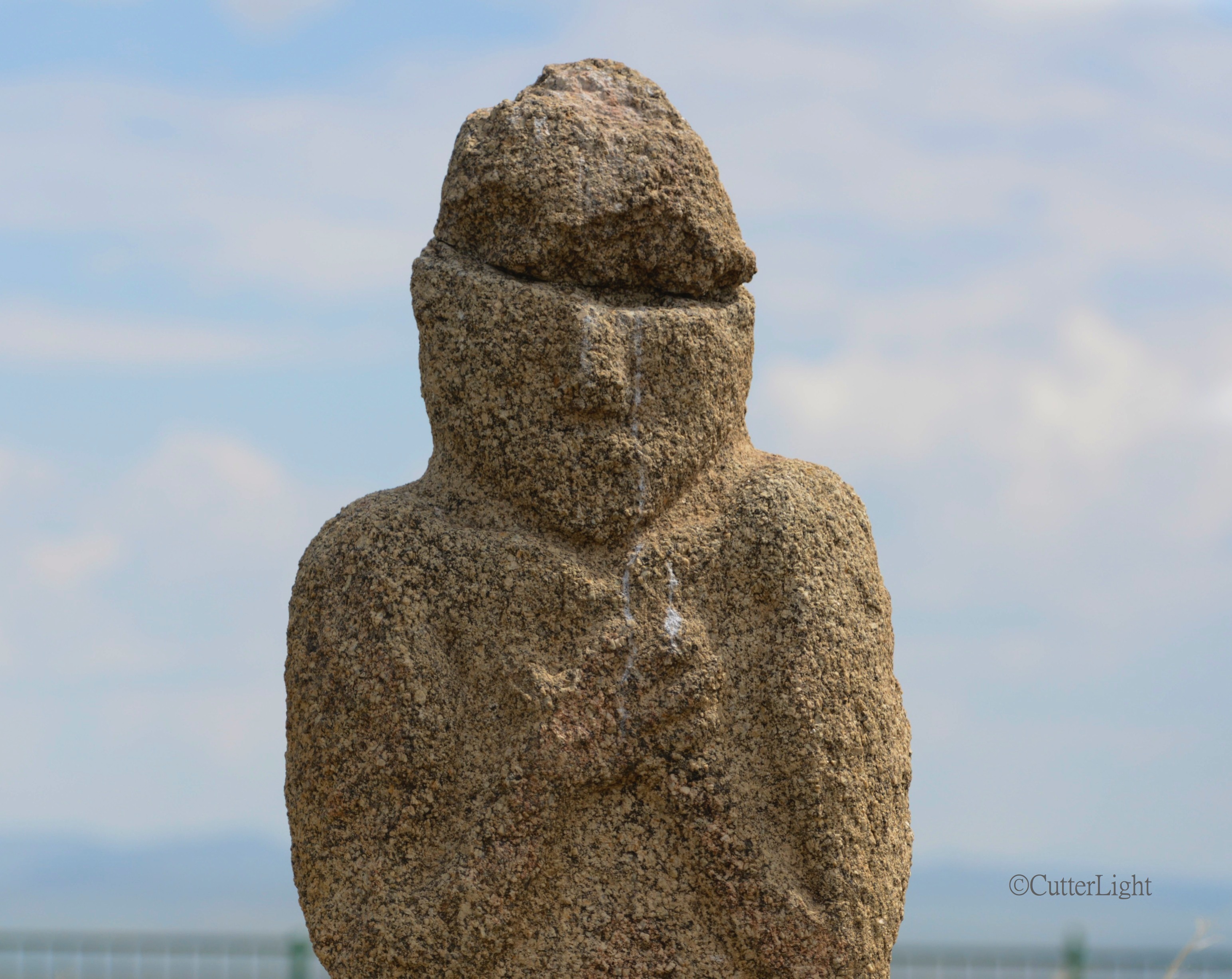
Some 1,200 to 1,400 years ago, a Turkic culture left behind groups of carved granite stone figures in the Hustai area. Elbows close to the body and hands folded across the heart, it’s likely that this six foot tall figure at the Ongot grave site is mourning the loss of a leader or nobleman. 

ram head stone n

Carved sheep represent spiritual sacrifice. Elsewhere, stylized lions watched guard over the grave site.

Pika n

Safely back at the entrance of his burrow, this pica posed for a moment before disappearing. The nearby steppe is also home to gerbils, hamsters and badgers.

pink wildflowers w ladybug n

Almost glowing, maiden pinks are said to have derived their name from the crenelated edges of their petals which appear to have been trimmed with pinking shears.

chiming bells Chiming bells are familiar throughout northern climes.

Prezwalski's horses b n

Horses do indeed make a landscape more beautiful. 

The Kindness of Strangers

OLYMPUS DIGITAL CAMERA

The America you miss is still there… if you look for it.

One of the best things about traveling is the great people we meet and the conversations we get into with them. At the end of a long day of driving, we eased our rig curbside in front of a beautifully landscaped cottage-style home on a quiet, tree-shaded street in Sultan, Washington. We were looking for a place to spend the night, and to our delight, the town was having a street fair complete with food booths, amusement rides, an auto show and live music. The challenge was finding a place to park our 50 foot combination of camper and C-Dory where we wouldn’t be in anyone’s way.

The owner of the house we were in front of was outside working in her garden. Jack and I understand that people can be irritated or suspicious to find a camper parked in front of their place. Whenever possible, we like to talk to homeowners so that they know our intent is to park overnight and not to move in. As is often the case, this homeowner, Toni, was happy to have us as temporary neighbors. After talking with her for a while and getting some tips on cool things to do in Sultan, we left her with a jar of our cloudberry jam. Then we got cleaned up and walked downtown to the fair which was reminiscent of the Autumn Leaf Festivals back in Jack’s hometown of Clarion, Pennsylvania and of thousands of similar fairs all across North America.

The next morning as we were preparing to depart Sultan, Toni presented us with a small cupful of deliciousness – beautifully ripe wild strawberries harvested from her garden. Time and again, these small, meaningful encounters with people add flavor and warmth to our travel. Whether it’s great service from a boatyard, restaurant or hardware store, conversations with business owners and chefs, or joys of the day and travel tips shared with the people we happen to have as temporary neighbors in a campground or at a local eatery, we continue to consistently discover that by turning off the endless cycle of negativity on news programs and going out and talking with people, the America we remember is still out there, waiting to be discovered.

OLYMPUS DIGITAL CAMERA

Summer street fair & auto show, Sultan, Washington, 2014.

Artists of the North Pacific Seas: The Watercolors of Dall’s Porpoises

Dall's Porpoise, full animal n

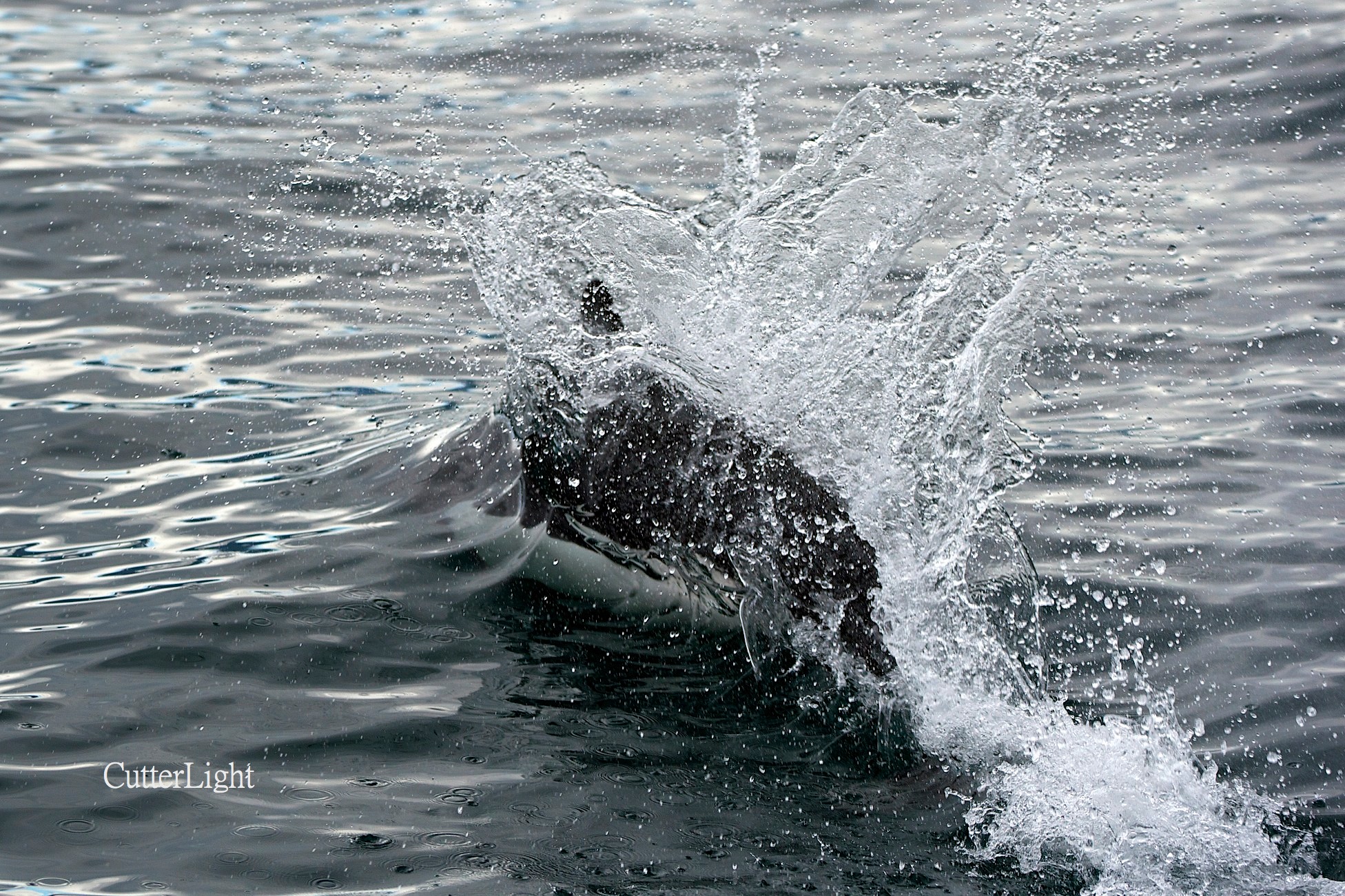
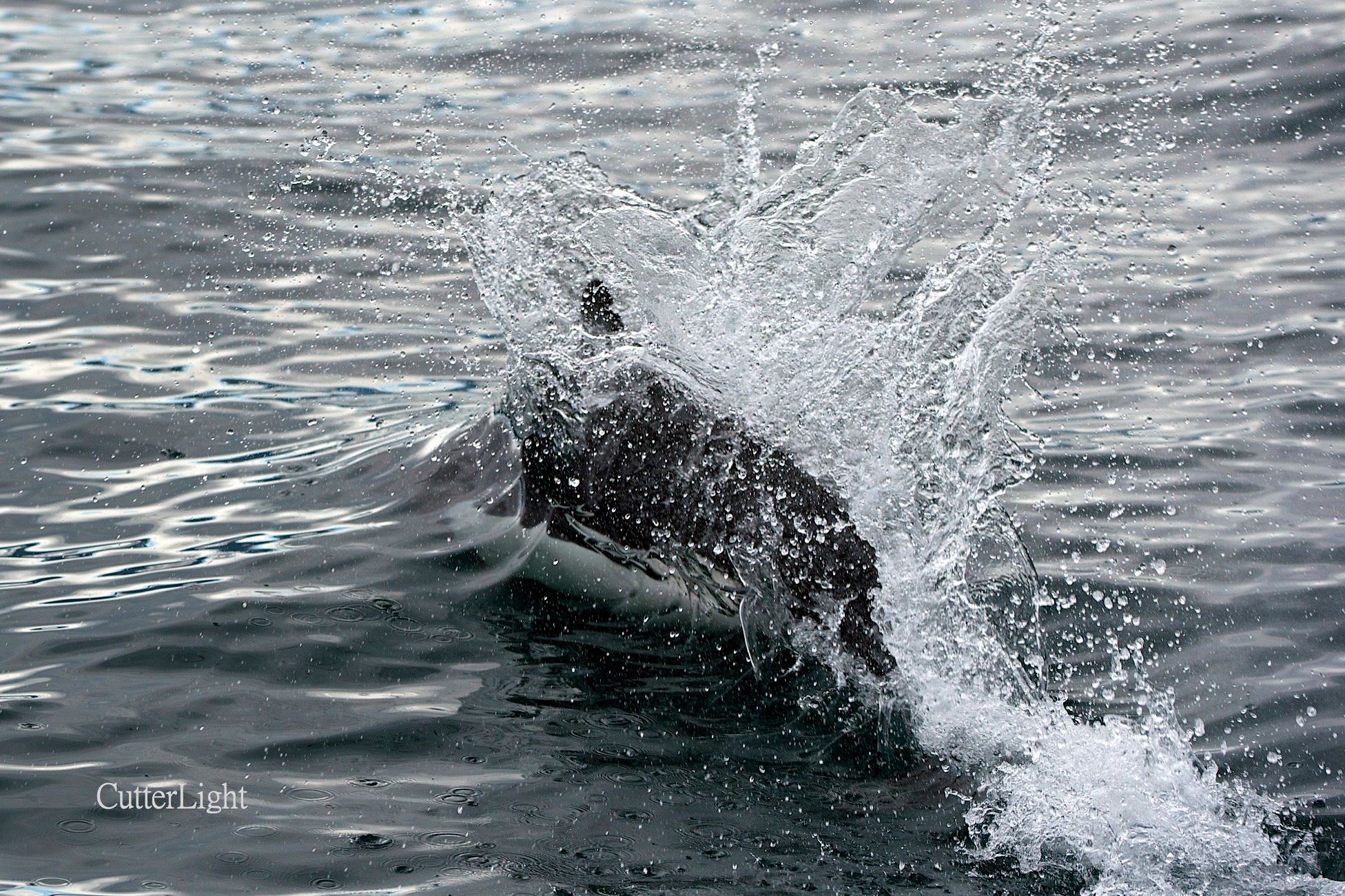
You might see a plume of ocean spray, a glimpse of black and white and if you’re close enough, you’ll hear a burst of expelled air as one of the speedsters of the sea comes up for a breath. Playing in the boat’s wake, Dall’s porpoises create ephemeral pieces of art out of seawater, light and air.

Dall's porpoise saltwater mohawk n

Water & Light Mohawk. Dall’s porpoises are capable of keeping pace with boats cruising at over 30 mph (55 kph), a speed that places them with or perhaps slightly ahead of Orcas and Pilot Whales as the sea’s fastest cetaceans. 

Dall's porpoise folded water n

Folded Glass. In Alaska’s seas, a steady diet of herring and other small fish help keep the population robust. Males, which attain larger sizes than females, can grow to a length of about eight feet and attain weights just under 500 pounds.

Dall's porpoise black and silver on blue n

Black and Silver. Typically traveling in pairs or in packs up to a dozen or so animals, tell-tale water spouts in the distance are a sign that the porpoises are in the area. If their stomachs are full and the speed of the boat is just right, they may come zipping across the water to play.

Dall's Porpoise Tail n

Watercolor Brush. Dall’s porpoises can seem to appear out of nowhere, and before long they disappear again. 

Dall's porpoise water burst n

Farewell Waterburst. Currently, populations of Dall’s porpoises are doing well. They prefer to swim over deep (500 feet), cold water along the continental shelves ranging from southern Japan, as far north as the Bering Sea, and along the west coast of America as far south as Southern California. As a species, they would benefit from international cooperation to conserve the fish stocks they rely on for food and to ensure that they are not accidentally caught in fishing nets.  


A Whale of a Tour: Cruising Alaska’s Kenai Fjords National Park

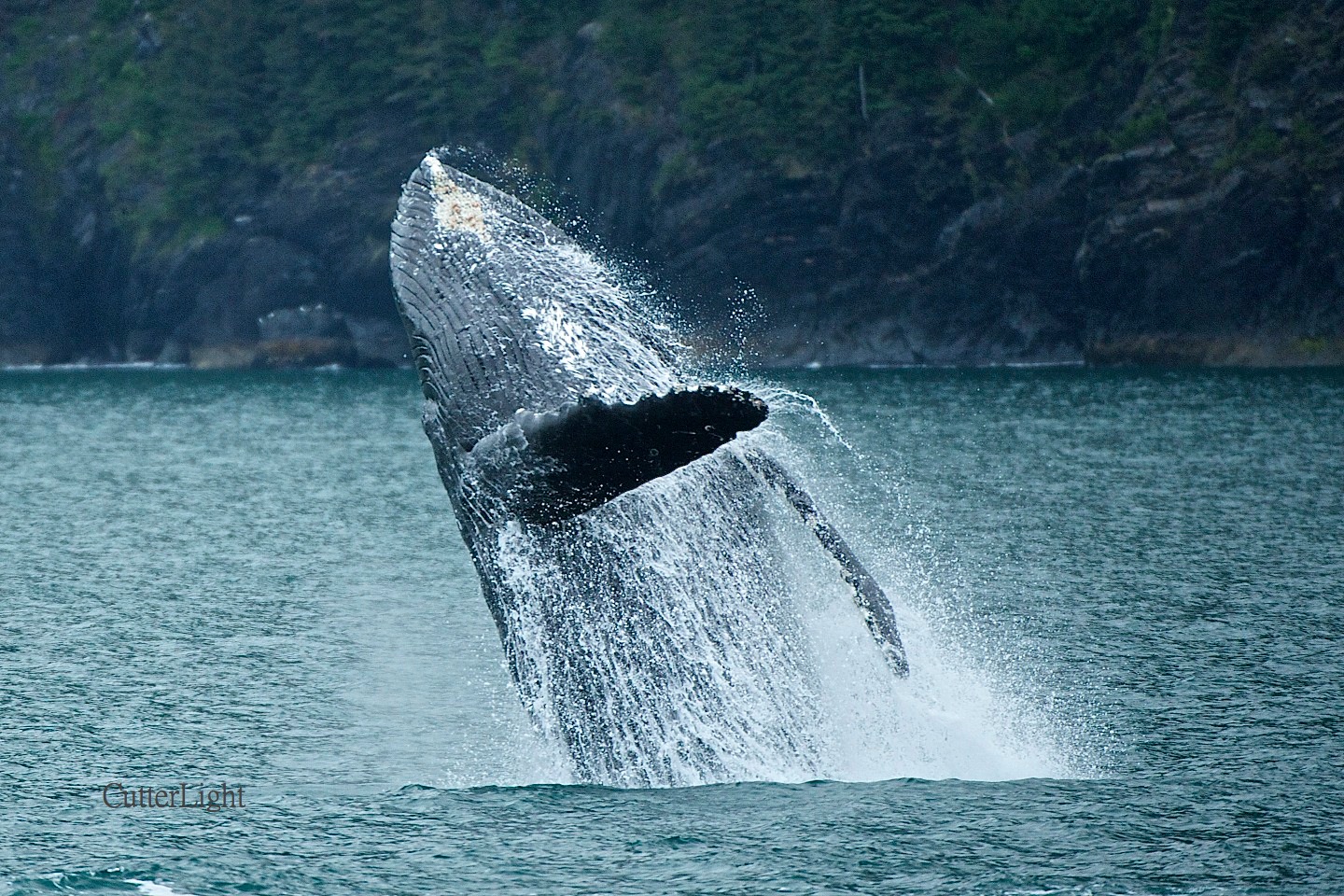
humpback breaching c n

In what seemed to be sheer exuberance, this humpback whale heaved himself out of the sea again and again, the perfectly executed cannonballs sending up enormous showers. From eagles to orcas and sow bears with cubs to mountain goats with kids, a recent cruise of the Kenai Fjords National Park near Seward presented opportunities to photograph a number of Alaska’s wildlife stars.  

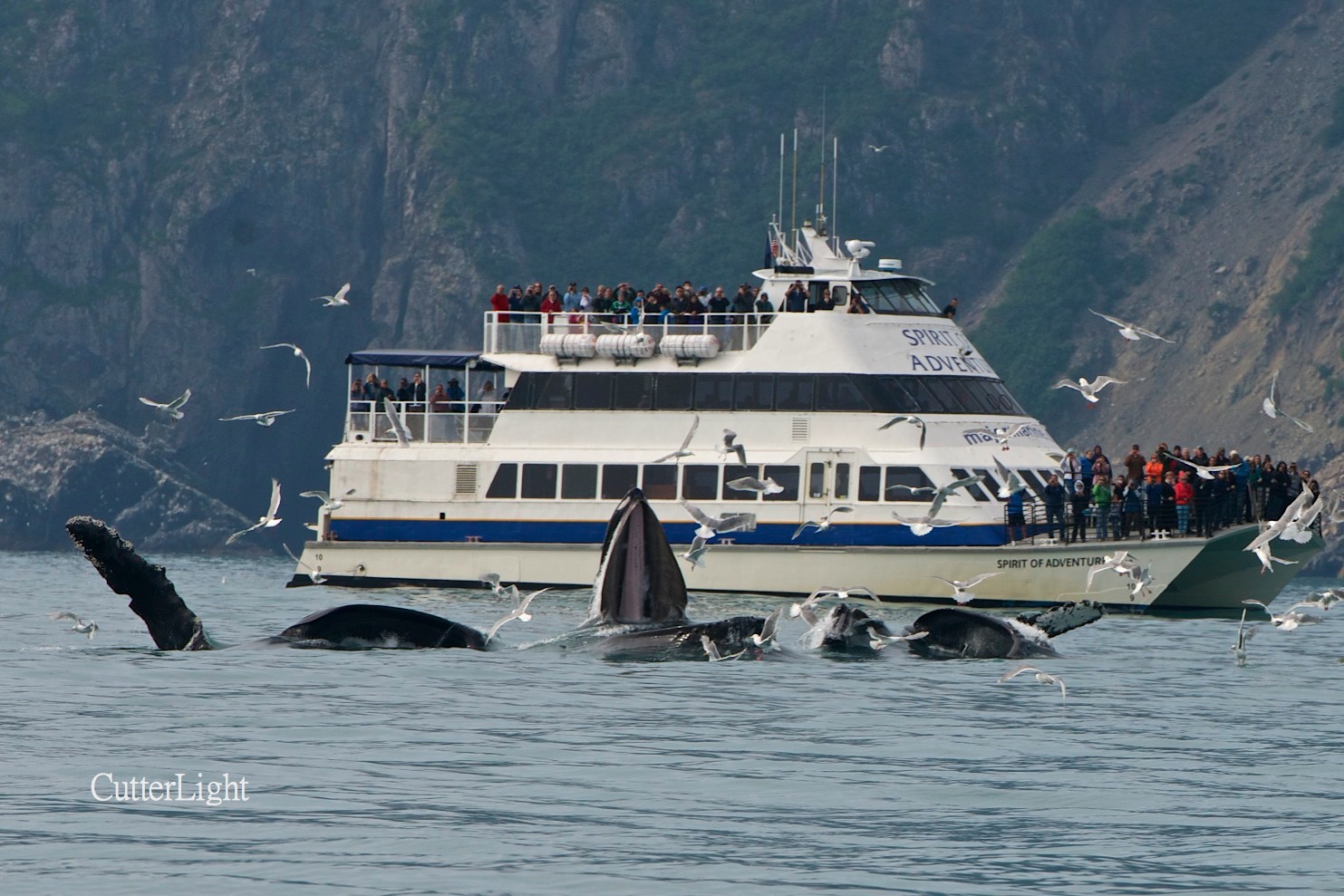
Last summer while salmon fishing aboard our C-Dory Angler, Gillie, we found ourselves suddenly quite close to three massive, bubble feeding, lunging humpback whales – the largest humpbacks we’ve seen to date. The whales and the salmon were drawn to the same thing: acres of herring so dense they were causing our boat’s sonar to misinterpret the vast school as seafloor. Between netting bright silver salmon for our daughter who was visiting from California, navigating the boat and snapping photos of the feeding leviathans we were kept on our toes. At one point the whales surfaced so close to our boat we could smell their breath. It was a bit unnerving.

whales lunge feeding major marine n

One moment the seas would be calm, the gulls and kittiwakes resting on the water with just a few sentinels circling about. Suddenly the birds aloft would cry out, signaling the sitting birds to take wing… and then these three massive whales would erupt from the sea. If you look closely, you can see a panicked herring barely escaping the gaping jaws of the center whale.  
That evening when we uploaded our photos, we were disappointed to find that the best of our whale shots were marred by the presence of a tour boat in the background. And then it hit us – why not see if the tour company would be interested in the pictures? That’s how we came into possession of tickets for Major Marine Tour’s all-day Kenai Fjords National Park nature cruise, complete with and an all-you-can-eat Alaskan salmon and prime rib lunch. Having now experienced three of these tours, we give them the highest possible recommendation for anyone interested in the wildlife and natural history of coastal Alaska.

eagle on sea rock n

Eagles are common along the shoreline of the fjords, and we never tire of admiring them. Not above scavenging, these opportunistic birds will prey on salmon, other fish, seabirds and even baby mountain goats. 

This past Monday we used four of our tickets to book ourselves and friends visiting from Montana on a tour on the Spirit of Adventure – the very boat we’d photographed the previous summer. A few brief sprinkles of rain aside, it was a beautiful day, and since it was a lightly-booked weekday cruise we had plenty of room at our dining table as well as at the ship’s rails when we were viewing glaciers and wildlife.

horned puffin on cliffs n

Both horned puffins (above) and tufted puffins nest in the cliffs above the fjords. 

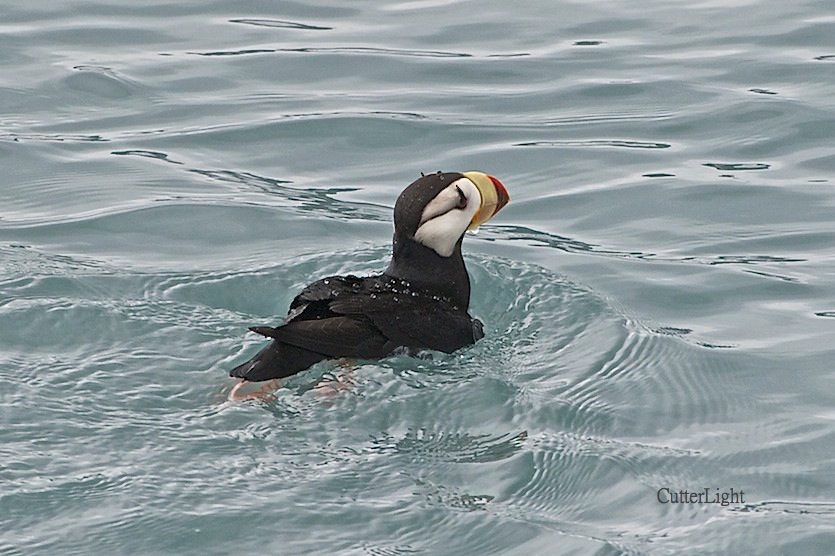
horned puffin swimming n

The feathery “horns” above their eyes give horned puffins their name. This one, fresh from a dive in search of small fish, popped up right next to the boat. 

Stellar's Sea Lions n

Certain places in the Kenai Fjords are important breeding grounds for Stellar’s sea lions. In recent years, their population has fallen into decline and although human overfishing may be the culprit, no definitive cause has been identified.

kittiwakes n monkey flowers n

Seep (or common) monkeyflower adorns the cliff walls of this black-legged kittiwake rookery. We didn’t spot any eggs, but the nests look complete and ready for this year’s broods. 

murres thick bill dense raft n

Meanwhile dense rafts of dozens or even hundreds of thick billed murres gather along current seams that push baitfish into tight schools where they become easy pickings. 

Dall porpoise w beak n

Reminiscent of the Tasmanian Devil of Warner Brother’s cartoon fame, Dall’s porpoises can appear at any time, zipping across the sea in plumes of spray in pursuit of the fish they feed on or just a good bow wake to play in. They are reportedly capable of speeds of around 35 miles per hour (55 kilometers). On this day, the porpoises were in a playful mood and the captain hit the boat speed just right. For several minutes half-a-dozen of these sleek speedsters zig-zagged across our bow. 

Holegate glacier sluffing ice n

Although wildlife is a major draw on these cruises, the fjords are equally famous for spectacular tidewater glaciers. Above, Holegate Glacier sloughs off tons of ice at a time in thunderous cascades. Note the seagull at the upper right of the photo. 

glacier ice margaritas n

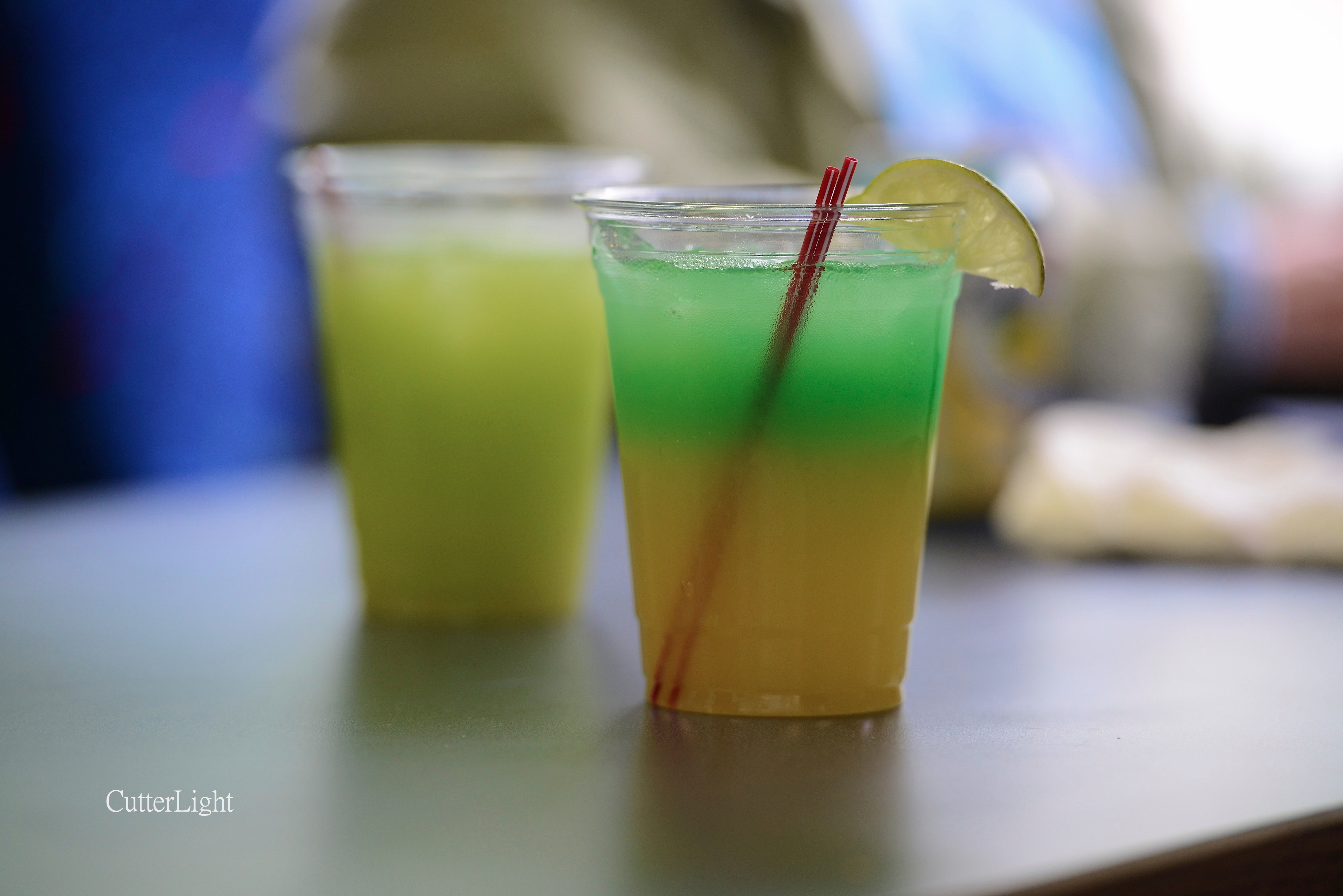
When the crew scooped up a pristine chunk of glacial ice in a net and announced that Glacial Ice Margaritas were being served, we couldn’t resist. The ice – which is hundreds to thousands of years old depending on which part of the glacier it comes from – is super dense, hard, clear and cold. 

sea otter on ice w harbor seals n

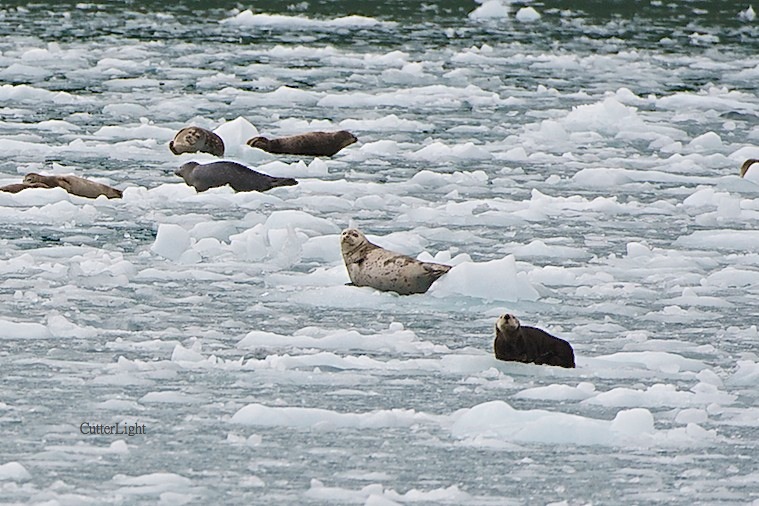
Near Aialik Glacier, dozens of harbor seals were hauled out on the ice along with quite a few sea otters such as the one in the foreground above. The National Park Ranger providing commentary aboard Spirit of Adventure remarked that prior to the Russian hunting of sea otters (which, by the early 20th century had nearly driven them to extinction) it was common to see sea otters hauled out on land. 

Orcas transient resurrection bay 2014 n

Throughout the seven-and-a-half hour cruise we kept a keen eye for orcas. The day had already been amazing – truly one for the books: leaping salmon, a sow black bear with cubs in a clearing on a mountainside, a nanny mountain goat with her young kid just above the high tide line, whales, porpoises, and a dozen or so species of sea birds all had checks next to them.

Toward the very end of the cruise, as we were nearing Seward, the pair in the above photo showed up. Kenai Fjords NP is home to three distinct types of these cetaceans: resident, transient and offshore. The three types have different diets: residents are salmon and fish eaters, transients focus on mammals such as seals and sea lions, and offshore orcas are known to hunt sharks and baleen whales. The three varieties also have different languages and DNA tests indicate that they do not interbreed. This pair – the male in back with the longer, more angular dorsal fin, the female in front with a shorter, more rounded dorsal fin – may be transient orcas.  

sleeping otter in harbor n

Even before the cruise begins there are wildlife viewing opportunities right in the harbor. This sleepy otter filled up on mussels he pulled from pilings before conking out for an after breakfast snooze. 

Changes: With Feet in Two Worlds Now

Point Hope from plane n

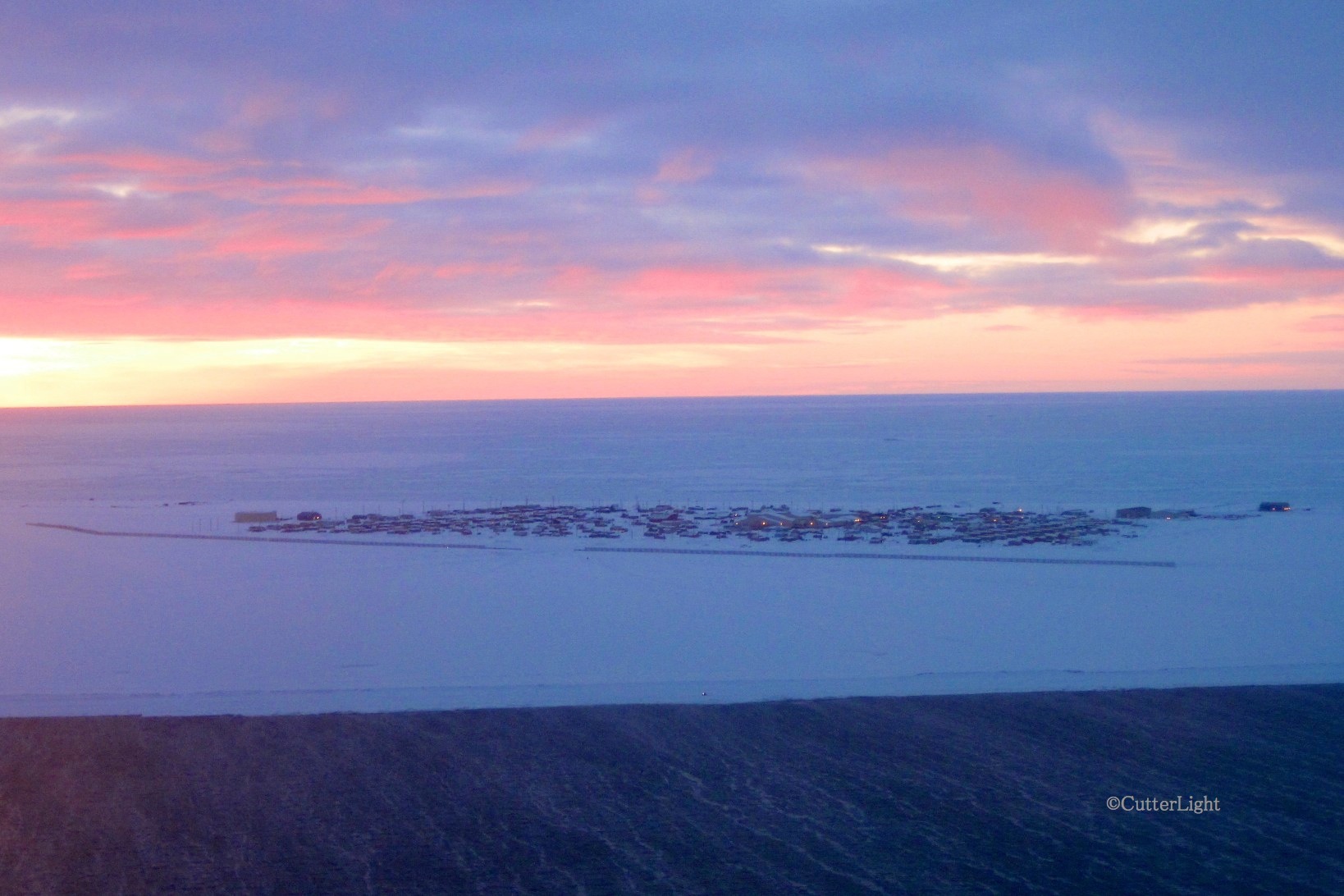
From the air on the south side of the peninsula, our village of Point Hope is a small interruption in a vast, roadless, icy land. This photo was taken in late January from a little six-seat plane as we flew in from a trip to Anchorage. What’s missing in this picture? Sea ice. There should be a thick sheet of it in the foreground where this year there is only open water.

Back in early November, we made the decision that this would be our final year in Point Hope. We’ve loved living here, and the decision was not easy. The people of this village – our adopted hometown these past three years – have been kind and generous and fierce and proud, attributes we greatly admire. Our students have been wonderful, and when you teach in a building where from kindergarten through senior high there are fewer than 200 students, they all become your students. In our combined 30+ years of teaching, neither of us had ever bonded with students the way we bonded with the students of Tikigaq School.

freezing rain point hope n

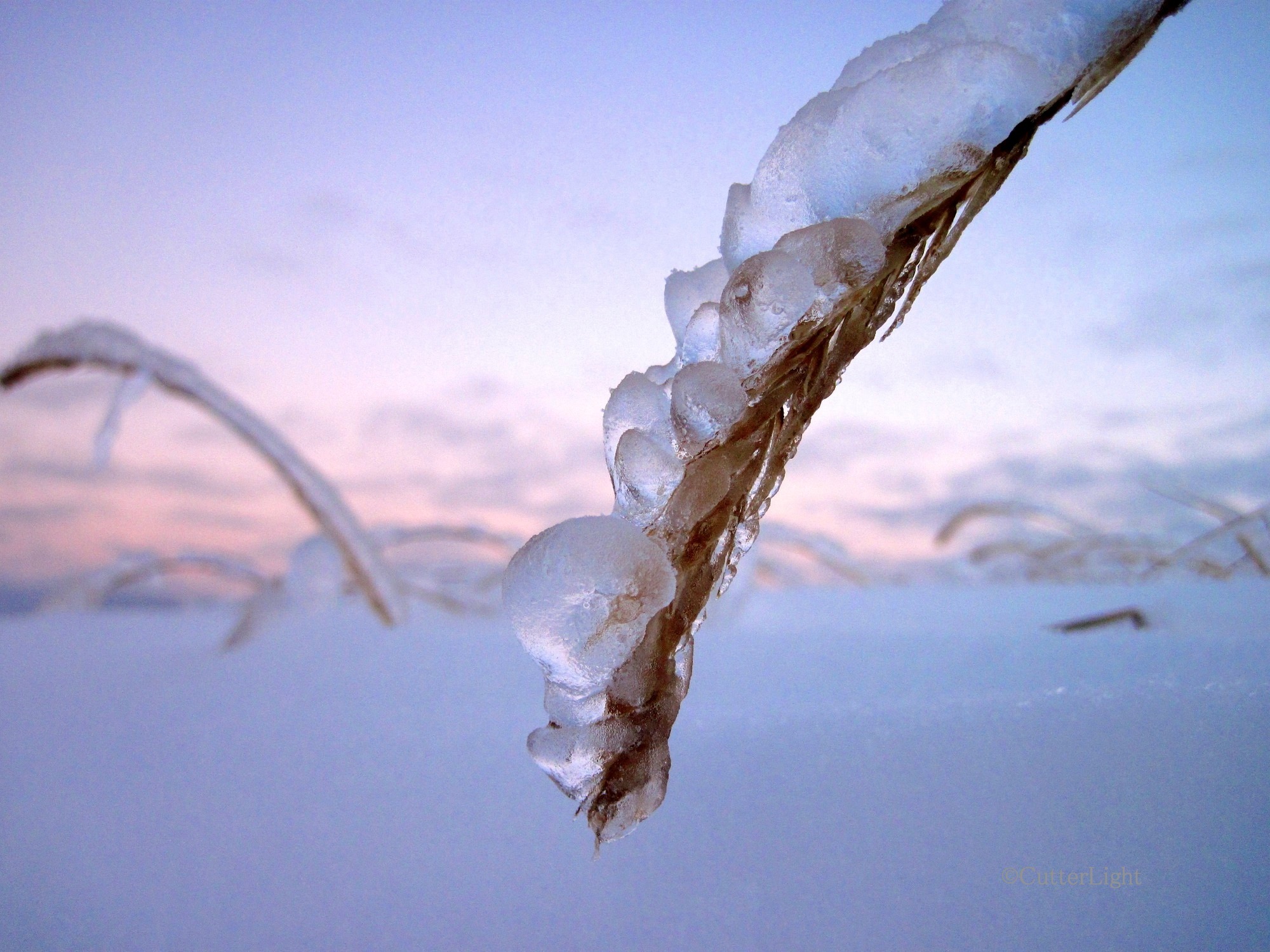
Freezing rain turned this stalk of grass into a silvery jewel. Rain in January in Point Hope is not completely unheard of, but days in a row of such weather during what is usually the coldest month of the year is highly unusual.

In mid-December we turned in our resignations, not sure where we would go next, urged only be the sense that it was time for us to go. The pull is a feeling that is difficult to describe or explain. The letters of resignation were short, polite, appreciative, but with them we cut the cord. No safety net. No turning back. We began to focus on our next move.

Aurora feb 2014 a n

A few nights ago, the aurora borealis put on a show. This was not one of the dancing, colorful displays we’ve seen in the past, but a steady, emerald swath glowing just above the northern horizon. 

At first, we were limiting our consideration to Alaska, dreaming of a situation in the Southeast where we might live within an easy walk of our boats and our new school. Our free time was consumed wtih the routine but critical tasks associated with a job search: revising our resumés, shoring up our references, researching schools and communities, distilling our careers and lives into tightly written letters of introduction. As two souls with nomadic DNA and Gypsy blood caught in this modern “career path” world, it’s a process we’ve been through many times.

But this time around, there was a twist to the job hunting. We both constructed online career histories on Linkedin, a networking website for professionals. Out of the blue, Barbra received a query from a headhunter with an agency that places teachers, administrators and technology experts with overseas schools. Although the particular company the inquiring person represented didn’t interest us, it got us thinking.

What if…?

Could we…?

What would we do with our boats?!?

tikigaq old bones_new

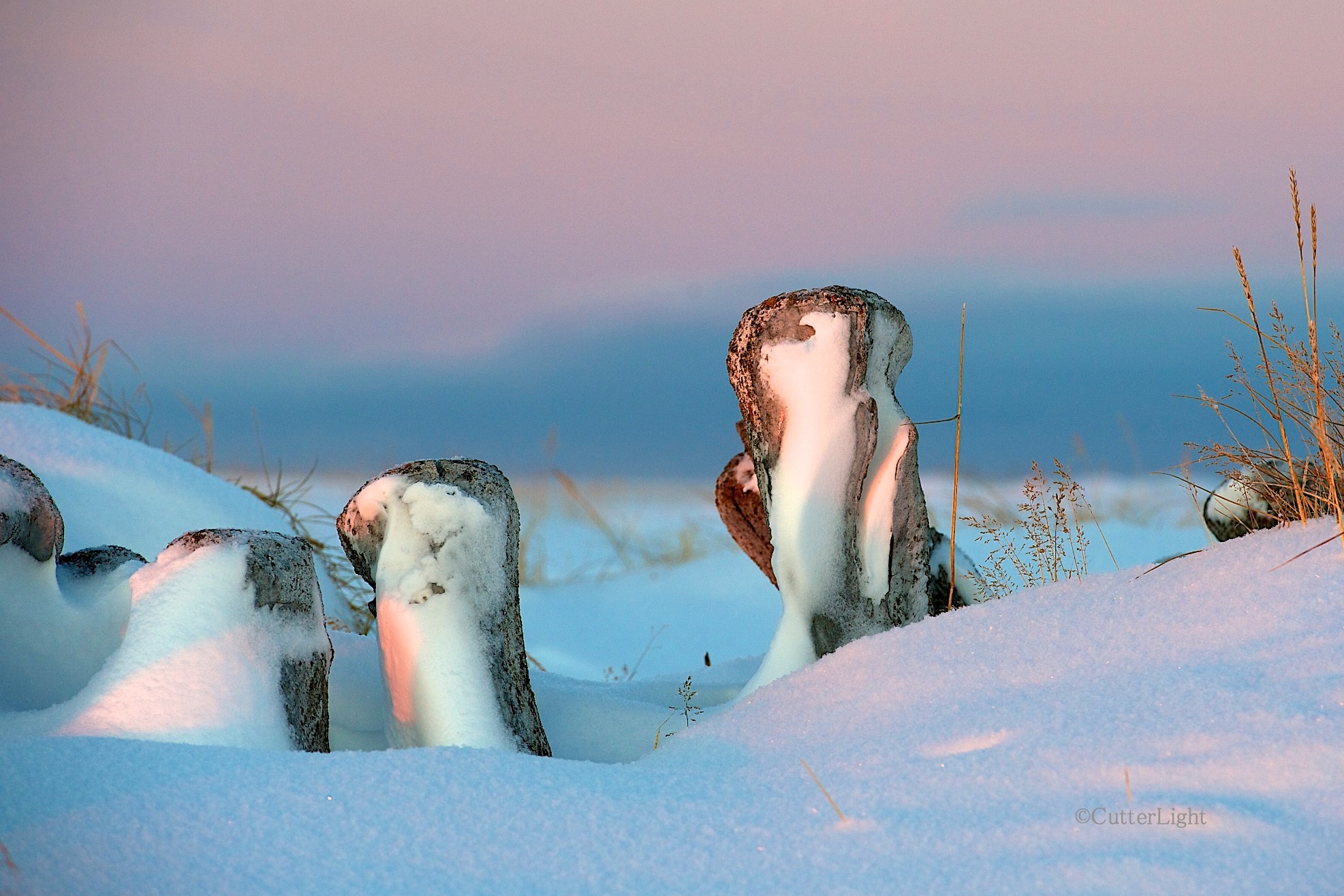
Early morning light bathes whale bones in the ghost town of Old Tikigaq pink and gold after a night of fresh snow.

After careful research, we signed aboard with Search Associates, an agency that works with over 600 internationally-minded schools in 160 countries. While we lacked the experience with International Baccalaureate programs these schools desired, our backgrounds are rich in quality experience and our references are strong. We allowed ourselves to dream, and although we thought that in order to get our foot in the door we’d accept the right position in virtually any country, there were a few countries that were very much on our short list. Our dream list.

One of those countries was Mongolia. Several years ago, when we were living in Sacramento, our local Trout Unlimited chapter invited a guest who had recently made a film about fly fishing in Mongolia for lenok (an ancient form of trout) and taimen (the world’s largest trout/salmon). The vast, sparsely populated countryside was sublime. The rivers were pristine. The idea of a remote camp out on the steppes, the guides speaking Mongolian, the huge night sky filled with stars after a day spent pursuing species of fish few anglers will ever encounter, our stomachs filled with rock roasted meat, our minds pleasantly humming with yak-milk vodka, and beyond the camp neither a light nor a human sound for as far as one could see or hear, is an idea that has been growing in us ever since.

We are due in country on July 31. It appears that we’ve already found a nice apartment just a few minute’s walk from the International School of Ulaanbaatar in Mongolia’s capital of Ulaanbaatar. We’re thrilled. This is just the dose of “New” we’ve been craving.

A couple of weeks ago, we were in the Anchorage airport, flying back to Point Hope when we suddenly encountered a scent that, for us, will always be pleasantly, irresistibly memorable. Muktuk. Whale fat. We looked around and soon found a small group of people who appeared to be Eskimo pushing a cart loaded with coolers, no doubt the source of the mildly sweet, rich smell. “We’re two among 0.00000-something percent of people in the world who can instantly identify that smell,” I said to Barbra as we laughed about our arcane expertise.

This morning one of Barbra’s students, Dmitri, came to school wearing the same scent. “Wow,” Barbra said with a smile. “You smell like muktuk!”

“Yeah,” Dmitri smiled back. “It’s good, isn’t it.”

Little stories like that keep us wanting to explore and experience.

pt hope from plane dawn n

Sunrise over Point Hope, a village by the Chuckchi sea.